Mr. Stingy.

An oldie but goodie about a complete tool and malignant narcissist I dated for a short time.

luckyotter's avatarLucky Otters Haven

stingy
I remember one of my narcissistic lovers. He was a textbook example of a malignant narcissist, and a mean one at that. Although he never became physically violent, I think he would have if I hadn’t ended that relationship.

One of the strangest things about him was the way he gave me gifts. The guy had plenty of money–he had a trust fund, for heaven’s sakes and owned his apartment free and clear, and he was always traveling. He never asked me to go with him though. Instead, he’d bring me back “gifts” from his road trips. I remember he’d make a big show out of presenting me with these gifts as if he was giving me the keys to a new car. They were never wrapped nicely, but always stuffed in a paper or plastic bag.

So what sort of gifts did this narcissistic trust fund jerk give me?…

View original post 401 more words

Losing the false “I’m unlovable” scapegoat baggage

Katie has done it again! I could relate to every single word in this post. I could have written this myself.  There’s no need for me to editorialize any further.

Please leave comments on the original post.

3 questions to ask yourself if you raised kids in a dysfunctional home.

Nobody’s perfect, and that goes for parents too.  There’s no such thing as a perfect parent. There’s something called a “good enough” parent though, which means that you are going to make mistakes raising your kids, no matter how much talent you have for the task or how well adjusted you are.  Children don’t come with instruction manuals, and some of the mistakes you make might even be pretty bad ones.    But overall, you’re “good enough” if your kids know you love them no matter what mistakes you made, and they turn out to be functioning, reasonably happy adults.

But for survivors of narcissistic abuse, things are a little more dire.   Because many of us suffer from mental disorders caused by abuse–C-PTSD, BPD, OCD, anxiety, depression, and a host of other mental maladies–we probably entered parenthood with less of a sense of ourselves and our place in the world than the “normals” who had “good enough” parents.  Our narcissistic parents were not “good enough” and we were emotionally handicapped because of that.  Even if we aren’t narcissists ourselves, our children still suffered the fallout of our own abuse.    This could have manifested in many ways:

— we may have “parentified” our children (looked up to them as parental figures and shared things with them that should not be shared with children)

— we may have neglected them more than we should have, or put our own needs first

— we may have been unfaithful to our spouses or had affairs

— we may have overindulged in alcohol or drugs to ease our pain

— we may have had health problems due to trauma that interfered with our ability to be there for our children

— we may even have assigned the “scapegoat” or “golden child” role to our kids, albeit with less intensity than narcissist parents would have

— we may have been hospitalized for mental illness, which took time away from us being able to be there for our kids

— we may have been emotionally unstable, clinically depressed, always angry or quick to lose patience

— we may have been too permissive with our kids, in a misguided attempt to make up for our own miserable childhood, if our parents were very strict and controlling.

— we may have slept our days away out of depression, ignoring the needs of our kids

—  there may have been constant arguing and fighting in the home

— we may have stayed with an abuser, knowing the danger to the children

— we may have failed to protect our kids from an abusive spouse

I wasn’t guilty of everything on this list, but I was guilty of some of them.   I have a lot of guilt and regret over that, of course.   I beat myself up a lot over what I should have done differently.   And of course, I should have, but I was also at the time in a highly codependent marriage to an emotionally abusive malignant narcissist who gaslighted me and projected every bad thing he could onto me every chance he got. He was slowly but effectively driving me insane, and he tried to turn our kids against me too (in the end, he did not succeed).

same_number

Somehow, my kids turned out alright.  Sure, they have problems.  But so does everyone.     Neither has NPD that I can tell.   I worry about them constantly though, frequently “seeing” pathology in them that in reality doesn’t exist.  I think it’s my guilt over my less than ideal parenting that makes me do this.  Because I was unintentionally under-protective of my kids when they were very young, sometimes I think I’m trying to “make up” for that now, when they are young adults and over-protectiveness is no longer appropriate or even healthy.

If you know you were a less than ideal parent due to our own trauma, ask yourself the following three questions:

  1. Do you have a good relationship with your children today?
  2. Are they functioning adequately in the world for their age group and mental ability?
  3. Do they have the capacity for empathy, friendship and love?

If the answers to these questions is “Yes,” then in spite of how bad a parent you think you were, you were “good enough” under the circumstances of simply not having the emotional tools that would have made your job as a parent easier.

If you know your parenting left a lot to be desired, encourage your adult child to talk to you honestly about what it felt like to be raised by you.  Listen to what they tell you, without interrupting, judging, or criticizing, even if what they tell you isn’t what you want to hear.  Chances are, even if your relationship with them has been damaged, allowing them to open up to you this way without fear of judgment is a step toward healing your relationship and building a healthier, more loving one.

Gifts a scapegoat brings to the world

I thought Katie was gone, but she came back just when I needed her posts like a starving person needs a nourishing meal.

For the past few weeks, I’ve been depressed and resentful about my scapegoat status in my family and repeated throughout my life (especially in the workplace), sinking into resentment, envy,  and self pity. These are bad emotions for me, they are bad for anyone! These emotions poison your soul. In fact, last night I told my wonderful therapist that I didn’t think therapy was working, because I felt like I’ve taken 3 steps back and failing to make any more progress. He reminded me that a lot of negative and self defeating emotions got triggered starting with my father’s death last month. He’s right, of course, but I still wasn’t buying it.

Reading Katie’s latest two posts made me realize that my unhappy upbringing, continued tendency to be the target of abusers, and lifelong, seemingly intractable poverty as an adult didn’t just happen in vain. I feel strongly, like Katie does, that those of us who were scapegoats and have suffered so much must be very spiritually strong for us to have been chosen for such difficult and harsh training–training for something far more wonderful than having the latest SUV or European vacation.    If that sounds grandiose, then so be it, but I simply won’t and can’t believe that what happened to us happened for no reason at all.

The Narcissist’s Fan Club

Envy is my worst character trait.

envy
Envy, by Marta Dahlig, Deviantart

I’m about to write a painful, bitter post. It’s about something brings me a great deal of shame, so much shame I hesitated writing about it at all. It’s about what’s probably my very worst quality. But my need to be honest on this blog (because it may help both me and others), no matter how ugly or socially unacceptable my feelings may be, overrode any misgivings I had about what I’m about to write.

For as long as I can remember, I’ve been an envious person. Having been programmed by my FOO to be a perpetual victim, honed and chiseled by master artisans to become a dysfunctional, self-loathing adult unable to achieve even the normal comforts, supports, and pleasures non-abused people enjoy and take for granted; seemingly set up to always fail (and then get callously blamed for my failures by the very people who programmed me to fail), another unpleasant side effect of being programmed to be a “loser” is a nasty tendency to envy others for having those things that should have rightfully been mine too.

I’m not talking about winning the lottery or acquiring a new Ferrari (though those things might count too). I’m talking about envying those who achieve or acquire normal good things that most people who were raised in loving families take for granted–landing a great job, acceptance by a publisher, a place to go and be supported unconditionally when their luck is down, a wide circle of friends, an inheritance earned through simply being who they are and being a member of a family that cares about them unconditionally.

If such a good thing happens to a person I always knew had those things, someone who never seemed surrounded by darkness and always seemed to have things pretty easy, I envy them a lot less than if those things happen to someone I had met when they were still on “my level”–in other words, a fellow victim who suffered abuse and is still reeling from its fallout, struggling (and failing) to find their footing in a world that seems so cruel and cold, the way I continue to do and feel like I will be doing until the day I die. If such a person’s fortunes suddenly change, I fall into a slimy, nasty cesspool of envy. Instead of feeling inspired and encouraged that yes, the good thing that happened to them could happen to me too and I should just be patient, yada yada yada, I just feel consumed by that bitter, horrible emotion that does no one any good, least of all its bearer.

easter_outfit
Coveter-in-training: being a hybrid mini-me/scapegoat/golden child to someone I knew even then I could never aspire to set the stage for my tendency to envy others.

I think I know why it’s easier to envy people who suddenly came into a great opportunity to change their lives than those who already had things easy. It’s a “misery loves company” kind of feeling: when you feel victimized by life and all the people you ever had to answer to, it helps to know that others feel exactly the same way because it means you’re not alone. It’s not that you want the person who’s fortunes changed to feel as badly as you; it’s not even that you’re not happy for them. It’s more that there’s a sense of solidarity in being able to wallow in a communal pit of misery together, and suddenly that feeling of solidarity is broken. It’s that feeling of realizing, “it’s not just me after all! I’m not alone!” being thrown into doubt because that person is suddenly able to lift themselves out of a hellish existence and you are still not. In all honesty, it feels like a kind of…well, betrayal.

I know it’s not really that at all. All of us who were victimized by narcissists all strive to break out of the trap of a life of failure set up for us by our abusers early in our lives. During our wallow in communal unhappiness, we feel strong solidarity. We support each other, cry on each other’s shoulders, feel angry on behalf of each other, and wish each other the best with utmost sincerity, as we wish it for ourselves. But then one one is suddenly lifted up out of the mire, you can’t help but feel left behind. You’re completely unprepared to feel that way, because this person was an angel to you and came to you at a time when she was most needed. You looked to her for inspiration, advice and support. So you beat yourself up over your envious feelings because you know feeling this way is wrong and sinful. You feel like a hypocrite, since in theory, you wanted what was best for this person and still do. You know they deserve good things and there is a part of you that is happy for them, but it’s corrupted by the unwelcome thought, “why not me too?” like mold on a delicious chocolate cake.

You know their reward was not undeserved. We are all at different parts in our healing journeys, and some are farther along than others. The person you so envy is farther along their spiritual and emotional journey than you are. You’re well aware of that fact and it never bothered you. You saw that person as a teacher and guide. You know that perhaps you’re just not ready yet to handle something that good happening to you yet and that’s why it hasn’t happened. First you must learn to better appreciate the things you already have, to see the glass as half full.

Of course you wish this person no harm; your envy is not the sort that wishes to take away anything or try to sabotage the person’s good fortune. But the bitterness and sense of unfairness is still there, eating away at your insides like an unwelcome and potentially lethal parasite. You know better but you can’t help it. Exhausted from your bitterness, you feel tired an depressed. You shout at God in frustration and exhausted rage: “When is MY ship ever going to come in?” You don’t want to take away anyone’s good fortune; you just want to have some for yourself too.

I think it’s hard for ACONs to learn to trust. The people in our lives have proved to be anything but trustworthy. We’ve been hurt, betrayed and disappointed by everyone we thought mattered. We learned to expect the worst from people. Many ACONs turn to God or religion as a respite. Desperate to trust someone, anyone, they fully embrace God and throw their worries blindly at the feet of the Almighty. Their faith seems perfect. Others, like me, have more trouble. How can we fully trust an entity we can’t actually see? How do we even know there’s anything there at all? We overthink everything and overthinking makes faith difficult to attain. I pray for faith constantly, because I know that’s the only thing that will take away my fear, self-loathing, suspicion of everyone, and my envy. The person I envy right now has faith that seems nearly perfect. How can I get to that point?

I pray that one day my envy can be transformed, that I can be genuinely happy for the good fortune of someone else, and even be inspired by it. I also pray that the person this post refers to doesn’t judge or condemn me for feeling envious, but something already tells me they will not. I will always be grateful they came into my life.

****
Further Reading:
My Envy

Grey-rocking: if you can’t go No Contact.

grey_rock

Lately I’ve been hearing a new term in the narcissistic abuse community: grey rocking.  I don’t know if it’s a new term or not, but I haven’t heard it before.

How to Grey Rock a Narcissist.

It’s always best to go No Contact (or Very Low Contact) with the narcissists in your life, if it’s at all possible.   But sometimes it isn’t.    For example, you may have underage children with your narcissist and shared custody of them.  Or your boss or a coworker may be a narcissist and you’re not willing to leave your job.  Or you may be in a marriage or relationship with one, have no options for leaving right now and are biding your time until you can save enough money to leave.    Or perhaps you’re still living at home with narcissistic parents and don’t have a place to go yet.

In these types of situations, you probably are not able to go completely No Contact (or even VLC in some cases) but you still need a way to keep the narcissist and their manipulations at bay.    Fortunately there is a solution.   It’s called grey-rocking.

Grey rocking means acting like a grey rock: being completely boring and uninteresting.   It means going emotionally No Contact even if you can’t physically do so.   It isn’t the silent treatment though.  Giving a narcissist the silent treatment will send them over the deep end and they may up the ante.  You have to be more sneaky (you have to think almost like the narcissist!)

So when the narcissist is trying to get information from you or is love bombing or trying to hoover you, what you do is talk about something boring, like the weather, or how much your car needs an oil change, or how expensive milk is these days.  Change whatever sensitive or personal subject they bring up to something unrelated, impersonal, and dull.   If you can, try to make a getaway.  You can tell them you have an appointment and can’t stay around to chat.  If the narcissist has been eyeing you as potential prey, grey rocking them will make them lose interest and they will move on to greener pastures.   After a quick and boring exchange, POLITELY make your exit.

If you’re already prey (for example, if you’re living with a narcissist), grey rocking will be trickier and may take longer to work.  Don’t lose patience or give up.  Keep at it and eventually your emotional unavailability will frustrate them to the point they may throw a temper tantrum initially, but you’re not actually being mean or ignoring them so they can’t rage too much without seeming childish and unreasonable (yeah, I know, they already are).  Don’t allow them to push any of your buttons.  Show no emotional reaction to anything they say, no matter how hard this is to do.   If you keep at this, eventually they’ll grow bored, give up and discard YOU as they begin to look for a new source of supply (you have to be prepared for that).

Here are two examples of grey rocking in two different types of exchanges.

In a work/casual situation:

Narcissist Coworker (looking for a juicy tidbit to start a nasty rumor about you using triangulation):   So, how did you and Tim like working together?  Personally I can’t stand him.  I think he’s an idiot in over his head.    I hear he likes you though.  (winks on the word “likes”)

You:   Oh, do you know if it’s supposed to rain tomorrow?  I completely forgot to check the weather forecast this morning.

Narcissist Coworker:  (shrugs) I dunno…So, anyway, Martha was saying…

You:  Hey, listen, it was great talking to you.  (looking at your watch) But I have to run because I’m already late for my appointment.

Narcissist Coworker (perking up): Appointment? What kind of appointment?

You:  (pulling out phone and pretending to look for a number):  It was great chatting but I gotta make sure they hold my appointment.  (Wave cheerfully, turn around and walk away and start talking into the phone as if someone’s on the other end).

****

In a more intimate relationship:

Narcissist Husband:  You know, you really act crazy sometimes.   Even our neighbors noticed the way you acted at that dinner party last night and asked me if you had a “problem.”  I didn’t know what to say.

You:  Oh, really?   Well, listen, I’m on my way out to a meeting so I can’t stay and chat with you about this.

Narcissist Husband: Wait just one minute!  I’m not finished.  Why are you avoiding the issue.  This is very important!

You:   I feel just fine.  Don’t worry about me.   I really have to go to that meeting.  Let’s talk about this later.

Narcissistic Husband (projecting):  There you go, denying you have a problem.   Always thinking it’s me with the problem saying I’m worrying too much.  I don’t worry too much.  I love you.  I’m only trying to help you. You act like you’re afraid of me.

You: I know you love me.  But seriously, I’m required to be there in 15 minutes.  You know how much my boss hates it when anyone is late.  I don’t want to get chewed out.  (you turn to go out the door).

Narcissist Husband: Wait! (running after you).  I’m not finished!

You (getting in the car and waving): See you later!

Narcissist Husband turns around and storms back into the house, slamming the door.

Obviously, the second situation is a lot more tricky and you will have to face him later.  The “meeting” you’re attending is bogus, but it will give you a chance to get out and think about how to deal with him later. (You can also use these escapes to plan your permanent escape!)

When you get home, keep changing the subject or “getting distracted” by other things so he never has a chance to make any headway and eventually the subject will be dropped (saying you’re tired and going to bed is a good distraction–be sure to yawn a lot!).  Talk about things you know bore him, like your book club or the cute shoes your friend wore at lunch.  Always keep them impersonal–for example, don’t mention how much YOU want those cute shoes.

Naturally he will try to upset you or press your buttons. Count to a thousand if you must, but show no emotional reaction (remember, your reactions are his fuel).   Try to remain as calm and cheerful as you can (even if you want to throttle him, which is probably the case)–you don’t want him to suspect anything!   Remind yourself this is only temporary until you find a better solution (a way to leave).     Of course, this scenario will play itself out many times before he gives up on you.  But he isn’t going to stick around too long if you’re not giving him any opportunity to feed off your emotions.  But by the time that happens, you may already be gone.

****

Further Reading:

Going Grey Rock With a Narcissist

Empty words.

love_quote

“I love you.”

Adult children of narcissists hear those words a lot.  But they ring hollow and false to my ears, because words are just words–it’s the actions behind them that give them meaning.  And I haven’t been shown much (if any) love or support by my family or the other narcissists in my life who have have uttered those three words to me so many times.

Anyone can send a Hallmark card or say “I love you” but that’s as close to love as narcissists can get, because they never learned what love really is.

There’s a blogger I read who is a narcissist.   I like his posts because he writes about narcissistic abuse from a narcissist’s point of view (nope, not Sam Vaknin).  Oftentimes you learn more about something when it comes out of the proverbial horse’s mouth.    You get a whole new perspective on things that way.    Usually he writes about the tactics a narcissist uses to prey on others, but sometimes he’s more transparent and and shows some vulnerability–even writing about the abuse that was done to him and turned him into a narcissist.  From one especially gutwrenching post where the blogger, HG Tudor, describes what sort of “love” he was taught as a child:

Love is being told to never trust anybody.

Love is being made to re-write the entire essay because of one spelling mistake.

Love is being sent to stand outside on a cold winter’s day until all three verses of Ode to Autumn are recited correctly.

Love is knowing nothing is ever good enough.

Love is understanding that someone else knows better than you what is best for you.

Love is turning away from the reality.

Love is standing straight against a wall for several hours for speaking out of turn.

Love is for the weak.

Love is being told that when I am gone nobody else will look out for you.

Love is succeeding.

Love is building a wall as high as possible.

Love is trying until it hurts and gaining that final curt nod of approval.

Love is being seen and not heard.

Love is fulfilling your potential and securing that legacy.

Love is hurting you even though it hurts me, but someone in this household has to do it and it won’t be him will it?

Love is reading to yourself than being read to.

Love is living in the shadows and hoping not to be noticed.

Love is being the best.

Love is the preserve of the powerful.

Love is being denied a birthday party because the other children are too stupid.

Love is being undermined in order to prevent conceit.

Love is a begrudged recognition and the injunction to try harder, go further, climb higher, run faster, study longer.

Love is burning your hand but not crying.

Love is a righteous beating.

Love is being distant and pretending things never happened.

Love is being sent away.

Love is not being told.

Love is splendid isolation. 


He has it right.   He knows this is not what love is, even if he has no idea what real love is.    There’s a lot of anger in his post.  What he may not realize is this list could apply to ALL children of narcissistic families, not just people like him who have NPD.

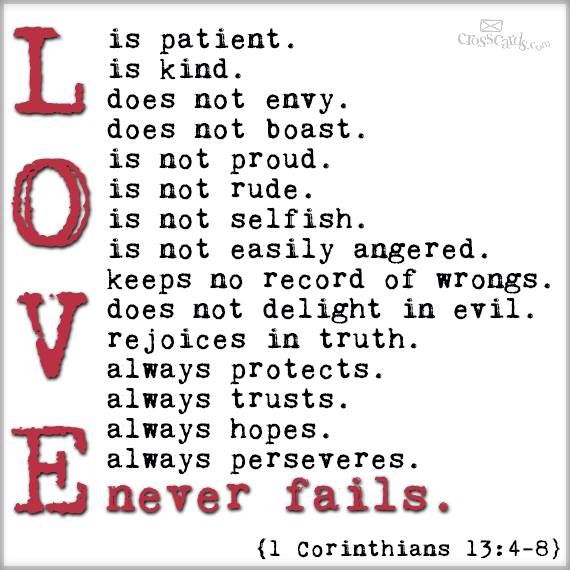
There’s one difference though.   For those of us who didn’t become narcissists, we somehow learned what love is.   Real love is unconditional love: love that is unearned, love that is given just because you’re who you are, regardless of your flaws and shortcomings. You are not shamed for being who you are, at any point, ever.  You are cherished for your soul, not your appearance, income, intelligence, or achievements.   You are not judged for being in a bad mood or for not being happy all the time.  Someone who truly loves you will still love you even when you’re sad, mad or afraid.  They will offer support in some way, not turn their back on you or blame you or kick you while you’re on the ground.

Those of us with C-PTSD and other trauma based disorders didn’t get unconditional love from our immediate families.   But if we didn’t become narcissists we might have had a taste of enough of it to make a model of it for ourselves.  Maybe a loving relative outside of our immediate family–a  grandfather or aunt perhaps–showed us this kind of unconditional unearned love.  Maybe we were “adopted” by the loving parents of a friend (not literally adopted, just treated like a member of that family).   Perhaps we were fortunate enough not to marry an abuser (unfortunately, that’s not the case for most of us, since we were programmed to attract and be attracted to abusers) who showed us what real love is all about.   Maybe we had a compassionate teacher when we were young.  It’s even possible that one or both of our narcissist parents (if they weren’t malignant or sociopathic) had occasional moments of lucidity when their false self was temporarily down for whatever reason, and during those rare moments were able to see and love us for who we really were, not for what they wanted us to be or what we could give them.

My point here is that love was somehow modeled for us by somebody before the critical period for being able to accept–and give–love came to a close.   Probably not enough to heal our wounds; the damage done to us was severe and complete healing may not be possible.   The scars will always remain, no matter how much work we do on ourselves.   We may be compromised in our ability to give and receive love, but we can still learn.    Even if we’ve been shown very little love throughout our lives, by the grace of God, our souls, though damaged, somehow remained intact.    For a narcissist, there’s no inkling of what actual love might feel like, even if, as with the blogger quoted above, they want to know.

love_corinthians

I’m so starved for unconditional love that when it is given to me, I want to cry in gratitude and some emotion that feels very close to relief.   Occasionally I have.    I can tell you what that kind of love feels like:  a sincere hug when you’re depressed; concerned ears that listen without judgment even if they disagree with you;  someone who isn’t a fair weather friend and is still your friend even when you’re going through a rough time or aren’t at your best; a real family that always welcomes and supports you no matter how old you are or how many problems you’ve faced and doesn’t disown you, judge you, shun you, talk badly about you behind your back, or tell you everything’s your own fault.   Love is like a respite from pain after an excruciating illness; it’s reassurance that the thing you dreaded the most did not come to pass, that in fact, the outcome was wonderful instead.    That’s what love feels like, and it’s everyone’s birthright.  That some of us received so little of it–or none at all–is appalling to me.     The injustice of it makes feel rage.

I received just enough of this kind of love, and at an early enough age, that it was modeled for me.  I received just enough that my soul escaped relatively intact, even if my mind did not.    I can feel unconditional love for others, but I’m still afraid to reach out to them, because I learned that people can’t be trusted.  So many people in my life have shown me their “love” has no real meaning and is just three pretty words with nothing inside but betrayal and hurt.    The terrible irony of having received enough of a “taste” to know what real love is  like is that you constantly crave more of it, like a drowning person gasping for air.  You haven’t received enough to feel confident that it will last or that anyone in the world really cares about you, so you either clutch onto it for dear life or avoid relationships altogether.

A time for peace: my last post

Don’t panic–this isn’t about my blog.

I just discovered Katie’s incredible blog a few short months ago, but I feel like we’re kindred spirits, and she has taught me so, so, SO much!

I don’t even know Katie’s last name (or even if this is her real first name) or where she lives.  I don’t know what she looks like.  I do not have her email address. Yet I feel like we could be sisters–or lifelong friends.

The other day in another post, I quoted a Zen proverb: “when the student is ready, the teacher will appear.” Katie was a teacher who came into my life at exactly the right time, and helped me resolve my issues with forgiveness and my guilt feelings over having “forgiven” the narcissists who abused me. Others have told me I shouldn’t. I was at a crossroads. But Katie’s beautifully written posts did something few other bloggers have been able to do–they brought me to tears: healing tears.  Because what she writes about is always exactly what I need at the time I read it, and her words are like poetry. Her blog let me know that forgiveness is not only okay, it’s what God wants. It’s the only way to emotional freedom.

Katie, if you read this, I do hope you’ll come back sometime and write again. In the meantime, PLEASE leave your blog posts up. Someone who needs them (as I did) may stumble across them in a month, a year, 3 years, even 10–and find comfort and answers through your blog.  There are many narcissist abuse blogs out there in cyberspace, but there’s only one  Dreams of a Better World.   I’d like to stay in touch with you. You can find my email in the “contact me” information.

Words as weapons.

by Photos8.com

by Photos8.com

If you were raised by narcissistic parents, you are probably familiar with these.  These are the words I heard from my parents (yours may differ somewhat but the devastating effect is the same).  I’ve broken them down into childhood, adolescence, and adulthood, since the emotional abuse doesn’t stop when you become an adult.  Sometimes it gets worse. No matter what stage of life you’re in, these words are intended to destroy your soul. They are extremely effective weapons.

Childhood:

child-abuse1

You are too sensitive (the #1 criticism)

You have no sense of humor.

You cry too much.

Shut up or I’ll give you something to cry about.

Your hair looks like a rat’s nest.

You always look so dirty and sloppy. (after being outside playing)

What did you do to your hair? (I did nothing; my hair was naturally thin and fine and tangled easily–and also grew in a strange way with cowlicks and weird curls)

You read too much.  (what?)

You’re too obsessed with your books, drawing, and solitary games. (These were my escapes)

You act so immature; no wonder you have no friends.

You know you hate competition (when I wanted to join the swim team)

You know you’re not good at team sports. (I wasn’t, but this made me doubt myself even more when playing team sports)

I don’t think you really want that. (subtle gaslighting intended to make me doubt my own reality)

Here, let me do that for you.  (a favorite of my mother’s when she didn’t have the patience to teach me or supervise me in a new or unfamiliar activity)

You’ll only make a mess of things. (another way to discourage my competence).

They’re just jealous of you because you’re prettier/smarter than they are (this seems nice but wasn’t based on reality and even I could see through that BS; I was bullied because of my high sensitivity, not my “superior” looks and intelligence)

You come from a better family than they do. (better in what way?)

We don’t associate with people like that. (see above–my parents were VERY into social status)

Don’t tell anyone what goes on in this family.

Keep your mouth shut about what happened here tonight.

Adolescence

teenager_sad

You’re gaining too much weight.  (my mother’s #1 favorite criticism, usually done in front of others)

You’re too fat (when I weighed 120 lbs at 5’4″!)

Your hair looks too stringy/greasy/what have you done to it, etc.  (a variation on the childhood hair criticism)

You eat too much chocolate, you will get pimples and no one will think you’re pretty anymore.

You’re boy-crazy!

You don’t study hard enough; you will fail all your subjects and not graduate (always catastrophizing)

You’re too pretty to wear that/do that/say that, etc.

You know you don’t want that. (making me doubt my reality)

You know I don’t like it when you act “tough” (but my sensitivity was hated too–I could never win).

You always get too hurt by everything (no empathy after a breakup or lost friendship, etc.)

You always get too obsessed with a boy.

This dress will make you look slimmer (this was a dress given to me in front of my friends at a birthday party)

Your butt is too big (I do have a big butt–I couldn’t help it!  It’s the way my spine curves. What was I supposed to do? Slice it off?)

Your breasts are so big they will hang down to your waist when you’re 50.  (I’m over 50 now and they don’t, they weren’t THAT big, and I think there might have been some envy in this anyway because she wore an A cup and I wore a C)

You’re acting like a crazy person.

What a stupid thing to say.

You have a terrible personality. I wouldn’t like you either.

You should change your personality.

You need to learn to control yourself.

You’re not goal-oriented.

Adulthood:

depressed_woman_bw

You’re living  a loser’s life.

You have nothing to show for your life.

You make terrible choices.

You’ve always made terrible choices.

You probably did something to deserve it. (always said when someone else treated me unfairly; no empathy shown)

Well, the way you are, I’m not surprised they are so angry with you/don’t like you, etc.

You’re a disgrace.

You never learn from your mistakes.

You overreact to everything.

You have no sense of humor/too sensitive, etc.

You don’t know how office politics works.  (I don’t, and I hate it, but this was meant to insult me)

You never did have a knack for making it in the business world.

You’ll always be poor because you make such terrible choices.

Don’t expect any help from us.

You made your bed, now lie in it.

Why don’t you join a convent? The nuns will take care of you.  (said when I was threatened with homelessness during my divorce).

Go live in a homeless shelter (see above).

You don’t take good care of your kids.

You’re a terrible parent.

Those kids are going to grow up with so many problems.

You weren’t raised to be this way.

It’s not my responsibility that what I said upset you.

You chose to be upset by that.  (again, taking no responsibility and blame-shifting).

You choose your own emotions. (see above).

You made a choice to be depressed/miserable, etc.

****

I could go on, but I think this is enough for now.   Do any of these sound familiar to you?

Further Reading:
Lies My Narcissists Told Me