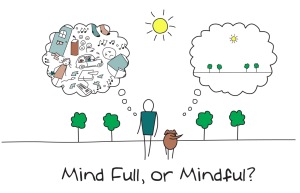
Clearing my head.

brp1

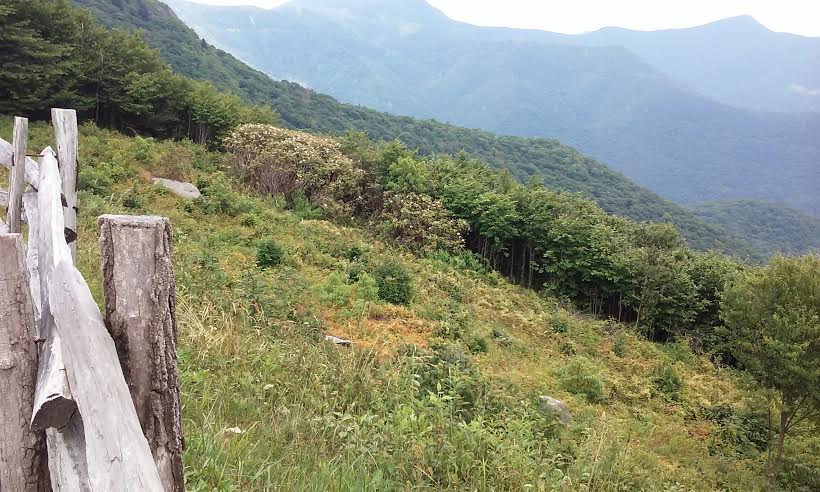
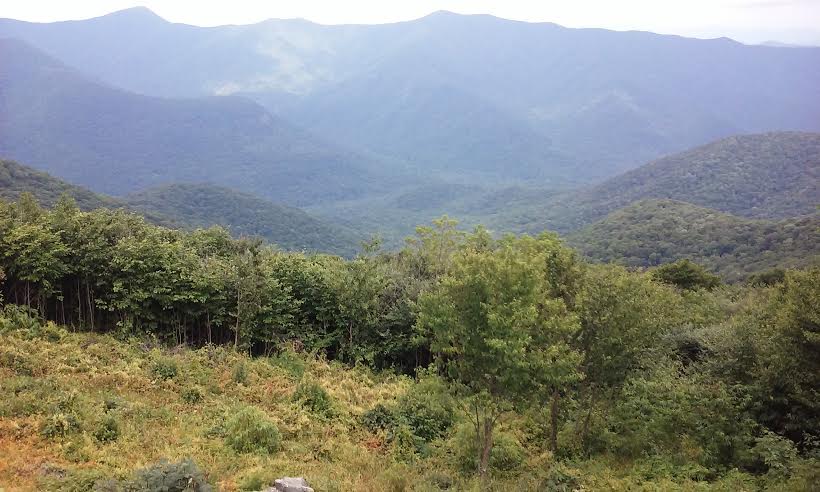
I needed to clear my head today.  Sitting around the house does me no good at all and it’s easy to sink into negative emotions like depression and worry.    I knew I had to get out for awhile.  Fortunately I live very close to the Blue Ridge Parkway, so I decided to take a nice long Sunday drive.   I decided to go up into the Black Mountains, part of the Blue Ridge just north and east of Asheville.

brp4

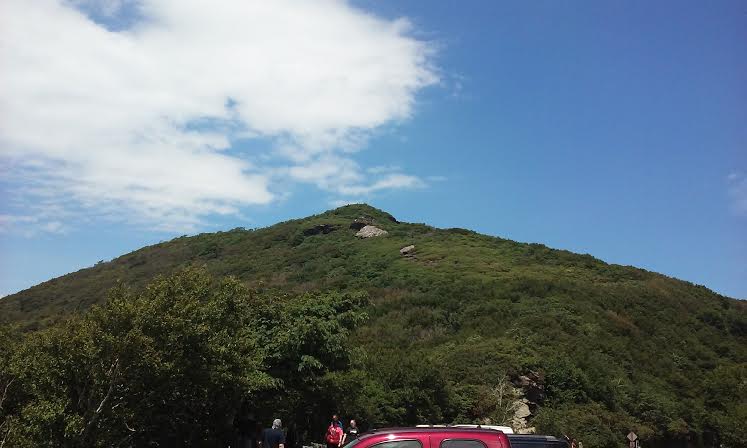
I drove about 60 miles, to Green Knob, which is about 15 miles past Mt. Mitchell (at 6,683 feet, it is the highest peak on the East Coast, even higher than Mt. Washington in New Hampshire).  I was going to go up to Mt. Mitchell and take some pictures, but I took one look at the line of traffic on the off road going up there and said, “no way.”   There are other spots just as nice.

brp2

brp3

The drive up there is always interesting.   As you climb, you feel your ears pop, and the air gets noticeably cooler.   I was able to turn off my A/C and roll down the windows and breathe in the fresh mountain air.    After awhile, the deciduous trees get shorter and stumpier, until they are mere twisted shrubs.   Craggy Gardens is filled with these stunted little trees and lots of wild rhododendrons, which are native to this area.   When they’re in full bloom, they have beautiful, big lavender clusters of flowers.   Right now they’re just dark green.

brp5

Climb a little higher, and the deciduous trees and shrubs are completely replaced by conifers.    I’ve been told the climate up here is similar to southern Canada.   There’s a lot of ice and snow here in the winter and this part of the Parkway is usually closed off during the cold months.   Mt. Mitchell itself is covered with the skeletons of the Frasier firs, which were indigenous to this area but died off about 30 years ago due to an aphid infestation. But it isn’t all bare–there are other types of conifers that are surviving quite nicely.

brp6 brp7

On the drive home, it rained a little–some of the photos here show the building up of the storm clouds.   I got home and felt much more at peace.  Spending time with nature always has that affect on me.   Here are the rest of the photos I took today.

brp8

brp10

brp11

brp12

brp13

brp16

brp17


A new day.

sunrise2

It’s the first day of Summer (or is it the second?), and things look much brighter today than they did last night. In the midst of a severe BPD/C-PTSD “episode,” (I’ll explain more in a minute), I published a post, “Why I’m a Wreck,” which I just set to private and will probably delete eventually. I thank all of you for your prayers and good wishes. I feel like I have a family here. ❤

I’m very symptomatic right now and overreacting to everything. I’m paranoid and hypervigilant. I see evil everywhere and demons in every corner (but the demons are only in my own mind).  I’m having trouble being mindful and trying to stay in the present.  I’m thinking in a more black and white way (splitting) than I have in a long time. I’m catastrophizing and imagining the worst possible outcomes about everything.  I’m “going off” on people and getting angry at them for no reason.    Example: I don’t agree with my roommate’s religious views, and I became very judgmental and actually yelled at her, telling her what she believed was “stupid.”  I immediately felt terrible about it and apologized; being so judgmental is not like me (but it is like me when my BPD is in full bore).   When a lot of things happen at the same time, it can really overwhelm anyone’s system (even if you’re free of BPD or C-PTSD) and it’s hard to keep your grip and stay mindful.

An example of my “catastrophizing” was believing my son has NPD. I talked to him again today, and he certainly does not. He may have a few of the traits of narcissism, but he does have empathy and he isn’t manipulative and he doesn’t play evil mindgames. He was in a bad mood last night and it was late. We talked today and he was much more sympathetic.

Two things have brought on this sh*tstorm of triggers and symptoms.

1. I’m getting deeper into therapy, into the really “difficult stuff.” It isn’t fun anymore. It’s hard, painful work now. I found this hard to believe when I started, that I’d get to a point where I’d be in so much pain as buried traumatic memories begin to emerge to consciousness. I have to keep reminding myself that this is all good; the pain and “regression” back into earlier ways of dealing with stress means I’m healing.

2. My father’s death. I’m grieving in my own way, but more than sadness is a lot of anger, and a lot of old, painful memories are being triggered by this too. I’m actually remembering events I thought I’d long forgotten.

God works in mysterious ways. It was my father’s time to die, but it also happened at a time where I felt “stuck” in therapy–not moving any faster and not able to access buried emotions brought on by trauma. My father’s death has made it possible for me to do this work, and it is work.

As for my daughter, her moving back in with me, as one of my commenters (Susan?) said in the post I just deleted, may be the best thing for both of us. I just need to set some firm boundaries but I think she will respect them. I never thought her living with her dad was a very good idea.

And, I’m not sure yet, but there may be a out of state move in our not very distant future–one that would bring the three of us (me, and both my kids) together as a family again and have a fresh start.  I don’t want to get my hopes too high about this though.  But it could happen.

Painting therapy, Part II!

I finally finished my painting projects. Here are two views of my bedroom with its new look!

room_view1 room_view2

I also spray painted a old wooden table on the porch–it was bright green but the paint was chipping off so I had to redo it. There was enough spray paint left in the can for one more project.

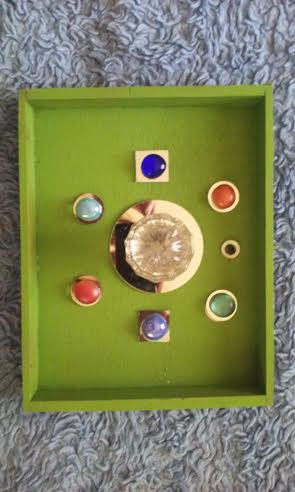
I had an old glass doorknob (from this house but I can’t reattach it to the closet door it fell from). I think it’s an original doorknob–the house was built in 1908. I needed something on my bathroom wall, and decided to make a towel rack out of it. I took apart a wooden cigar box, painted it, and turned it into a sort of shadow box, with the doorknob epoxied to a mirror at the center. It’s drying now. I can’t wait to hang it in my bathroom!

doorknobhanger1

doorknobhanger2

Nothing like being a shaky, twitchy, anxious, paranoid, angry BPD/C-PTSD in full trigger mode, to get those creative juices flowing. Doing these things really helped me stay in the present and even almost sane.

Painting therapy.

whitepaint

I had a dream that I painted my walls, so that’s exactly what I’m going to do.  I think it will be therapeutic because it will help me stay mindful and in the present.    I think the dingy, stained beige has been depressing me, so I’m going to paint them bright white!  🙂

Mindfulness is…

Image

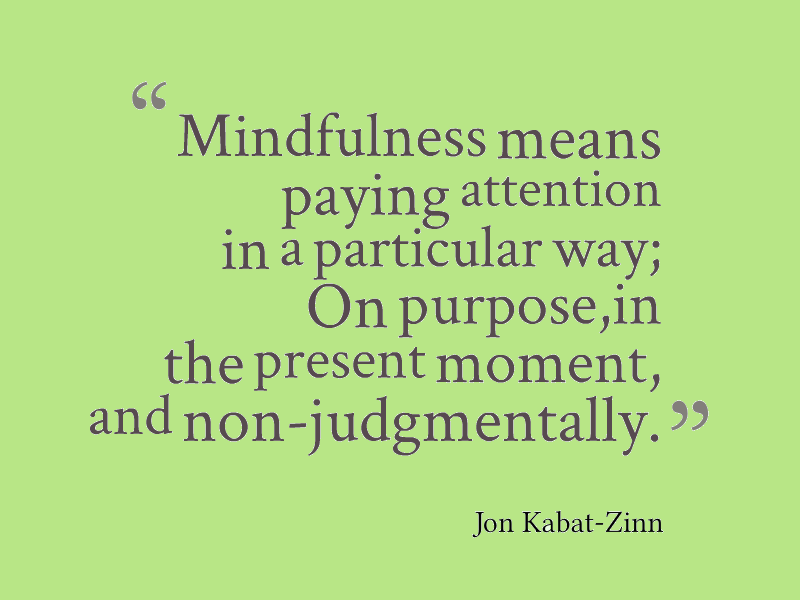
mindful_quote

I feel the earth move under my feet.

grass_feet

These aren’t my feet. 

Carole King had it right.   Sometimes feeling different textures under your feet can not only feel great, but also is spiritually grounding.

If you’re prone to dissociation and anxiety, like I am (I’m a “Freeze” 4F C-PTSD type–which means my primary defensive reaction is dissociation (the “freeze” subtype) and that keeps me alone and isolated from others (dissociative types tend to be shy hermits).    When dissociated,  sometimes we feel disconnected from our bodies, our emotions, from other people, from the whole world.   Dissociation in its various forms (derealization and depersonalization) can feel so weird, disorienting and surreal (like a bad drug high) that it can throw me into a panic attack if there’s nothing around to ground me or bring me “back to earth.”   The intense anxiety these episodes cause only seems to make the dissociation even worse, which leads to more panic and anxiety. It’s a positive feedback loop, but it’s anything but positive!

I wasn’t exactly looking forward to mowing the grass today, but it was a beautiful day and the grass needed a haircut.   My usual impulse would be to procrastinate–another way I avoid having to make decisions or do something I don’t want.

So I got out there and cranked up the old mower, and soon I was falling into the rhythm and exertion of this necessary task.   After a while, as usually begins to happen, my thoughts slowed and sped up at the same time.   That just means when I get into this state, my mind begins to think quickly and creatively.  These are the times when I usually get an inspiration for a new blog post, the kind I just itch to write.  These have been some of my best posts.   At the same time, the pace of my thoughts is slowed down.  Random snippets of thoughts aren’t racing all over the place, smashing into and bouncing off of each other and causing my head to hurt and my heart to race.  Instead,  I’ll mosy down a creative or philosophical tangent and then think deeply about it, looking at all its facets and hidden crevices.   Then I can draw all kinds of inferences and hidden meanings–both insane and profound–that wouldn’t have been there when I was in my normal hypervigilant, anxious, scattered state, when I can barely think at all.

This slowed down but more profound way of thinking has an awesome grounding effect, but it’s also at these times I become hyper-aware of my body (a type of mindfulness) — what it’s doing and any sensations it’s taking in from the world around it. When mowing, the repetition and exertion of it combine with the sharp, sweet smell of fresh-cut grass, and this stewpot of sensations combine to send me into a Zen-like state.

After mowing, I like to kick off my Crocs (I hate Crocs but they make good mowing and gardening shoes), stretch my feet and toes out  as far as they will go, and wiggle them.   My feet have always been one of the most sensitive parts of my body (This is not an invitation to any foot fetishists lurking around!).  This is good because my feet are what grounds me to the earth and staying grounded has always been one of my biggest problems.  It’s why my most basic “survival skills” are so poor (I live inside my head most of the time).  Focusing on my feet on the ground and the feelings of the different textures under them have a way of kicking dissociation’s butt like a kung fu master.

The freshly cut grass still had its spring softness, but it is dry like alfalfa, which makes it soft and scratchy at the same, and it felt unbelievably good!  Then I stepped onto the front porch and walked around on the smooth, worn cement and felt its coolness and smoothness under my feet, a wonderful contrast to the soft but dry grass.    Then I walked on the grass again. Then on the cement again, which was warmer this time from the sun.      A sense of well being and groundedness came over me, and the residual anxiety I had been feeling before mowing the grass was gone.

Going a step further, you can step on pinecones.  No, I’m not joking.


Thought for today.

Image

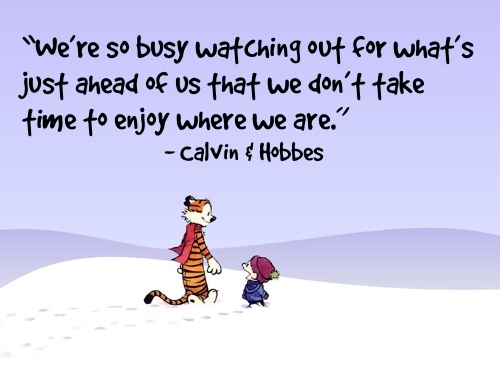
hobbes_mindfulness

Why DBT and mindfulness is helping me get more out of therapy.

mindfulness_poster_UK

For anyone suffering from BPD who wants to undergo psychodynamic or trauma therapy, I definitely recommend taking some DBT (or CBT) classes first. This also applies to people with complex PTSD, as the symptoms of C-PTSD and BPD can be almost the same (and for Borderlines, usually co-exist together).

I’ve been in therapy many times throughout my life, but I never stuck with it before. I usually would quit, because I either gave up in frustration or things got too intense. My first instinct whenever things in life would get too uncomfortable was to run. I had zero insight into myself or why I reacted (or overreacted) to things the way I did. I always thought everything was someone else’s fault. Yet I was constantly apologizing for things that weren’t my fault. I know that’s confusing, but I was confused. I was ignorant about boundaries and then wondered why others got offended when I unwittingly invaded theirs. Either that or I put up too many boundaries, not letting anyone in or rejecting people who tried to get too close.  I had a martyr complex, always felt picked on and ganged up on, was constantly paranoid and hypervigilant, always feeling like everyone hated me and was out to get me. I was ready to go off on someone or act out at the slightest provocation, believing I was being attacked unfairly. I was much more likely to attack things than people (I was constantly breaking things; self harm was never really my thing) but my violence toward objects and verbal tirades still upset those around me and upset me too after the fact. People always told me I overreacted to everything, but I always felt like it was somehow justified. I couldn’t see the part I might have been playing in all that.

To be fair, I was horrifically abused both as a child and as an adult, so my paranoia and distrust of others wasn’t completely unfounded. I was trained to be a victim and tended to act in ways that ensured I would remain a victim, without knowing I was doing so. I still struggle with this. I still tend toward codependency.  I still find it hard to connect with people in any meaningful way.   I’m a long way from being the person I want to be or that I could have become, and I may never get there completely. But there’s a big difference between the way I am now and the way I used to be. Mindfulness.

mindfulness

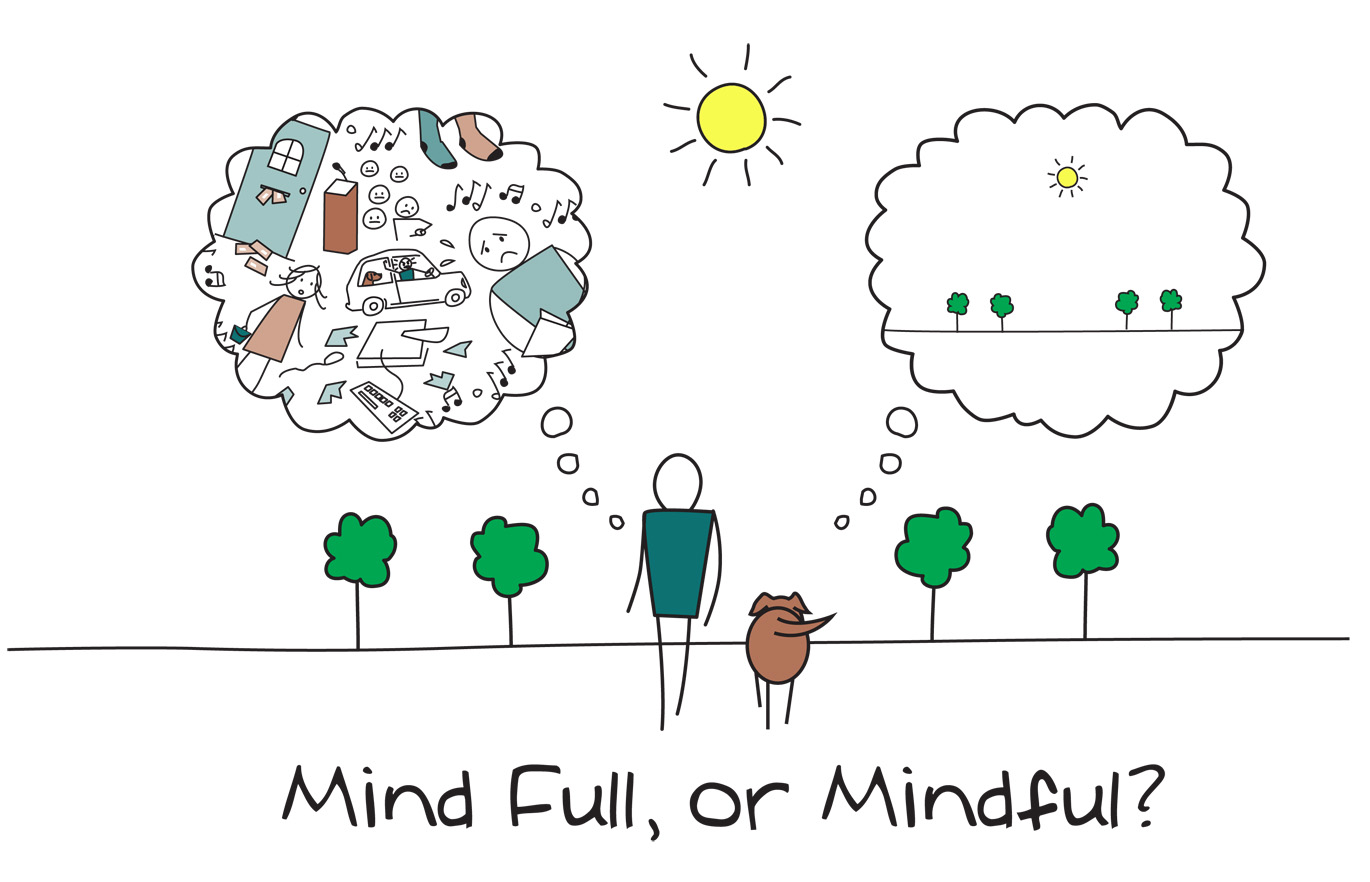
What is mindfulness? It’s the ability to think before you act, be aware of your own actions and reactions, and have insight into your own motives and why you do the things you do. It’s staying in the present, instead of fretting about the past or worrying about the future. It’s being able to step back mentally and see yourself the way others see you. Being mindful keeps you from acting out in ways you might regret later on. You’re not constantly apologizing because you acted out without knowing, because you can stop yourself before you do. Being mindful is like receiving a pair of magic glasses that allows you a view of yourself you never had before. You might think that having this “inner critic” would make you self-conscious, fearful and awkward, but ironically, it does the opposite. Because you have the ability to know how to act before you act, you have more control over yourself, and therefore more control over how others react to you. Slowly, you begin to find that people are reacting more positively to you, and you have fewer reasons to lash out at others or overreact to things. You begin to trust others more, because you trust yourself more.

Mindfulness is a wonderful tool in therapy, and is helping me get so much more out of it than I ever did before. I took DBT classes in 1996, when I was first diagnosed with BPD, and at the time I sort of blew them off. Because I was still in my abusive marriage, I was still very sick and not really ready to do the work. As long as I stayed with my narcissist, I was not going to get any better, but I didn’t know that. My ex had me convinced that I was the problem, not him. Because of his triangulation and gaslighting, he had everyone else convinced I was the crazy one too and he was just the put-upon victim. He’d systematically goad me into a BPD rage, knowing he could, and then with a smirk of satisfaction, tell everyone how insane I was. His personality and manner came off as more cool and collected than mine did, so I probably really did look crazier and more out of control than he did. But he was pulling all the strings.

Anyway, back to mindfulness. It wasn’t until early in 2014, when I finally went VLC (very low contact) with him (and kicked him out of the house), that I started to change. First I started to write and that’s why I started this blog. Writing every day helped me gain insight into myself and my narcissists. After a few more months, I began to realize I needed to make a few changes to myself. I pulled out my DBT workbook (Marsha Linehan’s Skills Training Manual for Borderline Personality Disorder) and began to do some of the exercises. I had already been doing a few of the things, but this time I took it more seriously and tried some of the things I hadn’t before. One of those things was paying attention to my internal, bodily state whenever I felt an unpleasant emotion. By doing this, I was able to begin to name what I was feeling. Emotions are very physical things. By naming an emotion, you can allow yourself to feel it, realize it’s just an emotion and not “you,” and learn to have more control over it.

mindfulness (1)

In therapy, I find I’m constantly focusing in on my bodily state, whether there’s any tightness, pain or strange sensations. There always seems to be pressure or tightness in my stomach, chest and throat that goes away when I can name the feeling and begin to express it. Being mindful this way of my internal state and naming my feelings, I’m much less likely to act out against other people or break things. I’m working now on breaking down the protective emotional wall I’ve developed that overlies softer feelings of sadness, grief, empathy, and connection with others. For many years it seemed the only emotions I ever could access were fear (sometimes straight up terror), shame, guilt, anger, and rage–and mind-numbing, zombielike depressions where all I wanted to do was sleep.

There are many ways to be mindful. Some of them are very simple, like counting to ten before acting. Others require more concentration. We need to learn how to self-soothe, something we never learned how to do as babies or young children. Being mindful allows you room to learn self soothing techniques. The insight you gain into yourself by being mindful also allows you the ability and courage to dig deep when you decide to undergo psychodynamic therapy. You’re going to experience powerful emotions when you’re searching for the root causes of your illness, and being mindful allows you to experience them without overreacting, acting out…or quitting therapy.

Projection, anger, and emotional distancing.

Therapy in Color

I have always believed in the power of art and creativity. Engaging in painting, drawing, poetry-writing, singing, sculpture, cartooning, creative writing, music-making, arts and crafts, and even cooking, scrapbooking, and home decor relax the mind, feed the soul, and bring us closer to our Creator. Each one of us has been blessed with some kind of creative gift and it’s our job to find out what it is we love to do best, and use it to connect more deeply with the world, not just escape from it.  Making art in any form also fosters mindfulness.

Even something as seemingly childish as coloring books can help us connect with our creative muse. This article explains why.
After all, it’s the child in us that gets activated when we create, and there’s no one more creative than a young child.

Catharine Toso's avatarCatharine Toso

An increasing number of adults are handling stress by engaging with art. Specifically, art in the form of coloring books. But while some may consider this to be a temporary fad, the psychology behind it is much deeper. Neuroscience Ph.D. candidate Jordan Gaines Lewis explains the appeal of coloring books to adults, and why they work, in a piece for New York Magazine’s The Science of Us blog.

Creative engagement is a major stress-reliever for many people. If you are artistically inclined, whether it be in the visual arts, music, or literature, you already know this. However, just because one lacks artistic training doesn’t mean that this great feeling can’t be experienced. So many adults are spending time with an open coloring books because it allows us to exercise our creative muscle, as long as we can hold a coloring pencil. Lewis cites psychologist Barry Kaufman, who says that the…

View original post 216 more words