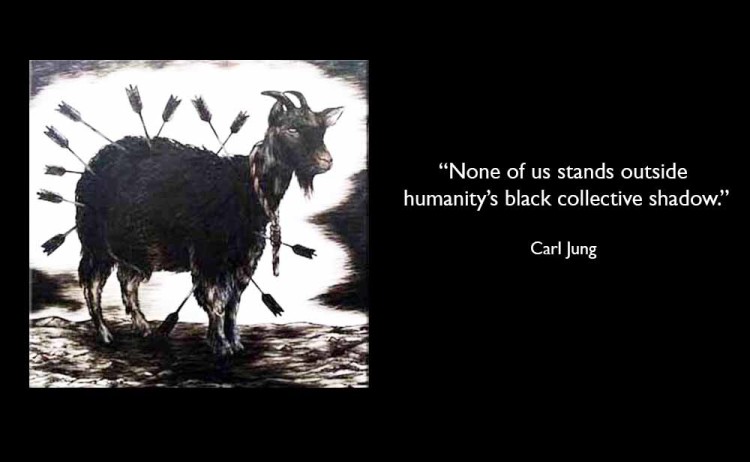

Is narcissism really a form of possession?

demon

I usually avoid topics like this, because of their obvious religious implications.   I try to avoid getting too religious on this blog, but I must write about it because I’ve been thinking about this topic all day and I won’t rest until I do.    I’m going to try to stay away from religious terminology though.

A young man I know on another site who insists he has NPD (but has no official diagnosis and therefore may not be one) says he can remember when he “chose” to be a narcissist, and now wishes he hadn’t. He’s adamant that it’s too late to change and nothing can be done.   He said he felt as if his false self was “installed” and didn’t actually come from himself at all.

His story got me thinking.  What if narcissism really is a form of possession?  (I hesitate to use the term “demonic,” although it could be).  What if it’s a kind of choice that’s made and that once it’s made, an outside spirit or entity or whatever it is, lets itself in and it begins to obliterate the true self?

We know that people with NPD have a false self, and we know it’s a lie whose purpose is to hide the true self even from the person themselves, to the point that they believe the lie and actually believe the false self is who they really are. But where exactly does this false self come from? How does a child know how to build such an elaborate defense mechanism that works nearly the same from one narcissist to the next? It’s like there’s a rule book that all narcissists follow.   How can that be?   Are they of a hive mind?  Or is it something else entirely?

Installation of the false self.

Let’s imagine this false self is actually not something  you constructed as a defense mechanism to escape from your true self and bury your pain for good. Let’s imagine something else–that it’s something from outside of you, something that’s been installed. Call it demonic possession, if you wish–that’s probably the closest thing we can imagine to what I’m describing.  The false self isn’t created by you because it never was a part of you–it’s probably not even something human. It was installed there at a time when you think you needed it, most often when you were very young and defenseless and were faced with this yawning, vast, terrifying emptiness caused by not being validated, mirrored and loved when you needed it most. A young child or toddler who feels rejected has not yet learned to separate themselves from the parents, usually the mother–so the rejection feels like an annihilation. It feels like you are dying.

At that moment, when you feel this unbearable reality–because it’s real to you even though it isn’t actually real–of being snuffed out of existence–this entity comes along, an entity who promises something better, a way out, a way to feel “alive” again. M. Scott Peck talked about this in his book “People of the Lie.”   The entity lies to you and tells you your life will be much easier and you can get rid of that awful feeling of emptiness if only you let it in.   It doesn’t tell you what it’s really going to be doing to you is destroying your soul and the souls of others by proxy.

There’s only one catch–in order to keep working, the entity must feed off the emotions of others, because when it takes over you, it pushes down your own emotions so you can’t feel them anymore. It obscures your pain and emptiness so you don’t have to feel those emotions, but it throws out the baby with the bathwater: it also obscures any sublime emotions like love, empathy, joy, sadness, and gratitude. If other people aren’t available for this thing to feed off of, the entity will starve and you are back to where you started–feeling like you no longer exist and facing that awful emptiness.

Faced with a choice. 

You have a choice–you can invite the entity in or not. It never forces itself on you. You may remember standing at such a crossroads when you were very young. I know I did.  I “test drove” narcissism for awhile, but ultimately rejected it.   Playing with narcissism is like playing with fire.   It’s not something you want to mess with.

If you’re an empath, you probably will reject it and choose to suffer rather than invite it in, because as an empath, you can feel its malignancy and know it will destroy your soul eventually, and the souls of others by proxy. If you reject the invitation, it will go away and leave you alone, but you might develop C-PTSD or BPD or become codependent, and allow yourself to continue to be abused and rejected without any defenses against the pain and emptiness inside.  But your real self remains intact and you don’t have to walk around wearing a mask all the time and hurting others to keep that mask on.

If you’re desperate enough–or can’t sense how evil this thing really is, you will be tempted to say yes and allow it inside. It probably won’t be a conscious choice.  It’s not something you THINK about and then decide, like what shoes you’re going to wear  that day.  It’s a choice made on the spiritual level so even a very young child can do it. It could happen later in childhood, or during adolescence or even early adulthood.  It’s a spiritual version of “if you can’t fight ’em, join ’em.”   An example might be a socially awkward boy who faces a group of sociopathic bullies every day and is given a dare:  set another kid’s house on fire and be accepted by the group, or continue to be bullied.   So he chooses to do what the bullies say, in exchange for acceptance.  What he doesn’t realize is what that does to his soul.  Faced with cognitive dissonance–unbearable guilt over what he did even though it was against everything he believed in–he resolves this by identifying with the bullies and represses his guilt and shame.   Soon his behavior begins to change and he begins to act less socially awkward and even becomes “cool”–but he also starts to act arrogant and entitled.  He no longer accepts blame for his actions and begins to play mind games with others.  He seems more confident–but he’s actually in much worse shape than he started because he isn’t even himself anymore.   He’s a puppet for the evil entity that used the promise of “acceptance” as the carrot on the stick–and now resides inside him and has no intention of leaving.

Becoming a puppet.

If narcissism is a form of possession, than narcissists are just puppets being operated by an outside force that is not them.   For awhile at least, the true self is still there, but it’s no longer able to emerge at will because it’s been repressed by a more powerful force that keeps it at bay.

The entity lies to you and you begin to believe those lies.  The biggest lie it tells you is that your false self is your true one, and the true self was a lie. It twists things around so black is white, and up is down and day is night. You don’t even know what’s real anymore, and so a fantasy becomes reality and reality is sent down the river in a tarpaper boat.

The NPD spectrum and perfect and imperfect possession.

If narcissism is a form of possession , it’s still possible for it to run on a kind of spectrum, though not the kind of spectrum referred to in the mental health profession.   In “People of the Lie,” M. Scott Peck talked about “perfect” and “imperfect” possession. Malignant narcissists are perfectly possessed–which basically means that the entity has completely obscured the true self, making it utterly inaccessible, or possibly even destroyed it. Such a person cannot become self aware or even if they somehow become aware of their own narcissism, there’s no desire to change, because there’s nothing left of the true self; if it’s not destroyed, it no longer has a voice and there’s no conscious awareness of its existence.  This is a person who has become evil, but they aren’t inherently evil because they’re no longer who they once were–they have become whatever has taken up residence within them.

Narcissists lower on the spectrum are imperfectly possessed–which means the entity hasn’t completely obscured the true self. Such people are not evil–they are victims of an evil entity that is trying to take control over them. If they have realized what they have become and no longer want it, they become engaged in a kind of spiritual warfare.  You may notice some lower spectrum narcissists can be very changeable, almost Jekyll-and-Hyde-ish.    From time to time their true self will appear, sometimes even without a grave loss of supply. That’s when they may admit they want help and when they’d be most receptive to it.   For non-malignant narcissists who are ego-dystonic, therapy could work, but there MUST be a spiritual component in the therapy itself.   M. Scott Peck believed narcissists (even though he didn’t call them that in his book) who are not perfectly possessed (in other words, not malignant) can be cured by exorcism.  It doesn’t even have to be done by a priest or minister–it can be done by a trained therapist too. Peck described the 2 exorcisms he performed in his book, “Glimpses of the Devil.”

Usually I’m very skeptical about supernatural things.  Although I’m Christian, I tend to be analytical and prefer scientific explanations over religious ones.  I also tend to be very suspicious of people who immediately start talking about God and Satan and quoting the Bible whenever the subject of narcissism comes up.  But it does make sense to me that the false self  is really some kind of malicious entity that presents itself during a crisis and makes all kinds of promises to a child or young adult who feels like they’re about to be snuffed out of existence.     It’s all too easy to be taken in by the lies when you’re desperate, but once the choice is made, the thing has too much power to get rid of without spiritual intervention of some kind.   You can see it in the empty, soulless gaze or unnerving, predatory stare some narcissists have, especially if they’ve crossed the line into malignancy (or perfect possession). And it gets worse over time, which may be one reason why narcissists tend to grow worse with age. Unchecked, whatever this thing is takes over more of your original soul until you become perfectly possessed and your true self is either totally eclipsed or obliterated.  If it’s obliterated, you’re nothing more than a walking dead person–a zombie impersonating someone you never were and feeding off the energy of others.

As much as you might want to, you can’t fix a narcissist.  Don’t even think about it because you have no idea what spiritual dangers you might be taking on–but it’s certainly alright–more than alright–to pray for their deliverance.

The narcissist’s dark and twisted brand of empathy.

twisted_tree

Do narcissists have empathy?  Yes, and some of them have a lot of it, but it’s probably not the kind of empathy you want anything to do with.

Some lower spectrum narcissists do have some capacity for normal emotional (not just cognitive) empathy, but it tends to be selective–that is, they can turn it off when it’s too dangerous or it makes them feel too vulnerable. That’s why, for example, a low-to-mid spectrum narcissist can feel empathy for fictional characters in a movie or novel and even shed tears for them, or can feel empathy for a stray or sick animal, but when you tell them you just lost your job, or that what they just said hurt your feelings, they turn into a block of ice. Their reaction to your pain is about as heartwarming as the Siberian wilderness in January. If they’re love-bombing or trying to hoover you, they may FAKE emotional empathy, but they don’t really feel anything.  They show you what appears to be tender compassion in order to manipulate.

It’s not news that most narcissists are ultra-sensitive, but their sensitivity is retained only for themselves, and that’s why they are so easily offended. But that sensitivity seems to have a switch that turns to “off” when it comes to other people and they can appear appallingly insensitive. Many narcissists were so sensitive as children they were actually potentially empaths. Their empathy didn’t really go away, but remained in a twisted and barbed form. Their developing disorder transformed their natural emotional empathy into something dark and malevolent. Some experts call he kind of empathy narcissists have cognitive empathy–which means the narcissist KNOWS how you feel, but can’t share your feelings or care how you feel. If they are malignant or sociopathic, they may even want to hurt you. Because most of their emotions went into hiding as a form of self protection, the emotional, caring aspect of any empathy they might have once had disappeared too, and what remains is only the cognitive portion. Narcissists have an uncanny and unsettling way of knowing EXACTLY how you feel–and if they are malignant, they use their twisted brand of empathy against you. For a malignant narcissist, empathy–a quality we normally associate with loving concern–becomes a weapon used to control, attack, and belittle you.

homer_simpson
Cognitive empathy.

On HG Tudor’s website, Knowing The Narcissist, he wrote a post about the way some narcissists mock their victims using mimicry of their emotional reactions as a form of abuse. I am going to quote a portion of that post, because of how well it illustrates the way a malignant narcissist uses cognitive empathy as a weapon to cause pain. It’s quite amazing how well they know EXACTLY how their abuse is making you feel, but instead of feeling remorse and apologizing the way a normal person would, they instead use that knowing empathy as fodder for their mockery cannon. My ex did this to me constantly, and Tudor’s description of the victim’s feelings of overwhelming helplessness and frustration at the receiving end of this type of abuse is absolutely spot on.
WARNING: THIS MAY BE TRIGGERING.

When you stood there crying with frustration and I drank deep of the delicious fuel you provided me, I would raise my hands to my eyes and draw pretend tears on my cheeks and make a sobbing noise to humiliate you further. Here I was letting you know that I copied everything that went before yet now I copy again but not with the perfection I once exhibited. I allow the sting of sarcasm and the malicious mockery to infiltrate my copying of your behaviour so that your hurt and bewilderment was increased. You would shout at me and I would shout back using the exact words before standing and laughing at you as you burned with frustration, unable to find any response. You might stamp your feet in exasperation and I would do the same but with a leer of disdain writ large across my face.

There were times when you would scream. A terrified scream as my vicious manipulations would take their toll and as you tried to curl into a ball and hope you might just disappear and escape this nightmare, I would lean in close to you and mimic your scream into your ear, creating this fabricated falsetto of distress in order to further your own. Every reaction to my devaluation of you had the potential to be met by a mimicked reply from me in order to further your misery and demonstrate I did not treat your responses with any sincerity or concern.

Another way a narcissist can use cognitive empathy is to scope out your vulnerabilities–knowing exactly which buttons to press to upset you. In the comments, Katie provided a great example of this. Her mother, who scapegoated her and knew she was sensitive about her poverty, used this against her, saying things like, “Oh, Katie dear, it must be SOOOOO hard to be living the way you do and never have enough money for the basic things.” And then followed that up by crowing about how successful her siblings were and the vacations and new cars they were buying. My mother used to use my sensitivity itself, knowing I was sensitive about my sensitivity, saying things like, “It must be so awful being so sensitive.” What’s happening here is a kind of fake, sarcastic “empathy” is thinly veiling a cruel jab at one of your buttons, which their cognitive empathy is used to discern. And then, should you complain, they will act all hurt and innocent and tell you they were only trying to be nice or were showing concern for your well being. This is a vicious kind of gaslighting.

Please keep in mind that cognitive empathy in itself is not a bad thing.  It could be a tool used in mindfulness training to help a person learn to “walk in someone else’s shoes” before acting out against them.  Cognitive empathy can be learned, but emotional empathy cannot be taught–it’s either there or it isn’t.  Most empaths have both cognitive and emotional empathy.  Cognitive empathy lets them know how someone else feels, but the emotional aspect allows them to care.

No conscience, no empathy.

no soul

Once again, my MN/ASPD sociopath ex has proven what a conscienceless shell of a person he has become.  Maybe he’s always been this way but it seems to become worse the older he gets.    Maybe he just masked his true nature better in the past, and pretended to be a decent person, or maybe he’s really gotten a lot worse.  He used to have some emotions; now he appears to have none at all.   He doesn’t even bother pretending to be a decent person anymore.  He’s a man who is so cut off from all feeling and whose heart has turned so black that he can’t even squeeze out any empathy or drum up any human decency to his own children. To him, they are just objects to use for his convenience and maybe, for a few lulz at their expense.

Unlike some lower spectrum narcissists, this man is so malignant he’s beyond redemption.  He has zero self awareness and never will have it.   He’s way far too gone.   If the Dark Triad had a poster boy, he would be it.   A long time ago, he sold his soul and it’s never coming back.    One of his favorite forms of abuse is financial abuse.  He used to abuse me financially all the time, mostly by freeloading and refusing to work, although he used to steal from me too.

As most of you know, my daughter has been staying with me while she tries to save enough money to move into a place of her own.  She’s been working hard–faithfully going to her job every day where she works long, grueling hours,  and she’s saving money diligently, adding something to her apartment fund every time she gets paid.    Since she doesn’t make a lot, I don’t charge her rent so she is able to save more easily.    Her saving money and not spending it all is an improvement for her.  It’s a good sign that she’s becoming more mature and less impulsive–and she told me the other day how proud she is of herself for being able to resist impulse buys and save money instead.

But she made a mistake.  She didn’t put the money in a bank account.   She keeps it in a box next to where she sleeps.  She trusts me and knows neither I nor my housemate would ever dream of stealing money or anything else from her.

My daughter is a very codependent sort of person, and still thinks of her dad as her sun, moon and stars.  She loves him dearly, although he doesn’t deserve her love.  She knows how sociopathic and narcissistic he is, but loves him because he’s her father and the concept of family actually means something to her.

Today, while I was at work, she let him come over to the house for ten minutes, because they had been somewhere this morning and she wanted to change her clothes.  She was going to make him some coffee before he left.

I don’t allow this man into my house and she knows how I feel about him.   But at least she was honest.  She texted me and said he was only staying for ten minutes and then leaving.   I told her I wasn’t pleased, but that fine, make sure he leaves in ten minutes and watch him.  Don’t take your eyes off him for a second. He’s a thief and a snoop.

Right then she got a phone call from someone she’s dating and went into the bathroom to take the call, not thinking her father would have time to do anything.  When she returned, he told her had to leave.   She said fine, but before he left, she told me she had the urge to  go look in the box where she’d been keeping her apartment savings fund.   Unfortunately the box had been right next to her father the whole time.  She opened the box, and it was empty. All the money was gone.

She burst into tears of hurt and betrayal.  She told him she’d been saving money in that box so she could get a place of her own.  She didn’t want to accuse him of anything, but she knew he’d taken it.   She told him how hard she’d worked for that money, and how hard it was to save.  It wasn’t that much (only about $225) but it had taken about three months to save, being that she can only save about $20 a week.   Her tears didn’t move him.  She told me later she saw a flicker of something that might have been remorse or guilt, but that look quickly disappeared and was taken over by his usual expressionless, cold, flat stare.

“I didn’t take your money,” he said.  “You must have misplaced it,” he continued, gaslighting her.  “Or maybe your mother took it.”  Of course, there he went blaming me, even though I wasn’t even there.    She kept crying, but he showed no empathy, didn’t offer any words of comfort or a hug or anything.  He just started talking about the election instead, and then said he had to leave.    This is a man who doesn’t need financial help.  He gets over $2,000 a month in SSDI and gets food stamps and Medicare.   He has very few expenses and sits at home all day long trolling political websites and painting miniature lead soldiers.    He took her money because he could.  Because he’s a conscienceless POS.

I told her she needed to go No Contact with him. She knows it’s worked for me.  But she’s too softhearted and can’t do it.  “He’s still my dad,” she said.  She loves him even after this. I know she won’t let him in the house again.  She learned her lesson.  She knows how dangerous he is.   Maybe one day she will cut ties from him completely.   I can only pray for this.  She’s going to keep saving her money, starting from scratch, and put it in a bank this time.

Guest post: 7 Red Flags of a Nasty Narcissistic Personality (By Richard Grannon aka SpartanLifeCoach)

red_flag

I’m honored to feature an original post by SpartanLifeCoach, Richard Grannon.  His website can be found here.

7 RED FLAGS OF A NASTY NARCISSISTIC PERSONALITY
By Richard Grannon

Here are tips for the modern human seeking to avoid becoming entangled in personality disordered unpleasantness.

Here’s the LOW DOWN:

Many psychologists think we may be facing a full blown narcissism epidemic.

And NO, this doesn’t just mean middle aged baby boomers whinging about girls at the gym loading up their Instagrams with selfies. We are talking a full blown narcissistic personality disorder epidemic on the real. Academics and clinicians are (quietly) holding seminars and conferences about it as we speak.

The difference between a touch of vanity and malignant self obsession?

According to Freud a narcissistic phase is vital to the healthy psychological growth of infants. If people are traumatised at a certain age in a certain way they “get stuck” in a rather infantile phase of development giving them the morality and compassion of a 4 year old toddler tyrant.
This very overbearing “me, me, me” phase is essential to the development of self regard and boundaries in a young child. It is extremely toxic when still present in a fully grown adult.

Lets clear up some confusion: Having pronounced narcissistic traits can be an advantage in certain situations, yes. Many people think the essence of narcissism is self love and/or vanity, if you are talking about narcissism with a little “n” then perhaps. You want to look your best, dress well and take of your self, this is normal.

However, Malignant Narcissism is a world away from a little dose of narcissism.
A full blown NPD has experienced a dramatic and long lasting break from reality as a result of trauma. This trauma is usually from being objectified by a highly narcissistic parent who has used that child as a kind of narcissistic supply by proxy (a bit more complicated to explain, I’ll get into that elsewhere).

Malignant NPD means a shell personality has been constructed around the authentic self as a defense mechanism to a hostile environment. Onto that shell the NPD projects a false, idealised self. They really are living inside “their own little bubbles” of narcissism. Their relationship with reality is by definition, warped.

Make no mistake–being vain and self-interested does not Narcissistic Personality Disorder make!

What this means for you:

If the psychologists are right and full blown narcissistic personality disorder is both currently under-diagnosed and on the rise then you might want to be extra careful you are getting intimate with a new partner.

Take more precautions, learn what the red flags of NPD are and if you see it, disengage, disengage, disengage.

Always? Yes, always.

Can’t I just dip my toe in? Can’t I save them? No and no.

narcissist_redflag

The risk:

Getting involved with a full blown NPD can be disastrous and can leave the partner with PTSD-like symptoms that seem at first to be a kind of intense heartbreak but actually signal a crisis of self identity and of the individuals relationship with reality itself. Yes, that’s how dangerous and damaging a relationship with an NPD can be. Look online and you will see countless stories of people losing money, property, jobs, businesses, self worth and sanity all at the hands of an NPD.

How can this happen?

Someone with NPD could be considered to be an un-personality. Instead of an individual with feelings, wants and desires there is only a shell who is hell bent on garnering certain types of emotional responses and attention from those around her/or him.

Because of this unique (and previously very rare) condition they are excellent actors and superb social chameleons who can tune in to their selected victims dreams, fears and desires and then be exactly what the victim thought they had been looking for their whole life.

Clue 1: If its too good to be true, it probably is.

Nobody is perfect, thankfully, what a dull world it would be if it were not so. If you meet a girl or a guy and they seem to be weirdly PRECISELY what you think you were looking for then stop and go back and check again.

Clue 2: Too fast, waaaay too fast.

The NPD accelerates the relationship at lightning speed. They instantly will want there to be zero boundaries between the two of you.

Most of my clients tell the same story: whirlwind romance, we moved in together within a matter of weeks, she told me she wanted to spend the rest of her life with me and I was the love of her life, soul mate and or perfect life partner…and so on…

Why? The NPD is a close cousin to the well known Psychopath (Anti-social Personality disorder). These are personality disorders defined by a lack of boundaries. Between themselves and others, between what they think, perceive and what they feel, and their fantasies and reality.

So why is that such a big deal, wouldn’t that make a person a bit of a dreamy, artistic, creative type? Fundamentally good natured if a little frustratingly scatter brained at times.

No.

Why?

Because of the essential traits of this cluster of personality disorders: exploitativeness, entitlement and a strong urge to punish.

I wont get into whether NPDs are truly sadistic or not here, but Cluster B disorders (malignant Borderlines, Narcissists and people with Anti-social Personality Disorder) are very focused on power dynamics and maintaining the upper hand at all times. It is an expedient way to exert power over someone, to simply hurt them and make them feel distress.

They want to be intimate rapidly with you, not because they love you “SO MUCH” (sorry to bring what will be to many, very painful news) but because it makes them feel significant, indispensable, powerful.

And the Cluster B has little to no impulse control, so why not just get all the way inside your life straight away? It feels sooooo good.

Clue 3: Love Bombing.

The harder and more fiercely they love you at first the more savagely they will treat you when the axe falls. And it always falls.

Why?

Intimacy terrifies the NPD. It’s a loss of control. If they “lose themselves in the game” they may start feeling their authentic feelings for you. This will make them frightened and angry and then they will give way to their “talionic impulse” (look it up, see how well this shoe fits!) and punish you for making them feel feelings for you.

If the girl or guy you just met is mauling you with adulation and love, be advised: step away from the relationship.

Take a few days to cool off and clear your head. In the early phases of a relationship this should be fine and they should not be upset by “taking a breather”, if they freak out about it and get angry (NPD) or pour scorn on you/make dramatic displays of self pity (BPD) or threaten to kill your dog (ASPD), that’s a MAJOR red flag that we are not dealing with a sane boundaried adult looking for an equal relationship. Amiright? (See Clue 4)

Why?

Even cults have figured out that the human condition is fragile and insecure and that if you “love bomb” (literally bomb someone with compliments, gifts, adulation) it makes the target feel really intense feelings of happiness and recognition all associated in their brain with YOU. Or the guru of the cult. This gives them the initial hook into you. Kind of like a crack dealer letting you have your first few hits for free.

Why are they always mean afterwards?

It’s fuelled by the mechanism called the “talionic” urge, and it’s preconscious. It’s likely that they know they are doing it, but it’s very unlikely they actually know why. These are not people who spend an awful lot of time on genuine introspection, questioning their own motives!

Its called the “cycle of idealisation and devaluation”. They put you, or rather their fantasy of you, up high on a pedestal, because it makes them feel good to do so. When you, eventually, refuse to be the fantasy they want and are annoying enough to be the real person you are, you inflict an outrageous insult against them and they are disproportionately angry (this is called narcissistic injury and narcissistic rage) and will fling you into the gutter with total savagery.

To say they are cruel is an understatement. They have a sense of your suffering but simply do not care one bit if you are totally destroyed by their cruelty. In fact they would prefer it. It would be further proof of their power and uniqueness if you were crushed by their dismissal.

Clue 4: Does not respond well to the word “no”

Or indeed to any boundaries being set.

At all.

If you tell another sane, adult, who is being truly honest with you and doesn’t have an ulterior motive the word “no” politely and they have a major emotional response to that, or indeed you just try to set a boundary and they get very angry or upset, well, you don’t need a psychology degree to see that that just is NOT healthy.

boundaries600

Why? A boundary being set is them being locked out. A boundary being set is them losing controlling. The NPD experiences a boundary or a “no” as a hugely outrageous insult to their assumed superiority and they will respond with rage or an uber-sulk session that will last for days. Both have the same intent: to punish your disobedience.

Clue 5: Jealous and/or Controlling Behaviour.

Come on, I know that he or she is really hot and they are great in bed and funny and charming (the NPD as a great actor and social chameleon can really turn on the good stuff when its getting them what they want) but are you really going to ignore another sign of them being moody, bratty, bossy, petulant, jealous or just plain manic control-freakish?

Why do they do this?

The NPD is an infant trapped in an adult body. They think they have a right to everything, all the time, all of you, every part of you. NOW.

Clue 6: You Don’t Feel So Good

One of the symptoms of being with an NPD is a dysregulated HPA axis. Sounds fancy, in this context it essentially means that your brain systems “threat assessment software” has gotten out of whack as your frontal lobes and limbic system have gotten into a fight with each other about how dangerous this person is. This means you will feel exhausted, depressed, anxious, hyper vigilant and prone to over react to stress you can normally deal with. If it goes on long enough you will experience adrenal exhaustion.

Why?

One part of you is sending a signal saying: WARNING! This person is dangerous. And another part of you, encouraged by the NPD is saying: no, no, she is lovely and she loves me and I want this to carry on.

This creates a split in you in which two opposing versions of reality fight for dominance and that’s very, very stressful. Watch out for the insomnia and bad dreams!

Clue 7: You Become A Detective

You start checking their social media profiles. Maybe a sneaky peak on their phone checking whatsapp, facebook messenger and even emails. You aren’t proud of it, but goddamn it its becoming an obsession. There is an alarm ringing in your head that you are missing something and if you could just find the missing link you would know for sure and then you could relax. You being to obsess over the person. This has swung from a dream come true to a waking nightmare.

Why?

Because you aren’t stupid, your intuition is functioning and is telling you that you have been the victim of a con, ripped off, lured by a classic bait and switch. But if you face that reality you face catastrophic loss. So like any good addicted gambler you double down and pray for the best by day. And by night you are guiltily stalking your own girlfriend or boyfriend on social media or checking their phone, or looking at receipts in their wallet looking for some clue, ANY clue that proves your suspicion waiting for the other shoe to fall.

Sounds like being a tragic character from a Poe story doesn’t it? Doomed to slow death by Gin and melancholy.

The light at the end of this gloomy tunnel? I’ve helped thousands of people overcome the effects of being emotionally abused by an NPD so I know that it is possible. But it leaves scars and it changes people. Sometimes it changes them for the better, sometimes though they are left simply bitter.

Don’t let this be you.

It would be much more effective if people could learn to avoid the narcissists altogether. Learn these clues. If you have any doubt or suspicion take a big step back.

A normal sane person can permit you a few days breathing room where the NPD cannot, so doing so gives you an effective test of sanity and emotional stability. Attributes which are, according to the psychologists, sadly on the demise.

Be well, stay safe!

Richard Grannon (SpartanLifeCoach)
https://www.youtube.com/user/SPARTANLIFECOACH

How my ASPD/NPD control freak ex used a dog to gaslight me.

This makes me laugh now, but at the time I was doing anything but laughing.

luckyotter's avatarLucky Otters Haven

jack_russel_puppy

In 2011, when my parasitic MN/ASPD ex was still living on my couch, he decided he wanted a dog.

We already had a dog, Dexter, who was an awesome black lab mix (he lives with my daughter and her fiance now). The house I live in (and lived in then) is tiny. At the time, we had Dexter and 5 cats. Far too many animals for a two bedroom house, but these were pets I cared about, so I wasn’t too bothered by the overpopulation problem in the house.

But oh no, a dog and five cats wasn’t enough for the Parasite (which is his new name as far as I’m concerned so that’s who he’ll be from now on). No, he had to have his OWN dog, one that HE picked. I told him we had no room for another pet, and it was already too expensive feeding and…

View original post 1,317 more words

Child roles in dysfunctional families.

dysfunctional-family
Credit: Artist unknown.


Wikipedia has an excellent, detailed article about dysfunctional family dynamics. Here I am just going to talk about the roles various family members play, and the kinds of families that become dysfunctional. If you’d like to read the whole article, click on this link:

https://en.wikipedia.org/wiki/Dysfunctional_family

Dysfunctional families are usually of two types:

1. One or more of the parents are active alcoholics or addicted to drugs.
2. One or more of the parents have a Cluster B disorder, usually Narcissistic Personality Disorder but sometimes Borderline Personality Disorder, Antisocial Personality Disorder, or Histrionic Personality Disorder (or a combination of any of these).

The Cluster B Connection.

Outside of alcoholics and drug addicts, dysfunctional family dynamics are most prevalent when one or both of the partners suffer from a Cluster B disorder, especially Narcissistic Personality Disorder or Malignant Narcissism.    After NPD, BPD is the most common disorder seen in the head of a dysfunctional family, though because it’s more common in women and Borderlines have more empathy than narcissists, BPD is most often seen in the codependent, passive partner.

ASPD (psychopathy or sociopathy) rarely appears by itself in dysfunctional families, as antisocial people and psychopaths tend to not be raising children at all (either because they’re incarcerated, their children have already been removed from the home, or they simply have no interest in raising children,) but a parent could have Malignant Narcissism, which is a combination of NPD and ASPD.   Also, people with pure ASPD, though more likely to be criminals or involved in illegal activities, tend to be less emotionally abusive than people with NPD or even BPD. They are merely selfish and lack empathy, and they are manipulative to get what they want, but they don’t care about getting emotional supply from others so they don’t engage in mind games like gaslighting, triangulating, projecting, and scapegoating (unless there is a material reward involved or they are trying to avoid culpability). However, some people with ASPD are sadistic and enjoy tormenting family members for fun.

Of all the Cluster B disorders, HPD is probably the least toxic (Histrionics are shallow, attention seeking, and dramatic, but not usually that abusive), but HPD is usually comorbid with another Cluster B disorder, such as NPD.

cluster_b_chart

In some cases, a non-Cluster B mental illness (such as Bipolar disorder) that causes abusive acting-out behavior may be the culprit, but it’s less common because most other mental disorders are less easily hidden from others and the person appears “crazier.” Non-Cluster B disorders are also more easily treated with drugs or therapy, and except for psychotic disorders such as Schizophrenia, the afflicted person knows they have a problem and are more likely to seek help.

Cluster B and addictive disorders. 

Parents of dysfunctional families can also be both mentally ill and addicted to drugs or alcohol. The two often go together. In fact, alcoholism and drug addiction are extremely common in people with Cluster B disorders. Alcohol and drugs are their attempt to fill the emptiness they feel inside themselves.

Even if an alcoholic or drug addict doesn’t have an underlying Cluster B disorder, the behavior of an active addict/alcoholic is very similar to someone who has NPD. The only difference in the behavior of a narcissist and someone with active alcoholism is that for the narcissist, the “fix” is emotional; for the alcoholic, it’s chemical. A non-Cluster B active addict or alcoholic can be every bit as emotionally abusive, self-centered, and manipulative as someone with NPD. Only getting their next fix is important. (As an aside, it’s interesting to me that the 12 steps of AA and other 12-step programs almost all address the problem of narcissism by encouraging humility, responsibility, and amend-making. A person on a so-called “dry drunk” is basically a sober person acting out in narcissistic ways, which may be their nature).

The Codependent Partner.

Sometimes only one partner has a mental disorder or addiction, but the non-afflicted parent is always going to be codependent to them. The codependent parent, whether they have a disorder or not, almost always suffers from PTSD or Complex PTSD. If both parents have a Cluster B disorder (which I think is usually the case), the one who has NPD or Malignant Narcissism is almost always going to call all the shots and dominate the other family members. If a Borderline is paired up with a Narcissist, the Borderline is almost always going to be codependent to the Narcissist, colluding in the abuse but also being abused themselves. Similarly, if a Covert Narcissist is paired up with an Overt Narcissist, the Covert one is going to be codependent to them and possibly abused. Such a scenario can lead to the Borderline or Covert Narcissist developing Stockholm Syndrome (identifying with and colluding with their abuser). Non-Cluster B codependents can also develop Stockholm Syndrome, because it’s a complication of C-PTSD. The codependent parent often (but not always) has a high degree of empathy, which is what drew them to the narcissist in the first place, in a misguided belief that they could “fix” them or they were led to believe that the narcissist could “rescue” them.

The Roles of the Children.

In the ACON community, there’s a lot of talk about Scapegoats and Golden Children, but there are other roles children can play in a family that are rarely addressed. In a two child family, most likely there will be a scapegoat and a golden child, but in larger families, there can also be a Lost Child, a Clown, and a Rescuer (codependent). It’s unhealthy for a child to be in any of these roles, but the Scapegoat and Golden Child role are probably the most dangerous to a child’s mental and emotional health, for different reasons. Even in a two-child family, the roles can shift back and forth (according to the Wikipedia article, families in which the children’s roles change and shift are called Balkanized families–this alludes to the constantly shifting loyalties and borders of the Balkan countries in Eastern Europe).

1. The Scapegoat.

scapegoat

Both this and the Golden Child role are the soul-killing roles, but for different reasons. The Scapegoat is the child who is targeted by the narcissistic (or alcoholic) parent. The parent often is able to get the rest of the family to serve as flying monkeys and gang up on that child, projecting anything they don’t want to “own” onto them. Like the sacrificial goats described in the Bible who were banished to the wilderness and tormented by villagers, the Scapegoated child carries all the shame the rest of the family doesn’t want to confront or deal with. All the unwanted emotions and bad qualities are unloaded and projected onto them, so the abusers don’t have to confront or deal with these problems in themselves.

Usually it’s the most sensitive child of the family who becomes the Scapegoat, because that child tends to be the Truth Teller, the only family member who can see the dysfunction and may even react against it. The most sensitive child, being the child who shows the most emotion, is also a threat to the narcissists in the family because emotional expression is such a frightening thing to them. In many, if not most dysfunctional families, the expression of emotion is not allowed. So the most emotional or sensitive child becomes the scapegoat, especially if they rebel against the dysfunction or criticize it.

The Scapegoat may be assigned the role of Bad Child, the Loser, the Stupid One, the Ugly One, the Crazy One, the Weak One, or any combination of these. No matter what they do, they cannot please the parents (or the siblings who have been turned against them). Scapegoat Children usually develop severe C-PTSD or possibly another mental disorder, and having been trained to be victims and never given the emotional, financial or other tools to succeed in life, tend to fulfill their families’ predictions of being “losers,” so then their families can say to others, “See? This child really is worthless.”

Scapegoated children also tend to attract other abusers throughout their lives and are at risk for being targeted for bullying even as adults and for entering into abusive relationships. If the adult child doesn’t go No Contact, the abuse continues, usually through some form of isolation, silent treatment, or exclusion. Scapegoated adults are talked badly about by the family and not invited to family functions. They are given no emotional or financial support, even though other members of the family are given these things. It’s not unusual for a scapegoated adult child to be living in poverty, even if their families are wealthy–not only because they were denied financial support when they needed it, but also because their self esteem took such a terrible beating that they have no confidence at all and never take any risks that could improve their lives. Severe C-PTSD can also cause a person to have an inability to focus or concentrate or set realistic goals.

A Scapegoat isn’t always a child. It can also be a parent, in which the children are turned against that parent by the abusive one.

2. The Golden Child.

girl with a gold medal and cups.

The Golden Child, often (but not always) the eldest child, is the parent’s trophy, pride and joy. The parents may seem to love that child, but being incapable of real love, their “love” is conditional and is based on their fantasy of what they want that child to be, not on who the child really is. The child is assigned to be a Mini Me of the narcissistic parent.

The Golden Child, basking in constant approval, showered with toys and gifts, never held accountable for any wrongdoing (which may be projected onto the Scapegoat), and often recruited as a co-abuser in the abuse of the Scapegoat, grows up entitled, grandiose, and spoiled. Because their Real Self has never been appropriately mirrored and their less than perfect traits are ignored or projected onto someone else, and because they were rewarded for playing a the role of the Perfect One, a Golden Child in a family is the most likely to develop NPD and become a clone of the abusive parent. In this way their souls are destroyed even more than the Scapegoat’s. To continue to be the parent’s favorite, they had to play a role which became internalized. This becomes their False Self. After awhile, they are no longer able to access their Real Self at all. Golden Children who have become narcissistic continue their entitled, bullying, manipulative, grandiose behavior into adulthood and are likely to head dysfunctional families themselves, continuing the cycle.

A non-Golden Child, even a Scapegoat, can become a narcissist too (usually the covert form of NPD), for self-protection, but Golden Children tend to develop the grandiose, malignant form of narcissism and as such, are the least likely to ever seek help for their disorder or admit they have become abusers themselves.

3. The Lost Child.

lostchild

In larger families (three or more children), one child is likely to be ignored and treated as if they don’t exist. This isn’t a form of silent treatment; it’s as if the parents don’t notice the child is there at all. The Lost Child isn’t victimized like the Scapegoat, but they aren’t spoiled either. They may or may not be recruited to assist in the abuse of the Scapegoat, but they won’t necessarily be punished if they don’t cooperate; they will simply be ignored. The Lost Child tends to be quiet and shy, and not make any waves. They are probably aware of the family dysfunction and may sympathize with the scapegoat (but don’t let anyone know this). As they grow older, they may crave attention or develop addictions, or they may remain shy and retiring throughout their lives. They tend to avoid confrontation and drama, and may become extremely introverted.

4. The Clown/Mascot.

classclown

The Clown/Mascot attempts to divert attention away from the family dysfunction (and also get attention for themselves) by making light of everything. Everything becomes a joke to them, and they even use their own families as sources for humor. Clowns can be disruptive in class as children, to get attention, but because of their ability to see the humor in things, they tend to be outgoing and develop a large circle of friends during adolescence and adulthood (even if they are never taken very seriously). Family Mascots are almost never scapegoated, because they entertain everyone and take the focus off the family problems.

David Sedaris, a writer and humorist, is a good example of this dynamic at play.  Several writers in the ACON community (and even outside that community) were outraged by Sedaris’ callous essay (“Now We Are Five,” which appeared in the New Yorker after his younger sister, Tiffany, committed suicide).   Tiffany was clearly the family scapegoat and had evidently gone No Contact with the rest of the family. At the time of her death, she was living in poverty and only had, as her father put it, “two lousy boxes” of belongings. I don’t know all the details, but it seems as if she was offered no support, either emotionally or financially, in spite of the family’s wealth and Sedaris’ success as a writer. She was probably mentally ill, but her mental illness may have been due to being the family reject.

In a candid interview Sedaris gave for Vice, he describes Tiffany and her relationship with the rest of the family. His words are very telling.

Even as a child I looked at my sister and wondered what that would be like, not to feel the warmth of my mother’s love. Tiffany didn’t. There was always a nervous quality about her, a tentativeness, a desperate urge to be in your good graces. While the rest of us had eyes in the front of our heads, she had eyes on the sides, like a rabbit or a deer, like prey, always on the lookout for danger. Even when there wasn’t any danger. You’d see her trembling and think, You want danger? I’ll give you some danger

It’s been suggested that David Sedaris is himself a narcissist (possibly the golden child) and that could certainly be true, but I also suspect he served a secondary role as the family Clown/Mascot. His callousness toward Tiffany in his famous essay (and grandiosity about how great the rest of the Sedaris family was–it’s very common for narcissists who were golden children to hold their dysfunctional families up as paragons of perfection) seemed to be drawn both from narcissism and from a need to hide his anger and pain behind a wall of humor. Here’s a link to his essay (it’s heartbreaking and may be triggering):

Now We Are Five

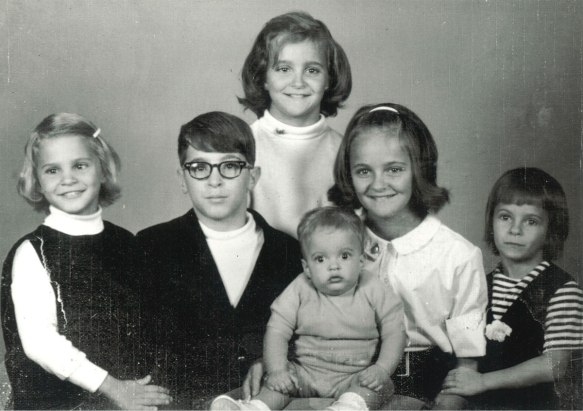
The accompanying photo is interesting. Tiffany, the second to youngest child in a family of six children, sits in the bottom right hand corner. Her hair is cut short and unkempt, and she looks very unhappy. David, wearing the glasses, stands above her. Actually, none of the kids look very happy. Not a smile in the bunch.  Something’s definitely not right about this family.  It’s common to see family portraits where no one is smiling in the 18th or 19th centuries,  but not in the late 1960s, when this photo was taken.   Here’s another photo, from the Vice interview, where only Tiffany (again in the bottom right hand spot) looks desperately unhappy and disconnected from her siblings.

tiffany_sedaris
Credit: Vice.com / Left to right: Amy, David, Gretchen, Paul, Lisa, and Tiffany

I used to enjoy Sedaris’ writings and looked forward to his books and essays, but after this essay, I just can’t read him anymore. (Augusten Burroughs is a better alternative and doesn’t seem to be a narcissist).

In spite of their raucous and jovial manner, Clowns are likely to be depressed because they have never learned to confront or deal with their true feelings.  They hide behind a wall of laughter.  Their sense of humor is really just a cover for their pain. Many Clowns become addicted to drugs or alcohol, and a few become suicidal. Many of our great comedians served the Clown role in their families. I don’t think it’s a coincidence that so many of them had drug issues or killed themselves.

5. The Rescuer.

superman_child

This is the codependent child who attempts to “fix” the family dysfunction by being obedient, always good, non-confrontational, overly generous, and self-sacrificing. The Rescuer may be highly empathic. The Rescuer tries to serve all the needs of the narcissistic/addicted parent, which of course is not possible. They will never argue with or criticize the narcissistic parent, and are always trying to get everyone to get along, which also is not possible. They may be the only family member who doesn’t abuse the Scapegoat, but they might if they feel like it’s required. However, even if they do collude in the Scapegoat’s abuse, they will be less abusive than the other family members, tending to take a back seat or even sympathize with the Scapegoat in private. In trying to please everyone, they please no one, and grow up feeling impotent and helpless. It’s a no-win situation.

When Rescuers become adults, they tend to unconsciously look for other abusers to “rescue,” having failed to do so in their families of origin. Like Scapegoats, Rescuers are likely to become abused themselves as adults, but it’s hard for them to leave an abuser because of their high level of empathy which keeps them tied to the abuser in their attempt to want to “help” them. They also tend to fall for an abuser’s promises to change and are easily “hoovered” back into a codependent relationship.

Shifting Roles.

In Balkanized families, the child roles can shift. The most common situation is a Golden Child becoming a Scapegoat, often upon reaching adulthood, if they fail to fulfill the unrealistic expectations put on them. (“You were such a disappointment to me!”) If a Scapegoat goes No Contact or leaves the family for some other reason, another child, possibly the Lost Child, becomes the new Scapegoat. Someone has to carry all the family shame.  If the family only has two children, the Golden Child may find themselves suddenly scapegoated or serving both roles.

Children who serve as both Scapegoats and Golden Children (very common in only children)  often develop Borderline Personality Disorder as well as severe C-PTSD and possibly other mental disorders like Dissociative Identity Disorder (almost always the result of severe emotional abuse).

Serving as both a Scapegoat and Golden Child is the ultimate mindf*ck because there isn’t even any consistency. The child never knows if they will be punished or rewarded from one minute to the next. Their only advantage (if they are an only child) is that they don’t have siblings who have been turned into flying monkeys who collude in the abuse.

If the family ever develops a need for a new Scapegoat (if the Scapegoat goes No Contact, dies, or disappears), the Lost Child is usually picked as a replacement, due to their non-confrontational, malleable temperament and lack of any real pre-existing role in the family.

Pot…kettle…karma!

pot_kettle

In 1996 and again in 1997 I was hospitalized for episodes of clinical depression and near-psychotic, self destructive behavior.   For several years I’d had severe mood swings, shifting from near-mania to near-catatonic depression.  During these depressions I’d sleep all day, not even bothering to eat some days.   I was sure I had Bipolar Disorder, but it turned out I didn’t have that.    The first hospital stay was where I first got my BPD diagnosis.  I was also diagnosed with Major Depression, alcohol abuse (not alcoholism), and PTSD.

My sociopathic MN ex loved to use these diagnoses against me, especially the BPD one.  I guess he already knew BPD had a terrible reputation.   He used this diagnosis to demean me and discount anything I said, and also used it to turn our friends against me.   He’d always say things like:

“No one will take you seriously because you’re certifiably crazy, even the doctors say you are crazy!”

“You have BPD and we all know all Borderlines lie and can’t tell the truth more than they can tell their mouth from their a-hole”

“You’re a Borderline which means everything you say is a delusion and a lie.”

“No one believes you because you’re batshit crazy and even have the BPD diagnosis to prove it.”

Years later, after being arrested for domestic violence and public drunkenness (he had a pillhead girlfriend at this time), he was diagnosed with both NPD and ASPD, which makes him a certified Malignant Narcissist.   I find the irony of that pretty funny.  I wouldn’t trade my BPD diagnosis for his in a million years.

Why I don’t think it’s wrong to pray for narcissists.

st_paul

Because I have readers of many religions (or none at all), I always hesitate before posting anything too religious or too Christian, but I’m making an exception here because I’ve noticed some ACONs believe it’s sinful to pray for narcissists. But I don’t think that’s true and I always pray for mine.

Whenever anyone tells me I’m wrong to pray for the souls of narcissists, I just use the example of the Apostle Paul. Saul was much worse than just a sinner; the Bible describes a man who seemed to be a high-spectrum, unrepentant malignant narcissist.

Following is an article from CBN.com called “How Saul Became the Apostle Paul.” It’s the fascinating story of a man–an arrogant, narcissistic, murderous Pharisee, who hated Jesus and his followers–whose heart was changed. If someone as malignantly narcissistic, even sociopathic, as Saul/Paul was, could change, why not others too?  We don’t know what God’s intentions are or whose heart he may be working on. No, chances are your narcissist won’t change and you shouldn’t wait around for them to do so or try to “fix” them, but I don’t see any harm in praying for them if you’re so inclined. We are not the judge and jury; only God is.

I still see narcissism and arrogance in Paul even after his miraculous conversion–I have to admit I never cared much for Paul’s personality, which I find abrasive. After all, he was still human and still a sinner. But at least he wasn’t harming others anymore, and had renounced his former life as a Pharisee and devoted himself to spreading the word of God.

How Saul Became The Apostle Paul
By Craig Von Busick, for CBN.com
http://www1.cbn.com/biblestudy/how-saul-became-the-apostle-paul

saul

“The best and the brightest.” It was a phrase used by some journalist to describe the administration of President John F. Kennedy. The same phrase could have been used to describe Saul of Tarsus; a child of the best upbringing; a student of the vaunted teacher, Gamaliel; a Roman citizen; trained in the best Jewish schools; groomed, perhaps, to even become chief priest.

And this pious man was bent on the destruction of the believers in Jesus.

In order to understand Saul of Tarsus it is important that we put him into historical context. Only a few short years had passed from the crucifixion and resurrection of Jesus when a self-righteous religious zealot assisted in the systematic murder of one of Christianity’s earliest messengers, a godly man named Stephen. Luke punctuates Saul’s involvement in this murder with the chilling comment:

“Now Saul was consenting to his death.” (Acts 8:1)

But even before that fateful day when young Saul the Pharisee gloated over the brutal death of the innocent disciple Stephen, the Spirit of Jesus Christ was pricking his heart. God had designs for this bright young man, and in His sovereignty He was prepared to knock Saul off His high horse.

There can be little doubt that Saul was familiar with the Galilean man who was known as Jesus. Though Saul may have been consumed by his study of the Torah and Talmud – the Jewish holy books, there was talk of this back woods preacher and the stir He was creating throughout Israel. Numerous reports were made of so-called messiahs emerging from every corner of the land, so Saul and his classmates undoubtedly debated the authenticity of the reports of Jesus’ miracles.

He may have been one of the unnamed lawyers who confronted Jesus with questions in the Gospel accounts? Saul may have gathered with the other scribes and Pharisees at the river Jordan when John the Baptist declared, “Behold, the Lamb of God who takes away the sin of the world.” Was he outraged to learn that Jesus had cleared the moneychangers and vendors of religious trinkets from the temple while snapping a whip?

It is conceivable that Saul was one of the pious Pharisees trying to console a weeping Mary and Martha at the death of their brother Lazarus. Whether he was physically present when Jesus raised the 3-day dead Lazarus from his rotting rest, it is sure that Saul heard of and pondered this indisputable miracle. This shocking development created such a sensation that the panicked religious leaders ramped up their efforts to arrest and execute the backwater mystic before he brought down the wrath of Rome on their heads.

Saul could have been in attendance at the infamous midnight trial of Jesus before the Sanhedrin. Perhaps he was outside in the courtyard of Caiaphas warming himself next to the fire. Maybe he heard the servant girl accusing a gruff-looking Galilean of being a follower of this Jesus. He may have been amused at the unrefined manner in which this fisherman cursed and raved the third time he was accused.

Though he approved of the barbarous stoning of Stephen, it is entirely possible that Saul’s heart was pricked when he heard him say, “Lord, do not charge them with this sin.”

We don’t know how long the Lord was at work in the heart of Saul, but we know the Holy Spirit was goading him – and Saul was kicking back hard, primarily against the disciples of Jesus. After the death of Stephen, Saul was fanatical about destroying this new sect. Saul launched a holy war against the Church, scattering the believers. He made havoc, entering homes, sending many to prison – even putting some to death. He was beginning to attain the notoriety that he had always craved. If he was going to rise to the level of prestige and power that he believed was his destiny, he would have to prove himself worthy.

When word came that these followers of Jesus had spread into Syria, Saul requested permission to go to Damascus. With great delight the High Priest granted him letters to take to the synagogues of Syria.

As Saul and his colleagues came near Damascus, suddenly they were flooded with glorious light. It was like looking into the sun from only a yard away. Saul fell to the ground and suddenly a voice emanated from within the light. The voice was both terrifying and soothing at the same time. “Saul, Saul, why are you persecuting me? It is hard for you to kick against the goads.”

Was this an angel? Or worse, could it be a messenger from Satan, trying to distract him from his holy quest? No, if it were the devil he wouldn’t feel this mix of peace and awe. Humbly Saul inquired, “Who are you, Lord?”

“I am Jesus, whom you are persecuting.”

conversion-of-paul

No. It couldn’t be Jesus, the carpenter from Nazareth, the backwoods preacher, the so-called messiah who was put to death by Pontius Pilate? If this was Jesus, that would mean that nearly every great leader in Israel was wrong … so very wrong. How could they have misjudged him? Unless those confusing passages of Scripture concerning a suffering savior could somehow speak of the Messiah?

Saul began to tremble.

How could he have been so wrong? But then he remembered watching the life ebbing from Stephen, and hearing those haunting words, “Lord Jesus, receive my spirit.”

This was the same Jesus that Stephen saw as he peered into heaven. This is the same Jesus that gave strength to so many of Saul’s victims. Saul began shaking uncontrollably. No longer able to bear the intensity of the light, he closed his eyes as tightly as he could.

“This must be the One – the glorious Messiah, promised from ages past.” Saul slowly lifted his head and asked, “Lord, what do you want me to do?”

Jesus replied, “Arise and go into the city…”

Saul obeyed, and in the blindness that resulted from the intense light, he was led into the city. There he was met by a disciple named Ananias, who was sent by Jesus to prophesy, “he is a chosen vessel of Mine to bear My name before Gentiles….” (Acts 9:15, NKJV)

Years later, in obedience to this heavenly vision, and living out his own teaching – “I try to find common ground with everyone, doing everything I can to save some.” (1 Cor. 9:22b, NLT) – this former Pharisee so embraced his calling to minister the Gospel to the Gentiles that he forsook his Jewish name, Saul, and forever adopted the Greek name for which he is remembered … Paul.

Narcissistic abuse: who is the real victim?

adult-workplace-bullying

Narcissistic abusers are great at charming people they want to impress, or those people they want to get on their side. When they have targeted an individual for abuse, they will stop at nothing to turn their friends, colleagues, even their families against them–and it’s not at all uncommon for them to claim that THEY are the ones being abused.   The process of using malicious gossip and lies to turn people against the victim is called triangulation and is well known in the narcissistic abuse community. Most of us who have been targeted by narcissistic abusers know all too well about triangulation and its close cousin, gaslighting. Both will be used in conjunction with each other to turn the victim’s potential allies against them, effectively isolating them and ripping away any support systems they could use later.

Those who have been turned against the victim by the narcissist are called flying monkeys. They may or may not be narcissists themselves, but they are duped and misled by the narcissist’s convincing lies and charm into believing the narcissist is the real victim and that the victim is the abuser. You can’t really blame them for siding with the abuser, since the abuser can be so convincing and often has a glibness that the real victim lacks. Complicating the situation further is the likelihood that the real victim indeed acts “crazier” or more irrationally than the abuser, usually because they have been driven half-mad by the abuse, which can be so easily hidden, even from those who are witnesses to it.

The good news is, there is a way the real victim can be discerned in an abuse situation, even if the narcissist complains loudly about how THEY are being abused. This isn’t something I thought of myself; it’s been described already by other writers and bloggers. Still, I think it’s something that isn’t given a lot of attention, so I want to describe in detail how this works because it may be the only way you can extract the truth in the evil mental clusterf*ck set up by a narcissistic abuser.

Isolating the victim.

In any abuse situation, there is almost always more than just two people involved. At the core are the victim and the abuser, of course, but chances are good the abuser has convinced other people–including friends and family members of the victim–that the victim is the real abuser, and recruited others as flying monkeys that collectively condemn and mob the victim. The abuser may have even convinced a mental health professional or pastor (or anyone else who works closely with a family) that the real victim is the real abuser, effectively turning everyone against the victim, so only the narcissist appears to have allies and the victim has no one.

This happened to me, when I was still married to my sociopathic MN ex. My ex was always more socially adept than me. He was always better at making friends and giving a good first impression than I was. He was very glib and could spread the lies on as thick and convincingly as a trial lawyer. In fact, I used to joke that he should have been a lawyer (no offense to any lawyers who may be reading this!)

verbal_abuse

It wasn’t a joke anymore when he decided I was an easy target for abuse. We had several friends–mostly other couples–who suddenly seemed to want nothing to do with me, but still talked to him and seemed to like him. When I questioned my ex about why all our friends had cooled toward me, he said things like, “So-and-so doesn’t like you; I really don’t know why!” or “The Joneses told me they think you act kind of crazy and they don’t feel comfortable around you.”  I was even told our friends were “afraid of me.”  Even our children–who were middle schoolers at the time–had turned chilly toward me, as had several other family members. (It turned out later he was telling the kids I didn’t love them and wished they’d go away–of course, this was an utter lie). Meanwhile he had convinced our friends I was insane. If I questioned him about his treatment or if I seemed to be getting at the truth, suddenly I was called paranoid or too sensitive or even crazy. Or I’d get a non-answer like, “No wonder no one likes you. You’re so selfish. Everything is always about YOU.” He was projecting his own narcissism onto me, but I didn’t know it back then. I began to think there must be something very wrong with me that everyone else could see but I couldn’t.

The real abuser may act more sane.

It didn’t help any that my behavior around this time did in fact appear more insane than his did. I always seemed to be the one to act out or lose my cool, while he always appeared completely rational, cool and collected. Of course our kids were more likely to take his side–they looked at their dad and saw a calm, rational person who wasn’t raising his voice and who was telling them their mom was both insane and didn’t love them. They looked at me and saw a frazzled, half-mad, emotionally unstable woman who was always yelling, crying or locking herself in her room–and on two occasions had to be hospitalized. Why wouldn’t they believe him? What they–and everyone else–didn’t know was that his crazymaking behavior was driving me insane and I was already suffering PTSD due to the mental and emotional abuse. He always treated me well whenever anyone else was present, so no one would suspect what he was actually doing. If I tried to call him out on his abuse, I was gaslighted: “stop making things up,” or “that just proves how insane and self centered you are.” Everyone we knew believed him and I found myself all alone, with no one I could trust or confide in. He was able to use confirmation bias to his advantage–thereafter, anything I did became “proof” of my “craziness” or “unfitness” or “selfishness” and the more abused I was, the “crazier” I got.

At one point we began to see a marriage counselor at my insistence. My behavior in counseling was more volatile than his, and my ex also began to see the counselor in private. He was able to convince this therapist that I was the problem in the marriage and the less fit parent. Here was one more person who could have been a potential ally, but due to her ignorance of narcissistic abuse (and his attorney-like glibness and charm), became another flying monkey he could use in his smear campaign against me.

isolation
Click chart to enlarge.

I have read and heard about many similar situations described by numerous narc-abuse survivors, whether the narcissist was a parent who turned all their siblings and other relatives against them, or a spouse who turned all their mutual friends against them. It happens in the work world too, and online, and in schools, and anywhere where bullying can take place. In any bullying or abuse situation, there is one ringleader (or main narcissist) who has successfully used triangulation, gaslighting and projection to turn others against the abused person. The real abuse victim, who may lack the charm and glibness and manipulativeness of the abuser, has usually been isolated by the narcissist from anyone who could have been of support.

Identifying the real victim.

It doesn’t matter if the real victim seems “crazier” or more emotionally unstable or even more “abusive” than the abuser; they have become that way due to the abuse.   They may have a history of previous victimization which rendered them vulnerable to becoming an abuser’s prey and they may have pre-existing PTSD.   The real clue here is which person seems to have no one on their side? Which one has no friends or allies?  Who seems to be fighting a losing battle?  Who seems to have more “mental problems?” That person is almost always going to be the actual victim, no matter how much “evidence” the alleged “victim” claims to have.

If you are currently being victimized by an abuser, this knowledge may be the only way to be able to tell that you are actually the abuse victim and not the perpetrator, since chances are, your abuser has convinced everyone (including you!) that you are the one at fault. Hold onto this knowledge and remind yourself of it as you begin to disengage. Hopefully, knowing that you are NOT at fault and the narcissist is just a convincing liar will give you the motivation you need to get away. Or, if you are a bystander witnessing abuse, you may be able to help the real victim by keeping in mind that the one who seems to have no one on their side is the one you should be helping. Don’t let the narcissist’s convincing lies sway you over to their side.

We don’t need a malignant narcissist in the White House.

Donald Trump is such a narcissist that Barack Obama looks at him and goes, ‘Dude, what’s your problem?’ — Ted Cruz

I’m talking about The Donald, of course. Most politicians have a narcissistic style or narcissistic traits, but we have probably never had a president with fullblown NPD. Author and narcissism expert Sam Vaknin has watched over 600 hours of footage of Trump and pegs him as a malignant narcissist. I believe him. Yikes!

Former Republican presidential candidate Ted Cruz had a few words about Trump too. He was enraged when Trump accused Cruz’s father of being involved in JFK’s assassination, and exploded to the press. Here is the transcript of that, and an accompanying video of Cruz’s entire rant.

http://www.realclearpolitics.com/video/2016/05/03/cruz_explodes_pathological_liar_trump_a_narcissist_at_a_level_i_dont_think_this_country_has_ever_seen.html