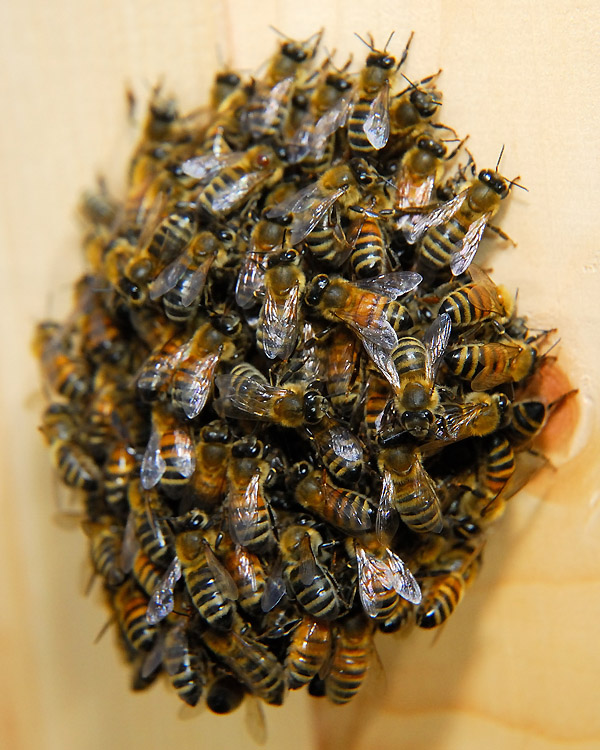
Personality disordered insects?

cluster_bee

Cluster Bees.

Why unrelenting, chronic rage is so toxic.

monsters-nietzsche

There is nothing wrong with anger when it’s needed. Righteous anger is a normal human emotion and helps us survive. When we are faced with danger, unfair treatment, or have been attacked (either overtly or covertly) by dangerous people, it’s normal to feel rage and anger. Anger is a stronger, more proactive emotion than fear, which it normally overrides if it’s powerful enough. Fear keeps us stuck in abusive relationships. Righteous anger is the only emotion that can give a normally fearful abuse victim the motivation and drive to leave their abusers and/or take action against them. All this is perfectly healthy and anything less than that is bound to keep you stuck in an abusive, codependent relationship.

But some people, especially those who suffered horrendous abuse by their own parents or caregivers who were supposed to love them, cannot let go of their rage, even after they go No Contact. That’s understandable, especially if their lives have been ruined due to the abuse they endured. But chronic rage isn’t healthy or helpful. Staying in a state of unrelenting, permanent anger is physically, mentally, and spiritually dangerous because it continues to fester and build on itself long after any immediate danger is past. Chronic rage destroys the body by releasing unhealthy levels of cortisone (the fight-or-flight hormone) into the blood, and this can lead to high blood pressure, headaches, heart problems including heart attacks, and a host of other medical problems. Anger is bad for the body when it’s chronic. High levels of cortisone brought on by rage are meant to be temporary and allow the person to confront or escape; otherwise it’s a poison.

rage2

Chronic rage is mentally and spiritually dangerous too. It festers away inside a person and causes them to become bitter and toxic to themselves as well as to others. It prevents a person from ever being able to feel true happiness or enjoy life. Chronically angry people are hard, unforgiving, bitter, cynical, easily enraged, and in great danger of becoming narcissistic themselves. I’ve become sadly aware of this sort of thing happening to some victims of abuse. That’s why I don’t think people should remain in a state of chronic anger, if it’s at all possible for them to move away from it. A good (non-narcissistic) therapist can help–or a pastor, rabbi or priest, or even a mature, empathetic non-angry friend if a competent therapist is unaffordable.

Letting go of rage doesn’t mean loving, enabling or forgiving your abusers. It doesn’t mean “hugging the narcs” or feeling sympathy for them, if you’re not so inclined. Letting go of anger when the danger is past is simply a step toward health and healing. The sort of unrelenting, chronic anger I’ve seen so often that keeps people stuck in a mentally dark place even without their abusers present can become a form of self-abuse. In essence, their abusers are continuing to destroy them even if they are no longer in contact.

Chronic, unrelenting rage can turn formerly good people into exactly the kind of people they hate the most–narcissists. They may not be aware this is happening to them, but others can see it. This is also one of the reasons why narcissism is so contagious and is sometimes compared to a communicable disease. Abusive, malignant narcissists can easily turn a person into one of them. Even Henry Rollins said so.

Apology for comparing narcissists to schizophrenics.

Over a week ago I wrote a post that was very controversial and angered some ACONs. While I’m not taking the article down or apologizing for its overall message (which I still think was misconstrued and misunderstood by some), I did make a bad call comparing narcissists to schizophrenics. It was in bad taste and not a very good analogy anyway. These disorders really can’t be compared since narcissism is a mental and moral disorder that was chosen by the individual (even if at a very young age) and schizophrenia is not. My sincere apologies for that tasteless and irresponsible analogy.

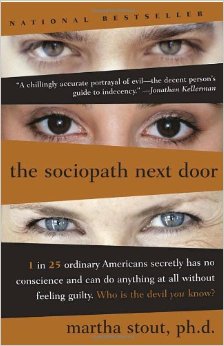
Book Review: “The Sociopath Next Door” by Martha Stout

sociopath_next_door

Dr. Martha Stout’s excellent “The Sociopath Next Door: The Ruthless versus The Rest of Us” is an easy to read, well researched and often entertaining study of the psychology of evil. In some ways similar to M. Scott Peck’s “People of the Lie,” but without the religious overtones, Stout chillingly describes the “ice people”–the sociopaths that walk among us.

As many as 4%–one in 25 Americans–is without a conscience or the capacity to feel empathy for others. Stout doesn’t make a distinction between sociopathy and psychopathy, and in this book she is referring to those people who meet the diagnostic criteria for Antisocial Personality Disorder (ASPD), not Narcissistic Personality Disorder. In fact, narcissism as a disorder is rarely mentioned, although she does acknowledge that all sociopaths are narcissistic.

Stout includes many case studies of how sociopathy can manifest in individuals. Contrary to popular notion, not all people with ASPD (sociopathy) are in prison or even criminals. Antisocial behavior is found as often in boardrooms as in prisons, and sometimes more so. For sociopaths who grew up in well heeled families and were able to get a good education, their antisocial traits are likely to manifest in “socially acceptable” ways. For example, a CEO who needlessly downsizes to increase his own bloated income, ruthlessly firing hundreds of employees without caring about the hardship those fired employees now face, is as conscienceless and unempathic as a cold blooded murderer.

A sociopath can be the gossipy woman next door who tells malicious lies about all the other neighbors, it can be the company president who embezzles and defrauds, or it can be the vicious serial killer who preys after college students.

Stout talks a lot about conscience, that quality that separates the antisocial from everyone else. It’s the lack of this trait that makes people evil. She offers a number of reasons why someone may lack a conscience–they may have suffered horrible abuse or neglect as young children (she discusses the sad plight of Romanian children who were adopted by American parents and many of these kids were found to have an underdeveloped conscience), they may not have been taught prosocial values, or they may be deficient in the parts of the brain where the conscience develops in normal children.

I definitely recommend “The Sociopath Next Door” to anyone who has been a victim of or had to deal with a sociopath, whether at home, work, school, or in a relationship. I’m going to extend the term “sociopath” here to include narcissists and psychopaths because they too lack empathy and a conscience. Really, this book should be read by everyone, because all of us have had to deal with ruthless “ice people” who just don’t care about anyone but themselves.

The 4 types of narcissistic abuse victims.

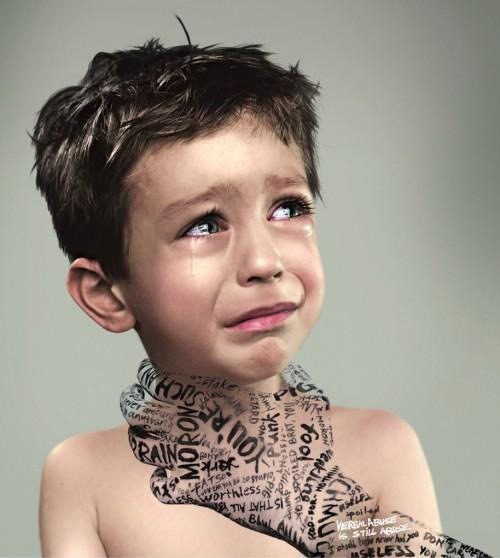
abuse_boy

It’s become clear to me that not all ACONs and abuse survivors are on the same page when it comes to their attitudes toward narcissists.
Because we all are abuse survivors you would think there’d be more solidarity among us, but this is not necessarily the case.

It seems there are four distinct types. In spite of things I may have alluded to in the past, I don’t think any one group is worse or better than any other. They are different, and each has their reasons for having the attitudes they do. I’ll explain why I think the attitudes are different among the four groups. There is definitely a pattern I’ve noticed.

1. The Narc-Hating Group.

female_warrior

These ACONs usually underwent the worst abuse as children, or had two narcissistic parents instead of just one. Having abusive parents seems to instill the greatest anger in victims–more so than having been with an abusive spouse–and this anger isn’t easily let go of. This group has a warrior mentality: to them, ALL narcissists are evil, bad seeds, or demonic, and have no hope whatsoever of recovery or healing. They may acknowledge a continuum or spectrum among narcissists, but it’s not important to them. A narc is a narc is a narc, and they are all considered impervious to change and anything they do is suspect. Some ACONs of this type are ultra-religious and believe all narcissists are seared souls destined for hell.

2. All Cluster Bs are the Same Group.

cluster_b

This group goes a step beyond the first one, in that they believe anyone with a Cluster B disorder–Borderline, Histrionic, Narcissistic, or Antisocial–is character disordered and manipulative, and therefore all pretty much the same and to be avoided like the plague. They do not make exceptions even for Borderlines–the least “malignant” of the four disorders. People who subscribe to this view were as damaged by their malignant narcissistic parents as the first group. One of their parents may have been Borderline or Histrionic, rather than narcissistic– but people with those disorders don’t always make very good parents either. It’s unfortunately all too common for narcissists to collude with Borderlines in the abuse of the child, with the Borderline in the more codependent, subservient role.

3. Not all Narcs are Hopeless Group.

smashingmirror

This group may be in the minority among ACONs (at least among bloggers), but it’s the group I’m evidently in–which has raised the ire of some of the Narc-Hating ACONs. People in this group aren’t going around singing the praises of narcissists and in fact the vast majority strongly encourage No Contact (just as the other two groups do). They do not tolerate or enable narcissistic manipulations and abuse, but they hold that because narcissism may be a spectrum disorder, that those at the lower end of the spectrum (non-malignants) may be redeemable under the proper circumstances and with the proper treatment. They may show more sympathy or empathy for people with narcissism than the first two groups, but they aren’t enablers either. Most do not believe malignant narcissists and psychopaths/sociopaths are redeemable, however.

Many people in this group were part of the Narc-Hating group when they were trying to disengage or go No Contact with their abusers. They used their anger to give them the courage and motivation to disconnect and stay disconnected. But because their hatred and anger toward narcissists isn’t as deeply ingrained as in the first two groups (I’ll explain why in the next paragraph), people in this group eventually can no longer hold onto their anger and prefer to try to understand the motives of those who abused them, while at the same time remaining disconnected from their abusers and not enabling narcissistic behavior. Their desire to let go of anger is very difficult for ACONs of the first two groups to understand, and people of the third group may be seen as betraying the ACON cause, even though this isn’t really the case at all. They’re just handling things differently.

Another reason a person may hold that some narcissists are redeemable is they may have a narcissistic child, and it’s an extremely difficult thing for a parent to accept that their own child may be beyond hope.

It’s been my observation that people in this group may have suffered less severe abuse as children, or had only one narcissistic parent instead of two. One of the parents (usually a codependent spouse) may have actually loved their child, and this love tempered the abuse inflicted on them by the narcissistic parent even if they were forced to collude with the abuse at times. Some people in this group may have even had normal childhoods with non-narcissistic parents, but got involved in relationships or marriages to narcissists (which technically means they are not ACONs at all). It’s been my observation that people who suffered most of their abuse at the hands of a narcissistic spouse or lover rather than a parent never developed the deep hatred toward all narcissists that the first two groups tend to do.

4. Codependents.

Fashion model stylized as marionette doll sitting on violet studio background

Codependents are often (but not always) personality disordered in some way, and many of them are Borderlines or covert narcissists. They are usually victimized by their narcissists, but also identify with and collude with their abusers. Most codependents were abused by narcissistic parents, and are drawn to narcissistic relationships where they are compelled to re-enact their abusive childhoods. This is the group that may never acknowledge they are being abused or reach out for help. They continue to defend and enable their abusers and may believe they are the ones at fault for anything that goes wrong. If a Codependent leaves their narcissist and realizes they were actually being abused, then they are no longer Codependent and join one of the first three categories.

Faith.

rainbow

No matter what sort of bad things happen or how many people disappoint you, you are not alone. God loves you unconditionally and is always there for you no matter what. Turn to Him when you’re afraid, dejected, sick, sad, hurt, angry, or just feeling unsure of yourself. Turn to Him when you’re feeling good too and remember to give your thanks. Trust God. He is your friend and will never betray you.

Can we please move past all this drama?

olive_branch

I’m so very tired of rehashing this same stupid topic, but I’m asking those who have targeted me due to the article that offended you to please just stop writing such hateful comments on your blogs about me. I know you don’t believe it, but I’m on the same page you are. I’m a victim of abuse. I am not one of “them” even if you believe I am. I’m sorry my article was so offensive to some of you. I had no idea it would be THAT controversial. I understand not everyone is ready or able to move away from the anger and hatred your MNs caused you to feel. It’s not for me to judge your reasoning, just as it’s not yours to judge mine. I am asking you to stop judging me and I will stop judging you. If you stop writing hateful comments about me, I will stop going on the defensive and writing negative rejoinders. None of us are perfect. We have all been damaged in varying ways by abuse. Some show it differently than others. No one is the same.

I have nothing more to add. I’m not going to justify my reasoning anymore because it’s pointless. I just want peace and to be able to get back on track in my own recovery. If you don’t like this blog or the direction you see it taking, please don’t read it. We don’t all have to agree about everything. Can we please just move on now?

My son didn’t escape unscathed.

leavinghome
This is not a photo of my son, but it looks a little like him.

My 23 year old son was scapegoated and bullied by his father when he was a child and teen (which I’ve written about before). As the most sensitive and nervous child in the family who was able to see through his father’s malignant narcissism, his father began to target him for abuse when it became clear to him my son had a good built-in bullshit detector.

When he was 17 he moved out of our home to stay with a female police officer who worked at his school. She was very supportive but after awhile he decided to move back in with us briefly. When he turned 18, he moved to another state and has not been back, although he does talk to me on a regular basis. Due to lack of funds, I’ve only seen him 3 times since he moved out in 2010. He is doing well though–working two jobs, one as a management trainee for a chain of convenience stores in the Tampa, Florida area, the other as a Carraba’s server where he sometimes pulls in as much as $700 in a single weekend.

He has many interests and talents, including dancing, animation, and filmmaking (which is what he really would love to do). He came out as gay when he was 17. After that happened, he transformed from being a nerdy, nervous teenager with few friends to a very popular young man with a geeky, eccentric sort of cool and many friends. He doesn’t do drugs or smoke. He drinks, but doesn’t appear to have an alcohol problem.

ianrowan3
Photo of my kids in Texas in 2001.

I thought he somehow emerged unscathed from the family dysfunction. He shows no signs of having any personality disorder, although he has reported having panic attacks and he tends to be obsessive in his thinking. He’s also prone to depressions.

Tonight we talked to each other on the phone for awhile and he described his obsessive thinking. He worries about locking the door, for example, and has to keep going back to check to make sure he locked it. He hates having anything dripped on him, and that can set off a rage attack. They are like panic attacks, but instead of panic, he feels rage. He doesn’t act on the rage, but he feels it. Then he feels guilty for feeling that way. He doesn’t like people approaching him from behind and is jumpy and wants to attack when that happens. He worries incessantly about the impression he makes on others and suffers from occasional paranoia, and thinks others are out to hurt him, even when there is no rational reason for him to think this.

kelphead
Sporting kelp “hair extensions.”

It sounds to me like he suffers from a severe anxiety disorder, and probably has OCD. He can afford health insurance now, so I told him to please see a therapist who can find out if what he has is OCD or something else, and possibly give him some medication and therapy. He’s willing to do this. I still think he’s the most mentally healthy person in the immediate family, and the only one who is doing well financially and doesn’t appear to have a personality disorder, but he’s far from unscathed from the abuse inflicted on him, and his hypervigilance and anxiety is no doubt due to that (though there could be a biological component too).

Pyrrhic victory.

pyrrhus

Today was my Best Day Ever– 1,062 views.

But it came at a great cost, due to the ugly drama that’s been going on because of some bullies who have targeted this blog and me because they disagreed with an article I wrote a week ago.

I know they would love nothing more than for me to take down this blog, but it’s not going to happen no matter how much they bellyache about it. I think it’s hilarious though, that their hatred has actually helped me get more viewers. I’m sure not all the views are from people who wish me and this blog ill.

Most of this is sarcastic. I don’t really care about the views. I wish the people targeting me would just please move on. That’s all I want to do. Live and let live.

Need prayers for my daughter.

My daughter injured her back in 2007 (she fell off the second floor deck of our house) and has had back problems ever since.

Yesterday her back started to become very painful and she could barely move. Today she reports she has tingling in her legs. She is on her way to the hospital where they will be testing to see what’s wrong.

Please keep her in your prayers. Thanks.

ETA: I just found this online, which explains what may be causing the leg tingling. It’s a condition called sciatica and has several causes. I believe it’s due to her injury and yesterday she did say she strained her back attempting to pick up a heavy box.

http://www.nlm.nih.gov/medlineplus/ency/article/000686.htm

Sciatica
Sciatica refers to pain, weakness, numbness, or tingling in the leg. It is caused by injury to or pressure on the sciatic nerve. Sciatica is a symptom of another medical problem. It is not a medical condition on its own.

Causes
Sciatica occurs when there is pressure or damage to the sciatic nerve. This nerve starts in the lower back and runs down the back of each leg. This nerve controls the muscles of the back of the knee and lower leg. It also provides sensation to the back of the thigh, part of the lower leg, and the sole of the foot.

Common causes of sciatica include:

Slipped disk
Spinal stenosis
Piriformis syndrome (a pain disorder involving the narrow muscle in the buttocks)
Pelvic injury or fracture [I’m guessing this is the cause]
Tumors

Symptoms
Sciatica pain can vary widely. It may feel like a mild tingling, dull ache, or burning sensation. In some cases, the pain is severe enough to make a person unable to move.

The pain most often occurs on one side. Some people have sharp pain in one part of the leg or hip and numbness in other parts. The pain or numbness may also be felt on the back of the calf or on the sole of the foot. The affected leg may feel weak. Sometimes, your foot gets caught on the ground when walking.

She just texted me this from the hospital. These are all the tests they will be running and how long they will take.

testing_sciatica