The latest on the NPD* sufferer in “Another Narcissist Who Wants Help”

trapped2

I thought this may interest those of you who read my article from April 30, “Another Narcissist Who Wants Help.” It’s a followup email he sent me yesterday, describing some of the things he’d doing to attempt to heal himself from NPD or at least be able to control its symptoms better.

* I do have some doubt he actually has NPD though, due to what appears to be a normal level of empathy and a lot of self-awareness; I think he may be being too hard on himself and suffers instead from something like BPD. He also has no official diagnosis.

All that being said, what this young man is trying to do and has dedicated himself to doing –opening himself to being vulnerable and letting himself feel and share his honest emotions–is incredibly courageous, especially for someone as young as he is (he’s in his early-mid 20s). He’s also doing his homework–he seems to be doing a LOT of reading about NPD, if this email is any indication. He may not actually be a narcissist, but even so, it’s still a courageous thing he’s doing. Any of us who suffer from being too guarded–which is most of us–can benefit by giving ourselves permission to just feel life in its glorious spectrum of colors.

I can tell this young musician is sincere because he’s been watching all of Brene Brown’s videos . In fact he is the person who tweeted about Brown’s compassionate and sometimes humorous messages of being authentic and vulnerable in a world that hates and fears those things. If you take on the challenge of setting yourself free of whatever traps you– whether it’s a narcissistic mask or the fear that fuels so many other disorders — it takes a lot of strength and courage to do that. Which means becoming vulnerable isn’t becoming “weak” at all — it’s just becoming an authentic human being.

I have permission to repost the email I got, removing personal details like names.

Original email is in this post: https://luckyottershaven.com/2015/04/30/another-narcissist-who-wants-help/

Email received 6 weeks later (yesterday)

[…]It’s not really a bad thing to share how we are feeling – in fact NOT sharing how I feel is probably one of my biggest downfalls. So it is healthy to express your emotions to someone, wherever they’ve come from. If you’re feeling emotionally down, or wounded it’s worth remembering one of my favourite quotes by Iyanla Vanzant (you’d love her when she talks about relationships check out her appearances on Oprah’s Lifeclass she’s awesome) which is that ‘a wound needs a witness’ – meaning it is in our nature as humans to want to share our feelings. The worst part of narcissism is it leads the narcissist to detach from their true feelings, and results in the narcissist viewing emotions in others as weak. I could imagine that belief that emotions are weak can be contagious but we weren’t put on earth to suppress ourselves, but express ourselves! So remember your feelings are a huge part of who you are so I don’t think you should deny them, and I don’t think it’s a bad thing to express them (even if I have been trying to silence mine for years ha!)

I hope you’re doing well – I’ve been immersed in personal exploration lately. The book ‘The Drama of the Gifted Child’ has been fascinating for me and I’d thoroughly recommend it (or maybe it was you who recommended it to me?) if you want to better understand the origins of narcissism. Much of it resonated with me and it’s a very hopeful and forgiving text. I understand it’s one of the main books on the subject. I’m moving on now to a book called Disarming the Narcissist which is interesting because even though it’s from the point of view of someone living with a narcissist in their life it helps me see how I can better inter-relate with the people in my life.

I’ve kinda realised that the worst parts of narcissism don’t actually manifest themselves in my life at large: I have healthy and thriving friendships. I’m not going to lie and say I am not centre of attention a lot because I am, but I’m here for my friends when they need me and I’m working on being even more available emotionally and otherwise in the future. I don’t think I’m ‘cured’ but I am aware that the extremes of my difficult qualities tend to bubble up tot he surface only in relationships where consistent intimacy is expected. So basically romantic relationships. That’s not to say the work I’m doing on myself isn’t important across my life but it certainly is most relevant when I’m in love, because it is in those times my frequent emotional detachment becomes a problem. Detachment from my own feelings means I am longer able to experience the feelings of those around me, which in time results in me objectifying them and treating them less than well.

Interestingly music has been important for me too. I haven’t really lay down in bed with the lights down low on my own with a great album on in the background in so long. I think listening to music keeps me connected to my emotional experiences and helps draw out my true feelings. Maybe that’s what happened with you before you drafted that post? I think it’s a good thing. Music is, of course, the feelings of other people and we feel connected to the human experience by listening to and enjoying it.

Oh and Brene Brown! What a gem! I’ve downloaded her book Daring Greatly (think that’s its name) and can’t wait to get started. I feel that book is gunna be a proper uplifting read, and with the summer kicking in here now I’m looking forward to reading in the sun in Hyde Park with a gin and tonic and some olives! Yay!
Only ten more to go!

almost-there3

I need only 10 more followers to hit 1,000!

Maternal love.

I find these pictures beautiful and moving. Some prudish types may find them “pornographic,” but I don’t, not one bit. They are just so natural and lovely.

mother_love1

mother_love2

For the record, I don’t find anything wrong with public breastfeeding, and I think we need to get over our discomfort with it.

Protected: Embracing vulnerability: reparenting myself.

This content is password-protected. To view it, please enter the password below.

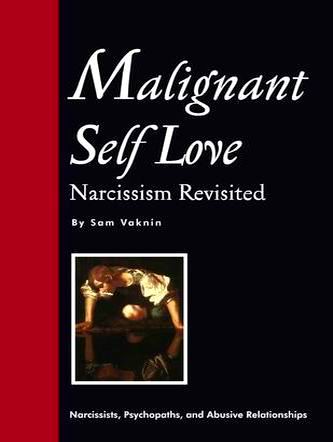
Book Review: “Malignant Self-Love” by Sam Vaknin

malignantselflove
Vaknin’s “Bible of Narcissism”

I first heard about Sam Vaknin’s book “Malignant Self-Love” about 15 years ago–when I made a cursory online search about NPD after I realized my own mother was one. At that time, Vaknin was pretty much the only voice on the Internet about narcissistic abuse. Vaknin, a self-confessed narcissistic psychopath , had written a “bible of narcissism” and it became obvious, from scanning the selected pages he provided in PDF format on his website (which has never been upgraded to a more current look and format–he uses the ancient blogging site, Tripod), that this guy was obsessed with his own disorder to the point of unhealthy navel-gazing and what’s more, he and seemed to hate people like himself. What was this, some kind of pathology performance art?

His book and his own story that inspired the book intrigued me, but at the time, I was still trapped (or thought I was trapped) in my abusive marriage and my kids were still very young, so I filed this information away in the back of my brain, and quickly moved onto other things, such as trying to keep my doomed marriage together. In fact, I didn’t think about his book again until late last year, after I left my narcissist.

When I started my blog in September 2014, Vaknin still had a huge presence online (though he no longer had a monopoly on narcissism). He was often quoted on ACON blogs and even in more serious articles in publications like Psychology Today. The difference was, by now, he was no longer alone. There were other voices joining his–Kim Saeed, Michelle Mallon, and Kathy Krajco (who is with us no more) just to name a few, and of course psychologists and other authors like Dr. George K. Simon, Robert Hare, and Marsha Stout. And too many ACON (Adult Children of Narcissists) bloggers to count. By this time, Narcissism was a Very Hot Topic, at least on the Intenet. Sam Vaknin probably began that trend, in spite of his being so vilified by so many of the narcissism bloggers he paved the way for.

A self-professed malignant narcissist writing self help books for victims of abuse may seem like the ultimate irony–but when you look a little deeper, it makes a lot of sense. Who better than a narcissist to know what makes a narcissist tick? Every other expert who writes books about narcissism has to make educated — or not so educated — guesses.

If you’re not a narcissist, it’s almost impossible to imagine what such a disorder can feel like to its bearer, just as the pain of cancer can never be convincingly described by one who has never suffered from cancer. If a book were to be written about what it’s like to have cancer, the writer should be a cancer survivor–or one about to succumb. My point here being that Sam Vaknin, whether you like him or not, whether you think he’s doing ACONs a service or hurting them, whether he’s got the proper credentials or not (and personally I don’t care about the whole credential brouhaha because not once in the book does he say he’s a mental health professional and in fact it’s full of disclaimers), is definitely qualified to write about narcissism. His primary qualification–the only qualification that really matters–is that he is speaking from personal experience.

So I pulled out my debit card and ordered the huge black-and-red tome with its Caravaggio “Narcissus” illustration on the cover (which, for me, was a draw in itself, because I love the painting). It set me back about $40 on Amazon (you can get a copy signed by the author for about $54.95) I thought the price was a bit high, until I held the book in my hands. It was as big as the Bible! Maybe even bigger. I flipped through its onion-skin thin Bible-like pages and saw how tiny the print was.

Oh, man, I thought. I don’t think I can read this. But I was determined to. I wanted to understand what it felt like to be a narcissist, what it felt like to be inside Sam’s head. And so I began to read.

Malignant Self-Love is not a book you can read in one sitting–or even ten. Maybe not even twenty. Normally, I’m a very fast reader. Until I started blogging (and no longer had time to read much), I could consume about 3 good-sized books a week. People looked at me like I had three eyes and a horn growing out of my head when I’d tell them I finished a 300 page novel in 2 days. But Vaknin’s book is different. It’s not only got a LOT of information–almost more information about narcissism than you’d ever need or want to know–but it’s a dark and depressing read too, and I found that while reading it, I felt my mind being sucked into Vaknin’s bottomless black vortex of pain. He’s pessimistic, negative, and hates his own disorder. He also seems to hate himself for having NPD, and demonizes narcissists in general, referring to them as non-humans and machines. He demonizes himself in the process, and warns his readers to stay far away from people like himself. You would think from all this encouraging advice to the sort of people who would have been his prey, that he cares about the victims. I’m not so sure, since he himself is quoted as saying he never intended to help anyone by writing Malignant Self-Love, that his primary motive was narcissistic supply and attaining a guru-like status for himself.

samvak3
Sam Vaknin, the psychopathic, emotionless predator.

Yet in spite of his heart never having been in its creation, Malignant Self-Love is an outstanding piece of writing, and English isn’t even Vaknin’s native language. He weaves words together into a beautiful piece of literature the way a holy man weaves tiny colored threads together to create a Persian rug–with an intricacy and detail that is rare in modern writing.

Indeed, Vaknin’s writing at times can seem as if it’s from a bygone century. His phrasing is old-fashioned and his writing is highly descriptive, hearkening back to 19th century authors. At times it reads almost like poetry. And it’s very emotional writing. You come away from the pages (which feels somewhat like coming up for air after having been underwater too long), with the strong sense that whenever Vaknin refers to the “Narcissist,” he is really speaking about himself in the third person. There is passion and pain in these pages, but more than anything else, there is rage. White hot rage. Sam Vaknin is…intense. And so is his book.

Although some mental health professionals and other who study NPD have criticized Vaknin for appearing to take several related personality disorders–Antisocial, NPD (the less malignant type described in the DSM-V), Borderline Personality Disorder, and even autism–and churn them together into a mutation of the psychiatric definition of NPD into a devastating form of psychopathic malignant narcissism. Some mental health experts have even said Vaknin’s book has been damaging to the field of diagnostic psychology because it blurs the lines between several distinct personality disorders.

But since when is the field of diagnostic psychology a real science anyway? At best, it’s a social science; at worst, an art form–so in my mind, Vaknin’s theories about NPD make as much–or more–sense than some of the experts.’

Vaknin was also not the first narcissism writer to ever do this. While M. Scott Peck’s 1983 book “People of the Lie” is written from a completely different perspective from Vaknin’s–one with religious overtones written by psychiatrist who is also a born-again Christian–Peck’s book too seems to mix traits of NPD and ASPD. And while Peck didn’t call the hybrid disorder “malignant narcissism” (he calls it “evil”) because that term wasn’t in wide use in 1983, people could relate–because we almost all know someone like that. Vaknin’s book also describes people that victims of narcissistic abuse recognize–a dangerous kind of narcissist who has nothing but ill will toward others, but it was born from having been abused themselves, as Vaknin was abused.

Vaknin’s readers are mostly women, who are in a relationship with a narcissist or thinking about leaving one. Sam Vaknin does not disappoint. Victimized, emotionally damaged women see Vaknin as a kind of online therapist (especially those who frequent his discussion groups and forums), and the “transference” of strong feelings of a patient to their therapist is an important development in the psychotherapeutic relationship. If they’re using the Internet as their therapist, Vaknin can easily become the object of these feelings of transference. He becomes a kind of mirror reflecting back to them all the admirable qualities they have imbued him with–-which may or may not be accurate-–but it’s what they want or need to see in him. The problem is, unlike with a therapist in a controlled psychotherapeutic setting, women experiencing transference toward a online cult hero like Vaknin have no idea what to do with these feelings or how to use them to learn more about themselves. But on the plus side, he does tell them how to disengage and tell them WHY they should disengage and what makes their narcissist tick, and of course he’s right. Many of these women (and men too) claim Vaknin’s book saved their lives and helped them get started along the road to self-discovery and freedom from abuse.

samvak2
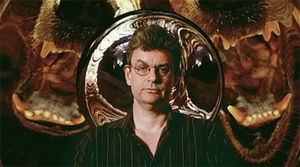
I think this picture shows a sad side Sam Vaknin rarely shows in public. That’s why I think it might have been a candid photo that caught him with his mask temporarily down. Of course he could be acting for the camera too.

If you don’t like ponderous, pessimistic tomes or books that don’t require the reader to think, then Vaknin’s bible of narcissism may not be for you. But if you like a book you can savor and digest over weeks or months, the way you would savor a fine wine by taking small sips and not chugga-lugging it down like a cheap bottle of Gallo, then I recommend his book if you’re in an abusive relationship with a narcissist, trying to go No Contact, or just interested in narcissism. His writing is so good it’s worth reading even as just a work of literature, even if you disagree with his assessment of NPD as a blight on humanity and the precious little hope he conveys that sufferers of NPD can ever get well (which is one of the few problems I have with his book).

It took me nearly three months to finish Malignant Self-Love, but only because I could only swallow a little of his brand of darkness at a time without making myself sick. However, when I finally read the last page, I came away feeling like I had an insight into my narcissists that no one else could have made possible. It was as if Mr. Vaknin provided a sort of mirror to my narcissists and made them talk to me– openly and honestly–about why they did the awful, hurtful things they did. In giving my narcs a voice, albeit a depressing, raging one–I felt as if Vaknin’s book had somehow stripped away some of their power over me. And that’s always a good thing.

MAD is still around?

I saw this at the supermarket, so I splurged. It set me back $12.99. I had no idea MAD was still around.

mad_magazine

The furnace.

pipes-front.freeimage

In 1968 our family moved to a Dutch Colonial three-story house built in the 1920s. We only lived there for five years, but the memory of that house is etched into my mind like veins of quartz in granite. Some other time I’ll write about how cool the entire house was, but right now my concern is the old oil furnace that lived in the basement.

Yes, it lived there. It wasn’t hard to imagine that furnace was alive. It had a personality.

Its squat rotund body stood in the sooty gray-concrete corner like a Russian sentinel from a lost age. Its concrete exterior had been painted what appeared to have been white in the distant past, but had turned a dirty tan with age. Rust stains snaked along it like varicose veins. Tumors of soot embedded themselves here and there and filled its crevices. The furnace was covered with guages and meters relating information about the furnace’s internal state my young mind couldn’t understand.

Snaking from the furnace were too many old iron pipes to count. Some were painted what had once been white but were now pock-marked with rust the color of old blood, others were unpainted and rusted over completely, and a few had been replaced with more modern steel pipes that looked out of place. All these pipes stuck out of the furnace like limbs, and converged along the ceiling, delivering their payload of heat to the house that was home to the inhabitants that that served it so lovingly.

The furnace chugged along in the cold months, clanking and blatting and hissing in its corner. Sometimes it leaked hot water all over the peeling painted cement floor around it. Other times it farted black smoke. There were a few times the entire basement was filled with its sooty miasma, and you couldn’t go down there. It was probably dangerous. I used to wonder sometimes if the old furnace might explode when it did that. I was assured it was safe but I never was sure.

Sometimes the furnace scared me when it did that. It also scared me when it made more hissing and clanking sounds than normal. I used to think it was angry that it had to live in the ugly damp unfinished basement and the only light it ever saw was the dim gray light that filtered through the filthy slit-like windows that dotted the white painted brick wall near the ceiling. Those windows were veiled with spider webs and caked with soot. Even my clean freak mother, who had a meltdown if she saw so much as a gum wrapper anywhere else in the house, never did anything with the basement windows. The basement was the one place she allowed to get dirty, except for the laundry room, which had been partially modernized with a carpet, fluorescent lights, and acoustic tile ceiling. The rest of the basement was lit–barely–with bare incandescent bulbs screwed in between the ceiling rafters and operated by metal pull-chains. An old rusted (but working) toilet sat in a tiny closet with only one bare bulb screwed overhead, and no sink.

I used a tiny room that at one time had been used for canning as my escape from the dysfunction that regularly went on up above. My bedroom was too close to the master bedroom, and offered little refuge from the oppressive tension and constant arguing. My basement room was outfitted with a metal desk with wood grain Formica where I did all my homework, and an old piece of salvaged carpet. The canning shelves housed my Barbie dolls and all their accoutrements. The cinder block walls were painted mint-green. A small painted shelf sat above the desk, and my favorite books made their home there. I loved my books. They opened parallel universes in which I could escape from my painful reality.

I’d stay in my little room for hours at a time, barely aware of anything except the world of my books and Barbies. Although I had a probably healthy caution of the furnace and didn’t like to get too close to it because it was so unpredictable, its clanking and hissing noises, when they weren’t too loud, were comforting to me. Its grumpiness and isolated loneliness reflected my own state of mind most of the time. I could relate to it.

Occasionally after one of its sooty temper tantrums, a serviceman would come and minister to it like a doctor on house-call, and then the furnace would be happy again. If a psychiatrist could have given the furnace a diagnosis, I bet it would be Borderline Personality Disorder.

I remember taking a picture of it shortly before my parents’ divorce. I kept that picture for years, but somewhere amidst my many moves, it was lost. I know the house is still standing and was updated at some point (my family never updated anything in that house), but I would be shocked if that old furnace is still there, and even more shocked if it still works. Sometimes I wonder what might have happened to it. I hope it was treated well.

Florida Sunset by Lufti Shedraway

I couldn’t take my eyes off this photograph. It reminds me of where my son lives. The sky looks like it’s on fire.

digger666's avatardigger666

via colour my world.

djferreira224:

View original post

Laughing.

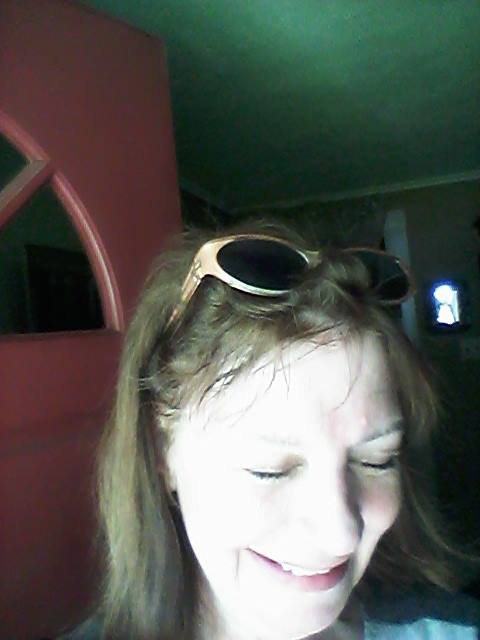
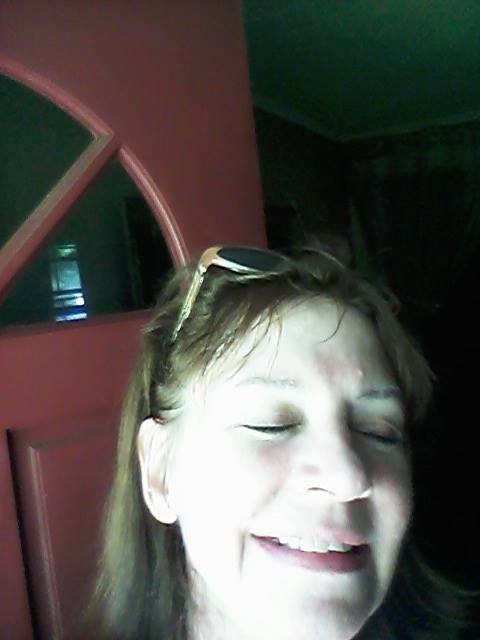
I like these selfies I just took.

laughing_me1

laughing_me

“Borderline Personality Disorder and Narcissistic Rage”

I don’t generally like the sort of comparisons I see so often that stigmatize BPD as a less stable, “crazier” form of NPD, but it’s a fact that people with both disorders have problems with rage, and their rage can manifest in very similar ways, even though the motives behind the rage are different.

Here’s an article from Narcissist’s Wife that talks about the similarities and differences, and how you can protect yourself from the angry B’s. (sorry for the bad pun, I couldn’t resist).

Borderline Personality Disorder and Narcissistic Rage

Narcissistic-rage2-1024x571
Credit: http://www.narcissistswife.com/

Borderline Personality Disorder has many symptoms in common with Narcissism. In fact, the two disorders often overlap to some extent. This can cause a lot of confusion for the spouses and partners of these people as they go from seemingly normal and ok and you start thinking “well, maybe they aren’t a narc, maybe they were just having ________” (Insert whatever excuse you happen to go to when they’re behaving badly). Not everyone is 100% psychopathic Narcissist with the heart of a snake. As with anything in life, sometimes Narcissism comes in shades of grey.

All that said, Borderline Personality Disorder can express itself in ways very similar to Narcissism and one of the most common is in rage. The temper tantrums narcissists throw are very similar to a Borderline, though they are motivated by different things. Knowing these things may help you not only anticipate an explosion, but temper it as well.

Borderline Outburst

Unlike a Stone Cold Narcissist (who uses rages to manipulate, control, and assert his superiority) borderlines are extremely insecure and emotionally unstable. Nearly all their emotions go up and down (leading one to question Bipolar disorder) but anger is the most difficult for those around him/her to put up with. Their intense and fiery anger comes from a deep belief that you don’t care about them, are not listening to them or are otherwise not meeting their needs. They strike out in pain to punish the one who they believe is hurting them. Unfortunately, this may all be in their heads, and their pain could actually be coming from another source that they are not prepared to deal with or that they are otherwise bound to not be able to express anger at, so you become their emotional punching bag.

Those without an overlapping Narcissistic disorder may feel shame and embarrassment, and apologize when their emotions have calmed down a bit, for fear of losing you. Though they may feel remorse, their behavior will not get better unless they are in treatment. A Borderline with Narcissism though, will not make such overtures. Your perceived faults are deserving of their rage in their eyes and the punishment for your shortcomings in their eyes is their scorn and anger. They are more demeaning in their anger, and can be much more passive aggressive.

Read the rest of this article here: http://www.narcissistswife.com/borderline-personality-disorder-narcissistic-rage/#respond