Are BPD and complex PTSD the same disorder?

age_3_1961_2
Me at age 3 in the zone. Was the template for my BPD already laid down?

Ruji, a new commenter on this blog, made an interesting observation–that BPD should be divided into at least two subtypes: Empathy Challenged/Character Disordered (closer to NPD/ASPD) and Highly Sensitive Person with Emotional Dysregulation (closer to the type I have, although at different times in my life or when extremely stressed I have displayed the more character-disordered subtype). I agree with her. Ruji’s idea is remarkably similar to The World Health Organization’s two subtypes of BPD:

1. F60.30 Impulsive type
At least three of the following must be present, one of which must be (2):

–marked tendency to act unexpectedly and without consideration of the consequences;
–marked tendency to engage in quarrelsome behavior and to have conflicts with others, especially when impulsive acts are thwarted or criticized;
–liability to outbursts of anger or violence, with inability to control the resulting behavioral explosions;
–difficulty in maintaining any course of action that offers no immediate reward;
–unstable and capricious (impulsive, whimsical) mood.

2. F60.31 Borderline type
At least three of the symptoms mentioned in F60.30 Impulsive type must be present [see above], with at least two of the following in addition:

–disturbances in and uncertainty about self-image, aims, and internal preferences;
–liability to become involved in intense and unstable relationships, often leading to emotional crisis;
–excessive efforts to avoid abandonment;
–recurrent threats or acts of self-harm;
–chronic feelings of emptiness.
–demonstrates impulsive behavior, e.g., speeding, substance abuse

Psychologist Theodore Millon has gone even further, proposing that BPD should be divided into four subtypes:

1. Discouraged (including avoidant features): Pliant, submissive, loyal, humble; feels vulnerable and in constant jeopardy; feels hopeless, depressed, helpless, and powerless.

2. Petulant (including negativistic features) Negativistic, impatient, restless, as well as stubborn, defiant, sullen, pessimistic, and resentful; easily slighted and quickly disillusioned.

3. Impulsive (including histrionic or antisocial features) Capricious, superficial, flighty, distractible, frenetic, and seductive; fearing loss, becomes agitated, and gloomy and irritable; potentially suicidal.

4. Self-destructive (including depressive or masochistic features) Inward-turning, intropunitively angry; conforming, deferential, and ingratiating behaviors have deteriorated; increasingly high-strung and moody; possible suicide.

Millon’s Types 1 and 4 would correspond to the Highly Sensitive Person/Emotional Dysregulation type mentioned above (and therefore closer to the Avoidant/Dependent PDs); Type 2 sounds very much like NPD; and Type 3 seems closer to ASPD or Histrionic PD.

complex_ptsd
BPD symptoms are almost identical to those of Complex PTSD.

There are so many diverse–almost opposite–symptoms that can appear with this disorder that one person with BPD can be very different from the next. In fact, you can take 10 borderlines and they will all seem very different from each other, with barely any similarities in their behavior at all. One will be shy, fearful and retiring, never making waves, acting almost like an Aspie or an Avoidant; while another may break the law, lie constantly, and act obnoxious and rage whenever things don’t go their way. A borderline could be your raging boss who drinks too much and ends every annual Christmas party with one of his infamous rages, or it could be the sweet and pretty schoolteacher who goes home every night and cuts herself. She could be the come-hither seductress or the nerdy computer programmer. He may have few or no friends or a great many.

This diversity is not the case with the other personality disorders, which have more cohesiveness in the symptoms their sufferers display. So I wonder–is BPD really a personality disorder at all? Does it even exist, or is it really just a group of trauma-caused symptoms the experts in their ivory towers stuck in a single box called “BPD” because they didn’t know how else to classify them?

In fact, all these diverse subtypes have one thing in common–they are all very similar or identical to the symptoms of someone with complex PTSD (C-PTSD). People with C-PTSD are often misdiagnosed as Borderlines because their behaviors can be just as baffling and manipulative, and both disorders also include dissociative, almost psychotic episodes. Extrapolating from that, I wonder if ALL borderlines actually have C-PTSD.

Earlier today I posted an article outlining 20 signs of unresolved trauma, and I was struck by how similar these were to the symptoms of BPD. And there is also this article that Ruji just brought to my attention that also describes how remarkably similar the two disorders are, but that the idea of fear of abandonment (which is recognized as the root cause of BPD) is not recognized as a factor in causing PTSD and that may be part of why they have been kept separate.

The BPD label, like any Cluster B label, is very damaging to its victims because of the “evil and character-disordered” stigma it carries. One psychologist has even included us, along with narcissists, among the “People of the Lie”!

Yes, it’s true some borderlines do act a lot like people with NPD or even Malignant Narcissism or ASPD, but most probably do not, and are really much more similar to people with Avoidant or even Dependent personality disorders, which hurt the sufferer more than anyone else. But if you have a BPD label, people start backing away from you slowly due to the stigma. Therapists are reluctant to treat you because they assume you will be either difficult and hateful in therapy sessions, or will never get better. Insurance companies won’t pay claims where there is a BPD diagnosis, because it’s assumed there is no hope for you. I’ve had this problem when I’ve tried to get therapy. I remember one therapist who I had seen for the intake session, who told me he needed to obtain my psychiatric records before we could proceed. The session had gone smoothly and I felt comfortable with him. A few days later I received a phone call and was told he did not treat “borderline patients” and wished me luck. So that’s the kind of thing we’re up against if we’ve had the BPD label slapped on us.

Also, as an ACON blogger who works with a lot of victims of narcissistic abuse, my BPD label sometimes makes people wary of me and they begin to doubt that my motives here are honest. At first I was reluctant to talk about my “Cluster B disorder” here, because I knew it might be a problem for some ACONs, who think borderlines are no better than narcissists. But I eventually decided that to hide it away like an embarrassing family secret would be misleading so I “came out” about having BPD (I never actually lied about it, but played it down in the beginning and rarely mentioned it). I’m glad I fessed up, but there have been a few people who left this blog after I came out about it or began to doubt my motives. So there’s that stigma and it’s very damaging.

Both C-PTSD and Borderline PD are caused by trauma. Both are complex defensive reactions against future abuse and both involve things like splitting, dissociation, psychotic episodes, self-destructiveness, wild mood swings, and behavior that appears to be narcissistic and manipulative.

The way I see it, the only real difference between C-PTSD and BPD is that the traumatic event or abuse happened at an earlier age for someone with BPD, perhaps during toddlerhood or infancy, while all forms of PTSD can happen at a later age, even adulthood. But the symptoms and defense mechanisms used to avoid further trauma are the same for both.

Update on Mr. Biggles.

I wrote about Mr. Biggles in this article; he had to be rehomed several months ago (along with my black lab mix, Dexter) because I simply didn’t have the space for so many kitties or the time to devote to my dog, who was alone in the house all day (I wound up keeping Cleo here). I gave Mr. Biggles and Dexter to my ex for awhile because he is always home (that is one thing I can trust him with–animals), but now he is living with my daughter and her boyfriend and seems to be thriving. If anything, he’s fatter and hairier than ever.

mr_biggles
That’s my daughter holding Mr. Biggles.

20 Signs of Unresolved Trauma

Here is a fascinating article about how trauma due to abuse can lead to a post-traumatic condition that resembles Borderline Personality Disorder in almost every aspect. I wonder if this could mean I don’t actually have BPD. I have a lot of these symptoms, although they’ve improved over the years. I was diagnosed with BPD twice but maybe my therapists were wrong. These are symptoms of C-PTSD (which I have seen compared with BPD which it closely mimics). I thought I had recovered from my PTSD but maybe I have not. I’m still going to assume I’m borderline for now, but this makes me wonder. Borderlines have most of these traits, including dissociation.

I am also adding this website to my blogroll because I think it could be of great help to survivors of trauma and abuse. A social worker friend of mine just told me about it. She does not think I’m borderline. Now I’m REALLY confused.

Kathy Broady, Trauma Consultant's avatarDiscussing Dissociation

Unresolved Trauma

Many people enter the therapy process with minimal awareness of their trauma history.  When the trauma survivors are dissociative, they have the ability to block out an awareness of their trauma.  They may know that their family had problems, or that their family was dysfunctional, etc, but they may believe they were never abused.

child abuse child abuse (Photo credit: Southworth Sailor)

However, blocking out conscious awareness of trauma does not mean that the survivors have no effects of that trauma.  Using denial and dissociative skills does not mean that the abuse did not happen.  Denial means that the person simply is refusing to acknowledge or accept the fact that they were traumatized.  They are pretending they were not hurt, when they were actually hurt very badly.

Even if the memories of abuse are hidden from the survivor’s awareness, blocked trauma / unresolved trauma creates very noticeable and obvious symptoms that…

View original post 646 more words

Question about DSM billing codes

I know these codes are only used for billing purposes, but I always wondered why they are numbered/ordered the way they are. Can anyone shed some light on why the decimal digits skip so many places and why the PD’s are ordered this way? For example why aren’t the groups (Cluster A, B and C) grouped together–Avoidant PD (Cluster C) is between Narcissistic (Cluster B) and Borderline (Cluster B). That doesn’t make any sense to me. The same thing with Dependent (Cluster C) being between Antisocial and Histrionic (both Cluster B). Are these numbers just assigned randomly or is there a reason? Maybe a psychiatrist or medical billing expert here can answer this.
I know it doesn’t matter but I’ve always been curious about this.

301.20 Schizoid
Personality Disorder

301.22 Schizotypal
Personality Disorder

301.4 Obsessive-Compulsive
Personality Disorder

301.50 Histrionic
Personality Disorder

301.6 Dependent
Personality Disorder

301.7 Antisocial
Personality Disorder

301.81 Narcissistic
Personality Disorder

301.82 Avoidant
Personality Disorder

301.83 Borderline
Personality Disorder

301.9 Personality
Disorder NOS

Take a course in “The Power of Vulnerability” taught by Brene Brown

brene+brown

Watch a video, find out more, and sign up here:
https://www.udemy.com/the-power-of-vulnerability/?utm_source=twitter&utm_medium=udemyads&utm_content=POV-Card-1&utm_campaign=Power-Of-Vulnerability-Handles&couponCode=2fc6e527-4a36-4f67-a79f-7f82aecbaa6b
The online course is $29.00

Course Description

Show Up and Let Yourself be Seen

Is vulnerability the same as weakness? “In our culture,” teaches Dr. Brené Brown, “we associate vulnerability with emotions we want to avoid such as fear, shame, and uncertainty. Yet we too often lose sight of the fact that vulnerability is also the birthplace of joy, belonging, creativity, authenticity, and love.” The Power of Vulnerability with Brené Brown offers an invitation and a promise—that when we dare to drop the armor that protects us from feeling vulnerable, we open ourselves to the experiences that bring purpose and meaning to our lives. In this video learning course, Dr. Brown dispels the cultural myth that vulnerability is weakness and reveals that it is, in truth, our most accurate measure of courage.

“The Power of Vulnerability with Brené Brown is a very personal project for me,” Brené explains. “This is the first place that all of my work comes together. This online course draws from all three of my books—it’s the culmination of everything I’ve learned over the past twelve years. I’m very excited to weave it all into a truly comprehensive form that shows what these findings and insights can mean in our lives.”

Over the past twelve years, Dr. Brené Brown has interviewed hundreds of people as part of an ongoing study of vulnerability. “The research shows that we try to ward disappointment with a shield of cynicism, disarm shame by numbing ourselves against joy, and circumvent grief by shutting off our willingness to love,” explains Dr. Brown. When we become aware of these patterns, she teaches, we begin to become conscious of how much we sacrifice in the name of self-defense—and how much richer our lives become when we open ourselves to vulnerability.

“In my research,” Dr. Brown says, “the word I use to describe people who can live from a place of vulnerability is wholehearted.” Being wholehearted is a practice—one that we can choose to cultivate through empathy, gratitude, and awareness of our vulnerability triggers. Join this engaging teacher as she offers profound insights on leaning into the full spectrum of emotions—so we can show up, let ourselves be seen, and truly be all in.

What You Will Receive:

More than Seven Hours of Video Learning – Dr. Brené Brown offers six 60-minute video sections (broken down into shorter lectures) of insights and practices for overcoming our fear of vulnerability and living a wholehearted life, plus two sessions of Q&A with Dr. Brown recorded with participants of the live course.
Written Instruction – Dr. Brown brings you key questions for deeper reflection to help you uncover your own vulnerability triggers and areas of growth.
Complete Downloads of All Course Materials – The entire program of The Power of Vulnerability with Brené Brown is yours to keep and enjoy.

What are the requirements?

No prerequisite knowledge needed.
Just the Udemy platform; no additional materials needed.
You may download the workbook of questions in the supplementary materials.

What am I going to get from this course?

Over 37 lectures and 9.5 hours of content!
In this course, you will participate in six hours of stories, warm humor, and transformative insights, and two live video lectures with Dr. Brené Brown for living a life of courage, authenticity, and compassion.
By the end of the course, you will be able to 1) Explain how to cultivate shame resilience—the key to developing a sense of worth and belonging, 2) Discuss vulnerability as the origin point for innovation, adaptability, accountability, and visionary leadership, 3) Discuss emotional armory—how to avoid feeling vulnerable; myths of vulnerability—common misconceptions about weakness, trust, and self-sufficiency; and vulnerability triggers—recognizing what makes us shut down, and how we can change, 4) Summarize the 10 guideposts of wholehearted living—essential skills for becoming fully engaged in life.

What is the target audience?

Anyone interested in learning more about vulnerability and how to live wholeheartedly.

Brené Brown, PhD, LMSW is a research professor at the University of Houston’s Graduate College of Social Work who has spent the past 10 years studying vulnerability, courage, authenticity, and shame. She is a nationally renowned speaker and has won numerous teaching awards, including the college’s Outstanding Faculty Award. Her groundbreaking work has been featured on PBS, NPR, and CNN. Her 2010 TEDxHouston talk on the power of vulnerability is one of most watched talks on TED.com. Her most recent TED talk, “Listening to Shame,” was released in March 2012.

Can a psychopath be “good”?

angel

I know, it’s a weird question and probably some of you are thinking I’ve really lost my mind this time.

But think about it. Psychopaths don’t have a conscience or empathy. Unlike malignant narcissists, they are not trying to get “supply” from others (which causes narcs to treat people like dirt). Psychopaths are free agents. So I was thinking about the possibility that some psychopaths may not choose evil because being evil simply doesn’t interest them. Maybe they just enjoy engaging in positive or beneficial activities instead, not to help others (because they have no empathy) but just because they enjoy those things over doing evil things.

I would like to hear your thoughts about this.

Gay pride.

Over on Facebook, I had this to say about so many people changing their profile pictures to look like this:

gay_pride

You know what, it warms my heart so much to see this outpouring of support for the Supreme Court victory that now recognizes that gay people can marry and enjoy all the benefits of a male-female marriage. Seeing all the rainbow colors on so many profiles–even people I never expected–gives me have hope for this country, that perhaps we are finally on our way to peace between diverse groups of people and we can just all see each other as fellow Americans. We still have a looooooong way to go, and maybe I’m just being naive or “malignantly optimistic,” but it is a start. Congratulations to all my gay friends.

11 guaranteed traffic boosters.

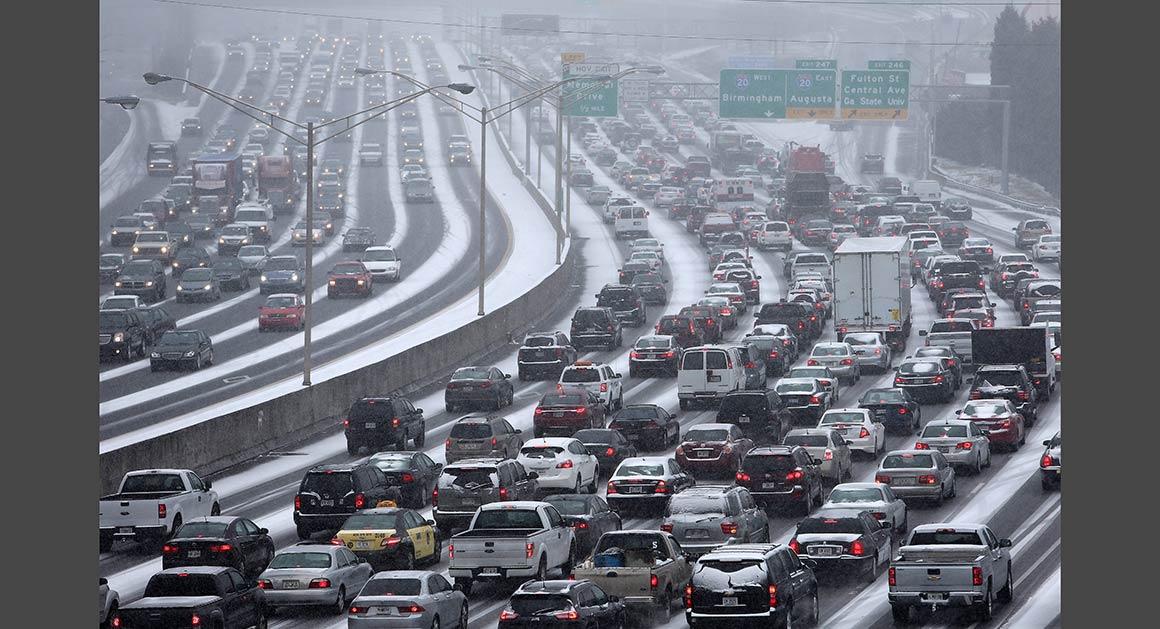
Winter Weather Georgia

In my 10 months of blogging, I’ve noticed certain topics generate more traffic than others. Of course I’m sure there are many I have not covered in this blog, but here are the ones I’ve written about that seem to always generate the most traffic. If I need a boost in views, I find writing about these things seems to do the trick every time.

1. Psychopathy/sociopathy — people love reading about bad people. I guess it satisfies the schadenfruede in all of us, or gives expression to our shadow side. Better yet, write about serial killers/mass murderers, or at least include a photo of one.

2. Malignant narcissism — see #1 (not quite as effective though)

3. Cats — it can even be a single picture of your own cat. Cats are like sex in the movies. They sell.

4. Furries — They’re both cool and strange. They are also polarizing (people either love ’em or hate ’em)

5. Desserts/recipes for desserts — we are all still sugar addicted little kids at heart.

6. Sex and romance — use the word “sex” in the title and watch your stats soar.

7. Pretty much anything about Aspergers — because Aspies abound on the Internet. Online, it’s cool to be a socially clueless introverted geek.

8. Anything controversial — You can have unpopular opinions, but be prepared to have haters if you express them. Between the haters and curiosity seekers, your stats will soar. If your blog is monetized, your haters increase your income. Try telling them that. 😉

9. Numbered lists — They’re called “listicles” and they will boost your traffic because people like easy to digest “soundbites” rather than walls of text. It’s one reason why Cracked.com is so popular (besides being an amazingly hilarious website).

10. Cuteness — anything that makes people go “awww” and feel like they have to punch a kitten to feel manly again is going to get you more hits. Cuteness is as addictive as crack. (see #3)

11. Humor — be careful with this one. Your joke has to be genuinely funny. If you’re not a funny person, skip this one.

Psychopathy and malignant narcissism: what is the difference?

hannibal_lecter

I have been reading a blog written by a self-confessed Psychopath (who scored 36.8 on Hare’s Psychopathy Checklist) who writes engaging and well-informed articles about his disorder. I’ve always wondered myself about what it is exactly that distinguishes Malignant Narcissism from Psychopathy, because a MN can be every bit as cruel and callous as a psychopath. The primary difference is the Psychopath is not an attention-seeker, but the malignant narcissist is still trapped by his or her need for approval, attention and adulation from others. That is also one of the things (along with impulsivity–which ASPD has in common with BPD–as well as the likelihood of law-breaking) that distinguishes Antisocial Personality Disorder (ASPD) from NPD/malignant narcissism.

There are those who believe that ASPD is on the same spectrum as NPD (but is at the top of the scale, while NPD is in the middle), but I’m not sure if it should be because there are qualitative, not just quantitative, differences. My opinion is that malignant narcissism is high spectrum NPD with ASPD traits. But they still need narcissistic supply. Psychopaths do not.

This writer has an interesting observation–that perhaps the only type of person able to control and/or take down a narcissist is a psychopath. He has little respect for narcissists due to their need for others (even as supply) and emotional sensitivity to rejection and criticism.

psychopathy_diagram
The anatomy of a psychopath. Malignant narcissists share with psychopaths the Factor 1 traits, but not Factor 2.

I think this article will explain these differences better than I can.

Narcissism or Psychopathy–Differences?
http://www.psychopathicwritings.com/search/label/Narcissism%20and%20Psychopathy

A Reader asks:

I would be interested in reading anything you wrote on psychopaths need for attention/acceptance. Have you? Like, how would they react to rejection?

Basically the need for attention and acceptance, if it’s a prominent and dominating aspect of what drives a person, is a distinctive trait in Narcissism. As such it is not exclusively something psychopaths are known for.

It is often said that psychopaths have strong narcissistic tendencies, and the statement isn’t completely wrong. But I also often see statements saying Malignant Narcissism and Psychopathy are the same, and this is not the case. There are some very important fundamental differences between psychopaths and malignant narcissists.

Narcissists may be callous and abusive – malignant narcissists definitely are callous and abusive! – and they lack empathy. These are things they have in common with psychopaths. But narcissists have a very strong emotional need for attention or Attention Seeking, Acceptance and Admiration. Their self esteem depends on whether or not they receive these things, and this makes them very vulnerable to rejection and other forms of negative attention such as humiliation, being out shined by someone else, or of being deliberately or naturally ignored.

Psychopaths do not need attention and we certainly do not need acceptance, at least not just for the sake getting it. Their emotional well being does not depend on whether or not they get these things, but they do play a part for most psychopaths’ sense of satisfaction. In this we’re probably not that different from normal people: We like to get attention, to be admired and respected just like everybody else, but we do not feel bad if we don’t get these things.

For psychopaths getting attention and respect from others is most of all a technique to get what they want without having to resort to coercion – threats, blackmail, and physical violence, i.e. – with the same frequency as we otherwise would. Having attention and respect – and acceptance – from others is really only paramount for as far as it is necessary to avoid the risks associated with the more negative techniques. In short: Attention and acceptance to psychopaths are not goals or ends, they’re means to ends.

When we (psychopaths) do care about whether or not we get attention it is not because we have an emotional dependency on being recognized or confirmed by our surroundings. It doesn’t matter to us that people speak badly about us, or that they try to avoid us. Being feared makes an opening for controlling those who fear you, and control leads to possible power.

Making sure you get a lot of attention is also a kind of control, it is a potential opener for gaining power, and it is the central, and often the only, reason why we seek to get it.

This is a well known fact, and the entertainment industry – just to mention one – knows and uses it: Make yourself known, make sure people notice you and that they can’t overlook you, and you have the basis for influencing how people respond to you.

If people like you, there’s a greater chance that they’ll support you or help you in other ways, especially if it’s mutual. <– This is what I've chosen to do, but I certainly did not always use a friendly approach. I've been very abusive in the past, and it has worked very well for me too. – But I've changed in many ways, and I find the mutual idea much more interesting now – and that is good, because it keeps me out of prison, and it has created a good possibility for me to actually do something valuable that others can benefit from… But that was a side note.

Narcissists seek attention and acceptance for it's own sake, and are miserable if they don't get it.
Psychopaths seek attention and acceptance because it is part of a technique to get something else. Attention and/or acceptance for it's own sake doesn't matter to how a psychopath feels.

A Narcissist, opposite a psychopath, is very vulnerable to Social Rejection and rejection in general. If you deny them admiration and respect, and – more important still – if you humiliate them publicly, you can crush a narcissist completely (provided you do it right and with timing).

Narcissists get very hurt when they get rejected.
Psychopaths do not feel any emotional pain or discomfort when they get rejected.

No narcissistic person can go through public humiliation and not feel emotionally very disturbed by it. With this knowledge one can destroy a narcissist quite easily… This is the typical area of most psychopaths' expertise, and it is why we so easily can control most narcissistic people. For the same reason most psychopaths have a lot of contempt for narcissistic people. We see individuals who love to abuse and humiliate, but who are even more vulnerable to these things themselves, and it's hard to find it in your heart to respect such people…
– I suspect we may have this in common with most neurotypicals.

10 things you discover about yourself when you have BPD.

borderlines_like

The linked article is so true it hurts. I’m experiencing a lot of this right now, in thinking about this disorder so much and the ways I have harmed and hurt people in my past and the little ways it still tries to sneak out.

I’m also reading James Masterson’s “The Search for the Real Self,” which I’ll review when I finish it. This book is like looking into a mirror at the way others have seen me all these years.

I feel like I’ve been given a new set of eyes and an entirely new perspective on myself.
I wonder how common it is for a BPD person to reach this point of self-awareness. I guess I must have been ready.

If you have BPD or know someone with BPD, please read this very important article.

10 Things You Discover About Yourself When You’re Diagnosed With Borderline Personality Disorder