The first sign of spring.

proud

It’s just like old times! I just counted, and this weekend I made 10 new posts (11 if I count this one), most of them original content. I don’t think I’ve written that much in a few months. It seems like my inspiration’s back, at least for now. Maybe I’m just feeling better because in 2 days the days will start getting longer as they march toward Spring, and with that, an end to this year’s bout of Seasonal Affective Disorder. As far as I’m concerned, the first day of winter is like the first sign of spring.

I may or may not continue in this vein, but I’m not going to worry about it. I just feel great about how busy I was blogging this weekend. I actually found time to read and comment on other blogs too, something I’m really not very good about keeping up with.

Cluster B disorders are not cool.

uncool

Although Cluster B disorders (the dramatic, emotional, erratic group of personality disorders), are largely demonized on the Internet by narcissistic abuse survivors, there’s another growing attitude online that’s pretty much the opposite–that having a Cluster B disorder somehow makes you an uber-cool badass.

This is a dangerous delusion.  Take it from me, having a Cluster B disorder like BPD (in my case) is NOT fun. Nor is it cool. In fact, it really really sucks. 😦 Both for yourself and everyone else.

This growing attitude of “Cluster B coolness” I’ve been seeing more of goes something like this:

NPD:
bad_sport
This is what your narcissist is really all about.

The Myth:  If you have Narcissistic Personality Disorder (NPD), you’re a self-confident, go-out-and-knock-em-all-dead, ambitious, and highly intelligent badass who Gets. Things. Done. Psychopaths are similarly glorified, but they’re basically the reason why everything’s wrong with the world and empathy is seen as a “weakness.” The narcissistic woman is regarded as a diabolical yet seductive Jezebel who turns strong men into whimpering slaves at the snap of her pretty fingers and who every other woman strives to be. The narcissistic man is regarded as a buff, handsome, masculine, virile, successful go-getter who all women melt for (and that’s how they regard themselves, of course).

The Reality:  In actuality, if you have NPD, you’re a negative, selfish, deluded, demanding, envious, entitled, whining crybaby with no real sense of self who everyone hates (and who hates everyone) but are afraid to say so because it might set off one of your infamous rages or you giving them the even more crazymaking “silent treatment.” People are always walking on eggshells around you because you’re really so unstable, hypersensitive to criticism,  and deluded by and drunk  with your own “greatness.”  You’re a sore loser too and can’t stand to see anyone else do well or get any attention.   No one really likes you and you’re probably right that people are talking about you behind your back, but frankly you deserve it. Also, many narcissists are just plain stupid and have no emotional intelligence.  As for their reputed skillfulness in bed,  many narcs (especially the cerebral types) hate sex and can’t or won’t perform.  Or, as with everything else, they only care about their own needs and to hell with yours.

BPD:

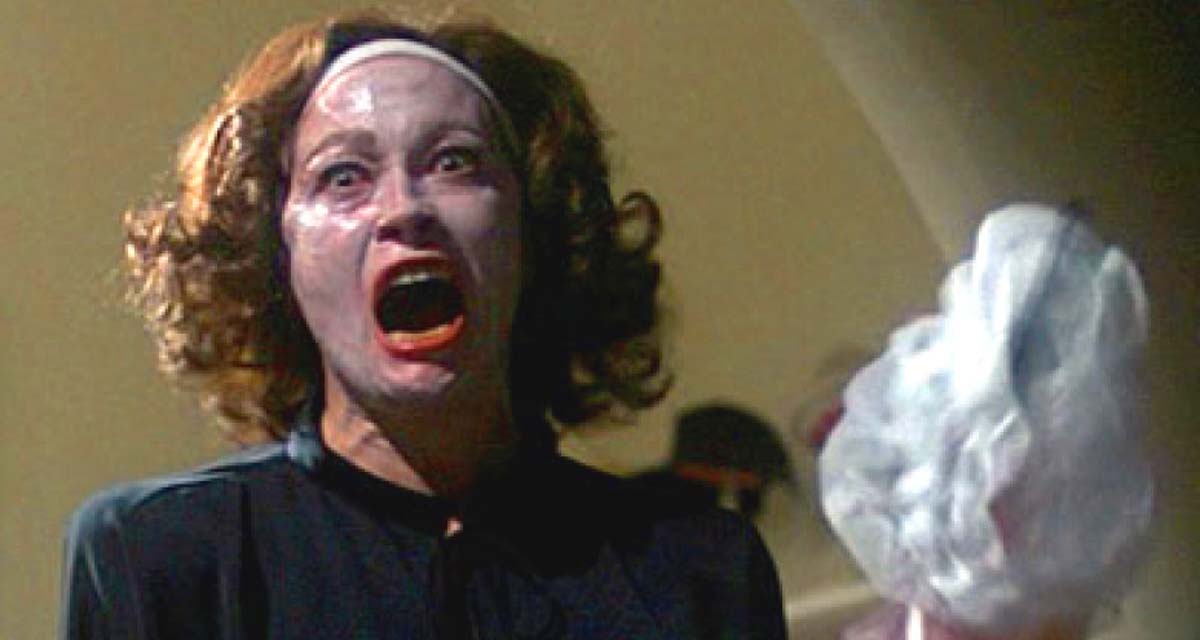
mommie_dearest2
Joan Crawford had a BPD diagnosis. Is this sexy, alluring, and “quirky” to you?

The Myth: If you have Borderline Personality Disorder, some people think this means you’re a sexy beast or babe who’s alluring, unpredictable, passionate, always charming and “quirky”, and never boring. Your chameleon-like abilities to match the attitudes of those around you is seen as evidence of potential Oscar-winning ability. It’s always pointed out how many actors and musicians suffer from BPD.

The Reality:  Let’s be honest.   If you have BPD you’re emotionally unstable, volatile, almost crazy (the original term “borderline” referred to the disorder being on the border between neurosis and psychosis), out of touch with reality, unable to take a firm stance on anything (or conversely, switching back and forth between two extremes, which just makes you look insane) due to your terror of being rejected or abandoned, prone to be an addict, (drugs, booze, gambling, shopping, cutting, eating and/or dieting, other people), clingy,  codependent, insecure, high-maintenance,  and fickle. The borderline doesn’t really have a false self per se like the narcissist, but they can’t access their true self either, so they wind up “taking on” the attitudes and emotions of those who happen to be around them like some kind of emotional bodysnatcher (in contrast with true empathy, their feelings overwhelm them and are out of control), and they just plain overreact to every damn thing so you feel like you’re always walking on eggshells.

HPD:

clown_makeup
You think you look seductive. Everyone else thinks you look like a clown.

The Myth: Although Histrionic Personality Disorder (HPD) isn’t widely talked about, its reputation is similar to that of BPD (but is really the stereotypically feminine form of Overt NPD): usually female, a sexy, seductive siren, dramatic, highly social, loves parties and being the center of attention, and is never, ever boring. You’ll fall madly in love with this bewitching seductress due to their many charms and their great looks.

The Reality: The real truth about people with HPD is that they’re insincere, emotionally labile to the point of being embarrassing (but their over-the-top “emotional displays” are largely an act), shallow, materialistic, and emotionally retarded. They often overdress (or underdress!) or are overly made up for an occasion, are sexually promiscuous, and are inappropriate in social situations, but they don’t care if you’re cringing in embarrassment for them because even negative attention is still attention and that’s what they crave more than the air itself.

ASPD:

aspd
Nuff said.

The Myth:  So here we are at the juggernaut of the Cluster Bs, the baddest badass of them all, Antisocial Personality Disorder (ASPD). Often confused with Psychopathy (and often overlapping with it), the antisocial or psychopathic badass is a sexy and fearless rogue, unconcerned with how others feel about them, possessed of an arresting and penetrating gaze (actually a predatory, creepy stare) that makes you feel like they are really listening to you, determined to get what they want (whether it’s their latest kill or their latest corporate takeover) and never giving up or allowing themselves to be intimidated, by anything. They’re the Rebels Without a Cause, the self-confident Ferris Buellers, the Coolest of the Cool, the celebrated anti-heroes of novels and films socially sanctioned to serve as a receptacle for the Shadow Self that resides within us all. The ASPD badass gives us permission to mentally “act out” our darker impulses, without actually hurting anyone, and that’s why we all love serial killers so much, and why the Ted Bundys and Charlie Mansons of the world get more marriage proposals than any football or film star.

The Reality:  The antisocial badass is really just a heartless and criminally minded horse’s ass, who has no capacity for empathy, isn’t even socially constrained by their need to impress others to garner narcissistic supply (because they don’t require any), and is frequently in prison or has a rap sheet the size of War and Peace. This is a guy (or gal) who will make your life a living hell, beat you to a pulp any chance they get and leave you in a heartbeat and not even remember your name.

If they’re high functioning, they’re the people who are responsible for everything that’s wrong in the world today and the reason why you work 3 jobs and can’t afford a vacation or health insurance.

If they’re low-functioning, if they’re not straight up criminals, they’re flabby, pasty Basement Dwellers who dishonestly leech off the system or their family members so they never have to work and spend all their time trolling Internet forums to get a rise out of random strangers.   Just like my ex.


basement_dweller

Ah, what a studly, irresistably dangerous heartbreaker you are.

If you’re a psychopath or sociopath, you operate more like a machine than a human. Is that something we should be aspiring to?

So there you have it. Cluster B disorders are not cool. They are serious mental (and some believe, spiritual) illnesses, and they are pathetic.   And let’s not forget that people suffering from Cluster B disorders are not happy people.  In fact, most of them are pretty miserable.  They are to be pitied (and avoided) rather than emulated.

A rebuttal in defense of Cluster B. 
Emotional blockages.

emotional_blocks

I think my challenges in really feeling my emotions are due to blockages of energy within my body. I discovered this simply by focusing on how my body felt in my therapy sessions or when I feel an emotion bubbling to consciousness. There’s a definite tightness in three parts of my body, which actually correspond to three of the chakras. If the emotion is strong, there can be a dull pain, as if the pain of the emotion is trying to get out and can’t. I can never fully let go, because of my fear that if I do, I might completely lose control.   I’m learning that ironically,  I have less control by holding negative emotions inside because when I do that, they continue to act as a slow-acting poison long after their job is done, instead of passing out of me like the release they’re supposed to be and freeing my soul to be able to experience more positivity in my life and more able to access my creative spark.

I think I’ve grown to trust my therapist enough that I’ve begun to let go just a little.

There are three places where my emotions are blocked:

The middle of my abdomen. This corresponds to the third, or solar plexus, chakra, which represents competence and power. I’ve always felt so powerless and incompetent.

My chest. This corresponds to the fifth, or heart chakra. This is where the higher emotions such as agape love, empathy, all kinds of (nonsexual) connectedness, and gratitude reside. It’s always been so hard for me to really connect with others, due to fear and lack of trust.

The middle of my throat. This corresponds to the 6th, or throat, chakra, which represents the ability to communicate with others. I’ve always been a shy person afraid to speak up, even if it’s for my own rights as a human being.  Blogging has helped, but it’s not nearly enough.

I think by focusing in on bodily sensations and becoming mindful of your feelings, you can zero in on which ones you need to work on and focus on relaxing and breathing deeply into the blocked areas to be able to feel it fully enough so you can purge it.

I missed church this morning, but…

sleeping_in

…sleeping in can be a kind of prayer too. A good sleep is a God-given gift that refreshes body, mind and soul, and sometimes gives you access to deeper awareness of yourself and your relationships. So I’m sleeping in and not feeling guilty about it. Thank you God!

“Narcissism–Living without Feelings”

narcissus1_caravaggio

I just read one of the most detailed and comprehensive articles about NPD I’ve ever come across, and also one of the scariest. It’s very long so you’ll need to set aside an hour or so to read all of it, but it’s definitely worth your time.

Some (but not all) of the issues discussed are the difference between healthy and unhealthy narcissism; how the borderline differs from the narcissist; childhood origins; the dynamics of narcissistic families (scapegoats, golden children, and bystanders); the 23 characteristics of narcissism (which take into account the less obvious Covert Narcissist); the development of the false self;  the physical characteristics of narcissists (this is new to me); and narcissism in modern society.

Narcissism by Richard Boyd, Perth WA – Energetics Institute, Copyright 2010
Narcissism – Living Without Feelings
http://energeticsinstitute.com.au/narcissism/

The word narcissism is one that has in recent years has been increasingly used in popular press to describe personalities and lifestyles. One form of Narcissism is however a little understood personality disorder which is increasingly showing up in our leaders across political, business, sporting, psychological and spiritual institutions(Behary:2008).

Indeed narcissism and narcissistic is increasingly being used to describe the mass cultural shift to a “self” obsessed culture where there is rampant consumerism, the pursuit of power, excesses, and the abuse of others in the pursuit of these ends, notes Martinez-Lewi(2008).

The word narcissism comes from the Greek mythological figure, Narcissus, who upon seeing his own reflection in a pond, fell obsessively in love with himself and his own image. As you will see in this article, the true unhealthy narcissist we see today, while maintaining a false self or “mask” of achievement, perfection, and the attainment of all the symbols of success and power, hides underneath a self hating, insecure, fragile real self, which fears being uncovered and exposed at any moment.

The key point here is we all need a healthy dose of Narcissism, as else we would not back ourselves in life, nor have a healthy sense of self. There are healthy forms of narcissism. However unhealthy narcissists do not have a healthy sense of self but instead have learnt to live life from a false self.

narcissus2_andecho

Unhealthy Narcissists are not in touch with their true self, instead becoming a chameleon type of personality who seek to project an idealised image to others, and then seduce and control all others that have some value or utility for them, until that persons utility value is exhausted, and then they are dumped and abandoned without remorse by the narcissist.
In some ways unhealthy Narcissism is seen by some schools of thought as a form of depressive disorder as the narcissist underneath the false mask, moves between depression and aggression. The aggression is most prevalent where there is a threat to being uncovered or exposed as being false, wrong, corrupt, or exploitative(Ransky:1998).

The narcissistic person may be male or female, and is obsessive in their primary pursuit of satisfaction, whether that be power, money and other resources to prop up the false self. Another common term for the narcissist in the business context is the Corporate Psychopath, notes Paul Babiak(2006), a noted specialist on the corporate version of this pathological individual.
According to body-mind researcher and M.D, Alexander Lowen, in his book, Narcissism – Denial of the True Self, narcissists share many common traits with bullies, but due to their ability to project a compelling false, idealised self image, and high intelligence, are more likely to “get away with it”, and escape accountability.

Some narcissistic people are “healthy” in their approach to life and achievement, but they are not of the type to be discussed throughout this article. A healthy and productive narcissistic person goes about their lives in a passionate way, achieve their goals, but retain empathy, consideration for others, and often a mindset of contributing to their community. Healthy Narcissism has more of the following characteristics according to Lewi-Martinez(2008) and Meir(2009):
Life is not all about them;
They are able to have stable and enduring marriages, relationships and business careers;
They are often are involved in charity and community service;
These people make and keep promises to others and to themselves;
They can give and take from a grounded place;
They are usually empathic and engaging;
A determined leader who seeks recognition where due and earnt;
Confrontational and accountable to self and others;
Wisely fearful and knows limits;
Self possessed but not selfish;
Very competitive and likes a challenge;
Vain in their achievements but the achievements are real and earnt;
In contact with own inner needs and wants and the difference of each.

cslewis_quote

This article concerns itself with the unhealthy forms of narcissism. Narcissists are found in all walks of life. After reading this article you may identify your spouse, co-worker, friend, relative, parent, boss, therapist, spiritual mentor, favourite athlete, or local or international political figures as potential unhealthy versions of narcissists. They key aspect of these individuals is their grandiosity, and their overstated sense of self entitlement in life often despite often not working hard to earn any such rewards.

Some unhealthy narcissists will be seen to be hard working and have their own achievements to own. Normally these types of Narcissist will also overstate their own achievements and minimise others and their achievements(Lowen:1986). There is often an arrogance in their personality.
Achieving Narcissistic personalities normally have a strong rigid-perfectionistic streak which gives them the discipline to set goals, focus and achieve, but there is a clinical coldness or unfeeling aspect to their natures(Lowen:1986). Many unhealthy Narcissists appear to achieve but in fact are predators who feed off victims they encounter in life, using their victims’ efforts, skills, and hard work, which get assumed and taken by the narcissist as their own, without remorse, recognition or meaningful reward for those around them(Babiak:2006).

In a narcissist’s world, It’s all about them, as Narcissists possess no real empathy, they feign or act empathic, while they delude themself that they are entitled to special treatment, and to not having to bother with detail or drudgery(Babiak:2006). These narcissists often gather a following of helpers or “sidekicks” to manipulate into doing any effort based work for them. Instead they spent their time managing their “image”, being a “visionary”, being “strategic”, establishing key “contacts”, that they argue only they are able to successfully do(Lewi-Martinez:2008).

gaslighting2

Some narcissistic personalities have an obsessive base in the personality where they micro-manage their own life, from work tasks to how they groom and dress, as they do not trust others or their standards of work. Other less rigid types are more focussed on positioning themself as indispensable, yet at the same time try to be unaccountable, being hard to track down, hard to get them to put things in writing, and they will avoid team roles where they are not the leader(Meier:2009).

Where possible they will delegate the work to a co-worker or “sidekick”. Narcissists hate mundane jobs and tasks that are “beneath them” and avoid them by manipulating others where possible to do such jobs on their behalf(Babiak:2006). Narcissists necessarily include others in their life so as to get the other person to do what they are unable to do, do not want to do, or what they feel is beneath them to do.

Read the rest of this article here.

13 things you probably didn’t know about me.

1. My first goal was to be a professional photographer. Now it’s one of my son’s goals (and he actually got a job photographing a birthday party and a wedding).

photographer

2. I’m a converted Catholic but have always been (and still am) drawn to Eastern thought and practices such as meditation and chakra balancing. I still keep my laughing Buddha for good luck. I’m definitely a Christian though.

3. I’ve been reading the Bible more lately but still find it hard to relate to a lot of it or apply it to my life. I’ve never actually read the whole Bible though. One of these days I plan to do so.

bible_study

4. I used to do astrological charts for pocket money when I was in high school.

5. I used to be a big American Idol fan (thanks to my daughter who was addicted to it some years ago).   My favorite contestant was Adam Lambert.

adam_lambert

6. Speaking of which, my kids attended high school with Caleb Johnson, the winner in 2014. They did not know he could sing, apparently no one did.

7. Until I had kids, I wanted to have four of them. Two was plenty.

Mom-and-4-kids-1

8. At one point, my ex and I had 15 cats (we used to show cats).

9. I was on Candid Camera (the old black & white one) when I was about 5. To my knowledge, there’s no record of this anywhere. It was random footage of little kids eating hot dogs. I think this might have been the first reality show.

candid_camera

10. I met Woody Allen 3 times (accidentally) when I lived in the New York area. Once was on my 16th birthday. He signed a napkin and wrote “Happy Birthday” on it. I also met Joni Mitchell in a ladies’ room in Greenwich Village.

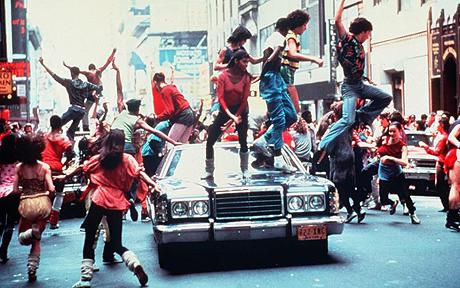
11. I auditioned to be in the movie “Fame” but didn’t get a part because my dancing skills suck and my singing isn’t much better. But I did get to try out after waiting outside for about 6 hours and met some cool people standing in line that day.  NEXT!

Film - Fame

Film Title:FAME Year: 1980 Dir: PARKER, ALAN

12.  I used to model for confession magazines like True Story and True Love.   One time I had to depict a beggar girl (the story was about a throwaway teen) and another time, a pregnant girl fighting with her mother (the mom was my real mother in the photo LOL).   Unfortunately I don’t have any of these photos anymore.  I’m still trying to find at least one of them on Google.

13.  I’m distantly related to both William the Conqueror and Pocahontas.

I just realized how many of these have to do with close brushes with famous people or the concept of fame itself. I really don’t care much about those things, but it’s always a good icebreaker.

Question about “falling snow plugin”

I’ve seen some other WP bloggers have the falling snow effect and I wanted to add it to mine. I did find the app for it and downloaded it, but from there I have no idea how to get it to appear on my site.

The directions are not very detailed, and I have no idea where the “Plugins” page is on my Admin page. Can someone help me out here? I feel like an idiot.

These are the “directions” I’m supposed to follow.

Drop the ‘wp-snow-effect’ folder into your ‘wp-content/plugins’ folder (where is this??)

Go to your Administration: Plugins page and activate the “WP snow effect” plugin (where is the Plugins page?)

Go to Settings / WP Snow Effect to configure the plugin

Unfolding.

origami_crane_in_hand_by_miaauraylea

Tissue paper origami wings
pressed down flat on the table
now unrecognizable sharp edges that cut and slice
No longer beautiful
no longer delicate
a paper thing bound for the trash
made ugly by the rage of its creator
because it didn’t come out perfect
It insulted her pride
and filled her with shame

You came along and saw beauty there
in its flattened ruins
I see you holding it gently in your hands
I see the sadness in your eyes
at what this once was and could have been

Your clumsy but tender fingers prodding its innards
working to bring it back to beauty
Wrinkles are its scars
You are so careful not to tear the aging paper
as you work the jumbled angles back to life

It will never be perfect
even so much as the day it was made
but its unfolding is a testament to your compassion
made beautiful by those who see its value
and breathe life into it
and save it from incineration.

A Guide to Crying in Public.

goodplacetocryCredit: cryinginpublic.com — part of a series of art installations in Hong Kong, 2013 

Funny and useful if you’re the type who cries easily in public places.
I actually wish I had this problem. I have to work hard at it to even cry in private. But if I did have this problem (or if I ever do again), I’d be referring to this list.
I especially enjoyed the reference to losing your sh*t because your husband is a manipulative narcissist. :mrgreen:

A Guide to Crying in Public
By Cassie Murdoch for The Hairpin

Unless you’re one of those lucky people who lives in the middle of nowhere and never has to leave your house, chances are at some point you’ve had a mini-breakdown in a public place. It happens to us all! Normally it’s not anything earth-shattering that brings it on — perhaps you’ve had a particularly crappy day at work, or maybe you’re feeling extra tired because you had one too many glasses of free wine at that happy hour thing last night and then stayed up until four in the morning worrying that you’re going to spend the rest of your life alone? But sometimes it is actually a more serious/horrible thing, like your boyfriend tells you he’s been cheating on you in the cereal aisle of a grocery store or the doctor calls you at the office and tells you to come in for some scary test.

No matter what puts you in a fragile state, once you’re there it doesn’t take much to push you over the edge. One micromanage-y email from your boss or a funny look from a stranger on the street or the wrong song popping up on your iPod and the camel’s back is broken. It doesn’t matter that you’re standing in full view of 200 other commuters, your tears (or full-on wracking sobs) cannot be stopped. It feels terrible, but there’s no shame in it! You just have to ride it out and do what you can to minimize the damage.

First things first: When you find yourself on the brink of one of these emotional tornados, the best thing to do is the same thing you should do during an actual tornado: seek shelter. Never be shy about bolting from any kind of social situation if you feel tears welling up. Lie and say you’ve got an urgent phone call you have to take. Or, if you’re in some kind of professional meeting, excuse yourself by saying you don’t feel so well. I generally think it’s better for coworkers/clients to think you’ve got a stomach bug than to start guessing about what personal drama is making you cry. Wherever you are, don’t worry about what people will think, just make something up and get out of there.

Read the rest of this article here.

How to write every Christmas song ever.

writing_christmassong

Want to write a Christmas song? My son wrote up these 7 easy tips today for doing so.

1. Begin with sleigh-bells, fade in instrumentation and use sleigh bells as an accent. Fade out with sleigh bells.

2. Rhyme snow and mistletoe.

3. Rhyme “time of year” and “Christmas cheer”. Bonus points if it’s in the chorus.

4. Talk about the children and how happy or excited they are about this magical time of year. Do it at random for extra cringe.

5. Melodically, lyrically, or structurally rip off any holiday classic at some point throughout the song.

6. Sing about snow, even when you live in a hot area that doesn’t get snow.

7. Make it sound as in-front-of-the-fireplace-sipping-hot-cocoa cheesy as possible.

8. Be sure to use words like “holly”, “merry”, “cheer”, “tidings”, “jolly”, etc even if you’ve never once naturally used it in conversation.