I got home early from work, it’s bitterly cold (though sunny) and I’m tired. I don’t care that it’s only 3 PM, I’m about to drink the delicious hot chocolate you see pictured above, crawl under my blankets, read for awhile (a book, not my laptop!) and maybe even let myself fall asleep for awhile. I can think of few things I’d rather be doing right now.
Why I’ll never have a Youtube channel.
Yesterday, someone asked me why I don’t have a Youtube channel. That’s a good question and I’m going to answer it.
Having an accompanying Youtube channel seems to be increasingly popular among bloggers, especially those who blog about mental health issues. It’s so ubiquitous these days, that it seems almost required to have a Youtube channel to get any sort of traffic for your blog (this blog does just fine traffic-wise without one). If you’re a mental illness blogger and aren’t on Youtube, people wonder why the hell aren’t you? They suspect that maybe you have something to hide.
Let ’em think whatever they want. Because you won’t ever see me nailing up a shingle on Youtube. No way, no how. And I’ll tell you why.
1. I’m socially awkward and not very articulate.
It’s true. While I express myself very well in the written form and can present myself well verbally when I must (such as on job interviews and horrible office Christmas parties), the latter is very exhausting for me. As an INFJ and a person with Avoidant Personality Disorder, I’m an introvert and socially anxious. That extends to speaking into a camera on my computer, knowing that my voice is what people will be listening to and my face is what people will be looking at. I pepper my spoken language with a lot of filler and “ums” and “uhs” and “you knows” and “likes” and do strange things with my hands and face while speaking to cover the fact my mind goes completely blank when I have to speak in front of other people, even if it’s recorded ahead of time.
2. I’m not a performer.
I know not everyone with a Youtube channel is trying to be a celebrity and many mental health and narcissistic abuse v-loggers are wonderful people who probably have good hearts and really want to help others. But for me, talking to an audience for the purpose of making a video comes very close to feeling like a performance, and that’s just a whole lot of stress I don’t need or want.
3. I don’t want to worry about what I look like.
When I blog, I’m usually lounging around on my bed or on the couch, my hair uncombed and my face as naked as I was on the day I was born. I’m usually dressed in some grungy pair of threadbare in the thighs jeans or yoga pants 3 sizes too big (I lost a lot of weight the past couple of years but haven’t replaced many of my clothes) and a holey T-shirt covered with coffee stains. On a few occasions (especially in the summer when it’s hot), I like to lounge around in nothing but my underwear and a tank top. I also like to eat or chew gum while I blog, and have no particular desire to be talking to an audience while snapping Wrigley’s or munching on a mouthful of Herr’s Cheese Balls.
So don’t go looking for me on Youtube, because the only thing I’ll ever be doing there is commenting on other people’s videos.
The 8 Worst Types of Blog on the Internet.
One of my favorite websites is Cracked.com. Since I blog a lot about blogging, and “enjoy” bad blogs as much as the folks over at Cracked, I want to share this countdown with my interested readers. I’m well aware that by doing this, however, I’m guilty of being a “Parrot” (see #5), at least sometimes.
Let the laughs begin.
The 8 Worst Types of Blog on the Internet
By Chris Bucholz, posted July 26, 2011 for Cracked.com
Back in 2007, when the Internet was young, a plucky and ambitious group of hellions going by the name “Cracked.com” launched a feature on their site called the Cracked Blog. There, an elite team of barely legal humorists posted their thoughts about themselves, the state of society and semi-popular television programming. It was, in every sense, marvelous — every word a bolt of golden silk, hanging in an eternal summer breeze. But time passed, and the bloggers started getting worn out, tired with the hectic pace of updating multiple times a day. They began writing longer posts that appeared less frequently, eventually shape-shifting into a MILF-ish group whom we now call the Cracked Columnists. By late 2008, the Cracked Blog was dead, a loss which would soon rattle the world’s economy to its core. But it turns out that despite Cracked’s wholesale abandonment of the medium, blogging didn’t die out at the same time. Since then, many different blogs have continued to thrive and evolve. There are blogs about video games and blogs about food, and even a blog where there are pictures of a cat saying things. This is all well and good, but unfortunately, not all blogs have achieved such lofty feats. Many, in truth, suck all sorts of balls. Below is a list of some of the worst examples of how the blog format has been misused.
#8: The “Let’s Start a Blog” Blog
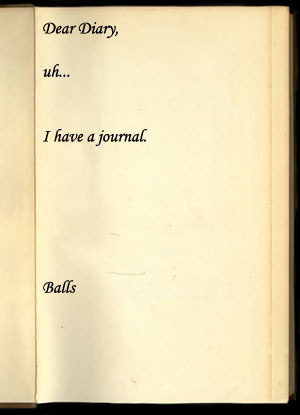
You know what these are like. The first post (which still hasn’t scrolled off the front page) says something like “Test” or “I Have A Blog!” The next three posts are a little less focused. And then nothing. It’s a problem of access, or too much of a good thing. A blog is a place to say something, and even though they’re freely available to anyone who can fog a mirror, this does not imply that all mirror-foggers have something to say.*
Read the rest of this post here.
Fear of death.

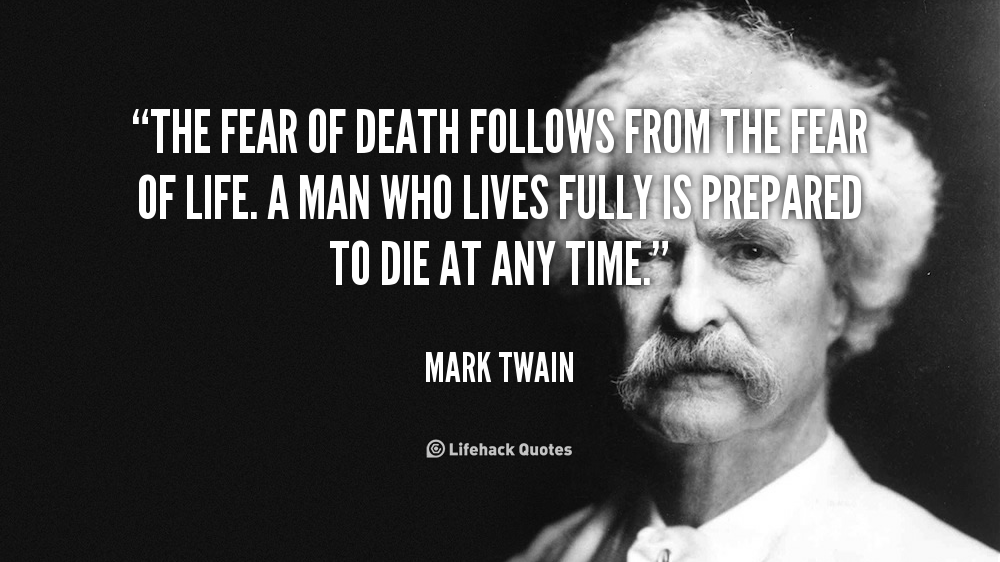
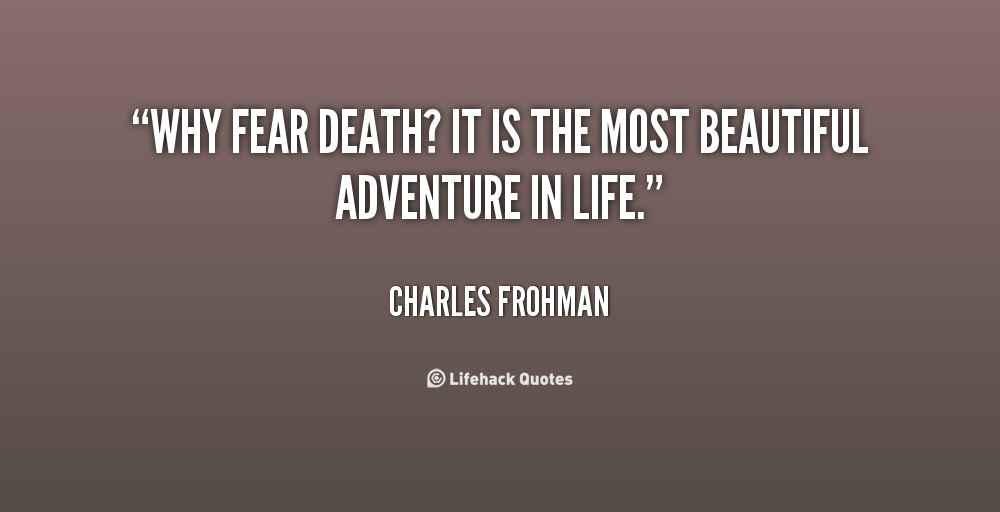
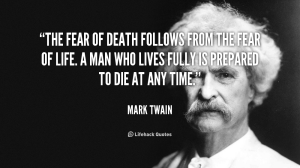
Fear of death, called Thanatophobia, is a common fear, especially in younger people, who under normal circumstances have their entire lives ahead of them and don’t have to worry about the inevitable event happening any time soon.
Of course, the grim reaper can claim anyone at any time. There are no guarantees in life, and even if you’re a gleaming example of perfect health in your prime and never take dumb risks, a concrete block could crash down on your head while leaving your house tomorrow morning. But the likelihood of sudden (or even protracted) death when you’re young is small, so the young can afford to fear death, as long as their fear isn’t so overpowering it makes it impossible for them to enjoy their time being alive.
It’s been said that the older we get, the less we fear death. In the very old (and those who have been suffering with chronic illness for a long time, including terminally ill children), death is even welcomed and looked forward to. That’s understandable, especially if you believe, as most people do, that the afterlife will be better than this world. Unless you fear going to Hell, you probably shouldn’t be afraid of passing on to the “other side,” whatever it may be. Even if the atheists are right and there’s nothing at all after this life, well, what’s so terrible about that? It’s like an eternal sleep and you won’t be aware of anything so not being able to wake up won’t bother you.
I think people fear death for three reasons:
1. Fear of the unknown.
Humans have an instinctive fear of the unknown, and no matter how much faith you have that you are going to heaven when you die, the bottom line is, no one really knows what happens. And that’s scary. I think that on a deep level, even the most religious people with the strongest faith still struggle with the knowledge that one day–a day that could be tomorrow or in 50 years–they will pass into something that’s a complete unknown.
Not only that, dying is an act that is always experienced alone. No matter how supportive a family or friends you have, no matter how many people surround you with their love as you prepare to die, no matter how much comfort is given by loved ones to the dying person, they are not going to be joining you on that journey. Other than God and the angels (if you are a believer), you are going to be taking that journey into the unknown all by yourself. Even if you die with others, such as in an accident, your journey to the other side is yours alone. Their journeys may be very different from yours.
2. Fear of the process of dying.
I think for many, it’s not so much death they fear, but the way they are going to die. Are they going to get cancer, be hit by a truck, be murdered by a burglar on meth, or suffer a sudden massive heart attack? There really is no pleasant way to die. It’s almost always either quick and terrifying; or long and incredibly painful. If you spend too much time thinking about the fact that one of these two things is going to happen to you before you die and it is not going to be pleasant, you can drive yourself crazy. That’s why it’s much better to focus on living a good, fulfilling life and not think too much about the way you might be leaving earth someday.
Some people think that by choosing the method in which they die, they have some control over the dying process and thereby make it less scary. That’s why right-to-die organizations and assisted suicide exists. If you have terminal cancer and know your death is going to be protracted and painful, why not just take some pills or hang yourself instead? Sure, it won’t be pleasant, but at least it might be quick. While this reasoning is understandable, many religions object to this because suicide, even suicide when you are going to die anyway, is considered a grave sin and God will make you accountable after death. But other people don’t believe this and think that God, if he exists, wouldn’t want them to suffer needlessly. Again, there’s really no sure way to know. I doubt I’d ever do it though, since I’m one of those who thinks God would make me accountable.
3. Fear of Hell.
Most Christians (and people who follow other Abrahamic religions like traditional Judaism and Islam) believe in some form of Hell and that some of us are going there after we die. Some Christians believe that all you need to do is accept Jesus as your personal savior and you are automatically saved and admitted to heaven. Others believe works on earth as well as grace are important. A few liberal Protestant denominations believe Hell is a state of mind (a separation from God) rather than an actual place, or they don’t believe in it at all. Jehovah’s Witnesses and Seventh Day Adventists believe if we are not pleasing to God, we will simply be annihilated after we die (much more palatable, imo, than the concept of eternal torment). I’ve always had problems with the concept of Hell and simply find the idea that God will be sending good Buddhists, Hindus, atheists, Unitarians, and liberal Christians (the kind who don’t believe in Hell) to be tortured for all eternity extremely disagreeable. Not everyone, especially skeptical types like me who tend to need concrete evidence before they believe anything, is able to blindly embrace the idea of a savior or the words of the Bible (which can and have been interpreted in different ways) and even if they are willing to believe, some simply can’t. Should they be consigned to eternal torment for not being able to believe something because they think about everything too much?
Let me stop here before this turns into a religious post. That’s not my intent. My point here is that many people are afraid of going to Hell, even those who don’t really believe in in it. But there’s really no way to know if there is one, is there? There’s really no way to know what will happen after we die, or if anything will happen at all.

How I wish I could have this attitude!
As I stated earlier, as people age, they tend to come to terms with the inevitability of death, even the inevitability of the process of dying, as they become aware they have many more years behind them than they have in front of them.
But what happens if, like me, you’re in your fifties and are still afraid of death? I’m well aware I probably have, at best, another 30 or so years left to live. Forty or fifty more years is highly unlikely though possible. Twenty years isn’t a lot, but for someone my age, that’s far more likely than living another forty or fifty years.
When I think about how short a time 20 or 30 years really is, it fills me with terror. I know I think about death way too much and should be focusing more on living a fulfilling life. It’s a waste of life to dwell on the unpleasant fact that one day I will die and may suffer a horrible, painful death too. How does one come to terms with the fact they are going to die and it isn’t even that long a time away? How does one get to the point of actually looking forward to death? I know some Christians reading this are going to be thinking, “well, if you were really saved [I consider myself to be], you would have no doubt you are going to heaven.” But no matter how much I pray about it, I still have doubts. I don’t think that’s likely to change either, because I’m the type of person who questions everything. Even my faith. The bottom line is, I simply don’t know what’s going to happen when I die, or when it’s going to happen, except that it’s going to happen. As the saying goes, none of us get out of here alive.
“Crazy” blogs help reduce stigma against mental illness.
Through our “self indulgence” and “shameless” willingness to publicly talk about personal struggles and issues most people wouldn’t even tell their second best friend, we forge communities where we can offer strength and comfort to others–and receive it in return.
Do you, like me, administer a “crazy” blog?
I was thinking about how in the past few years, “crazy” blogs like mine (highly confessional blogs that document an individual’s mental illness and their journey to wellness, or an abuse victim’s struggles to find peace of mind and emotional freedom) have proliferated like mushrooms after a rain storm.
Is this a blessing or is it the Internet version of the worst kind of TV reality shows?
Those who don’t understand, many of them older people who aren’t used to such public candor on or off the web, like to pass judgment and accuse us “crazy” bloggers pf being self-indulgent, narcissistic, exhibitionistic, shameless, or just plain, well, batshit crazy. They can’t understand why people with such delicate and personal…issues…would want to blab about them all over the web to strangers all over the world. They think that by us doing so, we just prove we’re as insane as whatever mental illness we are struggling with. They think that abuse stories belong behind closed doors and the only public place where they should be discussed is in the courts.
Highly subjective, confessional stories of mental illness and abuse didn’t start on the web, though the web makes it possible for the average non-celebrity type of person to make their story known through blogging and forum posts, and in the process, enlighten, warn, or provide hope and support to others in the same boat. Through our “self indulgence” and “shameless” willingness to publicly talk about personal struggles and issues most people wouldn’t even tell their second best friend, we forge communities where we can offer strength and comfort to others–and receive it in return. Back in the days before the Internet was available, we so often had to struggle alone without any support–or never be able to use what we learned to lift up someone else.
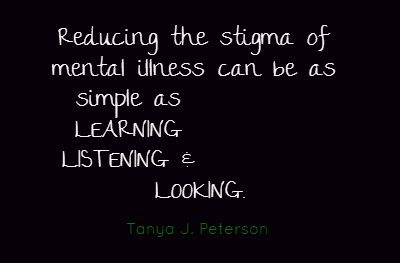
I think “crazy” blogs in particular help reduce stigma against mental illness by describing what it’s like to actually live with one, rather than just listing a bunch of criteria in a psychiatric textbook, which tends to increase stigma. Instead of being reduced to “Exhibit A-104.3G, our stories and struggles show our humanity.
Further reading: Why Crazy People Make Better Bloggers.
Long-forgotten one hit wonder I just heard on the radio!
I loved this one hit wonder song when it came out in 1984 but it didn’t receive airplay much beyond its radio life, so like so many other songs that came and went over the years, providing my life’s soundtrack, I completely forgot about it.
Just a few minutes ago, I heard it on the radio (a local indie-rock station that plays both old and new music), probably the first time in about 20 years. It’s a song from one of the happier times in my life (which there haven’t too been many of), so it brings back pretty good memories.
I love when that happens. I wish it would happen more often. There’s probably so many others songs I completely forgot about, but would remember immediately if I heard them again.
No Doubt also covered this song in 2003. Their version is just as good. On side note, Gwen Stefani appears to be portraying woman with Histrionic Personality Disorder or maybe BPD.
Selfie awesomeness #2
I borrowed my roommate’s new wig which blends almost perfectly with my own hair color (even though it makes it look like I’ve got a mullet, lol) — If it were my wig, I’d thin it out just a little, especially on the sides. She thought I’d stolen it from her because I couldn’t stop taking pictures wearing it even before she had a chance to try it on. She finally yanked it off my head after I finished my self-photo session.
Maybe I’ll even et something like this myself, only not as puffy, and maybe even a little…blonder? I haven’t been a blonde since I got married.
Let me know if you’d like to see me as a blonde (not platinum but medium blonde) or if you think I should go even darker, like dark brown. (I dyed my hair black once and I looked like Morticia). No red hair, I’ve been there and done that, and I’m over being a fake ginger.
Me before the wig. That’s my flat natural hair. ^
The wig is on. Let’s mess it up! ^
“Draw me like one of your French girls.” ^
My default INFJ Avoidant BPD faraway “I’m not yet sure I can trust you but I’m thinking…” deer in the headlights look. ^
I hate January.
Image
Losing followers.
As a blogger, I always worry when I lose followers, even if it’s only a few. For the past few weeks my number of followers has remained steady (and the number of visitors and views keeps going up, thanks to the search engines and continuing popularity of certain posts I wrote a while back), but this week I lost about 4 followers. Today I have 1314 followers; a week ago I had 1318.
I don’t know who these followers were, and there could be any number of reasons why they’re not following me anymore, including something as impersonal as a WordPress glitch (it’s happened before; in fact it happened to me yesterday: I had to re-follow Bluebird of Bitterness, who I never knowingly unfollowed). They could also be spam accounts who unfollowed me. But I worry just the same, and I always start fretting about what I might have said that may have offended someone.
But what sort of blog would this be if I never offended anyone? A boring one, probably. Of course I don’t intentionally try to offend, but whenever you state an opinion, someone might disagree with you. It really can’t be avoided. My blog is so I don’t have to keep my opinions all to myself! I probably didn’t offend anyone anyway, at least not enough for them to unfollow me, and even if I did why I am so worried about four followers who I can’t even identify and might have been bogus accounts anyway?
ETA: Twenty minutes after posting this, I gained three followers. 🙂 I don’t know if they’re the same ones or not.
Why the world is such a mess.
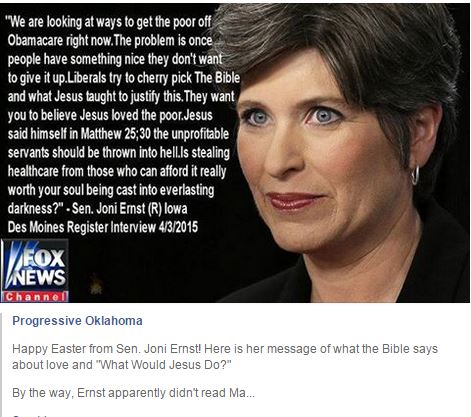
I just saw this on Twitter. People like this make me ill. Senator Joni Ernst of Iowa is a psychopathic, lying, compassionless POS if I ever saw one. What a horrible excuse for a human being, and she’s just one of many who play the “blame the victim” card and have turned people away from Christianity with lies like these. Look at her cold dead eyes!