Welp, I have a therapist!

couch

I didn’t think I could afford psychodynamic therapy, but there’s a program called Open Path Collective, and the rates are about half the market rate. All you need to do is pay a $49 lifetime membership fee to have access to their list of therapists. I already chose a therapist in my area who has weekend and evening hours and who specializes in trauma, PTSD and attachment issues. This is real psychodynamic therapy that gets to the roots of the problems, not just behavioral treatment, which is usually all that’s available when you’re limited on funds.

I feel really good about this decision, because for months I’ve known I really needed it. I can’t do this on my own anymore. I’m actually excited about it. As soon as I get my Member ID in my email, I can set up my first appointment. 🙂

Healing a narcissist is like performing a skeleton transplant.

skeleton-transplant
Credit: notrightinthehead.net

While it’s theoretically possible to heal NPD (some psychologists like Masterson and Kohut specialize in healing narcissistic and borderline disorders and have had results), in the real world, it’s exceedingly difficult and has rarely worked. As a self-diagnosed narcissistic young man recently said to me, for a full-blown narcissist to be cured (rather than simply treated for symptoms) would be no less daunting and excruciating than undergoing a skeleton transplant. It’s a good analogy.

Full blown NPD is almost always so deeply ingrained in the personality–since early childhood in most cases–that to remove it would practically remove the person’s whole personality. Its removal could even kill them (they would be driven to suicide as the False Self gives way to the true one).

But not quite. There is a tiny, atrophied but still-living seed deep inside every narcissist that never got to grow into a plant: the True Self.

Back in November, I wrote a post called “Could Reparenting Actually Cure a Narcissist.” That was around the time I became deeply interested in whether or not such a therapy–one that addressed the root causes of NPD rather than treating symptoms–could actually work, and since then I’ve have read a lot more about it and know a lot more than I did.

At that time, I came up with a series of 4 steps (based on the work of various professionals who specialize in NPD) that might be able to cure NPD in some cases:

Stage 1: The Narcissistic Crisis. A narcissist may enter therapy when their entire world falls apart and they have lost their primary (or all of their) sources of narcissistic supply. Like an addict without a fix, he will be in pain and may submit to therapy at that point–anything to diminish the pain of loss. The therapist must not offer the patient any narcissistic supply during this time! They must simply listen and make the narcissist feel safe enough to open up and talk.

Stage 2: Cold therapy/cold empathy. The therapist must continue to not give the narcissist any supply while not enraging them either. It’s a delicate balance and the narcissist is likely to project their anger and frustrations onto the therapist who is refusing them supply. Working from the rage and frustration, the therapist can guide the narcissist to think about the reasons why they feel so much rage, and start to address the trauma and hurt behind the rage. This may take a very long time and the narcissist is likely to leave therapy. Another reason the therapist must not give the narcissist any supply is because once the narcissist gets supply, like a drug addict, they may feel good enough to leave therapy.

Stage 3: Reparenting. The therapist takes the place of the mother who abused/rejected the narcissist as a child. Physical contact may be necessary and a waiver can be signed to allow limited nonsexual touching. At this point the narcissist will be in great pain and will internalize the unconditional support/maternal “love” the therapist will be giving, mostly through listening and not judging one way or the other. The therapist must remain empathetic and at the same time detached enough to not allow the narcissist to try to manipulate them (which they will be trying to do).

Stage 4: Retraining and Internalizing the Conscience. When the painful emotions from the past are addressed and released, the therapist can start the recovering narcissist in an intensive brain-retraining program in pro-social behaviors and developing a conscience, just as a young child would. This would probably require institutionalization in a very restrictive setting, such as a hospital or high security rehab center. The narcissist would need to “earn back” privileges by having none to begin with. They would be forced to ask permission to do anything at all, and rewarded and punished for bad or good behaviors. At the same time they would attend classes on empathy and given opportunities to practice and eventually internalize this new brain connection.

I have no idea if such a program would actually work, but in the best case scenario, I think it could. Most narcissists won’t stick it out though, so maybe it could be instituted on narcissistic prisoners, who cannot leave prison, or those in mental hospitals (depressed narcissists are often hospitalized).

depression

Today I read an article by Melanie Tonia Evans, called “What Would It Take for a Narcissist to Heal?” Her idea for curing a narcissist is remarkably similar to what I’ve proposed (and others have proposed):

The Narcissist’s “Healing Cell”
I remember years ago (unfortunately I can’t remember the source, so if anyone knows please tell me!) I came across an article regarding a person’s theory about how a narcissist could heal.

Knowing what I know now I agree…

It goes like this…

The solution:

Solitary confinement with no possibility of contact with the outside world, or the gaining of narcissistic supply.

Then, a committed effort to meet and release the original emotional traumas.

Then, stimulation and re-learning of empathy, compassion, connection to life and others, and integrity. Effectively re-parenting where these brain pathways left off, in order to catch them up to present time.

Truly – what narcissist is going to go through that? What facility is there to have that happen?

Additionally there would have to be every method possible to stop the narcissist committing suicide, because if narcissistic supply was removed, the narcissist would not want to live.

Please note I am not stating this is the case for people with mere ego issues or even narcissistic tendencies.

I believe everyone – co-dependents, and even ‘normal’ people all have varying degrees of survival mechanisms which are creating them to be not aligned in the true harmony of Who They Are.

All of these fears emenate from inner wounds that we closed down inside of us and tried to protect.

I have worked with thousands of people with confronting and releasing inner wounds, as well as confronting and releasing my own inner wounds, and I know the courage and commitment it takes to face them, to let them go and be free of them.

And I know that the people who decide to do this, need to commit to dropping all addiction (avoidance techniques) to be willing to be with and meet their pain in order to finally deal with it, and be liberated from it.

That’s what personal evolution and growth is all about.

Quick fixes, opting out, and self-avoidance just doesn’t cut it!

I have seen people who have had enough of living a life through their inner wounds, absolutely make the decision enough is enough and do the work.

Interestingly, I have been receiving many more than normal emails from people claiming to be narcissists who have had enough of the pain, and want to heal.

I refer all of these people onto the Narcissistic Abuse Recovery Program. Their healing is identical to the healing for co-dependents. It is ALL about healing the traumas of abuse, and releasing fear, pain and survival programs.

These people may be in narcissistic injury and will discredit the Program later, or maybe the pain has become greater than the False Self – and maybe they are not fully NPD.

It is individuals suffering with NPD (Narcissistic Personality Disorder) who I believe are incapable of doing this.

My definition of NPD is when a person has crossed the line into malicious, pathological, and conscienceless behaviour.

– See more at: http://blog.melanietoniaevans.com/what-would-it-take-for-a-narcissist-to-heal/#sthash.IN7qE2ct.dpuf

Evans goes on to explain why therapies that only address the narcissist’s behaviors (like CBT) don’t really work because they never even get close to addressing and releasing the original trauma that caused the NPD.

The most effective therapy for someone with NPD would be pretty much the same trauma therapy that works on people with other trauma-based disorders such as C-PTSD and PTSD–because NPD *is* trauma-based. But she also admits that a narcissist sticking out such a program for the duration (and it can take years) is highly unlikely. They are most likely to flee therapy during the painful process of retrieving memories and releasing painful emotions, because narcissism is all about masking painful emotions. She explains it this way:

It’s sad, and it’s tragic because narcissists are the product of abuse, sometimes bad genetics, and often cruel violence, abandonment or pathological engulfment.

They did not ‘choose’ logically to kill off their True Self and live a pathological life – being more and more taken over by a painful, empty, angry , demanding and never appeased False Self.

However, we have to realise the truth.

There is no helping someone who won’t (or can’t) help themselves.

Being attached to a narcissist is not like being attached to a helpless person such as a quadraplegic. I totally understand the devotion people have when they sacrifice their lives to lovingly assist others.

The narcissist, however, as this helpless to ‘get better’ person is viscious, calculating and he or she will abuse you all the way to your demise. THAT is why you need to stop trying to fix this person.

Whilst the False Self is on guard there is no breaking through to a narcissist, and no getting them to work on these deep inner wounds – which are EXACTLY what they have been avoiding, deflecting and projecting on to other people their entire life.

To meet the inner wounds is equal to annihilation for a narcissist – it just can’t be done.

Sam Vaknin describes it as the narcissist intuitively knowing that he or she does not have the inner resources to deal with the onslaught of these inner wounds. His belief is that a narcissist would risk a complete psychotic and catatonic breakdown if he or she did face these wounds.

Knowing what I know about energy healing – I do know it is possible in theory for a narcissist to energetically claim and clear wounds and re-connect back to the Source of wellbeing that all of us are connected to at some level…even narcissists.

It would be excruciating and gruelling, and incredibly painful – but (I believe) it could be done.

However, here is the sticking point.

The narcissist is addicted to narcissistic supply worse than a heroin addict is addicted to heroin. The narcissist literally feels like he or she would disappear into oblivion if not getting an energy supply (attention) from the outside. The narcissist has ‘killed off’ his or her connection to being an energy Source from ‘self’.

What this means is: the narcissist when feeling any emotional low (frequent) will frenetically need to get a ‘hit’ to try to offset the pain.

Deep inner healing and personal transformation for anyone is all about being with the pain and resisting these urges to self-avoid – and dealing directly with the pain instead.

The narcissist’s False Self is its own entity which has taken over the narcissist.

The False Self has all the reasons, all the excuses, and all the justifications to make what the narcissist does as ‘okay’.

It’s like a devil on the narcissist’s shoulder talking him or her into the most outrageous reactions and acts possible. Many narcissists (Sam Vaknin agrees) report that whilst doing these acts – it is like an out of body experience – it is like the False Self has completely taken over – and the narcissist is watching from the side lines unable to stop it happening.

That takes ‘knee jerk reaction’ to a whole new level.

So, is the False Self going to consistently go to a healing space over and over again, go within and leave alone the outside world and narcissistic supply in order to face and release deep inner traumatic wounds?

The answer is FIRMLY “No”…

What I have observed is that it is only narcissists in deep narcissistic injury ( life has hit SO hard), and are literally on their knees, who will dedicate time to inner healing. The reason is because when life kicks someone that hard – the ego is temporarily too injured to operate.

Life can be a HUGE humbler in the face of shocking catastrophe.

However, the narcissist’s brain has been established and hard wired onto obtaining narcissistic supply for most of their life.

Therefore as soon as a therapist grants the narcissist enough attention (narcissistic supply) for the False Self to reinstate itself again, those brain pathways start firing again, and the narcissist’s humility is incredibly short-lived.

He or she is back to the grandiose, entitled conscienceless version of hunting narcissistic supply – and on the story goes…

So the prospect of someone with NPD being healed (at least for those at mid-spectrum and above) does look pretty bleak, even though in theory (and in very rare cases) they could be.

Dr. James Masterson has apparently had some success though. I’m currently reading his book “The Search for the Real Self” (which I’ll be reviewing at a later point). In the book are two case studies of two men named Walter and Frank, both who suffered from NPD. Both were cured of their disorder using psychoanalytic techniques. Particularly moving was Frank’s story, because his narcissism was more severe and it took over five years of incredibly painful and intensive therapy for him to be healed of NPD and begin to experience actual emotions of empathy and love. I think the fact that this disorder was ever healed at all to be very hopeful.

But never, ever try to fix a narcissist yourself. You can’t.

Protected: Embracing vulnerability: reparenting myself.

This content is password-protected. To view it, please enter the password below.

Turtle.

clay_turtle

Last night I read a blog post by a woman who has BPD that described how out of control she felt. As a fellow borderline (who is not symptomatic), I could relate, and shared something I learned with her. I hope it helps.

In 1996 when I was hospitalized for major depression (and diagnosed with bipolar I with underlying BPD) I had no idea how to regulate my emotions. I had barely any more control over my emotional state than a toddler who throws temper tantrums in public. My disorder caused me to fly off the handle at the tiniest things, especially if I felt slighted. I overreacted to things that would have caused barely a ruffled feather in a normal person–but of course being married to a gaslighting narcissist made things so much harder for me. The only reason I wasn’t more out of control than I already was was due to the introversion and reticence that comes along with my Aspergers and Avoidant PD. In a sense those disorders helped keep me sane. Even when I didn’t lose control, I often felt like I was out of my body or the world felt odd and dreamlike. I learned later on these strange feelings were really a dissociative state that is common in borderlines when they feel emotionally overwhelmed. Many borderlines use illegal drugs to self-medicate, and I smoked a lot of pot in those days.

I’ve gotten a lot better since then, and found the DBT therapy I was given during my stay there immensely helpful. I still use it. Back then I still lived with my MN abusive husband and that made things difficult but I still found the DBT exercises helpful once I returned home (things are a LOT better now that we’re not together). I believe they kept me able to just get through life on a day to day basis, even if I still barely managed it.

One thing we learned in the DBT classes was a simple little thing called “turtling.” Whenever you feel like you’re going to lose your composure and “go off,” you imagine yourself as a turtle retreating back under its shell. A turtle does this instinctively when they feel threatened; for BPD patients, “going inside your shell” teaches us to be mindful and THINK before reacting, because impulsivity is something that is a problem for us. In the classes, we made ourselves little turtles out of clay. It was fun and childlike making the turtles, and we even got to paint them and fire them in a small kiln afterwards. I remember carrying my turtle with me everywhere for awhile and pulling him out whenever I felt myself about to lose my composure. My clay turtle helped me remember to be mindful. I still have mine. Recently I found my turtle in the back of a drawer and pulled him out again.

I remember there was a young woman in those classes who used to cut herself whenever she felt her emotions going out of control. The video I posted last night talked about why so many borderlines cut themselves. Cutting is a temporary way to regulate emotions that seem out of control. Instead of “going off” and possibly attacking someone else, she would cut herself. She said she felt relief whenever she did this, like the lid being taken off a pot of boiling water. But after learning how to “turtle,” she told the group she no longer felt the need to do that. Turtling is an equally tactile but a much less self-destructive way to self-regulate.

It isn’t necessary to have a physical object like a clay turtle to be mindful and think before acting, but the tactility of it can be helpful and keep me grounded in reality.
I know this little exercise sounds kind of stupid and childish, but it really does work!

“Reclaiming My Life”– Michelle Mallon’s Story of Healing

after_narc_abuse

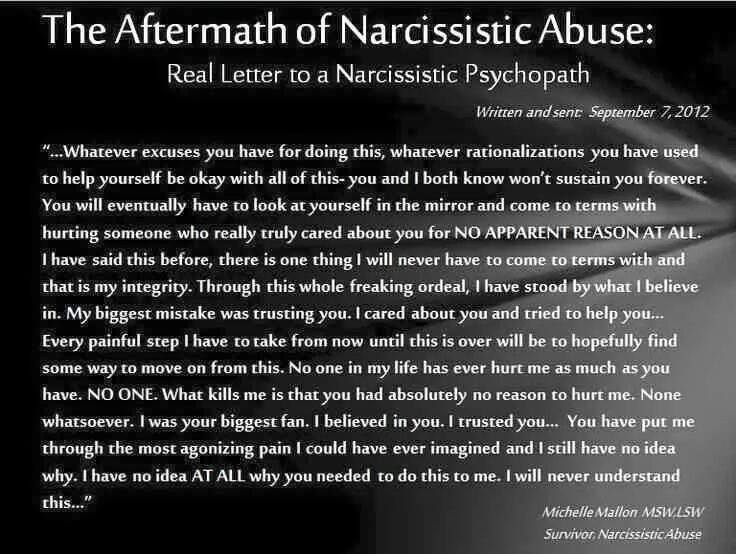
The following is a followup article to the one I linked to in my post After Narcissistic Abuse, in which Michelle Mallon talked about how her psychopathic therapist almost destroyed her life and stole her soul.

This is an important topic, because malignant narcissists, sociopaths and psychopaths are so often in the “helping” professions, especially psychotherapy. They prey on vulnerable people who come to them in desperation, hurting and wanting to trust someone. These “mental health” professionals know this. After gaining a patient’s trust, evil-intentioned and sadistic therapists like Michelle’s therapist use the things their client told them in confidence against them, or even use them to threaten or gaslight them.

I’ll only post the first part of the article, which is long. But the journey back to feeling normal from PTSD caused by abuse is sometimes a long and arduous journey. There’s no way to describe this process in just a few words or even a few paragraphs. To read the rest, you will need to click on the link to Michelle’s article, which appears at the end of this post.

Reclaiming My Life
By Michelle Mallon, MSW, LSW
In this article, Michelle Mallon discusses her healing journey following abuse by a psychopathic therapist.

Recovering from therapist abuse is hands-down the most painful experience I have ever gone through in my entire life. Healing was incredibly difficult for so many reasons, some of which make me very angry and some of which have brought me great insight. Because of the impact healing from therapist abuse has had on my life, I find it impossible not to want to reach out to others who have been hurt by mental health professionals. Some people have told me that this is because I am unable to “get over” what happened. I explain to them that there is a difference between “getting over” something terrifying and callously moving on, leaving so many others behind knowing that you were very lucky to have ever healed. (I usually say this right before I tell them what they can go do with themselves.) The reality is that for most of us trying to overcome therapist abuse (regardless of whether it is sexual, emotional, spiritual, etc.), very few other people have any idea what we are going through (even the mental health professionals we finally get up the courage to see after the abusive ones to try and pull ourselves back together). And because of that, healing can be significantly more difficult than it should be.

Just recently, I began reading the Your Stories page on this site. I was immediately reminded of the isolation and fear I felt as I tried to find my way through the aftermath of therapist abuse. I drafted a message for the Your Stories page and then I immediately felt like it was just not enough. I then asked Kristi if I could write a piece that would hopefully reach more survivors. I have found the path to healing. I don’t really know how I ever found it because, looking back, I can see just how carefully hidden the path is. I don’t know if my path to healing will be similar to yours. In the hopes that there will be some similarities, I want to identify the things that helped me find my way through this in case it can help even one survivor.

This time last year, I was just beginning to feel my “old self” returning. I was finally able to leave my house for short periods of time without having panic attacks or near panic attacks. I was beginning to be able to focus on something other than what had happened in the years before. And I have to tell you, I couldn’t have been more relieved. The truth was that for a very long time before this, I wasn’t sure I would EVER recover from what I had been put through. In fact, I truly believed I was broken beyond repair. It was the most frightened I have ever been in my life.

nurse-ratched
Nurse Ratched, the sadistic psychopathic nurse/therapist in the movie “One Flew Over the Cuckoo’s Nest.”

This year, my life is very different. I look back at the woman I was a year ago and I can see tremendous growth. However, I can also see that even as I was beginning to re-find myself under all of the manipulation and destruction I had been through, I still had a long way to go. There were times when I first started out on this journey where I was making progress, but I didn’t realize I was making progress. I would frequently begin to feel stronger only to be dealt a cruel blow of fear and confusion that would set me back for days, sometimes weeks. If I would have known then that this was how the process went, I don’t think the journey would have been nearly as frightening. And perhaps, this time next year, I will look back and see that I have continued to grow, even from this year. It’s impossible to say. This journey to healing has been nothing short of miraculous. Just when I think I have “uncovered” all of the insight this journey has to offer, I am humbled by another incredible phase of insight. I don’t know if this growth and self-discovery will ever stop. Perhaps if I viewed all of this more as a journey and not as simply reaching a destination, I would have found more peace in the whole process. But to be perfectly honest, as I started out on this journey there was nothing peaceful at all about any of this.

The truth is that the very start of my journey, like many of yours, was incredibly painful—almost unbearable at times. I felt completely lost. I really didn’t know how I had gotten to where I was, and I really had no idea how the hell to get back to where I was before. Some of the worst parts of the journey to healing after therapist abuse had to do with trying to make sense out of what happened with the abusive therapist. And because I still missed him, I was convinced there must be something wrong with me. For almost a year after I refused to see him any longer, I replayed everything that happened during the time that I knew him, trying to make sense out of what happened. I tried desperately to understand what I could have done differently to prevent the relationship from crumbling the way it did. I would look at certain aspects of what happened and think, “He must have cared about me and just lost sight of what he was doing.” And I would be at peace with that thought for a few days. And then nagging doubts would creep in, “But if that were true, why did he just leave me to fall apart on my own? Why, after I told him just how much this had harmed me, did he choose to remain silent and not help me find closure?” A person who cares doesn’t leave someone they hurt (even if it was unintentional) to self-destruct in the aftermath. It seemed like no matter which way I looked at what happened, I could not come up with a “reason” for what happened that made any sense at all. And for that reason alone I was doomed to continue to replay the events in my head, searching for an answer I might never ever find. How else could I feel safe against something like this happening again in the future? The only way I could move on was if I understood what happened and why. And the person who needed to help me understand all of that made it very clear that he had no intentions of ever helping me get to that point. And because of that, it felt like he completely controlled my recovery from this.

evil_inside

And then it happened. Driven by a relentless desire to understand WHY, I had searched tirelessly online for something that would help me understand what the hell happened. I had been seeing a new therapist for about nine months (and I have to tell you, doing that took all of the courage I had in my body!). There were so many times that she seemed just as confused as I was about what happened with the abusive therapist. I was trapped in a cycle of reliving everything that happened over and over again, searching for answers. It was driving me to the point of insanity. As I learned more and more about this thing called “Narcissistic abuse” I began to realize that there was a reason why I had been spinning my wheels trying to understand what happened. There are people who exist who lack any ability or desire to feel any empathy or remorse. Even worse, they lack a conscience. They can cruelly destroy people who are loving, caring and honest and not feel a bit guilt or sorrow for having done so. In fact, in many ways they appear to be “annoyed” by the fact that the people they have hurt are making such a big deal out of what happened. Even worse, they are masters at making themselves out to be victims. Oftentimes, people like these leave behind them a trail of broken bodies and wounded souls as they continue on their destructive paths.

I began to learn new words—words like grooming, gaslighting, trauma bonding and soul murder. These were words that I either had never heard before or had never truly understood until I lived them. These words—words that described things that I experienced but couldn’t put into my own words—were a vital part of my healing. Suddenly I felt a lot less alone. I knew that if someone came up with these words and the definitions that explained my story, somebody, somewhere understood.

But learning these words and reading about Narcissistic abuse was really just the start of my journey. Taking all of it in was a different story. I would frequently find myself wanting to read as much as I could about Narcissistic abuse and then I would experience times where I didn’t want to look at anything at all about it. At first I would get angry at myself because I thought I needed to go through this process a specific way and it was not always the same way that I was feeling. I would get so frustrated with myself as I would read pieces that helped me begin to move forward in my understanding of what happened, but then feel like I was moving backwards. I remember thinking that maybe I was just making myself believe that I was feeling better and that I was really not making any progress at all.

It turns out that understanding and reprocessing what I had been through happened in phases. This wasn’t like any learning I had done before. In the past, if I wanted to understand something I would read about it and integrate it into my way of seeing things. With Narcissistic abuse, there were so many “layers” of understanding that were essential to my healing that this linear process of learning that had worked for me in the past was ineffective with this. There were many times where I would read an article or a book about healing from Narcissistic abuse and feel as if I had taken all of the important insight that the piece had to offer. And then later, I would stumble upon the work again and be shocked that there was insight in it that I hadn’t noticed before. It wasn’t that the piece had been edited. It was because my brain was allowing me to take in more of the picture of what I had been through. That brain of mine, that part of me that I thought had surely been destroyed in the abuse, was actually guiding me carefully through the process of slowly taking in what I could handle. In fact, I can remember times where my brain would almost “compel” me to read more about Narcissistic abuse and times where it would want to do anything other than reading about Narcissistic abuse. I slowly learned to listen to my brain and do what it seemed to be urging me to do whenever it would do this.

And there was another aspect to understanding what I had been through. As I began to understand what my abusive therapist had put me through I began to realize that I had seen this kind of abuse before in my life. In fact, many adult survivors of Narcissistic abuse eventually come to learn (if they can find the path to healing) that they have been primed by previous Narcissistic abuse to tolerate later Narcissistic abuse. For me, like so many other survivors of this type of abuse, I found myself not only healing from one emotionally destructive relationship, but several. The grief was overwhelming.

warning_sign9
From 50 Warning Signs of Questionable Therapy or Counseling.

Perhaps one of the more difficult aspects of the abuse that I had tried to understand was where in the relationship with the abusive therapist that things went wrong. For a while, I believed that the therapist had somehow changed, since he seemed so competent for a long time before the abuse actively began. And I found myself searching for some point in time where I should have stopped trusting him. I think I believed that knowing this was important so I could have understood at what point my “screaming gut” was right. It wasn’t until a good friend of mine pointed something out to me that I hadn’t thought of before. He told me that there wasn’t any point in time when I should have trusted the abusive therapist. He said to me, “Michelle, he’s a predator. The only reason why he seemed so competent and trustworthy for so long at first was to gain your trust so he could effectively lure you away from your comfort zone. Tell me, would you have allowed him to say many of the things he said to you if he had started the relationship out doing that? No, your inner alarm bells would have been going off like crazy.” This was a pivotal moment for me because I had not given any thought at all to this possibility. I would never imagine hurting someone like that. It was finally starting to click in my head that I didn’t understand what happened for a reason. In fact, I never saw any of it coming because I never imagined anyone would ever treat another human being like this. My own profound compassion and deep empathy for others was something I assumed everyone else had. I am finding that many survivors of this type of abuse “suffer” from the same naiveté because of their own inner compassion and empathy.

Read the rest of Michelle’s story here: http://www.survivingtherapistabuse.com/2015/03/reclaiming-my-life/

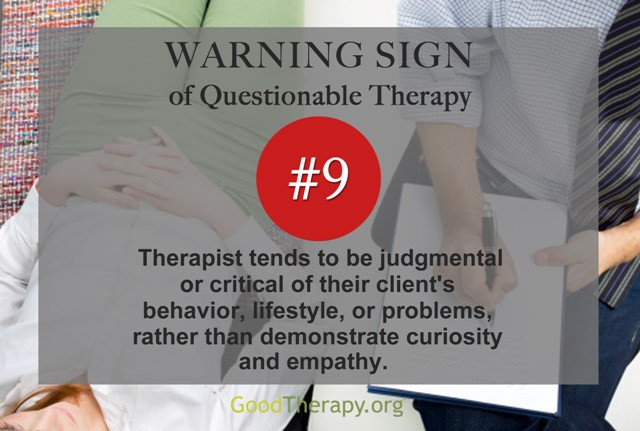
Also, please read this article: 50 Warning Signs of Questionable Therapy or Counseling.
If your therapist does any of these things, they are red flags. Be wary or find another therapist.

Narcs who use therapy to gaslight their victims.

flying_monkeys2

This discussion came up as a comment on another post, and I decided it would make an interesting topic for a new post.

A frequent commenter (Mary Pranzatelli) pointed out that among psychotherapists, there is little understanding of the Cluster B disorders, including NPD, which may be one of the reasons why these disorders are so difficult to treat. They wind up treating the wrong disorder, or more accurately, they stop short by treating the presenting disorder (depression or anxiety) but not the underlying one that led to it (the personality disorder).

An example of this would be a narcissist (or a borderline) who comes into therapy for depression caused by the end of a relationship. The therapist sees the dysphoria and depressed body language, and the client is only interested in relief of their depression. They have no interest in getting treatment for their narcissism because the way they see it, the personality disorder that led to the end of their relationship (and resulting depression) isn’t a problem. In most cases they don’t even know they have a personality disorder.

The therapist, knowing little about NPD or personality disorders, treats the client for the depression only, and when the client feels a bit better, they leave, only to wind up in a new relationship that is also destined to end because the underlying NPD will still cause them problems in their next relationship.

Mary also pointed out that therapists unknowingly aid narcissists in the abuse of their victims. I agree because I have seen this happen with my ex. My ex (unlike most narcs) has always been open to therapy, but only for his depression/anxiety, not for his narcissism. Being a “willing client” aids him in his “victim” mask. He isn’t in therapy to get any real help, but to “look good,” eg, look pathetic and abused. It helps his case.

flyingmonkey

All his therapists aided him in his gaslighting of me. He had them believing HE was the victim and I was the abuser. Once when we were in marriage counseling (which was my idea!), he had the marriage counselor scolding me for trying to “control” him. Ha! This was shortly before I was hospitalized for major depression (and diagnosed with borderline PD myself).

In this way, some narcissists use therapy as a way to gaslight their victims (who become their “abusers”) and the therapist becomes a flying monkey!

Schema therapy/reparenting for an NPD patient.

Schema therapy was developed by Dr. Jeffrey Young for treating personality disorders, which are deeply ingrained patterns of behavior that are not receptive to traditional therapies used for depression, anxiety, neurotic disorders, etc.
(You can read more about how Schema therapy is used for NPD patients here.)

NPD is one of the most difficult of the personality disorders to treat, and it’s rare a patient will present themselves for treatment, unless they have suffered a narcissistic crisis that led to them becoming depressed.

These three videos are part of a graduate school practicum, showing schema therapy in action on a narcissistic patient (non-pathological narcissism/low spectrum NPD).* In the first video (session 1) the patient, “Sam,” has come to therapy because he is having problems relating to his wife and feels rejected by his coworkers. He is easily irritated and shows a number of narcissistic traits, including entitlement and grandiosity. He doesn’t understand or have empathy for his wife’s complaints about feeling hurt by his “brutal honesty.”

In the second video (session 8), Sam begins to talk about himself at five years old, when he broke his arm and felt rejected because his immediate physical and emotional needs were dismissed by his mother, who took him to the babysitter instead of showing the empathy and concern she should have. Then he is asked to relate how “little Sam” feels and begins to explore the emotions he shut himself off from feeling because of his mother’s rejection.

In the third video (session 16), Sam begins to show emotional discomfort as the therapist has “little Sam” (his true self) talk to “Detached Sam” (his narcissistic mask). He admits he wants to be able to show his wife how much he loves her.

Session 1:

Session 8:

Session 16:

Schema therapy is also commonly used to treat people with Borderline Personality Disorder.

* The patient is an actor but this is still an interesting look at how this method of therapy works.

Another narcissist* who wants help.

narcissus3_mythman

Occasionally I receive emails from people with NPD who have come across this blog and want to be cured. I posted about one of them in this post; yesterday I received another from a man who is considering reparenting therapy for his NPD.* He also plans to administer this therapy to himself due to the fact there are so few therapists willing or able to reparent a narcissist and because the few who do are extremely expensive. I’m not sure it’s possible to cure yourself of NPD, but if it is, I would love to find out more!

I have written about various healing methods in this article, but reparenting seems to be the most promising deep insight therapy that could work on someone with NPD, but only if the patient is both self-aware AND willing, as this man appears to be in his email. (I do not believe most malignant narcissists and psychopaths/sociopaths have any hope of being cured).

It always warms my heart to see a letter like his; I may just be one of those people Sam Vaknin calls a malignant optimist, but because I think NPD is really an elaborate defense mechanism adopted at a young age to protect a too-sensitive true self and may actually be a form of severe dissociation, I don’t think people like this man are beyond hope.

Here is the letter he sent. I love his analogy of curing NPD being akin to having a full skeleton transplant. 🙂

I’ve been reading your blogs on narcissistic personality. I first identified I have a problem with narcissism about six months ago and reading about it has been depressing, and very bleak. I’ve always known I’m self-centred and as a teen used to wonder why my empathy could more or less just switch on and off, often without my conscious control. But it is only since reading about NPD that I’ve realised what my issues actually are: I am convinced I have narcissistic personality disorder – I meet SO many of the criteria and as a method of getting by (or even ahead) in life I have trusted and enjoyed this system of habits and rules.

Narcissistic rage, while resulting in feelings of shame once an outburst had subsided, made me feel I was at least strong and able to defend myself from harm. It made me feel protected from being crushed or wounded, though in recent months I’ve realised it is simply an expression of me feeling crushed and wounded. One particular outburst directed at my lover left me reeling when I realised that if I stepped outside of my body and watched the argument happening, I’d have looked on myself with pity not fear. I’ve seen myself explode in senseless and bitter rage before and so it isn’t frightening to me anymore, it’s pathetic. There’s a line in the Annie Lennox song ‘Miracle of Love’ which I’ve been reflecting on a lot lately:
‘cool is the night that covers up your fears,
tender is the one that wipes away your tears,
there must be a bitter breeze to make you sting so viciously,
they say the greatest coward can hurt the most ferociously…’

trapped2

I realised then, and especially when I was listening to this song lately that I am a coward, and that underneath my mask there is a scared little child who felt it must have done something wrong to deserve the feelings of being unloved I experienced in my infancy.

I have found your writing so interesting because if there was one idea I prescribed to growing up it was that we are here on earth to love, and as a huge fan of all things Celine Dion (for whom every ballad is a song of true, deep, sincere and selfless love) even the very music of my life was about loving deeply and experiencing life through love to the fullest. Something strange has been going on in the last year, I think my narcissism has reached a dangerous peak (I’m a performer so being the centre of peoples’ attention and lauded by an audience has, I think exacerbated my own self-involvement). I’ve realised through my reading that if I continue using the mechanisms of narcissism to cover up my fear and feelings of smallness, I will never be able to fully receive or give the love I grew up believing in so much. I actually think if it weren’t for all that Celine crazy love song schtick and the benefit of feeling loved unconditionally by my sister that narcissism would have swallowed me completely by now. I desperately want to avoid getting worse and so much of the online data about NPD is written from a victim point of view. The outlook is so bleak, and the process of realising that I am living this way has been almost traumatic.

Particularly difficult is the frequent assertion that because I am a narcissist, I simply cannot feel empathy for others. I will agree my empathy is not allowed to flourish or be of use much of the time because of the walls I put up around myself, but I KNOW I do feel it. Just as deep beneath my masks as my fear of being hurt, or rejected is my little boy self hiding under the bed terrified. And I believe when he sees someone upset, wounded, attacked, he wants so badly to whisper to the person ‘you can hide under here with me.’ I have had moments with friends or loved ones where I know they are sad, have wanted to reach out and hold them and comfort them but these walls I have spring up like invisible fences stopping me from reaching out. It’s as if the little boy wants to go to the friend and hug them and soothe them, but he’s just too scared to come out from under the bed. I believe that deep feeling is empathy. But my fear, learned from a young age has defeated it. It makes me sick. I don’t want fear to win. It’s a bizarre loop because victim-mentality repels me, which I know is a narcissistic trait. And yet it is partly through the fear of being a ‘victim’ and allowing myself to wallow in the bad things that happened to me as a kid which drives me to reject the negative events in early childhood and be a FULL human being, not just a narcissist who passes as one. I want to experience that Celine Dion love, of which I am sure I have felt more than just glimmers and been blessed with from others.

attitudinal_healing

I believe love exists as a two-way street. I believe to receive someone’s love IS an act of love. To give love properly, we must be able to also receive and accept it. As RuPaul says ‘if you can’t love yourself, how in the hell are you gunna love anyone else.’ Well I want to learn to forgive the child inside for being so scared and angry. I want to teach him (myself) convincingly that it was not his fault he was adopted. That it was not his fault that he couldn’t protect his sister from her own demons spawned from the same young events. Or that somehow even if it possibly could have been his fault, it’s okay now. He was just a child.

I want to re-parent myself and unlearn the narcissistic coping mechanisms of devising a false self and put in place a new system. I feel like this is psychologically similar to having a full skeleton transplant, so I know it isn’t going to be easy. I am proposing to change myself in a big, lasting way. I’m choosing to become a proper adult, not ruled by the little boy anymore. It’s time for me to look after him, and I can only do that my knowing him. Knowing what it is I fear, what my true needs are, not just the needs of narcissistic supply. I must make this much clear: I reject my own narcissism. I do not want it. This system of self-aggrandisement, making myself emotionally unreachable, and of behaving so poorly to the people around me isn’t good enough. I want a better life.

narcissism_childhood

Your blog has given me hope that this might be possible. Your compassion has been vital for me today. I’ve been typing this as much to organise my thoughts as to fill you in on what’s going on. I know you will receive a lot of mail, and I know you’ll be all too used to big long emails from narcissists talking about themselves 😛 But I say all this to say that your writing has been understood by me as a shared promise of hope. It’s really a wonderful thing you’ve done and I’m so glad I found your blog. I wish others would get to read it, rather than so much of the demonising bile dominating google on the subject of NPD. I believe it’s bad to try to turn people into cartoon villains. Every behaviour has a cause.

My main goal going forward is keeping mindful at all times of this little boy. I need to become his best friend and always listen to what he’s saying. I need to tell him ‘no we don’t lash out when we feel attacked,’ and help him grow up. He is, after all, me. I’ve had mild moments of self awareness where I have tried to learn more about treatment and even let my walls down from time to time to be honest and show my naked little self to those close to me. It’s hard for them to understand this stuff and unfortunately after a few weeks pass I find the walls have been slowly slowly rising again. Then it takes a big argument or event to knock ’em down and unfortunately one such event has cost me a really important relationship. The loss of the relationship, alongwith increasingly realising my charisma isn’t enough to get me by in life could be defined as my ‘narcissistic crisis.’

As you said: ‘Harnessing these moments of emotional nakedness is like trying to hold onto a dream while awake.’ My next step is to find a method, or try to invent one to keep me mindful. I think reading works like your own frequently, perhaps daily and reminding myself of exactly what my demons are might help. To hold my inner enemies close in this way may help me defeat them. You’ve helped enormously. Thank you.

* I have no idea whether he actually has NPD or has ever been diagnosed with it. He could have some other disorder. True narcissists rarely acknowledge their disorder or desire to be helped, but I’m sure there are exceptions.

Notes of first therapy session with Sam V., male, 43, diagnosed with Narcissistic Personality Disorder (NPD)

samvak3

The following is about ten years old, I think. I’m not going to editorialize this further, but let the therapist’s words speak for themselves. (I do not know who the therapist was). Pretty interesting stuff and a vivid picture of how NPD can manifest itself in one person, in this case a well known author who writes about his own disorder. Sam Vaknin suffers from the cerebral form of narcissism; the other type is somatic.

Notes of first therapy session with Sam V., male, 43, diagnosed with Narcissistic Personality Disorder (NPD)
http://www.narcissistic-abuse.com/personalitydisorders65.html

Sam presents with anhedonia (failure to enjoy or find pleasure in anything) and dysphoria bordering on depression. He complains of inability to tolerate people’s stupidity and selfishness in a variety of settings. He admits that as a result of his “intellectual superiority” he is not well placed to interact with others or even to understand them and what they are going through. He is a recluse and fears that he is being mocked and ridiculed behind his back as a misfit and a freak. Throughout the first session, he frequently compares himself to a machine, a computer, or a member of an alien and advanced race, and talks about himself in the third person singular.

Life, bemoans Sam, has dealt him a bad hand. He is consistently and repeatedly victimized by his clients, for instance. They take credit for his ideas and leverage them to promote themselves, but then fail to re-hire him as a consultant. He seems to attract hostility and animosity incommensurate with his good and generous deeds. He even describes being stalked by two or three vicious women whom he had spurned, he claims, not without pride in his own implied irresistibility. Yes, he is abrasive and contemptuous of others at times but only in the interests of “tough love.” He is never obnoxious or gratuitously offensive.

Sam is convinced that people envy him and are “out to get him” (persecutory delusions). He feels that his work (he is also a writer) is not appreciated because of its elitist nature (high-brow vocabulary and such). He refuses to “dumb down”. Instead, he is on a mission to educate his readers and clients and “bring them up to his level.” When he describes his day, it becomes clear that he is desultory, indolent, and lacks self-discipline and regular working habits. He is fiercely independent (to the point of being counter-dependent – click on this link: http://samvak.tripod.com/faq66.html ) and highly values his self-imputed “brutal honesty” and “original, non-herd, outside the box” thinking.

He is married but sexually inactive. Sex bores him and he regards it as a “low-level” activity practiced by “empty-headed” folk. He has better uses for his limited time. He is aware of his own mortality and conscious of his intellectual legacy. Hence his sense of entitlement. He never goes through established channels. Instead, he uses his connections to secure anything from medical care to car repair. He expects to be treated by the best but is reluctant to buy their services, holding himself to be their equal in his own field of activity. He gives little or no thought to the needs, wishes, fears, hopes, priorities, and choices of his nearest and dearest. He is startled and hurt when they become assertive and exercise their personal autonomy (for instance, by setting boundaries).

Sam is disarmingly self-aware and readily lists his weaknesses and faults – but only in order to preempt real scrutiny or to fish for compliments. He constantly brags about his achievements but feels deprived (“I deserve more, much more than that”). When any of his assertions or assumptions is challenged he condescendingly tries to prove his case. If he fails to convert his interlocutor, he sulks and even rages. He tends to idealize everyone or devalue them: people are either clever and good or stupid and malicious. But, everyone is a potential foe.

Sam is very hypervigilant and anxious. He expects the worst and feels vindicated and superior when he is punished (“martyred and victimized”). Sam rarely assumes total responsibility for his actions or accepts their consequences. He has an external locus of control and his defenses are alloplastic. In other words: he blames the world for his failures, defeats, and “bad luck”. This “cosmic conspiracy” against him is why his grandiose projects keep flopping and why he is so frustrated.

What my fear of rejection makes me do

borderline_pd

Time for a true confession.

I’ve been focusing a bit less on narcissism because the topic itself is somewhat of a trigger for me right now.

But I’ve recently decided to write openly about my BPD, which (along with Aspergers) is often misdiagnosed as narcissism.

Besides the envy and pride I’ve previously mentioned as my worst narcissistic traits, there is one other thing that has sometimes made me wonder if I might really be a narcissist.

Whenever any male in a position of authority has tried to tell me the truth about myself (like a therapist or teacher), I want to attack them. When I was much younger (teens and 20s) this manifested as rage attacks (as it did with my therapist during my 20’s). Today it’s more likely to be expressed as sarcasm, snarkiness, or just…silence. All of this is very narcissistic of me and makes me want to cringe in the corner when I think about it. Because knowingly hurting someone goes against the bigger, better part of me, a person who is kind and compassionate and hates to see anyone suffering or hurt.

I used to torment my therapist back in the 1980s. He didn’t know the intense feelings I had for him. I wouldn’t give him the satisfaction. If you’ve ever watched the ’90s Nickelodeon cartoon “Hey Arnold,” you will remember how cruel Helga always was to Arnold, but secretly she mooned over him.

helga_arnold

My therapist must have hated me. I LIKED tormenting him. He sat there week after week taking it like a trouper. If he was angry or upset, he never showed it. Most likely my strong feelings and verbal attacks were a form of transference. Maybe I experience a form of transference toward any male in an authority position who mirrors me.

I finally told that therapist I was quitting. Why? Because of my fear he was so tired of my mindfucking him that he’d tell me he couldn’t be my therapist anymore. I knew I wasn’t cured, but I left anyway. Sure, I was having trouble handling my infatuation, but now I know it was really all about hurting him before he could hurt me. How stupid of me, since he was probably more than happy to see the back of me.

hateyou_leaveme

I’ve really been thinking a lot lately about my BPD and the unpleasant ways it sometimes manifests itself. The behaviors are narcissistic, and they don’t happen all the time, or with most people (thank God for that!) But the reason they exist at all is because as a Borderline, I live in mortal terror of being rejected or abandoned, and certain men in authority who tell me truths about myself may represent my father, who I was afraid would reject me (even though he wasn’t really the problem at all).

Sometimes I do wonder if I may be a narcissist.

But I know I’m not because it makes no sense. Real narcissists don’t have a conscience or empathy. They can’t be happy for you or sad for you and I can be. If I do something wrong–even if I derive some kind of sick pleasure during the time I’m engaged in it–afterwards I feel terrible. I just want to run and hide.

I’m working on these behaviors, using an old workbook I got in 1996, because lately I’ve been thinking about possibly dating again. I’m getting over my fear of finding myself with another narc, because I feel like I know enough to read them now, to see the red flags and know when to run if I must–but I also don’t want to drive a nice guy away due to my “I hate you….don’t leave me” Borderline tendencies.

There’s so much apologizing I would like to do to so many people. I know that’s not possible but I wish it were.

I know I’m changing for the better, but a lot of bad and painful emotions are coming to the surface in the process of discovering who I am, because I’m feeling again. I think my PTSD is almost healed, and that’s a great thing, but mixed in with all the nice, loving, tender emotions are some not so nice ones too. Like a maggot crawling on the petals of a rose.

I never said I was perfect.