How my ex became a malignant narcissist.

I thought I’d repost this article again, because it shows exactly how narcissism can be passed from one generation to the next, due to emotional abuse of a child that stunts or halts their healthy development of a sense of self.

Since this article was written back in February, my ex was diagnosed with Antisocial Personality Disorder (ASPD) and due to his “unemployability due to possible homicidal tendencies,” he got $31K in disability back pay AND an increase in disability payments. Commenting on this outrage is beyond the scope of this article and I’ve already ranted enough about it anyway. He has already gone through all the money, as I suspected he would. It still doesn’t sit well with me that his monthly income due to being a narcissistic, antisocial jackass who games the system and freeloads off others so he never has to work again exceeds mine.

luckyotter's avatarLucky Otters Haven

Martin-Luther-King-Good-vs-Evil

I’ve talked about several of my own family members and how narcissism has infected other family members with NPD and/or made them victims, but I haven’t focused too much on how my ex husband Michael, as malignant as they come, got that way.

So I am doing that now.

Michael, like most narcissists, wasn’t born that way. He was the only child of a machinist who was rarely home and when he was, stayed in the background, believing raising a child was “woman’s work.” The household was blue collar but back in the early ’60s, blue collar didn’t mean poor. A working class man could adequately support his family, buy a home, have two cars, and his wife didn’t have to work to help make ends meet.

From all accounts, Michael’s father loved him in his rough-around-the-edges macho way, but he spent hours every day in bars or at the…

View original post 1,593 more words

What exactly is Narcissistic Personality Disorder?

For those of you who follow this blog, this question probably seems like a no-brainer, but this is one of the most informative and readable articles I’ve ever read on the subject, and I even learned a few new things I didn’t know, so I wanted to share it.

What Exactly Is Narcissistic Personality Disorder?
By Christine Louis deCanonville, author of The Three Faces of Evil: Unmasking the Full Spectrum of Narcissistic Abuse

deviantartecho
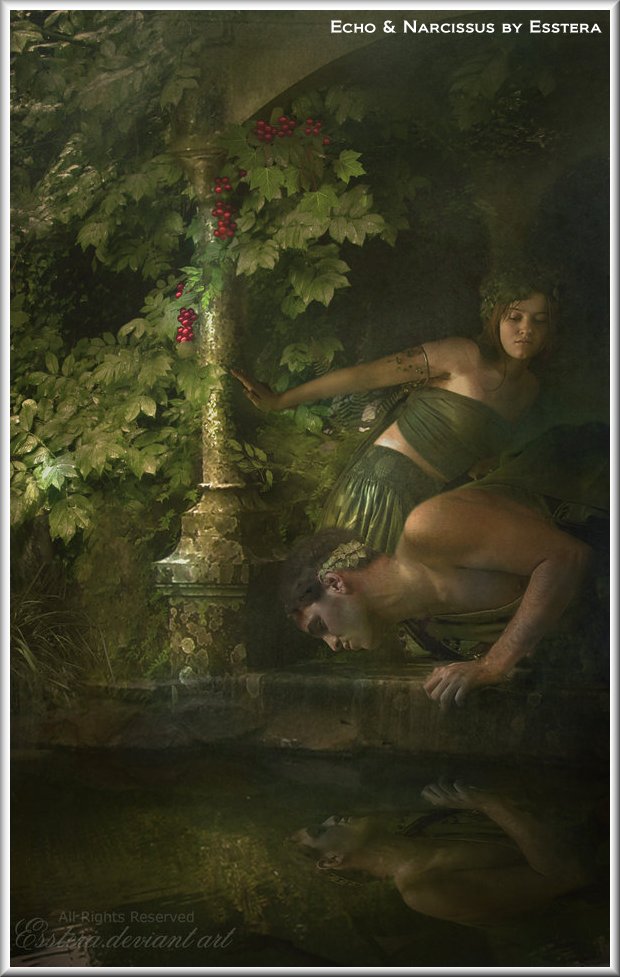
Narcissus and Echo by Esstera, Deviantart

Explaining the Many Facets of Narcissism!

Narcissistic Personality Disorder, what exactly is it? Trying to explain exactly what narcissistic personality is takes some doing, the reason being that there are so many facets of behaviour involved. However, Narcissism, roughly translated means “love of oneself”. The term itself refers to a set of character traits that involve self-admiration, self-centeredness, and self-regard; to the point where the narcissistic person becomes very grandiose, arrogant, aggressive, lacking in empathy for others, superior to everybody else, and sporting a sense of entitlement that leaves them in constant need for attention and admiration in all their relationships. The term was coined by Sigmund Freud who picked the myth of Narcissus as a symbol of a self-absorbed person whose libido is invested in the ego itself, rather than in other people. There are several versions of the myth, but roughly translated Narcissus, in Greek mythology, was a beautiful Greek boy who found himself to be so attractive, that he falls in love with his own reflection. The term narcissistic personality disorder, also taken from the myth, describes a self-loving character with grandiose feelings of uniqueness.

The Spectrum of Narcissism is on a Continuum.

Narcissism is a spectrum of behaviour that is prevalent in the human condition universally. What this means is that we are all narcissistic to a degree, and the narcissistic traits can range on a continuum from 1 – 10, from what we call Healthy Narcissism (being a 1), all the way to a pathological form, called Narcissistic Personality Disorder or NPD (being a 10), with varying degrees in between. When narcissism reaches a stage called “Malignant Narcissism” the person consistently manifests at least 5 of the 9 criteria necessary to put it into the category of being a mental disorder.

To the casual observer, telling the difference between a normal range narcissistic personality and a narcissistically disordered personality may not be very evident to begin with, because the difference is the difference between the individuals “intentions”. The healthy narcissistic personality operates from a place of good will towards another person, while the unhealthy malignant disordered personality operates from a place of ill will towards another person, which naturally enough puts a chasm between them.

Healthy Narcissism Style vs. Unhealthy Narcissism:

Every human being craves approval. This need for approval is driven by the ego in order to make us feel loved, important, powerful and in control, and perhaps even more importantly, to steer us away from any criticism, which can lead to feelings of inferiority. Adler (psychologist) believed that it was the pain of inferiority that motivated all human action to strive for a sense of superiority and perfection. This is natural, and is healthy narcissism in action, a normal defense that is essential for psychological health. It is this action that protects us from painful disappointments, failures, and keeps us away from feelings of helplessness. This boosting of our morale (Healthy Narcissism) is what motivates us to do better with our lives.

Read the rest of Christine’s article here.

Is NPD really a dissociative disorder?

dissociative_identity_disorder

I think there’s good reason to think NPD (and to some extent, BPD) is really a dissociative disorder. Think about it. There is a true self and a false self that are split from each other, much the way a person with dissociative identity disorder (DID) has a “waking self” or the “host personality” (the DID’s equivalent of the true self) that has split into different “personalities”, some of which aren’t even aware that others exist. Still, the narrative of the true self runs beneath everything, like an underground river feeds the land above it. In other words, the false self’s behaviors are driven by the need to keep the true self hidden and/or protected.

NPDs (and BPDs) also have episodes of dissociation and feelings of unreality, depersonalization, derealization, or even annihilation when under stress or when injured, and these dissociative episodes can become so bad during a narcissistic crisis that a psychotic break can occur. Narcissists are not unknown to become psychotic during old age due to massive loss of supply.

There are other things too that are dissociative–the magical thinking, the splitting, and the manifestation of the FS itself, which is, in essence, a separate “personality” from the TS.
I’ve read elsewhere that NPD could be a dissociative disorder, and I think it’s a valid argument. Thoughts?

I can’t relate to narcissists who love their disorder.

android

I read this post at Psychforums written by a person who sees their narcissism as a huge advantage.

I spent all my life trying to figure out why I felt so different from other people. A few months ago I was researching in detail narcissism for my master thesis on The Picture of Dorian Gray when I suddenly realized that I fit perfectly with all the criteria to be assessed as a high functioning, cerebral, covert narcissist. I immediately felt amazing about it. Not even for one second I believed that there is something wrong in me, but I soon realized that the rest of the world doesn’t seem to agree with my view.

The idea that my malignant tendencies have a reason to exist empowers them, and all the studies I have read on this topic instead of making me feel like I have a mental illness that should be cured provided me with the tools I need to expand my narcissism and use it in my favor. I guess this sounds like I really am sick, but bear with me: why would I, as a narcissist who feeds upon the desire of being special and unique, have a problem with being diagnosed as such? It makes me different from others for real. I am not going to stand in line with all those narcissists who fear themselves, who punish the way they are. Becoming self-aware opens infinite doors to the great potential I have.

I always deeply enjoyed manipulation, now I know why, but I also know that I have the power to bring this skill on a higher level and the more I master this “science” the less people will realize what I am doing to them. I don’t have a problem letting people know that I am a narcissist, but they never believe it – they still see me as a caring, loving, trustworthy girl who would go out of her way to help, too nice and interesting to be classified as “evil”. This discovery has given a great boost to my self-esteem which used to be pretty low. But it was low because I didn’t embrace and accept who I am. Knowledge is power. I am more functional now than before, I test my potential daily to see how far it can go, how much more I can get from it. Why would people ever want to heal from this?!

They say that a lack of empathy is a terrible thing. I don’t even know what empathy is, so why would I be concerned about owning it? They say I will never be happy with the way I am, but, let’s state the truth, people are never satisfied and fully happy anyway; they live for unhappiness because hope is far more enjoyable and stimulating. They say I cannot have fulfilling and real relationships, but that’s not true: given the right partner I can make him feel like he is the most special person in the world. Of course, all of this is done primarily to make myself feel like I have total control over them, but it can still provide them with some good things for themselves. It’s twisted, but I find unconditional love far more twisted. Self-awareness helps me regulating my depression since now I understand that it’s triggered by a lack of NS, so I just need to adjust that to feel back on track.

And when a NS is not readily available I feed my ego by trying to achieve success and praise in my work or studies. The more difficult and stressful it is, the larger my ego grows when I get there. Have you ever felt a proper ego boost? When it feels like there is something extremely warm in your chest which is expanding throughout your body? I live for that feeling.

I always wanted to become a teacher, but I was scared that I wasn’t good enough for that. Right now it has become clear that this is the only thing that I can do successfully. What’s better than a group of people who you can manipulate on a daily basis without being perceived badly? And here by manipulation I don’t mean in a bad way: you can convince them that they can be and do whatever they want in life. And they will repay you by making you feel omnipotent.

That’s a fair deal to me. Last but not least, being a narcissist made me finally forgive my mother for all the years of psychological and physical torture I had to endure. She made me the person that I am today, for better and for worse. I let go of all the grudge and hate and established a far better relationship with her.

I am human, but if my being a narcissist means that I am an evil human being, I can totally accept that and carry on. I would rather be good and be a hero for others, but I always found villains much more charming and true to themselves.

android2

This is an example of ego-syntonic narcissism and is common in high spectrum grandiose (classic, not covert) narcissists whether they’re self aware or not. It seems psychopathic to me. While on an intellectual level I can understand the logic behind it, and yes, I’ll even concede that it is possible to be devoid of empathy or a conscience and still choose to be prosocial (people with NPD and even ASPD can tell the difference between right and wrong, but usually won’t choose to do the right thing, only what suits them), I simply cannot relate to this way of thinking. It seems very machine-like to me, almost a parrot-like existence.

Sure, without a conscience you don’t suffer from guilt and shame the way most people do, but living this way just seems so cold and sterile to me. I spent years unable to feel much of anything, and am recently beginning to discover my softer emotions and wouldn’t have it any other way. Even sadness adds depth to the experience of being alive. How can a person like this be able to experience higher emotions like love, empathy or real joy? A machine can’t experience joy, sadness or love, all they can do is fake it. To me, this seems like a sterile, joyless way to live, an imitation of being a human, and I want no part of it. How can you really enjoy life when everything and everyone becomes nothing but narcissistic supply? I’m sorry, but I’m a person, not a parrot.

That being said, high functioning/high spectrum narcissists do seem to like their narcissistic traits, because they tend to be beneficial in the selfish and narcissistic society we currently live in. The enormous popularity of Ayn Rand and her philosophy of selfishness as a virtue attests to this. But such a world, run by people who feel nothing and get high off their own perceived power and superiority, is deeply frightening to me.

Can a malignant narcissist ever become self aware?

the-face-of-evil
Frankly, I don’t think so, and that’s what makes them malignant. I think there’s a point at which a narcissist can’t ever turn back and that’s the point at which they can’t see their own narcissism or what they do to others. And they don’t care. Malignant narcissists are happy being just the way they are, or they think they’re happy being that way. You can call out their behaviors until you’re blue in the face, and they still won’t see the obvious; instead they will attack and rage. They don’t CARE.

I have no idea how close I might have come to becoming malignant but I just thank the Lord I didn’t. I think I’m low spectrum but still on the spectrum.

If you spent your entire life surrounded by and under the thrall of malignant narcissists, you can’t escape unscathed. If all you get is a case of “fleas,” consider yourself very lucky. These toxic people infect others with their disease. I was with mine far too long.

I couldn’t understand before why it was so important for me to understand people with this disorder. Now everything’s so clear as to why. Even before I knew, I was trying to understand myself and now I’ve been brought to a place where it’s possible to change. I feel like God pulled the scales from my eyes, and I’m so grateful He did.

I’m also glad I chose the truth over saying nothing or taking this blog down (I had considered both). In fact, being in this new state of awareness feels like the beginning of a new journey–harder, but ultimately more rewarding than the last.

Thanks so much to all of you who have remained supportive during this ordeal. I had imagined the worst, but I imagined wrong. 🙂 The worst that’s happened is a few troll comments. No biggie.

How I became a Cluster B basketcase.

left-out_child

I had some new insights today on the genesis of my disorders. Not actual new memories, but insights on memories I already had that I know now led to my covert narcissism and BPD. I can pinpoint the exact events that turned me into a borderline, and later on, a covert narcissist.

I’ve been a borderline since about age 4 (in a young child incipient personality disorders are known as attachment disorders). A few weeks ago, following my trip down the rabbit hole, I mentioned having remembered that someone told me something when I was 4 years old that was significant in the development of my BPD.

I still don’t remember what was said, or who said it, but somehow I know I began to be sexually abused at that age. By who or in what context, I can’t tell you because I don’t actually remember. I just know I was.

That’s when things began to get weird for me. I have a vague, dreamlike recollection of sitting on the short flight of carpeted stairs of our split-level house in New Jersey, watching my parents (who were probably drunk) dancing in the living room. They were doing the Cha Cha Cha, a dance popular at that time. I remember feeling unreasoning (and probably Oedipal) jealousy at that moment, because my father was ignoring me, even though I was calling to him to dance with me too. I believe that’s when my hatred toward my mother began. Instead of reassuring me or including me in the moment with them, I was simply ignored and impatiently told to go back to bed.

I don’t remember what happened after that, but I began to have terrible nightmares, and sometimes would wake up screaming. Sometimes after I woke, the dreamlike, dissociated state would continue. I remember hearing, ghostlike, the theme from the TV show “The Mickey Mouse Club” playing somewhere–although it was 3 in the morning and in those days, it wasn’t possible for anyone to have recorded the show and play it somewhere later. I got out of my bed to find out where the music was coming from, but the house was completely dark and everyone was asleep. It was very eerie. I also remember one morning, having gotten out of bed for breakfast, seeing tiny colored sparkly objects that looked like glitter, falling everywhere around me. No one else seemed to see them. I asked my parents if they saw the falling glitter and they looked at me like I was crazy. There was something else that happened around that time that was equally strange, but I can’t recall now what it was. It’s not far from my conscious awareness though. I think I’ll remember soon. I might remember what was said to me and who said it too–because I know it was important.

I started doing things like banging my head against the wall in the family room, because it felt good to me for some reason. My mother would tell me to stop but I’d keep doing it, because I couldn’t stop. It seemed to relieve some kind of congestion inside my head. I don’t know–I tried it recently just to see if it still felt good, and it didn’t at all. It hurt! I also began to develop strange ticks and habits like pulling my hair and sucking on it. My mother started keeping my fine hair short because “I was ruining my hair” by doing that.

I began to get a taste of rejection in kindergarten. I always felt somehow different from the other children, but couldn’t figure out why. Not different in a good way, but in a defective one. I’d already internalized the conflicting golden child/scapegoat messages given to me by my parents, who expected me to serve both roles because I was their only child. No wonder I longed for a younger sibling! This alternating, unpredictable and crazymaking golden child/scapegoat treatment exacerbated my BPD (which I think already existed) and set the stage for covert narcissism–unworthiness and inferiority (beaten into me by being their scapegoat) that overlaid grandiosity and a sense of being better or more “special” than other kids because my parents sometimes told me I was when they weren’t punishing me. I didn’t know who I was. When people told me to “just be yourself,” I had no idea what they meant. Who was I? I couldn’t live up to their lofty idea of the perfect little girl they wanted me to be or thought I was; but it also made no sense when they wouldn’t allow me to try new things or make decisions on my own, always saying things like, “you can’t do that,” or “you know you don’t want that.”

Their punishments were severe and I became a fearful child, and feared rejection wherever I was. How could anyone like a child that was so bad, but at the same time, was supposed to be this perfect princess but could never live up to being one? I was so confused and felt so apart from others. I remember when I wasn’t crying (I wrote a article about what a huge crybaby I was), I was nervously asking the other kids at school if they liked me. Was that my true self or a newly minted false self asking them that? I’m not sure, but I think it was a last ditch attempt of my true self to get reassurance, love and acceptance, because I sure didn’t get it at home.

I was an unpopular, oversensitive child and everyone always told me how sensitive I was too. I remember being mortified and embarrassed by this but had no idea what to do about it. my mother used it against me too, calling me out for my “hypersensitivity” in front of other people, or making excuses for her hurtful comments by blaming me for “always taking things the wrong way.”

I started to try to hide my emotions but wasn’t very good at it, and the other kids could always see right through that transparent mask I tried to wear. I was intelligent, and my grades were okay, but my teachers always told my parents that I was an underachiever and a daydreamer and of course “too sensitive.” They also wrote on my report cards things like, “Lauren is intellectually brilliant and very creative, but she is an underachiever. She could be doing so much better if she applied herself. She also has problems socializing appropriately with the other children.”

And I did. I never fit in anywhere. I got bullied throughout my elementary and most of my high school years. It didn’t help any that we moved three times within my first 8 years of school, requiring me to start two new schools in the middle of the year (actually, the second school was due to my having been bullied so badly my parents were forced to have me change schools). I used to be chased home by bullies everyday and was never invited to parties or after school activities that weren’t teacher- or parent-planned.

I did manage to always have one or two close girlfriends so I’d sometimes get a respite when a sleepover was scheduled. But for some reason, my mother wouldn’t allow me to go on sleepovers very much. She didn’t like the idea of me doing things on my own without her. It got so bad that around the age of 11 or 12, I got very upset one night because she had failed to come in to the bathroom to wash my hair while I sat in the tub. I felt like I couldn’t handle something like washing my hair on my own, and more than that, I felt…rejected and forgotten! I remember going downstairs crying and asking my mother to tell me she still loved me, just because she had failed to come in to wash my hair. I don’t think I got that reassurance. At the time I still went out of my way to make friends. But I was too friendly and clingy too, so although at the time my debilitating shyness hadn’t set in and I made new friends fairly easily, I didn’t keep them for long. I was already demanding too much from them, I guess.

My parents divorced when I was 14, and I moved to New York with my mother. I already blamed her for their divorce, and already had pegged her as a narcissist, although I didn’t have a word for it then. I remember telling her how “empty” and “shallow” she was. This would make her rage. But under my anger was terror. She scared me on some deep gut level and she seemed to hate me. Even as an adult, I’d always revert back to being a child in her presence. She was drinking heavily, and I began to drink too. She didn’t try to stop me. She had a string of lovers that came and went, and to get to the kitchen or bathroom, I’d have to walk through the living room where she and some boyfriend were sleeping. One of her lovers used to love to make fun of me with her. I remember sitting at the dinner table with the two of them laughing at my worries, speech, the way I looked, and anything else they could pick on. I remember running away from the table in tears more times than I can count. I was left alone in the house often, which I actually liked because it meant I didn’t have to deal with her or her nasty boyfriend, and I’d cook my own dinner, usually a TV dinner or frozen pizza. Inside, I secretly worried that this woman who seemed to always want me by her side when I was younger (and be her mini-me) didn’t seem to want me around at all anymore. I wondered what I had done wrong to make her stop loving me. Now I know she never had.
I was a depressed, sullen, underachieving teenager who lived in a fantasy world inside my head because I was learning to hate people.

At age 15, I was rejected by a group of girls that I described in “Crybaby.” That was devastating to me, and I spent several days literally sick in bed after that. I don’t remember if I cried. I think I might have already stopped being able to cry easily, but I felt like I wanted to die. I remember making a promise to myself I would never again reach out to anyone in friendship and that I’d have to hide my emotions from that day on.
I think this was the beginning of my narcissism–my false self was born. Up until then, I’d displayed borderline attitudes and behaviors (as they would appear in a child), but after this event I became increasingly aloof and tried to pretend I didn’t care what anyone thought of me.

I began to act up more at home too, and outwardly rebel. My mother and I got into huge drunken screaming matches that would end with her either passed out on the floor drunk, or with us both throwing things at each other. One night, unable to control my rage, I grabbed a kitchen knife out of the drawer in the kitchen and went after her with it. She was drunk. I held it in front of her to scare her but did nothing, then dropped it and told her I was sorry when I realized what I’d done.

That was the night she kicked me out. I was 17. I went to live with my father for a time before entering a girls’ residential facility for a year that treated adolescents with emotional or behavioral problems.

But even though I can’t say I blame her for kicking me out since I probably scared her to death with the knife incident, being kicked out by my own mother was traumatic. I took this as proof she never loved me, because threatening her with the knife had been a desperate cry for help, to be validated. Even though I can understand why she didn’t want me around anymore, the hurt from her total rejection of me (she didn’t speak to me for another three months after that night) stayed with me and ate away at me for years. I believe this incident–being literally tossed out of the house by my own mother before I reached 18–was what solidified my narcissism and when my false self became a permanent fixture.

I became colder and more aloof. I stopped being able to access my true feelings, except for rage and fear. I could no longer meet people easily. To get too close to anyone meant I’d be rejected, or made fun of. Occasionally I’d explode into a BPD rage, but mostly I kept my emotions inside–so far inside I couldn’t even feel them much anymore. The only exceptions were the times I fell in love. My crushes were intense, insane, overpowering; they were a force of nature. My emotions would be all over the place, and I’d be completely obsessed with some boy I imagined would make me happy for the rest of my life. I couldn’t seem to live without a boy who could reflect me and act as a mirror. I was attractive and seemed to find dates easily, and I had a way of getting boys to fall in love with me (I had the slightly pitiful yet charming waif act down to a science). I think I’d become very manipulative in these relationships. Eventually these relationships would end, and I’d be miserable until the next one came along. When I wasn’t dating, I had intense unrequited crushes and lived in my fantasies of happily ever after. I think I might have been showing histrionic PD traits too, although my narcissism is actually the cerebral type. I was never that interested in sex for some reason.

Without a relationship to validate me and prove that I existed, I felt empty inside. Without a relationship, I was nothing. I had no real interests and any type of hobby I did pick up, I’d eventually drop. I couldn’t stick with anything, and began abusing alcohol and later, drugs. These were the only other things that seemed to temporarily fill the vast black hole I felt inside. I still had no idea who I was or what I was here for.

This was longer than I intended, but it’s pretty clear now when my BPD and narcissism began. My BPD began at age 4 due to some type of sexual abuse and something that was said to me. As for my cNPD, it didn’t happen overnight. It gradually developed in me between the ages of 14 and 17. What solidified it were two things–being rejected by a group of girls who had seemed to like me; and the final boot by my mother. My BPD always lay beneath the narcissism, ready to erupt at the worst possible times.
Preliminary results of the Parental Narcissism Survey are here!

narcissistic-mothers-sm

Back in February, I was approached by a researcher, Ph.D candidate Valerie Berenice Coles of the University of Georgia, who asked me to post a survey on this site to collect data from ACONs about parental narcissism and the effects it had on participants. In June, I was asked to repost the survey again, because more participants were needed to complete the study. I promised to post the results when I had them. This morning I received an email from Valerie, with the preliminary results, so here they are.

Thanks again to everyone for helping us develop and validate a measure of parental narcissism! The response from the ACON community was tremendous and we are the envy of our colleagues that so many of you took time out of your lives to help us with this research.

We currently have a paper from the questionnaire out at an academic journal for review. If it is accepted for publication, we will update this message with a link for the article. Below is a brief and general review of some of our findings. When the scale and findings are published, you will have the opportunity to look at more specifics. Please note that some of the results may seem “common sense” but we needed to build off a foundation of empirical research since, as you know, there is presently no published scale that measures parental narcissism behaviors from the perspective of the adult child, and very little research in general. Thank you again!

Scale Development/Study 1:

Our goal was to develop a measure of parental narcissism. We started with 36-items. 1,236 people took this original scale, 976 of which were ACONS from 34 countries. We examined whether the 36-items worked together as a scale. We eliminated items that were problematic and ended up with 18 items that assessed four dimensions of parental narcissism: lack of empathy/indifference, negative grandiosity, center of attention, public versus private personas.

Lack of Empathy/Indifference. A lack of empathy is a key characteristic of narcissism. On the ACON sites, the lack of empathy is often described behaviorally as indifference and examples given by ACONS of parental indifference include the parent minimizing the feelings of the child and a lack of interest in the child’s feelings.

Negative Grandiosity. Grandiosity is “an inflated appraisal of one’s worth, knowledge, importance or identity.” Measures that assess grandiosity from the narcissists’ perspective, not surprisingly, focus on the positive side of grandiosity (“I am the best!”). From the ACON perspective, however, it is the negative grandiosity, that occurs especially when the narcissistic parent feels under attack and, thus, vulnerable. From the ACON perspective, when a narcissistic parent fails or is in the spotlight for not being a good parent, her/his insecurity can result in grandiose statements that reflect the parent is “the worst parent in the world” or “no one loves me.”

Center of Attention. Center of attention dimension reflects the positive, inflated, self-absorbed, and individualistic disposition of the narcissist. For the narcissist, the world is about “I” and “me” never “you” or “we.” From the ACON perspective, nothing is about the child unless it benefits the parent in some way. ACONs also write about how conversations focus around the parent’s interests rather than the child’s.

Public versus Private Personas. Narcissists can carefully construct their self-presentation in public such that they appear less negative in public than in private, at least in the short term. While differing public/private personas is not a characteristic typically measured by narcissism scales, it is a behavior often noted by ACONS who write of parents who present a friendly, charming persona only in public.

These 18-items formed into these four dimensions of parental narcissism behavior (lack of empathy, negative grandiosity, center of attention, and different public/private personas). The four dimensions all correlated highly with each other and together the four formed a final “Perceived Parental Narcissistic Behavior” (PPNBI) scale. To create the PPNBI scale, we summed up the scores on the 18 items.

What is the PPNBI Related to for the ACON?

ACONS who took the parental narcissism scale also completed some scales about themselves. Here are some of our findings:

*Higher scores on parental narcissism (PPNBI) were positively associated with ACONs feeling depressed as a teen and also with feeling depressed within the last year.

*Higher scores on parental narcissism (PPNBI) were negatively associated with feelings of well-being as a teen and with feelings of well-being in the last year.

*ACONS with higher scores on the parental narcissism scale were more likely to indicate you don’t trust other people, in general.

What other measures of the narcissistic parent is the PPNBI related to?

Scores of parental narcissism are:

*Negatively associated with feeling that your parent cares for you and negatively associated with feeling like your parent gave you freedom to be yourself/do what you wanted to do.

*Positively associated with idealizing one child in the family (aka: a golden child) and with devaluing a child (aka: a scapegoat).

*Very strongly related to verbal aggression. The higher the scores of parental narcissism, the more verbally aggressive the parent acted.

parental_narcissism

Study 2

In study 2, we tested the 18-item scale again to see if it worked the same way and generated the four factors (lack of empathy, center of attention, negative grandiosity and different public/private personas). In Study 2, 625 participated (505 were ACONS from 34 countries).

We did replicate the findings from Study 1 that found these four factors and that the four factors all worked together to form the Perceived Parental Narcissistic Behavior Index (PPNBI).

What other measures of the parent is the PPNBI related to?

In Study 2 we found further evidence that the PPNBI is a valid and reliable score. For example, that the PPNBI was positively associated with a typical measure of narcissism (Narcissistic Personality Inventory). This was good news as it provides us evidence that our scale IS capturing narcissistic behavior.

Additionally, we found that the PPNBI was negatively related to a parent being perceived as agreeable and positively associated with a parent being perceived as extraverted. For the ACON, we found that those who rated their parent high on the PPNBI were more likely to negatively associate with the secure attachment style and positively associate with the fearful attachment style.

Finally, parents who score high on the PPNBI were also more likely to score highly on parentification, which is a term for making the kids do the work of a parent. The more narcissistic your parent, the more likely the parent had expectations that the kids would take care of things a parent would normally do.

Summary

In conclusion, the goal of this research was to develop and provide initial validation data for the Perceived Parental Narcissistic Behavior Index (PPNBI). The identification of perceived parental narcissism is critical to gain a better understanding of and illuminate the unique challenges ACONs encounter. Before the PPNBI, no measure allowed family members to assess whether a parental figure was narcissistic. The PPNBI is an 18-item measure that taps into four types of parental narcissistic behavior: lack of empathy, center of attention, negative grandiosity, and different public/private personas. The PPNBI correlates with a known measure of narcissism and correlates with being verbally aggressive and caring less about one’s children. The PPNBI is positively associated with ACONs depression and negatively associated with their well-being and ability to trust others.

Across both studies, 1,481 ACONs worldwide from 48 countries participated and many webmasters generously posted the study URL on their web pages (THANK YOU!). This is the first study for either of us where we received over 100 emails from participants thanking us for doing the research and letting us know how meaningful it is that researchers are paying attention to the ACON population and their family dynamics.

As we mentioned above, the full research from this study is under review at a journal. If it is accepted and published, we will be delighted to send you a link to the research (we can’t do this until the work is published). We can’t thank all of you enough for helping out with our research. The $100 gift cards were selected by a random drawing and have already been mailed to the winners.

Again, many thanks!

Valerie B. Coles & Jennifer Monahan

The Cluster B stigma and the nature of evil.

evil_face

I don’t care if what I’m about to say is controversial or unpopular.

There are some folks in the ACON community who think ALL narcissists are evil, and some think all BPDs are evil too. (In fact there are some BPDs who are worse than some narcs).
It’s understandable why people feel that way (and I did for a time myself), but the people who abused them were usually high spectrum malignant narcissists or sociopaths so they think all narcissists (and even all Cluster Bs) are as bad as the abusive or rejecting parents who raised them.

cluster_b

The stigma against Cluster B disorders is very pervasive and it’s getting worse. NPD used to just be a psychiatric diagnosis. Now it’s a condemnation to hell. Even if a low-mid spectrum narc or a borderline is self aware and wants to get better, they’re still put in the “evil” box along with the malignants, psychopaths and sociopaths. It’s always assumed they “have an agenda” or are “full of shit” and everything they say is a lie. I wondered why hearing people say this used to bother me; now I know why. It hurt my feelings because inside, I already knew I was one. I’m self-identified now and really, really want to change and every word I say on my blogs is my reality and truth. It’s my true self speaking, always. I think.

Cluster B’s are cut no slack by some ACONs. We are told we deserve no sympathy even though we were abused too and were victims too. This is extremely damaging to those of us who want to be rid of our Cluster B disorders.

The Cluster B stigma also makes it hard for those of us who want treatment to find it. Many therapists won’t get near someone with NPD or BPD with a 100 foot pole. I remember one therapist I had an intake session with, who I felt comfortable with, but said he’d need to order my psychiatric records before we could go any further.
A few days later he called me and said, “I’m sorry but I don’t treat Borderlines.”
Even if a therapists is willing to see someone with a Cluster B disorder, most insurance companies or government-funded health insurance like Medicaid or Medicare won’t pay a claim for a “Cluster B diagnosis” because it’s assumed they’re incurable. So we are given some other diagnosis instead and treated for THAT disorder (such as depression or anxiety) which doesn’t get to the root of our real problem but only treats symptoms.

victim_badge

People who judge and demonize all narcissists are doing exactly what NPDs and BPDs are so well known for-–engaging in black and white thinking. They don’t believe or realize that narcissism is a spectrum disorder and those in the bottom half of the spectrum probably aren’t evil, even if they’re usually PITAs.

I know there will be some of you who will disagree. That’s fine and we can agree to disagree. I’ll hold to my belief that narcissism is a spectrum disorder with many shades of gray ranging all the way to black (evil).

So what is evil? Evil to me means a person who wants to bring harm to others and has no remorse over what they do and doesn’t care about the suffering they cause–and even enjoys it. It’s a person who goes out of their way to hurt others. It’s a person who tries to destroy the reality or the soul of another human being. It’s a person who never feels guilt or shame over their actions and has no empathy for the pain they cause. All evil people (as far as I know) are of the Cluster B persuasion and most are narcissists (or ASPDs), but not every narcissist or borderline is evil.

To really get a handle on what evil is, Dr. M. Scott Peck’s book “People of the Lie” is the best analysis out there. Most of the stories in his book describe people who would today be called malignant narcissists (high spectrum narcissists with antisocial traits).

Cognitive dissonance and NPD.

narcissism_childhood

I’ve been thinking a lot about the concept of cognitive dissonance and its role in creating a narcissist or turning a narcissist into a malignant one.

Cognitive dissonance is the mental stress or discomfort experienced by an individual who holds two or more contradictory beliefs, ideas, or values at the same time, or is confronted by new information that conflicts with existing beliefs, ideas, or values.

–Wikipedia

A computer will crash or stop working when given conflicting sets of instructions. Although people are not computers (because we have emotions and a soul), if we receive conflicting sets of “instructions” or information about ourselves, it causes so much mental distress that a personality disorder can develop if the conflict appears very early in life.

A child who is constantly invalidated by narcissistic parents tries to correct the cognitive dissonance by “becoming” what the parents tell them they are. If the parents tell them they are evil, bad, always misbehaving, etc. they may become aggressive, overt narcissist themselves to “match” the parents’ assessment of them. If they are told they are incompetent, a loser, stupid, etc. they may develop covert narcissism or BPD instead.

Golden/spoiled children.

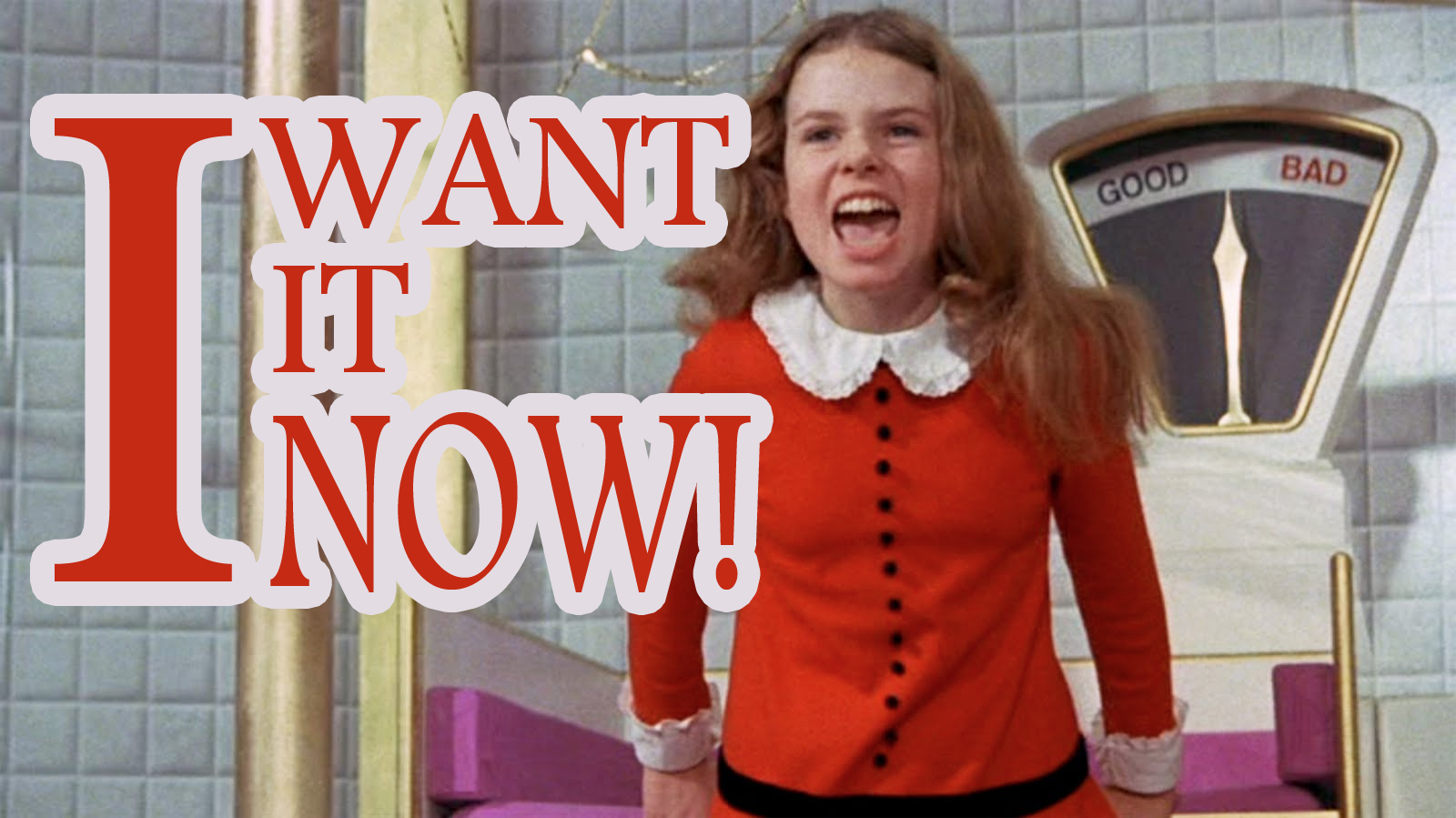
Veruca-Salt

Spoiling a child is actually a form of abuse, because being a golden child negates the child’s own reality that they are human and less than perfect. The spoiled, golden child will either try to be as “perfect” as they are told to match their parent’s unrealistic assessment (and a grandiose false self develops from that) or they know they can’t ever be the image of perfection their parents insist they be, and to correct the cognitive dissonance they may become rebellious or adopt covert narcissism (in which the child believes they are worthless and the parents are wrong) as a coping strategy.

Other personality disorders.

Borderline personality disorder (BPD) is also a way to correct cognitive dissonance. I think BPD develops in many children who were both golden children and scapegoats (which is often the case with onlies) who were given inconsistent parenting, sometimes abused, sometimes treated like little gods. That’s why they’re so conflicted and seem to act in contradictory ways that confuse themselves and those around them.

Not all abused children develop narcissism or BPD, but it’s my belief almost all children of narcissists develop personality disorders, all of which are the adult incarnations of childhood attachment disorders.

Malignant Narcissism.

monsters-nietzsche

Malignant narcissism is NPD that is high on the spectrum and mixed with antisocial (ASPD) traits. A low-mid spectrum narcissist (or even a non-narcissist!) can turn malignant during adolescence or even as an adult. I think this is almost always due to some choice they made or action they were forced to engage in that went against their conscience. Let me explain how this works.

M. Scott Peck in his book, “People of the Lie,” (the book that popularized the concept of malignant narcissists as “evil”) told the story of a man who narrowly escaped becoming evil/malignant. The man, a non-narcissist who loved his family dearly, suffered from debilitating panic attacks when crossing a certain bridge on his drive to work. Even though he didn’t believe in the devil, one day while suffering a severe panic attack he made a “deal with the devil”–he told the devil he could take his favorite son’s life in exchange for allowing him to cross the bridge without having any more panic attacks. Of course nothing happened, and the son was fine. The man, filled with remorse over having these thoughts, told Dr. Peck about it, and was told he did the right thing to repent, because otherwise he would have become evil himself, especially had something actually happened to his son. If he had turned to darkness and narcissism, it would have been to correct the cognitive dissonance between what he had done and his internal moral compass. He would have had to discard his previous moral standards and embrace darkness.

A person forced to engage in something they find morally reprehensible, such as a soldier forced to kill innocent civilians, can turn toward darkness. Many veterans return suffering severe PTSD and in some cases seem to have lost the souls they went to war with. Many, who have committed atrocities in war, correct the cognitive dissonance created by doing something that went against their conscience, by discarding their conscience altogether. This isn’t a conscious choice usually, but is the end result of severe PTSD. (I think all personality disorders are, in fact, manifestions of severe PTSD caused by chronic abuse starting when the personality was still forming.)

It’s my opinion that adolescence is when malignant narcissism is most likely to develop, because adolescents are by nature risk-takers and trying to establish a separate identity from their their parents. This usually takes the form of some type of rebellion, and rebellion is normal as long as it doesn’t go too far. Some adolescents may be “dared” by their friends to engage in antisocial activities. Adolescents are so eager to be accepted in a group of their peers that sometimes their desire for acceptance overrides their conscience, which isn’t fully developed yet. If these antisocial activities hurt others (such as robbing someone’s house on a dare), the teenager’s fledgling conscience is halted in its growth, and may be discarded altogether. It’s at this point an adolescent can turn to malignant narcissism. This is why the choices kids make are so important. Here’s an excerpt from my article, “Healing Narcissism: Stephen’s Story,” in which a fictional boy I called Stephen turns to narcissism as a coping strategy, and it all began with a dare.

The Choice.

bullied_child

Stephen recalled a dare when he was 8 years old. A group of boys who had bullied him dared him to set a paper bag of dried dog poop on another boy’s rickety wooden front porch and set it on fire. The boys promised him that if he did this, they would no longer bully him and they would be his friend and protect him against any further bullying. Stephen knew that doing this could set the other boy’s house on fire and at first he protested, explaining what could happen. At this point he still had a conscience. But the boys threatened him and told him if he didn’t do it, their bullying would become worse and they would kill his pet rabbit. Stephen believed them, so against his will, he complied.

They set out after dark for the targeted house. The boys watched from the darkened yard as Stephen lit the paper bag on fire and hesitantly walked up the front stairs of the boy’s porch and set it next to a dead potted plant. The deed done, all the boys ran away before anyone saw them. Stephen looked back in time to see the flames ignite the plant, and quickly start to spread over the railings of the rickety old wooden porch. He felt awful and considered going to the police, but he didn’t dare. He went to bed that night and had terrible nightmares.

The targeted boy’s house burned down and he, his baby sister, and his mother had to be taken to the hospital to be treated for smoke inhalation. Soon after, the family moved away, never to be seen again. No charges were pressed because no one knew who the culprit was.

To protect himself from his unbearable feelings of guilt and shame, Stephen shut off his painful emotions of guilt and conscience. From then on, the group of bullies accepted him as one of them, and they continued to engage in tormenting other children and even petty crimes.

This is an example of cognitive dissonance. Stephen would not have been able to live with himself had he not turned to narcissism as a coping strategy. The irony here is that, the more intense the child’s guilt or shame over committing an act that goes against their morals (or the more heinous the act), the more likely it is they will turn malignant, because to do otherwise would mean the overwhelming shame they feel could likely cause them to become severely depressed or even suicidal. This isn’t an excuse for anyone to turn to narcissism (or malignant narcissism) as a coping strategy, but is an unfortunate reality.

Acquired narcissism.

narcrealityshows

Sometimes people who become extremely successful, such as celebrities, sports stars, business leaders or politicians, can become narcissists, even if they were not narcissistic before their success. It doesn’t happen to all of them, but if it does, this is another example of how cognitive dissonance tries to “correct” things. In order to close the mental gap between their actual assessment of themselves as imperfect humans and the adulation they receive from the outer world that treats them as if they’re somehow more than human, a successful person can turn to narcissism to align their self-assessment with the way they are regarded by others. This is why some celebrities become so full of themselves or manipulative. It’s a form of acquired narcissism, but because it’s acquired fairly late in life and isn’t due to a choice, this type of narcissism may be temporary and only last as long as the person remains famous or very successful. If they fade into obscurity, the person faces a narcissistic crisis, but after that I think they can return to a non-narcissistic way of being in the world.

What It FEELS Like to Live This Way

Incredible description of covert narcissism. This is exactly what it feels like to be one.
I can’t even express how glad I am that now I know. Things have already shifted and my whole perspective is changing. I’m so glad I “came out” about it too. Doing so was TERRIFYING!

healingnarc's avatarFrom Narcissism to Nirvana

There is a wonderful NPD research paper available at: http://ps.psychiatryonline.org/data/Journals/AJP/3874/08aj1473.PDF

It is my personal opinion that this is the most scientifically accurate description of NPD and its subtypes.

My NPD falls under the ‘fragile’ category.

According to their Q-factor analysis, the following traits are typical of the fragile narcissist experience. In order to add the actual viewpoint of a fragile narc, I am including the ranked list of traits and how they manifest in my life.

Please note that it is difficult for me to separate my current sense of awareness from my history. I may use past and present text in some places, but my general intent here is to describe what my life has felt like for the past 35 years.

Maybe it can be useful to help self identify if you think this is what you have!  Just be sure to confirm with a trained and licensed…

View original post 3,326 more words