Narcs who use therapy to gaslight their victims.

flying_monkeys2

This discussion came up as a comment on another post, and I decided it would make an interesting topic for a new post.

A frequent commenter (Mary Pranzatelli) pointed out that among psychotherapists, there is little understanding of the Cluster B disorders, including NPD, which may be one of the reasons why these disorders are so difficult to treat. They wind up treating the wrong disorder, or more accurately, they stop short by treating the presenting disorder (depression or anxiety) but not the underlying one that led to it (the personality disorder).

An example of this would be a narcissist (or a borderline) who comes into therapy for depression caused by the end of a relationship. The therapist sees the dysphoria and depressed body language, and the client is only interested in relief of their depression. They have no interest in getting treatment for their narcissism because the way they see it, the personality disorder that led to the end of their relationship (and resulting depression) isn’t a problem. In most cases they don’t even know they have a personality disorder.

The therapist, knowing little about NPD or personality disorders, treats the client for the depression only, and when the client feels a bit better, they leave, only to wind up in a new relationship that is also destined to end because the underlying NPD will still cause them problems in their next relationship.

Mary also pointed out that therapists unknowingly aid narcissists in the abuse of their victims. I agree because I have seen this happen with my ex. My ex (unlike most narcs) has always been open to therapy, but only for his depression/anxiety, not for his narcissism. Being a “willing client” aids him in his “victim” mask. He isn’t in therapy to get any real help, but to “look good,” eg, look pathetic and abused. It helps his case.

flyingmonkey

All his therapists aided him in his gaslighting of me. He had them believing HE was the victim and I was the abuser. Once when we were in marriage counseling (which was my idea!), he had the marriage counselor scolding me for trying to “control” him. Ha! This was shortly before I was hospitalized for major depression (and diagnosed with borderline PD myself).

In this way, some narcissists use therapy as a way to gaslight their victims (who become their “abusers”) and the therapist becomes a flying monkey!

I think it’s time we stop bashing all narcissists.

stop_sign

This post is probably going to make some of you angry or upset. I understand that. After all, many of us were badly damaged by the narcissists in our lives. Anger and even hatred is an understandable and very human reaction to their abuse.

The blood sport of “narc bashing.”

blood_sport

There are a lot of people these days writing about narcissism and the sentiments found on the Internet about “narcs” and “N’s” is overwhelmingly negative:

— They can never change.
— There is no hope for them.
— They are monsters.
— They are demons.
— They aren’t human.
— God hates all narcs.
— They all deserve to burn in Hell.
— There is nothing good about them. Everything they do is evil.
— They were born evil. They are bad seeds.
— They never tell the truth.
— They have no emotions. They are machines.
— They all deserve to die.

Pretty ugly, isn’t it? This attitude is fueled by hatred and behind hatred is fear. Again, I understand this. I’ve experienced that hatred and fear myself. We have a right to be angry if we were badly treated by a narcissist. People with NPD aren’t pleasant to be around. But here’s the rub: unchecked fear and anger lead to hatred, and hatred accomplishes nothing. Hatred builds walls and leads to a refusal to even try to understand people with a devastating mental disorder. Hatred is itself evil–and narcissistic.

Hatred also leads to bigotry and intolerance. There is already too much of that in the world. People with NPD are mentally ill. We don’t malign people with schizophrenia or bipolar disorder the way we malign people with NPD, but people with those disorders can also be very unpleasant to deal with. If someone started a blog that spewed hatred toward people with schizophrenia, there would be outrage. That person would be called a bigot and possibly evil.

Narcissists are abuse victims too.

abused

It’s true that people with NPD are extremely unpleasant to deal with. But all mental disorders are unpleasant. People with NPD weren’t born that way. There is no such thing as a “bad seed.” In almost all cases, a person became a narcissist because of severe abuse or neglect as children. In most cases, they were raised by people who were themselves malignant narcissists or psychopaths.

Pastor David Orrison, who writes about narcissism from a Christian perspective in his “Narcissist Friday” posts, illustrates this well in this sad story. He is rightfully critical of the disorder and its manifestations but his posts are always written in a way that attempts to understand narcissism and people with NPD the way Jesus would have done–holding them accountable without hatred.

unconditional_love

Some of you have said, “but they don’t count because they made a choice to be narcissists.” Yes, that is true, it was a choice. But that choice was almost invariably made when they were young children, as a coping mechanism to protect themselves from being hurt anymore. Narcissists are people who started life with too much sensitivity, maybe more so than those of us who identify as HSPs (because we still found a way to cope with life without constructing a protective False Self). Narcissists felt too vulnerable and naked. They were born without any natural coping mechanisms at all. They knew they couldn’t survive without this protective natural armor, so they had to construct a False Self to cope. The False Self is a lie, but it protects the True Self from further harm. The reason they act so mean is because they live in terror of the False Self being damaged and exposing the too-vulnerable True Self. Like the rest of us, they wanted to survive. This was the only way they knew how.

This doesn’t give them an excuse to act as they do. It doesn’t mean we have to tolerate their manipulations and abuse. I’m not condoning abusive behaviors and that applies to anyone. But we don’t have to spew hatred against people suffering from NPD all over the web either. We don’t have to be so judgmental. We don’t have to pat ourselves on the back because we are “better” people. Only God can judge us that way. We can try to have compassion without giving in to abuse or allowing narcissistic behaviors to destroy us.

A serious dissociative illness.

dualman

Narcissists suffer. They are deeply unhappy people. They don’t know how to feel empathy, or experience joy or love for others. They never learned how–or they dissociated themselves from those feelings at an early age because it hurt them too much to be that way. They are not without emotions. In fact, their emotions are so strong they feel like they must always be on the defensive, 24/7, 365 days a year. Imagine how stressful it must be to go through life in mortal terror of your facade of invulnerability being ripped off, of constantly having to act a part in a play, of never being able to show your pain to others, of never being able to risk loving anyone else or feeling empathy, of being bitter and envious of everyone all the time? It must be hell.

Narcissists, in spite of their name, don’t love themselves. They only love their False Self, and will do anything to protect it from exposure as the mask it really is. Because the False Self was constructed when they were so young, they don’t even know themselves most of the time. How can you love someone you never got to know? If anything, they live in deep shame of who they really are so they hide from the world behind their masks.

Some mental health experts believe NPD should be classified as a severe dissociative disorder. You can read about that here and here. It’s not that narcissists don’t have any goodness in them, but that they have “split” from their good (true) self to avoid further harm–even to the point where they can no longer access who they really are. But the pain they feel still comes through and if we listen closely enough, we can hear what they are really saying: “please love me.”

Narcissists never got to grow up. Their true self is at the emotional stage of a very young child. Inside every narcissist is a little boy or girl of 3 or 4, sitting in a dark corner crying because they feel so lonely and unloved. Their reactions are at the level of a young child too. They never learned how to experience more mature emotions, because the False Self was constructed when they were too young to feel the emotions of an older person.

NPD is a spectrum disorder running from mild all the way to psychopathy and sociopathy at the top of the spectrum. Most narcissists are not psychopaths (who actually have Antisocial Personality Disorder rather than NPD and have built a wall so impenetrable even they can never access it and will never be able to admit they are the ones with the problem). Even malignant narcissists (just under psychopathy on the spectrum) may have rare moments of insight and regret for the way they behave. It’s my belief that NPD is as much a spiritual disorder as a mental one, but that doesn’t automatically make all narcissists “evil.” Who are we to assume that God hates all narcissists and can’t help even the most malignant ones? I believe God can perform miracles should He choose to do so. To speak for God this way is itself narcissistic.

Art allows the True Self to find expression.

iris_scott

The pain and hurt that fuels narcissistic behaviors can find honest expression. I’ve noticed many or even most narcissists have a talent in one or more of the arts–William Shakespeare, Ezra Pound and even Michaelangelo (who probably had NPD) come to mind, to name a few. Good art is about Truth and is one of the greatest blessings God can give. It’s through these artistic endeavors that a narcissist’s true self comes through, that they dare give that vulnerable hurting child a means to express the truth of how they really feel. Having a creative ability–whether in the visual, literary, or performing arts–is all the proof I need that people with NPD are still loved by God. Through their art, they are crying out through their mask. They want to be loved and they want to feel love. I can think of many examples of this, but the other day I received an email that really stood out to me and made me take a second look at my own negative attitude toward “narcs.”

The email was from a young man who admits he has NPD. He expressed a strong desire to try to heal himself. He hates his disorder because of what it has done to his life and the ways it has caused his relationships with others to suffer. He wants to know how to feel empathy and genuinely love others. I have no doubt his words were sincere and came from his True Self.

This young man said he was a singer-songwriter so I checked out some of his stuff on Youtube. (I can’t post it here right now because I have not asked for permission to do so). I was blown away by his talent. The words of the songs he writes express emotions almost too deep for words. His powerful emotions of pain and the desire to love and feel connected with others come through in his beautiful voice–and in his face when he sings. I have no doubt his music comes from his True Self, not his false one. Through music, he’s able to break through his wall of narcissism and allow himself to become vulnerable, to cry out in the darkness.

Insight and willingness: ingredients for change.

willingness

I don’t know if this young narcissist can heal himself. It’s a difficult enough disorder to treat by professionals, but he says he can’t afford a therapist and can’t find one willing to treat NPD anyway. Most narcissists won’t present themselves for therapy because their disorder is so deeply ingrained they have no insight and think it’s everyone else who has the problem, not them. Some narcissists may have insight into their disorder and know they aren’t well but still not be willing to change because their mask has become too adaptive or they are too afraid. But insight is the first step toward redemption–it’s not possible to have willingness without insight. This man has both the insight and the willingness. With both present, I think there is hope for him.

Tough love, not hate.

tough_love

Just because we should stop spewing hate against people with NPD doesn’t mean we have to tolerate their manipulative and abusive behaviors. It also doesn’t mean we can’t leave a narcissist or go No Contact. In fact, doing so may be the most loving thing we can do for them. Going No Contact removes the source of supply we have been giving them, and in rare cases may cause a narcissist to seek help or at least begin to question their own motives. Going No Contact is also the most loving thing we can do for ourselves. Refusing to have further contact with a narcissist isn’t an act of hatred. It’s an act of self-love and survival.

St. Augustine said, “hate the sin, love the sinner.” Jesus inspired this quote because He hated no one but was no pussy either. We can hate the behaviors without hating an entire class of people with a severe mental and spiritual illness that causes them even more misery than they cause those they attack. Going No Contact or refusing to play their narcissistic games isn’t an act of hatred. It’s an act of survival and is just plain common sense. It may even be a way we can show them love–“tough” love.

I realize this post may be controversial because we ACONs have gotten so used to thinking of “narcs” as evil. Their behaviors may be evil, but people with this disorder are still human beings who have feelings–even if they don’t know how to show them properly or keep them under wraps. Except for the most malignant narcissists and psychopaths at the top of the spectrum–who probably can’t ever change–I think calling narcissists evil, or referring to them as demons, monsters, or machines is a form of bullying a group of very sick people and is just as hurtful to them as what they have done to us.

I also realize I may sound like a hypocrite. I’ll be the first to admit I’ve engaged in the popular sport of “narc bashing,” and recently too. While the anger and rage we feel toward people with this disorder may be adaptive while we are trying to disconnect from an abusive narcissist, when these emotions no longer serve a practical purpose (after we have gone No Contact or disengaged from our abusers), they become bitterness and hatred, emotions that eat away at our own souls and can even turn us into narcissists.
Schema therapy/reparenting for an NPD patient.

Schema therapy was developed by Dr. Jeffrey Young for treating personality disorders, which are deeply ingrained patterns of behavior that are not receptive to traditional therapies used for depression, anxiety, neurotic disorders, etc.
(You can read more about how Schema therapy is used for NPD patients here.)

NPD is one of the most difficult of the personality disorders to treat, and it’s rare a patient will present themselves for treatment, unless they have suffered a narcissistic crisis that led to them becoming depressed.

These three videos are part of a graduate school practicum, showing schema therapy in action on a narcissistic patient (non-pathological narcissism/low spectrum NPD).* In the first video (session 1) the patient, “Sam,” has come to therapy because he is having problems relating to his wife and feels rejected by his coworkers. He is easily irritated and shows a number of narcissistic traits, including entitlement and grandiosity. He doesn’t understand or have empathy for his wife’s complaints about feeling hurt by his “brutal honesty.”

In the second video (session 8), Sam begins to talk about himself at five years old, when he broke his arm and felt rejected because his immediate physical and emotional needs were dismissed by his mother, who took him to the babysitter instead of showing the empathy and concern she should have. Then he is asked to relate how “little Sam” feels and begins to explore the emotions he shut himself off from feeling because of his mother’s rejection.

In the third video (session 16), Sam begins to show emotional discomfort as the therapist has “little Sam” (his true self) talk to “Detached Sam” (his narcissistic mask). He admits he wants to be able to show his wife how much he loves her.

Session 1:

Session 8:

Session 16:

Schema therapy is also commonly used to treat people with Borderline Personality Disorder.

* The patient is an actor but this is still an interesting look at how this method of therapy works.

Another narcissist* who wants help.

narcissus3_mythman

Occasionally I receive emails from people with NPD who have come across this blog and want to be cured. I posted about one of them in this post; yesterday I received another from a man who is considering reparenting therapy for his NPD.* He also plans to administer this therapy to himself due to the fact there are so few therapists willing or able to reparent a narcissist and because the few who do are extremely expensive. I’m not sure it’s possible to cure yourself of NPD, but if it is, I would love to find out more!

I have written about various healing methods in this article, but reparenting seems to be the most promising deep insight therapy that could work on someone with NPD, but only if the patient is both self-aware AND willing, as this man appears to be in his email. (I do not believe most malignant narcissists and psychopaths/sociopaths have any hope of being cured).

It always warms my heart to see a letter like his; I may just be one of those people Sam Vaknin calls a malignant optimist, but because I think NPD is really an elaborate defense mechanism adopted at a young age to protect a too-sensitive true self and may actually be a form of severe dissociation, I don’t think people like this man are beyond hope.

Here is the letter he sent. I love his analogy of curing NPD being akin to having a full skeleton transplant. 🙂

I’ve been reading your blogs on narcissistic personality. I first identified I have a problem with narcissism about six months ago and reading about it has been depressing, and very bleak. I’ve always known I’m self-centred and as a teen used to wonder why my empathy could more or less just switch on and off, often without my conscious control. But it is only since reading about NPD that I’ve realised what my issues actually are: I am convinced I have narcissistic personality disorder – I meet SO many of the criteria and as a method of getting by (or even ahead) in life I have trusted and enjoyed this system of habits and rules.

Narcissistic rage, while resulting in feelings of shame once an outburst had subsided, made me feel I was at least strong and able to defend myself from harm. It made me feel protected from being crushed or wounded, though in recent months I’ve realised it is simply an expression of me feeling crushed and wounded. One particular outburst directed at my lover left me reeling when I realised that if I stepped outside of my body and watched the argument happening, I’d have looked on myself with pity not fear. I’ve seen myself explode in senseless and bitter rage before and so it isn’t frightening to me anymore, it’s pathetic. There’s a line in the Annie Lennox song ‘Miracle of Love’ which I’ve been reflecting on a lot lately:
‘cool is the night that covers up your fears,
tender is the one that wipes away your tears,
there must be a bitter breeze to make you sting so viciously,
they say the greatest coward can hurt the most ferociously…’

trapped2

I realised then, and especially when I was listening to this song lately that I am a coward, and that underneath my mask there is a scared little child who felt it must have done something wrong to deserve the feelings of being unloved I experienced in my infancy.

I have found your writing so interesting because if there was one idea I prescribed to growing up it was that we are here on earth to love, and as a huge fan of all things Celine Dion (for whom every ballad is a song of true, deep, sincere and selfless love) even the very music of my life was about loving deeply and experiencing life through love to the fullest. Something strange has been going on in the last year, I think my narcissism has reached a dangerous peak (I’m a performer so being the centre of peoples’ attention and lauded by an audience has, I think exacerbated my own self-involvement). I’ve realised through my reading that if I continue using the mechanisms of narcissism to cover up my fear and feelings of smallness, I will never be able to fully receive or give the love I grew up believing in so much. I actually think if it weren’t for all that Celine crazy love song schtick and the benefit of feeling loved unconditionally by my sister that narcissism would have swallowed me completely by now. I desperately want to avoid getting worse and so much of the online data about NPD is written from a victim point of view. The outlook is so bleak, and the process of realising that I am living this way has been almost traumatic.

Particularly difficult is the frequent assertion that because I am a narcissist, I simply cannot feel empathy for others. I will agree my empathy is not allowed to flourish or be of use much of the time because of the walls I put up around myself, but I KNOW I do feel it. Just as deep beneath my masks as my fear of being hurt, or rejected is my little boy self hiding under the bed terrified. And I believe when he sees someone upset, wounded, attacked, he wants so badly to whisper to the person ‘you can hide under here with me.’ I have had moments with friends or loved ones where I know they are sad, have wanted to reach out and hold them and comfort them but these walls I have spring up like invisible fences stopping me from reaching out. It’s as if the little boy wants to go to the friend and hug them and soothe them, but he’s just too scared to come out from under the bed. I believe that deep feeling is empathy. But my fear, learned from a young age has defeated it. It makes me sick. I don’t want fear to win. It’s a bizarre loop because victim-mentality repels me, which I know is a narcissistic trait. And yet it is partly through the fear of being a ‘victim’ and allowing myself to wallow in the bad things that happened to me as a kid which drives me to reject the negative events in early childhood and be a FULL human being, not just a narcissist who passes as one. I want to experience that Celine Dion love, of which I am sure I have felt more than just glimmers and been blessed with from others.

attitudinal_healing

I believe love exists as a two-way street. I believe to receive someone’s love IS an act of love. To give love properly, we must be able to also receive and accept it. As RuPaul says ‘if you can’t love yourself, how in the hell are you gunna love anyone else.’ Well I want to learn to forgive the child inside for being so scared and angry. I want to teach him (myself) convincingly that it was not his fault he was adopted. That it was not his fault that he couldn’t protect his sister from her own demons spawned from the same young events. Or that somehow even if it possibly could have been his fault, it’s okay now. He was just a child.

I want to re-parent myself and unlearn the narcissistic coping mechanisms of devising a false self and put in place a new system. I feel like this is psychologically similar to having a full skeleton transplant, so I know it isn’t going to be easy. I am proposing to change myself in a big, lasting way. I’m choosing to become a proper adult, not ruled by the little boy anymore. It’s time for me to look after him, and I can only do that my knowing him. Knowing what it is I fear, what my true needs are, not just the needs of narcissistic supply. I must make this much clear: I reject my own narcissism. I do not want it. This system of self-aggrandisement, making myself emotionally unreachable, and of behaving so poorly to the people around me isn’t good enough. I want a better life.

narcissism_childhood

Your blog has given me hope that this might be possible. Your compassion has been vital for me today. I’ve been typing this as much to organise my thoughts as to fill you in on what’s going on. I know you will receive a lot of mail, and I know you’ll be all too used to big long emails from narcissists talking about themselves 😛 But I say all this to say that your writing has been understood by me as a shared promise of hope. It’s really a wonderful thing you’ve done and I’m so glad I found your blog. I wish others would get to read it, rather than so much of the demonising bile dominating google on the subject of NPD. I believe it’s bad to try to turn people into cartoon villains. Every behaviour has a cause.

My main goal going forward is keeping mindful at all times of this little boy. I need to become his best friend and always listen to what he’s saying. I need to tell him ‘no we don’t lash out when we feel attacked,’ and help him grow up. He is, after all, me. I’ve had mild moments of self awareness where I have tried to learn more about treatment and even let my walls down from time to time to be honest and show my naked little self to those close to me. It’s hard for them to understand this stuff and unfortunately after a few weeks pass I find the walls have been slowly slowly rising again. Then it takes a big argument or event to knock ’em down and unfortunately one such event has cost me a really important relationship. The loss of the relationship, alongwith increasingly realising my charisma isn’t enough to get me by in life could be defined as my ‘narcissistic crisis.’

As you said: ‘Harnessing these moments of emotional nakedness is like trying to hold onto a dream while awake.’ My next step is to find a method, or try to invent one to keep me mindful. I think reading works like your own frequently, perhaps daily and reminding myself of exactly what my demons are might help. To hold my inner enemies close in this way may help me defeat them. You’ve helped enormously. Thank you.

* I have no idea whether he actually has NPD or has ever been diagnosed with it. He could have some other disorder. True narcissists rarely acknowledge their disorder or desire to be helped, but I’m sure there are exceptions.

5 more weird things you may see a narcissist do.

narcissist_masks

After I posted my article 12 Weird Things You Might See a Narcissist Do, I thought of a few more things so I am adding them to the list.
I also had fun writing that post, and I’m in a rotten mood so writing this might make me feel a little better.

1. They react to events inappropriately.

laughing_funeral

This is actually one of those things that’s pretty well known about narcs, but it’s so weird and disturbing I had to put it here. Narcissists don’t feel emotions the way normal people do, and often have the opposite reaction to things you would expect. They love it when something bad happens to someone else. They might laugh when someone gets fired, is dumped by their lover, or falls down and breaks their neck, but because they are also pathologically envious, they will sulk or become upset if someone shares good news. They can’t stand it when good things happen to other people and will try to ruin their moment for them. This may get them negative attention, but is effective because it takes the attention off the person with the good news. Narcs don’t care if they get negative attention–it’s still attention and that’s what they crave.

2. They cry without tears.

dawson-crying

This is one of the weirdest things about narcissists. Narcs will shed actual tears for themselves if they’ve been hurt or denied their fix of supply (and they can shed enough tears to float the Queen Mary if that’s the case), but in a situation that calls for crying, such as a funeral or other sad event, they can only pretend to cry, and this means their eyes will remain dry even if they appear to be crying along with everyone else. To hide their dry eyes, they will probably keep their face covered. I’ve also seen psychopathic or malignant narcissist criminals on the witness stand attempt to shed tears to show remorse, but their dry eyes prove this is just an act.

3. Their laughter is strange.

fake_laughing

Narcissistic laughter sounds forced to me, and is usually way too loud or contrived sounding. It’s unsettling to listen to and I also noticed the way everyone in the room goes silent when the narc starts to laugh. They also laugh at inappropriate times (see #1).

4. They either care too much about their appearance or don’t give a damn how they look.

body_builder slob

A somatic narcissist will care way too much about the way they look, obsessing over their weight, hair, clothing, health or makeup, or if a man, over their health, abs or muscle mass. But many cerebral narcissists, including women, don’t give a damn about their appearance. In fact, their personal hygiene and grooming is sometimes downright disgusting. It’s almost as if they think they’re too smart to be bothered with trying to look decent. I’m acquainted with a cerebral narcissist who has lost all his teeth because he never bothered brushing or flossing, his breath stinks, and he has terrible B.O. His clothing looks like he found it at the bottom of a trash bin and his pants are threadbare in the butt, always too big and he doesn’t bother wearing a belt so you can see the top of his butt crack. His fingernails are long and caked with black dirt. He wears flip flops even in the winter and his toenails are thick and brown with fungus. And as a bonus, he keeps a old coffee mug in his bathroom filled with his own hair and refuses to throw it away. I have no idea what he saves it for, but it’s disgusting.

5. They are either neat freaks or their homes are pig pens.

germaphobe dirty_house

Related to the above, most somatic narcissists are neat freaks or germ-a-phobes, and live in houses that look like museums or are so sterile they look like doctor’s offices. But some cerebral narcissists live in squalor, wallowing in their filthy surroundings like a pig wallowing in mud.

12 weird things you might see a narcissist do.

the_color_9

There are some strange things I’ve noticed narcissists do that aren’t usually mentioned as symptoms of their disorder, but seem to be common enough perhaps they should be included as additional criteria for NPD.

If you know someone who does only one or two of these things, it doesn’t necessarily mean they’re a narc, but if they do several of them regularly and also seem to fit the more well-known criteria for NPD, these things could be red flags to watch out for.

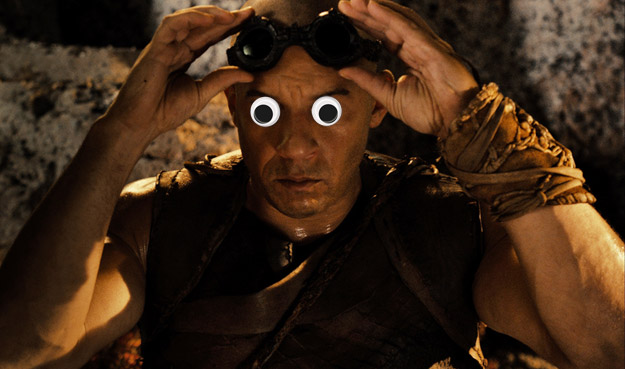
1. They don’t blink when they look at you.

googly_eyes

Some narcs have a penetrating, predatory gaze. If a person of the opposite sex looks at you this way, you may take it as sexual interest (and it could be), but watch carefully: if they do not blink this could mean they are sizing you up as prey. Whether they blink or not, if their stare makes you squirm, get away. Listen to your instincts.

2. They interrupt you or talk over you constantly.

blah-blah1

If someone only seems to care about what they are going to say next, and don’t even seem to have heard what you said, suspect a narcissist.

3. Whatever you tell them is really all about them.

narc_cards

If you say something to them about yourself, rather than acknowledge you, instead they always relate it to back something that happened to them. The Roz Chast cartoon above illustrates that well. You do not exist.

4. Their eyes look flat or dead.

jodi_arias

This is a “dead” giveaway and those eyes usually belong to someone high on the spectrum–a malignant narcissist or a psychopath. Get away from this person. The above photo of psychopathic murderer Jodi Arias shows how flat and dead their eyes can look.

5. They sometimes act psychotic.

crazy_person

All malignant narcissists are bat shit crazy, and their delusions can rival those of someone with schizophrenia. In fact, narcissists denied supply over long periods of time or who have suffered a severe loss can in fact become psychotic. Schizophrenic-like neologisms and nonsensical conversation that sounds like word salad isn’t that uncommon in a malignant narcissist living in mortal fear of losing their “mask of sanity.”

6. They have dramatic, unsettling mood swings.

young woman holding smiling face

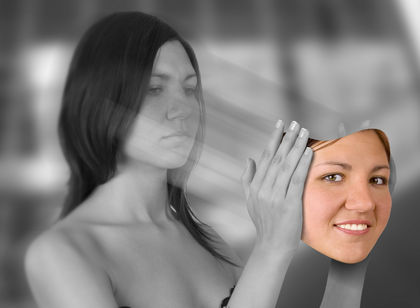
Narcissist mood swings (mask switching) can be so sudden and inexplicable you may think you’re dealing with someone with Dissociative Identity Disorder (DID). For example, a narcissist mother can seem to be happily playing with her child and suddenly, for no discernable reason, start screaming at or hitting the child.

7. They are bad sports.

bad_sport

They will act like babies if they lose a game. I remember once seeing a grown man in his 40’s get so angry that he lost Monopoly that he picked up the game board and tossed it across the room, while everyone looked on in horror. If they can’t win, they will ruin the game for everyone else.

8. They have dark interests or like things that make most people uncomfortable.

satanist

Narcissists, especially high on the spectrum, walk on the dark side and this shows in their obsession with things like the occult, mass murderers, the Holocaust, or weapons. They may listen to dark music such as death metal or watch slasher movies. Many people are interested in these things, but a malignant narcissist or psychopath, even if they put on a mask of being an upstanding moral citizen, usually have a secret hobby or interest in something dark or evil. They may not talk about it in public, but they have one.

9. They can’t let nature take its course.

facelift

If a woman has had an excess of cosmetic surgery including too many facelifts, she is probably a somatic narcissist living in mortal fear of aging.

10. They have an affected way of speaking.

fake_speaking

Dahhhh-ling, this can manifest as a fake foreign accent, or just a speaking voice that sounds fake and affected, as if they are acting on a stage. It comes off to others as more annoying than glamorous though.

11. They use exaggerated mannerisms, facial expressions, or speaking voice.

silent_movie

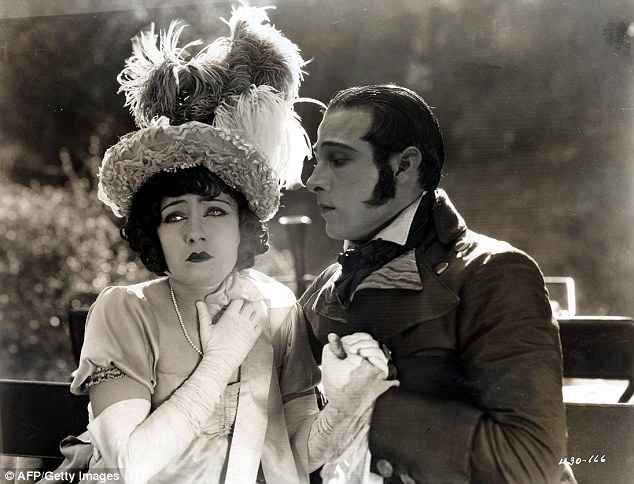
Like actors in silent movies, who used exaggerated expressions and mannerisms to make up for fact they couldn’t speak in those films, some narcissists (probably because they can’t feel emotions the way normal people can) overact to the point of being rather hilarious. This is also common in people with Histrionic Personality Disorder (HPD), another Cluster B disorder that’s been speculated by some experts on personality disorders to be a somatic form of narcissism and is far more common in women.

12. They have conversations with themselves.

talking_to_yourself

I’ve heard many a narcissist talk to themselves–and actually answer themselves back. Does this mean they are insane? Do they hear voices in their heads? Or are they practicing what they might say to someone in a hypothetical conversation ahead of time (remember, everything they do is fake, so they might have to pre-plan how they will respond to others in advance). Who knows? I just know it’s weird as fck. My ex used to do this all the time–in front of a mirror too.

Also see 5 More Weird Things You Might See Narcissists Do.

Narc attack!

Shark attack

Sigh.
I can’t get rid of them.
Today I thought I died and went to narc hell.

My narcissist sperm donor has finally moved into his own place. I’d been storing a lot of his crap in my house (for no charge) since I kicked him out over a year ago. Many times I felt like just hauling it all to Goodwill but he kept begging me not to so I didn’t. Of course any attempts to collect financial compensation for storing his crap were met with deaf ears or excuses.

So anyway, today he came over to pick up his stuff. I had most of it packed in bags and boxes for him so he wouldn’t have to stay long rummaging through my house. I didn’t want him to invade my boundaries, but of course asking a narc not to invade your boundaries is like asking a mosquito not to bite you. They are every bit as annoying as a mosquito too.

mosquito
He kept walking from one room to the next, trying to take things that weren’t his or that had been both of ours but I wanted to keep. I had to negotiate with him over at least 20 items, including the little bit of wall art that I have, and the few decorative items in the living room. He kept trying to take my little white Buddha that sits next to my bamboo plant in the kitchen. I finally convinced him why I needed to have it (“it makes my plant grow”–it really does!) He wanted to take my geodes off the kitchen sill. I wouldn’t let him have them.

He was here for two hours, wanting to go through EVERYTHING, opening every drawer, rummaging in the closets for things I might have missed (there was nothing of his left), even pawing through all the stuff in the medicine cabinet, the cabinet over the toilet, and the kitchen. I couldn’t get rid of him fast enough.

But no, this wasn’t all. I didn’t just have one narc following me around the house going through my stuff–I had TWO! My annoying narcissistic roommate was following us around too. Any time I have company she is ALWAYS out of her room, making sure she’s noticed and hijacking the conversation with her inane blabber. She followed us from room to room, talking nonstop about nothing as usual and asking an awful lot of questions that were none of her business. I finally told her I was stressed and I would prefer she didn’t follow us around asking questions, so she went back in her room (sulking, of course), but 5 minutes later was out again, saying she was “just getting some air.” The nonstop talking resumed. I just tried to ignore her but it was hard.

tired

The ex didn’t take much besides what I had packed, but dealing with him being here and pawing through my belongings felt like a huge violation of my boundaries. Meanwhile being yabbered at nonstop by my idiot narcissist roommate was another type of boundary violation. Even my ex was getting irritated with her.

Can you imagine being in your own home followed around by two narcissists, one who wants to rummage through (and possibly take) your belongings, and another who never shuts the hell up?
After he left (finally!) I was so exhausted I had to take a long nap. They just suck everything out of you. Like vampires.

At least my house feels like mine again and I have a lot more room for my OWN stuff now.

The tears of a clown.

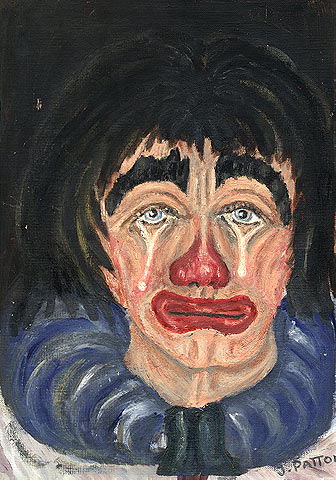
clown1

Here was one of yesterday’s search terms:
vomiting after seeing ex.narcissist begging me back

Really now? The narc’s begging you back actually made you puke?
But yes, I can definitely understand it though.

Sometimes those over the top emotional displays when you take away a narc’s source of supply by leaving them are pretty nauseating to say the least. I don’t know if it’s “acting” or desperation or what, but I know it’s not “love.”

I remember back in my 20s, witnessing the incredible reaction of a malignant narcissist boyfriend when I finally worked up the courage to tell him I was leaving him.

This was a verbally and sometimes physically abusive man who treated me like dirt most of the time, made fun of me, tried to turn my friends against me, and cheated on me as well. I had waited far too long to disconnect from him. I honestly didn’t think he would care that much because his behavior was anything but that of a man in love. In fact I thought he’d probably be relieved I was letting him go.

But oh, I was so wrong. SO wrong about that.
When I told him I was leaving, this narcissistic jerk literally exploded into the loud, violent, gasping, wracking sobs of a very young child, torrents of tears and snot pouring and mingling together on his fire engine red face while he begged me through choking sobs not to leave him. He actually was gagging. I don’t think I have never seen an uglier crier than him at that moment. It made me feel sick to see this, and I actually did feel vaguely nauseated. I felt no empathy for him at that moment. I just sat there with my mouth hanging open, not quite believing what I was seeing.

Then to make matters even worse, he kept telling me over and over how much he loved me and couldn’t live without me (my bullshit detector was at full volume). Then he begged me to hold him too, but I just…couldn’t. Ew. I felt myself recoil in disgust. God, I felt so repelled by him. It wasn’t even because of his over the top (and rather gross) emotional display, but because I knew all those tears he was shedding “for me” were really just for himself. They were an elaborate act. Maybe not fake, because no one who wasn’t really hurt would be able to cry like that, but they were manipulative tears, meant to “win back” me as his source of supply. This love-bombing loser should have gone into the movies–he would have won an Academy Award for that incredible performance.

I knew he never loved me, and true to form, two weeks later he found a new girlfriend source of supply.

Blargh.

puke

Revealed! 6 Lies Narcissists Tell (The Short-List)

So much truth in all of this. I have seen all of these lies up close and personal. The one “You are responsible for the way you feel” when they have just said something hurtful to you REALLY hit home with me. And of course the way they gaslight, gaslight, gaslight and always try to make you feel like there’s something wrong with YOU.

Kim Saeed's avatarLet Me Reach with Kim Saeed

Image

If you’ve found yourself in the unfortunate company of a Narcissist, you’ve undoubtedly discovered their innate ability to lie without missing a beat.  Narcissists lie for a variety of reasons, but the main reason, while immature, is simple.  If he or she lies and gets away with it, they interpret this as their being clever and superior to others.  In short, it’s a means to demonstrate how brainless others are.  A sincere and honest person is viewed by the Narcissist as a weak chump who deserves to be manipulated.

Wondering if your significant other could be a Narcissist?  Read the following list of their favorite lies to determine if your partner fits the mould.

  1. I can’t imagine my life without you.” (or, “I’ve grown so attached to you”, “You’re in my blood”) –   Sadly, victims of Narcissistic abuse believe their partner really cares about…

View original post 916 more words

NPD vs. BPD: they are not the same thing!

BPD-Awareness

Articles like this one make me want to rage. The author, Doug Bartholomew, a licensed social worker, believes that people with Borderline Personality Disorder (BPD) are pretty much the same as people with Narcissistic Personality Disorder (NPD). He even goes so far as to say BPD’s, along with NPDs, fit the criteria for M. Scott Peck’s “People of the Lie.”

Wait just one second. Peck’s People of the Lie don’t even include all narcissists–his definition describes those with Antisocial Personality Disorder and malignant narcissism (there’s a huge difference even between MN’s and garden variety narcissists–a malignant narcissist has ill will toward others and decided antisocial traits while a “benign” narcissist isn’t necessarily ill-intentioned but is just self centered and doesn’t care about your feelings). Peck never said all manipulative people (people with one of the four Cluster B personality disorders) were by nature evil, but evil people is what his book is about.

At the same time I understand where Bartholomew is coming from. On the surface, people with BPD can be manipulative and even resort to some of the same unpleasant tactics and mind-games (gaslighting, etc.) that narcissists like to play. They can appear to lack empathy, because they get so caught up in their own drama that they can literally forget that others exist. They can be demanding, high maintenance and prone to irrational rages (just like narcs) but are far more likely than narcs to turn their rage inward and become self-destructive or even suicidal.

Narcissism Clinic.
Not much to do with this article, but I couldn’t resist.

Borderlines also usually regret their acting-out and selfish or manipulative behaviors when the crisis has passed or their bad behavior is called out to them. They may be self-centered and impulsive but are not lacking remorse or the ability to feel shame and guilt. The problem with Borderlines is they tend to act as they feel at the moment without thinking things through. They can get so caught up in their own fear of abandonment that they almost literally forget that you have feelings too. However, after the fact Borderlines usually will feel remorseful and ashamed of their behavior, and on top of that, realize that their offputting behavior may cause others to do what they fear the most–abandon them.

Bartholomew also states that all Cluster B disorders are characterized by a lack of empathy:

The overwhelmingly most commonly mentioned behavior or trait associated with all the Cluster B Personality Disorders is a lack of empathy or compassion. They seem unmoved by the effect their behavior has on their loved ones other than what is necessary to keep their loved ones engaged and around. It is as if they were tone deaf or color blind to the feelings and experiences of others.

While it’s true that people with NPD and ASPD are characterized by a lack of empathy, I disagree that this is true of people with BPD. I think this is a gross overgeneralization.

Borderlines can feel empathy, but due to their impulsiveness and fear of abandonment, they can act in selfish, defensive, and manipulative ways that may hurt others (but they hurt themselves even more so). However, unlike malignant narcissists and people with ASPD, Borderlines do not set out to hurt others and they do care how others feel. Unfortunately their good judgment is clouded by their disorder which makes it difficult or impossible for them to regulate their emotions. That’s why they act so impulsively and often fail to think things through before they act out. It’s also why their relationships tend to be stormy and short-lived.

BPD_cartoon

A person with BPD does not wear a mask or have a “false self” like someone with NPD–but their fear of abandonment can cause them to knowingly or unknowingly push others away. Their ambivalence in relationships can be very confusing to others–they can seem to adore you one moment, and then hate you the next. They can seem needy and rejecting by turns. When others grow tired of this crazymaking and confusing “I hate you, don’t leave me” behavior and finally leave them, the Borderline genuinely doesn’t understand what they have done to drive the other person away, and so they become even more fearful of being abandoned. Their behavior is maladaptive because it tends to cause the very thing they are trying so desperately to avoid.

63380797
We are just burning toasters.

A much better description of the similarities and differences between Borderlines and Narcissists can be found in “Borderline vs. Narcissistic Personality Disorder: How Are They Different?” from the Clearview Women’s Center’s website.

While the two disorders, both being part of the Cluster B group of personality disorders, do have overlapping symptoms and are often confused with each other and/or misdiagnosed as the other disorder (with males being far more likely to be diagnosed with NPD and females with BPD), this author, unlike Bartholomew, understands that both the motives and mechanics of the disorders are quite distinct from each other:

[…]both BPD and NPD deal with conflict in a way that is unhealthy to themselves and those around them. It’s the expression of the anger that results from the conflict that is different.

In her article “Blame-Storms and Rage Attacks,” Randi Kreger, co-author of Walking on Eggshells, points out the difference in how those with BPD and NPD express anger. While those with Borderline Personality Disorder may fly into a rage and push people away, they will often calm down, feel shame for their reaction, and promise never to do it again.

“Unless they’re in treatment, the underlying issues don’t go away. Some conventional [borderlines] do not get angry at all, but hold it in or express it inwardly through self-harm,” says Kreger.

“The anger of narcissists, on the other hand, can be more demeaning,” she continues. “Their criticism evolves from their conviction that others don’t meet their lofty standards — or worse, aren’t letting them get their own way.”