
The incredible shrinking world of the narcissist’s victim.

lonely_room

When I was still with my ex, I became a recluse, holed up in my small room when I wasn’t at work, never venturing out even into the living room or kitchen. This was because he had taken over the whole house to the point I dreaded leaving the safety of my room, because of how obnoxious, loud, abusive and demanding he was.

He was sleeping on the living room couch (I was “nice” enough to let the parasitic loser crash there for almost 7 years–but that’s a whole ‘nother story) and he was extremely messy, loud and dirty–overflowing ashtrays, trash all over the table, plates left crusted with food or day old coffee, crumbs on the furniture and floor, and he never, ever cleaned anything. His idea of washing the dishes was letting them soak in soapy water and they’d sit there until they began to stink or someone else (usually me) washed them. He also talked loud, discussed inappropriate things with my daughter’s young friends (she was living here too at that time), and blasted his death metal and riot girl music (which he knew I couldn’t stand) just because he knew it would piss me off. Whenever I complained or even politely asked him to stop or turn the music down, he told me (in front of his friends and my daughter and her friends) that I was “crazy.” He’d announce to everyone things like, “oh, well you know Lauren’s a BORDERLINE, so that’s why she acts that way.” He also was deliberately loud when I needed to sleep. I was the only one working at the time, and had to be up early. You think he cared? Ha! Not when he yelled at me for being “emotionally unstable” or “selfish” because I wanted quiet at night when I was trying to sleep.

I couldn’t stand leaving my room because he seemed to be everywhere in that small house. I was too depressed to go out, and didn’t have anyplace to go anyway. See, another thing that happens when you live with a narcissist is that you may not have any money. Some narcissists hide all the money from you, keeping it tucked away in their bank accounts where you don’t have access to it. If you work, they may demand you hand over most or all of your paycheck. Or they simply grind down your confidence in your abilities to the point where you only take jobs that are far beneath your actual ability. Or, in some cases, the narcissist simply refuses to work, while racking up the bills and then expects others to pay. This last type was what my ex was.

For seven years he didn’t work, but freeloaded off my good will and codependency. He was the worst kind of parasite. Yes, I enabled him so that was my fault. But in me, he saw an easy “mark,” someone who was a people-pleaser who could be easily taken advantage of. In the winter, he’d turned the heat register to the highest temperature, so the living room felt like an oven. If I tried to call him on that and remind him that I couldn’t afford to pay a high electric bill, he’d deny it was him. He’d blame his daughter, or even say I was turning the heat up myself and didn’t remember (this was gaslighting of course). I knew he was lying but couldn’t prove he was, because he’d crank up the heat when I wasn’t around. Another thing he did was order movies, sometimes porn, without my knowing and these charges sometimes almost doubled the cable bill. Of course I wound up having to scrape together the money to pay it. When I confronted him about the movies he’d ordered, he denied responsibility, saying it must have been our daughter (she was never home and barely watched TV at all so I knew he was lying).

He did get food stamps, but that was the only way he contributed, and the amount he was getting wasn’t very much. He’d complain about the groceries I bought because they didn’t include expensive steaks, legs of lamb, and condiments that he needed “for his diabetes.” I was trying to stretch the budget, and that meant buying inexpensive foods. These were not to his high standards though. You get the idea.

My job was low paying (and still is). So of course after taking care of all his needs and paying gigantic electric bills thanks to him, and never having anything to eat because he’d eat all the food himself, there was never any money. So I couldn’t go anywhere. Hell, I couldn’t even afford a movie or the $3.00 fee for the community pool, never mind ever being able to get away for the weekend to the beach.

give-up-power

I also had no friends. He’d convinced me I was so unlikeable and socially inept that I had stopped even trying to make friends. People who approached me in friendship I kept at arms’ length and never accepted their invitations or phone calls. I was afraid if they got to know me, they wouldn’t like me. Being avoidant and terribly shy anyway, socializing was never something that came naturally to me. So any fun activities or getaways I might have gotten involved with through a friend just didn’t happen, because I didn’t allow myself to have friends. I was also too embarrassed to let anyone come to the house because of its filthy and disheveled condition (thanks to him) and the fact there was never any food to eat, not to mention the certainty that this parasitic loser would say something embarrassing or inappropriate in front of any friend I might have brought over. Also, never having enough money to do anything fun, made getting together with friends difficult. I certainly couldn’t expect them to always pay my way!

Some narcissists won’t let their victims have friends. They either forbid it, or manage to turn the victims’ friends against them with their charming triangulating. Mine never actually forbade it, but just made it so uncomfortable and impossible for me to have friends that I gave up on having any.

At age 45, i noticed I was living like an 80 year old, pretty much confined to the house, and dutifully going to my job (which I hated) every day. I had no life at all, no interests, no hobbies, no money, no friends. All I had was TV, my computer and books. So I holed myself up in my little room and read and slept a lot. I didn’t even have the motivation to do something creative, like start a blog. I just vegetated in there, pigging out on junk food and snacks and growing fatter every day. I slept a lot during the day. Not long ago I posted a photo of what I used to look like. I can’t believe the difference–I don’t look like the same person.

That’s what living with a narcissist will do to you: destroy your looks, your motivation, your self esteem, your interest in anything, your pride in your own body and mind, eventually your sanity. I actually thought I had lost all my creativity and intelligence. I thought I had nothing left to offer to anyone, and my sole purpose in life was having to put up with the narc in the house who was sucking me dry like a vampire. He reminded me every day it was his right, and that I had no choice because if I tried to make him leave, he would kill himself and possibly take me with him. I was terrified of that possibility, but I now know he was full of doggy doodoo and just said that to manipulate me because he knew I’d fall for it. That man would never kill himself. That I know. If he was going to, he already would have.

Oh, there was more, so much more, but I’ll stop here before this turns into a book.

Don’t let a narcissist shrink your world and reduce you to living in a self-imposed prison. You deserve better than that. I know if I hadn’t gone No Contact with him last year, I would very likely be dead or very ill by now. They may not kill bodies, but they kill souls, and you die a slow and painful death which could eventually destroy your body too.
Addicted to being a Victim

I can relate to this article by OM so much right now. There are people who wear their victimhood as if it’s a trophy and for that reason can never move on from their past and heal from abuse. I feel sorry for them because they don’t realize they are letting their abusers win. The best revenge is to reject your victimhood, because that’s exactly what your abusers DO NOT want to see. They want you to remain a victim all your life because they know their toxic message to you became internalized and is eating your soul to shreds. You being happy and well will drive them insane.

For the record, I am not anti-victim, having been one myself for most of my life, but it shouldn’t become a way of life either. There’s a time to put it to rest and focus on becoming happy in spite of your past. Tragedy and abuse should never define who you are. The past can be used as common ground to connect with others who have suffered but then we should move on from it by learning from it and helping each other, but you are not your past. You weren’t born to suffer in spite of what your abusers have told you.

If you want to hang onto your victimhood forever, that’s your right of course, but it’s wrong to judge those who reject such a depressing and unhealthy philosophy.

What I believe about No Contact.

no_contact1

Apparently a few people are under the mistaken impression that I don’t believe in No Contact because they believe I am a “narc hugger.”

I may never have been clear about where I stand about No Contact, so now is the time to clear up any misunderstandings.

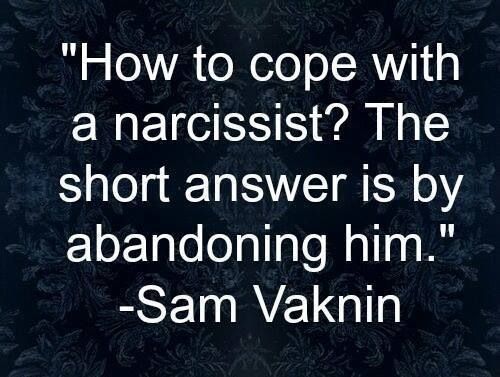
I definitely believe No Contact is the ONLY viable way to “handle” a narcissist. I don’t hate narcissists per se, but I hate what they do. Even if you sympathize with the “lost true self” living deep inside every narcissist, that doesn’t take way from the fact they are extremely dangerous people and will use everything in their power to destroy your reputation, your self confidence, your sanity, and even your life if you allow one to get too close to you. Going No Contact is not an act of hate or retribution; it’s an act of survival for yourself and your children if you have any.

no_contact2

While there are some situations where going completely No Contact may not be possible (for example, if you have children with a narcissist), then go for the next best thing–Very Low Contact. That’s the kind of relationship I have with my ex. I only have dealings with him when I must–when information about our two adult children needs to be communicated. Other than that, I refuse to deal with him at all.

But I think in most situations, No Contact is not only possible, but is necessary for your recovery and happiness. It doesn’t matter if it’s your mother or other close relative. Don’t feel guilty. Hell, they never did when they abused you!

So that’s where I stand on the matter, in case there were ever any doubts.

No Contact is always best.

20 Signs of Unresolved Trauma

Here is a fascinating article about how trauma due to abuse can lead to a post-traumatic condition that resembles Borderline Personality Disorder in almost every aspect. I wonder if this could mean I don’t actually have BPD. I have a lot of these symptoms, although they’ve improved over the years. I was diagnosed with BPD twice but maybe my therapists were wrong. These are symptoms of C-PTSD (which I have seen compared with BPD which it closely mimics). I thought I had recovered from my PTSD but maybe I have not. I’m still going to assume I’m borderline for now, but this makes me wonder. Borderlines have most of these traits, including dissociation.

I am also adding this website to my blogroll because I think it could be of great help to survivors of trauma and abuse. A social worker friend of mine just told me about it. She does not think I’m borderline. Now I’m REALLY confused.

Kathy Broady, Trauma Consultant's avatarDiscussing Dissociation

Unresolved Trauma

Many people enter the therapy process with minimal awareness of their trauma history.  When the trauma survivors are dissociative, they have the ability to block out an awareness of their trauma.  They may know that their family had problems, or that their family was dysfunctional, etc, but they may believe they were never abused.

child abuse child abuse (Photo credit: Southworth Sailor)

However, blocking out conscious awareness of trauma does not mean that the survivors have no effects of that trauma.  Using denial and dissociative skills does not mean that the abuse did not happen.  Denial means that the person simply is refusing to acknowledge or accept the fact that they were traumatized.  They are pretending they were not hurt, when they were actually hurt very badly.

Even if the memories of abuse are hidden from the survivor’s awareness, blocked trauma / unresolved trauma creates very noticeable and obvious symptoms that…

View original post 646 more words

What living with a psychopathic malignant narcissist does to your looks.

This is a picture of me taken two years ago, about a year before I finally got my MN ex out of the house for good.  He was turning my daughter against me (although he failed with my son, who moved to another state to escape from all the drama) and had already succeeded in turning all my friends against me with his gaslighting and triangulation.    He had everyone convinced I was insane, deluded,  and stupid.    I had no one to turn to and no money (well, I still have no money) but I had to support him even though he refused to work.   I felt so trapped.   We hadn’t even been married since 2005 but he continued to play his narc games, using the kids as pawns,  and I made a huge mistake allowing him to move back in with me in 2006, because I was so easily manipulated and afraid of what he might do if I didn’t agree.

sbrombacher_cat

I was fat, out of shape, exhausted all the time, and look several years older than I do now. I didn’t care about my appearance or much of anything. I think you can tell by the expression I’m wearing here that I was severely depressed and had pretty much given up having any kind of future. I was just marking time until death and aging fast.

Me in December 2006: I don’t look very happy. I wasn’t. I never smiled.
laurenb_2008

At a wedding in 1996–around the time his abuse turned physical and my son became scapegoated. Yes, that’s him on the left. He looks like a bum today.
1996_wedding

Here is me today:
laurenb1
This was taken in April this year.

laurenb2

I think the change is dramatic.

The Early Warning Sign Of A Toxic Person You Never Hear About

A very important (but rarely talked about) early warning sign you are dealing with a narcissist.

Bree Bonchay, LCSW's avatarFree From Toxic

imageThe Department of Homeland Security has a color-coded terrorism alert system. Red, the highest level, means severe risk of terrorist attacks. The lowest level, green, means low risk of terrorist attacks. Between those are Blue (guarded risk), yellow (significant) and then there is orange (high). There is a lesser known and very subtleearly warning sign you may be dating a toxic personthat you never hear about. It’s not quite the level of a red alert, but it is definitely in the orange to red range andit should put you on high alert that you are in danger ofbeing at the very least, emotionally abused, bya toxic person, narcissist or sociopath. It’s a tacticcalled Subtle Ignoring. It is generally a precursor to full-blown narcissistic abuse and the frequent use of the silent treatment.

View original post 555 more words

I don’t need your damn fake apologies.

narc_apologies

My sociopathic ex was never sorry for anything. Oh, yes, he “apologized” sometimes, but it was only to get me to shut up or because he knew he’d already lost the argument or knew I was right (but he wasn’t really sorry.) It was insulting how stupid he must have thought I was to believe these “apologies” were sincere.

Unless they are incredibly good actors and are hoovering you (trying to reel you back in, like a Hoover vacuum sucks up dirt) or love-bombing you (stalking you as prey), no apology coming out of a narc’s mouth is going to sound sincere. Of course, it’s easy to fall for those “sincere” apologies when they’re feeling needy, but there are always other red flags you can look for, such as crowding you, moving too fast, or trash-talking all their exes (make no mistake, he or she will eventually trash-talk you too).

Once they have you trapped in their web of deception, a narcissist’s “apologies” are going to sound more like the following (if they even bother to apologize for anything at all). Some of them are actual “apologies” I got from my MN ex.

Gaslighting, projection and devaluation/invalidation are embedded in almost every narcissistic “apology,” as is lack of empathy. The “shut up” apology or the “I will not take responsibility for my actions” apologies are common too. All of them are represented here. So, without further ado, here’s a list of what you might hear.

Narcissist “Apologies”

bullshit

1. “I’m sorry, but you always get so hormonal and overreact to everything when you’re on the rag.” (invalidation; devaluation)

2. “I’m sorry you have no sense of humor.” (projection and gaslighting)

3. ” I’m sorry you overreact to everything I say.” (projection and gaslighting; devaluation)

4. “I’m sorry your family gave you such horrible examples of how to be a compassionate person and made you so self-centered and narcissistic.” (it’s true about my FOO but this is blatant projection!)

5. “I’m sorry, but I always talk loudly and you just take it the wrong way.” (denial of truth–it wasn’t that he was “too loud,” but that he was saying hateful things in an angry tone of voice).

6. “It’s your responsibility you feel hurt by that.” (a favorite of my mother’s)

7. “Your feelings are not my responsibility.” (this gives them carte blanche to say whatever they want)

8. “I’m sorry, but you are driving everyone here crazy with your constant whining.” (projection, gaslighting, possible triangulation)

9. “I’m sorry you are mentally unstable and can’t understand what I said.” (projection and gaslighting; there may be veiled sarcasm there too.)

10. “Alright, fine. I’m SORRY!!!!!!” (said sarcastically or in an angry tone of voice–this is the classic “shut up” apology)

11. “(HUGE sigh) I’m sorry. Are you happy now?” (another version of the “shut up” apology)

12. “I’m sorry but it’s not my problem.” (lack of empathy; taking no responsibility)

13. “I already apologized.” (said when they didn’t). Gaslighting and denying the truth.

14. “I’m sorry about arguing with you, BUT you started it.” (this may or may not be true, but they always have to take a jab at you anyway. Their apology feels hollow.)

15. “I’m sorry I forgot your birthday, BUT I had to be at that meeting. You know how important my job is.” (that job is more important than you, and he or she wants you to be aware of that).

16. “I’m sorry I hit you, BUT you deserved it.” (why even bother saying you’re sorry, asshat?)

17. “I’m sorry I got drunk and threw up all over you, BUT I told you to not let me have any more drinks.” (dead if you do, dead if you don’t–he would have handed you your head if you had actually told him not to have another drink).

18. “Apologies are for wusses, but whatever, fine, I’m sorry if that makes you happy.” (another “shut up” apology)

19. “I’m sorry you think I’m such a horrible person.” (guilt-tripping, possible projection)

20. “I’m sorry you hate everything I ever do for you.” (see #19)

21. I have no idea what I did to upset you, but whatever it was, I’m sorry. (They know damn well what they did and are trying to play “innocent” or “dumb.”)

22. “I’m sorry. Now get over it.” (a shut up apology)

23. “I’m sorry, but nobody’s perfect.” (this is just a cop-out apology; they are not taking responsbility)

I think we’ve heard enough of these. I feel kind of sick now. Their fake apologies are just another weapon narcissists can use to hurt you.

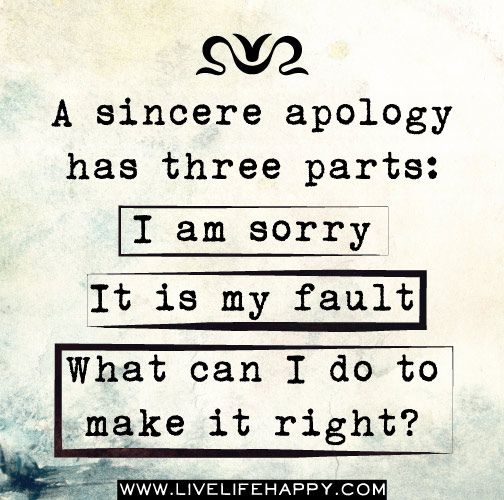
sincere_apologies
See the difference?

Chronic rage is a trap, not a trophy.

rage2

If we are survivors of narcissistic abuse, we are all at different stages of our recovery. If we are just coming out of a relationship with a narcissist or in the process of going No Contact (which is the best gift we can give ourselves), it’s natural to feel anger and even hatred toward our abusers. Our anger overrides the fear they instilled in us and makes it possible for us to take the actions necessary to disconnect from them.

When I started this blog, I too was extremely angry at my narcissists, particularly my psychopathic ex. As an ACON, I railed on about my parents too, particularly my MN mother. Early posts of mine on this blog have a much more bitter and angry tone than my more recent posts, some of which attempt to understand why my narcissists did what they did to me and about what makes narcissists tick in general. I don’t regret making those early, angry posts, because that’s where I was at emotionally on this recovery journey. I NEEDED to feel that anger and hate. It served a survival purpose. But anger is a survival emotion and is meant to be temporary, not become a psychological and spiritual forever-home.

I am no longer in a situation where I am in close contact with malignant narcissists, and I was finding that holding onto all that rage was turning me bitter. When a person is filled with rage, the body’s cortisone levels rise and blood pressure rises. These are physiological changes that make “fight or flight” possible. But over prolonged periods of time, being in such a physiological state is bad for you and can lead to physical illness.

Besides being unhealthy for the body, holding onto rage way past its expiration date makes it impossible to move forward to a place of real healing. If you feel rage all the time, you simply cannot move forward. It blocks you from opening your heart to all the good things that life can offer. Frankly, I was just becoming bored with it. There had to be something better beyond it–and there is!

I see this unwillingness or inability to let go of chronic rage and hatred in many survivors of narcissistic abuse, especially ACONs who were raised by narcissistic parents. Of course it’s perfectly understandable to feel an almost overwhelming sense of injustice and betrayal when you realize your own parents didn’t love you and in fact probably hated you and set you up to fail in life. It’s understandable to hate the people who were supposed to nurture you and give you the tools you needed to have a happy life but instead attempted to murder your soul. I get it, I really do. I felt that way about my mother for many years.

Anger-Bhudda

Some of these chronically angry abuse survivors have embraced a mentality of perpetual victimhood, using their rage as a sort of trophy “proving” how abused they were. They can’t or won’t let go of their rage because it makes them feel vindicated. I remember reading a comment from one angry ACON who said if he/she were to let go of their bitterness and hatred, they would have let their abusers “win.” But this person is wrong. Because paradoxically, remaining stuck in misery, rage and hatred is making it impossible for this person to heal and live a happy life, and isn’t being miserable exactly what their narcs want? Holding onto rage and wallowing in all the ways they victimized us vindicates the narcissist, not the victim. If our rage destroys or kills us (because eventually it can), the narcissists will be throwing a party to celebrate.

I think the best revenge is to live well. If a victim of abuse moves into a place of peace where healing is possible and can learn to become happy and even successful in life and stop using their victimhood as a kind of trophy, their narcissists will HATE that! Nothing enrages an abuser more than seeing their victims become happy and successful (and not bitter or angry). So how does healing ourselves and letting go of our “trophies” of rage and hate let the narcs win? It doesn’t. In fact, WE win and THEY lose.

But if I were to say this to them (and I have), I would be accused of “victim blaming” and even “narc hugging.” They would say my blog is “dangerous” to abuse survivors (and they have!) They would accuse me of having no empathy for their plight and am in fact taking the side of those who abused them! None of that is true. They just don’t get it. They think that because I’m suggesting they move away from their hatred, this means I’m blaming them for their misery and making excuses for the narcissists who abused them. This is a dangerous and tragic misunderstanding because they can’t even see the way they have been turned against themselves by their own narcissists! They can’t allow themselves to ever feel happy or let go of the bitterness that continues to hold them hostage to their narcissists even after they’ve gone No Contact.

Narcissism is the “gift” that keeps on giving if you let it. You can’t be happy if your default setting is rage. All that rage will eventually destroy your body AND your soul. In fact, living in a state of perpetual rage can turn a person narcissistic themselves. It’s a fact–I have seen it happen and it’s a horrible and scary thing to witness.

monsters-nietzsche

I read a post on Constant Supply: The Narcissist’s Wife about the very same thing I’m talking about here, and their post is what inspired me to write this article. I’d been wanting to write about this, but due to the nasty pile-on I experienced from several ACON bloggers a few weeks back due to an article I posted suggesting we stop hating on all narcissists (the message of which was taken WAY out of context–in no way did I EVER suggest we condone what narcs do or engage with them in any way), I’ve been reluctant to post any more articles even touching on this touchy matter.

Reading this blogger’s article gave me the courage to express my feelings about this apparently controversial issue. I’m prepared to be attacked again, but at least I know what to expect now and can arm myself accordingly. While the blogger I mentioned in the previous paragraph does talk about “forgiving” her narcissist, I wouldn’t go that far myself. I don’t ‘forgive’ my narcissists for the way they held me back all my life and nearly destroyed me, but I no longer choose to hate them either. My attitude about them is that they simply do. not. exist. They are no longer an important part of my life and I refuse to give them any more space in my brain than they deserve. Don’t forget that narcissists crave attention–ANY attention–and that includes negative as well as positive attention. To act as if the narcs don’t even exist is what they hate and fear more than anything in the universe.

Living well and healing yourself without reacting to our narcissists either negatively or positively is the sweetest revenge possible. The narcs will hate you for it.

living_well

We are all at different points of our recovery journey, and those who seem stuck in the “rage” setting (which is normal and necessary early in recovery) and have thereby not been able to move forward to real healing should not pass judgment on those who may be farther along the road and have reached a place where holding onto all that hatred was becoming burdensome and harmful.

I chose to jettison all that negative baggage to make my progress along the rocky road of recovery easier, and I have seen many others do it too, and actually become happy people. I hope and pray eventually ALL abuse survivors can reach a point when they realize holding onto their baggage is self-destructive and is holding them back from true healing–and is keeping them trapped in their own identity as “victims.”

I’m prepared to be disagreed with for posting this, but frankly I don’t care. If you are one of those who choose to hang onto your chronic rage, that’s your choice, and I respect that choice. I have no right to judge you or condemn you for doing so. But I don’t think it’s helpful or healthy. Hopefully, some people who have this problem might be able to take away something positive from this article and be able to extricate themselves from the quicksand of rage and continue to move along the road to recovery.

Please also see my article, Why Unrelenting, Chronic Rage is So Toxic.

Godzilla and the gazelle.

wedding

The other day I was cleaning the home of one of my regular customers. I speak to this woman casually, but she loves to talk and always does the bulk of the talking while I mostly remain quiet and make polite noises where I think they need to be.

I can tell this woman, Heidi, is terribly lonely and desperate for someone–anyone–to talk to. I’m not the best person to engage in small talk with, but I try to for her sake, because she seems to need adult companionship even more than she needs her house cleaned (which, truth be told, doesn’t seem to be her #1 priority).

When I first met Heidi, she screamed Victim. Not in a bad, manipulative way, but there was a strange sadness about her that I recognized right away. She seemed so desperate for love and acceptance. She’d ramble on about her religion (she’s a biblical Christian) and her love for birds. She purchases bags and bags of bird food to give to the outdoor birds that populate the thick grove of trees that surround her home.

She is also a hoarder. She had no furniture to speak of, but never throws anything away and keeps ordering stuff from QVC or wherever she orders from–useless things no one needs that she is always trying to give away. She loves to make herbal remedies herself at home using various herbs, and there are bottles and jars of strange concoctions all over her house.

There is a sadness in Heidi’s eyes that her smile and cheerful manner can’t hide. So I wasn’t surprised when she told me that she was divorced and in hiding from her abusive ex husband, who she told me was abusive in every way it’s possible to be abusive. He had left her with nothing, but he continues to stalk her. He drinks heavily. They never had children.

Heidi’s demeanor is sweet, almost naive, although she’s seen more than anyone should ever see, and experienced abuse so horrendous she could have been a war veteran. She even has scars to prove it. Once she showed me the weltlike scars on her back and chest from when he had beat her repeatedly.

sad_angel

I noticed on her small bookshelf are books about PTSD and major depression; the rest are religious books, books of daily affirmations, and several Bibles. She said she was never religious until after her divorce, when she realized how evil the man she had been married to was. Jesus was her only comfort.

Heidi only has a few pictures gracing her plain white walls. The one that takes center stage, placed lovingly in the middle of her living room mantel in a gold-toned embossed frame, both mesmerized and disturbed me. It showed her as a younger woman (but not looking much different) at her wedding. Her smile is radiant and her blue eyes are glistening with happy tears. She was the bride every man dreams of marrying, the bride every mother dreams that her daughter will become. She trusted the man who faced her. She loved him. She looked into a future that promised happiness, security, comfort and a family.

She got none of those things.

I could tell immediately the man in the picture, the man who became her husband, was at the very least a malignant narcissist and very possibly a psychopath. It was his face and body language that gave him away. He too gazed into his wife’s face, and he held her arm, but the odd thing was the way he held his body at a distance from hers. As Heidi leaned forward, he almost seemed to be recoiling from the love she was feeling. He looked stiff, as if he was playing a role. But even more telling was the man’s face. There was no love in his eyes, no warmth, not even liking for Heidi. His eyes appeared cold and dead–small pinpoints of glittering gray-blue that were as absent of emotion as a doll’s eyes. And his smile–if it could be called that–was a smirk. The overall feeling I absorbed from looking at the two of them was a predator who had just captured his prey and was preparing to rip his kill to shreds to be consumed the way a lion rips apart a gazelle he intends to eat.

trapped

Although the picture was taken years ago and she is safely away from that man, I felt afraid for her looking at that photo. My heart felt as if someone had packed it in ice cubes.

Even sadder is that Heidi still appears to be in love with that evil POS, keeping their wedding photo on the living room mantel with two vases of flowers on each side of it, as if it’s a shrine to what they never had.

Looking at that photo made me realize just what the vulnerable of this world–people like Heidi–are up against when they fall in love with narcissistic predators. I hope one day she can move on emotionally and stop loving a man who nearly destroyed her mind and soul, and caused her so much suffering.

MENTAL HEALTH – Shared Psychosis

This is a really great article about the way psychopaths can manipulate others by inducing a “shared psychosis” with their victim(s) — otherwise known as trauma bonding or Stockholm Syndrome. Psychopaths are way too far gone to ever be cured. Don’t try to help one; you can’t. This well written article really drives home the evil and creepiness of psychopathy–and most are not even criminals. They achieve their desire to completely destroy another person or group of people (such as the followers of a cult leader) using perfectly legal means. No Contact is the only way to handle a psychopath (NC here could be expanded to to include malignant narcissists who are just under psychopaths on the narcissism spectrum, most garden variety narcissists, and yes, even a few very sick borderlines too).