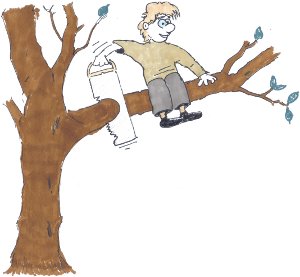
Self-sabotage.

self_sabotage1
I think I had an interesting therapy session last night. I was talking to my therapist about the way my father stole the little illustrated stories I wrote when I was about 7 (which I wrote about in this article). This long ago incident seems to have set the tone for my entire life, because after I’d realized my intensely personal little creations (that were intended for no eyes but my own) were stolen, I felt overcome with shame and I felt as violated as if I’d been raped (and I have been raped so I can vouch for the similar feeling of violation). I remember what I did with those little books after I stole them back: I destroyed them.

This has been a refrain throughout my entire life.  It’s like that song you hate that keeps playing in your head until you’re ready to shoot yourself in the head to make it go away.  During my session last night, I made this connection: whenever I felt there was a threat of something that came from my true self (usually related to my creativity which meant being vulnerable) being violated or taken away, I sought to destroy it. Sometimes this “destruction” simply meant losing interest in whatever it was or giving it up. When I was 19, I had some expensive camera equipment and loved to take pictures as a hobby. When my 35mm camera (which I’d saved for months for) got stolen one day, I gave up photography. Only recently, have I been taking pictures again (on a crappy Smartphone).

self-sabotage2

But there are other examples where something wasn’t literally stolen from me as my camera was or my illustrated books were, but where my boundaries were violated (or I perceived them to be violated, or believed they were about to be violated). I’ve never stuck with anything I loved doing for too long, because sooner or later it wasn’t just “mine” anymore and it was either held up for judgment, or criticized (to me, these feel like boundary violations and make me feel too vulnerable). For several months I’ve been struggling with trying to figure out why I’ve been losing interest in blogging, which has been so life-changing for me and has brought me so much happiness. I realized it was because “running naked in public,” while incredibly liberating and having many rewards, also means you’re vulnerable to judgment and criticism. I don’t know how to handle judgment and criticism. I take everything too personally; any sort of criticism is a personal assault–again, like being raped. Even worse is having to deal with trolls and bullies, which feels like gang rape (and reminds me of my childhood at the hands of bullies both at school and at home).

A person with a healthy sense of self and normal self esteem might feel somewhat offended by a hurtful comment, but would be able to move on from that and wouldn’t give up or find themselves losing interest in something they’re passionate about. They might even fight back or take a stand. But when I’m attacked, or even criticized, I get triggered and become the defenseless and helpless child I used to be (and that I rejected a long time ago). I can’t handle reality, which means confronting both the good and the bad. And so to avoid being “raped” again, I’ve turned off my ability to be interested by much of anything at all (and then resent the hell out of whoever I feel violated me). That way, I don’t put myself at risk of being judged, which in my mind always leads to being rejected. Tied in with this is the fear of failure: I was raised to believe I was incompetent, so if I don’t attempt anything, I can’t really fail at it. Right? But the bottom line is, hiding behind my fear of failure is a absolute terror of being found defective, and hence rejected.

I don’t know whether this unfortunate tendency of mine is indicative of BPD, C-PTSD, or Covert NPD or something else (I do not know what my therapist has diagnosed me with and I’m afraid to ask), but I think writing about this is a step in the right direction. I want to explore this further when I see my therapist again and am going to show him this post (he knows I have a blog and write about psychology and NPD, but I haven’t shared the link with him yet).

Is narcissism a product of confirmation bias?

confirmation_bias

I just read a very well written post on Psychforums (written by a self-proclaimed empath) suggesting that NPD could be a product of confirmation bias. In simpler terms, a happy, normal person became that way because from an early age, they perceived their caregivers as good and kind, and the world as a friendly, welcoming place. In contrast, a narcissist became a narcissist because they perceived, from an early age, that the world was full of pain and terror, people were hostile and untrustworthy, and life in general sucks.
People give back what they they get.

Confirmation bias also explains why most narcissists hang onto their narcissism the way a shipwrecked person hangs onto a block of wood to keep from drowning.

According to Wikipedia,

Confirmation bias, also called myside bias, is the tendency to search for, interpret, favor, and recall information in a way that confirms one’s beliefs or hypotheses while giving disproportionately less attention to information that contradicts it. It is a type of cognitive bias and a systematic error of inductive reasoning. People display this bias when they gather or remember information selectively, or when they interpret it in a biased way. The effect is stronger for emotionally charged issues and for deeply entrenched beliefs. People also tend to interpret ambiguous evidence as supporting their existing position. Biased search, interpretation and memory have been invoked to explain attitude polarization (when a disagreement becomes more extreme even though the different parties are exposed to the same evidence), belief perseverance (when beliefs persist after the evidence for them is shown to be false), the irrational primacy effect (a greater reliance on information encountered early in a series) and illusory correlation (when people falsely perceive an association between two events or situations).

thinking-conf-bias

So, here is that post:

I wonder if NPD might largely be a product of confirmation bias. I guess a less pretentious way of saying that would be that people tend to hear what they want to hear or what they expect to hear.

I was raised in a supportive environment by truly loving people. I was very lucky; like, winning-lottery-number lucky. I first experienced the world as a benevolent place, and so I now tend to approach it with love and warmth and openness. (I hate how sugary that sounds, but I have to accept that it’s true — it’s who I am.) I trust people. I believe they’re basically kind and well-intentioned and that their flaws don’t make them less beautiful. Generally, I feel safe and good and happy to be around them.

But meanwhile, if you’re a narcissist, you first experienced people as sources of abuse, neglect, manipulation. You are born into this cold, threatening world, and the people tasked with protecting you from it are capricious, deceitful, cunning, selfish. That’s bad enough, but what’s far crueller is that there’s a world of happy-looking people out there, and none of them — not one — seems to give a $#%^ about what is happening to you. No one comes to help. Everyone totally buys into your parents’ facade of being just the best parents ever. So you learn the importance of facades. You learn it again, later, when — as a consequence of your nightmare of a childhood — you start getting into trouble. This time it’s cops or doctors teaching you the lesson, but it’s the same: the inability to maintain a facade of normalcy can cost you everything.

(######6 Christ. As an aside, if anyone is wondering what having empathy feels like, it feels like wanting to throw up/cry/punch walls while writing the above paragraph.)

But right, okay: confirmation bias. Since my emotional experience of the world is positive, I tend to seek out and remember things that confirm and validate that worldview. I.e. in relationships I tend to remember the good things people do and forget the bad, and I tend to believe that the kind/honest/giving aspects of people’s personalities are “who they really are.” And I guess narcissists do pretty much the opposite: they dismiss the good stuff you do, but the bad stuff stays so front-and-center it’s as though you’re doing it fresh, day after day, every time they remember it. When they ultimately find out you have flaws, they take this as evidence that they were always right: people are basically evil & untrustworthy & disappointing.

I’m not saying narcissists are necessarily wrong. There’s ample evidence that people really are monstrous (just open a newspaper). I’m also not saying my tendency to be compassionate/forgiving makes me some kind of saint, because I’m pretty sure some of it is ego protection. Seriously, you can smash me over the head a dozen times with a blunt instrument and I will still stupidly, doggedly believe you didn’t mean it or it was an accident or you were just hurt so it’s okay. I believe that in part because I need to believe that. If I allow that some people simply view others with hate or callow indifference or cold, calculating self-interest, then I have to revise the whole framework on which my understanding of the world and my place in it is built. And I really don’t want to do that. That $#%^ is so core and so central it feels like changing it would destroy everything.

But it would be so much worse for someone with NPD trying to revise their worldview in order to “get better.” Because in my case I’d be moving from a place of trust to a place of distrust, which some animal part of me knows how to do: you get hurt and so you withdraw, harden, your eyes get cold. It’s not fun but it feels familiar and safe. Whereas I guess a narcissist would have to do exactly the opposite. Move from a place of distrust to a place of trust. Which…how would you even do that? How would you surrender the only thing that ever made you feel protected or safe or stable? That would be so terrifying I can’t even imagine it. And what would ever inspire you to do it? Except for trust that there really are kind, well-meaning, loving people out there, which trust a narcissist, by definition, does not have?

Are BPD and complex PTSD the same disorder?

age_3_1961_2
Me at age 3 in the zone. Was the template for my BPD already laid down?

Ruji, a new commenter on this blog, made an interesting observation–that BPD should be divided into at least two subtypes: Empathy Challenged/Character Disordered (closer to NPD/ASPD) and Highly Sensitive Person with Emotional Dysregulation (closer to the type I have, although at different times in my life or when extremely stressed I have displayed the more character-disordered subtype). I agree with her. Ruji’s idea is remarkably similar to The World Health Organization’s two subtypes of BPD:

1. F60.30 Impulsive type
At least three of the following must be present, one of which must be (2):

–marked tendency to act unexpectedly and without consideration of the consequences;
–marked tendency to engage in quarrelsome behavior and to have conflicts with others, especially when impulsive acts are thwarted or criticized;
–liability to outbursts of anger or violence, with inability to control the resulting behavioral explosions;
–difficulty in maintaining any course of action that offers no immediate reward;
–unstable and capricious (impulsive, whimsical) mood.

2. F60.31 Borderline type
At least three of the symptoms mentioned in F60.30 Impulsive type must be present [see above], with at least two of the following in addition:

–disturbances in and uncertainty about self-image, aims, and internal preferences;
–liability to become involved in intense and unstable relationships, often leading to emotional crisis;
–excessive efforts to avoid abandonment;
–recurrent threats or acts of self-harm;
–chronic feelings of emptiness.
–demonstrates impulsive behavior, e.g., speeding, substance abuse

Psychologist Theodore Millon has gone even further, proposing that BPD should be divided into four subtypes:

1. Discouraged (including avoidant features): Pliant, submissive, loyal, humble; feels vulnerable and in constant jeopardy; feels hopeless, depressed, helpless, and powerless.

2. Petulant (including negativistic features) Negativistic, impatient, restless, as well as stubborn, defiant, sullen, pessimistic, and resentful; easily slighted and quickly disillusioned.

3. Impulsive (including histrionic or antisocial features) Capricious, superficial, flighty, distractible, frenetic, and seductive; fearing loss, becomes agitated, and gloomy and irritable; potentially suicidal.

4. Self-destructive (including depressive or masochistic features) Inward-turning, intropunitively angry; conforming, deferential, and ingratiating behaviors have deteriorated; increasingly high-strung and moody; possible suicide.

Millon’s Types 1 and 4 would correspond to the Highly Sensitive Person/Emotional Dysregulation type mentioned above (and therefore closer to the Avoidant/Dependent PDs); Type 2 sounds very much like NPD; and Type 3 seems closer to ASPD or Histrionic PD.

complex_ptsd
BPD symptoms are almost identical to those of Complex PTSD.

There are so many diverse–almost opposite–symptoms that can appear with this disorder that one person with BPD can be very different from the next. In fact, you can take 10 borderlines and they will all seem very different from each other, with barely any similarities in their behavior at all. One will be shy, fearful and retiring, never making waves, acting almost like an Aspie or an Avoidant; while another may break the law, lie constantly, and act obnoxious and rage whenever things don’t go their way. A borderline could be your raging boss who drinks too much and ends every annual Christmas party with one of his infamous rages, or it could be the sweet and pretty schoolteacher who goes home every night and cuts herself. She could be the come-hither seductress or the nerdy computer programmer. He may have few or no friends or a great many.

This diversity is not the case with the other personality disorders, which have more cohesiveness in the symptoms their sufferers display. So I wonder–is BPD really a personality disorder at all? Does it even exist, or is it really just a group of trauma-caused symptoms the experts in their ivory towers stuck in a single box called “BPD” because they didn’t know how else to classify them?

In fact, all these diverse subtypes have one thing in common–they are all very similar or identical to the symptoms of someone with complex PTSD (C-PTSD). People with C-PTSD are often misdiagnosed as Borderlines because their behaviors can be just as baffling and manipulative, and both disorders also include dissociative, almost psychotic episodes. Extrapolating from that, I wonder if ALL borderlines actually have C-PTSD.

Earlier today I posted an article outlining 20 signs of unresolved trauma, and I was struck by how similar these were to the symptoms of BPD. And there is also this article that Ruji just brought to my attention that also describes how remarkably similar the two disorders are, but that the idea of fear of abandonment (which is recognized as the root cause of BPD) is not recognized as a factor in causing PTSD and that may be part of why they have been kept separate.

The BPD label, like any Cluster B label, is very damaging to its victims because of the “evil and character-disordered” stigma it carries. One psychologist has even included us, along with narcissists, among the “People of the Lie”!

Yes, it’s true some borderlines do act a lot like people with NPD or even Malignant Narcissism or ASPD, but most probably do not, and are really much more similar to people with Avoidant or even Dependent personality disorders, which hurt the sufferer more than anyone else. But if you have a BPD label, people start backing away from you slowly due to the stigma. Therapists are reluctant to treat you because they assume you will be either difficult and hateful in therapy sessions, or will never get better. Insurance companies won’t pay claims where there is a BPD diagnosis, because it’s assumed there is no hope for you. I’ve had this problem when I’ve tried to get therapy. I remember one therapist who I had seen for the intake session, who told me he needed to obtain my psychiatric records before we could proceed. The session had gone smoothly and I felt comfortable with him. A few days later I received a phone call and was told he did not treat “borderline patients” and wished me luck. So that’s the kind of thing we’re up against if we’ve had the BPD label slapped on us.

Also, as an ACON blogger who works with a lot of victims of narcissistic abuse, my BPD label sometimes makes people wary of me and they begin to doubt that my motives here are honest. At first I was reluctant to talk about my “Cluster B disorder” here, because I knew it might be a problem for some ACONs, who think borderlines are no better than narcissists. But I eventually decided that to hide it away like an embarrassing family secret would be misleading so I “came out” about having BPD (I never actually lied about it, but played it down in the beginning and rarely mentioned it). I’m glad I fessed up, but there have been a few people who left this blog after I came out about it or began to doubt my motives. So there’s that stigma and it’s very damaging.

Both C-PTSD and Borderline PD are caused by trauma. Both are complex defensive reactions against future abuse and both involve things like splitting, dissociation, psychotic episodes, self-destructiveness, wild mood swings, and behavior that appears to be narcissistic and manipulative.

The way I see it, the only real difference between C-PTSD and BPD is that the traumatic event or abuse happened at an earlier age for someone with BPD, perhaps during toddlerhood or infancy, while all forms of PTSD can happen at a later age, even adulthood. But the symptoms and defense mechanisms used to avoid further trauma are the same for both.

20 Signs of Unresolved Trauma

Here is a fascinating article about how trauma due to abuse can lead to a post-traumatic condition that resembles Borderline Personality Disorder in almost every aspect. I wonder if this could mean I don’t actually have BPD. I have a lot of these symptoms, although they’ve improved over the years. I was diagnosed with BPD twice but maybe my therapists were wrong. These are symptoms of C-PTSD (which I have seen compared with BPD which it closely mimics). I thought I had recovered from my PTSD but maybe I have not. I’m still going to assume I’m borderline for now, but this makes me wonder. Borderlines have most of these traits, including dissociation.

I am also adding this website to my blogroll because I think it could be of great help to survivors of trauma and abuse. A social worker friend of mine just told me about it. She does not think I’m borderline. Now I’m REALLY confused.

Kathy Broady, Trauma Consultant's avatarDiscussing Dissociation

Unresolved Trauma

Many people enter the therapy process with minimal awareness of their trauma history.  When the trauma survivors are dissociative, they have the ability to block out an awareness of their trauma.  They may know that their family had problems, or that their family was dysfunctional, etc, but they may believe they were never abused.

child abuse child abuse (Photo credit: Southworth Sailor)

However, blocking out conscious awareness of trauma does not mean that the survivors have no effects of that trauma.  Using denial and dissociative skills does not mean that the abuse did not happen.  Denial means that the person simply is refusing to acknowledge or accept the fact that they were traumatized.  They are pretending they were not hurt, when they were actually hurt very badly.

Even if the memories of abuse are hidden from the survivor’s awareness, blocked trauma / unresolved trauma creates very noticeable and obvious symptoms that…

View original post 646 more words

Can an adult turn into a narcissist?

crossroads1

I believe the answer to this is yes. While most cases of NPD are formed during childhood as a reaction to abuse or neglect, there are situations where a person who is not a narcissist can later become one, even as an adult. It can happen because of narcissism being, essentially, a choice. Even a small child makes a choice to become a narcissist, even if they’re not really conscious of that “decision.” In an adult, it may be more conscious, but once made, the personality can change dramatically.

An adult who becomes a narcissist is probably more easily healed, because the disorder is less deeply ingrained in the personality, but I think there are certain situations where if someone makes a choice to walk in darkness, something evil grabs hold of the soul and there is no turning back to a normal way of relating to others. Here are four scenarios in which I think a person can acquire NPD.

1. Abandonment or abuse starting during adolescence.

teenage_depression

Teenagers are narcissistic by nature and vulnerable to peer pressure, so they often act out in risky ways and experiment with the illicit and unhealthy. This is normal to some degree. But for a few, if familial abuse or abandonment begins during the teen years, the narcissistic behaviors of adolescence may become a lifestyle and coping tactic that the person will not let go of as they enter adulthood. I believe my ex is an example of a psychopathic malignant narcissist who did not become one until the age of 13, when he found his father dead in the bathroom in the middle of the night and his mother refused to do anything and left it to him to take care of his father’s body. Although his mother had always been a malignant narcissist, my ex was a good kid until that point; after that he changed.

In most cases though, I think narcissism starting during adolescence is likely to be fairly mild. I have been in communication with a young man who believes he is a narcissist. He explained to me that he was raised by loving parents but his mother became severely depressed when he was in his early teens, and began to ignore him due to her depression. He didn’t understand it was her depression causing her sudden coldness; he thought she she didn’t love him anymore. He explained that’s when his narcissistic behavior patterns began. In such cases, I think the narcissism that develops is actually a condition called DNP (destructive narcissistic pattern disorder) which lies below NPD on the narcissistic continuum, and is a more easily treatable form of narcissism where the person does retain some ability to feel empathy, love, and remorse.

2. Choosing evil.

fearofbridge

M. Scott Peck talks about a man who almost became evil in his book “People of the Lie.” A family man who loved his wife and children suffered from severe panic attacks, especially when driving over a certain bridge. Although he didn’t believe in the devil, he made a “deal” with Satan that if he could pass over the bridge without suffering a panic attack, that Satan could do what he wanted to with his favorite son. He didn’t think it really counted since he didn’t believe in the Devil (and nothing happened to his son), but he realized later that if he hadn’t repented, his own soul would have been seared. I think when a person knowingly chooses evil over good, the soul can be damaged or destroyed. It’s even possible that making such a choice allows an entryway for an evil entity that works to destroy all goodness in that person. The change can be dramatic and happen almost overnight.

3. Severe reaction to trauma.

ptsd_soldier

Related to the above, I think sometimes a person can engage in evil through no choice of their own. Victims of Stockholm Syndrome, who identify with their abusers and cannot escape, will sometimes be forced to commit evil acts or help their abuser carry them out, such as Patty Hearst back in the early 1970s. It sometimes happens in war, too. A normal person forced to kill innocent civilians will often develop PTSD, but for some soldiers, in order to protect themselves from their unbearable guilt, they learn to shut off all their emotions and any feelings of empathy or remorse, and come to regard other people as less than human. Unfortunately, a few veterans have their hearts hardened during war, and become cold-blooded narcissists.

4. Overnight success.

narcrealityshows

Celebrities and other people who achieve overnight success or fame have to be careful not to let their success go to their heads. Many celebrities are narcissistic, which begs the question: were they narcissistic in the first place and that led to them becoming rich and famous, or did becoming rich and famous turned them into narcissists? I think both come into play, depending on the individual. Certainly narcissistic personality types are the most drawn to fame and fortune, but I’ve heard of cases where a highly successful person was kind to others until fame and success went to their heads. I think though, since evil wasn’t chosen by the person under these circumstances, that a celebrity who didn’t already have NPD can discard their acquired narcissism if their arrogance and sense of entitlement is pointed out to them, or they realize they have hurt someone. So a celebrity’s narcissism may not be true NPD, but a condition called “situational acquired narcissism” which may be temporary.

Building a narcissist

brick_man

I was browsing and NPD forum and came across this post by a woman who claims to be a narcissist or possibly a borderline (she is undiagnosed) and is begging to be healed (she is apparently undergoing a narcissistic crisis–which usually happens after a loss of a major or primary source of supply). What’s interesting is her memory–presented as a kind of list– of the events that led to her choosing narcissism as a coping strategy. It is a choice, after all–usually made in childhood, though the choice can be made as an adolescent or adult too. It may or may not be a conscious choice.

This could, of course, all be fabricated by someone who knows the psychology of NPD fairly well, but if it isn’t a fabrication, it’s a textbook case of how this personality disorder begins and evolves. It also illustrates my ideas about narcissists beginning life as highly sensitive people (HSPs) and how painful this illness can be for its sufferers.

In a most narcissist way I want to ask you how I can heal.
🙂

Working mom
Parents divorced at birth
Father disconnected.

Sensitive child. (nature/animals/people)
left at 8 weeks with babysitters constantly
LOVING MOTHER
over indulged (spoiled)
only child
childhood trauma at 4 (seeing something with animals)

I tipped and decided that all people were cruel.
I shielded myself for years from TV, movies and news articles that I deemed disturbing.

I learned pedophiles were real and a problem at age 40.
That is how well I shielded myself.

Now, today I am 52 years old. My husband divorced me. I changed when I was put on Prozac. I had a bipolar episode and life went downhill for 14 years. I came off all medication 2 years ago.

No help with detox. No therapy as I don’t trust people.

Now, I am having problems and after reading your articles believe that I am a narcissist, possibly borderline personality.

Depression overwhelms me when I think of offering myself to the world.
I don’t want to be rejected.

I understand this fear is from perceived trauma.

How do I get passed this?

How do I resolve anger after (feeling like) I lost 14 years of my life due to mis management of psychotropic medication.

I have searched for a therapist, I have called therapists and interviewed them. I get confused and really don’t know with whom I should place my trust.

Protected: Embracing vulnerability: reparenting myself.

This content is password-protected. To view it, please enter the password below.

Have You Ever Been Hurt by a Psychiatrist? (Guest Post by Alaina Holt-Adams)

WARNING: The following may be triggering for many abuse victims. This article is especially harrowing because a therapist is supposed to help us cope and heal from trauma already endured, not add even more trauma. This is one of the most disturbing stories of an abusive psychiatrist I’ve ever read. And this psychopathic monster’s abuse was inflicted on a child of fifteen.

Unfortunately, malignant narcissists, psychopaths and sociopaths are attracted to the mental health field because it gives them an easy way to take advantage or further abuse the hurting, the vulnerable, the abused, and even children. Be very careful when choosing a therapist. Sometime soon, I’ll be researching this topic in more depth and write an article about red flags to look out for.

The author has been so afraid to come out about this experience she asked me to let her write it as a guest post here rather than put it on her own blog. I am more than happy to do that, because I think her story can help expose the abuses that still go on in the mental health field and it may be of help to others.

Have You Ever Been HURT By A Psychiatrist?
By Alaina Holt-Adams

DrMonster500 (1)
I found this photo through an online memorial site. A single comment is posted under the picture. It says: “This man was my biological father, but I never got to know him. He didn’t want me and I never saw him. RIP.” The comment is signed: “Anonymous.” *

Out of respect for this monster’s adult child, I will refer to him as “Dr. Smith,” which was not his real name.

Handsome fellow, wasn’t he? Tall, dark, and aristocratic. Going by the date printed on this photo (which I cropped off because it was printed next to his name), Dr. Smith was in his late twenties when this picture was taken. He looked basically the same when I knew him twenty years later, with just a touch of gray at his temples to lend an air of wise sophistication, in sync with the leather elbow patches and carved pipes that were all the rage for image-conscious psychiatrists in the late 1960s.

His deep, softly hypnotic voice and sympathetic manner were even more compelling than his Rock Hudson good looks. With soulful gray eyes that seemed to read your innermost thoughts, everything about him said: “I Care Deeply About You And Your Problems.”

But everything about him was a lie.

If anyone ever fit the description of a charming, successful, suave sociopath, this man certainly did. He almost killed me — literally, almost murdered me. I believe he gave me the drug overdose on purpose, because I had told a nurse about the “good doctor” sexually abusing me.

Of course, I wasn’t believed. I was only fifteen and I was a mental patient. Later I was told that many other patients had accused this man of raping them, male patients as well as female. But he kept getting away with it because he was a “great and wonderful doctor” and “above reproach.”

The truth about this evil man finally came to light the last time he raped me, the night when he almost murdered me. A nurse told me later that she had heard me “screaming bloody murder” inside his office. She had tried to open the door but it was locked. She said the doctor told her through the door that I was in a deep hypnotic state, reliving a terrible trauma.

Hypnosis was his specialty. At first, all he used to put me under was a swinging pocket watch. He switched to giving me an injected drug to “enhance” the hypnosis, after I pushed his hands away when he tried to molest me. As the drug took effect, I became too weak to fight him off. That was when he would molest me. Probably because of the drugs he gave me, I have only vague, partial memories of the rapes.

That last time, as he was slowly injecting an amber-colored liquid into the vein inside my left arm, the doctor told me: “If you ever again tell anyone about what I’m doing, I will stick you in a hole so far you will never see the light of day again.”

Suddenly my chest hurt. I mean, it really HURT! I felt like a giant hand was squeezing my heart. I clutched at my chest and told Dr. Smith that my heart was hurting. He let go of the syringe and took my pulse… then he quickly injected all of the remaining drug into my vein.

The pain in my chest seemed to explode at that point. The pain was bigger than I was, bigger than the room we were in, bigger than the whole hospital. When I could not take the pain any longer, I passed out. What the doctor was doing to my body lying spread-eagled on the floor of his office, I could not see or feel.

After it was over, he woke me and told me to go back to the ward. I stood and almost fell over. “Kiss me goodbye,” he commanded. I shook my head no. “You will never be well until you stop repressing what you really want,” he said. That was the last time I saw him.

I felt like I was floating as I walked out of his office and across the street to my ward. I had the eerie sensation of only being in the top half of my body. My legs were moving up and down, taking one step after another, but my feet and legs did not feel like they belonged to me anymore. They were like the legs of a puppet and I was making them move by pulling a string.
As I walked onto the ward, my body crumpled to the floor. I seemed to be floating in the air, looking down at myself. The two nurses on duty rushed out of their office. They knelt beside my body. I was floating above them, looking at the back of their heads. I heard one of them say, “Her lips are blue.” Then the other nurse said, “I can’t find a pulse!”

Suddenly — Z*A*P! — I was back inside my body. I sat up with a jolt. I felt very dizzy.

The nurses helped me to my feet, then walked me back and forth, holding me upright between them. Hours seemed to go by as they walked me from one end of the ward to the other. While we walked, they chatted with each other the way friends do, talking about their lives, their children, and their husbands.

Finally my head cleared enough that I could speak. I asked if I could go to the bathroom. It was hard for me to talk, my mouth felt like it was full of cotton.

One of the nurses helped me into the bathroom, while the other went back to the office. The nurse stood beside me and watched as I pulled down my underwear. It was obvious from the condition of my underpants that I had been raped. She went out into the hall and called the other nurse to come and look at my underwear.

They must have reported everything to the police. Two male detectives in suits came to the hospital the next day and questioned me. I never saw Dr. Smith again. I don’t know if he was arrested or if he lost his license or what happened to him.

I do know that he committed suicide the following year.

To this day, any time I am given an injection by anyone, for any reason — by a dentist, a nurse, male or female, it doesn’t matter who gives me the shot or why I’m getting it or where it is being given — every time, I flash back to this. And I feel like I am being murdered all over again.

Years after this happened, even after I knew he was dead, when I tried to tell this story I would hear Dr. Smith’s hypnotic voice inside my head: “If you ever again tell anyone about what I’m doing, I will stick you in a hole so far you will never see the light of day again.”

Even today, more than four decades after his death, I am struggling with whether or not I should post this. Telling the truth about what this evil man did to me isn’t going to kill me…. right? I am NOT going to end up “in a hole so far that I will never see the light of day again” — am I?

Intellectually, I know that Dr. Smith’s hypnotic threat has no power over me today. But my heart is pounding while I’m writing this.

His anonymous child who never got to know him was lucky. And I am lucky, and deeply grateful, for those two nurses who saved my life.

BUT… unbelievably… several hospital staff people, including another psychiatrist, actually BLAMED ME, a fifteen-year-old in-patient, for “luring the good doctor with my sexuality” and “ruining the life of a wonderful man.”

I will (try to) write about that in a future post.
~ ~ ~

PS: In case anyone reading this wonders why a lonely, love-starved, hormonal 15-year-old would push away the hands of such a handsome man when he was touching me inappropriately, the whole truth is that I was flattered and excited the first time he rubbed my arms and shoulders and lightly ran his hands down the front of my dress when I was under hypnosis. Although Dr. Smith was older than my parents, he looked much younger, and he was also single (divorced) at the time. I was young and needy and naive enough to believe that the Cinderella fairy tale was true — that a handsome charming Prince could fall deeply in love with a poor little nobody, at first sight. When Dr. Smith first touched me, on the outside of my clothes, I actually thought he was doing it because he was falling in love with me. I was so starved for love and attention that I did not try to stop him, then.

But shortly after this, Dr. Smith was gone on vacation and a nurse said he had gotten married and was on his honeymoon. When he returned to work, he brought his beautiful bride to the ward one day. My heart was crushed then, as I realized that he did not love me and he was not planning to “rescue” me from the hell of the mental institution. I was raised in a very strict religion, so sex with a married man was a huge no-no. That was why I pushed his hands away when he tried to touch my genitals, and I told a nurse about what the doctor was doing. But even before he married his second wife, I never in any way “enticed” him. I was very shy and inhibited, and he was my doctor, more than three times my age. The thought of enticing him never occurred to me.

BUT — even if I had allowed him to have sex with me — which I did not — with him being my doctor and me being a mental patient, him in his late forties and me only fifteen years old — under those circumstances, it would have still been RAPE, regardless.

Rape is never about love or even about sex — it is all about evil power and control, as his almost-murder of me ultimately proved.

And psychiatrists and medical doctors and therapists are not gods. Some of them aren’t even human.

alaina_holtadams
The author of this post, Alaina Holt-Adams, has a blog here at WordPress, Surviving Complex PTSD. You must be signed in to view it.

* There was one other photo Alaina sent me to use, but it has a trigger warning and I was unable to open it. I will see what I can do.