Forever an orphan.

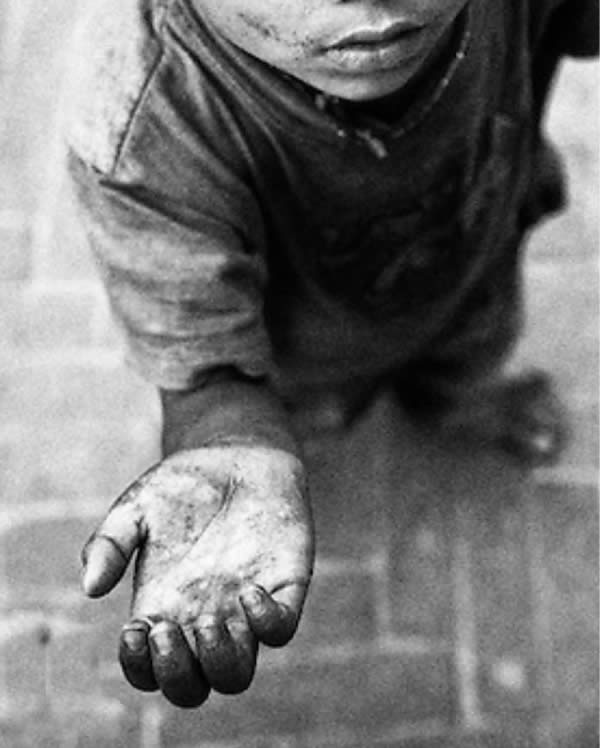
orphan_begging

Those of us who were scapegoated and rejected by our own families often feel like orphans in life, forever being buffeted to and fro by the winds of a seemingly heartless world and hanging on to what seems like a brittle tree branch for our lives. We were trained and groomed by our families of origin to continue to be victimized throughout our lives, always treated as though we were less than everyone else, deficient in some way. We were not given the tools other children in our families, or the children of normal, loving families were given to do well in life. We were tossed out “with the wolves” so to speak, and told to “sink or swim.” Unfortunately, too many of us sink–into abject poverty, drug or alcohol addiction, eating disorders, abusive marriages, and mental and physical illness of all types. Everything that others seem to obtain with ease–a wide circle of friends, financial success, material goods like houses, cars or vacations; respect and closeness within their families, a relatively easy climb up the corporate ladder–seems to elude those of us who grew up programmed to believe we were defective.

We may not have literally been orphaned by our parents, but functionally we are no different than orphaned children. Children who lost their parents young to death or abandonment also grow up without any sense of belongingness and no loving, close attachments to anyone. How can you when you are treated like a number at some orphanage (more so in the past or in foreign countries like Romania) or are constantly being sent from one foster home to another, where the foster parents may mean well (but sometimes not) but have too many other charges to take care of to fulfill your need to belong and be loved. Orphans learn not to get too attached to anyone because any attachments they may form are impermanent. Getting close to others hurts too much, so they learn not to get close to anyone, not to trust anyone.

When orphans become adults, they are sent out into the world ill-prepared for adulthood with no emotional or financial help to guide them in their journey. With no one to truly care for them, and no families to turn to in times of need or crisis, they must either sink or swim. Those that swim do so at a cost. They may become successful in life, obtaining the trappings like money or status, but they never really know what love or real self esteem is. They don’t even know who they are. They just know they must survive–at any cost. It’s my belief that orphaned kids who take the swim route become narcissistic–how could they not? Adopting a false self and a fighting mentality is the only way they know to survive in a harsh, uncaring world where they seem to have no place.

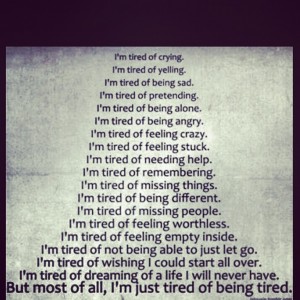
tiredandalone

Although narcissistic abuse survivors may have been raised in actual families, we were emotionally and spiritually orphaned due to rejection and emotional abuse. We were compared unfavorably with siblings, other family members, or just about anyone else. We were raised to believe we had no rights. We were punished for having opinions. Our boundaries were constantly being violated; we weren’t even allowed to have boundaries. We were called names, belittled, gaslighted, threatened, and stunted and stifled in every imaginable way. Our efforts to be approved of and small victories were belittled or sabotaged. We were refused financial or emotional help where other children or young adults from normal families (or even our own families) would have received it (my family refused to pay for my college education although they could have afforded it). We were trained to believe we were undeserving of success or love. We developed a strong Inner Critic who continued to live on inside us long after we left our families of origin, continuing the abusive message that we are less.

We become adults who are afraid to take any risks, afraid to speak our minds, afraid to stand up for ourselves, afraid to just be. We feel guilty if we do succeed in something and sabotage ourselves just like our own families sabotaged us. If we were bullied by our families of origin, we develop dismally low self-esteem and internalize the message that we deserve nothing and are nothing. We develop a victim mentality that makes sure the bullying and rejection continues throughout our lives. We develop C-PTSD and are handicapped on almost every level for finding our rightful place in the world. We were programmed by our narcissistic families to be targets for other abusers and narcissists, who smell our vulnerability and our lack of emotional defenses. I can’t tell you how many childhood victims of narcissistic abuse were also bullied in school or even as adults in the workplace, were always passed over for promotions or raises, or married narcissistic spouses who continued the abuse, sometimes taking it to new levels of cruelty. I know because I was one of them.

Even if we somehow managed to find some small place in the world, we still feel like we don’t belong. We still feel isolated from the rest of the world, different in a bad way. We feel like we don’t deserve to have anything good. In their desperation, some narc-abuse victims sell their souls and turn to narcissism as a way to cope. They escape the enemy by becoming the enemy. Their attitude is fake it ’til you make it (or just pretend you made it). Their self esteem isn’t real; inside their prison of narcissism they are screaming in agony, but God forbid anyone ever know. They’d destroy you first to avoid being exposed as vulnerable and defenseless as they really feel. They sacrifice their very souls to survive.

Pain_ends

For those of us fortunate enough to have escaped narcissism, there is more hope. Although we may appear to have much less than someone who turned to a narcissistic defense, spiritually we have so much more. We haven’t jettisoned our souls to survive. We may have lost everything else–we may have poor physical or mental health, live in poverty, feel isolated from everyone, have difficulty getting close to others, always seem to have less than others–but spiritually we remained intact. Our quest to reclaim our humanity is a hard journey, filled with pain, but the moments of self-discovery and emotional and spiritual growth are so worth it. In the process of healing from narcissistic abuse, I finally found the family I know will always accept me unconditionally: God’s family. There is always a place at His table, where you will never be judged and always accepted for the person you are, instead of the one you can never be. In God’s family you are never an orphan.

Sometimes something as simple as music helps you get there. Here is a song that helped me (and at least one other narcissistic abuse survivor I can think of) in the early days of starting this blog:

Further reading:
Why Family Scapegoats Become Lifelong Victims
We Were The Lucky Ones
(I wrote this over a year ago, and I’ve changed a lot since then, but I think it still fits)
Adult Poverty and Scapegoathood: A Connection? 
The Reason We Became Adult Victims: What Can Be Done?
It’s All About Image: The Skewed Values of Narcissistic Families

Love’s table for abuse survivors

I can’t….I can’t not reblog this. OMG. This is like my life. I know these narcissistic yuppies of which Katie speaks.    The corporate and work world is swarming with them. They swarm wherever there is money and status. They swarm in churches too (though happily, not in my church). They look down on and judge those of us who have less, those of us who they took everything away from.

Where they don’t swarm and where survivors can find refuge:  natural places where you can be quiet with God and surprisingly, places of knowledge and learning, even among those who do not believe in God.    Places where we can explore our creativity and feed our souls and ask questions.  They stay away from those places where we are free to be who God meant for us to be, places where no one judges or looks down on us.  These gifts are worth so much more than some ugly, sterile McMansion in a gated community or tricked-out status foreign car.

Please leave your comments under the original post.

Tuesday thought.

Image

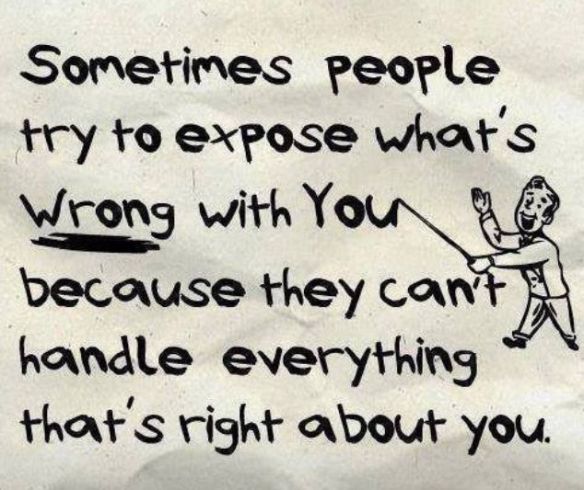
sometimes_people

Have a day!

Image

haveaday

Do we give “the narcs” more power than they deserve?

demon2

In my last post, I ranted about a few bloggers that targeted me when I began to move on from my righteous anger at what my narcissistic parents and ex did to me.  About a year ago, I reached a point where my rage at “the narcs” was no longer serving me well. I began to see things in a new way–that my narcissists were victims themselves and that’s why they became so abusive.   These bloggers didn’t like that.  As far as they were concerned, I was a traitor to the narc-abuse community  as well as a narc-sympathizer. They told me I was evil and going to hell.

But that’s also when I began to see myself a lot more clearly and realized what I needed to do to begin to heal.  Why? Because while righteous anger is good and healthy when you’re trying to go No Contact or get away from abusers, once it no longer serves that purpose and you have gone No Contact, all that rage has nowhere to go.  At that point it becomes hatred and begins to poison your soul. And there isn’t anything more toxic to healing than hatred. These bloggers have become so trapped in their rage it has poisoned their souls and they have become what they hate. Unfortunately for them, they are utterly blind to it.

When I began this blog, I was a lot more angry at my narcissists, and narcissists in general. If you read some of my early posts (within the first year or so), you will notice a lot more rage and even hatred toward narcissists than in my later posts. As long as I remained in that anger, I was A-OK with these bloggers. And at the time, that anger was healthy. It was how I processed the whole experience of being an abuse victim, and it validated my decision to go No Contact. It wasn’t a bad thing and I don’t regret it. But at some point, I began to chafe at the constant narc-bashing I saw, and wondered if perhaps “the narcs” were being given more power than they actually deserve.

I’m going to make an analogy here, because it ties right into this idea. I can’t embrace fundamentalist religion for a number of reasons, but here is one of them: some fundamentalists (not just Christians, but Muslims too, and really, fundamentalist anything) gives the entity commonly known as the devil or Satan a lot more power than he/it deserves. They seem to equate his power with that of God. They tell us the world is under Satan’s dominion and we must repent and believe exactly as they do or we’re going to hell. They tell us Satan planted scientific evidence that indicates evolution exists (which means he somehow got bones into the ground that looked half-human, half-ape.) They tell us he brought every bad thing that exists to the world–disease, famine, death, war, you name it. They tell us God has allowed this because of “free will.” They quote the Bible (or Q’uran, or whatever–to back their claims). But if Satan exists at all, he’s merely a fallen angel–with about the same amount of power as Michael, the archangel–he doesn’t even come close to God’s level of might. Would Michael be able to do what God does? Would he be able to create life and rule the universe? Of course not–the idea of it is laughable. To give the devil that much power is an insult to God, in my opinion. In fact, God himself created Satan!

The power some religious people give Satan causes a lot of people to fear God because God seems to exist solely to punish humanity (who “disappointed” him by sinning) for giving in to or being fooled by “the adversary.” The whole God vs. Devil argument seems like an enormous cosmic opera, with God continuously waging war with this all-powerful entity who represents evil to God’s goodness–but in the end, God’s behavior is just as “evil” as Satan’s–judgmental, authoritarian, punishing, jealous, and controlling. In fact, I would say that God acts quite a lot like a…malignant narcissist. People have turned away from religion or are put off by it because of this punishing, negative view of God as Holy Avenger. And among those who embrace it, how many are doing so out of fear, and not out of genuine love for God? If your father was an authoritarian, punishing parent, you may “love” him but you will never be able to have a healthy relationship with him. You probably did what he said because you HAD to, not because you wanted to. You feared his wrath if you did not. You find it difficult to be happy or grow into a loving, joyful person with a satisfying life and relationships because your father’s wrath and judgment became internalized. It continues its live on inside you, as an inner critic that continues the abuse in the form of self-abuse. I think that’s often the case with fundamentalist religion too. It’s nothing more than brain-washing and negative programming whose intent is to frighten and control.  What sort of God would even WANT his creations (who he holds in contempt for even questioning that might) to quake in terror at his presence?  A narcissistic God who craves power and control, that’s who.

The point of this isn’t to make a point about religion, though (that’s a whole other post I will probably never write). Many narcissistic abuse survivors talk about narcissists as if they were actual demons. They talk about them having almost supernatural powers over the rest of us. Yes, it’s true, their behavior is dangerous and can destroy the souls of those they abuse. But they don’t have any more real power than anyone else. They are broken people, not devils. Their brokenness is what causes them to abuse others. In their own minds, I don’t think (in most cases) they actually know what they’re doing. In their own minds, they may even think what they do is the right thing–or they don’t think about it at all. They are incapable of seeing their own narcissism and how it destroys.

Some narcissists are sociopathic and actually take pleasure in hurting others. But I think that only applies to those at the top of the spectrum–the ones who have turned malignant. Most narcs are simply unaware of the way their behavior impacts others. It was programmed into them just as surely as many victims were programmed to remain victimized throughout their lives.

FATHER-FORGIVE-THEM

Narcissists are emotionally retarded, so much so they are incapable of having enough empathy to be able to stop playing out the elaborate (and mostly useless) defense mechanisms they constructed to protect themselves. They aren’t devils and don’t have any real supernatural powers; they are merely blind and stupid. Dangerous? No doubt they are, and it’s always best to go No Contact. An angry rhinocerous charging toward you isn’t evil; it’s just doing what nature has programmed it to do. It defends itself by attacking even though you mean it no harm, because that’s in its nature and it assumes you will attack first. While the rhino isn’t evil and doesn’t get its thrills from watching you bleed to death, it does what it does and it’s best to get as far away as you can. Same thing with a narc, who (unless they have become malignant or sociopathic) isn’t evil; he or she is reacting to internal programming that was probably instilled when they were very young and defenseless. In their emotional stupidity and blindness, they think you are going to attack them (or think you are already attacking them), so they instinctively jump on the offense and launch “pre-emptive” counterattacks on you. They lie to themselves about your intentions AND their own (and I think most of them actually convince themselves these lies are the truth). They may even even think what they do is “for your own good.” Just like that authoritarian, punishing father or that judgmental, angry, jealous God.

So what’s so wrong about thinking narcissists are evil and have supernatural powers or are possessed by demons? After all, they do act pretty evil. They nearly destroyed us with their abuse. They made us incapable of living happy, normal lives or developing any self esteem. Thinking of narcissists as these powerful evil entities from the depths of hell is natural when you realize what you’ve been up against and what their actions did to you. The righteous anger you feel also helps you get away from them. I think at first, thinking of narcissists as having that much power is a healthy thing because it gives you the motivation to remove them from your life. Here’s the problem with it though. Righteous anger isn’t meant to be permanent. It’s a fight-flight response that ensures survival, but when the danger has passed (and you know your going No Contact was justified), it becomes bad for both body and soul. Besides building up unhealthy levels of cortisol (the fight-flight hormone) in the blood that can lead to physical illness, never-ending rage in the absence of an enemy has nowhere to go but inward–or turn itself on innocent people. It becomes hatred and hatred will eventually destroy its bearer. You begin to see “the enemy” everywhere and are constantly on the offense/defense against real or not-so-real monsters. You begin to see narcissism everywhere, even in normal human behavior. You live in paranoia and terror and the world seems like a hostile, evil place. Your fear of supernatural and uncontrollable forces beyond anyone’s control (even God’s) can even cause you to become a narcissist yourself, in self defense.

acceptance

You can’t heal until you can let go of that rage. That doesn’t mean enabling a narcissist or staying in contact with them. But it means moving on and letting go of hatred. At some point in my healing journey, I was no longer able to hang onto my rage. I began to see them as victims too. Of course, this was heresy to some of the narc-abuse bloggers. But by thinking of them this way, they held a lot less power over me. I became less afraid. You can’t feel terrified of something that is pitiful and broken, and by seeing them as pathetic, toothless victims who were crippled emotionally, they seemed sort of…powerless. It wasn’t until I was able to do this that I began to turn my attention in toward myself–and what I could do to change me. If you’re constantly slaying dragons, you can’t have self-awareness because there’s no room for it. In your mind, if you stop fighting, you will be killed. What people don’t realize is that if you never put down that sword, even after the dragons have disappeared, you turn that sword on yourself.

Narcissistic abusers want you to be afraid. They want unlimited power. They want to control your mind even when they’re not there. So, to hold onto hatred (which is fueled by fear, so there is always terror present wherever hatred exists) is really just giving them what they want–control over your mind and soul. Ironically, thinking of them as broken people is the opposite of enabling them. What would a narcissist hate the most? Being seen as pitiful, impotent, powerless, broken, emotionally retarded people. It’s really the only way you can begin to undo the negative programming that keeps you trapped in fear and keeps you from growing into a whole person. It’s also the best revenge, because then you can thrive in spite of their efforts to keep you down.

Book Review: Complex PTSD: From Surviving to Thriving (by Pete Walker)

pete_walker

I finally finished reading a most wonderful book sent to me by my friend and fellow blogger, Linda Lee. It’s called Complex PTSD: From Surviving to Thriving, written by Pete Walker, himself a sufferer of C-PTSD and narcissistic abuse survivor. He is also a therapist who works with others with C-PTSD.

Walker’s book is incredibly readable and tells you everything you need or want to know about C-PTSD, a subcategory of PTSD that isn’t (but should be) included in the Diagnostic and Statistical Manual of Mental Disorders (DSM), the bible of the mental health profession. Complex PTSD is similar to PTSD but there are several important differences. The recognized diagnostic category of PTSD describes a disorder that is caused by one traumatic event, such as a rape or combat in a war. PTSD itself wasn’t recognized until psychologists noticed that many Vietnam war veterans were suffering from a group of similar symptoms including, but not limited to, loss of memory, dissociative episodes, panic attacks, general but severe anxiety or depression, inability to cope with day to day challenges, impaired ability to regulate emotions including anger, impaired ability to relate to others in a healthy way, nightmares, flashbacks, and physical pain with no medical causes. C-PTSD has a similar set of symptoms, but is “complex” because of its cause–instead of being precipitated by a single traumatic event, it’s caused by an ongoing series of traumatic incidents and also usually (though not always) begins during childhood. Very often it’s a result of being “cared for” by narcissistic or sociopathic parents, who are actively abusive or neglect their child. Unlike most self-help books, Walker covers the nature of narcissistic abuse and its soul-murdering effect on a child, and how this can lead to C-PTSD and its various manifestations.

Walker breaks down C-PTSD into four “types,” each one corresponding to a different type of defense mechanism, which he calls “The Four F’s”–Fight (the narcissistic defense); Flight (the obsessive compulsive or “workaholic” defense); Freeze (the dissociative defense); and Fawn (the Codependent defense). Most people will have a combination of these, but usually one will be dominant over the others. I find it intriguing that Walker describes the narcissistic and borderline personalities as manifestations of C-PTSD (BPD is a Fight-Codependent hybrid), because I also think that’s exactly what they are.

Walker doesn’t think that any form of C-PTSD is untreatable or necessarily permanent, although some forms are more difficult to eradicate than others. People with severe C-PTSD may spend most of their time in a “flashback” without even knowing that it’s a flashback. For example, if you are continually depressed and anxious without being able to pinpoint why, you may be in a flashback to a time when you were made to feel shame as a young child. Any sort of invalidation or reminder of the shame, no matter how small, could have set off the flashback.

Also discussed is the importance of nurturing your Inner Child, and Walker shows you how you can begin to do this on your own. He also explains why people with C-PTSD have such a harsh Inner Critic (which is the internalized “voice” of the abusive parent that relentlessly continues to shame the Inner Child) and how how re-training your Inner Critic to be less, well, critical and more supportive of the Inner Child can do wonders for your self esteem and help you begin to heal. One of the most important things that must happen in order to heal from C-PTSD is to be able to grieve the lost or wounded inner child and also to be able to feel and express righteous anger toward the abuser (while being No Contact with the actual guilty party, of course).

While Walker encourages therapy (and states that in severe cases says it may be the only way to heal from C-PTSD), he recognizes that it may not always be appropriate or possible for everyone. For example, some C-PTSD sufferers (usually the Freeze/dissociative type) are so hypervigilant and uncomfortable relating to others that they can’t begin to trust a therapist enough to make any progress that way. Such people may do better on their own, at least to begin with. He points out early on that even if you skip around in the book (because not everything in it may apply to everyone) that you can still be helped. He gives the reader helpful things they can do on their own, such as positive affirmations, self-mothering, self-fathering and the “Time Machine Rescue Operation,” mindfulness skills, thought-stopping the Critic, thought substitution, recognizing signs of being in a flashback, how to grieve, and finding “good enough” relational help, among many other tools.

At the core of C-PTSD is the “abandonment depression,” a feeling of terrible emptiness that the Four F’s have been used to avoid confronting. Walker explains how to cope with the abandonment depression without denying that it exists or using the Four F’s as defense mechanisms against it.

Finally, Walker includes a list of books–which he calls “Bibliotherapy”–that he and his patients and visitors to his website have found useful. He wraps things up with six easily referenced “toolboxes” the C-PTSD sufferer can use as adjuncts to their recovery.

Complex PTSD: From Surviving to Thriving is intelligently and empathetically written, and easy to read without being condescending or dumbed down. Its chapters are organized in an understandable and logical way, and subheaders are used throughout to make it possible to read the book in easy to digest chunks. This book has helped me immensely so far, and takes the complexity out of this “complex” disorder.

You can visit Pete Walker’s website here:
http://pete-walker.com/

Guest Post #12: The Journey Inspired (Coping with Depression with Severe Fatigue)

Amanda, from the blog Mandibelle16, is a frequent commenter on this blog. Her own blog features her poetry and creative writings as well as articles about mental illness and her walk with depression. Amanda has suffered from Depression with severe fatigue since 2009. The following describes her first episode of severe Depression (which also featured auditory hallucinations) and its aftermath, and her long journey to wellness. But I’ll let her About page speak for itself. She is a talented writer and poet.

Mandibelle16 – About the Author
https://mandibelle16.wordpress.com/about-the-author/

mandibelle16

Amanda is a writer, blogger, and student from Edmonton, Alberta, Canada. She began blogging four-years ago to improve her writing skills and share her thoughts on several topics including, her experiences with mental illness.

Over time, Amanda’s blog has developed into much more than it’s original use. She has taken Editing and Creative Writing courses from Simon Fraser University and the University of Alberta to improve her writing and editing skills, in addition to her Bachelor of Arts Degree in English Literature received in May 2007. Her next step educationally, is developing a portfolio for the University of British Columbia for a Master’s in Fine Arts in Creative Writing. Only twenty-five percent of students make it in this online program and Amanda is hoping to be one of these students in May 2017.

Amanda also has taken blogging, poetry, writing, commenting, and photography courses through WordPress. She looks to improve her writing anywhere she is able. Amanda enjoys poetry and has been learning various forms of poetry from the website Shadow Poetry. Each new type of poetry is fun and challenging. She writes poetry from WordPress The Daily Post, word prompts and her own experiences, as well as participating in National Poetry Writing Month each year in April.

Amanda has been expanding and fine tuning her writing skills in fiction. She has recently been writing short stories and submitting them to literary magazines (etc.) as well as writing Flash Fiction for four different photo and/or word prompts each week. Amanda also participates in other writing prompts or challenges called 3 Line Tales; she also writes a different themed list each week; and participates in a photography prompt called Echoes of My Neighbourhood.

Moreover, Amanda is writing up her first draft of her first novel called How Was Last Night For You. The novel has been in process for a few years but is close to completion of the first draft. After the first draft, she will be working on corrections offered by another already published writer (with great thanks!) to complete a second draft, before hiring an established editor. Whether the book will be self-published or not is yet to be determined.

In addition, Amanda enjoys the Edmonton sports scene. She is a huge Oiler’s fan (NHL) even though the team seems to only be picking-up great draft picks and not making it to the playoffs since 2006. She is also a huge CFL fan of the Edmonton Eskimos who won the Grey Cup this past November 2015. Amanda also enjoys walking and doing yoga. She loves dogs, reading, shopping, and spending time with her wonderful friends and family.

Amanda also has suffered from a Mood Disorder (Depression) since 2009. She has tried countless medications and few have worked for her due to sensitivities and allergies to many medications. Amanda was in hospital when the she initially fell ill in 2009 for three-weeks and this last Summer for three-weeks to do a major medication change. The latest medication change was successful and Amanda is feeling more energy then she has in years.

Amanda suffers from severe fatigue due to her depression as well as insomnia. Her new medication has helped her in both areas. If you would like to talk to her about her mental issues or your own, please feel free; she is always willing to provide what help she can in that area with her experience over the past eight-years.

THE JOURNEY INSPIRED: COPING WITH DEPRESSION WITH SEVERE FATIGUE
By Amanda, Mandibelle16

depressed_woman

My story begins when I was twenty-three-years old. I had my first ‘real’ job after university and I had recently advanced from the role of receptionist to construction administrative assistant at the commercial development company where I worked. I had been in the administrative role in construction three-months before I became ill. It was Christmas time and I felt worn out. I thought I simply needed to take a few days off work to rest. Although I had no idea what was happening to me, I began to experience the onset of a psychotic episode in December 2008.

My episode began with a person from work (for instance) talking to me as they usually would and then afterwards I would hear an echo after they finished speaking. This echo consisted of this person’s voice altering and them saying something to me that was extremely mean. I knew something was not right with what I was hearing, but I had no idea what was happening to me. My current psychiatrist and I still don’t know the reason I had a psychotic episode. I wasn’t unusually stressed, using drugs, and I wasn’t grieving or experiencing emotional loss.

Work became extremely difficult for me to attend. Often, I would end the day crying. I also had difficulties concentrating on my work because my thoughts were going around in my head at such a rate that I couldn’t organize my thoughts properly.

At home I was having difficulty sleeping and I had begun to lose weight because I refused to eat much. I told my parents what was happening to me. My Mom kept track of my symptoms as they occurred. She had some experience with mental illness from an extended family member.

My second last day of work, we had a fun office party at a delicious restaurant. Later, we went to a different restaurant at night for drinks. The day had been a better one for me but it ended in tears. I thought I overheard a guy in my work saying something mean about me and I left the second restaurant crying.

I came back to work one last day but I couldn’t control my emotions which were all over the place. A lady at work drove me home and since that time I have not been able to return to work. I’m still embarrassed how I broke down that day. I had no control over myself and despite the fact my episode was eight-years-ago now, I still feel ashamed for how I acted that last day.

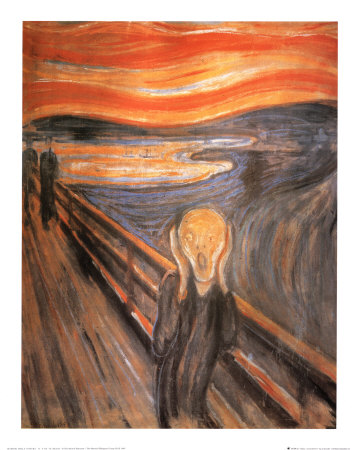
scream

On December 24, 2008 my Dad and I sat waiting to get into a Doctor at a clinic. The Doctor prescribed me Ativan to aid me with sleep and for anxiety. My parents also took me to the University of Alberta free psychiatric clinic. I went there a few times and they diagnosed me with having a psychotic episode with auditory hallucinations.

Eventually, I ended up with help from my Dad and the U of A clinic, admitting myself to the hospital because I was hearing suicidal voices. I didn’t want to kill myself but I was hearing voices whom were telling me to end my life.

Before I went into hospital, I spent three-weeks at home hallucinating and the thoughts in my head kept going round. I would sit down on the couch and for hours become immersed in my thoughts. Then suddenly, it would be lunch time and my Mom would be home from work to check on me and ensure I would eat some lunch and take my medication.

I was under several delusions and one delusion was that food didn’t belong to me so I wouldn’t eat because I thought that was stealing. During my episode I lost about twenty pounds in a month. I also began to feel physical sensations at times moving up my arms.

Additionally, I stopped taking care of myself. It was difficult to force myself to take a bath or shower and often the moment I thought about it, I would forget I needed to accomplish that small task. I didn’t understand why I wasn’t taking care of my appearance and hygiene because I’ve always been finicky about taking care of myself.

I was in hospital three-weeks and when you are hearing voices from people, the hospital is a terrifying place to be. Hearing voices occurs in a person experiencing a psychotic episode because the synapsis in their brain misfires.

If you can recall any thought or idea in your head that you’ve ever learned, seen on TV, or read about, these ideas or thoughts become misdirected in your brain. A person’s worst thoughts come through as voices they hear coming from other people, the TV, Radio, or out of nowhere. For instance, when I was ill I would hear the announcers on a Basketball game on TV and it would sound like they were only talking about me and not the game.

The Doctor I had in hospital took me off the antipsychotic I had been on from the University of Alberta clinic, and slowly put me on a newer antipsychotic drug called Invega. Suddenly, my thoughts were clear and I wasn’t hearing any voices echoing a person talking to me. The thoughts in my brain stopped circling. I have never had a psychotic episode since, and I pray I never do.

When I returned home, I experienced a depressive episode. I lost my energy and began to have severe fatigue. Although, my fatigue levels have changed from awful to manageable, they are something I still deal with today. Fatigue is different than being sleepy. It has a physical and mental aspect and once you run out of energy a person can do nothing but lie down until they have more energy from resting. In this time, I developed a mood disorder that is likely depression.

fatigue
Severe fatigue is a common problem with severe depression.

I also lost some cognitive function which I would later regain. My handwriting for example, was childlike. It took me three-days to fill out my application to my insurance company for disability which was thankfully approved. Reading a simple young adult chapter book such as Twilight or Harry Potter, was extremely challenging at first. It was a couple of years before I could read more than simple adult books and longer still to work back up to being able to read for long periods and read difficult material such as textbooks and literary novels.

I met my present psychiatrist in April 2009 and she took me off of the Invega once we knew I was safely out of the psychotic episode. My psychiatrist switched me to a new antipsychotic because my old one left me with intense muscle pain in my shoulders and neck. For eight-years my Psychiatrist and a Psychiatric Nurse, helped me try tons of medications such as anti-psychotics, antidepressants, stimulants, and sleep medications. I participated in psychiatric testing so we could measure my improvement up to three-years after the episode occurred. We tried an array of medications but the majority had little effect.

Moreover, I had a consultation with a sleep psychiatrist whom I saw every six months. The sleep medications he gave me were a short-term solution to a sleep-disorder that had developed. I had insomnia and had both trouble falling asleep and staying asleep.

The results of trying all this medication was excess weight gain. At first, because I had lost weight in my psychotic episode, I needed to gain a few pounds but now I’m thirty-five pounds over a healthy body weight.

My severe fatigue doesn’t allow me to do cardiovascular activity intense enough to burn fat. I was extremely fit before my episode so being overweight is something that has always upset me because I don’t have much control over it. I eat healthy and in small portions but it doesn’t make much difference. Not to mention, when my mood disorder became worse, it was even harder to exercise.

I believe my health improving this last year, is due to letting myself be admitted into hospital for a medication overhaul. Sleeping at night had become nearly impossible. My Doctor had me go off my sleeping medications and on a new antipsychotic called Clozapine which makes a person extremely sleepy when they take it. Clozapine has to be monitored closely in patients because it can cause increased heart rate and increase white blood cell count.

I worked my way up slowly to the right dose of Clozapine for my body and it wasn’t easy. The second and third day after going on a new dose of Clozapine, I would feel awful. Then my Doctor would increase the dose and the cycle would repeat until we reached the correct dose for my body.

I spent a miserable weekend at home in a hot house in July on too large a dose of Clozapine. Surprisingly, that’s how we found my perfect dose. Now I only have to go for blood work to check my white blood cell count every so often. But Clozapine allowed me go off of a larger dose of antidepressants and sleeping pills. I can sleep amazingly well at night, even though I sleep to 11:00 am because of the medication.

By November 2015, my energy had increased and I was reading plenty again, writing more, and able to take my last Residential Design class. I could last at night for four or five hours meeting with friends. By January I noticed my concentration had substantially improved. Even though my physical stamina is low, I’m able to do yoga and go for a short walk at times which is a huge step up for my physical health from the last two or three years.

A wonderful aspect of Clozapine is that it is the only antipsychotic that actually heals your brain. I don’t know if I’ll ever be as carefree and able as I was at twenty-three-years-old, but each month I experience improvements to my health. Combined with a supplement program that is helping me to lose weight, I’m doing fantastic for a woman who suffered such a terrible psychotic episode and has lived with mental illness for eight-years.

My goals of late have been entering my writing into writing contests for different magazines to have my writing published. I write fiction, poetry, nonfiction and a bit of everything. I have been blogging for four-years as well. In the beginning, it was to improve my writing skills back to what they were when I finished my English BA.

Now I focus on improving my writing creatively. I’m writing a fictional novel on a curse, a sea witch, and two main characters who fall in love. I’m also participating in National Poetry Writing Month in April. You can check out my blog at: http://www.mandibelle16.wordpress.com.

I have gone back to my roots, to my love of literature and the written word. I adore writing and it makes me whole. It’s what I’m meant to do. I’m looking at applying for an online MFA at UBC in creative writing. I believe my family and friends, creativity, positivity, and faith in God, have lead me through difficult times in my life. They have allowed me to find light when everything seems dark.

Mandibelle16.(2016) All Rights Reserved.
Why I changed my blog’s description.

I just changed this blog’s header description slightly.  It now says “Confessions of a Recovering Borderline.”  There are two good reasons for this.

  1. This blog has always has been (and probably always will be) confessional in nature.
  2. In my last session, my therapist gave me some more information about my current diagnosis (he said he had to think about it for awhile before he was sure).  The verdict is that I used to have BPD but no longer qualify for that label!   How cool is that! This is a huge, HUGE deal for me.     I wrote more about it in this post, which I decided not to put on this blog.  Blogging (among other things) had a lot to do with this “impossible” achievement.  Now I just have residual PTSD (actually C-PTSD if you’re not a DSM purist, which he is not, thank goodness) and that’s what I’m still working through and imagine I will be for some time.

I wanted to keep BPD somewhere in the blog’s header but don’t want to misrepresent myself by calling myself something  that no longer applies.  So that’s why I changed it a little.   Like me, this blog has been through many changes since I started it in September 2014, and it will keep growing and evolving with me.   I have no plans to ever take it down.


Self-pity and self-compassion: there’s a huge difference!

self-compassion

I read a post yesterday on another blog that I agreed with, except there was one thing that didn’t quite sit right with me. The post said that self-pity is an important part of healing from Complex PTSD.

In his book (which I’m still reading), Complex PTSD: From Surviving to Thriving, Pete Walker says that self-compassion is an important part of healing, and I think this is what the blogger actually meant. But self-compassion isn’t the same thing as self-pity, an activity which I don’t find at all healing and in fact seems to make my problems worse. Of course we have the right to engage in self pity from time to time (and probably can’t help doing so), and no one should deny us the right to do so. But for me, it just doesn’t work. It’s an unpleasant, soul-sucking experience that seems to drive my negative programming even deeper than it already is.

The way I see it, the difference between self pity and self compassion is analogous to the difference between pity and empathy. I think this makes the distinction clearer.

Pity has an element of condescension or even contempt. You pity someone you dislike or look down on. It’s kind of like sympathy but it’s contaminated with judgment and scorn. You feel like you’re “better” than a person you pity. A wealthy banker may “feel sorry” for a homeless person without feeling a shred of empathy. The banker is glad they’re not homeless, and feels as if they’re above that anyway. If someone says “I feel so sorry for you,” or “I pity you,” you’re likely to feel offended and judged, not comforted. I hate being pitied so much I might be tempted to punch you if you do.

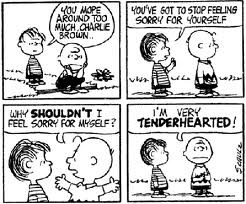
Superficially, empathy, compassion, or sympathy may seem like the same thing as pity, but they’re not the same at all. Sympathy means to feel sorry for someone without judgment or condescension, but it’s not quite the same as empathy, because it lacks the sharing of a feeling. It’s a shallower emotion, but it’s still better than pity. Compassion and empathy are interchangeable and both imply feeling “with” another person, or sharing an emotion with them. It’s giving your friend a heartfelt hug after a breakup, or laughing or crying with them when they’re happy or sad. It’s giving a homeless person your own sweater because you hate to see them shivering in the cold. There’s no condescension or judgment. When someone empathizes with you, they say, “I understand” or “that really must have hurt.” Doesn’t that feel a whole lot different than someone telling you, “I feel sorry for you.”

charlie_brown_tenderhearted

Self-pity is part of our toxic programming. It’s driven by shame. Self pity is when you sit around and think about how much your life sucks and how much YOU suck. There’s no self-nurturing or comfort in self pity, no self love, only self-hatred and shame. Self-pity enforces the terrible things we’ve already come to believe about ourselves. If we’ve been told time and again how stupid, bad, clumsy, ugly, or what a loser we are by our narcissists, eventually those voices become internalized and we develop a toxic inner voice called an Inner Critic. When you’re stuck in self pity, that’s your Inner Critic demeaning you and repeating to you the same lies about yourself your narcissists already drummed into you. You learn to abuse yourself, and self-pity is just self-abuse. When you say, “I suck” or “I’m a loser” or “nothing ever goes right for me,” you’re reinforcing the toxic programming and acting as a flying monkey against yourself.

Unfortunately, for those of us who suffered from narcissistic abuse, it’s common to wallow in self pity. It’s an all too familiar state of mind, but it isn’t the real you. The things we tell ourselves when we’re stuck in self pity are lies. When I get stuck in self pity, I feel just horrible. I just want to die. I usually wind up feeling resentful and angry at the world, but also ashamed of myself for being such a helpless victim and pathetic loser. I’m consumed with shame and guilt, which leads to depression. I also can’t release the negative emotion when I’m in self pity mode. I get stuck there and it drags me down and saps from me any energy or joy. I’ve had hangovers that felt more pleasant than a bout of toxic self-pity.

self-pity

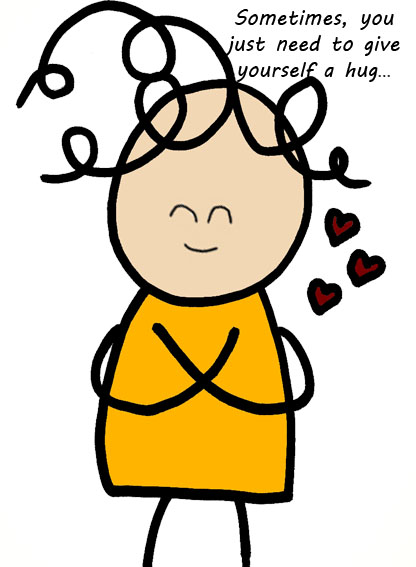
You can replace self pity with something much better that also feels a heck of a lot nicer: self-compassion. Self-compassion means acknowledging that you are a human being worthy of love, happiness and the good things in life, while empathizing with your inner child’s hurt over not having gotten those things. You give your inner child permission to feel sad or to grieve and agree with them how unfair it is that she/he got cheated or was abused. This may seem like self pity, but it’s not, because the element of judgment and shame isn’t there. You’re not beating yourself up over how terrible you think you are; you’re telling yourself you’re good and deserve better and allowing yourself to grieve. Instead of covering up your inner child with a paper bag, you’re offering her a hug.

It helps me to actually visualize my inner child. I have her talk to me and tell me what she needs and wants. I don’t judge her or try to shut her up; I just listen. If she feels sad, I tell her those feelings are valid and let her feel sad. If she feels mad, I let her express the anger (but at the same time reassure her she won’t be able to hurt anyone or anything because I won’t let her). I find that by non-judgmentally listening to what she wants and needs or how she feels, I’m eventually able to release any negative emotions and I don’t get stuck. By giving myself permission to feel without self-judgment or self-shaming, sometimes I wind up being able to cry, and as weird as it sounds, that always comes as such a relief. When I’m stuck in self pity, these healing tears never come, because the shame that’s been programmed into me won’t allow me to release them. My programming tells me the massive lie that crying is shameful and weak, when in actuality it’s sometimes the most healing thing you can do. Your Inner Critic is a narcissist who doesn’t want you to heal and that’s where all that awful self pity comes from.

How to reparent yourself.

This short post went viral on my other blog, although I really have no idea why because not a whole lot of thought went into it and I wrote it on the fly, but it seemed to resonate, so I’m reblogging it here too. (Chair Girl is the name I give to my inner child in therapy).