12 weird things you might see a narcissist do.

the_color_9

There are some strange things I’ve noticed narcissists do that aren’t usually mentioned as symptoms of their disorder, but seem to be common enough perhaps they should be included as additional criteria for NPD.

If you know someone who does only one or two of these things, it doesn’t necessarily mean they’re a narc, but if they do several of them regularly and also seem to fit the more well-known criteria for NPD, these things could be red flags to watch out for.

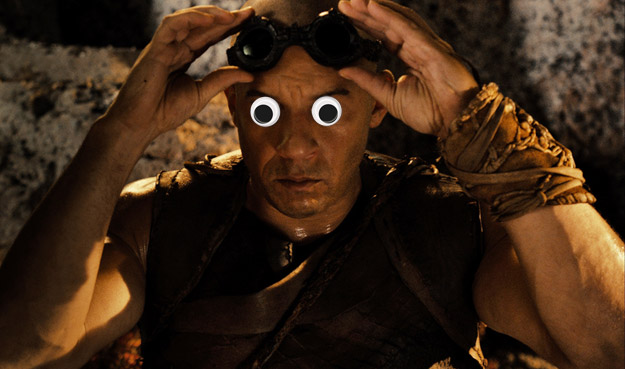
1. They don’t blink when they look at you.

googly_eyes

Some narcs have a penetrating, predatory gaze. If a person of the opposite sex looks at you this way, you may take it as sexual interest (and it could be), but watch carefully: if they do not blink this could mean they are sizing you up as prey. Whether they blink or not, if their stare makes you squirm, get away. Listen to your instincts.

2. They interrupt you or talk over you constantly.

blah-blah1

If someone only seems to care about what they are going to say next, and don’t even seem to have heard what you said, suspect a narcissist.

3. Whatever you tell them is really all about them.

narc_cards

If you say something to them about yourself, rather than acknowledge you, instead they always relate it to back something that happened to them. The Roz Chast cartoon above illustrates that well. You do not exist.

4. Their eyes look flat or dead.

jodi_arias

This is a “dead” giveaway and those eyes usually belong to someone high on the spectrum–a malignant narcissist or a psychopath. Get away from this person. The above photo of psychopathic murderer Jodi Arias shows how flat and dead their eyes can look.

5. They sometimes act psychotic.

crazy_person

All malignant narcissists are bat shit crazy, and their delusions can rival those of someone with schizophrenia. In fact, narcissists denied supply over long periods of time or who have suffered a severe loss can in fact become psychotic. Schizophrenic-like neologisms and nonsensical conversation that sounds like word salad isn’t that uncommon in a malignant narcissist living in mortal fear of losing their “mask of sanity.”

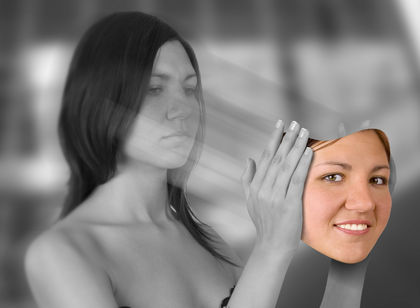
6. They have dramatic, unsettling mood swings.

young woman holding smiling face

Narcissist mood swings (mask switching) can be so sudden and inexplicable you may think you’re dealing with someone with Dissociative Identity Disorder (DID). For example, a narcissist mother can seem to be happily playing with her child and suddenly, for no discernable reason, start screaming at or hitting the child.

7. They are bad sports.

bad_sport

They will act like babies if they lose a game. I remember once seeing a grown man in his 40’s get so angry that he lost Monopoly that he picked up the game board and tossed it across the room, while everyone looked on in horror. If they can’t win, they will ruin the game for everyone else.

8. They have dark interests or like things that make most people uncomfortable.

satanist

Narcissists, especially high on the spectrum, walk on the dark side and this shows in their obsession with things like the occult, mass murderers, the Holocaust, or weapons. They may listen to dark music such as death metal or watch slasher movies. Many people are interested in these things, but a malignant narcissist or psychopath, even if they put on a mask of being an upstanding moral citizen, usually have a secret hobby or interest in something dark or evil. They may not talk about it in public, but they have one.

9. They can’t let nature take its course.

facelift

If a woman has had an excess of cosmetic surgery including too many facelifts, she is probably a somatic narcissist living in mortal fear of aging.

10. They have an affected way of speaking.

fake_speaking

Dahhhh-ling, this can manifest as a fake foreign accent, or just a speaking voice that sounds fake and affected, as if they are acting on a stage. It comes off to others as more annoying than glamorous though.

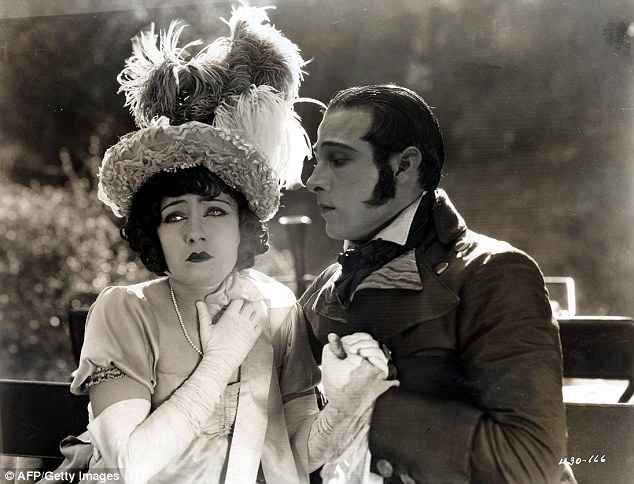
11. They use exaggerated mannerisms, facial expressions, or speaking voice.

silent_movie

Like actors in silent movies, who used exaggerated expressions and mannerisms to make up for fact they couldn’t speak in those films, some narcissists (probably because they can’t feel emotions the way normal people can) overact to the point of being rather hilarious. This is also common in people with Histrionic Personality Disorder (HPD), another Cluster B disorder that’s been speculated by some experts on personality disorders to be a somatic form of narcissism and is far more common in women.

12. They have conversations with themselves.

talking_to_yourself

I’ve heard many a narcissist talk to themselves–and actually answer themselves back. Does this mean they are insane? Do they hear voices in their heads? Or are they practicing what they might say to someone in a hypothetical conversation ahead of time (remember, everything they do is fake, so they might have to pre-plan how they will respond to others in advance). Who knows? I just know it’s weird as fck. My ex used to do this all the time–in front of a mirror too.

Also see 5 More Weird Things You Might See Narcissists Do.

NPD vs. BPD: they are not the same thing!

BPD-Awareness

Articles like this one make me want to rage. The author, Doug Bartholomew, a licensed social worker, believes that people with Borderline Personality Disorder (BPD) are pretty much the same as people with Narcissistic Personality Disorder (NPD). He even goes so far as to say BPD’s, along with NPDs, fit the criteria for M. Scott Peck’s “People of the Lie.”

Wait just one second. Peck’s People of the Lie don’t even include all narcissists–his definition describes those with Antisocial Personality Disorder and malignant narcissism (there’s a huge difference even between MN’s and garden variety narcissists–a malignant narcissist has ill will toward others and decided antisocial traits while a “benign” narcissist isn’t necessarily ill-intentioned but is just self centered and doesn’t care about your feelings). Peck never said all manipulative people (people with one of the four Cluster B personality disorders) were by nature evil, but evil people is what his book is about.

At the same time I understand where Bartholomew is coming from. On the surface, people with BPD can be manipulative and even resort to some of the same unpleasant tactics and mind-games (gaslighting, etc.) that narcissists like to play. They can appear to lack empathy, because they get so caught up in their own drama that they can literally forget that others exist. They can be demanding, high maintenance and prone to irrational rages (just like narcs) but are far more likely than narcs to turn their rage inward and become self-destructive or even suicidal.

Narcissism Clinic.
Not much to do with this article, but I couldn’t resist.

Borderlines also usually regret their acting-out and selfish or manipulative behaviors when the crisis has passed or their bad behavior is called out to them. They may be self-centered and impulsive but are not lacking remorse or the ability to feel shame and guilt. The problem with Borderlines is they tend to act as they feel at the moment without thinking things through. They can get so caught up in their own fear of abandonment that they almost literally forget that you have feelings too. However, after the fact Borderlines usually will feel remorseful and ashamed of their behavior, and on top of that, realize that their offputting behavior may cause others to do what they fear the most–abandon them.

Bartholomew also states that all Cluster B disorders are characterized by a lack of empathy:

The overwhelmingly most commonly mentioned behavior or trait associated with all the Cluster B Personality Disorders is a lack of empathy or compassion. They seem unmoved by the effect their behavior has on their loved ones other than what is necessary to keep their loved ones engaged and around. It is as if they were tone deaf or color blind to the feelings and experiences of others.

While it’s true that people with NPD and ASPD are characterized by a lack of empathy, I disagree that this is true of people with BPD. I think this is a gross overgeneralization.

Borderlines can feel empathy, but due to their impulsiveness and fear of abandonment, they can act in selfish, defensive, and manipulative ways that may hurt others (but they hurt themselves even more so). However, unlike malignant narcissists and people with ASPD, Borderlines do not set out to hurt others and they do care how others feel. Unfortunately their good judgment is clouded by their disorder which makes it difficult or impossible for them to regulate their emotions. That’s why they act so impulsively and often fail to think things through before they act out. It’s also why their relationships tend to be stormy and short-lived.

BPD_cartoon

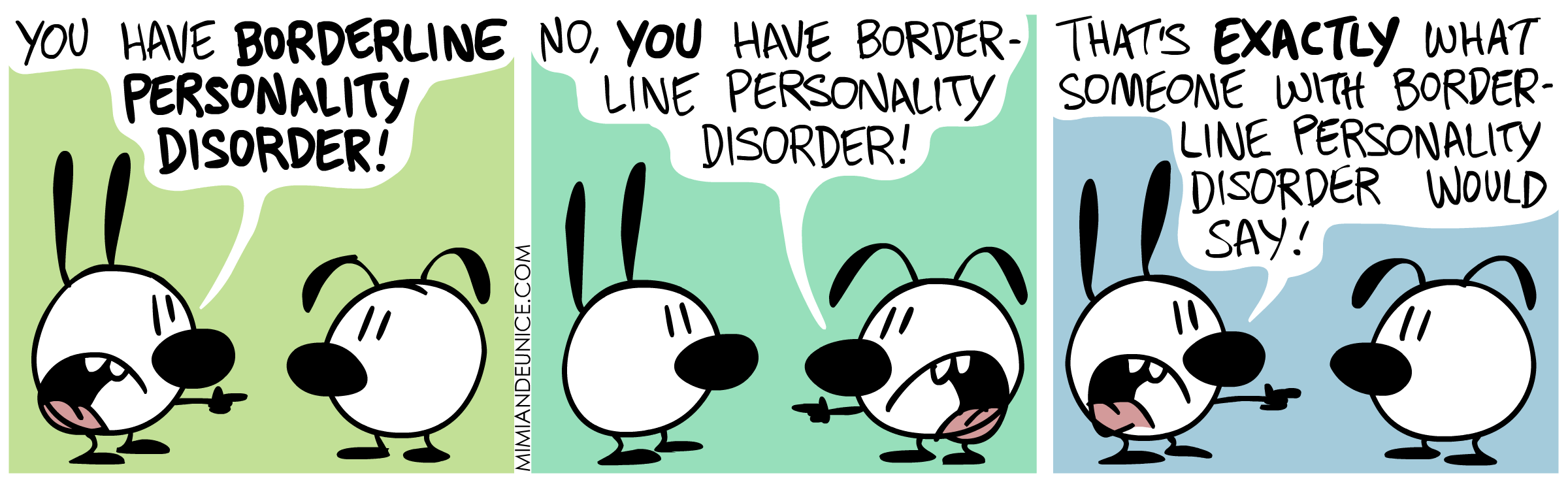
A person with BPD does not wear a mask or have a “false self” like someone with NPD–but their fear of abandonment can cause them to knowingly or unknowingly push others away. Their ambivalence in relationships can be very confusing to others–they can seem to adore you one moment, and then hate you the next. They can seem needy and rejecting by turns. When others grow tired of this crazymaking and confusing “I hate you, don’t leave me” behavior and finally leave them, the Borderline genuinely doesn’t understand what they have done to drive the other person away, and so they become even more fearful of being abandoned. Their behavior is maladaptive because it tends to cause the very thing they are trying so desperately to avoid.

63380797
We are just burning toasters.

A much better description of the similarities and differences between Borderlines and Narcissists can be found in “Borderline vs. Narcissistic Personality Disorder: How Are They Different?” from the Clearview Women’s Center’s website.

While the two disorders, both being part of the Cluster B group of personality disorders, do have overlapping symptoms and are often confused with each other and/or misdiagnosed as the other disorder (with males being far more likely to be diagnosed with NPD and females with BPD), this author, unlike Bartholomew, understands that both the motives and mechanics of the disorders are quite distinct from each other:

[…]both BPD and NPD deal with conflict in a way that is unhealthy to themselves and those around them. It’s the expression of the anger that results from the conflict that is different.

In her article “Blame-Storms and Rage Attacks,” Randi Kreger, co-author of Walking on Eggshells, points out the difference in how those with BPD and NPD express anger. While those with Borderline Personality Disorder may fly into a rage and push people away, they will often calm down, feel shame for their reaction, and promise never to do it again.

“Unless they’re in treatment, the underlying issues don’t go away. Some conventional [borderlines] do not get angry at all, but hold it in or express it inwardly through self-harm,” says Kreger.

“The anger of narcissists, on the other hand, can be more demeaning,” she continues. “Their criticism evolves from their conviction that others don’t meet their lofty standards — or worse, aren’t letting them get their own way.”

“The Sensitive Gene: Why Some People Are Born To Feel Emotions Harder”

The Sensitive Gene: Why Some People Are Born to Feel Emotions Harder
By Alexia LaFata for Elite Daily: http://elitedaily.com

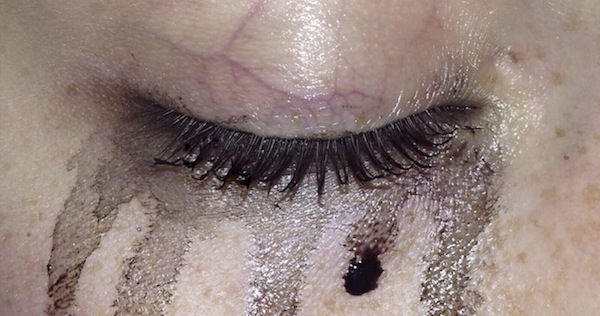
teary_eye

Scientists have long debated what exactly makes us who we are. Are our qualities more influenced by our social environment, or are we naturally inclined to be a certain way? Or — to complicate things even further — does our environment affect the way these natural tendencies display themselves?

Well, when it comes to the reasons why we do the things we do, the most complicated answer is usually the correct one.

In recent decades, the government has spent billions of dollars on gene research with the goal of trying to explain how the genes we were born with express themselves in our everyday lives.

Psychologists are optimistic — though cautiously — these advancements in gene research will help us understand ourselves better.

We haven’t even scratched the surface of the full potential of genetic research, but what we have seen so far looks promising.

One human quality that genetics has attempted to help explain is sensitivity. People who are highly sensitive tend to respond more emotionally to their environments.

They are more inclined to cry during sad movies, jump to use social media to share something that moved them and feel heightened levels of sympathy for poor people and their friends who just got dumped.

Most notably, they are also more inclined to have a negative attention bias, which means they focus more on the negative things in their environment than the positive things.

This bias causes sensitive people great anxiety, especially if the environment they’re responding to is new.

Where do these traits come from? Why are some people more likely than others to respond more powerfully to their environment? In other words, why are some people so damn sensitive?

If this sounds like you, fear not: It turns out the answers to those questions do, indeed, have something to do with the way you were born.

Researchers from the University of California, Monmouth University and the Albert Einstein College of Medicine found that being sensitive is an innate trait that’s identifiable by physiological reactions, patterns of brain behavior and genes.

In their study, 18 participants viewed photos of either frowning or smiling faces. The researchers then scanned the participants’ brain activity while they looked at the photos to assess how emotional their responses were.

They found that people, who were considered to have sensory processing sensitivity (SPS) had greater blood flow to areas of the brain involved with emotion, awareness and empathy — indicating physical evidence of the presence of the sensitivity trait. This occurred regardless of whether they were looking at the sad or happy photo.

Another 2012 study examined biological proof of sensitivity even further. In the study, researchers Rachael Grazioplene, Colin DeYoung, Fred Rogosch and Dante Cicchetti studied the cholinergic system, a system in our bodies that determines how we respond to new environments and how sensitive we are to stimuli.

The cholinergic system becomes activated when we experience “expected uncertainty,” which happens when we’re placed in situations where we predict we will learn something new.

For example, when you were a freshman in college, you probably knew you’d be confronted with new experiences.

You experienced those feelings of “expected uncertainty” — of not knowing who your friends would be, what you wanted to major in, what clubs you wanted to join, how you would handle living away from home and so on.

Some of your peers might have perceived those new experiences as anxiety-inducing, meaning they would have proceeded with caution. Others might have seen them as intriguing, causing them to have been more inclined to explore.

sensitive_jason

The way both of these groups of people responded to those new environments was influenced by genetic variants in their cholinergic systems.

In her study, Grazioplene and her colleagues studied variations in the CHRNA4 gene, a key cholinergic receptor and determinant of whether you see the aforementioned kinds of “expected uncertainty” as threatening or exciting.

It wouldn’t be enough to say this genetic variant was the sole determinant, though, so the study also examined how, in conjunction with the variation in the CHRNA4 gene, an individual’s upbringing and social environment affected how he or she perceived uncertainty.

To study the functions of this variation, the researchers set up a week-long camp for 614 children, ages 8 through 13, all of whom came from the same socioeconomic background, but had different upbringings: Half of the children had an upbringing in which they had been maltreated with neglect or emotional, sexual or physical abuse, and the other half had an upbringing in which they had not been maltreated.

The children with the genetic variation who grew up in an abusive environment were more likely to perceive the new camp environment as threatening, and the children with the same genetic variation who had grown up in a normal environment were more likely to perceive the new environment as intriguing. Even more interestingly, these results were true regardless of age, sex or race.

Now, what does this mean? It means that, yes, there is certainly a genetic variant that makes you more inclined to be anxious or curious in new environments, but your upbringing and social environment play a role in determining which one of those two it will be.

And while this specific genetic variant is rare — only one percent of the population actually have it — it gives valuable insight into the way psychologists and scientists study behavioral patterns in relation to both genetics and environment.

So, if you’ve sobbed during “The Notebook,” impulsively shared a video on Facebook of a kitten rolling around in a patch of grass that made you tear up or found yourself crying with your best friend when her boyfriend dumped her, take comfort in the fact that you were probably born this way — feels and all.

Alexia LaFata is a Writer covering culture and lifestyle for Elite Daily. She’s a proud New Jersey native and soon-to-be Boston College graduate, and her work is featured on Thought Catalog and VentureBeat. Stalk her at alexialafata.com.
alexia_lafata

6 Signs of Narcissism You May Not Know About (Psychology Today)

Interesting article about the lesser-known indicators of narcissism from Psychology Today. Contrary to popular opinion, narcissists do not love themselves, only their image.
I agree with Dr. Seltzer that these six traits should be added to the official diagnostic criteria for NPD.

6 Signs of Narcissism You May Not Know About: How can you recognize the fragility behind the narcissist’s grandiosity?
Post published by Leon F Seltzer Ph.D.

narc_lovers

The recently published 5th edition of the Diagnostic and Statistical Manual of Mental Disorders (DSM) lists precisely the same nine criteria for narcissistic personality disorder (NPD) as did the previous version, published 19 years earlier. So these longstanding diagnostic yardsticks are by now quite familiar—not only to professionals but to interested laypeople as well. Because only the extreme, or “classic,” narcissist fits all of these criteria, DSM specifies that an individual need meet only five of them (barely more than half) to warrant this unflattering label.

As a starting point, I’ll reiterate these selected criteria—before, that is, adding six important ones of my own, which either complement or extend these “official” yardsticks. My particular measures for identifying pathological narcissists are based not only on my exposure to the voluminous writings on this character disorder, but also on 30+ years of clinical experience. This experience includes doing personal, couples, and family counseling with such troublesome individuals. But it also involves working independently with those involved with narcissists—whether their distressed children, spouses, parents, friends, or business associates—who repeatedly express enormous frustration in trying to cope with them.

To begin, however, here are DSM’s requirements (link is external) (slightly condensed, and with minor bracketed amendments) for “earning” the unenviable diagnosis of Narcissistic Personality Disorder:

1. Has a grandiose sense of self-importance.
2. Is preoccupied with fantasies of unlimited success, power, brilliance, beauty, or ideal love.
3. Believes that he or she is “special” and unique and can only be understood by, or should associate with, other special or high-status people (or institutions).
4. Requires excessive admiration [regularly fishes for compliments, and is highly susceptible to flattery].
5. Has a sense of entitlement.
6. Is interpersonally exploitative.
7. Lacks empathy: is unwilling [or, I would add, unable] to recognize or identify with the feelings and needs of others.
8. Is often envious of others or believes that others are envious of him or her.
9. Shows arrogant, haughty [rude and abusive] behaviors or attitudes.

So what’s left out here? Actually, as regards identifying descriptors, quite a bit. And I’ve no doubt that other therapists could add further to the six additional characteristics I’ll provide here—features that, although regrettably minimized or omitted from DSM, I‘ve routinely seen displayed by the many dysfunctional narcissists I’ve worked with. So, to enumerate them, such individuals:

1. Are highly reactive to criticism.

grinch

Or anything they assume or interpret as negatively evaluating their personality or performance. This is why if they’re asked a question that might oblige them to admit some vulnerability, deficiency, or culpability, they’re apt to falsify the evidence (i.e., lie—yet without really acknowledging such prevarication to themselves), hastily change the subject, or respond as though they’d been asked something entirely different. Earlier for Psychology Today I wrote a post highlighting this supercharged sensitivity called “The Narcissist’s Dilemma: They Can Dish It Out, But . . . ”. And this aspect of their disturbance underscores that their ego—oversized, or rather artificially “inflated”—can hardly be viewed as strong or resilient. On the contrary, it’s very easily punctured. (And note here another related piece of mine, “Our Egos: Do They Need Strengthening—or Shrinking?”). What these characteristics suggest is that, at bottom and despite all their egotistic grandiosity, they…

2. Have low self-esteem.

narcissists_hate_themselves

This facet of their psyche is complicated, because superficially their self-regard would appear to be higher and more assured than just about anyone else’s. Additionally, given their customary “drivenness,” it’s not uncommon for them to rise to positions of power and influence, as well as amass a fortune (and see here my post “Narcissism: Why It’s So Rampant in Politics”). But if we examine what’s beneath the surface of such elevated social, political, or economic stature—or their accomplishments generally—what typically can be inferred is a degree of insecurity vastly beyond anything they might be willing to avow.

That is, in various ways they’re constantly driven to prove themselves, both to others and to their not-so-confident “inner child” self. This is the self-doubting, recessive part of their being that, though well hidden from sight, is nonetheless afflicted with feelings and fears of inferiority. Inasmuch as their elaborate defense system effectively wards off their having to face what their bravado masks, they’re highly skilled at exhibiting, or “posturing,” exceptionally high self-esteem. But their deeper insecurities are yet discernible in their so often fishing for compliments and their penchant for bragging and boasting about their (frequently exaggerated) achievements. That is, they’re experts at complimenting themselves! And when—despite all their self-aggrandizement— others are critical of them, they…

3. Can be inordinately self-righteous and defensive.

right_wrong

Needing so much to protect their overblown but fragile ego, their ever-vigilant defense system can be extraordinarily easy to set off. I’ve already mentioned how reactive they typically are to criticism, but in fact anything said or done that they perceive as questioning their competence can activate their robust self-protective mechanisms. Which is why so many non-narcissists I’ve worked with have shared how difficult it is to get through to them in situations of conflict. For in challenging circumstances it’s almost as though their very survival depends on being right or justified, whereas flat out (or humbly) admitting a mistake—or, for that matter, uttering the words “I’m sorry” for some transgression—seem difficult to impossible for them.

Further, their “my way or the highway” attitude in decision-making—their stubborn.competitive insistence that their point of view prevail—betrays (even as it endeavors to conceal) their underlying doubts about not being good, strong, or smart enough. And the more their pretentious, privileged, exaggeratedly puffed-up self-image feels endangered by another’s position, the more likely they are to…

4. React to contrary viewpoints with anger or rage.

rage2

In fact, this characteristic is so common in narcissists that it’s always surprised me that DSM doesn’t specifically refer to it among its nine criteria. Repeatedly, writers have noted that angry outbursts are almost intrinsic to both narcissistic and borderline personality disorders. And although (unlike the borderline) it’s not particular fears of abandonment that bring out their so-called “narcissistic rage,” both personality disorders generally react with heated emotion when others bring their deepest insecurities too close to the surface.

The reason that feelings of anger and rage are so typically expressed by them is that in the moment they externalize the far more painful anxiety- or shame-related emotions hiding just beneath them. When they’re on the verge of feeling—or re-feeling—some hurt or humiliation from their past, their consequent rage conveniently “transfers” these unwanted feelings to another (and see here my PT post “Anger—How We Transfer Feelings of Guilt, Hurt, and Fear”).

The accompanying message that gets communicated through such antagonistic emotions is “I’m not bad (wrong, stupid, mean, etc.), you are!” Or, it could even be: “I’m not narcissistic, or borderline! You are!” (Or, in slightly milder version, “If I’m narcissistic, or borderline, then so are you!”) And if the mentally healthier individual has no clue as to what provoked their outburst in the first place, such a sudden explosion is likely to make them feel not only baffled but hurt, and maybe even frightened. But what cannot be overemphasized here is that narcissists…

5. Project onto others qualities, traits, and behaviors they can’t—or won’t—accept in themselves.

635223192958830312Projection2

Because they’re compelled from deep within to conceal deficits or weaknesses in their self-image, they habitually redirect any unfavorable appraisal of themselves outwards, unconsciously trusting that doing so will forever keep at bay their deepest suspicions about themselves. Getting anywhere close to being obliged to confront the darkness at their innermost core can be very scary, for in reality their emotional resources are woefully underdeveloped.

Broadly recognized as narcissists by their fundamental lack of self-insight, very few of them (depending, of course, on how far out they are on the narcissistic continuum) can achieve such interior knowledge. For in a variety of ways their rigid, unyielding defenses can be seen as more or less defining their whole personality. And that’s why one of the most reliable ways for them to feel good about themselves—and “safe” in the world they’re essentially so alienated from—is to invalidate, devalue, or denigrate others. So they’ll focus on others’ flaws (whether or not they really exist) rather than acknowledge, and come to terms with, their own. And in many curious ways this habit causes them to…

6. Have poor interpersonal boundaries.

space_invasion
Space invasion!

It’s been said about narcissists that they can’t tell where they end and the other person begins. Unconsciously viewing others as “extensions” of themselves, they regard them as existing primarily to serve their own needs—just as they routinely put their needs before everyone else’s (frequently, even their own children). Since others are regarded (if they’re regarded at all!) as what in the literature is often called “narcissistic supplies”—that is, existing chiefly to cater to their personal desires—they generally don’t think about others independently of how they might “use” them to their own advantage. Whatever narcissists seek to give themselves, they generally expect to get from others, too (which is yet another dimension of their famous—or infamous—sense of entitlement).

Even beyond this, their porous boundaries and unevenly developed interpersonal skills may prompt them to inappropriately dominate conversations and share with others intimate details about their life (though some narcissists, it should be noted, can display an extraordinary, however Machiavellian, social savvy). Such private information would probably focus on disclosing facts others would be apt to withhold. But having (at least consciously) much less of a sense of shame, they’re likely to share things they’ve said or done that most of us would be too embarrassed or humiliated to admit. Still, with an at times gross insensitivity to how others might react to their words, they’re likely to blurt out things, or even boast about them, that others can’t help but view as tasteless, demeaning, insulting, or otherwise offensive.

They might, for instance, share—and with considerable pride!—how they “chewed” someone out, and expect the other person to be impressed by their courage or cleverness, when in fact the listener may be appalled by their lack of kindness, tact, or restraint. Additionally, they may ask others questions that are far too personal or intimate—again unwittingly irritating or upsetting them. And such a situation can be particularly difficult for the other person if the narcissist is in a position of authority over them so that not responding could, practically, put them in some jeopardy.

To conclude, I can only hope that these additional characterizations of the pathological narcissist (vs. those with less pronounced narcissistic qualities) may be helpful in enabling you to identify them before their “malignancy” does a number on you. And if you’ve already been duped by their machinations or manipulations, perhaps this piece will be a “heads up” for you to prevent them from wreaking any further havoc in your life.

NOTE 1: I’d be remiss if I didn’t point out that the narcissism addressed here centers on its most maladaptive, or “toxic,” forms. Unlike DSM (the standard diagnostic reference tool for mental health professionals), the Psychodynamic Diagnostic Manual (link is external)(PDM, 2006)—respected, but much less well known than this official volume—explicitly notes that the disorder exists “along a continuum of severity, from the border with neurotic personality disorders to the more severely disturbed levels.” And additionally, that “toward the neurotic end [these] narcissistic individuals may be socially appropriate, personally successful, charming and, although somewhat deficient in the capacity for intimacy, reasonably well adapted to their family circumstances, work, and interests.”

Narcissists with Aspergers?

lonely_guy

There’s been much written about the relationship between Aspergers syndrome and narcissism, mostly about the way they are often confused with each other (or misdiagnosed as the other disorder) due to the belief that people with Aspergers lack empathy (which is not true). I wrote about this false belief in my article, “People with Autism Do Not Lack Empathy!”

People with Aspergers may SEEM unempathic, because they are not always very good at expressing emotions or knowing how to react when other people share their emotions with them. But an Aspie’s lack of appropriate social reaction to the emotions of others doesn’t mean they can’t FEEL the emotions around them. In fact, some may feel other’s emotions MORE keenly than neurotypicals, and they can be easily overwhelmed, which may cause them to withdraw from the situation and partly account for why they may seem less engaged emotionally or uncaring about the feelings of others.

aspie_misdiagnosis

Narcissism as an Autism Spectrum Disorder?

question2

Psychology Today had an interesting article comparing narcissism to high functioning autism (Aspergers) and at least one psychologist thinks they may be the same disorder!:

Khalid A. Mansour (the British Arab psychiatrist), has proposed in an article in the Pan Arab Journal of Psychiatry (link is external) that narcissistic personality may merit classification as an autistic spectrum disorder.

Dr. Mansour writes, “There is now significant level of agreement that emotional processing problems like: lack of empathy, poor self-awareness, self-centredness, poor reciprocation of emotion, poor ability to maintain emotional relationships, anxiety and anger outbursts are more or less central features of autism (10, 50,51).”

Interesting. When I first read the above paragraph, I though Dr. Mansour was writing about severe narcissism. His description fits both narcissism and autistic spectrum disorders. Hmmm.

Dr. Mansour similarly quotes from the ICM-10 listing these features of autism:

–Self-centeredness; inappropriate to developmental level and cultural expectations
–Poor self-awareness, poor ability to develop remorse or learn from mistakes
–Poor empathy or appreciation of others feelings
–Poor ability to reciprocate emotions.
–Hostile dependency on safe relations.
–Failure to develop emotional relationships appropriate to developmental level and social norms
–Treating people as objects or preferring objects over them
Again, this list certainly sounds a lot like narcissism.

Dr. Monsour concludes: “… it is noticeable that people with NPD, do not show a major degree of functioning problems in stress free environment or when they are supported (except that they are perceived as “not pleasant characters” to deal with). However under stress and without support they can become quite dysfunctional in a way not far from what we usually see in Asperger’s syndrome. “

I don’t buy it. This is the opinion of one psychiatrist. While it’s true that on the surface these two disorders may appear similar, the mechanism behind the behaviors are vastly different–in fact, almost the opposite. For the narcissist, their lack of empathy and failure to engage the emotions of others is due to their inability to feel the emotions of those around them, but they can FAKE empathy fairly well, even if they choose not to. If they are trying to obtain supply, they can be pretty good at it. Their social skills are not the problem–their inability to feel other’s emotions are. They are like actors in a play. In contrast, a person with Aspergers or high functioning autism DOES feel the emotions of others around them strongly, but lacks the social skills necessary to be able to convey this to others effectively. Unlike the narcissist, people with Aspergers are very bad actors.

But the question was, can Aspergers and narcissism occur together?

aspie_narcissist

But we’re talking here about comorbidity. The question I’ve raised is whether Aspergers and Narcissism can be comorbid with each other–that is, can someone have BOTH disorders?

The answer appears to be yes. I found this on Yahoo Answers, from a man who claims to be both a high functioning autistic AND a sociopath:

[…] people with Asperger’s can be sociopaths and or narcissists as well. “CO-MORBID” is the medical term used to describe a disability or group of disabilities that exist another disability in a single individual at the same time. It is possible to be autistic and have cerebral palsy or have aspergers and diabetes. Likewise it is also possible to have both Aspergers and mental disorders including sociopath and narcissism. Asperger’s does not exist in a bubble that protects it from co-morbid disabilities and mental defects.

I have High Functioning Autism and I also have antisocial tendencies I must always keep properly managed. I see my psychiatrist regularly. I take my medications as needed and I have trained myself to always be mindful of my darker instincts to insure they do not express themselves in disastrous ways. I have high functioniong autism but; thanks to early intervention by family, doctors and others I was made keenly aware of my antisocial ways and taught how to manage them in ways that kept everyone safe. It is the single most difficult thing I do in life to keep my antisocial ways well managed but; having seen the monster I become when enraged is motivation enough to keep me always vigilant.

There’s no reason why the disorders couldn’t exist together. Personally, I’ve never known anyone with both disorders, but that doesn’t mean they don’t exist. Using a fictional example, I’m going to speculate here what the behavior of a narcissist with Aspergers might be like.

The Case of Mark F.

Depressed Forty Year Old Man Drinking Alone

Mark F. always had trouble making friends. In grammar school he was bullied due to his inability to fit in with others or show empathy. He was socially awkward and never seemed to know the right thing to do or say. Mark not only was unable to show appropriate reactions in social situations, but rather than suffer in silence and wonder why others didn’t understand or like him (as most Aspies do), he didn’t care about the feelings of those around him. He was easily hurt by the bullying, but reacted in rage due to these narcissistic injuries to himself. He’d lash out at those who injured him and didn’t care if he hurt someone else.

As Mark grew older, he had difficulty keeping a job, not only because of his inappropriate, almost schizoid affect that was very offputting to those around him, but also because he deliberately caused pain to others with his frequent insensitive insults. Due to his Aspergers, Mark lacked the social skills to be able to effectively use the more subtle narcissistic “tools” such as gaslighting or triangulation against others, but he was very good at blame-shifting and projecting his character defects onto those around him. Lacking the social skills to know what behaviors were appropriate, he’d “go off” on those in authority, and was frequently fired from his jobs for insubordination, gossiping openly about his coworkers, missing work due to debilitating hangovers (more about this in the next paragraph), and starting fights.

Mark never married. Though good looking, due to his poor social skills and openly hostile attitude (he was unable to mask his anger, resentment and envy of others), his dates never developed into relationships. No woman would stay with him longer than a few weeks. He had no friends and resorted to frequent drinking to cope with his loneliness.

As you might imagine, Mark was miserable. He constantly felt victimized. He was frequently depressed and wondered why he couldn’t get others to cooperate with his need to use them for supply. In his frustration and envy of all those around him for their “better social skills,” Mark tried to self-medicate by drinking heavily and his frequent drunkenness only served to exacerbate his rages and cause his work attendance to be poor.

Having both disorders would be a recipe for extreme misery. Mark’s behavior is just one way narcissism comorbid with Aspergers could manifest itself. An effective narcissist must possess good social skills to be able to charm others into trusting them and to use their “bag of tricks” in an effective way, and therefore an Aspie with narcissism wouldn’t be particularly dangerous, just very unlikeable. Therefore, I don’t think it would be probable that an Aspie could be a “malignant narcissist” but they certainly could be suffering from NPD. A person with both disorders would have zero charm and therefore not have many opportunities to use others the way a narcissist with good social skills could. My feeling is substance abuse would be a huge problem for such a person, in their attempt to make life more bearable. For those not resorting to substance abuse or alcoholism, severe depression or even suicidal ideation could result.

Notes of first therapy session with Sam V., male, 43, diagnosed with Narcissistic Personality Disorder (NPD)

samvak3

The following is about ten years old, I think. I’m not going to editorialize this further, but let the therapist’s words speak for themselves. (I do not know who the therapist was). Pretty interesting stuff and a vivid picture of how NPD can manifest itself in one person, in this case a well known author who writes about his own disorder. Sam Vaknin suffers from the cerebral form of narcissism; the other type is somatic.

Notes of first therapy session with Sam V., male, 43, diagnosed with Narcissistic Personality Disorder (NPD)
http://www.narcissistic-abuse.com/personalitydisorders65.html

Sam presents with anhedonia (failure to enjoy or find pleasure in anything) and dysphoria bordering on depression. He complains of inability to tolerate people’s stupidity and selfishness in a variety of settings. He admits that as a result of his “intellectual superiority” he is not well placed to interact with others or even to understand them and what they are going through. He is a recluse and fears that he is being mocked and ridiculed behind his back as a misfit and a freak. Throughout the first session, he frequently compares himself to a machine, a computer, or a member of an alien and advanced race, and talks about himself in the third person singular.

Life, bemoans Sam, has dealt him a bad hand. He is consistently and repeatedly victimized by his clients, for instance. They take credit for his ideas and leverage them to promote themselves, but then fail to re-hire him as a consultant. He seems to attract hostility and animosity incommensurate with his good and generous deeds. He even describes being stalked by two or three vicious women whom he had spurned, he claims, not without pride in his own implied irresistibility. Yes, he is abrasive and contemptuous of others at times but only in the interests of “tough love.” He is never obnoxious or gratuitously offensive.

Sam is convinced that people envy him and are “out to get him” (persecutory delusions). He feels that his work (he is also a writer) is not appreciated because of its elitist nature (high-brow vocabulary and such). He refuses to “dumb down”. Instead, he is on a mission to educate his readers and clients and “bring them up to his level.” When he describes his day, it becomes clear that he is desultory, indolent, and lacks self-discipline and regular working habits. He is fiercely independent (to the point of being counter-dependent – click on this link: http://samvak.tripod.com/faq66.html ) and highly values his self-imputed “brutal honesty” and “original, non-herd, outside the box” thinking.

He is married but sexually inactive. Sex bores him and he regards it as a “low-level” activity practiced by “empty-headed” folk. He has better uses for his limited time. He is aware of his own mortality and conscious of his intellectual legacy. Hence his sense of entitlement. He never goes through established channels. Instead, he uses his connections to secure anything from medical care to car repair. He expects to be treated by the best but is reluctant to buy their services, holding himself to be their equal in his own field of activity. He gives little or no thought to the needs, wishes, fears, hopes, priorities, and choices of his nearest and dearest. He is startled and hurt when they become assertive and exercise their personal autonomy (for instance, by setting boundaries).

Sam is disarmingly self-aware and readily lists his weaknesses and faults – but only in order to preempt real scrutiny or to fish for compliments. He constantly brags about his achievements but feels deprived (“I deserve more, much more than that”). When any of his assertions or assumptions is challenged he condescendingly tries to prove his case. If he fails to convert his interlocutor, he sulks and even rages. He tends to idealize everyone or devalue them: people are either clever and good or stupid and malicious. But, everyone is a potential foe.

Sam is very hypervigilant and anxious. He expects the worst and feels vindicated and superior when he is punished (“martyred and victimized”). Sam rarely assumes total responsibility for his actions or accepts their consequences. He has an external locus of control and his defenses are alloplastic. In other words: he blames the world for his failures, defeats, and “bad luck”. This “cosmic conspiracy” against him is why his grandiose projects keep flopping and why he is so frustrated.

#25 – Who Was The First Borderline? – From Cavemen and Dinosaurs to Creationism and the FSM

A very funny look at how BPD might have made it into the gene pool. Who was the culprit? Cavemen? Apes? Dinosaurs? Single celled organisms? Can creationism and a “young earth” explain BPD better than evolution and its “old earth”? Or is BPD it simply a construct invented by mental health professionals to label a group of people with a certain subset of psychiatric behaviors that aren’t particularly adaptive.
A great read!

bpdtransformation's avatarBPD Transformation

Where did BPD come from, and how was it passed down to modern humans? This is one of the more vexing questions of our age. For an answer, we must turn to the all-knowing wisdom of American psychiatry, which proclaims:

Grandparent1

“BPD is strongly inherited.” This seems like an answer to where BPD comes from. But is it? According to psychiatry, BPD is mostly in the genes. But how could this dreaded disease have originally developed? It didn’t magically appear out of thin air. This begs the question:  From whom was BPD first inherited? Who – or what – was the real “first borderline”?

In this essay, I will take psychiatry’s thinking to its logical conclusion. If BPD is “inherited”, we should be able to track down the ultimate source of this nefarious malady…

View original post 2,653 more words

Not every narcissist has NPD.

narcissist_continuum

As has been done with autism spectrum disorders, it’s becoming increasingly common to think of NPD as falling on a spectrum of narcissism, ranging from normal or healthy narcissism (which most of us have to some degree) all the way to psychopathy/sociopathy (variations of Antisocial Personality Disorder or ASPD) at the top. What we call malignant narcissism is actually NPD shading into ASPD.

Narcissism is a normal trait that helps us survive, but it becomes pathological when there is too much of it. On the narcissism spectrum, just below NPD and above healthy narcissism is a disorder called The Destructive Narcissistic Pattern, or DNP. It’s not included in the Diagnostic and Statistical Manual of Mental Disorders (DSM-IV), but Dr. Nina Brown has written books about the disorder, which I haven’t read yet (I never even heard of DNP until a few days ago), but here is a description of DNP:

The destructive narcissistic pattern (DNP) is a term used to describe a constellation of characteristics generally associated with pathological narcissism, but which are fewer and less severe. Nonetheless, these characteristics negatively impact relationships. The destructive narcisist’s typical interaction produces negative reactions in others. For example, the individual devalues others, lacks empathy, has a sense of entitlement, and is emotionally shallow. He may function very well and be successful economically, but is unable to form and maintain stable relationships, as evidenced by numerous partners or marriages. The DNP, Brown asserts, is often unrecognized. Although others may find him frustrating and difficult, the individual with DNP can be charming when charm is perceived to be to his benefit.

Dr. Brown’s book “The Destructive Narcissistic Pattern” can be purchased on Amazon.

The blogger CZBZ has also written about DNP on her blog, “The Narcissistic Continuum” and has devised a detailed graph that shows the placement of disorders on the narcissistic spectrum: http://n-continuum.blogspot.com/2013/11/narcissism-key-from-healthy-to.html

DNP is probably much more common than full-blown NPD. These people can be very difficult to deal with but because their symptoms are less severe they would be more likely to respond to (and seek) therapy and may not be completely without empathy and have a stunted or limited conscience instead of an absent one.

The only problem I have with this continuum is that almost everyone would be on the narcissism spectrum, since most people (except for those whose self esteem has been all but obliterated) have some degree of healthy narcissism.

Maybe we throw around the N label too freely.

Hand with pointing fingerletter_N

I’ve written about this before, but I think it’s something important we ACONs need to remember that can save us and others untold heartache.

We need to be careful about labeling someone a narcissist until we have gotten to know them well enough to be sure. I think ACONs and other victims of abuse are sometimes very quick to label people narcissists who may actually have some other, less malignant disorder such as Borderline Personality Disorder, OCD (some people with OCD can seem very cold), Histrionic Personality Disorder, or even Aspergers (Aspies are often accused of being unempathic just because they don’t express their emotions very well). Some conditions are easily confused with NPD because the behaviors shown may be similar.

Narcissists are actually a small minority of the population, but when you’re a codependent, high empathy type of person, they can seem to be everywhere because we attract them like flies to honey. That being said, the times we live in and a society that rewards narcissistic behavior have probably made NPD more common than it used to be.

Whenever we do pin the N label on someone, it’s our own subjective opinion. In most cases, the person in question probably does have NPD (we are all adults here and it isn’t that hard to see the red flags), but remember it’s an informal diagnosis, not a bona fide diagnosis made by a mental health professional.

A narcissist in therapy (Kohut’s Self Psychology Model)

heinz_kohut
Heinz Kohut, psychoanalyst and pioneer in treating people with NPD

The following is a pretty fascinating scholarly article from one of Sam Vaknin’s sites about a patient named Michael who underwent psychotherapy (using Heinz Kohut’s Self Psychology Model) for his NPD.

Being as interested as I am in possible healing and therapy methods for people with NPD, this article was right up my alley. For a scholarly article, it’s not a difficult read.

Psychotherapy with a Narcissistic Patient Using Kohut’s Self Psychology Model
Jamie McLean, MD, corresponding author

Abstract

According to Kohut’s self psychology model, narcissistic psychopathology is a result of parental lack of empathy during development. Consequently, the individual does not develop full capacity to regulate self esteem. The narcissistic adult, according to Kohut’s concepts, vacillates between an irrational overestimation of the self and irrational feelings of inferiority, and relies on others to regulate his self esteem and give him a sense of value. In treatment, Kohut recommends helping the patient develop these missing functions. Kohut proposes that the therapist should empathically experience the world from the patient’s point of view (temporary indwelling) so that the patient feels understood. Interpretations are used when they can help the patient understand his sometimes intense feelings about any empathic failure on the part of the therapist, and understand why he (the patient) needs to restore solidity and comfort after being injured by any failed empathic (self object) ties. As insight develops, the patient begins to understand why he might experience these apparently small empathic failures so deeply.
In this article, therapy with a narcissistic patient is approached from the point of view of Kohut’s self psychology theory, and the successes and problems that were encountered with this approach are described and discussed.

Read the rest of the article here.
https://groups.yahoo.com/neo/groups/toxicrelationships/conversations/messages/3640