Child roles in dysfunctional families.

dysfunctional-family
Credit: Artist unknown.


Wikipedia has an excellent, detailed article about dysfunctional family dynamics. Here I am just going to talk about the roles various family members play, and the kinds of families that become dysfunctional. If you’d like to read the whole article, click on this link:

https://en.wikipedia.org/wiki/Dysfunctional_family

Dysfunctional families are usually of two types:

1. One or more of the parents are active alcoholics or addicted to drugs.
2. One or more of the parents have a Cluster B disorder, usually Narcissistic Personality Disorder but sometimes Borderline Personality Disorder, Antisocial Personality Disorder, or Histrionic Personality Disorder (or a combination of any of these).

The Cluster B Connection.

Outside of alcoholics and drug addicts, dysfunctional family dynamics are most prevalent when one or both of the partners suffer from a Cluster B disorder, especially Narcissistic Personality Disorder or Malignant Narcissism.    After NPD, BPD is the most common disorder seen in the head of a dysfunctional family, though because it’s more common in women and Borderlines have more empathy than narcissists, BPD is most often seen in the codependent, passive partner.

ASPD (psychopathy or sociopathy) rarely appears by itself in dysfunctional families, as antisocial people and psychopaths tend to not be raising children at all (either because they’re incarcerated, their children have already been removed from the home, or they simply have no interest in raising children,) but a parent could have Malignant Narcissism, which is a combination of NPD and ASPD.   Also, people with pure ASPD, though more likely to be criminals or involved in illegal activities, tend to be less emotionally abusive than people with NPD or even BPD. They are merely selfish and lack empathy, and they are manipulative to get what they want, but they don’t care about getting emotional supply from others so they don’t engage in mind games like gaslighting, triangulating, projecting, and scapegoating (unless there is a material reward involved or they are trying to avoid culpability). However, some people with ASPD are sadistic and enjoy tormenting family members for fun.

Of all the Cluster B disorders, HPD is probably the least toxic (Histrionics are shallow, attention seeking, and dramatic, but not usually that abusive), but HPD is usually comorbid with another Cluster B disorder, such as NPD.

cluster_b_chart

In some cases, a non-Cluster B mental illness (such as Bipolar disorder) that causes abusive acting-out behavior may be the culprit, but it’s less common because most other mental disorders are less easily hidden from others and the person appears “crazier.” Non-Cluster B disorders are also more easily treated with drugs or therapy, and except for psychotic disorders such as Schizophrenia, the afflicted person knows they have a problem and are more likely to seek help.

Cluster B and addictive disorders. 

Parents of dysfunctional families can also be both mentally ill and addicted to drugs or alcohol. The two often go together. In fact, alcoholism and drug addiction are extremely common in people with Cluster B disorders. Alcohol and drugs are their attempt to fill the emptiness they feel inside themselves.

Even if an alcoholic or drug addict doesn’t have an underlying Cluster B disorder, the behavior of an active addict/alcoholic is very similar to someone who has NPD. The only difference in the behavior of a narcissist and someone with active alcoholism is that for the narcissist, the “fix” is emotional; for the alcoholic, it’s chemical. A non-Cluster B active addict or alcoholic can be every bit as emotionally abusive, self-centered, and manipulative as someone with NPD. Only getting their next fix is important. (As an aside, it’s interesting to me that the 12 steps of AA and other 12-step programs almost all address the problem of narcissism by encouraging humility, responsibility, and amend-making. A person on a so-called “dry drunk” is basically a sober person acting out in narcissistic ways, which may be their nature).

The Codependent Partner.

Sometimes only one partner has a mental disorder or addiction, but the non-afflicted parent is always going to be codependent to them. The codependent parent, whether they have a disorder or not, almost always suffers from PTSD or Complex PTSD. If both parents have a Cluster B disorder (which I think is usually the case), the one who has NPD or Malignant Narcissism is almost always going to call all the shots and dominate the other family members. If a Borderline is paired up with a Narcissist, the Borderline is almost always going to be codependent to the Narcissist, colluding in the abuse but also being abused themselves. Similarly, if a Covert Narcissist is paired up with an Overt Narcissist, the Covert one is going to be codependent to them and possibly abused. Such a scenario can lead to the Borderline or Covert Narcissist developing Stockholm Syndrome (identifying with and colluding with their abuser). Non-Cluster B codependents can also develop Stockholm Syndrome, because it’s a complication of C-PTSD. The codependent parent often (but not always) has a high degree of empathy, which is what drew them to the narcissist in the first place, in a misguided belief that they could “fix” them or they were led to believe that the narcissist could “rescue” them.

The Roles of the Children.

In the ACON community, there’s a lot of talk about Scapegoats and Golden Children, but there are other roles children can play in a family that are rarely addressed. In a two child family, most likely there will be a scapegoat and a golden child, but in larger families, there can also be a Lost Child, a Clown, and a Rescuer (codependent). It’s unhealthy for a child to be in any of these roles, but the Scapegoat and Golden Child role are probably the most dangerous to a child’s mental and emotional health, for different reasons. Even in a two-child family, the roles can shift back and forth (according to the Wikipedia article, families in which the children’s roles change and shift are called Balkanized families–this alludes to the constantly shifting loyalties and borders of the Balkan countries in Eastern Europe).

1. The Scapegoat.
scapegoat

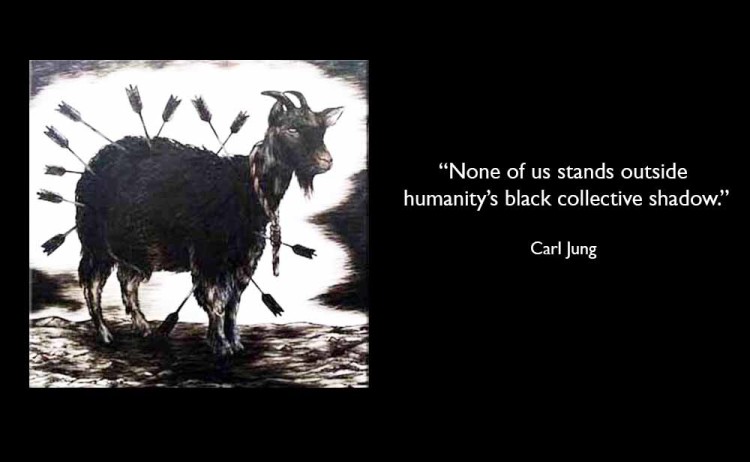
Both this and the Golden Child role are the soul-killing roles, but for different reasons. The Scapegoat is the child who is targeted by the narcissistic (or alcoholic) parent. The parent often is able to get the rest of the family to serve as flying monkeys and gang up on that child, projecting anything they don’t want to “own” onto them. Like the sacrificial goats described in the Bible who were banished to the wilderness and tormented by villagers, the Scapegoated child carries all the shame the rest of the family doesn’t want to confront or deal with. All the unwanted emotions and bad qualities are unloaded and projected onto them, so the abusers don’t have to confront or deal with these problems in themselves.

Usually it’s the most sensitive child of the family who becomes the Scapegoat, because that child tends to be the Truth Teller, the only family member who can see the dysfunction and may even react against it. The most sensitive child, being the child who shows the most emotion, is also a threat to the narcissists in the family because emotional expression is such a frightening thing to them. In many, if not most dysfunctional families, the expression of emotion is not allowed. So the most emotional or sensitive child becomes the scapegoat, especially if they rebel against the dysfunction or criticize it.

The Scapegoat may be assigned the role of Bad Child, the Loser, the Stupid One, the Ugly One, the Crazy One, the Weak One, or any combination of these. No matter what they do, they cannot please the parents (or the siblings who have been turned against them). Scapegoat Children usually develop severe C-PTSD or possibly another mental disorder, and having been trained to be victims and never given the emotional, financial or other tools to succeed in life, tend to fulfill their families’ predictions of being “losers,” so then their families can say to others, “See? This child really is worthless.”

Scapegoated children also tend to attract other abusers throughout their lives and are at risk for being targeted for bullying even as adults and for entering into abusive relationships. If the adult child doesn’t go No Contact, the abuse continues, usually through some form of isolation, silent treatment, or exclusion. Scapegoated adults are talked badly about by the family and not invited to family functions. They are given no emotional or financial support, even though other members of the family are given these things. It’s not unusual for a scapegoated adult child to be living in poverty, even if their families are wealthy–not only because they were denied financial support when they needed it, but also because their self esteem took such a terrible beating that they have no confidence at all and never take any risks that could improve their lives. Severe C-PTSD can also cause a person to have an inability to focus or concentrate or set realistic goals.

A Scapegoat isn’t always a child. It can also be a parent, in which the children are turned against that parent by the abusive one.

2. The Golden Child.

girl with a gold medal and cups.

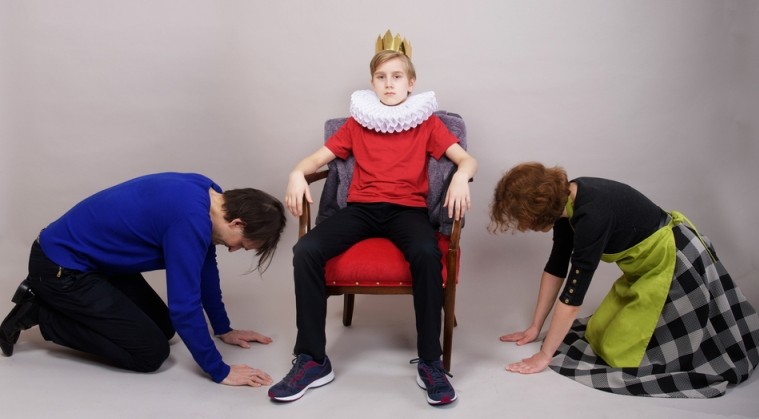
The Golden Child, often (but not always) the eldest child, is the parent’s trophy, pride and joy. The parents may seem to love that child, but being incapable of real love, their “love” is conditional and is based on their fantasy of what they want that child to be, not on who the child really is. The child is assigned to be a Mini Me of the narcissistic parent.

The Golden Child, basking in constant approval, showered with toys and gifts, never held accountable for any wrongdoing (which may be projected onto the Scapegoat), and often recruited as a co-abuser in the abuse of the Scapegoat, grows up entitled, grandiose, and spoiled. Because their Real Self has never been appropriately mirrored and their less than perfect traits are ignored or projected onto someone else, and because they were rewarded for playing a the role of the Perfect One, a Golden Child in a family is the most likely to develop NPD and become a clone of the abusive parent. In this way their souls are destroyed even more than the Scapegoat’s. To continue to be the parent’s favorite, they had to play a role which became internalized. This becomes their False Self. After awhile, they are no longer able to access their Real Self at all. Golden Children who have become narcissistic continue their entitled, bullying, manipulative, grandiose behavior into adulthood and are likely to head dysfunctional families themselves, continuing the cycle.

A non-Golden Child, even a Scapegoat, can become a narcissist too (usually the covert form of NPD), for self-protection, but Golden Children tend to develop the grandiose, malignant form of narcissism and as such, are the least likely to ever seek help for their disorder or admit they have become abusers themselves.

3. The Lost Child.

lostchild

In larger families (three or more children), one child is likely to be ignored and treated as if they don’t exist. This isn’t a form of silent treatment; it’s as if the parents don’t notice the child is there at all. The Lost Child isn’t victimized like the Scapegoat, but they aren’t spoiled either. They may or may not be recruited to assist in the abuse of the Scapegoat, but they won’t necessarily be punished if they don’t cooperate; they will simply be ignored. The Lost Child tends to be quiet and shy, and not make any waves. They are probably aware of the family dysfunction and may sympathize with the scapegoat (but don’t let anyone know this). As they grow older, they may crave attention or develop addictions, or they may remain shy and retiring throughout their lives. They tend to avoid confrontation and drama, and may become extremely introverted.

4. The Clown/Mascot.

classclown

The Clown/Mascot attempts to divert attention away from the family dysfunction (and also get attention for themselves) by making light of everything. Everything becomes a joke to them, and they even use their own families as sources for humor. Clowns can be disruptive in class as children, to get attention, but because of their ability to see the humor in things, they tend to be outgoing and develop a large circle of friends during adolescence and adulthood (even if they are never taken very seriously). Family Mascots are almost never scapegoated, because they entertain everyone and take the focus off the family problems.

David Sedaris, a writer and humorist, is a good example of this dynamic at play.  Several writers in the ACON community (and even outside that community) were outraged by Sedaris’ callous essay (“Now We Are Five,” which appeared in the New Yorker after his younger sister, Tiffany, committed suicide).   Tiffany was clearly the family scapegoat and had evidently gone No Contact with the rest of the family. At the time of her death, she was living in poverty and only had, as her father put it, “two lousy boxes” of belongings. I don’t know all the details, but it seems as if she was offered no support, either emotionally or financially, in spite of the family’s wealth and Sedaris’ success as a writer. She was probably mentally ill, but her mental illness may have been due to being the family reject.

In a candid interview Sedaris gave for Vice, he describes Tiffany and her relationship with the rest of the family. His words are very telling.

Even as a child I looked at my sister and wondered what that would be like, not to feel the warmth of my mother’s love. Tiffany didn’t. There was always a nervous quality about her, a tentativeness, a desperate urge to be in your good graces. While the rest of us had eyes in the front of our heads, she had eyes on the sides, like a rabbit or a deer, like prey, always on the lookout for danger. Even when there wasn’t any danger. You’d see her trembling and think, You want danger? I’ll give you some danger

It’s been suggested that David Sedaris is himself a narcissist (possibly the golden child) and that could certainly be true, but I also suspect he served a secondary role as the family Clown/Mascot. His callousness toward Tiffany in his famous essay (and grandiosity about how great the rest of the Sedaris family was–it’s very common for narcissists who were golden children to hold their dysfunctional families up as paragons of perfection) seemed to be drawn both from narcissism and from a need to hide his anger and pain behind a wall of humor. Here’s a link to his essay (it’s heartbreaking and may be triggering):

Now We Are Five

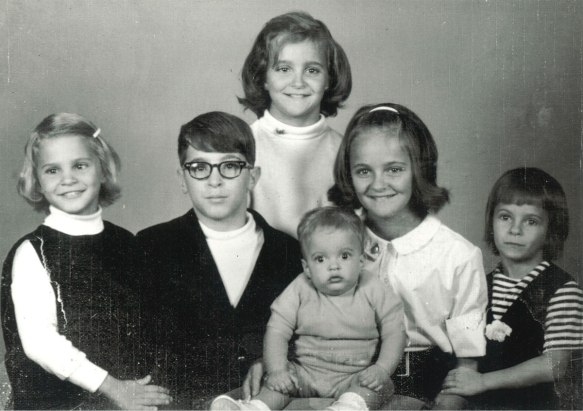
The accompanying photo is interesting. Tiffany, the second to youngest child in a family of six children, sits in the bottom right hand corner. Her hair is cut short and unkempt, and she looks very unhappy. David, wearing the glasses, stands above her. Actually, none of the kids look very happy. Not a smile in the bunch.  Something’s definitely not right about this family.  It’s common to see family portraits where no one is smiling in the 18th or 19th centuries,  but not in the late 1960s, when this photo was taken.   Here’s another photo, from the Vice interview, where only Tiffany (again in the bottom right hand spot) looks desperately unhappy and disconnected from her siblings.
tiffany_sedaris
Credit: Vice.com / Left to right: Amy, David, Gretchen, Paul, Lisa, and Tiffany

I used to enjoy Sedaris’ writings and looked forward to his books and essays, but after this essay, I just can’t read him anymore. (Augusten Burroughs is a better alternative and doesn’t seem to be a narcissist).

In spite of their raucous and jovial manner, Clowns are likely to be depressed because they have never learned to confront or deal with their true feelings.  They hide behind a wall of laughter.  Their sense of humor is really just a cover for their pain. Many Clowns become addicted to drugs or alcohol, and a few become suicidal. Many of our great comedians served the Clown role in their families. I don’t think it’s a coincidence that so many of them had drug issues or killed themselves.

5. The Rescuer.

superman_child

This is the codependent child who attempts to “fix” the family dysfunction by being obedient, always good, non-confrontational, overly generous, and self-sacrificing. The Rescuer may be highly empathic. The Rescuer tries to serve all the needs of the narcissistic/addicted parent, which of course is not possible. They will never argue with or criticize the narcissistic parent, and are always trying to get everyone to get along, which also is not possible. They may be the only family member who doesn’t abuse the Scapegoat, but they might if they feel like it’s required. However, even if they do collude in the Scapegoat’s abuse, they will be less abusive than the other family members, tending to take a back seat or even sympathize with the Scapegoat in private. In trying to please everyone, they please no one, and grow up feeling impotent and helpless. It’s a no-win situation.

When Rescuers become adults, they tend to unconsciously look for other abusers to “rescue,” having failed to do so in their families of origin. Like Scapegoats, Rescuers are likely to become abused themselves as adults, but it’s hard for them to leave an abuser because of their high level of empathy which keeps them tied to the abuser in their attempt to want to “help” them. They also tend to fall for an abuser’s promises to change and are easily “hoovered” back into a codependent relationship.

Shifting Roles.

In Balkanized families, the child roles can shift. The most common situation is a Golden Child becoming a Scapegoat, often upon reaching adulthood, if they fail to fulfill the unrealistic expectations put on them. (“You were such a disappointment to me!”) If a Scapegoat goes No Contact or leaves the family for some other reason, another child, possibly the Lost Child, becomes the new Scapegoat. Someone has to carry all the family shame.  If the family only has two children, the Golden Child may find themselves suddenly scapegoated or serving both roles.

Children who serve as both Scapegoats and Golden Children (very common in only children)  often develop Borderline Personality Disorder as well as severe C-PTSD and possibly other mental disorders like Dissociative Identity Disorder (almost always the result of severe emotional abuse).

Serving as both a Scapegoat and Golden Child is the ultimate mindf*ck because there isn’t even any consistency. The child never knows if they will be punished or rewarded from one minute to the next. Their only advantage (if they are an only child) is that they don’t have siblings who have been turned into flying monkeys who collude in the abuse.

If the family ever develops a need for a new Scapegoat (if the Scapegoat goes No Contact, dies, or disappears), the Lost Child is usually picked as a replacement, due to their non-confrontational, malleable temperament and lack of any real pre-existing role in the family.

Pot…kettle…karma!

pot_kettle

In 1996 and again in 1997 I was hospitalized for episodes of clinical depression and near-psychotic, self destructive behavior.   For several years I’d had severe mood swings, shifting from near-mania to near-catatonic depression.  During these depressions I’d sleep all day, not even bothering to eat some days.   I was sure I had Bipolar Disorder, but it turned out I didn’t have that.    The first hospital stay was where I first got my BPD diagnosis.  I was also diagnosed with Major Depression, alcohol abuse (not alcoholism), and PTSD.

My sociopathic MN ex loved to use these diagnoses against me, especially the BPD one.  I guess he already knew BPD had a terrible reputation.   He used this diagnosis to demean me and discount anything I said, and also used it to turn our friends against me.   He’d always say things like:

“No one will take you seriously because you’re certifiably crazy, even the doctors say you are crazy!”

“You have BPD and we all know all Borderlines lie and can’t tell the truth more than they can tell their mouth from their a-hole”

“You’re a Borderline which means everything you say is a delusion and a lie.”

“No one believes you because you’re batshit crazy and even have the BPD diagnosis to prove it.”

Years later, after being arrested for domestic violence and public drunkenness (he had a pillhead girlfriend at this time), he was diagnosed with both NPD and ASPD, which makes him a certified Malignant Narcissist.   I find the irony of that pretty funny.  I wouldn’t trade my BPD diagnosis for his in a million years.

The narcissist game of “Gotcha!”

gotcha

An earlier post of mine described the 8 mind-games  that narcissists all love to play.   (Please be aware this was actually a reblog of someone else’s post).  One of the more popular games, played by both covert and overt (grandiose) narcissists is “Gotcha!”

“Gotcha!” can be played two different ways, but both have the same devastating effect on the narcissist’s opponent (victim).   Both are intended to bring your mood down as low as it can go and at the same time, reward the narcissist with supply (which you provide with your emotional reaction) which makes them feel better about themselves.

Here are the two versions of “Gotcha!”

Bug.

dead-bug

This game is most popular with overt narcissists because it allows them to exercise their grandiosity and turn it into a handy weapon and suction tube for feeding.

In “Bug,” the victim always goes first.  You start the game by feeling down, depressed, or worthless after some misfortune.    The narcissist is good at faking empathy and love bombs you by spreading that phony sh*t on thick.  Eventually you let your guard down and confide in the narcissist all your woes, misfortunes,  and feelings of dejection.   You tell them your whole life story, feeling like you have found a kind shoulder to cry on.   A patient, empathic person who cares about you and wants to help you.

Not so fast, there!   Your narcissist is already planning their next move, and it has about as much to do with empathy as a Canadian Mountie has to do with a Taliban terrorist.    What is that next move, you ask?   They’re about to pull a bait and switch on you.   The next time you confide in them about losing your home, your spouse, your job, or your mental health, they will callously “share” with you all about the exotic vacation they’re planning to take, the big promotion they just got, or the new romantic partner in their lives.   They will crow about how blessed they are (“blessed” is a favorite term used by narcissists as a subtle envy-generator) and how unfair it is that others aren’t as fortunate as they are (this last is a snide put down, implying that you’re not one of the chosen people that God has chosen to shower his bounty on).

Of course you’re not an envious person, but hearing all about their perfect, blessed life at a time like this when you are suffering is too much.    The narcissist doesn’t care.   In fact, they may actually be lying to you about all those wonderful things.  They want to see you suffering and envious of them, because (1) your suffering provides them with a comparative ego boost (hey, at least they’re not as unfortunate as YOU!)  and (2) your envy inflates their ego even more.   They feed off your pain like a pig rolling in slop.

To them, you are just a bug, not worthy of respect or any real compassion.   Maybe they’ll getcha with some pitying contempt though:  “Oh, I feel so SORRY for you!”   It’s intention is to make you feel shame.  When you’re already down, expect to be stepped on and squished under the heel of the narcissist’s boot until there’s nothing left of you.

Wet Blanket.

wet-blanket

This is a game almost always played by covert narcissists.   The tactics used to win the game are very different than “Bug,” but the end goal is the same:  to make you feel like shit.

As in “Bug,” you (the victim) begin the game.  (Of course you don’t know it’s a game, but that doesn’t matter.)   You think you’ve found a friend in the narcissist because they seem so interested in you.   You just found out some great news–you got that promotion, your book is going to be published, you just found out you’re pregnant after months of trying, you won the lottery.

Naturally the narcissist doesn’t like your good news. To them, it is very bad news, because in their minds, the good fortune of someone else diminishes them.  Life to them is a zero sum game.  There can only be one winner and it has to be them.    For something good to happen to you means it didn’t happen to them which means they hate your guts because you have something which they do not.   It doesn’t even have to be something they want:  the fact you have something good at all is an affront to them.  They must find a way to ruin it for you and in effect, bring you down closer to being as miserable as they are (evening the score).

So after a phony congratulations (maybe), the narcissist becomes a concern troll.  Out of “concern” for you (and always for your own good), he or she just has to “warn” you about the dark  side of your good fortune (and if possible find a way to put you down too, or tell you why it doesn’t count).    So if you got a promotion, you’ll get a speech about how much harder you’ll have to work and how you’ll probably lose all your friends stil in lower positions.  Or you’ll be told why your promotion doesn’t really count because it’s one of those “honorary” titles or it’s really just a “lateral” move.   If your book just got accepted by a publisher, you’ll be told that publisher is a crook or their business is failing and you’ll never see your royalties; if you found out you’re pregnant they’ll tell you all about how horrible pregnancy is and about all the drudgery and loss of freedom you’ll be facing; if you won the lottery, they’ll trot out stories about people whose lives were ruined after winning the lottery or they’ll remind you that “you did nothing to earn it; it’s only chance–I could have won too!”

Of course, after you listen to the narcissist’s “advice,” your heart will feel heavy and your smile might have disappeared.    You might even be gnawing the sides of your fingernails in anxiety over all the things that could go wrong.  Checkmate!  The narcissist won and now he can feed off your new worries too.

A variation of “Wet Blanket” is actually the mirror-image of “Bug.” After you’ve shared your great news, the narcissist brings down your mood by telling you how terrible their own life is and how they never get any breaks at all. The intention is to make you feel guilty for having so much while they have so little.

Whether it’s guilt, shame or envy the narcissist is trying to induce in you doesn’t matter. They just can’t stand to see anyone happy and must take you down to their level or obliterate you like a bug if you’re already down.

Eight fun games narcissists like to play (and one they can’t play).

I thought I’d bump my most popular post and get it even more views than it already has. Please note I didn’t actually write this post, just added the intro and pictures. #NPD #narcissism

luckyotter's avatarLucky Otters Haven

not_fun

Here are eight games that are lots of fun for one of the players: the narcissist who initiates them. And like the overgrown babies they are, if you refuse to play or appear to be winning their game, they will pout, whine or throw a tantrum until you concede or let them win. This is a humorous yet serious look at the many games narcissists like to play, from the website The Narcissistic Life. Don’t play these games. Let them sulk and whine all by their widdle selves. Take the ball and go home.

Games Narcissists Play
Written by Alexander Burgemeester

Narcissists are masters at playing mind games. They play to win and take no prisoners. They are poor losers and if they don’t win they will often react in a fit of rage and stomp away like a little child. The only way for the other person to win…

View original post 1,353 more words

Empty words.

love_quote

“I love you.”

Adult children of narcissists hear those words a lot.  But they ring hollow and false to my ears, because words are just words–it’s the actions behind them that give them meaning.  And I haven’t been shown much (if any) love or support by my family or the other narcissists in my life who have have uttered those three words to me so many times.

Anyone can send a Hallmark card or say “I love you” but that’s as close to love as narcissists can get, because they never learned what love really is.

There’s a blogger I read who is a narcissist.   I like his posts because he writes about narcissistic abuse from a narcissist’s point of view (nope, not Sam Vaknin).  Oftentimes you learn more about something when it comes out of the proverbial horse’s mouth.    You get a whole new perspective on things that way.    Usually he writes about the tactics a narcissist uses to prey on others, but sometimes he’s more transparent and and shows some vulnerability–even writing about the abuse that was done to him and turned him into a narcissist.  From one especially gutwrenching post where the blogger, HG Tudor, describes what sort of “love” he was taught as a child:

Love is being told to never trust anybody.

Love is being made to re-write the entire essay because of one spelling mistake.

Love is being sent to stand outside on a cold winter’s day until all three verses of Ode to Autumn are recited correctly.

Love is knowing nothing is ever good enough.

Love is understanding that someone else knows better than you what is best for you.

Love is turning away from the reality.

Love is standing straight against a wall for several hours for speaking out of turn.

Love is for the weak.

Love is being told that when I am gone nobody else will look out for you.

Love is succeeding.

Love is building a wall as high as possible.

Love is trying until it hurts and gaining that final curt nod of approval.

Love is being seen and not heard.

Love is fulfilling your potential and securing that legacy.

Love is hurting you even though it hurts me, but someone in this household has to do it and it won’t be him will it?

Love is reading to yourself than being read to.

Love is living in the shadows and hoping not to be noticed.

Love is being the best.

Love is the preserve of the powerful.

Love is being denied a birthday party because the other children are too stupid.

Love is being undermined in order to prevent conceit.

Love is a begrudged recognition and the injunction to try harder, go further, climb higher, run faster, study longer.

Love is burning your hand but not crying.

Love is a righteous beating.

Love is being distant and pretending things never happened.

Love is being sent away.

Love is not being told.

Love is splendid isolation. 


He has it right.   He knows this is not what love is, even if he has no idea what real love is.    There’s a lot of anger in his post.  What he may not realize is this list could apply to ALL children of narcissistic families, not just people like him who have NPD.

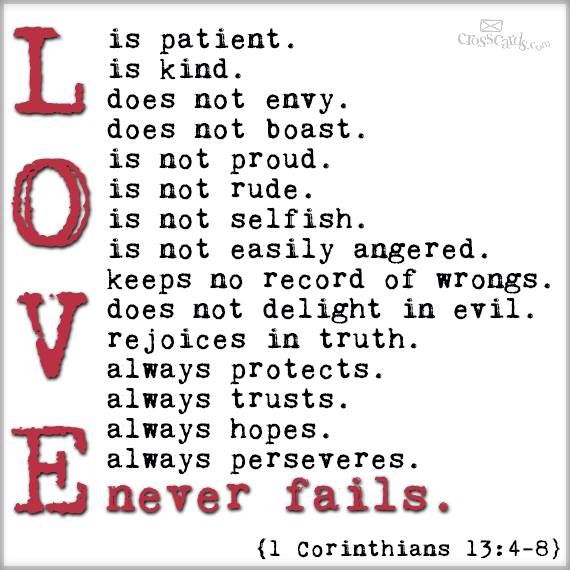
There’s one difference though.   For those of us who didn’t become narcissists, we somehow learned what love is.   Real love is unconditional love: love that is unearned, love that is given just because you’re who you are, regardless of your flaws and shortcomings. You are not shamed for being who you are, at any point, ever.  You are cherished for your soul, not your appearance, income, intelligence, or achievements.   You are not judged for being in a bad mood or for not being happy all the time.  Someone who truly loves you will still love you even when you’re sad, mad or afraid.  They will offer support in some way, not turn their back on you or blame you or kick you while you’re on the ground.

Those of us with C-PTSD and other trauma based disorders didn’t get unconditional love from our immediate families.   But if we didn’t become narcissists we might have had a taste of enough of it to make a model of it for ourselves.  Maybe a loving relative outside of our immediate family–a  grandfather or aunt perhaps–showed us this kind of unconditional unearned love.  Maybe we were “adopted” by the loving parents of a friend (not literally adopted, just treated like a member of that family).   Perhaps we were fortunate enough not to marry an abuser (unfortunately, that’s not the case for most of us, since we were programmed to attract and be attracted to abusers) who showed us what real love is all about.   Maybe we had a compassionate teacher when we were young.  It’s even possible that one or both of our narcissist parents (if they weren’t malignant or sociopathic) had occasional moments of lucidity when their false self was temporarily down for whatever reason, and during those rare moments were able to see and love us for who we really were, not for what they wanted us to be or what we could give them.

My point here is that love was somehow modeled for us by somebody before the critical period for being able to accept–and give–love came to a close.   Probably not enough to heal our wounds; the damage done to us was severe and complete healing may not be possible.   The scars will always remain, no matter how much work we do on ourselves.   We may be compromised in our ability to give and receive love, but we can still learn.    Even if we’ve been shown very little love throughout our lives, by the grace of God, our souls, though damaged, somehow remained intact.    For a narcissist, there’s no inkling of what actual love might feel like, even if, as with the blogger quoted above, they want to know.

love_corinthians

I’m so starved for unconditional love that when it is given to me, I want to cry in gratitude and some emotion that feels very close to relief.   Occasionally I have.    I can tell you what that kind of love feels like:  a sincere hug when you’re depressed; concerned ears that listen without judgment even if they disagree with you;  someone who isn’t a fair weather friend and is still your friend even when you’re going through a rough time or aren’t at your best; a real family that always welcomes and supports you no matter how old you are or how many problems you’ve faced and doesn’t disown you, judge you, shun you, talk badly about you behind your back, or tell you everything’s your own fault.   Love is like a respite from pain after an excruciating illness; it’s reassurance that the thing you dreaded the most did not come to pass, that in fact, the outcome was wonderful instead.    That’s what love feels like, and it’s everyone’s birthright.  That some of us received so little of it–or none at all–is appalling to me.     The injustice of it makes feel rage.

I received just enough of this kind of love, and at an early enough age, that it was modeled for me.  I received just enough that my soul escaped relatively intact, even if my mind did not.    I can feel unconditional love for others, but I’m still afraid to reach out to them, because I learned that people can’t be trusted.  So many people in my life have shown me their “love” has no real meaning and is just three pretty words with nothing inside but betrayal and hurt.    The terrible irony of having received enough of a “taste” to know what real love is  like is that you constantly crave more of it, like a drowning person gasping for air.  You haven’t received enough to feel confident that it will last or that anyone in the world really cares about you, so you either clutch onto it for dear life or avoid relationships altogether.

A question that probably has no answer.

Belle-in-Beauty-and-the-Beast-disney-princess-25447780-1280-720
Beast transforming; Belle watches in astonishment/credit Disney Pictures 1991

I’m following a blog where the writer, who is a diagnosed NPD in therapy (I am not going to link the blog here), has been showing signs recently of his hard shell beginning to crack and unfamiliar emotions starting to break through his formerly impenetrable emotional wall.

It’s been happening over time, and in fits and starts. His last post expresses quite a lot of vulnerability and sadness for his lost self and the hurt he felt as a child. It made me feel like weeping, but in the good kind of way. If this blogger is being candid and honest, then his unfolding is a beautiful, painful, magnificent thing to behold.

But earlier posts by this writer have described the way he feeds off the emotional reactions of other people (the way all narcissists do). Whether the reactions are positive or negative don’t really matter; it’s the fact they are emotional reactions to him that feed him. The blogger also happens to be an extremely skilled writer. I could easily believe he may be merely manipulating his readers (many who are empaths) into falling for the epic drama of the Big Bad Narc transforming into a man with the ability to love and feel like a normal person. It’s the stuff of Hollywood. It would make a great 10-Kleenex movie.  He no doubt knows the effect such a thing would have; he could use his skill with the English language to write breathtaking, transformative passages and become the star of his own tear-jerker movie.

I must have watched the ending of Disney’s Beauty and the Beast at least 20 times, and it still has the ability to make me sob like a little child.   It’s basically the story of a narcissist being healed by the love of another person, all dressed up in period costume and fairy dust and magic, and rendered suitable for children.   I can’t get enough of that damn sappy ending.  But I think that, for me, it’s symbolic of something much deeper going on.

Maybe I’m being (in Sam Vaknin’s words) a malignant optimist, or maybe I’m just a gullible fool, but I really, really want to believe the blogger isn’t manipulating his readers for narcissistic supply. I want to believe what he says he’s feeling is actually real. Nothing would move my soul more than witnessing a narcissist actually healing from his disorder. I’m a starry-eyed romantic INFJ and love this kind of stuff. I need to see that movie and believe it’s true. Maybe my obsession with narcissists being able to open their hearts again has to do with having narcissistic parents and having wanted so much to see it happen for them, but alas, my dreams were dashed.

Is there a way to know if this writer is telling the truth or just putting on an elaborate show for his readers in order to garner supply for himself? I suppose this is a rhetorical question since obviously no one can answer that. Only the narcissist himself can answer that, but there’s no way to know if his answer would be the truth or not.

****

Further Reading:

Beauty and the Beast: A Metaphor for NPD

Your Daily Dose of Crazy, Compliments of the Narcissist!

The level of crazy you see in narcissists just makes my head spin. Following is a fine example of their special brand of insanity. The one quoted in this post seems to be a Covert Narcissist.
Please leave your comments under the original post.

divorcinganarcissistblog's avatarDivorcing a Narcissist Blog

Oh Boy. If you ever wanted an up close and personal view of what that special kind of crazy that only a Narcissist can deliver looks like… it is your lucky day.

I got these amazing text messages from the Narcissist tonight….  sounds like someone is upset. (and don’t worry, I didn’t reply to any of it)

THE NARCISSIST: I really think it’s in your best interest to stop writing untrue and negative things about me. I have read a few but I don’t have time to waste on your anger. You should really put that effort into journaling about your future and healing your anger. Not talking bad about someone you let go of and is no longer a part of your life.
THE NARCISSIST: I didn’t take all the screen shots of all the hateful things you said to me or those I care about (on various social…

View original post 558 more words

HSPs and empaths, take heed! You cannot heal a narcissist!

sad_angel

In my readings and observations of people in the narc-abuse community, I’ve become aware that Highly Sensitive People (HSPs), empaths in particular, are highly attracted to narcissists. The reverse is also true–narcissists see an empath and smell blood.  As an HSP myself (though not an empath), I have always been drawn to narcissists as friends and romantic partners.   This has gotten me into a world of trouble and almost destroyed me until I finally learned to resist their “charms” and go No Contact whenever possible.

Why Empaths are so attracted to Narcissists.

empaths_narcs

It’s a psychological truism that we tend to be attracted to people similar to the people who raised us.  For those of us who were the most sensitive child in the family and as a result, became the family scapegoat, developed codependent personalities, or even developed a form of Stockholm Syndrome toward our abusers, we continue to carry our legacy or “people pleasing” into adult life and find ourselves drawn toward other narcissistic people, who are very good at promising us the world and vowing to solve all our problems.   But getting involved with a narcissist is the ultimate bait and switch–they make a lot of empty promises to love you unconditionally and never betray or hurt you, but they don’t deliver.  Not even close.  All they care about is feeding off of your love and generosity in order to keep their false self inflated like a balloon toy.

Not only are we fooled into believing the narcissist will be the answer to all our woes and fill our own inner emptiness, HSPs and empaths are also drawn to the “hurt inner child” inside every narcissist.  Most people can’t see the emotional void and deep unhappiness at the core of an NPD; they just see the narcissist as either a likeable charmer or a huge A-hole (depending on their role to the narcissist or stage of the relationship), but empaths see beyond the “false self” to what really lies beneath the carefully constructed facade.    This is why empaths and HSPs were so often scapegoated as children–because they were children who could see the ugly truth and sometimes even blew the whistle on the narcissistic parent–and nothing terrifies a narcissist more than being exposed as living a complete lie.

I’ve talked to quite a few empaths who actually seek out narcissists to love, in spite of having been educated about narcissistic abuse and the very real dangers they pose both spiritually and emotionally.  Empaths who choose to love a narcissist and think “this one is different” really ought to know better.   They look at a narcissist and don’t see a predatory, toxic individual who only seeks to use and abuse for their own gain; instead they see only the “hurt inner child” living in darkness beneath the bright, cheerful facade.

Their observations and feelings are actually not wrong.   Because empaths can see the truth about people, the damaged person they take so much empathy on is real.  Narcissists are indeed hurt, damaged, deeply unhappy people, although some abuse victims prefer to think of them as inhuman devils without souls at all.   Narcissists are definitely human, but they are dangerous, and especially deadly to an empath, because of how much such a person tends to give of themselves and how codependent they can become.

Like moths drawn into the flame.

moth-to-the-flame-3

Narcissists are drawn to empaths because (even though an empath can see beyond the false self, which scares narcissists), they give them everything they want.   Deep inside, what every narcissist really wants is someone to love them unconditionally, and empaths are more than capable of doing that.  They are also deeply envious of the empath’s ability to feel with no shame, even if they deny and hide their own feelings.   Empaths are compassionate, patient, self-denying, always willing to listen without judging, and generous with their time, money, possessions, emotions, and everything else they have to give, both tangible and intangible.  An empath’s love for a narcissist will cause them to stick by them no matter how much abuse gets dumped on them in return.   Empaths are perfect candidates for Stockholm Syndrome.   They will keep giving and giving, while the narcissist gives nothing in return except heartache and pain.

Some empaths may seem masochistic because everyone else can see that the narcissist is sucking the empath’s lifeblood away, turning them into a dried up husk of the whole person they once were, but the empath, like a moth driven to a flame, continues to give and give and give until they have nothing left to give.   It’s not masochism that drives an empath to stay with the narcissist and allow this abuse, though–it’s the deep belief empaths have that their unconditional love alone can heal the narcissist and make them whole again.

It’s a beautiful idea, that unconditional love can heal a narcissist and transform them into loving, authentic human beings.  It would be nice if things really worked that way, but only in fairy tales and movies do such things happen.   The Beast is won over by Beauty’s love and is transformed into a loving prince;  the miserly Scrooge is transformed into a generous and compassionate philanthropist;  The Grinch grows a huge heart out of the hard little stone in his chest when he hears the Whos singing down in Whoville in spite of having all their Christmas presents stolen;  Jerry McGuire changes overnight from a selfish, materialistic jerk into a nice guy.  Usually it’s the love of someone else–often a woman or child–who is the catalyst in getting the narcissist to change their evil ways.  These movies and stories touch our hearts and bring tears to our eyes because we wish life were really that way.

grinch_heart grinch_heart2

It’s tempting, if you’re an empathic type of person, to want to reach that hurt inner child inside your narcissist and through your unconditional love alone, give them the courage to jettison their false self and let that inner child out, and finally learn how to love.   But what’s far more likely to happen is that in spite of your best efforts, the narcissist will not change and will resist or even attack your efforts to transform them.   They will just keep taking from you, for they have no idea how to give of themselves or how to love.  You become drawn deeper into their web of misery and darkness, and eventually have nothing left to give and finally, your soul is destroyed beyond repair.

The only way to help a narcissist.

You cannot help a narcissist by giving them your love.  The best way to help a narcissist is to stop giving them narcissistic supply–in other words, going No Contact.   Only then is there a small chance that without that fuel, they will be forced to confront their own emptiness and pain, which could lead to them seeking professional help.   But don’t count on it.  Most likely, they will just move on to a new source of supply or try to hoover you back in.

I’ve stated many times that I don’t think most narcissists are beyond hope.  I’m one of the few narc-abuse bloggers that holds to that view, and sees narcissists as a different, more dangerous type of abuse victim.   It’s not a very popular view, but it’s mine and I’m not likely to change it.  A few weeks ago, I wrote about Apostle Paul, a malignant narcissist if there ever was one, who was changed by the Holy Spirit into a righteous (if still slightly arrogant) devoted follower of Christ.    I know of NPDs who are in therapy or treatment, or were in therapy and have actually been deemed NPD-free or are at least working hard to change their ways and become more authentic, loving people.  NPDs  are sad people who know their lives are empty and shallow and essentially meaningless, even if they never admit it.  Some even become consciously aware of how exhausting and essentially unfulfilling their dependence on others to feel good about themselves (and what they feel good about isn’t even who they really are) really is.

I’ve always believed that with both self-awareness (knowing one is a narcissist) and willingness to change (disliking what one has become), that healing becomes possible.  But change isn’t something that can magically happen through an empath’s unconditional love.   If it’s going to happen at all, it takes years and years of difficult and grueling therapy by a trained professional who knows exactly what works for this disorder (and what doesn’t)–and because they are trained in this, are not going to get pulled down into oblivion by allowing the narcissist to feed on their heart like a predatory animal.   Healing can also come through an act of God, as it did with Paul.    We can love a narcissist (but from a safe distance!), and we can ask God to help him or her–and maybe that will turn out to be God’s will too.  You never know.  God may have a special mission for them and decide to remove the scales from their eyes.   But please, empaths and HSPs, never try to cure a narcissist yourself through your unconditional love.   It won’t work.  You don’t know how to do it.  Leave it to the professionals and God.

Is narcissism caused by nature or nurture?

narc_child
Credit: davidwolfe.com

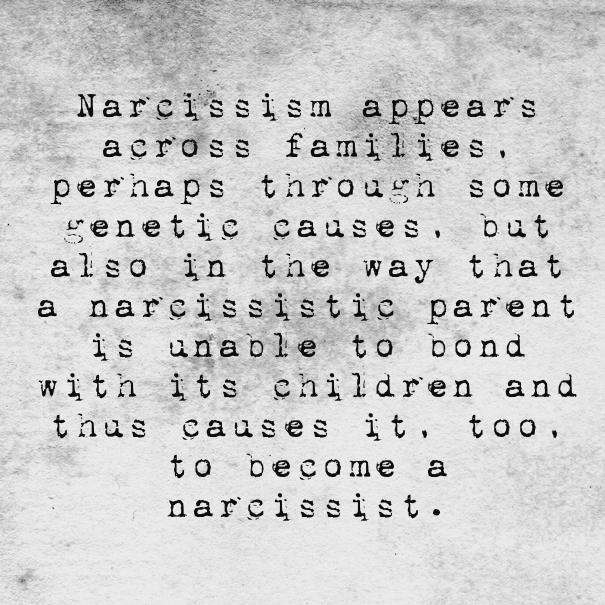
Although the consensus seems to be that narcissism or NPD (clinical narcissism) is a result of abuse or neglect during childhood, there may also be genetic factors involved.   An article from The Narcissistic Life cites several studies and concludes that narcissism results from a combination of nature and nurture, describing it this way:

These factors include biological vulnerability, social interactions with early caregivers, and psychological factors that involve temperament. There are studies that suggest that a gene (or genes) for narcissism can be inherited but that a person also needs the “right” environment for narcissism to be manifested.

What this means is that while a child may be born with a predisposition to becoming a narcissist, they won’t unless environmental factors are also fulfilled.  If the parents do their job well and give the child a secure emotional foundation, they will not develop NPD even if they are predisposed to it.    In this way it works a lot like alcoholism:  alcoholics are probably born predisposed to becoming alcoholic, but if they don’t take their first drink until they are well past adolescence or if the culture they are raised in discourages heavy drinking (or drinking at all), they will not develop alcoholism.

Some babies are born more demanding or needy than others.   These may be “difficult” children who are easily hurt or upset and have trouble learning self-soothing.   Such a temperament doesn’t necessarily indicate the child will become a narcissist, but they are probably more likely to than a calm baby who can soothe themselves, if the parents fail to mirror them properly or don’t attend to their emotional needs.

Most children whose parents were abusive or neglectful do not become narcissists.  They may develop some other problem like C-PTSD or BPD or be prone to depression or anxiety instead.  These are probably children who have a calmer, less sensitive or less demanding temperament than children who grow up to be narcissists.  Personally I think people who develop narcissism were children who were especially sensitive and had no emotional defenses at all so they sent the true self into exile and replaced it with a false one.   No other mental disorder causes a person to completely reject their own vulnerability and authenticity.

geneticNPD

It’s not always abused children who become narcissists.  Some are children who are spoiled by their parents. Spoiling may actually be a form of abuse, because it’s a lie and doesn’t acknowledge the child’s real self.  It still fails to mirror them properly.  The child is constantly told how perfect they are and showered with gifts and praise for being so “perfect.”  As a result, they feel like they must always be perfect which of course is a lie.  They feel entitled to whatever they want because of this belief in how perfect they are, and they never learn how to deal with criticism or setbacks when they get out into the real world.

I also think the nature of the abuse and role in the family plays a big part in whether a child develops narcissism and what type of narcissism they develop.   Golden children, who are essentially spoiled children, are more likely to become narcissists than scapegoats are.   Children who serve as both scapegoats and golden children (common in only children) can also become narcissistic, but I think they’re more likely to become Borderlines.   If a scapegoated child does become a narcissist, it’s more likely they’ll become the covert, fragile type of narcissist than the grandiose, overt type.

Some studies have also shown that narcissists’ brains have less grey matter in the left anterior insula region of the brain, thought by researchers to be involved with both the regulation of emotion and the generation of empathy.   But the jury is out on whether these brain differences are genetic or if the brains of narcissists fail to develop properly due to being raised in a narcissism-inducing (abusive or spoiling) environment.

Further reading:

Does Excess Praise and Spoiling Create Narcissists?


A dicey situation.

dicey_situation_by_johnnycorduroy
“Dicey Situation” by Johnny Corduroy, Deviantart

I always hesitate before posting anything about my N mother, because I know she reads this blog. But then I think about two things: 1. what can she do? and 2. no one ever asked her to read this blog. It’s mine. If you don’t want to get burned, keep your hands off the stove. So here goes.

Yesterday when I talked to my mother about my dad, she said she wants to come visit me in the fall. She cannot afford a hotel room, and I can’t afford to put her up in one. She pretty much invited herself, saying, “Well, I will have to stay at your place.” Immediately I felt my self-protective shackles kick in: Danger! Danger! Boundary violation!

In most families, letting your mom stay with you fore a few days wouldn’t be a problem. But my family isn’t most families.  My mother is very judgmental of me and my lifestyle, which, although I’m satisfied with it, is less than glamorous and I know she would not/does not approve of the way I live (which really isn’t my fault anyway because I don’t have the financial resources to live better).  Even if she says nothing about my mismatched furniture, the sagging, stained couch, the buggy old-fashioned kitchen with its tiny 1970s electric stove, an old summer camp steamer trunk used as a coffee table, the box TV in the living room, the ancient windows that don’t open, and the black mold on one side of the house (which my landlord has yet to do something about), I know she will go back to her extended family and tongues will wag. I know she has devalued me to the rest of the family and puts me down, disapproving of the way I live. She cloaks these criticisms with “concern,” saying things like, “I just don’t know why Lauren always makes such bad choices,” or “it’s so sad the way she lives but she made her own bed.”  Or she talks about how mentally unstable or immature I am. Even though my mother is far from wealthy and even borders on as poor as I am, she has always put on airs of being of a higher social status than she actually is, and to be fair, she does a good job of it. Even if I was of a social class she approved of, our tastes and interests are vastly different. I’m far too “bohemian” for her liking and I’m pretty sure I still would be even if I was rich.

I also know she wouldn’t approve of my housemate, and they would get in each other’s way. The idea of the three of us having to share a roof, even for a few days, gives me the willies.   I wouldn’t be able to tolerate feeling like I have to apologize for the things I do while she is here.   If I tell her no, she can’t come, I know she will go back to the extended family and tell them I’m “hiding something.” She seems to think I still have my ex living with me and am saying nothing about it. This is of course ridiculous, but I know it’s what she’ll tell everyone. She can’t understand why I wouldn’t be thrilled to put her up on my couch for several days and I don’t have the courage to be honest with her. The fact she reads this blog and knows I’ve pegged her as a narcissist (even though I don’t think she is malignant, she is a textbook example of a woman with intractable NPD) doesn’t seem to faze her in the slightest. Being the narcissist she is, she simply is incapable of understanding why I wouldn’t be jumping for joy for the “opportunity” of putting her up on my couch for a few days.

I had no time to prepare for this, so I said weakly, “well, you will have to sleep on the couch then, because my roommate has the other room.” She responded with, “oh, you have a roommate?” As if this is some life choice of mine and isn’t a matter of financial necessity.  It’s also interesting to me that I have never been invited to see her where she lives.  The one time I suggested going to visit her there, she told me my half sister didn’t want me there (they share a townhouse).   I think she was lying, because my half sister barely knows me.  I haven’t seen her since 1986.   I think it’s actually my mother who doesn’t want me to come there, because I would “embarrass” her in front of the family, so she put words in my sister’s mouth.    Even if my sister doesn’t want me there, it was probably my mother who turned her against me.

I’m in a dicey situation, and I’m praying she changes her mind about coming. Just in case she isn’t, I guess I’ll have to start saving enough money between now and then to put her up in a local motel, which I should be able to do given the time frame. Then all I need to do is think of some reason why she can’t stay at my house (repairs? haven’t cleaned it?) She would like a motel better anyway with its pool, sterile rooms, flat screen TV, and a real bed. The fall is still a few months away but it will be hard for me to save the money because I’m trying to save enough money to go see my son in Florida in September. I think she might know this too, but she doesn’t care.