My fractured memory.

FracturedMemory2
“Fractured Memory,” by Hanna Trussler, 2012

I’ve been doing a lot of thinking about my early years–childhood and adolescence. As many of you know, my parents were active alcoholics, narcissists (my dad more likely covert NPD or maybe Borderline), and that I spent almost all of that time miserable and lonely due to emotional (and sometimes physical) abuse both at home and at school (because I was already trained to be a good little victim and had no self esteem or the ability to defend myself, I was bullied a lot).

The problem is, most of these early memories are fractured, hazy, or both. I remember snippets of traumatic events, but in most cases I can’t remember the entire event, or it’s spotty. Some of my memories seem more like dreams than reality and therefore I can’t remember the specifics of what happened. The same is true of my abusive marriage. I can only remember fractured pieces of that time. The two and a half decades I spent with him don’t seem like a cohesive whole, but more like a photo album with many of the photos missing. But this post isn’t about my early adult years.

I think something happened when I was 12 that was significant and a kind of turning point for me–it was when I stopped trusting anyone, I think. It was the moment when I realized how truly alone I really was and that no one cared and anyone who said they cared was probably lying. I’m not 100% sure, but I think this is when I stopped reaching out to others and began my avoidant pattern of behavior. Of course, this coincided with puberty, so maybe that had something to do with it too.

Here’s what I do remember. My parents and I had taken a two week trip to the beach. Another couple and their two children came along with us and rented the cottage next door. That couple was friends with my parents. I didn’t know my father was sleeping with the wife at the time, and my mother probably didn’t either, but I remember how jealous she was of that other woman because she was younger and blonder than she was and my father paid a lot of attention to her. Their daughter was a year older than me and was adopted. She was from India and was a close friend of mine at the time.  I envied her beautiful long, glossy black hair, permanent tan, and huge soft brown eyes.  Her little brother (her parent’s natural child) was an adorable little blond-headed boy of about 5 or 6. To me, they seemed like the perfect family. It may have been an illusion (for all I know, they were putting on appearances too), but to my 12 year mind, they seemed like they were in love with each other and their kids were both well loved and well-adjusted. My friend always seemed happier, more focused on a future (she eventually became a doctor) and much more emotionally stable than I was. I loved her and envied her.

My parents at the time were drinking heavily and fighting almost daily. Some of their arguments became physical, and I remember lying silently in my bed at night listening to these arguments as they escalated. I was both fascinated and terrified. What if they divorced? What if they abandoned me?  What if they killed each other?  What if I became an orphan?  I seemed to be the cause of an awful lot of their problems (and they did fight over me a lot).

This beach vacation didn’t put a stop to their constant fighting, and one night, my father left. I don’t know where he went, but my mother and I were left alone. My mother didn’t speak to me about this and her demeanor toward me was cold, as if I was an annoyance to her. I was terrified my father was never coming back, and I remember crying myself to sleep the next night. I don’t think my mother ever came in to comfort me. She was probably getting drunk, but I don’t remember.

Desperate for someone to talk to, I pulled the father of my friend aside, and asked him if I could talk to him in private. He always seemed like a warm and sympathetic person to me, someone who loved kids. We sat down outside on a bench near the parking lot, with the sound of the waves crashing behind us on the beach,  and I spilled out all my worries, all my pain, and all my fears.  I talked for about an hour.  He just held my hand and listened. I started to cry and he held me.  He told me everything would be alright. He didn’t say he was going to talk to my parents.

sad_child_beach

He must have talked to them, because that night I was told by my mother that my father was returning to talk to me. She said he was not happy and was in fact enraged.
He came back as promised, and that’s where my memory gets all hazy and fractured. I remember snippets, like quick-flashing frames from a movie: getting beaten severely (but I was always beaten in a way that bruises didn’t show), being told I was a troublemaker and was the reason the family was falling apart. That I was nothing but a problem to them and never knew when to keep my mouth shut. I don’t remember the rest but I know there’s even more. I just can’t access it.

I also don’t know if my friend’s father had told my parents what I’d said to him because he was concerned about me and thought they might listen to him, or if he was just another participant in the abuse against me.

I realized even then my parents were drunk and probably not fully in control of what they said and did, but I think behind their alcoholism was narcissism. I think a lot of narcissists become alcoholics or addicted to drugs, and even after they become sober or clean, refuse to look any deeper into the core issues that caused them to drink or use in the first place. But that’s a subject for a later post. One thing that did occur to me, was that the only time my parents seemed to come together as a team and weren’t attacking each other, was when they joined forces to attack me. Only then were they the unified couple I dreamed of, unified in their abuse of their only child.

I don’t remember much of what happened after that beating and berating. I’m pretty sure our vacation ended at that point. I might have been sent to stay with relatives for a week or two, or left with a babysitter, so they didn’t have to deal with me. I feel like something important got blacked out, but I can’t remember what it was. But it was around this time that I stopped being able to confide in anyone at all. I remember one of the nuns who taught me in 8th grade, a woman who seemed to favor me for some reason, once called me aside and asked me if I was abused at home. I thought to myself, how can she tell? Of course I told her I wasn’t, that everything was fine. But nothing was fine in my life anymore.  I think my emotional growth stopped that summer.  At age 12.  But it might have stopped even earlier than that.  How in the name of God was I ever supposed to grow into a happy successful adult, able to form healthy attachments to others, when I never grew beyond the age of 12?

The next summer I was sent to sleep-away camp for the entire summer, and while I did enjoy it for the most part, I couldn’t help but feel that it was a rejection, a way for my parents to get rid of ‘the problem child’ so they didn’t have to deal with my “issues.”

Wow. Suddenly I feel like crying. The pain is getting real.

I’m asking the little girl who still lives somewhere inside me to tell me everything she knows.

You.

Pointing_Finger (1)

You know who you are. I know you read this blog. But no one held a gun to your head telling you you had to read it. You actively sought it out. Your anger is unfounded because:

1. Every word I said about you is true. But by all means, keep telling yourself that lie that I am the problem.
2. I never used any real names, not even my own.
3. It didn’t have to be that way.
4. People who do the kinds of things you did to a child deserve to be called out on it.
5. I’m becoming a better person in spite of what happened to me, and maybe even because of it.
6. Adversity breeds wisdom.
7. This is my blog and I can’t be censored by you or your kind anymore.
8. I am going to die a happy and fulfilled person in spite of being so crippled emotionally.
9. No one held a gun to your head telling you to read this blog. Sometimes if you stick your nose where it doesn’t belong, it might get bit off.

Since you stopped by, let me make your visit worth it by sharing a song that reminds me of you.


Truth teller.

truth_teller

I am the truth teller in my family. Because of that I have been scapegoated and disowned. I’m well aware of the possibility of my family seeing this, but due to the indifference I’ve been able to develop toward them (which I think is healthier than the hatred and rage I used to feel), I can now say this without guilt. It’s also the only way I can ever “communicate” with them about how I really feel, as if that would make any difference. It won’t, but at least they will know, and they should know. I’ve hesitated about ever writing a post like this, but I’ve kept this inside too long, and need to get it out there for all to see. That’s what this blog is for, after all.  It’s about MY life, not theirs.

1. I was trained by my family to be a victim (scapegoated child). I was never given the emotional tools to do well in life, or much financial help either after I turned 18. My family had money, but would not pay for my college education. I had to pay for it myself and take out loans. (My father did pay for my son’s college education. I’m not bitter about this but grateful at least he got help).

2. I live in poverty because I lacked those emotional and survival tools to do well on my own. I have had extremely low self esteem my entire life and felt incompetent in most things because of the way I was treated. In addition to having no confidence and being painfully shy (which is a handicap out in the world today), I also can’t connect in any meaningful way with people, so I am all alone in my 50s as well as poor.

3. My family, who still has money, refuses to help me. Not that they should have to at my age, and not that I would ask, but they never have (except during the few times they were shamed into it by people in authority, but I won’t get into that here because it’s irrelevant). In loving families, when a child, no matter how old, is struggling, everyone pitches in to help. That doesn’t mean support them forever, just help them get back on their feet so they can make a fresh start. But my family isn’t normal. My mistakes are not tolerated. I failed to meet their unrealistic standards of perfection, so I don’t deserve a second chance. But this shouldn’t surprise me. They are a family of narcissists, both covert and overt, with my mother at the helm. Others in the family live well and get help when they need it. But not me.

4. I have been disowned, even though I was a “good kid” who never got in serious trouble, didn’t do drugs, get in trouble with the law, etc. No, I wasn’t “easy” (I had lots of BPD and complex PTSD episodes and severe mood swings), but overall, I wasn’t a bad kid, just really fucked up in the head. They hold it against me that I “went back” to my sociopathic malignant NPD ex, even though I was so victimized at the time I felt like I had no other choice. I felt like I had nowhere else to go. But I think I would have been disowned anyway, because I was the scapegoat of the family and singled out for this treatment when it became clear I was the one who saw through all the lies and bullshit.  Even though I’m no longer with my sociopathic ex, as far as I know, I’m still written out of the will.  No one ever tells me anything.

4. My mother has triangulated against me and turned the entire family against me so everyone thinks I’m crazy and evil and wants nothing to do with me. She has actually told her relatives I deserve nothing and “brought this on myself.” No one in the family (except my children and my father) talks to me.  (My mother and I do exchange cards, but they are very generic and impersonal).   I’m never invited to any family functions. I’m grateful at least my kids  know I’m not this horrible person the rest of the family thinks I am. Actually, they told me they think I was a good mother who did the best I could with what I had to work with.  That means a lot.

4. They throw their disdain and contempt toward “the poor” in my face all the time, quoting Tea Party screeds about how all poor people are lazy and leeches on society and deserve to be poor. This is done to shame me and make me feel like an outsider, which of course I am.

scapegoat_child

I try not to be bitter about all this, but it’s so hard sometimes. To survive, I had to become indifferent toward them and think of them as pathetic little victims themselves, otherwise the rage would have destroyed me. Actually, I do have love for my father, who I do believe loves me. But he’s under the thrall of the rest of the narcs, who keep telling him how useless, crazy, and undeserving I am.

That’s what I get for being the truth teller in my family. The one who can see through all the bullshit.

Until I found the narcissistic abuse community, I felt all alone. I’d never known anyone who was treated this way by their family of origin. But my experience seems to be a common one among so many victims of narcissistic parents. So many of us have “failed at life” because we were never given the tools to do well, or allowed to develop any self confidence. We were always told we’d fail at anything we ever did and not allowed to try things when we were young. But then later we were blamed for not achieving great things in life. I’ve never seen so many people living in poverty in their 40s and 50s except among other children of narcissistic parents.  Why is it that so many of us don’t discover what we’ve been up against until so late in life?

It’s incredibly painful to realize our own family doesn’t love you and probably never really did.  I used to envy others for their loving families and still do, but it’s time to move on.  Indifference is the only way I can cope with having been rejected by the people who were supposed to love me unconditionally.

I’m getting enraged now so I need to stop writing this and go back to being indifferent.

Further reading:

Why Family Scapegoats Become Lifelong Victims

It’s All About Image: The Skewed Values of Narcissistic Families


“The Duggars: Abuse and Conservative Religion”

duggars-a-1024

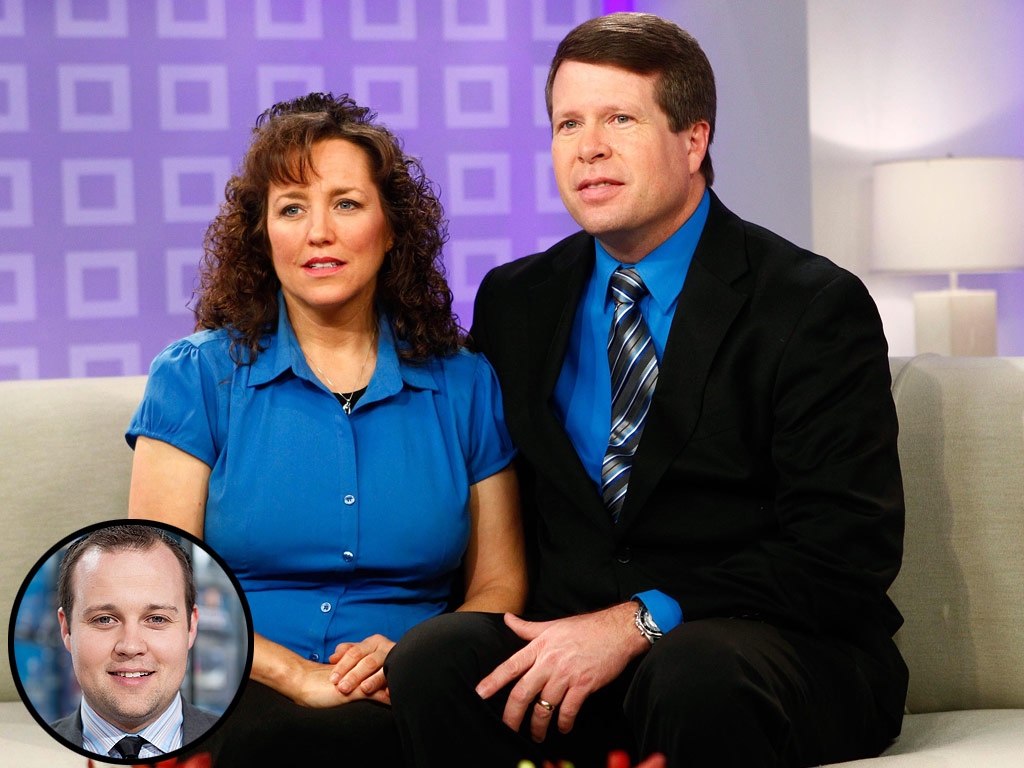
Michelle and Jim Bob Duggar; Josh Duggar (inset)

The article I’m going to post is about half a year old, and was written following the sexual abuse scandal involving Josh Duggar (the Duggar’s oldest son) of the reality show 19 Kids and Counting.   I haven’t watched all the episodes, but I firmly believe that sexual abuse as well as malignant narcissism is a huge problem in the Duggar family.   Josh is probably not the first abuser.  His parents, Michelle and Jim Bob, are both very controlling and both use their ultra-conservative religion to control and shame, and isolate their kids from learning anything on their own.   The fame and fortune from their reality show no doubt provides a ton of narcissistic supply to both Michelle and Jim Bob.  I see many of their kids as scapegoats and flying monkeys.   Josh seemed like he was a Golden Child.

I’m posting this article now because it’s still relevant. Sexual abuse is not going away anytime soon and has been with us probably as long as human beings have been around.  What do you think of the Duggars?  Do you think Jim Bob and Michelle genuinely love their children, or are their children just props in the narrative of moral and religious “perfection” they’re selling to the world?  Will any of them ever dare to break free of the prison of their huge, dysfunctional family and its narcissistic rulers?

The Duggars: Abuse and Conservative Religion

Until a few weeks ago, I had no idea who the Duggar family was. To my surprise, it appears that many people in North America have been following this conservative Christian family. Further, the Duggar’s seem to be very influenctial among various Evangelical Christian lobbying groups. It seems that they have become a sensation because of their reality TV show, 19 Kids and Counting. Even as I read some things about the family in the news in recent weeks, it seemed to me that the Duggar’s were faux celebrities much like the Kardashian’s and Paris Hilton: they never really did anything but yet they seem to be famous.

I received an email from one of my colleagues, a psychologist in another part of the country, who asked what I thought of the Duggar’s and the current sexual abuse scandal. It was her question that prompted me to learn more about the family. While I have clearly never met the Duggar’s nor have I watched their TV show, what I found in the press seemed to fit the pattern of domestic abuse.

Read the rest of Lou’s article here.

I’m only 6 years old.

Therapy was more productive tonight…

This is why I can’t hate people with NPD.

what_they_dont_feel

Not too long ago, I was criticized by some other ACON bloggers for being a “narc hugger.”   First of all, let me clear that up right now.   I don’t hug the narcs, I don’t believe in enabling them in any manner, and I believe and always will believe that No Contact is the only viable way to deal with a narcissist.   They are dangerous to be around.

But do I think they’re demons who have no souls?  Well, no.   But I can understand why many  people, especially people who were unfortunate enough to be raised by them, think they are.    I think many of the things narcissists do are evil but I’m also all too aware that they are mentally ill people who do the things they do because they can’t help themselves.  If narcissism is a choice, for most that choice was made at such an early age it was never a conscious choice.

Some people think we shouldn’t feel sorry for narcissists or care about the poor little hurting inner child that went into hiding so long ago and constructed a false self in its place.   I can understand their viewpoint too.   That abused and hurting little boy or girl no longer exists and is not likely to ever emerge again, unless the narcissist is fairly low on the spectrum and becomes self aware and willing to change, and NPD by its nature means the lack of insight and empathy, which are prerequisites to make real healing possible.

However, people aren’t born narcissists.  Almost all people (unless they are psychopaths, in which case they were born with a defective brain capacity to feel much emotion) with NPD were once normal children with a normal capacity for empathy and love.   This was something that was done to them, and the “choice” to become a narcissist was usually made at an early age, from about ages 3 to 6.   These kids were so abused or so neglected that they turned to narcissism because it was the defense mechanism that was most efficient in allowing them to cope with their intolerable caregivers.    Some grandiose (not usually covert) narcissists may have been spoiled, but spoiling a child is abuse too, because it negates the presence of the child’s true self, an imperfect human being and tells them they are perfect, which is a lie they come to believe and try to live up to.

However their narcissism developed, and whether they are happy being that way or not, people who have it are prisoners to their own disorder.  They are not happy people.  They are living a lie and in many cases believe the lie they live is the truth.  They live in mortal terror of being exposed or losing supply.     This doesn’t mean we should enable them or let them get away with the things they do.  They need to be exposed.   They need to have consequences.   Just like the children they are.

I can no longer hate narcissists.    My mother is a somatic malignant narcissist but I also know she had a horrific childhood.  She’s never talked to me about it but I know of it.   It makes perfect sense to me that she would have become a narcissist, given the environment she was raised in.   She’s been this way since she was a very young girl and simply knows no better.   In her 80’s now, she won’t ever change.  She has never been a happy woman, has never known joy, has never really loved anyone.  She can’t.  And it’s sad.

narcissist-discard

I am no contact with my mother.   For most of my life, I felt like a victim, even after I became an adult.  I felt like the things she said and did she was doing to me because she was an evil, soulless witch who hated me.   Feeling so hated by my own mother, I felt defective and defenseless. Why would any mother hate her own child?   It must have been me.  I must have been unloveable.  I must have been a horrible child who brought her shame and misery.   For years, that was the only explanation that made sense to me, because mothers just don’t hate their own children!

When I first learned about NPD, I immediately recognized it as my mother’s problem, the reason why she couldn’t love me or anyone.   I read a lot about it. (This was years before I became so deeply involved in the narcissistic abuse community–that would come later, after I left my ex for good).   I read M. Scott Peck’s People of the Lie and thought to myself, well, that explains it.  My mother is evil.

But why me?  Why was I so unfortunate to be born to an evil parent?   I felt sorry for myself.  Other people had loving parents, but I got an evil one.  It wasn’t fair!  Again, I felt like a victim.

Only in the past sixteen months, as I’ve learned about narcissism on a much deeper level (including a short time where I thought I hadn’t escaped the disorder myself), have I realized that narcissists are mentally ill and became the way they are because they were abused themselves.    All of us who escaped developing NPD are extremely lucky.  We could have become that way too.   Maybe due to temperament or some slight difference in our circumstances as children, we somehow managed to escape.   Yes, we might have complex PTSD, Borderline Personality or other personality disorders, we might have a bad case of narcissistic “fleas,” we might have severe neuroses like OCD or even Dissociative Identity Disorder, or we may be prone to severe depressions, but we haven’t ever needed to hide our true selves completely behind a mask. We can still sometimes be what God intended for us to be.   Narcissists can’t.  They are imprisoned forever by their own defense mechanisms.

By coming to this awareness, I’ve been able to develop an understanding of what makes narcissists the way they are, and to me they seem like victims too.  And no matter what you may think of that, thinking of them as victims helps me, because when I think of my mother now, I don’t think of her as being some demon that I had the back luck to be born to; instead I think of her as a victim who had no idea how to raise a child and victimized me because she just didn’t know how to be any other way or even know there was another way.  It’s a lot easier for me to regard my mother with pity (not enabling!) than with hatred because feeling pity helps me be able to move on with my narcissist-free life and feel less like a born victim.   Somehow that makes me feel less afraid.    It’s God’s job to fix a narcissist if that’s his will and it’s God’s job to judge them if it isn’t.    All I can do is worry about healing myself and pray for people like my mom.

Further reading:  We Were The Lucky Ones

My letter to a fellow ACON who wants to take her blog down.

courage_biblequote

A good friend of mine in the ACON community has just announced she wants to take her blog down and remove herself from all social media. She isn’t depressed or angry at anyone, but just feels like she wants to hide. She also said that she feels like maybe God wouldn’t approve of her exposing her abusers, even though she has never used any real names. I was a little alarmed by this, so I just sent her an email, which I’m going to post here (and remove any identifying information). I think the feelings she described are common in abuse survivors, who have been trained by their abusers that nothing they do is ever right and that exposing their abusers is some kind of mortal sin. I beg to differ.

Here’s my letter in response to her post.

I just read your latest post about wanting to hide. At first I was surprised you said you were allowing comments, but after I read it I understood why. When you said you were thinking about taking down your blog, Twitter, etc. I thought to myself, No! she can’t do that! We need _______ ‘s blog!

I’ve sometimes felt like hiding too and been tempted to disable comments several times. Once (and you will remember this) last May, I was VERY close to taking down my blog or setting it to private because of some criticism I got over a post I wrote. I also felt very exposed when my blog was found by a few people I didn’t want to find it (including family members), but after an initial “Oh, shit” panic reaction, I decided to keep plugging away because to do otherwise would be the coward’s way to handle things, and I’m sick of being a coward who never stands up for myself.

I think as survivors of abuse, we ACONs can be very easily triggered. It’s scary being out there and being so vulnerable for the public to see. But that’s exactly what we are trying to reconnect with through blogging and sharing our stories with each other. We need to regain our courage to BE vulnerable. We’ve been trained by our narcissists THAT IS NOT OKAY, but that is a big fat LIE. We look at those who haven’t been so damaged and marvel at their openness, but when we try to do it, it can be very scary.

I think that’s why you feel like running away and hiding. It’s your fear that you might be hurt again that’s causing you to take such drastic action. I know, because I feel that way often myself.

____, DON’T DO IT. Don’t take down your blog. It’s understandable you might need a break, but don’t be rash. Set it to private for awhile and focus on other things, or just let it stand as is, and just don’t post in it for awhile. Give yourself a break, that will give you time to be mindful instead of doing something you might regret, like removing your blog.

We’ve been lied to and made to believe that exposing our narcissistic parents, spouses, etc. is not okay. I believe in the 10 Commandments too, but I don’t believe God wants the narcissists to get away with what they do, and I don’t believe a narcissistic mother or father really qualifies as a true parent. They certainly haven’t lived up to their end of the responsibility, have they? You are not using any real names, so you are not damaging them personally. What you are doing instead, is giving a voice to the oppressed survivors that have felt all alone because they thought no one could ever understand. We are inundated with sappy, sentimental images of Mothers, but our mothers never fulfilled that stereotype. For us, that image is a lie.

Narcissists, no matter whether they are biological parents or not, deserve to be exposed for what they are, and for how they have abused us. By sharing your story, you have no idea how many other people who have been in your boat you are helping. You have helped me, and you have helped many others.

Also, don’t think for one second that your story isn’t interesting enough to write about. You have one of the most interesting stories I have heard. You are helping and giving hope to countless abuse survivors. No names are mentioned, you are not hurting anyone, and I am sure Jesus approves of what you are doing. It’s all for the greater good. Your blog helps so many. God has led you to where you are for a reason.

Please think about what you’re doing. If after a month or so, you still want to take your blog down, then go ahead. But I would wait, and leave it up anyway for others to read and find hope from in the meantime, and just focus on taking care of yourself for a while.

***

I forgot to put this in my email, but I think that as a Christian, my friend should subscribe to Smakintosh’s Youtube Channel (Gospel Underground). He is a survivor of narcissistic parents, and has many videos that explain why it isn’t unbiblical to expose and go no contact with narcissistic parents. Here it is for any other interested persons: https://www.youtube.com/user/smakintosh

Narcissistic Parents of Adult Children

Just a reminder if you have a narcissistic parent…this is so important to remember.

gentlekindness's avatarGentleKindness

image chef change youIf you have a narcissistic parent, then nothing of your own belongs to you. Not your mind, not your thoughts, not your feelings.

The narcissists feels entitled to control and own all of your things, both physical and mental.

When you have an idea you want to try that is different from theirs, they will put up a fight to make you change to their way of doing things. They have no right to d this. You are an adult with the same rights they have. 

They do not ever see you as an adult, or as an individual with your own rights, gifts and talents.

They feel you are something they own and should control when you need controlling. 

If you do not comply with their wishes, they will try to undermine you in any way they can.

Narcissistic parents have gone so far as to publicly shame…

View original post 260 more words

“Narcissism–Living without Feelings”

narcissus1_caravaggio

I just read one of the most detailed and comprehensive articles about NPD I’ve ever come across, and also one of the scariest. It’s very long so you’ll need to set aside an hour or so to read all of it, but it’s definitely worth your time.

Some (but not all) of the issues discussed are the difference between healthy and unhealthy narcissism; how the borderline differs from the narcissist; childhood origins; the dynamics of narcissistic families (scapegoats, golden children, and bystanders); the 23 characteristics of narcissism (which take into account the less obvious Covert Narcissist); the development of the false self;  the physical characteristics of narcissists (this is new to me); and narcissism in modern society.

Narcissism by Richard Boyd, Perth WA – Energetics Institute, Copyright 2010
Narcissism – Living Without Feelings
http://energeticsinstitute.com.au/narcissism/

The word narcissism is one that has in recent years has been increasingly used in popular press to describe personalities and lifestyles. One form of Narcissism is however a little understood personality disorder which is increasingly showing up in our leaders across political, business, sporting, psychological and spiritual institutions(Behary:2008).

Indeed narcissism and narcissistic is increasingly being used to describe the mass cultural shift to a “self” obsessed culture where there is rampant consumerism, the pursuit of power, excesses, and the abuse of others in the pursuit of these ends, notes Martinez-Lewi(2008).

The word narcissism comes from the Greek mythological figure, Narcissus, who upon seeing his own reflection in a pond, fell obsessively in love with himself and his own image. As you will see in this article, the true unhealthy narcissist we see today, while maintaining a false self or “mask” of achievement, perfection, and the attainment of all the symbols of success and power, hides underneath a self hating, insecure, fragile real self, which fears being uncovered and exposed at any moment.

The key point here is we all need a healthy dose of Narcissism, as else we would not back ourselves in life, nor have a healthy sense of self. There are healthy forms of narcissism. However unhealthy narcissists do not have a healthy sense of self but instead have learnt to live life from a false self.

narcissus2_andecho

Unhealthy Narcissists are not in touch with their true self, instead becoming a chameleon type of personality who seek to project an idealised image to others, and then seduce and control all others that have some value or utility for them, until that persons utility value is exhausted, and then they are dumped and abandoned without remorse by the narcissist.
In some ways unhealthy Narcissism is seen by some schools of thought as a form of depressive disorder as the narcissist underneath the false mask, moves between depression and aggression. The aggression is most prevalent where there is a threat to being uncovered or exposed as being false, wrong, corrupt, or exploitative(Ransky:1998).

The narcissistic person may be male or female, and is obsessive in their primary pursuit of satisfaction, whether that be power, money and other resources to prop up the false self. Another common term for the narcissist in the business context is the Corporate Psychopath, notes Paul Babiak(2006), a noted specialist on the corporate version of this pathological individual.
According to body-mind researcher and M.D, Alexander Lowen, in his book, Narcissism – Denial of the True Self, narcissists share many common traits with bullies, but due to their ability to project a compelling false, idealised self image, and high intelligence, are more likely to “get away with it”, and escape accountability.

Some narcissistic people are “healthy” in their approach to life and achievement, but they are not of the type to be discussed throughout this article. A healthy and productive narcissistic person goes about their lives in a passionate way, achieve their goals, but retain empathy, consideration for others, and often a mindset of contributing to their community. Healthy Narcissism has more of the following characteristics according to Lewi-Martinez(2008) and Meir(2009):
Life is not all about them;
They are able to have stable and enduring marriages, relationships and business careers;
They are often are involved in charity and community service;
These people make and keep promises to others and to themselves;
They can give and take from a grounded place;
They are usually empathic and engaging;
A determined leader who seeks recognition where due and earnt;
Confrontational and accountable to self and others;
Wisely fearful and knows limits;
Self possessed but not selfish;
Very competitive and likes a challenge;
Vain in their achievements but the achievements are real and earnt;
In contact with own inner needs and wants and the difference of each.

cslewis_quote

This article concerns itself with the unhealthy forms of narcissism. Narcissists are found in all walks of life. After reading this article you may identify your spouse, co-worker, friend, relative, parent, boss, therapist, spiritual mentor, favourite athlete, or local or international political figures as potential unhealthy versions of narcissists. They key aspect of these individuals is their grandiosity, and their overstated sense of self entitlement in life often despite often not working hard to earn any such rewards.

Some unhealthy narcissists will be seen to be hard working and have their own achievements to own. Normally these types of Narcissist will also overstate their own achievements and minimise others and their achievements(Lowen:1986). There is often an arrogance in their personality.
Achieving Narcissistic personalities normally have a strong rigid-perfectionistic streak which gives them the discipline to set goals, focus and achieve, but there is a clinical coldness or unfeeling aspect to their natures(Lowen:1986). Many unhealthy Narcissists appear to achieve but in fact are predators who feed off victims they encounter in life, using their victims’ efforts, skills, and hard work, which get assumed and taken by the narcissist as their own, without remorse, recognition or meaningful reward for those around them(Babiak:2006).

In a narcissist’s world, It’s all about them, as Narcissists possess no real empathy, they feign or act empathic, while they delude themself that they are entitled to special treatment, and to not having to bother with detail or drudgery(Babiak:2006). These narcissists often gather a following of helpers or “sidekicks” to manipulate into doing any effort based work for them. Instead they spent their time managing their “image”, being a “visionary”, being “strategic”, establishing key “contacts”, that they argue only they are able to successfully do(Lewi-Martinez:2008).

gaslighting2

Some narcissistic personalities have an obsessive base in the personality where they micro-manage their own life, from work tasks to how they groom and dress, as they do not trust others or their standards of work. Other less rigid types are more focussed on positioning themself as indispensable, yet at the same time try to be unaccountable, being hard to track down, hard to get them to put things in writing, and they will avoid team roles where they are not the leader(Meier:2009).

Where possible they will delegate the work to a co-worker or “sidekick”. Narcissists hate mundane jobs and tasks that are “beneath them” and avoid them by manipulating others where possible to do such jobs on their behalf(Babiak:2006). Narcissists necessarily include others in their life so as to get the other person to do what they are unable to do, do not want to do, or what they feel is beneath them to do.

Read the rest of this article here.

My delusional fantasy.

deathbed

I think a lot of anger at my parents has been triggered.
For years I’ve avoided thinking about my past or made excuses as to why my family treated me the way they did. I haven’t felt this enraged at them since adolescence. I guess this is good, all that anger has to come out. But what to do about it? I’m also realizing how HURT I feel by all this–that’s another thing I tried to deny or avoid thinking about. I can’t avoid it anymore, and I can’t escape the pain and the rage.
Someone posted the four stages of healing. Anger was one of those stages. But I don’t feel like I can move on by myself from this.

I still dream of a reconciliation–something like, on their deathbeds, they make amends to me and tell me how sorry they were for fucking my mind up so bad I can barely function in the world. Then let me know they are putting me back in the will. I know that’s delusional and will never happen because their souls are gone and they will always think I’m unworthy because I don’t measure up to their ridiculous, unrealistic standards, but I still think that it’s the only thing that would ever make me feel happy. At the very least I would feel vindicated.
But nothing would really change of course; the damage is already done to my psyche and has been that way for a long time.
But I still have that fantasy.
I can’t let it go.
A sense of closure would be lovely, but I don’t think I’ll even ever have that.