Child roles in dysfunctional families.

dysfunctional-family
Credit: Artist unknown.


Wikipedia has an excellent, detailed article about dysfunctional family dynamics. Here I am just going to talk about the roles various family members play, and the kinds of families that become dysfunctional. If you’d like to read the whole article, click on this link:

https://en.wikipedia.org/wiki/Dysfunctional_family

Dysfunctional families are usually of two types:

1. One or more of the parents are active alcoholics or addicted to drugs.
2. One or more of the parents have a Cluster B disorder, usually Narcissistic Personality Disorder but sometimes Borderline Personality Disorder, Antisocial Personality Disorder, or Histrionic Personality Disorder (or a combination of any of these).

The Cluster B Connection.

Outside of alcoholics and drug addicts, dysfunctional family dynamics are most prevalent when one or both of the partners suffer from a Cluster B disorder, especially Narcissistic Personality Disorder or Malignant Narcissism.    After NPD, BPD is the most common disorder seen in the head of a dysfunctional family, though because it’s more common in women and Borderlines have more empathy than narcissists, BPD is most often seen in the codependent, passive partner.

ASPD (psychopathy or sociopathy) rarely appears by itself in dysfunctional families, as antisocial people and psychopaths tend to not be raising children at all (either because they’re incarcerated, their children have already been removed from the home, or they simply have no interest in raising children,) but a parent could have Malignant Narcissism, which is a combination of NPD and ASPD.   Also, people with pure ASPD, though more likely to be criminals or involved in illegal activities, tend to be less emotionally abusive than people with NPD or even BPD. They are merely selfish and lack empathy, and they are manipulative to get what they want, but they don’t care about getting emotional supply from others so they don’t engage in mind games like gaslighting, triangulating, projecting, and scapegoating (unless there is a material reward involved or they are trying to avoid culpability). However, some people with ASPD are sadistic and enjoy tormenting family members for fun.

Of all the Cluster B disorders, HPD is probably the least toxic (Histrionics are shallow, attention seeking, and dramatic, but not usually that abusive), but HPD is usually comorbid with another Cluster B disorder, such as NPD.

cluster_b_chart

In some cases, a non-Cluster B mental illness (such as Bipolar disorder) that causes abusive acting-out behavior may be the culprit, but it’s less common because most other mental disorders are less easily hidden from others and the person appears “crazier.” Non-Cluster B disorders are also more easily treated with drugs or therapy, and except for psychotic disorders such as Schizophrenia, the afflicted person knows they have a problem and are more likely to seek help.

Cluster B and addictive disorders. 

Parents of dysfunctional families can also be both mentally ill and addicted to drugs or alcohol. The two often go together. In fact, alcoholism and drug addiction are extremely common in people with Cluster B disorders. Alcohol and drugs are their attempt to fill the emptiness they feel inside themselves.

Even if an alcoholic or drug addict doesn’t have an underlying Cluster B disorder, the behavior of an active addict/alcoholic is very similar to someone who has NPD. The only difference in the behavior of a narcissist and someone with active alcoholism is that for the narcissist, the “fix” is emotional; for the alcoholic, it’s chemical. A non-Cluster B active addict or alcoholic can be every bit as emotionally abusive, self-centered, and manipulative as someone with NPD. Only getting their next fix is important. (As an aside, it’s interesting to me that the 12 steps of AA and other 12-step programs almost all address the problem of narcissism by encouraging humility, responsibility, and amend-making. A person on a so-called “dry drunk” is basically a sober person acting out in narcissistic ways, which may be their nature).

The Codependent Partner.

Sometimes only one partner has a mental disorder or addiction, but the non-afflicted parent is always going to be codependent to them. The codependent parent, whether they have a disorder or not, almost always suffers from PTSD or Complex PTSD. If both parents have a Cluster B disorder (which I think is usually the case), the one who has NPD or Malignant Narcissism is almost always going to call all the shots and dominate the other family members. If a Borderline is paired up with a Narcissist, the Borderline is almost always going to be codependent to the Narcissist, colluding in the abuse but also being abused themselves. Similarly, if a Covert Narcissist is paired up with an Overt Narcissist, the Covert one is going to be codependent to them and possibly abused. Such a scenario can lead to the Borderline or Covert Narcissist developing Stockholm Syndrome (identifying with and colluding with their abuser). Non-Cluster B codependents can also develop Stockholm Syndrome, because it’s a complication of C-PTSD. The codependent parent often (but not always) has a high degree of empathy, which is what drew them to the narcissist in the first place, in a misguided belief that they could “fix” them or they were led to believe that the narcissist could “rescue” them.

The Roles of the Children.

In the ACON community, there’s a lot of talk about Scapegoats and Golden Children, but there are other roles children can play in a family that are rarely addressed. In a two child family, most likely there will be a scapegoat and a golden child, but in larger families, there can also be a Lost Child, a Clown, and a Rescuer (codependent). It’s unhealthy for a child to be in any of these roles, but the Scapegoat and Golden Child role are probably the most dangerous to a child’s mental and emotional health, for different reasons. Even in a two-child family, the roles can shift back and forth (according to the Wikipedia article, families in which the children’s roles change and shift are called Balkanized families–this alludes to the constantly shifting loyalties and borders of the Balkan countries in Eastern Europe).

1. The Scapegoat.
scapegoat

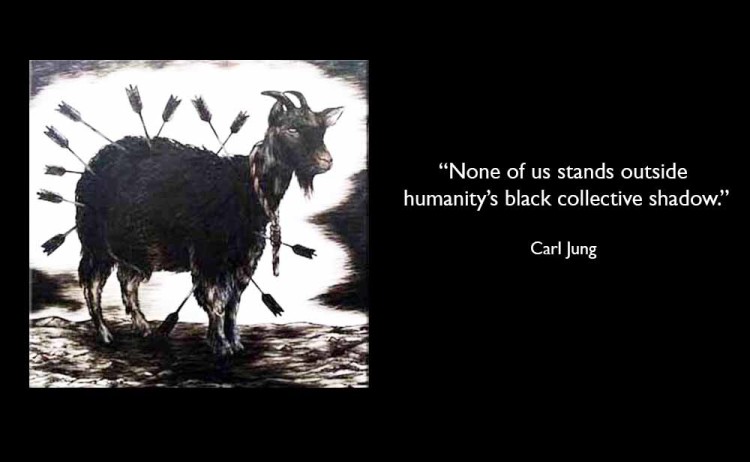
Both this and the Golden Child role are the soul-killing roles, but for different reasons. The Scapegoat is the child who is targeted by the narcissistic (or alcoholic) parent. The parent often is able to get the rest of the family to serve as flying monkeys and gang up on that child, projecting anything they don’t want to “own” onto them. Like the sacrificial goats described in the Bible who were banished to the wilderness and tormented by villagers, the Scapegoated child carries all the shame the rest of the family doesn’t want to confront or deal with. All the unwanted emotions and bad qualities are unloaded and projected onto them, so the abusers don’t have to confront or deal with these problems in themselves.

Usually it’s the most sensitive child of the family who becomes the Scapegoat, because that child tends to be the Truth Teller, the only family member who can see the dysfunction and may even react against it. The most sensitive child, being the child who shows the most emotion, is also a threat to the narcissists in the family because emotional expression is such a frightening thing to them. In many, if not most dysfunctional families, the expression of emotion is not allowed. So the most emotional or sensitive child becomes the scapegoat, especially if they rebel against the dysfunction or criticize it.

The Scapegoat may be assigned the role of Bad Child, the Loser, the Stupid One, the Ugly One, the Crazy One, the Weak One, or any combination of these. No matter what they do, they cannot please the parents (or the siblings who have been turned against them). Scapegoat Children usually develop severe C-PTSD or possibly another mental disorder, and having been trained to be victims and never given the emotional, financial or other tools to succeed in life, tend to fulfill their families’ predictions of being “losers,” so then their families can say to others, “See? This child really is worthless.”

Scapegoated children also tend to attract other abusers throughout their lives and are at risk for being targeted for bullying even as adults and for entering into abusive relationships. If the adult child doesn’t go No Contact, the abuse continues, usually through some form of isolation, silent treatment, or exclusion. Scapegoated adults are talked badly about by the family and not invited to family functions. They are given no emotional or financial support, even though other members of the family are given these things. It’s not unusual for a scapegoated adult child to be living in poverty, even if their families are wealthy–not only because they were denied financial support when they needed it, but also because their self esteem took such a terrible beating that they have no confidence at all and never take any risks that could improve their lives. Severe C-PTSD can also cause a person to have an inability to focus or concentrate or set realistic goals.

A Scapegoat isn’t always a child. It can also be a parent, in which the children are turned against that parent by the abusive one.

2. The Golden Child.

girl with a gold medal and cups.

The Golden Child, often (but not always) the eldest child, is the parent’s trophy, pride and joy. The parents may seem to love that child, but being incapable of real love, their “love” is conditional and is based on their fantasy of what they want that child to be, not on who the child really is. The child is assigned to be a Mini Me of the narcissistic parent.

The Golden Child, basking in constant approval, showered with toys and gifts, never held accountable for any wrongdoing (which may be projected onto the Scapegoat), and often recruited as a co-abuser in the abuse of the Scapegoat, grows up entitled, grandiose, and spoiled. Because their Real Self has never been appropriately mirrored and their less than perfect traits are ignored or projected onto someone else, and because they were rewarded for playing a the role of the Perfect One, a Golden Child in a family is the most likely to develop NPD and become a clone of the abusive parent. In this way their souls are destroyed even more than the Scapegoat’s. To continue to be the parent’s favorite, they had to play a role which became internalized. This becomes their False Self. After awhile, they are no longer able to access their Real Self at all. Golden Children who have become narcissistic continue their entitled, bullying, manipulative, grandiose behavior into adulthood and are likely to head dysfunctional families themselves, continuing the cycle.

A non-Golden Child, even a Scapegoat, can become a narcissist too (usually the covert form of NPD), for self-protection, but Golden Children tend to develop the grandiose, malignant form of narcissism and as such, are the least likely to ever seek help for their disorder or admit they have become abusers themselves.

3. The Lost Child.

lostchild

In larger families (three or more children), one child is likely to be ignored and treated as if they don’t exist. This isn’t a form of silent treatment; it’s as if the parents don’t notice the child is there at all. The Lost Child isn’t victimized like the Scapegoat, but they aren’t spoiled either. They may or may not be recruited to assist in the abuse of the Scapegoat, but they won’t necessarily be punished if they don’t cooperate; they will simply be ignored. The Lost Child tends to be quiet and shy, and not make any waves. They are probably aware of the family dysfunction and may sympathize with the scapegoat (but don’t let anyone know this). As they grow older, they may crave attention or develop addictions, or they may remain shy and retiring throughout their lives. They tend to avoid confrontation and drama, and may become extremely introverted.

4. The Clown/Mascot.

classclown

The Clown/Mascot attempts to divert attention away from the family dysfunction (and also get attention for themselves) by making light of everything. Everything becomes a joke to them, and they even use their own families as sources for humor. Clowns can be disruptive in class as children, to get attention, but because of their ability to see the humor in things, they tend to be outgoing and develop a large circle of friends during adolescence and adulthood (even if they are never taken very seriously). Family Mascots are almost never scapegoated, because they entertain everyone and take the focus off the family problems.

David Sedaris, a writer and humorist, is a good example of this dynamic at play.  Several writers in the ACON community (and even outside that community) were outraged by Sedaris’ callous essay (“Now We Are Five,” which appeared in the New Yorker after his younger sister, Tiffany, committed suicide).   Tiffany was clearly the family scapegoat and had evidently gone No Contact with the rest of the family. At the time of her death, she was living in poverty and only had, as her father put it, “two lousy boxes” of belongings. I don’t know all the details, but it seems as if she was offered no support, either emotionally or financially, in spite of the family’s wealth and Sedaris’ success as a writer. She was probably mentally ill, but her mental illness may have been due to being the family reject.

In a candid interview Sedaris gave for Vice, he describes Tiffany and her relationship with the rest of the family. His words are very telling.

Even as a child I looked at my sister and wondered what that would be like, not to feel the warmth of my mother’s love. Tiffany didn’t. There was always a nervous quality about her, a tentativeness, a desperate urge to be in your good graces. While the rest of us had eyes in the front of our heads, she had eyes on the sides, like a rabbit or a deer, like prey, always on the lookout for danger. Even when there wasn’t any danger. You’d see her trembling and think, You want danger? I’ll give you some danger

It’s been suggested that David Sedaris is himself a narcissist (possibly the golden child) and that could certainly be true, but I also suspect he served a secondary role as the family Clown/Mascot. His callousness toward Tiffany in his famous essay (and grandiosity about how great the rest of the Sedaris family was–it’s very common for narcissists who were golden children to hold their dysfunctional families up as paragons of perfection) seemed to be drawn both from narcissism and from a need to hide his anger and pain behind a wall of humor. Here’s a link to his essay (it’s heartbreaking and may be triggering):

Now We Are Five

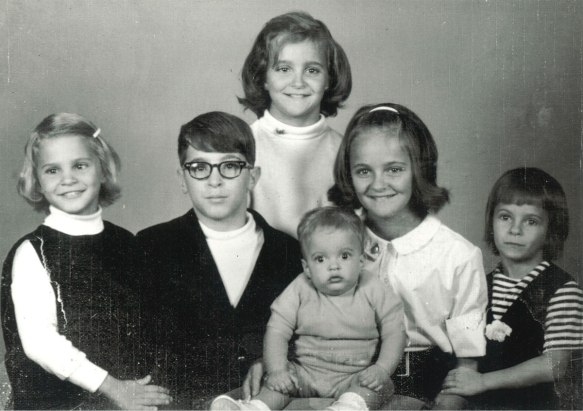
The accompanying photo is interesting. Tiffany, the second to youngest child in a family of six children, sits in the bottom right hand corner. Her hair is cut short and unkempt, and she looks very unhappy. David, wearing the glasses, stands above her. Actually, none of the kids look very happy. Not a smile in the bunch.  Something’s definitely not right about this family.  It’s common to see family portraits where no one is smiling in the 18th or 19th centuries,  but not in the late 1960s, when this photo was taken.   Here’s another photo, from the Vice interview, where only Tiffany (again in the bottom right hand spot) looks desperately unhappy and disconnected from her siblings.
tiffany_sedaris
Credit: Vice.com / Left to right: Amy, David, Gretchen, Paul, Lisa, and Tiffany

I used to enjoy Sedaris’ writings and looked forward to his books and essays, but after this essay, I just can’t read him anymore. (Augusten Burroughs is a better alternative and doesn’t seem to be a narcissist).

In spite of their raucous and jovial manner, Clowns are likely to be depressed because they have never learned to confront or deal with their true feelings.  They hide behind a wall of laughter.  Their sense of humor is really just a cover for their pain. Many Clowns become addicted to drugs or alcohol, and a few become suicidal. Many of our great comedians served the Clown role in their families. I don’t think it’s a coincidence that so many of them had drug issues or killed themselves.

5. The Rescuer.

superman_child

This is the codependent child who attempts to “fix” the family dysfunction by being obedient, always good, non-confrontational, overly generous, and self-sacrificing. The Rescuer may be highly empathic. The Rescuer tries to serve all the needs of the narcissistic/addicted parent, which of course is not possible. They will never argue with or criticize the narcissistic parent, and are always trying to get everyone to get along, which also is not possible. They may be the only family member who doesn’t abuse the Scapegoat, but they might if they feel like it’s required. However, even if they do collude in the Scapegoat’s abuse, they will be less abusive than the other family members, tending to take a back seat or even sympathize with the Scapegoat in private. In trying to please everyone, they please no one, and grow up feeling impotent and helpless. It’s a no-win situation.

When Rescuers become adults, they tend to unconsciously look for other abusers to “rescue,” having failed to do so in their families of origin. Like Scapegoats, Rescuers are likely to become abused themselves as adults, but it’s hard for them to leave an abuser because of their high level of empathy which keeps them tied to the abuser in their attempt to want to “help” them. They also tend to fall for an abuser’s promises to change and are easily “hoovered” back into a codependent relationship.

Shifting Roles.

In Balkanized families, the child roles can shift. The most common situation is a Golden Child becoming a Scapegoat, often upon reaching adulthood, if they fail to fulfill the unrealistic expectations put on them. (“You were such a disappointment to me!”) If a Scapegoat goes No Contact or leaves the family for some other reason, another child, possibly the Lost Child, becomes the new Scapegoat. Someone has to carry all the family shame.  If the family only has two children, the Golden Child may find themselves suddenly scapegoated or serving both roles.

Children who serve as both Scapegoats and Golden Children (very common in only children)  often develop Borderline Personality Disorder as well as severe C-PTSD and possibly other mental disorders like Dissociative Identity Disorder (almost always the result of severe emotional abuse).

Serving as both a Scapegoat and Golden Child is the ultimate mindf*ck because there isn’t even any consistency. The child never knows if they will be punished or rewarded from one minute to the next. Their only advantage (if they are an only child) is that they don’t have siblings who have been turned into flying monkeys who collude in the abuse.

If the family ever develops a need for a new Scapegoat (if the Scapegoat goes No Contact, dies, or disappears), the Lost Child is usually picked as a replacement, due to their non-confrontational, malleable temperament and lack of any real pre-existing role in the family.

HSPs and empaths, take heed! You cannot heal a narcissist!

sad_angel

In my readings and observations of people in the narc-abuse community, I’ve become aware that Highly Sensitive People (HSPs), empaths in particular, are highly attracted to narcissists. The reverse is also true–narcissists see an empath and smell blood.  As an HSP myself (though not an empath), I have always been drawn to narcissists as friends and romantic partners.   This has gotten me into a world of trouble and almost destroyed me until I finally learned to resist their “charms” and go No Contact whenever possible.

Why Empaths are so attracted to Narcissists.

empaths_narcs

It’s a psychological truism that we tend to be attracted to people similar to the people who raised us.  For those of us who were the most sensitive child in the family and as a result, became the family scapegoat, developed codependent personalities, or even developed a form of Stockholm Syndrome toward our abusers, we continue to carry our legacy or “people pleasing” into adult life and find ourselves drawn toward other narcissistic people, who are very good at promising us the world and vowing to solve all our problems.   But getting involved with a narcissist is the ultimate bait and switch–they make a lot of empty promises to love you unconditionally and never betray or hurt you, but they don’t deliver.  Not even close.  All they care about is feeding off of your love and generosity in order to keep their false self inflated like a balloon toy.

Not only are we fooled into believing the narcissist will be the answer to all our woes and fill our own inner emptiness, HSPs and empaths are also drawn to the “hurt inner child” inside every narcissist.  Most people can’t see the emotional void and deep unhappiness at the core of an NPD; they just see the narcissist as either a likeable charmer or a huge A-hole (depending on their role to the narcissist or stage of the relationship), but empaths see beyond the “false self” to what really lies beneath the carefully constructed facade.    This is why empaths and HSPs were so often scapegoated as children–because they were children who could see the ugly truth and sometimes even blew the whistle on the narcissistic parent–and nothing terrifies a narcissist more than being exposed as living a complete lie.

I’ve talked to quite a few empaths who actually seek out narcissists to love, in spite of having been educated about narcissistic abuse and the very real dangers they pose both spiritually and emotionally.  Empaths who choose to love a narcissist and think “this one is different” really ought to know better.   They look at a narcissist and don’t see a predatory, toxic individual who only seeks to use and abuse for their own gain; instead they see only the “hurt inner child” living in darkness beneath the bright, cheerful facade.

Their observations and feelings are actually not wrong.   Because empaths can see the truth about people, the damaged person they take so much empathy on is real.  Narcissists are indeed hurt, damaged, deeply unhappy people, although some abuse victims prefer to think of them as inhuman devils without souls at all.   Narcissists are definitely human, but they are dangerous, and especially deadly to an empath, because of how much such a person tends to give of themselves and how codependent they can become.

Like moths drawn into the flame.

moth-to-the-flame-3

Narcissists are drawn to empaths because (even though an empath can see beyond the false self, which scares narcissists), they give them everything they want.   Deep inside, what every narcissist really wants is someone to love them unconditionally, and empaths are more than capable of doing that.  They are also deeply envious of the empath’s ability to feel with no shame, even if they deny and hide their own feelings.   Empaths are compassionate, patient, self-denying, always willing to listen without judging, and generous with their time, money, possessions, emotions, and everything else they have to give, both tangible and intangible.  An empath’s love for a narcissist will cause them to stick by them no matter how much abuse gets dumped on them in return.   Empaths are perfect candidates for Stockholm Syndrome.   They will keep giving and giving, while the narcissist gives nothing in return except heartache and pain.

Some empaths may seem masochistic because everyone else can see that the narcissist is sucking the empath’s lifeblood away, turning them into a dried up husk of the whole person they once were, but the empath, like a moth driven to a flame, continues to give and give and give until they have nothing left to give.   It’s not masochism that drives an empath to stay with the narcissist and allow this abuse, though–it’s the deep belief empaths have that their unconditional love alone can heal the narcissist and make them whole again.

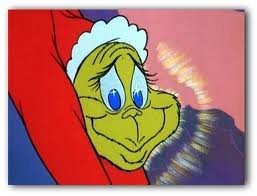
It’s a beautiful idea, that unconditional love can heal a narcissist and transform them into loving, authentic human beings.  It would be nice if things really worked that way, but only in fairy tales and movies do such things happen.   The Beast is won over by Beauty’s love and is transformed into a loving prince;  the miserly Scrooge is transformed into a generous and compassionate philanthropist;  The Grinch grows a huge heart out of the hard little stone in his chest when he hears the Whos singing down in Whoville in spite of having all their Christmas presents stolen;  Jerry McGuire changes overnight from a selfish, materialistic jerk into a nice guy.  Usually it’s the love of someone else–often a woman or child–who is the catalyst in getting the narcissist to change their evil ways.  These movies and stories touch our hearts and bring tears to our eyes because we wish life were really that way.

grinch_heart grinch_heart2

It’s tempting, if you’re an empathic type of person, to want to reach that hurt inner child inside your narcissist and through your unconditional love alone, give them the courage to jettison their false self and let that inner child out, and finally learn how to love.   But what’s far more likely to happen is that in spite of your best efforts, the narcissist will not change and will resist or even attack your efforts to transform them.   They will just keep taking from you, for they have no idea how to give of themselves or how to love.  You become drawn deeper into their web of misery and darkness, and eventually have nothing left to give and finally, your soul is destroyed beyond repair.

The only way to help a narcissist.

You cannot help a narcissist by giving them your love.  The best way to help a narcissist is to stop giving them narcissistic supply–in other words, going No Contact.   Only then is there a small chance that without that fuel, they will be forced to confront their own emptiness and pain, which could lead to them seeking professional help.   But don’t count on it.  Most likely, they will just move on to a new source of supply or try to hoover you back in.

I’ve stated many times that I don’t think most narcissists are beyond hope.  I’m one of the few narc-abuse bloggers that holds to that view, and sees narcissists as a different, more dangerous type of abuse victim.   It’s not a very popular view, but it’s mine and I’m not likely to change it.  A few weeks ago, I wrote about Apostle Paul, a malignant narcissist if there ever was one, who was changed by the Holy Spirit into a righteous (if still slightly arrogant) devoted follower of Christ.    I know of NPDs who are in therapy or treatment, or were in therapy and have actually been deemed NPD-free or are at least working hard to change their ways and become more authentic, loving people.  NPDs  are sad people who know their lives are empty and shallow and essentially meaningless, even if they never admit it.  Some even become consciously aware of how exhausting and essentially unfulfilling their dependence on others to feel good about themselves (and what they feel good about isn’t even who they really are) really is.

I’ve always believed that with both self-awareness (knowing one is a narcissist) and willingness to change (disliking what one has become), that healing becomes possible.  But change isn’t something that can magically happen through an empath’s unconditional love.   If it’s going to happen at all, it takes years and years of difficult and grueling therapy by a trained professional who knows exactly what works for this disorder (and what doesn’t)–and because they are trained in this, are not going to get pulled down into oblivion by allowing the narcissist to feed on their heart like a predatory animal.   Healing can also come through an act of God, as it did with Paul.    We can love a narcissist (but from a safe distance!), and we can ask God to help him or her–and maybe that will turn out to be God’s will too.  You never know.  God may have a special mission for them and decide to remove the scales from their eyes.   But please, empaths and HSPs, never try to cure a narcissist yourself through your unconditional love.   It won’t work.  You don’t know how to do it.  Leave it to the professionals and God.

The Toxic Attraction Between an Empath and a Narcissist.

empath_narcissist

I have my own ideas about the complicated dynamics between narcissists and empaths, but I’ll just let this excellent article (written by an empath) speak for itself.  These two apparently opposite types of characters do often seem to be drawn to each other.

The Toxic Attraction Between an Empath and a Narcissist. 
By Alex Miles

We know that “narcissist” has become a bit of a buzzword recently, and some folks are quick to apply it to an ex-lover or family member or friend. While awareness of this concept is healthy, so is remembering that it is, in a mental health context, a serious condition that shouldn’t be applied to someone you’re mad at because they stole your mirror. ~ Eds. 

I am an empath. I discovered I was an empath after I got involved in a very deep and highly destructive relationship with a narcissist.

I am writing this article from the perspective of an empath, however, would love to read the view from the opposite side if there are any narcissists that would like to offer their perception on this.

Through writing about the empath personality type I have connected with many other people who class themselves as an empath and time and again I have heard people tell me how they have also attracted relationships with narcissists. There is a link. So, I decided to explore it further.

This is my theory…

From my own experience and studies on the narcissist personality type, there is always one core trait: A narcissist is wounded.

Something, somewhere along the line, usually stemming from childhood causes a person to feel worthless and unvalued and, due to this, they will constantly and very desperately seek validation.

Here comes the empath, the healer. An empath has the ability to sense and absorb other people’s pain and often takes it on as though it were their own. If an empath is not consciously aware of boundaries and does not understand how to protect themselves, they will very easily and very quickly bond with the narcissist in order to try to fix and repair any damage and attempt to eradicate all their pain.

What the empath fails to realise is that the narcissist is a taker. An energy sucker, a vampire so to speak. They will draw the life and soul out of anyone they come into contact with, given the chance. This is so that they can build up their own reserves and, in doing so, they can use the imbalance to their advantage.

Read the rest of this article here.

Nothing much to say.

nothingtosay

My daughter broke up with her boyfriend (the engagement has been off a few weeks) and she and her dad (my ex) are going to get an apartment. I worry about that, because it seems like he is freeloading off her the way he used to freeload off of me.  He uses her guilt and  feelings of duty to him to get what he needs from her.    She has a good job and seems fairly happy, and he isn’t abusive to her in the same way he was to me (he doesn’t dare and he’s too ill now anyway) but I still worry because that’s not much of a life for an almost 23 year old.  She seems incapable of maintaining a relationship for too long because she grows bored once the limerence wears off.

Sometimes I worry that she’s going to wind up being  one of those dutiful adult daughters who never marries or has a family of her own but devotes the prime years of her adulthood caring for her aging parent, in this case one who she has a very codependent relationship with and manipulates her to get his way.   I don’t want him to devour her soul, but ultimately it’s her choice.  She knows it’s not a very healthy relationship and she’s a codependent sort of person, but she loves him and feels like it’s her duty “because he has no one else.”

She’s spending a few days at my place, but she has to sleep on the couch because my housemate has the other bedroom.

I saw my therapist tonight and I wasted time talking about everything but my feelings.

Other than that, I don’t have anything else to write about tonight.

“No one will ever love you like I do”: NPD men in love.

narc_heart

With Valentines Day coming up in a few days, I think it’s time to talk about narcissistic men in love.   I think I have enough experience with such men to be able to write about them and talk about some of the red flags to look for in a new relationship.

Narcissistic men can make the most ardent lovers and define the cliche, “he swept me off my feet.”  Relationships with narcissistic men, in the beginning, can be truly fairy-tale like, and a narc man who’s chosen you as his prey will stop at nothing to make sure you know he’s the most romantic, giving, attentive, unselfish, committed man you’ve ever met.   He’ll profess his eternal love for you, wine and dine you, present you with expensive chocolates and roses,  never forget your birthday or Valentines Day,  take you on weekend getaways to romantic locations,  and talk about marriage and even “making babies with you” early in the relationship.   Narcissistic men can be intense and women who are drawn to emotionally intense relationships (often Borderlines)  are like putty in their hands.  Narcissistic men are often drawn to BPD women too, because a BPD woman is most likely to give them exactly what they need, at least in the beginning.   Occasionally, a narcissist man who has proposed to you might actually stay true to his word and marry you.  But that doesn’t mean you’ll live happily ever after–anything but, in fact.

An NPD man’s intensity, which can be incredibly alluring to certain types of women, is exactly what makes them so dangerous.  Their “love” for you is feigned.  They are not capable of love.   They are predators.  All you are to them is supply.  Every last one of my lovers, including my ex-husband, was a narcissist, and almost all of them seemed incredibly romantic.   A couple of them eventually D&D’d me (devalue and discard), with no explanation or reason, shattering my heart into a million bits, while others became increasingly possessive to the point where I felt like I was suffocating and couldn’t wait to get away.

One of two of these narc men were covert, but most of the ones I knew were more the overt, grandiose type. Pretty much all my relationships with men followed this same sorry pattern, which I am going to outline for you.

The storybook romance.

inlove

The narcissist is very insistent about getting to know you, and wastes no time making his first date with you.  You will notice how intensely he gazes at you and that can make you want to swoon, but make no mistake–it’s really the look of a predator stalking his next meal.

He takes you out to an intimate, expensive restaurant and buys you anything you want on the menu, no matter how expensive.  Typically, he’ll offer you bites of food from his own plate, sometimes feeding you.    (He’s luring you in, setting you up for the kill later on).

He calls you daily, always seems to have time for you, seems like the most romantic, understanding, sympathetic man you’ve ever known.  He always listens to your problems, and seems to empathize.  (He is anything but these things, but he is a very good actor).

He is always buying you gifts, sometimes very expensive ones.  He can seem like the most generous man on the planet.  (Keep an eye on your finances here–mine bought all those gifts for me using MY credit card).

He tells you he loves you early in the relationship, maybe even in the first few weeks.  He may even get tears in his eyes while he tells you this (blech).  He might tell you you’re the only woman he’s ever loved, and how lonely he was before he met you.  (WATCH OUT.)

Sex with him is emotional and intense.   (Oh, honey, he’s got you trapped in his lair now).

He begins to complain and berate his former girlfriends, and talks about how deeply they’ve all hurt him (right, because nothing is ever his fault).   If he never seems to take any responsibility for the demise of his former relationships (or if he’s the type that gloats about how HE dumped THEM), that’s a huge red flag.  Don’t ignore it.  He’s telling you something.

He may propose to you at this point, or talk about what beautiful babies you’d have together (any man who doesn’t really seem to like children, but still wants to “have babies with you” because the combination of your genes would be “so beautiful” is almost certainly a narcissist).  Blargh.

The narc begins to show his true colors. 

hoovering

At this point, he may suddenly start seeming colder or pulling away.  He stops calling you as often, or seems annoyed when you call him, giving you some vague reason why he’s “too busy” to see you or scolding you for bothering him when he’s in the middle of an important meeting.   This is the beginning of the discard, which means that you’ve sated his supply and he’s grown bored.   He needs the challenge of the hunt again, and will probably dump you soon.  There is nothing more he needs from you.

Other narcissists tighten their hold on you.  If he senses you beginning to pull away, he’ll up the ante and take you on vacation or bring you roses every night.  This is called “hoovering.”  He’s sucking you back into his den of doom like a Hoover vacuum cleaner.   Most likely you will fall for it, and once you’ve reassured him you still adore him and think he’s the smartest, handsomest, sexiest man you’ve ever known,  the abusive behavior begins.

The dream becomes a nightmare.

brokenhearted

If the narcissistic man you’re in love with doesn’t D&D you, then it’s common for them to begin to abuse you once he’s certain you will stay.  Often, this begins on your wedding night, when it’s too late for you to escape without enormous expense and inconvenience.   I don’t have to go into the various forms of abuse he could use–they could be mental, financial, emotional, and sometimes physical.   The man who seemed like the most understanding, romantic, empathetic, attentive man you’d ever known has transformed into a coldblooded, unfeeling, abusive monster.

Early red flags.

red_flag

There are many red flags I haven’t listed here, but the following tend to be the first ones you’ll notice before any real abuse begins.

  • He complains about his exes and seems to blame them for everything that went wrong in their relationship, without ever admitting anything was his fault.
  • He moves in too fast, declares his love or proposes marriage too quickly for your comfort
  • His intense look unsettles you a little.
  • He has mysterious “meetings,” friends and “family matters” that he doesn’t discuss with you or seems annoyed when you ask about them.
  • After seeming to want to be with you all the time, he suddenly seems to lose interest in you, and never explains why.  If you try to pin him down, he becomes angry or irritated.
  • He’s always talking about what a perfect couple you are or how beautiful the two of you look together, sometimes even wanting to look at both of you together in the mirror.
  • The intensity of his ardor or attention overwhelms, scares or disgusts you.
  • He brags about how many women have fallen in love with him (overt N).
  • He moans about how no other woman has ever loved him (covert N).
  • He begins to question your whereabouts or why you don’t spend more time with him.
  • He accuses you of looking at or flirting with other men.
  • He uses tears to get sympathy or get his way.
  • He likes to play cruel jokes on you, just for fun of course.
  • He acts jealous or seems upset when you want to spend time doing anything that doesn’t include him.

Further reading:

The Narcissistic Lover’s Playbook

All My Narcissistic Lovers

Narcissist Man in Love


The Pool Guy: a story about narcissism (part 1 of 2)

pool-man

Some of you who read this blog are probably aware that from August – December, I self-identified as a covert narcissist.  I won’t get into the reason why here (that’s been explained elsewhere and I don’t wish to go there again), but I was wrong (thank God!).  But during that period of time, I posted on a self-help forum for people with NPD.  Most of the posters believed they were covert narcissists (few of them had an official diagnosis).   I’m not sure most of them were even  narcissists at all, but just thought they were (same as me).   If you’ve been “infected” by narcissists all your life, you can develop a bad case of “fleas” and display narcissistic traits, without actually developing the disorder.   It can be very confusing and it’s fairly common for people with complex PTSD or Borderline Personality Disorder to believe they have NPD. (According to most experts though, if you believe you have NPD, you do not).

That out of the way, one of the “covert narcissists” on the forum in question, who may or may not have been one (I don’t think he was) told the story of how a bigger, badder narc turned him into a source of continual supply and constantly took advantage of and abused him, using every trick in the narcissist’s playbook.   The victimized man, who tells the story, seemed like a codependent type to me.  If he really is a covert narcissist, the story makes sense because when covert and grandiose narcissists appear together, the covert one will nearly always be in the codependent, victim role.

Since the tale he tells is so entertaining and hilarious as written, and because he has an enormous amount of insight and knowledge about NPD (impressive if he actually has the disorder!), I’m just going to quote his ongoing posts about his wealthy neighbor who was feeding off him like a bloodsucking leech, turning him into his “pool guy” and making his life a living hell last summer.

Since the story was told in quite a few posts on the forum and is going to be quite long (and the man is long-winded), I’m going to put this up in at least two posts.

The Pool Guy

pool-guy-1

1.

My neighbor is here preparing his home for sale. He was here almost two years ago and we went to dinner then. He’s narcissistic. Very successful in life. Owned many businesses, bought/sold many properties. Lives on a beach. Very high standards, complains about others. He’s not disordered.

So, this is my first post-awareness experience. I’ve noticed myself catching why it’s comfortable to be with an overt/grandiose narcissist.

1. I notice I get supply from him describing his successes. There’s a definite “trickle down” feeling, like “he’s who I wanted to be, and he recognizes me as a worthy helper. I’m special because he likes me.”

2. We’ve gone to dinner a couple times. With others I would struggle to find things to talk about. It’s work to do it, and I don’t enjoy it. With him, when the awkward silence begins, all I have to do is ask him about one of his restored classic cars and he’ll start talking for 10 minutes.

And then I’m back to #1.

3. He took me to dinner last night. We stopped at a parrot store. (I love parrots. I go to this store occasionally and sit with a bird for an hour. They seem to have the same emotional maturity I do.). I found a friendly macaw and put it on his arm. I took a picture of him with the macaw. He said he would put it on his Facebook, send them to relatives, etc.

Last night I emailed the photos to him and felt kind of manic’y like I the attention he would receive belonged to me.

Summary. It’s very different now. I see what I’m doing as I do it. That halts my mental process which would typically grow to large proportions — and then butt-hurt (narcissistic injury) when reality didn’t keep up with my inner narrative.

[…]Last night I could recognize why I react the way I do (use this synergy for my benefit). I could equate it to the “inner narrative” and choose to consider more realistic thoughts about myself. Which in turn leads me to treat him more like a person than a source of supply. I end up feeling better about myself for dealing with someone realistically.

2.

After spending a fortune and countless hours making his pool a paler shade of green, he informs me today he will leave on Saturday. Furthermore, he instructs, we are going to dinner tonight and Friday night. He’s buying. Anywhere I want.

I thought that was exceptionally nice.

So, we go tonight and, after the waitress places our order, my neighbor begins “asking” if I can keep an eye on his house, nothing big, and he’ll give me a key (which gave me that giddy feeling). All I have to do is walk through every couple days.

Sure! I can do that.

Then I ask, “you’ve got a pool guy, right?” He replies, “No, I thought you could do that. It’s amazingly simple. Of course, I would pay you for your time.” I began looking over my shoulder to see if it was too late to cancel my order. I realized I’d been setup.

Buying me a meal would have worked before I was self-aware. Weeks later I would have raged against myself — while absorbing the cost so I would still be seen as the narcissist’s favorite.

This time I told him I wasn’t comfortable with it. I’m not good with pools. (He knows that’s why I had mine dynamited 20 years ago. The largest ball and chain of my life!). He was disappointed. I was really tempted to give in, thinking I was being needlessly inflexible. But, then I remembered how much blood and treasure he spilled proving he was better than the pool guy — and he expectsme to be better than the pool guy too. So, I stuck to it, repeating I’m not good with pools. I never claimed to be. I’m retarded that way. (There’s a concrete carcass buried in my backyard to prove it.).

He dropped it suddenly and it was no problem. I thought he might brood, letting me know I’m on the “outs.” But, he was fine after that. I felt really good about how I’m able to navigate my old traits. I almost got caught off guard.

Later I realized I could have actually handled it even better. His whole thing is a bitter (and failed) rivalry with the pool guy. I should have cheerfully accepted what he as going to let me do for him. I could then hire a pool guy — charging my neighbor whatever the pool guy charges me. I could have saved him the humiliation!

Today I stepped into something a little by accident. He’s on a quixotic mission to fix a pool problem (in response to the pool guy screwing him). We’re also fixing a block wall and I have a masonry saw, so I cut some blocks for him. I noticed him in his back yard, so I thought I’d take the blocks back their for him.

I saw the pool was getting a greenish tint and just blurted out “oh wow, you’re getting some algae. You didn’t have that a couple days ago when you showed me what was wrong. Is it getting worse?”

Oh no. That was a narcissistic injury to him. I didn’t recognize it immediately. But, I could tell he was strewing about something, throwing more barbs than normal. He finally said something criticizing. I started feeling a narcissistic injury (Omg! He’s borrowing all my stuff! Using my internet! It would be so easy to hold his head underwater right now.). But, only 15 seconds into that feeling I dismissed it, knowing he’s narcissistic. It’s about him, not me. But, a little later I realized I caused it by voicing my thoughts carelessly.

So, it’s been interesting being in what would normally be an inverted relationship, keeping closer tabs on myself. I feel good about it.

poolman3

3.

I had dinner with him last night (Monday night) after not seeing him since early Friday morning helping him fix his fence.

1. He wanted to drive to Mexico for the weekend because the realtor was having “Open House” both days. I gave him a lot of info as if he’d go himself.

I normally would jump on something like that to be the “tour guide.” I would live in his memory, associated with what could only be described as a documentary-quality tour of [whatever]. Why be modest? Epic.

However, more than not being eager to visit the birthplace of diarrhea, I just really needed some space from the narcissism. So, I didn’t volunteer to do anything with him either Sat. or Sun. I gave him the self-directed tour info and played it like he was going. I didn’t ask any questions.

I was reminded of _____’s  thread about feeling awkward saying no. I felt bad because I knew he didn’t go. I knew he had to be out of the house for 8 hours both days. I felt like I wasn’t being a good citizen. I assume he suffered narcissistic injury because he didn’t invite me to go with him wherever he went. I would have probably done one day with him.

But, I decided I’m not responsible for him. I’ve helped him as a neighbor, I’ll continue to go to dinner or show him around town. But, not every day. I shouldn’t have to explain that nor be embarrassed. I treated it like I’m doing the normal thing.

2. We went to dinner last night.

OMG. It was like the “inner dialog” was bottled up. It was non-stop and sounded rehearsed like he’s had the conversation with himself for 3.5 days. I literally could not get a word in edgewise. Every time I tried to say something, he’d interrupt like he knew what I was going to say (so I didn’t need to say it) and proceeded to the rehearsed conversation.

It’s really interesting to see this now with my awareness. Compared to how I would normally get drawn in, reacting to “my kind of language,” I feel detached like watching a tv show. It’s totally different. Not so much analyzing him, but knowing my own reflexive behavior and controlling it (except for last Thursday when I thought I was proving my intelligence by pointing out his pool was getting worse. Ooops.).

4.

In my previous update I described how he dropped the subject abruptly, but wasn’t injured. That threw me off. I thought something wasn’t right.

Last night we went to dinner. He asked me if I could watch the water level “since I’m going to be walking through the house every other day or so. Just top it off with my hose (which remains there).” I said “Sure. But, how often will your pool guy come around. He’ll do that too, right?” He had a puzzled look on his face, like we’d talked about this before, and proceeded to say there won’t be a pool guy. He’s only going to be gone two months and he “just added chemicals today, so it should be ok for that long.”

I’m being put in a position to “just do it.” There’s no way it’s going to be “ok” longer than 3-4 days. When he “flipped” two nights ago, he just didn’t care. I knew I knew that look. :) He already had Plan-B in his mind and that’s what happened.

So, I guess I’ll be informing him in 3-4 days that the chemicals are exhausted. I’ll probably hire a pool guy and charge him like it’s my time. He’ll never know he was affiliated with one of those guys whose entire profession he painted black.

He said he asked the realtor to throw a couple scoops of the magic powder in the pool whenever the realtor shows the house. “So, it should be ok.” I’ll talk to the realtor and see if he has any qualms about this arrangement. Maybe we can conspire together. He probably knows a pool guy. I can pass it along to my neighbor like it’s my time (which he said he’d pay me).

Continued in Part 2:  https://luckyottershaven.com/2016/02/06/the-pool-guy-a-story-about-narcissism-part-2-of-2/

Are HSPs really targets for bullies?

authenticity

(Edited from the original 3/25/15 post)

People who are highly sensitive are often targets for bullies, but it’s not high sensitivity itself that leads to the bullying. It’s because of the dismally low self esteem that tends to go along with being an HSP, especially if we were raised by narcissists. Sadly, for such victimized children, they often find more of the same at school and this only exacerbates their already low self esteem, leaving them open to further abuse.

Narcissists envy and fear high sensitivity.

narcissist_face

Narcissists hate high sensitivity in others for two reasons: 1. They envy it because it’s something they can’t have or may have lost as children and it’s a sign of an authentic person, which is something they aren’t but wish they were; and 2. they fear it, because they know this quality makes it possible for to zero in on the emptiness hiding under the narcissist’s guise.

Their hatred and fear is expressed through love bombing followed by bullying and other forms of abuse meant to weaken the HSP. An HSP’s fragile ego can be destroyed or greatly diminished after years of bullying and abuse.

Sharon: an HSP who carried a can of Narc Repellent.

narc_repellent

I was thinking about a woman I used to know named Sharon.  She was an empathetic young woman who felt everything so deeply–but mostly joy and love.  She’s exquisitely sensitive but is also self confident (she was raised by very loving parents). She is comfortable enough with herself to show her vulnerability openly, allowing herself the liberty to feel all her emotions as well as share the emotions of her friends.

You might think Sharon is a magnet for bullies, but she’s not.  She makes friends easily because she has such a loving and positive presence and and people feel like she cares about them, and she likes herself too (without being at all narcissistic). They are right.

Narcissists avoid Sharon like the plague. Why? They would probably love to get their hooks into her if they could, but Sharon’s confidence in herself and easygoing comfort around all kinds of people scares them right off. While still being emotionally vulnerable, Sharon is invulnerable to narcissists because they sense her strength. She’s indestructible and they know it. As a result Sharon is never victimized and tends to attract other loving people as her friends, people who just want to be around her because she’s a lot of fun but can also cry with you if that’s what you need.

If you’re a highly sensitive adult whose self esteem has been destroyed by narcissistic abuse or a sensitive kid who has become insecure and fearful because of bullying, your high sensitivity will be expressed very differently than someone like Sharon.

Sensitive children do get tested by school bullies, and it’s harder to not let that damage your self image when you’re so young, especially if your parents are also bullies and have already done a number on your self esteem. But for an adult, most people will admire emotional openness and vulnerability or at least respect it–as long as they also know you respect and love yourself. People can sense when you’re comfortable in your own skin and narcs will stay far away, because they’re only attracted to codependent types who are unsure of themselves or their place in the world.

Being highly sensitive: a curse or a blessing?

blessing

A sensitive person who hates herself will tend to act in ways that attract mean people and bullies to them. They are unsure of themselves, fearful, easily depressed or discouraged, easily hurt, easily frustrated, paranoid, hypervigilant, and insecure. They are afraid of everything, and like ravenous wolves, narcissists can smell their fear. They see this–not the underlying sensitivity–as weakness, and they will horn in on such a person for narcissistic supply or bullying because they’re an easy mark who will be too afraid to call them out on their abuse.

Things are very different for a sensitive person with high self esteem. Such a person will be appreciative, insightful, observant, compassionate, forgiving (but not stupidly forgiving), affectionate, creative, a good listener, empathetic, and with a well developed (but never mean or sarcastic) sense of humor. They are not fearful and they know their place in the world. They have a clear sense of their own boundaries (and those of others) and know how to enforce them if they think they’re being violated. They attract people like themselves as friends and lovers and these relationships tend to be self-reinforcing for both parties.

Narcissists know a strong HSP is powerful and dangerous to them.

scare_narcs

Malignant narcissists stay away from self-confident HSPs, because they know they’re much stronger than they are. They know they’re dealing with an authentic person who is happy with themselves and with life, while they are anything but. They know a confident HSP (not the same thing as narcissism) has a laser-like ability to see through their mask without fear and won’t hesitate to call them out when it’s necessary. To a malignant narcissist, a self-confident HSP is a very dangerous and powerful person. That’s why they work so hard to destroy our self confidence and make us hate and doubt ourselves. If we’re crippled by abuse, they can still get what they need from us (supply), without running the risk of having any damage done to them.

As my confidence has grown over these past two years, I’m noticing a transformation of my lifelong high sensitivity from something that made me feel weak and helpless for most of my life into something that makes me feel strong and authentic. I know now that this “curse” and “weakness” I was born with is really a blessing and a strength. I just needed to develop enough confidence to be able to use it effectively.

Learning to love your high sensitivity.

dancing

Here’ a few things I have learned.

1. If you have a talent or skill in one of the arts, use it to express what you’re really feeling. Painting, singing, dancing, writing, poetry–can all be ways we can release our deepest emotions in a “safe” way that’s socially acceptable. Don’t hold anything back when creating art, performing or writing. Allow yourself to be vulnerable even if it feels weird and awkward at first.

2. If you don’t have an artistic talent, take up a hobby that speaks to you or get involved in a sport such as running or take a martial arts class, which can build confidence. Activities that center you and build both inner and outer strength, such as yoga, can be helpful too.

3. Always be 100% honest about your emotions. If you’re very shy or fearful, write down your thoughts and feelings in a private journal. Don’t worry about the quality of writing–that’s all just gravy. The main point is to get your feelings down on paper. Seeing your thoughts on paper (or a computer screen) will give you clarity. If you choose to blog publicly instead, you will gain confidence from expressing your most private feelings to the whole world and from the feedback from others you will get. It can be very scary to publicly post something you wouldn’t tell your next door neighbor (as I have now twice this week!), but believe me, it’s worth it. You’ll be amazed at how much doing such a thing will increase your confidence and sense of inner strength. At first you’ll feel like you’re running around naked in public, but you’ll be amazed by the sense of freedom and liberation running around naked can give you! 🙂

4. Every day, try to do one nice thing for someone other than yourself. If you’re really ambitious, you can try volunteer work to help the poor, homeless, children, animals, or anyone more vulnerable or less fortunate than yourself. In doing so, you will feel like you have a purpose, and that you can help others. Knowing you have made someone happier will raise your self esteem.

5. Listen to music whenever you can.  It’s second only to writing and blogging in my healing journey.

6. Surround yourself with positive people (not the same thing as positive-thinking nazis, who are often narcissists themselves) but authentic, happy people who accept you for who you are and don’t judge you.

7. Get narcissists away from you. No Contact is best, but is not always possible. If you can’t separate from your narcissist, read as much about their disorder as you can, and read about PTSD and complex PTSD and the devastating effects these character disordered people can have on the rest of us. Read books about highly sensitive people. Elaine Aron’s The Highly Sensitive Person is probably the best known (and an excellent book) but there are other books about HSPs too. Write down your feelings in a journal your narcissist cannot access.

8. Try prayer. It does work.

The One Who Got Away

Living with Narcissism is a new WordPress blog written from a man’s point of view. He suffers from C-PTSD and writes about his toxic relationships with character disordered women.

This is a highly readable account of his devastating breakup with a young woman who had Borderline Personality Disorder. While BPD is highly stigmatized, many women with active BPD behave just this way. I’m ashamed to admit I recognized some of Kerry’s behaviors in the ways I used to act in my relationships. This was an excellent post from a wonderful new blogger. Please go visit his blog and leave comments there.

donshelby's avatarLiving With Narcissism

Even after 15 years of marriage there was this one woman who I just never got over completely.  In my mind, she was my soulmate.  The one who got away.  Leaving her was like an addict giving up their drug of choice.  She was my heroine.  My soul was so enmeshed with hers that it literally felt like a tearing apart inside my heart and soul when I finally left her.  After all of those years I still pined for her and yearned for closure.  I had no idea what I’d done wrong or why we couldn’t work out.  I felt like our relationship was just an innocent baby and she killed it.  I should have hated her for that.  If it had really been a child, no doubt, I would have.  But it was a metaphorical child.  I didn’t hate her.  I missed her and still loved her even…

View original post 1,823 more words

Test of the 3 R’s (acquired situational narcissism vs. NPD)

narcrealityshows

I just read an interesting article by Sam Vaknin (author of Malignant Self-Love) describing a condition that afflicts some celebrities and other high-profile people or people who achieved overnight success, called Acquired Situational Narcissism (ASN). It can also occur in codependents of a narcissist (what the ACON community calls “fleas”). ASN can mimic NPD, but tends to diminish over time or if the person’s fortunes change. But a more important difference is that a person with ASN isn’t lacking what he calls “The Three R’s.” These are:

1. Remorse
2. Remediation
3. Restoration

Narcissism is used as a coping strategy but doesn’t necessarily become a life sentence. I’ve done enough editorializing, so here is the article.

The Test of Three R’s
By Sam Vaknin
http://www.selfgrowth.com/articles/the-test-of-three-rs

Acquired Situational Narcissism can be induced in adulthood by celebrity, wealth, and fame. But, it may also occur in a variety of other situations. Codependents, aiming to fend off gnawing abandonment anxiety, can resort to and evolve narcissistic and even psychopathic behaviours and traits in order to cater the whims of their “loved” ones; in anomic societies and depraved cultural or religious settings, people with a conformist bend tend to adopt antisocial modes of conduct and personal style so as to “fit in” and belong.

How can we tell whether one’s narcissism is of the ephemeral, derivative variety – or an integral, immutable, and inalienable feature of his or her personality? By applying the test of “Three Rs”: Remorse, Remediation, and Restoration.

To qualify, remorse has to be expressed repeatedly and must be heartfelt. It should entail a modicum of sacrifice, embarrassment, and inconvenience. Regretting one’s misdeeds in public is more convincing than sending a private missive or whispering “sorry” anonymously. Remediation requires making amends and offering reparations, which are commensurate with the offending acts and bear some symbolic relation to them. Thus, financial abuse can be absolved only with the aid of a monetary compensation that corresponds to the damage done and suffered. Finally, restoration involves affording one’s victims the opportunity for closure, if not forgiveness, so that they can move on with their lives.

True narcissists and psychopaths fail the Three Rs test at every turn: their remorse is feigned and ostentatious; they provide little or no recompense; and they never put themselves at the victim’s disposal to allow her to achieve that she needs most: closure.

Read the rest of Sam’s article here.

Related to this, on February 22, writer/producer Nancy Fulton will be interviewing Sam Vaknin about the portrayal of narcissists in media and entertainment. More info can be found here.

HSPs and codependency.

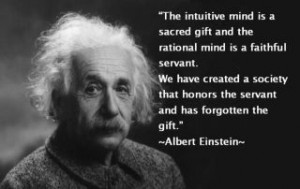
einstein_quote

There’s a lot of discussion on the web about codependency as well as empathy, especially in the narcissistic abuse community. While it’s true people who are codependent to a narcissist also tend to be high in empathy and very sensitive, there seems to be a lot of confusion–people who aren’t too familiar with either term tend to believe empathic people are also always codependent. While codependent people are almost always highly sensitive (which is the quality that attracts their abuser to them and keeps them trapped in a toxic relationship because they believe they can “fix” their narcissist), the reverse is not always the case.

A healthy HSP (highly sensitive person) is simply an emotionally healthy person. They are confident and secure enough with themselves that they can resist the “charms” of an abuser. If a healthy person with high empathy does find themselves being drawn into an abusive relationship with a narcissist, they have the courage and presence of mind to pull themselves out of it and even go No Contact before they fall under the thrall of the abuser and before any damage is done. In fact, having high empathy makes it more likely a person will be able to “see” the red flags before anyone else, giving them a chance to escape and/or avoid the person.

A healthy HSP does not waste time trying to “fix” a narcissist. They know the chance of that happening is about the same as the likelihood they will sprout wings and fly to the moon. If a narcissist is going to change (I’m not one of those people who believes it’s not possible), it must be the desire of the narcissist and they have to work very hard at it, but no one else can “save” them except themselves, and it’s going to be a long, hard road if they decide that’s what they want. A healthy HSP will not allow themselves to fall into a love-bombing trap or be “hoovered” by a narc. Once they realize what they are dealing with, they will cut off any further communication. They know they can’t be nice about it, but must be firm. They may care, but they know they are not going to be the ones doing the fixing, and will be able to move on to a healthier relationship with someone they can actually grow with and who will be able to return their love.

codependency_love

Our society today is also quick to judge those who have high levels of empathy and want to give back to others as being “enablers.” This happens even in the public realm, with the massive cuts in spending to programs that help the most vulnerable people of society and the blanket dismissal by the Powers That Be of those who want to help as “suckers” who are “enabling” the most vulnerable people. I don’t wish to get on a political soapbox but there’s something very wrong with any society that only values how “powerful” you are or how much money you earn. There’s something sick about a society that dismisses its most vulnerable members as “lazy and stupid” or “deserving” of their sad lot. Empathy is a virtue that has become increasingly dismissed as a weakness, but is actually the one thing–maybe the only thing–that could rescue modern society from completely self-destructing. Empathy isn’t a weakness at all–it’s a strength. If you’re a HSP you have this quality and should be proud of it and use it, not hide it away like a shameful thing. The narcissists who run things in the world would like us all to think it’s a shameful thing, but that’s just another lie they tell. It’s needed now more than ever. So, you are not an “enabler” if you want to help others; just be careful who you are helping!

Unfortunately, HSPs have often been abused themselves or have other disorders such as complex PTSD, and they often find themselves targeted by narcissists for abuse. Narcissists are usually attracted to people with high empathy because they know they can get the “understanding” and love they crave and will proceed to feed on the HSP’s emotions much like a vampire feeds on blood. They know it’s hard for such a person to say “no” because they can’t stand to hurt anyone’s feelings, so an HSP person is more likely to stick around and tolerate abuse than someone who is less sensitive.

If you are such a person; if you are very sensitive, cut your losses now! Staying around a narcissist who is actively abusing you is just not worth it, and there’s also a very real danger of being drawn so far into the narcissist’s web of deception and abuse that you could develop Stockholm Syndrome and begin to identify with your abuser. Once this happens, you could even find yourself taking on traits of narcissism yourself and colluding with your abuser. It’s an insidious process but it can and does happen; and it happened to me. Be careful. Your soul is a precious thing and you should not give it freely to anyone until you know that person can be trusted with it. That doesn’t mean you have to become hypervigilant and start seeing demons around every corner, but if your intuition is throwing up a lot of red flags about a particular individual, don’t dismiss them. They could save your life.