11 ways blogging has changed my life.

keyboard

Next month will be Lucky Otter’s Haven‘s 2 year anniversary! It’s hard to believe I’ve been blogging that long. I started blogging only 6 months after going No Contact with my ex. It has become a real addiction, but much more than that–it was a game changer for me. My life is not the same as it was two years ago. Here are ten (plus one) ways blogging has changed my life.

1. I’ve become a much better writer. I’m rather embarrassed by how badly written some of my early posts were. I think I’ve honed my writing skills and use a lot less “purple prose” and unnecessary adjectives than than I used to–that has always been a huge weakness of mine when it comes to writing.

2. I’ve become more self confident and less shy. Writing about your thoughts and feelings teaches you a lot about yourself. You become more introspective and in so doing, realize a lot of good things about yourself, and that gives you confidence. You also get validation from others, and that boosts your self esteem. You also find out that most people aren’t going to judge you for things you thought were shameful or embarrassing. It takes a while to work up the courage to write about such personal things, but once you do, you realize that your words may have helped or inspired someone else and they will appreciate you for your honesty. This has translated into my real life to some degree–while I’m still shy and awkward in social situations, I seem to be a bit more outgoing and less awkward now.

3. I’ve made some wonderful friends. Although I haven’t met any of my blogging friends, I feel like we’re a family, and for a few of you, I feel as if I’ve known you all my life. Before blogging, I felt so alone and isolated, but in the blogosphere, I’ve found so many people who have stories similar to my own, have gone through similar kinds of trauma, and we’ve grown to care abut and support each other. We’re like the surrogate family we never had!

4. I’ve become more creative. Writing almost every day forces me to consult my “muse” and the more ideas I think of to write about, it seems the more ideas just come to me, and some of them are pretty wild! I go ahead and write about those crazy ideas too, and sometimes those prove to be my best posts.

Hello world. This is my very first blog. I’m not sure what the hell I’m doing yet or how the heck this thing (WordPress) works. I’m learning so please be patient with me.

–The first sentence of my first blog post, Lucky Otter’s Haven, 9/10/14


5. I’m a better person than I was. Writing about your deepest thoughts and feelings, and exploring painful memories helps purge a lot of the pain that was keeping me from moving forward into real healing. Writing is powerful therapy and I find that today I’m less depressed, less angry, less fearful, have more moments of joy and serenity, and have even become more outgoing. I’ve also developed a lot more empathy, which was almost unavailable to me when I began blogging.

6. A blog is a great record of how you’ve changed over time. It’s always fascinating (and a little horrifying!) to go back and read over old posts and see how much you’ve changed. It gives you perspective and clarity. I can tell by the tone of my early posts that I’m not the same–my early posts were a lot more bitter, angry, whiny, and cynical, and a LOT less spiritual (I was agnostic when I started blogging). I realize a lot of that attitude was because I was only recently out of an abusive relationship and was still in shell shock, but blogging has definitely helped me overcome that.

7. My computer skills are better. Setting up and designing my blogs has given me more confidence in my computer skills. I can do a lot of things on a computer I didn’t used to be able to and thought would be difficult but are really not.

8. Blogging has given me a focus and a goal. All my life, I never had a real goal and never really knew what I wanted to do with my life. Narcissism and narcissistic abuse has always been my primary topic on my blogs, but lately my fascination with this subject is expanding into my wanting to help others heal, whether from abuse or from narcissism itself. I haven’t decided yet whether I will write a book or become a life coach or therapist. Maybe both!

9. My faith in God has grown. God gave me writing ability for a reason, and as I grew as a writer and shared my thoughts and feelings on an increasingly intimate level, I found myself actually listening to what God was trying to tell me, and realizing how much he really does care. I found other bloggers like myself whose faith was also strengthened through the gift of the written word.

10. It’s fun. Blogging is so addictive, and I’ve never had a hobby I’ve been more passionate about. In fact, I never really had any serious hobbies until I started to blog. I always look forward to coming home from work, opening my laptop, and starting to write, or reply to comments, or read other blogs (when I have time). I get so immersed in blogging sometimes I actually forget to eat!

11. I make a little bit of money from blogging. I can’t quit my day job, but I make about $50 a month from ads that run on this blog. It ain’t much, but it pays for my gas for a couple of weeks or a nice dinner out once a month! It’s always a great feeling to get paid to do what you love doing the most–even if you can’t live on it. But I’d blog even if I had to pay to do it. That’s how much I love doing this.

Guest Post: Descartes and the Killer Bees (by Anna Girolami)

rene_descartes

A reader named Anna Girolami (she has a blog called Good Red Herring) emailed me wondering if she could write a guest post for this blog.    I felt honored that she wanted to do this!  The post she wrote is definitely out-of-the-box and thought-provoking and has some intriguing ideas about handling people with various personality disorders, especially the Cluster B’s. I had to laugh at the reference to the “Killer Bees” (and will overlook the fact that technically, I’m included in this category, but since I’m recovering or maybe already recovered from BPD, maybe not).

I do want to add a disclaimer, however.   Anna’s thoughts about “managing a narcissist (or other disordered person)” are interesting, but I don’t think it would be wise in most situations, at least not for any length of time, and certainly not for any malignant narcissist or sociopathic personality.    No Contact, is of course, ALWAYS the best way to “manage” a narcissist, but there are situations where going NC may not be feasible.   In those cases, there is a technique known as “grey rocking,” which basically means being so mind-numbingly boring to the narcissist they go elsewhere and leave you alone.  Even that doesn’t always work, but I don’t think it’s really feasible to “manage” a disordered person without doing damage to yourself.  I think to try to manage a narcissist or another person with a personality disorder in this manner would prove extremely exhausting at best, and soul killing at worst.  Essentially, it means providing them with narcissistic supply!  So I don’t recommend it, but perhaps it’s something you can try if all else fails. It might work for the non-“Killer Bees” like the obsessive-compulsive or dependent PDs that Anna mentions; I’m not sure though, since I’m not as familiar with the Cluster C category of personality disorders.

That being said, I do see Anna’s logic here, and perhaps with a narcissist who isn’t very high on the spectrum or someone with a different personality disorder, this type of management might be an option.  Or, it might work in a pinch, when you can’t get away but you’re only with the disordered person for a short time, say at a party or a meeting.  It might work on a boss, too, if you really don’t want to leave your job and grey-rocking might seem too rude. (Never tell your Histrionic boss they’re sexy, though!)

Descartes and the Killer Bees.

By Anna Girolami

Blog: Good Red Herring

fish_logo

René Descartes is regarded by many as the father of modern western philosophy. For most of us, he boils down to a single, famous phrase:

Cogito, ergo sum (I think, therefore I am).

A lot of disordered people, however, operate on a variation of this theme. I’m talking about Cluster B people – the Killer Bees. They don’t think, they really don’t want to think. That’s the last thing they want to do. No, their being depends upon something else:

Videor, ergo sum (I am seen, therefore I am).

Equally important to them, is the flip side:

Non videor, ergo non sum (I am not seen, therefore I am not).

One of the hallmarks of disordered people is “splitting” – the simplistic belief that things are either completely wonderful or completely dreadful. Anything more ambivalent than that is just too difficult to deal with.

For our Killer Bees, this habit of splitting combines with the above dictum in a catastrophic way. They can admit only two possibilities – either the whole world is watching them and thus they are alive or no-one at all is watching them so, arrrrgh!, they cease to exist.

Given that very terrifying choice, which one would you go for? A Killer Bee has no real option but to cling desperately to the belief that every single person in the world is watching them for every second of the day. It’s either that or existential obliteration.

This belief requires that – consciously or not – they beat down any aptitude for empathy that they may have. Iris Murdoch (who was a philosopher before she was a novelist) nailed this when she said “Love is the extremely difficult realisation that something other than oneself is real.”

I take some issue with this as a definition of love. As a definition of empathy, however, it’s absolutely bang on.

The proper acknowledgement of other people’s autonomy and identity is a highly evolved function – one that many people seem unwilling to develop, on the very understandable grounds that it would deprive them of a great deal of secondary gain.

A Killer Bee cannot afford to acknowledge that anyone else is real. Even those – especially those – they ought to love the most. Other people are merely robots whose only function is to watch the Bee and thereby preserve them from extinction. Ideally, they should watch and approve. But even watching and disapproving is better than nothing.

What the watch-bots simply cannot be allowed, is any independent thought or action or intent of their own. That would mean they might stop watching the Bee for a while and then the Bee would cease to exist.

For a Killer Bee, it really is that simple – and that important.
Non videor, ergo non sum.

*****

If you’re married to or in some other way entangled with a Killer Bee, it is futile expecting them to notice you, support you or in any other way treat you as if you are real. They can’t do it. Not without professional help and not unless they want to. Very, very few want to – why should they give up this way of living that means lots of lovely attention and never having to think about anybody else?

So, what do you do? If your Killer Bee is of the mild-to-moderate variety, you have three choices:

1. Suck it up, suck it all up.
2. Ditch ’em.

Or..

3. you can manage them.

If you can’t/don’t want to ditch them, it seems obvious that your best option is to manage them. They’re quite primitive machines and, if they’re not too far gone, it is possible to manage them once you understand the clockwork. Oh sure, it makes you seethe, having to “manage” an adult, simply to stop them behaving like a three year old with low frustration tolerance. But it’s either that or suck it up, suck it all up.

Remember: videor, ergo sum.

Each variety of Killer Bee needs to be seen in a slightly different way.

–The Narcissist needs: “I see you, darling, you’re amaaaazing.”
–The extraverted Histrionic needs: “I see you, darling, you’re sooo sexy.”
–The introverted Histrionic needs: “I see you, darling, you’re so pretty but don’t get up, you’ll spoil the effect. Just you sit there and look perfect, I’ll do everything.” Or something like that.
–The Obsessive-Compulsive (OCPD, not OCD) needs: “I see you, darling, you’re trying so hard.”
–The Dependent or the Borderline needs: “I see you, darling, don’t worry. I’m here, I’m always here.”
(Yes, I know obsessives and dependents aren’t technically in the Cluster B group, but they often wander over into their territory.)

If you don’t know exactly which type you’ve got, just go with “I see you, darling, you’re wonderful.” That will keep most of ‘em happy, it’s the seeing that really matters. When Killer Bees are happy, they can actually play quite nicely.

This sounds easy enough but here’s the thing – you have to do it all the time. Every waking second of their day, or near enough. Once a week simply doesn’t cut it.

Remember: non videor ergo non sum.

They genuinely feel that if they are not sufficiently seen, then they don’t exist. When that happens, anxiety quickly overwhelms them. The narcissist will rage and belittle you, the histrionic will weep, the obsessive will sulk. Whatever.

It’s exhausting (and maddening) to have to supply this amount of constant watching with, inevitably, no reciprocation. It is, however, less exhausting than the tantrums. It may help if you realise that it doesn’t always have to be you who does the watching. They’re not fussy, these people. No one is real to them. One watch-bot is as good as any other.

So if you can do it reasonably, consider offloading some of the watching duties onto others (although not onto your children, that’s absolutely not supposed to happen. It’s a tragedy that it so often does). My own particular Killer Bee, an Obsessive with a heavy histrionic topcoat, is good at running, so I encourage him to enter as many races as he can. When he does well (which is usually. He’s an obsessive, after all), he gets a big chunk of lovely watching and approval from a whole host of other people – and I get a bit of time off. Its almost win-win.

Our holidays aren’t very restful though.

Have a great week,
Anna

Monday Melody: Mr. Brightside (The Killers)

Another great post-1990s pop-rock tune, from 2004.   This is just a great song.   The lead singer is very easy on the eyes, too.

My stupid ego stands in the way of empathy.

pride_humility

There’s been something on my mind that’s been bothering me a lot, but I’ve hesitated posting about it because it makes me sound like a terrible person.  But I’ve always aimed to be honest on this blog, so I’m not going to make an exception this time.

A few weeks ago, I made a new online friend.  She’s in a severe depression right now due to receiving some bad news. She was so grief-stricken she had to go into the hospital and get treated for her depression.   Since then she’s been confiding in me by email, because she’s too shy to publicly comment about her situation.   For about a week or two, we corresponded almost daily.   Our emails to each other were long and deeply personal, and they proved therapeutic for me as well as for her.

I’m no therapist, but I’m always willing to correspond via email and try to direct people to the proper resources or actually help them directly if I can.   I felt like I could relate to this woman; I identified with a lot of her issues. She said she felt the same way about me.  I began to think of her as a friend, someone I cared deeply about, even though we never met and we’d only been corresponding for such a short time.   I felt a great deal of empathy for her situation.  These empathic feelings are  something rather new for me, because only recently I was too busy working on my own issues and trying to recover from my own trauma that I didn’t have the time or inclination or even the ability to really be able to empathize with anyone else.   Lately though, I’ve been rediscovering the empathy I possessed so much of as a child, and it’s a beautiful and wonderful thing.  I want it to keep growing because it makes it easier for me to connect with people and makes it possible for me to be authentic and help someone else in need, which is what I’ve been aiming to do more of.

My new friend told me that writing to me helped her a lot, and I was extremely touched by this.  I told her she was helping me too, which is true.   I began to look forward to her emails, because, well, the things she told me made me feel good.   I felt my ego puffing up with pride like a loaf of baking bread.   I began checking my inbox several times a day to see if there were any new emails.  I was getting a little obsessed, to be honest.  I was jonesing for that feeling of being needed, of feeling like I was important to someone, of knowing that someone I liked and cared for valued me that much.

I haven’t heard back from her in a few days.  Now I’m becoming insecure and hypervigilant and wondering if I said something wrong or overstepped her boundaries or if she just got tired of writing to me.    I kept reading over our emails trying to find anything, any hint at all, that I might have said something offputting that ran her off or made her want to stop emailing me.   I found nothing but obsessively, I kept looking.

After 3 days of no correspondence, I finally emailed her again.  I was extra careful not to sound too needy, and because she’s so fragile right now and came to me for help (and not the other way around), I tried extra hard to not to project my own “stuff” into my email to her.  I read it over several times and it sounded alright to me, but I still worry she may be able to pick up on my neediness.

I realized with horror that my worry about her possibly abandoning me was more powerful than my concern that she might have had to go back into the hospital (or just couldn’t get online, or was busy, or whatever).    My insecurity made my email sound more stilted and less natural than usual.  I no longer feel like I can be as open and honest, because of my own stupid fears of being offensive or overbearing and making her think badly of me.  It isn’t her fault I feel like this–it’s my own ego getting in the way of the real empathy I have for this person.

This happens to me all the time, and is one of the reasons I’ve sometimes thought I’m actually a narcissist.  Everything is always about me, my ego, what other people are thinking about me, am I being validated, am I still valued by them, are they going to leave me, do they secretly hate me?  Even when all the evidence is to the contrary, I still look for the microscopic speck of dirt in my bowl of ice cream–and always find it even though it isn’t really there.

Yes, I do have empathy–and a lot more of it has been freed to me lately–but when there’s any uncertainty or insecurity and I begin to feel hypervigilant and paranoid.  I start fretting that maybe I’m being deliberately ignored or God forbid, abandoned, and all that wonderful, healing empathy I’m learning how to use goes flying out the window and everything becomes all about me and my stupid ego again.

I still care about this individual and want to help her, but I want my empathy to flow naturally and my ego to stay out of it, because all that does is fuck everything up.  I’ve been praying for this to change, because how can I ever really be of help to anyone else if I’m always worried about what other people are thinking about me?   This isn’t about me; it’s about her and trying to help her heal, not getting some sort of ego boost for myself.

I’m not going to email her again.   I’ll just wait now, and if I never hear from her again, I can live with that.   Maybe she got what she needed from me–the encouragement she needed–and that should be enough.   I hope she is okay.

If nothing else, then I have learned a hard lesson about pride and ego: pride comes before the fall.  True empathy requires humility and the ability to set your own ego outside the door.

Another mom who supports her son being a furry.

mexnyman
My son dressed as “Mex,” about 2 years ago.

I just received an email from a woman who read my blog post from almost two years ago,  “My Son is Furry–Got a Problem with That?”   Here is that article for those of you who didn’t see it.

My son is “furry”–got a problem with that?

Here is the letter I received today.   All identifying information has been excluded.

applycheekdots

My son’s fox/otter fursona.

*****

I was browsing websites looking for Furry bumper stickers and came across your blog.

I have a 21 year old son who is gay and a furry.  So it seems we have quite a lot in common. I have known my son was gay before he actually told me which was about age 13. It was around the age of 15 he started talking about furries. I was fascinated and we started watching Furry convention videos. I was hooked. I tried to be very supportive regarding this to my son. This was a group of people that he could finally relate to and thank God not judge him. He is a very sensitive and highly intelligent person. He just never fit in with his peers. Middle school was the worst and after one year of high school it still wasn’t getting any better for him, so we opted for an online school.

I am very close with my son and he always tells me how awesome I am and he tells his friends that. I am close to a couple of his friends and they are also furries.   I have never met and talked with another parent who supports her gay and Furry son. I would love to have an email friend that I could relate to.

Thanks for taking time to read this and hope to hear from you.
Best,
Proud Mom of a Furry


My son’s latest dance performance at Megaplex 2016, Orlando, FL

My reply:

Thank you for sharing this with me!   It is a coincidence isn’t it?  My son is almost 25 now and his fursona is a fox/otter — he’s the one responsible for getting me to love otters so much I named my blog after them and also use it as my user name too.  (I’m not furry though, lol)   Now he has a second character, a black and white stoat named “Mex.”   Mex is a dancer in the competitions at the conventions and has placed  2nd or 3rd in several of them.  He has yet to win, but I’m sure that’s coming.   My son began dancing about 4 years ago. He never took a lesson; he is entirely self taught.  

Some people think it’s strange that I actually love furries and the furry fandom.  I think it’s a harmless hobby and allows these kids and young adults to socialize and have fun.    I think they’re so entertaining and funny–and very friendly too.  You probably read my article about my feelings about my son being a furry, which is why you wrote.   He has developed so much more self confidence and improved his social skills immensely since he began attending the conventions (his first one was in late 2010).  

My son was a lot like yours.  He was pretty much an outcast at school and middle school as especially bad for him.   He is very creative and intelligent (I think most furries are–many of them work in scientific, computer, or medical fields or in the performing or visual arts) and most have some kind of art or performing avocation.  

My son, like yours, was so shy and unsure of himself, lacking in confidence and socially awkward.  He told me later on that he was very depressed during his middle and high school years.  In 2009 he came out to me as gay but I think I already knew.  I never had a problem with that.   I don’t think there’s anything wrong with being gay and never have.  Many of the greatest friends I ever had were gay.

He was embarrassed to tell me he was a furry but when he finally did I just looked at him with a blank stare because I had no idea what that meant.  He explained and I looked it up on Wikipedia.   Sadly, furries have gotten a bad reputation and it’s become associated with depraved sex and perversions, but the reality is, that is not the case.   I found out the furry fandom is an outgrowth of the science fiction conventions and has been around since the 1980s.   I don’t know why they get so much hate and why people fear them so much that there have been actual hate crimes and bomb threats at a few of the hotels that hold the conventions.  It’s just a hobby and a passion for dressing up and socializing (and performing) in costume.  Furry allows shy and creative young adults like my son to become more outgoing because they are in costume and take on a persona that fits their chosen animal.   My son’s life is so much better since he became a furry, and every time he performs in another dance comp, I always watch and root for him (most of them are live streaming now). 

I’m glad you’re another mom who supports her son being a furry. You sound like you have a very warm and loving relationship with him.   My son will be tickled pink when I tell him that another mom supports her son being furry.

I also want to write a blog post including this letter and my reply but I will not identify you by name or your son’s fursona either.   I want to do that because I think it’s important that the truth about furries come out because so many parents of children who are furries completely misunderstand what it’s about and think it’s some kind of sex cult, which it is not.   It got it’s unfortunate reputation mostly from an episode of CSI that featured a furry who was a serial murderer.   It’s time for the truth to come out–that this is a harmless (if rather expensive!) hobby.  

3 common types of narcissists.

When most people think of a narcissist, they picture the stereotype:  a successful, wealthy male who is arrogant, grandiose about his appearance or achievements or intelligence, acts entitled, greedy, lacking in empathy, and is emotionally abusive to his underlings and his family.   He thinks far too highly of himself and while no one likes him, everyone respects him (or is terrified of him).  He doesn’t care if you’re scared of him or not; he just wants you to worship him and do his bidding.

But most narcissists actually don’t fit this stereotype. The traditional DSM description of Narcissistic Personality Disorder fit this stereotype best though, and that’s probably why most people picture an arrogant, successful man when they hear the term NPD.   While there definitely are narcissists who fit that description, most probably don’t.   And while NPD is usually diagnosed in males (females are far more likely to be labeled BPD or HPD), in actuality it’s probably just as common in women.  They’re just less likely to have been diagnosed with it.

I think one reason why NPD is more often given to males is because the label is so stigmatizing that it’s usually only given to people who have broken the law, and the vast majority of convicted criminals are male  (ASPD–antisocial personality disorder–is also commonly given to men who have broken the law).

I’ve noticed three main types of narcissists, and they can be either male or female.   Only the first type–the grandiose or overt narcissist–fits the traditional stereotype.

1. The Grandiose Narcissist.

kitten_sees_lion

The grandiose, or overt narcissist, fits the traditional stereotype of someone with NPD.   There are probably more males of this type than females, but both exist.    A grandiose narcissist is drunk on pride, and will become extremely angry or abusive should you question his superiority or attempt to expose him as the narcissist he really is.   Most grandiose narcissists are successful, though not all are.   Those who aren’t successful act as if they were, spending money they don’t have and bragging about achievements they never earned (or exaggerating them).   They use others for their own gain because they can’t recognize that those around them are human beings with feelings, not objects to be used and discarded as they see fit.  Grandiose narcissists expect you to worship them and look up to them as paragons of superiority in whatever they have deemed themselves to be the “best” at–maybe it’s their appearance or body (somatic narcissist) or maybe it’s their intelligence or achievements (cerebral narcissist).   If you criticize them they become extremely upset and angry and will either attack or sometimes, give you the silent treatment.  They expect the world from you but will give you nothing in return, for you, lowly servant, only exist to worship them and give them the admiration and adulation they expect as their birthright.

A woman of this type is likely to be conceited about her beauty or perfect physical appearance, and looks down on those who don’t fit her standards of physical perfection.  But there are plenty of cerebral female narcissists too.  Both types tend to act snobbish and arrogant toward those they regard as beneath them.   She will also be demanding and high maintenance in relationships, demanding constant attention and adulation. She would never admit it but she is actually extremely needy and will eventually drive away lovers (or unceremoniously discard them herself when they fail to meet her impossible standards).

The next two types are both examples of the covert narcissist.  Covert narcissists are less grandiose but in their own ways, they act just as entitled and have little to no empathy.   They are a lot less obvious than the grandiose type, and because of that, can be more dangerous because you never expected such a “nice” person to be so abusive.  Covert narcissists are the real crazymakers, because they’re good at twisting everything around to make you seem like the abuser or “bad guy” while they remain blameless.

2. The Do-Gooder.

dogooder

Mother Teresa herself has nothing on the Do-Gooder.   She is a saint, a paragon of virtue, and never, ever does anything wrong.  She attends church every Sunday,  reads her Bible, volunteers at the food pantry or at the church or school, and if she can afford to, gives a good chunk of her money to various charitable organizations.   She’s the stereotypical Jewish mother who always frets and worries about your well-being, but is really overbearing and her “overprotection” is really all about controlling you.   She will smother you with her “concern” and make you long to escape to freedom.   She may make it difficult for you to do things on your own:  you will be told you “need her help” or her company even if you don’t need or want it.  If you tell her to back off and give you some space, she’s likely to take on the Victim role, acting all butt-hurt, maybe even crying. She will guilt-trip you, whining,  “But I was only trying to HELP!” or, “I’m your mother–and you treat me so badly.”    There are male Do-Gooders too, but I think it’s probably more common in females.

Do Gooders also like to act all sanctimonious and self righteous, like the Church Lady in the old Saturday Night Live skits.   She loves to make others feel inferior by devoting the MOST time to a charitable event, the MOST money to a cause, baked the MOST cookies for the school bake sale, and then crow about how much she has done, and how much God favors her because of all her good, unselfish deeds.   If you have failed to meet her standards of saintliness, she will give you a condescending, withering look, making you feel like the worst person on earth.

3. The Victim.

Poor-me

The victim type of narcissist is the opposite of grandiose, but is just as entitled and lacking in empathy.   These are emotional vampires that will suck everything out of you until you’re so exhausted and depressed you just want to go shoot yourself in the head.   The victim gets their supply in the form of sympathy or pity.  She will tell you all her problems and expect you to always be there at her beck and call, no matter how inconvenient this is for you.  She will make demands on you, expecting you to drop everything to listen to her latest crisis and will show no empathy if you have needs that take priority to hers.  In fact she may become angry or try to make you feel guilty, or project her own narcissism onto you and call you selfish.   But the favor won’t be returned:  if you ever have a problem of your own and want a listening ear or shoulder to cry on, she will either ignore you or find a way to turn the conversation back to her.  No matter how much you try to help, they keep making the same mistakes and never seem to grow or change.

These kinds of covert narcissists are especially infuriating because no matter what you suggest, she or he will find an excuse as to why what you suggest would never work.  They are frustrating because they never listen, and never thank you for your time.  They don’t really want your help; they just want your undivided attention and sympathy because it’s their preferred form of narcissistic supply.

Hurt (Johnny Cash): depressing song about having BPD

Johnny Cash’s masterpiece “Hurt” is  actually a cover written by Trent Reznor of Nine Inch Nails,  and is probably the most depressing song ever about what seems to be Borderline Personality Disorder (probably with sociopathic tendencies).     The lyrics and Cash’s delivery capture the emptiness and deep despair that every Borderline feels deep inside.   When he recorded “Hurt,” he had already been given only 18 months left to live by his doctors (he suffered from a rare degenerative disease and diabetes).

This is another one of those songs that’s good for cathartic crying.   I posted the lyric video so you can read all the words (even though Johnny’s enunciation is perfectly understandable).

I was going to make this song this week’s Monday Melody, but I couldn’t wait to put it up now.

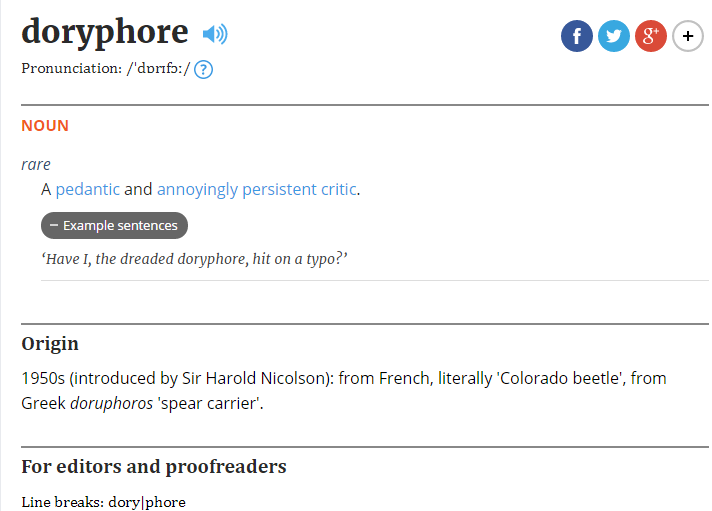
Word of the week: Doryphore

Doryphores seem to be everywhere.  I hope I’m not one!

doryphore

Getting ready for my road trip next week!

beach3
The Florida Gulf Coast before a storm (credit: my son)

I haven’t taken a long road trip since 2008! That’s WAYYYY too long. But after 8 long years, I’m getting ready for another one. Today I got my oil changed and my tires checked to make sure my car is road worthy for the 700 mile trip. I took Monday off so I’m going to Goodwill to look for an inexpensive travel bag. (I also have an emergency appointment with my therapist).

Next week, most likely next Sunday when the traffic on the highways is a little lighter, I’m driving to Port Richey, Florida, to visit my son for a whole week. I saw him in April when he came here to visit for a few days, but I’m dying to see his place (he lives in a nice apartment complex with a pool and a hot tub). I’ll be staying there to save money instead of staying in a hotel. He lives close to the beach, so we will also be hitting the beach a few times. He wasn’t able to get days off from work, but his hours are variable and I’m sure we’ll have a lot of time to spend together. He’s as excited as I am, and is planning to take me to a couple of his favorite eateries, of course the beach, and also fishing!

beach1
The water looks like molten gold.

Hopefully the weather holds up. The Gulf Coast can be iffy this time of year since it’s the middle of hurricane season. I really need this trip, not only to see my son but also to get away and just relax near the ocean and see some new sights. The timing couldn’t be better, since I’ve been so triggered and upset lately. I think this trip is just what I need and will help me regroup and get my head and my emotions together.

I’m bringing my laptop with me because I will continue to blog while in Florida, and will post pictures every day of my adventures with my son. Gosh, I can’t wait!

Ian_clearwater
My son in Clearwater last year.

BPD vs. NPD

npd_bpd

This graphic I made shows that BPD and NPD are really the same disorder.    Both have their roots in childhood trauma and fear of abandonment, even though the symptoms may not be evident until later childhood or adolescence.    The primary difference is the outer layer–the narcissist develops a nearly impermeable and rigid false self or mask (usually of grandiosity, but sometimes can present as do-gooder or even a victim). This mask remains stable unless narcissistic supply is removed, which causes it to atrophy, revealing the rage, fear, and hurt beneath that.

The borderline develops a highly permeable, chameleon-like outer layer.  In the diagram, it looks like a flower.   This outer layer of “petals” is analogous to the false self, but is not rigid and not even always present. It is easily penetrated and does not require narcissistic fuel from others to keep it intact.   It changes and morphs its shape and form like a Lava lamp.   Since it’s so easily broken through and is so changeable, Borderlines seem to be “crazier” and seem to have more intense mood swings than narcissists.  They are also skilled in adapting to different situations and people in a chameleon-like way: this usually manifests as codependency.  Sometimes they don’t seem to have minds of their own and take on the behaviors and belief systems of whoever they happen to be with.   Borderlines seem more emotionally unstable than narcissists because the second layer of rage/hurt/fear is often on the surface, causing the Borderline to act out in frequent rages, panic attacks or crying jags.

Beneath these outer layers, NPD and BPD have the same structure:   a layer of rage, hurt and fear when they are triggered, hiding the emptiness and grief under that (which is what both–especially the NPD–are so afraid of confronting and take such desperate measures to avoid feeling).  When this part of the personality structure is finally reached, the NPD/BPD feels as if they don’t exist and that is excruciating for them.   NPDs in therapy may quit at this point.   Hidden deep within the “emptiness” (which really isn’t empty at all) is the diminished and damaged true self (inner child).

The goal in therapy is to break through all those outer layers and finally reach the true self, then give him or her the nurturing and validation they should have received in the hopes that he or she can become a whole person.   It can take a very long time for this to happen, if it ever happens at all.

Borderlines, although they might seem crazier than narcissists, are more easily cured because the permeable chameleon-like outer layer is so much more easily broken through.   In contrast, the NPD false self can take months or years to even crack.   It’s a thick and stable structure, not given to weakening easily, but even the strongest concrete building has hairline cracks somewhere in its structure.   A tornado can reduce the strongest building to rubble.

The key to breaking a narcissist is to find those cracks and weaken the false self. This is usually done by removing narcissistic supply, which serves as a psychological tornado to the narcissistic defensive structure. Sometimes this has already happened; and in this more vulnerable state, with the false self temporarily disabled, a narcissist is more likely to enter therapy.   Unfortunately the narcissistic defense mechanism is so ingrained they will soon find a way to get supply again and rebuild the false self.   The therapist must work to permanently disable it but the narcissist must also be willing for this to happen.

In a low spectrum narcissist, the false self may be rather weak or thin to begin with, and for them, a cure may be more likely or happen sooner.  In low spectrum narcissists, the false self is more like a  cheaply constructed trailer than a stone castle.  It will only take a weak tornado to smash it to smithereens.

When an NPD’s mask begins to fall away, they will begin to act a lot more like a Borderline–raging, dissociating, experiencing crying jags, and showing their underlying inability to regulate overwhelming emotions.   At this point the treatment for NPD should be much the same as for BPD–empathically penetrating the “void” to reach and begin to nurture the diminished real self.

How a child develops BPD or NPD.

These disorders begin when a young child or toddler is hurt or rejected by their parents, especially the mother.  This hurt may not even be intentional–sometimes the illness, death, or absence of a non-disordered parent can set things into motion, because the child can’t discern the difference between deliberate abuse or neglect and something that cannot be helped.  Many, if not most, children who live in orphanages or are moved from foster home to foster home develop some form of Cluster B disorder.

Because a toddler or very young child has not yet completely separated their sense of self from their parents’, when they don’t receive the mirroring and unconditional acceptance they need, they feel as if they’ve been annihilated, and that feeling of annihilation becomes the black void that now surrounds the hurt or abused child.

But because the void is too painful and frightening to cope with, something else must cover that over too, and also protect and hide the inner child.  So the defensive emotions (anger, paranoia, fear, and rage) develop over the void because even though they feel unpleasant, they’re still better than the horrible feeling of having been annihilated, and they also protect the inner child from ever being hurt again.

And over that, for a narcissist, to attract people who could provide the attention and validation they never got as children, they develop a fake self, which is usually “nice” but is only a mask so it isn’t real.  If they feel that the mask is under threat of exposure, they fight tooth and nail to retain the image they want the world to see.

For the borderline, instead of developing a false self to cover the rage and other defensive emotions, they learn to adapt depending on the situation or the people, and that is why they so often become codependent.   Also, because they are closer to the void than the narcissist is, they tend to have dissociative episodes and may engage in self destructive actions like cutting to make them feel like they exist. Or they may engage in other risky behaviors or taking drugs or drinking too much in an effort to self-medicate.


DISCLAIMER: I am not a mental health professional, but I’m well-read on these disorders and these are from my observations and opinions.