Can narcissists feel empathy for fictional characters?

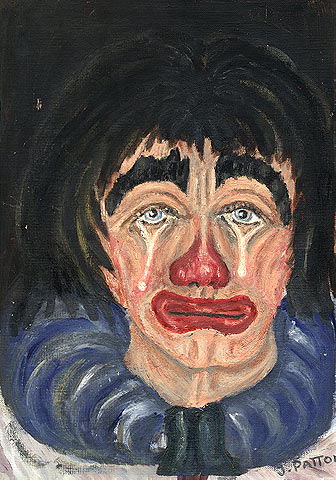
clown1

There is a question I have wondered about for a long time that was brought up on another post.

Narcissists are exquisitely sensitive. They are very easily hurt. But their hypersensitivity is limited to themselves (this is called narcissistic injury). Any insult, no matter how minor, will send them flying into a narcissistic rage or cause the “needy” type to break down like the babies they are.

But as we all know, when it comes to others, they have no empathy. They cannot feel your pain, share your sadness, or rejoice with you. On this level, they are incredibly insensitive.

But there’s something I wonder about. Because narcissists are “fictional people” themselves (what you see is not their true self but a mask), can they feel empathy for fictional people, such as characters in a sad or touching movie? Can they cry when reading a sad book or when they hear a sad song?

I’m leaning toward yes, because my MN mother never could feel pain for anyone but herself (and never expressed even her own narcissistic injury in any manner other than rage), yet I remember she could cry a river of tears when we went to a sad movie or watched a touching love story on TV. Hell, she could even turn on the eye-faucets when a maudlin commercial came on. My N ex used to get all weepy when he watched sad movies too.

For a narcissist, it’s “safe” for them to feel empathy for fictional characters on a movie screen or in a book, because those are not real people. There’s an interesting article written on the blog Let Me Reach by Kim Saeed about this subject, in which the author concludes that narcissists definitely do cry at movies, and it has to do with cognitive dissonance. Read Kim’s article for a more in-depth look at how this works for narcissists, because she explains it much better than I do.

A narcissist’s entitlement.

entitlement

It’s already happening.

I talked to my daughter’s friend Paul last night, and he sounded a little grumpy. Hypervigilant as always, in my black, paranoid mind I imagined my MN ex Michael, who just moved in Paul’s house a few days ago, had already convinced Paul I was an evil, treacherous, narcissistic, selfish female troglodyte not worth the time of day (because he projects all his character defects onto me), and that was the reason for the grumpiness. Of course! What else could it be!? Of course it was narcissistic of me to assume Paul’s grumpiness had anything to do with me anyway, but that’s how hypervigilant and paranoid an Aspie victim of narcissistic abuse can get.

Moving on, it wasn’t that at all. Of course it wasn’t. How silly of me to think it was. If I had a quarter for every time my stupid hypervigilance makes an idiot of me, I would be a wealthy woman instead of a poor one.

No, Paul was grumpy because of Michael. He asked me if Michael always acted so entitled, which caused me to burst into fits of uncontrollable laughter. I had already warned Paul the way Michael wanted what he wanted when he wanted it, and that he never lifted a finger around the house, expecting to be waited on like some sort of golden God. After the peals of laughter subsided, I asked him what happened.

Paul said Michael had offered to order Chinese food for dinner (with Paul paying, of course, because Michael was broke as always), so Paul gave him the money to give to the driver and didn’t cook anything. Then Paul went out for awhile, expecting Chinese food when he returned.

??????????????????????????????????????????????????????????????????????????????????????????????????????????????????????????????????????

Instead, when Paul returned at 9:30, he found Michael fast asleep on the couch. There was no Chinese food anywhere in sight. Paul woke Michael up and asked where the food was. Instead of apologizing and acting embarrassed, Michael said, “I thought you were picking up the food.”
“I gave you the money. Why would I pick up the food if I gave you the money?” was Paul’s reply.
The money was balled up in a wad on the table, next to a ashtray overflowing with cigarette butts, debris from Michael’s jeans pocket, and a pot pipe. Besides being lazy and entitled, Michael is also a slob.
Paul was angry.
“I thought you said you had to eat right away because of your diabetes. But here you are sleeping instead.”
“It’s not my fault. I should have eaten hours ago. When I don’t eat, I can’t stay awake.”
“But I gave you the money to order Chinese food.” He pointed to the money on the table.
“Well, SORREE, you don’t have to give me attitude about it. Go ahead and order it then.”
“That’s not the point. You said YOU were going to order it. I would have picked it up myself if I knew this would happen. Now they’re closed and it’s too late to go back out.”
Michael sat up and lit the pot pipe. “Here, have some pot. You need to chillax.”
“I DON’T WANT ANY DAMN POT. I’m hungry. I want something to eat.”
“Well, then why don’t you cook something?”
Paul looked at Michael like he had three heads. “No. I’m tired. You promised to order in but you didn’t. Why don’t YOU cook something?”
“I can’t,” whined Michael. “I have a headache because I haven’t had anything to eat.”
Paul stormed out of the room and went into the kitchen to start dinner, while Michael settled back down on the couch and switched on the TV.

The first thing Paul saw was a sinkful of dirty dishes, soaking in soapy water. When Michael leeched off lived with me for 7 years after our divorce, he probably actually washed the dishes three times in that amount of time. His idea of “washing dishes” meant piling them in the sink with water and Dawn, leaving me with the fun job of actually washing them. If I refused to wash them, they would sit there for up to three days, until the funky smell of the cold, dirty dishwasher forced me to start from scratch, emptying the sink and starting over.

washing dishes

Paul stormed back into the living room. “You said you would wash the dishes, but they’re still sitting in the sink.”
“But I have to soak them first. I filled the sink with soap to loosen the dirt.”
“But that’s not WASHING them.”
“Whatever.”
Paul wound up washing the dishes and cooking dinner. And that’s why he was grumpy.
I don’t expect Michael to last long there. He will probably be living at the Salvation Army again even before Molly returns home. I can tell Paul won’t put up with his shit for long.

The story is funny, but it’s also illustrative of the mindfuckery a narcissist uses to get their own way. As always, Michael refused to take responsibility or do anything he didn’t want to do. When questioned or called out on his refusal to pull his weight, he either shrugs it off as if others are making a big deal over nothing, or shifts the blame to the other person. Because that’s what narcs do best, even though in their deluded minds they think they are demigods entitled to have their servants wipe their butts every time they take a dump.

The Inevitable Happened

I just discovered this wonderful blog, and like it so much I’m adding it to my blogroll (I list mine in the “Info and Support” tab in the green header). Like many survivors of narcissistic abuse, Lady with a Truck struggles with poverty and the judgment of others. It’s mindblowing how deeply our narcs destroy us–even our ability to earn a decent income. I love the way LWAT writes; her posts draw you in like a novel. She’s also funny. I had to laugh when I read about her trying to “unspam” a troll post she had just put in her spam folder–in order to show the world what a post by a narcissistic horse’s ass looks like. But accidently she deleted it.

This post isn’t recent, but I loved it, so I’m reblogging it. Our stories have no expiration date because they can still help, inspire, and even entertain the minions other victims of malignant narcissism. Just read it.

Carrie Reimer's avatarLady witha truck

I don’t know how many of my followers noticed that I have received a couple of nasty comments recently; one from JC and then this morning one from a “Chuck”. I “spammed” JC’s right away and then regretted it because I thought his response was so typical of a narcissist I should have left it. I went into my spam to “unspam” it but using the small screen of my phone I accidentally permanently deleted it. Oops

Basically what it said was that I am a lying bitch, he called you all my “minions”; which I had to laugh about because he was always saying he needed minions.
He said that reading my blog made him * feel ……….. well ….everything but mostly sad. *his words.

He also said this (my blog) was unproductive. I beg to differ; anytime a blog receives daily comments such as:
Thank God I found…

View original post 1,640 more words

Could “reparenting” actually cure a narcissist?

depression

Almost all professionals who deal with narcissists and psychopaths insist they cannot be cured, but say that Cognitive-Behavioral therapy can help “train” them to act in more prosocial ways. Of course, this isn’t going to work unless there’s something to be gained for the narcissist in doing so. Most won’t even enter therapy. Cognitive-behavioral therapy isn’t a cure though and does nothing to address the underlying problem or access the “true self” which even the narcissist has obscured from their consciousness with their elaborate series of masks.

I was thinking about a much more intense form of therapy, that would be costly and difficult, and takes into account several different methods of treatment, that may actually be able to cure narcissism. This therapy would take place in several stages:

Stage One: The Narcissistic Crisis/Narcissistic Injury
I was skimming through Vaknin’s book and toward the end he has a chapter about curing a narcissist. He believes these incorrigible people can actually be cured (which of course begs the question, why isn’t he cured? Or is he?) However, in order to be open to being cured they must have undergone a “narcissistic crisis” or “narcissistic injury”–that is, his or her sources of narcissistic supply must have been removed (such as after a divorce or the death of their primary source of narcissistic supply, loss of a career, financial ruin, incarceration, what have you).

In a state like this, without anything to prop them up or continually affirm their “greatness,” a narcissist will usually sink into a deep depression, and will do ANYTHING to make themselves feel better, even voluntarily entering therapy.

The tricky part would be identifying the depressed patient as a narcissist, but there should be enough signs in the way they talk about the glory of their “former life” and they will still lack remorse and empathy and blame others for their sorry condition rather than themselves. So identifying a severely depressed narcissist shouldn’t be too difficult for a trained professional.

The therapist cannot, under any circumstances, give the narcissist any sources of narcissistic supply or affirm them in any way, or give them any sympathy, at least not at first. In other words, they cannot mirror them. That will just make the narcissist feel good enough that their masks will go back up and they may think they’re “cured” and leave.

Stage Two: “Cold Therapy:” Deny the narcissist any narcissistic supply!
In order to force the narcissist to face what’s inside, it’s important the therapist does not affirm or mirror the narcissist. Instead, the therapist should stay nearly silent at first and make sure the narcissist is forced to confront his own emptiness. This will be extremely painful to them. They may leave, but if the narcissist is desperate enough he will probably stay. However, he will likely become angry at the therapist (transference) and rage. Still, the therapist must not show any reaction. When even their rage fails to elicit a response, the narcissist has no choice but to regress to the infant he really is.

Stage Three: Catharsis/”Remothering”
This would be a breakthrough point, and the point at which some real therapy could possibly be done. Becoming an infant will turn the narcissist into a blubbering, sobbing, needy, vulnerable mess. And this is where I can begin to see why in “People of the Lie,” M. Scott Peck, in his chapter about “Charlene” (a narcissist who entered therapy voluntarily because of her inability to maintain a relationship), wanted her to become vulnerable and baby-like so he could become her surrogate “mother” and give her the maternal nurturing she never had as a child. This might have worked too, had Charlene been ripped of all her sources of narcissistic supply and been undergoing a narcissistic crisis. Dr. Peck’s mistake was affirming her too much in the beginning of therapy and engaging her fantasies. By the time he realized his mistake, it was too late.

At the time I read Dr. Peck’s thoughts about how he should have “mothered” Charlene and held her in his arms (in a nonsexual way), I thought it sounded very odd and even unethical. But knowing more about narcissism than I did when I read that book, and more about why they’re the way they are, I can understand why Dr. Peck’s wish to “mother” Charlene may have worked. But not only did Peck start out all wrong, Charlene was not depressed enough to be open to such a technique.

So a vulnerable narcissist stripped of all their elaborate defense mechanisms, reduced to a dependent infant, is going to be going through an emotional catharsis as the true self (which was arrested in infancy and is still an infant) begins to emerge. They are going to be in unbearable terror and pain. A good (and very strong) therapist can offer maternal support through holding the patient during catharsis, stroking them in a nonsexual manner, but still must not tell them anything they want to hear, such as how they’re not a bad person, how they don’t deserve their pain, and the like. The therapist must remain quiet and let the patient go through the catharsis and only offer support by their mere presence.

smashingmirror

Stage Four: Retraining and Internalizing the Conscience
I’ve elaborated a lot on what Vaknin says about curing a narcissist in this post, and I’m going to elaborate even further. Because the narcissist, while rendered virtually harmless at this point in therapy, still doesn’t have a conscience. They would still go right back to their old ways if they stop therapy now or their circumstances suddenly improve. Psychologically, they are infants and an infant has no conscience: they must be taught by their parents and caregivers the difference between right and wrong.

So after a few sessions of this cathartic crisis (however long it lasts–by its nature it will eventually exhaust itself), I would propose something like the sort of treatment that was given to 6 year old Beth Thomas in the documentary “Child of Rage,” who at first wanted to kill her parents and brother and who tortured animals, but was cured of incipient psychopathy early enough that she was still able to develop a conscience and become an adult with normal levels of empathy and no desire to hurt anyone.

The narcissistic patient, if at all possible, should be in a setting, such as a hospital or residential treatment setting, where they are closely monitored and supervised by trained professionals. Any good behavior is to be rewarded, any bad behavior punished. Any privileges at all would have to be earned. Just like a small child, reward and punishment will train their brain to develop a conscience. This is basically the same thing as the cognitive-behavioral therapy currently used on narcissists, but it cannot cure a narcissist who hasn’t first been broken down by a narcissistic crisis and catharsis, because all their masks are still on. A narcissist who has been through the process of crisis and catharsis has lost their masks, and therefore cognitive-behavioral retraining would become internalized rather than just a “positive” mask they can wear to make them more bearable to others.

Disclaimer:
I am in no way a professional (though I did major in psychology in college). I’m certainly not qualified to propose new methods of treatment, but this process I’ve described isn’t one I made up: it’s basically a combination of Vaknin’s proposed method of breaking down all the narcissist’s defenses so they become infantile (with a little M. Scott Peck thrown in), followed up with cognitive-behavioral techniques for retraining the patient’s conscience in a highly supervised setting.

It would be a difficult and expensive therapy at the very least, but I really think it could work. Of course, it also requires the narcissist to voluntarily enter therapy, which means they would have to have suffered a grave loss that threw them into deep depression in the first place (the narcissistic injury or crisis).

I’d be interested to hear your thoughts.

My family tree of narcissism

dna

NPD is an inherited disorder (as well as acquired). It runs in families. Here is how it shows up in my family (immediate family shown only, as I do not know my extended family too well, thanks to my MN mother’s manipulations to keep me from them).

People raised in NPD families also have an unfortunate tendency to marry or enter into relationships with other people with NPD, and my family tree definitely shows this tendency.

My NPD Family Tree

Paternal grandparents: Grandmother (no NPD); Grandfather (possible NPD) —-> Father (low spectrum NPD); 1 other son (no NPD)

Maternal grandparents: Grandmother (possible NPD); Grandfather (possible NPD) —-> Mother (MN=malignant narcissist); 3 other children (unknown if any of them have NPD)

My mother: MN; my father: low spectrum NPD and enabler —–> 5 children from 2 marriages each (1 deceased): my mother’s oldest daughter is her most loyal flying monkey and probably NPD; I don’t think my other half-siblings have the disorder (they were raised with at least one non-NPD parent); I was the only scapegoat and have Avoidant PD, which is the polar opposite of NPD.

Me (no NPD); Michael (NPD, possibly MN) ——>; 2 children: son Ethan (scapegoat and non-NPD); daughter Molly (NPD, probably not MN)

Michael’s immediate family:
Mother (MN); father (non-NPD but an enabler and absent much of his childhood) —–> Michael (NPD, possibly MN); 1 sister (non-NPD but abused by her NPD husband)

Famous people who have NPD

parishilton

This is not my own list, but I agree with most of the people listed in this blog post.

Here is the entire article:

There are many people all around us that suffer from Narcissistic Personality Disorder (NPD), more commonly referred to as narcissism. There are many well known individuals who display characteristics of narcissism, if not full blown NPD. They range from politicians to celebrities, from ministers to business leaders. Some writers and researchers believe that successful and famous people have acquired or situational narcissism; they do show narcissistic traits but only after they have worked hard, sometimes for years, to get there. But that success often produces a personality pattern replete with narcissistic traits. Others believe that these people were narcissistic to begin with and sought out opportunities and fields that would satisfy their narcissistic needs. Either way, once they become famous it leads to narcissistic thinking and behaviors; they have lots of money and/or fame, don’t wait in line at restaurants or events, have limo service, and are asked for photographs and so on. This often leads to demanding behavior, feeling they are above the law, becoming more exhibitionistic and many have public social or emotional meltdowns (frequent run-ins with the law, drug and alcohol abuse, attempting suicide, etc.).
Let’s take a look at some of the famous people who show personality traits that suggest narcissism. Most of them show grandiose thinking and exaggerated self-importance, many believe or fantasize about the power they have, most believe they are special, need to be admired and feel entitled. Many dictators and criminals had or have narcissistic personalities as well as the Hollywood celebrities; some are negative role models and some are positive. Hitler and Stalin both had grandiose self-images as did Casanova, Marquis de Sade, Peter Sellers, and the heart surgeon Christiaan Barnard. Other likely suspects are Madonna, Margaret Thatcher, Paris Hilton and O.J. Simpson. Here are just a few of the many that come to mind:

hitler

Jim Jones
Saddam Hussein
Warren Beatty
Ryan O’Neal
Alec Baldwin
Sharon Stone
Elvis Presley
William Shatner
Joan Crawford
Pablo Picasso
Ike Turner
Lee Harvey Oswald
Donald Trump
Kayne West
Charlie Chaplin
Marlon Brando
Eva Peron
Simon Cowell
Liberace
Adolph Hitler
Joseph Mengele
Joseph Stalin
Ted Bundy
O.J. Simpson
Paris Hilton
Madonna

donaldtrump

The author also has Marilyn Manson on the list, but while I do think he has psychological issues, I don’t think that he is a narcissist. From what I have read of him, he has exceedingly low self esteem and was bullied in school. Narcissists are rarely victims of school bullying.

Many of these people are successful and talented entertainers, and as such have contributed in a positive way to the world, so while they may be narcissists, some of them are probably not malignant narcissists or psychopathic (this just means they are less high on the narcissist spectrum than people who have contributed nothing to the world except evil and misery or have led a parasitic, exploitative lifestyle. Some may even possess small amounts of empathy and give generously to charity.)

simoncowell

Here’s a few others I would add (not a complete list by any means):

Kanye West

The Koch Brothers
Rush Limbaugh
Ayn Rand (she glorified narcissists in her books and a serial killer was her role model)
Scott Peterson
Osama bin Laden
Susan Smith
Jodi Arias
Dick Cheney
Sarah Palin
John Edwards (D-SC who cheated on his wife while she was dying from cancer)
Joel Osteen
Bette Davis
Joan Crawford (may have been Borderline rather than NPD)
Bing Crosby
Mick Jagger
Ted Nugent
Justin Beiber
Nikki Minaj
Most televangelists
Most Reality TV stars
Many rap and rock stars (narcissism is part of their whole badass “package” but it may not be genuine)

justinbeiber

Many people have accused Barack Obama of being a narcissist, but I disagree.

I found this interesting chart showing different high-profile professions and the corresponding level of narcissistic traits. Not surprisingly, Reality TV scores highest. (Click to enlarge the chart)

narcissistchart

Sam Vaknin read my post (and has a few corrections)!

vakninquotevaknin

I feel silly and a little childish being so impressed by this, but Mr. Vaknin himself commented on yesterday’s article and also said there were a few corrections to be made. I made the changes to that post, but I also thought this warranted a brand new post. There is some information I neglected to include in the article, which includes a video (one of many on his Youtube channel), a rebuttal on his website, and a IMDB review of “I, Psychopath” that paints Vaknin as a psychopathic monster but at least an HONEST monster–while painting Ian Walker, the director, as a dishonest, unethical monster who misrepresented Vaknin’s credentials and character by using clever editing.

Comment from Sam Vaknin:
Thank you for this honest take on “I, Psychopath”. Just several minor corrections: (1) I have twice diagnosed with Narcissistic Personality Disorder (in 1986 and in 1995); (2) My book was first published in 1997; (3) The PDF version available on my Website comprises only EXCERPTS; (4) I have commented on “I, Psychopath” here: http://www.narcissistic-abuse.com/rebuttal.html I find Shmezl’s review of the film to most accurately reflect my opinion of it: http://www.imdb.com/title/tt1407219/reviews?ref_=tt_urv Thank you again. Sam http://www.youtube.com/samvaknin

Thanks for the update! 🙂 — Lucky Otter

***

ETA: I found Shmezl’s IMDB review of “I, Psychopath” and will repost what he says here. He doesn’t seem to have many positive things to say about Vaknin, but I guess Vaknin approves of being classified this way, because it makes him the big bad psychopathic narcissist he believes he is (and maybe he really is!) Schmezl doesn’t seem to hold the film’s director, Ian Walker, in very high regard either. Perhaps both of them are raging narcissists, and that probably isn’t too far from the truth, because Vaknin and Walker seemed to dislike each other intensely in the film. When two narcissists are put together, they almost always can’t stand each other. Neither will allow themselves to be used as “narcissistic supply,” unless one of the narcissists is stronger and overtakes the weaker one. But they will still hate each other.

Can’t trust the director
7/10
Author: Shemzl from Israel

24 March 2010
Sam Vaknin, the subject of this documentary, we are told, has a high IQ (185!!!), a sense of humor, an irresistible charm, a fake doctorate, and a submissive-codependent doll of a wife. I saw no sign of the first three. Sam is nothing short of loathsome, with a reptilian quality that would send shivers down any normal spine. He is a sadistic and robotically methodical verbal thug who exalts in his handiwork as he reduces everyone around him to stammering nervous wrecks. His wife, Lydia, is a tragic, heart-wrenching, truly lovable figure. What she sees in this physically and spiritually repulsive putrid shell of a human being is beyond me. The moments with her were the strongest in the movie and Walker made a bad call of not pivoting the film around her demure presence. >I hope she doesn’t get her wish and have kids with Vaknin. She and her children deserve far better.

But I harbor grave suspicions regarding the director of this “gem”, Ian Walker. Clearly, there is no love lost between him and his protagonist, Vaknin. Equally clearly, we cannot trust him to be truthful and to avoid the kind of editing that borders on misleading the viewer.

Consider Sam’s allegedly forged academic degree. Whatever his shortcomings and repugnant traits, Sam is brutally and unflinchingly and invariably and unfailingly honest about himself, his disorder, and what a monster he is. Why would he lie about an irrelevant and minor topic like his academic degree? Throughout the film and in its closing 2 minutes Sam protests that he had attended a full-fledged university with campus, faculty and students; that he had submitted a doctoral dissertation (indeed, it can be found in the Library of Congress!); and that he has had to defend it. Walker than plucks a sentence out of context and adds it artificially to Vaknin’s previous protestations to create the (patently false!) impression that Vaknin admits to having a fake doctorate!!!

Or, consider this: Walker meticulously documents Vaknin’s abusive raging outbursts. On many occasions, it is crystal-clear that Vaknin is reacting to off-camera taunting and ill-treatment by Walker. Walker even admits in his PR material to having “poked this snake with a stick”. The film’s logo is an image of Walker decapitating Vaknin! But Walker never shows us what he did to Vaknin – only what Vaknin did to him, ostensibly unprovoked. Walker uses clever, one-sided editing to achieve a highly unethical result: a misrepresentation of what happened, for sure!

This is what I mean when I say that I cannot trust the seethingly hateful, resentful, and envious Walker to be an impartial guide to Vaknin’s circumstances, conduct, and psyche.

Shouldn’t documentary filmmakers harbor at least a modicum of sympathy and compassion in order to avoid the voyeuristic pornography that most exposes become? Walker failed to skirt this particular trap. Hence 7 stars instead of 10.

4 more songs about narcissists

As a music lover, I’ve noticed a lot of popular songs are about narcissism. Here are 4 more I’m adding today.

1. You’re So Vain/Carly Simon
This was a huge radio hit in 1972. Simon wrote this song about Warren Beatty.

You walked into the party
Like you were walking onto a yacht
Your hat strategically dipped below one eye
Your scarf it was apricot
You had one eye in the mirror
As you watched yourself gavotte
And all the girls dreamed that they’d be your partner
They’d be your partner, and

You’re so vain
You probably think this song is about you
You’re so vain
I’ll bet you think this song is about you
Don’t you? Don’t you?

You had me several years ago
When I was still quite naive
Well, you said that we made such a pretty pair
And that you would never leave
But you gave away the things you loved
And one of them was me
I had some dreams they were clouds in my coffee
Clouds in my coffee, and

You’re so vain
You probably think this song is about you
You’re so vain
I’ll bet you think this song is about you
Don’t you? Don’t you?

I had some dreams they were clouds in my coffee
Clouds in my coffee, and

You’re so vain
You probably think this song is about you
You’re so vain
I’ll bet you think this song is about you
Don’t you? Don’t you?

Well, I hear you went up to Saratoga
And your horse naturally won
Then you flew your Lear jet up to Nova Scotia
To see the total eclipse of the sun
Well, you’re where you should be all the time
And when you’re not, you’re with
Some underworld spy or the wife of a close friend
Wife of a close friend, and

You’re so vain
You probably think this song is about you
You’re so vain
I’ll bet you think this song is about you
Don’t you? Don’t you?

2. Alanis Morrisette/Narcissus
This is the lyric video.

3. Til Tuesday/Voices Carry
This was a huge power pop hit in 1985.

In the dark, I like to read his mind

But I’m frightened of the things I might find
Oh, there must be something he’s thinking of
To tear him away

When I tell him that I’m falling in love
Why does he say

Hush hush keep it down now voices carry
Uh-uh

I try so hard not to get upset
Because I know all the trouble I’ll get
Oh, he tells me tears are something to hide
And something to fear
And I try so hard to keep it inside
So no one can hear

Hush hush keep it down now voices carry
Uh-uh

He wants me
But only part of the time
He wants me
If he can keep me in line

Hush hush keep it down now voices carry
Hush hush shut up now voices carry
Hush hush keep it down now voices carry
Oh hush hush, darling, she might overhear
Hush, hush – voices carry
He said shut up – he said shut up
Oh God can’t you keep it down
Voices carry
Hush hush voices carry
I wish he would let me talk.

Finally, here’s one from a man’s perspective, with a song about his abusive father (who was probably a narcissist) and how it’s still having repercussions on his life as an adult.

4. Everclear: Father of Mine
This is the lyric video.

Two other songs I posted about malignant narcissism can be found here and here.

Please feel free to add your own suggestions! I’ll keep posting songs from time to time, so stay tuned.

Psychopaths and pets

pitbull

There’s been a lot written about the devastating effect psychopaths have on other people, but what about their pets? Do psychopaths even have enough empathy to keep pets?

Unfortunately, yes they do. But for them, pets are a means to an end, a creature that can be exploited in various ways that serve the psychopath, rather than a friend and companion. A pet can be a way to “keep up with the Joneses” (if most of their neighbors and relatives have pets). They have no genuine love for the animals under their care, and often treat them badly or even abuse them. Here is an article I just read last night where the blogger calls out his MN sister about the callous way she puts her cat to sleep because she’s moving, even though there’s nothing wrong with the cat. Later the blogger describes the cruel manner in which the woman’s two beautiful dogs are left outside on a chain even in the searing heat or freezing cold, and are never played with or paid attention to. Eventually, this cold woman tells her brother she will be having her depressed but otherwise healthy golden retriever put down “because he’s old.”

I remember when we lived in a trailer park for about a year, some of our neighbors treated their animals very badly. I don’t know if it was just ignorance (most of the people living in the trailer park were not too well educated) or if we had a surplus of psychopaths living around us, but I remember one poor dog in particular. In fact, this dog was a black lab/Doxie mix who was the sister of my dog, Dexter (who we acquired from a family who lived in another trailer in that park).

Rain or shine, snow or sleet, or on the hottest days of summer, that poor dog was left outside attached to a clanking metal chain in the driveway. The few times I saw anyone interacting with that dog was when the owner, a raging drunk whose wife had called the police on a number of occasions for abusing her, would kick the dog or yell at him. I would have called the police, but was afraid of the repercussions, and also the dog had become so aggressive I knew no one would adopt her and she would have been put down. Maybe that would have been the best thing for her though, but I wasn’t thinking clearly at the time, being embroiled in my own mess with my own psychopath. I did try to interact with the poor dog occasionally, but she would just bare her teeth and growl. I would look at my Dexter, with his sweet, affectionate personality, and think of what his poor sister could have been had she been cared for by loving owners. I have no doubt that owner was a psychopath. Anyone acting that cruel toward his pet is someone without much or any empathy. A person who just dislikes animals would not have a pet at all, not keep one around just to abuse it. The owner probably kept the dog for “protection.” Why else have one?

dogoutside
Is this dog’s owner a psychopath?

In fact, you see that a lot. There are many people who keep a dog, usually an “aggressive” breed such as a Rottweiler or Pitt Bull, as a method of security. No one will try to break into a house or trespass if there is a barking, aggressive dog present. People who keep dogs as a form of security aren’t necessarily psychopathic though. A normal person who keeps a dog for such a reason will still play with the animal and be affectionate toward it when it’s not “on duty.” But if the animal is ignored, or left outside all the time, that’s a different story. Whenever you read or hear a heartbreaking story about a vulnerable animal being neglected or abused, you can bet it’s owner was a psychopath. In fact, pets, being helpless and trusting, often serve the same purpose as a child or vulnerable person: as a scapegoat.

There are other psychopaths who like to brag about how aggressive their dog is. The dog is an extension of themselves, and they take pride in training it to attack or act aggressively toward others, not as a form of security, but as a way to intimidate other people through their dog. Training a dog to be aggressive just to be aggressive is also a form of animal abuse.

Then there are those who, like my MN mother, keep a dog or other animal as a status symbol. They always choose a purebred animal, often a type that is trendy or expensive and makes them appear to be wealthy to others. My mother has a purebred Bichon Freze, a very cute dog, but it’s an extension of herself rather than a companion. She takes it in to a groomer monthly to have its nails done and puts bows on its head. I’m sure if this dog develops health problems, no matter how minor, she will have the dog put to sleep. Several years earlier, she had a purebred toy poodle, and when she got old, callously had her put to sleep, even though she had no health problems other than a little trouble walking due to arthritis. When I questioned her about why she took such drastic action, she just shrugged and told me she didn’t have the time to deal with an ailing animal. I don’t recall her even shedding a tear.

There are purebred animals that have been inbred so much they have health problems. I think anyone who breeds a dog or cat for a certain “look” at the expense of its health is lacking a conscience or empathy, at least toward animals. These people are breeding animals to have a deformity! Imagine breeding humans to have a condition such as Spina Bifida. How is it any different? Persian cats are a perfect example of a cat breed that has been bred to have a pushed in, flat (and in my opinion, ugly) face and as a result they have breathing and other health problems. Some dog and cat breeds, such as the “munchkin” cat or Bassett hound have serious spinal issues or have trouble walking due to their excessively short legs.

persiancat munchkin
Persian and munchkin cats.

Some psychopaths use pets as a way to torment or control their children. They will purchase or acquire an animal for a child, and then if the child misbehaves, hold the threat “I’ll have Fido or Fluffy put to sleep if you do that again” over the kids’ heads. This is mental torture. My N-ex’s mother was a narcissist herself and used this tactic to manipulate him. When Michael was five, his father brought home a white puppy. He loved that dog and spent all his free time with him (he may not have been a narcissist yet, it’s hard to say). One day when he was five, he was coloring with crayons on the hardwood floor, sitting in a patch of sun that came in through the living room window. Buster, the puppy, was sitting next to him watching. There was also a pair of child’s plastic scissors on the floor. As children will do, he left to do something else without putting the crayons and scissors away. But before he came back, Michael’s mother discovered the crayons had melted all over the wooden floor. Surely she couldn’t have really thought the melted red and purple crayons were blood, but when Michael returned to coloring, she pointed to the waxy, melted mess and the scissors and accused him of “cutting the dog.” Buster did have a little red crayon on his fur but was not cut and wasn’t hurt in any way. To punish Michael, his mother announced she was having the puppy put to sleep, in order to “teach him a lesson.” And so she did. So psychopaths will use animals to manipulate, control and torment their children.

Some psychopaths and narcissists will acquire a pet to control other people. My ex, Michael (the grown up version of the little boy in the last paragraph) did this. Now he actually was an animal lover (and always said he preferred animals to people), but he also used them as a way to say “fuck off” to me. I’m an animal lover and have always had pets, but I remember when in 2011, he adopted a dog without asking me how I felt about it. At the time, I already had three cats and Dexter, my dog. The house I live in is small, and there wasn’t room for another dog. For several weeks he had been combing Craigslist looking at puppies. He wasn’t working and was basically freeloading while I paid all the bills. Not only was there not room for another dog, I couldn’t afford one. I begged him to not get any ideas. Michael assured me he was “just looking” and to stop worrying.

Well, lo and behold, one day I came home from work to find a puppy in his arms on the couch. I was angry and told him there was no way I could take care of another pet, and he would have to take it back. He said he wouldn’t. “Too bad, he’s here to stay,” he said.

The puppy was a Jack Russell/Beagle mix and the loudest, most undisciplined, and hyper dog I ever met. Michael refused to train him and a year later this dog was still pooping and peeing in the house. He also tore up everything, and I’d regularly come home from work to find the house in a shambles. Michael never bothered to pick up the mess. He’d just make excuses for his pet, whining “but he’s just a puppy!” even though the dog was a year old. If me or my daughter tried to discipline him, Michael accused us of being cruel. Talk about gaslighting!

destroyinghouse

The dog (who he named Barnaby) also barked constantly and ran away at least 3 times a week. We’d hear Barnaby barking and howling somewhere in the neighborhood but he wouldn’t return for hours, no matter how much we called him. He was a neighborhood nuisance, and three times neighbors called animal control. Still, Michael refused to discipline or train him. That job fell to me and my daughter, but of course we were “cruel” or “hated animals.”

The third time animal control showed up, I told them to please take the dog. I never wanted him in the first place, and I couldn’t control him. I didn’t want to pay a $75 fine to keep him, so away he went. I felt bad about the fact he would probably be put down, but there was nothing else I could do. Michael, of course, was livid, and said “I never realized how much you hated animals.” Of course only HIS needs mattered. He didn’t care that all the training and financial expense of the dog fell on me. He also didn’t care about Barnaby’s needs: he was wel aware that Jack Russells (and Beagles) are extremely active dogs that need to run. It’s in their genes. We were living in a small house with a tiny unfenced yard, and that’s not an appropriate setting for a dog like Barnaby. But like all narcissists, Michael was like a three year old: “I want a dog and I better have one and I don’t care what you think!” Now I love dogs, but in Barnaby’s case, I was never so happy to see the last of that animal. I hope someone with a large fenced yard and time to train him appropriately adopted him.

So yes, psychopaths do keep pets, but they are kept for all the wrong reasons–to control others, to serve as scapegoats or status symbols, to guard property, and generally to serve as extensions of the psychopath. And that’s about it. Psychopaths and narcissists have no genuine love for animals, just as they have none for other people.

How my mother became a narcissist.

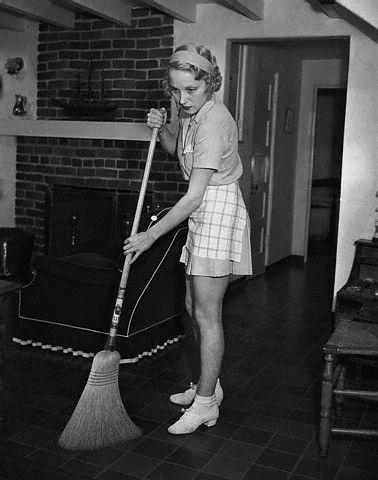
housework

I’ve said a lot of negative things about my mother, but I don’t hate her. Today I was thinking about how she got to be the way she is. While most narcissistic psychopaths are probably genetically predisposed to this condition and are missing the part of the brain that causes them to have empathy and compassion for others (actually it’s just not functioning properly), in most cases there are also psychological factors. Many psychopaths and narcissists were abused or neglected children, whose own parents failed to mirror them adequately as young children. So as unpleasant as they may be, their condition is not their fault. It was done to them.

I’ve already described my mother as a vain, self-centered, image conscious woman who almost always put her own needs ahead of those of her children and husbands, and chose me (as the youngest) to be her scapegoat. At times I was also her golden child, especially prior to my teen years when I started to rebel, and she loved to make me in her own image, dressing me up like I was a little doll. She expected me to act like one too, and flew into a rage if I ever had an opinion of my own or dared to challenge her.

The story I’m going to tell is gleaned from the scant bits and pieces I heard over the years, most of it described by people other than my mother. Like most narcissists, my mother is stunningly lacking in introspection. She almost never talked about her past or her childhood, and the few times she did, it was negative. Most of her anger seemed to be directed toward her mother, who she spoke of with contempt the few times she did mention her.

Ginny was a beautiful child with big blue eyes and light red hair. Somewhere in my mother’s home there’s a photo of her at about age two, and she is dressed in a pink and white dress with a Peter Pan collar, her bright hair is done in a 1930s bob, and she’s sitting in an oversized chair holding a large teddy bear on her lap. On her feet are brown high top shoes, and her little feet are sticking straight out toward the camera. Ginny’s expression is solemn, almost sad. In fact, she looks close to tears. I will probably never see that photo again, as I am not in contact with my mother and she’s in her 80s and probably won’t be here too much longer, even though she’s in good health for her age and still looks younger than her years. I wonder if at the time that photo was taken, Ginny’s narcissism was already ingrained, or if she could have still become a normal, loving woman had her circumstances been different. The sadness in her face tells me she was hurting. It’s the most vulnerable I’ve ever seen my mother.

Ginny was the fourth and youngest child born to a naval academy officer and second generation Irishwoman. The family was middle class, lived in a nice house in a safe neighborhood outside Annapolis, Maryland, and raised all their children as Roman Catholics. Because Ginny’s father was in the military, when the Depression hit, the family didn’t suffer too much financial hardship and his job remained secure. But Theodore (her father) was a heavy drinker, probably an alcoholic, and started drinking almost the moment he got home from work. Anna Marie (Ginny’s mother) suffered from melancholia (what we now know as major depression) and after Ginny was born, took to her bed and stayed there for most of her childhood and teen years. She may have been suffering from postpartum depression, but in those days, no one knew about such a thing. Anna Marie started to neglect her duties as a housewife and mother, saying she was “too sick” and had to lie down.

Ginny was the most attractive of the four children, and the only one with blue eyes. She was obviously Theodore’s favorite child, and he constantly told her how beautiful and special she was. Anna Marie began to resent all the attention he showered on his favorite child, and became even more depressed (she may have been a narcissist herself). Theodore was a faithful husband (from all accounts) but his wife’s demands were wearing him down and he began to drink even more. Sometimes he came home from work already drunk and often he would pass out after eating dinner, so that no one was running the household but the children.

By this time Ginny was about six, and her older sisters (who were in their teens) and brother (who was about 11) weren’t interested in keeping the house clean or taking care of their exhausted, drunk father and depressed, ill mother. Ginny hated dirt and disorder, and took it upon herself to keep the house clean and cook the family meals (Anna Marie was a bad cook). Her sisters were always out at parties or on dates and of course her brother was a boy so he wasn’t interested in keeping up the home or taking care of the family. Soon Ginny was the sole caretaker and became her father’s young surrogate wife. (I don’t know whether or not she was sexually abused, but it would not surprise me and I assume she probably was). Anna Marie developed a hatred for Ginny, who seemed to be everything she was not and also got all her husband’s attention. Theodore’s adoration of Ginny increased, and he began to depend on her for everything, including confiding his problems in his marriage. Ginny seemed sympathetic, but was already plotting to leave the home.

At age 15, Ginny had become a drop dead gorgeous young woman. She left her family and dropped out of high school to marry a young man from the naval academy who was studying to be a Methodist minister. She took a job modeling for the local newspaper to help makes ends meet. By 18 she was pregnant and gave birth to her first daughter, and a few years later she had her second child, also a girl. But Ginny was tired of the church dinners and the drudgery of family life. She was bored and longed for excitement that her two young daughters and minister husband couldn’t provide. So when her daughters were just 7 and 2, she left them to marry my father. It was the late 1950s, and a woman leaving her husband and children just wasn’t done, but she did it without a second thought.

Although her older daughter had abandonment issues and hated Ginny for years for leaving, today my mother lives in her home and my sister’s become Ginny’s most loyal flying monkey. I barely ever knew my sister, but I was told several years ago that I was not welcome in her home because my sister didn’t want me there. Either my mother didn’t want me there and blamed it on my sister, or my sister is a sheep who believed all Ginny’s lies about me. Ironically, my sisters were much better off than if she hadn’t left them because the woman who married her jilted husband and raised them was a kind, nurturing woman, almost the polar opposite of my mother.

Another irony is that even though my mother, as a malignant narcissist, is completely lacking in compassion, both her father and my father were taken in by Ginny’s fake “sympathy.” Ginny listened to her dad talk about his marital problems when she was a teenager and offered him kind words and a ready ear; and recently my son told me how my father fell in love with Ginny (my father never told me this story but he told him): my father’s 3 year old son from his first marriage had been hit by a train and died, and my mother offered him a shoulder to cry on and a sympathetic ear and soon he was madly in love with her.

I clearly remember when my grandmother suffered a major stroke at age 57 when I was only 7, my mother’s comments after seeing her in the hospital. All she could talk about was how helpless and disgusting she was (the stroke had left her paralyzed from the waist down and incontinent) and how she couldn’t wait to get out of there. Even at that young age, I was horrified by my mother’s callous remarks about her own mother.

Even though I don’t use my real name or their real names, sometimes I think it’s just a matter of time until she discovers this blog. I had to go inactive on Facebook because of her extended family all finding me there.