Words as weapons.

by Photos8.com

by Photos8.com

If you were raised by narcissistic parents, you are probably familiar with these.  These are the words I heard from my parents (yours may differ somewhat but the devastating effect is the same).  I’ve broken them down into childhood, adolescence, and adulthood, since the emotional abuse doesn’t stop when you become an adult.  Sometimes it gets worse. No matter what stage of life you’re in, these words are intended to destroy your soul. They are extremely effective weapons.

Childhood:

child-abuse1

You are too sensitive (the #1 criticism)

You have no sense of humor.

You cry too much.

Shut up or I’ll give you something to cry about.

Your hair looks like a rat’s nest.

You always look so dirty and sloppy. (after being outside playing)

What did you do to your hair? (I did nothing; my hair was naturally thin and fine and tangled easily–and also grew in a strange way with cowlicks and weird curls)

You read too much.  (what?)

You’re too obsessed with your books, drawing, and solitary games. (These were my escapes)

You act so immature; no wonder you have no friends.

You know you hate competition (when I wanted to join the swim team)

You know you’re not good at team sports. (I wasn’t, but this made me doubt myself even more when playing team sports)

I don’t think you really want that. (subtle gaslighting intended to make me doubt my own reality)

Here, let me do that for you.  (a favorite of my mother’s when she didn’t have the patience to teach me or supervise me in a new or unfamiliar activity)

You’ll only make a mess of things. (another way to discourage my competence).

They’re just jealous of you because you’re prettier/smarter than they are (this seems nice but wasn’t based on reality and even I could see through that BS; I was bullied because of my high sensitivity, not my “superior” looks and intelligence)

You come from a better family than they do. (better in what way?)

We don’t associate with people like that. (see above–my parents were VERY into social status)

Don’t tell anyone what goes on in this family.

Keep your mouth shut about what happened here tonight.

Adolescence

teenager_sad

You’re gaining too much weight.  (my mother’s #1 favorite criticism, usually done in front of others)

You’re too fat (when I weighed 120 lbs at 5’4″!)

Your hair looks too stringy/greasy/what have you done to it, etc.  (a variation on the childhood hair criticism)

You eat too much chocolate, you will get pimples and no one will think you’re pretty anymore.

You’re boy-crazy!

You don’t study hard enough; you will fail all your subjects and not graduate (always catastrophizing)

You’re too pretty to wear that/do that/say that, etc.

You know you don’t want that. (making me doubt my reality)

You know I don’t like it when you act “tough” (but my sensitivity was hated too–I could never win).

You always get too hurt by everything (no empathy after a breakup or lost friendship, etc.)

You always get too obsessed with a boy.

This dress will make you look slimmer (this was a dress given to me in front of my friends at a birthday party)

Your butt is too big (I do have a big butt–I couldn’t help it!  It’s the way my spine curves. What was I supposed to do? Slice it off?)

Your breasts are so big they will hang down to your waist when you’re 50.  (I’m over 50 now and they don’t, they weren’t THAT big, and I think there might have been some envy in this anyway because she wore an A cup and I wore a C)

You’re acting like a crazy person.

What a stupid thing to say.

You have a terrible personality. I wouldn’t like you either.

You should change your personality.

You need to learn to control yourself.

You’re not goal-oriented.

Adulthood:

depressed_woman_bw

You’re living  a loser’s life.

You have nothing to show for your life.

You make terrible choices.

You’ve always made terrible choices.

You probably did something to deserve it. (always said when someone else treated me unfairly; no empathy shown)

Well, the way you are, I’m not surprised they are so angry with you/don’t like you, etc.

You’re a disgrace.

You never learn from your mistakes.

You overreact to everything.

You have no sense of humor/too sensitive, etc.

You don’t know how office politics works.  (I don’t, and I hate it, but this was meant to insult me)

You never did have a knack for making it in the business world.

You’ll always be poor because you make such terrible choices.

Don’t expect any help from us.

You made your bed, now lie in it.

Why don’t you join a convent? The nuns will take care of you.  (said when I was threatened with homelessness during my divorce).

Go live in a homeless shelter (see above).

You don’t take good care of your kids.

You’re a terrible parent.

Those kids are going to grow up with so many problems.

You weren’t raised to be this way.

It’s not my responsibility that what I said upset you.

You chose to be upset by that.  (again, taking no responsibility and blame-shifting).

You choose your own emotions. (see above).

You made a choice to be depressed/miserable, etc.

****

I could go on, but I think this is enough for now.   Do any of these sound familiar to you?

Further Reading:
Lies My Narcissists Told Me
A new day.

sunrise2

It’s the first day of Summer (or is it the second?), and things look much brighter today than they did last night. In the midst of a severe BPD/C-PTSD “episode,” (I’ll explain more in a minute), I published a post, “Why I’m a Wreck,” which I just set to private and will probably delete eventually. I thank all of you for your prayers and good wishes. I feel like I have a family here. ❤

I’m very symptomatic right now and overreacting to everything. I’m paranoid and hypervigilant. I see evil everywhere and demons in every corner (but the demons are only in my own mind).  I’m having trouble being mindful and trying to stay in the present.  I’m thinking in a more black and white way (splitting) than I have in a long time. I’m catastrophizing and imagining the worst possible outcomes about everything.  I’m “going off” on people and getting angry at them for no reason.    Example: I don’t agree with my roommate’s religious views, and I became very judgmental and actually yelled at her, telling her what she believed was “stupid.”  I immediately felt terrible about it and apologized; being so judgmental is not like me (but it is like me when my BPD is in full bore).   When a lot of things happen at the same time, it can really overwhelm anyone’s system (even if you’re free of BPD or C-PTSD) and it’s hard to keep your grip and stay mindful.

An example of my “catastrophizing” was believing my son has NPD. I talked to him again today, and he certainly does not. He may have a few of the traits of narcissism, but he does have empathy and he isn’t manipulative and he doesn’t play evil mindgames. He was in a bad mood last night and it was late. We talked today and he was much more sympathetic.

Two things have brought on this sh*tstorm of triggers and symptoms.

1. I’m getting deeper into therapy, into the really “difficult stuff.” It isn’t fun anymore. It’s hard, painful work now. I found this hard to believe when I started, that I’d get to a point where I’d be in so much pain as buried traumatic memories begin to emerge to consciousness. I have to keep reminding myself that this is all good; the pain and “regression” back into earlier ways of dealing with stress means I’m healing.

2. My father’s death. I’m grieving in my own way, but more than sadness is a lot of anger, and a lot of old, painful memories are being triggered by this too. I’m actually remembering events I thought I’d long forgotten.

God works in mysterious ways. It was my father’s time to die, but it also happened at a time where I felt “stuck” in therapy–not moving any faster and not able to access buried emotions brought on by trauma. My father’s death has made it possible for me to do this work, and it is work.

As for my daughter, her moving back in with me, as one of my commenters (Susan?) said in the post I just deleted, may be the best thing for both of us. I just need to set some firm boundaries but I think she will respect them. I never thought her living with her dad was a very good idea.

And, I’m not sure yet, but there may be a out of state move in our not very distant future–one that would bring the three of us (me, and both my kids) together as a family again and have a fresh start.  I don’t want to get my hopes too high about this though.  But it could happen.

In a dark place.

All I’ll say right now is I’m in a very dark place and my daughter is too (no, it isn’t drugs but it is her father who is evil to the core and now she is homeless). Please offer your prayers for us. I’m really afraid for her. I’m not doing too well myself. That’s all. I don’t feel like writing much else tonight. Sometimes the world just seems like a very hostile place.

HSPs and empaths, take heed! You cannot heal a narcissist!

sad_angel

In my readings and observations of people in the narc-abuse community, I’ve become aware that Highly Sensitive People (HSPs), empaths in particular, are highly attracted to narcissists. The reverse is also true–narcissists see an empath and smell blood.  As an HSP myself (though not an empath), I have always been drawn to narcissists as friends and romantic partners.   This has gotten me into a world of trouble and almost destroyed me until I finally learned to resist their “charms” and go No Contact whenever possible.

Why Empaths are so attracted to Narcissists.

empaths_narcs

It’s a psychological truism that we tend to be attracted to people similar to the people who raised us.  For those of us who were the most sensitive child in the family and as a result, became the family scapegoat, developed codependent personalities, or even developed a form of Stockholm Syndrome toward our abusers, we continue to carry our legacy or “people pleasing” into adult life and find ourselves drawn toward other narcissistic people, who are very good at promising us the world and vowing to solve all our problems.   But getting involved with a narcissist is the ultimate bait and switch–they make a lot of empty promises to love you unconditionally and never betray or hurt you, but they don’t deliver.  Not even close.  All they care about is feeding off of your love and generosity in order to keep their false self inflated like a balloon toy.

Not only are we fooled into believing the narcissist will be the answer to all our woes and fill our own inner emptiness, HSPs and empaths are also drawn to the “hurt inner child” inside every narcissist.  Most people can’t see the emotional void and deep unhappiness at the core of an NPD; they just see the narcissist as either a likeable charmer or a huge A-hole (depending on their role to the narcissist or stage of the relationship), but empaths see beyond the “false self” to what really lies beneath the carefully constructed facade.    This is why empaths and HSPs were so often scapegoated as children–because they were children who could see the ugly truth and sometimes even blew the whistle on the narcissistic parent–and nothing terrifies a narcissist more than being exposed as living a complete lie.

I’ve talked to quite a few empaths who actually seek out narcissists to love, in spite of having been educated about narcissistic abuse and the very real dangers they pose both spiritually and emotionally.  Empaths who choose to love a narcissist and think “this one is different” really ought to know better.   They look at a narcissist and don’t see a predatory, toxic individual who only seeks to use and abuse for their own gain; instead they see only the “hurt inner child” living in darkness beneath the bright, cheerful facade.

Their observations and feelings are actually not wrong.   Because empaths can see the truth about people, the damaged person they take so much empathy on is real.  Narcissists are indeed hurt, damaged, deeply unhappy people, although some abuse victims prefer to think of them as inhuman devils without souls at all.   Narcissists are definitely human, but they are dangerous, and especially deadly to an empath, because of how much such a person tends to give of themselves and how codependent they can become.

Like moths drawn into the flame.

moth-to-the-flame-3

Narcissists are drawn to empaths because (even though an empath can see beyond the false self, which scares narcissists), they give them everything they want.   Deep inside, what every narcissist really wants is someone to love them unconditionally, and empaths are more than capable of doing that.  They are also deeply envious of the empath’s ability to feel with no shame, even if they deny and hide their own feelings.   Empaths are compassionate, patient, self-denying, always willing to listen without judging, and generous with their time, money, possessions, emotions, and everything else they have to give, both tangible and intangible.  An empath’s love for a narcissist will cause them to stick by them no matter how much abuse gets dumped on them in return.   Empaths are perfect candidates for Stockholm Syndrome.   They will keep giving and giving, while the narcissist gives nothing in return except heartache and pain.

Some empaths may seem masochistic because everyone else can see that the narcissist is sucking the empath’s lifeblood away, turning them into a dried up husk of the whole person they once were, but the empath, like a moth driven to a flame, continues to give and give and give until they have nothing left to give.   It’s not masochism that drives an empath to stay with the narcissist and allow this abuse, though–it’s the deep belief empaths have that their unconditional love alone can heal the narcissist and make them whole again.

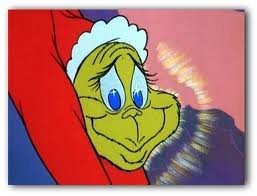
It’s a beautiful idea, that unconditional love can heal a narcissist and transform them into loving, authentic human beings.  It would be nice if things really worked that way, but only in fairy tales and movies do such things happen.   The Beast is won over by Beauty’s love and is transformed into a loving prince;  the miserly Scrooge is transformed into a generous and compassionate philanthropist;  The Grinch grows a huge heart out of the hard little stone in his chest when he hears the Whos singing down in Whoville in spite of having all their Christmas presents stolen;  Jerry McGuire changes overnight from a selfish, materialistic jerk into a nice guy.  Usually it’s the love of someone else–often a woman or child–who is the catalyst in getting the narcissist to change their evil ways.  These movies and stories touch our hearts and bring tears to our eyes because we wish life were really that way.

grinch_heart grinch_heart2

It’s tempting, if you’re an empathic type of person, to want to reach that hurt inner child inside your narcissist and through your unconditional love alone, give them the courage to jettison their false self and let that inner child out, and finally learn how to love.   But what’s far more likely to happen is that in spite of your best efforts, the narcissist will not change and will resist or even attack your efforts to transform them.   They will just keep taking from you, for they have no idea how to give of themselves or how to love.  You become drawn deeper into their web of misery and darkness, and eventually have nothing left to give and finally, your soul is destroyed beyond repair.

The only way to help a narcissist.

You cannot help a narcissist by giving them your love.  The best way to help a narcissist is to stop giving them narcissistic supply–in other words, going No Contact.   Only then is there a small chance that without that fuel, they will be forced to confront their own emptiness and pain, which could lead to them seeking professional help.   But don’t count on it.  Most likely, they will just move on to a new source of supply or try to hoover you back in.

I’ve stated many times that I don’t think most narcissists are beyond hope.  I’m one of the few narc-abuse bloggers that holds to that view, and sees narcissists as a different, more dangerous type of abuse victim.   It’s not a very popular view, but it’s mine and I’m not likely to change it.  A few weeks ago, I wrote about Apostle Paul, a malignant narcissist if there ever was one, who was changed by the Holy Spirit into a righteous (if still slightly arrogant) devoted follower of Christ.    I know of NPDs who are in therapy or treatment, or were in therapy and have actually been deemed NPD-free or are at least working hard to change their ways and become more authentic, loving people.  NPDs  are sad people who know their lives are empty and shallow and essentially meaningless, even if they never admit it.  Some even become consciously aware of how exhausting and essentially unfulfilling their dependence on others to feel good about themselves (and what they feel good about isn’t even who they really are) really is.

I’ve always believed that with both self-awareness (knowing one is a narcissist) and willingness to change (disliking what one has become), that healing becomes possible.  But change isn’t something that can magically happen through an empath’s unconditional love.   If it’s going to happen at all, it takes years and years of difficult and grueling therapy by a trained professional who knows exactly what works for this disorder (and what doesn’t)–and because they are trained in this, are not going to get pulled down into oblivion by allowing the narcissist to feed on their heart like a predatory animal.   Healing can also come through an act of God, as it did with Paul.    We can love a narcissist (but from a safe distance!), and we can ask God to help him or her–and maybe that will turn out to be God’s will too.  You never know.  God may have a special mission for them and decide to remove the scales from their eyes.   But please, empaths and HSPs, never try to cure a narcissist yourself through your unconditional love.   It won’t work.  You don’t know how to do it.  Leave it to the professionals and God.

I am a Highly Sensitive Man by Rick Belden

Absolutely fascinating first person account of what it’s like to be a highly sensitive man … in an increasingly insensitive world.

Narcissists Don’t Want Unconditional Love

Please leave comments under the original post.

Persia's avatarBlog of a Mad Black Woman

6276d5481126dbb173e4e139219a4667

View original post

Why I love Twitter.

ilovetwitter

It wasn’t love at first sight.

When Twitter first came out, I didn’t get it.    I hated having to edit my thoughts down to 140 characters.   It seemed stupid and pointless to me.   As an INFJ who tends to like to ramble on and analyze everything down to its molecular structure, keeping my thoughts and feelings so constricted seemed impossible and what’s more, it seemed so shallow.  I had the idea that Twitter was nothing more than celebrities and other notable people with “verified accounts” “tweeting” about the most inane banalities of their glamorous, perfect, exciting  lives–and everyone else just trying to collect as many followers as they could.  What could you say in 140 characters?  Not much, it seemed.  Oh, how wrong I was, but I’ll get to that in a minute.

There might have also been something about its name.  “Twitter” and the term “tweet”  just seemed so childish and dumb.   But after all, a rose by any other name is still a rose.

I gave up on Twitter for awhile out of sheer frustration.  I wanted to be able to pontificate and ramble on as long as I pleased.  Blogging, of course, allowed me to do that.    But when I began to blog, I realized that sharing to Twitter is important in getting more views and exposure.    At first, I used it almost exclusively to share my posts, and rarely “tweeted” anything.  I still don’t really tweet a whole lot but I’m starting to more than ever before.

It helps you slim down “fat” writing.

I’m finally getting the hang how to use Twitter effectively.  It’s a skill you have to learn. I’m actually finding that the art of composing a tweet is a great exercise for writers who tend to write overly descriptive “purple prose,” like I do.   In a tweet, it’s entirely possible to still get a lot of “meat” in those 140 characters, but you have to cut out all the “fat.”   That’s something most writers can benefit from–getting down to the meat and bones of an issue.

Deep thoughts in 140 characters or less.

Some Twitter uses are masters at composing compelling, interesting, hilarious tweets that actually contain a lot more depth than you’d ever think possible.  Some are so good they’ve gone viral.   Some are even profound.   These tweets become quotable.   Sure, Twitter is also a platform for celebrities to blather on mindlessly about their charmed lives and for non-thinking nonfamous Tweeters to comment on the most inane, banal things you can imagine, but for many of us, especially those of us who write,  Twitter forces you to think first about what you have to say and say only what is important.  You learn to streamline your writing and organize your thoughts in a clear and direct manner.  It’s a real skill and it takes time to learn to compose a good tweet.

There’s lots more to love.

There are other things I like about Twitter too.    I can’t speak for others, but for me, I don’t have to worry about family members and people from other areas of my life outside my blogging life seeing my tweets (probably because so few people I know IRL even use Twitter).   Unfortunately on Facebook and LinkedIn I have that problem (the boundaries of different areas of my life merging together in a most unsettling way), so I can’t always share all my posts on either of those platforms.   There also seems to be very little drama on Twitter.   Again, maybe that’s just my own experience though.  My Twitter followers don’t like wasting their 140 characters to troll someone.

I also like the simplicity of Twitter.  It’s a lot easier to use and navigate than Facebook, which has become way too cluttered with apps, digital bells and whistles, ads, invitations for games, too many features, and just way too complicated overall.   Twitter has only what you need and that makes it a lot easier to use.

I also like the real time feel of Twitter.   You get news and relevant information quicker than on any other social media site.  My feed continually supplies me with teasers and links to news stories and articles that are in line with my interests.   If the tweet looks compelling, I can click it on and read the whole story, without having to slog through 1,675 badly written words to get the gist of what someone is trying to say.   It’s all right there in one or two concise lines and I can scan through my feed and choose what to look at right then and there.

I also like Twitter because it seems my posts get the most views and shares there (outside of Facebook, when I do share articles there, which is only about half the time).   I’ve also made more friends on Twitter that share my exact interests more than anywhere else.  People are always retweeting your stuff and most of my Twitter followers have found me and my blog that way.

Twitter isn’t just for twits.

I read recently that Twitter is having problems and its growth has been slowing, mostly because people just don’t “get” it.  Like I did at first, a lot of people have this idea Twitter is for shallow people with shallow interests. Again, it could be that name, which can be offputting.  Facebook continues to grow like a cyber-cancer swallowing up everything in its path, but in my opinion, it’s lost any original attractiveness it may once have had (if it ever had any), and has  become something vaguely unpleasant, like a summer cold or a surprise visit from the Jehovah’s Witnesses.  I try to avoid it when I can, which isn’t easy to do.

As far as other social media, I think there are limitations to their appeal.  I don’t use Pinterest or WhatsApp,  I have a Reddit account but don’t really understand how it works, Tumblr is basically just a blogging site (I do share my posts there too), Instagram is for photos, and  LinkedIn bores me most of the time and is even more confusing to use than Facebook.   Stumble Upon is fun and a great way to share your posts (and they do get views!) and also find articles in line with your interests, but it’s not a social media site in the sense that the others are.   If I could only use one social media site, I’d pick Twitter.  I hope it’s around forever.

Painting therapy, Part II!

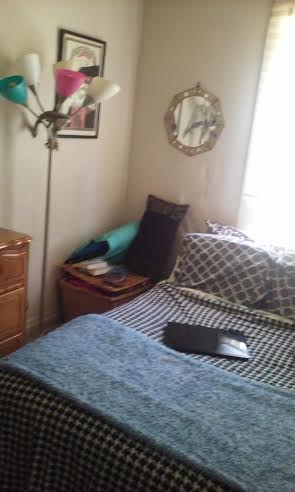
I finally finished my painting projects. Here are two views of my bedroom with its new look!

room_view1 room_view2

I also spray painted a old wooden table on the porch–it was bright green but the paint was chipping off so I had to redo it. There was enough spray paint left in the can for one more project.

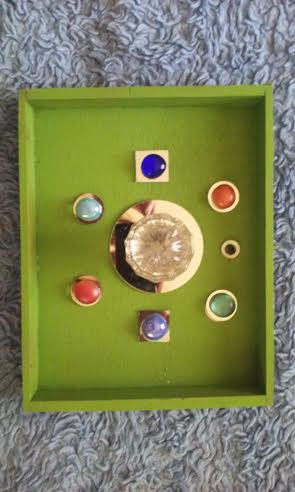
I had an old glass doorknob (from this house but I can’t reattach it to the closet door it fell from). I think it’s an original doorknob–the house was built in 1908. I needed something on my bathroom wall, and decided to make a towel rack out of it. I took apart a wooden cigar box, painted it, and turned it into a sort of shadow box, with the doorknob epoxied to a mirror at the center. It’s drying now. I can’t wait to hang it in my bathroom!

doorknobhanger1

doorknobhanger2

Nothing like being a shaky, twitchy, anxious, paranoid, angry BPD/C-PTSD in full trigger mode, to get those creative juices flowing. Doing these things really helped me stay in the present and even almost sane.

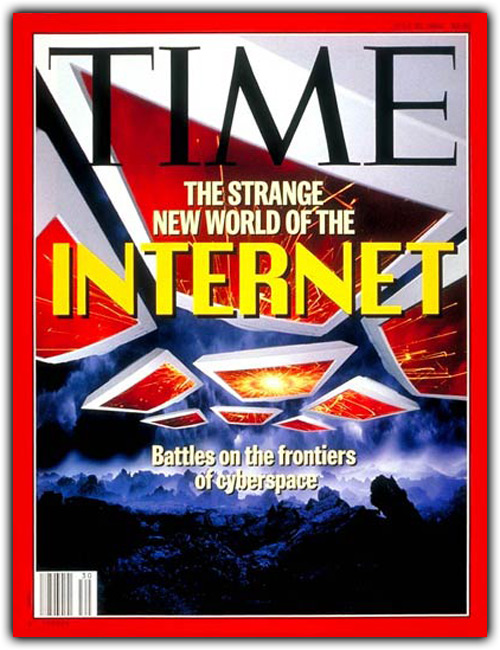
6 ways the 1990’s were more like the ’60s than they are like today.

time-internet-1994
Time magazine cover from 1994.

It may not seem like it, but the 1990s are now a really, really long time ago.   I was gobsmacked one day not long ago when I realized the year my son was born (1991) is exactly halfway between 2016 and 1966!   1991 only seems like yesterday, while 1966 seems like it might have been a thousand years ago.   Of course, time does seem to speed up the older you get (I was just a little kid in ’66), but the chunk of time between ’66 and ’91 seems light years longer than the same chunk of time between ’91 and today.  What the hell is going on?!

In some ways, the 1990’s don’t seem much different than today.  The fashions haven’t changed all that much, women in the workplace was a given, computers and video games were around (even if they were clunky and primitive) so that decade still seems fairly “modern.”   But not really! In actuality, things have changed so fast in the last two decades (technology especially) that the 1990s really more closely resemble the 1960s than they resemble the mid-late 2010’s.    Here are six ways they do.

1. There was no (well, hardly any) Internet.

dialup2

Not for most of the decade anyway.  The Internet actually existed as early as 1969, and was called Arpanet back then. It was used only by the Department of Defense and by university employees and scientists working for the government.    Yes, there was email in the 1970s too.  But no one else had access to the ‘net and probably wouldn’t have wanted it since it was so much more complicated to use in those days.  During the ’80s, computers became ubiquitous, but it wasn’t until the late 1980’s that Windows began to replace DOS, making computing a lot easier and more fun.  In 1991, the World Wide Web went public, but it didn’t really catch on until the mid-late ’90s.   I remember a lot of people dismissed the Internet as a “fad” back in those days.   And of course, at first, there wasn’t much on it so it wasn’t the time consuming addiction it is today.   Few people had Internet until the last years of the decade, and of course there was no social media, so people got their news and gossip the old fashioned way–by reading newspapers, watching the news, or making a phone call.    We were all still isolated from each other.  It would be unheard of to chat in real time with someone in, say, the Phillippines.

2. People still relied on land-lines, pay phones, and called long distance.

payphone

There was no social media, the first cell phones were clunky, inefficient, expensive affairs called “car phones,”  and the closest thing to texting was something called a pager–where you still had to find a land line or phone booth to contact whoever paged you.   People still worried about their long-distance bills.  Although Mama Bell had already given birth to her five “babies,”  Bell Telephone still had a monopoly on the phone industry.  When you set up phone service, you were given a Bell phone rather than buying a phone from a myriad of manufacturers because they didn’t exist yet.   Pay phones were still on every corner and in front of every gas station and grocery store, and if you did have Internet,   you had to sign off in order to make a phone call. You could actually have a conversation with someone without them suddenly having to interrupt you to “take a call.”

3. Kids still played outside.

Group of children running together

Yes, there were computer and video games and Game Boys and cable TV, which tended to keep kids inside more than in earlier decades,  but there was a lot less to do than there is today.   The games were pretty primitive and didn’t have great graphics and were a lot simpler–not as many “levels” you could achieve.  You also couldn’t play games over the Internet with other users or chat with kids in other states or countries.     Although parents were more anxious about letting their kids out to play unsupervised than they had been in earlier decades, kids did still play outside when they grew bored with the limited technological activities at home.

4. The economy was booming and it was easy to find a good job.

job_application

Whether you loved Bill Clinton or hated him, you gotta admit he got the economy going and in a big way too.   Jobs were everywhere, and they weren’t all low wage service jobs like they are today.  Companies still cared about their employees, encouraged employee growth, and offered good health insurance and other benefits, generous vacation time, and even time and a half pay for hourly workers who worked overtime.   There were lots of start up companies, and although many of them (the Dot Com boom) went bankrupt later, there was always a job to be found.  You also didn’t have to apply for a job online only to have your email or online application never even seen by anyone.  In those days, you could still walk into a place and ask for a written application, and sometimes even see a manager that same day.   It still wasn’t a rarity to lose or leave one job but be able to find a new job the next day, and sometimes a better one.

One other thing–you weren’t likely to be “profiled” and have background checks run on you the way you are today.

5. People still listened to rock music on the radio and bought “records.”

radio

The ’90’s is thought by many to be one of the best decades for rock music.   Grunge got its start in the early ’90s, but there were plenty of other new rock and pop genres being played too–and you could hear all of it on most radio stations that played music.   Deejays were still allowed to play what they wanted, rather than playing only what corporate executives told them to play, and there was a lot more variety in the kinds of music being played.   Today, if you listen to the radio at all, you’ll hear the same 10 songs played in rotation, and those 10 songs all sound pretty much the same.  Although there’s still rock music being made, it doesn’t get airplay on commercial radio.  You have to find a local indie station or go to Youtube or Sirius for that.   Also, people still bought their music in tangible form. Okay, they were CD’s rather than LPs, but it was still something you bought in a store and could hold in your hand and have the pleasure of peeling off the cellophane.

6. People still read magazines, newspapers, and books.

newsstand

Magazine, paper, and book sales have plummeted, due to Internet “magazines” and websites and digital readers like Kindle. Sure, there are book purists and books may never really go away because there’s nothing like the smell and feel of a book, but magazines? I could see them going the way of 8 Track Tapes in the not too distant future. What will we do in waiting rooms when that happens? Play on our phones, I guess.

Can you think of any other ways the ’90’s resembled the 1960’s more than today?

Painting therapy.

whitepaint

I had a dream that I painted my walls, so that’s exactly what I’m going to do.  I think it will be therapeutic because it will help me stay mindful and in the present.    I think the dingy, stained beige has been depressing me, so I’m going to paint them bright white!  🙂