Children are educated about malignant narcissism and psychopathy at an early age through seemingly innocent fairy tales. A large percentage of them are really tales of jealousy, envy, pride, vanity and greed. The evil intentioned villains are usually in a parental or caregiving role, and the young heroes who draw the abuse and wrath of the villain must find a way to survive–which means either escape or destruction/disempowerment of the villain.
The plot descriptions for the first four are all from Wikipedia.
Cinderella

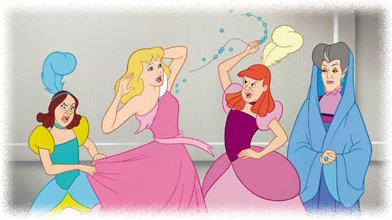
There are many different versions of this famous story; this is one of the most famous. In this tale, the malignant narcissist is Cinderella’s envious stepmother and her two stepsisters. Cinderella is clearly the Scapegoat Child, and her stepsisters the Golden Children.
A wealthy gentleman’s wife lay on her deathbed, and called her only daughter to her bedside. She asked her to remain good and kind, and told her that God would protect her. She then died and was buried. A year went by and the widower married another woman, who had two daughters of her own. They had beautiful faces and fair skin, but their hearts were cruel and wicked. The stepsisters stole the girl’s fine clothes and jewels and forced her to wear rags. They banished her into the kitchen to do the worst chores, and gave her the nickname “Aschenputtel” (“Ashfool”.) Despite all of this the girl remained good and kind, and would always go to her mother’s grave to cry and pray to God that she would see her circumstances improve.
One day, the gentleman visited a fair, promising his stepdaughters gifts of luxury. The eldest asked for beautiful dresses, while the younger for pearls and diamonds. His own daughter merely asked for the first twig to knock his hat off on the way. The gentleman went on his way, and acquires presents for his stepdaughters. While passing a forest he got a hazel twig, and gave it to his daughter. She planted the twig over her mother’s grave, watered it with her tears and over the years, it grew into a glowing hazel tree. The girl would pray under it three times a day, and a white bird would always come to comfort her.
The king decided to give a festival that would last for three whole days and nights, and invited all the beautiful maidens in the land to attend so that the prince could select one of them as his bride. The two sisters were also invited, but when Aschenputtel begged them to allow her to go with them into the celebration, the stepmother refused because she had no dress nor shoes to wear. When the girl insisted, the woman threw a dish of lentils into the ashes for her to pick up, guaranteeing her permission to attend the festival, and when the girl accomplished the task in less than an hour with the help of two white doves sent by her mother from Heaven, the stepmother only redoubled the task and threw down even a greater quantity of lentils. When Aschenputtel was able to accomplish it in a greater speed, not wanting to spoil her daughters’ chances, the stepmother hastened away with them to the ball and left the crying stepdaughter behind.
The girl retreated to the graveyard to ask for help. The white bird dropped a white gown and silk shoes. She went to the ball, with the warning that she must leave before midnight. The prince danced with her, but she eluded him before midnight struck. The next evening, the girl appeared in a much grander gown of silver and glass shoes. The prince fell in love with her and danced with her for the whole evening, but when midnight came, she left again. The third evening, she appeared dressed in spun gold with slippers of gold. Now the prince was determined to keep her, and had the entire stairway smeared with pitch. Aschenputtel lost track of time, and when she ran away one of her golden slippers got stuck on that pitch. The prince proclaimed that he would marry the maiden whose foot would fit the golden slipper.
The next morning, the prince went to Aschenputtel’s house and tried the slipper on the eldest stepsister. The sister was advised by her mother to cut off her toes in order to fit the slipper. While riding with the stepsister, the two doves from Heaven told the Prince that blood dripped from her foot. Appalled by her treachery, he went back again and tried the slipper on the other stepsister. She cut off part of her heel in order to get her foot in the slipper, and again the prince was fooled. While riding with her to the king’s castle, the doves alerted him again about the blood on her foot. He came back to inquire about another girl. The gentleman told him that they kept a kitchen-maid in the house – omitting to mention that she was his own daughter – and the prince asked him to let her try on the slipper. The girl appeared after washing herself, and when she put on the slipper, the prince recognized her as the stranger with whom he had danced at the ball.
In the end, during Aschenputtel’s wedding, as she was walking down the aisle with her stepsisters as her bridesmaids, (they had hoped to worm their way into her favour), the doves from Heaven flew down and struck the two stepsisters’ eyes, one in the left and the other in the right. When the wedding came to an end, and Aschenputtel and her prince marched out of the church, the doves flew again, striking the remaining eyes of the two evil sisters blind, a punishment they had to endure for the rest of their lives.
Snow White

In this tale, the malignant narcissist is Snow White’s pathologically envious and vain stepmother.
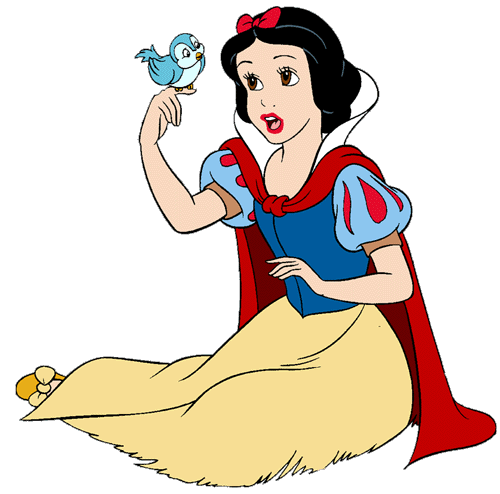
At the beginning of the story, a queen sits sewing at an open window during a winter snowfall when she pricks her finger with her needle, causing three drops of red blood to drip onto the freshly fallen white snow on the black windowsill. Admiring the beauty of the resulting color combination, she says to herself, “Oh how I wish that I had a daughter that had skin as white as snow, lips as red as blood, and hair as black as ebony”. Soon after that, the Queen gives birth to a baby girl who is as white as snow, has lips red as blood and has hair as black as ebony. They name her ‘Snow White’, but sadly, the Queen dies after giving birth to her.
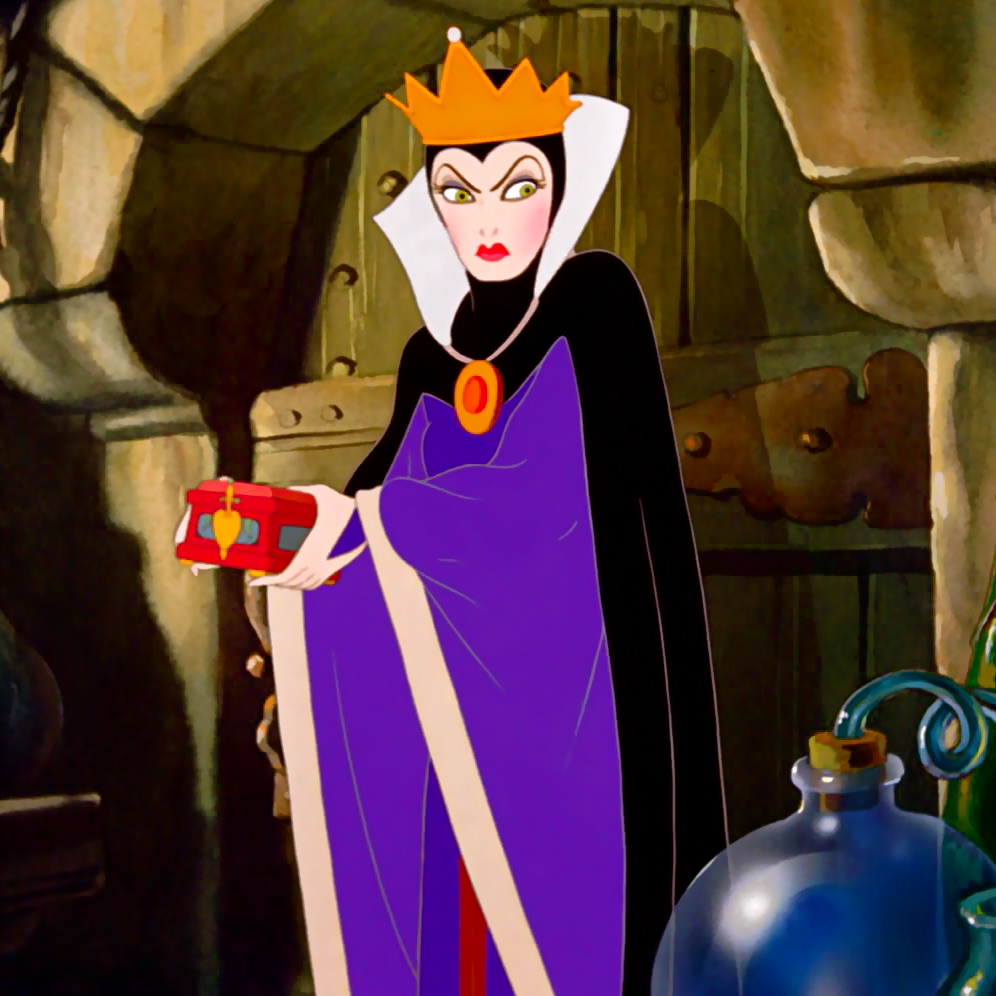
After a year has passed, the King takes a new wife, who is beautiful but also unutterably wicked and vain. The new queen possesses a magic mirror, which she asks every morning, “Magic mirror in my hand, who is the fairest in the land?” The mirror always replies, “My queen, you are the fairest in the land.” The Queen is always pleased with that because the magic mirror never lies. But when Snow White reaches the age of seven, she becomes more beautiful each day and even more beautiful than the Queen, and when the Queen asks her mirror, it responds, “My queen, you are the fairest here so true. But Snow White is a thousand times more beautiful than you”.
This gives the queen a great shock. She becomes yellow and green with envy and from that hour on, her heart turns against Snow White, and she hates her more and more each day. Envy and pride, like ill weeds, grow in her heart taller every day, until she has no peace day or night. Eventually, the Queen orders a huntsman to take Snow White into the deepest woods to be killed. As proof that Snow White is dead, the Queen demands that he return with her lungs and liver. The huntsman takes Snow White into the forest. After raising his knife, he finds himself unable to kill her as she sobs heavily and begs him; “Oh, dear huntsman, don’t kill me! Leave me with my life; I will run into the forest and never come back!” The huntsman leaves her behind alive, convinced that the girl would be eaten by some wild animal. He instead brings the Queen the lungs and liver of a young boar, which is prepared by the cook and eaten by the Queen.
After wandering through the forest for days, Snow White discovers a tiny cottage belonging to a group of seven dwarfs. Since no one is at home, she eats some of the tiny meals, drinks some of their wine and then tests all the beds. Finally the last bed is comfortable enough for her and she falls asleep. When the seven dwarfs return home, they immediately become aware that someone sneaked in secretly, because everything in their home is in disorder. During their loud discussion about who sneaked in, they discover the sleeping Snow White. The girl wakes up and explains to them what happened and the dwarfs take pity on her, saying; “If you will keep house for us, and cook, make beds, wash, sew, and knit, and keep everything clean and orderly, then you can stay with us, and you shall have everything that you want.” They warn her to be careful when alone at home and to let no one in when they are away delving in the mountains.

Meanwhile, the Queen asks her mirror once again; “Magic mirror in my hand, who is the fairest in the land?” The mirror replies; “My queen, you are the fairest here so true. But Snow White beyond the mountains at the seven dwarfs is a thousand times more beautiful than you”.[1] The Queen is horrified to learn that the huntsman has betrayed her and that Snow White is still alive. She keeps thinking about how to get rid of Snow White, then she disguises herself as an old peddler. The Queen then walks to the cottage of the dwarfs and offers her colorful, silky laced bodices and convinces the girl to take the most beautiful bodice as a present. Then the Queen laces it so tightly that Snow White faints, causing the Queen to leave her for dead. But the dwarfs return just in time, and Snow White revives when the dwarfs loosen the laces.
The next morning the Queen consults her mirror anew and the mirror reveals Snow White’s survival. Now infuriated, the Queen dresses as a comb seller and convinces Snow White to take a beautiful comb as a present. She brushes Snow White’s hair with a poisoned comb, and the girl faints again, but she is again revived by the dwarfs. And the next morning the mirror tells the Queen that Snow White is still “a thousand times more beautiful”. Now the Queen nearly has a heart attack in shock and rage. As a third and last attempt to rid herself of Snow White, she secretly consults the darkest magic and makes a poisoned apple, and in the disguise of a farmer’s wife, she offers it to Snow White. The girl is at first hesitant to accept it, so the Queen cuts the apple in half, eating the white (harmless) half and giving the red (poisoned) half to Snow White. The girl eagerly takes a bite and falls into a state of suspended animation, causing the Queen to triumph. This time the dwarfs are unable to revive the girl because they cannot find the source of Snow White’s poor health, and assuming that she is dead, they place her in a glass coffin.
Time passes and a prince traveling through the land sees Snow White. He strides to her coffin and, enchanted by her beauty, instantly falls in love with her. The dwarfs succumb to his entreaties to let him have the coffin, and as his servants carry the coffin away, they stumble on some roots. The tremor caused by the stumbling causes the piece of poisoned apple to dislodge from Snow White’s throat, awakening her. The Prince then declares his love for her, and soon a wedding is planned. The couple invite every queen and king to come to the wedding party, including Snow White’s step-mother. Meanwhile the Queen, still believing that Snow White is dead, again asks her magical mirror who is the fairest in the land. The mirror says; “You, my queen, are fair so true. But the young Queen is a thousand times fairer than you”.
Appalled, in disbelief, and with her heart full of fear and doubts, the Queen is at first hesitant to accept the invitation, but she eventually decides to go. Not knowing that this new queen was indeed her stepdaughter, she arrives at the wedding, and her heart fills with the deepest of dread when she realizes the truth. As a punishment for her attempted murders, a pair of glowing-hot iron shoes are brought forth with tongs and placed before the Queen. She is forced to step into the burning shoes and to dance until she drops dead.
The Sleeping Beauty(Perrault’s version)
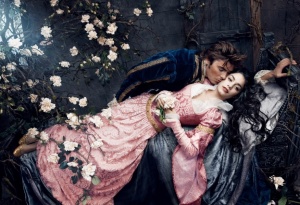
The malignant narcissist in this tale is an angry and envious fairy.
At the christening of a king and queen’s long-wished-for child, seven fairies are invited to be godmothers to the infant princess. The fairies attend the banquet at the palace and are seated. Laid before them is a golden casket containing gold jeweled utensils. Soon after, another fairy enters the palace and is seated without a golden casket. This eighth fairy is overlooked because she has been within a tower for many years and everyone thinks she’s been either dead or enchanted. Six of the other seven fairies then offer their gifts of beauty, wit, grace, dance, song, and music to the infant princess. The eighth fairy is very angry that she has been overlooked and, as her gift to the princess, enchants the infant princess so that she will prick her hand on a spindle and die. One fairy, who hasn’t yet given her gift, attempts to reverse the evil fairy’s curse. However, she can only do so partially—instead of dying, the Princess will fall into a deep sleep for 100 years and be awakened by a kiss from a prince.
The king forbids any sort of spinning all throughout the kingdom. Fifteen or sixteen years pass and one day, when the king and queen are away, the Princess wanders through the palace rooms and comes upon an old woman, spinning with her spindle. The princess, curious to try the unfamiliar task, asks the old woman if she can try the spinning wheel. The princess pricks her finger on the spindle and inevitable curse is fulfilled. The old woman cries for help and attempts are made to revive the princess. The king attributes this to fate and has the Princess carried to the finest room in the palace and placed upon a bed of gold and silver embroidered fabric. The king and queen kiss their daughter goodbye and depart, proclaiming the entrance to be forbidden. The good fairy who altered the evil prophecy is summoned. Having great powers of foresight, the fairy sees that the Princess will be awoken to distress when she finds herself alone, so the fairy puts everyone in the castle to sleep. The fairy also summons a forest of trees, brambles and thorns that spring up around the castle, shielding it from the outside world and preventing anyone from disturbing the Princess.
A hundred years pass and a prince from another family spies the hidden castle during a hunting expedition. His attendants tell him differing stories regarding the castle until an old man recounts his father’s words: within the castle lies a beautiful princess who is doomed to sleep for a hundred years until a king’s son comes and awakens her. The prince then braves the tall trees, brambles and thorns which part at his approach, and enters the castle. He passes the sleeping castle folk and comes across the chamber where the Princess lies asleep on the bed. Struck by the radiant beauty before him, he falls on his knees before her. The enchantment comes to an end by a kiss and the princess awakens and converses with the prince for a long time. Meanwhile, the rest of the castle awakens and go about their business. The prince and princess walk to the hall of mirrors to dine and are later married by the chaplain in the castle chapel.
After having been secretly wed by the reawakened Royal almoner, the Prince continues to visit the Princess. She bears him two children, L’Aurore (Dawn) and Le Jour (Day), which he keeps secret from his mother, who is of an ogre lineage. Once it was time for the Prince to ascend the throne, he brings his wife, children, and the talabutte (“Count of the Mount”).
The Ogress Queen Mother sends the young Queen and the children to a house secluded in the woods and directs her cook to prepare the boy with sauce Robert for dinner. The humane cook substitutes a lamb for the boy which satisfies the Queen Mother. She then demands the girl but the humane cook, once again, substitutes a young goat which also satisfies the Queen Mother. When the Ogress demands that he serve up the young Queen, the young Queen offers to slit her throat so that she may join the children that she imagines are dead. While the Queen Mother is satisfied with a hind prepared with sauce Robert in substitution for the young Queen, there is a tearful secret reunion of the Queen and her children. However, the Queen Mother soon discovers the cook’s trick and she prepares a tub in the courtyard filled with vipers and other noxious creatures. The King returns in the nick of time and the Ogress, being discovered, throws herself into the tub and is fully consumed. The King, young Queen, and children then lived happily ever after.
Little Red Riding Hood

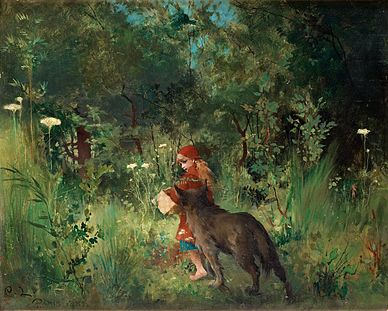
In this tale, the wolf is a psychopathic predator who pretends to be Riding Hood’s grandmother.
The story revolves around a girl called Little Red Riding Hood, after the red hooded cape/cloak (in Perrault’s fairytale) or simple cap (in the Grimms’ version called Little Red-Cap) she wears. The girl walks through the woods to deliver food to her sickly grandmother (wine and cake depending on the translation). In the Grimms’ version at least, she had the order from her mother to stay strictly on the path.
A mean wolf wants to eat the girl and the food in the basket. He secretly stalks her behind trees, bushes, shrubs, and patches of little and tall grass. He approaches Little Red Riding Hood and she naïvely tells him where she is going. He suggests that the girl pick some flowers; which she does. In the meantime; he goes to the grandmother’s house and gains entry by pretending to be the girl. He swallows the grandmother whole (in some stories, he locks her in the closet) and waits for the girl, disguised as the grandma.
When the girl arrives, she notices that her grandmother looks very strange. Little Red then says, “What a deep voice you have!” (“The better to greet you with”), “Goodness, what big eyes you have!” (“The better to see you with”), “And what big hands you have!” (“The better to hug/grab you with”), and lastly, “What a big mouth you have” (“The better to eat you with!”), at which point the wolf jumps out of bed, and swallows her up too. Then he falls asleep. In Charles Perrault’s version of the story (the first version to be published), the tale ends here. However, in later versions the story continues generally as follows:
A lumberjack (in the French version but in the Brothers Grimm and traditional German versions, a hunter), comes to the rescue and with his axe cuts open the sleeping wolf. Little Red Riding Hood and her grandmother emerge unharmed. They then fill the wolf’s body with heavy stones. The wolf awakens and tries to flee, but the stones cause him to collapse and die. (Sanitized versions of the story have the grandmother shut in the closet instead of eaten, and some have Little Red Riding Hood saved by the lumberjack as the wolf advances on her, rather than after she is eaten.)
The Wizard of Oz

Although of more recent vintage than fairy tales and therefore not considered to be one, I feel this story belongs here anyway.
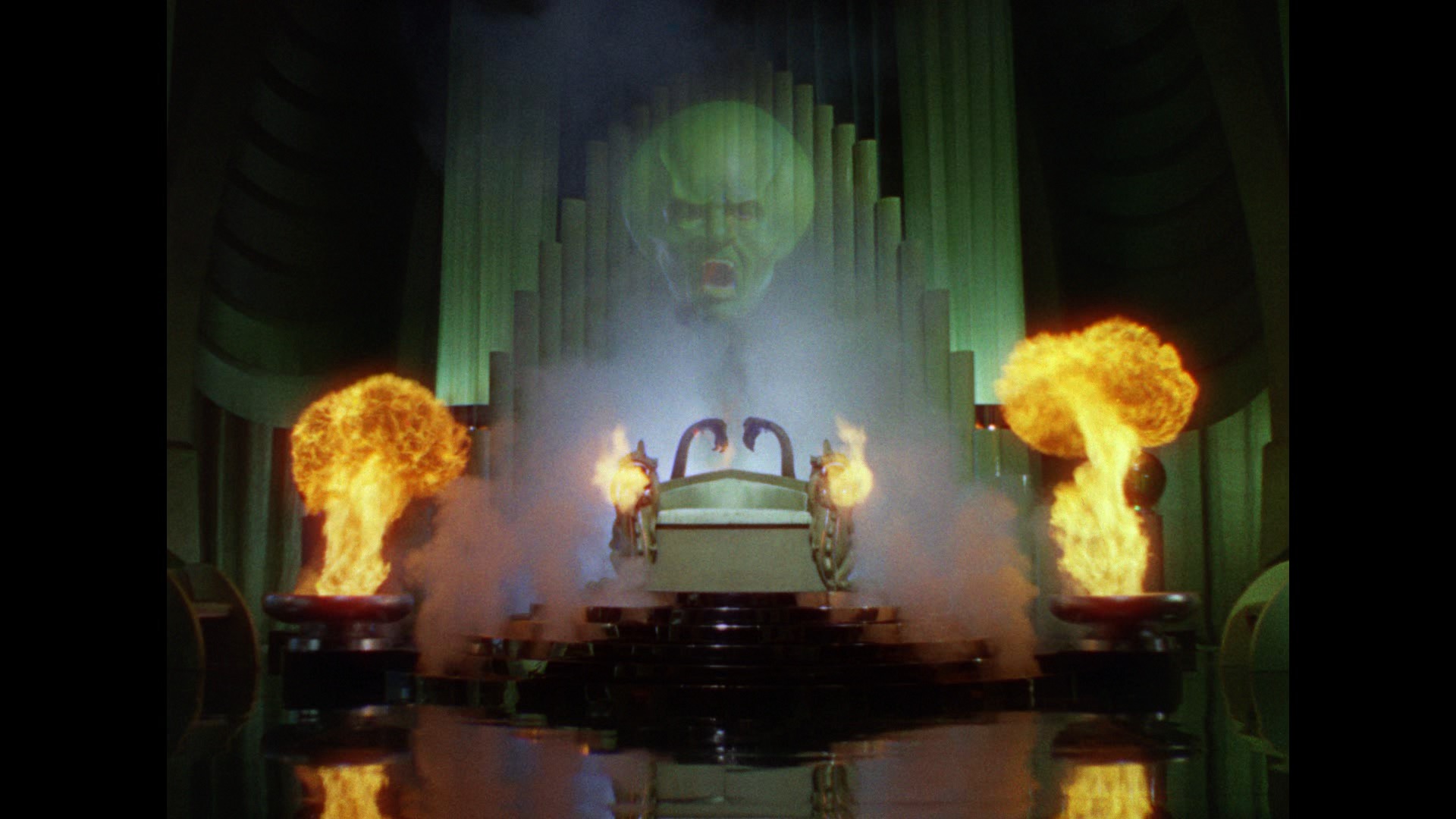
The Wicked Witch of the West/Miss Gulch is the psychopathic malignant narcissist. The Wizard, although not a villain, is also a narcissist whose mask of intimidating power and might is stripped away to reveal the True Self–a “humbug” with grandiose delusions and low self esteem. The fact that, in the film, the Wizard shows shame and remorse when he is called out by Dorothy for being a “very bad man,” indicates he’s either not a true narcissist (he may be a Borderline instead) or is very low on the spectrum.
The narcissistic abuse community’s term “flying monkey” came from this story. The flying monkeys were The Wicked Witch’s slaves that carried out her bidding, but they were really just victims themselves.
This IMDB.com plot description is for the 1939 movie.
Dorothy Gale is an orphaned teenager who lives with her Auntie Em and Uncle Henry on a Kansas farm in the early 1900s. She daydreams about going “over the rainbow” after Miss Gulch, a nasty neighbor, hits Dorothy’s dog Toto on the back with a rake, causing Toto to bite her. Miss Gulch shows up with an order to take Toto to the sheriff to be euthanized, but Toto jumps out of the basket on the back of Miss Gulch’s bicycle and runs back to Dorothy. Fearing that Miss Gulch, who does not know that Toto has escaped, will return, Dorothy takes the dog and runs away from home. She meets an itinerant phony fortune teller, Professor Marvel, who immediately guesses that Dorothy has run away. Pretending to tell her fortune and wishing to reunite Dorothy with her aunt, he tells her that Auntie Em has fallen ill from worry over her.
Dorothy immediately returns home with Toto, only to find a tornado approaching. Unable to reach her family in their storm cellar, Dorothy enters the house, is knocked unconscious by a loose window, and apparently begins to dream. Along with her house and Toto, she’s swept from her sepia-toned world to the magical, beautiful, dangerous and technicolor land of Oz. The tornado drops Dorothy’s house on the Wicked Witch of the East, killing her. The witch ruled the Land of the Munchkins, little people who think at first that Dorothy herself must be a witch. The Wicked Witch of the West, who is the sister of the dead witch, threatens Dorothy. But Glinda, the Good Witch of the North, gives Dorothy the dead witch’s enchanted Ruby Slippers, and the slippers protect her. Glinda advises that if Dorothy wants to go home to Kansas, she should seek the aid of the Wizard of Oz, who lives in the Emerald City. To get there, Dorothy sets off down the Yellow Brick Road.
Before she’s followed the road very far, Dorothy meets a talking scarecrow whose dearest wish is to have a brain. Hoping that the wizard can help him, the Scarecrow joins Dorothy on her journey. They come upon the Tin Woodman, who was caught in the rain and is so rusty he can’t move. When they oil his joints so he can walk and talk again, he confesses that he longs for a heart; he too joins Dorothy. As they walk through a dense forest, they encounter the Cowardly Lion, who wishes for courage and joins the quest in the hope that the wizard will give him some. Dorothy’s three friends resemble the three farmhands who work for Dorothy’s aunt and uncle back in Kansas.
On the way to the Emerald City, Dorothy and her friends are hindered and menaced by the Wicked Witch of the West. She incites trees to throw apples at them, then tries to set the scarecrow on fire. Within sight of the city, the witch conjures up a field of poppies that cause Dorothy, Toto, and the lion to fall asleep. Glinda saves them by making it snow, which counteracts the effects of the poppies.
The four travelers marvel at the wonders they find in the Emerald City and take time to freshen up: Dorothy, Toto and the Lion have their hair done, the Tin Woodman gets polished, and the scarecrow receives an infusion of fresh straw stuffing. As they emerge looking clean and spiffy, the Wicked Witch appears on her broomstick and skywrites “Surrender Dorothy” above the city. The friends are frustrated at their reception by the “great and powerful” Wizard of Oz — at first he won’t receive them at all. When they finally see him (the doorkeeper lets them in because he had an Aunt Em himself), the Wizard declines to help them until they bring him the broomstick of the Wicked Witch of the West. Daunted but determined, they set off again.

The witch sends winged monkeys to attack Dorothy’s party before they reach her castle; the monkeys snatch Dorothy and Toto and scatter the others. When the witch finds that the Ruby Slippers can’t be taken against Dorothy’s will as long as the girl is alive, she turns her hourglass and threatens that Dorothy will die when it runs out. Meanwhile, Toto has escaped and run for help. Dressed as guardsmen, the Lion, the Tin Man, and the Scarecrow sneak into the castle and free Dorothy. They’re discovered before they can escape, however, and the witch and her guards corner them and set the Scarecrow on fire. Dorothy douses him with a pail of water, splashing the witch by accident. The water causes the witch to disintegrate (“I’m melting!”). The guards are happy to let Dorothy have the witch’s broomstick, and Dorothy and her friends return to the Emerald City.
The wizard isn’t pleased to see them again. He blusters until Toto pulls aside a curtain in the corner of the audience chamber to reveal an old man who resembles Professor Marvel pulling levers and speaking into a microphone — the so-called wizard, as the Scarecrow says, is a humbug. He’s abashed and apologetic, but quickly finds ways to help Dorothy’s friends: a diploma for the Scarecrow, a medal of valor for the Lion, and a testimonial heart-shaped watch for the Tin Man. Then he reveals that he’s from Kansas himself and came to Oz in a hot-air balloon, in which he proposes to take Dorothy home.

This isn’t who the Wizard really is, but the mask he’s projecting.
The wizard appoints the Scarecrow, Tin Man, and Lion rulers of Oz in his absence. Just as the balloon is about to take off Toto runs after a cat and Dorothy follows him. Unable to stop, the wizard leaves without Dorothy. But Glinda appears and explains that Dorothy has always had the power to get home; Glinda didn’t tell her before because Dorothy wouldn’t have believed it. Bidding her friends a tearful good-bye, Dorothy taps her heels together three times, repeats “There’s no place like home,” and the Ruby Slippers take her and Toto back to Kansas.
Dorothy wakes up in her own bed with Auntie Em and Uncle Henry fussing over her. Professor Marvel and the farmhands Hunk, Hickory, and Zeke stop by to see how she’s doing. She raises indulgent laughter when she tells them about Oz, but she’s so happy to be home she doesn’t mind that they don’t believe her. Miss Gulch is never mentioned again.
















 Lucky Otters Haven