F*ck you, Facebook.

facebook-sucks

I’ve always had mixed feelings about Facebook.  I know it’s the best platform on which to share blog posts, but my problem is the nature of my blog.  Much of what I write is highly personal or about my family, and people from many different areas of my life, including family members, are Facebook friends or at least know where to find me even if they are not friends.  Even though I changed the spelling of my first name on Facebook, most people who want to can still find me there.   You’re not allowed to create a second account (although I suppose it could be done using a second email address) or use a handle.

I guess I could set up a “page” connected with this blog, but that page would still be  attached to my main account, so when I press the “share” button under a post, it gets posted to my main account, not an associated page.    I don’t want family members, people I know from work or from past jobs, neighbors, and my kids’ friends reading certain of my posts.  Since I do share some of my posts to Facebook,  if someone REALLY wanted to read my other stuff, they could find it fairly easily by browsing through my blog, but I don’t want to call attention to those posts to people who have no business reading them.

It sucks because blog posts on Facebook always get the most shares.  I’ve had some posts that were shared over 200 times by others.  One post has over 1000 shares.   But I have to rely on others to share my posts.  I can only share the less personal ones there.

I don’t have this same problem with other social media because I don’t use my real name on those accounts and they were set up for the primary purpose of sharing blog posts.   Facebook (and to some extent, LinkedIn) is a different story, because I’ve had my account there since 2008 and had no blog until 2014.   I’m tempted to delete my Facebook and start over under a fake name, but then I’ll lose all my contacts.   I’m not sure how to get around this issue.  I don’t really like Facebook much anyway and I never have.

F*ck you, Facebook.

Further reading:

When My Worlds Collide

10 Reasons Why Facebook Drives Me Insane


Why I’ll never have a Youtube channel.

no_youtube

Yesterday, someone asked me why I don’t have a Youtube  channel.  That’s a good question and I’m going to answer it.

Having an accompanying Youtube channel seems to be increasingly popular among bloggers, especially those who blog about mental health issues. It’s so ubiquitous these days, that it seems almost required to have a Youtube channel to get any sort of traffic for your blog (this blog does just fine traffic-wise without one).   If you’re a mental illness blogger and aren’t on Youtube, people wonder why the hell aren’t you? They suspect that maybe you have something to hide.

Let ’em think whatever they want. Because you won’t ever see me nailing up a shingle on Youtube. No way, no how. And I’ll tell you why.

1. I’m socially awkward and not very articulate.
It’s true. While I express myself very well in the written form and can present myself well verbally when I must (such as on job interviews and horrible office Christmas parties), the latter is very exhausting for me. As an INFJ and a person with Avoidant Personality Disorder, I’m an introvert and socially anxious. That extends to speaking into a camera on my computer, knowing that my voice is what people will be listening to and my face is what people will be looking at. I pepper my spoken language with a lot of filler and “ums” and “uhs” and “you knows” and “likes” and do strange things with my hands and face while speaking to cover the fact my mind goes completely blank when I have to speak in front of other people, even if it’s recorded ahead of time.

2. I’m not a performer.
I know not everyone with a Youtube channel is trying to be a celebrity and many mental health and narcissistic abuse v-loggers are wonderful people who probably have good hearts and really want to help others. But for me, talking to an audience for the purpose of making a video comes very close to feeling like a performance, and that’s just a whole lot of stress I don’t need or want.

3. I don’t want to worry about what I look like.
When I blog, I’m usually lounging around on my bed or on the couch, my hair uncombed and my face as naked as I was on the day I was born. I’m usually dressed in some grungy pair of threadbare in the thighs jeans or yoga pants 3 sizes too big (I lost a lot of weight the past couple of years but haven’t replaced many of my clothes) and a holey T-shirt covered with coffee stains. On a few occasions (especially in the summer when it’s hot), I like to lounge around in nothing but my underwear and a tank top. I also like to eat or chew gum while I blog, and have no particular desire to be talking to an audience while snapping Wrigley’s or munching on a mouthful of Herr’s Cheese Balls.

So don’t go looking for me on Youtube, because the only thing I’ll ever be doing there is commenting on other people’s videos.


Blogging 101: you don’t need to pay for SEO

google_logo

If you’re like me and want to increase your visibility on the web, you might be tempted to take advantage of those email ads promising instant visibility for a fee: search engine optimization. If you’re not familiar with the term, search engine optimization (SEO) is a service provided by individuals and companies that will put your blog or website and its articles on the top of Google and other search engines. But commercial SEO is expensive and unnecessary. You can optimize your own blog, using some simple tricks, and it costs nothing. All you need is a little patience.

I’ve written other articles about how to write a post people want to read, so here I won’t be focusing so much on how to write interesting and engaging articles, because that’s really another topic. Of course good writing and good looking posts are important, but here I’ll be focusing mainly on how to get the most out of things like social media share buttons, tags, categories, pingbacks/trackbacks, linking, and other tricks that generate maximum traffic to your blog.

1. The title is everything.
Make your titles short and catchy–and maybe a little sassy or controversial too.
This is really part of writing an engaging article but it belongs here because the title is SO important. Titles that are too long and sound like the title of a Ph.D thesis get ignored. It doesn’t matter how interesting or well written your article is. If the title is boring or pretentious, people assume what you have to say is boring or pretentious, and will skip over it. Try to be creative but not so creative your title has nothing to do with the article.

2. Use the Share buttons.
I can’t tell you how important this is. If you’re a WordPress blogger, the share buttons are available through the Dashboard, and include almost all the most popular and well known social media sites. You can also add your own, if the site you want a share button for isn’t available. Even if you can’t stand social media, other people reading your article will use the buttons and do your dirty work for you. I’ve had articles that reached 1K+ shares to Facebook, which would not have been possible without the share buttons. If the buttons aren’t there, chances are no one will bother to share them, even if they enjoyed your article.

share_buttons

3. Use tags and categories.
Be careful with this. I have a bad habit of using too many tags and categories per post. It’s best to choose tags that are relevant to the post, but are no more than one or two words long. Categories are more general and you should use fewer of them than tags. For example, if you wrote an article about why cats shouldn’t be declawed, the categories you would use should be something like: cats, animals, pets, veterinary medicine. The tags could be more specific–unethical veterinary practices, declawing a cat, pets, animals, cats, animal cruelty. It’s okay to repeat your tags and categories, but the tags would be more specific, while the categories are more general. The reason why tags and categories are important is because when someone is doing a Google (or other search engine) search, the tags will refer to your article so it will be listed on the search engine page. Using too few tags means your article may get fewer hits (because people use more than one word or phrase to search for something), but using too many isn’t good either (though I’m not sure what the reason is, and I’m guilty of it).

4. Post every day.
If you’re a serious blogger, you should write at least one article a day. If you only post once a month or once a year, people aren’t going to bother to keep checking your blog for new material (of course, not all bloggers care about visibility and are writing primarily for themselves and that’s okay too, but if you’re that kind of blogger, you have no use for this article anyway).

There will be days you can’t think of anything original or are just too tired to write, so then it’s okay to reblog someone else’s post, post a video you like, a funny or attractive photograph, a joke, a meme, or what have you. But make sure you do post original material often. People will lose interest in a blog that’s nothing but a compendium of other people’s material.

5. Use Twitter #hashtags.
Even if you dislike Twitter (many people do, because of the 140 character limit), if you want to promote your blog, every so often you should choose articles you want to promote or think may generate interest and post it to Twitter with hashtags. If your blog is set up to automatically share to Twitter (as mine is), you can’t add hashtags to the initial share, but later on you can reshare it and manually use hashtags. Hashtags act like tags, and will generate more traffic because when people search for a term using a hashtag, your article will come up in the list if you have tagged it that way. For example, an article about baking chocolate chip cookies could have hashtags like #baking, #cookies, #desserts, #sweets. Unfortunately, hashtags can be one word only, unless you put two or more words together as one, such as #chocolatechipcookie. You should do this only if it’s a term you think people will actually search for. #chocolatechipbananacookies probably won’t work. Keep in mind that due to the 140 character limit on tweets, you can’t use more than 2 or 3 hashtags, so choose them wisely.

Here’s what I do. Every few weeks or so, I pull up my stats page and check which articles are getting the most views and shares (sometimes the most popular ones surprise me!) Since these articles are already getting a lot of hits, I’ll reshare them to Twitter, this time using hashtags, to capitalize on the article’s popularity and generate even more hits. Also, if there’s an article I really like but it seems to be getting ignored, I’ll give it another chance by hashtagging it. Sometimes this works too, and the article suddenly gets noticed even though it didn’t the first time around.

6. Be a necromancer.
Every so often (but not too often!), you can give an old article new life by resharing it. You might want to do this for an article you’re especially proud of or ones that are already getting a lot of hits since those articles are resonating with people anyway. By resharing an article that resonates, your hits will reach the stratosphere.

When you reshare a post to Twitter, you should also reshare to other social media as well. On Facebook, be sure to set it up so anyone can see it, on or off Facebook, not just your friends. At the top of each post, there’s an option for this. The little globe means anyone on or off Facebook can see it.

Set up accounts on other social media too, just to share your articles. I have a Tumblr account I never use other than to share my articles.

necromancer_concept_by_denjinprime
Credit: Necromancer / Deviantart

7. Link to other blogs or websites.
Not only will other bloggers like you (and maybe follow you back) if you give them credit or quote them in your posts, linking to their article generates a trackback or a pingback, which appears on their site under the article itself or in the comments section. The curious may click on the pingback, which will take them to your article.

8. Love your haters.
You might hate having haters (I sure do and will probably never be comfortable with it), but having haters also means your blog is getting noticed. Haters generate traffic. A controversial article will get noticed and that means more hits for you, and your haters and detractors might even share it too. My haters have actually unintentionally brought me new followers, so I do appreciate them for that. That doesn’t mean you should write something controversial or incendiary just to get hits (because that’s basically just being a troll), but it does mean you should be able to write about what YOU want, even if it’s an unpopular opinion or idea.

Since I run ads on this blog, I like to tell my haters that I make money off them every time they visit (it’s only pennies, and I don’t do this for the money anyway, but saying that usually shuts them up).

9. Self-generating hits.
If you do all or most of the above things, there probably will come a time when certain of your articles become self-promoting. That allows you to rest on your laurels a little bit (but only a little). An example is my “20 Songs About Narcissism” list, which was split into two articles so I didn’t have to put too many videos in the same article. If you Google “songs about narcissism” these two articles now appear at the top of page one! That wasn’t the case when I posted them. I think they were on page 16 or something. It happened because as those articles’ Google rank began to rise over time (due to my promoting them), their higher placement generated even more traffic, without my having to do anything. Since there are a lot of people apparently Googling songs about narcissism, and my articles are the first thing they see, they continue to get a lot of hits, and I don’t have to do anything at all to promote them!

So that’s basically how SEO works. All you need is patience and the willingness to pimp your blog in the ways I’ve outlined and watch your Google rank rise and the hits start popping like Jiffy Pop.

Of course, if you’re not patient and can’t do without “instant gratification,” you can always pay for SEO too.

Also see 12 Ways for Non-Lazy Bloggers to Get More Hits.

For even more of my articles about writing and blogging (and how to handle trolls and bullies), see “The Art of Blogging” topic in the header.

Graphic example of how Facebook feeds narcissism in young women.

Young girl using laptop on Facebook page

Okay, so my daughter isn’t exactly a kid anymore, since she’s 22, but she’s still young enough that she likes participating in those awful Facebook groups where random people rank your photo based on how attractive they think you are.

Her profile picture was ranked along with 3 other girls in this group.
Here she sums up what happened.

facebook_trolling

She got a lot of comments telling her not to be upset, or that people were just jealous of her good looks (she is very pretty, but I didn’t see the photos of the other girls). This morning she told me her feelings were still hurt today in spite of encouraging comments she got from her friends and boyfriend who kept telling her how beautiful she is.

This sort of thing isn’t unusual. It happens every day, all over social media. Not only can such online “contests” lead to bullying based on one’s appearance by total strangers, but they also feed a girl’s narcissistic supply or cause narcissistic injury, even in non-narcissists (my daughter does not have NPD, but can act very narcissistic). Let’s be honest here–we all have some need for narcissistic supply (positive feedback), especially when we’re still young and unsure of our place in the world.

The teenage and young adult women who participate in these contests learn to value surface attributes such as physical appearance or sexiness above anything else. I see it happening everywhere. Millennial girls seem more obsessed with how cute, sexy or pretty they are than any generation that came before them, and I think this is due to the plethora of reality shows, beauty contests and Facebook photo rankings they are inundated with, as well as the trend for taking as many Selfies or Youtube videos of yourself as you possibly can and posting them for the public to see and comment on. This seems to be a generation with more than its fair share of female somatic narcissists and girls with HPD (histrionic personality disorder).

I can’t keep my daughter from participating in these sort of activities since she’s an adult and she seems to enjoy them (and usually gets a lot of compliments about how pretty she is), but I worry about a “low ranking” (which really wasn’t that bad) like she got yesterday damaging her self esteem (which is shaky to start with) or teaching her to value physical appearance above other qualities like personality, intelligence, or kindness.

12 ways for for non-lazy bloggers to get more hits.

rosietheriveter_blog

There are many casual bloggers who only blog for themselves or their friends. They don’t care about views, hits or visibility, and have never looked at their stats page, and that is perfectly okay. Casual bloggers can write one blog post a year and it won’t matter because the few views they get are all they care about anyway. Their sole reason for blogging is to share their thoughts, feelings or pictures with a few friends–or just get them down “on paper,” so to speak. There is, of course, nothing wrong with that.
So if you’re a casual type of blogger who blogs only for yourself or your friends or family, this article will not apply to you.

But if you’re a serious blogger, like I am, you will want to increase your readership, get more views, and be more visible on the web. I think for most of us, the primary reason we blog is for the love of it and to share our thoughts with others, but let’s be honest: that isn’t quite enough. For aspiring writers like me, maximum visibility is important because visibility helps us promote our writing. Blogging can act as a springboard to other things. An active and well-known blog can be parlayed into a writing career or even the eventual publication of a book.

If you’re a serious blogger, you can’t be lazy. You have to work hard at it, and it becomes a job. A fun job to be sure, but still a job. So I am going to give you some pointers for how to promote your blog and get as much visibility as possible. I’ve been blogging for almost a year now, and have learned enough about this along the way that I think my advice can help you too.

1. The most important thing is to write every day.
I’m serious. I’ve noticed that if I skip even ONE DAY without writing a new post, my viewership declines and I get fewer hits. Until you’re really well established or have a really famous blog (which most of us don’t), you cannot rest on the laurels of your last well-received and popular blog post. You must keep writing. Of course there will be days you can’t think of an original idea or are simply too tired to write anything original. In that case, it’s okay to post a photo, meme, cartoon, or reblog someone else’s article. If you do reblog an article though, try to write at least a paragraph or two introducing it and explaining why you’re reblogging it. Don’t reblog just for the sake of posting something. Make sure it’s something you really like or that resonates with you. Your readers will pick up your enthusiasm if you write an intro. But be careful not to do this to often. If you hardly ever post original material, people will lose interest in your blog because it becomes nothing more than a platform to promote the material of others.

2. Have a good looking blog.
WordPress has many themes and many of them are free. I think the majority of them are tasteful and easy on the eyes, and they are easy to set up. If you run ads on your blog (you won’t be doing this unless you’re a serious blogger anyway), be careful about having too many other graphics and widgets on your blog. I’m probably guilty of this, because my sidebar looks like a widget sardine can, but I can’t bring myself to delete any of them. But I don’t think this blog looks too “busy.” Don’t use background colors and patterns that are hard on the eyes or that clash with the content. Use a font that’s easy to read, not just because you think it looks “cool.”

3. No walls of text!
If you write long articles, it’s best to break them up into subheaders, “listicles” (numbered lists), or use graphics and pictures. Google Image is great for finding the perfect graphic for an article, or if you’re a good photographer, you can take your own pictures.

4. Reply to your comments.
This should be a no-brainer. If you allow comments but don’t answer them, people will think you’re a snob or that you don’t care. If you get many comments, it may not be practical to answer all of them, but at least “Like” them to let the commenter know you saw their comment. There is of course the option to not allow comments at all (which may be necessary if you are being stalked or bullied excessively) but if you want your blog to grow, I don’t recommend this. Blogging should be an interactive activity, and if you don’t allow comments, people will think you only care about your own opinion and will probably lose interest eventually. Also, don’t run people off by not allowing them to disagree with you. There’s a big difference between someone who merely disagrees with something you wrote and a bully. Disagreements can turn into interesting and lively debates and discussions.

5. Use the share buttons, even if you don’t use social media.
There are many social media share buttons that WordPress makes available. You should make all of these available under each article, so even if you don’t use social media yourself, other people will share your articles for you and that will help you gain visibility. It’s a fantastic feeling to look at your share buttons and see your counters growing. When one article of mine hit 1K shares on Facebook, I felt like I won the lottery.

6. Use Twitter and Facebook even if you hate them.
If you want your blog to grow, I recommend sharing articles on at least Twitter and Facebook, even if that’s the only reason you use these social media platforms. You can set your blog up so your articles are automatically shared to the social media platforms you choose without you having to actually go to the sites to do so.

7. Use Twitter #hashtags.
If you have a Twitter account, and you have an older article you want to promote, or one that seems to be especially popular, I recommend re-sharing it using #hashtags. The automatic share feature won’t do this for you, but if you manually share an article to Twitter, include a few #hashtags in your tweet (a box will pop up where you can do this). Hashtags are basically just one word tags that describe the content of your article. For example if you write about narcissism, and you are tweeting about a relevant article, use hashtags like #NPD, #narcissism, etc. You won’t be able to add too many so make sure they sum up the content and are popular words people search for. Doing this works because even if people aren’t following you on Twitter, if they look up a topic by using a certain #hashtag, your article will be listed and it will get a lot more views than if you do not use hashtags. It may sound #stupid, but it works for me every time.

8. Reference and link to other blogs and websites in your posts.
Not only does it appear you’ve done your research by quoting or referring to material from other blogs, every time you link to another blog or site, it creates a trackback, which appears on that blog, and from there people visiting the other blog can click on the trackback or pingback link and be taken to your blog post. It also helps foster goodwill between bloggers–most bloggers love to be credited and have their blog linked to, and they may recommend yours or link to yours in return. I can’t even tell you how many of my “referrers” are blogs I linked to months ago in a single blog post.

9. Make your content easy to find.
I’ve seen blogs you can’t navigate because there’s no option for finding what you’re looking for. That drives me crazy. No one wants to scroll through every article you ever wrote to find what they want to read (and how would they know it exists anyway if there’s no navigational tools?) At the very least, use a search bar (which you can add easily via the Widgets on the Admin page), but I recommend using a few other features too that make navigating your site easier, such as a tag cloud, a category list, a table of contents, or topics listed in the header or sidebar (mine are listed in the header and some include subtopics). If people can’t find what they’re looking for, they’ll throw their hands up in frustration and go to other blogs instead.

10. Make good use of tags and categories. I still have a lot to learn about this. I tend to use too many tags and categories, and I hear this is a no-no. I’m getting better though. Like Twitter #hashtags, using relevant words and phrases that describe your article’s content draws viewers, because when they’re searching for a topic in a search engine such as Google, tag words will make sure your article is listed there, even if it’s on page 20 to start with. As your blog grows, you will find your Google rankings rising and some articles may start appearing on the first page if they get enough views. There is no reason why you should have to pay for SEO. All you need is patience.

11. Make your blog mobile-friendly.
Just about everyone these days has a Smartphone with Internet access and many people even use it more often than their computer for reading web content. WordPress has a feature under Admin Tools for making your blog readable on mobile phones. Doing this will also increase your traffic because it makes it possible for people to read your blog even when they’re at work, walking the dog, eating dinner at the Olive Garden, or taking a bath.

12. Don’t let bullies and trolls intimidate you or destroy your will to blog. If you blog regularly, and especially if you start to get a lot of views and hits, be prepared for this. There are going to be people who won’t like you, your blog, or your content, or are jealous of you or just want to stir up trouble because that’s what trolls do. Be forewarned: it’s not a matter of if but when. Fortunately, other than nursing your hurt feelings (if you’re sensitive), dealing with these people shouldn’t pose too much of a problem. It’s pretty easy to control your haters on WordPress. You can’t block people the way you can on social media, but you can delete (or not approve) their comments. It’s your blog; you can write about whatever you wish, and if some people have a problem with what you have to say, they are basically telling you how to run your blog or even whether you have the right to blog, and neither of those things is okay. THEY are not your boss–YOU are. You can’t be fired from your job as a blogger–you can only quit. Write about what you want and put those nasty comments where they belong–in the Trash. Lick your wounds and keep on writing.

If you are being stalked or threatened (like a certain very popular WordPress blogger was recently), you can always set your blog to private or password-protected for awhile until the dust settles, or disable comments. With any luck, you won’t ever have to do either of those things.

Some days I just want to crawl into a hole and make myself very small.

internet_fame

DISCLAIMER:
I feel like a disclaimer is needed, though the above photo should be enough of a disclaimer, because it says it all. Someone made a sarcastic remark about how I think I’m a celebrity because of this post, so I let their comment make me set this post to private, because I don’t have a thick skin and am too chicken to come out with a snappy or snarky comeback. I always think other people can get away with doing that, but I won’t be allowed to. It’s because of my past. I was never allowed to speak my mind or have a voice. Now I’ve internalized that and don’t allow myself a voice sometimes. I’m getting better but I’m not out of the woods yet.

In no way do I put myself in the same category as celebrities (who are just people who get wrinkles, have morning breath, and have to use the toilet sometimes like everyone else). I thought I made the distinction pretty clear. For someone who has felt like a nothing my entire life, and always been told I am nothing, and treated with disdain and disrespect, even by the people who were supposed to love me, a little thing like having 1,000 followers or having articles that get popular can seem like a huge deal. To a normal person with healthy self esteem and who felt loved and had a normal sense of belonging, such an achievement might seem like nothing, but to me, it’s a huge accomplishment. If people have an issue with this, and want to judge me for this, or think I’m saying I’m a celebrity, maybe they need to look in the mirror at themselves and stop being so judgmental. Nothing makes me more angry than being judged, especially by people who know next to nothing about me or what motivates me.

I’m tired of always feeling like I have to apologize just for existing. I’ve felt that way all my life.
So, here is that “offensive” article.

I think it would be hard to be famous. Imagine millions of people you never met and never will meet knowing everything about you, obsessing over every detail of your personal life, staring at your pictures, talking about you amongst themselves, worshipping you, hating you, carrying lunchboxes with your photo on them or wearing clothes or perfume with your name on them. Imagine going into a grocery store to buy some butter and finding your own mug plastered on every tabloid. Imagine total strangers walking up to you and addressing you by name and trying to touch you. No wonder celebrities hate the paparazzi. Sure, getting cameras shoved in your face comes with the territory of being famous/getting paid as if you’re a small nation (and should be accepted with grace under normal circumstances), but when a celebrity just has enough of the lack of privacy and punches a photographer in the face, I totally get it. Celebrities are only human, after all. They’re not “special” or somehow above the rest of humanity; they were just lucky or worked very hard or have a special gift to get where they are. Or they have a famous dad. *cough*The Kardashians*cough*

I’m far from famous, but lately this blog has gained enough visibility that I have “haters” and “fans.” I don’t want to be hated or worshipped; frankly I don’t think I deserve either. I’m just a regular and rather boring person who knows about a lot about something and knows how to write about it. I’m glad my blog is doing well. It feels good. It validates what I’m doing. It feels good to know that someone somewhere may find some help or hope through my words. It feels good when someone reblogs an article of mine or tells me something I said changed their life, or even just made their day a little better. It makes me feel like I have some purpose in this world, after years of believing I had no purpose other than to be an example to other people of how NOT to be. Someday I may achieve some level of notoriety if I write the book I want to write (and as of now, I have no earthly idea what sort of book I would write), or something incredible happens like The Huffington Post decides to pick up an article I wrote, or even if I ever get Freshly Pressed. More likely than not, I won’t be famous even then. I don’t really care either, because fame has never been something I strove for.

But there are still days when as a somewhat successful blogger (and by that I just mean this blog has grown steadily due to some fortuitous circumstances and a LOT of hard work on my part, not that I’m the new Opinionated Man or anything) I feel too naked and exposed. At these times I say to myself, “I’m not ready! Wait! This is too scary!” I feel that way right now.

When your blog starts becoming visible and coming up on page 1 or 2 in the search engines, sometimes certain articles you wrote suddenly get shared a lot or even go viral. If the article is one you’re proud of and worked hard on, it’s a great feeling. But sometimes an article you kind of wanted to get buried quickly and forgotten gets found anyway and starts gaining momentum. This isn’t really a bad thing. After all, if I really didn’t want an article to be read, I would have set it to “Private.” So sure, I suppose I wanted it to be read, but I didn’t want it to go viral either. So at this moment, I’m feeling a tad too exposed and naked for comfort. It’s silly to feel like this, but sometimes I just do. I’ve always been a reserved, shy kind of person (I’m textbook INFJ) and while I like a moderate amount of attention occasionally — just to make sure I still exist (how narcissistic of me) — I don’t want negative attention or an excessive amount of attention, whether negative or positive. I’ve always been uncomfortable being the focal point in any situation that involves more than two people. I’m easily embarrassed. I blush and stammer. I act weird and awkward. When I turned three, I cried when they sang Happy Birthday. This natural reticence is actually good, because it reassures me I’m not the raving narcissist I sometimes think I am (or God forbid, could be turning into).

So I have mixed feelings about having so much visibility right now. I know “Internet fame” is kind of a huge joke (visualize rolling eyes and knowing snickers), but I won’t lie–there are days I really do enjoy the attention. But not every day. Sometimes I just want to crawl into a hole and make myself very small. Sometimes I feel like I’m in one of those dreams where you’re walking down a street or into a classroom or something and suddenly realize you don’t have any clothes on. It’s a weird and surreal experience, knowing so many strangers, some in exotic places like Mongolia or Kenya, are reading words that once lived only within the shadowy recesses of my brain, and are having their own thoughts and reactions I will never be privy to. It’s like a tiny taste of what it might feel like to be famous, and while it has its moments, I don’t think I could ever really get used to it. It just ain’t in my nature.

My attitude really just depends on which article of mine is getting so many views, and what sort of mood I’m in. I’m not at all sure I would handle fame well if I ever write a book that becomes a bestseller (not that it’s likely to happen). I might want to show up at book signings wearing a paper bag over my head with eyeholes in it-or at least a pair of dark sunglasses. Or become a recluse like J. D. Salinger. Or contemptuous of fame like Kurt Cobain. Especially because most of the things I write about make me feel so vulnerable. From Day One, I made a commitment to be 100% candid at all times and to hold back nothing. I’ve probably only achieved about 95% Total Emotional Honesty (if you knew the other 5% you’d be hitting the “Escape Button” faster than I can type “Wait! Please let me explain!”), but I guess that’s close enough.

Writers are a weird and tortured lot, I can assure you of that. You wouldn’t want to be inside my head most of the time.

Wolves in sheep’s clothing.

wolvesinsheeps

I wrote an article about this issue a while back, but I decided it was time to write about it again because I have seen this sort of thing happen so many times online, including within the ACON community. It’s a real problem for those of us recovering from narcissistic abuse. We are fragile and it’s so hard for us to trust anyone anymore, but we want so much to trust people who have been through similar experiences and connect with them.

The sad news is that you just can’t trust everybody you meet online.

If you’re a member of the narcissistic abuse community and participate in social media groups, blogs or forums intended to help or inform victims of narcissistic abuse, remember you are engaging with a lot of hurting and damaged people. There are people in this community who may themselves have been so damaged by their abusers they developed narcissistic ways of relating to others.

Narcissism is contagious, just like a disease. If a person was raised by narcissists or were in a close relationship with one for any length of time, they can pick up what’s known in the ACON community as “fleas”–narcissistic behaviors that stick to them the way fleas stick to a dog. If the fleas stay around long enough or become severe enough, it’s possible to actually become a narcissist!

Most narcissists aren’t aware they are narcissists. In the narcissistic abuse/ACON communities, there are narcissists who you would think are anything but. Don’t be duped into thinking just because someone’s a victim of abuse and hates their narcs (and narcs in general) with the white hot heat of a thousand suns, that automatically means they aren’t one. They probably don’t even know they are.

Some people who seem holier than thou may have developed full blown narcissism. They appear to be sheep, even though they are actually wolves. Unfortunately it’s hard to tell until you cross them or disagree with them.

Narcissists project onto others traits they hate in themselves. Just because a person was abused and professes to hate narcissists does not mean they are free of their own narcissism, which they deny in themselves but project onto those they disagree with.

In particular, be very careful around anyone who uses religion to intimidate or abuse you or attacks your beliefs. There are many religious people in the ACON community who have turned to Christ after their abuse, and of course there’s nothing wrong with that. But if someone is intolerant of your religious beliefs (or lack thereof) or calls yours a “false religion,” that’s a huge red flag, in my opinion.

god_ego

There are unfortunately people even in this community who either pretend to be victims to exploit people they see as “weak” (I think there aren’t too many of those though, and the ones that are are usually on social media such as Facebook) or actually are victims, but have become narcissistic due to the abuse they endured. (because I am not qualified to diagnose anyone, I cannot say they actually have NPD).

But there are red flags you can be on the lookout for:

— They act “holier than thou” and use religion as an excuse to treat others badly or judge those they disagree with.
— They never seem to get any better.
— They think there is something wrong with you because you are growing and no longer wish to hang onto your rage.
— If they see someone is changing or letting go of anger, they accuse them of betrayal or worse (if they’re religious) say they are being influenced by Satan. Pathological envy? I don’t know. Maybe.
— They use personal information they were given privately against the person they are targeting. They may even state this private information in public against your wishes. Be careful what you tell people unless you know them very well.
— They attack and smear those they disagree with.
— They overreact to slights or criticism.
— They overreact to opinions they don’t agree with. You are not allowed to have a differing opinion.
— They are self righteous and never apologize.
— They talk a lot about empathy but don’t seem to really have any.
— They show no remorse for their hurtful actions.
— They ban or attack people who defend those they disagree with.
— They misquote you, twist your words, and accuse you of saying things you never said. That is gaslighting.
— They are quick to call people they disagree with narcissists or at least make obvious hints to that effect.
— They will introduce a hurtful criticism or a projection of their own narcissism onto you with a phrase such as, “I don’t mean to hurt you, but…” Bullshit they don’t mean to hurt you.
— If you object to this online abuse, they might tell you in a condescending or smarmy way that they are “only trying to help” or are “praying for you.”

level-headed

A non-narcissistic person will not do these things. Yes, they may disagree with you. Disagreement is normal and is to be expected. I certainly don’t expect everyone to agree with everything I write. I’m well aware some of my opinions are controversial and even unpopular. That knowledge won’t stop me from posting them though. But I welcome dissenting opinions, because that can make a discussion more interesting than if everyone agrees with me all the time. There is nothing wrong with a good, healthy debate. I could even learn something from you, and I’ve admitted when I’ve been wrong. Hey, I’m not perfect and never will be.

If there are disagreements, as there will be, a non-narcissist will just say they disagree with you, state their case, and possibly give their reasons why they disagree with you. If they feel especially strongly about an issue, they could stop following you or decide your blog is not one they wish to read or participate in anymore. All of that is fine. It happens. You shouldn’t take it personally if someone is so offended by something you wrote they stop following you or stop commenting. But it should stop there. A normal person will simply move on and not bother with you anymore. A non-narcissist is not going to start a smear campaign against you, talk down to you as if you’re beneath them, call your religion a “false religion,” tell you you’re influenced by the devil, call YOU a narcissist, twist what you said into something you did not say, misrepresent you, or publicly bring up a personal issue you talked to them about in private just to embarrass you.

All of us can behave narcissistically when triggered. I understand that. I do it myself. If you tell someone who has attacked you in a narcissistic way because they were angry, hurt or triggered that their actions upset you, a non-narcissist will be chastened and will apologize or try to make amends in some way. If the person fails to do that, even after they are told how much their actions have hurt you, suspect a narcissist. They don’t have empathy for how you feel. You are not a person to them. They don’t care. You are wrong, they are right, and that’s that.

judgement

The insidious thing about narcissism is it’s those you would least suspect of being narcissists who in fact may be. Sometimes the Internet can feel like a minefield, and you have to be so careful where you step to avoid detonation.

Something happened to me several months ago that was a real wake up call and made me realize how careful we have to be when engaging with people online. There as a woman on Facebook who talked about her relationship with her husband, a man she said was a malignant narcissist. She said she had found a way to make her relationship with him work. Intrigued but skeptical, I sent her a private message asking what she had found out. I also sent her a friend request.

She did not accept my friend request (saying she did not know me well enough) but sent me back a strange private message that said, “I have been wanting to talk to you.” Instead of being alarmed, I was intrigued.

We talked about her “malignant narcissist” husband and the way she “handled” him. The woman’s Facebook posts were always so heartwarming, effusively proclaiming the deep love she had for her husband. She constantly posted pictures of herself with him, along with comments about how much she loved him. I looked at the photos of this guy on her timeline, looking for anything in his face or eyes that would indicate malignant narcissism (they usually have a hard or cold look, or dead, flat eyes). I didn’t see it. If anything, I thought the guy looked weak and even a little scared. In fact, his face and body language screamed codependent. The woman always wore a huge smile, but something in those photos suggested a predator “possessing” their prey. Yes, she was larger than he, but there seemed to be a look on her face that said, “he’s mine. I can do what I want with him.”

victim_abuser

I should have smelled a rat. Instead, I thought, “what a wonderful woman, who loves her husband that much in spite of his disorder.” We had several more conversations. Eventually I told her too much about myself. I told her about my psychopathic ex-husband, and how much I envied her for being able to “make things work” with her husband, but that what she did would have never worked for me because my ex was a psychopath and didn’t have enough self awareness to be able to “work with me” on controlling his narcissistic and abusive behaviors.

Shortly after divulging my own situation, I received a puzzling and upsetting private message from her. I won’t quote it here, because it was too long and I no longer have it anyway. It was a very nasty message. In a condescending, insulting way, she had the gall to let me know that my ex couldn’t have been a psychopath (really? did she know him personally?) She said, “I don’t mean to hurt you or anything, but frankly, there is something about you that is a little “off.” That hurt a lot, but was also a huge red flag. She continued, saying that she suspected I was actually the narcissist in our relationship. Oh, really? Was she a fly on the wall during our marriage? Did she have some God-like omnicience to be able to “know” all this about a person she barely knew? Then she ended her long diatribe saying that “prayer is not going to help you” and “I am trying to help you see the truth about yourself.” It was one of the nastiest messages I’ve ever received, and it was sent under the guise of “being helpful.” I could have received more “help” from a serpent.

monsters-nietzsche

The next day I got two private messages from two of my Facebook friends informing me this woman had PM’d them and told them that I was crazy and to stay away from me. The bitch was gaslighting me and triangulating against me, attempting to turn my friends into flying monkeys! I promptly blocked this woman and later found out she had done this to several other women who she envied for one reason or another. It dawned on me that she had been projecting her own malignant narcissism onto her husband, who I am sure was the real victim in their relationship. It explained the possessive, predatory way she had posed with him in their photos. It explained everything.

I want way too much to trust people in this community because so many people have experienced the same type of abuse that I have, some less so and some more. It’s natural to feel like you’ve found a haven of like-minded people who are your friends by default because of their similar stories. You simply don’t want to believe there may be wolves in sheep’s clothing lurking within the community who may have suffered devastating abuse but have actually turned to narcissism as a way to cope with what happened to them. When you realize this, it can come as a shock and you feel so horribly betrayed. You begin to wonder if anyone can be trusted.

Yes, there are people you can trust but online, as in any other community, you have to be careful. Don’t assume someone isn’t a narcissist just because they are anti-narcissist, have a blog for survivors of abuse, or have a sad abuse story of their own. That doesn’t really mean anything. Use the person’s actions and behavior–and your own intuition–as your guide. If someone makes you feel like you always have to be careful what you say around them, if they intimidate you or make you feel like you’re walking on eggshells, proceed with extreme caution. Even if they’ve shown no narcissistic behaviors (yet), be watchful and vigilant. Don’t ever give personal information to anyone you don’t know extremely well.

The Internet is a wonderful resource for abuse survivors, but remember there are wolves in sheep’s clothing online too. Please be careful.

The dumbing down of the Internet

google
Even Bart Simpson knows what’s going on.

Up until 9/11 and its aftermath, and especially since the twin-monster births of Facebook and Twitter (and their older retarded brother MySpace), the Internet was like being set loose in New York City during the 1970s and 1980s or Paris during the 1920s and 1930s.

Ever since Facebook, Twitter and other major corporate-run websites came along and steamrolled the entire web, visiting the Internet is more like taking tours of the world’s most depressing slums with weekends spent in Disneyland.

Social Media – I am not impressed

Opinionated Man’s thoughts about bloggers getting too full of themselves and failing to keep things real. This is great advice for all of us who blog.

Why this blog is becoming successful and how yours can too.

grow

The beginning: Taking that first, scary leap of faith.

When I started this blog in September, my intention wasn’t to have a “successful” blog. My initial aim (and still my primary aim!) was to heal myself from PTSD, severe anxiety and depression caused by many years of victimization by narcissists. The healing isn’t finished yet, and probably never will be completely.

Deciding to make my personal diary a public spectacle seems rather narcissistic, but my reasoning for doing this was (a) as an alternative to traditional psychotherapy, which I could not afford (and still can’t afford); and (b) my belief that complete honesty on the Internet with complete strangers was the key to my healing and overcoming my many fears, especially my fears of social interaction.

It’s a lot like that first venture into the deep end of a swimming pool. At first you’re scared to death, but soon no one can keep you away from it!

deep_end

So far, it’s working. I can honestly say these past five and a half months have proven to be the best therapy I ever had. Yes, putting my heart and soul and vulnerability out there on the web was incredibly scary at first, and I hesitated much about posting some things about my past (and still do sometimes), but I went ahead and did it anyway, then held my breath and waited for the psychopaths, bullies and trolls to descend on this blog like the wicked witch’s flying monkeys descended on Dorothy and her friends in The Wizard of Oz.

That never happened. The few trolls are easily controlled–I just don’t approve their comments. I guess I’ve been lucky: there’s only been about two on this blog so far. I learned not to take what they say personally. I’ve already been the victim of Internet bullying, and feel that with my own blog, I have a lot more control and I know how to handle the bullies and trolls.

My first mentors.

The word Mentor in magazine letters on a notice board

Early in my blogging experience, I was fortunate enough to have three very different people from completely different backgrounds help me obtain more visibility. These people were my first mentors, before I learned the ropes of blogging or how to get it seen.

As a brand new blogger and a person not known for being patient, when my first week passed and I had a measly 12 followers, and was getting practically no likes or comments after slaving away for hours on a post that was painful to write, I expressed my frustration in this post (which is still one of my most popular). I couldn’t lie anymore–although I started this blog as an online journal, dammit, I wanted people to actually read my thoughts! Opinionated Man, known for his kindness to newbies, reblogged that post on his blog HarsH ReaLiTy the next day, and I spent the entire weekend fielding so many comments and new followers that I never had a chance to do my laundry or go grocery shopping!

I consider that my first big win, or maybe my second. My next big win was writing an article about “I, Psychopath,” Ian Walker’s documentary about Sam Vaknin, and that attracted the attention of Sam himself (who admitted he found the article by Googling himself!) For awhile he was sharing every article I wrote about him (and I kept writing more not only because of my interest in him, but I have to admit, to keep my momentum going, since every article I’ve written about him has become wildly popular, even if not shared by Sam himself.) He’s been doing less sharing of my articles and that’s perfectly alright, because now I know how to build my own momentum.

My third big win (but really my first) was Fivehundredpoundpeep’s wonderful blog. Prior to starting this blog, I’d been reading hers religiously and was astonished how much I could relate to this woman, who is an Aspie like myself abused by a truly evil family of narcs (even more so than my own). I added her blog to my blogroll and started commenting on her posts and soon this was a mutually beneficial arrangement where she added my blog to her blogroll (and hers is a pretty popular blog).

All these things have helped my visibility enormously. OM reblogging several later articles has helped too, as well as taking advantage of his regular invitations for bloggers to “pimp their blog” on his website.

Getting over my fear of social media.

facebook_fear
Would I really sell my soul to this devil? Well…yes.

Even with all these fortuitous events, I was still terrified of sharing my articles on social media, Facebook in particular, because of my fear of my FOO (family of origin) and other people from my past I prefer to keep a distance from finding this blog. There’s only so much visibility you can attain through the help of others. To become really successful and for your blog posts to move up to the top of search engines, you can’t rely on other people to do all your disseminating work for you. Eventually you will need to promote your blog yourself, and that doesn’t take into account just writing posts people want to read (which I will get to in a minute).

I didn’t have too much of a problem sharing my posts on Twitter or Stumble Upon, since none of my FOO use those services (except my son, who’s a Twitterholic), but ignoring Facebook is a bad idea for a blogger who wants to grow their visibility and have a successful blog. So I held my nose and first signed up for a LinkedIn account, which seemed less “dangerous” than Facebook. A few weeks later, I finally threw in the proverbial towel and decided to start sharing my articles on Facebook too, even though I use my actual name there instead of my psuedonym, as I do here.

At first nothing much happened. But soon I found I was friending and following people on both Facebook and Twitter who may be interested in a blog like mine. I started paying attention to the “who to follow” section, which always annoyed me before. I followed or friended a number of groups and organizations too that were relevant to the subject matter I write about. By following organizations and groups, you get a lot of new people at once seeing your shares instead of just one person at a time.

Within the past two weeks, my Twitter followers have increased from about 80 to about 130. Every time I sign into Twitter now, I have more followers. That was never the case before.

I’m still wary about Facebook, but I’ve noticed my posts always get the most shares on that site (sometimes in the double digits), so I make sure to “like” relevant groups and organizations, as well as friending a lot of individuals in the narcissistic abuse community.

I recently was able to start running ads on this blog because my traffic was sufficient to do so. I doubt I’ll ever become rich with this blog, but I may earn a bit of pocket money anyway. I sure would love to earn enough to be able to quit my day job, but that’s probably more likely to come from writing a book at some point and selling it on Amazon than it is from this little blog. But that’s okay. Things are happening at the rate they’re supposed to, and not before I’m ready.

Reaping the harvest.
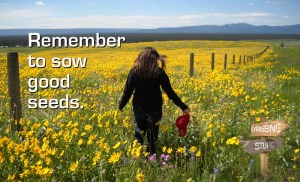
harvest

Due to my becoming far bolder about sharing this blog on social media, it’s been attracting attention from professionals and other people I’m surprised found it. Last week I posted a video of Christian singer-songwriter Danny Gokey’s hit “Hope in Front of Me” and I got a direct message from him on Twitter thanking me for doing that. I got a thank you and several retweets from film director Eric Casaccio, the maker of the upcoming movie, “Narcissist.” I have received a private email from two academic researchers from the University of Georgia who asked me to link to their survey about parental narcissism on this blog. I was more than happy to help them with that project. (The survey is still open and the link to it is in the sidebar; the deadline for that is February 28th). I’ve also been asked to review a new book for abuse survivors and am currently working on that too.

In the past week, my followers have increased by more than 100, and this doesn’t include random readers who are not following my blog at all. As OM says, it’s not about how many followers you have or how many “likes” you get, it’s about how many hits you get. Several of my articles are now on Page One of Google. Other search engines are appearing in my stats now too, including obscure ones and AOL (does anyone actually use AOL anymore?) This is all kind of shocking to me, but the more stuff you have appearing at or near the top of search engines, the more hits you will get. It’s a self-perpetuating mechanism.

All this may sound like bragging, and it probably is. I can’t become too narcissistic about all this as vanity is one of my character flaws. I still have a long way to go. I still have a lot of healing to do, and healing is still–and always will be–the main focus of this blog.

The best reward of all.

help_yourself

More encouraging and exciting than anything else, though, are when I get emails or comments from abuse survivors who tell me this blog or my story of abuse has helped them. I used to feel so incompetent and useless in the world, so testimonials from people who tell me they feel less hopeless and broken because of something I wrote feels like winning the lottery. Better than winning the lottery. It makes me feel like I have a purpose, that I wasn’t put in this world just to be narcissistic supply to others. I used to actually believe I was put on this earth as an example to others of how not to be.

God, how wrong I was about that. If you feel that way and you are emmeshed with a malignant narcissist or psychopath, you have been trained to believe you are nothing and can offer nothing good or useful to the world. Please believe me, that is wrong. Your abusers are projecting their own self-hatred and worthless feelings onto you.

Tips on writing a blog people want to read.

blog_tips

Besides taking that leap of faith to finally promote my blog and share articles on social media (and getting a lot of help from others, especially in the beginning), if you want to grow your blog there are several other things you really need to do:

–Include ALL the social media buttons under every article. Even if you don’t use them (but you should), others will. That will help your visibility even if you don’t promote yourself.

–You don’t have to be a Shakespeare or a Poe or have great writing ability. If you know how to string together a few sentences and have halfway decent grammar (grammar and spell check will help), you can still write a blog post people want to read. The key is to make it conversational and personal. Don’t overload the reader with too many facts or pedantic language. And always, ALWAYS be honest. People can tell when you’re lying or leaving out pertinent information. They will finish reading your article feeling unsatisfied and cheated and may never return.

–Use graphics for long posts to break it up. No one wants to read a wall of text, no matter how well written it is. Pictures are easy to find on Google images–just type in a phrase that describes what you’re looking for, or even use pictures you took yourself. Quotes and block quotes work well too at breaking up walls of text, and never be afraid to use humor!

–If your blog focuses on one or two subjects as this one does, it’s okay to add in an occasional article or post about something unrelated. In fact, I think it makes your blog fresher and more interesting. Another benefit of posting unrelated material is that you will attract readers who may not otherwise be reading your blog. I have had a number of foodies and furries reading this blog (and even following it in a few cases) because of articles I wrote about those subjects. It helps to be versatile, but be careful not to lose your original focus.

–If your blog is about a serious or dark subject (as mine is), watch the negativity. People won’t feel helped if all you do is complain or act pessimistic. It’s great to be honest, but people want to feel like you’re giving them some hope for their hopeless situation too. That’s why I include inspirational memes and quotes, happy or cute photographs, cartoons, jokes, and lots of music. (Music has been major in my healing, second only to writing). Sometimes I find that if I post something positive even when I’m feeling like I want to jump out a 16th floor window (it happens more often than you think!), it actually improves my own mood.

–Make sure you post frequently. You don’t have to go crazy like me and post 3-5 new posts a day, but if you publish one post per day, that’s enough to keep readers interested. If you can’t think of anything to write about (and I do have those days), sometimes just a funny cartoon, inspirational meme or pretty photograph with one or two sentences will do. There’s nothing that will kill a blog faster than abandoning it. If you don’t appear to care, your readers will go somewhere else.

–Use as many links as possible in your articles. Doing this will create a pingback or a trackback: Blogs you link to will see the pingback and in return, will most likely follow your blog and recommend it to others.

–Link to your own articles too. Doing this not only adds depth and background to your article, but it also encourages readers to not stop with the article they’re reading–they might click on your links and read your other articles too!

–If you have the time, comment on or at least “like” posts by other bloggers. Follow as many other bloggers as you can, too. Most people are polite so most likely they’ll follow you back.

–Unless you are in a situation where you have potentially dangerous people stalking you on the Web, never, ever, EVER require people to sign in to read your blog. I know if I see a blog that requires me to sign in or use a password to read posts, I’ll bypass that blog, even if it’s about a topic I’m jumping out of my skin to read about.

–Probably most important of all: always reply to your comments! It might seem like a chore, but if you fail to reply to your comments, your readers will think you’re ignoring them and no one likes to be ignored. I also don’t understand why some people don’t allow comments. Interaction is necessary for a blog to be active and dynamic. Replying to comments will keep your readers around and make you seem like you care about them.

There’s a lot of other blogging advice that’s more technical than what I have offered here, and I don’t consider myself any kind of expert on how to run a successful blog. I’m nowhere near OM’s level of viewership and probably never will be, and that’s okay. Besides all the above things I suggested to improve your visibility and readership, I strongly suggest adopting his blog HarsH ReaLiTy as your blogging bible–and in return he just might reblog something you posted!

For more about increasing readership and popularity of your blog, see this article (told from an earlier–and more humorous–POV–I wrote it in early December): https://luckyottershaven.com/2014/12/08/this-blog-is-growing-yours-can-too/