Narcissistic Rage

One surprising thing about narcissistic rage is that anger in general is narcissistic, even from non-narcissists. I don’t agree with this writer (who writes about narcissism every Friday from a Christian perspective), that ALL anger is narcissistic (for example, righteous anger can even be altruistic, if we are angry on behalf of someone else), but most anger probably is.

The other surprising thing about narcissistic rage is that it doesn’t always look like rage. It can appear in many forms in a narcissist (such as the silent treatment), who often plan out their attack in advance. Read on to find out how you can protect yourself and avoid reacting with rage yourself.

graceformyheart's avatarGrace for my Heart

It’s Narcissist Friday!   

The anger is always there. It lies just under the surface, almost waiting to erupt. When it is finally released, it will be dedicated to burning and destruction. Sometimes there are warning signs. Other times the rage explodes in an unexpected instant. But even with the warning signs, there is little you can do to stop it.

Narcissistic rage has been discussed in the psychological community for many years. Freud wrote about it. The reference to narcissism is not a reference to the person, but to the type of anger. It is an exclusive anger, designed to hurt or push others away. And it may not look like rage. It may be very subtle, under-handed, or even childish.

A man I know was getting a ride from another man. As he waited for the other to unlock his door, he put his briefcase on the roof…

View original post 752 more words

Letter from a narcissist’s “true self”

narcissus1_caravaggio

Here is a hypothetical letter written from the point of view of a narcissist’s True (lost) Self.

The advice given here by the True Self is almost the polar opposite of whatever their False Self would tell you. That’s because their False Self is a lie and isn’t who they really are, even though they may have been wearing this mask for so long they can never access their True Self without enormous difficulty or even at all.

Always follow the advice of their True Self, no matter how much they protest and rage, unless you want further abuse. It’s actually the best thing for them if they ever decide to look in the mirror past the lies they show the world (and may have come to believe is the truth)–and of course it’s best for you.

Letter from a Narcissist’s True Self:

Dear Victim,

I have lied to you about nearly everything. I am not sorry for this behavior because I cannot empathize with you. I chose narcissism so early in my life that I never had the chance to develop a conscience or the capacity to feel remorse or empathy for the way I hurt you. Still. I know it’s wrong on an intellectual level. I just cannot feel your pain. Sometimes I wish I could, but I can’t.

I became a narcissist because as a child I felt too vulnerable. I was sensitive. I felt too much and most of it was painful. I was made to feel like I was nothing, a nobody. I was hurt, betrayed, abused, just like you. I couldn’t understand why I wasn’t loved, or why I was treated with contempt and like I didn’t matter. I was also was never given a good example of how to become a good person. I never had anyone to model in a positive way.

Life was so painful for me I had to do something about it. Something drastic. I had to become strong and never show weakness again, because my weakness was killing me. I was trained that being a sensitive person who feels compassion and remorse, a person who can love others, is a weak person. I know that isn’t really the case, but it was how I was trained. I was so young that I couldn’t see how wrong that might have been.

I reached a point where I had to make a choice. In order to survive, I had to sacrifice my humanity. I didn’t want to do it, but I felt like I had to. I didn’t want to be hurt anymore. I had to sell my soul.

In order to sell my soul, I had to shut you and everyone else out. I couldn’t allow myself to feel too much. I couldn’t allow myself to be sensitive anymore, and that meant I could no longer allow myself to love anyone, feel anyone else’s pain or joy, or feel sorry if I did something wrong.

I had to don this mask that I wear, which is a lie. In order to keep that lie intact, I had to treat others badly. I had to diminish you to prop my false self up. I had to hate you in order to “love” the mask that I show the world, because if I didn’t continually prop myself up by making you feel bad, my mask of lies might fall off and expose the real me, a powerless and vulnerable child which I had to protect at all costs, even if it meant destroying everyone else around me. I am a bully but inside I know I am nothing. I act like I love myself but I really hate myself. I only love the mask I wear. I abuse you to protect that mask.

michelle_mallon_quote
Read Michelle Mallon’s story here.

You can never get through to my true self because the lies I tell are nearly impenetrable. I have lied so often and for so long that I myself have come to believe my own lies. I am a walking lie. That is the truth.

I will never let you get close to what I really feel. I don’t even know what I feel anymore. Most of the time I feel nothing, because a lie has no feelings. But try to destroy my protective armor, and I will try to destroy you. If I must go down in flames, I am going to take you with me. I will rage and abuse you. I will gaslight you and tell you the most horrific lies about yourself.

I may seem nice at first or when I feel like the supply you give me is threatened or you may leave. I know how to get others to trust me–by acting like a nice person. I am good at acting like a nice person but I can’t feel a nice person’s emotions. It’s hard work to act nice, because that’s a lie too.

When you begin to trust me, I will start abusing you, because I must keep you at arm’s length and keep my mask of lies intact at all costs. Both the niceness I show you and the asshole I become are both lies. I cannot even access who I really am. I have forgotten. I just know that my true self is there, somewhere, and I can never, ever, let you meet them.

If you mirror back to me too much of the truth about me–if I become aware that you KNOW this mask I always wear is a fake–I will attempt to destroy you or cut you out of my life. I cannot afford to have the truth about myself revealed to me. Nothing terrifies me more than facing the truth about myself so I have dissociated myself from it. It scares me so much to realize how evil I have become. It hurts me so much that I had to choose this fake self because of what was done to me. I hate being evil. I really don’t want to be this way but I will never, ever admit that. I cannot ever show you or anyone in the world how weak and vulnerable I really am. But deep inside, I know I am.

incrediblehulk

I am still an infant. I never grew up. My emotional and moral development was arrested when I was just a very young child, so I only have the emotional maturity of a child that age. That’s why I can’t care about you. It’s why I must always have my way. Can a two or three year old care about YOUR feelings? Of course they can’t, and like a toddler, I can’t either. I am like a mentally challenged person, only my retardation isn’t mental, it’s emotional and moral. I’m emotionally retarded.

It’s hard work keeping up my false self. I am paranoid and defensive all the time that I will be discovered and exposed. It’s enormously stressful to be a narcissist. It’s stressful and often painful, and I know I have sacrificed the ability to ever feel real happiness in order to never be hurt again.

But still, I hurt all the time. You can hurt me very easily. The only way I dare show my hurt is by projecting it back onto you through my abuse and through my rages. I’m a bully because I always hurt so much. But I can’t hurt FOR you, only for myself. I cannot afford to hurt for you. I’m too busy always licking my own wounds and trying to keep the lie going. I will hurt YOU if I must to keep the lie intact.

As I age, I may soften a little but most likely I won’t. I could even become worse. Don’t wait for me to change because I most likely never will. Once I chose this life, there was no going back. I chose darkness and once that’s done, there is no going back to the light. I sold my soul and there’s no way to buy it back, but through the grace of God himself.

If you care about yourself (because I can never care about you), you must leave now. Don’t play my games. Ignore me and act like I don’t exist. Being treated like I don’t exist is the worst thing I can imagine, but if you care about your own survival it’s what you must do. I will destroy you if you don’t. Heed my warning.

There’s even a small–a very small–chance that your abandoning me and taking away the supply I get from you could make me take a look in the mirror for the first time at the lost child I left behind so long ago. If that happens, I will be in so much pain I may seek the help I need. Don’t count on it though. Even if I ever seek help, once I start feeling too much pain I will probably leave counseling. Feeling that pain is too terrifying. It’s easier to abuse my own mind (and yours) by keeping up the masks and lies.

Here is a song that describes me well.

Don’t wait for me to change. I won’t. Don’t play my games. Even if I rage, hold your ground. You’re stronger than I am. I will never let you know I know this. Don’t fall for my lies.

Better yet, leave now. Keep your soul intact. Don’t allow me to turn you into a shell of what you used to be or worse, a person like me, even though it’s what I want.

Sincerely,
Your Narcissist

6 Signs of Narcissism You May Not Know About (Psychology Today)

Interesting article about the lesser-known indicators of narcissism from Psychology Today. Contrary to popular opinion, narcissists do not love themselves, only their image.
I agree with Dr. Seltzer that these six traits should be added to the official diagnostic criteria for NPD.

6 Signs of Narcissism You May Not Know About: How can you recognize the fragility behind the narcissist’s grandiosity?
Post published by Leon F Seltzer Ph.D.

narc_lovers

The recently published 5th edition of the Diagnostic and Statistical Manual of Mental Disorders (DSM) lists precisely the same nine criteria for narcissistic personality disorder (NPD) as did the previous version, published 19 years earlier. So these longstanding diagnostic yardsticks are by now quite familiar—not only to professionals but to interested laypeople as well. Because only the extreme, or “classic,” narcissist fits all of these criteria, DSM specifies that an individual need meet only five of them (barely more than half) to warrant this unflattering label.

As a starting point, I’ll reiterate these selected criteria—before, that is, adding six important ones of my own, which either complement or extend these “official” yardsticks. My particular measures for identifying pathological narcissists are based not only on my exposure to the voluminous writings on this character disorder, but also on 30+ years of clinical experience. This experience includes doing personal, couples, and family counseling with such troublesome individuals. But it also involves working independently with those involved with narcissists—whether their distressed children, spouses, parents, friends, or business associates—who repeatedly express enormous frustration in trying to cope with them.

To begin, however, here are DSM’s requirements (link is external) (slightly condensed, and with minor bracketed amendments) for “earning” the unenviable diagnosis of Narcissistic Personality Disorder:

1. Has a grandiose sense of self-importance.
2. Is preoccupied with fantasies of unlimited success, power, brilliance, beauty, or ideal love.
3. Believes that he or she is “special” and unique and can only be understood by, or should associate with, other special or high-status people (or institutions).
4. Requires excessive admiration [regularly fishes for compliments, and is highly susceptible to flattery].
5. Has a sense of entitlement.
6. Is interpersonally exploitative.
7. Lacks empathy: is unwilling [or, I would add, unable] to recognize or identify with the feelings and needs of others.
8. Is often envious of others or believes that others are envious of him or her.
9. Shows arrogant, haughty [rude and abusive] behaviors or attitudes.

So what’s left out here? Actually, as regards identifying descriptors, quite a bit. And I’ve no doubt that other therapists could add further to the six additional characteristics I’ll provide here—features that, although regrettably minimized or omitted from DSM, I‘ve routinely seen displayed by the many dysfunctional narcissists I’ve worked with. So, to enumerate them, such individuals:

1. Are highly reactive to criticism.

grinch

Or anything they assume or interpret as negatively evaluating their personality or performance. This is why if they’re asked a question that might oblige them to admit some vulnerability, deficiency, or culpability, they’re apt to falsify the evidence (i.e., lie—yet without really acknowledging such prevarication to themselves), hastily change the subject, or respond as though they’d been asked something entirely different. Earlier for Psychology Today I wrote a post highlighting this supercharged sensitivity called “The Narcissist’s Dilemma: They Can Dish It Out, But . . . ”. And this aspect of their disturbance underscores that their ego—oversized, or rather artificially “inflated”—can hardly be viewed as strong or resilient. On the contrary, it’s very easily punctured. (And note here another related piece of mine, “Our Egos: Do They Need Strengthening—or Shrinking?”). What these characteristics suggest is that, at bottom and despite all their egotistic grandiosity, they…

2. Have low self-esteem.

narcissists_hate_themselves

This facet of their psyche is complicated, because superficially their self-regard would appear to be higher and more assured than just about anyone else’s. Additionally, given their customary “drivenness,” it’s not uncommon for them to rise to positions of power and influence, as well as amass a fortune (and see here my post “Narcissism: Why It’s So Rampant in Politics”). But if we examine what’s beneath the surface of such elevated social, political, or economic stature—or their accomplishments generally—what typically can be inferred is a degree of insecurity vastly beyond anything they might be willing to avow.

That is, in various ways they’re constantly driven to prove themselves, both to others and to their not-so-confident “inner child” self. This is the self-doubting, recessive part of their being that, though well hidden from sight, is nonetheless afflicted with feelings and fears of inferiority. Inasmuch as their elaborate defense system effectively wards off their having to face what their bravado masks, they’re highly skilled at exhibiting, or “posturing,” exceptionally high self-esteem. But their deeper insecurities are yet discernible in their so often fishing for compliments and their penchant for bragging and boasting about their (frequently exaggerated) achievements. That is, they’re experts at complimenting themselves! And when—despite all their self-aggrandizement— others are critical of them, they…

3. Can be inordinately self-righteous and defensive.

right_wrong

Needing so much to protect their overblown but fragile ego, their ever-vigilant defense system can be extraordinarily easy to set off. I’ve already mentioned how reactive they typically are to criticism, but in fact anything said or done that they perceive as questioning their competence can activate their robust self-protective mechanisms. Which is why so many non-narcissists I’ve worked with have shared how difficult it is to get through to them in situations of conflict. For in challenging circumstances it’s almost as though their very survival depends on being right or justified, whereas flat out (or humbly) admitting a mistake—or, for that matter, uttering the words “I’m sorry” for some transgression—seem difficult to impossible for them.

Further, their “my way or the highway” attitude in decision-making—their stubborn.competitive insistence that their point of view prevail—betrays (even as it endeavors to conceal) their underlying doubts about not being good, strong, or smart enough. And the more their pretentious, privileged, exaggeratedly puffed-up self-image feels endangered by another’s position, the more likely they are to…

4. React to contrary viewpoints with anger or rage.

rage2

In fact, this characteristic is so common in narcissists that it’s always surprised me that DSM doesn’t specifically refer to it among its nine criteria. Repeatedly, writers have noted that angry outbursts are almost intrinsic to both narcissistic and borderline personality disorders. And although (unlike the borderline) it’s not particular fears of abandonment that bring out their so-called “narcissistic rage,” both personality disorders generally react with heated emotion when others bring their deepest insecurities too close to the surface.

The reason that feelings of anger and rage are so typically expressed by them is that in the moment they externalize the far more painful anxiety- or shame-related emotions hiding just beneath them. When they’re on the verge of feeling—or re-feeling—some hurt or humiliation from their past, their consequent rage conveniently “transfers” these unwanted feelings to another (and see here my PT post “Anger—How We Transfer Feelings of Guilt, Hurt, and Fear”).

The accompanying message that gets communicated through such antagonistic emotions is “I’m not bad (wrong, stupid, mean, etc.), you are!” Or, it could even be: “I’m not narcissistic, or borderline! You are!” (Or, in slightly milder version, “If I’m narcissistic, or borderline, then so are you!”) And if the mentally healthier individual has no clue as to what provoked their outburst in the first place, such a sudden explosion is likely to make them feel not only baffled but hurt, and maybe even frightened. But what cannot be overemphasized here is that narcissists…

5. Project onto others qualities, traits, and behaviors they can’t—or won’t—accept in themselves.

635223192958830312Projection2

Because they’re compelled from deep within to conceal deficits or weaknesses in their self-image, they habitually redirect any unfavorable appraisal of themselves outwards, unconsciously trusting that doing so will forever keep at bay their deepest suspicions about themselves. Getting anywhere close to being obliged to confront the darkness at their innermost core can be very scary, for in reality their emotional resources are woefully underdeveloped.

Broadly recognized as narcissists by their fundamental lack of self-insight, very few of them (depending, of course, on how far out they are on the narcissistic continuum) can achieve such interior knowledge. For in a variety of ways their rigid, unyielding defenses can be seen as more or less defining their whole personality. And that’s why one of the most reliable ways for them to feel good about themselves—and “safe” in the world they’re essentially so alienated from—is to invalidate, devalue, or denigrate others. So they’ll focus on others’ flaws (whether or not they really exist) rather than acknowledge, and come to terms with, their own. And in many curious ways this habit causes them to…

6. Have poor interpersonal boundaries.

space_invasion
Space invasion!

It’s been said about narcissists that they can’t tell where they end and the other person begins. Unconsciously viewing others as “extensions” of themselves, they regard them as existing primarily to serve their own needs—just as they routinely put their needs before everyone else’s (frequently, even their own children). Since others are regarded (if they’re regarded at all!) as what in the literature is often called “narcissistic supplies”—that is, existing chiefly to cater to their personal desires—they generally don’t think about others independently of how they might “use” them to their own advantage. Whatever narcissists seek to give themselves, they generally expect to get from others, too (which is yet another dimension of their famous—or infamous—sense of entitlement).

Even beyond this, their porous boundaries and unevenly developed interpersonal skills may prompt them to inappropriately dominate conversations and share with others intimate details about their life (though some narcissists, it should be noted, can display an extraordinary, however Machiavellian, social savvy). Such private information would probably focus on disclosing facts others would be apt to withhold. But having (at least consciously) much less of a sense of shame, they’re likely to share things they’ve said or done that most of us would be too embarrassed or humiliated to admit. Still, with an at times gross insensitivity to how others might react to their words, they’re likely to blurt out things, or even boast about them, that others can’t help but view as tasteless, demeaning, insulting, or otherwise offensive.

They might, for instance, share—and with considerable pride!—how they “chewed” someone out, and expect the other person to be impressed by their courage or cleverness, when in fact the listener may be appalled by their lack of kindness, tact, or restraint. Additionally, they may ask others questions that are far too personal or intimate—again unwittingly irritating or upsetting them. And such a situation can be particularly difficult for the other person if the narcissist is in a position of authority over them so that not responding could, practically, put them in some jeopardy.

To conclude, I can only hope that these additional characterizations of the pathological narcissist (vs. those with less pronounced narcissistic qualities) may be helpful in enabling you to identify them before their “malignancy” does a number on you. And if you’ve already been duped by their machinations or manipulations, perhaps this piece will be a “heads up” for you to prevent them from wreaking any further havoc in your life.

NOTE 1: I’d be remiss if I didn’t point out that the narcissism addressed here centers on its most maladaptive, or “toxic,” forms. Unlike DSM (the standard diagnostic reference tool for mental health professionals), the Psychodynamic Diagnostic Manual (link is external)(PDM, 2006)—respected, but much less well known than this official volume—explicitly notes that the disorder exists “along a continuum of severity, from the border with neurotic personality disorders to the more severely disturbed levels.” And additionally, that “toward the neurotic end [these] narcissistic individuals may be socially appropriate, personally successful, charming and, although somewhat deficient in the capacity for intimacy, reasonably well adapted to their family circumstances, work, and interests.”

Who’s “too sensitive”?

sensitive_jason

“You’re too sensitive!”

This seems to be a phrase many ACONs have heard their entire lives. And yes, many of us are more sensitive than the average person, which is why we were targeted, scapegoated, and bullied in the first place.

Narcissists know being sensitive means we can see the truth about things, that we can see through bullshit and lies. They don’t like that because it exposes them for what they really are, so they turn a quality that gives us intuition and insight into something that makes us seem weak and defenseless.

If our parents were narcissists, we were trained to be ashamed of this quality and turn it against ourselves, rather than learn to refine it and develop it into the powerful gift it really is. Society doesn’t help much with that either. Sensitivity is generally thought of as a weakness rather than a strength. It’s not something you would want to admit on a job interview when the interviewer asks you what your “worst quality” is. I actually did that once, and was shown the door. They want to hear “I’m too impatient” or “I’m too greedy,” or “I obsess too much about power and control,” not “I’m too sensitive.”

sensitive_quote

I think narcissists also like to pull out the “you’re too sensitive” card because they’re projecting what they see as a fault in themselves onto us. They’re good at that. Narcissists are incredibly hyper-sensitive–but only about themselves; no one else ever benefits from their hypersensitivity.

It’s my opinion that narcissists, before they adopted narcissism as a defense mechanism, started out life as extremely sensitive children and in some cases even had the potential to be empaths. Abuse and neglect turned them into narcissists. Narcissism is an elaborate defense mechanism that obscures, buries and eventually can nearly destroy the sensitive true self. It almost would take an act of God for a narcissist to ever shed their swagger and their “I’m a big mean unfeeling badass” mask and let their sensitive true self come to light. Most of them couldn’t do it even if they wanted to.

But narcissists can’t hide from themselves–not completely. Most of them have exquisitely tender feelings and are easily hurt. It’s very easy to insult a narcissist. They have no sense of humor about themselves and are unable to take a joke at their own expense. They are big crybabies who will whine, sulk and complain loudly should you hurt their feelings (and it’s almost impossible not to). Most will show their hurt as rage–because raging makes them seem big and tough, something they really aren’t but wish they were. Or they will retaliate by ignoring you, abandoning you, cutting you off, or giving you the silent treatment–because those things make it look as if they don’t care. You’d be wrong though. They care alright, and when you have caused them narcissistic injury they are off licking their wounds in silence where you can’t see. Or loudly complaining to others about how
mean and narcissistic YOU are.

sensitive_people

They call us too sensitive because they’re unable to own their own hypersensitivity. They turn it into a bad thing because they know they have lost that part of their sensitivity that would have made them able to feel for others and empathize. They’re crippled people. They can’t ever feel sorry for someone else–but as far as self-pity goes, no one can beat them at that.

Narcissists destroy who they cannot control.

Interesting and insightful video by Smakintosh, who has a Youtube channel filled with other videos about malignant narcissism and how to deal with them.

Smakintosh speaks from a Christian perspective, but his messages aren’t limited to just Christians but to anyone victimized by malignant narcissists. All his videos are excellent.

“The narcissist has no use for the one he or she cannot control. If the narc in your life cannot control you, you mean nothing to them.”
*Visit blog http://gospelundergroundblog.blogspot

Healing Narcissism: “Stephen’s” story.

who_am_I

Disclaimer:
I am not a licensed mental health professional and as such, have done no studies or surveys to find out if the healing regime I am going to propose here would actually work on people with NPD. I have no guarantee such a therapy regime would work, but I feel like I’ve done enough reading about the disorder (NPD in particular), both from Internet material written by a number of people, and books by professionals who specialize in this disorder, to outline a possible therapy regime I feel might give sufferers of NPD (as well as BPD and other disorders of the self, and even PTSD) who want to get better some hope of doing so. This is not a therapy I “made up,” since I am not qualified to do so, much less diagnose anyone with any disorder. Instead, it’s an almagamation of several different therapies–drawn from both from traditional insight psychotherapy and alternative therapies proposed by both people who suffer from this disorder or are involved in alternative medicine and spiritual therapy.

For several months I have been reading everything I can about healing Narcissistic Personality Disorder, because as a victim of narcissistic abuse who has cared for and loved people who are narcissists, I have a vested interest in the possibility there may be hope for some of them. I also think our world would be a much nicer and safer place for the rest of us to live in if narcissists could be cured of their disorder!

In my readings, both on the Internet and from books about healing NPD (I just received a copy of James Masterson’s book “The Emerging Self,” recommended to me by fellow blogger BPDTransformation. Although I have not had time to read the book, I have skimmed through it and can already see that its premise of the narcissist getting in touch with their true self and confronting and releasing long buried true emotions of sadness and fear is not much different than therapies others have proposed for NPD).

Overview of Some NPD Healing and Treatment Techniques.
Following are some brief descriptions of some therapies that have already been proposed to heal or treat the symptoms of people with NPD. A few come from traditional psychotherapy disciplines; others are more alternative/experimental.

Cognitive-Behavioral Training/Therapy (CBT)

CBT

Currently, the only psychiatrically sanctioned and accepted “therapy” for NPD is Cognitive-Behavioral Training (CBT). CBT is useful and may help some narcissists who are not psychopathic or sociopathic learn to control and monitor some of their more antisocial and hurtful behaviors. It has been used with some success on prison inmates who want to change their behaviors, children with ODD and CD (Oppositional Defiant Disorder and Conduct Disorder) such as 6 year old Beth Thomas, who might have become a psychopath had she not had early intervention that intercepted her early antisocial behaviors and murderous impulses toward her brother and parents; as well as other people with NPD or BPD who are insightful and willing enough to want to change the way they act and stop hurting others.

The problem with CBT is it does not really cure the narcissist (unless done at a very early age, like Beth Thomas). CBT doesn’t address traumatic childhood issues or make the narcissist shed their protective masks or get in touch with the painful emotions that caused them to choose narcissism in the first place. It’s really just a band-aid and probably helps those who must deal with the narcissist more than it helps the patient. The narcissist remains a narcissist, and must constantly monitor their behaviors or be reminded by others to do so. The more positive behaviors never become internalized because the narcissist has not really changed from the inside.

That being said, I believe CBT is a valuable component in the type of therapy I am going to describe, but must be undertaken once the NPD patient has gone through a complete emotional catharsis resulting in the release of painful emotions stemming from childhood (or whenever they “chose” to become a narcissist to protect themselves). I’ll describe how this can be used later in this article.

Narcissists adopted their False Self to survive.
I hold to the probably rather unpopular belief that people with NPD started life as Highly Sensitive People (HSPs) or possibly even empaths. Sam Vaknin’s journal entries, especially his descriptions of himself as a sensitive and generous child who cried when his malignant narcissist mother was upset (I cannot find the link for that right now but will look for it), as well as writings and journals by other NPD sufferers on message boards and forums have made this evident.

It came as a surprise to realize this, because Narcissists (as opposed to those suffering from Antisocial Personality Disorder (ASPD), who really are hopeless and can never get better) seem like the most insensitive and cruel people on the planet. But their obnoxious and cruel behaviors stem from the False Self, not their true one, which hasn’t died, but is atrophied and in hiding. The False Self was constructed as an elaborate defense mechanism to protect the child from further hurt and abuse. Most people with NPD were abused or neglected as children, and being more sensitive than other children, the only way they could survive further hurt and abuse was to construct a False Self which makes them appear big and bad when deep inside, they still feel utterly worthless, despised and vulnerable.

crying_is_okay

One thing I noticed in all these therapies (not including CBT, of course), is the key to healing is emotional catharsis. Crying–not the usual narcissistic manipulative crying–but deep and honest crying resulting from releasing past pain, grief and fear–is an absolute necessity if any healing is to occur. Of course crying is key in any psychodynamic therapy for any disorder that can be healed by such means, not just NPD. As the False Self breaks down and the True Self begins to emerge, painful emotions from the past will start to be released. This is necessary and healthy. In fact, healing from NPD (or many other mental disorders) isn’t possible without it.

The following are some techniques used for actually healing NPD rather than treating its symptoms. It’s probably prudent to keep in mind their efficacy is iffy at best. If a narcissist is neither insightful nor willing, none of these therapies will work. Insight and willingness to change are necessary and must come from the narcissist him or herself. As I’ve described before, the willingness to heal is a cost-benefit analysis. If the narcissist has benefited from their narcissism, they may not think going through all the emotional work required to heal from NPD is worth it.

1. Attitudinal Healing.

attitudinal_healing

Tony Brown was a self-professed narcissist who decided he no longer wanted to be one. He believed narcissism stemmed from fear. (He’s probably right). He healed himself using a 12-point (not the same as a 12-step program) technique of replacing thoughts of fear with thoughts of love. He called this therapy Attitudinal Healing. Eventually, he says, these thoughts of love and empathy become internalized and the patient begins to remember past hurtful incidents that turned them into narcissists. During this process, the patient finds themselves crying a lot as they remember things long forgotten and the many ways they have hurt their loved ones. AH is kind of a New Age technique, but his followers swear it has worked for them. Tony Brown died in 2008 of natural causes, just after he was cured. His forum, HealNPD, is no longer active, but you can read his material about AH there and posts by others who were undergoing AH to heal themselves of narcissism.

Criticisms of AH: There’s some skepticism because there have been no studies or empirical evidence for AH’s efficacy, and some believe thought-replacing isn’t deep psychology and therefore can’t access the true self.

2. Reparenting.

remothering

“Reparenting” is a term used by Sam Vaknin for his theories of healing NPD, but the techniques involved are not his alone and partly derive from New Age therapy practices and traditional psychodynamic therapy and Freudian psychoanalysis. Reparenting requires an initial accidental or intentional removal of all the narcissist’s sources of narcissistic supply, which sets into motion a “narcissistic crisis” (a time during which the narcissist’s defenses and masks break down). This is the only time a narcissist may present themselves for treatment. At that point, the therapist offers only “cold empathy,” which means giving the narcissist acknowledgment and the “mirroring” they missed out n as children, without offering approval, criticism, sympathy for the narcissist’s plight, or any other means of narcissistic supply. The narcissist’s frustration and anger with the therapist (transference) for only mirroring them but not giving them the supply they want (validation or approval) results first in rage, then dissolves into emotional catharsis and release of negative and painful emotions associated with childhood abuse and neglect.

Criticisms of Reparenting: Intensive therapy like this could not practically work unless the narcissist was in a closely supervised setting, such a a rehab center or hospital, because of the strong possibility that even a willing narcissist, when undergoing such painful cathartic emotions, would suddenly leave therapy and go back to their old ways. I personally don’t believe such a therapy would work permanently unless combined or followed up with behavioral training such as CBT to retrain the conscience and internalize it into the psyche.

3. M. Scott Peck: “Remothering” and physical touch.

woman-holding-newborn

Dr. M. Scott Peck proposed a technique similar to reparenting called “remothering” in his book “People of the Lie: The Hope for Healing Human Evil.” Peck doesn’t go into great detail about re-mothering a patient in his book (and in fact doesn’t discuss treatment much at all outside of exorcism), but in his description of his malignantly narcissistic patient Charlene, he expresses his regret that he had not offered her unconditional love and support (not the same as narcissistic supply) and actually physically holding her as a mother would a baby, instead of allowing her to manipulate and torment him and making him continue to pander to her need for narcissistic supply.

Criticisms of “remothering”/physical holding: Peck’s briefly expressed ideas of holding (in a nonsexual way) and nurturing such a patient as a loving mother would are similar to reparenting, but would require the narcissist to be willing to allow themselves to become vulnerable enough to undergo such a treatment, which is unlikely unless they were undergoing a severe narcissistic crisis and utterly desperate. There’s also the problem that physically touching/holding a patient could lead to accusations of sexual abuse, or sexual feelings between the patient and therapist (which is a common but questionable outcome of transference/countertransference).

The problems of possible legal allegations of sexual abuse/harassment are addressed here, and there is a consent form in some states a patient can fill out to give permission for limited touching in therapy sessions to occur.

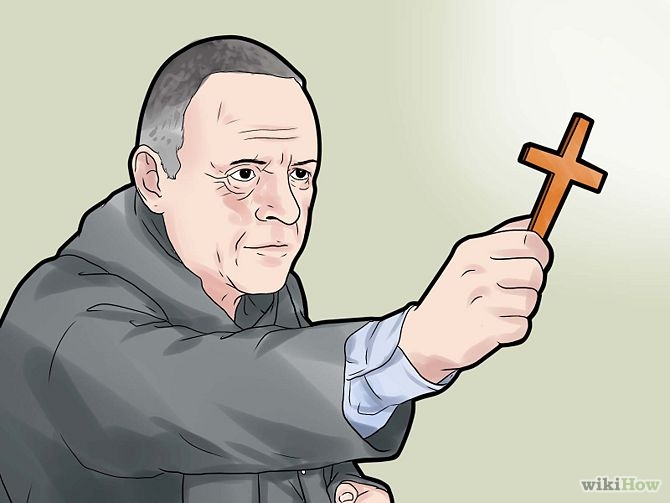
4. M. Scott Peck: Exorcism.

exorcism

Peck, a born-again Christian, believes that many cases of narcissism are a result of a malignant entity entering the body of the patient, at the time they made the choice to become a narcissist, whether in childhood or later in life.

In some cases, where the possession by an evil entity is not complete (that is, a patient with narcissistic tendencies who is not psychopathic or malignant), a patient can be healed through the centuries old religious rite of exorcism, formerly only sanctioned by the Catholic Church, and even then, was only approved in extreme cases that were approved by the Pope. Peck believes any highly trained psychotherapist with a strong faith in God (not necessarily Christian) and with strong unconditional love for their patient can successfully perform an exorcism on a patient who is willing and properly prepared ahead of time. Peck writes about exorcism in both “People of the Lie” and goes into more detail about the two exorcisms he successfully performed in his later 2005 book, “Glimpses of the Devil.”

Criticisms of Exorcism: Besides its obvious medieval and superstitious connotations, exorcism can be physically, mentally and spiritually dangerous for both the therapist and patient. Death is a possible result. There should be others in the room during the exorcism if additional hands are needed to control the patient undergoing the rite. But because I believe NPD is as much a spiritual disorder as it is a mental one, I don’t think exorcism should be dismissed as a possible healing technique in extreme cases where other therapies have not worked.

5. Dr. James F. Masterson: Psychodynamic Treatment of Narcissistic Disorders of the Self.

closet_narcissism

I have not yet read his book “The Emerging Self” (I just received it in the mail) but from what I have seen, the therapy is psychodynamic (as opposed to merely behavioral) and requires the patient to confront and purge past hurts and undergo catharsis. Narcissism and “closet narcissism” are not the only disorders addressed in his book; he also addresses similar disorders such as BPD which can be healed using the same or similar techniques.

From Wikipedia:

Masterson’s subtypes (exhibitionist and closet)
In 1993, James F. Masterson proposed two categories for pathological narcissism, exhibitionist and closet.[40] Both fail to adequately develop an age- and phase- appropriate self because of defects in the quality of psychological nurturing provided, usually by the mother. The exhibitionist narcissist is the one described in DSM-IV and differs from the closet narcissist in several important ways.

The closet narcissist is more likely to be described as having a deflated, inadequate self-perception and greater awareness of emptiness within. The exhibitionist narcissist would be described as having an inflated, grandiose self-perception with little or no conscious awareness of the emptiness within. Such a person would assume that this condition was normal and that others were just like them. [Masterson’s definition of the closet narcissist sounds more similar to the “covert” narcissist or “inverted” narcissist Sam Vaknin discusses on his website].

The closet narcissist seeks constant approval from others and appears similar to the borderline in the need to please others. The exhibitionist narcissist seeks perfect admiration all the time from others.

Criticism of Masterson’s techniques of treating NPD: I cannot offer any criticisms as I have not read his book yet.

6. Rebirthing.

rebirthing_session
Rebirthing session.

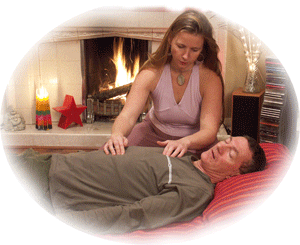
Rebirthing is a controversial New Age healing technique that involves deep and circular breathing. It has been proposed as an alternative healing therapy for people suffering from NPD and many other mental disorders, as well as for healthy individuals who just want to get more in touch with their spiritual nature. It’s supposed to improved the mental, emotional and spiritual well-being of anyone who decides to undergo this process. During the rebirthing process, the patient will begin to remember painful emotional incidents long forgotten and crying is common, but is usually followed up by laughter and a feeling of spiritual lightness.

Criticisms of Rebirthing: The type of deep breathing rebirthing requires can lead to hyperventilation and a feeling of being high (from intaking too much oxygen) or having left the physical body. In some cases it can freak out the patient or even cause a psychotic break, much like hallucinogenic drugs can. Because it’s an experimental, alternative therapy given by practitioners not schooled in traditional psychotherapy, there is no proof of its efficacy or empirical studies showing it actually works.

Skepticism among mental health professionals.
pIt must be said, that most professionals are highly skeptical about the possibility of healing (rather than just treating) NPD and feel that because they suffer less than their victims (or at least seem to), that it’s best to treat the victims for the PTSD, anxiety, depression and other disorders their narcissist has caused in them.

I won’t argue with this, but as I’ve said before, I don’t think narcissists, at least those with both the insight and willingness to change (which probably means the non-malignant, non-psychopathic types) are as hopeless as most mental health experts claim.

So I’m going to propose a healing regime here using a hypothetical man named Stephen that comprises elements of ALL of the above techniques (except rebirthing and exorcism due to their highly controversial nature), as well as CBT for helping to retrain the conscience.

There are a few prerequisites necessary for successful healing of NPD:

1. The narcissist must have insight into their disorder and know they have NPD and see how it damages their minds and souls. But insight alone isn’t enough.

2. The narcissist must have willingness to change from the inside–and that means a willingness to undergo intense emotional pain as their True Self begins to emerge and their masks break down. You can have insight without willingness, but not willingness without insight. Both must be present for change to occur.

3. The narcissist undergoing such treatment would be best treated in a highly supervised, even residential setting such as a hospital or rehab center, where their natural tendency to revert back to their old ways of behaving could be intercepted by trained professionals. This is especially necessary during the crisis period where their painful emotions may cause them to want to quit therapy or leave. They could sign a waiver prior to treatment that such attempts to escape would be intercepted or not allowed, and the patient brought back to treatment.

4. The narcissist is probably already undergoing a narcissistic crisis where they have lost all sources of narcissistic supply or a major one, such as a divorce, loss of a fortune or career, death of someone who was a source of supply, serious illness or incarceration. Having lost their sources of supply, the narcissist is already in a vulnerable state and if they are going to present themselves for help, this will be the time.

I am going to describe a hypothetical successful therapy used on a fictional man named Stephen who is afflicted with mid-spectrum (non-malignant) NPD, using a combination of the above techniques I think could be successful for some narcissists in a highly supervised and intensive setting.

STEPHEN’S STORY

'It's all about YOU, isn't it? YOUR hopes! YOUR wants! YOUR needs!'

1. The Master of the Universe has a Narcissistic Crisis
Stephen was a 45 year old successful owner of a video game company. He was married to a meek and quiet but intelligent woman named Lisa who elected to stay at home with their only child Cayden, who was two years old. They lived in a large home they built themselves, and owned two late model SUVs. Stephen could afford to take his wife and son on several vacations a year. To outsiders, they seemed like the picture perfect family.

But all was not well behind closed doors. Lisa was threatening to leave Stephen and take Cayden with her because of Stephen’s constant gaslighting, projecting, blaming her for their child’s excessive crying and misbehavior, and most recently, isolating Lisa from her former college friends and even her family. Lisa was so depressed that often she had no energy to take care of her son and Cayden was left to his own devices, at first crying and demanding attention from Lisa, but finally withdrawing into a quiet, withdrawn, almost autistic world of his own.

Lisa wanted to take Cayden to a psychiatrist, but when she proposed this to Stephen, he flew into a rage and accused her of calling him a bad father. He told her that if she was a better wife and mother, Cayden wouldn’t be having these problems. He also told her that taking Cayden to a therapist was something only a weak person would do. Cayden would just need to learn to “man up,” in Stephen’s words.

Lisa became increasingly depressed and one day she attempted suicide. Her suicide attempt landed her in the psychiatric ward, and Cayden’s care fell on Stephen’s shoulders. He resented his fatherly duties to Cayden, and grew increasingly impatient with him, and Cayden’s behavior grew worse. He resented having to leave work early or not come in to attend to one of Cayden’s many needs when his nanny would call saying there was a problem with his son.

sad-mother-child

One day Stephen was called into his boss’s office and confronted with his poor attendance and sloppy work. Cayden’s needs were not a concern to management. Stephen was told he needed to find some other arrangements or he would be let go. Stephen panicked. His high flying job and the money he made were the only things in his life he cared about. He hated to admit it, but Cayden was nothing but a burden. He had never really wanted a child at all due to all the responsibility.

Stephen’s problems continued. He had no choice but to keep leaving work when his son was sick or when the daycare center called saying he was throwing another one of his uncontrollable tantrums. Stephens’s boss summoned him once more and let him know he was being let go.

Stephen was devastated and began to feel hate toward his son for making him lose his job. He sat at home dejectedly staring at the TV or computer screen but felt so deflated he didn’t bother looking for another job. Cayden screamed and threw tantrums and Stephen, overwhelmed and filled with resentment for Cayden, began to physically abuse him.

A week later, Lisa was released from the hospital and announced she no longer loved Stephen and was taking Cayden with her to live with her parents. Stephen flew into a narcissistic rage and tied to stop Lisa from leaving, but there was no stopping her. She grabbed Cayden, tossed some of their things hastily in some bags, and took off for her mother’s. It was then she noticed the bruises on Cayden’s body and decided to press child abuse charges against Stephen.

Stephen was eventually arrested for child abuse. Now he had a police record and was probably unemployable, except perhaps in some sort of consulting role. He had lost his wife, his job, his child, and now his freedom.

2. Self-awareness and willingness.

Vector illustration of a man lock up in prison

In prison, Stephen broke down and cried almost nonstop. He made no friends because of his emotional instability. So he spent time by himself, reading books in the prison’s library about mental disorders and realized he suffered from Narcissistic Personality Disorder. At first he tried to deny this to himself, but in his heart he knew it was true. He also realized this disorder was the cause of all his problems. He didn’t feel remorse, exactly, but knew he needed to do something about it. Some of the prison staff took pity on Stephen and referred him to a psychologist who specialized in character disorders, NPD in particular. Stephen was desperate to change his ways and willingly entered an experimental but intensive therapy for people suffering from NPD and other character disorders like BPD. Although the therapist was a licensed Ph.D, he was open to incorporating alternative techniques in his regime.

3. Cold empathy.

narc_rage
Narcissistic rage.

Stephen started therapy (which he was taken to from the prison) with a litany of complaints about his failures and how no one understood him. He talked about his dickhead of a boss, his emotionally disturbed and annoying son, and his bitch of a wife who betrayed him. Stephen took no responsibility for his own contributions to his downfall. He demanded sympathy and often resorted to rages and tears during his sessions. Rather than sympathize or offer emotional support, Stephen’s therapist listened quietly to his litany of woes, only nodding here and there or asking questions when he needed to know something pertinent.

Stephen became enraged by his therapist’s supposed lack of caring and sympathy, and began to attack his therapist, calling him a charlatan, incompetent, and an idiot. He threatened to leave, but knew the prison wouldn’t allow him to quit, so his abuse escalated. Projecting his own feelings of rage and other emotions onto the therapist is a process called transference in the psychiatric community (the opposite, the therapist’s projections of their own emotions onto the patient is called countertransference and is nearly as common).

One day he became so enraged he physically attacked his therapist. An officer was called in to intervene, and together, they got Stephen to calm down. Stephen, defeated, slumped in his chair and dissolved into convulsive sobs. The guard stood nearby, and the therapist quietly waited for Stephen to finish crying.

4. Stephen’s True Self begins to Emerge.

OLYMPUS DIGITAL CAMERA

After several more intense sessions like these, Stephen reluctantly began to talk about his mother, who had abused him as a child. He tearfully discussed the time she held his hands on the hot stove to teach him a lesson, and the time she locked him in a closet for two days for refusal to eat the vegetables on his plate. After releasing him, she made him eat the half-rotted vegetables from a plate on the floor along with the family dogs. Stephen recalled being a good kid until he was about 5 or 6, and always very sensitive to his mother’s moods. He wanted to please her, but never could seem to accomplish that. No matter what he tried–bringing her flowers he picked from the garden (which he’d be punished for), or hugging her (where he’d be pushed away), she always rejected him or punished him. At first he talked about these incidents in a matter of fact, almost flippant way, but after about three more sessions, he began to choke up and tears began to run down his face.

But these tears were different than the ones he used to shed to get his way or manipulate his sources of supply. These tears felt different and came from a deeper, more honest place. He was embarrassed about the uncontrollable crying he could not seem to stop. He tried to hide these tears but his therapist told him they were healing him, melting away his False Self, and to let them come. So reluctantly at first, Stephen did. He told his therapist his “heart hurt” and then he broke into wracking sobs and buried his face in his hands. This was the breakthrough needed to move to the the Reparenting/remothering level.

In some difficult cases where he patient is having trouble bringing emotions to the surface or recalling past events, hypnotherapy could be useful in helping the patient recall painful childhood experiences.

5. Reparenting Stephen’s Lost Self.

inner_child

When Stephen broke down into convulsive sobbing of honest grief for the mother love he never received, and his intense fear of her as a child, his therapist knew he was no longer being manipulated and these were honest emotions from Stephen’s lost self. So the therapist came over and sat down next to him, and encouraged Stephen to cry on his shoulder. If the therapist is an empath, I think that’s an enormous advantage, for I feel that for this type of therapy to have the most success, the therapist must be able to share and feel the patient’s emotions–even if that means crying or grieving along with them. This may also make the patient feel less alone and more comfortable if they are not feeling their emotions alone.

Stephen, in his infantile, vulnerable state, didn’t hesitate to let his tears flow and allow himself to be held, and they stayed like this for a long time. The therapist was careful to stay quiet during this event, and limited himself to stroking Stephen’s head and back and holding him gently as a mother would hold a child. He did not offer judgment, congratulations or explanations. He simply let Stephen release all that pent-up emotion that had been hiding inside him for decades. And felt along with the child that still lived inside Stephen and longed to be able to live a normal, happy life in the world instead of forever hidden away behind Stephen’s disintegrating False Self.

Stephen felt comforted and nurtured. He told his therapist he wished his own parents had held him like that. His father never had either, because he had died in an accident when Stephen was only a baby.

Several more sessions passed like this. In each session Stephen remembered other things that had happened to him as a child. He remembered how sensitive he had been and how he felt hurt by everything. He remembered how much his mother hated it whenever he cried. He remembered being bullied by other kids in school and always running away in terror.

And then he remembered when he had to make a choice. That choice changed the trajectory of his entire life and transformed him from a highly sensitive little boy into a heartless and cold narcissist.

6. The Choice.

monsters-nietzsche

Stephen recalled a dare when he was 8 years old. A group of boys who had bullied him dared him to set a paper bag of dried dog poop on another boy’s rickety wooden front porch and set it on fire. The boys promised him that if he did this, they would no longer bully him and they would be his friend and protect him against any further bullying. Stephen knew that doing this could set the other boy’s house on fire and at first he protested, explaining what could happen. At this point he still had a conscience. But the boys threatened him and told him if he didn’t do it, their bullying would become worse and they would kill his pet rabbit. Stephen believed them, so against his will, he complied.

They set out after dark for the targeted house. The boys watched from the darkened yard as Stephen lit the paper bag on fire and hesitantly walked up the front stairs of the boy’s porch and set it next to a dead potted plant. The deed done, all the boys ran away before anyone saw them. Stephen looked back in time to see the flames ignite the plant, and quickly start to spread over the railings of the rickety old wooden porch. He felt awful and considered going to the police, but he didn’t dare. He went to bed that night and had terrible nightmares.

bullied_child

The targeted boy’s house burned down and he, his baby sister, and his mother had to be taken to the hospital to be treated for smoke inhalation. Soon after, the family moved away, never to be seen again. No charges were pressed because no one knew who the culprit was.

7. Becoming a Narcissist.

narcissism_childhood

To protect himself from his unbearable feelings of guilt and shame, Stephen shut off his painful emotions of guilt and conscience. From then on, the group of bullies accepted him as one of them, and they continued to engage in tormenting other children and even petty crimes.

Almost immediately after the incident, Stephen’s personality changed. Due to his choice to disobey his own conscience, he was becoming evil. He became a narcissist to protect himself from any further painful feelings. It was all just too unbearable.

Stephen confessed not only this, but also the way he used and manipulated others for his own gain, how he obtained his high level job dishonestly by faking qualifications on his resume, the way he emotionally abused his codependent wife who was so easily manipulated, and the abusive way he treated his own son Cayden. He cried and cried some more, and in return, his therapist held him without speaking, only projecting unconditional love and acceptance.

8. Return to Humanity.

freedom_man

Within a few more weeks, Stephen felt like a different person. He had become a model prisoner, and also found God during his incarceration. He was asked by the chaplain to speak to prisoners after the Sunday services, and Stephen used his own story to help and motivate other prisoners. He proved to be a good public speaker, and took courses in psychology and motivational speaking. He started to write a book about his experiences.

Stephen’s therapy was followed up with an intensive outpatient CBT program, to help him internalize the lessons he had learned about right versus wrong, and further help him develop his fledgling conscience.

When finally released from prison after two years, Stephen found employment as a counselor for prisoners and became a professional motivational speaker. He published his book, which became a best seller. He was asked to appear on TV shows and interviews to promote his new book and offered hope to thousands. Soon he met and married a psychology professor and today they have three children, who he loves very much. He would never dream of abusing them. He’s a very involved father and admits he’s happier than he’s ever been.

Recently he met up with his prison therapist, and the therapist noticed Stephen’s eyes and whole face looked different. He looked younger and happier, but more tellingly, in place of the cold, dead eyes of the narcissist he used to be, Stephen’s eyes sparkled with love and joy. His smile, instead of a sneer, was genuine and happy.

FAQ’s: Can you tell a Narcissist by his eyes?

This is from a new blog I just found–and a fascinating and very creepy post about the eyes of malignant narcissists and psychopaths. The comments are numerous and I was shocked how many other people besides me have seen the eyes of malignant narcissists turn from their normal color into that dead, opaque black when enraged or when they’re devaluing you. It may sound crazy, but it’s very real. I have seen this look on several malignant narcissists. My ex and my mother in particular come to mind. I also think I saw that look once in my daughter’s recent ex boyfriend, who turned out to be a very skilled and charming psychopath.

One commenter said the change could be due to the pupils dilating when the narcissist is enraged, to the point that the iris is no longer visible. That does make some sense, but I’ve actually seen the entire eye turn black, including the whites, so I’m not sure how dilating pupils would explain that.

What do you think causes this to happen? An evil entity that takes over when the narcissist flies into a rage? Their own emptiness? Dilating pupils? Is the explanation scientific or spiritual?

The worst malignant narcissists have eyes that look like this all the time–shark-like, empty, soulless. And their stare is penetrating and unnerving. It’s the stare of a predator sizing up it’s prey. Their eyes aren’t always pitch black but they are always cold and predatory.

elissestuart's avatarElisse Stuart's Weblog


Cat_Eyes

Can you tell a Narcissist by his eyes? 

This sweet cat would no doubt be offended at the comparison. 
The individual asking Google the question used the phrasing  “Can you tell a narcissist with his eyes.”  I don’t think you can necessarily tell what kind of human being a person is, by their eyes. 
I have only known one bona fide narcissist and I know what his eyes were like. 

Some people are shy, they can’t look you in the eyes for very long.  It’s not that they are dishonest, it just makes them uncomfortable, makes them feel vulnerable, to look in another person’s eyes for very long.  Being a victim of a narcissist left me feeling fragile and fearful to let people see my eyes.  As if, they would be able to see the pain that was written there. 

Many people like myself have been harmed by individuals who portrayed themselves as…

View original post 376 more words

Narcissistic injury.

incrediblehulk

I am keeping my promise to remain 100% honest about everything on this blog. It’s my journal, and I’m going to continue to tell the truth, the whole truth, and nothing but the truth, so help me God. If that bothers people, they need to get over it or go read someone else’s blog. This is my blog and my life, and I will censor nothing that goes on in my mind.

Last night I insulted Sam Vaknin. My insulting him was unintentional and probably clueless, but he was angry enough about it to block me on social media and tell me to fuck off. Those were his exact words. Fuck off.

It wasn’t even me that insulted him. Well, not directly anyway. One of my commenters who frequents this blog made a sort of joke, seemingly at Sam’s expense (or at least I took it as a joke, which is why I approved the remark). I wasn’t actually sure if the jab was directed at me or at Sam. See, I’ve spent my whole life being paranoid and not knowing how to take jokes or how to respond to them (being Avoidant and socially awkward has a lot to do with this, plus having been bullied as a child has made me wary of snark and jokes made at my expense).

This joke was no exception. I was unsure about how I should react to it. I spent a long time trying to decide how to respond or if I should respond. I considered not approving the comment. Sometimes it’s just hard to know what is the best course of action when it comes to things like that.

I thought it over and over in my usual obsessive way, and when I weighed things out, it seemed the best course of action would be to go ahead and approve the comment, “like” it, and respond to it with a “LOL.” I want to be seen as someone lighthearted, a person who can take a joke (because I wasn’t sure if the comment was actually directed at me). I value this member’s opinions and her friendship. She also has an amazing blog. So I reasoned that her remark, no matter who it was directed to, must be all in good fun and a simple “LOL” would be harmless and would hurt no one.

Apparently not. I had no idea Sam would react so badly to my joining in with another commenter in “making fun of him” and failing to defend him from what he felt was “abuse.” Apparently that’s what he expected of me? I can’t say about the other commenter’s feelings, but my intention wasn’t to make fun of him at all, just try to act lighthearted and hope no one would be hurt or insulted.

But you can’t please everyone. If you go out of your way to please one person you are bound to upset someone else. Running a blog sometimes can be difficult. You are required to respond to comments in a way that engages conversation but doesn’t run people off or anger them. Sometimes you have to call them out on bad behavior or issue warnings. And you are going to insult people sometimes. People are going to disagree with you. It can’t be helped.

But when you’re dealing with a narcissist, even an educated and insightful one like Sam, you have to walk on eggshells. I refuse to walk on eggshells for anyone. I’ve had enough of that crap from all my IRL narcs. I still feel guilty about insulting him by proxy though, because I just hate making anyone feel bad.

I want to apologize to Sam, but I know I shouldn’t so I won’t. Because I didn’t really do anything wrong. At worst I made an unwise decision about someone else’s comment, but any normal person would be over it by now. To any normal person it might have even been funny.

I hate making people angry. Probably because I grew up in a household filled with seething anger, open hostility and constant discord. Anger scares someone like me. Of course it’s not realistic to expect a narcissist to not be easily upset and angered. They are incredibly hypersensitive about themselves. They hate being insulted or made fun of more than anything in the world. Still, it never occurred to me something I didn’t think was a big deal would set him off and make him think I was his enemy (I’m not).

Narcissists have no sense of humor (my mother was a perfect example of a narcissist with zero tolerance for any jokes or criticism at her expense, no matter how mild they were). Narcissists cannot laugh at themselves. I have never known one narc who can. What made me think Sam was any exception?

I admit Sam’s blocking me and telling me to fuck off really bothers me, because I was enjoying his input here and he was being so nice to me. It was a shock to find his angry epithet toward me today. It was a Jekyll and Hyde moment. I was gobsmacked.

I have a phobia about making people angry because during my childhood, it seemed all I ever did was make my narcissistic mother angry, and in my marriage to a malignant narc, if I breathed the wrong way it set him off into a narcissistic rage. Like Barack Obama, I try too hard to please everyone, and wind up pleasing no one. In this case, my decision to approve the commenter’s remark and reply with an “LOL” was a bad call, I guess.

But with a narcissist, sooner or later they will show their true colors anyway, so it probably was just a matter of time before it happened.

I’m not sure what the best action to take is now. It’s probably wisest to just ignore him and no longer feed his narcissistic supply by posting any more articles about him, at least until this blows over (if it ever does–I don’t know if Sam holds grudges but most narcs do).

I don’t think I really need Sam anymore for this blog to be a success. I appreciate and am forever grateful for the jump start he gave me in gaining more visibility, but I can continue the momentum on my own now without his help. I still respect Sam’s brilliant mind and his writings, but today he showed me his true colors as the malignant narcissist he actually is. It was a wake up call. I had my doubts before about the malignancy of his narcissism (maybe because I didn’t want to believe it); now I have no doubts whatsoever.