The real reason highly sensitive people get bullied.

It was time to pull this one out of the archives!

luckyotter's avatarLucky Otters Haven

authenticity

I had an “Aha” moment today.

The reason highly sensitive people get bullied so often isn’t because of our sensitivity. It’s because of the dismally low self esteem that tends to go along with being that sensitive, especially if we were victimized by malignant narcissists and bullies when young.

Narcissists envy and fear high sensitivity.

narcissist_face

Narcissists hate high sensitivity in others for two reasons: 1. They envy it because it’s something they can’t have or may have lost as children and it’s a sign of an authentic person, which is something they aren’t but wish they were; and 2. they fear it, because they know this quality makes it possible for to zero in on the emptiness hiding under the narcissist’s guise.

Their hatred and fear is expressed through love bombing followed by bullying and other forms of abuse meant to weaken the HSP. An HSP’s fragile ego can be…

View original post 1,304 more words

Rich people are more narcissistic and less ethical.

entitleddouchbag-e1493664670394

Time Magazine published several articles citing studies showing that the wealthy are more narcissistic and less ethical than average folks.

Wealthy Selfies:  How Being Rich Increases Narcissism

Why The Rich Are Less Ethical:  They See Greed as Good

The Rich are Different: More Money, Less Empathy

Contrary to popular belief, the rich give less of their income to charity than even poor people, by percentage of income.   The poor are more, not less, likely to be grateful and less, not more, likely to feel entitled than the rich.

I think these articles explain a lot about our current government, which is full of narcissistic, unethical, even criminal billionaires, their wealthy donors (The Koch Brothers, the Mercers, Russian oligarchs, and others) and the apparently unlimited power they wield.   Great wealth, insatiable greed and a sense of entitlement is what has allowed these people to take control of all three branches of government and gerrymander state elections.  Sure, both parties are corrupt and there are rich donors on the left too (the alt-right loves to scream about George Soros), but they haven’t had nearly the influence the donors on the GOP side have had, and at least their donations are transparent — they don’t hide behind front organizations the way the Kochs or the Mercers do.   We must get the money out of politics now.

Survivor hypervigilance and the danger of false labeling

An old article, but important because so many of us are over-eager to label anyone we dislike a narcissist. Don’t be too quick to throw the N label around!

Further reading:

Maybe We Throw Around the N Label Too Freely

luckyotter's avatarLucky Otters Haven

labelkit

Earlier today I wrote that I thought my daughter may have NPD because she had taken my phone when she lost hers, and seemed uncaring that I had no way of contacting her or anyone else. About an hour ago, she returned with my phone, and seemed very apologetic and remorseful.

Granted, my daughter does have some narcissistic traits, but she is also Borderline, and most Borderlines do have some narcissistic behaviors–after all, they’re still in the Cluster B group of personality disorders (Cluster B disorders are those characterized by excessive dramatic behavior and/or lack empathy). But she’s not a Narcissist. She does have a conscience and can show empathy, and she’s also self-critical, something true Narcs are not.

My point here is this. I think we survivors have a problem with lack of trust. Having been hurt too often by those with malevolent character, sometimes even by our own…

View original post 1,910 more words

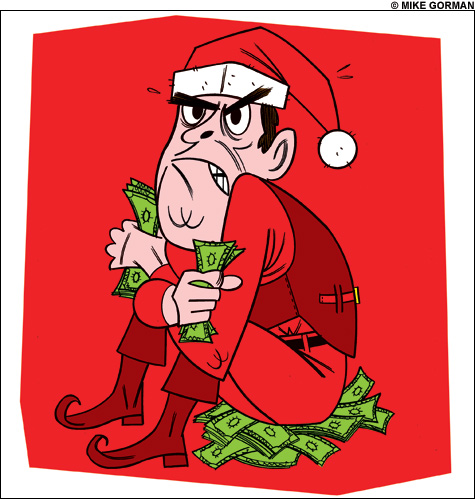
Mr. Stingy.

Originally posted on June 10, 2015

stingy
I remember one of my narcissistic lovers. He was a textbook example of a malignant narcissist, and a mean one at that. Although he never became physically violent, I think he would have if I hadn’t ended that relationship.

One of the strangest things about him was the way he gave me gifts. The guy had plenty of money–he had a trust fund and owned his apartment free and clear, and he was always traveling. He never asked me to go with him though. Instead, he’d bring me back “gifts” from his road trips. I remember he’d make a big show out of presenting me with these gifts as if he was giving me the keys to a new car. They were never wrapped nicely, but always stuffed in a paper or plastic bag.

So what sort of gifts did this narcissistic trust fund jerk give me? Jewelry, chocolates, books, candles, clothing?

No. He’d give me gifts of trash. The stuff he didn’t want. You know, like the free samples they give out in hotels–tiny bars of hotel soap, shampoo, a wrapped glass with the hotel’s name on it, even a “Do Not Disturb” door sign. Once he gave me a gift card with about $2.00 left on it. I couldn’t even use that because it was for a store they don’t have in this area. Thanks, Mr. Generous! The most extravagant thing this loser ever brought me back from these trips was a keychain that was probably free too. One of his gifts was half a Stuckey’s nutty bar, that he’d already opened and eaten part of. How cheap can you get? He was the stingiest POS I ever knew.

tiny_gift
A ring or earrings maybe? Think again, chump.

It wasn’t like he didn’t have the money to buy me something nice. He used to show me, with great fanfare, all the nice things he’d bought for himself. A leather jacket, a framed picture, a box of homemade peanut butter and chocolate fudge. I remember asking him if I could have a piece of the fudge and he said no.

For Christmas that year he actually bought me something. It was a “Toonces The Driving Cat” coffee mug. Although still a cheap gift, it was thoughtful because he knew I loved that Saturday Night Live skit.

About a month later, we had a fight. We were arguing more frequently by then. Then he said something that made me wonder if I’d heard him right. He said he wanted the Toonces mug back. He told me to go get it and give it to him. I said no. Shooting me eye-daggers, he said through gritted teeth, “I never gave you that. I only let you borrow it.”

Wow.

Livid, I went and found the mug, pretended to hand it to him, saying “Here!” As he reached for it, I threw it hard against the floor in front of him, shattering it into bits. He stormed off in a rage and slammed the door on his way out. As I swept the pieces of broken ceramic into a dust pan, I heard the squeal of his tires as he backed out of the driveway like a bat out of hell. He always did have a problem with road rage too.

Why do so many narcissistic abuse survivors support Donald Trump?

scratchingmyhead

I read a post on a narcissistic abuse blog last night in which the blogger expressed concern and confusion over Ollie Matthew’s support of Donald Trump.   For anyone who doesn’t know who Ollie Matthews is, he has a popular Youtube channel for survivors of narcissistic abuse and was himself raised by narcissists.   Lately he’s been posting videos that defend Trump’s narcissism by calling it “confidence” and making other excuses for the things Trump does and says.   His channel has been losing original subscribers, since so many victims are so triggered by this president and can’t understand Matthews’ need to defend and support a man who is probably the biggest narcissist in the world, and a sociopathic one at that.

Curious, I went to Ollie’s Youtube channel and started to watch one of his Trump videos and I had to turn it off.  I felt sick.  Here was a guy who has been victimized by people just like Trump and doesn’t exactly have very nice things to say about them.  I’ve found his videos– which express a lot of raw anger at “his” narcissists, particular his mother — helpful in the past, especially when I was newly No Contact.     Why on God’s green earth would someone who in no uncertain terms tells us to  avoid narcissists  like the plague be supporting a malignant narcissist who seems to have limitless power to abuse not just a few people, but millions — maybe even billions if he manages to destroy the environment or start a world war?

Unfortunately, Matthews isn’t that unusual.  I have come across several narcissistic abuse bloggers and Facebook group owners who proudly and unapologetically support Trump.   I don’t understand this.  I could understand a victim who is unaware of  narcissism or narcissistic abuse supporting him.   If becoming educated about this problem is enough to make a person take the huge step of going No Contact with an abuser, why wouldn’t it also make that person think twice before throwing their support behind a narcissist whose behavior is so extreme that mental health professionals are willing to break the Goldwater Rule and publicly diagnose him with NPD or Malignant Narcissism?

Honestly, I haven’t the foggiest idea.    Do they see Trump as a good guy?  Ollie apparently does — he says his narcissism is “confidence.”   Maybe they have Stockholm Syndrome and are unconsciously still drawn to abusive people.  Maybe they really agree with his destructive policies and don’t see them as destructive.   Maybe they see this man’s abusive language and bullying as a principled refusal to be politically correct.   “He’s being honest,” one wrote.     They apparently cannot see the gaslighting, the lies, the abusive and chaotic behavior and actions, the fragile ego, the vindictiveness, the crass self-centeredness, the scapegoating of people and groups who dare to criticize him or that he sees as “weak.”    Reading posts in support of Trump by narcissistic abuse bloggers, Youtubers, and group owners makes me feel insane.   I don’t understand it and never will.


Email From My Mother

I’m reblogging Sleeping Tiger’s post because I could have written it.   I can relate to every word.  I used to think I was alone in going through these emotional gymnastics over something as innocuous as an email from my mother, but I’m glad to know I’m not.

Please leave comments under the original post.

Contrived Helplessness

This post caught my eye and while reading it, I realized I used to do exactly this.   I think contrived helplessness isn’t limited to the fragile/covert type of narcissist though.  I think it’s also fairly common in people with codependency issues, or who suffer from BPD or C-PTSD.

When I used to pull the “I can’t do anything” card, it was never intentional;  I didn’t want to be that way!  I really believed I was that helpless.  I’d been programmed to believe I was incompetent and couldn’t do anything.  I didn’t know how to be any other way, but looking back on myself in those days, I realize now that I did it because I was so starved for attention and sympathy.   Getting pity and help from others was the only “power” I thought I had, but if you had asked me back then if I did it for attention, I would have said no and meant it.   Later on, I hated that kind of attention because it could be so patronizing and made me feel even more incompetent and helpless.

Comments here are disabled; please leave comments under the original post.

graceformyheart's avatarGrace for my Heart

It’s Narcissist Friday!     

Every once in a while I come up with a term for a narcissistic behavior only to find that the term is already being used for something else. I have wanted to write about a certain type of narcissist who controls others by being needy. I thought that the helplessness these people exhibit is a learned behavior. So I looked up “Learned helplessness.” Yes, it is a psychological term used for those who have tried a certain task repeatedly without success, then have become convinced that they are unable to do the task. A kidnap victim, for example, may try to run away and fail over and over, then give up and become unable to take advantage of real opportunities. Some of the more famous kidnapping cases, like Elizabeth Smart and Jaycee Dugard, may be examples of this inability in victims to help themselves.

Of…

View original post 1,086 more words

Gaslighting.

I’m pretty sure more people in 2017 know what gaslighting means than they did in 2016 or earlier.   It’s left the domain of the narcissistic abuse community and become a household word now that we have a leader who does it on a daily basis, largely via Twitter.   I see this term everywhere now.  In one sense, it’s a good thing, since people are becoming educated about what it (and malignant narcissism) looks like in a leader.    But it’s very bad that the whole world is being gaslighted now.   It’s even worse that so many people fall for the lies and act as flying monkeys who call those of us who value the truth ‘snowflakes.’

gaslighting_def


The 4 types of narcissistic abuse victims.

Originally posted on May 15, 2015

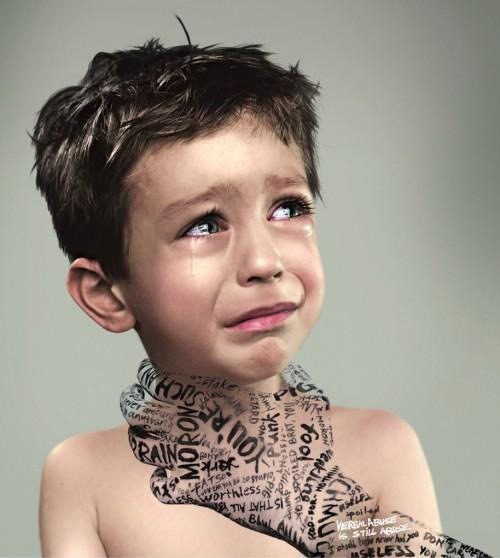
abuse_boy

It’s become clear to me that not all ACONs and abuse survivors are on the same page when it comes to their attitudes toward narcissists.
Because we all are abuse survivors you would think there’d be more solidarity among us, but this is not necessarily the case.

It seems there are four distinct types. In spite of things I may have alluded to in the past, I don’t think any one group is worse or better than any other. They are different, and each has their reasons for having the attitudes they do. I’ll explain why I think the attitudes are different among the four groups. There is definitely a pattern I’ve noticed.

1. The Narc-Hating Group.

female_warrior

These ACONs usually underwent the worst abuse as children, or had two narcissistic parents instead of just one. Having abusive parents seems to instill the greatest anger in victims–more so than having been with an abusive spouse–and this anger isn’t easily let go of. This group has a warrior mentality: to them, ALL narcissists are evil, bad seeds, or demonic, and have no hope whatsoever of recovery or healing. They may acknowledge a continuum or spectrum among narcissists, but it’s not important to them. A narc is a narc is a narc, and they are all considered impervious to change and anything they do is suspect. Some ACONs of this type are ultra-religious and believe all narcissists are seared souls destined for hell.

2. All Cluster Bs are the Same Group.

cluster_b

This group goes a step beyond the first one, in that they believe anyone with a Cluster B disorder–Borderline, Histrionic, Narcissistic, or Antisocial–is character disordered and manipulative, and therefore all pretty much the same and to be avoided like the plague. They do not make exceptions even for Borderlines–the least “malignant” of the four disorders. People who subscribe to this view were as damaged by their malignant narcissistic parents as the first group. One of their parents may have been Borderline or Histrionic, rather than narcissistic– but people with those disorders don’t always make very good parents either. It’s unfortunately all too common for narcissists to collude with Borderlines in the abuse of the child, with the Borderline in the more codependent, subservient role.

3. Not all Narcs are Hopeless Group.

smashingmirror

This group may be in the minority among ACONs (at least among bloggers), but it’s the group I’m evidently in–which has raised the ire of some of the Narc-Hating ACONs. People in this group aren’t going around singing the praises of narcissists and in fact the vast majority strongly encourage No Contact (just as the other two groups do). They do not tolerate or enable narcissistic manipulations and abuse, but they hold that because narcissism may be a spectrum disorder, that those at the lower end of the spectrum (non-malignants) may be redeemable under the proper circumstances and with the proper treatment. They may show more sympathy or empathy for people with narcissism than the first two groups, but they aren’t enablers either. Most do not believe malignant narcissists and psychopaths/sociopaths are redeemable, however.

Many people in this group were part of the Narc-Hating group when they were trying to disengage or go No Contact with their abusers. They used their anger to give them the courage and motivation to disconnect and stay disconnected. But because their hatred and anger toward narcissists isn’t as deeply ingrained as in the first two groups (I’ll explain why in the next paragraph), people in this group eventually can no longer hold onto their anger and prefer to try to understand the motives of those who abused them, while at the same time remaining disconnected from their abusers and not enabling narcissistic behavior. Their desire to let go of anger is very difficult for ACONs of the first two groups to understand, and people of the third group may be seen as betraying the ACON cause, even though this isn’t really the case at all. They’re just handling things differently.

Another reason a person may hold that some narcissists are redeemable is they may have a narcissistic child, and it’s an extremely difficult thing for a parent to accept that their own child may be beyond hope.

It’s been my observation that people in this group may have suffered less severe abuse as children, or had only one narcissistic parent instead of two. One of the parents (usually a codependent spouse) may have actually loved their child, and this love tempered the abuse inflicted on them by the narcissistic parent even if they were forced to collude with the abuse at times. Some people in this group may have even had normal childhoods with non-narcissistic parents, but got involved in relationships or marriages to narcissists (which technically means they are not ACONs at all). It’s been my observation that people who suffered most of their abuse at the hands of a narcissistic spouse or lover rather than a parent never developed the deep hatred toward all narcissists that the first two groups tend to do.

4. Codependents.

Fashion model stylized as marionette doll sitting on violet studio background

Codependents are often (but not always) personality disordered in some way, and many of them are Borderlines or covert narcissists. They are usually victimized by their narcissists, but also identify with and collude with their abusers. Most codependents were abused by narcissistic parents, and are drawn to narcissistic relationships where they are compelled to re-enact their abusive childhoods. This is the group that may never acknowledge they are being abused or reach out for help. They continue to defend and enable their abusers and may believe they are the ones at fault for anything that goes wrong. If a Codependent leaves their narcissist and realizes they were actually being abused, then they are no longer Codependent and join one of the first three categories.
Cold Therapy: what is it?

narcissusflower

Narcissus flower in bloom.

Cold Therapy is a new therapy developed by Sam Vaknin for people with NPD and other disorders.   It sets up a scenario that creates a facsimile of the original trauma that that set off their disorder (retraumatization).   The “cold” refers to the idea of recognizing the narcissist is an emotional child and allowing them relive the trauma without offering any “warmth.” The narcissist is then given emotional tools to handle the traumatic event differently, thereby “rewiring” the brain.    It has had hopeful results on several people diagnosed with Cluster B disorders, including NPD and ASPD, and other disorders.

According to Vaknin,

Cold Therapy deploys tools from the arsenal of child psychology to treat these disorders because of their roots in attachment dysfunctions and arrested development. The therapy seeks to recreate an environment conducive to the replication of original childhood traumas so as to allow the client to resolve them as an adult.

*****

From the webpage about Cold Therapy:

Developed by Sam Vaknin, Cold Therapy is based on two premises —

1. That narcissistic disorders are actually forms of complex post-traumatic conditions; and
2. That narcissists are the outcomes of arrested development.

Cold Therapy borrows techniques from child psychology and from treatment modalities used to deal with PTSD. Cold Therapy consists of the retraumatization of the narcissistic client in a hostile, non-holding environment which resembles the ambience of the original trauma. The adult patient successfully tackles this second round of hurt and thus resolves early childhood conflicts and achieves closure rendering his now maladaptive narcissistic defenses redundant, unnecessary, and obsolete.

Cold Therapy makes use of proprietary techniques such as erasure (suppressing the client’s speech and free expression and gaining clinical information and insights from his reactions to being so stifled). Other techniques include: grandiosity reframing, guided imagery, negative iteration, erasure, happiness map, mirroring, escalation, role play, assimilative confabulation, hypervigilant referencing, and reparenting.

The therapy then makes use of Lidija Rangelovska’s “Spiral of Healing” to revisit the original traumas, but this time in a holding (supportive) environment, replete with empathy and emotions.

Who can benefit from Cold Therapy

Cold therapy is a radical departure from current tenets of most treatment modalities.  It is especially effective in the treatment of Narcissistic and Antisocial Personality Disorders, and certain mood disorders, including dysthymia and major depressive episodes (clinical depression of both exogenous and endogenous causes).

Who can attend

Anyone can attend the seminar (which is to be held in Vienna, Austria on May 12 – 14, 2017), but licensed therapists, psychologists, and mental health practitioners will receive a certificate of completion at the end of the seminar.

Dates, times, exact location, itinerary for the workshop for each day, and information about payment can be found here: