Sociopath vs. psychopath: is there a difference?

psychopathy

I’ve been using the terms psychopath and sociopath interchangeably on this blog, even though I’m aware there are differences between the two. I was curious enough to Google what the difference is, and came across an article in Psychology Today that explains how they are alike–and how they differ.

How to Tell a Sociopath from a Psychopath
By Dr. Scott Bonn

Many forensic psychologists, psychiatrists and criminologists use the terms sociopathy and psychopathy interchangeably. Leading experts disagree on whether there are meaningful differences between the two conditions. I contend that there are clear and significant distinctions between them.

The fifth edition of the Diagnostic and Statistical Manual of Mental Disorders (DSM-5), released by the American Psychiatric Association in 2013, lists both sociopathy and psychopathy under the heading of Antisocial Personality Disorders (ASPD). These disorders share many common behavioral traits which lead to the confusion between them. Key traits that sociopaths and psychopaths share include:

A disregard for laws and social mores
A disregard for the rights of others
A failure to feel remorse or guilt
A tendency to display violent behavior
In addition to their commonalities, sociopaths and psychopaths also have their own unique behavioral characteristics, as well.

Sociopaths tend to be nervous and easily agitated. They are volatile and prone to emotional outbursts, including fits of rage. They are likely to be uneducated and live on the fringes of society, unable to hold down a steady job or stay in one place for very long. It is difficult but not impossible for sociopaths to form attachments with others. Many sociopaths are able to form an attachment to a particular individual or group, although they have no regard for society in general or its rules. In the eyes of others, sociopaths will appear to be very disturbed. Any crimes committed by a sociopath, including murder, will tend to be haphazard, disorganized and spontaneous rather than planned.

Psychopaths, on the other hand, are unable to form emotional attachments or feel real empathy with others, although they often have disarming or even charming personalities. Psychopaths are very manipulative and can easily gain people’s trust. They learn to mimic emotions, despite their inability to actually feel them, and will appear normal to unsuspecting people. Psychopaths are often well educated and hold steady jobs. Some are so good at manipulation and mimicry that they have families and other long-term relationships without those around them ever suspecting their true nature.

When committing crimes, psychopaths carefully plan out every detail in advance and often have contingency plans in place. Unlike their sociopathic counterparts, psychopathic criminals are cool, calm, and meticulous. Their crimes, whether violent or non-violent, will be highly organized and generally offer few clues for authorities to pursue. Intelligent psychopaths make excellent white-collar criminals and “con artists” due to their calm and charismatic natures.

The cause of psychopathy is different than the cause of sociopathy (1). It is believed that psychopathy is the result of “nature” (genetics) while sociopathy is the result of “nurture” (environment). Psychopathy is related to a physiological defect that results in the underdevelopment of the part of the brain responsible for impulse control and emotions. Sociopathy, on the other hand, is more likely the product of childhood trauma and physical/emotional abuse. Because sociopathy appears to be learned rather than innate, sociopaths are capable of empathy in certain limited circumstances but not in others, and with a few individuals but not others.

Psychopathy is the most dangerous of all antisocial personality disorders because of the way psychopaths dissociate emotionally from their actions, regardless of how terible they may be. Many prolific and notorious serial killers, including the late Ted Bundy and John Wayne Gacy, and Dennis Rader (“Bind, Torture, Kill” or BTK) are unremorseful psychopaths. Psychopathic killers view their innocent victims as inhuman objects to be tormented and violated for their amusement.

Contrary to popular mythology, most serial killers are not mentally ill or “evil” geniuses. See my related article: http://www.psychologytoday.com/blog/wicked-deeds/201406/serial-killer-myth-1-theyre-mentally-ill-or-evil-geniuses

tedbundy ed_gein
Although both were deadly serial killers, Ted Bundy was a psychopath who gave a good impression and knew how not to get caught; Ed Gein was most likely a sociopath who acted more impulsively, was more disorganized and didn’t give a very good first impression. Though both men’s crimes were equally heinous, Bundy’s eyes seem “colder” than Gein’s.

Although the traits of a psychopath more closely resemble those of a person with Narcissistic Personality Disorder (NPD) than those of the more impulsive, disorganized sociopath, both are actually described here as variations of ASPD, not NPD. Once again, if ASPD is really “NPD on crack” then it follows that NPD and ASPD are both on the same spectrum, with ASPD (and psychopathy/sociopathy) at the top of the spectrum. If this is in fact the case, people with NPD, even malignant narcissists, may border on psychopathy, but would not actually qualify as true psychopaths.

Here’s a little graph I devised to illustrate where all the Cluster B disorders may fall on a spectrum. These are just my guesses and are not based on psychological research, just my instinct and gut feelings.

psychopathy_graph
Click image to enlarge.

Malignant narcissism in fairy tales.

Children are educated about malignant narcissism and psychopathy at an early age through seemingly innocent fairy tales. A large percentage of them are really tales of jealousy, envy, pride, vanity and greed. The evil intentioned villains are usually in a parental or caregiving role, and the young heroes who draw the abuse and wrath of the villain must find a way to survive–which means either escape or destruction/disempowerment of the villain.

The plot descriptions for the first four are all from Wikipedia.

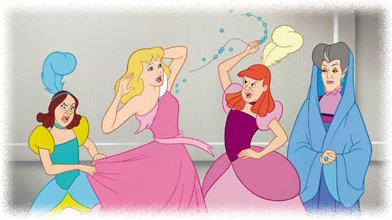
Cinderella

cinderella

There are many different versions of this famous story; this is one of the most famous. In this tale, the malignant narcissist is Cinderella’s envious stepmother and her two stepsisters. Cinderella is clearly the Scapegoat Child, and her stepsisters the Golden Children.

A wealthy gentleman’s wife lay on her deathbed, and called her only daughter to her bedside. She asked her to remain good and kind, and told her that God would protect her. She then died and was buried. A year went by and the widower married another woman, who had two daughters of her own. They had beautiful faces and fair skin, but their hearts were cruel and wicked. The stepsisters stole the girl’s fine clothes and jewels and forced her to wear rags. They banished her into the kitchen to do the worst chores, and gave her the nickname “Aschenputtel” (“Ashfool”.) Despite all of this the girl remained good and kind, and would always go to her mother’s grave to cry and pray to God that she would see her circumstances improve.

One day, the gentleman visited a fair, promising his stepdaughters gifts of luxury. The eldest asked for beautiful dresses, while the younger for pearls and diamonds. His own daughter merely asked for the first twig to knock his hat off on the way. The gentleman went on his way, and acquires presents for his stepdaughters. While passing a forest he got a hazel twig, and gave it to his daughter. She planted the twig over her mother’s grave, watered it with her tears and over the years, it grew into a glowing hazel tree. The girl would pray under it three times a day, and a white bird would always come to comfort her.

The king decided to give a festival that would last for three whole days and nights, and invited all the beautiful maidens in the land to attend so that the prince could select one of them as his bride. The two sisters were also invited, but when Aschenputtel begged them to allow her to go with them into the celebration, the stepmother refused because she had no dress nor shoes to wear. When the girl insisted, the woman threw a dish of lentils into the ashes for her to pick up, guaranteeing her permission to attend the festival, and when the girl accomplished the task in less than an hour with the help of two white doves sent by her mother from Heaven, the stepmother only redoubled the task and threw down even a greater quantity of lentils. When Aschenputtel was able to accomplish it in a greater speed, not wanting to spoil her daughters’ chances, the stepmother hastened away with them to the ball and left the crying stepdaughter behind.

The girl retreated to the graveyard to ask for help. The white bird dropped a white gown and silk shoes. She went to the ball, with the warning that she must leave before midnight. The prince danced with her, but she eluded him before midnight struck. The next evening, the girl appeared in a much grander gown of silver and glass shoes. The prince fell in love with her and danced with her for the whole evening, but when midnight came, she left again. The third evening, she appeared dressed in spun gold with slippers of gold. Now the prince was determined to keep her, and had the entire stairway smeared with pitch. Aschenputtel lost track of time, and when she ran away one of her golden slippers got stuck on that pitch. The prince proclaimed that he would marry the maiden whose foot would fit the golden slipper.

The next morning, the prince went to Aschenputtel’s house and tried the slipper on the eldest stepsister. The sister was advised by her mother to cut off her toes in order to fit the slipper. While riding with the stepsister, the two doves from Heaven told the Prince that blood dripped from her foot. Appalled by her treachery, he went back again and tried the slipper on the other stepsister. She cut off part of her heel in order to get her foot in the slipper, and again the prince was fooled. While riding with her to the king’s castle, the doves alerted him again about the blood on her foot. He came back to inquire about another girl. The gentleman told him that they kept a kitchen-maid in the house – omitting to mention that she was his own daughter – and the prince asked him to let her try on the slipper. The girl appeared after washing herself, and when she put on the slipper, the prince recognized her as the stranger with whom he had danced at the ball.

In the end, during Aschenputtel’s wedding, as she was walking down the aisle with her stepsisters as her bridesmaids, (they had hoped to worm their way into her favour), the doves from Heaven flew down and struck the two stepsisters’ eyes, one in the left and the other in the right. When the wedding came to an end, and Aschenputtel and her prince marched out of the church, the doves flew again, striking the remaining eyes of the two evil sisters blind, a punishment they had to endure for the rest of their lives.

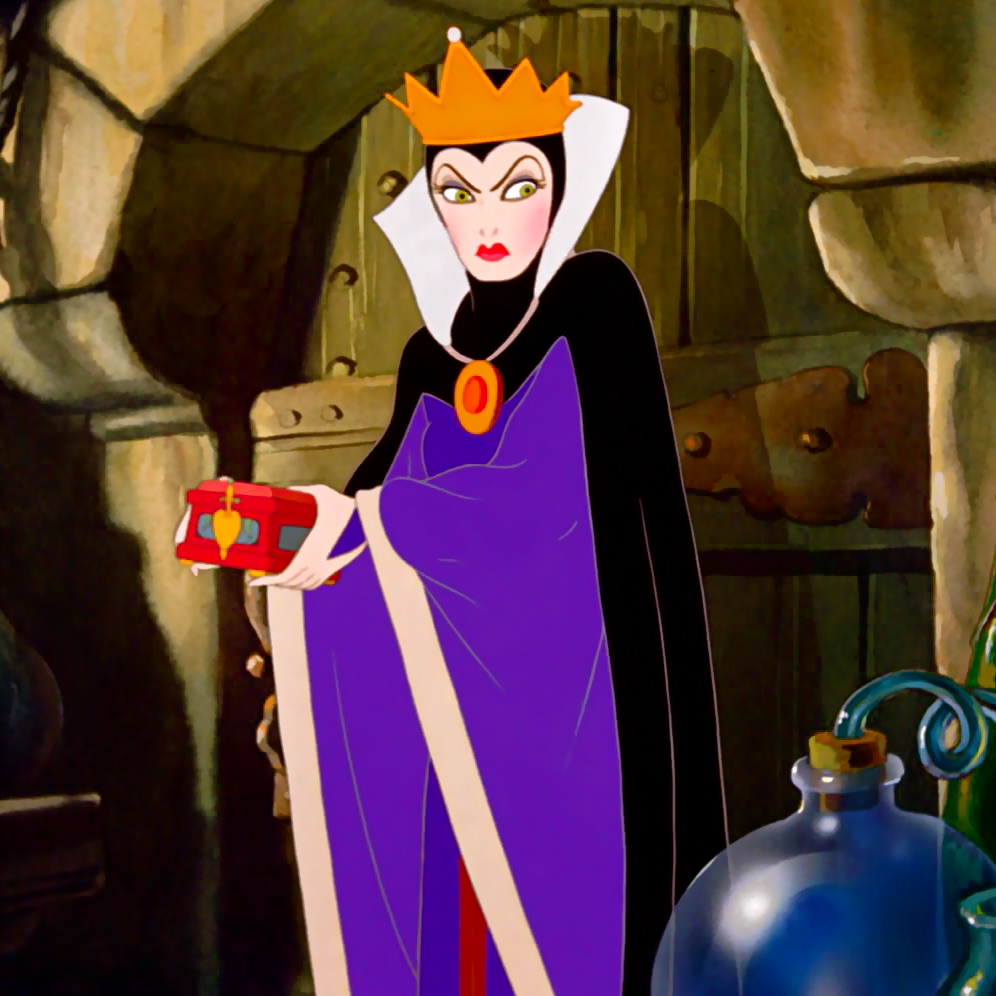
Snow White

snow_white

In this tale, the malignant narcissist is Snow White’s pathologically envious and vain stepmother.

At the beginning of the story, a queen sits sewing at an open window during a winter snowfall when she pricks her finger with her needle, causing three drops of red blood to drip onto the freshly fallen white snow on the black windowsill. Admiring the beauty of the resulting color combination, she says to herself, “Oh how I wish that I had a daughter that had skin as white as snow, lips as red as blood, and hair as black as ebony”. Soon after that, the Queen gives birth to a baby girl who is as white as snow, has lips red as blood and has hair as black as ebony. They name her ‘Snow White’, but sadly, the Queen dies after giving birth to her.

After a year has passed, the King takes a new wife, who is beautiful but also unutterably wicked and vain. The new queen possesses a magic mirror, which she asks every morning, “Magic mirror in my hand, who is the fairest in the land?” The mirror always replies, “My queen, you are the fairest in the land.” The Queen is always pleased with that because the magic mirror never lies. But when Snow White reaches the age of seven, she becomes more beautiful each day and even more beautiful than the Queen, and when the Queen asks her mirror, it responds, “My queen, you are the fairest here so true. But Snow White is a thousand times more beautiful than you”.

This gives the queen a great shock. She becomes yellow and green with envy and from that hour on, her heart turns against Snow White, and she hates her more and more each day. Envy and pride, like ill weeds, grow in her heart taller every day, until she has no peace day or night. Eventually, the Queen orders a huntsman to take Snow White into the deepest woods to be killed. As proof that Snow White is dead, the Queen demands that he return with her lungs and liver. The huntsman takes Snow White into the forest. After raising his knife, he finds himself unable to kill her as she sobs heavily and begs him; “Oh, dear huntsman, don’t kill me! Leave me with my life; I will run into the forest and never come back!” The huntsman leaves her behind alive, convinced that the girl would be eaten by some wild animal. He instead brings the Queen the lungs and liver of a young boar, which is prepared by the cook and eaten by the Queen.

After wandering through the forest for days, Snow White discovers a tiny cottage belonging to a group of seven dwarfs. Since no one is at home, she eats some of the tiny meals, drinks some of their wine and then tests all the beds. Finally the last bed is comfortable enough for her and she falls asleep. When the seven dwarfs return home, they immediately become aware that someone sneaked in secretly, because everything in their home is in disorder. During their loud discussion about who sneaked in, they discover the sleeping Snow White. The girl wakes up and explains to them what happened and the dwarfs take pity on her, saying; “If you will keep house for us, and cook, make beds, wash, sew, and knit, and keep everything clean and orderly, then you can stay with us, and you shall have everything that you want.” They warn her to be careful when alone at home and to let no one in when they are away delving in the mountains.

evil_queen

Meanwhile, the Queen asks her mirror once again; “Magic mirror in my hand, who is the fairest in the land?” The mirror replies; “My queen, you are the fairest here so true. But Snow White beyond the mountains at the seven dwarfs is a thousand times more beautiful than you”.[1] The Queen is horrified to learn that the huntsman has betrayed her and that Snow White is still alive. She keeps thinking about how to get rid of Snow White, then she disguises herself as an old peddler. The Queen then walks to the cottage of the dwarfs and offers her colorful, silky laced bodices and convinces the girl to take the most beautiful bodice as a present. Then the Queen laces it so tightly that Snow White faints, causing the Queen to leave her for dead. But the dwarfs return just in time, and Snow White revives when the dwarfs loosen the laces.

The next morning the Queen consults her mirror anew and the mirror reveals Snow White’s survival. Now infuriated, the Queen dresses as a comb seller and convinces Snow White to take a beautiful comb as a present. She brushes Snow White’s hair with a poisoned comb, and the girl faints again, but she is again revived by the dwarfs. And the next morning the mirror tells the Queen that Snow White is still “a thousand times more beautiful”. Now the Queen nearly has a heart attack in shock and rage. As a third and last attempt to rid herself of Snow White, she secretly consults the darkest magic and makes a poisoned apple, and in the disguise of a farmer’s wife, she offers it to Snow White. The girl is at first hesitant to accept it, so the Queen cuts the apple in half, eating the white (harmless) half and giving the red (poisoned) half to Snow White. The girl eagerly takes a bite and falls into a state of suspended animation, causing the Queen to triumph. This time the dwarfs are unable to revive the girl because they cannot find the source of Snow White’s poor health, and assuming that she is dead, they place her in a glass coffin.

Time passes and a prince traveling through the land sees Snow White. He strides to her coffin and, enchanted by her beauty, instantly falls in love with her. The dwarfs succumb to his entreaties to let him have the coffin, and as his servants carry the coffin away, they stumble on some roots. The tremor caused by the stumbling causes the piece of poisoned apple to dislodge from Snow White’s throat, awakening her. The Prince then declares his love for her, and soon a wedding is planned. The couple invite every queen and king to come to the wedding party, including Snow White’s step-mother. Meanwhile the Queen, still believing that Snow White is dead, again asks her magical mirror who is the fairest in the land. The mirror says; “You, my queen, are fair so true. But the young Queen is a thousand times fairer than you”.

Appalled, in disbelief, and with her heart full of fear and doubts, the Queen is at first hesitant to accept the invitation, but she eventually decides to go. Not knowing that this new queen was indeed her stepdaughter, she arrives at the wedding, and her heart fills with the deepest of dread when she realizes the truth. As a punishment for her attempted murders, a pair of glowing-hot iron shoes are brought forth with tongs and placed before the Queen. She is forced to step into the burning shoes and to dance until she drops dead.

The Sleeping Beauty(Perrault’s version)
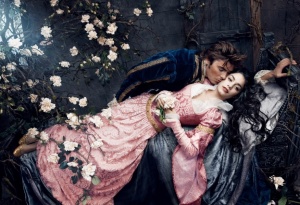
sleeping_beauty

The malignant narcissist in this tale is an angry and envious fairy.

At the christening of a king and queen’s long-wished-for child, seven fairies are invited to be godmothers to the infant princess. The fairies attend the banquet at the palace and are seated. Laid before them is a golden casket containing gold jeweled utensils. Soon after, another fairy enters the palace and is seated without a golden casket. This eighth fairy is overlooked because she has been within a tower for many years and everyone thinks she’s been either dead or enchanted. Six of the other seven fairies then offer their gifts of beauty, wit, grace, dance, song, and music to the infant princess. The eighth fairy is very angry that she has been overlooked and, as her gift to the princess, enchants the infant princess so that she will prick her hand on a spindle and die. One fairy, who hasn’t yet given her gift, attempts to reverse the evil fairy’s curse. However, she can only do so partially—instead of dying, the Princess will fall into a deep sleep for 100 years and be awakened by a kiss from a prince.

The king forbids any sort of spinning all throughout the kingdom. Fifteen or sixteen years pass and one day, when the king and queen are away, the Princess wanders through the palace rooms and comes upon an old woman, spinning with her spindle. The princess, curious to try the unfamiliar task, asks the old woman if she can try the spinning wheel. The princess pricks her finger on the spindle and inevitable curse is fulfilled. The old woman cries for help and attempts are made to revive the princess. The king attributes this to fate and has the Princess carried to the finest room in the palace and placed upon a bed of gold and silver embroidered fabric. The king and queen kiss their daughter goodbye and depart, proclaiming the entrance to be forbidden. The good fairy who altered the evil prophecy is summoned. Having great powers of foresight, the fairy sees that the Princess will be awoken to distress when she finds herself alone, so the fairy puts everyone in the castle to sleep. The fairy also summons a forest of trees, brambles and thorns that spring up around the castle, shielding it from the outside world and preventing anyone from disturbing the Princess.

A hundred years pass and a prince from another family spies the hidden castle during a hunting expedition. His attendants tell him differing stories regarding the castle until an old man recounts his father’s words: within the castle lies a beautiful princess who is doomed to sleep for a hundred years until a king’s son comes and awakens her. The prince then braves the tall trees, brambles and thorns which part at his approach, and enters the castle. He passes the sleeping castle folk and comes across the chamber where the Princess lies asleep on the bed. Struck by the radiant beauty before him, he falls on his knees before her. The enchantment comes to an end by a kiss and the princess awakens and converses with the prince for a long time. Meanwhile, the rest of the castle awakens and go about their business. The prince and princess walk to the hall of mirrors to dine and are later married by the chaplain in the castle chapel.

After having been secretly wed by the reawakened Royal almoner, the Prince continues to visit the Princess. She bears him two children, L’Aurore (Dawn) and Le Jour (Day), which he keeps secret from his mother, who is of an ogre lineage. Once it was time for the Prince to ascend the throne, he brings his wife, children, and the talabutte (“Count of the Mount”).

The Ogress Queen Mother sends the young Queen and the children to a house secluded in the woods and directs her cook to prepare the boy with sauce Robert for dinner. The humane cook substitutes a lamb for the boy which satisfies the Queen Mother. She then demands the girl but the humane cook, once again, substitutes a young goat which also satisfies the Queen Mother. When the Ogress demands that he serve up the young Queen, the young Queen offers to slit her throat so that she may join the children that she imagines are dead. While the Queen Mother is satisfied with a hind prepared with sauce Robert in substitution for the young Queen, there is a tearful secret reunion of the Queen and her children. However, the Queen Mother soon discovers the cook’s trick and she prepares a tub in the courtyard filled with vipers and other noxious creatures. The King returns in the nick of time and the Ogress, being discovered, throws herself into the tub and is fully consumed. The King, young Queen, and children then lived happily ever after.

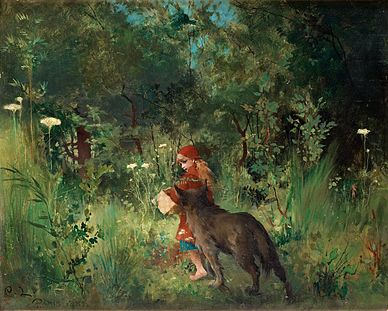
Little Red Riding Hood

little_red
In this tale, the wolf is a psychopathic predator who pretends to be Riding Hood’s grandmother.

The story revolves around a girl called Little Red Riding Hood, after the red hooded cape/cloak (in Perrault’s fairytale) or simple cap (in the Grimms’ version called Little Red-Cap) she wears. The girl walks through the woods to deliver food to her sickly grandmother (wine and cake depending on the translation). In the Grimms’ version at least, she had the order from her mother to stay strictly on the path.

A mean wolf wants to eat the girl and the food in the basket. He secretly stalks her behind trees, bushes, shrubs, and patches of little and tall grass. He approaches Little Red Riding Hood and she naïvely tells him where she is going. He suggests that the girl pick some flowers; which she does. In the meantime; he goes to the grandmother’s house and gains entry by pretending to be the girl. He swallows the grandmother whole (in some stories, he locks her in the closet) and waits for the girl, disguised as the grandma.

When the girl arrives, she notices that her grandmother looks very strange. Little Red then says, “What a deep voice you have!” (“The better to greet you with”), “Goodness, what big eyes you have!” (“The better to see you with”), “And what big hands you have!” (“The better to hug/grab you with”), and lastly, “What a big mouth you have” (“The better to eat you with!”), at which point the wolf jumps out of bed, and swallows her up too. Then he falls asleep. In Charles Perrault’s version of the story (the first version to be published), the tale ends here. However, in later versions the story continues generally as follows:

A lumberjack (in the French version but in the Brothers Grimm and traditional German versions, a hunter), comes to the rescue and with his axe cuts open the sleeping wolf. Little Red Riding Hood and her grandmother emerge unharmed. They then fill the wolf’s body with heavy stones. The wolf awakens and tries to flee, but the stones cause him to collapse and die. (Sanitized versions of the story have the grandmother shut in the closet instead of eaten, and some have Little Red Riding Hood saved by the lumberjack as the wolf advances on her, rather than after she is eaten.)

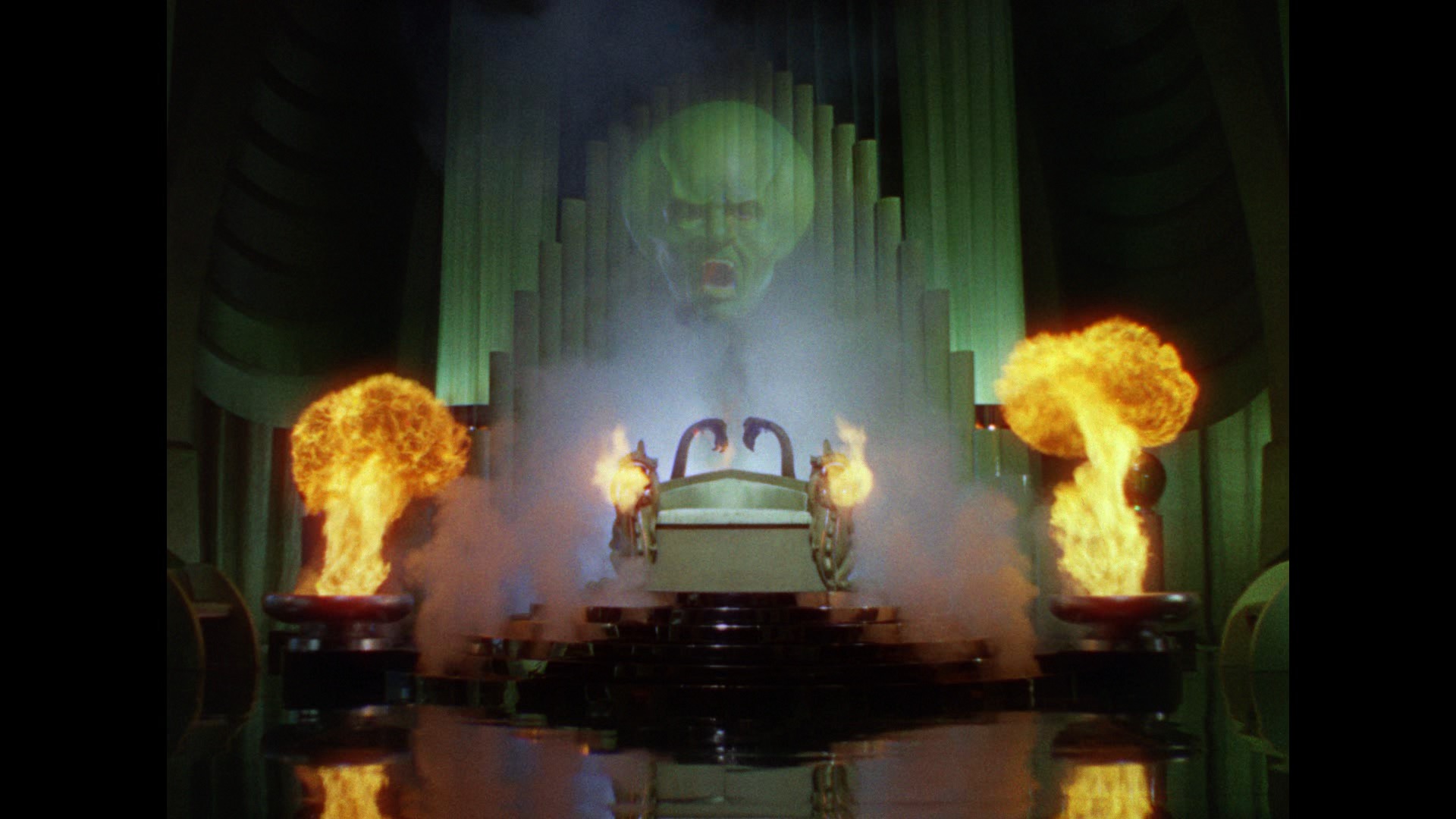
The Wizard of Oz

wizard_of_oz

Although of more recent vintage than fairy tales and therefore not considered to be one, I feel this story belongs here anyway.

The Wicked Witch of the West/Miss Gulch is the psychopathic malignant narcissist. The Wizard, although not a villain, is also a narcissist whose mask of intimidating power and might is stripped away to reveal the True Self–a “humbug” with grandiose delusions and low self esteem. The fact that, in the film, the Wizard shows shame and remorse when he is called out by Dorothy for being a “very bad man,” indicates he’s either not a true narcissist (he may be a Borderline instead) or is very low on the spectrum.

The narcissistic abuse community’s term “flying monkey” came from this story. The flying monkeys were The Wicked Witch’s slaves that carried out her bidding, but they were really just victims themselves.

This IMDB.com plot description is for the 1939 movie.

Dorothy Gale is an orphaned teenager who lives with her Auntie Em and Uncle Henry on a Kansas farm in the early 1900s. She daydreams about going “over the rainbow” after Miss Gulch, a nasty neighbor, hits Dorothy’s dog Toto on the back with a rake, causing Toto to bite her. Miss Gulch shows up with an order to take Toto to the sheriff to be euthanized, but Toto jumps out of the basket on the back of Miss Gulch’s bicycle and runs back to Dorothy. Fearing that Miss Gulch, who does not know that Toto has escaped, will return, Dorothy takes the dog and runs away from home. She meets an itinerant phony fortune teller, Professor Marvel, who immediately guesses that Dorothy has run away. Pretending to tell her fortune and wishing to reunite Dorothy with her aunt, he tells her that Auntie Em has fallen ill from worry over her.

Dorothy immediately returns home with Toto, only to find a tornado approaching. Unable to reach her family in their storm cellar, Dorothy enters the house, is knocked unconscious by a loose window, and apparently begins to dream. Along with her house and Toto, she’s swept from her sepia-toned world to the magical, beautiful, dangerous and technicolor land of Oz. The tornado drops Dorothy’s house on the Wicked Witch of the East, killing her. The witch ruled the Land of the Munchkins, little people who think at first that Dorothy herself must be a witch. The Wicked Witch of the West, who is the sister of the dead witch, threatens Dorothy. But Glinda, the Good Witch of the North, gives Dorothy the dead witch’s enchanted Ruby Slippers, and the slippers protect her. Glinda advises that if Dorothy wants to go home to Kansas, she should seek the aid of the Wizard of Oz, who lives in the Emerald City. To get there, Dorothy sets off down the Yellow Brick Road.

Before she’s followed the road very far, Dorothy meets a talking scarecrow whose dearest wish is to have a brain. Hoping that the wizard can help him, the Scarecrow joins Dorothy on her journey. They come upon the Tin Woodman, who was caught in the rain and is so rusty he can’t move. When they oil his joints so he can walk and talk again, he confesses that he longs for a heart; he too joins Dorothy. As they walk through a dense forest, they encounter the Cowardly Lion, who wishes for courage and joins the quest in the hope that the wizard will give him some. Dorothy’s three friends resemble the three farmhands who work for Dorothy’s aunt and uncle back in Kansas.

On the way to the Emerald City, Dorothy and her friends are hindered and menaced by the Wicked Witch of the West. She incites trees to throw apples at them, then tries to set the scarecrow on fire. Within sight of the city, the witch conjures up a field of poppies that cause Dorothy, Toto, and the lion to fall asleep. Glinda saves them by making it snow, which counteracts the effects of the poppies.

The four travelers marvel at the wonders they find in the Emerald City and take time to freshen up: Dorothy, Toto and the Lion have their hair done, the Tin Woodman gets polished, and the scarecrow receives an infusion of fresh straw stuffing. As they emerge looking clean and spiffy, the Wicked Witch appears on her broomstick and skywrites “Surrender Dorothy” above the city. The friends are frustrated at their reception by the “great and powerful” Wizard of Oz — at first he won’t receive them at all. When they finally see him (the doorkeeper lets them in because he had an Aunt Em himself), the Wizard declines to help them until they bring him the broomstick of the Wicked Witch of the West. Daunted but determined, they set off again.

wicked_witch

The witch sends winged monkeys to attack Dorothy’s party before they reach her castle; the monkeys snatch Dorothy and Toto and scatter the others. When the witch finds that the Ruby Slippers can’t be taken against Dorothy’s will as long as the girl is alive, she turns her hourglass and threatens that Dorothy will die when it runs out. Meanwhile, Toto has escaped and run for help. Dressed as guardsmen, the Lion, the Tin Man, and the Scarecrow sneak into the castle and free Dorothy. They’re discovered before they can escape, however, and the witch and her guards corner them and set the Scarecrow on fire. Dorothy douses him with a pail of water, splashing the witch by accident. The water causes the witch to disintegrate (“I’m melting!”). The guards are happy to let Dorothy have the witch’s broomstick, and Dorothy and her friends return to the Emerald City.

The wizard isn’t pleased to see them again. He blusters until Toto pulls aside a curtain in the corner of the audience chamber to reveal an old man who resembles Professor Marvel pulling levers and speaking into a microphone — the so-called wizard, as the Scarecrow says, is a humbug. He’s abashed and apologetic, but quickly finds ways to help Dorothy’s friends: a diploma for the Scarecrow, a medal of valor for the Lion, and a testimonial heart-shaped watch for the Tin Man. Then he reveals that he’s from Kansas himself and came to Oz in a hot-air balloon, in which he proposes to take Dorothy home.

wizard_of_oz2
This isn’t who the Wizard really is, but the mask he’s projecting.

The wizard appoints the Scarecrow, Tin Man, and Lion rulers of Oz in his absence. Just as the balloon is about to take off Toto runs after a cat and Dorothy follows him. Unable to stop, the wizard leaves without Dorothy. But Glinda appears and explains that Dorothy has always had the power to get home; Glinda didn’t tell her before because Dorothy wouldn’t have believed it. Bidding her friends a tearful good-bye, Dorothy taps her heels together three times, repeats “There’s no place like home,” and the Ruby Slippers take her and Toto back to Kansas.

Dorothy wakes up in her own bed with Auntie Em and Uncle Henry fussing over her. Professor Marvel and the farmhands Hunk, Hickory, and Zeke stop by to see how she’s doing. She raises indulgent laughter when she tells them about Oz, but she’s so happy to be home she doesn’t mind that they don’t believe her. Miss Gulch is never mentioned again.

“Mom, you make me sick!”

I like watching true crime videos, and I thought this one was interesting. Kathy Bush was the Perfect Mother and an activist for health care reform. She is also a malignant narcissist who deliberately kept her young daughter Jennifer seriously ill in order to garner attention for herself from the medical establishment. This type of child abuse is known as Munchausen syndrome by proxy.

Here’s how Wikipedia defines Munchausen syndrome:

Munchausen syndrome, is a psychiatric factitious disorder wherein those affected feign disease, illness, or psychological trauma to draw attention, sympathy, or reassurance to themselves. It is also sometimes known as hospital addiction syndrome, thick chart syndrome, or hospital hopper syndrome. True Munchausen syndrome fits within the subclass of factitious disorder with predominantly physical signs and symptoms, but they also have a history of recurrent hospitalization, travelling, and dramatic, untrue, and extremely improbable tales of their past experiences.

Munchausen syndrome by proxy is when a parent, usually a mother, deliberately makes their child ill to obtain attention and sympathy. They often become overinvolved in the child’s treatment procedures but their intent to is have control over the treatments so they can be sabotaged. It’s common for a mother who victimizes their child this way to be knowledgeable about medical procedures and protocol. They may have worked in medical professions such as nursing.

For Kathy, not only did she gain attention and plenty of sympathy from her entire community, it also provided a way for her to lobby for health care reform and get noticed by none other than Hilary Clinton, who took sympathy on Kathy and Jennifer as well.

Pay close attention to Kathy during her interviews. Although she tries to feign emotion and manages to even make herself cry, notice how dead looking her eyes are and how her words seem rehearsed, as if she’s reading from a script. Creepy!

By the time she reached her teens, Jennifer decided she wanted nothing to do with the calculating, narcissistic mother who almost killed her.

http://www.youtube.com/watch?v=uPj9Jcvh5xk

This comment under the video was interesting:

ASPD and malignant narcissism. Son’s are probably GC (golden child) while daughter is SG (scapegoat child). Reading through transcripts about her and reports from neighbors, friends, family etc, she had a pattern for years. It suggested histrionic behaviors as well as constant gaslighting (rewriting history to be in HER favor). It also suggested she regarded herself as the consummate victim and had a grandiose sense of self importance. Lastly, other things listed also described her as having a pathological desire to be admired and praised and would take credit for other peoples accomplishments. Invalidating others while justifying herself also seemed to on the menu as well.

What I have learned.

bullet

I had some computer problems tonight (am still having them–this computer is running very slow), so that’s why I haven’t posted anything. I am finally getting to do that.

Some of us may think a narcissist can change. Some of us may think that deep down, they can’t possibly be such bad people. We make excuses for them: they’re rough around the edges, need someone to care about them, they’re really a big softy under that hard exterior, they’re defensive and nasty to us because they’ve been hurt too often.

Not everyone who is rough acting or cranky is a narcissist. There are people who throw up defense mechanisms or act grumpy or snap at you for no reason, but you’ll be able to tell they aren’t narcissists because they won’t be trying to gaslight you, triangulate against you, tell you lies, project their own character flaws onto you, blame you for things that you didn’t do, or act sadistic to try to hurt you. They will have a conscience; they can feel empathy; they can apologize when they’ve been wrong and mean it. They may be depressed or anxious which causes them to act out. They may have something on their mind or be angry with someone. It could even be cultural–kids who had to grow up in rough neighborhoods may act a bit hard-edged even as adults, but that doesn’t make them narcissists or bad people.

A good way to tell if someone who is lashing out at you is not a narcissist is to wait until they are calmed down, and then calmly ask them why they attacked you. If they apologize or talk about their feelings with you, most likely they aren’t a narcissist (but be careful, because a narcissist who thinks they might be losing their supply could be love-bombing you).

If they ignore you, change the subject, or most tellingly, tell you you’re the one with the problem and they’ve done nothing wrong, most likely you’re dealing with a narcissist. Once you know that, expect nothing from them, because you will always be disappointed.

If you know someone is a narcissist, never give them the benefit of the doubt.
They aren’t nice people.
They aren’t going to change.
You cannot help them.
You cannot reason with them.
You cannot get them to “see your side” of things.
They cannot be pleased.
They don’t care about your feelings, only their own.
You are wasting your time on them.

Being nice to them or pandering to them not only won’t work; it will make them treat you worse. They may respect you if you play their own games right back or stand up to them, but they are never going to like you, because they don’t like anyone, least of all themselves.

I like to think the best about people. I’m a natural born sucker. I always give people the benefit of the doubt.
Until today, I thought there was hope for some of them. But I learned a hard lesson.
There is hope for none of them.
They may not want to be narcissists, but they are, and nothing they or you or anyone can do will ever make them change. The only thing that makes sense is to stay the hell away from them or avoid them as much as possible.

They are poison. They live in a hell they created for themselves and they will take you with them if you give them half a chance.
Don’t.

How my ex became a malignant narcissist.

Martin-Luther-King-Good-vs-Evil

I’ve talked about several of my own family members and how narcissism has infected other family members with NPD and/or made them victims, but I haven’t focused too much on how my ex husband Michael, as malignant as they come, got that way.

So I am doing that now.

Michael, like most narcissists, wasn’t born that way. He was the only child of a machinist who was rarely home and when he was, stayed in the background, believing raising a child was “woman’s work.” The household was blue collar but back in the early ’60s, blue collar didn’t mean poor. A working class man could adequately support his family, buy a home, have two cars, and his wife didn’t have to work to help make ends meet.

From all accounts, Michael’s father loved him in his rough-around-the-edges macho way, but he spent hours every day in bars or at the pool hall after work to avoid his nagging, manipulating, self-centered, never-satisfied wife, Helen, who was a dangerous malignant narcissist and probably psychopathic.

Michael was a sweet, obedient child and a good student. He always tried to please his mother, making her things at school, picking flowers to bring home to her, and always, always trying to hug her. He was very physically affectionate, desperately trying to elicit love from a woman who didn’t have any to give. He told me his childish hugs were met with an unyielding stiffness and sometimes she would even push him away.

sad_little_boy

I remember during our engagement, during a dinner following a wedding rehearsal, Helen was almost bragging at the dinner table about how she never would have gotten pregnant at all if “Neil hadn’t got me drunk.” The woman swears she never had sex during their marriage and the only time she did was because her husband got her drunk. (She did have sex once in 1965, got pregnant and miscarried, or so she says). She liked to show off Michael’s baby pictures as if he was some kind of doll, but I don’t think she ever had any real love for him. He was her toy and her possession. She dressed him up like Little Lord Fontleroy and made him wear a Safari Suit to his 8th grade graduation.

Michael’s early photos show a child with a sad expression, although he was always smiling. But there was sadness and fear there. I was reminded of a picture of my mother taken when she was two–and she was wearing a similar sad and dejected expression, looking close to tears. She had been sitting on an oversized chair, her little feet in brown high top shoes, and clutching a teddy bear. Narcissists are sad little children before they turn to narcissism as a defense mechanism. They are never born this way. It is something that is done to them (although they have some part in having made the choice to become narcissists).

When Michael was five years old, his father brought him home a small white puppy, who was named Buster. Michael loved that dog, and spent all his time playing with him when he wasn’t at school. Buster would sit on the floor next to Michael while he played with his toys or drew in his coloring books with crayons.

One summer day, Michael and Buster were sitting in the middle of the hardwood floor in the living room, in a patch of sun that came in through the picture window. Michael got up to go do something else, maybe go to the bathroom, and left his crayons on the floor in the patch of sunlight. Some purple and red crayons melted in the sun and the dog Buster somehow got some red wax on his white fur. There was also a pair of child’s plastic scissors nearby.

boy_and_dog

While Michael was gone, Helen came into the room and saw the waxy mess and the red crayon on the dog. She marched off to find Michael and dragged him into the room.
“See what you did, you stupid child. That dog is bleeding.” She pointed to the plastic scissors.
“See, you cut him. Well, that does it. Buster must be put to sleep.”
Michael started to cry. “But he’s not tired.”
Helen flew into a rage. “I don’t mean it that way. We are taking him to the pound where he will be destroyed. You are not capable of caring for a dog. Look what you did to him.”
Michael tried to appeal to his father, but his father, tired from work, and an enabler to Helen, just said, “I’m sorry, son, but we have to do what your mother says.”
Michael never forgot this and was never able to forgive his mother for this. He thinks this was the point at which he started to hate her and stopped trying to appeal to her love. He stopped making her things and bringing her gifts.

Helen never allowed Michael to stay home from school, not matter how sick he was. Once he had scarlet fever and was sent to school anyway. The school nurses, concerned, called Helen and asked her why she would send a child sick enough to be in the hospital to class.
Instead of apologizing and getting Michael the medical care he needed, she attacked him, blaming him for “getting her into trouble with the school.”
Any time anything went wrong, it was always Michael’s fault.

When Michael was about 11 or 12, there was a huge custody dispute over an older daughter from his father’s first marriage. The father went to court to try to win custody and lost. During this time, Michael was sent to live with neighbors, to “keep him out of the way.” He felt rejected by his own parents in favor of his father’s daughter from an earlier marriage.

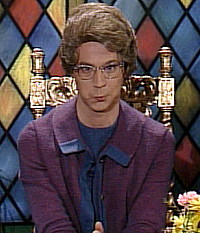
Helen was a pious churchgoer, involved in every activity, but was not well liked by the other women. She was known as a troublemaker and had no real friends. But she loved to tell everyone how “everyone loves me” and “they all listen to me.” In actuality she was doing nothing but spreading gossip and lies about the other women in her church groups. The old Saturday Night Live character “The Church Lady” could have been Michael’s mother. She even looked like that character.

church_lady
Dana Carvey as “The Church Lady.”

She also got involved in Michael’s school, and got the same reputation there as a troublemaker. This reflected badly on Michael, who was embarrassed by his mother’s antics and his friends’ dislike of her. She was always interfering in things that were none of her business and stirring up drama, playing divide and conquer games between other women and breaking up their friendships through her malicious lies and triangulation.

Michael hated his mother by now and tried to avoid her, but did not become a narcissist until he was almost 13.

It happened in January 1973. His father had not been in good health for some time, and suffered from atheriosclerosis, hardening of the arteries. He was only 57 when he suffered a massive stroke and died suddenly at home.

Michael went into the bathroom to get ready for school and found his father’s dead body lying on the cold ceramic tiles of the bathroom floor. He screamed and tried to revive him, but the man was already cold and wouldn’t wake up. He had been dead for several hours already.

Crying hysterically, he found his mother in her bedroom, fast asleep. He started shaking her and yelling at her to wake up.
She finally did, and was annoyed to find Michael crying at her bedside and pointing to the hallway toward the bathroom.
“Mom, I think Dad’s dead.” he sobbed.
“Don’t be ridiculous.” She marched off to follow him into the bathroom.
She stood at the doorway and looked at her dead husband on the floor, grimaced, and then turned on her heel and said to her son, “Well, I have no idea what to do about this. You take care of it.” Not one shred of empathy, grief or compassion was shown. This was her own husband, and she acted as if he was a bag of trash that needed to be taken outside.

bathroom

Michael changed after that. He went through the motions of doing what is done when a family member dies, calling all the relatives himself, arranging the funeral, and all that goes with that, but inside he wasn’t the same.

After his father was buried (and his mother put on a huge show at the funeral of crying louder and more hysterically than anyone else present), Michael began to drink and get into trouble. His grades remained acceptable, but he began to show a lot of narcissistic behaviors and started to use people for his own advantage. He went into the city on the weekends and sold his body to older men for money. He thinks he killed a guy once by pushing him into a glass table, but if he did kill him he was never caught.

The malignant behavior soon became ingrained and for Michael, there was no turning back. He’d given up on life and turned to narcissism to protect himself against further injury from those who were supposed to love him. As the years progressed he became a skilled manipulator and con artist, expert at gaslighting, lying, projection of his own defects onto others, and triangulating. This was exacerbated by intermittent drug abuse and alcoholism. The rest of his progression into full-blown malignant narcissism is described in my posts about our marriage under “My Story,” which appear in the header.

Michael had turned into his enemy: his mother. At the same time, he projected his hatred of his mother onto all women he became close to. In the process, this once-brilliant man eventually burned all his bridges, both romantically and professionally. Today he is a burned out shell of a human being, now living at the Salvation Army subsisting on handouts and disability payments. He’s a “needy” narcissist, mooching and freeloading off others, and taking, taking, taking in a pathetic effort to procure the maternal love he never received as a child. He still blames “society” and other people for “making him homeless and unemployable.”

Even his children want little to do with him. He has lost everything. But he made his own choices so I can’t feel too badly for him.

Because several of you asked…

wolf_sheepsclothing

A few of you asked me to go into more detail about Molly’s ex Paul and exactly what made me realize he was a malignant psychopathic narcissist. So I am doing that now.

Paul was smoking crack, which is easy to hide because it doesn’t smell that much and a person can still act sort of normal when high on crack. He seemed to have a hair-trigger temper though, which is common in both crackheads (I’ve known a few and they’re all quick to rage) and narcs.

So here we have a crackhead narc, a ticking time bomb. My daughter knew about the crack, but because he continued to give such a nice, mature, intelligent impression (the guy was very intelligent) no one believed her (because she’s had a history of drug use) ; the weird behavior she displayed at his house on Christmas wasn’t her on drugs (which he said it was). Her behavior was because she was scared and depressed and having panic attacks (another thing she suffers from) because of all the mental and borderline physical abuse (he would threaten but didn’t actually hit her) she was undergoing while she lived with him.

I felt so horrible when I realized I’d been turned into a flying monkey against my own kid, who was definitely the victim.
Maybe it was some kind of weird karma, because when she was younger those roles were reversed: she’d been used by my ex as a junior flying monkey against me.
The talk we had cleared everything up.

When I look back at things now, I realize there was something a little “off” about Paul that I couldn’t put my finger on. He seemed perfect: older (38 and mature), good job as a med tech, nice home in a nice neighborhood, good looking, and very nice and friendly. What’s a mom not to love? He told me he loved my daughter — this was 3 weeks after they met. He was moving so fast. She wasn’t comfortable with moving that fast but played along partly because she didn’t want to disappoint me (Hell, I wanted to date him myself!)

But there were so many red flags we both chose to ignore. And I say chose because I did see them.

I did think it was odd that he was 16 years older than her (she’ll be 22 in April) but rationalized that at least it wasn’t some 22 or 23 year old jobless basement dweller playing video games and smoking pot all day (like a couple of her exes were like). I thought he was too old, but thought that might be a good thing.

It would have been fine had he not been a predator. He was actually telling her he wanted her to have his baby! A month after they met. He has two kids right now, ages 9 and 2, he never sees and isn’t allowed to see. He also came to North Carolina suddenly, with no plan. He said some people in Florida (where he moved from) were stalking him. Another red flag. And all he talks about is his son all the time but his baby daughter–it’s as if she doesn’t exist to him. (They had two different mothers). He is apparently not on good terms with either of them.

Also, when he took my daughter down to Florida in November, they stayed two days and made the rounds visiting all HIS friends and family (and making “secret” trips where my daughter would be told to stay in the car and wait–VERY suspicious!) , but when my daughter asked to go see her brother (who was about 5 miles away from where they were staying), the psychopath told my daughter he didn’t have enough gas. He knew full well how much they had been looking forward to seeing each other. She hasn’t seen her brother since last March.

I think Molly’s whole experience of living with a psychopathic narc was meant to teach her something and wake her up from her own descent into narcissism. Before she met him she was very narcissistic and abusing drugs. She was making terrible choices.

Since this experience(which we talked about in the conversation I posted about), she put two and two together. She knows all about narcissism and psychopathy because I talk to her about it a lot, and she herself identified him as a narcissist without my having to tell her. She says she realized she was becoming a narcissist herself because now she’ s been the victim of one and sees how immoral her behavior had been.

I hate to say this, but Molly’s 30 days in jail probably helped too. She had time to read a lot (something she usually won’t choose to do on her own) and think things over. She realized how “bad” she was, and wants to change.

So I think she may be borderline, but may also be at that point I was back in 1985 when my friend’s calling me out and telling me she couldn’t be my friend anymore because of my narcissistic behavior, woke me up and made me stop myself before I slid down the rabbit hole into true narcissism. That ex-friend was actually being the best friend I could have had at that moment, even though I was devastated over her rejection of me. I believe she saved me from developing NPD.

Some things happen because they’re a wake up call from God. Perhaps his purpose was to educate her about herself in a unusual and painful way. It probably took something that dire to save her from herself.

Here are all the red flags we chose to ignore:

1. They met in a mental health facility-a 5 day drug rehab program. Probably not the ideal way to meet a potential suitor. (Both were also diagnosed with PTSD, depression and anxiety–that doesn’t mean he’s not a narc–they often have comorbid mental disorders and addictions).

2. He came to this state without a plan. He said he was escaping people who stalked him in Florida and just kept driving until he found this area and decided this was where he wanted to live. He has no family or friends here. He paid for his house in cash within days of arriving.

3. Taking her to Florida and not allowing her to see her brother

4. Making her wait in the car while he visited people he was “doing business” with.

5. He seemed very easily upset or angered by things, but it took a while for this to show.

6. He seemed a little too perfect.

7. Moving too fast in their relationship, even talking about marriage and children.

8. He wanted my daughter to move in with him, then complained about all the money she was costing him.

9. Told me horrible things about my daughter and got me to believe them.

10. He was insanely jealous and questioned her whenever she spoke to a male friend on Facebook.

11. He has two children by two different women–neither is on good terms with him and he is not allowed to see his son or daughter.

12. Kept talking about the money Molly was going to get from her car accident settlement–and then got me to let him “hold onto” it (I trusted him more than her); the next day the money was gone.

13. Making me jump through hoops to get my cat back. Instead of just dropping her off at my house or letting me come pick her up, he released her into the woods; shelter personnel found her and I had to pay $85 to get her back.

14. He was a pathological liar.

Run-in with a Facebook narc.

My son just tweeted about this.

twitconvo1
twitconvo2

Read these tweets from bottom to top.

There’s a malignant narcissist all wrapped up for you with a big red bow on top.

Attracted to danger.

Danger caution tape

I think many survivors of narcissistic abuse find themselves drawn to narcissists–and find their danger appealing. We have to be very careful not to be drawn back into darkness, because that darkness can be very seductive, like a fist wrapped in soft black velvet.

I am an idealist and a romantic by nature. I’m an emotional person, even though I don’t always show it. Though I lack trust, I still want to think the best about all people. While I don’t hate narcs, I have to be careful not to feel too much compassion for them and allow that to make me make unwise and possibly dangerous decisions that could hamper my own healing and cause me to lose focus on what’s important.

Earlier today I woke with this crazy idea. I was going to start a second blog, a blog FOR NARCISSISTS. My argument was that they were human too and because I have learned to have some empathy for their plight, that they deserved a place to share their experiences.

Sometimes I really live with my head in the clouds.

I was brought back down to earth pretty quickly, when a good friend I respect like a sister told me this could be extremely dangerous and that I’d be flirting with darkness should I do such a thing. At best, it would take the focus off my own recovery and the recovery of victims of abuse. This woman is Christian, and much more biblically-oriented than I am, but she was right. If the devil does exist, this could be him trying to draw me back into the same dark place I just escaped. I already know, I need to keep my distance from them, even online, so why would I want to COURT such a thing?

I don’t think all narcissists are evil, except for the malignants and psychopaths, who are too far gone to ever change or want to change. I think their illness is as much a spiritual one as a mental one. Perhaps more so. But it’s not my job or my calling to provide a place for even benign narcissists to have their say. If they want to say something, they are more than welcome to do it right here on this blog, as long as they are pleasant and civil. And they have done so.

But starting a new blog for them would just be stupid. The more I think this over, the more I’m glad my friend stopped me before I actually did this. I’m not always the most practical person and I don’t always have a lot of common sense. I’m an idealist and sometimes act on my unrealistic, romantic fantasies more than I should.

More than likely, the narcissists who need help the most (the malignant psychopaths, who are least likely to seek help) would not even post on the site, or may even try to destroy the site in some way.

I think many women, especially those who have always been attracted to or been in relationships with Ns, find something seductive and appealing in narcissists and have to be very careful not to be drawn in by their charms. I know I’m a sucker for it, and they can present a very mysterious, seductive, bad-but-hurting-boy charm, like the main character in the movie “Rebel Without a Cause.”

We may find ourselves wanting to mother and nurture them and protect them from further hurt. And yes, they do hurt, and maybe nurturing and remothering is exactly what they need, but it must come FROM A PROFESSIONAL who knows what they are doing. It’s not our job to give them that kind of therapeutic support. We don’t know how to do it. We can’t make them feel better.

I love this song by Sarah McLachlan. I’ve posted it before, but I think it describes the attraction many women have to narcissists and psychopaths and why they can be so seductive.

Narcissists are indeed building a mystery, seducing us to becoming their supply. They can never give back what we give to them; all they can do is demand more and more until there is nothing left of us or we become one of them.

Our maternal instincts would be better put to use helping each other, and helping the people we love who can return that love.

So I will not be doing another blog right now. Thank you to everyone who suggested this was a bad idea.

I will say though, my journey since I started this blog has been the greatest, most humbling, and most exciting adventure I’ve ever been on.

Beware of N’s who use mental illness as an excuse to abuse

Print

I think those of us ACONs and survivors of narcissistic abuse who post on public blogs that are accessible to anyone need to be very vigilant and careful. I will never make my blog private or require you to sign in first, but due to that decision, I realize I am going to attract MNs and psychopaths whose only desire is to bully, make incendiary and false remarks, and play “divide and conquer” games within the community. I am willing to take that chance because I want this blog to remain as accessible as it is. I want people to feel welcome without having to be “approved” first or having to sign in, because I hate having to sign into any website myself and will usually bypass any site that requires me to do that.

If you’ve been following my posts, I wrote two articles about some drama that was going on between me and another blogger who allegedly suffers from dissociative identity disorder (DID). I provided links to the nasty, character-assassinating articles that were written about me and my commenters and followers on their blog. I was quoted extensively in their rant (as well as several of the people who commented on those two articles) and was practically accused of being MN myself. The things they said were hurtful, but I also knew they were lies and intended to upset me. If this person is a narc, they were projecting their own disorder onto me. And that’s just so wrong, but it’s what they do.

I am letting that go and do not wish to further antagonize this blogger and will just delete or not approve any further abusive comments from them. But in thinking it over, I realized that there are going to be people on the Internet who use their own mental illness as an excuse to be able to abuse and be nasty to other people. That doesn’t mean they don’t have a mental illness, but it’s possible to be mentally ill and also a malignant narcissist who wants to hurt those who speak the truth. I also think there are some N’s (I’m not saying it’s this blogger) who feign mental illness because that gives them an excuse to abuse. We need to be very careful of anyone who says they have a mental illness but then make abusive remarks based on no real information. N’s are out there, lurking our sites and reading.

Not all N’s are going to be abusive to us. Some actually are honest and want to seek help or educate us about their NPD. Those are the ones with insight into their disorder.

But there are others, who may feign another mental disorder (or sometimes actually have it but use it as an excuse to be nasty and mean), who can become trollish and try to destroy our communities with their vitriol or make us fear their wrath. I refuse to let people like that make me afraid to post what I want and keep journaling about myself honestly and openly. I refuse to let them squelch or discourage me in my desire to heal and help others. I am made of tougher stuff than that now, and I know God is behind me, protecting me from the bullies and trolls who may want to attack me and this blog and keep me from speaking my truth.

FAQ’s: Can you tell a Narcissist by his eyes?

This is from a new blog I just found–and a fascinating and very creepy post about the eyes of malignant narcissists and psychopaths. The comments are numerous and I was shocked how many other people besides me have seen the eyes of malignant narcissists turn from their normal color into that dead, opaque black when enraged or when they’re devaluing you. It may sound crazy, but it’s very real. I have seen this look on several malignant narcissists. My ex and my mother in particular come to mind. I also think I saw that look once in my daughter’s recent ex boyfriend, who turned out to be a very skilled and charming psychopath.

One commenter said the change could be due to the pupils dilating when the narcissist is enraged, to the point that the iris is no longer visible. That does make some sense, but I’ve actually seen the entire eye turn black, including the whites, so I’m not sure how dilating pupils would explain that.

What do you think causes this to happen? An evil entity that takes over when the narcissist flies into a rage? Their own emptiness? Dilating pupils? Is the explanation scientific or spiritual?

The worst malignant narcissists have eyes that look like this all the time–shark-like, empty, soulless. And their stare is penetrating and unnerving. It’s the stare of a predator sizing up it’s prey. Their eyes aren’t always pitch black but they are always cold and predatory.

elissestuart's avatarElisse Stuart's Weblog


Cat_Eyes

Can you tell a Narcissist by his eyes? 

This sweet cat would no doubt be offended at the comparison. 
The individual asking Google the question used the phrasing  “Can you tell a narcissist with his eyes.”  I don’t think you can necessarily tell what kind of human being a person is, by their eyes. 
I have only known one bona fide narcissist and I know what his eyes were like. 

Some people are shy, they can’t look you in the eyes for very long.  It’s not that they are dishonest, it just makes them uncomfortable, makes them feel vulnerable, to look in another person’s eyes for very long.  Being a victim of a narcissist left me feeling fragile and fearful to let people see my eyes.  As if, they would be able to see the pain that was written there. 

Many people like myself have been harmed by individuals who portrayed themselves as…

View original post 376 more words