Emotions and authenticity.

brene_brown_quote2

Emotions are the first language we ever speak. Their expression is a pre-verbal language that is gradually replaced with words as we grow out of infancy. All emotions are really just energy moving through the body (though I think they originate in the soul). This movement is expressed through various physical reactions as the emotion moves out of us–laughter, crying, sighs, various non-verbal sounds, wiggling or jumping up and down with joy, trembling, and various expressions of anger (of course we need to be mindful of this one). This idea of emotions as a language isn’t my own; it’s been suggested by others, but I think I would have come to that conclusion on my own sooner or later.

Babies and animals (especially higher level mammals like dogs or monkeys) don’t have words, but they are very good at communicating their feelings and needs. In fact, they are better at this than adult humans, because there is no pretense and no words to mask or obliterate visceral emotion. With a baby or an animal, what you see is what you get.

We don’t begin to have problems with this until adolescence or sometimes later childhood, when spoken language has become fluent. You don’t see a toddler or a dog presenting a false self or hiding their real feelings. Unless abused early on, there is no shame in their emotional expression. An animal or an infant will not lie to you, manipulate you, or tell you they are happy when they’re anything but. That’s because they don’t have the language behind which it becomes possible to hide.

Babies cry to communicate. We may not like it when they do, but it’s the most important way they communicate. It’s really just a pre-verbal language that helps them get their needs met. Of course they could be crying because they’re uncomfortable or in pain, but they also cry when they need nurturing and just need to feel attached to Mom. Most of us are naturally drawn to comfort a crying baby, but really, they are just telling us about their physical and emotional needs that in a few years might be expressed by, “I’m hungry” or “I’m angry” or “I need a hug” or “I feel lonely.” It’s not always “bad” when a baby cries, although it seems so to us, and we want them to stop. Babies also use their whole bodies when they cry. As the emotion moves through them, their entire body responds. They kick their legs, punch the air, and howl. When an adult expresses strong emotion, such as crying (and sometimes laughing), they tend to hold themselves back to some extent, only letting part or none of their body respond to the emotion. Babies also wiggle when they’re happy. Do you know of any adult who wiggles or jumps up and down with joy? It’s something we outgrow as adult, but is that really necessary? What’s really wrong with wiggling or running around the room with happiness or sobbing with abandon?

When a dog sees its owner, it will bark excitedly and jump up and down with joy. If it has misbehaved, it will show its guilt (and I’m convinced that dogs DO feel guilt and shame). If it’s sad or afraid, it whimpers and its whole body trembles. It doesn’t need to say “I’m sad” or “I’m happy” or “I feel ashamed.” Its body and face says it better than any words ever could. That’s why I think people relate to dogs so well. Dogs represent our own emotional natures, that to a greater or lesser extent, almost all of us keep behind wraps most of the time.

I’ll never forget the time I was helping a friend pet-sit. The owners had a dog and a cat, and while we were there, the owners came home. When the dog heard the key in the lock, he began to bark excitedly and jump wildly at the door, intermittently spinning around in circles, wagging his tail crazily and practically tripping over his own oversized feet in his excitement. When the owners came in, he practically knocked them to the floor, licking both their faces happily. Even the cat went nuts with happiness, rolling around ecstatically on the floor in front of them. He also ran up to the owners, purring loudly and meowing. Do you know any people over the age of 6 or 7 who act like these animals did during a reunion?

Of course we don’t want to become babies or pet dogs and cats, but they have a lot to teach us about authenticity and the courage to be emotionally vulnerable.

I’m in no way trying to imply that language isn’t a good thing. We evolved it for a reason. Language makes it possible for us to use more of our minds and make new discoveries. It’s the reason we can write a symphony, a novel, or make new scientific discoveries. Good language skills are an indicator of high intellectual ability. Words can also be great tools for genuine emotional expression. But when we grow up and start to use language completely in place of bodily emotional reactions to communicate, we throw out the baby with the bathwater. I think schools are responsible for a lot of this. Schools–like work environments–discourage the honest expression of emotions. We begin to hide our true feelings.

Of course, bad parenting that fails to mirror a child’s true feelings does the same thing and is even more damaging because it happens when the child is still pre-verbal.  A child whose emotional needs have not been met and who isn’t mirrored when very young becomes ashamed of their emotions and tries to hide their vulnerability.  In some cases the damage is so great the person develops complex PTSD or a personality disorder.  We need to find ways to be emotionally honest without reverting to a preverbal, infantile state. I think we’d also be not only more emotionally healthy, but also more physically healthy if there weren’t so much shame attached to emotional expression.  Numerous studies have shown that chronic illness later in life is linked to repressed emotions.  I think what happens is when they’re not allowed to move through the body naturally, they get trapped in the body and can make you sick.

To help us get there, I recommend watching anything by Brene Brown, an author and public speaker who thinks that vulnerability and authenticity are things we modern humans need a lot more of. Her most popular video is “The Power of Vulnerability.” Many people have said it has completely turned their lives around.

Circling around the maelstrom.

maestrom
Credit: Jim Carson Design

I’ve been thinking a lot more about my parents and my nightmarish upbringing as a hybrid scapegoat/golden child (I was raised as an only child, so I had to be both). It’s worse in some ways than just being a scapegoat, because it’s a topsy turvy hall of mirrors where you can predict nothing. There’s no stability. There’s no security. There’s no consistency in a childhood where you have to serve two roles, and never know which one you’re going to be next, and where both roles you play are a lie.

I started blogging because of my sociopathic NPD/ASPD ex. I was trying to deal with my feelings about going VLC (very low contact, since we have children) with him and cope with being on my own for the first time. Blogging introduced me to myself.

I’ve been through a lot since the day I sat down and started to write. As I progress in my journey, I’m spiraling ever closer around the emotional vacuum that lives in my center, the maelstrom that was born from hurt and pain. I liken it to a black hole in space or a maelstrom in the ocean, because everything disappears there never to return. Falling into it prematurely could obliterate me. But if I’m ever to heal from my disorders, I need to dive into that maelstrom and explore its terrors and maybe its wonders. I’m a lot more courageous now than I ever was before. I think I can do this.

I’m realizing the problem wasn’t really my ex after all. What I mean by that is that we came together because I was programmed almost from birth to become codependent to someone like him. Yes, he made me worse, but I was in bad shape long before he came on the scene. In therapy, I’m beginning to talk more about my childhood, and the pain inflicted on me by disordered parents. I’m still at the point where I explore it from an emotional distance, as if I’m watching a movie. I can’t really internalize and surrender to the pain yet. I feel a vague sadness and anger, but I’m dissociated from it, as if it’s someone else it’s happening to and I’m just watching.

But it’s beginning. I’m starting to trust my therapist enough to take the plunge. He is using reparenting techniques on me, which is what I wanted. He’s empathetic, which is what I needed. I’m thinking about my past a lot, and making some connections. I have some tools to protect me when the time comes to go in. I’m scared but excited. I’m gaining courage.

I’m swirling around the edges of the maelstrom, looking down into an opaque blackness that looks empty but is full of unseen mysteries. I won’t fall into it. I’ll willingly dive into it, just like when I was eight and first jumped into the deep water at the community pool.

Once I dive in, I’ll either disappear forever, or rise from it triumphant. I’m banking on the latter.

Paper tigers: why I choose understanding over rage.

papertiger2

I know I don’t need to (or should) forgive what the narcissists in my life have done to me. I will never again enable them or give them the benefit of the doubt.  I certainly won’t attempt to fix one (an action about as futile as trying to empty the ocean using a teaspoon). I can’t fix a narcissist and neither can you. The only viable way to deal with a narcissist is not at all. Go No Contact. Release them from your life.

Going No Contact  isn’t an act of hatred or revenge, and it doesn’t break any commandments either (if they are your mother or father) because they haven’t lived up to their end of the bargain as a parent.  If you have narcissistic parents (and that includes having one who isn’t technically a narcissist, but was codependent to the narcissistic parent and never took your side and colluded with the abuse), then you are an orphan.  You were mercilessly abandoned.  So it’s not a sin to go no contact with a narcissistic parent.  It’s an act of self-preservation. The same goes for a narcissistic spouse, sibling, or friend.  You owe them nothing, no matter what they tell you.

That being said, I still do try to understand the narcissists in my life. I see them as broken people who, whether by choice or design, have adopted a way of relating to others that poisons their own minds as much as it poisons the life-force of their victims. Yes, I feel badly for them. I don’t like them or what they do, but I feel badly for them. They cannot help themselves.

Some of you won’t understand my attitude. I understand the lack of understanding. Narcissists have made our lives hellish and compromised our ability to become everything we could have been.

Anger, rage and hatred is a perfectly normal and desirable initial reaction when you find out you’ve been had by one or more narcissists, especially if they were your parents, who were supposed to love you unconditionally. But it shouldn’t be permanent. I’ve been criticized for my attitude before, but I think it was taken out of context, because I’ve never suggested, not even once, that anyone needs to put up with a narcissist or keep him or her in your life. But for me, feeling pity for them (NOT forgiving them!)–from a safe distance–helps me to feel like less of a victim myself.  You might be surprised how well it works, too.

I don’t choose to be an eternal victim because that sucks. I don’t choose to hold onto my rage and anger (been there, done that!) because, well, it’s toxic to me. Seething anger eats away at my soul and turns me into someone I don’t like at all. I start obsessing on my rage and hatred and that turns me bitter, resentful and depressed. It drives home my victimhood and makes me wallow in self pity (“Oh, poor, poor me, WHY did *I* get stuck with such evil monsters as parents/spouse/friends, etc.”)

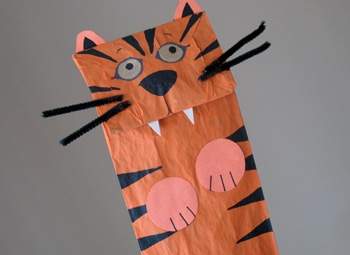
By seeing narcissists as broken people who can’t help themselves and will probably never change without some kind of earth-shattering shift in their consciousness (which must come from inside them and only them), their power over me seems diminished. They become paper tigers instead of terrifying beasts who rip me to shreds and eat me alive. And by seeing a narcissist, especially one who has “raised” you, as a toothless paper tiger, by contrast I feel more powerful and less afraid.

I used to have as much rage and hatred toward narcissists as any other victim of narc abuse does. That attitude served me well, too, because it motivated me to make the final break. But I found that after a few months, I couldn’t hold onto that anger anymore because all it did was make me feel bitter and depressed, and it also held me into an identity as an eternal victim, which is an identity I don’t want. I’m tired of always feeling like a victim, but to do that I had to change myself and my attitudes.

For me, releasing my hatred and rage allowed me to stop stewing in negativity and self pity, and once I did that I could begin to work on the things in myself that needed working on. Since I moved on from all that rage, my overall attitude toward life has improved immensely. I’m beginning to feel like a real live person who can overcome just about anything my narcs have done to me, because all you can do is laugh at a paper tiger.

And, if you’re still wanting to get back at your narcs,  think about this:  Narcissists WANT you to continue to feel victimized.  They WANT you to be afraid.   They even revel in your hatred because your hatred (which is based in fear) makes them feel powerful.  The best revenge is to see them as ridiculous paper puppets, which is really all they are.  By seeing them as pathetic paper tigers with no teeth or claws, you are giving them the opposite of what they want and they will HATE you for that!

I think the Serenity Prayer is something that can be as helpful to us as it has been to countless people in 12-step programs:

God grant me the Serenity

To Accept the Things I Cannot Change

The Courage to Change the Things I Can

and the Wisdom to Know the Difference…

***

Wipe Your Tears

There IS life after loss.  There is life after abuse.
This post is beautiful, moving, powerful, heartbreaking, transformational, the story of my life…oh hell, just read it.  Leave comments under the author’s original.

Kris's avatarSeeking a Life Full of Laughter

9bf04165914925456766339df8d0960c.jpg

Today the sun is shining, and this beautiful break from the cold winter of Cleveland, reminds me how much I love and look forward to spring. While my heart yearns to be outside and to run, feeling the air burning in my lungs as I force my out of shape legs to keep moving forward, I am still scared. I am still broken.

I dreamed of him last night. And in my dream I confronted him about his behavior, and his choices. And his cold cruel laugh and his inability to look me in the eye, reminded me that it was all of a lie in real life. Knowing in my heart, that even though he was fake, my feelings were not. That even now, if he came crawling back I would still want him. It made me feel ashamed and angry.

I want to feel the sun shine on…

View original post 1,430 more words

Therapy in Color

I have always believed in the power of art and creativity. Engaging in painting, drawing, poetry-writing, singing, sculpture, cartooning, creative writing, music-making, arts and crafts, and even cooking, scrapbooking, and home decor relax the mind, feed the soul, and bring us closer to our Creator. Each one of us has been blessed with some kind of creative gift and it’s our job to find out what it is we love to do best, and use it to connect more deeply with the world, not just escape from it.  Making art in any form also fosters mindfulness.

Even something as seemingly childish as coloring books can help us connect with our creative muse. This article explains why.
After all, it’s the child in us that gets activated when we create, and there’s no one more creative than a young child.

Catharine Toso's avatarCatharine Toso

An increasing number of adults are handling stress by engaging with art. Specifically, art in the form of coloring books. But while some may consider this to be a temporary fad, the psychology behind it is much deeper. Neuroscience Ph.D. candidate Jordan Gaines Lewis explains the appeal of coloring books to adults, and why they work, in a piece for New York Magazine’s The Science of Us blog.

Creative engagement is a major stress-reliever for many people. If you are artistically inclined, whether it be in the visual arts, music, or literature, you already know this. However, just because one lacks artistic training doesn’t mean that this great feeling can’t be experienced. So many adults are spending time with an open coloring books because it allows us to exercise our creative muscle, as long as we can hold a coloring pencil. Lewis cites psychologist Barry Kaufman, who says that the…

View original post 216 more words

Staying grounded.

magnificent_tree
Photo Credit: No I’m Not OK

Sometimes I feel ungrounded, dissociated. Sometimes I feel like a gust of wind could blow me into nonexistence. I was raised in a harsh, chaotic, abusive environment and was blown from there into a harsh, chaotic, abusive marriage. As a result, I never was able to form strong roots. But to be grounded in life, to be able to bend and not break, adapt but not lose yourself, remain strong even when the cold winter winds blow, you need those roots.

Strong roots may not be with your family of origin, who should have nurtured you so you’d grow them. That may not be possible. But it doesn’t mean you can’t develop them.

I read a post today that inspired me because of the incredible photographs of an old Ficus Macrophylla tree, a beautiful and majestic tree with roots that could probably withstand an earthquake. I mean, just look at those roots! It’s incredible the way nature can adapt to almost any condition. There are trees that live on the cliffs of coastal California that grow vertically because of the strong winds that constantly buffet them. The trees have grown to adapt to their harsh conditions. They have grown stronger because of them.

We can also grow stronger because, not in spite of, the harsh conditions we might have been raised in. We can take inspiration from the trees by grounding ourselves and knowing how strong we really are, and that will prepare us for almost anything life can throw at us.

Take a walk. Look at some trees. Become conscious of your feet on the ground, your connection with the earth. Meditate on these things and try to stay in the present. Don’t worry about the future or the past. Turn off all the noise in your head, even for only a few minutes a day, and just be, like the tree.

I think my Winter Blues are saying adieu!

snow_bench

I’ve posted before about my SAD (seasonal affective disorder). I also explained that for me, a sufferer of the Fall/Winter type (the most common type), I’m extremely sensitive to changes in daylight.

The Winter Solstice falls around December 21 or 22 every year. That’s the shortest day of the year, but also the last day the days are going to get any shorter. The next day, the sunlight-hours increase every day by increments of about a minute a day, as they march toward the Summer Solstice which falls from June 20 – June 22 every year.

I always noticed a darkening of my overall mood and loss of energy very shortly after the first day of summer, since the days are already becoming shorter even as they grow hotter. My body perceives these changes as early as mid-July!

There’s probably an evolutionary reason for this. Our distant ancestors were nocturnal, tree climbing, shrew like animals who may have needed to hibernate during colder weather to conserve energy and calories, while food was scarce. Many mammals today have a need to hibernate, and this tendency may have been retained in human genes to some extent, causing many of us to feel tired and depressed when they days begin to shorten. How nice if hibernation were an option for some of us humans!

bear_sleeping

Getting back to the topic at hand, my mood is already starting to improve, even though the first day of winter was only about 3 weeks ago (that long already???)
That’s early even for me. My body and spirits don’t usually start reacting to these increases until the end of January at the earliest.

But maybe my improving mood is due to more than just the lengthening days. Since I’ve been in therapy, I’ve been feeling a little bit happier and less anxious overall. For example, I have a serious car issue, but I’m actually not freaking out the way I would have a year or two ago. I’ve also noticed people are responding to me in a more positive way (or maybe nothing has really changed but I’m just perceiving they are perceiving me less negatively than before).

My creativity is increasing, and my motivation to write, and–I dearly hope I don’t sound narcissistic saying this–I think my writing lately has improved immensely and I’m beginning to find my humorous voice too and seeing how funny things can be I never would have found the humor in before.

I still have a long road ahead (my therapist thinks it’s going to take a while) and maybe this is just the honeymoon stage of therapy before the work starts getting really emotionally draining, but it’s a taste of what might be to come and I’ll enjoy this as long as it lasts.

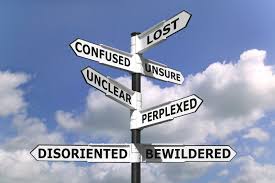
Confusing patterns.

confused2

In the almost year and a half since I’ve been blogging, an interesting picture has emerged. I started to blog after I went no contact with my ex (actually very low contact since we have children) as a way to process having been a victim of narcissistic abuse, first by my family of origin, then by my ex. My focus for the first six months or so was primarily on my abusers, and my rage at narcissists in general. Most of my articles were about narcissists and narcissism, and I read everything I could about it too. I became close with other ACON (adult children of narcissists) bloggers. I wasn’t ready yet to take a good long look at myself and what I could do to help myself, other than staying far away from abusive people. But it was a very good start to a journey that proved to be unpredictable and at times very confusing.

Last spring or maybe late last winter, I began to think something was missing. Inexplicably, I began to think more about the point of view of people with NPD and realized they were almost always abuse victims too. I wrote several articles that angered other ACON bloggers because, they felt, I was being too sympathetic toward narcissists and even being a “narc hugger.” The things I was saying were heresy to many in the ACON world (this was the only time there was ever any drama on this blog). I lost some of my followers.

It was time to look inward. I wondered if I was a heretic too, and also wondered why I felt sort of personally insulted by all the vitriol thrown at people with a severe personality disorder who, I felt at the time, simply couldn’t help themselves. I felt torn between two warring factions, and got caught in the crossfire. And that brought me to ask the big question: was I a narcissist myself?

I read up on covert narcissism and in early August, decided I must be one. After all, so much of what was described seemed to fit my personality. It would explain my feelings of ambivalence and my inability to take a firm stand. For a few months I posted on a forum for people with NPD, most of whom had never been diagnosed by anyone other than themselves, and most who believed themselves to be the covert (“fragile”) type of narcissist. I thought to myself, these people aren’t so bad. They all seemed pretty understanding and even empathetic and I felt like I could relate to many of them. Maybe NPD was unfairly stigmatized.

I decided I wanted to heal from my “NPD” and started a second blog about that (which I’ve recently transformed into a therapy blog and have admitted I do not have NPD). I “came out” about my “covert narcissism” on this blog.

whoami

Back on this blog, I lost interest in posting new articles about narcissism, because it made me feel like a huge fraud. If I was a narcissist, I had no desire to be the female Sam Vaknin (a narcissist who writes books and articles about narcissism) and if I wasn’t one, then I was some kind of spineless wimp and even a traitor to ACONs. I chalked up my waning interest in the subject to a matter of not being able to come up with anything new to say about NPD or narcissistic abuse. Been there and done that, I thought.

Rather than take this blog down, I decided to turn it into a “general purpose” blog and just post about anything that was on my mind. I began to write a lot more articles about how I could change myself and become a better, happier person. I read more self-help articles and found myself focusing more on my own spiritual and emotional growth. The focus was now off the narcs, and just on myself. The labels didn’t really matter.

After posting for a few months on the NPD forum, another thought began to play in my mind: maybe these people didn’t really have NPD. Maybe they were just confused, like I was. Maybe they were just suffering from other disorders, like BPD, or complex PTSD, or avoidant personality disorder, or even Aspergers (all of these disorders are often confused with covert NPD, even by professionals). These people were really just abuse victims who, for whatever reason, had labeled themselves as narcissists. Real narcissists would never post on a board like that or suffer so much or want to change themselves. Or would they? Who knew?

I felt too confused there. I didn’t know who these people were and I didn’t know who I was. I was getting more confused by the day. I wasn’t learning anything; I was going around in circles. I lost interest in the forum and started therapy. My therapist assured me I do not have NPD although I may have some of the traits. But most survivors of narcissistic abuse have picked up N traits from their abusers (what the ACON community refers to as “fleas”) and my other disorders (BPD and Avoidant PD) can mimic narcissism anyway. It’s understandable that I would have become confused.

Looking back, I can see that what happened was two things. First, my confusion stemmed from a weak sense of self. Many abuse victims have never been allowed to develop a strong sense of self. Some victims even identify with their abusers (Stockholm Syndrome) and in a worse case scenario, may collude with the abuse. Borderlines in particular are prone to becoming chameleons who identify with their abusers. Even though the abusers were gone from my life, they continued to have an influence over me. But that’s the unhealthy part.

Second, while initially I focused on my abusers (as all ACONs do when they realize they’ve been had), after all that righteous anger was almost purged from my system, I began to shift my focus on understanding rather than rage. Obviously this caused me a lot of confusion and raised the ire of some. My attempt to understand narcissists didn’t mean I condoned their behavior or what they had done to me, nor did it mean I was a traitor or a wimp who couldn’t make up her mind. Rather, the shift in focus enabled me to move on from that early leg of my journey (the righteous anger) and focus more on myself and what I could do to change me.

Things may play out differently for others. Some ACONs remain stuck in rage forever (not healthy, in my opinion); others, who have struggled with letting narcissists violate their boundaries, make the decision to shore up their boundaries and not take any more crap from them, but stop obsessing about them too. Others realize that their codependency has been as much of a problem for them as their narcissists’ abuse, and they begin to work on themselves. I think the path we take as survivors depends on a combination of individual temperament and the particular damage our narcissists have done to us. Whatever works best for us is the path we should be on. In my case, I need more permeable boundaries rather than reinforcements to them. When I was being abused they were too permeable, but after my escape, I shored them up too much. I need to re-learn how to let people in, but able to tell which people should be kept out.

Always waiting for the other shoe to drop…

afraid-to-be-happy

I think I made a kind of breakthrough in my therapy session tonight. For years one of my problems has been this overwhelming fear that something bad will happen to one of my kids. (I don’t like to even say the D word because I irrationally believe if I say it, I’ll somehow make it happen, by putting it out into the universe or something).

Of course all parents worry about their adult kids, especially when they know they’re out there somewhere in cars, which we all know are dangerous hunks of metal capable of the most ghastly and gory deaths you can imagine and operated by countless idiots and drunks on the road who can’t drive. I think my apprehension about something bad happening to my adult children edges into OCD-type territory though, because of how overpowering and pervasive these thoughts are, intruding where and when they are not welcome, even though I know that in all likelihood, something bad will NOT happen and even if it does, worrying about it excessively is like living through it twice. I think about my hypothetical reaction to such an event and wonder how I would retain my sanity, if not my will to live. I always marvel at people who have lost a child in a sudden manner like a car accident (a long illness is more bearable because you have time to prepare for it and process it) and wonder how they can still go on with their day to day activities–going shopping, paying bills, working at a job, watching a movie, hell, even having FUN sometimes. I know that wouldn’t be me and I obsess over how I might react.

I’ve been so haunted by the remote possibility of getting THAT life-changing phone call late some night (you know the one), that it’s even been a recurrent theme in my writings. I had a dream over a year ago about losing my son, and wrote a post about it, called Losing Ethan.

fine_line

Anyway, I decided to bring up this problem because it doesn’t exactly make my life happier and it annoys the hell out of my kids. The first thing my therapist did was tell me to stop BEING those feelings, but just OWN them. In other words, he’d noticed that when I talk about bad feelings that make me ashamed or anxious, I always use the term “I am….” Instead he told me to practice saying, “I feel…” or “I have…” In this way, you create a bit of a distance between yourself and the bad feeling. That doesn’t mean you don’t feel it, but with a little distance, the emotion can be explored, almost from the viewpoint of a third person. Ironically, what happens is you feel the emotion MORE (I can’t really explain why that works but it does).

His advice was brilliant, because a few minutes later, I made a connection. In 1998, with my then-husband in jail, I was forced to learn to drive his stickshift truck. I had to teach myself and never learned to park the truck properly. So after picking up my kids from their after school program and pulling into our driveway, I set it to Neutral and the truck began to roll downhill–containing both my kids, then ages 5 and 7, straight toward a TREE. The events that played out next are described in this post, called The Tree.

The important thing is, I’d connected this traumatic event in August of 1998 to my current obsessive thoughts about tragedy striking and generally always feeling like I’m about to receive some devastating news–and I knew immediately that these unpleasant thoughts are based on guilt and shame. I started to tell my therapist that I always felt guilty that the truck had rolled and that I *could* have killed them. For about 10 years I couldn’t even talk about it, because any time I did, I’d start feeling very dissociated and anxious. My ex knew how to press all my buttons, and knew this was my biggest one. If he wanted to upset me all he had to do was remind me what a rotten mother I was to almost kill my kids that night because he knows I’m still struggling with guilt over my failure to protect them, my failure to be smart enough to know how to park a stickshift.

I’m always very mindful of my body language, voice and gestures when I’m in session, probably as much as my therapist is. These things can tell you a LOT about yourself, not just about others. And I realized as I was making these connections that my body relaxed and I leaned back but my voice became softer and sadder. I was opening up to him in a way I hadn’t before. He just listened, with what appeared to be a great deal of empathy.

somedays

And at some point I felt tears come to my eyes. My eyes just barely glistening, tears not overflowing, but there, making the backs of my eyelids feel warm. I looked off to my left like I always do when I get deep into stuff, and kept on talking. I felt myself opening up and feeling some kind of generic emotion that wasn’t sadness and wasn’t guilt and wasn’t gratitude or joy but was none of these things and yet all of these things. I wanted to share all this with him. I heard myself speak and my voice became thick and my eyes burned again.

There was more, much more, but I’ll end this here because I’m getting emotional writing this. The important thing is, I almost shed tears in front of my therapist tonight. That might not seem like such a big a deal, but for me it was a huge deal because I haven’t been able to cry in front of another human being in about 15 years–which I realized is when THAT happened. (It might have been longer than that though–my memories of the time I was in my horrible marriage are gray, shadowy and even have yawning gaps in places).

What happened tonight is only the proverbial tip of the iceberg–I was seriously fucked up for a very, very, VERY long time, at least since age 4 or 5–but it’s significant because it means the wall in my head that prevents me from really being able to connect to my emotions is developing a few weak spots.

I’m not making any New Years resolutions.

2016_newyear

It’s hard to believe, but I’m entering my third year since ousting the narcissistic psychopathic ex from my life once and for all. So much has happened since then. The other huge change I made in 2014 was starting this blog, which has proved to be powerful therapy.

In 2015, I shifted my focus from the narcissists in my life to my own behaviors and realized that to find happiness, I needed to change. Blogging alone was no longer enough, and so I entered actual therapy–the intensive, psychodynamic type that makes you dig deep into your distant past, not just behavioral therapy like CBT or DBT (though those certainly do work too). I’m seeing some patterns that are so obvious to me now, I can’t believe I didn’t see them before. Tonight was probably the most incredible session I’ve had so far, and I’ll be writing about it later. This has been one of the best decisions I ever made, and I couldn’t have asked for a better therapist.

I’m not setting any New Years Resolutions, because those have a way of getting forgotten or abandoned. I’ve never kept a New Years Resolution, ever. But I have a feeling 2016 is going to be a great year with or without resolutions. Right now, I’m just feeling incredibly grateful at the shape my life is taking and the discoveries I’m making on this healing journey. I’ve surrounded myself with people and situations that are good for me and are helping me grow. That’s something new for me. I always surrounded myself with toxic people before. No more! Those days are long gone.

Have a safe and happy New Year and an even better 2016!