Love’s table for abuse survivors

I can’t….I can’t not reblog this. OMG. This is like my life. I know these narcissistic yuppies of which Katie speaks.    The corporate and work world is swarming with them. They swarm wherever there is money and status. They swarm in churches too (though happily, not in my church). They look down on and judge those of us who have less, those of us who they took everything away from.

Where they don’t swarm and where survivors can find refuge:  natural places where you can be quiet with God and surprisingly, places of knowledge and learning, even among those who do not believe in God.    Places where we can explore our creativity and feed our souls and ask questions.  They stay away from those places where we are free to be who God meant for us to be, places where no one judges or looks down on us.  These gifts are worth so much more than some ugly, sterile McMansion in a gated community or tricked-out status foreign car.

Please leave your comments under the original post.

Do narcissists cry?

crocodiletears

This is a revision of the Jan. 1, 2015 article.  It’s one of my most popular posts, so I figured I’d post it again, with a few changes.

Do narcissists cry?  Sure, they do. Of course they do. And the histrionic, somatic types will cry conspicuously and loudly and convulsively and make sure everyone notices.  Think of Joan Crawford’s over the top histrionics in he movie Mommie Dearest.  The attention they get from this show of dramatics (which you cannot ignore) elicits lots of narcissistic supply for them and gets them the sympathy they crave.  Remember, positive attention isn’t necessary to serve as supply to a narcissist.  Any sort of attention–even disgust and anger–will do.

Self-serving crying and fake empathy.
Narcissists cry for themselves, never for you. They *might*cry when they see a sad movie, if they experience themselves through that character. Movies are a safe way to shed tears, even for those who don’t cry easily (and that includes non-narcs too). But narcissists aren’t really crying for the characters in the movie. They are really crying for themselves.

Some narcissists who are good actors can pretend to cry for others–these are dangerous narcissists able to feign empathy but show their true colors after they’ve charmed you and duped you into thinking they’re the nicest, most sympathetic person in the world. But it’s all fake. Those “empathetic tears” are crocodile tears. A narcissist can never cry for anyone but themselves.

Narcissists are just big babies.
Kim Saeed, a writer who has an excellent and extremely popular blog here at WordPress about narcissistic abuse, wrote an insightful article about what makes a narcissist cry (basically, self pity and attention getting). It’s a good read. Narcissists cry the way an infant cries–to have their immediate needs met. Whether they admit it or not, they need a mother–and most likely never got adequate mothering, so they’re still trying to get it. Like an infant, they are incapable of separating themselves from others and can feel no empathy for anyone else.

babycrying
Here’s who your narcissist really is.

While some narcissists take pride in their appearance, professional accomplishments, athletic prowess, or outstanding intelligence, there are some narcissists (the covert type) who take a perverse pride in being as pitiful and pathetic as it’s possible to be. These are what I call “needy narcissists” (Kim Saeed refers to them as “extreme narcissists”).  Many of our mothers (not mine–my mother was overt and aggressive) fall into this category.  They guilt-trip you and constantly whine about how badly you’ve treated them.  They remind you of all the wonderful things they’ve done for you.   They are emotional, financial and spiritual vampires who will suck you dry if given half a chance. They tend to attract empaths and HSPs and codependent types of people who are willing to give them the pity and sympathy they crave. And they use tears to elicit those things. Tears are powerful and contagious and get babies what they want–why not narcissists? Hey, if it works, use it.

Can a narcissist ever cry non-self serving tears?

A narcissist crying for reasons other than self-serving ones is rare.   But if one ever enters therapy or gets to a point where they recognize their own narcissism and is able to grieve for their lost true self, it’s possible.  Don’t get your hopes up though.    That being said, I read an article by Sam Vaknin about the way he cries in his dreams, which I thought was pretty interesting.   If something like this can happen, maybe it could be used as a catalyst to healing.  Maybe.  (Sam is not cured of NPD and probably never will be.  It’s his livelihood).

Dreaming and “lucid” dreaming: a possible key to healing?
Dreams open us up to the subconscious mind, so remembering dreams is useful in therapy.  For a narcissist, dreams have the potential of tapping into the atrophied and depressed true self–the self that dissociated and went into hiding during early childhood to protect itself from abuse by caregivers. Sam Vaknin writes about this phenomenon in this journal entry, in which he describes two nightmares that briefly brought him in contact with his true lost self, at least until he woke up.

He writes:

I dream of my childhood. And in my dreams we are again one big unhappy family. I sob in my dreams, I never do when I am awake. When I am awake, I am dry, I am hollow, mechanically bent upon the maximization of Narcissistic Supply. When asleep, I am sad. The all-pervasive, engulfing melancholy of somnolence. I wake up sinking, converging on a black hole of screams and pain. I withdraw in horror. I don’t want to go there. I cannot go there.

One’s narcissism stands in direct relation to the seething abyss and the devouring vacuum that one harbors in one’s True Self.

I know it’s there . I catch glimpses of it when I am tired, when I hear music, when reminded of an old friend, a scene, a sight, a smell. I know it is awake when I am asleep. I know that it subsists of pain – diffuse and inescapable. I know my sadness. I have lived with it and I have encountered it full force.

Perhaps I choose narcissism, as I have been “accused”. And if I do, it is a rational choice of self-preservation and survival. The paradox is that being a self-loathing narcissist may be the only act of self-love I have ever committed.

cryingofthestoneangel
Crying of the Stone Angel by Eternal Dream Art at Deviantart.com

Can a narcissist’s true self ever see the light of day?

The true self is there in hiding, sometimes peeking out in dreams.  A narcissist without insight (which is almost all of them) would not be able to write the post quoted above.   Even if they were aware of having such a vulnerable inner self, they would never admit it.   They’re so walled off from their true feelings they can’t access it even in dreams.   Instead, they shore up a fake self that takes the place of the true one–but it’s not sustainable and will fall apart without a constant source of narcissistic supply that keeps it inflated like a balloon.  The constant inflation keeps their false self alive and as long as it’s there, they never have to face the black emptiness inside where the atrophied child-self exists.  If they fall into such a depression, they may go insane.  Suicide is not unheard of.

Sadness and tears that could arise from being able to encounter one’s true self, even if only briefly in a dream, could be the key to healing.  If only anyone really could figure out how to harness this and keep it accessible long enough for the narcissist to start doing some difficult internal work before they slap that mask back on.   Harnessing any brief moments of emotional nakedness is like trying to hold onto a dream while awake–most of the time, it dissolves and fragments like soap bubbles before being  swept away in the the river of day to day reality.   It’s still there, buried in the narcissist’s unconscious the way a clam buries itself deep in the wet sand near the shore after the waves recede.  But in all likelihood, the narcissist will die a narcissist, and no one (including themselves) will ever know what could have been.   I think most of them choose to remain living in the darkness because it’s a whole lot “safer.”  Maybe “lucid dreaming” (a skill that can be learned) could be one way to capture the true self when it emerges in a dream, and keep it there long enough to work with.

Most people don’t believe narcissists can be cured (and in most cases, they can’t be and are perfectly fine with being the way they are).  That being said,   I like to remain optimistic.   I can’t believe there are people walking on this earth who have completely lost their souls.  Unless a person has consciously chosen evil and has become sociopathic, I don’t think most narcissists are that far gone. The challenge is catching them when their guard is down, which is almost never.  I don’t recommend you try  doing this yourself.  Leave it to the professionals or to God.   You cannot fix a narcissist.   All you can really do is stop giving them supply, so stay (or go) No Contact.

Do we give “the narcs” more power than they deserve?

demon2

In my last post, I ranted about a few bloggers that targeted me when I began to move on from my righteous anger at what my narcissistic parents and ex did to me.  About a year ago, I reached a point where my rage at “the narcs” was no longer serving me well. I began to see things in a new way–that my narcissists were victims themselves and that’s why they became so abusive.   These bloggers didn’t like that.  As far as they were concerned, I was a traitor to the narc-abuse community  as well as a narc-sympathizer. They told me I was evil and going to hell.

But that’s also when I began to see myself a lot more clearly and realized what I needed to do to begin to heal.  Why? Because while righteous anger is good and healthy when you’re trying to go No Contact or get away from abusers, once it no longer serves that purpose and you have gone No Contact, all that rage has nowhere to go.  At that point it becomes hatred and begins to poison your soul. And there isn’t anything more toxic to healing than hatred. These bloggers have become so trapped in their rage it has poisoned their souls and they have become what they hate. Unfortunately for them, they are utterly blind to it.

When I began this blog, I was a lot more angry at my narcissists, and narcissists in general. If you read some of my early posts (within the first year or so), you will notice a lot more rage and even hatred toward narcissists than in my later posts. As long as I remained in that anger, I was A-OK with these bloggers. And at the time, that anger was healthy. It was how I processed the whole experience of being an abuse victim, and it validated my decision to go No Contact. It wasn’t a bad thing and I don’t regret it. But at some point, I began to chafe at the constant narc-bashing I saw, and wondered if perhaps “the narcs” were being given more power than they actually deserve.

I’m going to make an analogy here, because it ties right into this idea. I can’t embrace fundamentalist religion for a number of reasons, but here is one of them: some fundamentalists (not just Christians, but Muslims too, and really, fundamentalist anything) gives the entity commonly known as the devil or Satan a lot more power than he/it deserves. They seem to equate his power with that of God. They tell us the world is under Satan’s dominion and we must repent and believe exactly as they do or we’re going to hell. They tell us Satan planted scientific evidence that indicates evolution exists (which means he somehow got bones into the ground that looked half-human, half-ape.) They tell us he brought every bad thing that exists to the world–disease, famine, death, war, you name it. They tell us God has allowed this because of “free will.” They quote the Bible (or Q’uran, or whatever–to back their claims). But if Satan exists at all, he’s merely a fallen angel–with about the same amount of power as Michael, the archangel–he doesn’t even come close to God’s level of might. Would Michael be able to do what God does? Would he be able to create life and rule the universe? Of course not–the idea of it is laughable. To give the devil that much power is an insult to God, in my opinion. In fact, God himself created Satan!

The power some religious people give Satan causes a lot of people to fear God because God seems to exist solely to punish humanity (who “disappointed” him by sinning) for giving in to or being fooled by “the adversary.” The whole God vs. Devil argument seems like an enormous cosmic opera, with God continuously waging war with this all-powerful entity who represents evil to God’s goodness–but in the end, God’s behavior is just as “evil” as Satan’s–judgmental, authoritarian, punishing, jealous, and controlling. In fact, I would say that God acts quite a lot like a…malignant narcissist. People have turned away from religion or are put off by it because of this punishing, negative view of God as Holy Avenger. And among those who embrace it, how many are doing so out of fear, and not out of genuine love for God? If your father was an authoritarian, punishing parent, you may “love” him but you will never be able to have a healthy relationship with him. You probably did what he said because you HAD to, not because you wanted to. You feared his wrath if you did not. You find it difficult to be happy or grow into a loving, joyful person with a satisfying life and relationships because your father’s wrath and judgment became internalized. It continues its live on inside you, as an inner critic that continues the abuse in the form of self-abuse. I think that’s often the case with fundamentalist religion too. It’s nothing more than brain-washing and negative programming whose intent is to frighten and control.  What sort of God would even WANT his creations (who he holds in contempt for even questioning that might) to quake in terror at his presence?  A narcissistic God who craves power and control, that’s who.

The point of this isn’t to make a point about religion, though (that’s a whole other post I will probably never write). Many narcissistic abuse survivors talk about narcissists as if they were actual demons. They talk about them having almost supernatural powers over the rest of us. Yes, it’s true, their behavior is dangerous and can destroy the souls of those they abuse. But they don’t have any more real power than anyone else. They are broken people, not devils. Their brokenness is what causes them to abuse others. In their own minds, I don’t think (in most cases) they actually know what they’re doing. In their own minds, they may even think what they do is the right thing–or they don’t think about it at all. They are incapable of seeing their own narcissism and how it destroys.

Some narcissists are sociopathic and actually take pleasure in hurting others. But I think that only applies to those at the top of the spectrum–the ones who have turned malignant. Most narcs are simply unaware of the way their behavior impacts others. It was programmed into them just as surely as many victims were programmed to remain victimized throughout their lives.

FATHER-FORGIVE-THEM

Narcissists are emotionally retarded, so much so they are incapable of having enough empathy to be able to stop playing out the elaborate (and mostly useless) defense mechanisms they constructed to protect themselves. They aren’t devils and don’t have any real supernatural powers; they are merely blind and stupid. Dangerous? No doubt they are, and it’s always best to go No Contact. An angry rhinocerous charging toward you isn’t evil; it’s just doing what nature has programmed it to do. It defends itself by attacking even though you mean it no harm, because that’s in its nature and it assumes you will attack first. While the rhino isn’t evil and doesn’t get its thrills from watching you bleed to death, it does what it does and it’s best to get as far away as you can. Same thing with a narc, who (unless they have become malignant or sociopathic) isn’t evil; he or she is reacting to internal programming that was probably instilled when they were very young and defenseless. In their emotional stupidity and blindness, they think you are going to attack them (or think you are already attacking them), so they instinctively jump on the offense and launch “pre-emptive” counterattacks on you. They lie to themselves about your intentions AND their own (and I think most of them actually convince themselves these lies are the truth). They may even even think what they do is “for your own good.” Just like that authoritarian, punishing father or that judgmental, angry, jealous God.

So what’s so wrong about thinking narcissists are evil and have supernatural powers or are possessed by demons? After all, they do act pretty evil. They nearly destroyed us with their abuse. They made us incapable of living happy, normal lives or developing any self esteem. Thinking of narcissists as these powerful evil entities from the depths of hell is natural when you realize what you’ve been up against and what their actions did to you. The righteous anger you feel also helps you get away from them. I think at first, thinking of narcissists as having that much power is a healthy thing because it gives you the motivation to remove them from your life. Here’s the problem with it though. Righteous anger isn’t meant to be permanent. It’s a fight-flight response that ensures survival, but when the danger has passed (and you know your going No Contact was justified), it becomes bad for both body and soul. Besides building up unhealthy levels of cortisol (the fight-flight hormone) in the blood that can lead to physical illness, never-ending rage in the absence of an enemy has nowhere to go but inward–or turn itself on innocent people. It becomes hatred and hatred will eventually destroy its bearer. You begin to see “the enemy” everywhere and are constantly on the offense/defense against real or not-so-real monsters. You begin to see narcissism everywhere, even in normal human behavior. You live in paranoia and terror and the world seems like a hostile, evil place. Your fear of supernatural and uncontrollable forces beyond anyone’s control (even God’s) can even cause you to become a narcissist yourself, in self defense.
acceptance

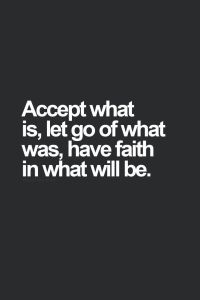
You can’t heal until you can let go of that rage. That doesn’t mean enabling a narcissist or staying in contact with them. But it means moving on and letting go of hatred. At some point in my healing journey, I was no longer able to hang onto my rage. I began to see them as victims too. Of course, this was heresy to some of the narc-abuse bloggers. But by thinking of them this way, they held a lot less power over me. I became less afraid. You can’t feel terrified of something that is pitiful and broken, and by seeing them as pathetic, toothless victims who were crippled emotionally, they seemed sort of…powerless. It wasn’t until I was able to do this that I began to turn my attention in toward myself–and what I could do to change me. If you’re constantly slaying dragons, you can’t have self-awareness because there’s no room for it. In your mind, if you stop fighting, you will be killed. What people don’t realize is that if you never put down that sword, even after the dragons have disappeared, you turn that sword on yourself.

Narcissistic abusers want you to be afraid. They want unlimited power. They want to control your mind even when they’re not there. So, to hold onto hatred (which is fueled by fear, so there is always terror present wherever hatred exists) is really just giving them what they want–control over your mind and soul. Ironically, thinking of them as broken people is the opposite of enabling them. What would a narcissist hate the most? Being seen as pitiful, impotent, powerless, broken, emotionally retarded people. It’s really the only way you can begin to undo the negative programming that keeps you trapped in fear and keeps you from growing into a whole person. It’s also the best revenge, because then you can thrive in spite of their efforts to keep you down.
The power of music.

Image

music_quote

Why I changed my blog’s description.

I just changed this blog’s header description slightly.  It now says “Confessions of a Recovering Borderline.”  There are two good reasons for this.

  1. This blog has always has been (and probably always will be) confessional in nature.
  2. In my last session, my therapist gave me some more information about my current diagnosis (he said he had to think about it for awhile before he was sure).  The verdict is that I used to have BPD but no longer qualify for that label!   How cool is that! This is a huge, HUGE deal for me.     I wrote more about it in this post, which I decided not to put on this blog.  Blogging (among other things) had a lot to do with this “impossible” achievement.  Now I just have residual PTSD (actually C-PTSD if you’re not a DSM purist, which he is not, thank goodness) and that’s what I’m still working through and imagine I will be for some time.

I wanted to keep BPD somewhere in the blog’s header but don’t want to misrepresent myself by calling myself something  that no longer applies.  So that’s why I changed it a little.   Like me, this blog has been through many changes since I started it in September 2014, and it will keep growing and evolving with me.   I have no plans to ever take it down.


Self-pity and self-compassion: there’s a huge difference!

self-compassion

I read a post yesterday on another blog that I agreed with, except there was one thing that didn’t quite sit right with me. The post said that self-pity is an important part of healing from Complex PTSD.

In his book (which I’m still reading), Complex PTSD: From Surviving to Thriving, Pete Walker says that self-compassion is an important part of healing, and I think this is what the blogger actually meant. But self-compassion isn’t the same thing as self-pity, an activity which I don’t find at all healing and in fact seems to make my problems worse. Of course we have the right to engage in self pity from time to time (and probably can’t help doing so), and no one should deny us the right to do so. But for me, it just doesn’t work. It’s an unpleasant, soul-sucking experience that seems to drive my negative programming even deeper than it already is.

The way I see it, the difference between self pity and self compassion is analogous to the difference between pity and empathy. I think this makes the distinction clearer.

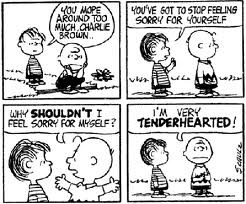
Pity has an element of condescension or even contempt. You pity someone you dislike or look down on. It’s kind of like sympathy but it’s contaminated with judgment and scorn. You feel like you’re “better” than a person you pity. A wealthy banker may “feel sorry” for a homeless person without feeling a shred of empathy. The banker is glad they’re not homeless, and feels as if they’re above that anyway. If someone says “I feel so sorry for you,” or “I pity you,” you’re likely to feel offended and judged, not comforted. I hate being pitied so much I might be tempted to punch you if you do.

Superficially, empathy, compassion, or sympathy may seem like the same thing as pity, but they’re not the same at all. Sympathy means to feel sorry for someone without judgment or condescension, but it’s not quite the same as empathy, because it lacks the sharing of a feeling. It’s a shallower emotion, but it’s still better than pity. Compassion and empathy are interchangeable and both imply feeling “with” another person, or sharing an emotion with them. It’s giving your friend a heartfelt hug after a breakup, or laughing or crying with them when they’re happy or sad. It’s giving a homeless person your own sweater because you hate to see them shivering in the cold. There’s no condescension or judgment. When someone empathizes with you, they say, “I understand” or “that really must have hurt.” Doesn’t that feel a whole lot different than someone telling you, “I feel sorry for you.”

charlie_brown_tenderhearted

Self-pity is part of our toxic programming. It’s driven by shame. Self pity is when you sit around and think about how much your life sucks and how much YOU suck. There’s no self-nurturing or comfort in self pity, no self love, only self-hatred and shame. Self-pity enforces the terrible things we’ve already come to believe about ourselves. If we’ve been told time and again how stupid, bad, clumsy, ugly, or what a loser we are by our narcissists, eventually those voices become internalized and we develop a toxic inner voice called an Inner Critic. When you’re stuck in self pity, that’s your Inner Critic demeaning you and repeating to you the same lies about yourself your narcissists already drummed into you. You learn to abuse yourself, and self-pity is just self-abuse. When you say, “I suck” or “I’m a loser” or “nothing ever goes right for me,” you’re reinforcing the toxic programming and acting as a flying monkey against yourself.

Unfortunately, for those of us who suffered from narcissistic abuse, it’s common to wallow in self pity. It’s an all too familiar state of mind, but it isn’t the real you. The things we tell ourselves when we’re stuck in self pity are lies. When I get stuck in self pity, I feel just horrible. I just want to die. I usually wind up feeling resentful and angry at the world, but also ashamed of myself for being such a helpless victim and pathetic loser. I’m consumed with shame and guilt, which leads to depression. I also can’t release the negative emotion when I’m in self pity mode. I get stuck there and it drags me down and saps from me any energy or joy. I’ve had hangovers that felt more pleasant than a bout of toxic self-pity.

self-pity

You can replace self pity with something much better that also feels a heck of a lot nicer: self-compassion. Self-compassion means acknowledging that you are a human being worthy of love, happiness and the good things in life, while empathizing with your inner child’s hurt over not having gotten those things. You give your inner child permission to feel sad or to grieve and agree with them how unfair it is that she/he got cheated or was abused. This may seem like self pity, but it’s not, because the element of judgment and shame isn’t there. You’re not beating yourself up over how terrible you think you are; you’re telling yourself you’re good and deserve better and allowing yourself to grieve. Instead of covering up your inner child with a paper bag, you’re offering her a hug.

It helps me to actually visualize my inner child. I have her talk to me and tell me what she needs and wants. I don’t judge her or try to shut her up; I just listen. If she feels sad, I tell her those feelings are valid and let her feel sad. If she feels mad, I let her express the anger (but at the same time reassure her she won’t be able to hurt anyone or anything because I won’t let her). I find that by non-judgmentally listening to what she wants and needs or how she feels, I’m eventually able to release any negative emotions and I don’t get stuck. By giving myself permission to feel without self-judgment or self-shaming, sometimes I wind up being able to cry, and as weird as it sounds, that always comes as such a relief. When I’m stuck in self pity, these healing tears never come, because the shame that’s been programmed into me won’t allow me to release them. My programming tells me the massive lie that crying is shameful and weak, when in actuality it’s sometimes the most healing thing you can do. Your Inner Critic is a narcissist who doesn’t want you to heal and that’s where all that awful self pity comes from.

How to reparent yourself.

This short post went viral on my other blog, although I really have no idea why because not a whole lot of thought went into it and I wrote it on the fly, but it seemed to resonate, so I’m reblogging it here too. (Chair Girl is the name I give to my inner child in therapy).

Hurts so good.

hurts_so_good

Remember when you were a kid and had a loose tooth, how good it felt to wiggle it with your tongue, even though it bled and hurt like the dickens?  Yet you HAD to keep doing it, because it felt GOOD.

Or remember that scab you just had to pick even though you knew it would bleed and hurt?

Happy feelings can be like that for some of us.  Have you ever been so moved by something, or so touched, or so filled with joy it actually hurt and made you want to cry?

Having been so shut off from my emotions for so many years,  I wasn’t used to feeling anything other than dreary, numb despair, an unnamed dread that something terrible was about to befall me, occasionally relieved by a sudden, irrational rage.

Lately I’ve been experiencing brief moments of sublime, positive emotions.   Flickers of joy (not glee, but real joy), feeling moved or incredibly touched, especially when I’m in therapy.   My therapist helps bring out these feelings in me, and I’m enjoying exploring these unfamiliar but wonderful emotions.  But sometimes they are just so intense and that intensity hurts.   Sometimes even the beauty of them…hurts.

Why would something so human and life-affirming make me feel almost sad?  Is it because I don’t trust these feelings, or don’t trust being vulnerable to feeling them?  Or is it because I know how fleeting such feelings are, and will only be replaced with the unpleasant feelings I’ve grown used to?   Or do they hurt because my soul is unfolding, and in so doing, is breaking down the walls that bound it for so long?  Are these just growing pains?   Will I ever be able to experience these sublime emotions without sadness and pain?

Empathy begins at home.

happy_childhood

I know that for a very long time I’ve had issues empathizing with others on a one to one basis (with a few rare exceptions like my children). It’s not that I like seeing others in pain or want to hurt them (I don’t, at all), more that I have had so much trouble connecting to my emotions, especially tender or vulnerable feelings, that this avoidance extends to everyone else. I’ve always felt empathy when it’s “safe” though–therefore I can cry for a character in a movie or novel, or even a TV commercial. I can get quite upset reading a news story about someone who’s been abused, especially if it’s an animal or a child.

But when it comes to real life people, I just can’t allow myself to get that close. I hold everyone at arm’s length. It’s too dangerous to let them in, because they might stir up emotions I haven’t wanted to feel. Of course this means emotional (as opposed to cognitive) empathy goes out the window too. You can’t feel an emotion for someone else if you can’t even access it for yourself.

It’s a common belief that all people who lack empathy are narcissists or psychopaths (or have some kind of schizoid disorder or psychosis, or autism). But a lack of empathy is also a common symptom in people with complex PTSD. Shutting off emotions–including empathy–is a defense mechanism that protects you from further harm. The problem is, this protection also “protects” you from feeling much joy or being able to really love anyone else.

Recently I’ve been feeling a kind of tender regard for my child-self/true self. Right now she’s not integrated and feels far away sometimes, but I can feel her sadness and pain. I can also feel that she’s a good person, a gentle sensitive spirit with so much love to give. I feel a tender protectiveness now where before I felt only shame and wanted to hide her away, just as she had been hidden away by the narcissists who “raised” her. So how was I any different from them, by keeping her hidden, projecting badness and shame onto her, refusing to see her strengths? Sometimes I just want to hold her like my own child. It’s not self-pity; it’s closer to empathy and even love.

Is this where empathy begins? Does it begin with loving yourself–your true self? If you hate your real self, you cannot learn to expand empathy onto others, since you can’t even empathize with yourself. If all you feel is shame, that is going to be projected onto others. That would apply to narcissists and the personality-disordered as well as people suffering from C-PTSD.   The problem for the disordered is it may be too late for some of them.  They are so thoroughly shielded by a false self they cannot even access their real selves or only with a great deal of difficulty that could take years.  There are much stronger defenses to break through.  They may be so shut off they can’t even see the lie they are living and think it’s everyone else–not them–with the problem.

The root of attachment and trauma disorders is is rejection of the self internalized from the people who were supposed to love you and mirror you; to heal, you must be able to develop empathy for your true self. That’s what my therapist has been helping me do.

Guest Post #6: Getting By One Day at a Time (Survivor Road)

Survivor Road is a blog written by a man who is a survival of childhood sexual abuse. I am not sure if he wants me to use his first name so I’ll err on the side of caution and not use it.

From his Welcome Page:

Researchers have found that 1 in 6 men have experienced abusive sexual experiences before age 18. And this is probably a low estimate, since it doesn’t include non-contact experiences, which can also have lasting negative effects.

If you’ve had such an experience, or think you might have, you are not alone.

If you wonder whether such an experience may be connected to some difficulties or challenges in your life now, you are not alone.

If you are a male–or female–survivor of sexual (or any other kind of) abuse, please stop by Survivor Road and say hello. You may find exactly what you’ve been looking for there and people who have been through similar trauma.

This brave man was kind enough to respond to my invitation for guest bloggers, but his post isn’t about abuse or mental illness per se. Instead, he wrote this inspirational post about how to survive as an abuse victim, the 12-step way: one day at a time. This sage advice can apply to almost any problem or situation which is tripping us up in life, not just surviving abuse.

GETTING BY ONE DAY AT A TIME
By Survivor Road

one-day-at-a-time

I’ve never liked public speaking.  When Lauren asked me to write a guest post for this blog I thought I might feel different.  I was wrong. This is so much akin to walking into a room filled with people that are all used to hearing from one person and now here am I, this new guy, a stranger, and what can he possibly say that is going to be of any importance? And I will agree what is important to me may not matter to you. (That doesn’t help the self-doubt either)…

If I could bottle up everything I’d like to say into one line, it would probably be:

You can survive each day if you live each day as just one day. No reliving the past or hiding in fear of the future. Today is more than enough for today.

I know, rather trite. But being trite doesn’t keep it from being true. I’ve found it works for myself, but so many I have talked to have expressed the same idea. You can only live in this moment, so don’t expend all your energy on any other time but the present. Don’t judge your past actions based on your present understanding. Accept your actions were acceptable for the time and place they happened.

This used to be much easier for me. For over thirty years I didn’t remember much before turning fifteen. Some good some not-so-great, but mostly my life as a kid was more mystery than memory. In my “gut” I knew there was more – there was something, but I couldn’t tell you what. I went through dozens of therapists by the age of forty, all with different ideas and philosophies. Religious, secular, it didn’t matter. I just wanted an answer to what happened so I could know who I was. The major hitch in all this – I believed who I was depended on what had happened to me.

notabadperson

Then, when the memories started returning, I wove a new ‘understanding’ – I believed I was what had happened to me. I was the abuse. Then I was the cause of the abuse. It was all my fault. And if I was so flawed I could cause those kinds of things to happen to me at nine, or five, or two… just imagine how screwed up I could make life yet to happen. So in one bucket I had my life, guilt over my past, and fear of my future all stewing together. And that sucker got real heavy in a hurry.

I’d love to say I have it all sorted out now. That I’m doing so great that I agreed to be a guest blogger. But that’s not the case. There are times I still wonder if my intense draw to other men is wrapped up in my abuse. And there are the nights I cry myself to sleep or sit up screaming in the middle of the night, reliving the pain, or worse – humiliation, of something from my past. I still deal with triggers which can be as innocuous as a word, sound, or smell.

I used to think that, if other people can manage, I can. I’ve heard/read stories so much worse than what I suffered of people who are survivors and living each day strong. But, for me anyhoo, trying to live my life because someone else manages to — that doesn’t work. I have to be because I want to be.

And, bottom line, there it is. I want to live. I want to accept all of me. That does not mean accepting what happened to me, but it does mean accepting that it did happen. Maybe a fine line, but a major difference in viewpoint. What happened was horrible. But it did happen. And that’s the other point – it did happen; but it is not happening anymore. And even when my dreams are interrupted by the terrible truth of the past, it is still of the past. Does it impact today? Sure. But does it rule today? No.

At least it doesn’t rule this day. Tomorrow is another day, but I will live that day when it gets here. My hands are still way too busy juggling to add anything future.

Life is not always sweet and wonderful. But it is life. Regardless of what I believe lies on the other side of death, there are things here and now that I am not willing to let go of. Even with the pain. Even with the memories. Even with the bouts of unfathomable depression.

You have the choice over how you live. I know it doesn’t always feel that way. And sometimes we can’t see anything but the destruction of our souls. But even when all is dark and we’re trapped within the cellar of depression, our actions are still our choice. Make the choice you are best able to make and there is no reason to regret it later.

Whether or not you can be at peace with the world around you, my hope for you is peace with the world within you.