10 Annoying as Shit Things Bloggers Do

If you blog, please DON’T do these things!

Mental Health Blogger Award nomination.

mental_health_award

I’m humbled and proud to announce that Tessa from Tessa Can Do it has nominated this blog for the Mental Health Blogger Award. This award recognizes blogs that both promote mental health awareness and attempt to reduce the stigma associated with mental disorders.

Thank you so much for the honor, Tessa!

So I’m paying it forward by nominating five blogs I think deserve this award too. Nominees should do the following if they wish to accept the award:

The Rules:

1. Place this award somewhere on your website.

2. Nominate five bloggers who promote Mental Health awareness to receive this award.

3. Give reasons for your nominations.

My Nominations:

1. BPD Transformation has a very informative and well researched blog about Borderline personality disorder (BPD) and believes the negative “Cluster B” stigma associated with BPD can be eliminated by focusing on treating its symptoms over the medical model of misleading diagnostic labeling.

2. An Upturned Soul is a narcissistic abuse survivor whose articles are very well written and entertaining at the same time. This blogger definitely knows a lot about NPD and malignant narcissism but writes in a way that doesn’t automatically bash people who have NPD but instead attempts to educate people about them so they can protect themselves accordingly. I also like her out of the box thinking and thought provoking ideas.

3. Grace For My Heart is a Christian-oriented blog written by a pastor. While not specifically about mental illness, every Friday Pastor Dave features his intelligent and engaging “Narcissist Friday” posts, which focus on NPD and narcissistic abuse. I’m impressed by Pastor Dave’s intelligently written posts that do not stigmatize or promote hatred of people with NPD, but at the same time make it clear how dangerous people with this disorder can be and that the best thing the rest of us can do for ourselves is not to have contact with them.

4. Make BPD Stigma-Free! — the title of this blog is self explanatory. It’s also a good source of information about BPD and methods of treatment and therapy.

5. Discussing Dissociation: Thoughts from a Trauma Therapist — Although this site focuses on those suffering from DID (dissociative identity disorder), there is much information and help here for anyone suffering from other mental disorders caused by abuse and trauma, such as C-PTSD; and the dissociative symptoms associated with the “dramatic” Cluster B personality disorders.

12 ways for for non-lazy bloggers to get more hits.

rosietheriveter_blog

There are many casual bloggers who only blog for themselves or their friends. They don’t care about views, hits or visibility, and have never looked at their stats page, and that is perfectly okay. Casual bloggers can write one blog post a year and it won’t matter because the few views they get are all they care about anyway. Their sole reason for blogging is to share their thoughts, feelings or pictures with a few friends–or just get them down “on paper,” so to speak. There is, of course, nothing wrong with that.
So if you’re a casual type of blogger who blogs only for yourself or your friends or family, this article will not apply to you.

But if you’re a serious blogger, like I am, you will want to increase your readership, get more views, and be more visible on the web. I think for most of us, the primary reason we blog is for the love of it and to share our thoughts with others, but let’s be honest: that isn’t quite enough. For aspiring writers like me, maximum visibility is important because visibility helps us promote our writing. Blogging can act as a springboard to other things. An active and well-known blog can be parlayed into a writing career or even the eventual publication of a book.

If you’re a serious blogger, you can’t be lazy. You have to work hard at it, and it becomes a job. A fun job to be sure, but still a job. So I am going to give you some pointers for how to promote your blog and get as much visibility as possible. I’ve been blogging for almost a year now, and have learned enough about this along the way that I think my advice can help you too.

1. The most important thing is to write every day.
I’m serious. I’ve noticed that if I skip even ONE DAY without writing a new post, my viewership declines and I get fewer hits. Until you’re really well established or have a really famous blog (which most of us don’t), you cannot rest on the laurels of your last well-received and popular blog post. You must keep writing. Of course there will be days you can’t think of an original idea or are simply too tired to write anything original. In that case, it’s okay to post a photo, meme, cartoon, or reblog someone else’s article. If you do reblog an article though, try to write at least a paragraph or two introducing it and explaining why you’re reblogging it. Don’t reblog just for the sake of posting something. Make sure it’s something you really like or that resonates with you. Your readers will pick up your enthusiasm if you write an intro. But be careful not to do this to often. If you hardly ever post original material, people will lose interest in your blog because it becomes nothing more than a platform to promote the material of others.

2. Have a good looking blog.
WordPress has many themes and many of them are free. I think the majority of them are tasteful and easy on the eyes, and they are easy to set up. If you run ads on your blog (you won’t be doing this unless you’re a serious blogger anyway), be careful about having too many other graphics and widgets on your blog. I’m probably guilty of this, because my sidebar looks like a widget sardine can, but I can’t bring myself to delete any of them. But I don’t think this blog looks too “busy.” Don’t use background colors and patterns that are hard on the eyes or that clash with the content. Use a font that’s easy to read, not just because you think it looks “cool.”

3. No walls of text!
If you write long articles, it’s best to break them up into subheaders, “listicles” (numbered lists), or use graphics and pictures. Google Image is great for finding the perfect graphic for an article, or if you’re a good photographer, you can take your own pictures.

4. Reply to your comments.
This should be a no-brainer. If you allow comments but don’t answer them, people will think you’re a snob or that you don’t care. If you get many comments, it may not be practical to answer all of them, but at least “Like” them to let the commenter know you saw their comment. There is of course the option to not allow comments at all (which may be necessary if you are being stalked or bullied excessively) but if you want your blog to grow, I don’t recommend this. Blogging should be an interactive activity, and if you don’t allow comments, people will think you only care about your own opinion and will probably lose interest eventually. Also, don’t run people off by not allowing them to disagree with you. There’s a big difference between someone who merely disagrees with something you wrote and a bully. Disagreements can turn into interesting and lively debates and discussions.

5. Use the share buttons, even if you don’t use social media.
There are many social media share buttons that WordPress makes available. You should make all of these available under each article, so even if you don’t use social media yourself, other people will share your articles for you and that will help you gain visibility. It’s a fantastic feeling to look at your share buttons and see your counters growing. When one article of mine hit 1K shares on Facebook, I felt like I won the lottery.

6. Use Twitter and Facebook even if you hate them.
If you want your blog to grow, I recommend sharing articles on at least Twitter and Facebook, even if that’s the only reason you use these social media platforms. You can set your blog up so your articles are automatically shared to the social media platforms you choose without you having to actually go to the sites to do so.

7. Use Twitter #hashtags.
If you have a Twitter account, and you have an older article you want to promote, or one that seems to be especially popular, I recommend re-sharing it using #hashtags. The automatic share feature won’t do this for you, but if you manually share an article to Twitter, include a few #hashtags in your tweet (a box will pop up where you can do this). Hashtags are basically just one word tags that describe the content of your article. For example if you write about narcissism, and you are tweeting about a relevant article, use hashtags like #NPD, #narcissism, etc. You won’t be able to add too many so make sure they sum up the content and are popular words people search for. Doing this works because even if people aren’t following you on Twitter, if they look up a topic by using a certain #hashtag, your article will be listed and it will get a lot more views than if you do not use hashtags. It may sound #stupid, but it works for me every time.

8. Reference and link to other blogs and websites in your posts.
Not only does it appear you’ve done your research by quoting or referring to material from other blogs, every time you link to another blog or site, it creates a trackback, which appears on that blog, and from there people visiting the other blog can click on the trackback or pingback link and be taken to your blog post. It also helps foster goodwill between bloggers–most bloggers love to be credited and have their blog linked to, and they may recommend yours or link to yours in return. I can’t even tell you how many of my “referrers” are blogs I linked to months ago in a single blog post.

9. Make your content easy to find.
I’ve seen blogs you can’t navigate because there’s no option for finding what you’re looking for. That drives me crazy. No one wants to scroll through every article you ever wrote to find what they want to read (and how would they know it exists anyway if there’s no navigational tools?) At the very least, use a search bar (which you can add easily via the Widgets on the Admin page), but I recommend using a few other features too that make navigating your site easier, such as a tag cloud, a category list, a table of contents, or topics listed in the header or sidebar (mine are listed in the header and some include subtopics). If people can’t find what they’re looking for, they’ll throw their hands up in frustration and go to other blogs instead.

10. Make good use of tags and categories. I still have a lot to learn about this. I tend to use too many tags and categories, and I hear this is a no-no. I’m getting better though. Like Twitter #hashtags, using relevant words and phrases that describe your article’s content draws viewers, because when they’re searching for a topic in a search engine such as Google, tag words will make sure your article is listed there, even if it’s on page 20 to start with. As your blog grows, you will find your Google rankings rising and some articles may start appearing on the first page if they get enough views. There is no reason why you should have to pay for SEO. All you need is patience.

11. Make your blog mobile-friendly.
Just about everyone these days has a Smartphone with Internet access and many people even use it more often than their computer for reading web content. WordPress has a feature under Admin Tools for making your blog readable on mobile phones. Doing this will also increase your traffic because it makes it possible for people to read your blog even when they’re at work, walking the dog, eating dinner at the Olive Garden, or taking a bath.

12. Don’t let bullies and trolls intimidate you or destroy your will to blog. If you blog regularly, and especially if you start to get a lot of views and hits, be prepared for this. There are going to be people who won’t like you, your blog, or your content, or are jealous of you or just want to stir up trouble because that’s what trolls do. Be forewarned: it’s not a matter of if but when. Fortunately, other than nursing your hurt feelings (if you’re sensitive), dealing with these people shouldn’t pose too much of a problem. It’s pretty easy to control your haters on WordPress. You can’t block people the way you can on social media, but you can delete (or not approve) their comments. It’s your blog; you can write about whatever you wish, and if some people have a problem with what you have to say, they are basically telling you how to run your blog or even whether you have the right to blog, and neither of those things is okay. THEY are not your boss–YOU are. You can’t be fired from your job as a blogger–you can only quit. Write about what you want and put those nasty comments where they belong–in the Trash. Lick your wounds and keep on writing.

If you are being stalked or threatened (like a certain very popular WordPress blogger was recently), you can always set your blog to private or password-protected for awhile until the dust settles, or disable comments. With any luck, you won’t ever have to do either of those things.

Online narcissism: writers with NPD

envious_blogger

This is a very interesting and well written article about how to identify if a blog is written by a narcissist. I’m sure I’ve been guilty of a few of these things myself at times (I think blogging is by nature a bit of a narcissistic activity), but watch out for someone who does these things on a regular basis, or has most or all of the traits listed here:

http://hubpages.com/hub/Online-Narcissism-Writers-with-NPD

I also highly recommend reading this article from The Narcissistic Continuum (which I reblogged here), which is probably the best article about online narcissism I ever read–the writer misses NOTHING!

One more thing I’d like to add. I think the best indicator to tell if a blogger is a narcissist is to look at the way they respond to comments. Aggression and combativeness (which could include sarcasm and snarkiness) is a huge red flag, the way I see it. If a blogger can’t accept disagreement or differing opinions without resorting to aggression or personal attacks, you might not want to bother commenting if you disagree with them, unless you want a new one ripped for yourself. Even if you agree with what they wrote, telling them so is just feeding their need for narcissistic supply.

Blogging bullies and silly fights.

More about blogging bullies and stalkers in this article from http://Galesmind.com from all the way back in May! I can’t believe this one passed me by.

After you read Gale’s article, here’s another interesting one from Psychology Today called Deleting the Blog Bully

Here’s one more: Prepare Yourself for the Blog Bullies.
THIS IS A MUST-READ and so good I’m adding it to the Blogging header.
Bottom line–Bullying is inevitable, even if you try hard to always be PC. If you can’t handle bullies, don’t blog, but there are ways you can protect yourself.

Gale A. Molinari's avatargalesmind

fighting cats

Honestly I don’t get people that get hysterically riled by something someone writes. Two of my favorite blogs were attacked recently. Harsh Reality and Lucky Otter. Sure they may post blogs that are controversial. I have argued with both of them. We don’t always agree. That is what makes blogs interesting. Good grief if we all agreed on subjects we might as well just shut blogs down and all go home singing Cumbaya.

Being passionate I can understand, getting upset I can understand, not agreeing, thinking the other person is a total ass I can understand. It is the personal attacks I cannot understand.

Intelligent people do not resort to personal attacks to win arguments they find better arguments. Personal attacks are a good sign the person has blown the argument and is sending up smoke screens.

If you disagree with another blogger, walk away for awhile. That other blog…

View original post 166 more words

Let’s network- add your blog here.

Paying it forward.

Please add your blog info to the blogger’s post, not here!

Being discovered online by your narcissists.

Woman using tablet outdoor.

Back during the winter, I made the mistake by sharing an article on a social media platform that several members of my family use, including my narcissistic mother.

It came to my attention (through my son) that they did in fact find my blog and it was being read. I was horrified, but I was fortunate because not a word about it was ever said to me. Oh, I’m sure they talk amongst themselves about what a horrible person I am to have a blog where I talk about my family the way I do, but it’s not as if they weren’t already saying mean things about me behind my back anyway. I know they probably still read this blog, but I no longer care. In fact, sometimes I think it may be a good thing for them to see in print was I was always too afraid to say.

Another blogger I know has a far worse family than mine. The psychological abuse this woman suffered, especially at the hands of her MN mother and sister, was so extreme that the stories she tells about them would be hard to believe if I didn’t know they were true. Her family REALLY hates her, and her sociopathic mother has turned every member of the extended family against this woman.

She just wrote a blog post about getting several ugly and hateful anonymous messages, after she too made an error where she might have “leaked” the fact she has a blog about her narcissistic family. Based on what she has said about them, I think these people are extremely dangerous, far more dangerous than my family ever was. So even though this woman and I are no longer friends (that’s another story I won’t get into here), I am worried for her. So I’m asking for your prayers and positive thoughts that nothing untoward happens if it’s true that her family found her blog. These people are incredibly toxic.

The Love/Hate Challenge.

I was nominated by Plain Ol’ Vic to complete the love/hate challenge. The love/hate challenge consists of listing ten things that I love and then ten things I hate, then nominate 10 bloggers to do the same.

love

The first ten things that come to mind (there are so many others):

1. My amazing children.
2. My pets
3. A great cup of Hazelnut coffee with a Krispy Kreme doughnut
4. Waking up and thinking it’s a weekday and then you remember it’s Saturday
5. Blogging, duh.
6. Reading a good book about just about anything.
7. Spring
8. River Otters
9. Road trips
10. My spinach/meat lasagna. (One day I promise to post about this and include the recipe)

hate

1. Mental illness and what it does to people’s lives, especially narcissism
2. Exclusionary politics that places all the blame on the most vulnerable people in society–the poor, sick, disabled, and voiceless.
3. People who get in your face and don’t respect your right to be alone
4. Morning radio shows
5. Fleas
6. Small talk in general
7. Mean and rude people (not all are narcs, some are just mean and rude)
8. Insect wings not attached to the insect
9. Most shellfish
10. Having to listen to people say to me, “why don’t you ask your family for help”?

**********

I nominate the following bloggers to take the love/hate challenge (this part is always hard because there’s always so many I miss!)

1. Butchcountry67: https://butchcountry67.wordpress.com/

2. Kitt O’ Malley: http://kittomalley.com/author/kittomalley/

3. Live, Love, Laugh: http://livelovelaughdotme2.com/

4. Pockets Of Chaos: https://drlindallabin.wordpress.com/

5. Tony Burgess blog: http://tonyburgess1969.net/

6. Bluebird of Bitterness: http://en.gravatar.com/thebluebirdofbitterness

7. All Things Chronic: https://painkills2.wordpress.com/

8. See, There’s This Thing Called Biology/InsanityBytes: https://insanitybytes2.wordpress.com/

9. BPD Transformation: https://bpdtransformation.wordpress.com/

10. Emmagc75: https://emma75love.wordpress.com/

A HarsH Goodbye…

So Jason is leaving the blogosphere to hunt treasure.
I’m grateful I started my blog when he was still here, because he was of such immense help to me getting started.
A lot of people here will miss you, OM! 😦 Good luck in your future endeavors. Maybe you’ll be back someday…

15 tips for writing blog posts that get noticed.

In my nine months of blogging (shouldn’t I have given birth to something by now?), I think I’ve learned a few things about how to write interesting (and sometimes controversial) posts people want to read. Sure, I’ve posted weak articles no one seems to want to read–we’re entitled to have those days sometimes–but I think my track record on the whole has been pretty good. I don’t consider myself any sort of blogging guru or anything, and there’s still a lot I’m learning, but I think I have learned enough to be able to share what I know with other bloggers and people who want to start a blog.

1. The title is everything.

sex_toys
Never mind the subject matter, this is a great title. Did it grab your attention? That’s the only important thing.

Keep your titles “grabby.” Make them stand out. Make them a little controversial (“Don’t Judge Me Because I’m Poor”), a little true-confessional (“People Think I’m Stupid” or “All My Narcissistic Lovers”), a little cheeky (“Why Are Some Things So Annoying?”), or even pose a challenge to the reader (“My Son is Furry–Have a problem with that?”) Don’t try to make them too “nice”–because that will make them boring.

When all else fails, just keep them short and to the point. “I Have Issues” is a better title than “I Don’t Know Why I’m So Depressed, Nervous, Bitter and Angry all the Time.”

Keep your titles as short as possible. Never, ever write a title that sounds like a Ph.D thesis, such as: “Preternaturally narcissistic and sociopathic actions within the social media milieu: a paradigm of the interglobal loss of interpersonal altruism.” WUT?

Never, EVER use the word “paradigm” in a title. If you do that, I will personally come to your house and splash water all over your keyboard. That’s a promise. The same goes for “milieu.” Don’t use that word. Ever. No one knows how to spell it anyway.

paradigm

2. Keep your subject matter on topic as much as you can.

Blogging (1)

It’s alright to veer off topic to tell an anecdote or provide an example to flesh out your article and add human interest to it–in fact doing this can make your post seem more personal and that’s almost always a good thing. But try not to veer off the topic too much. It’s hard to do sometimes, but if you do, always somehow bring the article back to your original topic, and it will look like you intended for it to veer off topic a little to make a point.

3. Break up your text!

wall_o__text-blog-full

Even if you write like Shakespeare or Hemingway, readers will bypass your well-written post if it’s just a long wall of text. While a photo, graphic, drawing or cartoon isn’t required for a very short post, it can make your post stand out more and look more appealing. Walls of text for long posts hurt people’s eyes.

If your post is very long, break it up. Use photos or pictures or quotes at appropriate intervals that illustrate the point of your story or article. It’s easy to Google images you want to use–just type the subject matter into the browser and click on Google Images, and I can guarantee you’ll fine the perfect image to illustrate your article. Your own photos or pictures are fine to use too, when appropriate.

But be careful with this too. If you use too many pictures and graphics (as I tend to do), your post could wind up looking like the cover of a supermarket tabloid, and that will turn off readers too. Make sure your post looks clean and uncluttered, especially if you also run ads on your site.

Quotes and block quotes also work well at breaking up walls of text, and never be afraid to use humorous quotes or captions, even in a serious post (as long as it’s still in context). You can also use subheadings within the article and that will make it easier to digest too.

Beyond that, break up your paragraphs into smaller, easier to chew pieces. Readers are not cavemen gnawing an entire flank of beef all at once. They are civilized humans who like their steak cut into small pieces that can be picked up and savored one at a time. The same advice goes for paragraphs. Keep them bite size and they will be much more readable and taste better too.

4. Use the share buttons!

sharing

Even if you hate social media, make sure each blog post contains all the social media share buttons available, which can be found in the dashboard. Even if YOU don’t want to link your post to them, OTHER people will use them. If they’re not there under your post, people probably won’t bother sharing your post. Share buttons are a lazy way of getting your post seen by many people, only you’re letting your readers do the dirty work for you. That’s nothing to feel guilty about.

5. Use links in your posts.

chain_links

Linking to other blogs within your post creates a pingback: the writer of that blog will see that you quoted them, and more than likely will come and check out your blog. They might even follow you back. Creating a blogroll (in Widgets) or somewhere in your header will help too. It shows you read other blogs as well as your own, and the other bloggers will appreciate your support, and may even recommend your blog to others.

And of course, if you quote someone else’s material, make sure you link to their post or at least credit them.

Link to your own articles too. Doing this not only adds depth and background to your article, but it also encourages readers to not stop with the article they’re reading–they might click on your links and read your other articles too!

6. Don’t ignore your comments!
comments

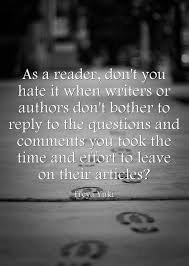
If you ignore your comments, people will lose interest in your blog. People like it when their thoughts are acknowledged and validated. No one wants to feel ignored. Replying to comments may seem like a time consuming chore, but if you fail to do this, it’s insulting to the reader who wrote the comment or asked the question, and it will seem like you don’t care. If you don’t want comments on your blog, you can always disable them. Personally, outside of writing for yourself only, I never understood why anyone would do that. All popular blogs are dynamic, interactive blogs, where people can comment and lively conversations and debates can get started. It’s helpful to comment on other people’s blogs as well.

Replying to comments keeps your readers around and makes it seem like you care about them. It also creates a sense of community that keeps people coming back for more.

You do not have to reply to every comment, but at least “like” it if you don’t have time to reply. If your blog is very active, it may be hard to reply to every single comment or give long well-thought out replies, but a “like” or a few words such as “thank you for your kind remarks” should be sufficient.

If you have the time (unfortunately I don’t much anymore), comment on or at least “like” posts by other bloggers. Follow as many other bloggers as you can, too. Most people are polite so most likely they’ll follow you back.

7. Write frequently.

read_and_write

You should challenge yourself and try to write at least one new post a day. If you can think of nothing to write about (we all have those days), post a funny, cute or attractive photo or a quote you like. Cartoons work well too (I use them all the time). And don’t forget about cats. Cats online are like sex in the movies–they will “sell” your blog post. You can also reblog someone else’s article, but make sure you give credit. If it’s a WordPress blogger, that is automatically done for you.

If you don’t post frequently, people will stop visiting your blog. Sometimes I write 3-5 posts a day. You don’t have to go that crazy, but at least one post a day will keep your blog from stagnating like unmoving pond water. There’s nothing that will kill a blog faster than abandoning it. If you don’t appear to care, your readers won’t either and will go somewhere else.

8. Write as if you’re speaking.

writeasyouspeak

You don’t have to be a Shakespeare or a Poe or have great writing ability to write a good blog post. If you know how to string together a few sentences and have halfway decent grammar (grammar and spell check will help), you can still write a post people want to read. The key is to make it conversational and personal. Don’t overload the reader with too many facts or overly pedantic language. And always, ALWAYS be honest. People can tell when you’re lying or leaving out pertinent information. They will finish reading your article feeling like you’re hiding something. They will feel cheated and may never return.\

If possible, write your post in a conversational, personal tone. If it’s a scholarly article, of course you cannot do this, but for most blog posts, writing in simple, casual language and using personal examples to illustrate a point makes your article seem more personal, as if you are talking to the reader. Be a story teller.

9. Surprise your readers.

lucy_ricardo

If your blog focuses on one or two subjects as this one does, it’s okay to add in an occasional article or post about something unrelated or even totally random. In fact, I think doing this (as long as you don’t overdo it) makes your blog fresher and more interesting. Another benefit of posting off-topic material is that you will attract readers who may not otherwise be reading your blog. I have had a number of foodies and furries reading this blog (and even following it) because of articles I wrote about those subjects. It helps to be versatile, but be careful not to lose your original focus or you will just look like you aren’t that interested in your theme topic.

It’s okay to have a general interest blog though. Many blogs aren’t about any topic in particular, just whatever the writer wants to write about that day, and that’s fine too. In fact, some of the most interesting blogs out there are general interest blogs without a focus.

10. Don’t dwell in negativity.

fucking_negativity

If your blog is about a serious or dark subject (as mine is), watch your pessimism and negativity. People won’t feel inspired or come away feeling like they’ve learned something of value if all you do is bitch and moan and talk about how the glass is always half empty. While emotional honesty in a post is great, people also want to feel like you’re giving them some hope for their hopeless situation too. That’s why I include inspirational memes and quotes, happy or cute photographs, cartoons, jokes, and lots of music. (Music has been an important factor in my recovery, second only to writing). Sometimes I find that if I post something positive even when I’m feeling like I want to jump out a 16th floor window (it happens more often than you think!), it actually improves my mood. Don’t lie in your posts and pretend to be happy when you’re not (which can come off as insincere and obnoxious), but don’t suck people into your vortex of darkness with you either.

11. Don’t require people to sign in.

red-brick-wall

Unless you are in a situation where you have a potentially dangerous stalker or group of people harassing or stalking you online, never, EVER require people to sign in to read your blog. I know if I see a blog that requires me to sign in or use a password to read posts, I’ll bypass that blog, even if it’s about a topic I’m jumping out of my skin to read about. I just don’t have the patience or time to fill out all that garbage if I want to read your blog.

12. Don’t write about something because you think it’s cool.

almost_famous

Never write about something just because it’s popular or trendy, if it doesn’t interest you. People will be able to tell your heart isn’t in what you’re writing about, and you’ll come off as a wannabe or a hack, and certainly less than honest. Nothing will drive a reader away faster than if they sense a lack of passion or honesty in a blog post. It’s okay to be uncool and embracing your uncoolness in fact makes you cool.

13. Run naked in public sometimes.

naked

If you have been keeping an article set to “private” because you think it’s too personal and feel shy about sharing it with the world, take a deep breath and make it public! In my experience, whenever I’ve been afraid to post something due to its personal nature, I have NEVER regretted taking the plunge. It will set you free.

14. Controversial articles get more views.

jackass-whisperer

It’s a fact. A few weeks ago I posted an article that proved to be extremely polarizing. People either loved it or wanted me to die a prolonged and painful death. Yes, posting something controversial or “un-PC’ WILL get you more haters, trolls and you may even have to face bullies (as I did), but guess what? My stats SOARED! That article TRIPLED my usual number of views for that week. Sure, most of them were probably clicking it on to see what all the fuss was about, but along the way, I got a ton of new followers too, and while my views have gone back down, my overall visibility has increased. And the trolls and bullies have moved onto other things. (To handle trolls and bullies, please check my articles under the “Handling Online Trolls and Bullies” tab.) I find it’s best to ignore them, but sometimes even a hater post can make great fodder for a new article, but be careful about identifying anyone by name because that could get you in trouble.

15. Check your grammar and spelling.

abckat3

This should be a no-brainer, but it’s surprising how many blog posts I see that are full of unecessary spelling and grammar errors. If you can’t write a proper English sentence, you probably should take up another hobby besides blogging. Theirs nothing mor disstractng & anoying than a sentenzes who no can read becuase your writting in bad grammer & falty speling.

A few other things to remember.

If you’re a new blogger, don’t panic if things go slowly at first. Don’t get discouraged, frustrated or give up because at first it will seem like no one is reading your blog. It takes time. Becoming visible and getting lots of views and follows takes some people longer than others. Dedication, patience and honesty will reap great rewards in time. Of course, if you write about a “hot” topic, like I do, that will help your growth too. But it isn’t necessary to write about something trendy. I don’t think the growth of this blog is because it’s “better” than any other–but because I’ve put so much time and effort into creating it.

Finally, you can’t “make” a post go viral. Unfortunately there’s no way to tell ahead of time which of your posts will grow legs and spread all over the web like wildfire. It could be a post you think is “boring” but somehow resonates with many people, or one you posted a long time ago. Maybe the “right” person sees it and helps get it out there for you. But when it happens to you, it’s an amazing feeling and makes you feel validated as a writer.