Why Scientology auditing is not at all like traditional psychotherapy (Part 1)

scientology_auditing

This is an actual question an auditor asks you during the introductory (“communications”) course that is really an early indoctrination procedure.

This is my second post about Scientology.  It will be in two parts.

My first post about Scientology was about my own experience (thankfully, short lived) in the cult, but this one will focus less on my own personal experience and more on how Scientology (and the related Dianetics) “auditing” works and why it isn’t at all like (and is far inferior to) traditional psychotherapy (that is, when you have a good, empathetic therapist).

But before I get into the differences, I feel it’s necessary to give you some background about Dianetics and Scientology auditing and the religion that arose from it.

Mainstream mental health: an imperfect science.
emotional_baggage

Psychotherapy isn’t perfect, and of course, there are many bad therapists.   Even when you have a therapist who you are comfortable with and who knows what they’re doing, it can take years to be “cured.”    It isn’t an exact science, or really, much of a science at all (it’s more of an art form) so there aren’t any easy answers or sure-fire “formulas.”   Human beings are complicated, and a modality that may work well on one person may actually do nothing for another, or even make them worse.   And of course, there are many terrible therapists, who are either completely incompetent, are only in it for the money,  lack enough empathy to be effective, are unconsciously attempting to work out their own issues (which is what attracted them to the profession in the first place), and even (if they are sociopathic or narcissistic, and many are) exploit or emotionally abuse their clients.

People can also become “addicted” to their therapists. They can become overly dependent on them and never leave therapy because they feel like they can’t cope on their own.   And it’s true, some therapists do become unhealthily attached to their clients, and discourage them from ever leaving.   A good therapist who doesn’t have unresolved attachment issues will discourage a client from becoming overly dependent on them (while still projecting warmth and empathy), with the end goal being for the client to be able to leave and  function better and feel happier, using new sets of emotional tools to do so.

But psychotherapists (both psychiatrists, who are medical doctors who can prescribe drugs, and psychologists and  clinical social workers, who cannot) are bound by the law. In a best case scenario, they must abide by the law and a certain code of ethics, or be barred from practicing their professions or even face civil or criminal charges.

All these disadvantages aside, traditional psychotherapy is a positive and life-changing experience for most people who undergo it and stick with it, and it has existed for over a century.  There are many different modalities suited for different psychological disorders or problems.   There are both short term and long-term methods.   Some, like CBT or DBT, aren’t cures but are really training methods that teach a person mindfulness skills so they can function better and are less symptomatic.  Others, like Freudian or Jungian psychoanalysis, schema therapy, attachment therapy, psychodrama, EFT, hypnotherapy, and other “talk therapy” methods are long-term modalities that actually attempt to get to the root of the client’s problems or release trauma.  Many therapists mix several different modalities, and some include mindfulness tools like meditation, visualization, and relaxation techniques into their sessions.  Talk therapy can take many months or even years to have results.   In a best case scenario, the client will be cured of whatever is ailing them.  Even if they aren’t cured, a lot of the charge that was feeding their disorder is removed. Some disorders, especially those that have a physical component or are due to faulty neurological “wiring” respond better to drugs than to talk therapy, and continued management by a psychiatrist may be necessary, even though improvement in symptoms is almost immediate.

Scientology’s beginnings. 
dianetics

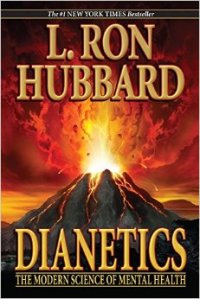
The book that started it all.

Scientology has always been very hostile to both psychiatry and psychology.  L. Ron Hubbard, a second rate science fiction author, had always been fascinated with the human mind and how it worked.  He published his bestselling  book about his discoveries, “Dianetics: The Modern Science of Mental Health” in 1950.  Dianetics is a bastardization of traditional psychoanalysis, but really isn’t much like it at all.   Hubbard was a sociopathic narcissist who had no degree in psychology and in fact lied about many of his accomplishments.

Dianetics uses elements of Freudian psychoanalysis, but is based on the belief that almost all people have “engrams” (unless they are “natural clears,” which are very rare).  Engrams are cellular imprints of moments of trauma that always contain some sort of physical pain and the “unconsciousness” that accompanies a painful or traumatic event.    The part of the mind that contains the “engrams” is called the reactive mind, and the goal of Dianetics “auditing” is to remove all the engrams through “reliving” the memories associated with them, so the person eventually attains a state called “Clear,” which means they have no reactive mind anymore and can act in rational and healthy ways not based on unconscious painful memories or trauma.
psychiatrykills

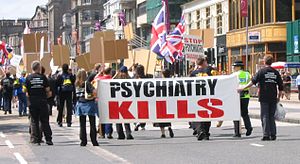
A Scientology anti-psychiatry demonstration.

In the early years of Dianetics, Hubbard attempted to get it recognized as a valid form of psychotherapy, but his book and methods were rejected by the mental health community. Hubbard, being a malignant narcissist who was devastated by this massive narcissistic injury, turned against the entire mental health field.  He vilified it and preached  to his followers that psychiatry and psychology were the worst evils to befall mankind and that Dianetics was the only valid way to become a happy and functioning person.


A new religion is born.

scientology_church

Hubbard began to market his book through the same pulp science fiction magazines  that published his stories, and his Dianetics book proved popular.  Many people claimed to be helped through Dianetics auditing, but this wasn’t enough for Hubbard.    He was quoted as saying, “the quickest way to become rich is to start your own religion,” and so he did.   Not only could he become the messiah of his own church based on his “miracle cure,” he also no longer had to pay taxes.    He trained many new auditors and started the Church of Scientology in December, 1953.    He added the levels of O.T. (Operating Thetan) states that go beyond the state of Clear.  An OT supposedly had complete control over matter, energy, space, and time, and at the highest level, could perform Herculean actions without even needing a body to do it.

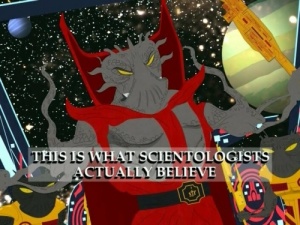
To his religion Hubbard added a “space opera” cosmology, which sounds suspiciously like a plot in one of his stories.   The level of OT III is the level at which the “top secret” cosmology is finally revealed (of course, now due to the Internet, anyone can find out about it for free).   Supposedly, an evil galactic ruler called Xenu, who lived 75 million years ago, thought his planets were overpopulated and had most of the population frozen and dumped into volcanoes in Hawaii (which didn’t exist 75 million years ago), and programmed their spirits (thetans) with the “R6” implant, which is the reason why traditional religion and mental illness (and all other evils of mankind) came into being.    These disembodied spirits were then released and attached themselves to living people as “body thetans” (BT’s).  BT’s are analogous to possession by minor demons.   A person at the OT levels spends much time “auditing out” the BT’s to achieve more perfect spiritual enlightenment.  Scientology’s insane doctrine was illustrated in a famous episode of South Park in 2005.      It’s so unbelievable that the show had to show disclaimers at the bottom of the screen that said, “This is what Scientologists actually believe.”
xenu

From “Trapped in the Closet,” South Park episode.

Hubbard believed if this “top secret” material were revealed to someone at a lower level of “processing,” that they would die of pneumonia or go insane.  His real fear was probably that people might laugh his church out of existence.  Of course, most Scientologists (at least before the Internet) don’t even know about this secret doctrine because so few of them have achieved the state of OT III.   Many (who haven’t been completely brainwashed into believing anything they are told) leave when they find out.   Others are offended that figures like Jesus or the Buddha are considered “implants” who never even existed, especially since when they first joined Scientology, they were promised that their own religion was not incompatible with Scientology.  At OT III, they find out they must renounce their former religious beliefs, if they still had any.  It’s the ultimate bait and switch, something Scientology is well known for.

“You don’t get rich writing science fiction.  If you want to get rich, you start a religion.” — L. Ron Hubbard

Scientology also co-opted the Christian cross (although the eight pointed version Scientology uses is actually based on the Rosicrucian cross) and sometimes requires its clergy (professional auditors and high ranking church officials) to wear clerical collars in public to seem more authentic.

During the late 1950s through the 1970s, when people were becoming interested in alternative therapies and “new age” religions, the Church of Scientology exploded in popularity, until the late 1970s when the IRS and the FBI descended on Hubbard and his church due to tax fraud and other shady and unethical activities conducted at Scientology’s headquarters and at its paramilitary offshoot, The Sea Org.  While Scientology remains popular, especially among celebrities and the very wealthy, the costs of Scientology training and Dianetics auditing are far too expensive for the average person to afford, so the only people who can move up the “Bridge” and attain the rarified Clear or O.T. (Operating Thetan) states, are the very wealthy or those unfortunates who “work off” the expense as residents of the Sea Org (and rarely achieve those states anyway).

Dianetics and Scientology auditing vs. traditional psychotherapy. 

Moving away from the religious aspects of Scientology and back to its original purpose as a form of “therapy” (and most people who undertake Dianetics or Scientology auditing are only using it as a form of therapy anyway, having no idea of what they’re really getting into), please read Part 2:

Why Scientology auditing is not at all like traditional psychotherapy (part 2).

Kneeling down…

Cyranny writes so beautifully about those inexplicable “bad days” all of us have, whether we want to admit we have them or not. They just sort of come out of nowhere sometimes!
Please follow Cyranny’s Cove for more of her wonderful writing and poetry.
Comments are disabled here; please comment on the original post.

Cyranny's avatarCyranny's Cove

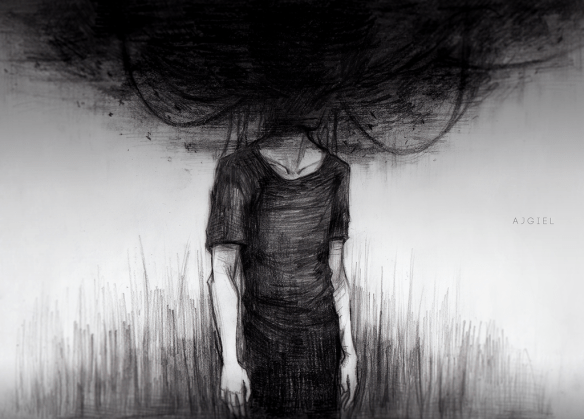
Depression

Today was not a good day.

It happens. It is just life… We all have bad days, right? Right. Only, depression leftovers make my bad days B.A.D.

It often doesn’t really show. I just won’t think about eating, and spend all day concentrating on not letting show what goes on in my brain. Doesn’t sound too bad? Of course not.

I am aware I am not the only one having those post-depression random bad days. But not many people know about them. My parents don’t, my friends don’t…. Heck, Chéri doesn’t know about them. Not because I want to lie to them, but because of two simple things:

1- I don’t want them to worry everytime I frown.

2- It is so dang difficult to explain.

I don’t know why “bad days” happen. I don’t know if they are triggered by specific factors. (if so, I can’t wait to find…

View original post 512 more words

Newest Partner: The Purple Almond

purplealmondlogo

So, I have my second Lucky Otters Haven partner:   The Purple Almond, a blog about healing illness through nutrition.    Purple Almond should interest anyone who’s interested in the different ways food can heal the body, and also just people who love healthy food, because Tamara’s blog also includes yummy recipes!   In addition, The Purple Almond includes articles about other types of spiritual nutrition:  music, meditation, and inspiration.

This is from Purple Almond’s About Page:

Welcome to my blog. I hope you’ll join me as I journey into the field of nutrition, more specifically using food to cure disease.

This blog was first opened the summer of 2015, and for the past year, I’ve been working on my Masters of Science in Holistic Nutrition degree program at Hawthorn University. I began my coursework there in September, 2015. Now, in November, 2016, I am much wiser and on the road to fulfilling my nutrition dreams.

This is something I’ve thought about for a long time. I read everything I can get my hands on and watch food documentaries whenever I can. It is my passion and I can’t believe I get to study it full time. Well, as the old saying goes, “Do something you love and you’ll never have to work a day in your life.” Many things fell into place at just the right time to make this possible, and I feel very fortunate.

I am of the firm belief that food can cure disease. I’m not talking just any old food, but good clean whole food from nature. I didn’t always feel this way however. One of my favorite things for lunch, as a child, was Kraft Macaroni and Cheese. I often snacked on sliced American cheese with french onion dip. So, what changed my mind and put me on the “food is a cure” path?

I’ll talk more about myself in another blog, but, suffice it to say, I was on the same path as most Americans, eating the Standard American Diet, gaining wait and slowly getting sick. I tried many diets and eating plans, to no avail. Then, 2 people close to me were sick, one with Grave’s disease and one with PCOD. I watched as both of them completely cured themselves by doing only one thing, changing their diet. I was amazed and intrigued. I began to read and watch everything, thus my journey into food began.

I realize that the name Purple Almond is a bit different, and you may wonder why I chose it. The symbolism of the 2 words together summed up what food means to me. Purple/violet, symbolizes, among other things, healing of mind, body and spirit, higher consciousness and awareness of self. Almonds and Almond trees are sometimes known as “the tree of life” and symbolize light and awakening. So, the name Purple Almond sums up my beliefs nicely, “Good, nutritious, whole food brings light and life to the body, awakening the inherent healing mechanisms within the body.”

So join me as I take you on a journey of mind, body and soul, while I show you how to heal your body from the inside out.

Please visit The Purple Almond and introduce yourself!   I’ll be adding her logo to my sidebar.

https://thepurplealmond.com

I am still taking partners.  If anyone is interested in featuring your blog here, please send me an email.


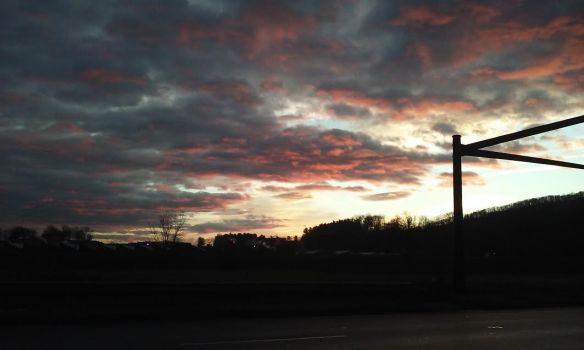
Sunrise: 1/12/17

Image

sunrise3

So I freaked out, unfollowed everybody, made my blog private, had a 102 fever, and thought I was dying…

Lynda Lee is alive and well and her memoir is almost ready to publish!

9 ways to tell if the victim blog you read is run by a narcissist.

hiding_mask

The Internet is a great thing for a lot of reasons, but for victims of narcissistic abuse, it’s probably the first time in our lives we ever had a voice, and would be listened to and believed.   There are hundreds and probably even thousands of blogs and websites for people who have been victims of narcissistic abuse, either by their families, or at the hands of an abusive spouse, boss, lover, or friend.

The Internet has given us a voice, so now we can not only read and comment on the stories of others who have suffered similar experiences, we can also start our own blogs where we can talk about our own abuse.   Before the Internet, who would listen to us, much less believe us?  More than likely, we’d be told, “oh, of course your mother/father loves you,” or “Oh, I’m sure she means well and doesn’t know how to express it,” or worse, “it’s all in your head,” or “you are too sensitive” or “you are too paranoid.  Or even, “you are crazy to think that.”

Before the Internet, if you actually went No Contact with an abusive person, especially if it was your own family,  most people would tell you you’d “regret it” because “your family is all you have.”   Religious people might have said to you that disconnecting from a parent or other close family member was a grave sin and broke the commandment that says, “honor thy mother and father.”  Well, my answer to that is this:  you are not honoring an abusive, narcissistic parent by enabling them or allowing them to continue to abuse and use you.  The kindest thing you can do for them is to stop enabling them, by going No Contact.  By doing so, you are removing yourself from the equation and making it impossible for them to target you anymore.   More than likely they will find a new person to target, or continue to talk trash about you behind your back, but you are making things harder for them. Think of it as “tough love.”  You can still love a narcissistic parent but refuse to allow them to victimize you anymore.

There are many great narcissistic abuse and ACON blogs, forums,  and discussion groups that have helped many people and for the most part they are a Godsend.   Without them, we’d all still be in the dark, thinking WE were the problem, and that if only we could please our abusers, everything would be fine.  We’d feel misunderstood and all alone. We would never have met each other or been able to tell our stories.

This blog started as an ACON blog, but because I’ve expanded into other topics and really didn’t have a lot more to say about my own abuse (because I got tired of dwelling in the past and prefer to look toward the future), I can’t really say this is specifically an ACON blog anymore, although I still include articles about narcissistic abuse from time to time and my old posts on it remain popular.

Unfortunately, there are more than a few blogs, forums, websites and Facebook groups meant for survivors of narcissistic abuse that are actually run by narcissists who are not aware they are narcissists and identify only as victims.   Un-self-aware narcissists are far more dangerous than those who have become self aware, because they refuse to–or can’t–see their own narcissism.   Instead they project it onto others, even where it doesn’t exist.

Please keep in mind, that there is a higher percentage (as much as 70%, according to some sources)  of people with Cluster B disorders like NPD or BPD among those who were raised by narcissistic parents.   Because there’s not a clear line between people who have been abused and those who are abusers (and in fact both may be present in the same person) it shouldn’t be very surprising that some victims are suffering from disorders a lot worse than just C-PTSD.

This is a problem because a person who is in an abusive relationship and considering going No Contact (or is newly No Contact) may think they’ve found a safe haven with empathetic fellow-sufferers who can be of  help to them, but they may well find themselves re-traumatized later on by the group, should they disagree with them in any way or say or do the “wrong” thing — and there isn’t much, if any, forgiveness from groups like these.  Once they devalue you, you are dead to them.     I was the target of such a group myself, and was so traumatized I almost took my blog down.

I’ve been in the narcissistic abuse community long enough now that I think I’ve got a pretty good handle on how to tell the safe ACON/narc-abuse blogs from the ones that are not so safe and actually could be dangerous.   So here is a list I devised of the ways you can tell if a narcissistic abuse blog is dangerous and should be avoided.   If any of the blogs or websites you read show these “red flags,” proceed at your own caution.   If you must read them, avoid commenting.

1.The site preaches hate and revenge.

If the site, blog or group you are involved in constantly bashes people with Cluster B disorders, calling them demons, monsters, incurable, having no souls, all going to Hell, or encourages its readers to “get back at” them or “out-narc” them, proceed very carefully.  While righteous anger is perfectly normal when you have been abused and can give you the motivation and courage to go No Contact, and even anger at narcissists in general is to be expected, if that is ALL the site seems to focus on, that’s a red flag.   Websites and blogs like these CAN be helpful when a person is going No Contact or you’re trying to leave an abuser, but once you are safely away from your abuser(s) and all that righteous rage is out of your system (for most people, it WILL burn itself out eventually), you should move onto sites that focus less on how horrible narcissists (or borderlines, or whatever) are, and more on how to heal yourself from C-PTSD and narcissistic abuse.   Also, it’s ALWAYS a bad idea to try to “get back at” or “out-narc” a narc.  It won’t solve anything, and you may find yourself more of a target than ever.   You’re not going to be any match for any malignant narcissist who’s on their game, and they usually are.

2. The owner(s) and followers of the site, group or blog seem stuck in a victim mentality.

Things just never seem to get any better for them.   There is no emotional growth to be seen when people are stuck in a victim mentality.  If you try to suggest they move on and work on themselves to feel happier or less like victims, they are very likely to attack YOU as being a narcissist who thinks you’re better than them.   This is an example of projection.  Sure, I totally get that all the positive thinking nazi’s out there can be irritating (and I HATE those toothpaste-smile cheerleaders who discourage you from being able to express your real feelings and tell you to smile when you don’t feel like smiling), but that doesn’t mean there’s something inherently wrong with being more positive or forward-thinking, or doing something to change your outlook on life to a happier one.  As victims, we were trained to expect the worst from people and probably have very little trust in others.

But our narcissists aren’t going to just magically appear on bended knee and tell us they’re sorry and un-do all the damage they did to us.  So you really only have two choices.   You can continue to wallow in misery and victimization until the day you die, or you can try to change things about yourself without expecting your abusers to make things up to you, because they won’t.  Changing yourself doesn’t mean you were at fault, but fair or not, it’s the only way to escape from the trap of being a lifelong victim.

3. They are never in therapy or getting treatment.

I’ve noticed how some people in these groups are never in therapy or practicing mindfulness skills, or doing anything that can make their lives easier or better.   I think that’s because they are really narcissists or borderlines who think of themselves as perfect and use their victim status as a kind of false self to get sympathy or attention, and woe be to those who ever suggest they need to change anything about themselves, or that perhaps a therapist could help them.   Are they afraid if they go to a therapist, they might find out something they don’t want to know?  Few malignant narcissists ever think they are the ones with a problem; it’s always everyone else.

4. The group bans, blocks, or insults people who are self aware borderlines or narcissists — and those who challenge the status quo. 

It doesn’t matter if they are in treatment or say they want to change.  They are automatically just lying or trying to get attention, just because they say they have an NPD or BPD diagnosis (or even just a self-diagnosis).  Because of course, people with these disorders donothing but lie and misrepresent themselves.   They CAN’T be self-aware or want to heal!   But I know otherwise.   I spent time on a forum with self aware NPDs and borderlines who were in therapy and actively trying to make changes and practice mindfulness and treat others better.  Why on earth would they want to do that, if it weren’t true?  What would motivate them to lie about it?

Some groups also ban, block or insult other victims who show any empathy for people who have these disorders or who question the bashing mentality.    One of the things I’ve learned on my own healing journey is that narcissistic abuse and narcissism is not a black and white issue.   Most people with cluster B disorders were also victims of abuse–and most abuse victims have narcissistic traits or “fleas” to one degree or another.

I’ve been called a narc-sympathizer, but I no longer take that as an insult.   Some of the victim sites don’t seem to recognize that narcissism is on a spectrum, and some narcissists are a lot worse than others.   C-PTSD is usually comorbid with these disorders too.   While yes, it’s true that there are malignant narcissists who “like” their disorder and would rather undergo root canal than ever darken a therapist’s office door, there are others, lower on the spectrum, who dislike the way they behave and want to learn how to be more authentic and develop empathy and real connections with others.    Of course, the narc abuse sites probably aren’t the best places for a Cluster B person to land, but I’m appalled at the way some of them get treated.

The same goes for those who show empathy for people with these disorders.   If you don’t drink the “all narcs are incurable and evil” Koolaid and dare to question the narc-hating status quo, prepare to be mobbed, banned, smeared, or called a narcissist or worse yourself.   The irony here is that your show of empathy probably means you are lower on the narcissism spectrum than they are.    Also, just because you hate narcissists doesn’t mean you can’t be one.

5. The site or group has a tight clique of hangers on and there is never any disagreement or healthy debate among them.

All they do is pat each other on the back and agree about how terrible it all was and how evil the narcs all were.   They never challenge each other to THINK  or to be open to out of the box viewpoints.   There also never seem to be any helpful suggestions intended to help each other heal.  Years later, they are still bemoaning how badly they got treated even years after going No Contact, but are doing absolutely nothing to improve things for themselves.  They are not very welcoming of newcomers, or of anyone who challenges them that they may be the cause of their own problems now that all the narcissists have been booted out of their lives.

6. They seem to see narcissism where it doesn’t exist.

Someone offers a helpful suggestion or minor criticism, and they call that person a troll or a narc.    They talk about isolating themselves from everyone, because “everyone is a narc” or “the world is full of narcs.”  I understand the lack of trust, but you can’t heal when you isolate yourself from the world and continue to insist it’s an evil, dangerous place full of people who will only abuse you.   You have to learn self empathy and from there, you can slowly learn to trust others and realize there really are good people in the world.   It’s sad they will probably never reach that point.

7. They are combative and aggressive toward those who disagree with them.

They may even go on a full-on smear campaign: gaslighting, telling vicious lies about you,  projecting things onto you, triangulating against you (complete with flying monkeys), sending nasty “anonymous” emails,and even threatening lawsuits (narcissists are notorious for being litigious), all while continuing to insist that they are just harmless “empaths” who actually show little to no empathy, even among themselves.  This happened to me, and it’s happened to others, so this is no exaggeration.

8. If the owner of the group is religious, they are dogmatic and intolerant of other religious points of view or those who disagree with their religious beliefs.

Understandably, many victims of narcissistic abuse turn to God or Christianity since the people in their lives have proven so untrustworthy and unloving.  This is not only understandable, it’s also desirable.   Having faith can keep us healthy and sane, and give us hope when all hope seems lost.   But beware of site owners who use their religion in abusive or narcissistic ways — to shame, belittle, or make themselves feel superior to others.  Use great caution around anyone who tells you your religion (or lack of religion) is wrong or evil, or that you are going to Hell for your beliefs.  This is religious abuse, and narcissists are notorious for it.

9.  You just feel uncomfortable or ill at ease.   

Listen to your intuition.  Even if you haven’t been attacked or targeted, if you just feel ill at ease of uncomfortable on that blog, forum or group, or hesitate to share your honest feelings and opinions there, chances are there’s a good reason you feel that way.  Don’t ignore your feelings — you spent too much time already dismissing your feelings as “crazy” or “wrong” due to the abuse you suffered, but your feelings are probably trying to tell you something important and you should listen.

intuition

The thing that makes me so sad is that failing to move on from the righteous anger we all feel at first, can turn a person into a narcissist, even if they weren’t one to begin with.    With nowhere left for all that rage to go, a person can become bitter and paranoid.  They begin to see narcissism in normal human behavior.   This is why moving on from the anger stage is so important (and for most people, it does burn itself out once the danger has passed).

Moving on doesn’t mean you have to tolerate narcissistic abuse or resume contact with toxic  people you have gone No Contact with. It doesn’t even necessarily mean you have to forgive your narcissists for what they did to you (and you surely don’t want to forget!)   But it does mean that at some point, you should be able to let go of the hatred and even begin to see abusive types as broken people who got that way because they were themselves abused (I don’t believe anyone consciously chooses to be a narcissist, in spite of what some people say).   Once you can recognize them as broken people instead of demons from the bowels of hell,  you can then begin to look inside yourself and see what you can do to change and make yourself less attractive to narcissists.   (Thinking this way also makes them seem a lot less dangerous, which in turn will make you feel like less of a victim).   Maybe you are codependent and unconsciously do things to attract that sort of person into your life.  That’s not victim-blaming — it’s just being willing to take responsibility for yourself and having enough insight to see the role you might have played.  None of us are perfect.   It wasn’t until I was able to stop thinking in an “us versus them” way and stop seeing myself as a “poor helpless victim” that I was able to see how my own narcissism and codependency negatively affected my life and my relationships.   Without this knowledge, I would never be able to heal.

All that being said, I truly don’t think these group and forum owners and bloggers are aware that their behavior is very Cluster B, that they may be on the N spectrum themselves, or even–God forbid!–have NPD.   I also don’t think they are being dishonest about the abuse they suffered.  They honestly believe they are only victims with PTSD or C-PTSD.  But their thinking about the issue of narcissism and narcissistic abuse is too black and white for them to be able to see their own narcissism, for to do so in their current state, would mean they would have to admit they were one of “those bad people” and the cognitive dissonance arising from that would be far too great for them to handle.   So they must continue to split: projecting onto and smearing those who refuse to drink their poison Kool-aid.

Weekend Melody: First (Cold War Kids)

I know it’s only Sunday, but this song was on my mind and I didn’t want to forget, so I’m posting this early.  I thought I’d forget about it by Monday, so I had to call this a “weekend melody” instead.

“First” by Cold War Kids is one of the rare newer songs that will ever appear in this series.  Unlike most of the more recent dance and pop music that has dominated the airwaves since 2009 – 2011 or so, “First” both rocks and also has emotional depth.   I do like much of the newer EDM and pop, but as a teenager of the ’70s and a twentysomething of the ’80s,  my heart will always remain that of a rock fan, and the vast majority of post-2010 music doesn’t, well, rock.  This one does — and at the same time seems current and relevant.

Not only is this an outstanding song, the video for it is phenomenal.   I love the non-linear structure of the story.   It seems to be about someone with a drinking or drug problem that gets in the way of his relationships, but without the video, I think it the song could also be describing a relationship with someone suffering from Borderline Personality Disorder, with or without the chemical substances.

Meet and Greet: 1/7/17

I’m still looking for partnership members!

bemypartner

A few weeks ago, I decided to offer other bloggers an opportunity to become partners with Lucky Otters Haven.  This would mean I’d help you promote your blog, share your posts on social media, reblog selected posts, and display your logo with a link to my blog in my sidebar.  So far Cyranny’s Cove is the only blogger who took me up on this opportunity.  So I’d like to extend the offer again.   You can read my original post (linked below) to find out more.  My email is under Contact Me if anyone is interested!   Or if you have Twitter, you can tweet me (my Twitter feed is in the sidebar).

Would you like to become a Lucky Otter Partner?

Don’t miss this opportunity!

Thanks to Danny from Dream Big for inspiring me with this idea.

It helps me, it helps you, and it helps all bloggers! 

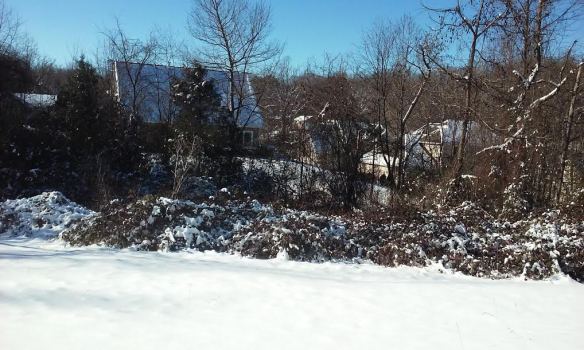
The first (and hopefully last) snow of the season.

snow_10717_1

It started to snow yesterday afternoon around 2:30 PM.   So it’s a good thing I decided to play hooky from work yesterday.   I can’t drive in the white stuff.  Obviously, I’m not a big fan or either winter or snow. I’m definitely a spring and summer person.

But hey, snow is pretty.  I took the first picture (above) around 7 PM last night, and the other two are from about 2 PM today.  Hopefully it’s all gone by Monday.   Some of it melted during the day.

snow_10717_2

snow_10717_3