Ruins.

urban_lot_southbronx

I’ve always been drawn to ruins.  Something about the dark, destroyed, hopeless and desolate fascinates as much as it frightens me.

I remember the burned out apartment buildings in the South Bronx in the 1970s and 1980s.  Blocks upon blocks of scorched skeletons of tall project buildings, emptied of humanity, glaring down on huge vacant lots filled with the corpses of old rusted cars, broken glass, and mountains of trash.  Sometimes these lots were cordoned off behind chain link fencing, which was usually breached in some way, twisted or collapsed in places.  What was the point of cordoning off so much nothing?

As tempting as it was, I never dared take the subway up to the Bronx to get a closer view, but whenever I passed through the South Bronx as a passenger in someone else’s car, I’d crane my neck as far as it would go to take in as much of the view as I could, simultaneously praying the car didn’t break down.

To get a good idea of what this landscape looked like, there’s a 1981 horror movie called Wolfen, which takes place in the South Bronx of the early 1980s.  There is a certain bleak beauty in all the depressing desolation, and Wolfen captured it as perfectly as anyone ever could.   Upper Manhattan and the South Bronx in the 1970s and 1980s was a howling badland: a wilderness every bit as isolated and full of danger as an desert or jungle where no human being has ever set foot.

Here are two stills from Wolfen.

wolfenpic

wolfen-slum2

Compare to a photo of an abandoned housing project in he real life Bronx.   (This photo is from the 1970s or 1980s).

southbronx

I got a kick out of the “Broken Promises” sign on the right.   I’m not sure if this was added to the photo later or not, but it’s still a powerful picture with or without it.

Here’s a video someone made.  The editing isn’t the greatest, but I found it pretty intriguing.


The South Bronx no longer looks like this.  It’s not the greatest New York City neighborhood, and probably never will be.   But it’s certainly not the burned out slum it was back in the 1970s and 1980s.   (It’s also surprisingly expensive.  I couldn’t afford it.)

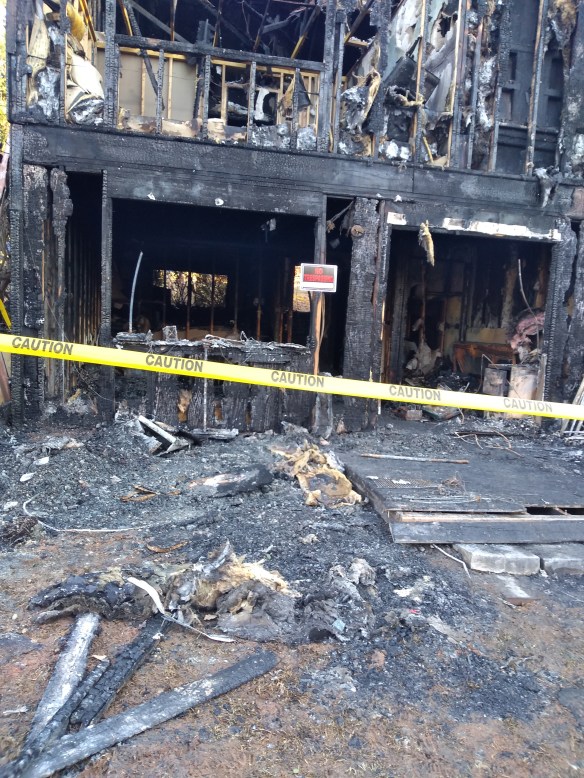
Ruins are everywhere.  Today, Detroit is probably the American city best known for its ruins.   Now I live next to ruins.  Last Sunday there was a terrible fire in a small apartment building next door.  Two of the apartments were completely destroyed.  The other two apartments are in fair condition, and their tenants have moved back in (I’m not sure for how long, since the building will eventually have to be torn down).

I finally got a chance to go around the back of the building and get a good view of the destruction.   You can actually see all the way through the building to the front.   Before I took the two pictures below, I just stood there and stared at the destruction for awhile. As with all ruins,  I was both horrified and fascinated.

fireaftermath1

fireaftermath2

Sometimes I wonder if my fascination with ruins has something to do with my rather dark inner landscape.    I’ve found it to be the case that people who like ruins and scenes of urban blight or bleak landscapes tend toward pessimism and depression.   It’s like we can relate to such scenes.   They seem familiar to us.

*****

Further reading:

Urban Lots and Blighted Souls 

Institutionalized soul murder.

handmaids-tale

“If you’ve been following me for some time now, you’ve likely noticed the absence of optimism & hope. While my wife is at work, and my son is in school, I just cry. I’m trying to hide it from them, but they know. I just want to leave this country before I’m destroyed.”  — Twitter user

If you think statements like this are unusual, I can assure you they are not.

Several days ago, Jussie Smollet, “Empire” actor, singer, director, and photographer, was brutally attacked by a couple of Trump supporters wearing MAGA hats (the new KKK hood).  The assailants tied a rope around the man’s neck, yelled racial and homophobic slurs at him, and poured bleach on him.    As the assailants left, they yelled “It’s MAGA country now.”   Smollet’s injuries were severe enough to require hospitalization.  This was a hate crime and most likely an attempted lynching.   Trump is doing everything he can to turn back the clock to the Jim Crow days, and we are almost there.

Indeed, Trump emboldens such violent attacks because of his hateful, racist, misogynistic, and neofascist rhetoric, especially at his rallies.   His hostile and bullying bluster contains obvious “dogwhistles” to his supporters, letting them know that attacking or bullying people who are different than they are is just fine in Trump’s America.

Not long before the Smollet attack, four good samaritans left food and water near the Mexican border for tired, hungry migrants (who are almost all women and children, not the caravans of violent MS-13 gang members and drug dealers Trump keeps screaming about).   Police arrested the kindhearted samaritans, and charged all four of them with misdemeanors!   Why misdemeanors?  For showing empathy?  That’s insane.

Meanwhile, homegrown terrorists, neo-Nazis, and high school racists are invited to the White House, are interviewed on TV, and sometimes treated like heroes–or at least their actions are dismissed as “boys will be boys” or “well, some of them are very fine people.”

A Trump supporting politician named Greg Gianforte body slammed a reporter last year for asking him questions.  He  was held up as a hero for attacking a journalist, and even won his state election, while the injured reporter was vilified as an “enemy of the people.”   (Gianforte later apologized).

Dr. Christine Blasey Ford, who very believably and painfully described the way she had been  sexually assaulted by Brett Kavanaugh, was told she was lying by Fox News pundits and Trump’s sycophants.   She was then mocked cruelly by Trump himself at one of his rallies (after Ford said the most painful part of the assault had been the way Kavanaugh and his friends mocked her — I’m sure this was not a coincidence).  Ford’s testimony was dismissed as a bunch of lies, while Kavanaugh, clearly temperamentally unsuited to serve on the Supreme Court, was painted by Trump and the GOP as some sort of misunderstood victim who was being unfairly attacked by lying, spiteful women who just wanted their 15 minutes of fame.   He now sits on the Supreme Court.

Central American children and their parents escaping certain death in their home countries, instead of being instructed in how to apply for asylum (these families are showing up legally at ports of entry) are being caged and forcibly separated from each other by ICE and border patrol agents, then tossed into concentration camps with only a foil blanket for warmth and inadequate food and medical care.   Two children have died in these camps. Unbelievably,  some evangelical Republicans are actually calling these cruel actions “biblical.”  Meanwhile, Democrats and others wanting to see the children reunited with their families and treated with kindness and empathy are dismissed as misguided or even evil.  We are gaslighted and told we just want “open borders,” but that too is a lie.

Undocumented immigrant families are released from detention at a bus depot in McAllen

Photo by Loren Elliott/Reuters

In “The Handmaid’s Tale,”  there is a scene where one of the girls is severely punished and returns with her feet bleeding and barely able to walk.  The other girls feel empathy for her, but don’t dare show it, because if they do, they too will be punished.   The same thing was also practiced in the migrant camps at the border, where siblings and other children were ordered not to hold or comfort each other, even after having been separated from their parents.   I don’t know whether or not they were punished if they broke the rules, but the fact such a rule exists is concerning.  It’s institutionalized cruelty.

There’s a reason for this besides just being cruel.  It’s an effective way populations can be controlled.  If you don’t allow people to comfort or show empathy to each other, they won’t rise up or try to overthrow their oppressors.   Hitler and other dictators were  known for doing this.  It’s also a way to fast track the destruction of human beings.   Don’t allow them any hope or comfort.   It’s an effective form of emotional torture.
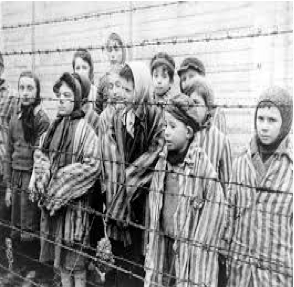
concentrationcampww2

Meanwhile, cruelty is rewarded and applauded.  At the very least, it seems to be tolerated a lot more than it used to be.

Our values have been turned inside and twisted beyond recognition by a group of men (and a few women) whose only goal is absolute power.  Evil is now good, and good is evil.  Lies are the truth, and the truth is fake news.   Kindness and empathy are now bad and diabolical, cruelty and violence are godly and good.  Truthtellers are silenced, and liars are given a voice.

War is peace.  Freedom is slavery.  Ignorance is strength.  — George Orwell (1984)

The people having the hardest time under the Trump regime aren’t necessarily the poor (as difficult or even impossible as their lives are), but people with high sensitivity, high empathy, high creativity, and people who are critical, independent thinkers.    This regime is threatened by all those things, just as narcissistic parents are threatened and scapegoat the most sensitive, empathetic child or the child who speaks the truth and exposes the family’s dark secrets.

I have heard many people say that since Trump became president,  they feel constantly on edge, suicidal, depressed, cry every day,  have lost interest in things that once interested them, feel like they can no longer cope, want to leave the country, are constantly afraid, feel constantly angry, isolate from others, feel sick all the time, or feel dead and numb inside.  These are all indications of PTSD and C-PTSD.  Trump and his sociopathic, cruel regime has triggered or retriggered these disorders in many (if not most) Americans, but it’s the sensitive, empathic, and creative, artistic types of people who are suffering the most, and are least able to thrive under an oppressive, authoritarian regime.   At the same time, these are the same people who are most likely to be the truthtellers  and whistleblowers we need so badly right now.

What the Trump GOP is doing is institutionalized soul murder.

Enough.
Narcissist parents demonize their own children.

Originally posted on March 17, 2015

narc_mother_littlegirl

Most parents like to tell cute and funny stories about when their children were young, or brag about their school accomplishments or tell sweet stories that show their child in a flattering or loving light. They are also proud of their children when they’re kind and nice to others. That’s the way things should be.

Not for narcissistic parents though.

Narcissists who “erase” memories of their children.
Some narcissistic parents don’t like to talk about their children at all. It’s as if they erase any memories of their offspring’s childhoods and don’t want to be reminded of it. It’s weird. My malignant cerebral narcissist sperm donor used to get bored and annoyed if I talked about the children when they were young. Inexplicably, he couldn’t stand it and became annoyed when I wanted to put some of their baby and early school pictures around the house. (He didn’t like that I displayed our wedding photos either).

He shows little to no interest in his son’s accomplishments (2019 edit: this has changed now that my son has landed a professional video editing job and can be considered “successful”) but just a few years ago, when my son won a few dance competitions, my ex’s eyes just glazed over.

I was proud of my son but his father seemed not to care. I thought maybe it was because he thought dancing was “too gay” but he acts just as disinterested about almost all my son’s other accomplishments too. It’s almost as if he wants to erase him from his mind.

And when they “brag” about you, watch out.

too_sensitive

My somatic narcissist mother loves to talk about me as a child. But her “bragging” is never about the things a normal parents would brag to their friends and relatives about. It’s never about how smart I was or what a good student I was, or what a good painter or writer I was, or how kind and generous or big-hearted or animal loving I was. Instead, she tells stories that illustrate the many ways I was “too sensitive” or how much I cried as a little girl. When she talks about me, she always brings up the most embarrassing stories, like how afraid I was of thunderstorms and how I used to run into the closet in terror (I like thunderstorms now) or how “hysterical” (she loves to use that word about me as a child) I used to get when I was frustrated or scared of something (I was afraid of many things but loved a lot of things too).

Whenever she talked about me to people, she made me sound like there was something wrong with me (I was a sensitive child with attachment issues–but surely there were good things she could have chosen to talk about instead of what a pitiful, awkward, oversensitive crybaby I was). She used to tell everyone the embarrassing story of my first period and how happy I was when I shouted the big news from the bathroom, because I had always been “so hysterical” and panic stricken because I was slower to hit puberty than most other girls my age. In actuality, I was 13 and really not far behind at all–and I never got “hysterical” or “panic stricken” the way she insisted I did.

I no longer hear these stories because I no longer have much contact with her, but I’m sure she still tells her friends and extended family (who she has isolated from me and turned some of them into flying monkeys against me) and they still all have a good laugh about “poor, over-sensitive, ‘hysterical’ little Lauren.” I know they also laugh about what a “loser” I am today, because I’m not wealthy like most of the family is and don’t have a great number of impressive professional accomplishments. Of course, that’s all due to my “poor choices” and not to the fact my self esteem was all but obliterated during childhood and adolescence, not only by my family but also by the bullies I often had to deal with at school.

One narcissistic abuse blogger (who I won’t identify for personal reasons) wrote about the way her psychopathic MN mother (who was actually MUCH worse than mine and downright cruel) and the rest of the family who served as her flying monkeys, gave her a poem for her college graduation. Instead of it being a sincere congratulations or about how loved she was and how proud of her they were, it was a “humorous” ode to how afraid of crickets she had been as a little girl. Notwithstanding the fact this poem had absolutely nothing to do with her daughter’s college graduation, its real intention was to embarrass her and make her feel self conscious. It was a poem that could have easily ruined an otherwise joyous occasion.

The navy blue dress.

fat_lady
What my mother saw whenever she looked at me. (Just for the record, I think this big lady is stunning.)

My mother always loved to point out my faults–even imaginary ones she had projected onto me–in public. I’ll never forget the birthday party I had one year as a teenager. My mother had invited several of her friends to the apartment and some of my friends were there too. When it came time to open the gifts, she made sure hers was the first one I opened.

In the fancily wrapped box was a rather conservative, navy blue sleeveless dress. It was a nice dress, had I been about 40. She made me go try it on and then have me come out into the living room where everyone was sitting to model it. I obeyed because what else could I do. I was always so scared of her.

Mind you, I was not overweight. At 5’4″, 120-125 lbs was about the right weight for my frame. But my backside was what you might call well rounded (not to Kim Kardashian levels, but still round) and my mother was constantly calling attention to it. It made me very self conscious and due to this (as well as my desire to rebel against the way she’d dressed me like a doll when I was younger), I had taken to wearing baggy, almost masculine clothes that hid my curves. She was convinced I was “fat” and was always threatening to send me away to weight loss camp. As a somatic narcissist, she was obsessed with her own weight, physical appearance, and health (especially as it related to her appearance). She seemed to judge other people based on how they looked instead of their personality or inner qualities. Almost every day she called attention to how much weight I was putting on, or reminded me not to have seconds because of my “weight issues.” I become incredibly self conscious about my body as a result. It’s a miracle I didn’t develop an eating disorder.

weight-loss

Getting back to the birthday party and my “modeling session” in front of all the guests, after I modeled it, she announced that the dress’s dark color and style was flattering for someone with “Lauren’s little weight problem.”

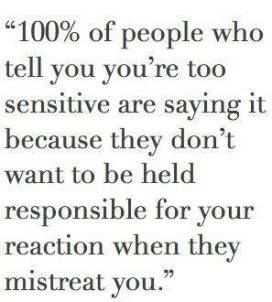
You could have heard a pin drop in that room. I think everyone was shocked at her callous and embarrassing remarks. As for myself, I was so mortified I ran out of the room in tears, which of course was a huge mistake because that gave my mother ammunition to remind everyone once again about how sensitive I was (and she didn’t mean this in a complimentary way). She was always making jokes at my expense and then when I didn’t laugh or if I looked hurt, it was always “Lauren is just being over-sensitive again” or “Lauren has no sense of humor.” I’ve heard this is quite a common accusation narcissistic parents use against the child they have chosen as their scapegoat. They hate sensitivity in others and love to turn it into a bad thing because it takes the responsibility for their cruel behavior off of them and puts the blame onto the child.

This is the sort of “flattery” a scapegoated child can get from a parent who is a malignant narcissist. There are times I feel guilty that I don’t feel more loving toward my mother than I do, but when I think of all the years she demeaned me and put me down, always going out of her way to make me feel small and worthless, I don’t feel so guilty about my ambivalent feelings toward her. (2019 edit: as she’s grown quite old and several years have passed, I’ve developed more affection for her, and there is love there, but our relationship –if you can call it that–is still extremely distant and guarded).

I don’t hate my mother. I pity her for never having known who she really was or getting to know her true self. She’s an intelligent woman but you would never know it because she never was interested in abstract ideas or the life of the mind. Her eyes glaze over if you try to engage her in any “deep” topics. I recall her reading mass market paperback novels (“beach throwaways”) and fashion or home decorating magazines, never anything scholarly.

She has now lost most of her beauty due to age (and too many facelifts) and she is all too aware of this. The loss of physical beauty–the one thing that gave her a kind of identity–has turned her bitter in her old age.

The fire next door.

fire1

About six AM yesterday morning a loud noise woke me up.   At first I thought it was thunder, and then I pulled back the curtains and looked out the window.  It was still dark outside, but the small four unit apartment building next door was in flames.

I made the call to the fire department, and apparently no one else had bothered to, because later on in the news story,  it said”the call came when the fire was already in an advanced stage.”

We were lucky.   There is a large tree in our yard that almost touches the roof of the apartment buildings, and there was shrapnel falling off the flaming roof into the bushes below and even the grass.   The fact there’s been so much rain was probably the reason the fire didn’t really spread once it touched the grass.  But if that tree had caught flame from the roof … well, let’s just say I may not have a house right now.   Thank goodness we woke up when we did.

Tragically, one elderly woman in the apartment building didn’t make it out.    Another person was injured and is in the hospital in serious condition.   I hope no pets were trapped inside.

The police are suspecting arson.  There has been some suspicious activity in that building lately, and they are investigating.    I took two photos — the one you see heading this post was taken around 6:20, before the fire department arrived.   It was taken just as the fire was spreading to the roof.  The second (below) was taken several hours later after it was put out.  The building continued to smolder for the rest of the day.   All four units were completely hollowed out.

fire2

Here is the news story that appeared yesterday evening.

https://www.foxcarolina.com/investigations/asheville-fire-investigation-underway-after-pritchard-road-apartment-fire-leaves/article_65f8f3b8-2247-11e9-86d5-a7116fc87039.html


The writing process.

Yup, this pretty much covers it.

(source unknown)

thewritingprocess

Should I add cartoons to my posts?

Throughout history, people have sometimes gotten their best ideas from dreams.    For me, my dreams were never transferable to the real world, but I just woke up from one that could be.

Back in my early 20s, I drew cartoon panels of a young woman who was a kind of depiction of myself.   I put her into exaggerated real life situations, sort of humorous “graphic novels.”   I gave the main character my initials at the time “S.K.” a/k/a “The Loser.”  (I had such great self esteem, didn’t I?)  A couple of years ago I dug the cartoons up and  actually thought they were quite good, if a little dated (they were drawn in 1981).

Here are the links to the two posts that show both “graphic novels.”   There are only two of them.  For some reason, this was a hobby I never pursued but perhaps I should have.

The individual pictures can be clicked on to make them larger so you can read them.

Adventures of S.K. “The Loser”: A Cartoon Diary of Myself at Age 22 (1 of 2)

Adventures of S.K. “The Loser”: A Cartoon Diary of Myself at Age 22 (2 of 2)

On occasion, even on this blog, when I couldn’t find an appropriate image, I have made my own drawings.   In fact, I did this a few blog posts ago on a post called Big Changes.   I didn’t work too hard on that cartoon, and I’m certainly no Charles M. Schultz, but I think it still works well on the post.

I’ve always been in awe of certain cartoonists.  Schultz is one.  I’ve been a Peanuts fan since childhood (I was shocked when I learned that Schultz never really intended his cartoons to be for children, and the kids seem unusually “adult” in their interactions, thinking, and reactions to things).

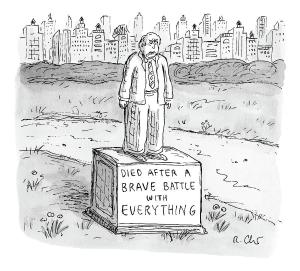
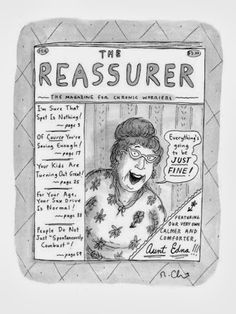
Back in the late 1980s and 1990s, I became a huge Roz Chast fan.   I bought all her books and scoured copies of The New Yorker in waiting rooms to find her cartoons.  They were seemingly deliberately badly drawn, which made them funnier.   I loved their randomness and sometimes straight up absurdity,  but they always seemed to home in on some great truth about life in a hilarious or absurd way.    I read an article about Chast and found out she was close to my age (just a few years older), but in many ways her life seemed to parallel mine.  I imagined that Chast was me without all the baggage and low self esteem that kept me from ever really pursuing any of my dreams — or even knowing what those dreams were.

A couple of  one-panel Roz Chast cartoons:

a-statue-of-a-man-reading-roz-chast thereassurer

I have been losing views, and maybe adding more of my own line drawings and cartoons might bring new life to this blog.  What do you think?

6 ways to turn things that annoy you into hilarious blog posts.

luckyotter's avatarLucky Otters Haven

microwave_dinnerThis ever happen to you? Yep, it’s beyond annoying. I bet you could write something funny about it.
Let’s face it. Annoying things are funny.   If you can look at the humorous side of the things that drive you crazy,  two things happen:  (1)  it no longer seems as annoying; and (2) you can write a great post that makes your readers laugh.   Some of my most popular posts–such as “12 Reasons Why I Don’t Like Autumn“– have been biting jabs at things I don’t like.

Here are 6 ways you can turn something that makes you want to stick white-hot steel pins in your eyes into something that makes your audience (and you) laugh.

1. First, try to find the funny side of whatever it is that annoys you.

Come on, you don’t have to dig that deep.  Almost everything has a funny side to…

View original post 796 more words

Is profanity in blog rants okay?

Profanity….yes or no?

luckyotter's avatarLucky Otters Haven

profanity

My friend Gale Molinari at Galesmind.com posted this meme yesterday.

In general, I agree with the above sentiment. We all know people who cuss constantly and after awhile it can become annoying and offensive. People who pepper every sentence with the 7 verboten words not approved by the FCC sound, well, stupid, crude and boring.

However, I also think an occasional, well placed epithet can add impact and emotional urgency under certain circumstances. We’re all grownups here, and it’s not as if we haven’t all heard these words and know what they mean. They have stuck around the English language for so long for a good reason, and while their original references to various private parts, bodily functions or female dogs in heat have been diluted by their myriad other uses in recent times, if they’re not overused, they retain their power to drive your point home.

I don’t think…

View original post 421 more words

The Year of Fascism: Ten Lessons We Should Learn from 2018

fascistamerica

I just finished an article that is both profoundly depressing and profoundly eye opening.    I won’t summarize it here.  Just read it.   I think the writer (Umar Haque) nailed what happened to us in a way no one else has.

Fascism came to America in 2018.  And most of us still won’t admit it.  We still think, “it can’t happen here.”  But it already has.   Until we admit we have become a fascist nation, things will continue to get even worse.

The cure for fascism is almost ridiculously simple: restore the middle class.  There’s a simple way to do this.  But will America ever admit it failed its middle class and humble itself enough to do what needs to be done to restore the middle class?  I wonder.

The Year of Fascism; 10 Lessons We Should Learn From 2018 

My views are way down and I’m not sure why.

My views are about a third of what they used to be, if that.    This has been going on for awhile now, and it isn’t getting better, no matter what I do.

I know I don’t write new posts every day like I used to, and that probably is a factor, but it still seems odd.   Sharing to Pinterest does help, but nowhere near enough.  Search engine views in general are down.

I wonder if the Internet is being restricted in places where it wasn’t before, or if the time of year has something to do with it.

Or maybe not focusing exclusively on narcissism anymore has made my blog less popular.

Are other bloggers also experiencing this?

Does anyone know what’s going on?  Or is my blog just getting boring?