34 rules for kick-ass writing.

karate

I didn’t make these rules; they come from this post. But they got a laugh from me and I hope you enjoy them too.

34 Rules For Kick ass Writing

1. Verbs HAS to agree with their subjects.
2. Prepositions are not words to end sentences with.
3. And don’t start a sentence with a conjunction.
4. It is wrong to ever split an infinitive.
5. Avoid cliches like the plague. (They’re old hat.)
6. Also, always avoid annoying alliteration.
7. Be more or less specific.
8. Parenthetical remarks (however relevant) are (usually)
unnecessary.
9. Also too, never, ever use repetitive redundancies.
10. No sentence fragments.
11. Contractions aren’t necessary and shouldn’t be used unless you don’t want to seem too formal.
12. Foreign words and phrases are not always apropos.
13. Do not use more words, phrases, sentences, or other linguistic elements than you, yourself, actually really and definitely need to use or employ when expressing yourself or otherwise giving voice to what you may or may not be thinking when you are trying to say how many words you should use or not use when using words.
14. One should NEVER generalize.
15. Comparisons are as bad as cliches.
16. Don’t use no double negatives.
17. Eschew ampersands & abbreviations, i.e. etc.
18. One-word sentences? Eliminate.
19. Analogies in writing are like feathers on a snake.
20. The passive voice is to be ignored.
21. Eliminate commas, that are, not necessary. Parenthetical words however should be enclosed in commas.
22. Never use a big word when a diminutive one would suffice.
23. Kill excessive exclamation points!!!
24. Use words correctly, irregardless of how others elude to them.
25. Understatement is always the absolute best way to put forth earth shaking ideas.
26. Use the apostrophe in it’s proper place and omit it when its not needed.
27. Eliminate distracting quotations. As Ralph Waldo Emerson is said to have once remarked, “I hate quotations. Tell me what you know.”
28. If you’ve heard it once, you’ve heard it a thousand times: Resist hyperbole; not one writer in a million can use it correctly.
29. Puns are for children, not groan readers.
30. Go around the barn at high noon to avoid colloquialisms.
31. Even IF a mixed metaphor sings, it should be derailed.
32. Who needs rhetorical questions?
33. Exaggeration is a billion times worse than understatement.
And finally…
34. Proofread carefully to see if you any words out.

20 ways to lose followers.

Tired woman are sleeping and holding cup. Laptop is situated on the table.

As a blogger, I admit I’m guilty of doing some of these things myself.  So I’m writing this  post as a reminder to myself to stop doing these things, and hope other bloggers can take away something from this list too.

1. Don’t allow comments.

Some blogs, especially those dealing with mental illness or abuse, don’t allow comments because negative comments can be very triggering to people struggling with these things, and you are going to get negative comments.   It can’t be avoided.  But as a general rule, it’s good to allow comments because it makes your blog more interactive.  Real conversations get started that way and build a feeling of community, which can make your followers stick around and your blog more engaging.

2. Be a comment nazi. 

Some bloggers don’t want anyone to disagree with them and will not approve or delete comments that question the blogger’s point of view.   While it’s certainly fine to block or delete abusive comments, only allowing comments that agree with your point of view doesn’t allow for healthy debate, which always make a conversation more interesting. It also makes you look like an intolerant, narcissistic jerk.

3.  Be too lenient with comments.

If you allow abusive comments on your blog,  you run the risk that people might be run off by the trollish remarks or fear speaking up themselves because they might be attacked.

4.  Don’t tolerate any disagreement. 

Related to #2, some bloggers like to attack anyone who disagrees with them.  Debate is fine, but engaging in personal attacks and the Internet version of a fistfight on a regular basis will just run off your regular followers.   It’s always best to not feed the trolls.

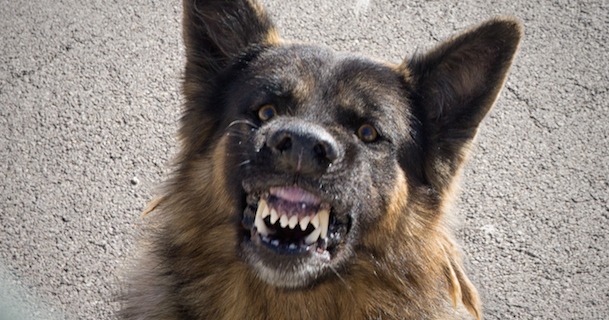
Close-Up Of Stray Dog Snarling

5. Fail to acknowledge comments.

I see this a lot.   Sometimes you won’t know what to say to a comment or have nothing new to add to their point, and that’s fine.   If you reply to only 50% of your comments, that’s good.  Obviously, the higher the percentage the better.     Use the “Like” button on comments you don’t reply to, so the commenter knows you at least saw it.  Not replying or using the Like button makes your readers feel like you didn’t read their comment or don’t care.

6. Write boring content.

Some blogs document the blogger’s day, and while the activities described may be mundane, if presented in an interesting or humorous way, or if they use pictures or graphics, such otherwise dull posts can actually be engaging.   But if all you do is write a long wall of text about your dog throwing up on the rug and what cereal you ate for breakfast and your writing style or presentation isn’t creative or engaging, you will just put your readers to sleep and they’ll go elsewhere.

7. Don’t check your spelling, grammar, punctuation, etc. 

No one wants to try to pick through a badly written, misspelled post full of run on sentences, horrible grammar, and wonky punctuation. Spellcheck is your friend, and if you can’t put a proper English sentence together, then maybe you shouldn’t be blogging.   Publishing a post full of errors and typos is also is disrespectful to your readers.

8. Be dishonest.

Those of us who write creatively can and do embellish a few details to make our posts come alive but outright lying can never be disguised.  A post that’s dishonest comes off as insincere and your readers will be able to tell.  If you want to write fiction, then write fiction, but call it fiction  and  don’t disguise it as the truth when it’s not.

lying

9. Don’t break up your text.

I’ve ranted about walls of words many times before so I won’t belabor this again.  It’s a pet peeve of mine.   People don’t like reading walls of text.  It hurts their eyes and gives them a migraine.   Use paragraph breaks, subheaders, pictures or graphics to break up a long post into bite size pieces.   Or compile your content into a list.   Your readers are civilized human beings who like to eat their steak in small pieces, not chomp it down whole like a wolf or a caveman.

10. Use garish colors and graphics.

Fortunately, the themes WordPress makes available are tasteful and very hard to make look bad.  In the early days of the web, there seemed to be a lot more websites that were the cyber equivalent of a bad acid trip and used garish, flashing graphics, blingies, and ugly fonts in neon colors that clashed with their neon backgrounds.  MySpace was infamous for this and that was part of its downfall.  Your blog shouldn’t look like The Strip in Vegas or an explosion at The Fun Factory.   It should look more like a pastoral landscape, Park Avenue in New York, or Main Street in a pretty small town.  Don’t be tacky.  It’s also not nice to cause your readers to have epileptic seizures.

ugly_website

11. Pass yourself off as an expert when you are not.

If you write about a highly specialized topic such as mental health, science, or medical issues, and you are not an expert yourself, please use a disclaimer stating that you are not a degreed professional or at least use phrases such as “in my opinion…” or “I think…”.   Otherwise you not only come across as a know it all, but you could also get in legal trouble.

12. Don’t comment on other blogs.

We know, taking care of your own blog is time consuming and it’s just hard to find time to comment on other blogs.   You don’t have to do this every day, but if you never comment on your followers’ blogs, they may unfollow yours.  No one likes to feel like they’re doing all the work in a friendship.  By commenting on other blogs, you not only show goodwill and build community, but you also increase the likelihood they may link to yours or add you to their blogroll, which increases your hits.  If you don’t have time to comment, at least “Like” their posts.  Let them know you at least acknowledge their existence.

13. Write troll posts.

Writing a controversial post just to be controversial may get you attention for the short term, but it’s likely to be negative attention.  Do you really want that?  Also, the attention you get won’t last.  People will come to gawk, and then move on to more worthwhile things.   While it’s fine (and courageous!) to write something controversial if you feel passionate about it,  deliberately writing incendiary posts is like walking around in public slapping random people in the face.   You’ll get attention alright, but it won’t be the kind you want.  Most people will run like hell.

14. SCREAM AT PEOPLE.

NEVER USE ALL CAPS.  NO ONE WANTS TO BE SCREAMED AT.

man-screaming-at-computer

15. Use too much profanity.

While a well placed expletive can give your post more impact, peppering every sentence with four letter words has the opposite effect and distracts attention away from the point you’re trying to make.    It just makes you sound immature, stupid, and obnoxious.

16.  Publicly whine about other blogs having more hits, likes or followers than yours.

Envy is rife in the blogging world.    I’ve seen more posts than I care to from bloggers ranting about how few followers, likes or hits they have, or even worse, kvetching about how much better other blogs are doing than theirs.   While one or two such posts are fine, especially for a newbie whose activity is likely to be low (during my second week blogging, I wrote a post called “I’m Frustrated,” which Opinionated Man reblogged and helped me get new followers), if you continue to do this or make a habit of it, you just come off like a crybaby or a spoilsport, and you’ll wind up losing followers who don’t want to deal with your hysterics.

17.  Brag about how many hits, likes, and followers you have. 

I admit I’ve been guilty of this, but you should avoid it.   It will make people hate you, especially other bloggers.   If you must crow about how well your blog is doing, disguise it by hiding it within a helpful context (for example, you can write a post about how to gain followers,  in which you can use your blog as an example but be careful not to overdo it–people can smell that shit like a drug dog smells cocaine).

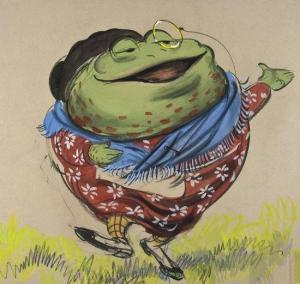
prideful_toad
Credit: John Worsley: “Toad”

18.  Be a pointless blog.

I’m not talking here about blogs that don’t have a certain topic as their focus.  There are many great general purpose blogs with posts about anything and everything. I’m talking here about blogs that have no original content.   There are blogs that seem to exist solely to post links to other people’s blogs or regurgitate other’s material.  I always wonder why these blogs exist at all.  Why not just go to the original blogger’s site instead? “Bloggers” who never post original content seem more like secretaries than bloggers, and less useful than a secretary because they won’t even make you coffee.  For some reason, blogs like that also seem to contain viruses.  It’s like having a secretary with typhoid.

19.  Plagiarize and don’t credit others.

Not only will not crediting or plagiarizing others make people angry at you, it will get you in trouble too.  Don’t do it.  If you can’t find the source for something, don’t use it.

20.  Try too hard to be cool.

Some blogs seem to exist just to be cool or edgy.   If you don’t believe in what you’re posting about, and are just doing it to impress others or appear cool, people will be able to tell and will press the backspace key faster than you can put on your groovy sunglasses. People who try too hard to be cool are annoying and pathetic, and that’s not cool.
Cognitive dissonance and NPD.

I think people who develop NPD do so to correct cognitive dissonance. Unfortunately for them and others, once this “correction” is made, which usually (but not always) happens in early childhood, it’s very difficult, if not impossible, for them to ever be normal again.
This post first appeared on this blog in August, 2015.

luckyotter's avatarLucky Otters Haven

narcissism_childhood

I’ve been thinking a lot about the concept of cognitive dissonance and its role in creating a narcissist or turning a narcissist into a malignant one.

Cognitive dissonance is the mental stress or discomfort experienced by an individual who holds two or more contradictory beliefs, ideas, or values at the same time, or is confronted by new information that conflicts with existing beliefs, ideas, or values.

–Wikipedia

A computer will crash or stop working when given conflicting sets of instructions. Although people are not computers (because we have emotions and a soul), if we receive conflicting sets of “instructions” or information about ourselves, it causes so much mental distress that a personality disorder can develop if the conflict appears very early in life.

A child who is constantly invalidated by narcissistic parents tries to correct the cognitive dissonance by “becoming” what the parents tell them they are. If the parents…

View original post 1,418 more words

Meaning in things we take for granted.

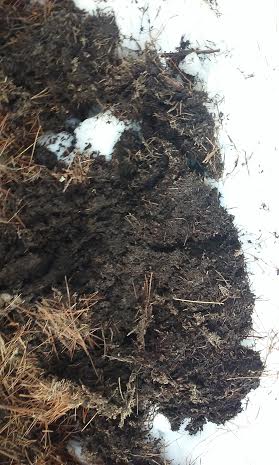
snowdirt

Today’s the fourth day I’ve been snowbound, after the big winter storm that hit the East coast on Friday.

I had to get to the store, and still can’t drive anywhere, so I walked the mile to the gas station. The weather today is fairly mild and sunny so the walk was pleasant and the snow is melted down enough to no longer make walking so difficult.   While walking I could see that the snow is beginning to melt and a few patches of ground are peeking through.

It’s kind of amazing what we take for granted under normal circumstances. I came across this patch of newly exposed wet earth (pictured above) and saw how dark and fertile the soil looked. Since it was under a stand of large pine trees, this soil is especially rich, having been fed by rotting pine needles over time. It’s a little thing that holds promise of new life in just another couple of months. Everything in nature has a story and is connected to everything else.  Just like all of us.

My letter to a fellow ACON who wants to take her blog down.

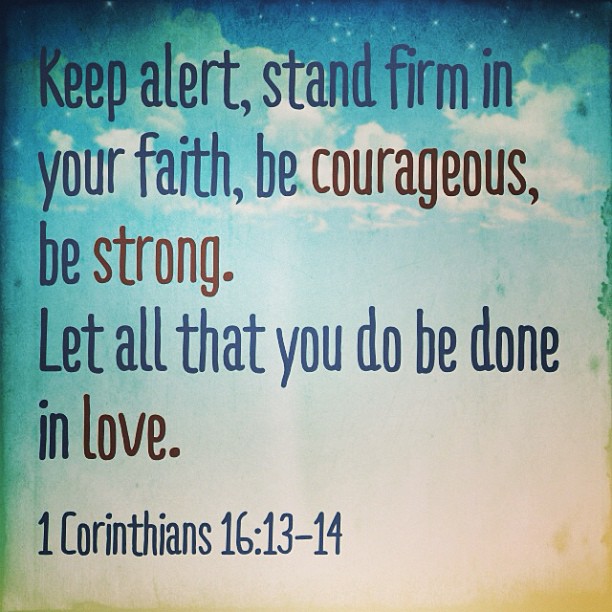
courage_biblequote

A good friend of mine in the ACON community has just announced she wants to take her blog down and remove herself from all social media. She isn’t depressed or angry at anyone, but just feels like she wants to hide. She also said that she feels like maybe God wouldn’t approve of her exposing her abusers, even though she has never used any real names. I was a little alarmed by this, so I just sent her an email, which I’m going to post here (and remove any identifying information). I think the feelings she described are common in abuse survivors, who have been trained by their abusers that nothing they do is ever right and that exposing their abusers is some kind of mortal sin. I beg to differ.

Here’s my letter in response to her post.

I just read your latest post about wanting to hide. At first I was surprised you said you were allowing comments, but after I read it I understood why. When you said you were thinking about taking down your blog, Twitter, etc. I thought to myself, No! she can’t do that! We need _______ ‘s blog!

I’ve sometimes felt like hiding too and been tempted to disable comments several times. Once (and you will remember this) last May, I was VERY close to taking down my blog or setting it to private because of some criticism I got over a post I wrote. I also felt very exposed when my blog was found by a few people I didn’t want to find it (including family members), but after an initial “Oh, shit” panic reaction, I decided to keep plugging away because to do otherwise would be the coward’s way to handle things, and I’m sick of being a coward who never stands up for myself.

I think as survivors of abuse, we ACONs can be very easily triggered. It’s scary being out there and being so vulnerable for the public to see. But that’s exactly what we are trying to reconnect with through blogging and sharing our stories with each other. We need to regain our courage to BE vulnerable. We’ve been trained by our narcissists THAT IS NOT OKAY, but that is a big fat LIE. We look at those who haven’t been so damaged and marvel at their openness, but when we try to do it, it can be very scary.

I think that’s why you feel like running away and hiding. It’s your fear that you might be hurt again that’s causing you to take such drastic action. I know, because I feel that way often myself.

____, DON’T DO IT. Don’t take down your blog. It’s understandable you might need a break, but don’t be rash. Set it to private for awhile and focus on other things, or just let it stand as is, and just don’t post in it for awhile. Give yourself a break, that will give you time to be mindful instead of doing something you might regret, like removing your blog.

We’ve been lied to and made to believe that exposing our narcissistic parents, spouses, etc. is not okay. I believe in the 10 Commandments too, but I don’t believe God wants the narcissists to get away with what they do, and I don’t believe a narcissistic mother or father really qualifies as a true parent. They certainly haven’t lived up to their end of the responsibility, have they? You are not using any real names, so you are not damaging them personally. What you are doing instead, is giving a voice to the oppressed survivors that have felt all alone because they thought no one could ever understand. We are inundated with sappy, sentimental images of Mothers, but our mothers never fulfilled that stereotype. For us, that image is a lie.

Narcissists, no matter whether they are biological parents or not, deserve to be exposed for what they are, and for how they have abused us. By sharing your story, you have no idea how many other people who have been in your boat you are helping. You have helped me, and you have helped many others.

Also, don’t think for one second that your story isn’t interesting enough to write about. You have one of the most interesting stories I have heard. You are helping and giving hope to countless abuse survivors. No names are mentioned, you are not hurting anyone, and I am sure Jesus approves of what you are doing. It’s all for the greater good. Your blog helps so many. God has led you to where you are for a reason.

Please think about what you’re doing. If after a month or so, you still want to take your blog down, then go ahead. But I would wait, and leave it up anyway for others to read and find hope from in the meantime, and just focus on taking care of yourself for a while.

***

I forgot to put this in my email, but I think that as a Christian, my friend should subscribe to Smakintosh’s Youtube Channel (Gospel Underground). He is a survivor of narcissistic parents, and has many videos that explain why it isn’t unbiblical to expose and go no contact with narcissistic parents. Here it is for any other interested persons: https://www.youtube.com/user/smakintosh

Monday Melody: Walking in Memphis (Marc Cohn)

monday_melody

I think Monday’s a day everyone could use a little music, so I decided to start a new regular feature on this blog, Monday Melodies. Each Monday, I will feature one song from the past that I really like and share it with my readers. I’ll give a little background about the song and explain why I like it so much.

This week’s selection is “Walking in Memphis” by singer-songwriter Marc Cohn.

This song was a big hit in 1991 and is the only hit for Marc Cohn. He wrote it after a trip to Memphis, Tennessee in 1985 which proved to be a musical and spiritual awakening for him. Many people think Cohn is a born-again Christian because of the line at the end, “Tell me, are you a Christian, child?” in which he replies, “Ma’am, I am tonight!” This is the song’s iconic line. It grabs your attention and pulls the whole narrative together. But Cohn is and was a New York Jew. He’s describing how he felt the pull of the religious fervor (and many would say the Holy Spirit) surrounding him as he sang “Amazing Grace” with 60 year old gospel singer Muriel Wilkins playing piano. (See the Wikipedia entry for more background.)

I love this song because to me, it’s perfect in nearly every way. Cohn’s voice is powerful and emotional, the lyrics are great, and the production isn’t overdone. It’s a song you don’t forget, and I think that’s why it’s still often heard on the radio, even though it’s 25 years old. It’s timeless. The gospel choir at the end gives me chills every time.  The way the song ends reminds me of waking up from a beautiful dream for some reason.

My posting habits and S.A.D.

I thought this was pretty interesting.

posting_activity

My number of posts peaked in May and June, then leveled off, and began to fall until December, when the days are at their shortest. I made very few posts in November and December and many of those were reblogs or very short (I can’t show you that on the graph, you will have to take my word for it or check for yourself). This month they are rising again. This coincides with the chart below which I made a few months ago. It shows the level of my moods at different times of the year. My mood begins to decline as early as July, and starts to improve in January. It’s the lengthening and shortening of days my brain and body reacts to, not the cold or heat.

seasonal_moods

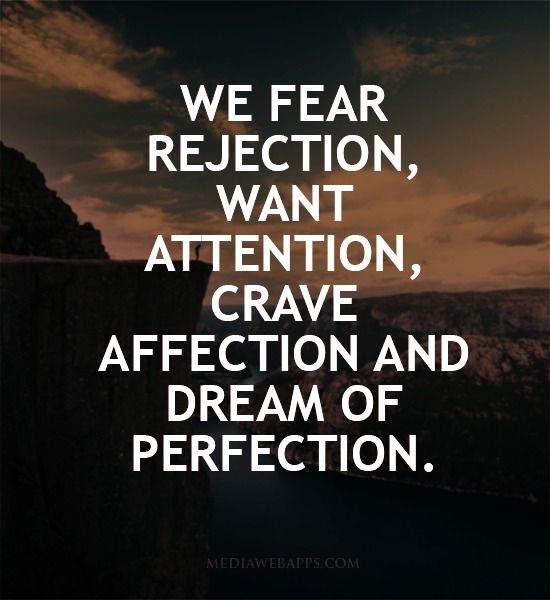
The 7 things narcissists are most afraid of.

rejection-attention-affection-perfection

I was actually going to try to post funny search terms again, but alas, they were just not funny, so I nixed that idea.  However, I did find one that inspired me to write this post:

what 6 things are narcissist most scared of

It’s a good question.  Are narcissists afraid of anything? You bet they are, and there are 7 things that scare them silly, not just 6.

1. Abandonment and rejection.

love_me

Narcissists can’t stand being rejected or abandoned.   That’s why they fly into rages and punish and threaten you if you threaten to leave them, and love bomb you if you do manage to get away.  To reject a narcissist means you are rejecting the false self they have so carefully constructed to impress you.  To reject that false self negates their entire reason for existing, since whatever true self they may have left is completely inaccessible to them and the false self cannot survive on its own; it’s completely dependent on the approval and attention of others, who it feeds from like a vampire.  When you reject a narcissist they are forced to confront their own emptiness and nothing scares them more than that.  They will fight tooth and nail to avoid it, even if it means they have to destroy you in the process.

2. Being made fun of.

don__t_make_fun_of_me__by_quackedsquare

Credit: Quacksquared

Narcissists have no sense of humor.  Nada. None. Zero. Zip.  They may laugh cruelly at you when you fall and break your arm, and they may chuckle at the discomfort of someone else (since they have almost no empathy), especially if the discomfort was caused by them (because remember, to them you are not a real person but an object),  but they are completely incapable of ever laughing at themselves.

A few years ago on a forum I posted on, there was a man who became enraged when someone wrote “LOL” at a joke someone else made at his expense (the joke wasn’t very offensive), and from then on he gave both of them the silent treatment.     They take themselves very, very seriously and are very, very sensitive.  But that sensitivity doesn’t extend toward anyone but themselves.   The reason they are so bothered by jokes at their expense and can’t laugh at themselves is because the self they present to the world is a false one that must be propped up and supported at all times by everyone else.   To poke fun at a narcissist is to poke fun at a self that’s as empty inside as a puppet.  It has no substance.     It will fall to pieces and then the narcissist is forced to confront that terrifying emptiness that constantly haunts them.

3. Being disrespected.

demand_respect

No one likes to be treated with disdain or disrespect, but the narcissist is downright phobic about it.   He or she worries about it all the time and imagines slights and personal attacks even where they don’t exist.  Again, it boils down to the false self which he or she must constantly keep propped up.  It’s your job to puff it up and inflate it constantly lest it collapse into a limp pile of flimsy rubber.    Disrespecting a narcissist is like popping a hole in their balloon-self and they feel like they are going to die.    To avoid this, a narcissist uses every defense mechanism they have in their arsenal–gaslighting, rages, silent treatment, lying, projection, denial, fabricating,  and false affection–to keep you inflating their balloon-self so they don’t have to acknowledge the horror of recognizing they have lost their real one.

4. Being ignored.

dont_ignore_me

This is a no-brainer.   Ignoring a narcissist means giving them no supply at all, and without narcissistic supply, the narcissist dies a slow death.   Or believes they will.   That’s why some narcissists would even rather be hated than be ignored.  Negative attention is still attention, and at least it provides acknowledgement that they still exist.   When you ignore a narcissist, it’s as frightening to them as being killed.  They’re no longer confident they exist without your attention.

5. Exposure.

Several colorful arrow street signs with words Not Me - His, Her and Their Fault, symbolizing the twisting of the truth and shifting of blame

If you call out a narcissist on their abusive behavior, they will usually become very angry.  Their anger might be expressed in rage or in more covert means such as the silent treatment or gaslighting you. They don’t like to be held accountable for the things they do to others, because that means they have to admit they are less than perfect.   It also means they have to acknowledge the humanity of someone else, which they aren’t capable of doing.  Narcissists are all too aware of their imperfections, but only at the subconscious level, and the way they handle this is to project their own imperfections onto you.  So a narcissist might tell you that YOU are the narcissistic one, or that YOU are the abuser.  They’re also good at getting others to side against you, and those people become their flying monkeys.    They will accuse you of doing things that they themselves have done and everyone believes them and not you.

You start to feel like you’re living in a hellish world of smoke and mirrors, where you’re no longer sure what’s real and what isn’t.   The narcissist has, unconsciously or consciously, set up this elaborate lie as a massive defense mechanism against being exposed as imperfect and flawed just like everyone else, because being forced to acknowledge their shortcomings is to expose their vulnerabilities, and being vulnerable is incredibly terrifying to them.   They blame so they don’t have to feel shame.

6. Loss of the trappings of youth and success. 

grumpy_old_man

As narcissists age, they often grow even more  abusive (a very few may improve–but they probably weren’t high spectrum to begin with). That’s because aging means a loss of looks, career, health, possibly even a spouse (who provides a narcissist with supply), and in some cases even financial solvency. All these things are proof to a narcissist that they still have value and are still admired and respected.

Somatic narcissists, who are most concerned with their health or physical appearance, have never developed other aspects of themselves that could be fallen back on when those things begin to go; that’s because the false self is a flimsy one-dimensional construct and is incapable of love, true attachment, friendship, and other things that the rest of us can fall back on when we’re old and not in such great physical shape or health anymore.   If someone has spent their entire lives only concerned with their appearance, once that goes, what’s left?

Cerebral narcissists, who are concerned with their intellectual ability or business acumen, may be able to hang onto those assets a bit longer, but eventually, their minds may begin to become less sharp or they may be forced to retire or reduce their hours working.  Having to retire is a huge blow to a narcissist whose entire identity is tied up in his or her career and earning ability.  What is left?

In both cases, a narcissist experiences an almost total loss of supply and to avoid the ensuing depression, they lash out and attack others like angry dogs.  That’s why old narcissists are so often cranky and mean.   They’re also terrified of death, the last thing on the list that terrifies them.


7. Death.

fear_of_death_2

Every narcissist I’ve ever known lives in mortal terror of death.   That’s because death is the ultimate loss of narcissistic supply.  Death means complete annihilation of the ego and there’s nothing more horrifying to a narcissist than that because their ego is all they are.   Personally, I think some also fear hell.  They know on some deep level how badly they’ve treated and exploited others and think they might be held accountable for it in the afterlife.   I’ve seen a lot of narcissists who suddenly become extremely religious in their old age.  I think that’s because they think by being religious, they may be able to ward off any accountability after they die.

Feeling like a heel.

How are you supposed to feel when you had to go no contact with someone because they invaded your boundaries and then you find out they are in a lot of pain because of your rejection?   I know it was the right thing for me and I had no other choice, but it still makes me feel like a damn heel.

I don’t expect answers; it’s a rhetorical question.  I am not going to change my mind.

I guess this means I have a sufficient level of empathy, so there’s that.

Therapy in Color

I have always believed in the power of art and creativity. Engaging in painting, drawing, poetry-writing, singing, sculpture, cartooning, creative writing, music-making, arts and crafts, and even cooking, scrapbooking, and home decor relax the mind, feed the soul, and bring us closer to our Creator. Each one of us has been blessed with some kind of creative gift and it’s our job to find out what it is we love to do best, and use it to connect more deeply with the world, not just escape from it.  Making art in any form also fosters mindfulness.

Even something as seemingly childish as coloring books can help us connect with our creative muse. This article explains why.
After all, it’s the child in us that gets activated when we create, and there’s no one more creative than a young child.

Catharine Toso's avatarCatharine Toso

An increasing number of adults are handling stress by engaging with art. Specifically, art in the form of coloring books. But while some may consider this to be a temporary fad, the psychology behind it is much deeper. Neuroscience Ph.D. candidate Jordan Gaines Lewis explains the appeal of coloring books to adults, and why they work, in a piece for New York Magazine’s The Science of Us blog.

Creative engagement is a major stress-reliever for many people. If you are artistically inclined, whether it be in the visual arts, music, or literature, you already know this. However, just because one lacks artistic training doesn’t mean that this great feeling can’t be experienced. So many adults are spending time with an open coloring books because it allows us to exercise our creative muscle, as long as we can hold a coloring pencil. Lewis cites psychologist Barry Kaufman, who says that the…

View original post 216 more words