The chatterbox and the hermit.

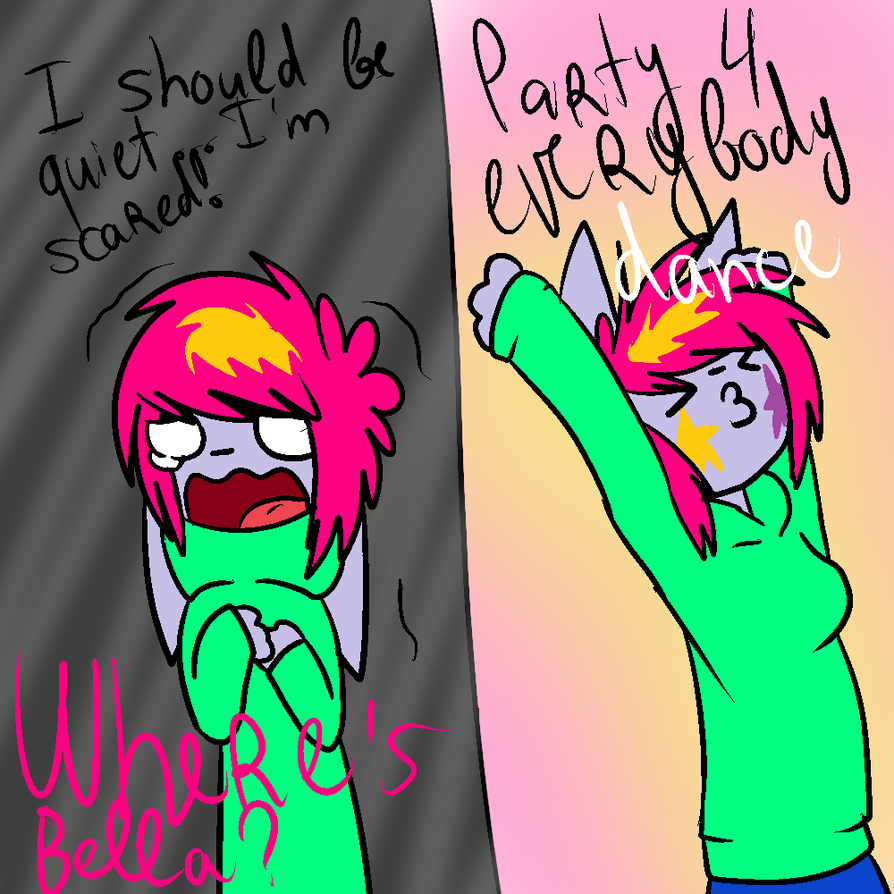
shy_and_outgoing__by_cammy_senpai-d6ejdec
“Shy and Outgoing” by Cammy Senpai, Deviantart

I’m two different people.

Most of you already know what I’m like online. I made a vow to be completely honest and hold back nothing (within reason) and so I am doing. This has been a wonderful thing for me because it has given me courage (and takes courage!)

But I’ve always been outgoing online. I talk about the things that concern me, my feelings about them, my relationships, my mostly painful and sordid past. I tell you if I’m happy, sad or mad and I tell you why. I actively seek out friendships and post on other people’s blogs (when I can find the time since I’m always on this blog). I’ve become active on social media too, something I never thought I’d be. If anything, I’m probably a little too confessional!
On the web, I’m comfortable being completely myself and do not suffer from the shyness, shame or self-consciousness that plagues me IRL.

In the real world (which I prefer to call the physical world, because online life is every bit as real as any other form of interaction), I’m the opposite of the above. I suffer from both Aspergers (which I was most likely born with) and Avoidant Personality Disorder, brought on by abuse and always feeling off balance because of my MN mother and my enabling, alcoholic father, not to mention being a frequent target for school bullies.
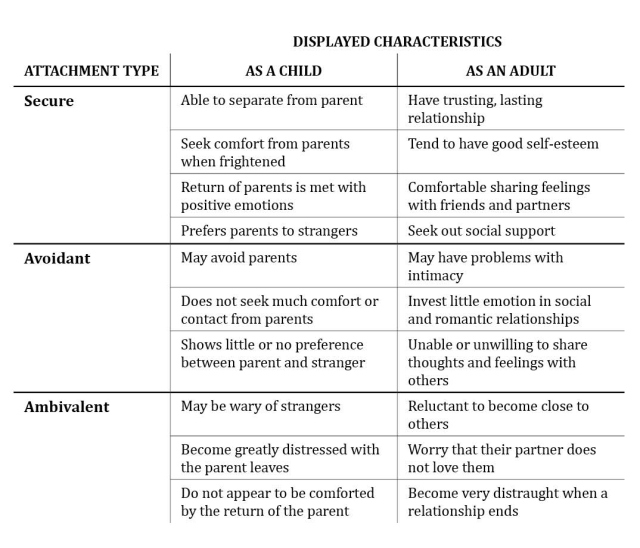
attachment-types
From “What’s In It For Me?” on Zombie Shuffle’s blog.

In the physical world, I’m a very different person than the one you know online. Although I have the same emotions (which I talk about here), I don’t discuss them openly or even at all. I have few friends, am not close with anyone in my family other than my children, and prefer the company of myself, my books, or my pets to that of other people. Lots of noise and large groups of chattering people are very triggering to me, and I find myself tensing up and retreating if possible.

Most people know very little about me. I don’t say much, I rarely initiate conversation, and am very shy. Some people think I am cold and aloof; others think I am just stupid. I’m neither, but my avoidant personality makes me seem unfriendly or insecure. My Aspergers makes me seem awkward which exacerbates my problems relating to people.

I am terrified of intimacy and romantic relationships. After a long, abusive marriage and 7 more years of hell living with him after we divorced, I think I’ve had enough. I don’t trust men enough or trust my own judgment enough to dare take the plunge again into a new relationship. I also feel like my age is a problem, even though I look far younger than I am. I haven’t had sex in 9 years and really, that’s not a problem for me. I like the idea of having a relationship again (who really wants to die alone?), but I don’t know if I could cope with the reality of one. That doesn’t mean it won’t ever happen though. It just scares the living daylights out of me.

I can’t stand talking on the phone and a ringing phone is very triggering for me: I always expect to hear bad news. I know it’s just my hypervigilance, but I can’t help my reaction whenever the phone rings. As far as talking on the phone, it’s just awkward because I can’t pick up nuances in speech (due to my Aspergers) which is made worse by the fact I can’t see their facial expressions or body language. I try to end phone conversations as quickly as possible, which makes people think I’m unfriendly or don’t want to talk to them.

I don’t connect well IRL with most people, although I do get along with most. I’m not hard to get along with, just hard to get to know.

Blogging has enabled me to open up and be the self I want to be. It’s enhanced my self esteem and my creativity. Being courageous enough to post the sort of things I post gives me even more courage. Journaling online to complete strangers has helped me understand a lot of things I never used to understand and it’s even helping me develop more empathy.

But this isn’t the Matrix and I can’t live inside my online world all the time. I do think, however, that my increased self esteem and self awareness will soon translate into my relations with the real world. In fact, I’ve been told I seem more relaxed, happier, and more confident than I used to be, even though my extreme reservedness remains. I smile and laugh more. Most people do seem to like me, even though they can’t get to know me well. They have no idea the shy, mysterious, taciturn woman who tends to clam up in social situations or avoid them altogether actually runs a blog where she talks about the most personal issues it’s possible to talk about.
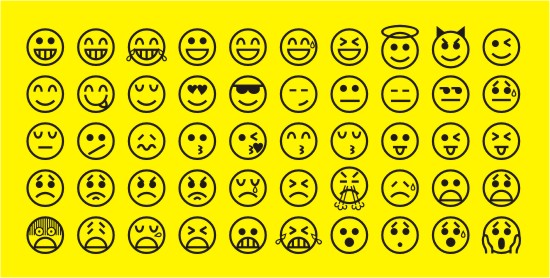
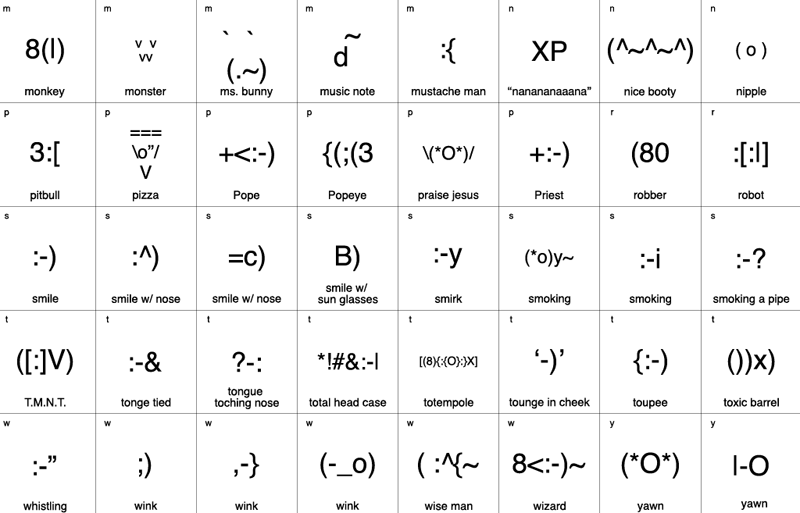
7 science-based reasons to use emoticons

emoticons

I thought this article by Courtney Seiter was pretty interesting.

7 Science Based Reasons to Use Emoticons
By Courtney Seiter

Do you remember seeing your first emoticon?

The first documented use of “:-)” dates back to 1982, when Scott Fahlman proposed that it be used as a “joke marker” on a message board for Carnegie Mellon University computer scientists. Here’s his Internet-changing message:

“I propose that the following character sequence for joke markers:

“:-)”
Read it sideways.”
Today, emoticons need a bit less explanation. As social media has grown (and character counts have shrunk), these pictorial representations of feelings are playing a significant role in communication.

If you’re still not sure whether emoticons are a good fit for your brand’s social media voice and tone, we’ve gathered up seven real-deal scientific studies that say using emoticons can make you appear friendlier, grow your popularity on social media, and even make you happier offline!

I’m feeling 🙂 already…

7 reasons to use emoticons

1. They make you more popular on social media

An analysis of more than 31 million tweets and half a million Facebook posts uncovered the fact that positive emoticons can be a social media status marker.

Simo Tchokni of the University of Cambridge Computer Laboratory and her colleagues used various metrics such as number of followers and Klout score to determine the traits of influential social media sharers—and emoticons were a common factor.

“The emoticon features achieved high performance, suggesting that there is a strong link between emoticon use and social power. Powerful users tend to use emoticons often and high Klout is strongly associated with positive emoticons,” the study concluded.

2. We react to them like we would real human face

If you ever wish you could reach out and talk to your followers and fans face-to-face, here’s some good news: An emoticon might be the next best thing!

Scientists have discovered that when we look at a smiley face online, the same very specific parts of the brain are activated as when we look at a real human face.

A caveat: This only works in the left-to-right format. In other words, humans now read “:-)” the same way as a human face, but not “(-:”.

“Emoticons are a new form of language that we’re producing, and to decode that language we’ve produced a new pattern of brain activity,” researcher Dr. Owen Churches, from the school of psychology at Flinders University in Adelaide, told ABC Science.

Why might this make a difference when it comes to social media and marketing? Because human faces are particularly effective attention-grabbing mechanisms.

“Most of us pay more attention to faces than we do to anything else,” says Churches, who has been studying the neuroscience of face perception for years. “We know experimentally that people respond differently to faces than they do to other object categories.”

3. They’re OK even in business settings!

You might have heard that emoticons aren’t so professional for workplace communication. That might still be true in some industries, but more and more smiley faces are entering work emails—and the science shows that no one really seems to mind.

A University of Missouri-St. Louis study wanted to test how people perceive smiley faces in a work email as compared to a social email. Researchers sent two types of email messages to a group—one a flirtatious message, another extending a job interview request—and added emoticons to some of each.

The researchers discovered that the smiley faces in both types of fictional emails made the recipient like the sender more and feel that the sender liked them more. Even in the work oriented mail, the sender’s credibility wasn’t affected by the emoticons—even when they used 4!

Emoticons in work emails

“In a task-oriented context, where impersonal, cold, and unsociable features of computer-mediated communication are strongly encouraged in order to build credibility or professionalism, using emoticons in e-mail might create a positive expectancy violation by being friendly, emotional, and personal,” the study concluded.

4. They soften the blow of a critique

Got a critique or some feedback to share? Emoticons can lend a hand.

Studies on workplace communication show that when specific, negative feedback from a superior comes with positive emoticons, employees are more likely to feel good about the message and more likely to make the changes asked of them.

“Our results suggest that using liking emoticons increases perceived good intention of the feedback provider and decreases perceived feedback negativity when the feedback is specific.”

It’s worth noting that using disliking, or negative, emoticons had the opposite effect in some cases.

emoticons2

5. They make you appear more friendly and competent

Want to look smarter and more approachable online? Emoticons could be the answer.

In a study that had participants chat online with “health experts” and “film experts” who either used or avoided emoticons, the participants rated the experts in both topics friendlier and more competent when they communicated with emoticons.

This study also noted an awesome side benefit to emoticons: It might help you remember what you’ve read more easily! The study authors write:

It appears that the presence of emoticons affects cognition as well, because participants’ scores on memory for chat content were significantly higher in the “emoticons present” condition than in the “emoticons absent” condition.

6. They create a happier workplace

Researchers have long known about the negativity effect in email, which is the phenomenon that a recipient is likely to perceive an email as more negative than the email sender intended. Since we don’t get the chance to share facial expressions and other nonverbal cues in our emails, they can sometimes be tougher to interpret.

But emoticons might be able to help.

In a 2013 study, 152 professionals read an email message both with and without smiley emoticons that were part of a fictional workplace situation.

Example Message:

I can’t make the meeting you scheduled because it conflicts with my staff meeting. Email me and let me know what I missed.

vs.

I can’t make the meeting you scheduled because it conflicts with my staff meeting. Email me and let me know what I missed. 🙂

When they were questioned about what they read, the results showed that emoticons reduced the negativity effect in the business-related email messages—the same message sounded less negative when paired with a positive (smiley) emoticon.

“The findings suggest that these symbolic emotional cues help “clue in” the recipient towards a particular emotion (in this study, the smiley face emoticon represented a more positive tone), thereby clarifying the intentions of the sender,” the study’s authors write.

They added that emoticons could help employees in remote locations more accurately “read” the emotional content of a message and could help mitigate cyber aggression and conflict over email by clarifying messages and giving the conversation a more “light-hearted” tone.

7. They correlate with real-life happiness

One last reason to consider adding emoticons to your vocabulary? They might just make you happy!

A 2008 study found that emoticon users experience a “positive effect on enjoyment, personal interaction, perceived information richness, and perceived usefulness.”

The study added that emoticons are “not just enjoyable to use, but also a valuable addition to communication methods.”

My own little kingdom.

kingdom

Creating and running your own blog is just like having your own little kingdom.

I’m sorry if that makes me sound like a narc, but it’s the truth.

I bet most bloggers feel the same way. If you’ve lived a life without much control over anything, as many of us ACONs have, it’s so nice to know that with your blog, you have a whole place that’s yours alone, where you can write about whatever you want, post whatever pictures you want, have an unpopular opinion and not be afraid to say so, and you don’t have to put up with mean people and bullies like we have to in the physical world. The bullies and trolls can be silenced with a just a click of a button and their hateful spewage sent to the Trash.

It’s also great finding a community of like-minded people who share their thoughts with you. I don’t see myself as the King or Queen holding court though. I’m just another person, trying to find my way in a world that hasn’t been very kind to me.

In my Kingdom, I am free to be myself. Totally and completely in a way I never could out there in the physical world.

The rest is just gravy.

justgravy

If you are a sufferer of a mental illness or a survivor of malignant narcissists or other mentally ill people and decide to blog about your experience, you have to be very brave.
You have to be 110% honest at all times.
You can’t hold anything back. Ever. No matter what.

The only thing it might be okay to lie about is your real name. Using a pseudonym can make it much easier to be honest about your life, your true feelings, your own opinions.

Self consciousness and reservedness would never work on a blog like mine. It’s my diary and my therapy. Everything I would tell a therapist is here for the public. This is how I’ve chosen to conduct my healing.

To do so requires courage. You must not be afraid to admit when you’re afraid or lonely or vulnerable. Don’t think about the thousands of strangers who will read your words. Don’t let anything intimidate you or make you hesitate to be completely honest at all times.

Speak only your truth.
Speak only from your heart.
The rest is just gravy.

Beware of N’s who use mental illness as an excuse to abuse

Print

I think those of us ACONs and survivors of narcissistic abuse who post on public blogs that are accessible to anyone need to be very vigilant and careful. I will never make my blog private or require you to sign in first, but due to that decision, I realize I am going to attract MNs and psychopaths whose only desire is to bully, make incendiary and false remarks, and play “divide and conquer” games within the community. I am willing to take that chance because I want this blog to remain as accessible as it is. I want people to feel welcome without having to be “approved” first or having to sign in, because I hate having to sign into any website myself and will usually bypass any site that requires me to do that.

If you’ve been following my posts, I wrote two articles about some drama that was going on between me and another blogger who allegedly suffers from dissociative identity disorder (DID). I provided links to the nasty, character-assassinating articles that were written about me and my commenters and followers on their blog. I was quoted extensively in their rant (as well as several of the people who commented on those two articles) and was practically accused of being MN myself. The things they said were hurtful, but I also knew they were lies and intended to upset me. If this person is a narc, they were projecting their own disorder onto me. And that’s just so wrong, but it’s what they do.

I am letting that go and do not wish to further antagonize this blogger and will just delete or not approve any further abusive comments from them. But in thinking it over, I realized that there are going to be people on the Internet who use their own mental illness as an excuse to be able to abuse and be nasty to other people. That doesn’t mean they don’t have a mental illness, but it’s possible to be mentally ill and also a malignant narcissist who wants to hurt those who speak the truth. I also think there are some N’s (I’m not saying it’s this blogger) who feign mental illness because that gives them an excuse to abuse. We need to be very careful of anyone who says they have a mental illness but then make abusive remarks based on no real information. N’s are out there, lurking our sites and reading.

Not all N’s are going to be abusive to us. Some actually are honest and want to seek help or educate us about their NPD. Those are the ones with insight into their disorder.

But there are others, who may feign another mental disorder (or sometimes actually have it but use it as an excuse to be nasty and mean), who can become trollish and try to destroy our communities with their vitriol or make us fear their wrath. I refuse to let people like that make me afraid to post what I want and keep journaling about myself honestly and openly. I refuse to let them squelch or discourage me in my desire to heal and help others. I am made of tougher stuff than that now, and I know God is behind me, protecting me from the bullies and trolls who may want to attack me and this blog and keep me from speaking my truth.

On political correctness and the inevitability of offending people

politicalcorrectness

Blogging isn’t all fun and games. Sometimes it can be a real challenge. I’m beginning to experience a few of these challenges for the first time and at times I even feel like I’m possibly in over my head.

As this blog has grown and become more visible, I’m beginning to face a few of the problems that most blogs and websites are eventually faced with if the subject they focus on has even the slightest potential to be construed as offensive or controversial and the website remains publicly accessible.

A few days ago, a blogger who suffers from Dissociative Identity Disorder (DID, formerly known as Multiple Personality Disorder or MPD) called me out for giving outdated and incorrect information about DID. I do not follow this blog, but the admin was very upset about one of my posts, which no longer exists on this blog. In addition to giving outdated information, I referred to their personalities as “fragmented” instead of entire personalities within the same person that are known as “alters.”

Not being very confrontational and not caring much about that particular post anyway (it wasn’t one of my best and I admit I did not have current information about DID), it was easier to just delete it and not have to go head to head with someone over a post I didn’t even care much about.

Today I found a trackback in my comments folder to an article this same blogger wrote where I was again called out for giving misinformation. I have also been criticized by this person for having a joke page about people with NPD and for writing about a disorder that I do not myself have.

As for the jokes: my intention was never to offend anyone, including people with NPD or any other mental or personality disorder. I put up the joke page not to enrage people with NPD but as a tool we victims of narcissistic abuse can use to lighten our moods. When we read jokes about the types of people who have been abusing us, it makes them seem less threatening and therefore easier to deal with. Personally I’ve always believed laughter is medicine and when we can laugh at what is hurting us, that thing ceases to have so much power over us. Besides, most of the jokes aren’t even my own. They are links to other websites and pages or copies of cartoons other people have made. I think only the “12 Steps of Narcissism” one is my own.

Our MNs and psychopaths have hurt us so often and so badly that sometimes it just feels good to be able to laugh at them (instead of the other way around, which has often been our experience with them). This isn’t to make light of this devastating disorder or to demonize them. I do not hate narcissists, I feel sorry for them.

It may surprise some, but I actually have a great deal of empathy for people with NPD who want to change or who suffer due to their disorder. Those who are aware of their disorder suffer enormously in ways we, as people who do not have NPD, cannot even begin to imagine. As much as they may seem like machines or robots or devils to us, they are still human beings and as some of us have seen for ourselves in the past week right here in this blog, they have very sensitive feelings and do not take jokes at their expense well.

I have said before that I will welcome any narcissist who has enough insight to write honestly about their disorder and/or who is in pain because of it or who wants help. Two days ago I received an email from one that made me cry because I was so happy she was seeking help. So I do care about them. I cannot help them here and am certainly not qualified to give psychological advice to them but I can possibly help point them in the right direction to get help. I do not hate narcissists. I hate what they do and the way they act. But this blog is not intended to help narcissists, even though they may come here. It’s intended to help those of us who have been targets of their actions.

I do not believe in political correctness, at least not when it’s taken to ridiculous extremes the way it sometimes is. We live in such a litigious society and almost everything can be construed as offensive. It can get pretty ridiculous. Of course this doesn’t mean I’m going to go around using racial slurs or make sexist remarks. I’m not going to say you’re deluded or mentally deficient or a bad person because of your religion, sexual orientation, or political affiliation. That’s not cool and pretty much anyone with an iota of respect for others will avoid saying those things.

politicalcorrectness2

As for this blogger’s opinion that I am not qualified to write about NPD because I do not have NPD myself, I call bullshit on that. How many people who have NPD are writing about NPD? Sam Vaknin, and that’s about it. Is only he and mental health professionals allowed to write about NPD? I feel that, having been very close to several malignant narcissists in my lifetime, gives me a unique perspective on the disorder different from that of a sufferer or a mental health professional and makes me every bit as qualified to write about it. There are many of us who write about NPD, a whole community of us, and we are finding healing by writing about what was done to us and how to cope with the narcissists in our lives. For some of us who are still in an abusive relationship with a narc, or who can’t afford therapy, writing about it is the only hope we have.

So I’m also not going to allow one disgruntled blogger (in this case, one who doesn’t even suffer from NPD) to make me fear speaking my mind or keep me from sharing my opinions on a blog that is meant primarily as a form of self-therapy and support for others who have experienced similar situations with their narcissists. I am going to remain completely honest on this blog, about my thoughts, opinions and feelings. Not everyone who reads them is going to like what I have to say, or agree with it. But if I start censoring what I say for fear of offending someone, then this blog ceases to be the haven of honesty and I will have sold out. And selling out is something I simply will not do.

This is my blog, and these are my feelings, and I will continue to write whatever I want about narcissists for as long as the topic is of interest to me. Again, what I write is not intended to offend those with NPD or any other disorder. It’s intended to help US, the victims of abuse. In the process a few toes will be stepped on, and that’s just the way it is.

I will never set this blog up where you will be required to sign in to read posts. I can’t stand that and will usually bypass a website that requires me to sign in. That said, I am beginning to understand why some website owners and bloggers require people to sign in with a password, especially if it’s a topic that is controversial or sensitive. I hope I never have to do that.

I looked to see if I could make the “jokes” page semi-private (where only my followers could see it) but unfortunately there is no way I can do that. I could make it password-protected, but anyone who wanted to read the jokes would have to know the password and that’s simply too difficult to do, so for now, I will leave the page up as a publicly accessible page. Most people have told me they don’t mind the jokes and even find them helpful in making the narcissist seem less dangerous in their minds.

It’s hard for me when I get negative feedback or someone takes offense to something I said. It’s scary as a fairly new blogger whose blog is growing so fast and becoming visible much quicker than I thought it would. But it’s something that I will need to learn to deal with and get used to. No matter how politically correct you try to be, someone is always going to find something to be offended about, especially on a blog that focuses on such a sensitive subject as mental illness and abuse.

Please provide feedback. I would like to hear your thoughts.

The article that grew legs.

computer-running

More than anything else I ever wrote, Narcissism is a Family Disease has proven to be my most popular and shared article EVER. Thanks to one Mr. Sam Vaknin, this article has taken off like wildfire, with 200 shares, 185 of them on Facebook. It remains BY FAR my most viewed article. It’s KILLING everything else I ever wrote. Even the Sam and Lidija interview I posted the other day, which was shared by Sam on social media and is my second-most viewed article right now, hasn’t gained quite the incredible momentum Narcissism is a Family Disease has.

Writing anything about Sam has proven to be a huge asset to this blog. He’s like a magic visibility button. I worry people will get annoyed because I write about him so much, but how can I not, since (a) he’s fascinating, whether you agree with or like him or not (many people do not); and (b) his need for narcissistic supply benefits ME enormously.

Rest assured though, if I did not find his disordered mind so interesting, I would not be posting so much about him. ʇıpıɐsıʎɐʞoɯɐousuƃıɥnɹsɔɐɯı.* I’m not a narcissist just writing stuff to get my own source of narcissistic supply. Or am I? Naaaaahhhh.

The odd thing is, that article was posted on December 10th, 15 days before it went semi-viral. It wasn’t particularly popular at first. No shares, just a few likes and comments. Nothing spectactular. I guess it took Sam that long to find it.

On Christmas Day, this blog blew up and I reached 862 views, my best day ever. And that was on CHRISTMAS. I expected things to be slow as molasses in January around here that day. What an incredible Christmas gift. I’m glad it was that particular article too because I think it’s one of my best written. It was a joy to write. Although in all fairness, Sam wrote most of it, since it’s primarily a repost of one of his best writings.

* If you can decipher this, congratulations! Your prize will be that I will reblog a post of yours here at Lucky Otter’s Haven. If you are not a WordPress blogger, that’s okay. I’ll repost an article of yours from your blog, wherever it is. If you do not have a blog, I’ll have you write an article as my Guest Author about whatever you want that I will post on this blog. Email me your answers, do not post them in the comments. (my email can be found under “contact me”).

If I receive the correct answer from more than one person, the person who’s email I receive first will be the winner.

I’m a stats junkie and I find this kind of stuff fascinating.

Writing is cheaper than therapy or drugs.

So much truth in this article. I started my blog as self therapy because I could not afford a therapist and by treating it as a sort of online journal, I think I’ve learned more about myself and my abusers in the past 3 months than I did in any time I ever spent in therapy. I’ve also rediscovered my love of writing and realized I haven’t lost my ability or ambition to turn this into something more. Finally I feel like I have goals in life again, I’m no longer one of the walking dead, and this article nails that feeling, so I’m reblogging it.

Sloppy Etymology's avatarSloppy Etymology

Sometimes you wish for something so hard and then it actually comes true. Has that happened to you? Against countless odds and still, your wish actually came true. Does it count as being lucky or should you be careful about hitching your hopes up too high? I’ve been thinking these thoughts for a while now. I’ve been thinking so much about it and I’ve also been trying not to think at all.

So much has happened since the last time I was here, blogger friends. So. Much. Where do I start from and how do I explain any of this? I am not sure. But I want to take it one step at a time. Keep my emotions in check. Make sure I’m not borrowing more happiness than I deserve to have in my share.

I can’t write like I used to. I’m putting that out there so you can…

View original post 1,732 more words

Did you ever almost not post something…

delete

…but went ahead and did it anyway?

I just did earlier today, with my poetry. I haven’t written poetry in years and I feel like it really isn’t good–too melodramatic and full of purple prose. Like a tacky velvet painting, done up with garish colors and second-rate drawing. Something you wouldn’t even bother selling because you know no one would buy it; so to get rid of it, you just wind up giving it to Goodwill or something.

I think my prose is much stronger. But people seemed to like the poem I wrote. It was also very cathartic for me to write that, and deeply personal. It’s easy to have second thoughts about making something that personal public. Especially for those of us who have lived with and been raised by narcs, everything is so damned dangerous.

To think that the world is full of malignant narcissists and psychopaths who could be stomping all over my fragile and bleeding heart which I just lay out there in the big wide open world of the Internet is a scary, scary thing, but as bloggers about narcissism, we can’t let that stop us. We must be brave.

Yeah, those narcs could be sitting there right now laughing at everything we write, even quoting us elsewhere and making fun of us among their sycophants. If we write about being victimized (which most of us do because that’s how we learned what we know), narcs are at least going to be reading our stuff. They will not be empathetic. If you think about that too much, you’ll lose your courage and won’t write anything.

So to hell with those narcs. They are going to read what we write. They love to read about themselves, even if it’s negative. To a narc, negative attention is better than no attention. It’s still narcissistic supply.

So what are they gonna do? Troll our sites? We can always not approve comments. So far I have only received one abusive comment and into “Trash” it went. Some narcissism writers have made their blogs private or required people to sign in before they can see any posts. I won’t do that with my blog. It’s an open book, available to everyone and anyone, even narcs.

This is a blog primarily meant to be a form of self-therapy (though it’s become a lot more) so why should I edit my thoughts and feelings? Why should I make my blog a “private club”? No, I won’t ever do that. I hate exclusivity and having to sign into a website. If I have to sign in, I probably won’t bother joining. So I’m not going to do that to you, either.

So anyway, after I posted my poetry I waited for the vomit sounds and crickets. I’m glad that hasn’t happened. My stupid hypervigilance again. I always short sell myself.

I kind of felt the same way posting “My Mother, the Exhibitionist” because the behavior I described in that post is deeply embarrassing to me (and almost borders on pornography). But it is a perfect example of the way some narcissists behave in front of their kids and others, and it affected me, so why would I NOT write about it?

The minute I start editing my thoughts on this blog is the minute I’ve sold out and the blog becomes something other than what it was meant to be–a public online diary. I will never sell out.

But I won’t ever talk about my crush on this blog. Ever. I know that’s probably got some wheels turning. Nyah nyah, too bad. Deal with it. 😉

The day Sam Vaknin knew he was a narcissist

Vector illustration of a man lock up in prison

I’m going to go ahead and confess part of the big secret that I alluded to in an earlier post. I’m writing a book about Sam. I can’t say too much else about it right now because the book’s focus hasn’t completely gelled in my mind yet. Right now I intend for it to be a biography, focusing on NPD from the inside–that is, what the disorder FEELS like. Sam is a controversial figure, and has enemies within the narcissistic abuse community and even more so among professionals who specialize in NPD (mainly because in their minds he lacks the proper qualifications), but there are also a great many people he has helped–even if helping wasn’t his intention, which it most likely wasn’t if he really is the malignant narcissist he says he is.

I took on this project because I need to come to my own conclusions without being influenced by others, either positive or negative. I do feel like Sam’s been more maligned that he deserves over the brouhaha over his “paper mill” degree, among other things. He’s an interesting character, and to my way of thinking, deserves to have a book written about him. I realize it will probably be a small market, but that’s okay–his story needs to be told. I also realize this will most likely be a feast of narcissistic supply for Sam, but I can live with that. Of course, I’m not going to sugar coat anything–but narcissists even consider negative attention to be satisfactory supply. In fact, some even prefer it. I think my book will be balanced, and there are good reasons to defend him from his haters but there are many things I don’t know about him yet either. If he’s really that malignant, I could wind up hating him myself when I’m done with this project. Or maybe not. Whatever happens, I know it will be very educational and mind-expanding and I feel that one way or another, writing this book will change me in some profound (and good) ways.

So anyway…Sam gave me the go ahead for this project after I emailed him wanting to do it. I’m trying to figure out how to go about getting an interview with him (I would have to go to Macedonia), but for the time being, I emailed a woman who did interview him who has some tapes and who may be able to share those with me. I’m waiting for a reply. Sam also sent me a long list of links to his writings, most which I have never seen before but which are publicly available here. These are his personal journals, poetry and short stories. I have a lot of reading to do!

Sam’s disordered mind fascinates me because he has two qualities in spades that both fly in the face of the typical narcissist (and he insists he is a malignant narcissist; of that I still have my doubts but that’s another thing I need to find out on my own): he is completely and brutally honest, and he has incredible insight into his disorder.

I’ve rambled on long enough about why I want to write this book. In reading Sam’s journal entries, I came across this one that left me gutted, breathless and nearly crying. It’s hard to wrap my mind around how a narcissist–a machine-like being with the inability to feel–can write about themselves with so much raw and searing emotion. There’s something else going on there. He’s a wicked good writer, but I believe with the certainty that the sun will rise tomorrow that there’s not one shred of fiction in this journal entry. I can smell bullshit from a mile away by now, and there’s no bullshit here. For the record, Sam’s poetry is just as gut-wrenching as his prose.

It’s about the day he became aware he was a narcissist. Until that day he had no insight into his disorder; he gained all his insight after the incidents leading up to that day. In some ways, the way he describes it, NPD seems much like a dissociative disorder, like MPD (multiple personality disorder). I have written before about how taking away a narcissist’s supply would send them into a “narcissistic crisis” of severe depression, forcing them to confront their own emptiness, which in turn results in emotional catharsis; this is exactly how it happened here for Sam.

Unfortunately, he got to that point, but was either unable or unwilling to seek further treatment to attempt to rewire his brain to have empathy or a conscience. A cure may not be possible. Maybe you can’t retrain the adult brain to have a conscience the way it was done for a child like Beth Thomas; I just don’t know. That’s one more thing I need to find out more about. I sure have my work cut out for me.

How I “Became” a Narcissist

prisonman2

I remember the day I died. Almost did. We were in a tour of Jerusalem. Our guide was the Deputy Chief Warden. We wore our Sunday best suits – stained dark blue, abrasive jeans shirts tucked in tattered trousers. I could think of nothing but Nomi. She left me two months after my incarceration. She said that my brain did not excite her as it used to. We were sitting on what passed as a grassy knoll in prison and she was marble cold and firm. This is why, during the trip to Jerusalem, I planned to grab the Warden’s gun and kill myself.

Death has an asphyxiating, all-pervasive presence and I could hardly breathe. It passed and I knew that I had to find out real quick what was wrong with me – or else.

How I obtained access to psychology books and to Internet from the inside of one of Israel’s more notorious jails, is a story unto itself. In this film noire, this search of my dark self, I had very little to go on, no clues and no Della Street by my side. I had to let go – yet I never did and did not know how.

I forced myself to remember, threatened by the immanent presence of the Grim Reaper. I fluctuated between shattering flashbacks and despair. I wrote cathartic short fiction. I published it. I remember holding myself, white knuckles clasping an aluminum sink, about to throw up as I am flooded with images of violence between my parents, images that I repressed to oblivion. I cried a lot, uncontrollably, convulsively, gazing through tearful veils at the monochrome screen.

The exact moment I found a description of the Narcissistic Personality Disorder is etched in my mind. I felt engulfed in word-amber, encapsulated and frozen. It was suddenly very quiet and very still. I met myself. I saw the enemy and it was I.

The article was long winded and full of references to scholars I never heard of before: Kernberg, Kohut, Klein. It was a foreign language that resounded, like a forgotten childhood memory. It was I to the last repellent details, described in uncanny accuracy: grandiose fantasies of brilliance and perfection, sense of entitlement without commensurate achievements, rage, exploitation of others, lack of empathy.

I had to learn more. I knew I had the answer. All I had to do was find the right questions.

That day was miraculous. Many strange and wonderful things happened. I saw people – I SAW them. And I had a glimmer of understanding regarding my self – this disturbed, sad, neglected, insecure and ludicrous things that passed for me.

It was the first important realization – there were two of us. I was not alone inside my body.

dualman

One was an extrovert, facile, gregarious, attention-consuming, adulation-dependent, charming, ruthless and manic-depressive being. The other was schizoid, shy, dependent, phobic, suspicious, pessimistic, dysphoric and helpless creature – a kid, really.

I began to observe these two alternating. The first (whom I called Ninko Leumas – an anagram of the Hebrew spelling of my name) would invariably appear to interact with people. It didn’t feel like putting a mask on or like I had another personality. It was just like I am MORE me. It was a caricature of the TRUE me, of Shmuel.

Shmuel hated people. He felt inferior, physically repulsive and socially incompetent. Ninko also hated people. He held them in contempt. THEY were inferior to his superior qualities and skills. He needed their admiration but he resented this fact and he accepted their offerings condescendingly.

As I pieced my fragmented and immature self together I began to see that Shmuel and Ninko were flip sides of the SAME coin. Ninko seemed to be trying to compensate Shmuel, to protect him, to isolate him from hurt and to exact revenge whenever he failed. At this stage I was not sure who was manipulating who and I did not have the most rudimentary acquaintance with this vastly rich continent I discovered inside me.

But that was only the beginning.