I’m sorry I keep bringing this up, but this is driving me crazy!

I just read a comment on this post, which really got me questioning things again.

owl says:
December 1, 2014 at 7:25 am (Edit)
I watched one of his videos tonight and learned that if the narcissist doesn’t involve himself with the public in some ways, it will lead to a much bigger psychosis; it will increase his psychopathy, he will become even worse. So my thought is that he is using his own desire to talk about himself as a way to involve himself in the world, a way to force himself to interact with people, thus setting up a stopgap and preventing a further slide into psychosis. He has already admitted that he has very few sadistic tendencies and in that way he has lucked out bc it could be worse.

I haven’t seen the video Owl has, but I have read the first 100 or so pages of Mr. Vaknin’s book, and must say I’m amazed by this man’s insight into NPD as well as his insight into its victims! After seeing how many pages of testimonials/qualifications are included in the book when I received it the other day, I decided once and for all he was a narcissist (and wrote a post saying so). But now I’m once again not so sure. I just can’t figure it out. He is such an enigma. I don’t know why it even matters but the mystery is driving me nuts.

Owl brings up the fact that Vaknin believes engaging with the public is a way to lessen psychopathic tendencies, and does so to avoid becoming psychopathic or more psychopathic. Which means there must be goodness in him, and possibly even empathy? I still can’t wrap my mind around his motives for writing a self help book for the victims of narcissists–does he have ulterior, dishonest motives, like greed, glory, fame, or just because he wants to show what an expert he is–or maybe it’s possible that he really does want to help survivors heal–which can only indicate the man has empathy! And if he has empathy, then how can he be a narcissist? Unless he’s a very low spectrum one.

Good Lord, I’m just so confused. I wish I could decide if he is or isn’t. I’ll tell you this much though: if Mr. Vaknin IS a narcissist, he must be getting so much narcissistic supply if he’s still reading everything I’ve written about him–and how many comments there have been about him–that I should probably stop this before his head explodes!

I’m a little embarrassed I’m obsessing so much about this thing which really doesn’t matter in the grand scheme of things, but as someone with Aspergers, we tend to do that!

Beware of narcissists posing as victims in the narcissistic abuse community

wolvesinsheeps

I came across this post today on PsychForums. It’s by a woman who’s the moderator of a site for victims of abuse (she does not specify which site). She talks about how she is triggered and angered by forum members who she perceive as “better” in some way–smarter, prettier, richer, what have you–and then proceeds to play head games with them, make it difficult for them to log in or even bans them, without ever giving a reason. This poster admits getting pleasure from making the forum members suffer and thinks it’s a fun game. She admits her own life is a shambles and she is deeply miserable. The fact she posted this on a psychological forum indicates she is are aware this is a problem and knows it’s wrong, but she says on the forum she feels like “God” and doesn’t seem to want to stop playing so cruelly with the forum members.

I’ve read a number of blog posts and articles that discuss this problem, which is much more prevalent than you might think. It’s disturbing and scary. It’s hard enough for victims of narcissistic abuse to trust other people, and they come to blogs and forums to find a haven of like minded people who have been through the same shit they have and find support. But not everyone they meet in these online havens are who they say they are. Some may be psychopaths out looking for prey, and what better prey is there than the members of a website for victims of abuse?

Psychopaths and malignant narcissists are attracted to blogs and forums focusing on narcissism and abuse, because these are places where the “prey” is abundant. They can have a field day playing with the minds of vulnerable, hurt victims, especially if they are the admin or owner and have created a website for the abused. I’m not talking about someone like Sam Vaknin here–at least he’s upfront and honest about his narcissism, and he’s actually helped many victims of abuse (I still can’t quite figure out what his true motives are–they must be primarily self-serving, but his writings have helped many). Rather, I’m referring to website and blog owners who focus on narcissism and psychopathy but are malignant narcissists themselves, yet they pose as victims or sympathetic “gurus” who only want to help but do anything but.

Bloggers and forum admins, by nature, are probably at least a little narcissistic, but as long as it’s not used to hurt or manipulate or be used against members of the community, then it’s not a problem. But there do exist those who run sites for the abused who pretend to be caring survivors but are anything but. In fact, they hate and envy those who post on their sites.

flyingmonkey

How can you tell if a forum or blog owner is really a malignant narcissist–a wolf in sheep’s clothing? How do you know that when they talk about “their psychopath” or “their MN” that THEY are really the MN or psychopath and the “abuser” is the real victim?

Unfortunately, there’s no sure way to tell. Narcissists have very tender feelings. They are easily hurt and love to whine about how they’ve been “victimized” by other people who have had the guts to call them out, retaliate, or complain about their evil behavior. They fail to take into account that they had it coming and deserved the “abuse.” When you can hide behind the anonymity of the Internet, it’s all too easy for a narcissist to leave out pertinent facts–such as what THEY might have done to deserve the “abuse” they had coming to them. Their lies and half-truths about their victimization may seem very believable. They can make their victim sound like a raging psychopath should they choose to do so. It’s a form of online gaslighting and they are very good at it.

While there’s no foolproof way to tell, especially online, who’s a malignant narcissist posing as a victim and who’s a real victim, there are some red flags to look for.

1. Does the forum or site owner ban people easily, delete posts, or not approve posts? (I’m not talking about trolls or abusive posts here)
2. Is there a lot of infighting and antagonism between the members? If so, suspect an admin or a person with power on that site playing a “divide and conquer” game with the members to turn them against each other.
3. Is there a member who constantly complains about their victimization but never seems to do anything about it, does nothing but trash their abuser’s character, or never seems to get any better? You could be dealing with a narc posing as a victim.
4. Is there anyone who seems envious or resentful of another person’s recovery or improvement, or even just fails to acknowledge that person’s good fortune, or changes the subject?
5. Is there a self centered person who only talks about their own case, but never offers support or encouragement to other members? That person could be a narc.
6. If there is someone who is openly critical or judgmental of another person’s case or behavior, that person is almost certainly a narc.
7. Is the site owner uninvolved with the members and never seem to interact with them? If so, you may be dealing with someone who is looking to achieve Internet “fame” and really isn’t interested in the subject or its members.
Narcissism and psychopathy are hot topics these days, and blogs and websites about these disorders are almost guaranteed to get a lot of hits and views. Someone who wants to achieve Internet “fame” may start a blog or site about narcissism or psychopathy just because it’s popular and trendy, even though they don’t have much interest in the topic. These blog owners probably own other blogs and sites, and those sites will focus on other “hot topics.” But if the owner is really that detached or disinterested, the site will eventually lose members and fizzle out. It’s hard for members to stay involved, when the owner isn’t even interested.

****

Further reading (with my personal experience):

9 Ways to Tell if the Victim Blog You Read is Run by a Narcissist 

Narcissism on the Internet: what Vaknin has to say

Narcissistic? Me?

Oh, hell. I’m going to milk this thing for all it’s worth at the moment. I admit it, I want this upward momentum to keep going for a little bit longer.

Let me start by confessing I’m just a wee bit star-struck because a somewhat famous person who writes about narcissism gave me validation and in doing so helped my blog become more visible, even though he’s a narcissist and we victims are all too aware what no-good gaslighting, manipulating, triangulating mind-fuckers narcissists are. I must remember that he IS a narc and is NOT my friend. I must not allow a few crumbs of flattery to somehow suck me into becoming some kind of online narcissistic supply to this man. I gotta keep it real.

But no worries: in a day or so (if not my next post), I’ll return to my regular scheduled programming and write a fluff post about something like kittens or a rant about fracking or toenail fungus.

In my second blog article about Sam Vaknin, he commented (when asked) that he did, in fact, Google himself (hey, don’t we all?) and that’s how he finds out which bloggers are writing about him. He provided an explanation as to why he looks himself up on Google and linked to his website. I decided to repost his journal entry because there’s a whole Pandora’s box of truth here, and whether we like it or not, there’s a little or even a lot of Narcissist in all of us who blog and find ourselves giddy with excitement when our blogs get views, likes, comments, or suddenly take off like 4th of July firecrackers.

WARNING: In typical Vaknin fashion, this post is extremely long winded. That said, it’s definitely worth your time to read the whole thing. There’s some great insights here that still apply today even though it appears to have been written some years ago.

Cyber (Internet) Narcissists and Psychopaths

To the narcissist, the Internet is an alluring and irresistible combination of playground and hunting grounds, the gathering place of numerous potential Sources of Narcissistic Supply, a world where false identities are the norm and mind games the bon ton. And it is beyond the reach of the law, the pale of social norms, the strictures of civilized conduct.

Indeed, many of the innovators who gave us the Internet and social networks can easily be described as narcissistic. Technology did not invent or even foster narcissism – rather, it was driven by it: an increasingly narcissistic populace demanded empowerment, self-expression, self-gratification, and self-aggrandisement via gadgets and software applications that catered to its pathology.

The somatic finds cyber-sex and cyber-relationships aplenty. The cerebral claims false accomplishments, fake skills, erudition and talents. Both, if minimally communicative, end up at the instantly gratifying epicenter of a cult of fans, followers, stalkers, erotomaniacs, denigrators, and plain nuts. The constant attention and attendant quasi-celebrity feed and sustain their grandiose fantasies and inflated self-image.

The Internet is an extension of the real-life Narcissistic Pathological Space but without its risks, injuries, and disappointments. It allows the narcissist to enact and act out his grandiose fantasies of omnipotence and omnipotence, brilliance and perfection, self-righteousness and superiority with impunity.
Many moderators and owners of discussion groups and support forums, for instance, are tyrannical narcissistic bullies with little or no impulse control and the tendency to form cult-like settings where the wayward are sadistically penalized and publicly humiliated by peers for speaking out of turn and in contravention of the “party line.”

In the virtual universe of the Web, the narcissist vanishes and reappears with ease, often adopting a myriad aliases and nicknames. He (or she) can thus fend off criticism, abuse, disagreement, and disapproval effectively and in real time – and, simultaneously, preserve the precarious balance of his infantile personality. Narcissists are, therefore, prone to Internet addiction.

The positive characteristics of the Net are largely lost on the narcissist. He is not keen on expanding his horizons, fostering true relationships, or getting in real contact with other people. The narcissist is forever the provincial because he filters everything through the narrow lens of his addiction. He measures others – and idealizes or devalues them – according to one criterion only: how useful they might be as Sources of Narcissistic Supply.

The Internet is an egalitarian medium where people are judged by the consistency and quality of their contributions rather than by the content or bombast of their claims. But the narcissist is driven to distracting discomfiture by a lack of clear and commonly accepted hierarchy (with himself at the pinnacle). He fervently and aggressively tries to impose the “natural order” – either by monopolizing the interaction or, if that fails, by becoming a major disruptive influence.

But the Internet may also be the closest many narcissists get to psychodynamic therapy. Because it is still largely text-based, the Web is populated by disembodied entities. By interacting with these intermittent, unpredictable, ultimately unknowable, ephemeral, and ethereal voices – the narcissist is compelled to project unto them his own experiences, fears, hopes, and prejudices.

Transference (and counter-transference) are quite common on the Net and the narcissist’s defence mechanisms – notably projection and Projective Identification – are frequently aroused. The therapeutic process is set in motion by the – unbridled, uncensored, and brutally honest – reactions to the narcissist’s repertory of antics, pretensions, delusions, and fantasies.

The narcissist – ever the intimidating bully – is not accustomed to such resistance. Initially, it may heighten and sharpen his paranoia and lead him to compensate by extending and deepening his grandiosity. Some narcissists withdraw altogether, reverting to the schizoid posture. Others become openly antisocial and seek to subvert, sabotage, and destroy the online sources of their frustration. A few retreat and confine themselves to the company of adoring sycophants and unquestioning groupies.

But a long exposure to the culture of the Net – irreverent, skeptical, and populist – usually exerts a beneficial effect even on the staunchest and most rigid narcissist. Far less convinced of his own superiority and infallibility, the online narcissist mellows and begins – hesitantly – to listen to others and to collaborate with them.

Ultimately, most narcissists – those who are not schizoid and shun social contact – tire of the virtual reality that is cyberspace. The typical narcissist needs “tangible” narcissistic supply. He craves attention from real, live, people, flesh and blood. He strives to see in their eyes their admiration and adulation, the awe and fear that he inspires, the approval and affirmation that he elicits.

There is no substitute to human contact, even for the narcissist. Many narcissists try to carry online relationships they nurtured into their logical extension and conclusion offline. Other burst upon the cyber scene intermittently, vanishing for long months, only to dive back in and reappear, reinvigorated. Reality beckons and few narcissists resist its siren call.

Narcissists, Social Media, and Porn

Social media, such as Tumblr.com, have become the playground of narcissists, psychopaths, and sadists who post extreme and, at times, illegal porn and revel in the reactions to it, thus garnering vicarious narcissistic supply. Via such postings, they express their rabid misogyny by objectifying women and subjecting them to humiliating subjugation and to aggression bordering on outright violence.

Yahoo and Tumblr’s protestations to the contrary notwithstanding, some of the content is illegal and can land even an accidental viewer in hot waters. Relatively innocuous search terms such as “family”, “wife”, “sister”, or “daddy” often yield sleazy and actionable photo and video results, displayed automatically on the user’s screen and saved to his or her browser cache without any warning or consent. Tumblr is not alone in this. Twitter and Facebook, although to a lesser degree, also host porn on a massive scale.

Porn addiction ties well with the narcissist’s fantasy sex life. Social media enable and legitimize a host of sexual fetishes and paraphilias, including pedophilia. Via these platforms, the narcissist finds an eager audience and a sense of empowerment and immunity, aided and abetted by his anonymity.

Interview granted to Misty Harris of CanWest on February 23, 2005

Q. How might technology be enabling narcissism, particularly for the Internet generation?

A. To believe that the Internet is an unprecedented phenomenon with unique social implications is, in itself, narcissistic. The Internet is only the latest in a long series of networking-related technological developments. By definition, technology is narcissistic. It seeks to render us omnipotent, omniscient, and omnipresent – in other words, Godlike.

The Internet allows us to replicate ourselves and our words (through vanity desktop publishing, blogs, and posting online content on Web sites), to playact our favorite roles, to communicate instantly with thousands (narrowcasting), to influence others, and, in general, to realize some of our narcissistic dreams and tendencies.

Q. Why is it a bad thing to have a high opinion of yourself?

A. It is not a bad thing if it is supported by commensurate achievements. If the gap between fantasy and reality is too big, a dysfunction that we call “pathological narcissism” sets in.

Q. What does it say about our culture that we encourage narcissistic characteristics in people? (example: Paris Hilton – we made her a star for loving herself)

A. Celebrity culture is not a new thing. It is not a culture-dependent phenomenon. Celebrities fulfil two emotional functions for their fans: they provide a mythical narrative (a story that the fan can follow and identify with) and they function as blank screens onto which the fans project their dreams, hopes, fears, plans, values, and desires (wish fulfilment).

Western culture emphasizes ambition, competitiveness, materialism, and individualism. These admittedly are narcissistic traits and give the narcissist in our society an opening advantage.

But narcissism exists in a different form in collectivist societies as well. As Theodore Millon and Roger Davis state in their seminal tome, “Personality Disorders in Modern Life”:

“In an individualistic culture, the narcissist is ‘God’s gift to the world’. In a collectivist society, the narcissist is ‘God’s gift to the collective'”.

Twitter: Narcissism or Age-old Communication?

It has become fashionable to castigate Twitter – the microblogging service – as an expression of rampant narcissism. Yet, narcissists are verbose and they do not take kindly to limitations imposed on them by third parties. They feel entitled to special treatment and are rebellious. They are enamored with their own voice. Thus, rather than gratify the average narcissist and provide him or her with narcissistic supply (attention, adulation, affirmation), Twitter is actually liable to cause narcissistic injury.

From the dawn of civilization, when writing was the province of the few and esoteric, people have been memorizing information and communicating it using truncated, mnemonic bursts. Sizable swathes of the Bible resemble Twitter-like prose. Poetry, especially blank verse one, is Twitterish. To this very day, newspaper headlines seek to convey information in digestible, resounding bits and bites. By comparison, the novel – an avalanche of text – is a newfangled phenomenon.

Twitter is telegraphic, but this need not impinge on the language skills of its users. On the contrary, coerced into its Procrustean dialog box, many interlocutors become inventive and creativity reigns as bloggers go atwitter.

Indeed, Twitter is the digital reincarnation of the telegraph, the telegram, the telex, the text message (SMS, as we Europeans call it), and other forms of business-like, data-rich, direct communication. Like them, it forces its recipients to use their own imagination and creativity to decipher the code and flesh it out with rich and vivid details. It is unlikely to vanish, though it may well be supplanted by even more pecuniary modes of online discourse.

Interview granted to Agencia Efe, Spain, April 2008

1. Does the Internet make a special amplification of narcissism or is just the reflection of reality? How, despite of the fact that many people is disturbed by the anonymous characters that you can adopt in the Internet, the exhibitionism is, maybe, more usual. I mean, in terms of narcissism? Can a person be addicted to the web because is own narcissism?

A. The narcissist likes to appear to be mysterious. It enhances his self-perceived sense of omnipotence, it renders him “unique” and “interesting”. The right moniker (Internet alias or handle) imbues the narcissist with a sense of immunity and superiority and permits him to commit the most daring or heinous acts.

2. What kind of lacks or necessities there are behind this behaviour? What are we expecting when we search our name on Google? Can we construct our image with the pieces of us in the internet?

A. The Internet is the hi-tech equivalent of a giant mirror. Like the mythical Narcissus, it allows us to fall in love with our reflection every day anew. We gaze into the depths of the Internet to reassure ourselves of our continuity and very existence. It is our modern photo album; a repository of snippets of our lives; and our external memory.

In psychoanalytic terms, the Internet replaces some of our ego functions: it regulates our sense of self-worth; puts us in touch with reality and with others; and structures our interactions (via its much vaunted peer-pressure of the Netiquette and the existence of editors and moderators).

We crave attention and feedback: proof positive that we matter, that someone cares about us, that we are not mere atoms in a disjointed and anomic Universe. In this sense, the Internet substitutes for God and many social functions by reassuring us that we fit into a World that, though amorphous and protean, is sustaining, predictable, constant, and nurturing. The Internet replaces our parents as a source of nourishment, support, caring, discipline, and omniscience.

3. In the case of the blogs, what’s the point in common in the idea of doing a private diary and be available for everybody?

A. I am not sure what you mean. Blogs are anything but private. They are explicitly meant for public consumption, thrive on public attention, and encourage interaction with the public (through the comments area). One can set one’s blog or online journal to “private”, though, as the hi-tech equivalent of a personal diary.

4. Internet, with their blogs, Facebook, Myspace or YouTube, has create the possibility of make yourself famous without promotion, just with the progressive diffusion of your material. Examples like the singers Mika and Lilly Allen or many bloggers, can it make a new way of realizing the “American dream” for the users of the Internet?

A. Being famous encompasses a few important functions: it endows us with power, provides us with a constant Source of Narcissistic Supply (admiration, adoration, approval, awe), and fulfils important Ego functions.

The Internet caters to our narcissistic traits and propensities and allows us to become “celebrities-by-replication”. The image that the blogger or artist projects is hurled back at him, reflected by those exposed to his instant celebrity or fame. By generating multiple copies of himself and his work, he feels alive, his very existence is affirmed and he acquires a sensation of clear boundaries (where he ends and the world begins).

There is a set of narcissistic behaviours typical to the pursuit of celebrity. There is almost nothing that the Net celebrity refrains from doing, almost no borders that he hesitates to cross to achieve renown. To him (or, increasingly, her), there is no such thing as “bad publicity”: what matters is to be in the public eye at any price.

Because narcissistic individuals equally enjoy all types of attention and like as much to be feared as to be loved, for instance – they don’t mind if what is published about them is wrong (“as long as they spell my name correctly”). The celebrity blogger or artist experiences bad emotional stretches only when he lacks attention, or publicity.

It is then that some bloggers, artists, and Webmasters plot, contrive, plan, conspire, think, analyse, synthesise and do whatever it takes to regain the lost exposure in the public eye. The more they fail to secure the attention of the target group (preferably, the entire Internet community), the more daring, eccentric and outlandish they become. A firm decision to become known is transformed into resolute action and then to a panicky pattern of attention seeking behaviours.

It is important to understand that the blogger/artist/Webmaster are not really interested in publicity per se. They appear to be interested in becoming a celebrity, but, in reality, they are concerned with the REACTIONS to their newly-acquired fame: people watch them, notice them, talk about them, debate their actions – therefore they exist.

5. There are many new applications to feed human narcissism on the net: Googlefight, Egosurf.org, the blogs themselves… Could be used narcissism as a business?

A. Every good business is founded on the mass psychology of its clientele. In a narcissistic civilization, business is bound to adapt and become increasingly more narcissistic. The Internet started off as an information exchange. The surge of (mainly American) users transformed it in profound ways. User-generated “content” is a thin veneer beneath which lurks the seething and pathological narcissism of the masses. Narcissism is our main business organizing principle outside the Internet as well: cosmetics, fashion, health, publishing, show business, the media, and the financial industries all rest on firm narcissistic foundations. The management class itself is highly narcissistic!

6. Can be satisfied the true and pathologic narcissism just with the feed-back on the Internet or it needs, finally, to put in “real” his power of attraction.

A. What’s not real about the Internet? This dichotomy between virtual and real is false. The Internet is as real as it gets and, for many of its users, it is the only reality and the only frame of reference. It is “reality” as we used to know it that is gradually vanishing and being replaced by “virtual” substitutes: print media are dying and giving way to blogs and online news aggregators; iTunes and Napster and BitTorrent and eMule are ruining the very physical music CD; there is more published on the Internet than is available in many brick and mortar libraries, and so on.

7. Could presence or non-presence in Internet create a new kind of social class?

A. Like every other social phenomenon, the Internet gave rise to a stratified society with hackers, crackers, nerds, geeks, Wikipedians, bloggers, etc. occupying various niches. Not using the Internet – a kind of Internet Luddism – may yet become a badge of honor. Internet addicts may become either outcasts or the new elite. Who knows? Everything digital is still in its formative years and still in flux.

8. How dangerous is narcissism, inside or outside the web?

A. Very dangerous. Just read the list of diagnostic criteria for the Narcissistic Personality Disorder (NPD): the narcissist lacks empathy, is arrogant, exploits people, is envious, has a strong and unjustified sense of entitlement, and is obsessive and delusional. Many narcissists are also psychopaths. Pathological narcissism is often diagnosed with other mental health disorders (a phenomenon called “co-morbidity”). Narcissists are over-represented among criminals, gamblers, and people with reckless and inconsiderate behaviors.

Interview granted to About.com about Online Dating

1. In your opinion, why does the Internet seem to be an easy forum to fall in love?

A. Frequently, in online dating, the partners are treated as “blank screens” onto which the online dater projects her dreams, wishes, and unfulfilled needs and yearnings. The Internet allows the two sides to maintain an emotionally riskless intercourse by fully controlling the interaction with their interlocutors or correspondents. While thoroughly gratified, they are less likely to get hurt and feel less vulnerable because they invest – emotionally and otherwise – far less than in a full-fledged, “real” life liaison. Of course, they are usually disappointed when they try to flesh out their online fantasy by moving the relationship offline, “down to earth” and into “brick-and-mortar” venues.

2. Despite an online relationship being made up of text messages and pictures, why does it seem people more easily get into Internet relationships than they do in real life?

A. “Internet relationship” is an oxymoron. A relationship entails the existence of a physical dimension, time spent together, friction and conflict, the satisfaction of all the senses, and experiences shared. IM, chat, webcams, and the like can seemingly bring people closer and create the illusion of intimacy, but actually it is a narcissistic sham, an echo chamber, a simulacrum. People “fall in love” with their own reflections and with idealized partners, not with the real items. Their counterparty is merely a peg on which they hang their desire for closeness, a sounding board. It is like watching a film: one can be moved to tears by what is happening on the screen, but very few confuse the flickering lights with reality itself.

3. What dangers are there in falling in love online?

A. Online “love” is not love at all and, therefore, it is less prone to heartbreak and disappointment. The parties fully control their side of the interaction and limit it at will. The information exchanged is doctored and there is no way of verifying it (for instance, by paying attention to body language and social cues). Online “love” is more akin to infatuation, comprised of equal measures fantasy and narcissism. The parties fall in love with the idea of falling in love: the actual online partner is rather incidental. The extant technology dictates the solipsistic and self-centered nature of these exchanges.
Online dating is inherently unsafe as it affords no way to ascertain the identity of your interlocutor or correspondent. When you date online, you are missing out on critical information such as your potential partner’s body language; the pattern of his social interactions; his behavior in unexpected settings and circumstances; his non-scripted reactions; even his smell and how he truly looks, dresses, and conducts himself in public and in private. The dangers, like in real life, is when one comes across a predator: a psychopath, a stalker, or a bully. Click on this link to learn how to avoid these people: How to Recognize a Narcissist or Psychopath Before It is Too Late?

4. What tips can you share with readers who have fallen in love online and have been burnt by the rejection of a breakup online who might do it again?

A. The Internet is merely a sophisticated, multimedia communication channel, a glorified videophone. “Distance relationships” don’t work. Real, lasting, emotionally-rewarding relationships that lead to happiness and personal growth require propinquity, familiarity, intimacy, and sacrifices. Don’t make the Internet your exclusive dating venue and don’t use it to shield you from life itself . Deploy it merely to find information and reach out and, on the first opportunity, log off and go out there to confront multidimensional reality with all its complexity and ambiguities. Do not use the Internet to fend off potential hurt: there is no growth without pain and no progress without experience.

5. Despite some problems, do you think the Internet should be sworn off as a means of finding love?
A. Online dating is a great tool for people who, for various reasons, have limited access to other dating options or venues where you can date “real” people face-to-face, instead of mere avatars.
Famous people who have NPD

parishilton

This is not my own list, but I agree with most of the people listed in this blog post.

Here is the entire article:

There are many people all around us that suffer from Narcissistic Personality Disorder (NPD), more commonly referred to as narcissism. There are many well known individuals who display characteristics of narcissism, if not full blown NPD. They range from politicians to celebrities, from ministers to business leaders. Some writers and researchers believe that successful and famous people have acquired or situational narcissism; they do show narcissistic traits but only after they have worked hard, sometimes for years, to get there. But that success often produces a personality pattern replete with narcissistic traits. Others believe that these people were narcissistic to begin with and sought out opportunities and fields that would satisfy their narcissistic needs. Either way, once they become famous it leads to narcissistic thinking and behaviors; they have lots of money and/or fame, don’t wait in line at restaurants or events, have limo service, and are asked for photographs and so on. This often leads to demanding behavior, feeling they are above the law, becoming more exhibitionistic and many have public social or emotional meltdowns (frequent run-ins with the law, drug and alcohol abuse, attempting suicide, etc.).
Let’s take a look at some of the famous people who show personality traits that suggest narcissism. Most of them show grandiose thinking and exaggerated self-importance, many believe or fantasize about the power they have, most believe they are special, need to be admired and feel entitled. Many dictators and criminals had or have narcissistic personalities as well as the Hollywood celebrities; some are negative role models and some are positive. Hitler and Stalin both had grandiose self-images as did Casanova, Marquis de Sade, Peter Sellers, and the heart surgeon Christiaan Barnard. Other likely suspects are Madonna, Margaret Thatcher, Paris Hilton and O.J. Simpson. Here are just a few of the many that come to mind:

hitler

Jim Jones
Saddam Hussein
Warren Beatty
Ryan O’Neal
Alec Baldwin
Sharon Stone
Elvis Presley
William Shatner
Joan Crawford
Pablo Picasso
Ike Turner
Lee Harvey Oswald
Donald Trump
Kayne West
Charlie Chaplin
Marlon Brando
Eva Peron
Simon Cowell
Liberace
Adolph Hitler
Joseph Mengele
Joseph Stalin
Ted Bundy
O.J. Simpson
Paris Hilton
Madonna

donaldtrump

The author also has Marilyn Manson on the list, but while I do think he has psychological issues, I don’t think that he is a narcissist. From what I have read of him, he has exceedingly low self esteem and was bullied in school. Narcissists are rarely victims of school bullying.

Many of these people are successful and talented entertainers, and as such have contributed in a positive way to the world, so while they may be narcissists, some of them are probably not malignant narcissists or psychopathic (this just means they are less high on the narcissist spectrum than people who have contributed nothing to the world except evil and misery or have led a parasitic, exploitative lifestyle. Some may even possess small amounts of empathy and give generously to charity.)

simoncowell

Here’s a few others I would add (not a complete list by any means):

Kanye West

The Koch Brothers
Rush Limbaugh
Ayn Rand (she glorified narcissists in her books and a serial killer was her role model)
Scott Peterson
Osama bin Laden
Susan Smith
Jodi Arias
Dick Cheney
Sarah Palin
John Edwards (D-SC who cheated on his wife while she was dying from cancer)
Joel Osteen
Bette Davis
Joan Crawford (may have been Borderline rather than NPD)
Bing Crosby
Mick Jagger
Ted Nugent
Justin Beiber
Nikki Minaj
Most televangelists
Most Reality TV stars
Many rap and rock stars (narcissism is part of their whole badass “package” but it may not be genuine)

justinbeiber

Many people have accused Barack Obama of being a narcissist, but I disagree.

I found this interesting chart showing different high-profile professions and the corresponding level of narcissistic traits. Not surprisingly, Reality TV scores highest. (Click to enlarge the chart)

narcissistchart

When the devil comes to call

satan

This is a fictional account of a hypothetical visit from Satan, the entity who knows more than anyone else what exactly makes psychopaths tick. I found it on the excellent blog Country of Liars. The blogger, like many victims of psychopathic abuse, comes from a family of psychopaths, and here the Devil makes a house call and explains a few things! It’s a good story, and it had me on the edge of my seat!

Read the story here.

Psychopaths and pets

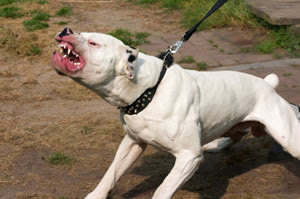
pitbull

There’s been a lot written about the devastating effect psychopaths have on other people, but what about their pets? Do psychopaths even have enough empathy to keep pets?

Unfortunately, yes they do. But for them, pets are a means to an end, a creature that can be exploited in various ways that serve the psychopath, rather than a friend and companion. A pet can be a way to “keep up with the Joneses” (if most of their neighbors and relatives have pets). They have no genuine love for the animals under their care, and often treat them badly or even abuse them. Here is an article I just read last night where the blogger calls out his MN sister about the callous way she puts her cat to sleep because she’s moving, even though there’s nothing wrong with the cat. Later the blogger describes the cruel manner in which the woman’s two beautiful dogs are left outside on a chain even in the searing heat or freezing cold, and are never played with or paid attention to. Eventually, this cold woman tells her brother she will be having her depressed but otherwise healthy golden retriever put down “because he’s old.”

I remember when we lived in a trailer park for about a year, some of our neighbors treated their animals very badly. I don’t know if it was just ignorance (most of the people living in the trailer park were not too well educated) or if we had a surplus of psychopaths living around us, but I remember one poor dog in particular. In fact, this dog was a black lab/Doxie mix who was the sister of my dog, Dexter (who we acquired from a family who lived in another trailer in that park).

Rain or shine, snow or sleet, or on the hottest days of summer, that poor dog was left outside attached to a clanking metal chain in the driveway. The few times I saw anyone interacting with that dog was when the owner, a raging drunk whose wife had called the police on a number of occasions for abusing her, would kick the dog or yell at him. I would have called the police, but was afraid of the repercussions, and also the dog had become so aggressive I knew no one would adopt her and she would have been put down. Maybe that would have been the best thing for her though, but I wasn’t thinking clearly at the time, being embroiled in my own mess with my own psychopath. I did try to interact with the poor dog occasionally, but she would just bare her teeth and growl. I would look at my Dexter, with his sweet, affectionate personality, and think of what his poor sister could have been had she been cared for by loving owners. I have no doubt that owner was a psychopath. Anyone acting that cruel toward his pet is someone without much or any empathy. A person who just dislikes animals would not have a pet at all, not keep one around just to abuse it. The owner probably kept the dog for “protection.” Why else have one?

dogoutside
Is this dog’s owner a psychopath?

In fact, you see that a lot. There are many people who keep a dog, usually an “aggressive” breed such as a Rottweiler or Pitt Bull, as a method of security. No one will try to break into a house or trespass if there is a barking, aggressive dog present. People who keep dogs as a form of security aren’t necessarily psychopathic though. A normal person who keeps a dog for such a reason will still play with the animal and be affectionate toward it when it’s not “on duty.” But if the animal is ignored, or left outside all the time, that’s a different story. Whenever you read or hear a heartbreaking story about a vulnerable animal being neglected or abused, you can bet it’s owner was a psychopath. In fact, pets, being helpless and trusting, often serve the same purpose as a child or vulnerable person: as a scapegoat.

There are other psychopaths who like to brag about how aggressive their dog is. The dog is an extension of themselves, and they take pride in training it to attack or act aggressively toward others, not as a form of security, but as a way to intimidate other people through their dog. Training a dog to be aggressive just to be aggressive is also a form of animal abuse.

Then there are those who, like my MN mother, keep a dog or other animal as a status symbol. They always choose a purebred animal, often a type that is trendy or expensive and makes them appear to be wealthy to others. My mother has a purebred Bichon Freze, a very cute dog, but it’s an extension of herself rather than a companion. She takes it in to a groomer monthly to have its nails done and puts bows on its head. I’m sure if this dog develops health problems, no matter how minor, she will have the dog put to sleep. Several years earlier, she had a purebred toy poodle, and when she got old, callously had her put to sleep, even though she had no health problems other than a little trouble walking due to arthritis. When I questioned her about why she took such drastic action, she just shrugged and told me she didn’t have the time to deal with an ailing animal. I don’t recall her even shedding a tear.

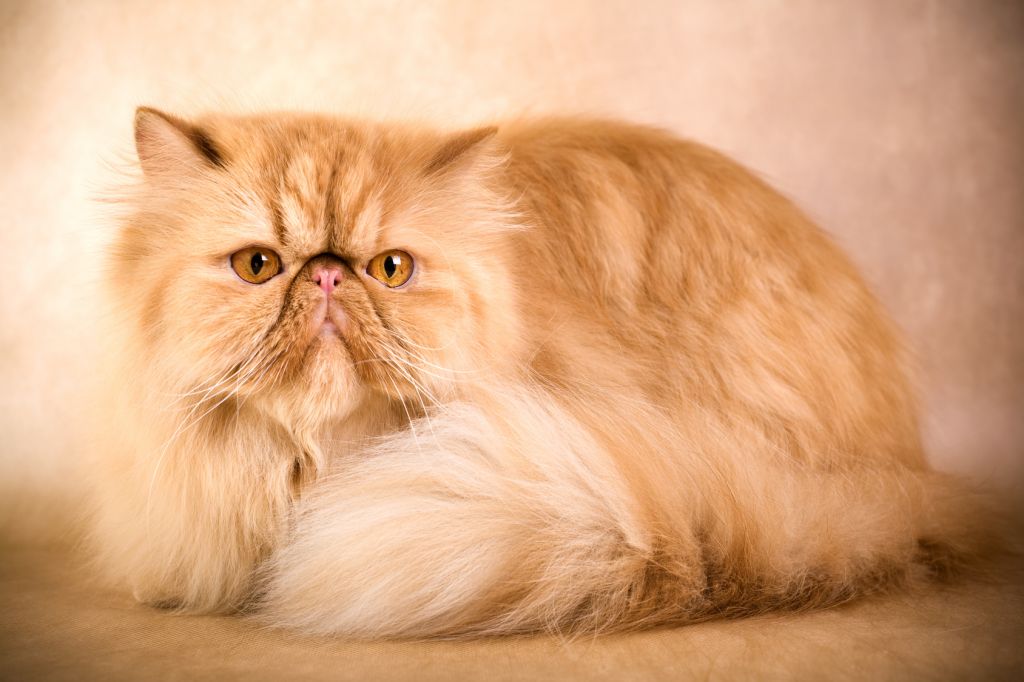
There are purebred animals that have been inbred so much they have health problems. I think anyone who breeds a dog or cat for a certain “look” at the expense of its health is lacking a conscience or empathy, at least toward animals. These people are breeding animals to have a deformity! Imagine breeding humans to have a condition such as Spina Bifida. How is it any different? Persian cats are a perfect example of a cat breed that has been bred to have a pushed in, flat (and in my opinion, ugly) face and as a result they have breathing and other health problems. Some dog and cat breeds, such as the “munchkin” cat or Bassett hound have serious spinal issues or have trouble walking due to their excessively short legs.

persiancat munchkin
Persian and munchkin cats.

Some psychopaths use pets as a way to torment or control their children. They will purchase or acquire an animal for a child, and then if the child misbehaves, hold the threat “I’ll have Fido or Fluffy put to sleep if you do that again” over the kids’ heads. This is mental torture. My N-ex’s mother was a narcissist herself and used this tactic to manipulate him. When Michael was five, his father brought home a white puppy. He loved that dog and spent all his free time with him (he may not have been a narcissist yet, it’s hard to say). One day when he was five, he was coloring with crayons on the hardwood floor, sitting in a patch of sun that came in through the living room window. Buster, the puppy, was sitting next to him watching. There was also a pair of child’s plastic scissors on the floor. As children will do, he left to do something else without putting the crayons and scissors away. But before he came back, Michael’s mother discovered the crayons had melted all over the wooden floor. Surely she couldn’t have really thought the melted red and purple crayons were blood, but when Michael returned to coloring, she pointed to the waxy, melted mess and the scissors and accused him of “cutting the dog.” Buster did have a little red crayon on his fur but was not cut and wasn’t hurt in any way. To punish Michael, his mother announced she was having the puppy put to sleep, in order to “teach him a lesson.” And so she did. So psychopaths will use animals to manipulate, control and torment their children.

Some psychopaths and narcissists will acquire a pet to control other people. My ex, Michael (the grown up version of the little boy in the last paragraph) did this. Now he actually was an animal lover (and always said he preferred animals to people), but he also used them as a way to say “fuck off” to me. I’m an animal lover and have always had pets, but I remember when in 2011, he adopted a dog without asking me how I felt about it. At the time, I already had three cats and Dexter, my dog. The house I live in is small, and there wasn’t room for another dog. For several weeks he had been combing Craigslist looking at puppies. He wasn’t working and was basically freeloading while I paid all the bills. Not only was there not room for another dog, I couldn’t afford one. I begged him to not get any ideas. Michael assured me he was “just looking” and to stop worrying.

Well, lo and behold, one day I came home from work to find a puppy in his arms on the couch. I was angry and told him there was no way I could take care of another pet, and he would have to take it back. He said he wouldn’t. “Too bad, he’s here to stay,” he said.

The puppy was a Jack Russell/Beagle mix and the loudest, most undisciplined, and hyper dog I ever met. Michael refused to train him and a year later this dog was still pooping and peeing in the house. He also tore up everything, and I’d regularly come home from work to find the house in a shambles. Michael never bothered to pick up the mess. He’d just make excuses for his pet, whining “but he’s just a puppy!” even though the dog was a year old. If me or my daughter tried to discipline him, Michael accused us of being cruel. Talk about gaslighting!

destroyinghouse

The dog (who he named Barnaby) also barked constantly and ran away at least 3 times a week. We’d hear Barnaby barking and howling somewhere in the neighborhood but he wouldn’t return for hours, no matter how much we called him. He was a neighborhood nuisance, and three times neighbors called animal control. Still, Michael refused to discipline or train him. That job fell to me and my daughter, but of course we were “cruel” or “hated animals.”

The third time animal control showed up, I told them to please take the dog. I never wanted him in the first place, and I couldn’t control him. I didn’t want to pay a $75 fine to keep him, so away he went. I felt bad about the fact he would probably be put down, but there was nothing else I could do. Michael, of course, was livid, and said “I never realized how much you hated animals.” Of course only HIS needs mattered. He didn’t care that all the training and financial expense of the dog fell on me. He also didn’t care about Barnaby’s needs: he was wel aware that Jack Russells (and Beagles) are extremely active dogs that need to run. It’s in their genes. We were living in a small house with a tiny unfenced yard, and that’s not an appropriate setting for a dog like Barnaby. But like all narcissists, Michael was like a three year old: “I want a dog and I better have one and I don’t care what you think!” Now I love dogs, but in Barnaby’s case, I was never so happy to see the last of that animal. I hope someone with a large fenced yard and time to train him appropriately adopted him.

So yes, psychopaths do keep pets, but they are kept for all the wrong reasons–to control others, to serve as scapegoats or status symbols, to guard property, and generally to serve as extensions of the psychopath. And that’s about it. Psychopaths and narcissists have no genuine love for animals, just as they have none for other people.

Psychopaths should register themselves

courtgavel

Convicted sex offenders are required to “register” themselves to protect potential victims. I think there should be a new law that also requires psychopathic individuals and malignant narcissists to register themselves for the monsters they are. Of course, identifying them all would be tricky (and maybe impossible), but we could start by requiring all suspected psychopaths and narcissists to take the Psychopathy Checklist developed by Dr. Robert Hare. The Checklist has been used with a great deal of success in identifying which criminals are psychopathic, and has been used to make sentencing decisions in murder cases.

Even if only a small portion of these characters were identified and registered, it would save a lot of people from becoming victimized.

The distinctive “look” of psychopathy: gazing into the face of evil

blackhole
Gaze into the void…

Psychopaths and malignant narcissists are very good at putting on masks to get others to trust them. They can seem warm and charming when they want to. But sometimes they can be caught when their mask is momentarily down (usually when they’ve been called out–or caught), and it’s here when we see the emptiness and evil inside them.

I’ve described this look before–I’ve seen it on my mother’s face and it gave me nightmares for weeks. I saw it once on my ex’s face when he was drunk and angry. It’s not so much a demonic look (which has a sort of life to it) as a dead, lifeless look that is far worse. It’s a malignant look that makes you want to get away from them fast. Like there’s nothing inside them except an vast and endless black void of nothingness. It’s like standing at the precipice of a black hole, and what can be more terrifying than some nameless void that can suck you into itself–and can even swallow light?

Many people have mentioned the intense stare a psychopathic person will fix you with, even when they are trying to charm you into trusting them. During the “wooing” phase, you may think this intense stare indicates attentiveness and strong interest in you as a person, but actually all they’re interested in is how they can use you and later destroy you. Make no mistake–they are predators out for the kill. If you have met someone who seems to stare at you excessively, or in a predatory way that makes you uneasy, that person is probably a psychopath or malignant narcissist trying to get their hooks into you. RUN LIKE HELL.

I don’t think evil is the opposite of good. I think evil is the opposite of somethingness–evil is pure black nothingness. Here are some examples of the dead, reptilian eyes of known psychopaths and malignant narcissists.

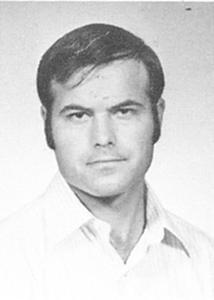
dennis_rader_1973
Serial killer Dennis Rader

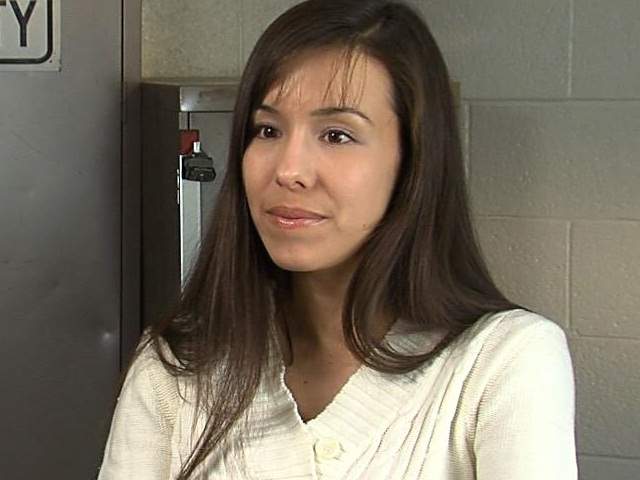
jodiarias
Convicted murderer Jodi Arias. Her trial footage shows as many fake tears and mask-changes as Scott Peterson’s and none of her “emotions” seem genuine.

scottpeterson
Scott Peterson, unfaithful husband who murdered his pregnant wife and unborn child.

susansmith
Susan Smith, who murdered her two young sons by sinking them in a car she drove into a lake because she wanted to please her lover, who did not want children.

SO.0511.Mothers2.HO
Actress Joan Crawford (“Mommie Dearest”), who was an alcoholic and abusive mother to two of her adoptive children (some reports classify her as having Borderine Personality Disorder with Histrionic and Narcissistic elements, rather than NPD)

In some cases, psychopaths show a distinctive smirk or sneer. Their eyes may twinkle, but it’s a hard, cold, glittering twinkle that is malevolent and creepy. Behind the twinkle, the eyes are still reptilian and dead. You may see this look when they think they’ve pulled one over on you–or perversely, when you’ve pulled one over on them–and they are ready to kill you either literally or figuratively. Here are some examples of this look:

Osama Bin Laden Headshot
Osama bin Laden, fundamentalist Islamic mastermind who ordered the attacks on the World Trade Centers and the Pentagon in 2001.

charlesmanson
Mass murderer Charles Manson, who never killed anyone himself but had his cult of followers do his dirty work for him. Some think he’s psychotic and therefore not responsible for his actions, but he’s a psychopath who knew exactly what he was doing and has never shown an ounce of remorse.

dickcheney
Former Vice President Dick Cheney, the brains behind the disastrous and dishonest Bush administration and our “preemptive” invasion of Iraq. Cheney and his cronies bailed out or pardoned corporate criminals like Halliburton. How could you trust a man with a face like that?

kochbrothers
The Koch Brothers, multibillionaire CEOs who by their words and deeds have shown their disdain and comtempt for the “little people” which includes both the poor and middle class. These jerks have zero empathy and seem very psychopathic.

ojsimpson
Former pro football player and actor O.J. Simpson during his famous 1995 murder trial. This insolent expression became his trademark look while he was on trial.

tedbundy
Serial killer Ted Bundy’s infamous look of psychopathic glee. *shudder*

unknownwoman
I don’t know this woman, but she is a malignant narcissist who apparently gets her jollies making the people who lived in her building miserable. Someone on another website about narcissists was being attacked by her and called her out. I wouldn’t have included her here, but this is one of the most frightening looking people I’ve ever seen. Her eyes look like those solid black eyes you see in horror movies of demonic people. I have no doubt this woman is as evil as she looks.

richardramirez
Serial killer and alleged Satanist Richard Ramirez.

I’ve also included this Court TV program covering the arrest and trial of murderer Scott Peterson. Notice how he uses tears to manipulate the police and interviewer, but how insincere he seems and the way he arranges his facial features into whatever “mask” he thinks will help his case. There are those who insist he is not guilty (and I had my doubts too) and of course being good looking like Ted Bundy, he had a number of “groupies” who defended him, but he’s an intelligent manipulator and after watching this video, I absolutely believe Scott Peterson killed his wife and unborn son in cold blood.

How my mother became a narcissist.

housework

I’ve said a lot of negative things about my mother, but I don’t hate her. Today I was thinking about how she got to be the way she is. While most narcissistic psychopaths are probably genetically predisposed to this condition and are missing the part of the brain that causes them to have empathy and compassion for others (actually it’s just not functioning properly), in most cases there are also psychological factors. Many psychopaths and narcissists were abused or neglected children, whose own parents failed to mirror them adequately as young children. So as unpleasant as they may be, their condition is not their fault. It was done to them.

I’ve already described my mother as a vain, self-centered, image conscious woman who almost always put her own needs ahead of those of her children and husbands, and chose me (as the youngest) to be her scapegoat. At times I was also her golden child, especially prior to my teen years when I started to rebel, and she loved to make me in her own image, dressing me up like I was a little doll. She expected me to act like one too, and flew into a rage if I ever had an opinion of my own or dared to challenge her.

The story I’m going to tell is gleaned from the scant bits and pieces I heard over the years, most of it described by people other than my mother. Like most narcissists, my mother is stunningly lacking in introspection. She almost never talked about her past or her childhood, and the few times she did, it was negative. Most of her anger seemed to be directed toward her mother, who she spoke of with contempt the few times she did mention her.

Ginny was a beautiful child with big blue eyes and light red hair. Somewhere in my mother’s home there’s a photo of her at about age two, and she is dressed in a pink and white dress with a Peter Pan collar, her bright hair is done in a 1930s bob, and she’s sitting in an oversized chair holding a large teddy bear on her lap. On her feet are brown high top shoes, and her little feet are sticking straight out toward the camera. Ginny’s expression is solemn, almost sad. In fact, she looks close to tears. I will probably never see that photo again, as I am not in contact with my mother and she’s in her 80s and probably won’t be here too much longer, even though she’s in good health for her age and still looks younger than her years. I wonder if at the time that photo was taken, Ginny’s narcissism was already ingrained, or if she could have still become a normal, loving woman had her circumstances been different. The sadness in her face tells me she was hurting. It’s the most vulnerable I’ve ever seen my mother.

Ginny was the fourth and youngest child born to a naval academy officer and second generation Irishwoman. The family was middle class, lived in a nice house in a safe neighborhood outside Annapolis, Maryland, and raised all their children as Roman Catholics. Because Ginny’s father was in the military, when the Depression hit, the family didn’t suffer too much financial hardship and his job remained secure. But Theodore (her father) was a heavy drinker, probably an alcoholic, and started drinking almost the moment he got home from work. Anna Marie (Ginny’s mother) suffered from melancholia (what we now know as major depression) and after Ginny was born, took to her bed and stayed there for most of her childhood and teen years. She may have been suffering from postpartum depression, but in those days, no one knew about such a thing. Anna Marie started to neglect her duties as a housewife and mother, saying she was “too sick” and had to lie down.

Ginny was the most attractive of the four children, and the only one with blue eyes. She was obviously Theodore’s favorite child, and he constantly told her how beautiful and special she was. Anna Marie began to resent all the attention he showered on his favorite child, and became even more depressed (she may have been a narcissist herself). Theodore was a faithful husband (from all accounts) but his wife’s demands were wearing him down and he began to drink even more. Sometimes he came home from work already drunk and often he would pass out after eating dinner, so that no one was running the household but the children.

By this time Ginny was about six, and her older sisters (who were in their teens) and brother (who was about 11) weren’t interested in keeping the house clean or taking care of their exhausted, drunk father and depressed, ill mother. Ginny hated dirt and disorder, and took it upon herself to keep the house clean and cook the family meals (Anna Marie was a bad cook). Her sisters were always out at parties or on dates and of course her brother was a boy so he wasn’t interested in keeping up the home or taking care of the family. Soon Ginny was the sole caretaker and became her father’s young surrogate wife. (I don’t know whether or not she was sexually abused, but it would not surprise me and I assume she probably was). Anna Marie developed a hatred for Ginny, who seemed to be everything she was not and also got all her husband’s attention. Theodore’s adoration of Ginny increased, and he began to depend on her for everything, including confiding his problems in his marriage. Ginny seemed sympathetic, but was already plotting to leave the home.

At age 15, Ginny had become a drop dead gorgeous young woman. She left her family and dropped out of high school to marry a young man from the naval academy who was studying to be a Methodist minister. She took a job modeling for the local newspaper to help makes ends meet. By 18 she was pregnant and gave birth to her first daughter, and a few years later she had her second child, also a girl. But Ginny was tired of the church dinners and the drudgery of family life. She was bored and longed for excitement that her two young daughters and minister husband couldn’t provide. So when her daughters were just 7 and 2, she left them to marry my father. It was the late 1950s, and a woman leaving her husband and children just wasn’t done, but she did it without a second thought.

Although her older daughter had abandonment issues and hated Ginny for years for leaving, today my mother lives in her home and my sister’s become Ginny’s most loyal flying monkey. I barely ever knew my sister, but I was told several years ago that I was not welcome in her home because my sister didn’t want me there. Either my mother didn’t want me there and blamed it on my sister, or my sister is a sheep who believed all Ginny’s lies about me. Ironically, my sisters were much better off than if she hadn’t left them because the woman who married her jilted husband and raised them was a kind, nurturing woman, almost the polar opposite of my mother.

Another irony is that even though my mother, as a malignant narcissist, is completely lacking in compassion, both her father and my father were taken in by Ginny’s fake “sympathy.” Ginny listened to her dad talk about his marital problems when she was a teenager and offered him kind words and a ready ear; and recently my son told me how my father fell in love with Ginny (my father never told me this story but he told him): my father’s 3 year old son from his first marriage had been hit by a train and died, and my mother offered him a shoulder to cry on and a sympathetic ear and soon he was madly in love with her.

I clearly remember when my grandmother suffered a major stroke at age 57 when I was only 7, my mother’s comments after seeing her in the hospital. All she could talk about was how helpless and disgusting she was (the stroke had left her paralyzed from the waist down and incontinent) and how she couldn’t wait to get out of there. Even at that young age, I was horrified by my mother’s callous remarks about her own mother.

Even though I don’t use my real name or their real names, sometimes I think it’s just a matter of time until she discovers this blog. I had to go inactive on Facebook because of her extended family all finding me there.

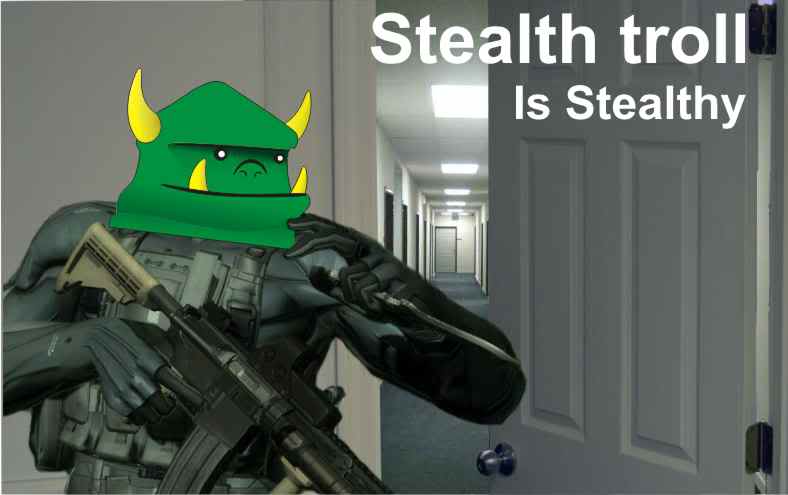
Two kinds of stealth trolls

stealthtroll

In two earlier posts I wrote about online bullies and trolls (not exactly the same thing, but close enough). I won’t explain here how they differ and are the same (you can read the articles which I’ve posted links at the end of this article), but I neglected to mention stealth trolls. Stealth trolls seem benign, but can wreak havoc on web forums and social media. I will describe two types of stealth trolls. There are probably others.

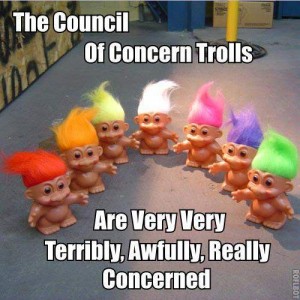
The Concern Troll

concerntrolls

The Urban Dictionary defines a concern troll as:

A person who posts on a blog thread, in the guise of “concern,” to disrupt dialogue or undermine morale by pointing out that posters and/or the site may be getting themselves in trouble, usually with an authority or power. They point out problems that don’t really exist. The intent is to derail, stifle, control, the dialogue. It is viewed as insincere and condescending.

A concern troll on a progressive blog might write, “I don’t think it’s wise to say things like that because you might get in trouble with the government.” Or, “This controversy is making your side look disorganized.

The concern troll’s M.O. is stealth. They appear harmless. In the guise of “concern,” the troll infiltrates the website, seeming helpful, but their true intention is not to help, but to disrupt the community, dialogue or morale on the site. They probably know little if anything about the subject matter and their complaints are of a general nature. Their “concern” makes them feel superior. Concern trolls are probably narcissistic or even psychopathic, and their self-righteous “concern” makes them feel superior. Any attempt to pin them down and explain their “concerns” in greater detail or a request to explain the topic being discussed will usually cause them to disappear, but they’re likely to reappear under a “sockpuppet” account (another handle). The sockpuppet may be more aggressive in their trolling behavior and may even bully individual members or make openly hostile remarks about the site or its subject matter. A troll’s goal is to destroy the online community in the usual manner: by making its members leave the site.

The Triangulator.

triangleman

This is a dangerous troll who who pits people against each other by sending private messages containing lies about another user. It’s an online form of the triangulating that psychopaths and narcissists do. They are almost always found on social media and forums. I’ll give a hypothetical example of what a Triangulator does. Let’s say Lisa and Brian are online friends. The Triangulator (let’s call him John) befriends both Lisa and Brian. One day John sends Lisa a PM saying Brian told him that Brian thinks she’s dumb (he never said this). Lisa gets mad and sends Brian a PM saying her feelings are hurt that he went behind her back and told John she was dumb. Brian says he never told John he thought she was dumb, and he doesn’t think she’s dumb anyway. Lisa isn’t sure who to believe, so the trust between her and Brian is compromised. John then sends Brian a PM telling him Lisa thinks Brian acts like a know it all (she never said this). When Brian talks to Lisa and she tells him she never said this, he isn’t sure who to believe and the trust between them is compromised. The Triangulator can destroy a friendship this way, and that’s exactly what he wants to accomplish. By using this tactic, Triangulators can totally break down communication on a site and cause regular users to defect.

Don’t feed the trolls.

Trolls are simply narcissists who derive pleasure upsetting and destroying a healthy online community. If you can’t ban them yourself, the best way to deal with a troll is to report them to the admin or if that isn’t possible, ignore them.

Earlier articles about online bullies and trolls:
Internet Psychopaths: the difference between Trolls and Bullies
Internet Trolls are Psychopaths