Lucky Otters Haven

Ruminations, ramblings, and rants about narcissism and trauma, politics, human nature, religion, pop culture, writing, and almost everything else

Lucky Otters Haven

The Silent Treatment: weapon of control.

silent_treatment2

The silent treatment is a psychological weapon all narcissists use, even those lacking the cunning or Machiavellianism to successfully use more complex weapons like triangulation or gaslighting (I’m not sure they really require intelligence since it’s probably programmed into them and I’ve known plenty of dumb narcissists who are great at controlling and manipulating others in these ways–they are like trained monkeys).

We’ve all been victims of the silent treatment.  We might have even used it ourselves on occasion.  It’s not exclusive to narcissists so is probably not a good red flag, but all narcissists use it–and they use it a lot more frequently than other people do.

If you’ve been a victim of the silent treatment (also known as “stonewalling”) you won’t forget it.  You know the drill. It’s when they just stop speaking to you or even acknowledging your existence.   Usually, it’s in response to an insult of some kind.   You tell a narcissist their new haircut looks nice, and they get mad at you because you didn’t say it makes them look like a runway model (that’s how sensitive some of them are).   But they don’t tell you what made them mad.  No, you’re supposed to be a mind reader!  Instead, they don’t talk to you.   No matter how many times you ask them to tell you what upset them, their tongue is locked up like Fort Knox.   You beg and plead and soon find yourself apologizing even though you don’t even know what you’re apologizing for.   Anything to get them to talk to you!  It’s torture.   But it’s supposed to be–you are under their control and just where they want you to be.  It’s a brilliant psychological weapon and requires nothing from the narcissist other than a refusal to speak.

words_may_sting

While the silent treatment is most often used in response to an insult of some kind, this isn’t always the case.  Sometimes a narcissist will use the silent treatment for seemingly no reason at all.   I remember a man I dated for a short time before he devalued and discarded me and moved onto a new victim.  We were driving around New York City in his car, and having what I thought was a good time. The radio was playing and we were laughing about something or other.   Suddenly, for absolutely no reason, he went silent.  No matter how many times I begged him to tell me what was wrong, he wouldn’t.  In fact, my questioning seemed to piss him off.   It was weird. One minute he was laughing and had his arm around me, the next he was silent and stony faced.  I didn’t get it.    But he wasn’t done with me yet.  Suddenly, he pulled the car over, and told me to get out.  It was nighttime and we were in a terrible neighborhood.  I reminded him how dangerous this area was at night, and asked him for money for a taxi. “No,” he said coldly. “Take the subway to your bus stop,” he said callously, practically pushing me out of the car.  I managed to get home without being raped, robbed, or killed, and the next day this jerk called me and wanted to see me again.  He acted like nothing had happened.   I didn’t dare ask why (I didn’t accept his invitation though).   In retrospect, I think he did what he did because he could.  It was fun for him, and while he was doing it, he felt big and powerful and in control.

And that’s what the silent treatment is all about.  Control.  You are completely at their mercy, bewildered and confused–and they love that.    It makes them feel powerful.  If they’ve suffered narcissistic injury, giving you the silent treatment restores their equilibrium.   It’s also a handy way to punish you.  But sometimes they do it just because they can and there’s no way you can fight back.   If a non-narcissist uses the silent treatment, it’s a reaction to legitimate anger or hurt.   They are so upset they don’t want to speak to you for the time being.  But it isn’t being used to manipulate or control you.  They will talk to you about it later.  With a narcissist though, you will probably never know what upset them–if anything at all did.

P.O’d.

pissed_off

I guess I’m feeling like a victim today.  Both this and my last post are all about me wallowing in self-pity.   Eh, I’ll get over it but I need to vent.   This will be short though.

After that out of the blue attack on my character on another blog a few days ago, I told myself I wouldn’t let it get me down.  I told myself I’ve grown a lot and have a lot more courage than I did a year ago, the last time this happened.   I told myself that as a blogger, I need to grow some balls and accept the fact that I will have haters.

I lied I guess, because for the past couple of days, I just haven’t felt like posting, at least not anything too personal.    My loss of motivation has everything to do with this vicious and unwarranted attack on me.  I set my other blog (Down the Rabbit Hole, which is more personal in nature than this one and was the source of the post that was used against me) to private and will probably keep it that way for awhile; I have no idea for how long.   Because it’s so personal I don’t have the courage yet to make it public again right away.

This pisses me off–a lot.  How dare this hypocritical person take away the one thing that keeps me going?  How dare this horrible individual make me set my writings to private and make me feel the toxic shame all over again? And anyway, shame for WHAT?  For writing a post that made me seem TOO VULNERABLE?  Why should that be shameful?  It isn’t, of course, but my programming tells me it is, and I got triggered.

I know it’s my own choice to inhibit myself and set blogs to private, and really, this narcissistic person can’t do much other than continue to post negative stuff about me on their blog.   If I don’t look, I won’t be hurt or angered–and I haven’t looked.   A year ago, I would have *had* to look, so one way I’ve changed is I’m able to resist the temptation to see what the haters are saying.  I never used to be able to do that.

I know this will be the topic in therapy the next time I go.  I still let narcs get to me way too much.   I still have such a long way to go.

The picture of the wolf head at the beginning of this post, I find inexplicably hilarious.   Laughter is always great medicine!   Thank God for my sense of humor.

No, you’re NOT being judged and watched constantly.

Lenora Thompson, who writes a blog for Psychcentral, wrote this post that I’d like to share.    I think most of us who were narcissistic abuse victims are hypervigilant and even paranoid–always looking over our shoulder for the next attack.  We assume everyone is watching and judging us all the time, but they’re not.  We’ve just been programmed to think they are because we were surrounded by narcissists during our formative years who did.


No, You’re *Not* Being Watched and Judged Constantly

3550755709_d8be7ba08b_zWhen you’ve been surrounded by narcissists all your life, naturally you assume everyone thinks like them. Judges you like them. Hey! It’s self-protection. But they don’t, you know.

Holocaust survivor, neurologist and psychiatrist Viktor Frankl is renowned for saying, “An abnormal reaction to an abnormal situation is normal behavior.”

Being constantly watched is abnormal. Being chronically judged for anything and everything is abnormal. Hell, narcissism is abnormal, hence the name of this blog: Narcissism Meets Normalcy.

Unfortunately, abnormalcy breeds abnormalcy. It’s abnormal to be hyper-vigilant, but we developed it for self-preservation. Thus it’s normal…for us.

It’s abnormal to constantly self-criticize. But we learned to self-criticize, to anticipate every possible criticism that might be hurled our way. We learned to practice clairvoyance (thinking with the narcissist’s brain.) It was simply less painful than being blind-sided. Thus it’s normal…for us.

Read the rest of this article here.

Guest Post # 10: Narcissistic Abuse in 12-Step Programs

12_step_cult
Artwork by Danny Jock

Ceetee, who wrote this post, writes an interesting blog about the darker side of 12-step programs, called Quicksand: The Darker Side of 12-Step Programs. Be sure to click on the link and pay a visit.

Ceetee writes about a little-known problem in 12-step programs like Alcoholics Anonymous– some members of these programs adopt a cult-like mentality and “take your inventory” for you, even though one of their slogans is “don’t take my inventory.” I have known people, including family members, who treat AA and other 12-step programs like a religion. You must follow their Commandments (the 12 steps) to the letter, and if you disagree with old-timers’ “assessments” of what your problem is, they tell you you are resisting or are on a “dry drunk.” Not all members are like this, but many of them are, and they can be cause psychological trauma to those who are new in these programs. Others have also written about the religious cult-like atmosphere often present in the meeting rooms.

Don’t get me wrong. AA and other 12-step programs have helped a great many people, and are one of the most effective (and cheapest) ways a person can get clean or sober. They have saved many lives. They also have a spiritual aspect, which adds another dimension that goes deeper than just “curing addiction.” They also tell you that once you’re addicted, you’re always addicted and should refrain from using or drinking, one day at a time. This is excellent advice and works for many people. But the dangers of these programs is that many people with addictive disorders who join them are narcissists, and use their “knowledge” or “experience” to make themselves feel superior to others. They think they know you better than you know yourself and don’t hesitate to lord it over you as if you’re nothing. You are told to “shut up and listen” because they are the “old timers” and have a right to tell you what you’re doing wrong. Since 12 step programs are run by the members themselves, there are really no safeguards against narcissistic abuse within these programs. One must proceed with caution.

Another problem with 12-step programs is that for some people, they seem to become another addiction.    I suppose that’s fine as far as if goes (going to meetings beats drinking or drugging), but too often , recovery stops there, and the member never attempts to address the roots of the problems which caused them to abuse alcohol or drugs in the first place.  From what I can tell, disorders such as NPD and BPD seem to run rampant in these programs, and people with these disorders often do become addicted to substances, in their attempt to fill the emptiness they feel inside.  Getting clean or sober is great, but it’s only treating one symptom of a deeper problem, and their disordered, grandiose, gaslighting, entitled behavior remains the same or even becomes worse.

Here, Ceetee writes of her own experience with certain narcissistic individuals in a 12-step program she joined, whose toxic “help” she had to recover from. It almost destroyed her life, but she has quite a story to tell.

NARCISSISTIC ABUSE IN 12-STEP PROGRAMS

zombie-steps-fix

Nearly twenty-two years ago, I made a mistake that destroyed my life and my family. In the middle of an ongoing battle with my mother that I had no idea how to resolve, I took the approach that perhaps total strangers could be objective and would have a solution. It began with pen-pals; I’ll call the first pen-pal “Marie.” Marie offered hope for a better life; but she said what I must do is “work the Twelve Steps.” And without any drug or alcohol problems, that’s how I became involved in 12-Step programs. It didn’t even occur to me until much later that after I was immersed in ‘the programs,’ the actual problem was never addressed again.

Throughout the years, I knew many good people who participated in programs. However, I also met those who took the slogan “If you want what we’ve got–and are willing to go to any lengths to get it” to mean targeting and destroying others. And while there is plenty of information around the web describing all sorts of crimes members commit, this particular subject is rarely addressed: “rewriting your life history” to include false memories of childhood sexual abuse. I feel it is necessary to address it, as I’ve known many individuals who have had similar experiences–no memories of abuse until they were ‘worked on’ by old-timers in the Programs.

I was ‘worked on’ by three different members–each in a different location. Each had something they wanted from me, and this scam was the most destructive tactic they took to achieve it. They tried to cause me to doubt my own mind and memories; but more destructive, took the approach to other people ‘See how crazy she is–she does not even know what happened in her own life!’

I dismissed many “red flags,” because I didn’t understand what they were about. One example was (as the older generation would have called it) being “too familiar”–a total stranger would act like he/she was your dearest best friend, your confidante. Second, total strangers pushing the attitude that they know more about you and about your life than you yourself know. Third, the attitude that they and only they know ‘the truth’–everyone else and everything else is ‘wrong.’

Each began with a different approach. Individual #1 took the approach that he was an expert on everything related to drugs. Individual #2 basically rewrote the English language to suit her agenda–which is a common thing in 12-Step programs. Individual #3 claimed virtually everything about me were signs and symptoms of repressed trauma. None of these individuals were professionals in any capacity. All I could figure was they ‘read a book’ or ‘saw something on the Internet,’ as much was aligned with what memory experts said decades ago: the ability to create false memories, and to plant seeds of doubt, are almost limitless. Between the three of them, they attempted to get me to believe virtually everybody in my childhood had ‘sexually abused’ me. Individual #1–the first I actually met in person–demanded I give him all my family photographs; he tossed them in a wastebasket, set fire to them, and smugly remarked “You’ve gotta mark ’em all as Perpetrators.”

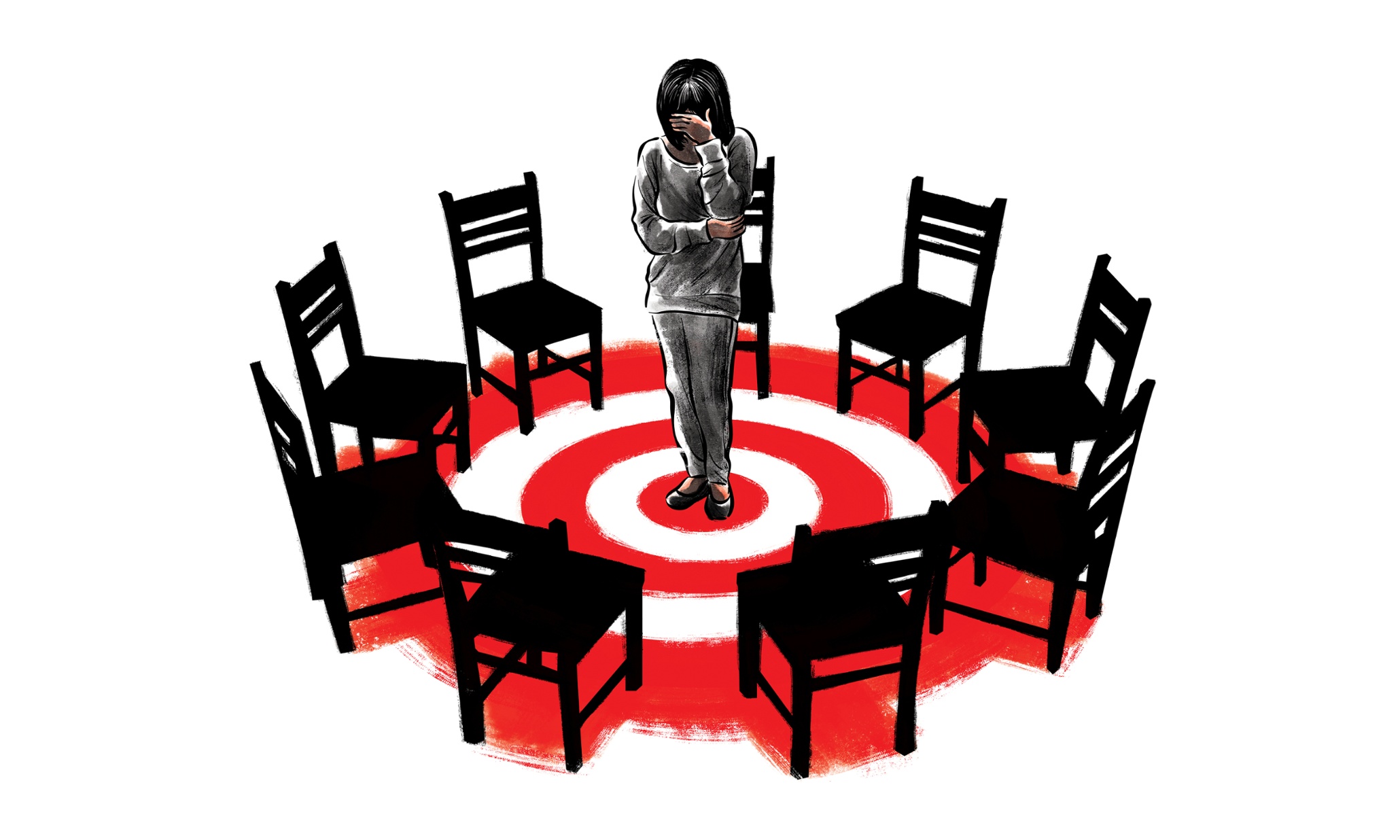
target_cult
Artwork: Chloe Cushman for The Guardian

Another red flag that bears noting: while Marie and most others focused on their programs, the present, and looking toward the future, these three were much different. Their entire focus was on “The Past” and “Abuse.” And yet another red flag: looking for any ‘crack in the armor’ that they could exploit as ‘proof’ that their assessments were correct.

Hopefully it won’t sound too ludicrous taking it all out of context, but some examples:
One, upon learning I’d had a minor medical problem as a small child that required prescription medication, assessed: “Your parents lied to you! They were drugging you so they could Abuse you!”
Noticing I’d run outside to see what the commotion was when police cars arrived at a neighbor’s house: “What is it from Your Past that caused you to Fear the police?” Individual pressed me to search my early childhood to see if I’d known any police officers that may have sexually abused me.

Upon learning I’d never gotten along with my mother, another individual dismissed the fact that it was nothing more than personality conflicts, and claimed I was an incest survivor and had post-traumatic stress disorder because of it. This individual said anything you dislike is sexual abuse, and must be called ‘rape.’

In one instance, I had a minor cold; when this did not require a visit to a doctor, this individual asked, “What is it from Your Past that’s caused you to Fear doctors?” This individual pressed me to think about the doctors I knew in my childhood, and asked if either of my parents were in the profession.

Vertigo attacks from an inner-ear infection; migraines from hypoglycemia; and my habit of watching where I’m going when barefoot so I don’t step on sharp objects were pounced on as proof that I had ‘traumas in the past that I just don’t remember.’ Also, a person does not have personal preferences, likes or dislikes, or objections to anything–they’re all proof of sexual abuse.
Similar to the tactics used when the so-called recovered memory movement was in full swing, I was pressured to consider every thought and dream as a ‘memory,’ any ache or pain to be a ‘body memory,’ etc.

The only incident that actually did occur was blown way out of proportion: when I was four years old, a neighbor of indeterminate adult age exposed himself, and then told me a ‘scare story’ so I wouldn’t tell my parents or brothers what he’d done. The incident was confusing, but it was not ‘traumatic.’ However, one of these members claimed it was a matter of “delayed stress,” that I “only had a cap on it,” and at some point without warning my mind would blow apart. Note I was told this asinine nonsense more than forty years after the incident.

The reason I was vulnerable to this nonsense: I’d never heard of this crap before. For years I knew something was fishy, but didn’t know what to make of it. My first breakthrough came when I met a 12-Step member who was pointing at nearly everyone she’d ever known and accusing them of sexually abusing her. I knew for a fact some of the people she was accusing hadn’t even been in her life when she was growing up.

The second breakthrough: I did some research, and found the ‘drug’ I was told my parents had given me wasn’t even available in the United States when I was a young child. In addition, while the member went by my description of the medication (size, shape, color), the two drugs bore no resemblance to each other.

Fortunately, these breakthroughs occurred before individual #3 intruded into my life against my objections, tried to “convince” me that I was “insane” because of my “past,” and destroyed my reputation and my life because I didn’t fall for it.

This is a widespread problem in 12-Step programs. I’ve known many people who had similar experiences–both male and female in all age groups. And while this is only the tip of the iceberg of what I went through, I’m hoping that exposing this issue can help others avoid these problems. First, if someone you don’t even know gets too familiar, too close, too intrusive, take whatever steps necessary to get that person away from you, your life, your family. Second, if you’re pressured to believe things happened that you don’t remember, keep in mind that this ‘information’ is not coming from within you, yourself, but that it is being placed there by outside sources.

Further Reading:

Narcissists Who Use 12-Step Programs to Further Their Agenda

Narcissism ~ Should we forgive the abuse?

TRIGGER WARNING: This guy’s videos are incredibly good, but VERY intense. Still, I can’t stop watching them. Sage advice from a survivor of narcissistic abuse.

Comments for this post are disabled.  Please leave comments under the original post.

A list of useful blogs and books about NPD, narcissistic abuse, and BPD.

These are all listed under my “Resources and Support” tab in the header, but I wanted to call attention to them. I have added some new ones. My apologies if you don’t see your blog listed here. Unfortunately, I can’t list them all but if you want me to add yours, please comment and I’ll be happy to add it.

narcissus

Here are some websites, books and blogs focusing primarily on Narcissistic personality disorder (NPD), narcissistic abuse, and Borderline personality disorder (BPD), though some touch on other personality disorders as well. This is only a small sampling of what’s available. The Internet is loaded with websites about NPD and narcissistic abuse; a quick Google search will bring up many that I have neglected to list here. BPD is not so widely covered, but is becoming more so.

Blogs, Websites and Forums

Dealing with Manipulative People — Dr. George K. Simon’s excellent blog about Cluster B personality disorders (Narcissistic, Borderline, Antisocial, and Histrionic Personality Disorders) with a focus on NPD. Dr. Simon is also the author of several books, which are listed below.

Out of the Fog — excellent support forum for people dealing with those with personality disorders and other mental health problems (or who have a disorder themselves). Every personality disorder recognized by the DSM (Diagnostic and Statistical Manual of Mental Disorders) is covered. I never posted here myself, but I’ve lurked there a lot and found the site very interesting and helpful.

Narcissists Suck — Anna Valerious is a survivor of psychopathic parents, and her blog is excellent. It can also be irreverent and hilarious. Her take no prisoners style may take some getting used to, but she has a lot of heart and a LOT to say about narcissists. Valerious is a Christian, and she sometimes quotes from the Bible, but for the most part, you don’t have to be a Christian or any sort of believer to appreciate her blog. She hasn’t posted in it for awhile, but the articles are still relevant, entertaining, and useful.

An Upturned Soul — longer articles than average, but well written, intelligent, and always fascinating to read. There was no way I could leave this one off this list, since I have reblogged several of her articles already.

PsychopathyAwareness Blog — good blog about psychopathy right here at WordPress. The blogger really knows their stuff.

What Makes Narcissists Tick?— This blog was created by Kathy Krajco, an author about narcissistic abuse who was well respected in the community of narcissistic abuse victims, until her untimely death several years ago. Due to that, the blog hasn’t been updated in a long time, and many of the links don’t work, but it still contains both practical and fascinating information about narcissists and why they are the way they are and why they do what they do.

NarcissisticMother.com is a website focusing on self help for the adult children of narcissistic parents (ACONs), particularly mothers, since in our culture, mothers still have the strongest influence on their children.

SociopathWorld is an intriguing website from the point of view of sociopaths (not exactly the same as psychopaths but very similar). It’s interesting to “get inside their heads” to help understand why they act the way they do. It’s creepy and fascinating how dissociated from emotions, themselves and others they often feel and some explain it surprisingly well.
Similar to SociopathWorld is Psychopathic Writings, a blog written by a psychopath whose articles are interesting and well informed. If you like sites like these, please also check out Kiasherosjourney.

Country of Liars: a website by and for the victims of sociopaths and psychopaths. The blog’s owner, like so many other similar blog owners was the scapegoat of a family of such people. Well written blog.

Lady With A Truck’s Blog: Like so many survivors of narcissistic abuse, LWAT struggles with poverty. Our abusers ruin us on every level, even our ability to earn a living. This is a wonderful blog by a lady with an attitude and a heart. Her writing draws you in like a novel, she’s inspirational, and she’s often quite funny too.

Constant Supply: The Narcissist’s Wife. A blog by a woman married to a malignant narcissist.

Faces of Narcissism: a fairly new blog written by Joanna Moore, a narcissistic abuse survivor. She was married to an abusive, sociopathic man who she is No Contact with today. A good mix of practical, no nonsense advice and personal stories.

Grace for My Heart: Although this blog written by a Christian pastor isn’t specifically about narcissism, it’s a popular topic on his blog (he writes about narcissism every Friday in his “Narcissist Friday” posts) because of all mental disorders, NPD (along with Antisocial Personality Disorder) is the most likely to have a spiritual component. Interesting and uplifting blog for Christians and those interested in God’s grace and spirituality. One of my favorite blogs.

Worldly Annoyances — ACON blog with a biblical Christian perspective. Sue can also be extremely funny at times.  I don’t always agree with her literal Biblical views, but I agree with much of what she has to say just the same.   Her posts are short and sometimes make me smile.

Galesmind:  Blogger who writes about narcissism and a lot of other topics too.  Often funny and entertaining.  Gale also writes a lot about Internet abuse (bullies, trolls and other sociopaths roaming the web).

Narcwriters: a listing of personal blogs about narcissism and blogs by psychologists with a focus on NPD. A good resource that lists many blogs that I have overlooked here.

The Narcissistic Continuum: This blog is great. It differs a bit in format from most other narcissism blogs because of the way its articles are ordered according to severity across the narcissistic spectrum, from “healthy narcissism” (narcissism is good in very small doses–just like heavy metals in the blood are necessary but become poison if excessive) all the way to psychopathy/sociopathy. CZBZ’s blog is also very easy on the eyes, in my opinion.

TNC’s owner also has a forum, Web of Narcissism (WoN), which is inactive but there’s still a lot of great information there.

Lenora Thompson — Psychcentral/narcissism: Lenora Thompson is a survivor of narcissistic abuse who writes a blog about narcissism on Psychcentral.  Check her out!

No! It is Not Your Fault!   A blog about narcissism and narcissistic abuse from an unlikely writer who himself has an NPD diagnosis but is unusual because of his self-awareness and desire to heal from his disorder (he is in treatment).   Ruud’s blog is definitely worth a follow.  Reading his story brought me to tears and I don’t cry easily.  He also gives good, practical advice to narcissistic abuse survivors.

Psychforums: Online support for anyone with a mental disorder and those trying to understand and help loved ones who have them. Active section on NPD and other personality disorders, and includes posts from people suffering from NPD as well as their victims.  I posted here for awhile, and the narcs and “nons” (as they are called) seem to co-exist here quite nicely.

Discussing Dissociation: Thoughts from a Trauma Therapist — Although this site focuses on those suffering from DID (dissociative identity disorder), there is much information and help here for anyone suffering from other mental disorders caused by abuse and trauma, such as C-PTSD. The symptoms of C-PTSD can closely mimic those of Borderline Personality Disorder and include dissociative features.

BPD Transformation — Blog written by a former sufferer of BPD who was cured. Ed’s posts are sometimes a bit scholarly but incredibly educational for those who like a bit of meat in their blog posts and dislike things being dumbed down the way they so often are on the web. This blogger probably knows more about the Cluster B disorders and their treatment methods than most mental health experts. But it’s not all graduate-level reading. Some of his articles are quite hilarious too.

Make BPD Stigma Free! — a blog devoted to getting BPD recognized as a form of complex PTSD and taking away the harmful “crazy” and “evil” stigmas a BPD diagnosis carries.

Healing From BPD is a good website for people suffering from BPD with information about DBT and other treatments.

Borderline Bella is a university student from England who has struggled with both having BPD and the stigma it often carries.   She is a new blogger here on WordPress and her writing is always honest and heartfelt.  Her blog is definitely worth a follow!

Ramen Noodle Nation: Humans Need Not Apply: This blog is not specifically for ACONs and survivors of narcissistic abuse, but because so many of us struggle with poverty (either after being taken for everything we own or just because we were trained to be “failures” by our parents and never given the tools to do well in life), I think this website can be helpful and validating to those of us struggling with poverty or even just living on a very tight budget. Definitely on the fiscally liberal side of the political fence, this blog calls out the malignant narcissism inherent in our culture of greed and low empathy for the poor.

There are also many other personal blogs of survivors of psychopathic abuse on WordPress. There’s way too many to list  here!   If you have a blog that focuses on narcissism or BPD that you don’t see listed here, let me know and I will add it to the list. Also, if you know of any other websites you would like to see listed, let me know and I will add them.

Books
Malignant Self-Love — You can purchase or download the free eBook by Sam Vaknin. Vaknin is a narcissist who wrote this extremely detailed book about NPD. You can read part of it free online (PDF format). It is also available for purchase. There’s been a lot of controversy surrounding Vaknin’s credentials but it can’t be denied he definitely knows a lot about this subject and gives advice on how to deal with people like himself. Vaknin is unusual–a narcissist who has enough insight to know his own motives and warn people accordingly. However, given that insight is a characteristic narcissists generally don’t have, is Vaknin really a narcissist at all?  Well…yes, he is.

Vaknin is also the subject of the documentary, I, Psychopath. He may or may not actually be a psychopath, but he does act pretty narcissistic in the film most of the time and bullies the filmmaker. Definitely worth watching even if you don’t bother with his book.

People of the Lie: The Hope for Healing Human Evil, by M. Scott Peck, MD: First published in 1983, this is probably the first book that accurately described the malignant narcissist. I wrote a review of this book in this post. While not perfect, this book holds a special place in my heart because it was the book that allowed me to first identify my mother as an “evil” narcissist. Ironically, my narc-enabler father sent it to me (even though he always defended my mother’s behavior).

Dr. George K. Simon (mentioned above) is the author of several self help books about “character disorders,” especially NPD. I have read his In Sheep’s Clothing: Understanding and Dealing with Manipulative People, and Character Disturbance: The Phenomenon of our Age (longer and goes into much more detail about psychopathy and malignant forms of narcissism than In Sheep’s Clothing but both books are excellent.

Without Conscience: The Disturbing World of Psychopaths Among Us, by William Hare, MD. Extremely readable and informative book about psychopathic behavior, from everyday psychopaths who try to make our lives miserable through the worst serial killers and other criminals who show no remorse for their deeds. Hare describes the different types of psychopaths, and the possible origins of their psychopathy, whether it’s genetic or acquired later through their environment and learning. Many quotes from psychopaths are included, and some of these are chilling. Hare sums up by discussing what may be done to help the psychopath (not much!) and for those who must deal with them, advice for handling them better. I definitely recommend this book.

Skills Training Manual for Treating Borderline Personality Disorder by Marsha M. Linehan. This is a workbook of practical exercises to help people suffering from Borderline Personality Disorder better cope with their unstable emotions and learn how to regulate them better. It was a great help to me while I was hospitalized in 1996 for Major Depression and was at that time also diagnosed with BPD. I still have my copy and recently dusted it off and started using it again.

Martha Stout’s “The Sociopath Next Door,”  is more about antisocial personality disorder (ASPD) than narcissism, but as ASPD is also marked by an inability to feel empathy or have a conscience (and may be on the same spectrum as NPD), so it fits here.

I also recommend Dr. James F. Masterson’s “The Emerging Self,” a scholarly manual on treating narcissistic disorders of the self, complete with case histories from therapy sessions.  He has successfully treated people with both the Borderline and Narcissistic personality disorders. If you like something a little less scholarly, his excellent book Search for the Real Self: Unmasking the Personality Disorders of Our Age, about BPD and NPD, also contains case histories from his practice and tools for understanding these disorders and what causes them.

Paper tigers: why I choose understanding over rage.

papertiger2

I know I don’t need to (or should) forgive what the narcissists in my life have done to me. I will never again enable them or give them the benefit of the doubt.  I certainly won’t attempt to fix one (an action about as futile as trying to empty the ocean using a teaspoon). I can’t fix a narcissist and neither can you. The only viable way to deal with a narcissist is not at all. Go No Contact. Release them from your life.

Going No Contact  isn’t an act of hatred or revenge, and it doesn’t break any commandments either (if they are your mother or father) because they haven’t lived up to their end of the bargain as a parent.  If you have narcissistic parents (and that includes having one who isn’t technically a narcissist, but was codependent to the narcissistic parent and never took your side and colluded with the abuse), then you are an orphan.  You were mercilessly abandoned.  So it’s not a sin to go no contact with a narcissistic parent.  It’s an act of self-preservation. The same goes for a narcissistic spouse, sibling, or friend.  You owe them nothing, no matter what they tell you.

That being said, I still do try to understand the narcissists in my life. I see them as broken people who, whether by choice or design, have adopted a way of relating to others that poisons their own minds as much as it poisons the life-force of their victims. Yes, I feel badly for them. I don’t like them or what they do, but I feel badly for them. They cannot help themselves.

Some of you won’t understand my attitude. I understand the lack of understanding. Narcissists have made our lives hellish and compromised our ability to become everything we could have been.

Anger, rage and hatred is a perfectly normal and desirable initial reaction when you find out you’ve been had by one or more narcissists, especially if they were your parents, who were supposed to love you unconditionally. But it shouldn’t be permanent. I’ve been criticized for my attitude before, but I think it was taken out of context, because I’ve never suggested, not even once, that anyone needs to put up with a narcissist or keep him or her in your life. But for me, feeling pity for them (NOT forgiving them!)–from a safe distance–helps me to feel like less of a victim myself.  You might be surprised how well it works, too.

I don’t choose to be an eternal victim because that sucks. I don’t choose to hold onto my rage and anger (been there, done that!) because, well, it’s toxic to me. Seething anger eats away at my soul and turns me into someone I don’t like at all. I start obsessing on my rage and hatred and that turns me bitter, resentful and depressed. It drives home my victimhood and makes me wallow in self pity (“Oh, poor, poor me, WHY did *I* get stuck with such evil monsters as parents/spouse/friends, etc.”)

By seeing narcissists as broken people who can’t help themselves and will probably never change without some kind of earth-shattering shift in their consciousness (which must come from inside them and only them), their power over me seems diminished. They become paper tigers instead of terrifying beasts who rip me to shreds and eat me alive. And by seeing a narcissist, especially one who has “raised” you, as a toothless paper tiger, by contrast I feel more powerful and less afraid.

I used to have as much rage and hatred toward narcissists as any other victim of narc abuse does. That attitude served me well, too, because it motivated me to make the final break. But I found that after a few months, I couldn’t hold onto that anger anymore because all it did was make me feel bitter and depressed, and it also held me into an identity as an eternal victim, which is an identity I don’t want. I’m tired of always feeling like a victim, but to do that I had to change myself and my attitudes.

For me, releasing my hatred and rage allowed me to stop stewing in negativity and self pity, and once I did that I could begin to work on the things in myself that needed working on. Since I moved on from all that rage, my overall attitude toward life has improved immensely. I’m beginning to feel like a real live person who can overcome just about anything my narcs have done to me, because all you can do is laugh at a paper tiger.

And, if you’re still wanting to get back at your narcs,  think about this:  Narcissists WANT you to continue to feel victimized.  They WANT you to be afraid.   They even revel in your hatred because your hatred (which is based in fear) makes them feel powerful.  The best revenge is to see them as ridiculous paper puppets, which is really all they are.  By seeing them as pathetic paper tigers with no teeth or claws, you are giving them the opposite of what they want and they will HATE you for that!

I think the Serenity Prayer is something that can be as helpful to us as it has been to countless people in 12-step programs:

God grant me the Serenity

To Accept the Things I Cannot Change

The Courage to Change the Things I Can

and the Wisdom to Know the Difference…

***

The Pool Guy: a story about narcissism (part 2 of 2)

Continued from Part One.

Here are the final installments of the saga of a wealthy, grandiose narcissist obliging his neighbor (who wrote these posts) to be his “pool guy”– a source of narcissistic supply and target of intermittent abuse and love bombing.

pool-man

The Pool Guy (continued)

5.

He painted the pool guy black [devalued/discarded a pool man he had previously hired]. He went on a crusade to prove how easy it is to do what that “incompetent fool” can’t do. He spent a fortune in money and time. My neighbor paid twice as much to have an employee from the pool store come by and show him how to do it.

He’s completely incapable of hiring a pool guy. When I left him with that choice, he mentally split. I knew I’d seen that look. I was braced for silence, brooding, etc. Instead, he was flip, glib, non-nonchalant. He already had that episode scripted.

His admirers (me, his source of socializing; his realtor who stands to make $20,000) will deal with it. If we don’t, he’ll have another nice chapter for his narrative. Sources of supply let him down, and even the realtor can’t live with $20k. “Taking care of the pool — which is such a simple thing to do, I know, I’ve proven it to myself. He couldn’t work a little harder for $20k. It’s his fault it took longer to sell. Yes! That’s it! It’s his fault. He thought he could just bring people through the house and it would sell it self. Typical loser. He probably voted for Obama! Yes! That’s it.”

I could actually come out on the winning end if I were more in the psychopathy spectrum. I could send him emails saying how I’m surprised that realtor didn’t let my neighbor know the pool turned green in 4 days. Or, imply the realtor is one of those guys who voted for Obama. “What’s he thinking. The pool’s green and he wonders why it’s not selling! He thinks $20k should just come to him without doing anything to earn it!”

It’s been two days. I’ll walk over there in a couple hours. I might toss a couple scoops of magic powder in the pool. But, my position is that I agreed to walk around and be his eyes and ears. Help coordinate anything that needs to be done. I’ll leave the hose on a slow flow (to top the pool off, instead of having to watch it and constantly take action).

I think the realtor is having Open House. I should walk over and broach the topic with him. That’s the most I’ll get involved. Otherwise, I’ll wait till it spins out and let my neighbor know. He’ll probably call the guy at the pool store to come and do it. It will cost him more than paying a monthly fee for regular service. But, it’s just not in his vocabulary to do that.

I’m not worried about it. I won’t “play” it to my advantage. I was being sarcastic about that. But, I do imagine he’ll hold it against the realtor. He’s already bad-mouthing the realtor for not trying hard enough.

When I consider my position in the matter: I could try to keep it up. The risk to me is that it would turn into a project. I would try to make it perfect. I’d feel responsible. (The inverted or compensatory N, self-sacrificing). Then I would get bitter for what I give and how little I receive in return. It would turn into a blow-up and me disliking him.

I can probably do a little to keep it in shape (so it’s not a green 4-day disaster) without my traits taking over. I don’t think I have to “stand my ground” against what is clearly his manipulation. My self-awareness should allow for better than that.

I’m going to walk over there right now.

6.

I just returned. The realtor seemed distant, short, unpleasant. I think I could see quickly what’s going on. My neighbor’s making the realtor earn his $20k, taking it out of his hide. Criticizing everything the realtor does, expecting perfection. He’s blaming the realtor for the house not selling at the inflated price my neighbor first picked. (My neighbor can’t look at it in the context of having bought the house for his son to go to college. It was just an expense. Now it has to be a huge return on investment. His son’s education living in relative comfort and security wasn’t the return.).

I suspect that part of that narrative is that I’m my neighbor’s trusted ears and eyes. My neighbor probably gave the realtor a verbal beating and let him know his absence won’t make a difference.  I suspect the realtor sees me as an extension of my neighbor. I’ll say something, leading to more unpleasantly.

I touched upon the topic of the pool. I think I broke through some ice and I subtly let him know we have the same concerns. I think he believed my neighbor “tainted” me and I was on the lookout to give my neighbor ammunition. A home-buyer arrived and the realtor said he would call me soon.

***

This was the last post until the end of October, when the forum member began to have problems with his narcissist neighbor again.   The neighbor’s pool was again the ammunition used to torment him.

7.

My narcissistic neighbor put the house on the market and left me to keep an eye on the place. He expected me to take care of the pool which I made clear I wasn’t comfortable with. When he left, he treated it as if would be taken care of between me and the real estate agent, and he would return in September if the house didn’t sell. “Somehow it will all work out” (expecting me to do it even though I said “no.”).

Well, we’re entering November and there have been “complications.”

While here he groused about the people who work at a retail store he owns. (The same way he groused about the property management company who rented the house for a year or two. And, the pool guy who did something not to his standards. Also, the real estate agent who wasn’t working hard enough.). He was going to go home and sell the store. Well, the first thing he did was fire everyone and ran the place himself.

That was the first clue he wasn’t coming back.

Then he was going to rent it, and maybe I could look after minor issues with tenants (pay me for my time). I asked if he would have a pool guy, and he said he would let the tenants care for the pool. (I know how that works. It turns into a mess, leading to maintenance work.). I expressed my concern about that, how usually the cost of a pool guy is rolled into the rent so there’s no surprises.

He could tell I wasn’t eager to do it, so he called some property management companies. But, he didn’t get a good feeling about them (probably jaded about them like he is about pool guys).

Then, he extended the for-sale listing (with the real estate agent he doesn’t like). He expected the pool stuff to continue as it was.

Then, something happened which required the house be taken off the market. (A repair must be made. Nothing serious, but it could stand out as poorly done if not done right.).

So, 3-4 weeks ago I became the sole pool guy (because the real estate agent stops by now).

He has contacted some people to do the repair, only one has come by to see it. But, that repair guy didn’t call the neighbor with the info. I explained to my neighbor the repair guy did mention a price, but I assumed he would call my neighbor since I’m in the middle (nothing was written, etc.).

That was a week ago. I just communicated that I hadn’t heard from anyone else, and asked if he heard from that repair guy. (I also needed to let him know the pool condition is deteriorating.). He said “no. It appears nothing will get done until I’m there.”

I think he realized it’s a little more complicated than the average Craigslist advertiser can be trusted to do. There are 3 ways to do it, and none are perfect. (Especially not to him. The only perfect way to to do it is if he does it — but he fired everyone…. and so on, and so on.).

That’s how he is. He’s probably in the middle of a huge narcissistic injury with his business. The house was a disappointment. And now it’s rolling down to me. (Exactly how I envisioned.).

This makes me realize how glad I am to be self-aware. The feeling was more novel in June/July when he was here. Now I feel more accomplished at it. For example, before awareness I would have been emotionally invested in being “the guy” taking care of things, responsible for additional profit from the sale, etc. As expectations changed I would have taken it personally (injured, taken advantage of). That would trigger him into one of his “I knew it, you’re like the rest, a bum!” I would have taken it personally (not recognizing my own reckless exposure to it).

So, I spared myself that indignity (even though he would like me to feel co-responsible, which I can understand because I would do the same thing.).

Now I guess I need to contact the repair guy and ask him to call the 4-year old (because the 4-year old won’t do it.). But, I also think my neighbor wouldn’t let him do the work because of the potential for it to come out badly. I think blaming the repair guy is merely convenient.

So, I’m probably stuck for another two months.

It irritates me because I made it clear a dozen times I don’t want to have anything to do with the pool. Even on his last day here when he bought me my dinner and then sprung it on me how he expected me to take care of the pool… and then his whole demeanor changed when I said “no,” and I knew I had seen that look before. He fast-forwarded in his narrative to how that’s going to work when he’s disappointed (forgetting how I told him “no.”).

I tie today’s snitty reply *directly* back to that affect/personality change I detected at dinner when I said “no.” He was imagining this moment. (A Pavlovian salivation at the tasty supply which awaits.). I know that look because I do it too. (“You’re not going to do these things for me after I imagined you doing them? Ok, that works too. You can be the good guy, or the bad guy.”).

It’s interesting how I knew this was how it would go. There were times I was concerned I was being too uncooperative (invulnerable). But, I was right. If I had given into my eagerness to be the shining star, I’d be having a serious (self-induced) injury/rage right now.

I was tempted to assert my “no” when he put me in this position. But, there was a real estate agent involved too. I thought I could help out. But, I’m starting to let him know it’s not working out. He knows it’s starting to deteriorate and I don’t know what to do. (He knows someone at a pool store who he thinks he can fall back on to do it. The weather is cooler so it won’t get too bad now.).

It’s strange how he has to do everything himself. I asked how the sale of the store is going, and when he think’s he’ll return. I don’t want to put him in a bind being hundreds of miles from his property. I don’t mind keeping an eye on things. But, the pool part of it is irritating me. He’s going to have to get a pool guy or be prepared for it not being perfect when he gets here.

That’s what makes me nervous is that he has huge expectations on everyone else (but never notices he doesn’t do much better).

pool-guy-1

8.

I’ve been beating around the bush about how the pool won’t be in good shape when he returns, and how it probably needs one of those weekly people. I’ve also asked when he’s coming back. All I get in reply is how it would be nice if I could do the best I could with it. (He doesn’t respond to how the sale of his business is going, or when he thinks he’s coming back.).

What really irritates me is that he spent over $2k on fake furniture to make it look nice. (It’s a common practice in the US.). But, he won’t spend $30 a week on a pool guy.

I think he imagined me to be “his buddy.” He returned home (to the drama he was planning, firing the employees, selling the business, knowing full well he wasn’t coming back in 6 weeks) and boast about how he’s got “a guy” taking care of his stuff here. It’s power! (“He’s my eyes and ears.”). To the extent I don’t perform, he can talk about how someone he thought was “his guy” disappointed him, left him with a big mess to take care of, etc. (He’s probably having a problem selling the business and saying “and on top of all this, I’ve got a guy taking care of my stuff… but he’s not working out. I must return there and take care of something. If I weren’t Superman…”).

At least it’s a learning experience. I saw it coming. I should have been firmer with the boundaries. I could probably still hire a pool guy and charge my neighbor that price for taking care of the pool. (He keeps saying he’ll pay me, as he ignores how I’m telling him…). Maybe I should do that. (“I spent 2 hours on the pool this week. At $15 per hour… Oh, you think that’s too much?” Then he’ll complain that “the guy taking care of my stuff is gouging me.”).

At least his expectations are set. And, more importantly, so were mine from the beginning. Honestly, all I hear is a plea to just do it because he needs to feel like people will do things for him. That’s *all* I hear. Money, it doesn’t matter. “I just want *you* to do it because I don’t have anyone else acting like they like me.”

I don’t recall how old he is. Almost 70. He lived his life accumulating a lot. He said he had to start “preparing” (downsizing, getting things in order). That’s probably a difficult/harsh reality he’s facing (relative to the capability/power he wielded and impressed himself with. I suspect the sale of the business is not turning out as he hoped. It’s not as valuable as it once was. He’s probably liquidating it at a loss. That’s probably an injury (raging at the parent company, the employees he “carried” and made a living for years, himself for not getting out sooner). Now the house is a tar baby. 

The weather is colder now, therefore the pool maintenance isn’t an issue like it would have been in the summer. I just drop a couple tablets in the chlorine dispenser 1-2 times a week. That’s not much more than the letting myself in 2 times a week to check on the house.

I’ve made it clear to him that it’s going downhill, he needs a weekly service person, and without that it will need work when he returns. His expectations are set. I’m sure he’s using that as part of his narrative to people he associates with where he’s at. I don’t care. (I knew how he is when I agreed to watch the place, then got suckered into co-caring for the pool with the real estate agent.).

Read Part One here: https://luckyottershaven.com/2016/02/05/the-pool-guy-a-story-about-narcissism/  
 

Are HSPs really targets for bullies?

authenticity

(Edited from the original 3/25/15 post)

People who are highly sensitive are often targets for bullies, but it’s not high sensitivity itself that leads to the bullying. It’s because of the dismally low self esteem that tends to go along with being an HSP, especially if we were raised by narcissists. Sadly, for such victimized children, they often find more of the same at school and this only exacerbates their already low self esteem, leaving them open to further abuse.

Narcissists envy and fear high sensitivity.

narcissist_face

Narcissists hate high sensitivity in others for two reasons: 1. They envy it because it’s something they can’t have or may have lost as children and it’s a sign of an authentic person, which is something they aren’t but wish they were; and 2. they fear it, because they know this quality makes it possible for to zero in on the emptiness hiding under the narcissist’s guise.

Their hatred and fear is expressed through love bombing followed by bullying and other forms of abuse meant to weaken the HSP. An HSP’s fragile ego can be destroyed or greatly diminished after years of bullying and abuse.

Sharon: an HSP who carried a can of Narc Repellent.

narc_repellent

I was thinking about a woman I used to know named Sharon.  She was an empathetic young woman who felt everything so deeply–but mostly joy and love.  She’s exquisitely sensitive but is also self confident (she was raised by very loving parents). She is comfortable enough with herself to show her vulnerability openly, allowing herself the liberty to feel all her emotions as well as share the emotions of her friends.

You might think Sharon is a magnet for bullies, but she’s not.  She makes friends easily because she has such a loving and positive presence and and people feel like she cares about them, and she likes herself too (without being at all narcissistic). They are right.

Narcissists avoid Sharon like the plague. Why? They would probably love to get their hooks into her if they could, but Sharon’s confidence in herself and easygoing comfort around all kinds of people scares them right off. While still being emotionally vulnerable, Sharon is invulnerable to narcissists because they sense her strength. She’s indestructible and they know it. As a result Sharon is never victimized and tends to attract other loving people as her friends, people who just want to be around her because she’s a lot of fun but can also cry with you if that’s what you need.

If you’re a highly sensitive adult whose self esteem has been destroyed by narcissistic abuse or a sensitive kid who has become insecure and fearful because of bullying, your high sensitivity will be expressed very differently than someone like Sharon.

Sensitive children do get tested by school bullies, and it’s harder to not let that damage your self image when you’re so young, especially if your parents are also bullies and have already done a number on your self esteem. But for an adult, most people will admire emotional openness and vulnerability or at least respect it–as long as they also know you respect and love yourself. People can sense when you’re comfortable in your own skin and narcs will stay far away, because they’re only attracted to codependent types who are unsure of themselves or their place in the world.

Being highly sensitive: a curse or a blessing?

blessing

A sensitive person who hates herself will tend to act in ways that attract mean people and bullies to them. They are unsure of themselves, fearful, easily depressed or discouraged, easily hurt, easily frustrated, paranoid, hypervigilant, and insecure. They are afraid of everything, and like ravenous wolves, narcissists can smell their fear. They see this–not the underlying sensitivity–as weakness, and they will horn in on such a person for narcissistic supply or bullying because they’re an easy mark who will be too afraid to call them out on their abuse.

Things are very different for a sensitive person with high self esteem. Such a person will be appreciative, insightful, observant, compassionate, forgiving (but not stupidly forgiving), affectionate, creative, a good listener, empathetic, and with a well developed (but never mean or sarcastic) sense of humor. They are not fearful and they know their place in the world. They have a clear sense of their own boundaries (and those of others) and know how to enforce them if they think they’re being violated. They attract people like themselves as friends and lovers and these relationships tend to be self-reinforcing for both parties.

Narcissists know a strong HSP is powerful and dangerous to them.

scare_narcs

Malignant narcissists stay away from self-confident HSPs, because they know they’re much stronger than they are. They know they’re dealing with an authentic person who is happy with themselves and with life, while they are anything but. They know a confident HSP (not the same thing as narcissism) has a laser-like ability to see through their mask without fear and won’t hesitate to call them out when it’s necessary. To a malignant narcissist, a self-confident HSP is a very dangerous and powerful person. That’s why they work so hard to destroy our self confidence and make us hate and doubt ourselves. If we’re crippled by abuse, they can still get what they need from us (supply), without running the risk of having any damage done to them.

As my confidence has grown over these past two years, I’m noticing a transformation of my lifelong high sensitivity from something that made me feel weak and helpless for most of my life into something that makes me feel strong and authentic. I know now that this “curse” and “weakness” I was born with is really a blessing and a strength. I just needed to develop enough confidence to be able to use it effectively.

Learning to love your high sensitivity.

dancing

Here’ a few things I have learned.

1. If you have a talent or skill in one of the arts, use it to express what you’re really feeling. Painting, singing, dancing, writing, poetry–can all be ways we can release our deepest emotions in a “safe” way that’s socially acceptable. Don’t hold anything back when creating art, performing or writing. Allow yourself to be vulnerable even if it feels weird and awkward at first.

2. If you don’t have an artistic talent, take up a hobby that speaks to you or get involved in a sport such as running or take a martial arts class, which can build confidence. Activities that center you and build both inner and outer strength, such as yoga, can be helpful too.

3. Always be 100% honest about your emotions. If you’re very shy or fearful, write down your thoughts and feelings in a private journal. Don’t worry about the quality of writing–that’s all just gravy. The main point is to get your feelings down on paper. Seeing your thoughts on paper (or a computer screen) will give you clarity. If you choose to blog publicly instead, you will gain confidence from expressing your most private feelings to the whole world and from the feedback from others you will get. It can be very scary to publicly post something you wouldn’t tell your next door neighbor (as I have now twice this week!), but believe me, it’s worth it. You’ll be amazed at how much doing such a thing will increase your confidence and sense of inner strength. At first you’ll feel like you’re running around naked in public, but you’ll be amazed by the sense of freedom and liberation running around naked can give you! 🙂

4. Every day, try to do one nice thing for someone other than yourself. If you’re really ambitious, you can try volunteer work to help the poor, homeless, children, animals, or anyone more vulnerable or less fortunate than yourself. In doing so, you will feel like you have a purpose, and that you can help others. Knowing you have made someone happier will raise your self esteem.

5. Listen to music whenever you can.  It’s second only to writing and blogging in my healing journey.

6. Surround yourself with positive people (not the same thing as positive-thinking nazis, who are often narcissists themselves) but authentic, happy people who accept you for who you are and don’t judge you.

7. Get narcissists away from you. No Contact is best, but is not always possible. If you can’t separate from your narcissist, read as much about their disorder as you can, and read about PTSD and complex PTSD and the devastating effects these character disordered people can have on the rest of us. Read books about highly sensitive people. Elaine Aron’s The Highly Sensitive Person is probably the best known (and an excellent book) but there are other books about HSPs too. Write down your feelings in a journal your narcissist cannot access.

8. Try prayer. It does work.

“The Duggars: Abuse and Conservative Religion”

duggars-a-1024

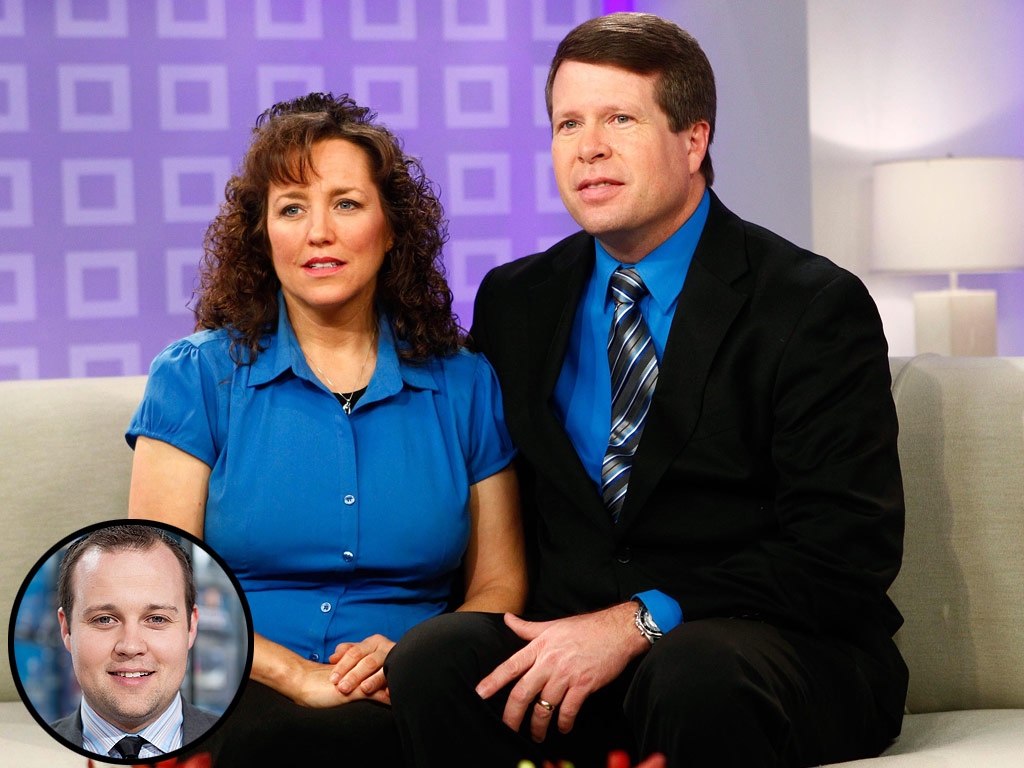
Michelle and Jim Bob Duggar; Josh Duggar (inset)

The article I’m going to post is about half a year old, and was written following the sexual abuse scandal involving Josh Duggar (the Duggar’s oldest son) of the reality show 19 Kids and Counting.   I haven’t watched all the episodes, but I firmly believe that sexual abuse as well as malignant narcissism is a huge problem in the Duggar family.   Josh is probably not the first abuser.  His parents, Michelle and Jim Bob, are both very controlling and both use their ultra-conservative religion to control and shame, and isolate their kids from learning anything on their own.   The fame and fortune from their reality show no doubt provides a ton of narcissistic supply to both Michelle and Jim Bob.  I see many of their kids as scapegoats and flying monkeys.   Josh seemed like he was a Golden Child.

I’m posting this article now because it’s still relevant. Sexual abuse is not going away anytime soon and has been with us probably as long as human beings have been around.  What do you think of the Duggars?  Do you think Jim Bob and Michelle genuinely love their children, or are their children just props in the narrative of moral and religious “perfection” they’re selling to the world?  Will any of them ever dare to break free of the prison of their huge, dysfunctional family and its narcissistic rulers?

The Duggars: Abuse and Conservative Religion

Until a few weeks ago, I had no idea who the Duggar family was. To my surprise, it appears that many people in North America have been following this conservative Christian family. Further, the Duggar’s seem to be very influenctial among various Evangelical Christian lobbying groups. It seems that they have become a sensation because of their reality TV show, 19 Kids and Counting. Even as I read some things about the family in the news in recent weeks, it seemed to me that the Duggar’s were faux celebrities much like the Kardashian’s and Paris Hilton: they never really did anything but yet they seem to be famous.

I received an email from one of my colleagues, a psychologist in another part of the country, who asked what I thought of the Duggar’s and the current sexual abuse scandal. It was her question that prompted me to learn more about the family. While I have clearly never met the Duggar’s nor have I watched their TV show, what I found in the press seemed to fit the pattern of domestic abuse.

Read the rest of Lou’s article here.