Where does this silly idea that covert narcissism is the most malignant come from?

evil_queen

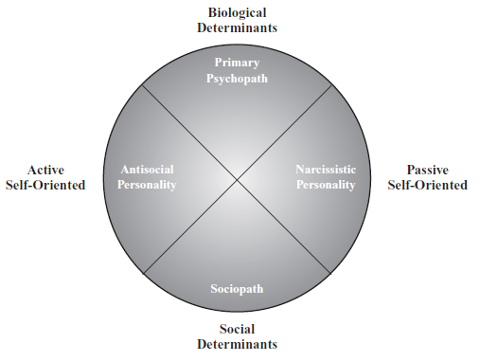
I used to believe malignant narcissism was at the top of the narcissistic spectrum, but after learning and reading more,  I’ve changed my opinion somewhat.  I think malignant narcissism is actually a hybrid of NPD + ASPD (antisocial personality disorder) or NPD with sociopathic traits. So it’s not really “higher” on the spectrum than “normal” NPD, it’s NPD that crosses over into the psychopathy or sociopathy spectrum.    They are narcissists that possess all three of the “Dark Triad” traits–narcissism, psychopathy, and Machiavellianism.   I wrote about the Dark Triad in this post.

For some stupid reason, the web is filled with declarations of covert narcissism being the “most malignant” form of NPD. I call BS on that! Covert narcs are the most likely to be self aware and their NPD is less ego syntonic than the overt type.  They are far more likely than overt narcs to feel guilt and shame and want to change their behaviors and even present for therapy.    I used to frequent a forum where a number of diagnosed and self-avowed narcissists posted about their disorder, and the vast majority were the covert, fragile type and were definitely not happy being narcissists (if that’s what they were at all).  Covert narcissists, being non-aggressive, are (much like borderlines, who they resemble in many ways) likely to become codependent to an overt or malignant narcissist.    They are often victimized themselves (a malignant narcissist would never become a victim!).   I’m not defending covert narcissists.  They are still narcs and are still dangerous.   They should be avoided whenever possible. But it’s time to set the record straight.   The only reason covert narcissism might be more “malignant” is because their disorder is harder to see. Covert narcissists don’t wear a neon sign announcing they are narcissists.

Due to their sociopathic/psychopathic traits, malignant narcissism is ego-syntonic and the afflicted person will almost never think they are the ones with a problem. Even if they become self aware, they will still be “happy” with their disorder and tend to blame everyone else when things go wrong–and enjoy doing so.

Because of this, malignant narcissists will never present for therapy (unless they are forced to) and if they do, they can never get better, because the willingness to isn’t there. Non-malignant NPD, while difficult to treat, may be curable IF the patient is self-aware and willing and their disorder is ego-dystonic (which it often is in the covert subtype) .

There is a cruelty and sadism to malignant narcissists that’s missing in garden variety narcissists. Most narcissists don’t set out to deliberately hurt others, but malignant narcissists do. While they’re getting their supply, they also get a thrill from making others suffer.  Like vultures, they feed off your pain.   In contrast, some “benign” narcissists might even feel guilt when it’s called to their attention they hurt someone, even though they still keep doing it because they can’t help themselves and like a drug addict, getting their fix of supply is more important than the feelings of their victims. But malignant narcissists actually want to see their victims suffer, or at the very least, don’t care.   Malignant narcissists are almost always the overt, grandiose type.   It’s virtually impossible for a covert narcissist to become malignant, because they are generally not happy with themselves, even if they aren’t aware of their own narcissism.

There’s another difference too.    The malignant narcs I have known have a cold deadness to their eyes that’s not as evident in people with garden variety NPD.   Their eyes can also be very predatory, seeming to bore right through to your soul. That’s their one saving grace: their eyes warn you of how dangerous they are.

Book review: Confessions of a Sociopath (M. E. Thomas)

sociopath_confessions

A couple of weeks ago I went to a yard sale and a book caught my eye, because of its subject matter–a copy of M. E. Thomas’ autobiography, Confessions of a Sociopath: a Life Spent Hiding in Plain Sight.

Ever-fascinated with all things Cluster B, including first-person accounts by narcissists, psychopaths and other antisocial types, I got busy reading that same evening. It took me two weeks to finish the book, when normally I’d devour a book of this length and subject matter in just a few days.

I’m sorry to say, this book was a disappointment. It was a long, painful, boring read. First of all, Ms. Thomas isn’t a very good writer. Full of run-on sentences and endless, dull descriptions of how great she thinks she is because she lacks empathy and a conscience (she seems to think of these as traits only weak or stupid people have, reminding me of Ayn Rand without an iota of the latter’s intelligence), Thomas comes off more as an obnoxious, self-centered, common narcissist than a true sociopath.

Thomas (who owns the website Sociopath World) is not a criminal. She may well be sociopathic in that she seems to take pleasure in cheating, manipulating, hurting, and discarding others, once gleefully watched a possum drown, and admits she enjoys ruining the reputations of people she has worked with. She clearly has no empathy and seems to have no emotions. She crows on endlessly about how her lack of a conscience or any empathy has freed her from having to worry about what others think and therefore indicates what she thinks of as her superior intellect. But like the narcissist she really is, she overvalues her achievements and intelligence. She works as an attorney but doesn’t seem to be able to stay employed for long, and really doesn’t have any other impressive achievements under her belt. Her “theories” about sociopathy are nothing more than rehashes of what other people have already described in psychology texts, and less readable than theirs. Overall, Thomas comes off as self-congratulating, obnoxious, unlikeable, and very shallow. She also comes off as rather dumb.

M. E. Thomas is clearly a malignant narcissist, but by calling herself a “sociopath” you feel like you’ve been the victim of a bait-and-switch (which is in itself sociopathic, I suppose). The cover of the book is a picture of a sinister female mask on a white background, and you open the book expecting something more than you actually get, at least some sort of depth or insight into her own behavior. But Thomas has no real insight and the book reads more like a resume of her fake “achievements” than a dark psychological memoir. She talks about her family, who she describes as neglectful, but she doesn’t seem to think they were particularly abusive. She takes arrogant pride in her “sociopathy,” repeating the word again and again throughout the text, as if to drive home the fact that she really is one, when it seems that she “protesteth too much” and underneath all that bluster, suspects she may not be. That kind of insecurity over the possibility of not really being what one says they are is a lot more typical of NPD than psychopathy or sociopathy, who don’t care what others think of them. Thomas also talks about wanting to have a family and her religion (Mormonism) a lot. Maybe her religion keeps her from acting out against others in more heinous ways and gives her a sort of “cold” conscience that keeps her out of prison, but I sure hope God doesn’t let her have children. She doesn’t seem capable of maintaining a relationship, so that doesn’t exactly work in her favor.

Although narcissists are thought of as having no emotions, it isn’t really true that they don’t, and there are narcissists and sociopaths who have been able to write about themselves in an emotionally engaging, albeit dark and depressing, way. There is rage and hurt and despair seething behind the surface of their words. But Thomas writes in a cold, emotionless way, probably because she’s such a bad writer. As a result, you feel about as excited reading her “memoir” as you’d feel reading the most boring high school textbook–and learn a whole lot less.

The only reason I didn’t feel completely ripped off was because the yard sale copy of this book set me back only $1; if I’d purchased it at full price, I’d be pretty annoyed right now. It was all I could do to even finish this book. It was that boring. Don’t waste your time. If you want to read a good book about sociopathy, read Marsha Stout’s The Sociopath Next Door instead. If you really need to read something that comes “out of the horse’s mouth,” you’d do better with Sam Vaknin.

Cluster B disorders are not cool.

uncool

Although Cluster B disorders (the dramatic, emotional, erratic group of personality disorders), are largely demonized on the Internet by narcissistic abuse survivors, there’s another growing attitude online that’s pretty much the opposite–that having a Cluster B disorder somehow makes you an uber-cool badass.

This is a dangerous delusion.  Take it from me, having a Cluster B disorder like BPD (in my case) is NOT fun. Nor is it cool. In fact, it really really sucks. 😦 Both for yourself and everyone else.

This growing attitude of “Cluster B coolness” I’ve been seeing more of goes something like this:

NPD:
bad_sport
This is what your narcissist is really all about.

The Myth:  If you have Narcissistic Personality Disorder (NPD), you’re a self-confident, go-out-and-knock-em-all-dead, ambitious, and highly intelligent badass who Gets. Things. Done. Psychopaths are similarly glorified, but they’re basically the reason why everything’s wrong with the world and empathy is seen as a “weakness.” The narcissistic woman is regarded as a diabolical yet seductive Jezebel who turns strong men into whimpering slaves at the snap of her pretty fingers and who every other woman strives to be. The narcissistic man is regarded as a buff, handsome, masculine, virile, successful go-getter who all women melt for (and that’s how they regard themselves, of course).

The Reality:  In actuality, if you have NPD, you’re a negative, selfish, deluded, demanding, envious, entitled, whining crybaby with no real sense of self who everyone hates (and who hates everyone) but are afraid to say so because it might set off one of your infamous rages or you giving them the even more crazymaking “silent treatment.” People are always walking on eggshells around you because you’re really so unstable, hypersensitive to criticism,  and deluded by and drunk  with your own “greatness.”  You’re a sore loser too and can’t stand to see anyone else do well or get any attention.   No one really likes you and you’re probably right that people are talking about you behind your back, but frankly you deserve it. Also, many narcissists are just plain stupid and have no emotional intelligence.  As for their reputed skillfulness in bed,  many narcs (especially the cerebral types) hate sex and can’t or won’t perform.  Or, as with everything else, they only care about their own needs and to hell with yours.

BPD:

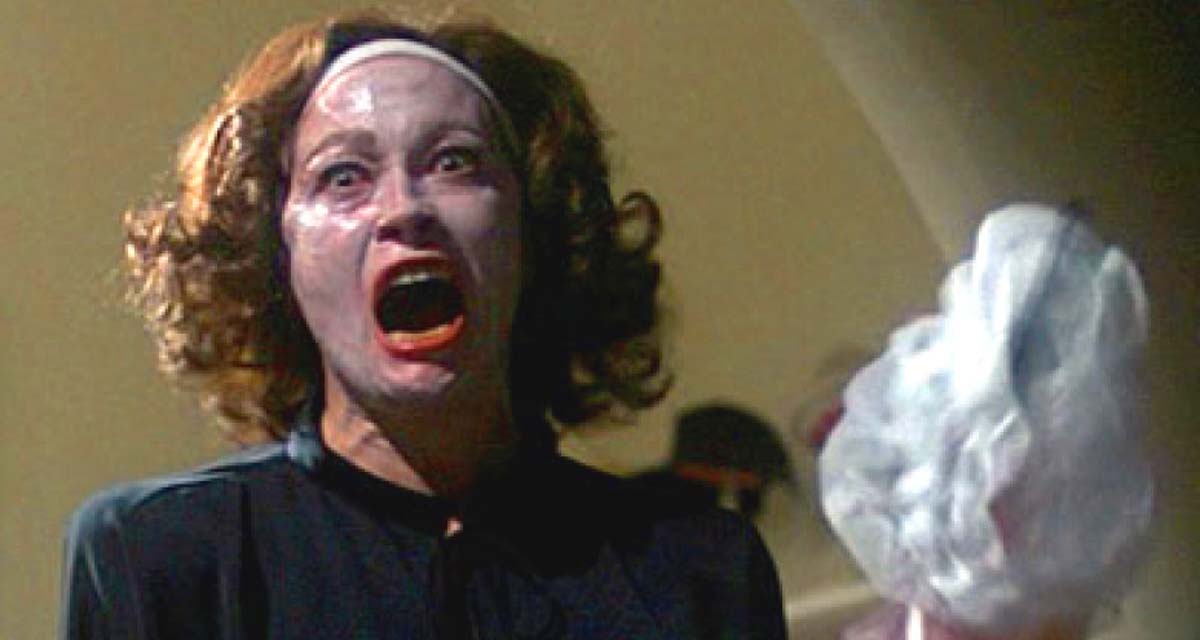
mommie_dearest2
Joan Crawford had a BPD diagnosis. Is this sexy, alluring, and “quirky” to you?

The Myth: If you have Borderline Personality Disorder, some people think this means you’re a sexy beast or babe who’s alluring, unpredictable, passionate, always charming and “quirky”, and never boring. Your chameleon-like abilities to match the attitudes of those around you is seen as evidence of potential Oscar-winning ability. It’s always pointed out how many actors and musicians suffer from BPD.

The Reality:  Let’s be honest.   If you have BPD you’re emotionally unstable, volatile, almost crazy (the original term “borderline” referred to the disorder being on the border between neurosis and psychosis), out of touch with reality, unable to take a firm stance on anything (or conversely, switching back and forth between two extremes, which just makes you look insane) due to your terror of being rejected or abandoned, prone to be an addict, (drugs, booze, gambling, shopping, cutting, eating and/or dieting, other people), clingy,  codependent, insecure, high-maintenance,  and fickle. The borderline doesn’t really have a false self per se like the narcissist, but they can’t access their true self either, so they wind up “taking on” the attitudes and emotions of those who happen to be around them like some kind of emotional bodysnatcher (in contrast with true empathy, their feelings overwhelm them and are out of control), and they just plain overreact to every damn thing so you feel like you’re always walking on eggshells.

HPD:

clown_makeup
You think you look seductive. Everyone else thinks you look like a clown.

The Myth: Although Histrionic Personality Disorder (HPD) isn’t widely talked about, its reputation is similar to that of BPD (but is really the stereotypically feminine form of Overt NPD): usually female, a sexy, seductive siren, dramatic, highly social, loves parties and being the center of attention, and is never, ever boring. You’ll fall madly in love with this bewitching seductress due to their many charms and their great looks.

The Reality: The real truth about people with HPD is that they’re insincere, emotionally labile to the point of being embarrassing (but their over-the-top “emotional displays” are largely an act), shallow, materialistic, and emotionally retarded. They often overdress (or underdress!) or are overly made up for an occasion, are sexually promiscuous, and are inappropriate in social situations, but they don’t care if you’re cringing in embarrassment for them because even negative attention is still attention and that’s what they crave more than the air itself.

ASPD:

aspd
Nuff said.

The Myth:  So here we are at the juggernaut of the Cluster Bs, the baddest badass of them all, Antisocial Personality Disorder (ASPD). Often confused with Psychopathy (and often overlapping with it), the antisocial or psychopathic badass is a sexy and fearless rogue, unconcerned with how others feel about them, possessed of an arresting and penetrating gaze (actually a predatory, creepy stare) that makes you feel like they are really listening to you, determined to get what they want (whether it’s their latest kill or their latest corporate takeover) and never giving up or allowing themselves to be intimidated, by anything. They’re the Rebels Without a Cause, the self-confident Ferris Buellers, the Coolest of the Cool, the celebrated anti-heroes of novels and films socially sanctioned to serve as a receptacle for the Shadow Self that resides within us all. The ASPD badass gives us permission to mentally “act out” our darker impulses, without actually hurting anyone, and that’s why we all love serial killers so much, and why the Ted Bundys and Charlie Mansons of the world get more marriage proposals than any football or film star.

The Reality:  The antisocial badass is really just a heartless and criminally minded horse’s ass, who has no capacity for empathy, isn’t even socially constrained by their need to impress others to garner narcissistic supply (because they don’t require any), and is frequently in prison or has a rap sheet the size of War and Peace. This is a guy (or gal) who will make your life a living hell, beat you to a pulp any chance they get and leave you in a heartbeat and not even remember your name.

If they’re high functioning, they’re the people who are responsible for everything that’s wrong in the world today and the reason why you work 3 jobs and can’t afford a vacation or health insurance.

If they’re low-functioning, if they’re not straight up criminals, they’re flabby, pasty Basement Dwellers who dishonestly leech off the system or their family members so they never have to work and spend all their time trolling Internet forums to get a rise out of random strangers.   Just like my ex.


basement_dweller

Ah, what a studly, irresistably dangerous heartbreaker you are.

If you’re a psychopath or sociopath, you operate more like a machine than a human. Is that something we should be aspiring to?

So there you have it. Cluster B disorders are not cool. They are serious mental (and some believe, spiritual) illnesses, and they are pathetic.   And let’s not forget that people suffering from Cluster B disorders are not happy people.  In fact, most of them are pretty miserable.  They are to be pitied (and avoided) rather than emulated.

A rebuttal in defense of Cluster B. 
The narcissistic spectrum according to Lucky Otter

Man looking at reflection in mirror

A friend and I were talking about where exactly different levels of narcissism would fall on the N-spectrum. Of course narcissism (or any psychological topic) isn’t an exact science so giving the different levels numerical values seems a little silly, but in my mind this is how I view the different levels on the spectrum, starting with a Baseline of O (on most narcissism spectrums, “healthy” narcissism is at baseline) and the transition to NPD at around 5, which is smack dab in the middle. Narcissism becomes pathological (causing the person or others problems) at around 4.
Please note these are just my own subjective ideas.  I’m a geek who likes to classify things.

The Narcissistic Spectrum according to Lucky Otter

9-10:
Sociopathy:
A person at this level is almost indistinguishable from someone with ASPD (antisocial personality disorder), but an NPD sociopath is more concerned about image or obtaining supply than a pure ASPDer. Most cult leaders fall here. (Psychopathy appears similar to sociopathy in behaviors, but describes a condition that a person is born with instead of one that was acquired; many psychopaths were never abused and were always like that, but sociopaths were made).

8-9:
Malignant Narcissism:
A person at this level has severe NPD with antisocial traits. A person at this level will show more emotion (usually rage) than a narcissistic sociopath. Usually fits all the DSM criteria or most of them.

7-8:
Severe NPD:
Not malignant because there is no sadism present, but person is still highly dangerous and manipulative. Fits most or all of the 9 criteria and symptoms are severe.

narcissist-bird

6-7:
Moderate NPD:
A person at this level may be barely tolerable, if contact with them is casual or seldom. Fits more than 5 of the 9 criteria.

5-6:
Mild NPD:
A person at this level fits 5 of the 9 DSM criteria for NPD but symptoms are not too severe and they may have moments of acting like a decent human being. NPDers at this level may occasionally respond well to therapy or seek it out.

—Pathological—

4-5:
Narcissistic Personality (Destructive Narcissistic Pattern disorder or DNP):
  A person here fits fewer than 5 of the 9 NPD criteria in the DSM but has at least three.  Symptoms may not be that severe and the person at this level is more in touch with their true self and may seek therapy.  They usually have the capacity to feel empathy but it’s limited.

3-4:
Non-Pathological Narcissistic Personality:
Your garden variety self-centered jerk but may genuinely care about those they love.  Not particularly dangerous. Has moments of insight into themselves or empathy for others, especially their loved ones.

0-3:
“Healthy” narcissism.
Most normal people can be found here.

O (Baseline) and lower:
People down in the negative digits might as well be wearing a “KICK ME” sign. They are almost always victims of narcissists and sometimes even normal people give them a hard time or take advantage of them.

npd_spectrum
The simplified spectrum. Psychopathy does not belong here at all.

Covert (“fragile”) narcissists may be found anywhere on the spectrum, but because their narcissism is more hidden and arrogance and grandiosity may be absent, a covert narcissist at any level is harder to identify. They may appear to have BPD, Avoidant PD, or Aspergers Syndrome instead (these are the three disorders most often confused with Covert Narcissism).

High-functioning (successful) narcissists are more likely to be found high on the spectrum, and sociopaths are often extremely high-functioning. There are many sociopaths (and psychopaths, who were generally born with a different brain structure and may not have been abused) in politics, religion, and heading huge corporations. Sociopathic traits and most NPD traits are generally sought after in the higher echelons of business, politics and entertainment. A person with just the “right” combination of antisocial behavior and arrogance, entitlement, grandiosity, and fake confidence can be a devastating adversary or competitor, and they will have no scruples about crushing you into the ground to achieve their goals.

Most high-functioning narcissists tend to be the Grandiose (classic, or overt) type that best fits the DSM criteria.

Covert and overt narcissists all have the same disorder, but for most, one form or the other is dominant. That said, they can and do switch back and forth in the same person. I think temperament is partly to do with whether someone is overt or covert (the more timid or fearful types leaning toward covert narcissism), but I also think circumstances (such as a sudden loss or gain of supply) can cause a switch from overt to covert or vice versa.

Low-functioning narcissists are much more likely to be covert.  They tend to receive less supply than overt narcissists, so their false self is weaker (the “deflated” false self, according to Masterson). Because of their discontent with their lives and general lack of success, covert narcissists are more likely than overt ones to seek help. If a covert narcissist suddenly begins to receive a lot of supply, they can become much more overt-acting (grandiose, entitled and arrogant). If an overt/grandiose narcissist suffers a huge loss of supply, they can sink into depression and become covert (at which point they are more likely to seek help).

Empathy and conscience are not the same thing.

Empathy-definition

I recently saw this little gem on another website.

If you feel upset, worried, and guilty that you don’t care about others enough, then you don’t lack empathy. That right there shows you you have a conscience. Also guilt is a sign of empathy. If there’s guilt, there’s empathy. There can be no guilt without empathy. No empathy, no guilt because they are part of each other.

I’d like to take issue with this paragraph. The author is stating that feeling guilty or having a conscience means you have empathy. I beg to differ.

Empathy is the ability to feel an emotion with another, to be able to “put yourself in another person’s shoes.” It has nothing to do, really, with having a sense of right and wrong, which is what both guilt and conscience are based on. It’s entirely possible to be a self-righteous, stiff-necked prick and not have an ounce of caring for the way others feel. Think of that teacher you hated. Chances are, that teacher had a very strong conscience and a clear idea of what was right and wrong (and held themselves to the same tough standards they expected you to meet), but thought nothing of making you feel like a wad of old gum on her sensible orthopedic shoes when you violated their lofty standards. It’s also possible to feel guilty over things that aren’t even your fault but be completely oblivious to the feelings of others. Think of the worst covert narcissist you know. Chances are, that person is constantly saying “I’m sorry” and flagellating themselves until they draw blood, but their over the top guilt stems from a need to prove they’re really a good person, not because they really care that they just put your feelings through a cheese-shredder. They aren’t going to feel your pain with you–they just want to redeem themselves and have you forgive them.

Empathy and conscience do often go together though–they’re like the peanut butter and chocolate of the world of emotions–and I don’t think it’s possible to be a high empathy person and at the same time have no conscience or the inability to feel guilt or shame. But to assume that a strong conscience or the ability to feel guilt automatically indicates high empathy just makes an ass of u and me. All having a strong conscience or sense of guilt means is you’re not a sociopath.

We Are All Narcissists

An interesting and slightly scary walk along the narcissistic continuum, from “healthy” (adaptive) narcissism up to sociopathic or malignant narcissism…

Psychopathy may not be what you think.

gearhead

I’ve been doing some reading about psychopathy and have found out some surprising things. I always was a little confused as to how psychopathy differed from sociopathy and have used those terms interchangeably on this blog due to my confusion. I’ve also used the term interchangeably with Antisocial Personality Disorder (ASPD) and sometimes even malignant narcisissm. It turns out it’s probably something completely different from the other three disorders and may not even be a disorder at all!

Before you start laughing, hear me out.

It all started with this colorful, humorous description someone wrote on a forum I’ve been active on, describing how a Psychopath differs from a Narcissist:

When I picture a Psychopath, I think of someone who at bedtime bounces around from one thing to the next, essentially a high-energy, happy person. When I picture a Narc at bedtime, I imagine someone wearing long pajamas and a nightcap (yes, a nightcap), walking around a 19th Century house, holding a candle, checking for ghosts.

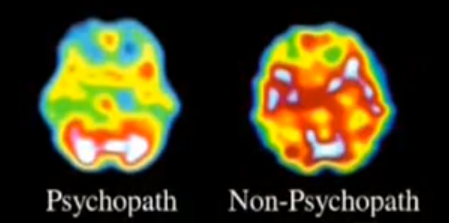
At first I thought this was a weird (but funny) analogy. But it really isn’t. According to psychologist Theodore Millon, Primary Psychopathy is something you are born with and is not due to abuse, unlike NPD or ASPD. Studies have shown that the limbic system (emotional center) of primary psychopaths is simply less active than in normal people. So they don’t experience empathy or have a conscience regardless of how they were raised, but they also don’t have very deep emotions in general.

Millon

Because they lack deep emotions, primary psychopaths tend to be fearless risk takers. They also aren’t moody because they don’t experience anxiety or depression the way others do–if they experience those states at all. But psychopathy has become associated with sociopathy and/or ASPD or malignant narcissism because a born psychopath may be more prone to developing personality disorders than the normal population, if they are abused. Because they don’t have the capacity to develop a conscience or empathy, if they do develop a personality disorder, it’s likely to be Antisocial Personality Disorder, where the right of others are callously violated. That’s why so many psychopaths are also antisocial and dangerous.

But there is nothing wrong with the cognitive functioning of a psychopath. They are able to learn the difference between right and wrong, and if they do not develop a personality disorder, theoretically they can choose to do what’s right. Only the limbic system is impaired, so any decisions a true psychopath makes are cognitively based. Emotion simply doesn’t play into it at all. They do “whatever works.” They lack a conscience because conscience is emotion- or shame-based, and a psychopath isn’t capable of much emotion in general.

So a primary psychopath can theoretically be a good person who is just extremely unemotional and only uses logic and reason to make decisions. Unlike narcissists, who actually have deep emotions but have turned all their emotions inward toward themselves and require “supply” to bolster their fragile egos, a non-disordered psychopath has no need for supply. They simply don’t care what anyone thinks. What you think is simply not something that even occurs to them. In contrast, a narcissist cares very much what you think and falls apart like wet toilet paper if supply in the form of approval or adoration is not forthcoming.

Primary psychopathy seems analogous to the Myers-Briggs ESTJ (Extroverted/Sensing/Thinking/Judging) personality type. In other words, a psychopath is an outgoing, sensation seeking, hedonistic thinker who happily jumps around from activity to activity like someone jacked up on Red Bull, yet they don’t have ADHD either because the J(udging) aspect means their high level of activity always has a goal or purpose. Such a person would be easily bored (which could also lead to antisocial behavior), never worry about things or experience (or even understand) guilt, and unafraid to try and experience new things. Their lack of emotionality would suit them well for the business world. In fact, people who have become very successful in business tend to score high in psychopathic traits.

two-brains

While many high level executives do abuse the rights of others and callously close entire departments and treat their employees like so many pieces in a chess game (whatever works, right?), because psychopaths can tell the difference between right and wrong, some will try to do the right thing just the same. The difference is, they are using cognition rather than emotion to back any prosocial decisions.

Looked at this way, primary psychopathy may not be a disorder at all but a personality variation. Of course, the term “psychopathy” has negative connotations because most of us associate it with antisocial criminals, shady con artists, and serial killers. And in fact many of them are, but not all.

Sociopathy differs from primary psychopathy because (according to Millon, above), it’s antisocial behavior that may develop in a person with ASPD or NPD and is always due to abuse somewhere in the person’s past. A primary psychopath can become a sociopath if they become disordered, and that’s where you would find the serial killers and criminals (and these people usually have ASPD). But a sociopath isn’t always (or even usually) a psychopath. Sociopaths who aren’t psychopathic are usually very malignant narcissists (high spectrum NPD + ASPD) or sometimes even Borderlines, and they differ from psychopaths because there is no logic or rational thinking behind their antisocial or destructive behaviors, only unhealthy, toxic emotion. They seem to have no empathy because all their empathy–and most of their other emotions except anger–are turned inward toward themselves. The false self is what they present to others instead of their real emotions. Narcissists have plenty of empathy but it’s all for themselves–that’s why they are prone to wallowing in self pity. A psychopath would never wallow in self pity. They simply don’t care what you think.

Disturbing documentary about narcissists and psychopaths

I never saw this film (Narcissism: The Psychology of Demons) before. While I dislike the all-too-common merging together of the characteristics of psychopathy/sociopathy/ASPD with those of NPD (non-malignant narcissists are not without feelings, even if they are very self-centered), this is still a very interesting, scary and disturbing video describing the emotional vampires in our lives and that dominate our society.

Several people are interviewed about narcissism in the video. Zain Arcane (the smarmy Slash-looking dude in the hat and sunglasses), a vocal coach who makes videos about narcissism, gives me VERY stong narc vibes. I have read elsewhere he does in fact have NPD and is probably a psychopath. During the few minutes he takes off his sunglasses, his eyes look unfocused and lifeless and he doesn’t seem mentally all there. Maybe he’s on drugs, but there’s every reason to believe he’s a wolf in sheep’s clothing and thinks of himself as a god, based on what I read.

The creepiest part of this film is the interview with the little 5 year old girl from “Toddlers and Tiaras” and her mother (this starts at 33:32). The mother is obviously a narcissist, and has turned her daughter into her little mini-me by forcing her into beauty pageants. The little girl is already showing the odd emotional disconnection, complete self-absorption and the dead, flat eyes of the malignant narcissist/sociopath–and her self absorption is so great she doesn’t even seem to hear the interviewer and her mother talk. If this girl doesn’t get intervention very soon (and she probably will not), she is going to become an extremely dangerous, Jezebel-like woman when she gets older and utterly destroyed when her looks begin to decline. It may already be too late for her, because something about her already seems thoroughly corrupted, even evil. It’s hard for me to look at her face without wanting to recoil and get away fast.

Courtney Love, murderous psychopath?

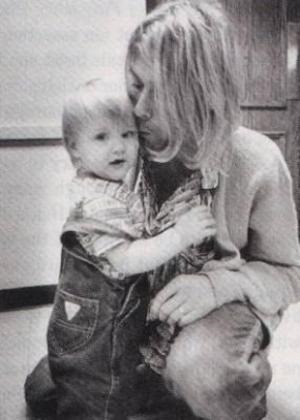
kurtcourtneykurt

DISCLAIMER: THE FOLLOWING ARE THE OPINIONS OF THE AUTHOR. THESE ARE NOT FACTS AND THERE HAS BEEN NO PROOF OF FOUL PLAY.

The two-decade long question of whether or not Kurt Cobain really committed suicide came up between myself and my friend today. It’s been bandied about for years, but it seems no one has ever bothered to take it seriously or re-open the case to further investigate Cobain’s death.

Even though Kurt may have been prone to depressions and shied away from the stardom he achieved as both an early pioneer of the Grunge movement and The Poster Child of Generation X, I never believed he really killed himself. Why would he? He had everything–talent, success as the frontman of Nirvana, a bestselling record, a baby daughter, and a…ahem…new wife who everyone believed was in love with him.

It’s his wife, Courtney Love, we need to take a closer look at here. Most people just take it on faith that Kurt killed himself because his music was dark and depressing and his poetry was dark and depressing, and because he rarely smiled. He had also come from an abusive home and suffered from lifelong depressions and severe stomach problems. Stories of his addiction to heroin abounded in publications like People and Rolling Stone, and on MTV, VH-1, and the nightly news.

But it was also said that he was getting clean when his girlfriend and fellow musician, Courtney Love, became pregnant. He didn’t want to be a drug-addicted new dad. Things looked rosy for awhile. He had several relapses and stints in rehab but heroin isn’t what killed him. If he was depressed, I doubt it was really due to the commercial success of Nirvana’s album Nevermind.

I think Love was gaslighting Cobain, which exacerbated his depression and drug problems. According to Wikipedia,

On March 18, 1994, Love phoned the Seattle police informing them that Cobain was suicidal and had locked himself in a room with a gun. Police arrived and confiscated several guns and a bottle of pills from Cobain, who insisted that he was not suicidal and had locked himself in the room to hide from Love. [italics mine] When questioned by police, Love said that Cobain had never mentioned that he was suicidal and that she had not seen him with a gun.

This is an interesting quote. The first thing that stands out to me is that Cobain felt he needed to hide from Love. Why would he tell police that if it wasn’t true? Sure, he could have been gaslighting her as the crazy one, but something feels off about that to me. Because in this same paragraph we can see that Love is a liar. She tells two different stories to the police: first, that Cobain had locked himself in a room with a gun, and second, denying that she ever said that and insisting Cobain had never said he was suicidal at all! Why would she change her story?

courtney_kurt

Kurt was found dead in his Seattle home on April 8, 1994, when his daughter, Frances Bean, was less than two years old. He had been shot in the head. Investigations found he had been dead for three days. There was a note, addressed to his childhood friend “Boddah” stating that Cobain wasn’t feeling the excitement of listening to and creating music anymore.

Although there was a note, it seems unlikely to me a suicide would be performed by such means, especially by a man who had easy access to heroin and other drugs and could easily have OD’d and died in a more peaceful manner. Also, why didn’t Love report his death? How could a newly married man with a child not be discovered by his wife for three days? Surely she must have known something.

On the tenth anniversary of Cobain’s death, in 2004, Love and Death: The Murder of Kurt Cobain, was published. Its authors believe Kurt’s death could not have been a suicide and argued that the case should be reopened. According to the entry about the book on Wikipedia:

The book is based on 30 hours of revealing audiotaped conversations, exclusively obtained by the authors, between Courtney Love’s private investigator, Tom Grant, and her entertainment attorney, who both dispute the official finding of suicide and believe Cobain was in fact murdered.

The lawyer says on the tapes that she believes the so-called suicide note was “forged or traced.” The authors also interview Cobain’s grandfather, who believes Kurt was the victim of foul play, and Courtney’s father, who also believes he was murdered. In the book, a prominent forensic pathologist examines the known autopsy evidence and claims that the official suicide scenario was “impossible.” She claims that there is compelling and authoritative evidence that Cobain was murdered.

So even Courtney’s own father believes Kurt was murdered! Hank Harrison (Love’s father) couldn’t stand his own daughter (which was documented in the 1998 documentary Kurt and Courtney) and told RadarOnline:

I can’t prove she pulled the trigger, but I can prove her involvement to a high degree of certainty. […]She’s a psychopath, she has a sociopathic personality like I do.

Later, he published his book, Love Kills: The Assassination of Kurt Cobain, which argued that Kurt did not commit suicide but that his own daughter killed him.

cobain_suicide

According to Wikipedia, Nick Broomfield (the filmmaker who made Kurt and Courtney) decided to investigate Tom Grant’s claim that Cobain was murdered and had his film crew interview people associated with the couple, including Love’s father Hank Harrison, Kurt’s aunt, a former nanny for the couple’s daughter Frances Bean, and several others associated with the couple, including a bandleader named Eldon “El Duce” Hoke, who claimed he had been offered $50,000 by Love to kill her husband.

It’s also telling that Courtney’s overnight rise to fame occurred immediately after her husband’s death. She appeared at the funeral and interviews playing the part of the grieving widow quite well, but how suspicious is it that her band, Hole, released their bestselling album Live Through This FOUR DAYS after Kurt’s death?

Love’s public persona is very narcissistic and she seems to crave attention and adulation even more than most celebrities. She also appears to be emotionally unstable, although in recent years she seems less so. Perhaps her instability was due to drug abuse, but I think that in itself coupled with her unpredictable and prima-donna like behavior points to a personality disordered woman. Based on the way Love acts, I believe her father’s claim that she is sociopathic and that she probably killed her husband.

Kurt-Cobain-Frances-Bean-Cobain

What would have been Love’s motive though? In my opinion, I think Love was pathologically envious of Kurt’s success, and wanted his fame (which she probably felt he didn’t appreciate) for herself. She hated playing second fiddle. She also knew that the death of a major rock star (at the age of 27 too–Kurt’s entry into the “27 Club” was probably not lost on her) was the best publicity stunt for herself she could pull off. She could play the grieving widowed new mom, garner pity, and ride on the coattails of that to sell her new album.

Tell me Courtney Love isn’t a sociopathic murderer and I’ll tell you Elvis is going to run for President.

Eskimo Sociopaths

inuit_man
Lone Inuit man.

Here is a very interesting article that discusses how Eskimo (Inuit) hunters historically handled sociopaths and narcissists in their midst.

Eskimos probably had the right idea. In our modern culture today, we look up to narcissists and even sociopaths as role models.

In order to survive in their harsh, cold climate and procure enough food, Eskimo hunters had to work together as a group. Individualism, a we know it today, wasn’t even on the radar and wouldn’t have benefited the group. Cooperation–not individualism–was necessary for survival.

Not anymore. Today, individualism (and thus narcissism) has become adaptive because those people who only have their own self-interest as a priority tend to be the most successful. There’s something very wrong and evil about a society that glorifies individualism over cooperation.

ownyourcrazy101's avatarconfessionsofacrazybitch101

A stranger who I had a conversation with, had a beautiful mind and heart and we talked for an hour about everything. He told me a story about sociopath/narcissists from Eskimo ages….

Eskimos worked together. That’s how they survived was through hunting and team work. But, when they unmasked a sociopath in their pack, this threw off their hunting. This sociopathic Eskimo couldn’t work alongside the others, so they figured out a way to cure NPD/sociopathic Eskimos.

They would invite the sociopath along with them, in a group of three, to hunt. They gave the sociopath their own weapon and everything just as he was apart of their group. They would then venture far far out, to a place only two of them knew around and how to get back to their grounds from. They then told the suspected sociopath to sit on a bolder and wait for the prey…

View original post 196 more words