Psychopaths and pets

pitbull

There’s been a lot written about the devastating effect psychopaths have on other people, but what about their pets? Do psychopaths even have enough empathy to keep pets?

Unfortunately, yes they do. But for them, pets are a means to an end, a creature that can be exploited in various ways that serve the psychopath, rather than a friend and companion. A pet can be a way to “keep up with the Joneses” (if most of their neighbors and relatives have pets). They have no genuine love for the animals under their care, and often treat them badly or even abuse them. Here is an article I just read last night where the blogger calls out his MN sister about the callous way she puts her cat to sleep because she’s moving, even though there’s nothing wrong with the cat. Later the blogger describes the cruel manner in which the woman’s two beautiful dogs are left outside on a chain even in the searing heat or freezing cold, and are never played with or paid attention to. Eventually, this cold woman tells her brother she will be having her depressed but otherwise healthy golden retriever put down “because he’s old.”

I remember when we lived in a trailer park for about a year, some of our neighbors treated their animals very badly. I don’t know if it was just ignorance (most of the people living in the trailer park were not too well educated) or if we had a surplus of psychopaths living around us, but I remember one poor dog in particular. In fact, this dog was a black lab/Doxie mix who was the sister of my dog, Dexter (who we acquired from a family who lived in another trailer in that park).

Rain or shine, snow or sleet, or on the hottest days of summer, that poor dog was left outside attached to a clanking metal chain in the driveway. The few times I saw anyone interacting with that dog was when the owner, a raging drunk whose wife had called the police on a number of occasions for abusing her, would kick the dog or yell at him. I would have called the police, but was afraid of the repercussions, and also the dog had become so aggressive I knew no one would adopt her and she would have been put down. Maybe that would have been the best thing for her though, but I wasn’t thinking clearly at the time, being embroiled in my own mess with my own psychopath. I did try to interact with the poor dog occasionally, but she would just bare her teeth and growl. I would look at my Dexter, with his sweet, affectionate personality, and think of what his poor sister could have been had she been cared for by loving owners. I have no doubt that owner was a psychopath. Anyone acting that cruel toward his pet is someone without much or any empathy. A person who just dislikes animals would not have a pet at all, not keep one around just to abuse it. The owner probably kept the dog for “protection.” Why else have one?

dogoutside
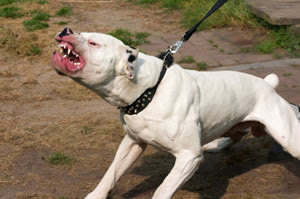
Is this dog’s owner a psychopath?

In fact, you see that a lot. There are many people who keep a dog, usually an “aggressive” breed such as a Rottweiler or Pitt Bull, as a method of security. No one will try to break into a house or trespass if there is a barking, aggressive dog present. People who keep dogs as a form of security aren’t necessarily psychopathic though. A normal person who keeps a dog for such a reason will still play with the animal and be affectionate toward it when it’s not “on duty.” But if the animal is ignored, or left outside all the time, that’s a different story. Whenever you read or hear a heartbreaking story about a vulnerable animal being neglected or abused, you can bet it’s owner was a psychopath. In fact, pets, being helpless and trusting, often serve the same purpose as a child or vulnerable person: as a scapegoat.

There are other psychopaths who like to brag about how aggressive their dog is. The dog is an extension of themselves, and they take pride in training it to attack or act aggressively toward others, not as a form of security, but as a way to intimidate other people through their dog. Training a dog to be aggressive just to be aggressive is also a form of animal abuse.

Then there are those who, like my MN mother, keep a dog or other animal as a status symbol. They always choose a purebred animal, often a type that is trendy or expensive and makes them appear to be wealthy to others. My mother has a purebred Bichon Freze, a very cute dog, but it’s an extension of herself rather than a companion. She takes it in to a groomer monthly to have its nails done and puts bows on its head. I’m sure if this dog develops health problems, no matter how minor, she will have the dog put to sleep. Several years earlier, she had a purebred toy poodle, and when she got old, callously had her put to sleep, even though she had no health problems other than a little trouble walking due to arthritis. When I questioned her about why she took such drastic action, she just shrugged and told me she didn’t have the time to deal with an ailing animal. I don’t recall her even shedding a tear.

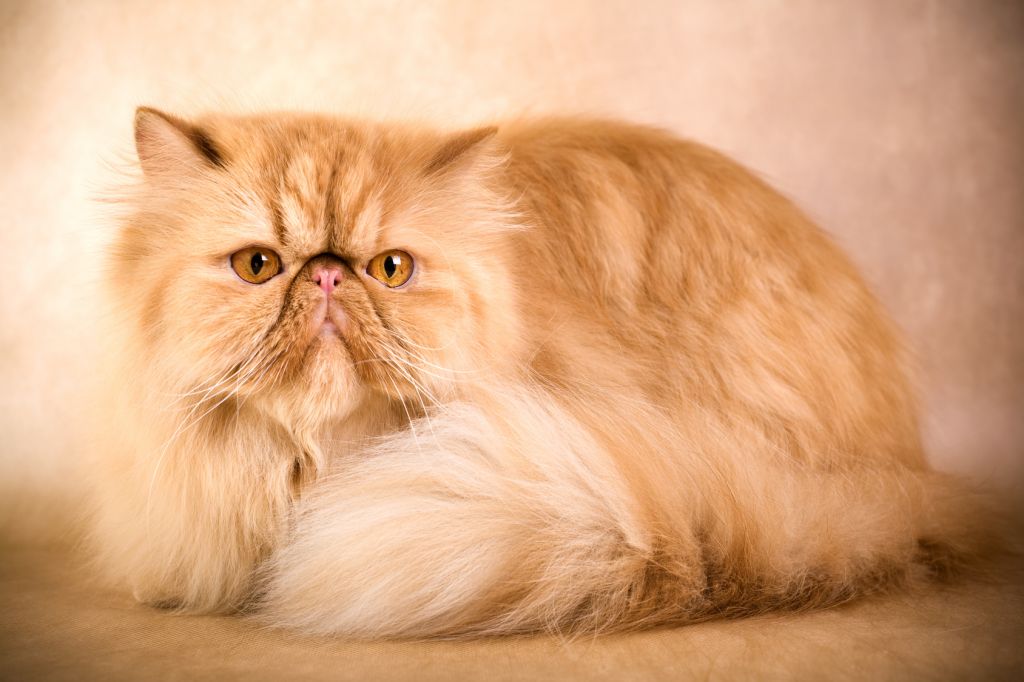
There are purebred animals that have been inbred so much they have health problems. I think anyone who breeds a dog or cat for a certain “look” at the expense of its health is lacking a conscience or empathy, at least toward animals. These people are breeding animals to have a deformity! Imagine breeding humans to have a condition such as Spina Bifida. How is it any different? Persian cats are a perfect example of a cat breed that has been bred to have a pushed in, flat (and in my opinion, ugly) face and as a result they have breathing and other health problems. Some dog and cat breeds, such as the “munchkin” cat or Bassett hound have serious spinal issues or have trouble walking due to their excessively short legs.
persiancat munchkin
Persian and munchkin cats.

Some psychopaths use pets as a way to torment or control their children. They will purchase or acquire an animal for a child, and then if the child misbehaves, hold the threat “I’ll have Fido or Fluffy put to sleep if you do that again” over the kids’ heads. This is mental torture. My N-ex’s mother was a narcissist herself and used this tactic to manipulate him. When Michael was five, his father brought home a white puppy. He loved that dog and spent all his free time with him (he may not have been a narcissist yet, it’s hard to say). One day when he was five, he was coloring with crayons on the hardwood floor, sitting in a patch of sun that came in through the living room window. Buster, the puppy, was sitting next to him watching. There was also a pair of child’s plastic scissors on the floor. As children will do, he left to do something else without putting the crayons and scissors away. But before he came back, Michael’s mother discovered the crayons had melted all over the wooden floor. Surely she couldn’t have really thought the melted red and purple crayons were blood, but when Michael returned to coloring, she pointed to the waxy, melted mess and the scissors and accused him of “cutting the dog.” Buster did have a little red crayon on his fur but was not cut and wasn’t hurt in any way. To punish Michael, his mother announced she was having the puppy put to sleep, in order to “teach him a lesson.” And so she did. So psychopaths will use animals to manipulate, control and torment their children.

Some psychopaths and narcissists will acquire a pet to control other people. My ex, Michael (the grown up version of the little boy in the last paragraph) did this. Now he actually was an animal lover (and always said he preferred animals to people), but he also used them as a way to say “fuck off” to me. I’m an animal lover and have always had pets, but I remember when in 2011, he adopted a dog without asking me how I felt about it. At the time, I already had three cats and Dexter, my dog. The house I live in is small, and there wasn’t room for another dog. For several weeks he had been combing Craigslist looking at puppies. He wasn’t working and was basically freeloading while I paid all the bills. Not only was there not room for another dog, I couldn’t afford one. I begged him to not get any ideas. Michael assured me he was “just looking” and to stop worrying.

Well, lo and behold, one day I came home from work to find a puppy in his arms on the couch. I was angry and told him there was no way I could take care of another pet, and he would have to take it back. He said he wouldn’t. “Too bad, he’s here to stay,” he said.

The puppy was a Jack Russell/Beagle mix and the loudest, most undisciplined, and hyper dog I ever met. Michael refused to train him and a year later this dog was still pooping and peeing in the house. He also tore up everything, and I’d regularly come home from work to find the house in a shambles. Michael never bothered to pick up the mess. He’d just make excuses for his pet, whining “but he’s just a puppy!” even though the dog was a year old. If me or my daughter tried to discipline him, Michael accused us of being cruel. Talk about gaslighting!

destroyinghouse

The dog (who he named Barnaby) also barked constantly and ran away at least 3 times a week. We’d hear Barnaby barking and howling somewhere in the neighborhood but he wouldn’t return for hours, no matter how much we called him. He was a neighborhood nuisance, and three times neighbors called animal control. Still, Michael refused to discipline or train him. That job fell to me and my daughter, but of course we were “cruel” or “hated animals.”

The third time animal control showed up, I told them to please take the dog. I never wanted him in the first place, and I couldn’t control him. I didn’t want to pay a $75 fine to keep him, so away he went. I felt bad about the fact he would probably be put down, but there was nothing else I could do. Michael, of course, was livid, and said “I never realized how much you hated animals.” Of course only HIS needs mattered. He didn’t care that all the training and financial expense of the dog fell on me. He also didn’t care about Barnaby’s needs: he was wel aware that Jack Russells (and Beagles) are extremely active dogs that need to run. It’s in their genes. We were living in a small house with a tiny unfenced yard, and that’s not an appropriate setting for a dog like Barnaby. But like all narcissists, Michael was like a three year old: “I want a dog and I better have one and I don’t care what you think!” Now I love dogs, but in Barnaby’s case, I was never so happy to see the last of that animal. I hope someone with a large fenced yard and time to train him appropriately adopted him.

So yes, psychopaths do keep pets, but they are kept for all the wrong reasons–to control others, to serve as scapegoats or status symbols, to guard property, and generally to serve as extensions of the psychopath. And that’s about it. Psychopaths and narcissists have no genuine love for animals, just as they have none for other people.

Psychopaths should register themselves

courtgavel

Convicted sex offenders are required to “register” themselves to protect potential victims. I think there should be a new law that also requires psychopathic individuals and malignant narcissists to register themselves for the monsters they are. Of course, identifying them all would be tricky (and maybe impossible), but we could start by requiring all suspected psychopaths and narcissists to take the Psychopathy Checklist developed by Dr. Robert Hare. The Checklist has been used with a great deal of success in identifying which criminals are psychopathic, and has been used to make sentencing decisions in murder cases.

Even if only a small portion of these characters were identified and registered, it would save a lot of people from becoming victimized.

The distinctive “look” of psychopathy: gazing into the face of evil

blackhole
Gaze into the void…

Psychopaths and malignant narcissists are very good at putting on masks to get others to trust them. They can seem warm and charming when they want to. But sometimes they can be caught when their mask is momentarily down (usually when they’ve been called out–or caught), and it’s here when we see the emptiness and evil inside them.

I’ve described this look before–I’ve seen it on my mother’s face and it gave me nightmares for weeks. I saw it once on my ex’s face when he was drunk and angry. It’s not so much a demonic look (which has a sort of life to it) as a dead, lifeless look that is far worse. It’s a malignant look that makes you want to get away from them fast. Like there’s nothing inside them except an vast and endless black void of nothingness. It’s like standing at the precipice of a black hole, and what can be more terrifying than some nameless void that can suck you into itself–and can even swallow light?

Many people have mentioned the intense stare a psychopathic person will fix you with, even when they are trying to charm you into trusting them. During the “wooing” phase, you may think this intense stare indicates attentiveness and strong interest in you as a person, but actually all they’re interested in is how they can use you and later destroy you. Make no mistake–they are predators out for the kill. If you have met someone who seems to stare at you excessively, or in a predatory way that makes you uneasy, that person is probably a psychopath or malignant narcissist trying to get their hooks into you. RUN LIKE HELL.

I don’t think evil is the opposite of good. I think evil is the opposite of somethingness–evil is pure black nothingness. Here are some examples of the dead, reptilian eyes of known psychopaths and malignant narcissists.

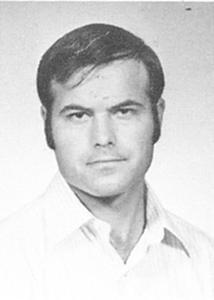
dennis_rader_1973
Serial killer Dennis Rader

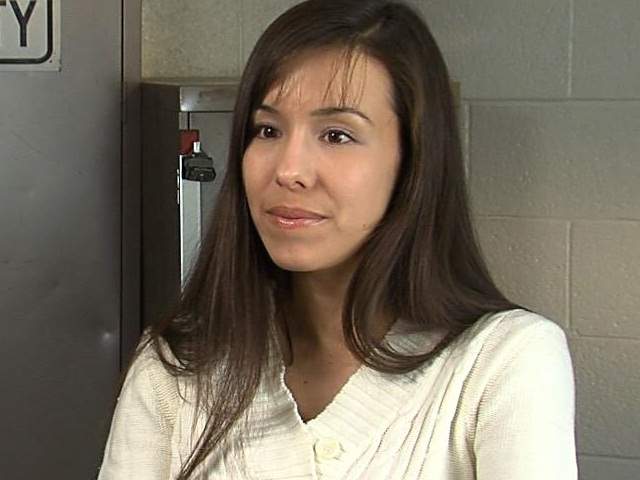
jodiarias
Convicted murderer Jodi Arias. Her trial footage shows as many fake tears and mask-changes as Scott Peterson’s and none of her “emotions” seem genuine.

scottpeterson
Scott Peterson, unfaithful husband who murdered his pregnant wife and unborn child.

susansmith
Susan Smith, who murdered her two young sons by sinking them in a car she drove into a lake because she wanted to please her lover, who did not want children.

SO.0511.Mothers2.HO
Actress Joan Crawford (“Mommie Dearest”), who was an alcoholic and abusive mother to two of her adoptive children (some reports classify her as having Borderine Personality Disorder with Histrionic and Narcissistic elements, rather than NPD)

In some cases, psychopaths show a distinctive smirk or sneer. Their eyes may twinkle, but it’s a hard, cold, glittering twinkle that is malevolent and creepy. Behind the twinkle, the eyes are still reptilian and dead. You may see this look when they think they’ve pulled one over on you–or perversely, when you’ve pulled one over on them–and they are ready to kill you either literally or figuratively. Here are some examples of this look:

Osama Bin Laden Headshot
Osama bin Laden, fundamentalist Islamic mastermind who ordered the attacks on the World Trade Centers and the Pentagon in 2001.

charlesmanson
Mass murderer Charles Manson, who never killed anyone himself but had his cult of followers do his dirty work for him. Some think he’s psychotic and therefore not responsible for his actions, but he’s a psychopath who knew exactly what he was doing and has never shown an ounce of remorse.

dickcheney
Former Vice President Dick Cheney, the brains behind the disastrous and dishonest Bush administration and our “preemptive” invasion of Iraq. Cheney and his cronies bailed out or pardoned corporate criminals like Halliburton. How could you trust a man with a face like that?

kochbrothers
The Koch Brothers, multibillionaire CEOs who by their words and deeds have shown their disdain and comtempt for the “little people” which includes both the poor and middle class. These jerks have zero empathy and seem very psychopathic.

ojsimpson
Former pro football player and actor O.J. Simpson during his famous 1995 murder trial. This insolent expression became his trademark look while he was on trial.

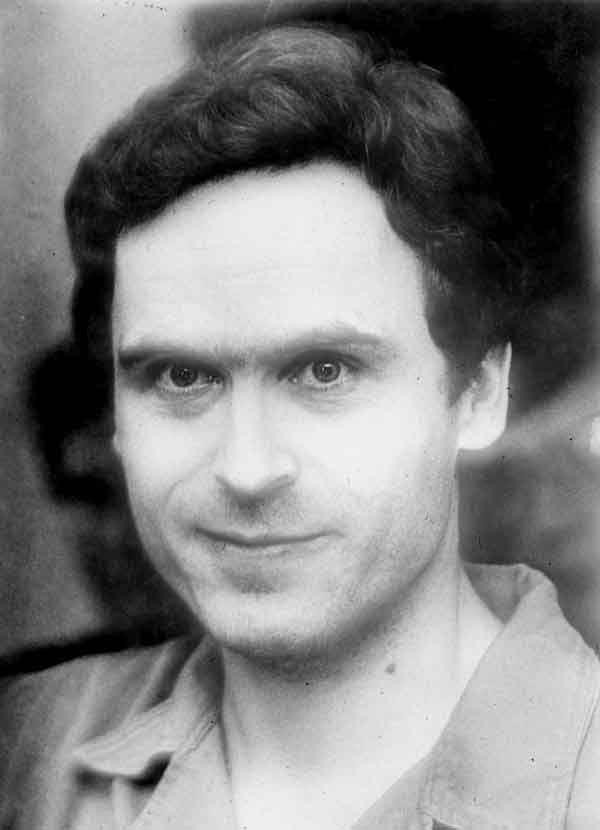
tedbundy
Serial killer Ted Bundy’s infamous look of psychopathic glee. *shudder*

unknownwoman
I don’t know this woman, but she is a malignant narcissist who apparently gets her jollies making the people who lived in her building miserable. Someone on another website about narcissists was being attacked by her and called her out. I wouldn’t have included her here, but this is one of the most frightening looking people I’ve ever seen. Her eyes look like those solid black eyes you see in horror movies of demonic people. I have no doubt this woman is as evil as she looks.

richardramirez
Serial killer and alleged Satanist Richard Ramirez.

I’ve also included this Court TV program covering the arrest and trial of murderer Scott Peterson. Notice how he uses tears to manipulate the police and interviewer, but how insincere he seems and the way he arranges his facial features into whatever “mask” he thinks will help his case. There are those who insist he is not guilty (and I had my doubts too) and of course being good looking like Ted Bundy, he had a number of “groupies” who defended him, but he’s an intelligent manipulator and after watching this video, I absolutely believe Scott Peterson killed his wife and unborn son in cold blood.

How my mother became a narcissist.

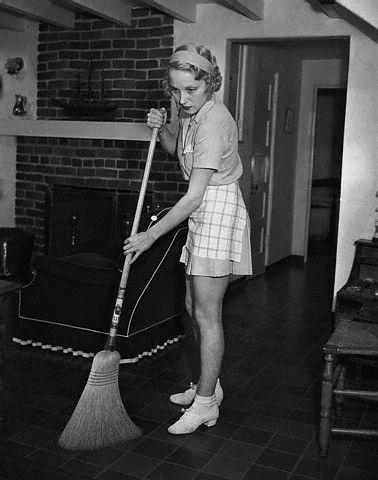
housework

I’ve said a lot of negative things about my mother, but I don’t hate her. Today I was thinking about how she got to be the way she is. While most narcissistic psychopaths are probably genetically predisposed to this condition and are missing the part of the brain that causes them to have empathy and compassion for others (actually it’s just not functioning properly), in most cases there are also psychological factors. Many psychopaths and narcissists were abused or neglected children, whose own parents failed to mirror them adequately as young children. So as unpleasant as they may be, their condition is not their fault. It was done to them.

I’ve already described my mother as a vain, self-centered, image conscious woman who almost always put her own needs ahead of those of her children and husbands, and chose me (as the youngest) to be her scapegoat. At times I was also her golden child, especially prior to my teen years when I started to rebel, and she loved to make me in her own image, dressing me up like I was a little doll. She expected me to act like one too, and flew into a rage if I ever had an opinion of my own or dared to challenge her.

The story I’m going to tell is gleaned from the scant bits and pieces I heard over the years, most of it described by people other than my mother. Like most narcissists, my mother is stunningly lacking in introspection. She almost never talked about her past or her childhood, and the few times she did, it was negative. Most of her anger seemed to be directed toward her mother, who she spoke of with contempt the few times she did mention her.

Ginny was a beautiful child with big blue eyes and light red hair. Somewhere in my mother’s home there’s a photo of her at about age two, and she is dressed in a pink and white dress with a Peter Pan collar, her bright hair is done in a 1930s bob, and she’s sitting in an oversized chair holding a large teddy bear on her lap. On her feet are brown high top shoes, and her little feet are sticking straight out toward the camera. Ginny’s expression is solemn, almost sad. In fact, she looks close to tears. I will probably never see that photo again, as I am not in contact with my mother and she’s in her 80s and probably won’t be here too much longer, even though she’s in good health for her age and still looks younger than her years. I wonder if at the time that photo was taken, Ginny’s narcissism was already ingrained, or if she could have still become a normal, loving woman had her circumstances been different. The sadness in her face tells me she was hurting. It’s the most vulnerable I’ve ever seen my mother.

Ginny was the fourth and youngest child born to a naval academy officer and second generation Irishwoman. The family was middle class, lived in a nice house in a safe neighborhood outside Annapolis, Maryland, and raised all their children as Roman Catholics. Because Ginny’s father was in the military, when the Depression hit, the family didn’t suffer too much financial hardship and his job remained secure. But Theodore (her father) was a heavy drinker, probably an alcoholic, and started drinking almost the moment he got home from work. Anna Marie (Ginny’s mother) suffered from melancholia (what we now know as major depression) and after Ginny was born, took to her bed and stayed there for most of her childhood and teen years. She may have been suffering from postpartum depression, but in those days, no one knew about such a thing. Anna Marie started to neglect her duties as a housewife and mother, saying she was “too sick” and had to lie down.

Ginny was the most attractive of the four children, and the only one with blue eyes. She was obviously Theodore’s favorite child, and he constantly told her how beautiful and special she was. Anna Marie began to resent all the attention he showered on his favorite child, and became even more depressed (she may have been a narcissist herself). Theodore was a faithful husband (from all accounts) but his wife’s demands were wearing him down and he began to drink even more. Sometimes he came home from work already drunk and often he would pass out after eating dinner, so that no one was running the household but the children.

By this time Ginny was about six, and her older sisters (who were in their teens) and brother (who was about 11) weren’t interested in keeping the house clean or taking care of their exhausted, drunk father and depressed, ill mother. Ginny hated dirt and disorder, and took it upon herself to keep the house clean and cook the family meals (Anna Marie was a bad cook). Her sisters were always out at parties or on dates and of course her brother was a boy so he wasn’t interested in keeping up the home or taking care of the family. Soon Ginny was the sole caretaker and became her father’s young surrogate wife. (I don’t know whether or not she was sexually abused, but it would not surprise me and I assume she probably was). Anna Marie developed a hatred for Ginny, who seemed to be everything she was not and also got all her husband’s attention. Theodore’s adoration of Ginny increased, and he began to depend on her for everything, including confiding his problems in his marriage. Ginny seemed sympathetic, but was already plotting to leave the home.

At age 15, Ginny had become a drop dead gorgeous young woman. She left her family and dropped out of high school to marry a young man from the naval academy who was studying to be a Methodist minister. She took a job modeling for the local newspaper to help makes ends meet. By 18 she was pregnant and gave birth to her first daughter, and a few years later she had her second child, also a girl. But Ginny was tired of the church dinners and the drudgery of family life. She was bored and longed for excitement that her two young daughters and minister husband couldn’t provide. So when her daughters were just 7 and 2, she left them to marry my father. It was the late 1950s, and a woman leaving her husband and children just wasn’t done, but she did it without a second thought.

Although her older daughter had abandonment issues and hated Ginny for years for leaving, today my mother lives in her home and my sister’s become Ginny’s most loyal flying monkey. I barely ever knew my sister, but I was told several years ago that I was not welcome in her home because my sister didn’t want me there. Either my mother didn’t want me there and blamed it on my sister, or my sister is a sheep who believed all Ginny’s lies about me. Ironically, my sisters were much better off than if she hadn’t left them because the woman who married her jilted husband and raised them was a kind, nurturing woman, almost the polar opposite of my mother.

Another irony is that even though my mother, as a malignant narcissist, is completely lacking in compassion, both her father and my father were taken in by Ginny’s fake “sympathy.” Ginny listened to her dad talk about his marital problems when she was a teenager and offered him kind words and a ready ear; and recently my son told me how my father fell in love with Ginny (my father never told me this story but he told him): my father’s 3 year old son from his first marriage had been hit by a train and died, and my mother offered him a shoulder to cry on and a sympathetic ear and soon he was madly in love with her.

I clearly remember when my grandmother suffered a major stroke at age 57 when I was only 7, my mother’s comments after seeing her in the hospital. All she could talk about was how helpless and disgusting she was (the stroke had left her paralyzed from the waist down and incontinent) and how she couldn’t wait to get out of there. Even at that young age, I was horrified by my mother’s callous remarks about her own mother.

Even though I don’t use my real name or their real names, sometimes I think it’s just a matter of time until she discovers this blog. I had to go inactive on Facebook because of her extended family all finding me there.

Can a psychopath ever be cured?

beththomas1

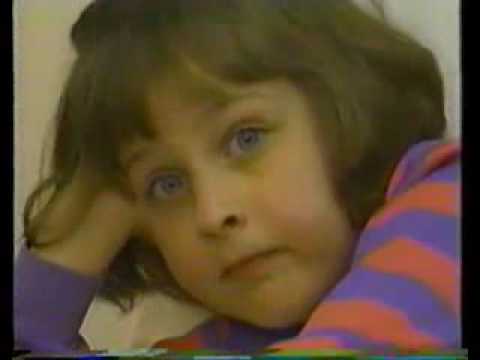
I watched a fascinating documentary, about a 6 year old girl (Beth Thomas) who had been severely sexually abused and neglected and was diagnosed with Reactive Attachment Disorder, a precursor of psychopathy. The little girl is remarkably callous when she speaks about wanting to kill her younger brother and her adoptive parents and shows little emotion. However, because she is only six, she is also honest and candid. She is shown a few years later and has become a normal, loving child.

Psychopaths generally cannot be cured, but in some cases like little Beth’s, early intervention combined with removing a young child from an abusive home can reverse the course of psychopathy before it’s too late. Today, Beth Thomas is in her 30’s and is a registered nurse who works with her adoptive mother, Nancy Thomas in her company Families By Design, which promotes Attachment Therapy to improve the parent-child relationship.
From all accounts Beth shows no signs of narcissism or psychopathy. This is what she looks like today:

beththomas2

Two kinds of stealth trolls

stealthtroll

In two earlier posts I wrote about online bullies and trolls (not exactly the same thing, but close enough). I won’t explain here how they differ and are the same (you can read the articles which I’ve posted links at the end of this article), but I neglected to mention stealth trolls. Stealth trolls seem benign, but can wreak havoc on web forums and social media. I will describe two types of stealth trolls. There are probably others.

The Concern Troll

concerntrolls

The Urban Dictionary defines a concern troll as:

A person who posts on a blog thread, in the guise of “concern,” to disrupt dialogue or undermine morale by pointing out that posters and/or the site may be getting themselves in trouble, usually with an authority or power. They point out problems that don’t really exist. The intent is to derail, stifle, control, the dialogue. It is viewed as insincere and condescending.

A concern troll on a progressive blog might write, “I don’t think it’s wise to say things like that because you might get in trouble with the government.” Or, “This controversy is making your side look disorganized.

The concern troll’s M.O. is stealth. They appear harmless. In the guise of “concern,” the troll infiltrates the website, seeming helpful, but their true intention is not to help, but to disrupt the community, dialogue or morale on the site. They probably know little if anything about the subject matter and their complaints are of a general nature. Their “concern” makes them feel superior. Concern trolls are probably narcissistic or even psychopathic, and their self-righteous “concern” makes them feel superior. Any attempt to pin them down and explain their “concerns” in greater detail or a request to explain the topic being discussed will usually cause them to disappear, but they’re likely to reappear under a “sockpuppet” account (another handle). The sockpuppet may be more aggressive in their trolling behavior and may even bully individual members or make openly hostile remarks about the site or its subject matter. A troll’s goal is to destroy the online community in the usual manner: by making its members leave the site.

The Triangulator.

triangleman

This is a dangerous troll who who pits people against each other by sending private messages containing lies about another user. It’s an online form of the triangulating that psychopaths and narcissists do. They are almost always found on social media and forums. I’ll give a hypothetical example of what a Triangulator does. Let’s say Lisa and Brian are online friends. The Triangulator (let’s call him John) befriends both Lisa and Brian. One day John sends Lisa a PM saying Brian told him that Brian thinks she’s dumb (he never said this). Lisa gets mad and sends Brian a PM saying her feelings are hurt that he went behind her back and told John she was dumb. Brian says he never told John he thought she was dumb, and he doesn’t think she’s dumb anyway. Lisa isn’t sure who to believe, so the trust between her and Brian is compromised. John then sends Brian a PM telling him Lisa thinks Brian acts like a know it all (she never said this). When Brian talks to Lisa and she tells him she never said this, he isn’t sure who to believe and the trust between them is compromised. The Triangulator can destroy a friendship this way, and that’s exactly what he wants to accomplish. By using this tactic, Triangulators can totally break down communication on a site and cause regular users to defect.

Don’t feed the trolls.

Trolls are simply narcissists who derive pleasure upsetting and destroying a healthy online community. If you can’t ban them yourself, the best way to deal with a troll is to report them to the admin or if that isn’t possible, ignore them.

Earlier articles about online bullies and trolls:
Internet Psychopaths: the difference between Trolls and Bullies
Internet Trolls are Psychopaths

It’s all about image: the skewed values of narcissistic families

monopolyguy

Last night I read a blog post by another survivor of narcissistic parents , and was astounded by how similar her parents’ values were to mine.

She writes that her father criticized her for being too idealistic. Now that would normally be a compliment, but because her family valued nothing but money, class and image, it was meant to be an insult. My father (who I don’t think is a narcissist, but has always been a huge narcissist apologist and enabler), said exactly the same thing to me.

We live in a narcissistic and materialistic society, that increasingly values traits that are narcissistic and exalt the individual over the community. In fact, studies have shown that a high percentage of CEOs, top executives, Wall Street tycoons, and others of the “One Percent” have narcissistic personality disorder. It’s a disorder that is very adaptive in modern society and whose traits are rewarded with money and material goods. Especially since the 1980s, with its “Greed is Good” ethos, we reward those who act in their own self interest over those who act in the interests of the community and want to help the less fortunate. There’s even a meme that’s become especially popular with narcissistic Baby Boomers: “I’m spending my children’s inheritance,” as though this is something to be proud of.

inheritance

My family bought right into this ethos. Image was everything to my parents, especially my mother. My parents looked down on our blue-collar neighbors and relatives, and my mother in particular constantly made jokes at their expense and talked about how much better we were because we had nicer things and my father had a better (meaning white collar) job in the city. Appearance mattered, and our clothes had to come from the best department stores, never Sears. We had to live in the most exclusive neighborhoods. To not have a college degree was considered a mortal sin, and even then, it was far better to be successful in the cold-hearted business world than to be a successful teacher, social worker or a nurse. Such things were regarded as jobs for those who couldn’t do anything else, and of course they required a level of idealism that my parents just couldn’t relate to. When my parents split up when I was 14, my extremely image-conscious mother took up public relations as a career, which is all about image. She had so many face-lifts that today her face looks like a mask.

Whenever my parents, my mother in particular, complimented someone else, it was always on their visible, tangible qualities–things like their appearance, home decor, financial status, and taste in clothes. Table manners were of utmost importance, but being a good person was not. I can’t remember a time when my mother ever complimented anyone for qualities such as sweetness, generosity, friendliness and altruism. I do remember her putting down others for having these qualities, calling them “insipid” or accusing them of having no backbone.

My values never matched those of my immediate family, and when I became poor as an adult (because I was never given the tools and self esteem that would have led me to make better choices) I was shunned and rejected by them. I don’t think it’s any accident that when narcissistic parents choose a scapegoat, they usually choose the most sensitive child–the one most likely to be empathetic and have idealistic values. To a narcissist, idealism and empathy are weaknesses. They truly believe that the poor deserve to be poor, and they make no exception for their own child. The child with traits that cause them to become a scapegoat (and who all too often are also bullied at school) would probably become successful if they were raised in a loving, nurturing home, but in a narcissistic home, having these traits is a curse because that child is led to believe they are worthless and this leads to cowardly, “safe” choices that are more likely to lead to poverty. They are constantly told they will fail, that nothing they do is good enough, and then are usually “tossed out to the wolves” at a young age, with no family financial or emotional support to help them get a foothold in the larger world. I have read so many blogs by the scapegoated children of narcissistic families, who were forced to make their own way in the world with no family support, even if their parents could have afforded to help them, and even when other children in the family (who were not scapegoated) did receive support when they entered adulthood.

superiority

What is so ironic about all this is we scapegoats are rejected and hated for the very traits that were instilled in us as children! Scapegoated children are not encouraged to think independently or have ideas of their own. In fact, having a mind of one’s own is reason for punishment and abuse. We were trained to be deferent and obedient–and very much afraid. Deference, obedience and fear are not traits that lead to success in modern life. I think this training is deliberate, in that an evil narcissistic parent needs and wants someone they can use as the family trashcan–someone who can take and absorb all the family pathology and carry its burden. This child is then blamed for everything that goes wrong both within the family and in their own lives. When a scapegoated child becomes an adult, their low self esteem and fear almost inevitably leads to a life of material and financial lack, and this gives the narcissist parents an excuse for rejecting that child and refusing to help–for “violating” their materialistic, self-centered values. I think another reason narcissistic parents train HSP (highly sensitive) children to be scapegoats is because they know an HSP child must be silenced: this is a child who sees through their lies and can use the light of truth to blow the whistle on them. If they are encouraged to think and act independently, they might “out” the narcissistic parent and that is a prospect that terrifies them.

Of course, the best revenge for a scapegoated child is to become successful in spite of their upbringing–and of course there are those who have. Even then, narcissistic parents will find reasons to put that child’s accomplishments down as somehow not “good enough.” The few times in my adult life where I had some legitimate tangible success, I was never praised for it, but given some sort of left-handed compliment or told why it didn’t really count. I was also always compared with my more financially successful older half-siblings, who of course never had been designated the family scapegoat.

Narcissistic parents also don’t care if you have a mental disability. I’m a self-diagnosed Aspie (this was later confirmed by a psychiatrist) and suffer from intermittent major depression, but when I tried to tell my parents these were the reasons why I had so much trouble making the social connections necessary to become financially successful, these diagnoses were dismissed. I was told I was “making excuses.” Both my parents are convinced my poverty is my own fault because of the stupid choices I made. While I don’t deny having made dumb choices, these choices were based on the way I had been raised–to be afraid of taking any risks or challenging myself.

The only way to break the narcissist/scapegoat family dynamic (and it is probably the most toxic parent-child combination imaginable) is by cutting off contact with the abusive parent, because as long as you keep trying to please them, they will continue to attempt to break you down and make you feel insignificant. Nothing will ever please them, even if you dare to become more successful than they are. And if you somehow manage to do this without sacrificing your idealistic and empathetic values, that’s the biggest threat to them of all.

Make no mistake: your narcissistic parent doesn’t love you and never will, but it isn’t your fault. They hate you because they envy those qualities you have–empathy and humanity–that elude them. Be a good parent to yourself. Love yourself. You deserve it.

haters

Narcissists don’t change

snowwhite

I read a lot of blogs written by ACONs (Adult Children of Narcissists) and without exception, all these survivors yearned (or still yearn) for the parental love they were entitled to but never received.

Narcissists can’t feel love. Sure, they might pretend they love you when others are present (they’re great at wearing masks and keeping up appearances), but their true nature doesn’t even know the meaning of the word love.

For many years into adulthood, I wanted nothing more than for my narcissistic mother to approve of me. Like most narcissists, she was all about appearance and image. When I was young, she was obsessed with my weight and physical appearance, and always insisted on making me into her own image. She herself was vain, and seemed incapable of discussing deep topics or ideas. Narcissists have an uncanny ability to never show any vulnerable side of themselves, and this includes sharing any dreams with you. I’m not talking about the kind you have when you sleep, but the kind of dreams that give us hope for happiness in this life. I can’t remember one time when my mother ever shared a dream with me. She was already perfect–she didn’t need to have a dream. She also never, not once, ever shared a true emotion with me. She was incapable of being vulnerable or showing anyone (especially me) any vulnerability. And in keeping with that, she was incapable of empathy. She could never understand my feelings or hurts, and was usually more than happy to add to my hurts. I remember once, she made fun of me after she said a particularly hurtful thing, and then mocked the sad expression on my face–you know, pouting in an exaggerated way and drawing fake tears down her cheeks.

She was part of the positive thinking tyranny. (For more on how some people misuse the positive thinking movement, see this article.) Many narcissists use the positive thinking movement as a way to shame others for having feelings or to avoid taking responsibility. They’re big fans of positive thinking slogans, such as “your feelings are your own responsibility, not mine” or “you have chosen to be poor because of your negative attitude.” I remember once when I was being treated unfairly at my job (by a narcissistic boss, of course) instead of showing support and offering words of comfort, my N mother made my boss the victim, essentially telling me I probably caused him and my coworkers to dislike me because of my “negative attitude.” This is the sort of “love” you’ll get from a narcissist.

Narcissists also have an odd way of dismissing sentimentality. My mother never kept family photos around the house (because they were too “tacky”) and all the family photos were stashed into albums and boxes and packed away in the attic. A few years ago, I told my mother I would like to have some of the family photos, but she avoided the issue and changed the subject. About a year later, annoyed at being asked about them for the umpteenth time, she told me she had thrown them away. Who throws away family photos?! I was gobsmacked, but at the same time, I thought how typical that was of her. She could have sent them to me if she didn’t want them, but no, that would have made me happy, so throwing them away was better.

Back in those days, I hadn’t gone No Contact yet, and whenever in my mother’s presence, I felt small and belittled. Even when she didn’t actually say anything mean, there was always that condescending, withering look. I always felt nervous before having to see her or talk to her, without quite knowing why.

Now I know why (even though she always told me I was the crazy one who was being paranoid), and I’ve been No Contact now for almost three years. She sends me a birthday card every year, with phony mass produced Hallmark messages of love. When I get these cards, I just toss them in the trash. Coming from her, they mean nothing. She won’t ever change, because narcissists can’t. Trying to please a narcissist won’t work, so don’t waste your time. It will only wind up causing you frustration and hurt. They only want you on their side so they can use you. If they’re nice to you, it means they probably sense you pulling away from them. They can’t have that.

Of course I regret not having a loving parent or extended family. I regret not being able to see my mother (and her various flying monkeys, most of whom are also relatives) on big holidays like Christmas and Thanksgiving. I regret not ever having had the experience of a real heart to heart talk with my own mother. I can’t help feeling sad when others ask me where I’m going for holidays and have to tell them, “nowhere.” Because you see, my mother turned just about everyone in her extended family against me. Most of them barely know me, but narcissists are usually persuasive people who could sell ice to an Eskimo, and my mother’s “sold” me as a horrible, ungrateful, unsuccessful loser who doesn’t deserve happiness.

In my family, only visible evidence of success and physical attractiveness is acceptable. If you’re fat, unattractive, poor or disabled, you’re a “nothing” or a “nobody,” even if you’re a great person. My mother has actually used those words to discuss a cousin of mine, who is morbidly obese. “Laura’s a nothing.” She overlooks the fact that Laura is an accomplished artist who has won awards in several art shows, and also volunteers at her local food pantry. As for me, I am not rich or successful (because I was never given the tools and the self esteem to become successful as an adult), and so I’m a “nothing” too. She looks down on my poverty, and blames me for it.

I don’t need narcissistic people in my life, and one by one I have been weeding them out. And as I do so, I am growing, finding out what Lucky Otter is really all about. I’m finding out that I’m a pretty great person who is just blooming late in life.

Too bad my N mother won’t ever know the real me. Not that she’d care.

If you have a narcissistic parent, the most loving thing you can do for yourself is to make it impossible for them to hurt you anymore. They aren’t going to change. In fact, they get worse with age. As their looks and health begin to go, they feel extremely threatened by the reality of becoming vulnerable or needy, and rage takes over. They will no longer even pretend to be “nice.” You have to go No Contact, no matter how much it hurts. Rest assured though, you are not hurting them by doing this. They are incapable of feeling hurt. You’ll only hurt yourself if you remain in their thrall.

“We Need to Talk about Kevin”: are psychopaths born or made?

Eva Khatchadourian (played brilliantly by Tilda Swinton) is a former travel writer who’s ambivalent about her first pregnancy, and doesn’t seem to be able to connect with her newborn son Kevin, an infant who cries constantly and squirms away whenever she tries to hold him. Eva also suffers from postpartum depression and lack of sleep, which doesn’t make it any easier to connect with her ornery child. Eva as a new mother has the look of a concentration camp survivor. She is utterly tormented by her son–and her inability to feel maternal love for him.

As Kevin grows older, it’s apparent there’s something not quite right about him. Even as a very young boy of three or four, he has an unnerving, soul-piercing stare and never smiles or laughs. Though obviously very intelligent, Kevin isn’t out of diapers until he is 6 or 7, and refuses to engage with others, especially with Eva. He becomes disruptive at home and at school, and is always in trouble. Besides seeming to do things deliberately to upset Eva, Kevin bullies other kids at school, and encourages one girl, who has a severe skin disorder, to pick at her scabs. He’s sneaky and devious and shows no remorse for his bad behaviors. He seems to have only two facial expressions: sullen, or self-satisfied sneer when he’s gotten away with something.

There’s one poignant scene when Kevin becomes very sick and this is the only time he shows any vulnerability and allows himself to be mothered like a normal child. Here, while Kevin’s defenses are down and his mask of impending psychopathy is temporarily disabled, we can catch a fleeting glimpse of little-boy innocence and neediness and some emotion that may even resemble love. This scene makes you begin to question whether Kevin was born evil, or if his psychopathy may have been caused by Eva’s failure to bond with him as an infant.

The rest of the time, there’s an disturbing lack of innocence in Kevin. There’s an unsettling scene when Kevin, about age 3, is sitting on the floor while Eva rolls a ball to him. Not only does he fail to roll the ball back, but he fixes her with his unnerving hateful stare, a look you wouldn’t believe such a young child could be capable of.

As Kevin grows into adolescence (adolescent Kevin is played with subtle and chilling power by Ezra Miller), his misdeeds become more serious, and start to endanger not only his fellow students and teachers, but other members of his own family. At one point he does something unspeakable to his younger sister, Celia (a child his mother wanted and who is temperamentally Kevin’s polar opposite–a sweet and empathetic child), and then smoothly lies about it without showing a shred of empathy or remorse. The strain of raising this difficult child eventually destroys Eva’s marriage to Kevin’s father, Franklin (played by John C. Reilly), who disagrees with his wife’s belief that Kevin is disturbed and naively continues to insist he is a normal, loving child but that Eva’s attitude toward him is cold and unmotherly. Eva herself is torn–she seems to try her best to do and say the right things to Kevin, but it’s clear nothing is getting through to him and the strain is destroying her.

Things come to a head when Kevin commits a shocking crime at age 15 followed by another that is even more heinous. The entire film is told in flashbacks, in the form of Eva’s letters to her husband Franklin (who has left Eva and whose whereabouts are a mystery until the end of the film) and conversations between Kevin and Eva while he is in prison.

Eva tries to come to term with what has happened, to deal with the aftermath and ostracization by everyone the family knew, and most of all, what part she may have played in her son’s crimes. One question that runs throughout the film: was Eva a bad mother who caused her child to become bad, or was Kevin just born bad?

In the final scenes between Eva and Kevin while he’s in prison, it’s possible to see how sophisticated and subtle Kevin’s manipulations of Eva have become. Theirs is a complicated relationship: while he obviously hates her, it also becomes evident he has more respect for her than for his father, who always showered him with unconditional love and for whom Kevin has nothing but dismissive, snarling contempt.

“We Need to Talk About Kevin” (based on the 2003 book by Lionel Shriver) is one of the most chilling and thought provoking movies about psychopathy I’ve ever seen, and like other great psychological thrillers, it asks more questions about human nature than it answers.

The only way to handle a narcissist if you must deal with one.

cuthimoff

Cut them off when they start to get nasty. And they will get nasty. Narcissists may love bomb you for a short time and try to gain (or in my case, regain) your trust, but make no mistake: they ARE out to get you. You can NOT trust them. They will NOT change. Ever. No amount of reasoning with them or logic will change the way they are or the way they will try to use you and put you down. YOU are ALWAYS wrong. They are ALWAYS right. No exceptions. They’re not stupid: they actually DO know you ARE right, but knowing you are right makes them VERY ANGRY. They will start hurling insults at you and making your life miserable.

There is only one solution at that point: CUT THEM OFF. It may not be possible to go No Contact in certain situations (particularly if a child is involved), but if you can’t, you can cut them off or refuse to speak anymore to them until they are CIVIL and treat you with RESPECT. Eventually they will have to stop insulting you and at least pretend they respect you if they want something from you, otherwise IGNORE THEM and their demands. If they want something from you badly enough, they can ask for it RESPECTFULLY. If they can’t or won’t, they will just have to LIVE WITHOUT IT.

And of course, you can always just say NO. Saying NO won’t kill you. If it pisses off your narcissist, they will just need to deal with it. Do NOT let him (or her) manipulate you into giving them something you don’t want to give them.

In reading back over the two text conversations with my ex, these are the things I have learned. My narcissist won’t ever change. Your narcissist won’t either. Do NOT let them fool you. They’ve been trying to make a fool of you all along.