A meaningful life.

Image

meaningfullife

Positive Quote ~ August 4th

Visit the original post to comment.

Persia's avatarBlog of a Mad Black Woman

ecb3e24302b59f0d55b9fbc51cb226c7

Have a blessed day all. ❤

View original post

All the World Is Full of Suffering. It Is Also Full of Overcoming – Helen Keller | TheSeeds4Life.com

helen_keller

Think of Helen Keller and what she achieved in her life in spite of being both deaf and blind from early childhood. This brilliant woman was such an inspiration and really makes you think that almost anything can be overcome or at least that we can cope with almost anything life throws at us.

Comments are disabled; please comment on the original post.

Source: All the World Is Full of Suffering. It Is Also Full of Overcoming – Helen Keller | TheSeeds4Life.com

6 “useless” emotions that aren’t useless, and 2 that really are useless.

negative-emotions-crop

I get tired of positive thinking nazis  who tell you you always have to be happy and that there’s no place for “negative” emotions.   Not only is it obnoxious to wear a pasted on smile all the time even when you’re not feeling it, it’s not natural or healthy.   Of course, being a positive person who thinks positive thoughts is a good thing, but when it’s taken to ridiculous extremes (and it certainly is in my family, where “negative” emotions are not accepted or allowed) it can be soul-damaging.   Following is a list of unpopular (or “useless”) emotions that definitely have their uses (when they’re not excessive).  There are only two emotions I can think of that have no uses whatsoever, and I’ll describe those last.

1. Guilt.

My father always used to tell everyone that guilt was an unhealthy, useless emotion, but I couldn’t disagree more.   True, excessive guilt is bad for you, but the right amount of guilt separates people with a conscience from the psychopaths. I pointed out this to my father once, and he became enraged.   Hmmm, I wonder why!   The ability to feel guilt keeps us civilized and mindful of the feelings of others.

2. Sadness.

Sadness is a normal reaction to a loss.  It also connects people in those times of loss.  We have socially sanctioned rituals that promote and even encourage the expression of sadness (funerals) but otherwise, people are uncomfortable with the sadness of another and are always trying to cheer you up.   If you’re crying, people always want you to stop. Why?  Feeling sad and crying can be healing; if sadness is repressed it can lead to something much worse–depression.   People need to just shut up and let you be sad and cry if that’s what you need to do.

3. Anger.

There are times it’s appropriate to be angry.    Anger, though toxic both to yourself and others when excessive,  helps you survive.  If you feel threatened or feel that someone close to you is threatened, you are going to fight back.  The only other survival option is to flee (which I’ll talk about next).   Otherwise you’re just going to stand there and let yourself or your loved ones get attacked or treated badly.    Excessive anger, of course, leads to hatred, and hatred is not only useless, it’s dangerous to the soul.

4. Fear.

If you can’t fight (sometimes you can’t), you can flee danger.   Like anger, fear is a survival emotion.   It can be excessive, leading to anxiety disorders, but fear in normal doses is both healthy and appropriate reactions to danger.   It’s important to distinguish whether it’s better to flee (fear) or to fight (anger).

5. Jealousy.

I’m not talking about envy here, an emotion often confused with jealousy.  But they are not the same.   Jealousy refers to the fear that someone is taking something you love away from you; envy refers to wanting what someone else has.  There are similarities though. Both are bitter, painful emotions, hard to deal with.  Sometimes they lead to people attacking the object of their jealousy or envy to “even the score.”   But jealousy has its place.   It’s another survival emotion, similar to anger mixed with fear, that warns you that something that belongs to you is in danger of being taken away.   The problem is jealousy often crops up when there is no real danger of that happening, and that leads to all kinds of problems.  Excessive jealousy can be problematic too.

6. Envy.

I hesitated to put envy here, because on the surface it really doesn’t seem to have any useful purpose.  I almost put it as one of the “useless” emotions I’ll be describing last.  But envy does have one useful aspect.  If it’s not excessive, it can be a motivator, making you take action to improve your own circumstances.   When it’s used that way, it’s really more akin to admiration than envy.   The problem with envy is it can so often turn so bitter that it saps all your energy and lowers your self esteem, making you LESS likely to improve your circumstances or achieve the things you want.

The Two Emotions That Really Are Useless.  

useless.stamp

1. Worry.

I heard a great saying once:  “Worry is useless because if what you dread comes to pass, then you’ve lived through it twice; if it never happens, then your worry was in vain.”  I took those words to heart because of how true they are.   Worry is absolutely useless.  If faced with a potentially bad or dangerous situation, worry won’t help you.  If something can be done to prevent the situation from happening, taking action will help,  and once you take action, then there’s nothing more to worry about.   If there’s no action you can take, then worrying about it is a waste of time.  Better to plan how you will deal with it when it happens, than to sit around wringing your hands, pulling out your hair, and making yourself sick over it.

2. Shame.

Shame must be distinguished here from guilt.  Guilt refers to something you did, while shame refers to the person you are.  Guilt is useful because without it, there would be no apologies or amend-making for bad behavior.   People would just go around doing whatever they want, regardless of how it makes others feel.   Shame, on the other hand, is useless because it means feeling sorry not for something you did, but for who you are.  If you were the family scapegoat, then you were the receptacle for all the family shame, and were made to feel like you’re worthless and don’t deserve to live.    Shame is the one emotion that is at the core of all the personality disorders and every case of complex PTSD generated by familial abuse.  It’s incredibly toxic–probably the most toxic emotion there is, and it has about as much usefulness as a bicycle does for a fish.

For more about shame vs. guilt, please read Carrie Musgrove’s article about the important distinctions.

Some timely advice.

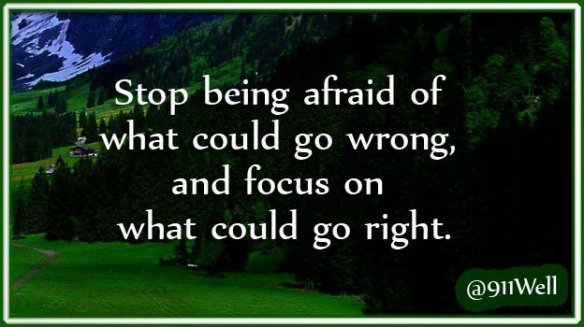
My father’s memorial service is today. My son is headed there now.  I woke up feeling overwhelmed with worry over what might happen there.     Then I saw this meme.  Trite or not, I  REALLY needed this today.

stopbeingafraid

There’s also the Serenity Prayer used in 12 step programs.  I’m not in a 12 step program, but this little prayer fits all kinds of situations.  I think I’ll be saying this a lot today.

God grant me the serenity to accept the things I cannot change

The courage to change the things I can

and the wisdom to know the difference.  


Changes.

changes

I never used to be able to relate to “positive thinking” statements.  They seemed trite and shallow, as if they were made up for other people–people with normal lives, normal families, normal incomes, good jobs, who didn’t suffer from mental illness, who hadn’t been abused by almost everyone they had known, and who had an actual future to look forward to.

Dying slowly.

When I was with my narcopath ex,  I really didn’t have a future.  Not if I’d stayed with him.  I was slowly dying a long, excruciating death–a death by annihilation of my spirit. His abuse was effecting my body, my mind, my emotions, and my soul.    Pictures of me taken when I was with him compared to pictures taken of me now show the toll the relationship was taking on me.   I looked older 3 years ago than I do now–and my depression showed on my face in every picture, even the smiling ones.  I was overweight and miserable. Even my hair looked depressed, dull and without shine. When I was told to “just think positive” I felt nothing but rage and frustration.  How could I even hope to have a better life, how could I even hope to ever be happy?   A smiley face meme, a “thought for the day,” or “inspirational” coffee mug just wasn’t going to do it for me.   And those things can be shallow and trite, but that doesn’t mean that a positive outlook is forever barred from me.  It doesn’t mean I can’t still find happiness.

 Cynicism and bitterness.

Even if I hadn’t been abused, by nature, I’m a depressive sort of person.   As an INFJ, I think deeply about things and feel them even more deeply.    I’m a worrywart who tends to see the glass as half empty.  I catastrophize and ruminate and obsess and worry about almost everything.  I get upset when I hear about wars, murders, shootings, racism, sexism, injustice, unkindness in general, and most of all, the abuse of animals and kids.  Or  the abuse of anyone for that matter.

I see all the trappings of success–big houses, late model cars, vacations, the latest this or that–and feel depressed because those things will never be mine.   I wasn’t invited to be in the Club.   I feel victimized and alone in the world.  I used to think God hated me.   I almost became an atheist–but not quite.   I always felt *some* kind of presence, but didn’t think that presence thought very highly of me.  I even thought that my purpose for existing was to be an example to others of what not to be.  I felt like I was held in contempt and condescending pity by everyone.  But what I didn’t know was I was projecting my own sense of self-hatred and hopelessness onto whatever Higher Intelligence was out there and everyone else too.    The internal voices instilled in me by my emotional abusive upbringing echoed down the years and contaminated any ability I had to find joy and meaning in life.   I became bitter and cynical, and turned up my nose at “happy people,” assuming they had no depth at all–but was it really just because I envied their ability to feel joy?

Slouching toward heaven. 

godareyouthere

When I finally went No Contact with my ex, things began to change.  Not a lot at first, but for the first time ever, I felt some hope and even fleeting glimpses of joy.   I started to blog. Writing down my feelings about what happened to me helped me make sense of them.  Through blogging, I found a community of others in a similar situation.  I no longer felt so alone.  Blogging was the best sort of self-therapy I could have hoped for.    A talent for writing was the one tool I had that began to help me be able to lift myself out of the mire.

Eventually, this got me to the point of wanting something more–an actual relationship with God.  A lifelong agnostic, I began going to church and decided to become Catholic.   I started to pray a lot more (I call it “talking to God,” which sounds friendlier).   My faith was shaky and fragile (and still is), but I kept plugging away, asking God to give me the ability to trust him and to give me faith.   If I couldn’t trust other people, it was especially hard to trust an entity I couldn’t even see.    Sometimes I felt like God wasn’t listening and had doubts that he existed at all.   But God was always someone I could turn to when no one else seemed to care.   I had no choice!   Over time, I felt myself beginning to change from within.  I began to appreciate the things I had more, instead of feeling resentful and envious of others for having more than I did.   I’ve even had a few of those rare transformative moments of  gratitude and happiness so profound it brought me to tears.

I am grateful.

I may not have a lot, but I have what I need, and that’s a lot more than many.   I don’t live in the best house in the world, but it’s a nice place to live and I like its cuteness and coziness.   I don’t drive a late model car, but I have one that’s reliable and gets me where I need to go.   I don’t come from a big loving supportive family, but I have two wonderful children who I have a good relationship with.   I can’t afford to take real vacations, but I have a car to go on short day trips.  I live in a beautiful part of the country, even if I’m jaded and don’t appreciate it as much as I used to.  I can sit on my porch and see mountains and trees and flowers and see the night sky.  I can hear birds singing outside my window.  I don’t have to look outside my window and see a back alley full of broken glass and hear sirens and people fighting all night.  I don’t love my job, but it pays for what I need and there are a lot worse things I could be doing.   I have two wonderful cats.  I have writing ability.  My blog is doing well and is not only helping me, but it’s helping others too.  I have a wonderful, empathic therapist who almost seemed to drop out of the sky at just the right time.  Lately, I’ve been finding myself thinking that my glass is half full instead of half empty.  That’s God changing my attitude in a really big way.

It’s not a smooth road.  I still get triggered and go back to my old thinking patterns.  I stil have days where I feel hopeless and unloved.  These attitudes are so ingrained in me that removing them sometimes feels like performing a skeleton transplant.  But all I have to do is lean on God and tell him I can’t handle it myself–and things do begin to look better. God is working on me, changing my attitudes, and people have said they’ve noticed a difference in me.

Big changes, bright future.

gulf_coast

I have a very strong feeling that God is planning a major change for me in the near future–a change that would give me a whole fresh start and more choices than I’ve had.   It looks very likely that in the very near future, probably before winter (my least favorite season–I hate it!) sets in, I will be moving to Florida to join my son.   I won’t be living with my son; I will have my own place.   He thinks he can get me a job where he works too.   I will be living near the beach.  I can watch the sunsets over the Gulf of Mexico every night if I want.   While I love the North Carolina mountains, they don’t speak to my soul the way the ocean does, not even after 23 years of living here.   I grew up in coastal New Jersey and New York and used to hit the beach every weekend in the summer since it was no more than an hour away from where I lived.   The ocean is in my blood. Here where I live now, getting to the beach requires planning a vacation or at least a weekend getaway since the closest beach is a five hour drive away.   I never have enough funds to do that though.  I haven’t seen the ocean since 2008.   That’s far too long.

I have no ties to North Carolina. There’s nothing left for me here–no friends, no family, no pressing commitments–so I won’t have any misgivings about packing up and leaving when the time is imminent.   I’m trying to get my daughter to come with me, because I think she needs a change too.  There’s nothing left for her here either except her dad, but he is a toxic person and her relationship with him is a codependent one.  She may not want to leave him though. She feels responsible for him.    But when and if she decides enough is enough (and I’m praying she does), the invitation to join me and her brother is always open.

I think that this move will change my life in so many positive ways.   No, of course it won’t be perfect, but I will be living near my son again, I will near my beloved ocean again, and I can make a fresh start in a new place, free of all the ghosts of my abusive past I still associate with where I live now, and which continue to haunt me at times.   I imagine myself in my little house or apartment, or sitting in front of the ocean, listening to the waves and the gulls, finally writing the book I keep saying I’m going to write.   And I’ll thank my Heavenly Father every day for presenting me with such a positive life changing choice.   I never felt like I had choices before.  Now I think I do.

Why God has waited until now, I don’t really know,  but it’s probably because I wasn’t ready.   I wouldn’t have appreciated it.  Maybe he wanted me to appreciate the things I already have first, before blessing me with new opportunities.    Now, when I see positive thinking memes or inspirational quotes, I actually pay attention.   Yes, they are trite and can be shallow and annoying when nothing else of substance is being given, but they do seem to have more meaning now.  Is that because I feel like God is finally smiling down on me so I can relate to them better, or is it because I’ve changed enough to pay attention?

Little gifts.

God shows up at the strangest times.  Earlier today I was at the Laundromat, and as I waited for my wash, I found a small devotional book called “Fear Not Tomorrow, God is Already There,” by Ruth Graham.  It was sitting right there on the table, on top of a bunch of advertising circulars.   A few years ago I would have left the book there.  Today I took it home with me and said a small prayer of thanks.  I know God left it there for me on purpose.  I’ve realized he is always trying to show you in small ways how much he loves you, but if you’re not paying attention you won’t notice.    If you open your heart to God and just talk to him, like you’d talk to your best friend or a loving parent, your heart will begin to change and your faith will grow stronger in tandem with that–and then it’s possible your whole life might take a turn for the better too.  It’s so simple–how did it take me so long to see this beautiful truth?  I feel in my bones that the last half of my life is going to be when the harvest comes in–a harvest rooted in the pain of my past.

Is there a reason why we suffered so much?

student_teacher

One last thought.   There’s an old Buddhist proverb: “When the student is ready, the teacher will appear.”   Everyone who ever touched my life has been a teacher to me. Yes, even the narcissists.   Maybe especially them.  If it weren’t for them, I would not be who I am today.  I don’t think I would be as deep or as spiritual or value empathy and kindness as much as I do.   I don’t think I would have the same sort of relationship with God.  Many of the most spiritual (not necessarily religious–that’s a different animal!) people I know came from abusive backgrounds.   They suffered terribly and carried that heavy spiritual load all their lives, then finally turned to God because there was no one else.  In pain there comes much wisdom.     Maybe God allows some of us to experience more adversity so we learn to lean on him instead of other people–and then when we learn to trust him, he finally blesses us with people who can help us and love us unconditionally.   No, we should never have been abused by our narcissists.  It definitely wasn’t fair.  But out of that kind of adversity we can learn so much about ourselves, about human nature, and even learn to help others who suffer like we did.   And that is my greatest wish now–to help others heal.

Where I stand on “positive thinking.”

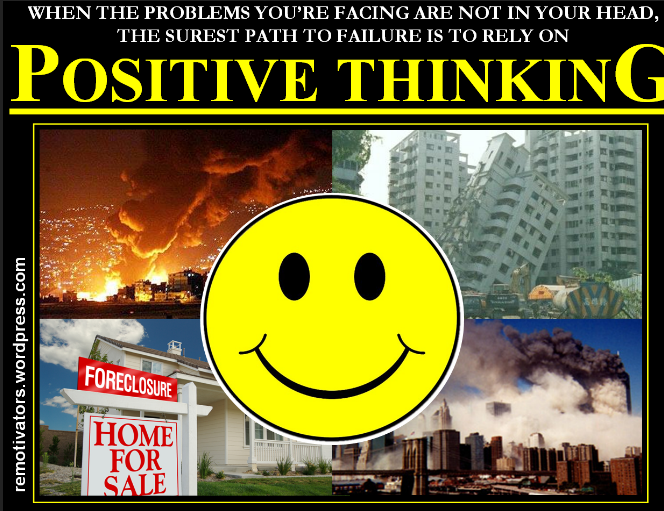
positive_thinking_problem
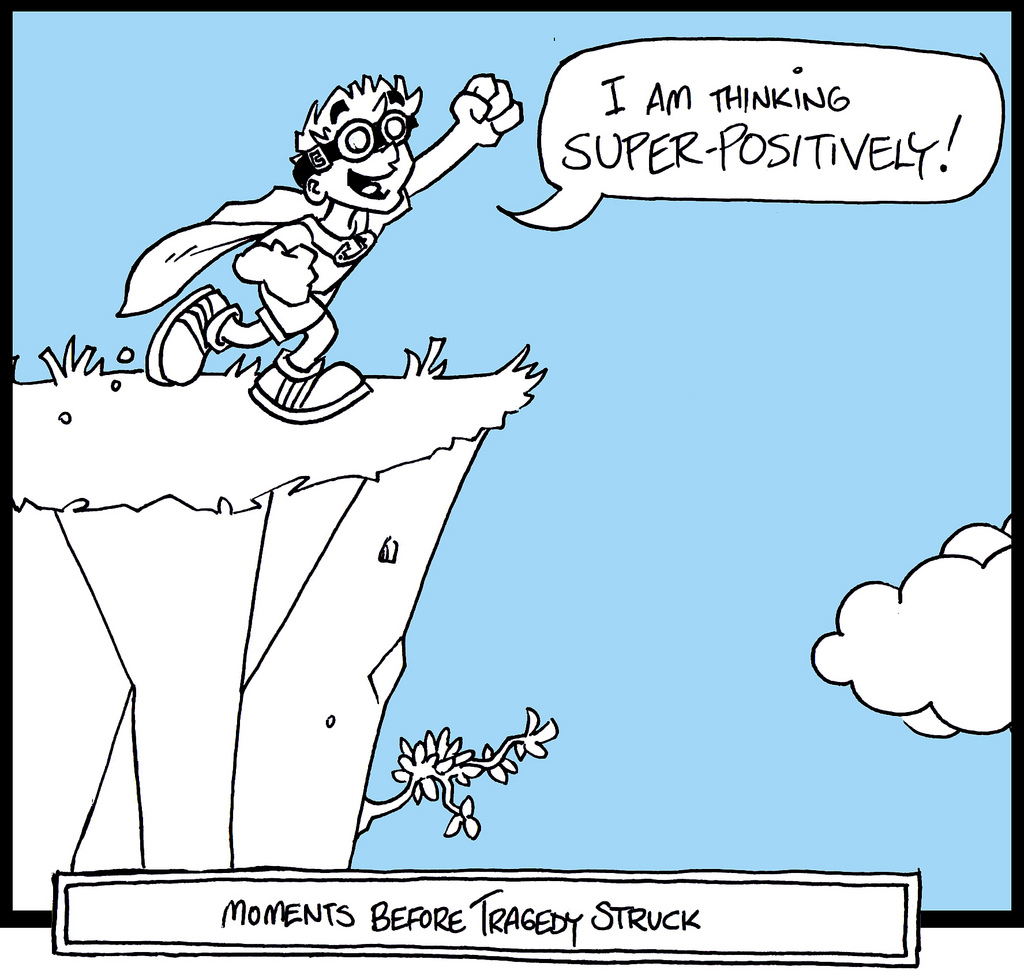
Positive thinking taken to extremes is deluded thinking.

I’ve seen several blog posts about the problem of forced positive thinking lately, and since this is an issue that has concerned me for a long time, I thought I’d add my own take on it.

In recent years, there’s been an increased societal pressure toward “positive thinking.” I think two factors have led to this trend–the New Age philosophy that we can “be as gods ourselves,” and the continued glorification of the Reaganistic optimism of the 1980s. The signs are everywhere, in self-help and pop psychology books, in countless popular slogans and memes that appear on bumper stickers and coffee mugs, on motivational posters, on calendars, on the political campaign trail, and all over social media such as Facebook. The forced positive thinking brigade has even infiltrated churches. Motivational speakers like Tony Robbins and preachers of the “Prosperity Gospel” like Joel Osteen have gotten rich by telling us that if we only think positive thoughts, our entire lives will change for the better. They tell us if we let go of negative thought patterns, we can become happy, successful, healthy, and wealthy.

This is all fine and good, and personally I see nothing wrong with positive thinking for its own sake. Even if the outer trappings of your life rival those of someone living in a Third World nation, it’s certainly better for you if you can scare up a little optimism and hopefulness, and it’s definitely bad for you to dwell in hopelessness, depression and negativity. At the very least, seeing the glass as always half-full will make you more accepting of your sorry lot and therefore happier. That said, it’s incredibly difficult to see the glass as half full when there is barely a drop in your glass. That would be deluded, not positive, thinking.

For all its advantages to our psychological well-being, there’s a dark side to the positive thinking movement too, which goes hand in hand with the current societal glorification of narcissism and the nasty belief that selfishness and lack of compassion are virtues. While telling people that thinking positive thoughts is not a bad thing itself (because there is truth to the idea that negativity tends to draw in negative things–I have seen this dynamic for myself), the positive thinking movement has been taken to disturbing extremes. It’s led to victim-blaming and an overall lack of empathy for the less fortunate. The poor are blamed for their own poverty, regardless of the circumstances that might have led to it or keep them trapped there. They are told they are “not positive enough” or “made bad choices.” Even worse, some churches of the “prosperity gospel” ilk tell them they must have some moral failing or God would be rewarding them with material blessings. They are made to feel shame and guilt for their sorry financial condition. The chronically ill and disabled are likewise blamed for “not taking care of themselves” or “choosing bad habits.” It’s easy enough for someone who has never had to struggle with poverty or serious illness to thumb their noses at those who have and tell them it’s all their own fault.

broken_society

Is this the way Jesus would have acted? No, of course it isn’t. In fact, most of Jesus’ followers and disciples were the most financially and physically vulnerable members of his society. Jesus himself was humble carpenter and certainly not rich. He didn’t condemn these unfortunates or shame them for failing to be positive enough, or making the “wrong choices.” In fact, he seemed to love these vulnerable people most of all. Whatever happened to the “social gospel” of the late 19th and early 20th century? Oh, that’s right–it became “communism.” Somewhere along the way, compassion for the less fortunate and the culture of charity got twisted into “weakness” and “enabling.” The enormous popularity of Ayn Rand, who believed the greatest human evil was altruism, is disturbing, especially since her philosophy of “objectivism” has infected the minds of powerful politicians of a certain political persuasion, including many “Christians.”

While I don’t subscribe to some Christian fundamentalists’ idea that Satan is behind all this worship of greed and self-love and the denigration and victim-blaming of the less fortunate, I do think it’s a very destructive turn in the way our culture thinks, and it’s psychopathic in nature. Lately I’ve been seeing more blog articles criticizing this trend, and that seems like a good sign that at least a few people (usually victims of narcissistic abuse themselves) are finally realizing our society has become woefully empathy-deprived. Hopefully their message can break out of the blogosphere it’s currently confined to and begin to touch the hearts of The Powers That Be who are not yet completely brainwashed by the Cult of John Galt.

It’s absolutely fine (and desirable) to be a positive thinker, because positive thinking does tend to have its rewards, but blaming the misfortunes of others on their negative thinking or worse, their moral failings is just a form of societal gaslighting and is utterly evil itself. It’s also rife with hypocrisy– the Positive Thinking Powers That Be denigrate the emotions of guilt and shame for themselves, but they make sure those who haven’t been blessed the way they have feel plenty of guilt and shame for not having been “enough.” They never stop to think how impossible it is for someone who is struggling every day just to have enough to eat or with severe pain or illness to think in a positive way. It’s much easier for the already privileged and healthy to be able to say “life is good” and mean it. The well heeled Positive Thinking bots never stop to think of this–or they just don’t care, which is most likely the case, because those who haven’t been “blessed” with wealth or good health MUST have done something wrong to deserve it.

Any society that is empathy-starved is eventually going to self destruct.

For further reading, check out this article from The New York Times and also this one about empathy being a choice.

“Don’t Cry Out Loud”

If you were a survivor of a narcissistic family (or were otherwise a victim of narcissistic abuse), as I was, you were probably told your emotions were not okay. Instead you were told to stuff them and hide the way you really felt from the world. Unfortunately that’s the same philosophy modern society holds in general, and of course narcissists stuff all their feelings all the time, except rage. It can get so bad you reach a point where you tell yourself you’re bad for even having feelings or being upset when someone hurts you.

Several months back, I wrote an article about the way some proponents of positive thinking use it as a way to deny their own true feelings or use it to invalidate the emotions of others. Used this way, positive thinking can become a form of abuse or self-abuse. Of course, there’s nothing wrong with being a positive person, but there’s something very off about someone who walks around wearing a fake smile pasted on all the time and insists we must always do the same. Ironically, these “positive thinking nazis” instill a sense of guilt and shame.

Here’s an article from a Christian-oriented blog that describes how damaging stuffing our emotions is and what we can do about it.

Don’t Cry Out Loud

stuart_smalley
Stuart Smalley.

Back in the early ’90s, “Saturday Night Live” did a mock self-help show called “Daily Affirmation With Stuart Smalley.” Stuart Smalley was a spoof on individuals who were obsessed with 12-step programs and who had become addicted to the act of going to therapy. Smalley ended each show by looking into a mirror and saying, “I’m good enough, I’m smart enough, and doggone it, people like me!” The skit was hilarious because Smalley was the personification of vanity, self-indulgence and narcissism — traits often used to describe our culture.

To counteract our self-absorbed culture, many Christians have gone the opposite direction. Worm Theology is based on Psalm 22:6: “I am a worm, and not a man…” or the line in the Isaac Watts hymn “Alas! and Did My Saviour Bleed,” which says, “Would He devote that sacred head for such a worm as I?” Worm Theology is a belief within Christianity that a feeling of worthlessness and expression of low self-esteem means God is more likely to show mercy and compassion.

Instead of debating the merits of this belief system, I want to focus on what I see as a natural consequence to a low view of self in our Christian culture today: a lack of self-compassion. Sadly, I even noticed this in my own house last night with my 14-year-old daughter.

My family recently relocated from Northwest Arkansas to Colorado Springs. No cross-country move is ever easy, but it’s been especially hard on my daughter Maddy. Last night I lay on the floor of Maddy’s room as she cried about feeling like no one really understands her feelings. It broke my heart to hear how alone she feels — that no one understands what she is going through. Thus, she felt that she has no one to share how she really feels. In the end, she ultimately got tough with herself and expressed that she should be over these feelings, that her feelings were wrong and that she was stupid for getting so emotional.

I so wanted to jump in and correct her, “Your feelings are not stupid!” but I didn’t. I wanted to tell her that God cares about her emotions (which He does), but I refrained. I was tempted to recue her by telling her that I care (which I do), but I stopped myself. What an insensitive father, some might think. I didn’t jump in to rescue my daughter because I want her to learn something that most Christian adults don’t get: Their feelings matter!

Beautiful song with a destructive message.

But sadly, for so many people, their emotions usually don’t matter. I watch time and again, when counseling with people, that they constantly judge, belittle, criticize, demean, minimize and marginalize their emotions. It’s like there’s this Christian belief that we must never wallow in our emotions. It’s like people are afraid they’ll become self-indulgent or vain (like Stuart Smalley) if they have compassion around their feelings. They believe self-criticism is what keeps them in line. Most people have gotten it wrong because our culture says being hard on your self is the way to be. It’s like the ’70s song by Melissa Manchester that had the lyrics, “Don’t cry out loud. Just keep it inside and learn how to hide your feelings.” Listen to some of the messages that are out there about our emotions:

Real men don’t cry.
You’re just being a drama queen.
Play through the pain.
It’s just that time of the month.
You shouldn’t feel that way!
That’s not how you really feel!
Why do you get so emotional?

Both men and women have learned these messages well, and the tragic consequence is that most people have no idea how to validate their own emotions. Since birth, most of us have had our feelings so massively invalidated that we don’t know how to care for our emotions. Instead of valuing our feelings as a great source of information, we stuff them, ignore them or judge them away. Thus, the hope for our relationships is that we will find that perfect someone who will finally care about and validate how we feel. Although we don’t do it, the fantasy is that our friend, significant other or spouse will value our emotions. Great plan, right?

I believe one of the greatest gifts we can give our self is the gift of compassion. When we are upset, frustrated, fearful or hurting (like Maddy) we should be the first one in line to care about how we feel. Why should I expect someone else to care about my heart and emotions if I don’t do that job first and foremost? The question we should be asking ourselves is do we treat our self as well as we treat our friends and family? We are often gentle, kind, compassionate and empathic with others. However, a new research study on self-compassion found that people who find it easy to support and understand others, it turns out, often score surprisingly low on self-compassion tests, berating themselves for negative emotions and perceived failures like being overweight or not exercising. The research suggests that giving us a break and validating our feelings and imperfections may be the first step toward better health. People who score high on tests of self-compassion have less depression and anxiety, and tend to be happier and more optimistic.

The more you seal yourself from your emotions, the more isolated and disconnected you feel. While you can suppress and repress your feelings, you cannot get rid of them. You always bury emotions alive. At some point they will always come out, but then they usually come exploding out like a volcanic eruption. The only way to make peace with our emotions is to value them, face them, explore them, understand them and then take them to the Lord. “Cast all your anxiety on him because he cares for you” (1 Peter 5:7). Suppression takes an incredible amount of energy — energy which is constantly being tapped to maintain a wall of protection around your heart.

The bottom line is that your emotions are incredibly valuable. Not in a way that suggests we should all indulge in emotional bliss, holding hands while singing “Kumbaya” like Stuart Smalley. Give yourself the gift of compassion around your feelings — after all, your emotions are the voice of the heart.

What do you do when you are fearful, frustrated, upset or hurting? Are you good at self-compassion, or do you stuff, ignore and judge your feelings?

Don’t Cry Out Loud

I just get so tired of it…

rejected_child

I just read this blog post “I Would Be Begging for Help if it were Me” by Fivehundredpoundpeep. I highly recommend it to all ACONs. However, I won’t lie–her well written article triggered me, and the following may be the most emotional post I ever wrote.
This actually started as a reply on her blog, but I decided to turn it into an article because it’s very much on my mind. Tears are not far away.

The mother she describes in her article sounds EXACTLY like mine–the tone, choice of words, attitude, everything. Criticism under the guise of “help.” Dismissal in the name of love. With mine it’s always “positive thinking:”
“If you were not so negative, things would come more easily to you.”
“If you were more pleasant to be around, you would be able to make the connections to help you advance in a career.”
“You never were the competitive type.”
And always, always, “You’re too sensitive.”

Well, excuse me, Mommie Dearest, you’re too damn insensitive. You may not know it, but my high sensitivity, much as it may annoy you, is going to OUT you one day as the MALIGNANT NARCISSIST you always were, and will save my sanity. Be afraid. Be very afraid.

And then you dare to tell me how much you love me in the next line? Prove it.

She used to send me corny memes and hackneyed sayings about always being sunny and cheerful, and accepting things the way they are. Scooping all these memes together and throwing them in the blender, here’s the pureed form of the message she was giving me:
“You are a failure and will never get anywhere in this world because you’re not a fun person, you never smile, you’re always negative, but you should accept things as they are and be happy with your lousy lot, because you don’t deserve any better.

That’s what she was really saying. She’s one of what I call “the positive thinking nazis.” Actually both my parents are. There’s nothing wrong with positive thinking, of course, and it’s something we should all strive to do. But my FOO took it too far. They used it as a way to sugarcoat and deny real issues. It was like putting a Band-aid on a cancerous lesion so it didn’t have to be seen. If it didn’t have to be seen, it would go away. That was the sort of narcissistic magical thinking and insanity I had to deal with.
They used it as a way to deny responsibility. That’s the most glaring thing wrong with the positive thinking movement, when taken to ridiculous extremes. The denial of reality and rejection of responsibility.

Of course if I ever confronted my mother about this (which I never did, not directly anyway, since I was a teenager), she’d either fly into a narcissistic rage or vehemently deny it.

staring_at_wall
My mother still has the power to make me feel this way. That’s why we’re estranged.

Seriously, that’s the only kind of “help” I have ever gotten from my MN egg donor since I grew up. But I can’t be rejected anymore because I don’t ask her for a thing anymore. I could be lying in a gutter with a broken leg and no home and no way to get to the hospital, and she’d probably tell me I was just being too negative and drawing in my own bad fortune. I would rather lie there and bleed to death than beg her to help.

My whole FOO are huge proponents of the postmodern narcissistic grandiose fantasy of “you create your own reality. If you fail, it’s no one’s fault but your own. Pick yourself up by your bootstraps and suck it up.” It’s The Cliff’s Notes version of Ayn Rand’s objectivism. No compassion. No empathy. No love. Only judgment, gaslighting, subtle put downs, no loyalty, and thinly veiled hatred. And unfair and untrue accusations of my acting “entitled” because at my age, of course I should not be needing any help. But I’ve never asked them for much anyway. They think I asked for too much. All I ever wanted was love. No their conditional fake excuse for love.

It made me furious to the point of wanting to smash my fist into a brick wall when well-meaning people who may have heard about my financial problems or need of emotional support, said to me something like, “Honey, don’t you have a family you can turn to?” Or “Surely your family will help you out of this jam.” Sometimes it still happens, though I tell no one IRL my troubles. But I don’t want to hear what they have to say: all these people assume that just because their own families will help them or give them a hand up when they’re down on their luck or just need a non-judgmental listening ear or a soft shoulder to cry on, then the same must be true of my family too. It’s just what everyone does for own flesh and blood, right?

crying_chld

These fortunate people with loving families may be well meaning but they assume because theirs will help them and give them unconditional love, that the same holds true for people like us. They simply can’t or won’t believe there are some parents who actually HATE THEIR CHILDREN.

I get so tired of it. So very tired of it. That’s why I tell no one my problems anymore except on my blog. I never ask my parents for help, ever, and never will again. Especially not my mother. But I won’t need to. I’m still poor but I’m surviving, even thriving now–but not because of any of their heartless and judgmental “advice.”

I’m getting better because I have the ability to reach out to my real family–this amazing community of people who have such similar stories–through a skill I’ve recently rediscovered and is the tool to my healing: my writing.
I don’t need to be my mother’s scapegoat anymore.

How “positive thinking” nazis jettison responsibility

upwardbattle

We live in an unempathic, selfish, narcissistic society. It’s social Darwinism at its finest, an Ayn Rand wet dream–a society that values selfishness over altruism, greed over empathy, money and material goods over timeless human virtues, fake smiles and phony platitudes over honest emotion.

Nowhere is this sickness more prevalent than it is in America today. One of the most irritating symptoms of how shallow a nation we’ve become is the plethora of corny “positive thinking” platitudes, cliches, and memes.

Don’t get me wrong. There’s absolutely nothing wrong with some healthy positive thinking, and attempting to see the glass as half full rather than half empty–as long as the positivity is tempered by realism. If you spend your entire life thinking how awful your life is and don’t even try to look for the silver linings, chances are you’re not going to see much improvement in your life. Daily affirmations are a good idea, as long as we don’t delude ourselves into thinking problems don’t exist and therefore don’t need to be addressed.

But as human beings, we all need a shoulder to cry on sometimes, someone we can tell our troubles to without fear of being judged or our concerns dismissed or criticized. There are times when we all need a little empathy and someone who understands what we are going through. Being told in our darkest moments that we need to “smile and the world smiles with you,” “lighten up,” or “this is a learning experience” is the last thing we need or want to hear. Corny “positive thinking” platitudes can sound like an invalidation or dismissal of what’s close to our hearts and in some cases even make us feel shame in addition to the pain we’re already experiencing.

Both my parents and my stepmother are on the phony positive thinking brigade. A long time ago, I used to actually try to talk to my parents about my fears and heartbreaks, but never felt supported by them. All I wanted was a hug and some encouraging, genuine words, maybe something like “I understand why you’d be so upset” or “You have every right to be angry.” Sometimes even an attentive silence would have done, since really listening to someone doesn’t always require words and sometimes just being heard without judgment is all that’s needed.

discontent

Instead I’d get simplistic “think positive” cliches and slogans, if not straight up invalidation and criticism of my feelings. My narcissistic mother was notorious for emailing me these corny platitudes that were as phony and devoid of true emotion as a smiley face bumper sticker on a hearse. Receiving her brand of “encouragement” made my blood boil. I spent a long time trying to figure out why it bothered me so much when she (or my stepmother or father) did this, and I finally figured out why. It was a dismissal, not only of my feelings, but a method of jettisoning any responsibility or having to take any time away from themselves to provide genuine help or comfort. It was, in effect, the same thing as tossing a lollipop to a crying child instead of trying to find out why the child is so upset. “Alright kid, here’s a lollipop, now leave me alone and stop crying.” By sending me pictures of kittens with happy slogans under them or a rainbow with an “inspirational” sentiment, they were avoiding taking any responsibility or showing any empathy, while still being able to say, “Well, what’s your problem? I acknowledged your pain–I sent you that “Don’t Worry, Be Happy” video.”

Positive thinking nazis are pervasive, they’re fake as hell, they’re complacent, and they’re everywhere. Every day we’re bombarded with Internet memes (Facebook is notorious for them), slogans, bumper stickers, and politicians (usually Republican) telling us to “just be happy and everything else will take care of itself.” It’s enough to drive me insane. How do you “just be happy?” I’m sorry, but I’m not a machine with a “happy” button. I can’t switch my emotions on and off because you’re uncomfortable with my negative moods.

There’s also a huge disconnect from reality. Poverty, homelessness, mental illness, and addiction actually do exist and they’re everywhere, in every town, every city, every neighborhood. Positive thinking nazis choose to not see these realities and even blame those suffering from poverty, homelessness, addiction, and mental illness for “their own condition” by not being “positive” enough. If only it were that simple. But it’s not simple at all because for those who can’t even procure basic food, medical care, and shelter, or who have a chemical imbalance in their brain that causes severe depression or addiction, thinking happy thoughts is just about impossible.

positive2

There needs to be a balance between the deluded positive thinking tyranny and providing authentic support. The first does not replace the second and in fact can exacerbate the situation by making the person needing help feel guilty and ashamed for feeling the way they do.

We need to stop being a nation concerned only with ourselves and stop dismissing the very real concerns of our friends, family and neighbors. Saying “smile!” to an upset person doesn’t cut it. We are all in this together, and authentic care and support are in very short supply and are needed now more than ever. We will never heal as a nation if we continue to equate slapping happy face stickers on everything with actually going out of our way to do good for others.