Lucky Otters Haven

Ruminations, ramblings, and rants about narcissism and trauma, politics, human nature, religion, pop culture, writing, and almost everything else

Lucky Otters Haven

Book Review: Complex PTSD: From Surviving to Thriving (by Pete Walker)

pete_walker

I finally finished reading a most wonderful book sent to me by my friend and fellow blogger, Linda Lee. It’s called Complex PTSD: From Surviving to Thriving, written by Pete Walker, himself a sufferer of C-PTSD and narcissistic abuse survivor. He is also a therapist who works with others with C-PTSD.

Walker’s book is incredibly readable and tells you everything you need or want to know about C-PTSD, a subcategory of PTSD that isn’t (but should be) included in the Diagnostic and Statistical Manual of Mental Disorders (DSM), the bible of the mental health profession. Complex PTSD is similar to PTSD but there are several important differences. The recognized diagnostic category of PTSD describes a disorder that is caused by one traumatic event, such as a rape or combat in a war. PTSD itself wasn’t recognized until psychologists noticed that many Vietnam war veterans were suffering from a group of similar symptoms including, but not limited to, loss of memory, dissociative episodes, panic attacks, general but severe anxiety or depression, inability to cope with day to day challenges, impaired ability to regulate emotions including anger, impaired ability to relate to others in a healthy way, nightmares, flashbacks, and physical pain with no medical causes. C-PTSD has a similar set of symptoms, but is “complex” because of its cause–instead of being precipitated by a single traumatic event, it’s caused by an ongoing series of traumatic incidents and also usually (though not always) begins during childhood. Very often it’s a result of being “cared for” by narcissistic or sociopathic parents, who are actively abusive or neglect their child. Unlike most self-help books, Walker covers the nature of narcissistic abuse and its soul-murdering effect on a child, and how this can lead to C-PTSD and its various manifestations.

Walker breaks down C-PTSD into four “types,” each one corresponding to a different type of defense mechanism, which he calls “The Four F’s”–Fight (the narcissistic defense); Flight (the obsessive compulsive or “workaholic” defense); Freeze (the dissociative defense); and Fawn (the Codependent defense). Most people will have a combination of these, but usually one will be dominant over the others. I find it intriguing that Walker describes the narcissistic and borderline personalities as manifestations of C-PTSD (BPD is a Fight-Codependent hybrid), because I also think that’s exactly what they are.

Walker doesn’t think that any form of C-PTSD is untreatable or necessarily permanent, although some forms are more difficult to eradicate than others. People with severe C-PTSD may spend most of their time in a “flashback” without even knowing that it’s a flashback. For example, if you are continually depressed and anxious without being able to pinpoint why, you may be in a flashback to a time when you were made to feel shame as a young child. Any sort of invalidation or reminder of the shame, no matter how small, could have set off the flashback.

Also discussed is the importance of nurturing your Inner Child, and Walker shows you how you can begin to do this on your own. He also explains why people with C-PTSD have such a harsh Inner Critic (which is the internalized “voice” of the abusive parent that relentlessly continues to shame the Inner Child) and how how re-training your Inner Critic to be less, well, critical and more supportive of the Inner Child can do wonders for your self esteem and help you begin to heal. One of the most important things that must happen in order to heal from C-PTSD is to be able to grieve the lost or wounded inner child and also to be able to feel and express righteous anger toward the abuser (while being No Contact with the actual guilty party, of course).

While Walker encourages therapy (and states that in severe cases says it may be the only way to heal from C-PTSD), he recognizes that it may not always be appropriate or possible for everyone. For example, some C-PTSD sufferers (usually the Freeze/dissociative type) are so hypervigilant and uncomfortable relating to others that they can’t begin to trust a therapist enough to make any progress that way. Such people may do better on their own, at least to begin with. He points out early on that even if you skip around in the book (because not everything in it may apply to everyone) that you can still be helped. He gives the reader helpful things they can do on their own, such as positive affirmations, self-mothering, self-fathering and the “Time Machine Rescue Operation,” mindfulness skills, thought-stopping the Critic, thought substitution, recognizing signs of being in a flashback, how to grieve, and finding “good enough” relational help, among many other tools.

At the core of C-PTSD is the “abandonment depression,” a feeling of terrible emptiness that the Four F’s have been used to avoid confronting. Walker explains how to cope with the abandonment depression without denying that it exists or using the Four F’s as defense mechanisms against it.

Finally, Walker includes a list of books–which he calls “Bibliotherapy”–that he and his patients and visitors to his website have found useful. He wraps things up with six easily referenced “toolboxes” the C-PTSD sufferer can use as adjuncts to their recovery.

Complex PTSD: From Surviving to Thriving is intelligently and empathetically written, and easy to read without being condescending or dumbed down. Its chapters are organized in an understandable and logical way, and subheaders are used throughout to make it possible to read the book in easy to digest chunks. This book has helped me immensely so far, and takes the complexity out of this “complex” disorder.

You can visit Pete Walker’s website here:
http://pete-walker.com/

Finding meaning in life after narc abuse and in poverty

Katie’s life trajectory has been so much like my own it’s downright spooky, but I think God brought this woman’s spiritual wisdom into my life as part of my journey in recovery. Her blog has become one of my favorites.

This article was so triggering and upsetting to me I almost stopped reading it (because it was like reading about myself) but something (God, maybe?) told me to keep reading anyway, and I’m glad I did because by the end (as with all Katie’s articles), my soul was lifted up.

Comments have been disabled; please leave comments on the original post.

No, you’re NOT being judged and watched constantly.

Lenora Thompson, who writes a blog for Psychcentral, wrote this post that I’d like to share.    I think most of us who were narcissistic abuse victims are hypervigilant and even paranoid–always looking over our shoulder for the next attack.  We assume everyone is watching and judging us all the time, but they’re not.  We’ve just been programmed to think they are because we were surrounded by narcissists during our formative years who did.


No, You’re *Not* Being Watched and Judged Constantly

3550755709_d8be7ba08b_zWhen you’ve been surrounded by narcissists all your life, naturally you assume everyone thinks like them. Judges you like them. Hey! It’s self-protection. But they don’t, you know.

Holocaust survivor, neurologist and psychiatrist Viktor Frankl is renowned for saying, “An abnormal reaction to an abnormal situation is normal behavior.”

Being constantly watched is abnormal. Being chronically judged for anything and everything is abnormal. Hell, narcissism is abnormal, hence the name of this blog: Narcissism Meets Normalcy.

Unfortunately, abnormalcy breeds abnormalcy. It’s abnormal to be hyper-vigilant, but we developed it for self-preservation. Thus it’s normal…for us.

It’s abnormal to constantly self-criticize. But we learned to self-criticize, to anticipate every possible criticism that might be hurled our way. We learned to practice clairvoyance (thinking with the narcissist’s brain.) It was simply less painful than being blind-sided. Thus it’s normal…for us.

Read the rest of this article here.

Self-pity and self-compassion: there’s a huge difference!

self-compassion

I read a post yesterday on another blog that I agreed with, except there was one thing that didn’t quite sit right with me. The post said that self-pity is an important part of healing from Complex PTSD.

In his book (which I’m still reading), Complex PTSD: From Surviving to Thriving, Pete Walker says that self-compassion is an important part of healing, and I think this is what the blogger actually meant. But self-compassion isn’t the same thing as self-pity, an activity which I don’t find at all healing and in fact seems to make my problems worse. Of course we have the right to engage in self pity from time to time (and probably can’t help doing so), and no one should deny us the right to do so. But for me, it just doesn’t work. It’s an unpleasant, soul-sucking experience that seems to drive my negative programming even deeper than it already is.

The way I see it, the difference between self pity and self compassion is analogous to the difference between pity and empathy. I think this makes the distinction clearer.

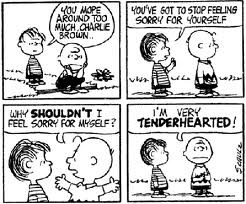
Pity has an element of condescension or even contempt. You pity someone you dislike or look down on. It’s kind of like sympathy but it’s contaminated with judgment and scorn. You feel like you’re “better” than a person you pity. A wealthy banker may “feel sorry” for a homeless person without feeling a shred of empathy. The banker is glad they’re not homeless, and feels as if they’re above that anyway. If someone says “I feel so sorry for you,” or “I pity you,” you’re likely to feel offended and judged, not comforted. I hate being pitied so much I might be tempted to punch you if you do.

Superficially, empathy, compassion, or sympathy may seem like the same thing as pity, but they’re not the same at all. Sympathy means to feel sorry for someone without judgment or condescension, but it’s not quite the same as empathy, because it lacks the sharing of a feeling. It’s a shallower emotion, but it’s still better than pity. Compassion and empathy are interchangeable and both imply feeling “with” another person, or sharing an emotion with them. It’s giving your friend a heartfelt hug after a breakup, or laughing or crying with them when they’re happy or sad. It’s giving a homeless person your own sweater because you hate to see them shivering in the cold. There’s no condescension or judgment. When someone empathizes with you, they say, “I understand” or “that really must have hurt.” Doesn’t that feel a whole lot different than someone telling you, “I feel sorry for you.”

charlie_brown_tenderhearted

Self-pity is part of our toxic programming. It’s driven by shame. Self pity is when you sit around and think about how much your life sucks and how much YOU suck. There’s no self-nurturing or comfort in self pity, no self love, only self-hatred and shame. Self-pity enforces the terrible things we’ve already come to believe about ourselves. If we’ve been told time and again how stupid, bad, clumsy, ugly, or what a loser we are by our narcissists, eventually those voices become internalized and we develop a toxic inner voice called an Inner Critic. When you’re stuck in self pity, that’s your Inner Critic demeaning you and repeating to you the same lies about yourself your narcissists already drummed into you. You learn to abuse yourself, and self-pity is just self-abuse. When you say, “I suck” or “I’m a loser” or “nothing ever goes right for me,” you’re reinforcing the toxic programming and acting as a flying monkey against yourself.

Unfortunately, for those of us who suffered from narcissistic abuse, it’s common to wallow in self pity. It’s an all too familiar state of mind, but it isn’t the real you. The things we tell ourselves when we’re stuck in self pity are lies. When I get stuck in self pity, I feel just horrible. I just want to die. I usually wind up feeling resentful and angry at the world, but also ashamed of myself for being such a helpless victim and pathetic loser. I’m consumed with shame and guilt, which leads to depression. I also can’t release the negative emotion when I’m in self pity mode. I get stuck there and it drags me down and saps from me any energy or joy. I’ve had hangovers that felt more pleasant than a bout of toxic self-pity.

self-pity

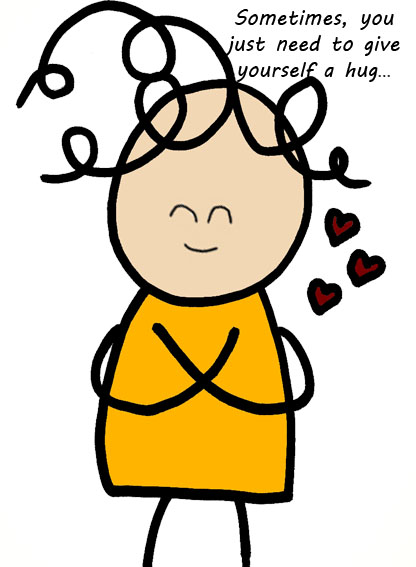
You can replace self pity with something much better that also feels a heck of a lot nicer: self-compassion. Self-compassion means acknowledging that you are a human being worthy of love, happiness and the good things in life, while empathizing with your inner child’s hurt over not having gotten those things. You give your inner child permission to feel sad or to grieve and agree with them how unfair it is that she/he got cheated or was abused. This may seem like self pity, but it’s not, because the element of judgment and shame isn’t there. You’re not beating yourself up over how terrible you think you are; you’re telling yourself you’re good and deserve better and allowing yourself to grieve. Instead of covering up your inner child with a paper bag, you’re offering her a hug.

It helps me to actually visualize my inner child. I have her talk to me and tell me what she needs and wants. I don’t judge her or try to shut her up; I just listen. If she feels sad, I tell her those feelings are valid and let her feel sad. If she feels mad, I let her express the anger (but at the same time reassure her she won’t be able to hurt anyone or anything because I won’t let her). I find that by non-judgmentally listening to what she wants and needs or how she feels, I’m eventually able to release any negative emotions and I don’t get stuck. By giving myself permission to feel without self-judgment or self-shaming, sometimes I wind up being able to cry, and as weird as it sounds, that always comes as such a relief. When I’m stuck in self pity, these healing tears never come, because the shame that’s been programmed into me won’t allow me to release them. My programming tells me the massive lie that crying is shameful and weak, when in actuality it’s sometimes the most healing thing you can do. Your Inner Critic is a narcissist who doesn’t want you to heal and that’s where all that awful self pity comes from.

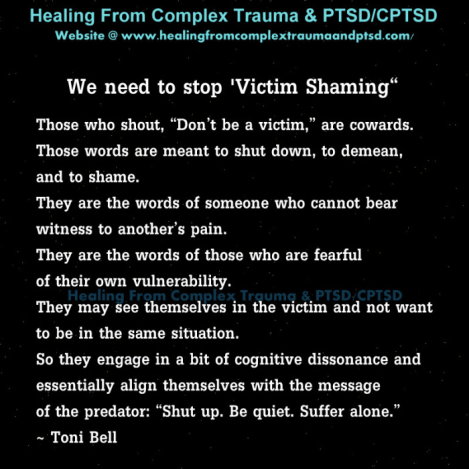
Victim-shaming and blaming.

victim-shaming

Credit: Healing from Complex Trauma and PTSD

Guest Post # 10: Narcissistic Abuse in 12-Step Programs

12_step_cult
Artwork by Danny Jock

Ceetee, who wrote this post, writes an interesting blog about the darker side of 12-step programs, called Quicksand: The Darker Side of 12-Step Programs. Be sure to click on the link and pay a visit.

Ceetee writes about a little-known problem in 12-step programs like Alcoholics Anonymous– some members of these programs adopt a cult-like mentality and “take your inventory” for you, even though one of their slogans is “don’t take my inventory.” I have known people, including family members, who treat AA and other 12-step programs like a religion. You must follow their Commandments (the 12 steps) to the letter, and if you disagree with old-timers’ “assessments” of what your problem is, they tell you you are resisting or are on a “dry drunk.” Not all members are like this, but many of them are, and they can be cause psychological trauma to those who are new in these programs. Others have also written about the religious cult-like atmosphere often present in the meeting rooms.

Don’t get me wrong. AA and other 12-step programs have helped a great many people, and are one of the most effective (and cheapest) ways a person can get clean or sober. They have saved many lives. They also have a spiritual aspect, which adds another dimension that goes deeper than just “curing addiction.” They also tell you that once you’re addicted, you’re always addicted and should refrain from using or drinking, one day at a time. This is excellent advice and works for many people. But the dangers of these programs is that many people with addictive disorders who join them are narcissists, and use their “knowledge” or “experience” to make themselves feel superior to others. They think they know you better than you know yourself and don’t hesitate to lord it over you as if you’re nothing. You are told to “shut up and listen” because they are the “old timers” and have a right to tell you what you’re doing wrong. Since 12 step programs are run by the members themselves, there are really no safeguards against narcissistic abuse within these programs. One must proceed with caution.

Another problem with 12-step programs is that for some people, they seem to become another addiction.    I suppose that’s fine as far as if goes (going to meetings beats drinking or drugging), but too often , recovery stops there, and the member never attempts to address the roots of the problems which caused them to abuse alcohol or drugs in the first place.  From what I can tell, disorders such as NPD and BPD seem to run rampant in these programs, and people with these disorders often do become addicted to substances, in their attempt to fill the emptiness they feel inside.  Getting clean or sober is great, but it’s only treating one symptom of a deeper problem, and their disordered, grandiose, gaslighting, entitled behavior remains the same or even becomes worse.

Here, Ceetee writes of her own experience with certain narcissistic individuals in a 12-step program she joined, whose toxic “help” she had to recover from. It almost destroyed her life, but she has quite a story to tell.

NARCISSISTIC ABUSE IN 12-STEP PROGRAMS

zombie-steps-fix

Nearly twenty-two years ago, I made a mistake that destroyed my life and my family. In the middle of an ongoing battle with my mother that I had no idea how to resolve, I took the approach that perhaps total strangers could be objective and would have a solution. It began with pen-pals; I’ll call the first pen-pal “Marie.” Marie offered hope for a better life; but she said what I must do is “work the Twelve Steps.” And without any drug or alcohol problems, that’s how I became involved in 12-Step programs. It didn’t even occur to me until much later that after I was immersed in ‘the programs,’ the actual problem was never addressed again.

Throughout the years, I knew many good people who participated in programs. However, I also met those who took the slogan “If you want what we’ve got–and are willing to go to any lengths to get it” to mean targeting and destroying others. And while there is plenty of information around the web describing all sorts of crimes members commit, this particular subject is rarely addressed: “rewriting your life history” to include false memories of childhood sexual abuse. I feel it is necessary to address it, as I’ve known many individuals who have had similar experiences–no memories of abuse until they were ‘worked on’ by old-timers in the Programs.

I was ‘worked on’ by three different members–each in a different location. Each had something they wanted from me, and this scam was the most destructive tactic they took to achieve it. They tried to cause me to doubt my own mind and memories; but more destructive, took the approach to other people ‘See how crazy she is–she does not even know what happened in her own life!’

I dismissed many “red flags,” because I didn’t understand what they were about. One example was (as the older generation would have called it) being “too familiar”–a total stranger would act like he/she was your dearest best friend, your confidante. Second, total strangers pushing the attitude that they know more about you and about your life than you yourself know. Third, the attitude that they and only they know ‘the truth’–everyone else and everything else is ‘wrong.’

Each began with a different approach. Individual #1 took the approach that he was an expert on everything related to drugs. Individual #2 basically rewrote the English language to suit her agenda–which is a common thing in 12-Step programs. Individual #3 claimed virtually everything about me were signs and symptoms of repressed trauma. None of these individuals were professionals in any capacity. All I could figure was they ‘read a book’ or ‘saw something on the Internet,’ as much was aligned with what memory experts said decades ago: the ability to create false memories, and to plant seeds of doubt, are almost limitless. Between the three of them, they attempted to get me to believe virtually everybody in my childhood had ‘sexually abused’ me. Individual #1–the first I actually met in person–demanded I give him all my family photographs; he tossed them in a wastebasket, set fire to them, and smugly remarked “You’ve gotta mark ’em all as Perpetrators.”

target_cult
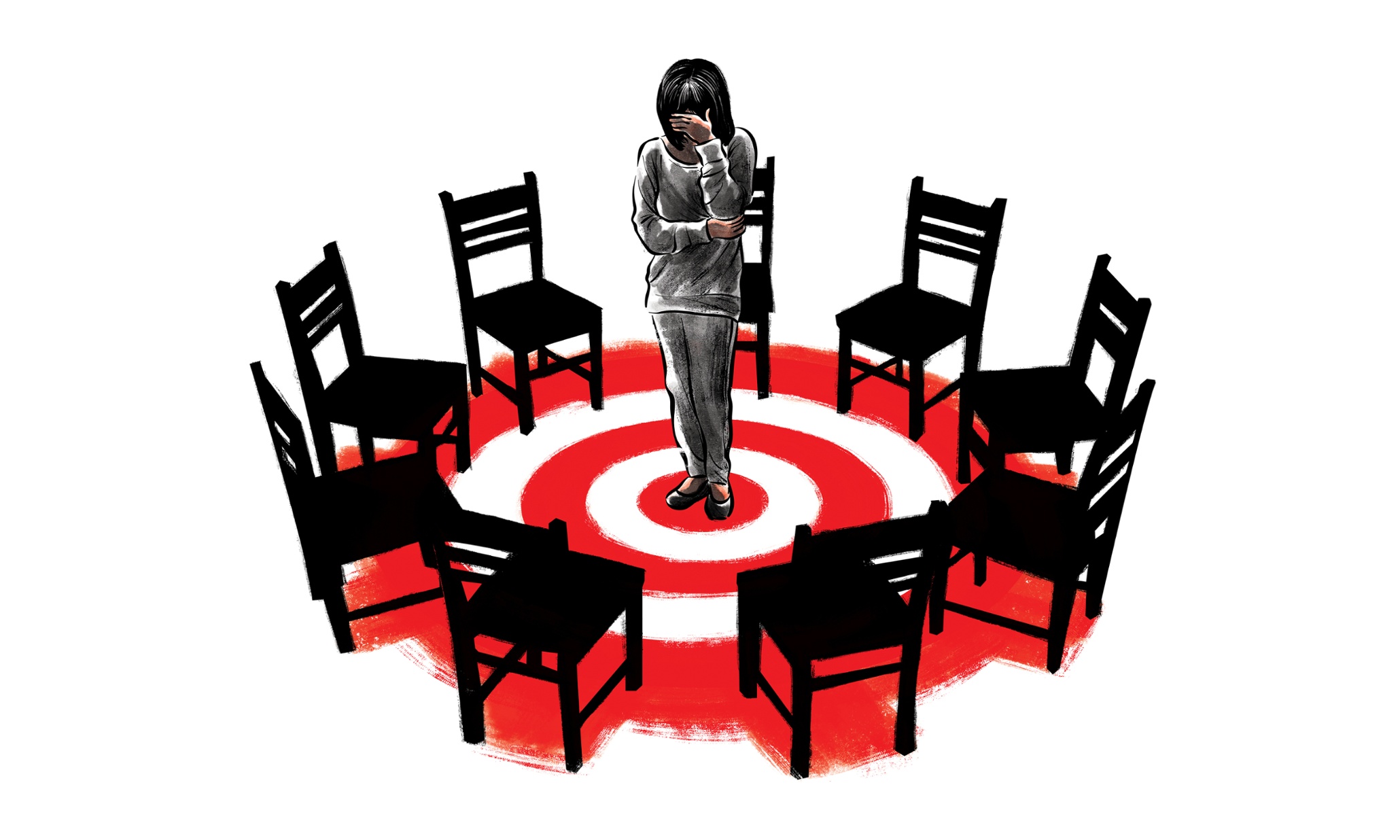
Artwork: Chloe Cushman for The Guardian

Another red flag that bears noting: while Marie and most others focused on their programs, the present, and looking toward the future, these three were much different. Their entire focus was on “The Past” and “Abuse.” And yet another red flag: looking for any ‘crack in the armor’ that they could exploit as ‘proof’ that their assessments were correct.

Hopefully it won’t sound too ludicrous taking it all out of context, but some examples:
One, upon learning I’d had a minor medical problem as a small child that required prescription medication, assessed: “Your parents lied to you! They were drugging you so they could Abuse you!”
Noticing I’d run outside to see what the commotion was when police cars arrived at a neighbor’s house: “What is it from Your Past that caused you to Fear the police?” Individual pressed me to search my early childhood to see if I’d known any police officers that may have sexually abused me.

Upon learning I’d never gotten along with my mother, another individual dismissed the fact that it was nothing more than personality conflicts, and claimed I was an incest survivor and had post-traumatic stress disorder because of it. This individual said anything you dislike is sexual abuse, and must be called ‘rape.’

In one instance, I had a minor cold; when this did not require a visit to a doctor, this individual asked, “What is it from Your Past that’s caused you to Fear doctors?” This individual pressed me to think about the doctors I knew in my childhood, and asked if either of my parents were in the profession.

Vertigo attacks from an inner-ear infection; migraines from hypoglycemia; and my habit of watching where I’m going when barefoot so I don’t step on sharp objects were pounced on as proof that I had ‘traumas in the past that I just don’t remember.’ Also, a person does not have personal preferences, likes or dislikes, or objections to anything–they’re all proof of sexual abuse.
Similar to the tactics used when the so-called recovered memory movement was in full swing, I was pressured to consider every thought and dream as a ‘memory,’ any ache or pain to be a ‘body memory,’ etc.

The only incident that actually did occur was blown way out of proportion: when I was four years old, a neighbor of indeterminate adult age exposed himself, and then told me a ‘scare story’ so I wouldn’t tell my parents or brothers what he’d done. The incident was confusing, but it was not ‘traumatic.’ However, one of these members claimed it was a matter of “delayed stress,” that I “only had a cap on it,” and at some point without warning my mind would blow apart. Note I was told this asinine nonsense more than forty years after the incident.

The reason I was vulnerable to this nonsense: I’d never heard of this crap before. For years I knew something was fishy, but didn’t know what to make of it. My first breakthrough came when I met a 12-Step member who was pointing at nearly everyone she’d ever known and accusing them of sexually abusing her. I knew for a fact some of the people she was accusing hadn’t even been in her life when she was growing up.

The second breakthrough: I did some research, and found the ‘drug’ I was told my parents had given me wasn’t even available in the United States when I was a young child. In addition, while the member went by my description of the medication (size, shape, color), the two drugs bore no resemblance to each other.

Fortunately, these breakthroughs occurred before individual #3 intruded into my life against my objections, tried to “convince” me that I was “insane” because of my “past,” and destroyed my reputation and my life because I didn’t fall for it.

This is a widespread problem in 12-Step programs. I’ve known many people who had similar experiences–both male and female in all age groups. And while this is only the tip of the iceberg of what I went through, I’m hoping that exposing this issue can help others avoid these problems. First, if someone you don’t even know gets too familiar, too close, too intrusive, take whatever steps necessary to get that person away from you, your life, your family. Second, if you’re pressured to believe things happened that you don’t remember, keep in mind that this ‘information’ is not coming from within you, yourself, but that it is being placed there by outside sources.

Further Reading:

Narcissists Who Use 12-Step Programs to Further Their Agenda

Guest post #9: You are beautiful and loveable no matter what the narc says.

Mel (Hippo 256) writes a blog called The Enability Blog about living with a number of disabilities, including PTSD. I’ll just let Mel’s About Page speak for itself:

Hi there, thank you for reading my blog. I really appreciate you’re taking the time. I’m a female and 21 years old. I love languages and study (amongst other things) English, Dutch, German and French (want to do Spanish someday too). I’ve got a couple of chronic diseases and disabilities, but you’ll find out more about that when you’re reading my blog. It’s too many to just sum up, but I can give away that I have chronic pain, chronic fatigue, rheumatism (fibromyalgia) and some other physical diseases and disabilities. I also have been diagnosed with PTSD.

I live together with my boyfriend/partner (my fellow Hippo), who’s also physically disabled, including a couple chronic diseases and a recurring depression. He supports me a lot, because he can really understand what I’m feeling. Together we tackle life’s challenges and hopefully enjoy life too (I can tell you, I often do enjoy life). We are both studying, but do this in a slightly different way. We can’t follow the regular pace, but that doesn’t matter. I also enjoy sports, photography (sadly, I can’t place my own photos here because of my anonymity), doing nice things with friends, travelling, animals etc.

Please visit Mel’s blog when you get the chance.
https://enabilityblog.wordpress.com

YOU ARE BEAUTIFUL AND LOVEABLE NO MATTER WHAT THE NARC AND HIS ‘PEOPLE’ SAY!

center-of-attention

I’ve been doubting if I should write a post about narcissistic abuse. Not because I don’t want to help other people and I’m also very grateful for this opportunity. I was hesitant because of two reasons:

(1) You ‘just’ don’t talk about a subject like this. There’s a huge stigma on it. A lot of people seem unwilling to think about it and therefore put it away as ‘nonsense’. And people can be misunderstanding or harsh about a topic so sensitive. I learned my lessons and usually evade it. (2). I don’t think I’m good enough. I’m not a writer or a blogger, I just type whatever comes into my head, without really thinking about it.

But here I am, happy that I took this wonderful opportunity. Because:

(1) I find the people in this blogging community to be so understanding and willing to listen. I want to battle the stigma and help others. I wish I had read all these posts about narcissistic abuse and PTSD so much earlier, it would have saved me a lot of self-doubt.
(2) That idea, that feeling of mine that I’m not good enough (I never am) is one of those thoughts ‘implanted’ in me because of narcissistic abuse. I couldn’t think of a better way to ‘challenge’ one of the thoughts the narcissists had about me.

Both my partner and I have been abused by narcissists. But I feel the urge to talk about a very specific one, one I can’t talk about with anyone except with my partner. I’ve been mentally, physically and sexually abused by one “man” for about 6 months. I’ve never written about this before, so this post will be like an “introduction” to my story.

Love Bombing.
At first glance I knew: ‘I have to stay away from him’. We went to the same school together, I was 18 and he was 21. At first he didn’t seem interested in me, to the contrary. I was clearly not good enough to be allowed to communicate with him (he would happily let everyone know). Luckily, I didn’t want to have anything to do with him either. I really don’t like ‘those kind’ of people. At the time, I was still in a very difficult situation. I was already abused many times before and didn’t have anyone at the time. I was looking for support. And narcissists know that. One day, he started preying on me. Immediately I knew, I felt it. But I am strong and had nothing to fear, so I thought. This wasn’t about me, it was about him. He always got what he wanted and he wanted me, I was suddenly ‘pretty’ or ‘sexy’ or ‘interesting’. He would follow me after school, get my contact information through his many channels and he kept cornering me. I told him many times that I wasn’t interested in a relationship, which was not what he wanted to hear. But then one time his reaction and whole attitude changed. He seemed concerned, caring. He would tell me that I deserved to be in a relationship with someone who wanted to help me. I felt anxious and somehow said I was sexual abused before and therefore didn’t want a relationship or intimacy. That made him go all loose on the ‘caring act’. He wasn’t like that, he wanted to help me, truly. I could trust him. Why wouldn’t we just try it out? I could always say no to things and he would listen to that. I was so anxious and confused that eventually I said yes. Now I know that these are all common tricks for narcissists.

wolf_in_sheeps_clothing (1)

The Narc’s True Colors Come Out.
What followed was 2.5 months of ‘relationship’. He played so many (mind) games with me. And I actually knew. So soon I knew that this wasn’t right at all. It felt so wrong and I was so confused. Even though he would keep saying things like ‘it’s to help you’. Or he would be angry because I clearly didn’t love him enough (otherwise I would do that for him, even though that would cross my border). He would threaten me, or hurt me. I couldn’t escape. He had people everywhere (seriously, he did). Eventually I found the strength to break up and thought I was over his horrible abuse. But I wasn’t. He told me that I was nothing and that I should have been happy that he made me something: I was his slave (yes he would call me this, amongst other things). Which made me worth more than I was before. Those kind of sick things he would say. He abused me about 4 months straight after we ‘broke up’. “Friends with benefits” he would call it. I wasn’t a prostitute he said, you know why? I didn’t get paid, so that shows how bad I was. He wouldn’t pay for me, he never paid for anyone. I wasn’t the first “girlfriend” he had. All girls without (good) sexual experiences, so he could mold them, ‘train’ them. But he never kept anyone for long.
Eventually, I met my partner at (the same) school. I had a panic attack and he reached out to me. Because of his support and protection, I could eventually stop my abuser. The abuser has visited my school and the place where I lived a few times. To threaten me. But now, it’s all so much better.

Aftermath.
Going no contact with the abuser was very difficult for me. I found it very surprising, but now I know it is a common reaction amongst survivors. Once in a while I would get ‘urges’ to send him a message again. I kept hoping he would understand that he did awful, horrible, unspeakable and bad things to me. I hoped he would stop telling everyone what a liar I was and that we just loved doing S&M together (massive lie). He never acknowledged it. Now I know he never will. Narcissists don’t feel for others or think about others.

You Are Not Alone!
I want you all to know that you’re not alone. You’re not ‘stupid’ if these kind of things happened to you or ‘easy to get’. And there still is love, even for you. I often call my partner my saviour. He has helped me tremendously in my healing progress. Explained all these thoughts the abuser planted in my head, all the false things I believed. I wish everyone can find this kind of support. We all deserve that. Blogs can help us with that too.

After the abuse ended, this one thought kept appearing: How could I have let this happen? Now I know that’s not fair, I fought incredibly hard. I should never blame myself for this. Maybe I fought too hard, since it only caused me so much more pain and trouble (because of punishments and angering the abuser). This whole situation is incredibly complicated, so a lot of people misunderstand. Especially because I kept a mask on to the outside world (as I was forced to). But it is so important to know that a narcissistic relationship isn’t your fault. It can happen to anyone, really. And not going to the police, doesn’t make your story not true, or if you went to the police but the abuser was never officially found guilty. The justice system isn’t made to catch rapists and abusers. Believe in yourself. Somewhere, deep inside, you know when something doesn’t quite feel right. I know I always did, but would often ignore my core feelings. After doing research on the internet (mainly reading blogs) and talking with my partner, I also understand the things I did a lot more. There were signs everywhere.

I would like to end this blogpost with something important to me. Another thought I refuse to believe any longer. I am NOT a whore. And you aren’t either. We deserve to be loved, including by ourselves. Be kind for yourself please, your body and mind need you.”

– Mel (Hippo256)
Enability Blog, 2016

When labels diminish a survivor

This is a powerful, emotional post about the way mental illness labels can be used by a narc family to stigmatize and gaslight against (and discard) a scapegoated child, when all that scapegoated child was doing was reacting the way any normal person would in such an intolerable situation.
Katie, you are a strong and brave woman and a beautiful child of God.
Comments have been disabled; please comment on the original post.

Narcissistic Victim Syndrome (NVS): What the heck is that?

nvs

This is a very informative article about a type of complex PTSD suffered by victims of narcissistic abuse called Narcissistic Victim Syndrom, or NVS. Neither NVS or C-PTSD are currently recognized by the DSM, but are under consideration for future editions. Although this article is written for therapists, I think it belongs here and can be well understood by people who live with or whose lives have been seriously affected by narcissists. The author stresses that to be able to effectively work with patients with NVS, it’s necessary to be well-knowledged about NPD and narcissism(which abusers are most likely to have).

Narcissistic Victim Syndrome: What the heck is that?

Guest Post #8 : Abusers break you–and then HATE you for being broken.

My dear friend and active participant on this site, Linda Lee, has written a wonderful and OMG SO TRUE post, which describes a lifetime of abuse, including incarceration in a state mental hospital, and being faced with unethical doctors and caregivers, including one who raped her. She was sent back home to a rejecting family–who had put her there in the first place! Linda Lee has Complex PTSD, a form of PTSD that’s often the result of chronic abuse during childhood, rather than an isolated traumatic incident later on in life. After describing the insane house of mirrors she had been thrusted into that seemed to have no way out, Linda lifts the reader out of the darkness with an uplifting message about Easter and the resurrection.

Linda Lee also has a blog about her Complex PTSD caused by prolonged, severe trauma called Surviving Trauma (formerly Heal My Complex PTSD).   (I got a little confused here because Linda recently changed her blog but the old one is still there too.  Her new blog is called A Blog About Healing From PTSD. )

I know the following story sounds so crazy, it’s hard to believe. But it is all true, so help me God… unless I really AM nuts, and the mental health professionals who have told me otherwise over the years were all wrong!

ABUSERS BREAK YOU — AND THEN HATE YOU FOR BEING BROKEN
By Linda Lee, Surviving Trauma and A Blog about Healing From PTSD

going_crazy_bookcover
The cover for Linda Lee’s future book, which she designed herself!

If you take a young puppy away from his canine family before he is weaned, yell at him, kick him, shake him, beat him, half-starve him, and leave him on a chain outdoors, exposed to every kind of weather without shelter, that poor little puppy is going to grow up to be a deeply disturbed dog – if he lives to grow up.

If you treat human children like that pitiful dog, they are going to have behavioral and emotional problems, too.

I grew up with parents who were normal and nice some of the time, and behaved like insane, demonically possessed monsters part of the time. I never knew from one day to the next whether my mother was going to be like June Cleaver in the TV show “Leave it to Beaver,” or Joan Crawford in the movie “Mommy Dearest.”

As for my dad, a fundamentalist minister whose episodes of violence led to his diagnosis of multiple personality disorder (now known as Dissociative Identity Disorder), some people believed that he actually was possessed by demons.

When I was fourteen years old, I began to have some emotional problems. Big surprise, right? I told my mother about the difficulty I was having, hoping she could help me. But, although my problems were mild compared to both of my parents’ history of extreme mental problems, my mother said “You are crazy just like your father!” Then she contacted my dad (my parents were divorced by then), and he agreed with her that I needed to be put in a state mental institution – against the advice of my doctor!

Of course, my dad said that I was “crazy like your mother.” He also told me he was GLAD I had psychiatric problems, because now I would understand what he had gone through.

But I did not understand. Almost fifty years later, I still don’t. Unlike both of my parents, my behavior was not out of control. On the contrary, although I wasn’t perfect, I was obedient, subservient, and eager to please. I had never been the least bit violent. I had never threatened or tried to harm anyone.

My dad, on the other hand, came so close to murdering my mom when I was twelve years old that for several terrifying moments I had thought she was dead. That’s when my father was arrested, then put in the psychiatric ward of a general hospital after the police took him to the emergency room because his insulin-dependent diabetes was out of control.

As for my mother, a few weeks after my dad tried to kill her, she did something even worse – she tried to gas us all to death while my four younger brothers and sisters and I were sleeping in our beds. Yet she never put herself under any kind of psychiatric care. With no other responsible adult living in the house at the time, there was no one to force her to get help. So now, because she has never been to a mental health professional and labeled with a psychiatric diagnosis, my mother thinks she is “just fine.”

When my dad’s medical insurance ran out and he was discharged from the psych ward, my mother dropped her charge of attempted murder so he could go back to work and provide financial support. Then my dad married the head nurse of the psychiatric ward whom he had met while he was a patient there (how unethical is that?), and my mother started dating a newly divorced man who had previously worked with my dad. She soon became pregnant (accidentally on purpose?), and quickly married the unborn baby’s father.

So now my parents were living happily ever after with their brand new loves while I, their eldest daughter, became the family scapegoat and “the crazy one.” And together my parents decided that I needed to be locked up in a state insane asylum, because: “she might become violent some day.”

Projection much?

About a year after my parents put me in the institution a new psychiatrist, Dr. Fenster, was hired to replace the rapist shrink who had been caught and fired the third time he drugged me unconscious and raped me. Lucky Otter posted this story for me almost a year ago. Here is the link: https://luckyottershaven.com/2015/04/12/have-you-ever-been-hurt-by-a-psychiatrist-guest-post-by-alaina-holt-adams/. (I wrote that post under the pen name Alaina Adams. I have since changed my pen name to Linda Lee, because it’s more like the real me.)

I had originally met the newly hired doctor when I was first put in the asylum and he was there, finishing his psychiatric residency. He had told me then that there was nothing mentally wrong with me, in his opinion, and he was confident that the psychiatrist in charge of my ward would soon have me released.

When Dr. Fenster took over my case more than a year later, he was shocked and dismayed to see that I was still there. Within the first five minutes of his first day on the job, the good doctor made me a promise: “I am going to get you out of here as soon as possible. You never should have been put here in the first place!”

But his promise turned out to be much easier said than done. Eight months later, Dr. Fenster called me into his office one last time before sending me out into the world. “I am very sorry that it has taken me so long to get you out of here,” he said. “The amount of legal red tape involved to release a patient from a state hospital is unbelievable, especially when it comes to a minor child. Because you are only sixteen, you are legally a ward of the state and you cannot be released on your own recognizance until you are twenty-one, five years from now! Until then, you can only be released into the care of a responsible adult. I have spoken with every adult in your family several times, at length – with your grandparents on both sides, and your mother and father. I hate to tell you this, but every last one of them is far sicker than you ever were! Frankly, it’s no surprise to me that you had emotional problems. Coming from a hateful, self-centered crew like that, I don’t understand how you can be as sane as you are! Even your maternal grandparents are unbelievably hard-hearted and selfish! At first, I thought they would be the best hope for you to have a decent chance at life. With your grandfather’s current position as the associate warden of Leavenworth Federal Prison, they could so easily provide you with a stable home and every advantage.”

He shook his head sadly. “I hate to tell you this, Linda, but no one in your family wants you. Every single one of them came right out and told me they don’t want a ‘mental patient’ living in their home. It didn’t make any difference when I told them that you are not mentally ill and you never should have been put here in the first place. In fact, when I mentioned that, your mother said that just by virtue of the fact that you have been kept here in this place for so long, you have probably been changed by the experience and now you may be dangerous! So… when I kept hitting a brick wall with everyone in your family, I gave up and tried to find a foster home willing to take you in. But they have to be informed about your time in this institution, and I could not find any foster parents willing to take the chance. I even tried to talk my wife into the two of us fostering you, but… it was a no-go.”

Dr. Fenster stared down at his hands, which were lying palms-up on his desk in an attitude of defeat. “Your mother is coming to take you out of here today,” he said. “although she is the last person I want to send you home with. Why she chose to have so many kids when she doesn’t have a maternal bone in her body is beyond my understanding. But she is coming to get you because – frankly – I found out something about her and I have used it to blackmail her. But even then, she would not agree to take you unless I wrote your discharge paper in such a way that it says you are being sent home on an ‘indefinite leave.’ I’m sorry this isn’t a full discharge. What it means is that your mother can bring you back here at any time, for any reason, or for no reason at all. So my advice to you is to get as far away from everyone in your family as soon as you can – and don’t ever go back!”

A nurse handed me a paper bag full of my threadbare clothes, then escorted me from the doctor’s office down to the lobby. My mother and her mother were waiting there, both with very grim faces. After a tense, silent two-hour car ride to my mother’s house, I discovered that I no longer had a bedroom or a bed – I was told to sleep on the living room sofa. In fact, everything that I had ever owned, my beloved books, the papers I had written, my clothes, my costume jewelry, and the childhood toys I had cherished and saved, were all gone. Taken to the dump, I was told, right after I was put in the mental institution.

My “WELCOME HOME” was nonexistent. Not one person said “I’m glad you’re back, I’ve missed you.” My much younger sisters and brothers had always looked up to me, loved me, and depended on me, especially during our mother’s deep depression after the violent end of our parents’ marriage. Along with my new stepfather, my four little siblings had begged our mother not to send me to the institution two years earlier. Even my grandparents may have questioned why she would send her adolescent daughter to the most notorious insane asylum in the region, when my behavior, to all outward appearances, was completely normal. So then my mother had told horrible projecting lies about me, to justify what she had done. Lies which the majority of my family apparently believe to this day.

Three days after my return “home,” while I was being ultra careful not to be a bother to anyone in any way, my mother waited until my stepfather was at work and my school age siblings were all in school, and then she told me that I needed to leave – to run away – because she could not afford to feed a big grown girl like me.

“I can barely afford to feed the five little ones,” she said. “Your father doesn’t pay nearly enough child support, and it wouldn’t be fair to expect your stepfather to feed you. And after where you have been, I am afraid you might be a bad influence on the younger children. I had you when I was only eighteen, too young to know what I was doing. So I made all my mistakes on you. Unfortunately, it’s too late for you. But I think that throwing one child away, in order to save the other five, is the right thing to do, don’t you? And don’t worry, I promise I won’t call the police and report you as a runaway!” She said this, about not calling the police, with a big smile on her face, as though she had just handed me the keys to a brand new car.

“You know, I married your father when I was sixteen. Sixteen is old enough to be on your own. And, like I’ve been telling you ever since you reached puberty – no house is big enough for two women!”

This happened in the middle of a cold December and there were several inches of snow on the ground. The tiny town where my mother and stepfather had moved to while I was in the institution was miles away from a city, where there might be some kind of shelter or help. Without a penny to my name, with my few clothes bunched up in a pillowcase, because the paper bag I had brought my clothes home from the hospital in, had torn – and I remember feeling guilty for taking one of my mother’s pillow cases, that’s what a “terrible” daughter I was! – I walked out the door into the frozen December morning. I had not eaten any breakfast that day, because no one had offered me anything and I was trying so hard not to be a bother….

Whew. Right now, as I am writing about that terrible time in my life, I feel so ANGRY!

My husband today, a combat veteran from the war in Vietnam, has talked about the pain of coming back from the hell of war and getting rejection, instead of a Welcome Home. I’ve told him I understand how that feels. A few years ago, there was a big push to finally welcome our Vietnam War Veterans home. I’m so glad they got that. They deserve it. But… deep down inside, I feel like I am still waiting for my Welcome Home.

I did not follow Dr. Fenster’s advice to have nothing to do with anyone in my family of origin, until I was in my fifties. Why? Because I loved my family. I wanted to have a family! Although I stopped living in the same state forty years ago, I kept reaching out to them, time and time again, over the years – by driving very long distances to visit them, by phone calls, by letters, and finally, when social media became available, I reached out to them through Facebook.

With the exception of my aunt (my mother’s younger sister) and my oldest niece, every time that I have ever reached out in any way to anyone in my family of origin, I have been hurt and abused all over again. The bullying I took on Facebook was so bad, I ended my account. Even today, every time I see that ubiquitous blue logo, I shudder inside.

WHY does my family of origin despise me so much? Because they apparently believe my mother’s lies about why she “had no choice” but to commit me to an insane asylum almost half a century ago. And anything that I have to say on the subject is suspect because, you know, I must have been really crazy in order to be locked up.

They BREAK you, and then they HATE you for being broken.

Every trauma story is unique. Some people have told me that my trauma story is so extreme, it makes them feel ashamed of having any kind of emotional problems when their trauma is “less” by comparison. But I absolutely do not want anyone who reads this to feel that way! Please!! Pain is pain, trauma is trauma, and – in my experience – THE WORST PAIN OF ALL IS THE PAIN OF BEING REJECTED BY THE PEOPLE WHO ARE SUPPOSED TO LOVE YOU. Not the terrifying episodes of violence, not the rapes, not even being labeled “crazy” and locked up for almost two years in a lunatic asylum, hurts as bad as this!!

If you, like me, have ever been scapegoated, lied about, shunned, and rejected for being so “bad” as to have any kind of emotional or mental problems, then I believe your wounds go just as deep as mine.

Thank you for reading this. Please feel free to share your own story in the comments. And thank you, Lucky Otter, for giving people like me the opportunity to share our mental health struggles with your readers. God bless.

In truth and love, Linda Lee

PS: Today is Easter, the day we Christians celebrate our risen Lord. I believe HE is the reason why I finally got free of the insane asylum, during an era when 97% of the people committed there were never released. (This is what one of the psychiatrists told me right after I got there, when I asked him how soon I could go home.) I was one of the lucky few who got a second chance at life. I think the reason may be because I had given my heart to Christ when I was a little girl. “Weeping may endure for a night, but joy comes in the morning.” Amen!