Attitudinal healing: a cure for NPD?

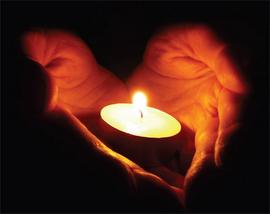
candle

TL;DR WARNING: THIS IS A VERY LONG POST. READ IT ANYWAY.
I came across a forum last night called Heal NPD, whose founder, a man named Tony Brown, was actually cured of NPD through a psychospiritual therapy called Attitudinal Healing, which is based on letting go of fear, the primary emotion that keeps narcissists from being able to access their true self. There is a spiritual component to the therapy too, which I agree would be necessary. I don’t believe the gentle spirituality involved in this therapy would go against any religous teaching, Christian or otherwise. The important thing is to get well.

Tragically, Brown died a few years ago of heart complications due to prolonged diabetes and his forum hasn’t been active since about 2008. His wife tried to take over the site for awhile. I’m not sure what happened there.

I Googled Attitudinal Healing to find out more about how it works (Brown’s site is a little hard to navigate and some information seems to be missing or is no longer there).

I had doubts about Tony Brown’s credibility when I first read about him last night, but someone here who knows him and was active on his site assured me it’s absolutely true he was diagnosed with NPD and was actually cured of his disorder. Other members on the site were also working the therapy and it was working for them too. This is very good news for people with NPD and their victims. Of course, they need to want to be helped first. It may not work on malignant narcissists and psychopaths.

I just wonder why AH hasn’t caught on and mental health professionals are so adamant that NPD cannot be treated or cured and their victims are without hope, if this therapy has had so much success.

I don’t think it’s too well known outside of California (there are some things we people on the east coast and flyover states we’d like to see stay over there, like earthquakes and The Kardashans, but AH therapy isn’t one of them so can we get that and give you back Katy Perry or something? Please?).

AH has had success on other disorders too, including PTSD and C-PTSD (which is common in the victims of narcissists).

Attitudinal Healing is a spiritual/emotional therapy developed by Jerry Jampolsky, MD and Diane Cirincione, Ph.D. in California in 1975.
The following is from their website. AH has had some success in curing (not just changing the behaviors) of people with NPD who wish to be helped.

My own comments I have put in [brackets].

What is Attitudinal Healing?
Attitudinal Healing is based on the belief that it is not people or external situations that cause us to be upset. Rather, what causes us conflict and distress are our thoughts, feelings, and attitudes about people and events.

Attitudinal Healing is letting go of fear and our negative, hurtful thoughts from the past.

Attitudinal Healing allows us to correct our misperceptions and to remove the inner obstacles to peace. This begins at life, and at death; to have peace of mind as our only goal; and to make forgiveness our primary function. It is discovering the effect that holding on to our grievances, blaming others, and condemning ourselves has, so that we can choose to no longer find value in them.

Attitudinal Healing asserts that when we let go of fear, only love remains and that love is the answer to all of the problems we face in life. It is the recognition that our true reality never changes and that Love is all there is.

My cherished friend Judy Skutch Whitson suggested the term when we first began the Center in 1975.

Attitudinal Healing
Defines health as inner peace.
Defines healing as letting go of fear.
Regards our primary identity as spiritual and affirms that each individual possesses a quality of being or an inner nature that is essentially loving and that this loving nature is shared by all human beings.
States that love is the most important healing force in the world.
Does not tell other people what to do but offers them choices.
Emphasizes equality in every aspect of our lives and affirms that we are all student and teacher to each other.
Recognizes that peace is our only goal.
Emphasizes listening with empathy and without judgment or advice.
Sets the goal of living a life focused on unconditional love.

Attitudinal Healing views the purpose of all communication as joining and regards happiness as a choice. It recognizes that we are all worthy of love and that happiness is our own responsibility as well as our natural state of being.

Attitudinal Healing acknowledges that our only function is forgiveness. Rather than making decisions based on the fearful past, it states that we can learn to make decisions by listening to the inner voice of love.

The Benefits of Attitudinal Healing
The twelve principles of Attitudinal Healing are spiritual principles that lead us to love and away from fear. I think of the application of these principles as “practical spirituality” that can be used in every aspect of our lives. There is not one area where they do not apply. As we learn to change our attitudes and change our minds, we change our lives.

Some of the possible benefits of Attitudinal Healing include:
Experiencing ourselves as love.
Finding inner peace.
Finding happiness.
Letting go of fear.
Letting go of judgments.
Letting go of guilt.
Letting go of being a victim.
Letting go of our fear of death.
Letting go of unforgiving thoughts.
Letting go of pain.
Letting go of being right and making others wrong.
Letting go of blame.
Letting go of our fear of the past and future.
Letting go of being a fault finder.
Letting go of withholding love from anyone, including ourselves.
Letting go of our need to assign guilt or innocence.
Letting go of complaining and listing our hurts.
Letting go of our fear of intimacy.
Becoming a love finder.
Counting our blessings.
Focusing on love rather than on appearances.
Walking through life more lightly.
Laughing more.
Living in a consciousness of giving rather than getting.
Recognizing that there is something greater than ourselves.

The essence of Attitudinal Healing is learning to release all thoughts from our minds except love thoughts. It is correcting the misperception that we are separate from each other and that others are attacking us. It is relinquishing the need to analyze, interpret, and evaluate our relationships. Attitudinal Healing is simply seeing others as extending love or as being fearful and asking for love. It is letting go of fear and guilt and choosing to see everyone, including ourselves, as innocent. Attitudinal Healing occurs when we make the decision to teach only love

The Twelve Principles of Attitudinal Healing

The essence of being is love.
Health is inner peace.
Giving and receiving are the same.
We can let go of the past and the future.
Now is the only time there is.
We learn to love ourselves and others by forgiving rather than judging.
We can become love-finders rather than faultfinders.
We can be peaceful inside regardless of what is happening outside.
We are students and teachers to each other.
We can focus on the whole of our lives rather than on the fragments.
Because love is eternal, death need not be viewed as fearful.
We can always see ourselves and others as extending love or giving a call for help.

CLF - Olmstead Parks

A DEFINITION OF ATTITUDINAL HEALING
by Patricia Robinson
Co-Founder of International Center for Attitudinal Healing

Attitudinal Healing is not just adjusting or adapting our attitudes; rather, it is consciously choosing to let go of our fearful attitudes. It is a spiritual pathway that seeks to adopt a non-judgmental attitude toward oneself, others, and the world. The goal is not to change behavior, but to retrain and reprogram the most powerful instrument of change we possess, our own mind.

It is possible to have a single goal of peace of mind and a single function of practicing forgiveness. In doing this, we can learn to heal any of our relationships, experience peace of mind, and to let go of our fears. When we create positive energy within us, Attitudinal Healing can become a creative force in our lives.

The Twelve Principles of Attitudinal Healing are as follows:

1. THE ESSENCE OF OUR BEING IS LOVE, AND LOVE IS ETERNAL
Love can never be adequately explained or described. Love can only be experienced. Attitudinal Healing is really concerned with experiencing love rather than defining it.

Love, itself, is an energy force. It remains constant and is eternal. It is what scientists call the “life-force,” that which cannot yet be measured but is known to exist. It is a pure energy that flows through us. If it is not blocked by pain, anxiety, anger, all manifestations of fear, we can recognize the essence of love and learn to feel peaceful inside.

It is important to constantly work at clearing our minds and realize that the energy of love is all there is, and that which we call negative emotions keeps us from this sensation. We can learn to experience a life that is about loving ourselves and extending that love to others.

This is different than the way much of society views love. To the world, love is something that we want to GET from someone else coupled with the fear that we won’t have enough. When we live in this fear we are unable to give love freely. That is the work of the ego. Love, which cannot be evaluated or measured is to be shared.

The essence of love plays a large part in physical healing, as well. In one of our groups at our Center, a woman in her mid-fifties was complaining that she had been plagued by a constant back pain for about nine years. She insisted that she had never been without this pain for a moment. We asked her if she would be willing to partake in a small experiment. She agreed. We then asked the group of about fifteen people if they would be willing to send this woman love with their thoughts for about thirty seconds. All participants agreed. We then asked the woman if she would be willing to do the same, to send love back to the group at the same time. She did agree and we began.

It was a wonderful half a minute as we all focused on a single goal; that of sending love to another. When the thirty seconds were up, the tendency was to evaluate what had transpired. We, the facilitators, cautioned about that, and the meeting continued on with a lot deeper sharing than had gone on before. At the end of the meeting, the woman with the back pain excitedly said, “I just can’t stand it. I have to tell you that for the last hour I have not had any pain in my back.”

This example happened a long time ago, but it has remained implanted forever in my mind as a lesson in trust. What occurred in this meeting was not something tangible that could be seen or measured. The only thing that was happening for me at the time was my intent to feel love for this woman. My goal was not to take her pain away, make myself feel better, or whatever. It was only to be in the present, send love, and not be concerned with the outcome. It was a powerful lesson for me to realize that thoughts can be transmitted clearly and felt by another at a very deep level.

2. HEALTH IS INNER PEACE, HEALING IS LETTING GO OF FEAR
In order for us to feel inner peace, we first have to make it our single goal. We can then start to release all the obstacles that stand in our way.

We experience many emotions in our body. They are all related to fear, but to us they have many forms. Anger, jealousy, guilt, depression, or whatever, arise in us all the time. It is important for us to know that we have a choice about how we want to deal with these feelings. We can become helpless and be a victim, or we can actually change these feelings. The mind is the most powerful tool we have and we can use it to change these hurtful feelings.

For us to do this, we must become both aware and willing to change. We must get in touch with our inner voice, the one that is connected to our higher self instead of our self that is governed by the ego. It is the voice inside that tells us your truth without judgment. The next step is to go to the experience of the emotion.

For instance, when we feel what we would describe as anger comes up, it is very important to get in touch with it. This means that we experience it, acknowledge it, and are gentle with it. We in no way deny our anger because it is a very normal feeling and does not need to have a “bad” label put on it. Doing so only creates another emotion to deal with, that of guilt. It is only when we truly get in touch with our own anger that we can begin to change it. This can actually be done in an instant. It does not have to be processed at great length. Sometimes it is not really necessary to know the “why” and “how”. These words can often lead to more turmoil in our lives. When inner peace becomes our only goal, we can recognize that holding on to anger does not bring us peace of mind.

An amazing woman came to the Center about ten years ago. She was in a devastated state as her nine-year-old daughter had been diagnosed with severe leukemia. She was in Dr. Jerry Jampolsky’s office, when she heard him say that she could actually, at this moment, choose peace instead of experiencing the pain she was in. She managed, somehow, to really hear his meaning and was able to instantly shift her perception. This woman became one of our most active volunteers at the Center for many years and was able to help dozens of parents who were going through what she went through. This does not mean that she said, “You can choose peace” to each person when they were completely devastated. It means that she was there for them wherever they were. And because of her own experience, she was able to rely on her own inner strength so that she could be of help in any way she was needed.

Seeing the instant shift in the woman I just described was a remarkable experience for me. It was a lesson that told me that “nothing is impossible.”

3. GIVING AND RECEIVING ARE THE SAME
There are many people in this world who are labeled givers. Givers usually have a hard time learning how to receive. There are also receivers, who are great at receiving but don’t really know how to give. Givers are usually rescuers who manipulate the other person. If the person doesn’t respond to their expectations they are disappointed. The receiver, on the other hand, makes many demands on another and never seems to get his or her needs met. Both look to the external world to fulfill their needs, and both tend to have emptiness inside.

The Attitudinal Healing definition of giving and receiving comes from another place. It is egoless. There are no conditions, no expectations, and no boundaries put on the extension of people sharing love. When we have no goal or desire to change another person, or no need to get anything from them, a different dynamic takes place. We are actually only there for that person in an egoless way, and we can start to feel a sense of inner peace.

As we begin to feel a sense of joining with another person, we seem to forget about ourselves. We become less concerned about our own feelings as we extend and expand. It is at this point that one feels the gift of giving and receiving becoming one. The supply is endless, and we become more and more full.

This kind of interaction takes place in our groups at the Center each week. The Center provides a safe place for people to extend themselves towards others. They are able to forget their self-consciousness and through this become empowered with love to be able to reach out toward another without expecting something in return. At this point the person who is being helped almost automatically can let go of fears or anxieties and become one with those in the room. When people are truly operating in this mode, fears are released and healing begins to take place.

4. WE CAN LET GO OF THE PAST AND OF THE FUTURE
The past is there for our learning. All of our experiences are valuable ones and add to our growth if we choose to view it that way. Things that we have done that we label as “wrong” are merely experiences for us to learn from and build upon. It does not serve us, however, to dwell on the past. Things like “if only I had done this or that” or “I wish it were different” only serve to hinder us.
The fact is that we are in the present and we need to deal with what is going on NOW. This, again, is done by retraining our minds to stay aware and alert. It is so easy to slip into either the past or the future, but we are not truly alive unless we are living in the present moment.

The future can be exciting or scary depending on what is going on in our lives. We can dwell on the anxieties of the future all we want, but it surely does not give us any peace. There is an important distinction here. All this doesn’t mean that we shouldn’t make plans for our future. Of course that is important. The distinction is that while we are making plans for the future, our consciousness remains in the present. We can’t foresee the future, so it isn’t productive to dwell on what may or may not happen. We can only set our intentions for the future, like making reservations, and then take steps to make them happen when they actually manifest and become the present.

The important aspect of this Principle is that we can elect to change past thoughts that are not beneficial, or that are hurtful. To do this, it is important to become aware of them, and then make a conscious decision to let them go. If they come back again, we just repeat the process. Every time something comes up that we don’t want to hang onto, we can make a fresh decision to erase the tape. One of the concepts that is particularly valuable in Attitudinal healing is “My mind can change all thoughts that hurt.” This is a powerful tool if we want to change our perceptions and create a new reality.

5. NOW IS THE ONLY TIME THERE IS AND EACH INSTANT IS FOR GIVING
This Principle is designed to help us stay in the present moment. It is very easy to lapse into the past or build up anxiety about the future. When we do this, we are often not peaceful. When we recognize this, we can focus our attention back to the present where it is possible to experience peace. If we stay in the present, we are best able to deal with anything that comes our way. If we are someplace else, it is not possible to make decisions. In essence, NOW is the only time there is. It is in the NOW that the love energy comes through us. It is in the NOW that we are not judgmental and we can see clearly what is going on.

We cannot control the external world. We will never be peaceful if we try to do so. We can, however, learn to control our thoughts. As we change our thoughts from those of getting to those of giving, we will start to notice evident changes in the outside world.

My most profound experience of an example of what can happen was when I was in Moscow recently with a group called “Children as Teachers of Peace” with Dr. Jampolsky who is Founder of the Project. We were at a press conference with the head of the Youth Organization of the USSR, the Young Pioneers. He gave a forty-five minute speech about how it was the fault of the United States that relations were not better between the two countries, etc.

We all listened to his speech and when he asked for questions from the children, they responded in a way he did not expect. They, one at a time, told this man how good the Russian people had been to us, how, if the people of the United States knew of the kindnesses of the Russians that we had met that there would be no wars, and they gave a donation from each of the children towards the Chernobyl disaster. As each young person spoke from his or her heart the man began to transform. His face began to soften and have more color. His eyes became moist. He came from being very guarded to being very responsive. I went up to him and spoke to him after the meeting. He thanked us so much for coming and it was clear to me that he was a different person than when he walked into the room. I, too, was a different person. I was so moved, that I felt in my heart that it actually could be possible to have peaceful relationships in spite of all obstacles that seem to be in the way.

outofthedarkness

6. WE CAN LEARN TO LOVE OURSELVES AND OTHERS BY FORGIVING RATHER THAN JUDGING
Whenever we make a judgment on another person, we make a judgment on ourselves. Forgiveness, in the Attitudinal Healing sense, does not mean condoning or agreeing with another’s behavior or setting ourselves apart and choosing to forgive someone because we feel they did something wrong. It merely means that forgiveness is a vehicle to clarify our misperceptions.
Simply stated, FORGIVENESS IS LETTING GO; choosing not to hang on to a belief that will cause us inner turmoil. In the sense of self, it is up to us to forgive ourselves first by taking responsibility for loving ourselves enough to no longer suffer and to become self fulfilled.

Using an “attack” as an example, there is a concept in the Course in Miracles that helps us to look at another person, not as attacking us, but as either asking for help or needing love. In relationships, this is often a most difficult principle to grasp, because our ego mind says that we are being attacked. The fact, however, is that there are no true realities, only perceptions.

A perception is something that, with focus and willingness, our minds are able to change. If we learn to see ourselves as the essence of love, we will have no need to defend ourselves and we can look at the other person in a different light. If we can start to realize that it is only in the places that we feel unconfident or lacking in some way that we can “have our buttons pushed.” When we feel OK about ourselves, there is less of a problem with how another person is behaving. Again, it is only our own perceptions that make us feel that we are being attacked. We have the choice to fill up with the powerful love energy so that we are able to not even have to defend ourselves.

7. WE CAN BECOME LOVE FINDERS RATHER THAN FAULT-FINDERS
It is very easy to find fault with others. We sometimes feel that if the other person would only change, then we would be much happier. This is another illusion. No one has to change for us to be happy. It is up to us to create our own happiness. When we look for faults in others, it is because we don’t necessarily want to see what might be the same fault, or what we fear could become a fault, in ourselves. Criticizing others is often just an outward manifestation of what is going on inside of our selves.

To practice Attitudinal Healing our job is to start to forgive, stop judging, and to love ourselves and others. When we begin to do these three things on a conscious level, we will automatically begin to see people and things differently. Gray days will not necessarily be “bad” days; they will simply become gray days as opposed to sunny days. We will start to see the light in each person, because there is a light in all of us. Some of us try very hard to cover it up, but since it is the very essence of us, at some level it will shine through. The more we can let our own light shine through, the more we can begin to see the light in others.

8. WE CAN CHOOSE AND DIRECT OURSELVES TO BE PEACEFUL INSIDE REGARDLESS OF WHAT IS HAPPENING OUTSIDE
If we wish to choose inner peace as our single goal, then we can realize that we need not be triggered by our external world which is a different belief system than we are used to. We all know how the world defends righteous anger and how it supports us to hang onto it. We can do what the world supports, or we can take responsibility for our own feelings, go inside, and choose to get rid of our anger, guilt, judgment, or whatever.

We are not robots. A robot is run by the outside world. Its buttons are pushed and it is programmed to do whatever someone wants it to do. We do not have to perform like a robot. We are free to do, to feel, and to act in a way that can give us the most peace. In essence, we can realize that no one is really able to “make” us feel happy, sad, lonely, or angry. We often feel this is the case when we say, “if only my spouse would act this way or that way, I would be happier.”

The truth is that we can all use these situations as a practice to work on ourselves. We can, at this time, go inside and see how we can change our perceptions of what is going on to make us more peaceful. To try to change the way the other person behaves is manipulation and control, and in the long run, simply won’t work. We can never change another person; we can only change ourselves. This takes awareness and willingness to keep monitoring our feelings so that we can recognize, acknowledge, and actively choose to alter them. It takes presence and courage to keep reflecting so that we can begin to change.

9. WE ARE STUDENTS AND TEACHERS TO EACH OTHER
As we begin to look at everyone we come in contact with as our teachers, we begin to look at life in another way. We become more observant and become better listeners. We begin to see that there is no order of learning, and that probably children are our best teachers.

Children are open and honest. They have not yet put up the barriers that we adults do. Our barriers are our protective covering that we can learn to release by being with children. The concept of student/teacher means that we don’t necessarily know what is best for another person. Nor do we have to. Only each of us knows what is best for ourselves. The learning comes with the shared exploration of knowledge with each other where we can build relationships to learn and grow.

It takes away from the hierarchical, vertical type of learning and puts it in a horizontal plain where interchanging student and teacher can make active contributions for the ultimate benefit of the whole. In this type of relationship we tend to feel the freedom to explore ourselves more fully. We have permission to go deeper and not be judged as wrong or foolish. It is this continual effort to give and receive from one another that lets us learn from each other how to experience love. From this we deepen and from this we grow.

10. WE CAN FOCUS ON THE WHOLE OF LIFE RATHER THAN THE FRAGMENTS
In order to feel inner peace we need to begin to focus an at-oneness with ourselves and those around us. This means that we can begin to dispel the feelings of separateness which consistently cause us only pain. It is another of those barriers we put up to protect ourselves from being hurt. When we get caught in the right/wrong, good/bad trap, we are only seeing a fragment of the whole. When we play this game, there is no way that we can be peaceful. It is always a no win situation regardless of what the momentary outcome may be.

We can learn to have a new attitude toward ourselves, others around us, and the world we see. We can recognize that there is a greater whole other than the tunnel vision through which we sometimes look. Through an active power within us, we can learn to sense a greater picture. This power allows us to expand and become aware of this greater whole so that we don’t need to get caught up in the conflict that others are experiencing. The conflict they are going through is their path, not ours. Our job is to stay focused so that we can begin to see each situation differently and not become a part of a meaningless pattern. To do this we raise our consciousness to a higher level of awareness by retraining our minds as each situation arises.

We can say to ourselves, “I do not choose to get caught up in what is happening right now, but instead, I choose to see the whole of life.” By doing this, our focus broadens and changes and we start to see things differently. There is a tremendous excitement in the experience of the changes that take place inside us just by changing our thought patterns.

11. SINCE LOVE IS ETERNAL, DEATH NEED NOT BE VIEWED AS FEARFUL
To conceptualize this Principle, we go back to Principle number one, “The essence of our being is love and love is eternal.” If we believe that life is eternal, the fear of death can be removed. When we reaffirm our belief system that the love that is our essence goes on and that we simply enter a new form, we can erase the fear of death. To the extent that we can erase the fear of death, we can truly begin to live fully in the present.

12. WE CAN ALWAYS PERCEIVE OTHERS AS EITHER EXTENDING LOVE OR AS FEARFUL, GIVING A CALL FOR HELP
This Principle is an extraordinary tool to be able to use in dealing with relationships. If we can keep this in mind as we interact with others, we will be able to mold our interactions in a more desirable way. When we are in a relationship with another person and it is clear that they are extending their love to us, there is usually never any problem. We can receive the feeling of love and support and respond with our love and support. We feel no conflict and things seem to readily get resolved.

If, on the other hand, we feel for whatever reason that we are being attacked, we tend to put up our defenses and either retreat or attack back. The flight or fight response goes into action. It is a conditioned response that we have learned to use to protect ourselves from being hurt. If we can begin to see this person that appears to be attacking us as a person who is coming from fear, we can begin to see a whole new dimension of the dynamics of the situation.
To develop the use of this Principle, as with all the others, we begin by retraining our minds to focus differently. It again means going inside to take responsibility for our own thoughts and not put the blame on another person for our own reactions in a moment of stress.

We are responsible for our own peace of mind and not that of another person. It may mean that as we listen to the words as they are being spoken to us, we focus on this Principle as what may appear as an attack is actually an expression of fear and a call for help.. When we do this, another dynamic begins to happen. As we become defenseless in the moment there is a shift in the energy and “the attacker” will feel it. He or she will not continue on with the same sense of urgency with which they began, because our shift in perception will create a space that will enable a new dynamic to occur. This new dynamic will change the pattern and the quality of our relationships.

In order to make these Principles work for us, we first choose to take complete responsibility for our thought patterns. We learn to become alert and cognizant at all times. Living in the NOW is essential to Attitudinal Healing for in the past and in the future our fears crop up.

Fear is the antithesis of love and it is impossible to live in both frameworks at the same time. If we want to live in love, we can do it by letting go of our fears of both the past and of the future. The reality is that in the moment we can handle it, no matter what we happen to be facing. Living in the moment we are able to deal with whatever may come along, be it emotional, physical or spiritual pain.

To begin to retrain our minds, it is helpful to keep a list of the Twelve Principles of Attitudinal Healing handy for quick reference. When we get into difficult situations it is important to be able to recognize that we can immediately change the focus of anything that may occur. We can choose any one of the Principles to help us at any time we wish. We can read them all or we can just choose one that relates to what is going on. No matter how we work with the Principles, we will find that we are able to change our attitudes very quickly and consequently change the dynamics of what is happening externally. The external circumstances may or may not actually change, but by our changing our perception, we will learn to both see and experience the world differently.

Attitudinal Healing takes willingness, awareness, openness and practice. That is all that is needed. It is important to not get discouraged with what may seem like failures. These are only learning experiences that will lead us on our path. Everything that happens to us happens for our learning, and from that point we can choose again so that our learning never stops.

(Written July 7, 1987)
Copyright Jerry Jampolsky & Diane Cirincione 2006. All Rights Reserved

I couldn’t find a Wikipedia entry for Brown, but I did find this on Facebook:

Recovery for those with NPD/narcissism
This was written by a man [Tony Brown] diagnosed with NPD, who recovered with therapy, and went on to found a site for those with narcissistic traits or NPD. I believe that recovery is possible for many, but that it takes a real commitment to work and change. I’ve read lots of his writings and I believe he essentially recovered, though a pull towards certain ways of thinking remained with him. He married and it was a good marriage. He died unexpectedly from a heart attack, as I recall, but he left a family and friends who cared greatly for him, a good legacy. Here are his thoughts on some aspects of recovery…

Some of the Factors that Affect NPDers Chance at Recovery
By Tony Brown

Healing is possible without exception for all persons who have Narcissistic Personality Disorder (NPD). [I would gather this means malignant narcissists and maybe even certain psychopaths can be treated successfully!]

Having this condition is not an excuse not to take responsibility for yourself or justify destructive acts simply because that is what NPDers do. In this article we will look at some of the factors that may influence how successful those with this condition may be in achieving healing.

The first variable is whether you are in a crisis. It is common for persons to seek therapy either during or in the aftermath of an emotional crisis, i.e., divorce or end of a relationship, being terminated from work, substance abuse, or death of someone close to you. It is common for a person going through such a crisis to see how they have limited access to their feelings and have acted in destructive ways throughout their life. [This would be the Narcissistic Crisis described by Vaknin as necessary for a window of healing to open]

Coming to this place of awareness is an important step as it often leads persons to seek some form of treatment. Working through the crisis is essential though it is just the beginning of the healing journey. Very often a person will believe that they never had these feelings, or lack of feelings, or never acted destructively prior to this crisis. They may believe that resolving this crisis is the entire work of healing when in reality it is just the beginning for those of us who truly have NPD. If you stop looking and working on yourself once the immediate crisis is over there is a very good chance another crisis will come, and another one after that until you allow yourself to look at the whole picture of your life.

In reality it is almost impossible to do the actual work of healing until you have been able to achieve a peaceful or productive resolution to your crisis. A person in crisis often believes that their pain is so overwhelming that whatever their crisis may be it defines everything about their true identity. They are unable to step back and look at the good points in their life or see how their pain is not all consuming. If you truly have NPD it is essential to keep working on yourself after the crisis has passed so you can free yourself from this seemingly endless cycle of one crisis after the other.

Another important factor in your being able to recover is whether you have a support network of family and friends. It is emotionally draining to face yourself at the level required to recover from NPD. Having persons around you who can offer support away from therapy can be helpful in relieving some of the stress that is almost guaranteed to come along with therapy. Your therapist will expect you to not become overly dependent upon him and begin developing a life where he is playing less of a role in daily living. These persons don’t have to be well versed on NPD. You might be able to begin developing such a network among family, friends, perhaps coworkers, ministers of members of real world support groups. The most important thing is they are compassionate listeners who are not judging you as flawed or evil. Once such a network is established you need to allow yourself to trust these people and to call upon them both when life is feeling painful and when things are going well and you just want to establish more of a connection with other people. [Having a support system during the False Self final breakdown and emotional catharsis phase which will be too painful to go through alone]

The matter of paying your therapy bill can in some cases be a factor in the overall success of your recovery. Accepting responsibility for your own bill is an essential step in becoming a functional adult. Sometimes a well intending friend of romantic partner may offer to pay all or some of your bill thinking this will help you get passed your emotional dysfunctions. If this is for a short period with a clear understanding you are going to pay them back and than assume full responsibility for all further costs this is probably not a problem. However, if you are making no effort to find a job or do whatever is needed to get yourself in a position of responsibility this has a very high risk of stalling rather than enhancing your healing.

This is a point that is as important for your friends and family to understand and accept as it may be for you. They may believe that whatever it takes to get you into therapy is worth it to them, including paying for your sessions. Once again if this is a short term solution it may not be harmful. However, the sooner you are paying for your own therapy the sooner you will have a personal investment in the process. Such an investment will, hopefully, inspire you to work harder and get the most of the therapy you can afford. You are entitled to heal but you are not entitled to a free ride where others are paying your way. Addressing feelings of entitlement is one of the areas many NPDers face and this is just one of the areas where it plays out in your practical daily living. If you are serious about your therapy and appear to be making progress you may find your therapist is willing to make payment arrangements. If you fail to honor such arrangements or if they become aware someone else is paying your therapy bill they may decide to terminate the partnership.

Arguably the biggest variable in your recovery is how much do you want to heal? Are you only in therapy to appease a spouse, family, or maybe a coworker or boss? If so the chances of your therapy bringing any true healing ranges between slim and none. You may be able to develop some new skills, but in all likelihood true recovery will remain elusive. Therapy will require you to experience extreme pain, view areas of your life that will make you very uncomfortable, and will drain you at physical and emotional levels. Being able to sustain yourself and do this work will require a deep commitment unlike any you’ve likely ever made at any other juncture in your existence. It most definitely can be accomplished but you have to want it almost more than you have ever wanted anything before. You will have to push yourself to keep going even when you want to stop. How well you are able to experience and resolve conflicts, depression and other events throughout your therapy will depend to a large extent on this single question: How much do you really want it?

I’m adding this description too, from an ad from The Oasis Institute.. it’s a more general overview.

What Is Attitudinal Healing?

Attitudinal Healing is a philosophy based on the belief that it is not people or conditions outside ourselves that cause us to be upset. We are not victims of the world we see. Rather, our perceptions, beliefs and attitudes are the source of our conflict, pain and unhappiness. We are not only responsible for our own thoughts; we are responsible for the feelings we experience. By exploring these feelings, we can eventually heal them.

Attitudinal Healing defines health as inner peace, and healing as letting go of fear. It emphasizes listening with empathy and without judgment or advice. It views the purpose of communication as joining and regards happiness as a choice. Everyone is recognized as a teacher; therefore, we are students and teachers to each other.

This philosophy, and a process for applying it in a support group format, was originally developed at The Center for Attitudinal Healing, now known as CorStone. Jerry Jampolsky, a San Francisco area psychiatrist, was motivated to create a safe place for children with life-threatening illnesses to come to talk after overhearing an eight-year old boy ask a physician in a pediatric oncology ward, “What is it like to die?” and observing that the doctor changed the subject. Dr. Jampolsky and three friends formed this center in 1975. Since then, a network of independent organizations modeling the work of Dr. Jampolsky and his colleagues has been created in several cities in the United States and in more than thirty other countries.

The goal of an attitudinal healing group is inner peace. The Center’s Person-To-Person groups are for adults who wish to enhance the quality of life experiences by learning how to apply the principles of attitudinal healing in both their personal and professional lives.

All groups are facilitated by volunteers trained in the model of peer group support developed by The Center for Attitudinal Healing.

Group members read the Guidelines for Attitudinal Healing Groups and the 12 Principles of Attitudinal Healing at the beginning of each meeting. The Guidelines establish a group protocol, and the Principles are used by group members as tools for learning how to change painful perceptions and beliefs.

Group discussion involves not only issues of personal growth but also other issues relevant to the concerns of the group members.

Groups meet weekly, and there is no fee. Group size is limited.

Attracted to danger.

Danger caution tape

I think many survivors of narcissistic abuse find themselves drawn to narcissists–and find their danger appealing. We have to be very careful not to be drawn back into darkness, because that darkness can be very seductive, like a fist wrapped in soft black velvet.

I am an idealist and a romantic by nature. I’m an emotional person, even though I don’t always show it. Though I lack trust, I still want to think the best about all people. While I don’t hate narcs, I have to be careful not to feel too much compassion for them and allow that to make me make unwise and possibly dangerous decisions that could hamper my own healing and cause me to lose focus on what’s important.

Earlier today I woke with this crazy idea. I was going to start a second blog, a blog FOR NARCISSISTS. My argument was that they were human too and because I have learned to have some empathy for their plight, that they deserved a place to share their experiences.

Sometimes I really live with my head in the clouds.

I was brought back down to earth pretty quickly, when a good friend I respect like a sister told me this could be extremely dangerous and that I’d be flirting with darkness should I do such a thing. At best, it would take the focus off my own recovery and the recovery of victims of abuse. This woman is Christian, and much more biblically-oriented than I am, but she was right. If the devil does exist, this could be him trying to draw me back into the same dark place I just escaped. I already know, I need to keep my distance from them, even online, so why would I want to COURT such a thing?

I don’t think all narcissists are evil, except for the malignants and psychopaths, who are too far gone to ever change or want to change. I think their illness is as much a spiritual one as a mental one. Perhaps more so. But it’s not my job or my calling to provide a place for even benign narcissists to have their say. If they want to say something, they are more than welcome to do it right here on this blog, as long as they are pleasant and civil. And they have done so.

But starting a new blog for them would just be stupid. The more I think this over, the more I’m glad my friend stopped me before I actually did this. I’m not always the most practical person and I don’t always have a lot of common sense. I’m an idealist and sometimes act on my unrealistic, romantic fantasies more than I should.

More than likely, the narcissists who need help the most (the malignant psychopaths, who are least likely to seek help) would not even post on the site, or may even try to destroy the site in some way.

I think many women, especially those who have always been attracted to or been in relationships with Ns, find something seductive and appealing in narcissists and have to be very careful not to be drawn in by their charms. I know I’m a sucker for it, and they can present a very mysterious, seductive, bad-but-hurting-boy charm, like the main character in the movie “Rebel Without a Cause.”

We may find ourselves wanting to mother and nurture them and protect them from further hurt. And yes, they do hurt, and maybe nurturing and remothering is exactly what they need, but it must come FROM A PROFESSIONAL who knows what they are doing. It’s not our job to give them that kind of therapeutic support. We don’t know how to do it. We can’t make them feel better.

I love this song by Sarah McLachlan. I’ve posted it before, but I think it describes the attraction many women have to narcissists and psychopaths and why they can be so seductive.

Narcissists are indeed building a mystery, seducing us to becoming their supply. They can never give back what we give to them; all they can do is demand more and more until there is nothing left of us or we become one of them.

Our maternal instincts would be better put to use helping each other, and helping the people we love who can return that love.

So I will not be doing another blog right now. Thank you to everyone who suggested this was a bad idea.

I will say though, my journey since I started this blog has been the greatest, most humbling, and most exciting adventure I’ve ever been on.

Narcissists and sentimentality

family_portrait
Not my family, just a nice random portrait I found.

Narcissists can put up a good front of being sentimental if they need to. For example, if a narcissistic man is trying to win a new conquest for a source of Narcissistic Supply, he will shower his woman with candy, gifts and flowers (sometimes purchased at her expense, as mine did to me) but as soon as he’s conquered her attentions, any shows of sentimentality come to a screeching halt.

It’s my observation, at least in the narcs I have lived with, that they are angered, annoyed, or bored by nostalgia or genuine sentimentality.

My MN mother was notoriously unsentimental. Besides the matter of ditching her first two daughters to their father when they were two and seven years old (which turned out to be the best thing that could have happened to them), our home was always sterile–not just of dirt (she was a huge clean freak, which many narcissists are) but also of any evidence of sentimentality. For example, family photos were consigned to bedrooms because to display them in public areas was, in her mind, tacky and declasse. Better yet to keep them in albums and safely tucked away in the attic or on the bottom of a never-used bookshelf.

Not long ago, I emailed my mother about obtaining some of the family photos (I have very few) and never heard back from her. I emailed her again about it, and she said she didn’t know where they were, but she might have thrown them away.

THROWN THEM AWAY? Who DOES that?

When my parents divorced, my mother decided our Christmas tree would be decorated with white lights with red bows and silver and red ornaments ONLY. Anything else was too tacky for her. All my childish creations that my father had hung so proudly from our tree went into the trash. Our tree looked as sterile as our apartment, like a tree in the lobby of a bank.

nostalgiasucks

Narcissists have no feelings of nostalgia for past times or good times shared. That’s because they can’t feel love or the warm and fuzzy feelings that other people do. Or it’s too painful for them and they don’t want to feel that pain.

My MN ex husband was like this too. He couldn’t stand it when people got nostalgic and said nostalgia was “creepy.” (Slight correction: he was creepy). That even extended to listening to old music from our teens and early 20s. He told me once he thought nostalgia was stupid. We had a huge fight about that.

He hated “period” movies or TV shows, especially those that focused on decades during his own lifetime (the 60s, 70s and 80s). He made fun of me for liking “The Wonder Years” and ’80s music. He accused me of living in the past.

He never even liked to look at photos of our two children when they were younger. Although he started out as a wonderful dad (he turned out to be anything but), he told me he hates babies and that’s why he didn’t want to look at their baby photos. These are his own CHILDREN! He got annoyed when I wanted to put some of their old baby and school photos around the house in frames. I have no idea why he had such a strong reaction to my doing this. It was weird.

He doesn’t even like to TALK about the kids when they were young. If you try, he just tunes out or acts irritated.

Once when I asked him why he reacted so strangely to sentimentality and nostalgia, he actually gave me an answer that made sense. He told me it was because his life was always so miserable he didn’t want to remember anything. The past reminded him of his own mother (she was malignant too and very abusive)–even his past with me and our children. The good times we had in the beginning of our relationship were dismissed in his mind as bad times and somehow associated with his mother. He just became enraged if you reminded him that there were good times. In his mind, life was just excruciating in general and nothing was worthy of remembering fondly. ALL memories were tainted by the malignancy of his abusive, cold mother, in his mind.

I think he envies those who are able to feel nostalgia and look upon the past fondly, so he feels the need to denigrate and make fun of them for doing so.

Even I can find joys in my past, as dysfunctional, painful and stunted as it was.

I find it extremely sad that he could never do that.

Fivehundredpoundpeep posted a similar article today so I am linking to it here. She has a wonderful blog.

Narcissism and chakra healing

manipura
Manipura (solar plexus) chakra

Even though I’m Christian, I subscribe to the chakra system of healing or that it can at least be helpful used in conjunction with traditional psychotherapy and medicine. I don’t think belief in chakras or chakra healing goes against Christian teaching. Chakra healing is not a religion, but an alternative method of medicine used in eastern traditions (drawn from Tibetan Buddhism) and popularized in the West fairly recently. I’ve seen evidence for myself that this works and meditation on the chakras can bring you a sense of peace, centeredness and a a feeling of being in harmony with yourself and the world. In my opinion, meditation on these physical energy centers does not involve playing with the occult, as some people have claimed.

Chakras are energy centers located in the body at seven points along the spine from the groin area to the top of the head. They correspond to the endocrine system of the body and each is associated with a different endocrine gland.

The seven chakras are:

1. Root Chakra – Represents our foundation and feeling of being grounded.
Location: Base of spine in tailbone area.
Emotional issues: Survival issues such as financial independence, money, and food.
(color: red)

2. Sacral Chakra – Our connection and ability to accept others and new experiences.
Location: Lower abdomen, about 2 inches below the navel and 2 inches in.
Emotional issues: Sense of abundance, well-being, pleasure, sexuality.
(color: orange)

3. Solar Plexus Chakra – Our ability to be confident and in-control of our lives.
Location: Upper abdomen in the stomach area.
Emotional issues: Self-worth, self-confidence, self-esteem.
(color: yellow)

4. Heart Chakra – Our ability to love.
Location: Center of chest just above heart.
Emotional issues: Love, joy, inner peace.
(color: green)

5. Throat Chakra – Our ability to communicate.
Location: Throat.
Emotional issues: Communication, self-expression of feelings, the truth.
(color: blue)

6. Third Eye Chakra – Our ability to focus on and see the big picture.
Location: Forehead between the eyes. (Also called the Brow Chakra)
Emotional issues: Intuition, imagination, wisdom, ability to think and make decisions.
(color: indigo)

7. Crown Chakra – The highest Chakra represents our ability to be fully connected spiritually.
Location: The very top of the head.
Emotional issues: Inner and outer beauty, our connection to spirituality, pure bliss.
(color: purple)

According to this article, Narcissists have problems with the third chakra (solar plexus, or manipura chakra), which is associated with self esteem and confidence.

Narcissists have an underdeveloped solar plexus chakra. They overcompensate for this by acting like they’re the greatest thing ever. “Inverted” narcissists (codependent people with low self esteem) also have an underdeveloped solar plexus chakra but instead of overcompensating, they act out their feelings of low self worth.

Meditation on the solar plexus chakra to strengthen it could be beneficial for narcissists, and also for their victims, who feel powerless because of the abuse done to them by their narcs.

In my own opinion, I think narcissists also have a malfunctioning or underdeveloped heart chakra (the ability to feel love). So I think meditation on the heart chakra could help them too.

There are many chakra meditations available on Youtube. Here’s a good one to start with. As you meditate on each one, try to focus on the corresponding part of the body listed above.

If you feel you are lacking in one or more of the chakras, there are other videos where you can meditate on just that one.

As for me, I’m “top heavy”–my 6th (third eye) and 7th (crown) chakra seem to be the best developed, and I’m seriously lacking in the first three (root, sacral, and solar plexus), especially the first and the third. This is typical for people who live inside their heads and focus on the life of the mind over practical, survival issues. I have very poor survival instincts. My heart chakra seems to be okay but could certainly use development. My throat chakra has been strengthening through blogging. I communicate best through writing; in speech, not so much.

If you want to read more about the chakras and how they work, Anodea Judith’s Wheels of Life: A User’s Guide to the Chakras, is one of the best resources. It’s easy to read but gives an extremely detailed overview of the chakras and how they interrelate.

Test driving narcissism (how I almost became a narcissist)

In answering a comment on yesterday’s post, I suddenly remembered something I had forgotten.
I remembered how I almost became a narcissist. I think I was finally ready to remember. It’s part of my journey to wellness.

I immediately began digging through boxes of old photos, because I was burning inside to write this post, to confess everything, and photos say a lot.

Narcissism runs in families, and although exacerbated by abuse or neglect, it can develop later in a susceptible person, and it happens because of a conscious choice the person makes. They may not actually be saying, “Okay, I’m going to be a narcissist now,” but they have been teetering on the brink of darkness and the would-be narcissist decides it’s easier to plunge right into narcissism than to keep being hurt as their true self.

family_dinner
3 generations of women: my maternal grandmother Anna Marie, my mother in the center, and me at age 5. (ca 1964) Our family dinners were always this stiff and formal.

Narcissists start life as Highly Sensitive People.
For a number of reasons, I’ve come to believe most narcissists started out as HSPs (highly sensitive people). I will not go into my reasoning here, but I strongly believe these are people who once felt things too much, and if they were abused, it would have been too much to bear. To survive, they constructed a false self in an effort to protect the too-sensitive self (true self) from further hurt. The problem is, for narcissists, the false front works way too well, so well that once it solidifies, it’s there forever.

Tormenting my therapist.
I remembered the therapist I had during my early 20’s. I was terribly infatuated with him, obsessed beyond all logic. This is called transference in psychotherapy and my therapist kept trying to get me to “work through it” but my crush kept intensifying. It was killing me. One day I told him I couldn’t take it anymore and walked out the door in mid session. I never saw him again.

I realize now how narcissistic I acted during my sessions with him. I was attractive and knew it so I flirted openly, tried to get him to hug me (he actually did this until he realized it was a manipulative game on my part and there was a definite sexual aspect).

One day I stormed into his office having a hissy fit because I’d found a magazine in the waiting room with his and a woman’s name on the label. I stomped in, started waving the magazine in the air demanding he tell me why he never told me he had a girlfriend. His answer was quite reasonable (and it was of course none of my business), but I sulked the whole rest of the session and refused to say anything. I’d show him!

After I quit therapy, I hoped I had hurt him. I think I was angry at him for “making” me like him too much and leaving him was my method of punishing him. Of course, my leaving therapy didn’t hurt him. I was just his annoying, demanding, manipulative little bitch of a patient and he probably couldn’t stand me. I wanted to think I was hurting him, but I was really only hurting myself.

It shames me to remember all this, but I really manipulated that therapist, and annoyed him all the time ON PURPOSE. I was sadistic…I was crushing so hard, maybe my strong feelings for him were causing me to want to hurt and anger him. I remember getting a thrill if I could see a look of hurt on his face. It made me feel more powerful–that I could do the hurting instead of always being the one to get hurt.

lauren_bennett2
1977: Still a nice, sensitive, codependent girl at age 18…things were about to get ugly.

I was becoming partly dissociated from the me that is now and the me that was before. But it was all a defense against being hurt, and I knew it. I just couldn’t admit it.

I never saw my therapist’s diagnosis of me (I was there for anxiety and panic attacks) but it makes me wonder if “NPD” might have been one of the diagnoses. I’m pretty sure it was still called NPD in the early 1980s.

lauren_bennett1
I think I can see the beginning of the “narcissist stare” in this photo of me from 1984. I look colder and harder than in the 1977 photo. I see this same look sometimes on my daughter, who is close to the same age I was here. I think this look can also be seen in some Borderlines.

The Danger Zone.
Sometime in my late teens and early 20s I began to act “like I didn’t care.” It was feigned but at the time my high sensitivity was shameful to me. I didn’t want it. It was my albatross, my curse. I was tired of being teased about it. So I made a choice to just act like a different person. Act like a person who didn’t give a shit about anything. I began to drink heavily and smoked a lot of weed to numb the pain of being me. I began to be over-critical of others and gossipy, something I had never been, and spread lies about people I didn’t like to anyone who would listen.

My envy of others (something I still struggle with) was off the charts. I couldn’t stand people who had more than me, were prettier or thinner than me, were smarter than me, or had a better relationship or job than me. I would spread lies and rumors about these more fortunate people. Mostly, it backfired, for my Aspieness made it almost impossible for me to maintain my masks or hold up a lie. A good narcissist has to be good at reading social cues. I wasn’t, but I sure did try.

I found it hard to feel happy for anyone. If a friend got a promotion or fell in love, I felt bitter and jealous instead of glad for them. I’d rant that they didn’t deserve it. And I actually believed this, to a point.

I imagined myself not “needing” anyone. I dated a few guys and unceremoniously dumped them, and yet I was so lonely. I longed to be in a happy relationship, but couldn’t allow myself to be vulnerable enough. I treated men like objects.

I didn’t listen to people. I interrupted them, only thinking of what I would say next. I only wanted to talk about me. Other people were becoming objects too.

I lied to people about my accomplishments (which in actuality were few), my background, my social status. But no one really believed me. I wasn’t good at this game. In fact, I sucked at it.

I think I came very close to becoming an N. Over time, this hard outer shell I’d constructed out of the ashes of my own pain ossified and grew more stable. I was forgetting what it felt like to be vulnerable and human.

There was something else too. During the time I was test driving narcissism, I suffered from severe panic attacks (which is what led me into the therapy described above). I felt like I was out of my body a lot, and that made me panic. Some of these attacks were so bad people thought I was having epileptic seizures, because when I was “out of my body,” I had trouble controlling my movements and would stumble around as if drunk, or my eyes would sort of glaze over as if I wasn’t quite “there.” To rule out epilepsy, I had an EEG done. It came out normal. The only thing I can think of is that somehow the dissociated state I was in was causing me to feel detached from my own body, because I wasn’t “myself.”

Coming back from N hell
One day when I was about 26 (and the same year I got married to my MN ex), a friend of mine from high school told me she didn’t think she could be friends with me anymore, because I was too mean and she didn’t trust me. Other people were calling me out for spreading rumors and lying and my whole flimsy construct came tumbling down. I couldn’t escape from the web of lies I’d created, and now that web threatened to engulf me. It was terrifying but was the wake up call I needed.

I finally realized I was hurting people. Even then, I hated knowing I’d hurt someone else more than I hated being hurt by others. I was overcome with guilt and shame, and realized I couldn’t keep up the mean-girl front anymore. I didn’t become a narcissist, but I came close, so close.

This wake up call catapulted me back into my normal self and the horrific panic attacks soon subsided. (I still have panic attacks from time to time, but they are specific to certain situations and nowhere near as numerous as they were from 1979 – 1984 or so.)

Choosing codependency.
I’d been balancing at the precipice, and ultimately chose codependency (sometimes now referred to as “inverted narcissism”). Looking back, that was actually a very wise choice for if I hadn’t, if my guilt had not been strong enough to stop me in my tracks, I would have been a much different person today, and would not be doing what I’m doing right now. Sharing my journey with other survivors of narcissistic abuse. It’s a contagious thing, and any of us from narcissistic families could have gone in that direction. But we didn’t. That’s why we, not the narcs, are the lucky ones.

I think my Aspergers actually saved me. Aspies cannot read social cues and therefore can’t lie well and are bad at maintaining a workable mask. To be a narcissist would require me to use skills I did not possess. So I chose codependency because I had not been trained by my MN family to think for myself or trust my own judgment. I was trained to be Narcissistic Supply. That was a role I was much more successful at and comfortable with than my Narcissist Test Drive period.

But I think there was an advantage to my visit to the dark side too, and maybe a reason. I feel like like I understand narcissists’ motives and thinking patterns and self-hatred more than the usual non-narc ACON. Because I almost became one myself and felt a little bit of what they feel. All the money in the world wouldn’t be enough to get me to turn into darkness again. It was like a trip to hell. But I do know, they are in excruciating pain. All the time.

lauren_bennett3
Refinishing a table as young wife (around 1989-1990). I didn’t know how malignant my husband was yet but he was showing signs.

Never feel guilty for feeling guilty.
If I had been able to ignore or deny my guilt or the pain of others that I’d caused myself, I think I would have crossed the line into becoming a fullblown narcissist (though maybe not a malignant one).

Most narcissists make a choice at some point, usually early in life because of abuse but sometimes later, like I almost did. But I think there is also an escape hatch: a window of time where a budding narcissist can still “get out” and redeem themselves before the door between the Ns and everyone else slams shut.

Unfortunately I still have a few narcissistic traits and think I still sometimes act a bit like one. *red face* But my ability to feel shame and guilt is very well developed, in fact too well developed (and always has been), so that overrides my N traits. Perhaps that makes me a Borderline (I was actually diagnosed with BPD comorbid with other disorders in 1996). But if I am a Borderline, I try to control those behaviors. I try to be aware of them. I think I’m doing pretty well.

Growing into me.
Now I’m changing, moving farther away from the N and B traits of my early-mid adulthood than I have ever been. I don’t envy people much anymore and am beginning to understand what it feels like to feel joy or sadness for someone else. To feel humbled by the simple but beautiful things that surround us. I’ve embraced my sensitivity and am finding rather than being a curse that brings torment and hurt, it’s a beautiful thing that allows the growth of empathy and true understanding. Instead of shame over it, now I’m proud.

The ironic thing about this is that, it’s because I like myself MORE now, that my N traits are disappearing. I used to think I was worse than a piece of dog poop stuck on the bottom of a shoe and had to go around proving I was more, much more than that. It’s not like that anymore, and I’m ever so grateful I saved myself at the 11th hour.

11 ways to deal with a narcissist.

stop!
1. Get as far away from them as you can, preferably No Contact. This isn’t always possible especially if there are children involved.

2. Do not let them manipulate you. If you can’t cut them out of your life, if they start manipulating you, cut them off by changing the subject, interrupting, or straight up telling them to stop in a firm voice as if talking to a three year old. Keep doing this if you can’t get away.

3. Deny them narcissistic supply!
This will actually help them because it will send them into a narcissistic rage (that is going to be difficult for you but you must be strong and not back down). But the rage will pass and then the narcissist will sink into a narcissistic crisis–which means then you are probably going to be dealing with an extremely depressed person but narcissists rarely attempt suicide. They may be open to getting help if this happens. They may also leave you in their attempt to find a new source of supply if it’s become clear you are not going to feed it anymore.
If the narcissist leaves you, it’s you who wins. Even if you think your life depends on them. It doesn’t.

4. It’s okay to have empathy for the narcissist because deep down they are in pain. If you don’t that’s okay too (and probably better to lack empathy for them if you’re trying to get out of the relationship). Once disengaged then it’s okay to be empathetic if that’s in your nature, but remember they have chosen to be narcissists and are still very dangerous. Hate the sin, love the sinner.

5. The only kind of “love” they should get from you is TOUGH LOVE. Especially with a child who is a narcissist.

narcissist_shame

6. Be very, VERY clear about your boundaries. Do not tolerate any violation of them. Be firm, do not back down even if they become enraged. Stand your ground. If you feel intimidated remember you are dealing with an eternal 2 or 3 year old. Would you let a toddler get the better of you? Of course not. It’s the same thing with a narcissist. They are really just small children throwing a tantrum to get their way.

7. If you can’t escape, have some kind of outlet or get away to do things for yourself.

8. If your narcissist has isolated you from everyone else, use art, music or writing as an outlet. Creating things frees us, even if only in our minds and hearts. It’s something that’s all about you, and no one else. A narcissist can criticize it, but cannot penetrate your creative vision. I believe everyone has at least one creative/artistic ability they can develop.

9. Read everything you can. Go to as many websites about narcissistic abuse as you can. Read blogs, books by experts and survivors, find out how others have coped or are coping.

10. Realize you are not alone and many suffer with you. Malignant narcissists are at fault for your condition, not you.

11. If you believe in God, ask Him for guidance and strength. You will need it. If you are an atheist or agnostic, ask the Universe or your Higher Power or even the Tooth Fairy for the same.

“Narcissism”–Poetry by Sam Vaknin

trapped2

Sorry, but I can’t get enough of his poetry.

http://www.narcissistic-abuse.com/narcissism.html

The Toxic
waste of bottled anger
venomized.
Life belly up.
The reeds.
The wind is hissing
death
downstream,
a river holds
its vapour breath
and leaves black lips
of tar and fish
a bloated shore.

Strolling in the boneyard of my life:
bleached dreams,
mementoed ossuary of my insights.
On flaking fenceposts, impaled the child that I had been.
Peering from desiccated sockets, the Plague that’s me:
dust-irrigated, arid tombstones,
a being eclipsed.

Beware of N’s who use mental illness as an excuse to abuse

Print

I think those of us ACONs and survivors of narcissistic abuse who post on public blogs that are accessible to anyone need to be very vigilant and careful. I will never make my blog private or require you to sign in first, but due to that decision, I realize I am going to attract MNs and psychopaths whose only desire is to bully, make incendiary and false remarks, and play “divide and conquer” games within the community. I am willing to take that chance because I want this blog to remain as accessible as it is. I want people to feel welcome without having to be “approved” first or having to sign in, because I hate having to sign into any website myself and will usually bypass any site that requires me to do that.

If you’ve been following my posts, I wrote two articles about some drama that was going on between me and another blogger who allegedly suffers from dissociative identity disorder (DID). I provided links to the nasty, character-assassinating articles that were written about me and my commenters and followers on their blog. I was quoted extensively in their rant (as well as several of the people who commented on those two articles) and was practically accused of being MN myself. The things they said were hurtful, but I also knew they were lies and intended to upset me. If this person is a narc, they were projecting their own disorder onto me. And that’s just so wrong, but it’s what they do.

I am letting that go and do not wish to further antagonize this blogger and will just delete or not approve any further abusive comments from them. But in thinking it over, I realized that there are going to be people on the Internet who use their own mental illness as an excuse to be able to abuse and be nasty to other people. That doesn’t mean they don’t have a mental illness, but it’s possible to be mentally ill and also a malignant narcissist who wants to hurt those who speak the truth. I also think there are some N’s (I’m not saying it’s this blogger) who feign mental illness because that gives them an excuse to abuse. We need to be very careful of anyone who says they have a mental illness but then make abusive remarks based on no real information. N’s are out there, lurking our sites and reading.

Not all N’s are going to be abusive to us. Some actually are honest and want to seek help or educate us about their NPD. Those are the ones with insight into their disorder.

But there are others, who may feign another mental disorder (or sometimes actually have it but use it as an excuse to be nasty and mean), who can become trollish and try to destroy our communities with their vitriol or make us fear their wrath. I refuse to let people like that make me afraid to post what I want and keep journaling about myself honestly and openly. I refuse to let them squelch or discourage me in my desire to heal and help others. I am made of tougher stuff than that now, and I know God is behind me, protecting me from the bullies and trolls who may want to attack me and this blog and keep me from speaking my truth.

The man you love to hate…or hate to love.

samvak2

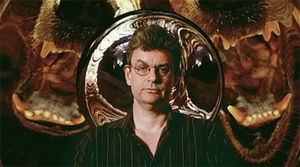
For victims of narcissistic abuse, Sam Vaknin is the man you love to hate–or the man you hate to love. He’s a controversial figure in the field of narcissism. He has ardent fans within the community as well as seething haters. Just taking a quick scan of the comments under his many Youtube videos will give you an idea of just how polarizing Sam Vaknin really is.

Vaknin, self-professed malignant narcissist and possible borderline psychopath, is in the unlikely and highly ironic position of being a guru and hero for countless victims of narcissistic abuse, and remains one of the most famous voices on the subject.

Until narcissism became a thing a few years ago and blogs by survivors of narcissistic abuse began to proliferate like wildfire, Vaknin was one of the only voices on the Internet who delved deeply into the subject of narcissism and its effects on victims, outside of mental health professionals and psychologists–and not even many of them paid much attention to the problem of narcissistic abuse. Sam was a voice in the wilderness and offered hope to many who felt they had no hope at all. And yet Sam was exactly the kind of person they were trying to get away from.

Sam is a conundrum. If he’s a malignant narcissist who is also a self-professed misanthrope and psychopath, why on God’s green earth does he feel the need to write self help books for victims of abuse and run forums and discussion groups for them? Why does he warn us against people like himself?

When I first found out about Sam Vaknin, there was no way I thought he could be a real narcissist. I was already aware of his books and already knew he was a self professed narcissist, but other than that, knew very little about him. Later on, after watching “I, Psychopath,” I decided he was a narcissist wannabe who more likely had Borderline personality disorder (BPD) with some narcissistic and schizoid traits, and I wrote this article stating my case.

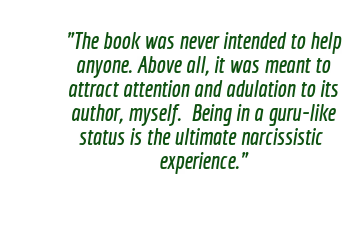
Sam found this article and apparently really liked it, because he disseminated it all over social media. It wasn’t particularly complimentary. I nearly accused him of being a huge fraud, and yet Sam began to visit this blog and share some of the other posts I wrote about him. I read in one of his interviews, that Sam loves to be hated and feared. He doesn’t like to be liked or thought well of. He hates to be loved. But he does like to be thought of as a guru and an expert. Maybe he liked the fact I was critical of him in that post, although I did say some nice things too. Whatever the reasons for his approval and attention, I was inadvertently feeding his narcissistic supply and in return, he was helping give my new blog much needed visibility. This quickly became a mutually beneficial arrangement (though due to his being much more famous than me, I’m sure I benefited more than he did).

Going back to the film “I, Psychopath,” Vaknin’s behavior toward the filmmaker and others, including his submissive, endlessly patient, high-empathy wife Lidija, was as whiney, argumentative and petulant as a three year old who needs a nap or maybe a spanking. He seemed impossible to please. Ian Walker (the filmmaker) who was also in the film, seemed to be losing his mind and it was clear there was no love lost between them. I wasn’t sure how much of Sam’s childish and explosive behavior was an act for the camera to appear more narcissistic than he actually was, but when Walker secretly filmed Vaknin at one point to prove it wasn’t just an act, Sam’s behavior remained just as abusive.

samvak3

Walker, for his part, seemed to have bit off far more than he could chew in making this film, and seemed nearly destroyed by Vaknin’s abuse. (I read it took him two years to recover from the experience). But to be fair, Walker had chosen to make this film about a self professed malignant narcissist and possible psychopath, so what did he expect? Candy and roses?

Vaknin became petulant when one of the psychological tests he took (the one that scored in all known personality disorders) had him scoring higher in schizoid and avoidant traits than narcissistic ones. In fact, his N score wasn’t really all that high. Other tests he was given gave him much higher scores, and Robert Hare’s Psychopathy Checklist (the test that’s given to criminals to make sentencing and judging decisions in courts of law) gave Vaknin a whopping score of 18 in psychopathy, which is extremely high, even for conscienceless criminals.

An intelligent man like Sam, of course, could be faking the answers. Having a lot of knowledge of personality disorders and general psychology, he could have answered the questions in the manner a psychopath would have answered them to get the results he wanted.

The brain scans were more telling. He was definitely missing some essential connections that people with a conscience possess. But I still didn’t buy it. I didn’t believe he was a psychopath and if he was a narcissist at all, he was a very weak one.

Sam seemed to be all over the place, but his behavior in the film, while mostly unpleasant, still didn’t scream “narcissist.” I was initially confused by him–and then I was fascinated, and finally mesmerized. Even though I had never met the man or spoken to him, I was falling under his spell, which I hear is legendary. This could prove he is dangerous.

Many narcissists can be quite charming, and Sam, for all his toolish and childish behavior, certainly could turn on the charm. He was intelligent, incredibly so, and sometimes funny. He was self aware and quick to admit how much of a bastard he was. Sometimes he was nice. He was always brutally honest, something most narcissists are not. He was definitely unpredictable and moody. He wasn’t someone I’d want to spend much time alone with, and part of me wanted to protect his sweet little wife Lidija from her unstable husband, whatever his psychological problem was. He was a ticking time bomb, and although he has never been physically abusive, he was clearly verbally abusive and the poor woman seemed to have “settled” for a disordered man who could never really return the love she constantly showered on him, as much as he sometimes appeared to try.

In the film, she said she wanted to have a baby with him but knew it probably wouldn’t happen (partly due to her age but also because they have barely any sex life. Sam is not interested in sex. He lives inside his head). What a sterile, joyless life any normally wired woman would have to endure to be married to him. But Lidija, in her codependent way, seems happy and satisfied. It’s very dysfunctional but apparently works for both of them. She’s his constant supply and she’s more than happy to fulfill that role, or says she is.

So, moving on…I think it’s a very good thing that they never had children. I read somewhere (I can’t find the link now) they mutually decided not to reproduce, in order to protect any potential child from either becoming NPD or a victim of its effects, which to my way of thinking shows a side of Sam that does not want to inflict his disorder on a child–so does that mean he has some semblance of a conscience? In another video, I saw how impatient Sam seemed toward some children playing nearby. “Why can’t they just be born adults?” he said. Clearly Sam would not be an ideal father to a child.

It didn’t take long for Sam’s brilliant but disordered mind became my latest Aspie obsession (we do get obsessed over things). I wanted to find out what really made Sam Vaknin tick. I wanted to get inside Sam’s mind and feel what it felt like to be him, and maybe that would give me some answers in solving the puzzle of him. By now, having read more of his writings and seen his interviews, I was becoming convinced that Sam was really a narcissist, but probably not a malignant one.

I read everything I could about him. Interviews, articles, his own stuff. I read blog posts and articles by both his fans and his haters. I watched his videos. I read the comments under them. I read his personal journals and poetry, which are publicly available on his website

Sam’s poetry and personal journals show a side of him that cannot be detected in his almost robot-like Youtube videos where his face is nearly devoid of expression or emotion. It’s my belief this intellectual automaton he wants everyone to believe is the real him is a mask he wears to fool everyone into thinking he is just a walking, talking brain with no emotions, a person who cannot feel anything, a person with no vulnerabilities. I believe these creative writings are the only windows we have into Sam’s true character–his lost self.

Sam’s emotionality can’t be directly detected in “Malignant Self-Love,” although he does write with passion and there’s an odd underlying mood of darkness and pain I’m picking up that I don’t get from watching his videos. I can’t explain why I feel this underlying anger and pain emanating from the pages because it’s not really present in the words themselves. He’s a powerful writer and it just comes through, whether he intended it to or not. Other people have said the same thing about this book.

It’s taking me longer to read than I anticipated, partly due to its length, but also because I’m finding I need to put it down from time to time, because the rage and hurt I can detect that underlies his intellectual, scholarly prose can make me feel depressed. I feel like I’m being drawn against my will into a dark night of the soul. It’s nothing I can put my finger on, just a mood of bottomless sadness and hopelessness that filters through his words. I haven’t reviewed his book yet but I will say this. In spite of his having written “Malignant Self Love” primarily to obtain narcissistic supply for himself, it’s actually one of the most insightful books on narcissism I’ve ever read. Who better than a narcissist to be able to write about what the disorder feels like and what really causes it? But if you’re sensitive at all, it’s not a fun book to read.

samvakquote

Sam has said even in his videos that he often feels sad and depressed. There are flashes of humanity occasionally too. In one of them he is being questioned about something he did to another boy when they were about 12. He had tried to brainwash this other boy, and the boy was so damaged by the psychological abuse that he had to be hospitalized. When the interviewer asked if Sam felt any remorse, he replied he knew it was wrong on an intellectual level but couldn’t feel any remorse or shame. But his face told another story. For just a moment, Sam’s face changed. It seemed to clench and then softened and he looked away quickly from the interviewer, as if he didn’t want his humanity to be seen. I saw him grimace a little, as if remembering this was causing him a jolt of pain.

His journals and poetry are where I believe is Sam’s true self really comes out. Creative writing is the only form of expression it has. Even with all the honesty and insight he has into his disorder (and what I believe a strong desire to be rid of it too) his true self is eternally dissociated from the hostile, volatile, intellectual mask of protection he shows to the world. I no longer have any doubt Sam is a narcissist on the higher end of the spectrum, if not malignant, but even for such an insightful intelligent narcissist as Sam, a cure is probably not going to happen.

Sam’s journals, short fiction, and poetry are so filled with sadness, rage, hopelessnes and pain it takes my breath away. It’s almost too painful to read them. His writing, as emotional as his videos are intellectual, makes you feel like you’ve been punched several times in the gut. People have accused him of being a fake, but there’s nothing fake in the raw emotion he is able to express in his creative writing and journals. No one could fake that.

His words tell what it really feels like to have NPD–from the inside of a sufferer who really does suffer and at the same time is all too aware of it. And it’s pure hell, worse than anything you can imagine. Knowing you can never escape, wanting to be human but not knowing how. Knowing you can never give or receive love like a normal person. That you long to be good but don’t know how. That you feel superior and worthless at the same time. That you want to be hated and feared because deep inside you feel like you don’t deserve any love because of what was done to you by your mother as a child. That you hate and envy others for what you want but can’t have. It’s like being possessed. Maybe it is being possessed. Maybe when one chooses to become a narcissist (Vaknin said he chose to become one at a very young age to protect himself from further hurt) you are drawn into darkness, and once you’ve entered you can’t ever escape.

abused

I read an interview where he admitted he has memories of himself as a very young child, and these are indicative of a person who may have been an empath had he not been subjected to horrific abuse. I think Sam is actually a deeply emotional man with very sensitive feelings but these are unfortunately limited to just himself. Any ability he once had to feel empathy and love for others was cut off like a leg that was amputated for no good reason other than his mother’s malignant envy of him. Sam’s overreaction to a slight on this blog proved to me just how sensitive he actually is. It’s tragic that sensitivity was not allowed to develop into empathy for others. Here is an excerpt from that interview (because I found it posted on another blog with no link, I don’t know where it came from or who was interviewing him):

Q: So can you remember not being a narcissist?

A: That is a really good question. I do remember a period before I became a narcissist, that must have been around age 3 or 4, I do remember forming my narcissism as a conscious effort. I remember I’ve been diagnosed with 180+ IQ, very high, which allowed me to achieve results which were not age-appropriate, advanced. Also my memories are unusual for a child of three, I remember as a child of ¾ inventing the narratives, the stories that became my narcissism later. Inventing the stories of my omniscience, how I knew everything, and inventing fictitious figments of me that are very powerful. Telling myself I would not feel pain if I told myself not to. I remember assembling it like Lego. Before that, I remember being a spoiled child, admired and loved because I was achieving things that were not typical for a child, the entire neighborhood was there first, then the whole nation. So I became a spoiled brat. Later I was subjected to horrific physical abuse up until the age of 16. The answer to the question is yes – I remember the exact moment where I decided to be a narcissist.


Q: So you remember the empathic abilities you have lost in this process?

A: No, I was too young to develop real empathy.


Q: A little compassion, do you remember that at least?

A: I remember being compassionate, that I cried when my mother was sad, that I was a good-hearted kid, I used to give away my things, tried to understand other peoples emotions. But these are just flickers of memory, they have receded so fare. It’s like the shades on the wall of Plato’s cave. I do not relive them, do not have access to them. I just know of them.

Sam is a paradox, an enigma, a person too complicated for anyone to ever be able to really understand, and he is just as flummoxed by his complexities as those who try to understand him. I believe he’s a good person trapped forever in a disordered mind that betrays him and makes him lash out at a world that never gave him a chance to become fully human. Having so much insight just makes it all so much harder.

Do I think he’s dangerous? Yes, without a doubt. Even if he doesn’t want to, he can draw you into his illness. He can infect you with his misery and darkness. I don’t think it was necessarily Sam’s abuse of Ian Walker that made him feel the need to symbolically wash himself clean at the end of the film and that changed him for the worse for two years hence. After all, Walker chose to make that film and knew what he was getting into. I think it was the darkness that surrounds Sam that infected Walker and threatened to engulf him. Sam has to live with that every day of his life and can’t free himself from it like Walker can.

When I think about Sam Vaknin, I’m reminded of “Demons” by Imagine Dragons. The protagonist is warning us of his malignancy.

Sam is warning us too. That’s why I don’t think he should be demonized and dismissed as a fraud or someone with malignant intentions, even if they’re primarily self-serving and intended to procure narcissistic supply for himself. There’s a good core in Sam that wants to separate himself from the rest of humanity. That’s why he went into exile by moving to Macedonia and lives a life as a near recluse. He knows what he has become and I think he hates it. But he’s helping people. People look up to him for advice about how to deal with their abusers, and the advice he gives is good. So does it really matter if his primary motives are selfish? I don’t think it does. Just don’t get too close.

The Narcissists Dilemma

Just had to reblog this. This is the narc in a nutshell.

Gale A. Molinari's avatargalesmind

narcissist  dilema

View original post