Millennials and voting.

Michelle Obama Urges Iowa Grassroots Supporters To Get Out The Vote

The Primary election is on Tuesday night, but I’m so out of the loop sometimes that I didn’t even realize early voting ended today.  I always try to vote early because you can avoid all the crowds and craziness.  Sort of like Christmas shopping.

I wasn’t planning on voting today.  I was driving downtown to run some errands.  But I happened to pass by the library and saw all the campaign signs and a long line of people waiting to get inside.  Huh?  Why so many people standing on line when it’s early voting?

I got out of my car and breathed in the warm early spring air.  It was a glorious day, with the sun shining and the birds singing.   A few trees are beginning to blossom.   I walked over and asked someone why the line was so long, and she told me there was only an hour left before the early voting polls closed until Tuesday night!  I’d  made it right in the nick of time.  So I thanked her and took my place at the back of the line. The atmosphere was party -like.  People were excited about their candidates of choice, and the spring weather made things seem festive.

The vast majority of people waiting to vote were young families, many with babies.   I don’t think I’ve ever seen so many babies in one place since I took my own kids to Gymboree classes back when they were tiny toddlers.  A quick mental calculation based on these young parents’ appearance told me they were part of the Millennial generation (born in the 1980s and 1990s)   A few might have been later Gen-X or Gen Y, but not too many.  I’ve been reading about how politically active the Millennials are, something the previous generation (Gen-X) was generally not when they were of like age, oh, about 20 years ago now.   (Has it really been that long?)

millennialvote

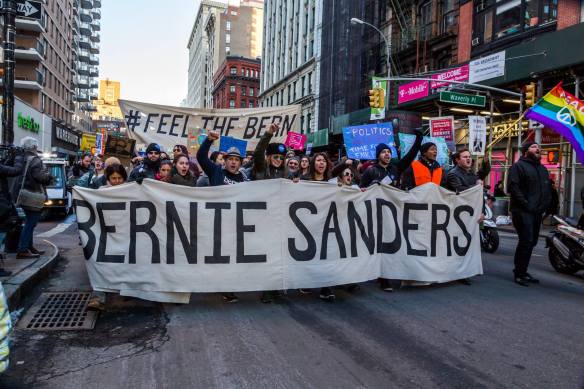
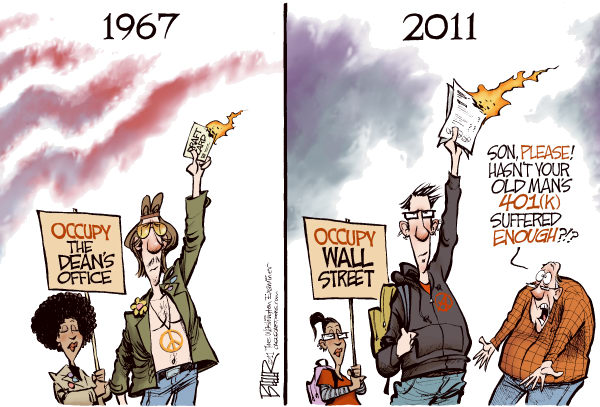
There was a 20-something clean-cut young man handing out flyers and another 20-something young woman dressed in hipster garb and covered with campaign buttons enthusiastically talking about the election and handing out flyers for a different candidate. My own 24 year old son has also become politically active in his state.  He’s campaigning for Bernie Sanders (who seems very popular with Millennials, which is ironic since he’s the oldest of all the candidates).  A an aside, Bernie has amassed his enormous popularity among Millennials through social media, especially Twitter, where you can #FeeltheBern becoming an unquenchable fire.    2011’s ill-fated Occupy movement also built its momentum using Twitter to spread the word.   The movement might have fizzled out before it could make a real impact (or been silenced), but I think it was the first real sign of things to come.

Millennials get it.   They’re not taking any more of the same old, same old.  They’re not backing candidates who spout the same old tired rhetoric we’ve become so familiar with, jaded candidates funded by huge corporations who promise change but fail to deliver.  This generation has  inherited a broken nation and no one seems to give a damn.  They have had a terrible time getting a foot in the door of real adulthood because they can’t find decent jobs that pay a living wage and many can’t afford to move out of he home they grew up in.  They are in college debt up to their eyeballs and will no doubt remain in debt until their late middle age or even for the rest of their lives if things don’t change.   They’re sick of being called entitled crybabies, when all they want is the same opportunities that other generations before them did.  They also realize that if things are going to change, it’s going to be them that have to make things change.

bernie_sanders

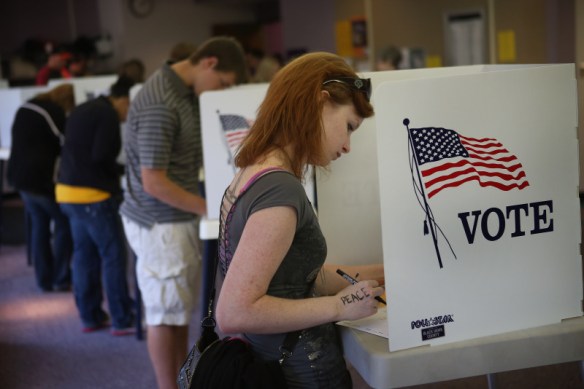
Most of the Millennial generation is now old enough to vote, and they are taking advantage of that right and showing up at the polls to exercise that hard-won right, whether they are male or female; black, white, Hispanic, or “other;” gay or straight; Christian, Jewish, Muslim, or atheist; and regardless of political affiliation (though most seem to be quite liberal or independent).    As Americans, we all have the right to vote, and voting is the only thing that brings real change.   If you fail to vote, do you really have a right to complain?   Although I’m terribly unhappy with the state of this nation and have been for a long time, I always felt guilty griping about it whenever I failed to vote.

So I stood there on  line feeling the spring breeze in my hair and looked around at all these enthusiastic Millennials on line, with their bumper crop of babies and toddlers (the future generation of this country), and felt very proud of this young adult generation, the same one William Strauss and Neil Howe predicted back in the 1990s would become the new “Greatest” generation–the people who would finally be able to save America from itself.


Is social awkwardness suddenly cool?

socially_awkward

It seems to me that Millennials like to tell everyone how socially awkward they are, even when it doesn’t really apply. I don’t think it’s false modesty and I don’t think a majority of this younger generation has Aspergers, Avoidant or Schizoid Personality Disorder, or Social Phobia.

No, I think they think being socially awkward is cool. Maybe it’s just that people who frequent Internet forums or write blogs are more introverted, but I think there’s more to it than that.

Take my daughter. She’s the opposite of me in many ways. She’s never been shy. She always made friends easily. She was always invited to all the parties and the popular and cool kids always liked her. She always knew what the latest catchphrases meant and seems to know about fashion trends before they’re really mainstream.

It’s true that over the past year or two she’s become a little quieter and is less likely to go out with her friends or out to parties, but I think that’s because she’s a little older now and is engaged to a guy who’s more introverted than she is and likes to hang around at home.

The other day she wrote a new description of herself on her Facebook profile, which announced to the world that she was socially awkward. But she isn’t. Does she just see herself as socially awkward when she really isn’t? Or is social awkwardness the new cool?

I wonder about that because for the past few years, being an “Aspie” seems to be a kind of badge of honor for Millennials. I think they think being an Aspie makes them seem smarter. It’s true that many people with Aspergers are very intelligent, but not really more so than the general population, and there are dumb ones too, just as there are dumb neurotypicals. But Aspies, no matter what their intelligence level, are known for their social awkwardness. So if being an Aspie is cool, maybe that extends to social awkwardness being cool too.  I think movies like The Social Network, which glorify geekiness, might play into this trend too.

I sure wish social awkwardness was cool when I was my daughter’s age, because I really am socially awkward and have always been that way. Maybe I would have been regarded as cool and that would have been good for my low self esteem.

I think the meme I posted above might prove that my suspicions are correct!

Why I love liturgy.

A view of the famed Rose Window in Notre Dame Cathedral, Paris, France.

A view of the famed Rose Window in Notre Dame Cathedral, Paris, France.

Back in April, during the Easter Vigil mass, I became a Roman Catholic. This came as a surprise to many people I know, since I’d spent most of my life as an agnostic and at times veered close to atheism. I’ve also toyed with Buddhism and Scientology (and I admit I still have a soft spot for Buddhism because it appeals to my rational mind, and that isn’t likely to change). Due to the recent charges of sexual abuse taking place in the Catholic church, this oldest and largest of all Christian denominations has become more criticized than ever, and probably rightfully so. I don’t think it’s the only religious organization that has been guilty of such behaviors, but I think it’s the most publicized. I’m also not ignorant of the fact that the Catholic Church has a bloody and often very un-Christlike history, especially during the Middle Ages, as well as being the wealthiest religious organization in the world and often full of hypocrisy. In addition, I do not believe that being a Catholic is the only way to salvation. Any Christian who has accepted Jesus Christ as their personal Lord and Savior in their hearts will get to Heaven, regardless of denomination (why did I almost spell that DEMONination?) and don’t necessary even have to attend church at all.

So why did I become a Catholic, you ask. Why did I join a church that’s so rife with its past of violence, and a present still full of intolerance, sexism, and heirarchy? The answer to this is complicated.

I was raised in a family that although nominally Christian, was basically agnostic. We did not attend church regularly (although I was sent to Sunday school as a young child), and holidays like Christmas and Easter were recognized more for their fun/materialistic secularity (gift giving, Santa Claus, the Easter Bunny, new Easter dresses and coats, etc.) than for the solemn events in the life of Christ they actually honor. My family regarded them as “children’s holidays” that adults indulged and that would eventually be outgrown. Although I was baptized Methodist (and I was surprised to learn my Protestant baptism was recognized as valid by the Catholic Church), we never became very active in any church and therefore were not part of any enduring “church family.” When church was attended, it was a sterile, secular affair, full of feel-good stories of God’s unconditional love, lessons about tolerance and social justice (nothing wrong with that, of course, but it wasn’t very religious nor fill me with a sense of awe or wonder), and very little that was Biblical or traditional. Services revolved mainly around the sermon, always a feel-good pep talk about God’s all-encompassing love and loving one another. All of this clap-happy, touchy feely reformed-Protestant stuff flew in the face of the constant anger, rage, loneliness, and discord that was constantly going on at home. Due to that, all the messages about positive-thinking and feel-goodness seemed insincere and meaningless, and didn’t address the very real problems in my family that made me feel so defective and different from everyone else.

For a short time–maybe one or two years–my father became fascinated by Christian Science, and I was sent to a Christian Science Sunday school. I was too young to comprehend the metaphysical beliefs they espoused, which basically preached that all that was material was an illusion, and only Spirit mattered (later my father would become active in Religious Science, a similar belief system that isn’t based in Christianity and overlaps a great deal with New Thought, part of the New Age movement). I couldn’t wrap my young brain around the metaphysical mumbo jumbo I heard on Sunday and I desperately needed something tangible to offset my growing feelings of dissociation from myself and the rest of humanity and from God Himself. I was filled with uncertainty about what was real and what wasn’t. Living on a diet of spiritual junk food, I was starving for emotional and spiritual sustenance. Although I coudn’t have put it into words, I needed to experience the Divine with my five senses.
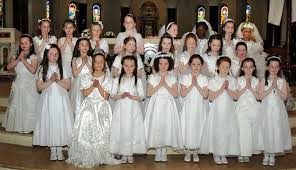
holy_communion
How I envied these girls!

Enter Catholic school. In 5th grade, the bullying at the local public school became so bad that my parents decided to take matters into their own hands and despite their misgivings about the Catholic Church, I was sent to a Catholic girls’ school. My grades immediately improved and I found it easier to make friends with these girls than at the public school. My parents were surprised (and probably a little disturbed) that one of my favorite classes (and the one I did best at) was Religion. I didn’t become religious back then, nor did my faith in God deepen (I was for all intents and purposes agnostic), but I found myself always looking forward to the masses we used to have at school on religious days. Although the highly liturgical services confused me at first (knowing when to stand up and sit down, memorize the various prayers, etc) I found myself drawn to the orderliness and beauty of the Mass. It somehow seemed Godlike and was steeped in history that the Protestant services I’d attended with my parents just didn’t have. I envied the cool trappings of Catholicism (when the other girls were going through Confirmation, they got a new name and a pretty dress and I wanted that too) and longed to be able to take Communion with everyone else. I wanted a set of my own rosary beads. Today I know these things really don’t matter (I think whatever denomination you are–even if none at all–is a matter of personal preference) but at my tender age, these tangible things seemed part of some wonderful, sacred, mysterious and heavenly world I couldn’t be part of. Sitting there in my folding chair watching the proceedings, I always felt the presence of God and a benevolent, forgiving love I never felt from my own family, even though I had to remain seated during the communion. It was one of the few places where I could feel the benevolence of God.

Many cradle Catholics remember negative experiences from their childhood about the Church and turned away from it as they came of age, but as someone who only knew it as a refuge from the harsh realities that took place in my agnostic home, I never developed those negative associations with Catholicism. I loved most of the nuns at my school. With one or two exceptions, they seemed so kind and compassionate, very saintlike–and they seemed to care about me in a way I never felt I got from my own family. Although I never talked about what went on at home, one nun in particular who seemed to favor me for some reason, guessed that things at home weren’t ideal, and told me to come see her anytime I needed to talk. I never did (for fear of what might happen if I “squealed” about the family to an outsider), but it felt good to know that she cared enough to reach out to me.

As I grew older I fell away from Christianity (not that I’d ever really embraced it much and knew next to nothing about the Bible or the life of Christ), and experimented with other belief systems, including Scientology and Buddhism, if anything at all. The Bible seemed to me like a book of ancient fairy tales with no relevance to my own life. I rarely prayed and looked down on churchgoing and religious people as ignorant and deluded. Although I never embraced full-on atheism (it was too depressing to think there was no afterlife at all), I thought that if God existed, he was pretty much hands-off and that everyone, other than the most hardened criminals and mean, cruel people, would get to Heaven, if there even was such a place. The concept of reincarnation made a lot more logical sense to me than the idea of heaven or hell.

But my soul was still starving and I think deep down I always knew this. Every once in a while, in spite of my doubts about the existence of God, I’d make time to attend a Catholic mass. I didn’t believe what they preached, in fact I thought most of it was pretty silly, but I loved the ritual and the order, and somehow always came away feeling transcended. I’d go take Communion (knowing as a non-Catholic I wasn’t supposed to) and feel somehow nourished. In a way I couldn’t explain, witnessing the reverence and beauty of the Mass, made me feel like part of something much bigger than myself and accepted for who I was, not (as in my FOO) expected to be someone I could never be.

I toyed with other Christian faiths, including Lutheranism and the Southern Baptist church. During the late 1980s, I attended a Lutheran church (and was confirmed as Lutheran) mainly because the man I married was Lutheran. The services were called masses and were very liturgical and quite similar in many ways to the Catholic mass, but they seemed watered down, somehow. For instance, the communion wafer was regarded as symbolic rather than being the actual Body of Christ. We never became deeply involved with the Lutheran church, and although we had our kids baptized Lutheran, we did not attend church on Sundays or otherwise do much to encourage their spiritual development.

When we moved to North Carolina from northern New Jersey, we were faced with culture shock–instead of having mostly Catholic and Jewish neighbors, suddenly we found ourselves surrounded by Southern Baptists who insisted we needed to be “saved.” Still looking for spiritual nourishment, I started attending services at the local Baptist church as well as Bible studies on Tuesdays nights. My kids attended 2 years of Vacation Bible School. I never cottoned to the hellfire-and-brimstone preaching though, or the literal interpretation of the Bible. I was especially turned off by the church’s conservative political agenda, that actually told us we were “going to Hell” if we didn’t vote Republican, as well as their dismissal of science. I decided to stop attending church there.

hellfire
Hellfire-and-brimstone preaching is a turn off to me.

A few years later, my daughter had a friend at school whose parents were Southern Baptists, and my daughter, age 9 at the time, decided to be baptized in their church. I was fine with that, even though I disagreed with the southern Baptist belief system, because it took the burden off of me to be responsible for her spiritual growth. I attended her baptism and was surprised at how modern the service was, with a pop-rock band that played contemporary Christian music rather than traditional hymns. Intrigued, I decided to attend a few more services, but I always felt like I was at a rock concert rather than at church. In spite of the emphasis on Biblical literalism, during the long, emotional sermons, I never felt my soul uplifted or any real feeling of spiritual transcendence. Although very different from the touchy-feely, heaven-awaits-no matter-what-you-do preaching of the liberal Protestantism of my childhood, this hellfire-and-brimstone preaching bookended by Christian contemporary music with the words splashed on a huge TV screen didn’t do much for me either. I longed for tradition, for history, for meaning.

I still occasionally attended Catholic masses, but never thought I’d actually become one. But shortly after I went No Contact with my ex (who freeloaded off me and mentally abused me for almost 7 years following our divorce and nearly bled me dry emotionally, mentally, financially, and spiritually) I began to blog. My mental and physical health came back first, and then I realized I was still starving spiritually. I needed God, who after all, had been watching and protecting me all the time I was in an abusive marriage and had shown me on several occasions how real He was. Last October, I decided to start attending Mass as well as RCIA classes (the classes you take to become Catholic). I had doubts about much of the doctrine (and truth be told, still do). I still wasn’t sure I wanted to become Catholic, but I thought I should at least take the classes and make an educated decision.

To my surprise, I found that Catholic doctrine isn’t very different from what I’ve always believed anyway. The Bible is held as important (more important than many fundamentalist Christians believe we do) but much of its content is not not interpreted literally and therefore doesn’t fly in the face of centuries of scientific discovery and achievement. Yes, we are saved by grace alone (all Christians are), but works are also important and are tangible evidence of God’s grace. Sacraments (communion, confession, etc) give tangibility to God’s grace although (I don’t think) they are necessary for salvation. Confession is not a punishment; it is an opportunity to unload to someone else and makes you feel better afterwards (very similar to a 4th step in a 12-step program). Although I had my doubts at first, I’ve come to believe the Host (the communion wafer) does actually become the body of Christ, due to the glorious, transcended way I always feel after partaking. I do feel like my soul is being changed for the better, even though it’s not a Saul-to-Paul-like sudden conversion full of fireworks and drama.

I admit I do still have some issues, mostly having to do with the Catholic church’s stance on social matters such as abortion and homosexuality, as well as the fact that priests still must be male. I don’t think the Pope is infallible either (he is just a man), but I understand the reasoning behind having a Pope and I happen to like the current Pope anyway. I don’t venerate Mary and the saints, although I have utmost respect for them. Veneration isn’t the same as worship, anyway. Only Jesus as God is worshipped so there’s nothing un-Christian there, a far as I’m concerned.

rosary_beads

Because of my doubts and personal proclivities, I’ll probably never be the “perfect Catholic” or “perfect Christian” but that’s okay. I pray that God keeps working on my soul to cleanse it from sin and I’m willing to believe anything God wants me to believe. I’m willing to turn my soul and my life over to the Creator. Whenever I’m at mass, I feel part of a vast family and something glorious, beautiful and so much bigger than myself or all humanity. I feel accepted in God’s kingdom and have begun to fear death and the future less than I used to. The tangibility, beauty and order of the liturgical tradition–the memorized call-and-response prayers, the communion procession, the incense, the swelling organ music and the singing, the kneeling and the standing, the Sign of the Cross, and all the rest of these “silly rituals”–makes me feel that God is a tangible, real thing, someone who is RIGHT THERE and that I can see, hear, smell, feel, touch and even taste. The traditional hymns with their pipe-organ and piano music and the ancient prayers imbue a sense of mystery and history into the services that neither liberal Protestantism or fundamentalist pop-rock sing-alongs do for me. And I love the Bible readings too. I’m beginning to feel that the messages in the Bible do have meaning for me personally. The orderliness and ritual of the mass is regarded by some as mindless, dull and lacking spontaneity (and to some extent I can understand this view), but I find the repetitive and predictable aspects such as the call-and-response prayers and chants to have an uncanny way of eventually filtering down from my mind into the deepest part of my heart, in a way a hellfire-and-brimstone or feel-good, prosperity-gospel sermonizing can never do.

Before becoming Catholic, I toyed with the idea of becoming Eastern Orthodox, a religion which, if anything, is even more liturgical and steeped in ritual, history, and tradition than the modern Catholic church (and is somewhat more liberal in its stance on women’s rights and birth control), but finding a sizable Orthodox community here in the Southern United States is a huge challenge to say the least. I did actually attend one Orthodox mass about five years ago (my son’s Kung Fu teacher was Russian Orthodox and invited us to attend his church), and although it was incredibly beautiful (and the food served afterwards was delicious), the feel of the Orthodox mass was a little too “foreign” for my taste. Anglicanism (The Church of England) also has a rich liturgical tradition (please see my Christmas post “O Come All Ye Faithful”) but again, is uncommon here in the southern US, and it’s still Protestantism anyway. I like the idea of being part of the oldest and largest practicing Christian community in the world that has such a rich and colorful history (even if at times in the past it wasn’t especially Christ-like). I feel proud to be a part of that. Although I know the trappings and ritual are more a matter of personal preference than salvation, for me they make an abstract God seem more real. Coming from such a chaotic, unpredictable background, the order and predictability of the liturgy is food for my soul. My adopted religion may not be the only road to salvation, but it’s the only road for me. Thanks be to God.

Millennials and liturgical Christianity.
As an aside, the Millennial generation, although largely turned off by religion, are, when drawn to religion, are converting to “high church” (liturgical) Christianity such as Anglicanism, Catholicism, and the Orthodox church. They are a generation that (like me, even though I’m not a Millennial) longs for a sense of tradition and connection with history that’s lacking in the evangelical, fundamentalist, and liberal Protestantism or New Age or atheistic belief systems they were raised with, all of which largely ignore or dismiss 1800 years of Christian history and tradition.

Further reading:
Why Millennials Long for Liturgy: http://www.theamericanconservative.com/articles/why-millennials-long-for-liturgy/
Millennials are Seeking Tradition, Sacramentality, and Liturgy: http://www.catholicvote.org/millennials-are-seeking-tradition-sacramentality-and-liturgy/

The Persistent Myth of the Narcissistic Millennial

mirror_graphic

The popular media just doesn’t understand anything about narcissism–or Millennials. It continues to trot out the “Millennials are narcissists” stereotype because they’re more likely than other generations to take selfies and are more likely to be living with their parents into their late 20s and even early 30s (even though the lack of good jobs and disastrous economy has a lot to do with this and has nothing to do with their being entitled or spoiled). If Millennials take more selfies than older people, that really doesn’t have anything to do with narcissism. It may have to do with vanity (which isn’t narcissism per se) or the fact “everyone else is doing it” and the technology happens to be available. Someone on another blog even pointed out that taking a selfie is actually a vulnerable act and a real narcissist won’t be taking selfies because they’ll want you to believe they are someone other than who they really are and a selfie shows you as you really are.

This article’s about a year old but is still relevant because the “all Millennials are selfie-taking narcissists” meme hasn’t gone away. It’s time to set the record straight. We also have short memories–every generation since the Boomers (and maybe earlier than that) has been similarly vilified during their late teen and young adult years.

The Persistent Myth of the Narcissistic Millennial
By Brooke Lea Foster for TheAtlantic.com, November 19 2014

People are still lobbing the same accusations at Millennials, even though evidence shows they’re not any more self-absorbed than their predecessors.

A few months ago, the news went viral that the American Psychiatric Association had classified “taking selfies” as a sign of a mental disorder. It lit up Facebook and Twitter until it was revealed that the article was a hoax.

But still, I doubt I’m the only one that has felt at least a tiny sense of self-loathing after, say, posting a photo of myself on Facebook. Deep down, taking a “selfie” doesn’t just feel like capturing a moment—it also feels like capturing myself at my most vain.

In his pop-psychology book “The Narcissist Next Door: Understanding the Monster in Your Family, in Your Office, in Your Bed—in Your World”, published in September, author and Time editor at large Jeffrey Kluger argues that the popularity of the “selfie” is just one way that our culture is becoming more narcissistic. In fact, he says, narcissistic behaviors today aren’t just more accepted; they’re celebrated. “We’ve become accustomed to preeners and posers who don’t have anything to offer except themselves and their need to be on the public stage,” he says. The egocentric antics of figures like Donald Trump or Kim Kardashian, for example, make our own narcissistic proclivities seem more palatable by comparison, and social media only instigates the desire for attention. Facebook, to a narcissist, can be like an open bar to a drunk.

millennialquote

But Kluger also devotes a chunk of his book to what’s become a tired argument: The idea that Millennials—the generation that came of age with selfies and Facebook and the Kardashians—are the most self-absorbed generation of all. “Plenty of people are narcissistic in our society,” Kluger says, “but Millennials are doing these things on a pandemic level.”

Of course they are. They’re young and full of themselves, like every other generation that’s come before them was at some point. But are Millennials any more narcissistic than, say, the Baby Boomers, who were once considered the most self-obsessed cohort of their time? Consider the 1976 cover story of New York Magazine, in which Tom Wolfe declared the ‘70s “The Me Decade.” One could argue that every generation seems a little more narcissistic than the last, puffing out its chest and going out into the world with an overabundance of self-confidence, swagger, even a bit of arrogance. These traits are simply hallmarks of early adulthood—it’s often the first time people are putting themselves out there, applying for first jobs and meeting potential life partners. Overconfidence is how people muscle through the big changes.

Read the rest of this article here.

Further reading: Are Millennials Really the Most Narcissistic Generation Ever?


How did narcissism get so “popular”? (part two of two)

narcissist_nation

Here is the second installment, as I promised–I apologize for the delay. In part one, I covered the way narcissism has increasingly infiltrated our society and become a near-virtue to be emulated, starting in the late 1940s and 1950s in a postwar America now regarded to be a world superpower. The babies born in this mood of can-do optimism, the Baby Boomers, were indulged by their parents, who believed anything was possible and showered their children with all the new toys, space-age technology, and new permissive child-rearing techniques that were suddenly popular.

In Part One of this article, I discussed how the indulged Boomer generation influenced western society at every stage of life, and (as a generation) grew into grandiose, entitled adults who demanded (and got) special treatment every step of the way. I covered the decades from the 1950s through the 1980s, and described how narcissism became increasingly regarded as a desireable quality. By the 1980s, narcissism came out of the closet, with the election of a president (Reagan) who encouraged greed, materialism, and entitlements for the wealthy with his “trickle down economics.” At the same time, empathy, neighborliness, and general goodwill toward others seemed to become almost quaint, a naive relic of the past. The juggernaut was the new “greed is good” philosophy, made popular by a 1987 hit movie, “Wall Street,” (which was of course the place to be). Narcissism was no longer something to be hidden; now it was something to aspire to.

In this next installment, I’ll be focusing less on the Boomers and more on the continued growth of narcissism in society, as well as the backlash against it–the narcissistic abuse and ACON community–which began as an Internet phenomenon during the mid 1990s due to one self-professed narcissist named Sam Vaknin. But actually, the seeds of the backlash had been planted as far back as 1983, with M. Scott Peck’s bestselling book, “People of the Lie.”

1990s.

cast_friends

The greed worshipping culture begun in the 1980s continued during the 1990s, as Boomers rose to power and we elected our first Boomer president, Bill Clinton, in 1992. Under Clinton, the economy boomed, and a new breed of Yuppies, the Dot Com entrepreneurs (who were mostly Generation X), rode on the coattails of the newly born Internet, and they made money hand over fist until they went bust several years later. But people still went shopping and the culture at large was becoming increasingly exhibitionistic, obnoxious, and in-your-face (reality shows were born during this time), while corporations grew bigger and more unwieldy (unlimited growth, like a cancer, was encouraged, and smaller companies merged into megacorporations the size of small governments). Meanwhile, government institutions built in the more sedate and community-oriented 1950s and 1960s began to splinter and crumble. The government, especially the part of the government that tried to help its less fortunate citizens and attempted to even the playing field through fair taxation, became The Enemy.

But a backlash was beginning to silently bubble under all the glitz and bling of the ’90s. Back in 1983, a psychiatrist turned born-again Christian named M. Scott Peck published his groundbreaking book, “People of the Lie.” Here, for the first time, was a self help psychology book that focused on “evil”–specifically, people who were evil. The traits described in the book are exactly those of malignant narcissism. The book resonated with many, particularly with Gen-Xers and later born Boomers (Generation Jones), who had been raised by narcissistic parents. In some cases, especially for younger Boomers and early Gen-Xers, these kids had been betrayed by initially doting Silent generation parents who suddenly, during the 1960s or 1970s, seemed to suddenly care only about their own self-development at the expense of their confused and hurt adolescent and preteen children who they no longer seemed to even like much (this is exactly what my experience had been growing up in the 60s and 70s: my parents changed and no longer seemed to care).

But in the early 1980s, Peck’s “evil people” were not automatically equated with narcissists or people with other Cluster B disorders. Until the mid-90s, narcissism–or NPD (Narcissistic Personality Disorder)–was simply a psychiatric label given to certain patients with a certain set of traits, who may or may not have been evil. NPD wasn’t demonized yet.

Then along came Sam Vaknin in 1995. Vaknin, a former white collar criminal and self-confessed narcissist, had written a tome about narcissism called “Malignant Self-Love: Narcissism Revisited.” Written initially to obtain supply and a guru-like status for himself, Vaknin’s book actually helped many of the narcissistic abuse victims who read it and recognized their abusers in its 600+ pages. Vaknin’s idea of NPD didn’t fit that described in the DSM: he mixed in with NPD several traits of psychopathy, antisocial personality disorder (ASPD), and Borderline personality disorder (BPD), to describe a particularly dangerous type of malignant narcissist that made the toxic people described in M. Scott Peck’s book seem almost tame in comparison.

The book was successful, and soon Vaknin started his own website, and discussion groups, and abuse victims all over the world jumped on the bandwagon. Vaknin, exactly the sort of person they sought to avoid, had become their savior and guiding light out of darkness.

Until the 2000s, Vaknin’s was pretty much the only voice on the Internet about narcissistic abuse. But in the very late 90s, a few books were beginning to be published about this “new” type of abuse that didn’t necessary include physical violence (but could). Parents, particularly mothers, were the focus, and a subset of the narcissistic abuse community–one that focused on narcissistic mothers and the damage they had done to their now-adult children–formed the template for the explosive ACON (Adult Children of Narcissists) movement.

2000s.

bling

For a brief time, after the tragedy of September 11, 2001, it looked like Americans just might start to care about each other again. There was an outpouring of support for the victims of the 9/11 disasters, and solidarity shown among all Americans. For the first time, regional differences and even racial differences didn’t seem to matter, and Americans were united by their flying of the flag. No one seemed all that concerned by the curtailment of certain freedoms and and increase in xenophobia–after all, it was for the protection of the country, right?

But as a result, the economy was suffering, so George W. Bush Jr. (“Dubya”) gave us all permission to “go shopping.” And so we did. It was back to the bread and circuses and the shallow, materialistic culture of the 1980s through pre-2001.

Reality shows rose in popularity and the badder the behavior, the more popular they got. New celebrities were famous only for “being famous,” having a famous parent, or just for acting badly. People aspired to be just like Snooki and The Situation from The Jersey Shore, or Tiffany “New York” Pollard from Flavor of Love. All of these characters were narcissists, or at least acted that way for the benefit of the camera. And people loved them for it.

During the 2000s, Millennials, the rising young adult generation, born in the 1980s and 1990s, started being being accused of being narcissistic, but if they are, you can blame their parents for having taught them these values. In addition, a lot of gaslighting is going on by older generations, who blame the Millennials for their inability to find jobs that pay a living wage and provide benefits, forcing them to live at home and be dependent for longer than earlier generations–and accuse them of being “lazy,” “spoiled,” and “entitled.” But what about their mostly Boomer and Gen-X parents, who modeled this sort of behavior?

Politicians became more blatantly narcissistic and their lack of empathy sank to new lows. One politician said if you weren’t rich, you should blame yourself. Blaming the victim became increasingly popular, and was even seen by some conservative politicians as a “Christian” way to behave–for if you were favored by God, He would bless you with wealth and material comforts. Religion itself became a way for narcissists to rise to positions of great power, and use their “favored status” in God’s eyes as a way to abuse their flock of followers.

Meanwhile, the narcissistic abuse commmunity continued to grow, and blogs written by abuse survivors were beginning to pop up all over the Internet. The abuse community developed their own lingo, some of it borrowed from earlier movements such as 12-step programs (codependent, enabling, people-pleaser are examples), some from pioneers such as Sam Vaknin (narcissistic supply, confabulation), and some from mental health experts going all the way back to Freud. Some terms were taken from popular movies, such as “flying monkeys” (The Wizard of Oz), and “gaslighting” (Gaslight).

2010s.

tea-party

Being only 5 years into the 2010s, it’s hard to see any patterns yet, but it does seem that the problem of narcissism is finally being noticed by the general public. One of the Republican presidential candidates, Donald Trump, is well known for his “NPD” and called out for his grandiose antics constantly, even by people outside the narcissistic abuse community. Narcissism is a fashionable topic now–the fascination by it may only be a fad, but it’s making people pay attention. Lately I’ve noticed a number of Christians who are abandoning the fiscally conservative values held by groups such as the Tea Party, who are about as collectively entitled as you can get (they had better get their social security, but to hell with that child who needs special medical treatment but can’t get it because his parents are too poor). It’s probably too soon to tell whether the “social gospel” is making a return, but there does seem to be a greater call for an increase in empathy and caring for each other and building communities instead of just building up the Almighty Self.

It will be interesting to see what the rest of this decade holds.

Generations explained.

boomer_millennials
credit: Blog of the Ginger

One of my long-standing interests is demographics, and the interplay between the different living generations. Here is a video that explains the interactions between the four living generations born before 2005 (or possibly, 2001 — the jury’s still out on the last birthyear of the Millennials).

The birth years are based on Strauss and Howe’s “Generations” and “The Fourth Turning,” both books I have read and highly recommend for anyone interested in how generations impact history (and are, in turn, impacted by history). I agree with these birth years over the more popular ones used by most marketers and the popular media. I also believe there are “cusps” that straddle the generations and bleed over several years in both directions, so someone born in a cusp year would have characteristics of both adjacent generations. Of course, these are just guidelines (some have compared generational types to astrological signs) and some people may not fit their generation at all, but maybe a different one.

The generations discussed here:

1. GI Generation (Hero generation, born 1900 – 1924) — few still alive.
2. Silent (Artist generation, born 1925 – 1942)
(Silent/Boom cusp subgeneration: War Babies born about 1936-1946)
3. Boomer (Prophet generation, born 1943 – 1960)
(Boom/X cusp subgeneration: Generation Jones born 1955-1965)
4. Generation X (Nomad generation, born 1961 – 1981
(X/Millennial cusp subgeneration: Generation Y born 1976-1986)
5. Millennial (Hero generation, born 1982 – 2005 (?)

If you’re interested in this stuff, I recommend these two books by William Strauss and Neil Howe:

Generations: The History of America’s Future, 1584 to 2069

The Fourth Turning: An American Prophecy — What the Cycles of History tell us about America’s Next Rendezvous with Destiny

Why is narcissism so “hot” these days?

narcissist_nation

I haven’t seen any official studies or statistics, but it seems like narcissism is possibly the most popular psychological topic on the Internet in recent years. Blogs about narcissism are spreading like wildfire (though it’s possible they may be on the decline now). The subject of narcissism seems to be brought up regularly even in articles and sites about other topics, especially entertainment, big business, and politics, where narcissism is rampant. Narcissism is a buzz word, and it’s because we children of the Baby Boomers and Silent Generation–parents who bought into narcissistic values way back in the 1960s and 1970s–are finally having our say.

In a society-wide twist of values, Narcissism has become a virtue. Old fashioned virtues like altruism and empathy are seen as liabilities that hold people back from achieving success, rather than prosocial traits that keep us civilized and human. Ayn Rand, who idealized narcissism in her philsophy of “objectivism” (and was most likely a narcissist herself) has become a cult hero; her mediocre torch romances “Atlas Shrugged” and “The Fountainhead,” both featuring selfish, narcissistic “heroes” as their protagonists, have been enjoying enormous popularity.

ayn_rand
Ayn Rand.

I believe all this started in the 1960s and 1970s, during the Consciousness Revolution. Certainly the 1950s were mind numbingly conformist and rife with racism and sexism, but things went way too far in the other direction, as Baby Boomers and younger members of the Silent generation began to rebel against all the conformity. They popularized the idea of “doing your own thing,” whatever that thing was. Having and raising children became something to be avoided and any woman with a brain avoided pregnancy as if it were a disease. Abortion and The Pill became legal–and cool. Of course there’s nothing wrong with women having control over when and whether to have children, but I think the general attitude toward children in the 1960s and 1970s was negative. Young Gen X children were not wanted or valued. They were demonized in movies like “The Omen,” “Rosemary’s Baby” and “The Exorcist.” I remember an Esquire article from March 1974, “Do Americans Suddenly Hate Kids?” Well, it did seem that way.

Their parents, the Boomers and Silents, were encouraged to put their own self-growth and advancement of their careers ahead of child-rearing. At the time, this was even thought of as “good” for children, providing them with a positive example of a parent with a high self image and lists of achievements a mile long. Unfortunately, for many children growing up during this time, the attitude that adults were more valuable than children backfired and we felt like we just weren’t that important in our parents’ universe. We grew up with collective low self esteem.

hippie_parents
Hippie parents.

The 1970s were dubbed “The Me Decade” and adults were encouraged to do and be whatever they wanted, even if this meant neglecting their own children and turning them into latchkey kids with far too much freedom for their own good. Promiscuous sexual behavior and drug abuse among adults was rampant. Women everywhere (including my own) joined consciousness-raising groups that encouraged them to put themselves over their families. The fallout rained down on the lives of their Generation X and Gen-Jones (late Boomers born at the end of the 1950s and early 1960s) children, and we suddenly found we had to fend for ourselves, without much parental support, even when our parents were not narcissists.

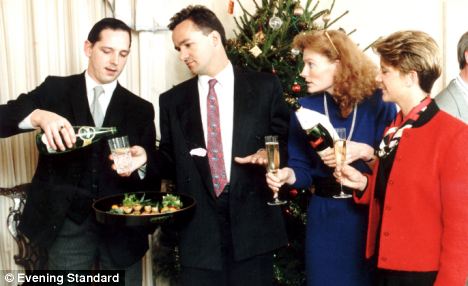
While attitudes toward children improved during the 1980s as Millennial children began to be born, the Boomers and younger Silents who had spearheaded the Consciousness Revolution and Me Generation, were suddenly in positions of authority in politics, business and entertainment. We had Ronald Reagan, with his “trickle down economics” and support of the “supply side” and big business over the people. Tax cuts for social programs commenced with his election and increased over the next 30 years (and show no sign of letting up). Reagan was popular and charismatic, and so were his draconian economic policies that hurt the poor and later, the middle class. New college graduates during the 1980s and 1990s realized they could make unlimited amounts of money in the stock market and suddenly the “helping professions” were unpopular and considered far less lucrative than making a killing on the stock market or in investment banking. These became the infamous “having it ALL” Yuppies.

Yuppies were better parents than their hippie predecessors, but they micromanaged everything their children did, to the point the kids became stressed because they weren’t free to just be kids. These overcontrolled children were sent to the best private schools, given lessons in everything from piano to karate, and had no free time to just play and learn on their own. Millennials grew up stressed out and expecting to achieve in life, only to find when they first entered the job market during the 2000’s, they could not find decent jobs.

yuppie_mom
Yuppie mom.

Narcissism continues to be a “virtue” and our policies increasingly glorify the self and unlimited financial achievement over humble, old fashioned values of community and compassion. Children who were born or who were children or teens during the 1960s and 1970s are now adults, the oldest of us now in our 50s. I’ve noticed most blogs by ACONs seem to be written by women in their 40s and 50s: these are the Generation X and late Boom/Generation Jones children who suffered the most at the hands of parents who bought into the selfish ’70s and greedy ’80s. Even back in those days, the shift of narcissism from a vice to a virtue was not unnoticed. In 1979, cultural historian Christopher Lasch wrote his treatise “The Culture of Narcissism: American Life in an Age of Diminishing Expectations,” about the danger of narcissistic values for American society. His book remains popular today.

We may be a bunch of middle aged fuddy duddies, but we’re no longer scared and we are not shutting up. We call out everything we see wrong with the culture we were raised in, a culture that has become just as unhealthy for our own Millennial children. We were the scapegoats of a society that didn’t value us, and now we are the truth-tellers who are boldly talking about everything that was done to us, everything that went wrong and why. It was us who spearheaded the ACON movement (and yes, it is a movement) and are bringing narcissism out into the light where it can be seen for the disgusting and ugly scourge on humanity it really is. We are doing our best to nurture our own children according to more humble, old fashioned values, although that’s hard in a society that still only values personal gain and material wealth, and still tries to keep us down.

My son said no to the DMV

DMV
There’s assholes at Carrabba’s too. But at least you get tips.

Last week my son Ethan, who works as a Carrabba’s waiter (and makes great money in tips) had a job interview with the DMV in Tampa, Florida. He thought he was awkward during the interview and didn’t think he’d get the job, especially because almost a week passed and he heard nothing back from them.

A few days ago, he started having second thoughts about working for the DMV. My son is an artist–an urban dancer and aspiring filmmaker–and could not see himself fitting into the sterile, corporate environment of working for a government agency like the DMV. I agreed but said nothing. This was his call, not mine.

Yesterday he got a call from the DMV saying he got the job. But Ethan refused their offer, knowing he’s turning down a good salary and full health coverage and other benefits government employees get. He had a few regrets after the fact, but says he knows it was the right decision.

I say good for him. He kept his integrity and had the foresight to realize how soul-sucking a job like that could have been for someone like my son, who is an HSP (like me), somewhat eccentric in his interests, and also gay. He’s what you would probably consider a “hipster.” Ethan’s a kind person and he probably would have been too “nice” to last long at the DMV. He enjoys his waiter’s job well enough, and has no problem with sticking with that until he finds something more in line with his true interests in filmmaking or something related.

But I think the fact the DMV wanted to hire Ethan was a much needed boost to his self esteem. It proved to him that he can get other types of jobs besides those in the service industry. He was starting to have doubts (I’ve told him again and again it’s not him, but the entire Millennial generation that’s having problems finding decent jobs).

For more about the soullessness of the corporate/government environment today and how it’s being taken over by narcissism, please read this insightful article by Fivehundredpoundpeep.

Are Millennials really the most narcissistic generation ever?

millennialwithitall
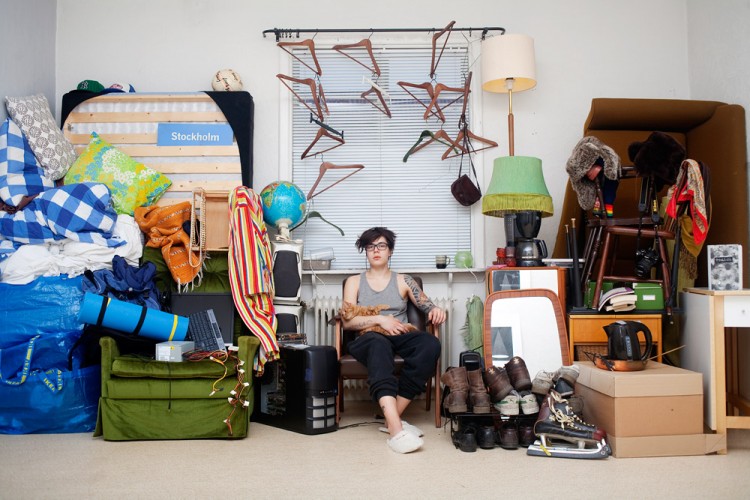
Hipster Millennial with all his high tech stuff.

“The National Institutes of Health found that for people in their 20s, Narcissistic Personality Disorder is three times as high than the generation that’s 65 or older…”

–TIME Magazine

Millennials have been loaded with negative stereotypes: lazy, entitled, or what seems to be the media favorite, narcissistic. A recent Time magazine article managed to fit all three adjectives into one title in the cover-story, “The Me Me Me Generation: Millennials are lazy, entitled narcissists who still live with their parents.” Ouch.

— Rachel Gall, So-Called Millennial.com

The burning question of whether the much-debated Millennial Generation (people born between about 1981 and 2004,according to William Strauss and Neil Howe’s generational theory, which is based on historical cycles, and uses a set of dates I prefer to the more popular dates used in mass media that refer to anyone born from 1976 to 1991 or so as “Generation Y”) are entitled, narcissistic spoiled brats continues to be a popular and controversial topic.

Like every youth generation ever since the Baby Boomers started thumbing their noses at The Establishment’s stultifying conformity back in the ’60s with their pot, patchouli, and peace signs, when the media first discovered the coming of age Millennials about a decade ago, its initial reaction was one of disdain and dismissal–it was immediately assumed that all Millennials were spoiled, indulged narcissists who cared about no one but themselves, their iPhones and iPods, and having the best looking and coolest MySpace or Facebook profile.

“[you are] so self-obsessed. Tweeting your Vines, hashtagging your Spotifys, and Snapchatting your YOLOS.” Our social media feeds are being filled with our favorite subjects: Me, Me, and Me……“Us Baby Boomers are very upset, because self-absorption is kinda our thing.”

–comedian Stephen Colbert

But recently, writers and bloggers all over the web and in the news are beginning to question the validity of the narcissistic Millennial stereotype. Two fairly recent articles–from opposite sides of the political spectrum, no less: Are Millennials Deluded Narcissists (Forbes Magazine) and The Persistent Myth of the Narcissistic Millennial (The Atlantic Monthly), both defend Millennials and offered reasons why they may not be all that narcissistic, or at least why any narcissism they do have should be blamed on other things like the narcissistic, materialistic, and individualistic society they grew up in, a society that keeps up with the Joneses (or the Kardashians) and thinks greed is good. There are many other articles and news pieces that have been making the same arguments. New York Magazine posted this insightful article, completely disputing the idea that Millennials are no-good narcissistic Red Bull-guzzling basement dwellers taking advantage of their parents’ generosity.

Even when they still have the N label pinned to them, at least the accusers are placing the blame on things like the economy, lack of decent jobs, the extortionist prices of higher education and decent health care, and the astronomical amounts of money Millennial college grads owe for student loans that were supposed to make it possible for them to earn the kind of money to be able to pay back the loan and become productive middle class citizens. But instead, being in debt to Sally Mae in a stagnating economic environment burdened this disappointed and angry generation of unemployed and underemployed young people–20-somethings with college or even graduate degrees–with having to take low-paying McJobs or put up with the cold and factory-like environment of call centers (but which pay far less and offer fewer benefits than factory work, whose workers at least had the unions on their side). Then, to add insult to injury, those McJobs pay such dismally low wages there’s little or no hope of ever being able to pay back the loans they hoped would give them a foot in the door to a successful life, or even allow them to move out of their childhood home.

Most Millennials, unless they are very lucky, very talented and manage to procure the right connections and contacts, find at some point they will probably default on their student loans, which in turn earn them the accusation from conservative foghorns like Fox News, that they are entitled takers and moochers, feeding shamelessly off the government teat and living, Morlock-like, in the damp dark caverns of mom and dad’s basement, growing fat and pasty as they play with their collection of high tech gadgets that enable them to become an Internet star if the video or meme they just made goes viral.

In fact, going viral on the interwebs may be the most sure way a Millennial can ever become successful in our current sick and unstable economy and general diminishing quality of life for all but the very rich. Millennials are being forced to sink or swim in a society that has become increasingly compassionless and narcissism-glorifying. So they’re finding their own well of hope and opportunity, and that well seems to spring from social media, Youtube and reality TV.

Don’t knock it. Going viral by sheer luck and the fortuitous timing of a Youtube video is basically what happened to Justin Beiber; crime victim and folk hero Antoine Dodson, whose impassioned and unintentially hilarious rant on a local news station was transformed into a huge iTunes hit and made him an overnight star; and many other Millennial pop stars. Probably the biggest success story of all is that of Mark Zuckerburg, the multibillionaire twentysomething founder and CEO of Facebook, which he started in his spare time as an ingenious way to chat online to his college buddies from his dorm room at Harvard.

antoinedodson marczuckerberg
Millennials Dodson and Zuckerburg both became successful through viral spread via social media on the Internet.

If you have a halfway decent voice, you can win a record deal or at least a little temporary fame by auditioning for reality/game shows like The Voice, America Has Talent, or American Idol. Hey, you could be the next Kelly Clarkson or Carrie Underwood! If you can cook (and can tolerate the constant narcissistic rants of the cooking shows’ mean hosts such as Gordon Ramsey from Hell’s Kitchen and Master Chef), well you can win your own restaurant and become rich.

What if you have no talents at all? No problem. You can still get on a reality show, even if you’re a teen mom who never graduated from high school, or a bitchy girl who likes to get into catfights with other bitchy girls. You can get rich just by acting like a jerk on TV, or doing nothing at all. And let’s be honest here: that sure beats working in Wal-Mart’s underwear department and not being able to pay your rent because your student loan debt exceeds what you earn in your dead end job. Who wouldn’t do it? Reality shows may be dumb and glorify stupidity and bad behavior, but we can blame their popularity on the uncertainty of the hope of gainful employment obtained in more traditional, socially acceptable ways.

So what generation wins the title of Most Narcissistic Generation Ever?

Personally, I would give that dubious honor to the Boomers (born from 1943-1960 according to Strauss and Howe; the popular media range is 1946-1964), the pig-in-a-python generation that pretty much turned the conformist, narrow minded, and yet community oriented and moderately altruistic Pax Americana of the post-war years into the self-worshipping, narcissistic, greedy, materialistic, hedonistic, glory mongering morass of misery and despair it has become since Reagan’s trickle down economics became sanctioned as a way to piss (trickle down) on the poor; since Rush Limbaugh’s ugly epithets toward everyone who wasn’t white, conservative, Christian, heterosexual and male became widely accepted as sound advice; since G.W. Bush gave us permission to “Go shopping!” after the 9/11 disaster and its shortlived mood of national solidarity after the attacks.

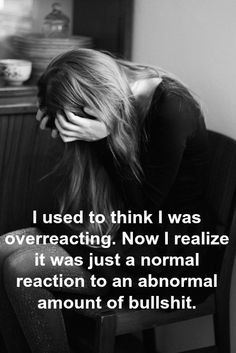
Millennials didn’t create or want this narcissistic, selfish society. They were born and raised during a time of economic uncertainty, philandering presidents whose actions became widely discussed, 24/7 coverage of heroes-turned-villains (O.J. Simpson), and a general atmosphere of increasing political discord and animosity toward those who weren’t like yourself. Millennials were often raised by single parents who were struggling to make ends meet in our crumbling society, or passed back and forth between divorced parents. Millennials are reacting the only way they can react to a society that denigrates them, gives them no opportunities, ships potential jobs overseas, makes it impossible to earn enough money to move out of their parents’ homes, and generally places them in a no-win situation.

overreacting

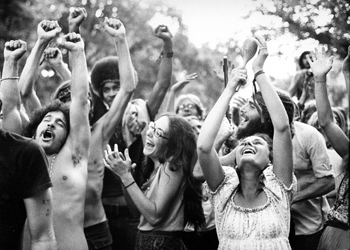
Where Boomers could protest Vietnam and attend a huge 4 day rock festival held on a farm, and win publicity (if not glorification) in the media over their countercultural activities, Millennials’ “Occupy” movement of late 2011–a movement that wasn’t anti-establishment or countercultural but just an expression of their desire to be treated fairly and be given more opportunities–was quickly silenced by the media. A year later, you barely heard of it anymore. We are still hearing about the Vietnam and civil rights protests of the 1960s and the womens’ and gay rights movements of the 1970s. Don’t get me wrong–those were all good causes and I agree with them–but why are Millennials being silenced for nothing more radical than wanting a decent job and a measure of respect?

underpaid Protestors sit in the street and demonst
All they want is a chance.

Although born at the butt-end of the Boom generation (and thereby almost X), I don’t consider myself a Boomer and find myself balking at my inclusion within it; nor do I truly identify with Gen-Xers. I actually consider myself a member of Generation Jones (a subgeneration that straddles both Boom and X and contains characteristics of both Boomers and Xers and includes a few of their own). Anyway, I highly recommend reading Strauss and Howe’s books, 1991’s Generations and its 1997 followup, The Fourth Turning, both which describe the way history runs in cycles of four “seasons” that produce four corresponding archetypal generational types that repeat themselves at approximately 80 year intervals, and how the interplay of the generational “constellation” and the turning (national mood) at hand impacts history and society.

But I have digressed from my original point. Boomers as the most narcissistic generation ever is not an unpopular notion. Politics, big religion and entertainment is glutted with narcissistic, bombastic Boomers who bloviate over their greatness, judge the rest of us harshly, shove religion down our throats, and show their hypocrisy by demanding obedience, family values, and morality when they themselves showed their disdain for the very same things when they were younger.

Boomers started the “Me Decade” of the 1970s–an unbridled era of vanity, designer drugs, designer jeans, pleasure seeking and hedonism; before that, during their younger, more idealistic phase, Boomers naively promised they could change the world through music, eastern forms of meditation, and psychedelic drugs. During the 1980s, they morphed into the selfish, greedy Yuppies, and by the 1990s, they had taken over the political landscape, becoming ever more bombastic, judgmental and just plain uncivil and nasty to anyone who disagreed with them.

hippiesyuppies
1960s era idealistic hippies and their 1980s incarnation as materialistic Yuppies.

Staying young and fit forever became the collective goal of the Boomer generation once they became disillusioned with their youthful idealism following Woodstock and Watergate. Perhaps due to their huge numbers and a firey passion and culture of cool that first enchanted and then took over the American imagination as early as the late 1960s, they grew up into adults who thought they were immortal, invincible, forever young and vital. They started the health and organic food craze of the late 1970s and 1980s and has continued to this day. They told us how we should all eat, look, exercise, worship, raise our children, and live our lives. And if you didn’t follow their rules and became sick or poor, well that was your own fault for lacking self discipline and strength of will. Even into their 60s and early 70s, Boomers are getting facelifts and liposuction, in a sad attempt to resurrect the appearance they had 30 or more years ago, Of course they’re just getting old like everyone else, but they refuse to confront it.

What about Generation X?
Poor Generation X (born 1961-1981, according to Strauss and Howe) is like the ignored middle child–or even the scapegoated child in a narcissistic or dysfunctional family. Having children was unpopular when they were being born, with more and more women shunning motherhood in favor of moving up the corporate ladder. Telling someone you were pregnant was usually met with side-eye by the cool people, and if you had the gall to admit you wanted to have more than two children, people looked at you like you were an unenlightened throwback to the 1950s. Getting on the “Pill” was what every young woman wanted to do.

Movies made about children during the 1960s and 1970s depicted kids as evil, demonic, bratty or badly behaved. Child psychologists recommended letting kids do whatever they wanted, which basically meant neglecting them. During the child-hating 1970s, “Latchkey” kids became the norm rather than the exception. Even “throwaway” kids, kicked out of their homes by parents who cared more about themselves than about their children, weren’t especially uncommon, especially in urban areas.

Not surprisingly, Generation X grew up with collective low self esteem, and while their humor can be dry, cynical, and full of snark, it is almost always self-deprecating. They have grown into adults in their late 30’s to early 50’s who tend to embrace traditional values, take on DIY projects, are politically and morally conservative, and believe in practical solutions rather than unproved theories. They don’t trust those who talk the talk but don’t walk the walk. They’re overprotective of their children and highly critical of the Boomers before them.

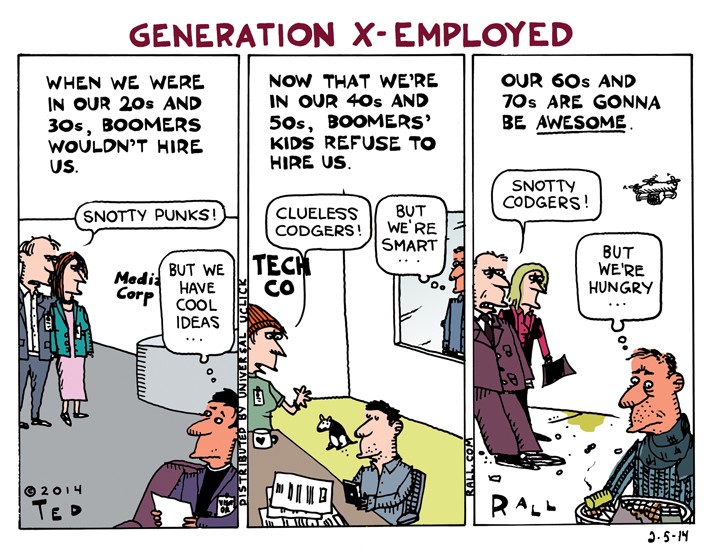
Middle aged Gen-Xers appear to accept the aging process fairly well, pretty much resigned to the inevitable. Hey, it’s better than the alternative. They’re not lining up at plastic surgeon’s offices for facelifts and body sculpting. While there are definitely narcissistic Gen-Xers (and I could list a lot), their generation as a whole seems the opposite of narcissistic–perhaps they’re avoidant or suffering collective PTSD. They are having problems in the workplace too–squeezed between older Boomers who refuse to retire, and Millennials wanting to take their places at the lower level jobs many Gen-Xers haven’t been able to move up from because of Boomers who refuse to pass on the torch.

genxemployed

Millennials are not a generation of narcissists; they are the victims of the narcissistic society they are trying to fit into without too much success. Their behavior shows frustrated young people who are just trying to find their footing and their place in the world, but no one seems to want to help give them a hand up, just blame them for failing to navigate the obstacles they never put there and never asked for.

Disclaimer: I’m well aware that every generation has its good and bad individuals, and there are certainly narcissistic Millennials and Gen-Xers, as well as unselfish and truly good Boomers. I’m generalizing about the generations as a whole, not their individual members.

My son is “furry”–got a problem with that?

mexnyman

So far my blog has been pretty inoffensive. Well, I like to think so anyway. But I knew the time would come where I’d have to post about something controversial and now is that time.

My son is a furry. And not only do I not have a problem with it, I’m damned proud of him. Yes, I really did just say that.

I know what some of you are probably thinking.

“What kind of a ‘parent” are you?”
“Furries are a bunch of perverts! How can you accept your own CHILD being one?”
“You are depraved to be writing bragging about that.”
“Ewwwwwwwww!!!”
“You are going to hell and so is he.”
“You are SICK!!!ELEVENTY!!111!!
*puking sounds*
“MAKE HIM STOP!!!”

Let me explain. My son, now almost 23, was, along with me, his father’s scapegoat during most of his childhood and teen years. Like me, he’s a HSP (highly sensitive person) and HSPs and psychopaths as parents do NOT mix.

His father, Michael (not his real name), nearly destroyed my son’s self esteem. As a child, he was easily hurt, withdrawn to the point I thought he was autistic (he isn’t though your truly is), and was told (and began to believe) he couldn’t do anything right. Michael called him stupid, sissy, a wuss, and constantly told him he’d amount to nothing. Like me, my son had few friends in grade and middle school. He was bullied. I identified with him (and tried to protect him from Michael’s narcissistic rages) because well, he was so much like me.

I already told you earlier how Michael’s flying monkeys bullied him just prior to the divorce. Ethan (not his real name) was about 12 during this time and that’s a vulnerable age for even the strongest, most confident kid.

Fortunately, Ethan decided to live with me instead of his father after the divorce (my daughter chose her dad, and that’s another story I’ll get into in my next post). I don’t like to toot my own horn and I certainly wouldn’t have qualified as “Mother of the Year” but I like to think I did a pretty good job as Ethan’s mom, and some of the damage that Michael and his team of flying monkeys had done on my son was repaired. Or at least kept him from becoming one of those hardcore emo kids who writes freeverse poetry about suicide, rain and darkness and may even attempt the ultimate self destructive act. Or kept him away from drugs and early drinking. Or becoming a Narcissist himself. He never became any of those things, and in fact was always pretty straight edge. He told me (and I believe him) he never tasted alcohol until he was of legal age. He never liked pot and certainly never touched anything harder. He always did his homework. In high school he was one of those computer geeks and found he had a fascination with photography and art, something I also was involved with when I was his age.

Ethan wasn’t popular and seemed to have no interest in girls. He had a few friends he hung out with to play Age of Empires,” “Legend of Zelda” “Black and White,” and other video games. He was really good at the games and started his own forum about auto racing (something he’s still passionate about). But he was still painfully shy and lacking in confidence.

Two things helped to improve Ethan’s self esteem: Outward Bound and Kung Fu. His 8th grade graduation trip, instead of the usual “fun” trip to New York City or Washington DC, was a physically and mentally challenging 4 day Outward Bound expedition to the mountainous wildnerness right here in western North Carolina. I won’t get into detail about his trip (that’s a story he can tell), but he came back a little different, a little more mature, a bit more confident. When I asked him if he had fun, he said not really, but it was a trip he would never forget and that taught him a lot of things about himself.

When Ethan was 15, he decided to take Kung Fu classes. He was pretty good, and stuck with that for 3 years, advancing to Green Belt, which is more than halfway to Black Belt.

Ethan was keeping some secrets though, and admitted later on he was still deeply unhappy. I didn’t know this at the time, but I did know there was something he wasn’t telling me, and I could have guessed what it was. But I had to wait for him to say it.

At age 17, Ethan came out as gay. He was afraid to tell me, but I told him I had known for a long time but was waiting for him to say it. Ethan was relieved, and now that he was “out,” his confidence level went up a little more, and suddenly at school he was considered “cool,” something he had never been.

It’s so funny how kids will bully another kid they suspect of being gay but who isn’t “out” (and he was definitely bullied about that), but as soon as they’re “out,” they become accepted and cool. It’s a paradox, but it really isn’t–because it’s really not about gay vs. non-gay, it’s about self esteem. Bullied kids are kids who are too outwardly sensitive and have little self confidence. A kid with confidence, even if different from the other kids, is accepted, or at least respected. And I think that’s what happened with Ethan when he came out as gay.

After Ethan graduated from high school in 2010, he came out as “furry.” At first I didn’t even know what that meant, and Ethan didn’t want to explain it to me so I had to go online and do some research myself.

There’s been a lot of negative publicity about “furries,” especially since an infamous episode of the TV show CSI, in which a serial murderer was a furry who liked to kill wearing an animal costume. But this negativity isn’t deserved or even valid. Most of the criticism of furries is related to their alleged depravity–furry detractors insist furries engage in bestiality, or at best, have a fetish about having sex dressed up as animals.

While I won’t deny there is a subset of the furry community that may have a sexual “fursuit” fetish, it’s a small subset from what I’ve seen (and I know a lot about furries now) and the idea that they’re into bestiality is a ridiculous claim with nothing to back it up.

My intention here isn’t to give you a history of the furry fandom (there’s plenty of other places to read up on that). But a little background is required. The furry fandom grew out of the science fiction community back in the early 1980s. Most furries are geeks–comic book geeks, computer geeks, sci-fi geeks, Dragoncon geeks, art geeks, and among Millennials, animated cartoon geeks. Millennials grew up inundated with a huge array of the best made animated films and shows Disney had to offer; and because their stressed out parents were often working or busy with other things, cartoon animals like Mufasa, Timon and Pumba from “The Lion King,” CatDog, Bolt, and the Animaniacs were often left in charge as surrogate babysitters to entertain them.

Naturally a lot of Millennials developed a special affection for these cartoon critters who gave them so much laughter and comfort as children, and some of them continued this fascination into adulthood.

Enter the furries. The vast majority of them are Millennials (born from 1982 to 2000 or so) and there are a surprising number of female furries and heterosexual furries, and many of them are married. There are furry conventions that are becoming more popular every year, the most famous one being Anthrocon, which is held in Pittsburgh every year. Most furries are involved in art–either visual or performing art. I’ve talked to furries, and as a whole they’re a creative bunch. Furry isn’t a perversion; it’s a hobby, no different than someone who attends Star Trek or comic book conventions.

Being a furry has helped Ethan find his creative outlets. Ethan is naturally rather shy and reserved. Dressing up as “Mex” and his other “fursona” has allowed him to discover his outgoing and sociable side and that he has a love of performing (dancing and acting), which is something he might not have explored had it not been for the costume where he feels more comfortable experimenting with that side of himself.

He showed interest in photography and art at an early age, but has developed these abilities, and is now a fledgling filmmaker with a professional eye. He took up filmmaking in college and now has a degree. He makes his own music videos and has posted many of these on Youtube. Not all are about furries. Although none have gone “viral,” several of his films have received thousands of hits. He also is a competent artist, and draws well, although I think he’s more naturally talented at photography and filmmaking.

Here’s one of his videos from his music channel, Radio Recall.

What he’s proudest of is his dancing. He’s been training himself in street-dancing for two years. At the past two conventions he’s attended, he entered the fursuit dance competition. At the most recent one, he was one of the finalists, and he told me being accepted as a finalist was the happiest, most validating moment of his life and the high from it lasted for days. Now he’s working hard at getting even better so he can possibly win one of the Top 3 awards the conventions give out to the winners.

Here’s a video of his performance in the dance competition at a convention in Florida.

Ethan has shown me what can happen to a highly sensitive person who is able to escape from psychopathic abuse when still young, and then is given validation and encouraged to follow their own path, even if it’s not a path most of us would take. He’s shown me what I could have become had I been given such an opportunity (or taken advantage of it) when I was young. Not a furry or dancer or filmmaker, but someone who chased my dreams and never looked back. Ethan has shown me that none of us is a hopeless cause, and it really is possible to free yourself from the barbed wire prison of family psychopathy. Instead of being attacked by the flying monkeys and having your wings clipped, you can learn how to fly.

And that is why I’m proud my son is a furry.