Guest Post #12: The Journey Inspired (Coping with Depression with Severe Fatigue)

Amanda, from the blog Mandibelle16, is a frequent commenter on this blog. Her own blog features her poetry and creative writings as well as articles about mental illness and her walk with depression. Amanda has suffered from Depression with severe fatigue since 2009. The following describes her first episode of severe Depression (which also featured auditory hallucinations) and its aftermath, and her long journey to wellness. But I’ll let her About page speak for itself. She is a talented writer and poet.

Mandibelle16 – About the Author
https://mandibelle16.wordpress.com/about-the-author/

mandibelle16

Amanda is a writer, blogger, and student from Edmonton, Alberta, Canada. She began blogging four-years ago to improve her writing skills and share her thoughts on several topics including, her experiences with mental illness.

Over time, Amanda’s blog has developed into much more than it’s original use. She has taken Editing and Creative Writing courses from Simon Fraser University and the University of Alberta to improve her writing and editing skills, in addition to her Bachelor of Arts Degree in English Literature received in May 2007. Her next step educationally, is developing a portfolio for the University of British Columbia for a Master’s in Fine Arts in Creative Writing. Only twenty-five percent of students make it in this online program and Amanda is hoping to be one of these students in May 2017.

Amanda also has taken blogging, poetry, writing, commenting, and photography courses through WordPress. She looks to improve her writing anywhere she is able. Amanda enjoys poetry and has been learning various forms of poetry from the website Shadow Poetry. Each new type of poetry is fun and challenging. She writes poetry from WordPress The Daily Post, word prompts and her own experiences, as well as participating in National Poetry Writing Month each year in April.

Amanda has been expanding and fine tuning her writing skills in fiction. She has recently been writing short stories and submitting them to literary magazines (etc.) as well as writing Flash Fiction for four different photo and/or word prompts each week. Amanda also participates in other writing prompts or challenges called 3 Line Tales; she also writes a different themed list each week; and participates in a photography prompt called Echoes of My Neighbourhood.

Moreover, Amanda is writing up her first draft of her first novel called How Was Last Night For You. The novel has been in process for a few years but is close to completion of the first draft. After the first draft, she will be working on corrections offered by another already published writer (with great thanks!) to complete a second draft, before hiring an established editor. Whether the book will be self-published or not is yet to be determined.

In addition, Amanda enjoys the Edmonton sports scene. She is a huge Oiler’s fan (NHL) even though the team seems to only be picking-up great draft picks and not making it to the playoffs since 2006. She is also a huge CFL fan of the Edmonton Eskimos who won the Grey Cup this past November 2015. Amanda also enjoys walking and doing yoga. She loves dogs, reading, shopping, and spending time with her wonderful friends and family.

Amanda also has suffered from a Mood Disorder (Depression) since 2009. She has tried countless medications and few have worked for her due to sensitivities and allergies to many medications. Amanda was in hospital when the she initially fell ill in 2009 for three-weeks and this last Summer for three-weeks to do a major medication change. The latest medication change was successful and Amanda is feeling more energy then she has in years.

Amanda suffers from severe fatigue due to her depression as well as insomnia. Her new medication has helped her in both areas. If you would like to talk to her about her mental issues or your own, please feel free; she is always willing to provide what help she can in that area with her experience over the past eight-years.

THE JOURNEY INSPIRED: COPING WITH DEPRESSION WITH SEVERE FATIGUE
By Amanda, Mandibelle16

depressed_woman

My story begins when I was twenty-three-years old. I had my first ‘real’ job after university and I had recently advanced from the role of receptionist to construction administrative assistant at the commercial development company where I worked. I had been in the administrative role in construction three-months before I became ill. It was Christmas time and I felt worn out. I thought I simply needed to take a few days off work to rest. Although I had no idea what was happening to me, I began to experience the onset of a psychotic episode in December 2008.

My episode began with a person from work (for instance) talking to me as they usually would and then afterwards I would hear an echo after they finished speaking. This echo consisted of this person’s voice altering and them saying something to me that was extremely mean. I knew something was not right with what I was hearing, but I had no idea what was happening to me. My current psychiatrist and I still don’t know the reason I had a psychotic episode. I wasn’t unusually stressed, using drugs, and I wasn’t grieving or experiencing emotional loss.

Work became extremely difficult for me to attend. Often, I would end the day crying. I also had difficulties concentrating on my work because my thoughts were going around in my head at such a rate that I couldn’t organize my thoughts properly.

At home I was having difficulty sleeping and I had begun to lose weight because I refused to eat much. I told my parents what was happening to me. My Mom kept track of my symptoms as they occurred. She had some experience with mental illness from an extended family member.

My second last day of work, we had a fun office party at a delicious restaurant. Later, we went to a different restaurant at night for drinks. The day had been a better one for me but it ended in tears. I thought I overheard a guy in my work saying something mean about me and I left the second restaurant crying.

I came back to work one last day but I couldn’t control my emotions which were all over the place. A lady at work drove me home and since that time I have not been able to return to work. I’m still embarrassed how I broke down that day. I had no control over myself and despite the fact my episode was eight-years-ago now, I still feel ashamed for how I acted that last day.
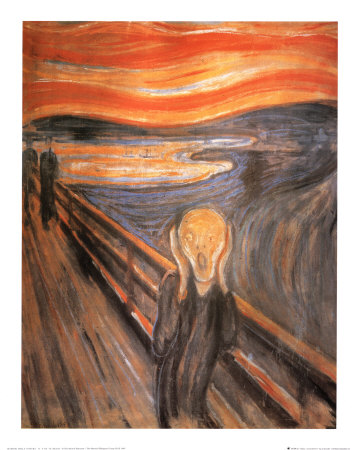
scream

On December 24, 2008 my Dad and I sat waiting to get into a Doctor at a clinic. The Doctor prescribed me Ativan to aid me with sleep and for anxiety. My parents also took me to the University of Alberta free psychiatric clinic. I went there a few times and they diagnosed me with having a psychotic episode with auditory hallucinations.

Eventually, I ended up with help from my Dad and the U of A clinic, admitting myself to the hospital because I was hearing suicidal voices. I didn’t want to kill myself but I was hearing voices whom were telling me to end my life.

Before I went into hospital, I spent three-weeks at home hallucinating and the thoughts in my head kept going round. I would sit down on the couch and for hours become immersed in my thoughts. Then suddenly, it would be lunch time and my Mom would be home from work to check on me and ensure I would eat some lunch and take my medication.

I was under several delusions and one delusion was that food didn’t belong to me so I wouldn’t eat because I thought that was stealing. During my episode I lost about twenty pounds in a month. I also began to feel physical sensations at times moving up my arms.

Additionally, I stopped taking care of myself. It was difficult to force myself to take a bath or shower and often the moment I thought about it, I would forget I needed to accomplish that small task. I didn’t understand why I wasn’t taking care of my appearance and hygiene because I’ve always been finicky about taking care of myself.

I was in hospital three-weeks and when you are hearing voices from people, the hospital is a terrifying place to be. Hearing voices occurs in a person experiencing a psychotic episode because the synapsis in their brain misfires.

If you can recall any thought or idea in your head that you’ve ever learned, seen on TV, or read about, these ideas or thoughts become misdirected in your brain. A person’s worst thoughts come through as voices they hear coming from other people, the TV, Radio, or out of nowhere. For instance, when I was ill I would hear the announcers on a Basketball game on TV and it would sound like they were only talking about me and not the game.

The Doctor I had in hospital took me off the antipsychotic I had been on from the University of Alberta clinic, and slowly put me on a newer antipsychotic drug called Invega. Suddenly, my thoughts were clear and I wasn’t hearing any voices echoing a person talking to me. The thoughts in my brain stopped circling. I have never had a psychotic episode since, and I pray I never do.

When I returned home, I experienced a depressive episode. I lost my energy and began to have severe fatigue. Although, my fatigue levels have changed from awful to manageable, they are something I still deal with today. Fatigue is different than being sleepy. It has a physical and mental aspect and once you run out of energy a person can do nothing but lie down until they have more energy from resting. In this time, I developed a mood disorder that is likely depression.

fatigue
Severe fatigue is a common problem with severe depression.

I also lost some cognitive function which I would later regain. My handwriting for example, was childlike. It took me three-days to fill out my application to my insurance company for disability which was thankfully approved. Reading a simple young adult chapter book such as Twilight or Harry Potter, was extremely challenging at first. It was a couple of years before I could read more than simple adult books and longer still to work back up to being able to read for long periods and read difficult material such as textbooks and literary novels.

I met my present psychiatrist in April 2009 and she took me off of the Invega once we knew I was safely out of the psychotic episode. My psychiatrist switched me to a new antipsychotic because my old one left me with intense muscle pain in my shoulders and neck. For eight-years my Psychiatrist and a Psychiatric Nurse, helped me try tons of medications such as anti-psychotics, antidepressants, stimulants, and sleep medications. I participated in psychiatric testing so we could measure my improvement up to three-years after the episode occurred. We tried an array of medications but the majority had little effect.

Moreover, I had a consultation with a sleep psychiatrist whom I saw every six months. The sleep medications he gave me were a short-term solution to a sleep-disorder that had developed. I had insomnia and had both trouble falling asleep and staying asleep.

The results of trying all this medication was excess weight gain. At first, because I had lost weight in my psychotic episode, I needed to gain a few pounds but now I’m thirty-five pounds over a healthy body weight.

My severe fatigue doesn’t allow me to do cardiovascular activity intense enough to burn fat. I was extremely fit before my episode so being overweight is something that has always upset me because I don’t have much control over it. I eat healthy and in small portions but it doesn’t make much difference. Not to mention, when my mood disorder became worse, it was even harder to exercise.

I believe my health improving this last year, is due to letting myself be admitted into hospital for a medication overhaul. Sleeping at night had become nearly impossible. My Doctor had me go off my sleeping medications and on a new antipsychotic called Clozapine which makes a person extremely sleepy when they take it. Clozapine has to be monitored closely in patients because it can cause increased heart rate and increase white blood cell count.

I worked my way up slowly to the right dose of Clozapine for my body and it wasn’t easy. The second and third day after going on a new dose of Clozapine, I would feel awful. Then my Doctor would increase the dose and the cycle would repeat until we reached the correct dose for my body.

I spent a miserable weekend at home in a hot house in July on too large a dose of Clozapine. Surprisingly, that’s how we found my perfect dose. Now I only have to go for blood work to check my white blood cell count every so often. But Clozapine allowed me go off of a larger dose of antidepressants and sleeping pills. I can sleep amazingly well at night, even though I sleep to 11:00 am because of the medication.

By November 2015, my energy had increased and I was reading plenty again, writing more, and able to take my last Residential Design class. I could last at night for four or five hours meeting with friends. By January I noticed my concentration had substantially improved. Even though my physical stamina is low, I’m able to do yoga and go for a short walk at times which is a huge step up for my physical health from the last two or three years.

A wonderful aspect of Clozapine is that it is the only antipsychotic that actually heals your brain. I don’t know if I’ll ever be as carefree and able as I was at twenty-three-years-old, but each month I experience improvements to my health. Combined with a supplement program that is helping me to lose weight, I’m doing fantastic for a woman who suffered such a terrible psychotic episode and has lived with mental illness for eight-years.

My goals of late have been entering my writing into writing contests for different magazines to have my writing published. I write fiction, poetry, nonfiction and a bit of everything. I have been blogging for four-years as well. In the beginning, it was to improve my writing skills back to what they were when I finished my English BA.

Now I focus on improving my writing creatively. I’m writing a fictional novel on a curse, a sea witch, and two main characters who fall in love. I’m also participating in National Poetry Writing Month in April. You can check out my blog at: http://www.mandibelle16.wordpress.com.

I have gone back to my roots, to my love of literature and the written word. I adore writing and it makes me whole. It’s what I’m meant to do. I’m looking at applying for an online MFA at UBC in creative writing. I believe my family and friends, creativity, positivity, and faith in God, have lead me through difficult times in my life. They have allowed me to find light when everything seems dark.

Mandibelle16.(2016) All Rights Reserved.
Self-pity and self-compassion: there’s a huge difference!

self-compassion

I read a post yesterday on another blog that I agreed with, except there was one thing that didn’t quite sit right with me. The post said that self-pity is an important part of healing from Complex PTSD.

In his book (which I’m still reading), Complex PTSD: From Surviving to Thriving, Pete Walker says that self-compassion is an important part of healing, and I think this is what the blogger actually meant. But self-compassion isn’t the same thing as self-pity, an activity which I don’t find at all healing and in fact seems to make my problems worse. Of course we have the right to engage in self pity from time to time (and probably can’t help doing so), and no one should deny us the right to do so. But for me, it just doesn’t work. It’s an unpleasant, soul-sucking experience that seems to drive my negative programming even deeper than it already is.

The way I see it, the difference between self pity and self compassion is analogous to the difference between pity and empathy. I think this makes the distinction clearer.

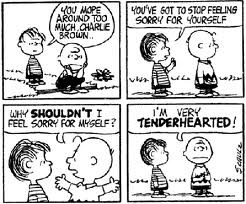
Pity has an element of condescension or even contempt. You pity someone you dislike or look down on. It’s kind of like sympathy but it’s contaminated with judgment and scorn. You feel like you’re “better” than a person you pity. A wealthy banker may “feel sorry” for a homeless person without feeling a shred of empathy. The banker is glad they’re not homeless, and feels as if they’re above that anyway. If someone says “I feel so sorry for you,” or “I pity you,” you’re likely to feel offended and judged, not comforted. I hate being pitied so much I might be tempted to punch you if you do.

Superficially, empathy, compassion, or sympathy may seem like the same thing as pity, but they’re not the same at all. Sympathy means to feel sorry for someone without judgment or condescension, but it’s not quite the same as empathy, because it lacks the sharing of a feeling. It’s a shallower emotion, but it’s still better than pity. Compassion and empathy are interchangeable and both imply feeling “with” another person, or sharing an emotion with them. It’s giving your friend a heartfelt hug after a breakup, or laughing or crying with them when they’re happy or sad. It’s giving a homeless person your own sweater because you hate to see them shivering in the cold. There’s no condescension or judgment. When someone empathizes with you, they say, “I understand” or “that really must have hurt.” Doesn’t that feel a whole lot different than someone telling you, “I feel sorry for you.”

charlie_brown_tenderhearted

Self-pity is part of our toxic programming. It’s driven by shame. Self pity is when you sit around and think about how much your life sucks and how much YOU suck. There’s no self-nurturing or comfort in self pity, no self love, only self-hatred and shame. Self-pity enforces the terrible things we’ve already come to believe about ourselves. If we’ve been told time and again how stupid, bad, clumsy, ugly, or what a loser we are by our narcissists, eventually those voices become internalized and we develop a toxic inner voice called an Inner Critic. When you’re stuck in self pity, that’s your Inner Critic demeaning you and repeating to you the same lies about yourself your narcissists already drummed into you. You learn to abuse yourself, and self-pity is just self-abuse. When you say, “I suck” or “I’m a loser” or “nothing ever goes right for me,” you’re reinforcing the toxic programming and acting as a flying monkey against yourself.

Unfortunately, for those of us who suffered from narcissistic abuse, it’s common to wallow in self pity. It’s an all too familiar state of mind, but it isn’t the real you. The things we tell ourselves when we’re stuck in self pity are lies. When I get stuck in self pity, I feel just horrible. I just want to die. I usually wind up feeling resentful and angry at the world, but also ashamed of myself for being such a helpless victim and pathetic loser. I’m consumed with shame and guilt, which leads to depression. I also can’t release the negative emotion when I’m in self pity mode. I get stuck there and it drags me down and saps from me any energy or joy. I’ve had hangovers that felt more pleasant than a bout of toxic self-pity.

self-pity

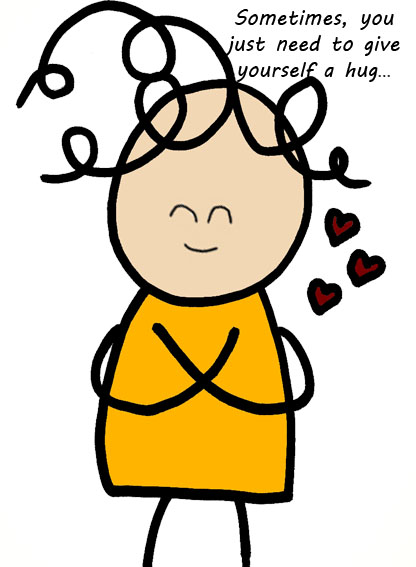
You can replace self pity with something much better that also feels a heck of a lot nicer: self-compassion. Self-compassion means acknowledging that you are a human being worthy of love, happiness and the good things in life, while empathizing with your inner child’s hurt over not having gotten those things. You give your inner child permission to feel sad or to grieve and agree with them how unfair it is that she/he got cheated or was abused. This may seem like self pity, but it’s not, because the element of judgment and shame isn’t there. You’re not beating yourself up over how terrible you think you are; you’re telling yourself you’re good and deserve better and allowing yourself to grieve. Instead of covering up your inner child with a paper bag, you’re offering her a hug.

It helps me to actually visualize my inner child. I have her talk to me and tell me what she needs and wants. I don’t judge her or try to shut her up; I just listen. If she feels sad, I tell her those feelings are valid and let her feel sad. If she feels mad, I let her express the anger (but at the same time reassure her she won’t be able to hurt anyone or anything because I won’t let her). I find that by non-judgmentally listening to what she wants and needs or how she feels, I’m eventually able to release any negative emotions and I don’t get stuck. By giving myself permission to feel without self-judgment or self-shaming, sometimes I wind up being able to cry, and as weird as it sounds, that always comes as such a relief. When I’m stuck in self pity, these healing tears never come, because the shame that’s been programmed into me won’t allow me to release them. My programming tells me the massive lie that crying is shameful and weak, when in actuality it’s sometimes the most healing thing you can do. Your Inner Critic is a narcissist who doesn’t want you to heal and that’s where all that awful self pity comes from.

Triggered.

Depression (1)

Some days are better than others. Overall, they are getting better and better, but there are days where I feel like I took three steps back and get trapped in my old toxic emotional thinking patterns. At those times I feel like I’m trapped inside a dark, moldy prison with no one but my own demons to talk to and will never be able to escape. I know that’s not true, and tomorrow will probably be better, but right now, at this moment, I’m in immense emotional pain.  I feel like if I died and went to hell, it wouldn’t much worse than this. I can’t just turn the pain off with a switch, the way the narcissists in my life seemed to expect me to be able to do.

I got triggered. At least I know what the trigger is. Today is my daughter’s birthday, and we were planning to drive up into the mountains and have lunch together. She was supposed to be here around 10 AM. But by eleven AM I still hadn’t heard from her. I began to panic and imagine some kind of catastrophe befell her, the way I always do because the world has always seemed incredibly dangerous to me and no one can be trusted.     You never know when you’re going to get bad news or when the other shoe will drop.  It’s a horrible way to live and I definitely don’t recommend it.   But it’s in my programming.   People think I’m nuts but I can’t help being this way.   It’s hard to change the programming.

Around noon, I finally got hold of her and she hadn’t gotten out of bed yet. She was hung over from a night of partying and she was also depressed. All I could think about was myself and what SHE was doing to ME. I told her I’d been looking forward to this and I’d taken the day off work to spend with her. She told me I was putting her on a guilt trip and she was right–I was. I apologized and told her to try to have a nice day and we’d get together another time. But I still felt triggered  and ornery.  I’d written a nice, positive post this morning about the fun day I was anticipating having with her, and what a great daughter she was, but I couldn’t bear to keep it up, so I removed it.

I spent the rest of the day alternately feeling sorry for myself and being angry. I did nothing but sit on the couch, switching channels mindlessly but not really watching anything, and poking around online but not really paying much attention to what I was looking at. I tried to read a little, but couldn’t focus and would keep reading the same sentence over and over, not comprehending the words. I yelled at my cat for no good reason. I snapped at my housemate. I thought about how much my life and everything in it sucks and how I’m not getting any younger and will probably be dead in the next 25 or 30 years with nothing to show for it.   I thought about how most people my age and even much younger are doing much better than me emotionally, financially, and every other way. They have healthy, real relationships because they were given the emotional tools to have those things.  My programming cut me off from having access to those things.   Of course I was constantly reminded of my inferiority by my unsupportive narcissistic family (I was rejected and labeled “the black sheep” for my failure to attain the “success” in life my very programming denied me) until I cut off almost all contact with them.  I was cruelly told to “sink or swim” but never given any swimming lessons and in fact spent most of my childhood with my head forcefully held under the water. That’s the sort of mindfuck you get when you’re the child of narcissists. You can’t win. You can only lose–and then you’re callously blamed for it. Sometimes you’re even disowned for it. I’ve been treading water–barely–for years, in constant fear of drowning.

The rain stopped and the sun is shining but I have no motivation to even go sit outside on the porch. All I want to do is stew in self pity and self hatred. Why? What good does it do? I hate it. Angry and bitter? You bet. But I refuse to drown in those feelings because I still hold onto hope that I can be a real person someday. I won’t give up on me, even though the people who were supposed to love me unconditionally did.

Finally I got a call from my daughter apologizing to me. She was crying. I felt so terrible. She told me how depressed she was and it sounded a lot like my own depression. She was talking about all the bad choices she’s made. She feels badly because some friends she went to school with are starting families or are getting advanced degrees or have careers and she has none of those things. But she’s just 23.  She blames herself. I could relate. I tried to be empathetic and not think about the way I feel very much in the same boat–only I’m a lot older and don’t have my whole life ahead of me or the options she still does. I assured her that she may be a late bloomer but that she is blooming and to be patient with herself. I may never be a perfect mom, but I will never give up on her or abandon her the way my family did to me, because it’s not something you ever get over. It ruins you. It murders your soul. I won’t let her soul be murdered.

Sorry this post wasn’t more upbeat. But I’m just really depressed today and needed to write about it. It doesn’t help to keep this crap inside.  

The “Four F’s” of C-PTSD

child-abuse1

I just began reading “Complex PTSD: From Surviving to Thriving” by Pete Walker. I can already tell I won’t be able to put it down (I will write a book review when I’m finished, which shouldn’t take long). I’m also going to bring this book to my next therapy session because I want my therapist to see it.

Walker, who is a therapist and also a survivor of narcissistic abuse and sufferer of C-PTSD, is an engaging writer and definitely knows his subject matter. In one of the first chapters, he discusses the “Four F’s”–which are four different “styles” of coping that people with C-PTSD develop to cope with their abusive caregivers and avoid the abandonment depression. Whatever style one adopts may be based on several factors–natural temperament, the role in the family the child was given (scapegoat, golden child, “lost” or ignored child), birth order, and other factors.

complex_ptsd2
Available on Amazon

The Four F’s are:

1. Fight (the narcissistic defense): often “golden children,” such children learn to project shame onto others; may go on to develop NPD
2. Flight (the obsessive-compulsive/anxiety defense): these children will grow up to become highly anxious, obsessive-compulsive, and avoidant.
3. Freeze (the dissociative defense): these children “protect” themselves by dissociating from others, themselves, and their environment.
4. Fawn (the codependent defense): the child learns to avoid harm by people-pleasing or siding with their abusers.

Walker speculates that if C-PTSD were recognized in the psychiatric literature, the DSM could probably be reduced to the size of a pamphlet, for many people diagnosed with other disorders actually have C-PTSD, which encompasses symptoms of many other disorders and have common roots.

What you may have been misdiagnosed with (or diagnosed yourself with) if you have C-PTSD (these are the most common):

Personality Disorders:
Borderline Personality Disorder
Narcissistic Personality Disorder

Dissociative disorders

Anxiety Disorders:
Generalized Anxiety Disorder
Panic Disorder
Social Anxiety
Obsessive-Compulsive Disorder

Mood Disorders:
Depression
Bipolar Disorder

Developmental Disorders:
Autism Spectrum Disorders
ADHD
ADD

Codependency

Addictive Disorders

While any or all of these diagnoses can be co-morbid with C-PTSD, they miss the mark or don’t tell the whole story. Personality disorders such as BPD can develop from severe, unrelieved C-PTSD and they do share many similarities, but personality disorder labels are stigmatizing and not very helpful for someone who has suffered prolonged childhood trauma and abuse. Labels like “panic disorder” or “depression” aren’t helpful because they only address one or two symptoms of C-PTSD and therefore can’t even begin to address the roots of the depression or anxiety. You can treat anxiety or depression with drugs or short term therapy, but you can’t cure the person of the C-PTSD that’s causing their chronic anxiety or depression. The same goes for labels such as alcoholism or codependency. These are merely symptoms. People with C-PTSD are also sometimes erroneously diagnosed with developmental disorders such as ADHD or autism, which not only don’t address the trauma that led to the ADHD- or Aspergers-like behaviors, but also have completely different causes.

Guest post #3: Facing Complex Post-Traumatic Stress Disorder

I’m happy to introduce my third guest blogger, Alisha, who has a blog about living with Complex PTSD (C-PTSD) and chronic pain. She was kind enough to write this powerfully written guest post for this blog. I loved reading it because it ends with a message of hope, no matter how bad things might seem. Please visit Alisha’s blog, The Invisible F.  She has another blog featuring her fantasy writing, including her novel, The Return of the Key.

From her About page:

alisha

Hi, my name is Alisha. I’m a proud alumnus of the University of Westminster where I did my MA in International Journalism. I love parrots, singing, drawing, sharing stories, fantasy movies, games and books, and people who like fantasy movies, games and books.

I live with a number of chronic health conditions including fibromyalgia, clinical depression, anxiety, & Complex Post-Traumatic Stress Disorder, and for much of my life have suffered from debilitating symptoms. I want to raise awareness to help people understand but moreso to share and engage with all those whose lives are touched by fibromyalgia and mental health problems in one way or another, so they know they’re not alone.

Facing Complex-Post-Traumatic-Stress-Disorder
By Alisha, The Invisible F.

pain

I was sitting in a small room at hospital when the psychiatrist’s voice called me away from the brilliant white walls that were pulling me in.

“You’ve had a very difficult life Alisha” she said, looking at my notes. After asking me to recount some of my ordeals, she said “From your symptoms, I would say you have Complex-Post-Traumatic-Stress-Disorder (C-PTSD).”

I had to ask her how C-PTSD differed from PTSD, which many of us associate with soldiers who have served in warzones or conflicts. She explained that C-PTSD tends to occur in people who have suffered repeated traumas for a prolonged period, with no chance of recovering from each incidence.

The more she told me about it, the more I felt like she was telling me about myself.

I had a long history of abuse starting in childhood, when I honestly believed I wouldn’t live to see the age of 18. I survived, thankfully, but I continued to endure traumas past my teenage years and into my twenties. I can’t say which incident was worse, because I felt the enormity of each one added to the already heavy weights that I carried. At 16 I was diagnosed with depression and anxiety, suffering terribly painful anxiety attacks that made my chest hurt so much I thought I would die.

I tried to ignore the feelings my past stirred up, because I lived in a society that stigmatises mental health conditions. I thought I was fine. It was only years after my stepfather and friend were brutally murdered, that I started getting glimpses of the brokenness I had masterfully hidden from the world and myself. I packed my bags and left everything and everyone I loved behind, moving to the other side of the world. Surely pain wouldn’t follow me there. But we can’t unknow things, and there was a lot of pain etched on my heart and mind. These parts of me would not let me forget.

C-PTSD manifesting

The C-PTSD diagnosis made sense but I was still surprised. Mostly because I wasn’t expecting another label. I already lived with fibromyalgia, depression and anxiety and several months before had been slapped with borderline personality disorder, which I was still struggling to come to terms with. I could say very clearly what some of my symptoms were, but I couldn’t always say which diagnosis was responsible for what I suffered on any given day.

As time passed and I connected the dots, I understood more about how deeply C-PTSD had been affecting my everyday life, unknown to me.

Days before I met the psychiatrist at hospital, I was sitting in Accident & Emergency having a meltdown, unable to cope with the avalanche of emotions tumbling through me. I wanted to give up again and almost did. I didn’t understand why the smallest upsets felt like utter catastrophes, or why I seemed to attract bullies or why getting close to people terrified me so. The doctor was most empathetic about it.

“Well you’ve had a lot of bad experiences with people so that is going to shape your outlook. It doesn’t mean your outlook is wrong. It only means your experiences have shaped your perspective” she said.

If only other people were that understanding. Not too long before I had encountered very unsympathetic people in a shared flat where I resided. Just when I thought I was recovering from the dark feelings that led to two close calls on my life, I discovered that approaching the close of my twenties, I was having night terrors. I had never even known there was such a thing until it was googled by a flatmate who constantly complained about my screaming at night. I couldn’t believe that I was screaming while asleep with no recollection of it the next morning. I didn’t believe it until my own screams woke me in the dead of the night. Frightened and panicked, I searched around my room until reason returned, and I questioned what it was that I was looking for, and so terrified of.

Nightmares

I have a long history of nightmares, which started in childhood. The kind that leave you so terrified you’d do anything to keep yourself from drifting off, anxious of what’s waiting for you in the realm of dreams. Consequently, I developed insomnia from a young age. Generally, my anxiety tends to get worse at night. It’s not uncommon to find me wide awake in the wee hours of the morning when most people are getting their best sleep. I’ve always slept better in the day, when the sun is out and it somehow feels safer. When I (reluctantly) have to go to sleep at night, I clear my room to make sure there’s no clutter that might form awkward shadows, that may frighten me when I wake in between my cat naps.

My flatmates couldn’t understand the nature of night terrors, and I was accused in person, by email and text like a perpetrator. I felt bad about it, truly. The accusations though, only distressed me more, and increased the frequency and severity of the night terrors.

Recently, I started sleeping walking, and I often wake up running towards my bedroom door terrified, with no recollection of my dreams.

Living with C-PTSD has been like sitting in a prison inert, long after the doors have been opened. I have wanted so badly to walk through, tending to avoid things and places that remind me of past traumas. I think of all the positive things I’ve managed to achieve through my beleaguered time here. I spend my waking hours keeping extremely busy so I rarely have time for stray thoughts, and it works; but everytime I go to rest, my subconscience reminds me of the many demons I’ve buried and hidden away.

In my dreams I am always running, looking for an ally, and an escape that is rarely found. I often run in different directions, only to end up right back in the place where my captors are waiting by the prison doors. When I am not shut away, I am violently murdered, again and again, like a broken cassette sticking in the same sickening place.

The things I said I’d never do

I suppose I never realised how my past traumas were affecting me until my late twenties. People would say, ‘it’s the past, just leave it behind and move on.’ Or worse ‘everyone has problems.’ If only it were that simple. I’d give these people a chance to walk in my shoes if I could, and silence any doubts. I want to forget, and I do everything possible to move forward, but the mind is such a powerful thing. All my efforts have been no match for my mind which digs up torments when I am asleep.

Owing to C-PTSD, I’ve done a lot of those things I said I would never do. You know when we watch others suffer and silently judge, telling ourselves, ‘that will never be me’? At 17 I remember watching my 30-something year old friend elaborately explain how she avoided the doctor’s questions when he asked how she accidentally cut her arm again, needing stitches. When I asked her directly, she brushed it off, and I sat there thinking I will never understand this.

I didn’t think of my friend when I first hurt myself. All I remember thinking was how good the external pain felt, taking the focus away from my internal turmoil. Months later I diverted from my healthy diet and found myself facing bulimia. The first time I felt confused, wondering why I kept eating though I was satisfied. But I craved the food badly, I ate and I ate, until I felt so physically upset I had to empty my stomach. I cried & cried every time because I wanted to badly to stop but I had no control, and that was the part that got me. I didn’t even have control over me.

It’s sad that after everything I’ve suffered I’ve also had to deal with bullies who have targeted me because they know they could. I try to build myself up, to be stronger and braver in the face of this. I do psychotherapy and I’m not sure it helps. Maybe? Doctors say I will likely need therapy for the rest of my life. I’m not sure how I feel about that.

Every day is a challenge. But I wake up and set out to do my very best. I try to practise mindfulness and celebrate my successes. Whether they are publishing a new book, managing to stay out of hospital or simply getting out of bed when I feel like shit, I celebrate them all equally, because I know what it is like to be crippled by depression and C-PTSD. I know very well what it’s like to lie in bed unable to will myself up; to want to shower or make a cup of tea and not be able to do so. I know what it’s like to feel that it’s safer to stay alone than get close to people…to stay indoors for days, unable to set a foot outside the front door. So every day I achieve something, no matter how small, I pat myself and say ‘well done, you’ve done it today so when you think you can’t do it tomorrow, just remember you did it today.’

The one dream

I’ve told you what many of my nightmares consist of. But it would be remiss of me not to mention the one dream that overshadows every nightmare that comes.

In this dream, I carry a heavy babe in my arms as I climb a tall, rickety winding staircase leading to a wall. With every step I take, the child becomes heavier. When I’m almost to the top, the staircase crumbles like dust in the wind. This part of the dream ends abruptly, like a director’s cut in a poorly edited movie, and when I open my eyes I am on the sea front, surrounded by people who cannot see me. The rippling turquoise waters beckon me and I do not resist. I walk into them and as I float farther in, the waters envelope me, washing away every heavy burden my soul bears. I embrace the waters filling me up as I begin knowing a kind of peace. It almost feels…like home, where my soul will find rest, so I let it consume me. But as my consciousness ebbs, a hand reaches through the veil of the waters, and pulls me out. And again, the scene ends abruptly. I awake as a child, amongst the laughter and play of my fair cousins.

My aunt, an interpreter of dreams says the heavy child I carry represents the burdens I bear; the seaside scene is the deception of suicide and my subconscience believing that it is there I will find rest from the pain that plagues me. She says the hand pulling me out of the waters, is the truth that I am not lost, that redemption can, and will be found…that even when I am drowning, no matter how close I come to death’s doors a power higher than any torment and death will lift me up.

I press on, finding strength in my faith and true friends who embrace me, imperfections and all. I am encouraged by sharing with others in the same boat, by bringing a good word to those who need it. Maybe doctors are right…maybe I will need therapy for the rest of my life. Maybe. All I know is I’ve managed to make it this far, when I didn’t think I could. You could have told me a thousand times that I’d make it, but I wouldn’t have known if I didn’t walk this road myself.

A million hugs & prayers for your courage & peace of mind.

Love Alisha

Guest Post #2: “Accepting Limits”

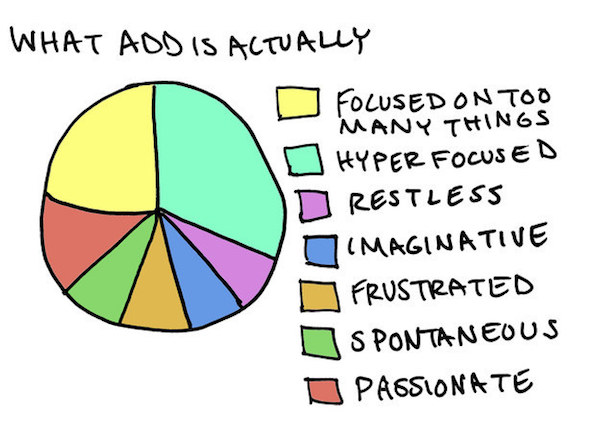
add_chart

Here is my second guest post, “Accepting Limits,” written by BoxingandBallet, who has a blog about living with Attention Deficit Disorder (ADD) and depression, Discovering Ratchet. Boxing is an accountant, and she has a deep love of both boxing and ballet, an interesting juxtaposition! She is also a great writer.

From her About page:

I am an accountant. It is surprising how big a part of my identity revolves around this fact. Many of the stereotypes associated to accountants apply to me:

–risk-averse
–conservative
–a bit nerdy (I really do love Excel)
–I look great in black, grey and navy.

But like most people, there is more than meets the eye. I have a deep love for ballet, and will try convince you it is gangsta. I enjoy boxing. The incongruity of my accountant (“vanilla”, so I have been told) lifestyle with my boxing interest is the source of many of my amusing stories. That, coupled with my attempts at both online and offline dating, will be the focus of this blog – a catalogue of funny events in my life, however small.

My catchphrase, which I am trying to bring into the mainstream is: “Let your phoenixes arise proudly.” Slips easily into everyday conversation.

Boxing’s [“Vanilla” is what she calls herself in this post] article is about the years from childhood to early adulthood and how she coped with oscillating depressions and ADD episodes, and her struggle in learning how to set limits for herself and knowing what are realistic, appropriate goals and what aren’t.

I appreciate her post because it’s about a disorder I know little about, and have never had a post about before. Here is a good informative article about ADD and ADHD if you want to learn more: http://www.add-adhd.org/ADHD_attention-deficit.html

Thank you, Boxing/Vanilla, for sharing your story. People, please stop by and visit her blog, Discovering Ratchet.

ACCEPTING LIMITS 
By BoxingandBallet/Discovering Ratchet
https://discoveringratchet.wordpress.com

knowyourlimits

“You are not your ADD. Don’t ever use ADD as an excuse for not succeeding. You can do or be anything you want, you just might have to work harder, smarter and differently than someone who doesn’t have ADD.” – My mother, circa 1988, repeated daily until her death in 2012.

She sometimes said it encouragingly, but usually yelled it at me in frustration during our daily tutoring sessions. All through elementary school, I did 3-5 hours of extra school work a day, even on weekends. Math drills, grammar drills, geography drills, essay writing, book reports. Relentlessly, she supplemented my public school education, and we did all this without the support of Ritalin: studies showed that habits learned without medication were more likely to stick. We waged wars. The more she nagged, the more I procrastinated. I practiced escaping from my study on the 2nd floor of our home by climbing onto the roof of the house to avoid my homework. She called it stubbornness. I called it boredom and free will.

“Of course you can live your life without medication. I completed medical school without it. But taking medication when you have ADD makes life just a little bit less hard. You notice, for the first time, that the sun shines brightly. It’s a pity to live your life without seeing the everyday beauty around you, because you are so caught up in the whirlwind of your mind.” -– My pediatrician, circa 1998

At 14, I got caught shoplifting several times at my local pharmacy. My disgrace came in the form of a stern letter drafted by the store’s legal department requesting I reimburse them for all stolen goods, and a warning that if ever I shoplifted again, they would press charges. My mother was heartbroken and confused. She wanted to know why? I was bored. Shoplifting was a fun challenge. Textbook ADD. My mother marched me into my doctor’s office to get me a prescription for Ritalin. I was reluctant: I didn’t want my mind and my successes to be a product of pills. I didn’t want to be medicated into good behavior. My pediatrician convinced me to give it a try.

“I don’t believe in this ADD stuff. Everyone has inattention issues nowadays. You’re just a bit flaky.” – My ex-boyfriend, circa 2005

I’d stopped taking Ritalin, right around the same time I discovered beer and boys (I’d gone to an all-girls high school run by nuns). I’d been shocked by the level of effort required to succeed in university, and overwhelmed by it all, I’d taken a nap. By the time I’d realized how much trouble I was in, the semester was too far-gone, so I procrastinated until I failed. Several semesters in a row. I flunked out of mechanical engineering with a GPA of 1.13.

“I think Ritalin is a cop-out. An unfair advantage. A crutch. Drink coffee instead. Why did you pick a field that requires you to take Ritalin in order to succeed? If you can’t do your job without relying on medication, maybe that is a sign you shouldn’t be making that your career. I’m pretty sure you’d be an excellent high-school teacher, and then your quirky ADD wouldn’t need to be medicated away, it would make you more fun for your students. What will happen the day Ritalin gets taken off the pharma market? Your career will end? Pffft, I don’t think it’s wise.” – Same ex-boyfriend, circa 2008

2 years after dropping out of school, I decided to put myself through Uni, and pursue my professional CPA designation in accounting. I was studying part-time, while holding a full-time job as an admin in an office. Determined to not repeat the mistakes of the past, I’d gotten myself a prescription for Ritalin. On average, I studied 30 hours a week, for 2 university classes. I did practice problems at lunch, on the bus, every moment I could find, because I’d learned from my first experience in Uni that I wasn’t as smart as I’d always thought, and if I didn’t give it my everything I’d fail. But I wondered…maybe I did have an unfair advantage over all the other students? I kept my pills hidden.

“Sadness is a choice. Have your sad thoughts, acknowledge them, and then choose to be proactive and focus on the good stuff. Why do you worry so much? It is just making you unhappier. Try thinking happier thoughts. You’re a vortex of despair.” – My ex-boyfriend, circa 2009

I was in the midst of an undiagnosed depression. To be fair to him, I was excelling at school. I’d quit my job, saddled myself with a boatload of debt and was in school full time. I refused to let myself ever get less than an A-, or to have a final grade that wasn’t in the top 5 of the class. I’d also stopped using Ritalin, because I couldn’t handle feeling like a fraud – that my success at school was due to the continued ingestion of a pill. I succeeded. I graduated at the top of my glass. At great personal cost.

“Vanilla, I’m worried about you. You’ve stopped smiling at work. Every time I see you at work, you look more unhappy, and anxious. Please, let me help you. What’s wrong? ” ­– My mentor at work, one of the top 4 accounting firms in the world, circa spring 2012.

I’d gotten my professional title in December 2011. Instead of celebrating, I fell apart. My senior coworkers had told me that passing the UFE (professional exam) and getting my title would be 2 of the happiest days of my life, right up there with my wedding day or the birth of my first child. I felt empty. My career was booming, I was making my mark at the firm, I was good. Except I felt like a huge failure: my finances were in a mess, I’d been single for 2 years, some of my team members found me hard to work with. I stopped taking Ritalin, to prove to myself that my ex was wrong. I could do this job without my pills. I started having serious panic attacks on my way to, and at, work. Getting showered, and showing up at work was a herculean feat – sometimes I’d show up 2 hours late. My bosses didn’t complain much, because once at work, I delivered excellent work. I didn’t mind the late nights on the job-–it meant avoiding sleep, and therefore less time for the nightmares.

“You have to accept your limits, in order to properly address the issues at hand, and determine the best course of action. Everyone has limits. Refusing to accept your own is not a sign of ambition and drive, it is a sign of immaturity.” – my new therapist, circa August 2014

I’d sought out a therapist because 2 weeks after getting a major promotion at work, I stumbled head first into the most intense, vicious depression I’d experienced in my adult life. I’d cry uncontrollably at work, sometimes for over an hour, several times a day. I’d pray that I wouldn’t wake up in the morning. Quickly, we identified my job as a key component in my emotional instability. I’d given absolutely everything to my work in the year leading up to my promotion. I’d always put in 25%-30% more time on the job than my co-workers, to compensate for my ADD inefficiencies. “You can do or be anything you want, you just might have to work harder, smarter and differently than someone who doesn’t have ADD.” I was prepared to do just that. Except…I was already consistently putting in 60-75 hour weeks, year round, compared to my colleagues’ 45-50. The promotion required me to level-up, significantly. I had nothing left to give. My personal life was a mess, the only aspect of my life that I was proud of was my career, and I could not face the next step. Either I went back on medication to do this job, or else I had to change jobs.

“What do you mean you are depressed? You just got promoted! You’re nervous. Maybe you need to work on your time management skills. Why are you throwing away your career? Don’t be a quitter.” – my coworkers, when I resigned from my job, September 2014

“Good for you, Vanilla. I’m proud of you. It’s ok to want to be happy, you know. You’ll figure out a way to have a career that doesn’t break you: it just might be slightly different from the one you envisioned.” – my mentor, September 2014

I suppose it’s a compliment, that my coworkers reacted with disbelief, even contempt, when they found out I have depression and ADD. I suppose I am blessed to be able to manage my ADD and depression through lifestyle changes and constant therapy, without resorting to medication. But I guess I am pretty immature, because I still have trouble accepting my limits. Quitting that job feels like an admission of defeat, even though I’m much happier now. Who knows? Maybe one day, I’ll be able to reconcile myself to the idea of medication, and like my pediatrician promised me, I’ll notice the sun shining a bit brighter.

What it feels like to be me some days.

Image

so_tired

My dark thoughts.

blackhole2

When I feel like this, the only way I can cope is to write.
I had one of my “black mornings.” I don’t get them every day, but when I do get them, they are overwhelming.
I’m getting less of them than I used to, but even one is too much.

I wake up into whiteness. My white blinds reflect the blue white snow that fell three days ago but the shadowless brightness hurts my eyes and mocks the darkness that rises like a miasma and permeates every cell in my body. I lie on my bed and pull the covers up over my head to keep out the daylight. I close my eyes tight. I will myself to fall back to sleep.

I can’t sleep. Thoughts that are blacker than black filter through my consciousness. They seem to arise from a bottomless pit located somewhere in my upper abdomen. They swirl like a cesspool or a black hole or a slow-moving tornado in my soul: thoughts of death, sickness, poverty, loss, and emptiness suck any lesser, lighter thoughts in with them and consume them like food.

Two words reverberate in my atrophied soul: No Future.

I try to will tears to empty myself of this horrible dread and hopelessness, but the backs of my retinas only burn and my eyes remain dry as tinder. I move my consciousness on the pit at the center of my stomach but all I can feel is my heart slamming into my throat. I swallow hard and kick the covers angrily away.

I need to get up. Even if I could sleep I would only wake feeling worse later. Like I wasted a day, and the guilt would consume me.

I look in the mirror on my door. I look like hell. My skin looks grainy. My hair hangs in oily strings. I really need to do something with it. But I know I won’t.

I turn away and go to the kitchen and make some coffee. Strong coffee, milk, no sugar please.
I take it back to my room, drink it. I know I shouldn’t drink coffee given my mental state, but it always calms me for the short term.

The pain is always worse in the morning. Most of the time I can pretend it isn’t there, but it’s always there, waiting in the shadows, ready to sink its tentacles into any mask of sanity I can muster like the flimsy paper covering it really is.

As I write, the darkness retreats. I find some temporary relief. For now, I can fill the void with frivolity and fake cheer.
But the darkness will be back. It always comes back.

Mental Illness, Depression, Hating Waking Up in the Morning

I can relate to this so much. I wake up feeling this way at least once or twice a week, if not more. Life seems so much more overwhelming and undo-able upon waking up. I really have no idea why. Sometimes the anxiety can get so intense my heart starts to race and my brain feels like it’s screaming.

This sort of free-floating morning anxiety is common in depression and might be the reason why depressed people often wake early and can’t get back to sleep.   But having these attacks isn’t just limited to depressed people.  It could also happen to people who suffer from anxiety disorders or are just under a lot of stress.

I’ve found the best thing to do when this happens is to get up. Trying to fall back to sleep when you’re feeling this sort of mental anguish will NOT work. You will lay there in your bed feeling panicky and wide awake. Once you get up and start going about your daily activities, no matter how daunting they seem, your anxiety level will decrease significantly.

gentlekindness's avatarGentleKindness

If you wake up every morning feeling anxiety, depression and completely overwhelmed at the thought of scraping through another day, you are not alone.

Once the day gets going after a few hours, you can get into autopilot mode, or somehow tolerate the things you have to do in order to survive. But upon waking up, you feel like one more day of painful suffering existance might be too much.

You feel alone and like there is something horribly wrong with your life. It is so severe upon opening your eyes in the morning that you cannot imagine anyone else would understand.

You are not alone. This is an important situation that gets worse being left in the darkness. Feel free to express your feelings in the comments here….if you are experiencing…or have ever experienced this.

View original post

Writer’s block.

writers-block

I feel like there’s a traffic jam in my brain. Or perhaps, no traffic at all. For some reason I can’t fathom, I can’t work up the motivation to write anything. I feel like my creativity has gone AWOL. I wake up feeling depressed. I go to sleep feeling depressed. It’s a numb, zombie-like depression but underneath that…there’s something coming to the surface. There’s an underlying anxiety and a feeling of impending insanity. I don’t know why. I pray for an answer, some clarity, some ability to process the stuff going on in my head right now, but there don’t seem to be any answers.

I can’t think straight. I had a bad panic attack at work yesterday; it came out of nowhere. I was out of control. I embarrassed myself and was shaken the rest of the day.

I’m using various techniques (prayer, meditation, long hot baths) to calm myself down, but it’s only a temporary fix and I still have no creative ideas for new posts. I forced myself to write this one. I’ve said many times before that writing is at least in part a discipline. You have to make yourself write, even when you don’t want to. Then it gets easier. But I’m ignoring my own advice.

I feel like my small life is growing smaller. I’m isolating myself more. I think about death a lot (not suicide, just the idea of death and it scares me). I keep asking God to intervene and lift my mood but this time he’s sleeping on the job.

writers_block2

I know I have to take responsibility and make myself get out of the house sometimes and make myself write. But when the time comes, I just find it so hard to get motivated. I have problems with the seasons and always get depressed this time of year. But this didn’t happen last year. I wrote like a maniac a year ago and worked through a lot of emotional stuff. I was full of ideas and writing allayed any depression I would have experienced.

I have faith though. I know this is temporary. I know God is there and is sitting back for a reason. He wants me to work through this on my own. I feel like I’m on the edge of an epiphany, something new I need to discover about myself.

I know this post won’t win any Pulitzer prizes and isn’t at all inspiring but at least it’s something. I know I need to just sit down and make myself write SOMETHING every day, even if it sounds uninspired or even stupid. I need to tell my inner critic to STFU. I’m not trying to impress anyone, just get my thoughts on “paper” so I can process them and learn from them. This is only meant to be a journal, after all. Maybe this will even open a discussion about writer’s block and I won’t feel so alone. I’m also going to look into therapy.