In spite of our differences…

benedictine.crucifix

My dad wasn’t perfect and I don’t idealize him or his memory.  Lord knows, he wasn’t a great father.  In fact, he could be a pretty lousy father and he even admitted it later on.  But I loved my dad.  Deeply.  He was my rock, even though he could erupt at any moment like a volcano.  And I still love him, no matter what kind of “baggage” we had together.

My dad wasn’t crazy about Catholics, even though he married a lapsed Catholic woman (my mother).  I was sent to a Catholic school starting in 5th grade, for two reasons–the first one being that the public schools in my area weren’t very good and I’d get a better education at a Catholic school (Catholic schools are notorious for providing an excellent education and they do value a well-rounded worldview).  The second reason was because I was being bullied in the local public school.

In my Catholic school, I found a refuge away from the dysfunction at home.  I loved my school, and I loved the Friday masses, even though I was not allowed to participate in Communion.  It sometimes felt like my real home.  The nuns there took me under their wing.  I thought they were angels and (except for one of two of them who could be mean) I was always in awe of their kindness and compassion.  I loved the quiet and peaceful way they moved.  I loved their softness. I loved the way they seemed not quite of this world. These were the qualities I was starving for, coming from a home full of anger, chaos and sharp edges.

Because of my positive introduction to Catholicism, I was always attracted to it, in spite of not agreeing with all of its doctrine.    The Church has changed a lot over the years, since Vatican II, and embraces science rather than denies it.  Science, too, is about the truth.  I feel that the Catholic church is the “thinking person’s Christianity.”  Of course, I know it’s not the only one.  I know denomination doesn’t matter; it’s a matter of personal preference.  I love the liturgy and the history and the mystery of Catholicism.   But that’s just me.

I do have issues with their stance on abortion, birth control, women in the priesthood, and homosexuality.   But these things don’t affect me directly.    I believe with all my heart that the Communion wafer is not just symbolic.  Every time I partake of the communion wafer, I feel filled with the Holy Spirit and know this is Jesus’ gift to his people.

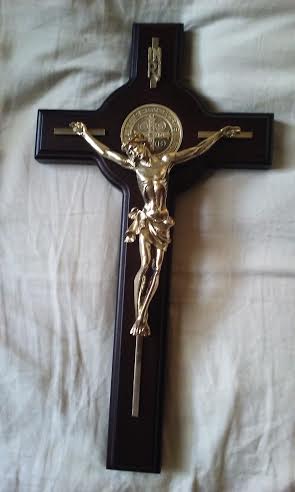
In April of 2015, after nearly a year of preparatory classes (RCIA), I became a Catholic during the Easter vigil mass.   My father, in spite of his misgivings about the Catholic church, gave me this Benedictine Crucifix, which hangs in my room across from my bed, so Jesus is always the first thing I see when I wake up.

Thank you, God, for giving me my new faith, and please help strengthen me in that faith, especially now when I’m in so much turmoil. And thank you for my Dad, who although we had our issues, was able to put aside his prejudices and give me such a beautiful gift from the heart.

Why I don’t think it’s wrong to pray for narcissists.

st_paul

Because I have readers of many religions (or none at all), I always hesitate before posting anything too religious or too Christian, but I’m making an exception here because I’ve noticed some ACONs believe it’s sinful to pray for narcissists. But I don’t think that’s true and I always pray for mine.

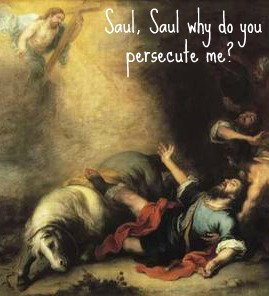
Whenever anyone tells me I’m wrong to pray for the souls of narcissists, I just use the example of the Apostle Paul. Saul was much worse than just a sinner; the Bible describes a man who seemed to be a high-spectrum, unrepentant malignant narcissist.

Following is an article from CBN.com called “How Saul Became the Apostle Paul.” It’s the fascinating story of a man–an arrogant, narcissistic, murderous Pharisee, who hated Jesus and his followers–whose heart was changed. If someone as malignantly narcissistic, even sociopathic, as Saul/Paul was, could change, why not others too?  We don’t know what God’s intentions are or whose heart he may be working on. No, chances are your narcissist won’t change and you shouldn’t wait around for them to do so or try to “fix” them, but I don’t see any harm in praying for them if you’re so inclined. We are not the judge and jury; only God is.

I still see narcissism and arrogance in Paul even after his miraculous conversion–I have to admit I never cared much for Paul’s personality, which I find abrasive. After all, he was still human and still a sinner. But at least he wasn’t harming others anymore, and had renounced his former life as a Pharisee and devoted himself to spreading the word of God.

How Saul Became The Apostle Paul
By Craig Von Busick, for CBN.com
http://www1.cbn.com/biblestudy/how-saul-became-the-apostle-paul

saul

“The best and the brightest.” It was a phrase used by some journalist to describe the administration of President John F. Kennedy. The same phrase could have been used to describe Saul of Tarsus; a child of the best upbringing; a student of the vaunted teacher, Gamaliel; a Roman citizen; trained in the best Jewish schools; groomed, perhaps, to even become chief priest.

And this pious man was bent on the destruction of the believers in Jesus.

In order to understand Saul of Tarsus it is important that we put him into historical context. Only a few short years had passed from the crucifixion and resurrection of Jesus when a self-righteous religious zealot assisted in the systematic murder of one of Christianity’s earliest messengers, a godly man named Stephen. Luke punctuates Saul’s involvement in this murder with the chilling comment:

“Now Saul was consenting to his death.” (Acts 8:1)

But even before that fateful day when young Saul the Pharisee gloated over the brutal death of the innocent disciple Stephen, the Spirit of Jesus Christ was pricking his heart. God had designs for this bright young man, and in His sovereignty He was prepared to knock Saul off His high horse.

There can be little doubt that Saul was familiar with the Galilean man who was known as Jesus. Though Saul may have been consumed by his study of the Torah and Talmud – the Jewish holy books, there was talk of this back woods preacher and the stir He was creating throughout Israel. Numerous reports were made of so-called messiahs emerging from every corner of the land, so Saul and his classmates undoubtedly debated the authenticity of the reports of Jesus’ miracles.

He may have been one of the unnamed lawyers who confronted Jesus with questions in the Gospel accounts? Saul may have gathered with the other scribes and Pharisees at the river Jordan when John the Baptist declared, “Behold, the Lamb of God who takes away the sin of the world.” Was he outraged to learn that Jesus had cleared the moneychangers and vendors of religious trinkets from the temple while snapping a whip?

It is conceivable that Saul was one of the pious Pharisees trying to console a weeping Mary and Martha at the death of their brother Lazarus. Whether he was physically present when Jesus raised the 3-day dead Lazarus from his rotting rest, it is sure that Saul heard of and pondered this indisputable miracle. This shocking development created such a sensation that the panicked religious leaders ramped up their efforts to arrest and execute the backwater mystic before he brought down the wrath of Rome on their heads.

Saul could have been in attendance at the infamous midnight trial of Jesus before the Sanhedrin. Perhaps he was outside in the courtyard of Caiaphas warming himself next to the fire. Maybe he heard the servant girl accusing a gruff-looking Galilean of being a follower of this Jesus. He may have been amused at the unrefined manner in which this fisherman cursed and raved the third time he was accused.

Though he approved of the barbarous stoning of Stephen, it is entirely possible that Saul’s heart was pricked when he heard him say, “Lord, do not charge them with this sin.”

We don’t know how long the Lord was at work in the heart of Saul, but we know the Holy Spirit was goading him – and Saul was kicking back hard, primarily against the disciples of Jesus. After the death of Stephen, Saul was fanatical about destroying this new sect. Saul launched a holy war against the Church, scattering the believers. He made havoc, entering homes, sending many to prison – even putting some to death. He was beginning to attain the notoriety that he had always craved. If he was going to rise to the level of prestige and power that he believed was his destiny, he would have to prove himself worthy.

When word came that these followers of Jesus had spread into Syria, Saul requested permission to go to Damascus. With great delight the High Priest granted him letters to take to the synagogues of Syria.

As Saul and his colleagues came near Damascus, suddenly they were flooded with glorious light. It was like looking into the sun from only a yard away. Saul fell to the ground and suddenly a voice emanated from within the light. The voice was both terrifying and soothing at the same time. “Saul, Saul, why are you persecuting me? It is hard for you to kick against the goads.”

Was this an angel? Or worse, could it be a messenger from Satan, trying to distract him from his holy quest? No, if it were the devil he wouldn’t feel this mix of peace and awe. Humbly Saul inquired, “Who are you, Lord?”

“I am Jesus, whom you are persecuting.”

conversion-of-paul

No. It couldn’t be Jesus, the carpenter from Nazareth, the backwoods preacher, the so-called messiah who was put to death by Pontius Pilate? If this was Jesus, that would mean that nearly every great leader in Israel was wrong … so very wrong. How could they have misjudged him? Unless those confusing passages of Scripture concerning a suffering savior could somehow speak of the Messiah?

Saul began to tremble.

How could he have been so wrong? But then he remembered watching the life ebbing from Stephen, and hearing those haunting words, “Lord Jesus, receive my spirit.”

This was the same Jesus that Stephen saw as he peered into heaven. This is the same Jesus that gave strength to so many of Saul’s victims. Saul began shaking uncontrollably. No longer able to bear the intensity of the light, he closed his eyes as tightly as he could.

“This must be the One – the glorious Messiah, promised from ages past.” Saul slowly lifted his head and asked, “Lord, what do you want me to do?”

Jesus replied, “Arise and go into the city…”

Saul obeyed, and in the blindness that resulted from the intense light, he was led into the city. There he was met by a disciple named Ananias, who was sent by Jesus to prophesy, “he is a chosen vessel of Mine to bear My name before Gentiles….” (Acts 9:15, NKJV)

Years later, in obedience to this heavenly vision, and living out his own teaching – “I try to find common ground with everyone, doing everything I can to save some.” (1 Cor. 9:22b, NLT) – this former Pharisee so embraced his calling to minister the Gospel to the Gentiles that he forsook his Jewish name, Saul, and forever adopted the Greek name for which he is remembered … Paul.

Happy Pentecost!

pentecost_1

Pentecost is a Christian holy day and is always celebrated exactly seven weeks after Easter Sunday. It commemorates the descent of the Holy Spirit on the Apostles and other followers of Jesus Christ before He ascended back into Heaven (Acts of the Apostles 2:1-31). The descent of the Holy Spirit ensured that his followers would continue to spread his Word and convert others to Christianity. In the Catholic Church, Pentecost marks the end of the Lent (Easter) season. The Holy Spirit’s descent is often symbolized by a dove and a flame.

The Holy Spirit isn’t limited to Christians. Anyone can feel the presence of the Holy Spirit. You simply have to be in the right frame of mind and be open to its presence. You can ask God (or a Higher Power if you prefer) to fill you with the Holy Spirit. For me, music, nature and writing are three things that open me to its presence. Today’s a gorgeous, sunny day, not too hot, so after church (Mass is going to be held outside this year), I think I am going to take a drive and just enjoy the beauty of nature during this beautiful time of year.

Spend some time with nature, or if the weather is inclement, listen to some music that inspires you while engaging in a creative activity. It could be anything that inspires you–writing, painting, singing, cooking, even doing a spring cleaning. Spend some time in prayer. Don’t dwell on the negative. Give your worries a break. If you can’t take your mind off your cares, ask God to help you focus on the positive and on his presence.

Here is a website that lists some prayers you can say today:

http://www.faithandworship.com/prayers_Pentecost.htm

God answers prayers.

After posting my article about my fear of death yesterday and praying a lot about it, I came across a wonderful website called “Jesus Without Baggage.” I’ve never seen another site like it and I’ve been on it now since last night, just reading and learning. I can’t get enough.

I never thought I could reconcile my inability to believe in a judgmental, angry, legalistic God with a belief in Christ, but now I think I might be able to, all because of this website. It answers questions no one else has ever been able to answer before and addresses concerns I’ve had for a long time that “reading the Bible” only made worse (mostly because of the way it’s been misinterpreted and misrepresented by legalistic, narcissistic preachers and church leaders in order to exert “control”).

If you’re like me and want to have a relationship with Jesus but are completely turned off by fundamentalist Christianity, this is the site for you. I truly believe God answered my prayers by bringing me to this site so I want to share it with my readers too.

About Jesus Without Baggage

Even more interesting, the topic at mass today was “God is Love.”

I’ll be posting a new guest post in a little while.

The ultimate dissociative experience.

thanatophobia2

Death isn’t something I like to think about, much less write about.  In fact, it’s my biggest fear (outside of the death of one of my children).  Oh, I know all the pat arguments and rationalizations that it’s not so bad–death is a part of life, death is nothing to be afraid of, if you’re a good Christian you will go to Heaven and there will be no fear, nothing at all will happen so there will be no fear, even the idea that death is beautiful.

I woke this morning, as I often do, thinking about how much I fear my own death.  I think this is a little obsessive-compulsiveness on my part, and probably something I should talk about more in therapy.   The mental health field has a name for the irrational or excessive fear of death: thanatophobia.    So far I’ve only talked to God about my phobia but I feel like He isn’t listening.     People in my age group (50’s) say they’re beginning to come to terms with the prospect of death, but so far, for me, that hasn’t happened.  I get more scared every year.

Maybe death terrifies me because it entails complete ego loss–it’s the ultimate dissociative experience, and as someone who has had massive panic attacks usually instigated by dissociative experiences (feeling out my body, feeling like things are dreamlike or unreal, etc.) it would be natural for me to be afraid of what it might feel like.   It’s like someone who had a bad drug trip and is mentally unstable to begin with being slipped some acid when they’re unaware of it–and never being able to return to reality.

I don’t like to write about death, because even thinking about it too long makes me extremely anxious.  But I need to write about it, and need to talk about it with others, and maybe find comfort in the fact that others have the same sense of trepidation and worry.  Maybe I’m not alone in my fear of death and dying.   So I’m going to plow on. Writing about it surely can’t hurt.

thanatophobia

I’ve been told by many Christians that, if I am strong in my faith, that there is nothing to fear, because I can be sure of my place in Heaven after I die.   But this makes things even worse for me, because I do have doubts in my faith and I am not at certain I am going to Heaven, or even that there is a Heaven.   No matter how much I pray for perfect faith, I can’t seem to make my mind rid itself of its many doubts.   There are just some things about Christianity I can’t make myself believe or at least not question.  Again, maybe it’s my obsessive-compulsiveness.   As someone who is afraid to trust anyone and is hypervigilant, it’s even hard for me to completely trust God and not worry about what will happen to me after I die. I look at others–even narc abuse survivors who should be as hypervigilant as I am–who seem to have attained perfect faith and I marvel at this. How do they do it?

Although it’s hard for me to believe that if I question Christianity or what the Bible says, that God will send me to burn in Hell for eternity even if I’m otherwise a good person (that seems like a terribly cruel, narcissistic God to me), how do I know for sure God isn’t like that?  Maybe God is really that cruel and narcissistic, but in that case, why would I want to even spend eternity in Heaven, trapped there with sanctimonious, self righteous, insufferable believers? (I’m not saying all believers are like that, but I’ve met more than a few who are).  In that case, maybe Heaven would be more like Hell.     But Hell…well, I definitely don’t want to go there.

But Christianity is only one way to look at the issue of death.  Let’s face it.   No matter how sure you are in your faith, whatever it is, none of us really knows what’s going to happen after we die.   What if the New Agers are right and what happens is you look back and see yourself lying on the hospital bed, pavement, or whatever, see your own broken, bleeding, or used-up body there, and then watch as they pull the sheet over your head?  What if you are swooshed at light-speed down a long tunnel toward “the light” and meet angels and see otherworldly landscapes and other inexplicable things?   Or what if you float around the earth as a disembodied spirit, revisiting your friends and relatives you left behind?   People who have reported NDE’s (near death experiences) have said that at some point they become aware they have died (that’s usually when they “come back”) and most say it’s very disorienting and even scary at first, because their bodies just aren’t there.   All of these things, no matter how pleasant others have said they are, strike terror in me, because they sound like dissociative experiences that you can never escape from.   I’ve struggled with episodes of dissociation my entire life, but no matter how terrifying they became, I always knew I’d “return” and the experience would probably only last a few minutes.   Does something happen after you die where you’re no longer afraid of such things, or do you just learn to deal with it?

death_quote

Maybe this is true, but I wish I could believe it.

What if the atheists and existentialists are right and nothing happens after you die?  What if you simply cease to exist?   While I find that prospect extremely depressing,  it actually causes me the least anxiety.   Eternal sleep and unconsciousness doesn’t seem so bad to me.  If you’re aware of nothing, well, there’s nothing to be afraid of or get depressed about, is there?  But I still don’t like the idea that this life is ultimately meaningless.   What is all the struggle for then?

Reincarnation doesn’t seem so bad, and actually does make some logical sense to my scientifically-leaning brain, but it flies in the face of being a Christian.   I don’t know of any Christians who acknowledge that reincarnation is a possibility after death.  But why couldn’t it be? As a Catholic, we believe in the concept of purgatory, a place of purification (not punishment) after death.  But no one can explain what purgatory might be like.  Maybe living additional lives is what purgatory actually means?   Again…we just don’t know.

'It's not that I'm afraid of dying, Doctor... It's just that I don't want to be there when it happens!'

‘It’s not that I’m afraid of dying, Doctor… It’s just that I don’t want to be there when it happens!’

Maybe we just go back to wherever we were before we were born, and have amnesia for this life. Or maybe it’s like eternal dreaming (that doesn’t sound too bad). Again, we don’t know.

Besides the inevitable experience of death, which seems bad enough, I’m terrified by the prospect of dying.   I’m in my 50’s, and figure I might (realistically) have about another two or three decades of life left.   To someone my age, that doesn’t seem so long.  Twenty years ago was 1996; thirty years ago was 1986.   That means that in that same amount of time, going forward, I will probably be leaving my body permanently, but before that, I may well suffer either unbelievable pain or a few moments of sheer terror.   Few people just die peacefully in their sleep or just suddenly keel over while out on the golf course (that’s the way a 90 year old great uncle of mine died).   Most suffer first, either for months (as in a long illness) or a few seconds (as in an accident).   I’m terrified of both.  I know there’s no way to get out of this life alive, so the inevitable is going to happen, and there’s not a whole lot of time left before it does. Even worse, each year time seems to hurtle forward twice as fast as the year before. What seemed like “a long time ago” to me twenty years ago now seems like the blink of an eye.

As someone who tends to overthink everything,  I probably think about death and dying way too much.  I know I should just stop and enjoy life while I still have it.   But the more I try not to think about it, the more I seem to.   It’s like that game where you try not to think about an elephant.  I pray about this all the time but it hasn’t helped very much.    I just keep feeling guilty because  no matter how hard I try, I can’t embrace my Christianity with perfect faith.   I have no guarantee I’m going to Heaven.   I keep questioning everything and then I worry about going to hell.  Or being eternally dissociated, which to me would be hell.  Or just worrying about the intolerable suffering that will precede my exit from this planet.    Maybe I need to talk to my therapist about this because it seems like it could be a form of undiagnosed OCD.

Further Reading:
My Fear of Death

Guest Post #5: Why Does Mental Illness Stigma Exist?

in_the_asylum
In The Asylum, Unknown artist.

Matthew Malin, owner and creator of the blog  Confessions, has written a wonderful guest post describing the history of mental illness stigma, going all the way back to Roman times.    Not only is the subject matter fascinating, but the unique historical perspective shows how the stigma is rooted in two things that seem almost diametrically opposed: mental illness as a medical problem centered in the body; and ancient superstitions, such as demonic possession.   Even today, there are those who regard mental illness as either a primarily medical problem (leading to doctors over-relying on drug therapy) or a spiritual problem. While there may be both medical and spiritual elements involved in mental illness,  both views have led to stigmatization.

If you have a chance, please visit the Confessions blog.   Matthew’s articles are all about living with depression and anxiety, all written from an intimate, Christian perspective:

In the Spring of 2015 an incredible passion for those suffering from Mental Illness was born within the heart of Matty Malin. Through his own struggles with Depression and anxiety, a fire was ignited within his heart. That desire was to create a place of honesty, transparency, and love. We, the broken, have grown far too weary of the masquerade playing out before our eyes in society. We’re tired of hiding behind “I’m fine”. Here you will find unabashed clarity into the soul of man. You will also discover the love of God despite the ugly, sometimes violent, heart of man.

We fully believe that man is sinful and in need of a Savior. Jesus, the perfect son of God, stepped into our world, lived a sinless life, and was murdered voluntarily on the cross for our sins. He took on the wrath of God for us so that we might have access to a relationship with God that will one day result in spending eternity with him. We obtain salvation through faith in His work and by the grace of His loving hand.

We firmly believe that no man can go too far for the love and hope of Christ. Mental Illness can provide some of the darkest days of life. It is here that we need hope and it is here that we can find it in Christ.

WHY DOES MENTAL ILLNESS STIGMA EXIST?
By Matthew Malin

As someone who has dealt with the debilitating effects of Depression and anxiety for a period of 4, almost 5 years, I believe that I’ve stumbled across something much more paralyzing: Mental Health Stigma. The more aware I become of my own struggles and the more honest I am with myself and others, the more I find a growing discomfort with the topic of Mental Health. Why is this? What is it about Mental Health that sends general fear and inquietude through someone who is tasked with aiding the mentally ill?

A timeline of mental illness stigma.

cutting_the_stone
Cutting the Stone by Heironymous Bosch, ca. 1494

I believe that history is ultimately to blame in this arena as well as a shallow thought process towards the issue. The Greek Era (500-100 BC) brought forth our first record of Mental Health treatment. Hippocrates was of the mind that a build up of bodily fluids was to blame. In his words, he said, “It is some kind of black bile that is making you depressed.” Their treatments revolved around the physical removal of whatever fluid was ailing the individual.

The Roman people (100BC-600 AD) did nothing to treat the issue at its core either. Instead, they were of the mind that depression/mental health issues were caused by organic malfunctions. Diet and exercise were prescribed to deal with the issue. Yet another example of a culture misunderstanding the true nature of Mental Health.

During the Middle Ages (600-1100 AD), a holy war was being waged on Satan and any form of mental issue was prescribed to be due to demonic activity. The medication for such issues became obvious: Exorcism or any other kind of holy activity. It is believed that the stigma of such illnesses became obviously prevalent and prejudiced during this time.

This recap ultimately brings us to our day and age. If you take a good hard look at the process of treating/dealing with Mental Illness today, you will see a common thread amongst diagnosis and treatment. The 1950’s brought about the thought that medical treatment was the only way to deal with the issue. This solution can be easily traced back to the Greek Era and their thought processes. Others will still claim that diet and exercise will best help those suffering from mental illnesses. There are those as well who righteously claim that mental illness is of the devil and must be rid of by God.

The meaning of mental illness.

All of these prescriptions are lazy, surface level suggestions that completely forsake the underlying notion of what it means to be mentally ill.

It is within the opinion of the author that, when it is appropriate, medicinal, organic, and religious means be used to treat mental illnesses. It is not, however, appropriate to cast off those with mental illnesses by simply telling one to deal with their issues by such means.

What is meant is this: Non-suffering individuals should not settle for surface level treatments when the real issue must be dealt with by more personal means. There is more to those who are mentally ill than meets the eye.

Medicine, religion, and organic based treatments are incredibly valuable but there is one treatment that is oft ignored: the support of a caring soul.

Our culture is neck deep in instant gratification. Social media, advancements in technology, and a general lack of education have only worsened the stigma that already existed towards those with mental illness. It is within the opinion of the author that our society has lost all care and respect for the people around them. Why? We’re far too caught up in ourselves.

What needs to be done.

It is a sad, unfortunate truth that this stigma will truly never go away. Some people will never care but all hope has not been lost. While arrogance can hardly be cured, ignorance can be educated. This kind of teaching cannot take place within a classroom. This is the kind of schooling that happens through our parenting, our social lives, and our social media ones. What I’m advocating for is change, but not from the outside world.

Change has to come from within if we ever want to make a difference. This requires those with any kind of mental illness to step up and speak out. It requires a willingness to open up about the issues, the difficulties, and the failures that come along with mental health. This change begins with us.

I recognize what I’m asking. I’ve not been very shy about my struggles but I recognize that it may come a little harder for others. Whether social stigma has silenced your voice or your own perceived stigma has, it can be an incredibly difficult thing to open up about. Let me reassure you of this: Your mental illness does not define who you are. Yes, it limits you. Yes, it makes life a little more difficult. I guarantee you though that it does not take away your worth as a human being.

You have been fearfully and wonderfully made by the God of the Universe and He loves you. You were made in His image! No person can ever take that away from you. No amount of vicious vocabulary or audacious action can strip you of your worth as a human being. Don’t allow yourself to tell you that you have no worth and therefore cannot speak out. Don’t allow other people to tell you that either. You have inherent worth, you are loved, and you are capable of standing against this.

Decide today that you will no longer stay quiet in this battle. You have a voice, let it be heard.

Be the change you wish to see in this world.

God bless you,

Matthew Malin
Author and Founder of Confessions:

https://confessions92.wordpress.com/

Why I love liturgy.

A view of the famed Rose Window in Notre Dame Cathedral, Paris, France.

A view of the famed Rose Window in Notre Dame Cathedral, Paris, France.

Back in April, during the Easter Vigil mass, I became a Roman Catholic. This came as a surprise to many people I know, since I’d spent most of my life as an agnostic and at times veered close to atheism. I’ve also toyed with Buddhism and Scientology (and I admit I still have a soft spot for Buddhism because it appeals to my rational mind, and that isn’t likely to change). Due to the recent charges of sexual abuse taking place in the Catholic church, this oldest and largest of all Christian denominations has become more criticized than ever, and probably rightfully so. I don’t think it’s the only religious organization that has been guilty of such behaviors, but I think it’s the most publicized. I’m also not ignorant of the fact that the Catholic Church has a bloody and often very un-Christlike history, especially during the Middle Ages, as well as being the wealthiest religious organization in the world and often full of hypocrisy. In addition, I do not believe that being a Catholic is the only way to salvation. Any Christian who has accepted Jesus Christ as their personal Lord and Savior in their hearts will get to Heaven, regardless of denomination (why did I almost spell that DEMONination?) and don’t necessary even have to attend church at all.

So why did I become a Catholic, you ask. Why did I join a church that’s so rife with its past of violence, and a present still full of intolerance, sexism, and heirarchy? The answer to this is complicated.

I was raised in a family that although nominally Christian, was basically agnostic. We did not attend church regularly (although I was sent to Sunday school as a young child), and holidays like Christmas and Easter were recognized more for their fun/materialistic secularity (gift giving, Santa Claus, the Easter Bunny, new Easter dresses and coats, etc.) than for the solemn events in the life of Christ they actually honor. My family regarded them as “children’s holidays” that adults indulged and that would eventually be outgrown. Although I was baptized Methodist (and I was surprised to learn my Protestant baptism was recognized as valid by the Catholic Church), we never became very active in any church and therefore were not part of any enduring “church family.” When church was attended, it was a sterile, secular affair, full of feel-good stories of God’s unconditional love, lessons about tolerance and social justice (nothing wrong with that, of course, but it wasn’t very religious nor fill me with a sense of awe or wonder), and very little that was Biblical or traditional. Services revolved mainly around the sermon, always a feel-good pep talk about God’s all-encompassing love and loving one another. All of this clap-happy, touchy feely reformed-Protestant stuff flew in the face of the constant anger, rage, loneliness, and discord that was constantly going on at home. Due to that, all the messages about positive-thinking and feel-goodness seemed insincere and meaningless, and didn’t address the very real problems in my family that made me feel so defective and different from everyone else.

For a short time–maybe one or two years–my father became fascinated by Christian Science, and I was sent to a Christian Science Sunday school. I was too young to comprehend the metaphysical beliefs they espoused, which basically preached that all that was material was an illusion, and only Spirit mattered (later my father would become active in Religious Science, a similar belief system that isn’t based in Christianity and overlaps a great deal with New Thought, part of the New Age movement). I couldn’t wrap my young brain around the metaphysical mumbo jumbo I heard on Sunday and I desperately needed something tangible to offset my growing feelings of dissociation from myself and the rest of humanity and from God Himself. I was filled with uncertainty about what was real and what wasn’t. Living on a diet of spiritual junk food, I was starving for emotional and spiritual sustenance. Although I coudn’t have put it into words, I needed to experience the Divine with my five senses.
holy_communion
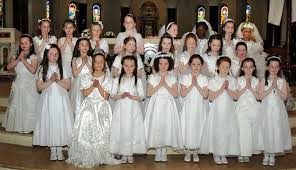
How I envied these girls!

Enter Catholic school. In 5th grade, the bullying at the local public school became so bad that my parents decided to take matters into their own hands and despite their misgivings about the Catholic Church, I was sent to a Catholic girls’ school. My grades immediately improved and I found it easier to make friends with these girls than at the public school. My parents were surprised (and probably a little disturbed) that one of my favorite classes (and the one I did best at) was Religion. I didn’t become religious back then, nor did my faith in God deepen (I was for all intents and purposes agnostic), but I found myself always looking forward to the masses we used to have at school on religious days. Although the highly liturgical services confused me at first (knowing when to stand up and sit down, memorize the various prayers, etc) I found myself drawn to the orderliness and beauty of the Mass. It somehow seemed Godlike and was steeped in history that the Protestant services I’d attended with my parents just didn’t have. I envied the cool trappings of Catholicism (when the other girls were going through Confirmation, they got a new name and a pretty dress and I wanted that too) and longed to be able to take Communion with everyone else. I wanted a set of my own rosary beads. Today I know these things really don’t matter (I think whatever denomination you are–even if none at all–is a matter of personal preference) but at my tender age, these tangible things seemed part of some wonderful, sacred, mysterious and heavenly world I couldn’t be part of. Sitting there in my folding chair watching the proceedings, I always felt the presence of God and a benevolent, forgiving love I never felt from my own family, even though I had to remain seated during the communion. It was one of the few places where I could feel the benevolence of God.

Many cradle Catholics remember negative experiences from their childhood about the Church and turned away from it as they came of age, but as someone who only knew it as a refuge from the harsh realities that took place in my agnostic home, I never developed those negative associations with Catholicism. I loved most of the nuns at my school. With one or two exceptions, they seemed so kind and compassionate, very saintlike–and they seemed to care about me in a way I never felt I got from my own family. Although I never talked about what went on at home, one nun in particular who seemed to favor me for some reason, guessed that things at home weren’t ideal, and told me to come see her anytime I needed to talk. I never did (for fear of what might happen if I “squealed” about the family to an outsider), but it felt good to know that she cared enough to reach out to me.

As I grew older I fell away from Christianity (not that I’d ever really embraced it much and knew next to nothing about the Bible or the life of Christ), and experimented with other belief systems, including Scientology and Buddhism, if anything at all. The Bible seemed to me like a book of ancient fairy tales with no relevance to my own life. I rarely prayed and looked down on churchgoing and religious people as ignorant and deluded. Although I never embraced full-on atheism (it was too depressing to think there was no afterlife at all), I thought that if God existed, he was pretty much hands-off and that everyone, other than the most hardened criminals and mean, cruel people, would get to Heaven, if there even was such a place. The concept of reincarnation made a lot more logical sense to me than the idea of heaven or hell.

But my soul was still starving and I think deep down I always knew this. Every once in a while, in spite of my doubts about the existence of God, I’d make time to attend a Catholic mass. I didn’t believe what they preached, in fact I thought most of it was pretty silly, but I loved the ritual and the order, and somehow always came away feeling transcended. I’d go take Communion (knowing as a non-Catholic I wasn’t supposed to) and feel somehow nourished. In a way I couldn’t explain, witnessing the reverence and beauty of the Mass, made me feel like part of something much bigger than myself and accepted for who I was, not (as in my FOO) expected to be someone I could never be.

I toyed with other Christian faiths, including Lutheranism and the Southern Baptist church. During the late 1980s, I attended a Lutheran church (and was confirmed as Lutheran) mainly because the man I married was Lutheran. The services were called masses and were very liturgical and quite similar in many ways to the Catholic mass, but they seemed watered down, somehow. For instance, the communion wafer was regarded as symbolic rather than being the actual Body of Christ. We never became deeply involved with the Lutheran church, and although we had our kids baptized Lutheran, we did not attend church on Sundays or otherwise do much to encourage their spiritual development.

When we moved to North Carolina from northern New Jersey, we were faced with culture shock–instead of having mostly Catholic and Jewish neighbors, suddenly we found ourselves surrounded by Southern Baptists who insisted we needed to be “saved.” Still looking for spiritual nourishment, I started attending services at the local Baptist church as well as Bible studies on Tuesdays nights. My kids attended 2 years of Vacation Bible School. I never cottoned to the hellfire-and-brimstone preaching though, or the literal interpretation of the Bible. I was especially turned off by the church’s conservative political agenda, that actually told us we were “going to Hell” if we didn’t vote Republican, as well as their dismissal of science. I decided to stop attending church there.

hellfire
Hellfire-and-brimstone preaching is a turn off to me.

A few years later, my daughter had a friend at school whose parents were Southern Baptists, and my daughter, age 9 at the time, decided to be baptized in their church. I was fine with that, even though I disagreed with the southern Baptist belief system, because it took the burden off of me to be responsible for her spiritual growth. I attended her baptism and was surprised at how modern the service was, with a pop-rock band that played contemporary Christian music rather than traditional hymns. Intrigued, I decided to attend a few more services, but I always felt like I was at a rock concert rather than at church. In spite of the emphasis on Biblical literalism, during the long, emotional sermons, I never felt my soul uplifted or any real feeling of spiritual transcendence. Although very different from the touchy-feely, heaven-awaits-no matter-what-you-do preaching of the liberal Protestantism of my childhood, this hellfire-and-brimstone preaching bookended by Christian contemporary music with the words splashed on a huge TV screen didn’t do much for me either. I longed for tradition, for history, for meaning.

I still occasionally attended Catholic masses, but never thought I’d actually become one. But shortly after I went No Contact with my ex (who freeloaded off me and mentally abused me for almost 7 years following our divorce and nearly bled me dry emotionally, mentally, financially, and spiritually) I began to blog. My mental and physical health came back first, and then I realized I was still starving spiritually. I needed God, who after all, had been watching and protecting me all the time I was in an abusive marriage and had shown me on several occasions how real He was. Last October, I decided to start attending Mass as well as RCIA classes (the classes you take to become Catholic). I had doubts about much of the doctrine (and truth be told, still do). I still wasn’t sure I wanted to become Catholic, but I thought I should at least take the classes and make an educated decision.

To my surprise, I found that Catholic doctrine isn’t very different from what I’ve always believed anyway. The Bible is held as important (more important than many fundamentalist Christians believe we do) but much of its content is not not interpreted literally and therefore doesn’t fly in the face of centuries of scientific discovery and achievement. Yes, we are saved by grace alone (all Christians are), but works are also important and are tangible evidence of God’s grace. Sacraments (communion, confession, etc) give tangibility to God’s grace although (I don’t think) they are necessary for salvation. Confession is not a punishment; it is an opportunity to unload to someone else and makes you feel better afterwards (very similar to a 4th step in a 12-step program). Although I had my doubts at first, I’ve come to believe the Host (the communion wafer) does actually become the body of Christ, due to the glorious, transcended way I always feel after partaking. I do feel like my soul is being changed for the better, even though it’s not a Saul-to-Paul-like sudden conversion full of fireworks and drama.

I admit I do still have some issues, mostly having to do with the Catholic church’s stance on social matters such as abortion and homosexuality, as well as the fact that priests still must be male. I don’t think the Pope is infallible either (he is just a man), but I understand the reasoning behind having a Pope and I happen to like the current Pope anyway. I don’t venerate Mary and the saints, although I have utmost respect for them. Veneration isn’t the same as worship, anyway. Only Jesus as God is worshipped so there’s nothing un-Christian there, a far as I’m concerned.

rosary_beads

Because of my doubts and personal proclivities, I’ll probably never be the “perfect Catholic” or “perfect Christian” but that’s okay. I pray that God keeps working on my soul to cleanse it from sin and I’m willing to believe anything God wants me to believe. I’m willing to turn my soul and my life over to the Creator. Whenever I’m at mass, I feel part of a vast family and something glorious, beautiful and so much bigger than myself or all humanity. I feel accepted in God’s kingdom and have begun to fear death and the future less than I used to. The tangibility, beauty and order of the liturgical tradition–the memorized call-and-response prayers, the communion procession, the incense, the swelling organ music and the singing, the kneeling and the standing, the Sign of the Cross, and all the rest of these “silly rituals”–makes me feel that God is a tangible, real thing, someone who is RIGHT THERE and that I can see, hear, smell, feel, touch and even taste. The traditional hymns with their pipe-organ and piano music and the ancient prayers imbue a sense of mystery and history into the services that neither liberal Protestantism or fundamentalist pop-rock sing-alongs do for me. And I love the Bible readings too. I’m beginning to feel that the messages in the Bible do have meaning for me personally. The orderliness and ritual of the mass is regarded by some as mindless, dull and lacking spontaneity (and to some extent I can understand this view), but I find the repetitive and predictable aspects such as the call-and-response prayers and chants to have an uncanny way of eventually filtering down from my mind into the deepest part of my heart, in a way a hellfire-and-brimstone or feel-good, prosperity-gospel sermonizing can never do.

Before becoming Catholic, I toyed with the idea of becoming Eastern Orthodox, a religion which, if anything, is even more liturgical and steeped in ritual, history, and tradition than the modern Catholic church (and is somewhat more liberal in its stance on women’s rights and birth control), but finding a sizable Orthodox community here in the Southern United States is a huge challenge to say the least. I did actually attend one Orthodox mass about five years ago (my son’s Kung Fu teacher was Russian Orthodox and invited us to attend his church), and although it was incredibly beautiful (and the food served afterwards was delicious), the feel of the Orthodox mass was a little too “foreign” for my taste. Anglicanism (The Church of England) also has a rich liturgical tradition (please see my Christmas post “O Come All Ye Faithful”) but again, is uncommon here in the southern US, and it’s still Protestantism anyway. I like the idea of being part of the oldest and largest practicing Christian community in the world that has such a rich and colorful history (even if at times in the past it wasn’t especially Christ-like). I feel proud to be a part of that. Although I know the trappings and ritual are more a matter of personal preference than salvation, for me they make an abstract God seem more real. Coming from such a chaotic, unpredictable background, the order and predictability of the liturgy is food for my soul. My adopted religion may not be the only road to salvation, but it’s the only road for me. Thanks be to God.

Millennials and liturgical Christianity.
As an aside, the Millennial generation, although largely turned off by religion, are, when drawn to religion, are converting to “high church” (liturgical) Christianity such as Anglicanism, Catholicism, and the Orthodox church. They are a generation that (like me, even though I’m not a Millennial) longs for a sense of tradition and connection with history that’s lacking in the evangelical, fundamentalist, and liberal Protestantism or New Age or atheistic belief systems they were raised with, all of which largely ignore or dismiss 1800 years of Christian history and tradition.

Further reading:
Why Millennials Long for Liturgy: http://www.theamericanconservative.com/articles/why-millennials-long-for-liturgy/
Millennials are Seeking Tradition, Sacramentality, and Liturgy: http://www.catholicvote.org/millennials-are-seeking-tradition-sacramentality-and-liturgy/

A happy ending to my DMV ordeal.

sunshine

I need an antidote for last night’s list 23 Things I Hate About My Life, so I think this might do the job.

Today was a good day. The first thing that happened was I didn’t have to walk the 5 1/2 miles back to the car repair shop. I actually got picked up by someone from there this morning and brought in to pick the car up and pay for the repairs. That’s another little blessing I might have taken for granted in the past. They’re almost always there if you are paying attention.

Anyway, in order to put enough miles on my car to see if the check engine light would come back on (it did after 60 miles–which means I failed the second inspection but was able to get a waiver at the DMV almost right away, which means I can go get registered tomorrow–FINALLY!), I decided to drive to the Light Center in Black Mountain. I described my experience there last year. I’m not a New Age sort of person at all, but I found this place special and instinctively knew it was a good space when I first went last year. Rather than working against my Christian faith, I felt like it actually enhanced it. So since I had to drive a long distance today, I decided to go again.

The light therapy room wasn’t open yet, so I spent a little time in the prayer room upstairs, which is held in a geodesic dome. The acoustics are odd–everything echos but not in an unpleasant way. I sat down and spent some time talking to God and I felt He was there with me and that everything was going to work out today. I felt a sense of relaxation come over me and I didn’t even notice the pain in my upper back anymore (I suffer from back muscle strain from my day job). I took this photo of the inside of the prayer room:

prayer_room

In the light therapy room (which is free–everything is free of charge here), I sat down in one of the soft partially reclined chairs, grabbed a small blanket, and focused on the lights. The room is lit in order by seven colors ranging from red to purple. Each one represents the seven chakras (which as a Christian I don’t have a problem with–I believe the chakras exist). Soft music played. I started to feel a bit sleepy but then it was over. I got up, stretched, and felt very peaceful and centered.

labyrinth2 labyrinth1
2 views of the labyrinth.

I wandered around the grounds until I came to the labyrinth. I’m not sure what spiritual purpose a labyrinth is supposed to have, but I walked through its maze and looked around at the trees until I came to the center, where visitors leave “offerings.” I pulled out two small items from my purse and set them there, then walked back through the labyrinth to the parking lot.

offerings2 offerings1
Can you tell from the pictures which two items I put there? The first is the Before picture. Click to enlarge.

I drove back through the mountains and into town and as the traffic began to build up, I felt the stress return and my back and shoulders began to hurt again. Back to real life.

The check engine light also came back on almost the same moment I felt the stress return. Was this a coincidence or not? My stress level rose. I prayed for the feeling I had earlier today.

I took the car to the inspection station and got a second Failed inspection, which I knew I would get. I drove to the DMV and to my shock, was seen right away by a very nice man who looked at all my paperwork and issued me the waiver. So tomorrow I take that last step–going to the DMV’s registration office first thing in the morning and finally getting my car legal. Call me crazy, but I’m actually excited about that!

Life is so wonderful and weird sometimes.

Where I stand on “positive thinking.”

positive_thinking_problem
Positive thinking taken to extremes is deluded thinking.

I’ve seen several blog posts about the problem of forced positive thinking lately, and since this is an issue that has concerned me for a long time, I thought I’d add my own take on it.

In recent years, there’s been an increased societal pressure toward “positive thinking.” I think two factors have led to this trend–the New Age philosophy that we can “be as gods ourselves,” and the continued glorification of the Reaganistic optimism of the 1980s. The signs are everywhere, in self-help and pop psychology books, in countless popular slogans and memes that appear on bumper stickers and coffee mugs, on motivational posters, on calendars, on the political campaign trail, and all over social media such as Facebook. The forced positive thinking brigade has even infiltrated churches. Motivational speakers like Tony Robbins and preachers of the “Prosperity Gospel” like Joel Osteen have gotten rich by telling us that if we only think positive thoughts, our entire lives will change for the better. They tell us if we let go of negative thought patterns, we can become happy, successful, healthy, and wealthy.

This is all fine and good, and personally I see nothing wrong with positive thinking for its own sake. Even if the outer trappings of your life rival those of someone living in a Third World nation, it’s certainly better for you if you can scare up a little optimism and hopefulness, and it’s definitely bad for you to dwell in hopelessness, depression and negativity. At the very least, seeing the glass as always half-full will make you more accepting of your sorry lot and therefore happier. That said, it’s incredibly difficult to see the glass as half full when there is barely a drop in your glass. That would be deluded, not positive, thinking.

For all its advantages to our psychological well-being, there’s a dark side to the positive thinking movement too, which goes hand in hand with the current societal glorification of narcissism and the nasty belief that selfishness and lack of compassion are virtues. While telling people that thinking positive thoughts is not a bad thing itself (because there is truth to the idea that negativity tends to draw in negative things–I have seen this dynamic for myself), the positive thinking movement has been taken to disturbing extremes. It’s led to victim-blaming and an overall lack of empathy for the less fortunate. The poor are blamed for their own poverty, regardless of the circumstances that might have led to it or keep them trapped there. They are told they are “not positive enough” or “made bad choices.” Even worse, some churches of the “prosperity gospel” ilk tell them they must have some moral failing or God would be rewarding them with material blessings. They are made to feel shame and guilt for their sorry financial condition. The chronically ill and disabled are likewise blamed for “not taking care of themselves” or “choosing bad habits.” It’s easy enough for someone who has never had to struggle with poverty or serious illness to thumb their noses at those who have and tell them it’s all their own fault.

broken_society

Is this the way Jesus would have acted? No, of course it isn’t. In fact, most of Jesus’ followers and disciples were the most financially and physically vulnerable members of his society. Jesus himself was humble carpenter and certainly not rich. He didn’t condemn these unfortunates or shame them for failing to be positive enough, or making the “wrong choices.” In fact, he seemed to love these vulnerable people most of all. Whatever happened to the “social gospel” of the late 19th and early 20th century? Oh, that’s right–it became “communism.” Somewhere along the way, compassion for the less fortunate and the culture of charity got twisted into “weakness” and “enabling.” The enormous popularity of Ayn Rand, who believed the greatest human evil was altruism, is disturbing, especially since her philosophy of “objectivism” has infected the minds of powerful politicians of a certain political persuasion, including many “Christians.”

While I don’t subscribe to some Christian fundamentalists’ idea that Satan is behind all this worship of greed and self-love and the denigration and victim-blaming of the less fortunate, I do think it’s a very destructive turn in the way our culture thinks, and it’s psychopathic in nature. Lately I’ve been seeing more blog articles criticizing this trend, and that seems like a good sign that at least a few people (usually victims of narcissistic abuse themselves) are finally realizing our society has become woefully empathy-deprived. Hopefully their message can break out of the blogosphere it’s currently confined to and begin to touch the hearts of The Powers That Be who are not yet completely brainwashed by the Cult of John Galt.

It’s absolutely fine (and desirable) to be a positive thinker, because positive thinking does tend to have its rewards, but blaming the misfortunes of others on their negative thinking or worse, their moral failings is just a form of societal gaslighting and is utterly evil itself. It’s also rife with hypocrisy– the Positive Thinking Powers That Be denigrate the emotions of guilt and shame for themselves, but they make sure those who haven’t been blessed the way they have feel plenty of guilt and shame for not having been “enough.” They never stop to think how impossible it is for someone who is struggling every day just to have enough to eat or with severe pain or illness to think in a positive way. It’s much easier for the already privileged and healthy to be able to say “life is good” and mean it. The well heeled Positive Thinking bots never stop to think of this–or they just don’t care, which is most likely the case, because those who haven’t been “blessed” with wealth or good health MUST have done something wrong to deserve it.

Any society that is empathy-starved is eventually going to self destruct.

For further reading, check out this article from The New York Times and also this one about empathy being a choice.

“Don’t Cry Out Loud”

If you were a survivor of a narcissistic family (or were otherwise a victim of narcissistic abuse), as I was, you were probably told your emotions were not okay. Instead you were told to stuff them and hide the way you really felt from the world. Unfortunately that’s the same philosophy modern society holds in general, and of course narcissists stuff all their feelings all the time, except rage. It can get so bad you reach a point where you tell yourself you’re bad for even having feelings or being upset when someone hurts you.

Several months back, I wrote an article about the way some proponents of positive thinking use it as a way to deny their own true feelings or use it to invalidate the emotions of others. Used this way, positive thinking can become a form of abuse or self-abuse. Of course, there’s nothing wrong with being a positive person, but there’s something very off about someone who walks around wearing a fake smile pasted on all the time and insists we must always do the same. Ironically, these “positive thinking nazis” instill a sense of guilt and shame.

Here’s an article from a Christian-oriented blog that describes how damaging stuffing our emotions is and what we can do about it.

Don’t Cry Out Loud

stuart_smalley
Stuart Smalley.

Back in the early ’90s, “Saturday Night Live” did a mock self-help show called “Daily Affirmation With Stuart Smalley.” Stuart Smalley was a spoof on individuals who were obsessed with 12-step programs and who had become addicted to the act of going to therapy. Smalley ended each show by looking into a mirror and saying, “I’m good enough, I’m smart enough, and doggone it, people like me!” The skit was hilarious because Smalley was the personification of vanity, self-indulgence and narcissism — traits often used to describe our culture.

To counteract our self-absorbed culture, many Christians have gone the opposite direction. Worm Theology is based on Psalm 22:6: “I am a worm, and not a man…” or the line in the Isaac Watts hymn “Alas! and Did My Saviour Bleed,” which says, “Would He devote that sacred head for such a worm as I?” Worm Theology is a belief within Christianity that a feeling of worthlessness and expression of low self-esteem means God is more likely to show mercy and compassion.

Instead of debating the merits of this belief system, I want to focus on what I see as a natural consequence to a low view of self in our Christian culture today: a lack of self-compassion. Sadly, I even noticed this in my own house last night with my 14-year-old daughter.

My family recently relocated from Northwest Arkansas to Colorado Springs. No cross-country move is ever easy, but it’s been especially hard on my daughter Maddy. Last night I lay on the floor of Maddy’s room as she cried about feeling like no one really understands her feelings. It broke my heart to hear how alone she feels — that no one understands what she is going through. Thus, she felt that she has no one to share how she really feels. In the end, she ultimately got tough with herself and expressed that she should be over these feelings, that her feelings were wrong and that she was stupid for getting so emotional.

I so wanted to jump in and correct her, “Your feelings are not stupid!” but I didn’t. I wanted to tell her that God cares about her emotions (which He does), but I refrained. I was tempted to recue her by telling her that I care (which I do), but I stopped myself. What an insensitive father, some might think. I didn’t jump in to rescue my daughter because I want her to learn something that most Christian adults don’t get: Their feelings matter!


Beautiful song with a destructive message.

But sadly, for so many people, their emotions usually don’t matter. I watch time and again, when counseling with people, that they constantly judge, belittle, criticize, demean, minimize and marginalize their emotions. It’s like there’s this Christian belief that we must never wallow in our emotions. It’s like people are afraid they’ll become self-indulgent or vain (like Stuart Smalley) if they have compassion around their feelings. They believe self-criticism is what keeps them in line. Most people have gotten it wrong because our culture says being hard on your self is the way to be. It’s like the ’70s song by Melissa Manchester that had the lyrics, “Don’t cry out loud. Just keep it inside and learn how to hide your feelings.” Listen to some of the messages that are out there about our emotions:

Real men don’t cry.
You’re just being a drama queen.
Play through the pain.
It’s just that time of the month.
You shouldn’t feel that way!
That’s not how you really feel!
Why do you get so emotional?

Both men and women have learned these messages well, and the tragic consequence is that most people have no idea how to validate their own emotions. Since birth, most of us have had our feelings so massively invalidated that we don’t know how to care for our emotions. Instead of valuing our feelings as a great source of information, we stuff them, ignore them or judge them away. Thus, the hope for our relationships is that we will find that perfect someone who will finally care about and validate how we feel. Although we don’t do it, the fantasy is that our friend, significant other or spouse will value our emotions. Great plan, right?

I believe one of the greatest gifts we can give our self is the gift of compassion. When we are upset, frustrated, fearful or hurting (like Maddy) we should be the first one in line to care about how we feel. Why should I expect someone else to care about my heart and emotions if I don’t do that job first and foremost? The question we should be asking ourselves is do we treat our self as well as we treat our friends and family? We are often gentle, kind, compassionate and empathic with others. However, a new research study on self-compassion found that people who find it easy to support and understand others, it turns out, often score surprisingly low on self-compassion tests, berating themselves for negative emotions and perceived failures like being overweight or not exercising. The research suggests that giving us a break and validating our feelings and imperfections may be the first step toward better health. People who score high on tests of self-compassion have less depression and anxiety, and tend to be happier and more optimistic.

The more you seal yourself from your emotions, the more isolated and disconnected you feel. While you can suppress and repress your feelings, you cannot get rid of them. You always bury emotions alive. At some point they will always come out, but then they usually come exploding out like a volcanic eruption. The only way to make peace with our emotions is to value them, face them, explore them, understand them and then take them to the Lord. “Cast all your anxiety on him because he cares for you” (1 Peter 5:7). Suppression takes an incredible amount of energy — energy which is constantly being tapped to maintain a wall of protection around your heart.

The bottom line is that your emotions are incredibly valuable. Not in a way that suggests we should all indulge in emotional bliss, holding hands while singing “Kumbaya” like Stuart Smalley. Give yourself the gift of compassion around your feelings — after all, your emotions are the voice of the heart.

What do you do when you are fearful, frustrated, upset or hurting? Are you good at self-compassion, or do you stuff, ignore and judge your feelings?

Don’t Cry Out Loud