Book Review: Complex PTSD: From Surviving to Thriving (by Pete Walker)

pete_walker

I finally finished reading a most wonderful book sent to me by my friend and fellow blogger, Linda Lee. It’s called Complex PTSD: From Surviving to Thriving, written by Pete Walker, himself a sufferer of C-PTSD and narcissistic abuse survivor. He is also a therapist who works with others with C-PTSD.

Walker’s book is incredibly readable and tells you everything you need or want to know about C-PTSD, a subcategory of PTSD that isn’t (but should be) included in the Diagnostic and Statistical Manual of Mental Disorders (DSM), the bible of the mental health profession. Complex PTSD is similar to PTSD but there are several important differences. The recognized diagnostic category of PTSD describes a disorder that is caused by one traumatic event, such as a rape or combat in a war. PTSD itself wasn’t recognized until psychologists noticed that many Vietnam war veterans were suffering from a group of similar symptoms including, but not limited to, loss of memory, dissociative episodes, panic attacks, general but severe anxiety or depression, inability to cope with day to day challenges, impaired ability to regulate emotions including anger, impaired ability to relate to others in a healthy way, nightmares, flashbacks, and physical pain with no medical causes. C-PTSD has a similar set of symptoms, but is “complex” because of its cause–instead of being precipitated by a single traumatic event, it’s caused by an ongoing series of traumatic incidents and also usually (though not always) begins during childhood. Very often it’s a result of being “cared for” by narcissistic or sociopathic parents, who are actively abusive or neglect their child. Unlike most self-help books, Walker covers the nature of narcissistic abuse and its soul-murdering effect on a child, and how this can lead to C-PTSD and its various manifestations.

Walker breaks down C-PTSD into four “types,” each one corresponding to a different type of defense mechanism, which he calls “The Four F’s”–Fight (the narcissistic defense); Flight (the obsessive compulsive or “workaholic” defense); Freeze (the dissociative defense); and Fawn (the Codependent defense). Most people will have a combination of these, but usually one will be dominant over the others. I find it intriguing that Walker describes the narcissistic and borderline personalities as manifestations of C-PTSD (BPD is a Fight-Codependent hybrid), because I also think that’s exactly what they are.

Walker doesn’t think that any form of C-PTSD is untreatable or necessarily permanent, although some forms are more difficult to eradicate than others. People with severe C-PTSD may spend most of their time in a “flashback” without even knowing that it’s a flashback. For example, if you are continually depressed and anxious without being able to pinpoint why, you may be in a flashback to a time when you were made to feel shame as a young child. Any sort of invalidation or reminder of the shame, no matter how small, could have set off the flashback.

Also discussed is the importance of nurturing your Inner Child, and Walker shows you how you can begin to do this on your own. He also explains why people with C-PTSD have such a harsh Inner Critic (which is the internalized “voice” of the abusive parent that relentlessly continues to shame the Inner Child) and how how re-training your Inner Critic to be less, well, critical and more supportive of the Inner Child can do wonders for your self esteem and help you begin to heal. One of the most important things that must happen in order to heal from C-PTSD is to be able to grieve the lost or wounded inner child and also to be able to feel and express righteous anger toward the abuser (while being No Contact with the actual guilty party, of course).

While Walker encourages therapy (and states that in severe cases says it may be the only way to heal from C-PTSD), he recognizes that it may not always be appropriate or possible for everyone. For example, some C-PTSD sufferers (usually the Freeze/dissociative type) are so hypervigilant and uncomfortable relating to others that they can’t begin to trust a therapist enough to make any progress that way. Such people may do better on their own, at least to begin with. He points out early on that even if you skip around in the book (because not everything in it may apply to everyone) that you can still be helped. He gives the reader helpful things they can do on their own, such as positive affirmations, self-mothering, self-fathering and the “Time Machine Rescue Operation,” mindfulness skills, thought-stopping the Critic, thought substitution, recognizing signs of being in a flashback, how to grieve, and finding “good enough” relational help, among many other tools.

At the core of C-PTSD is the “abandonment depression,” a feeling of terrible emptiness that the Four F’s have been used to avoid confronting. Walker explains how to cope with the abandonment depression without denying that it exists or using the Four F’s as defense mechanisms against it.

Finally, Walker includes a list of books–which he calls “Bibliotherapy”–that he and his patients and visitors to his website have found useful. He wraps things up with six easily referenced “toolboxes” the C-PTSD sufferer can use as adjuncts to their recovery.

Complex PTSD: From Surviving to Thriving is intelligently and empathetically written, and easy to read without being condescending or dumbed down. Its chapters are organized in an understandable and logical way, and subheaders are used throughout to make it possible to read the book in easy to digest chunks. This book has helped me immensely so far, and takes the complexity out of this “complex” disorder.

You can visit Pete Walker’s website here:
http://pete-walker.com/

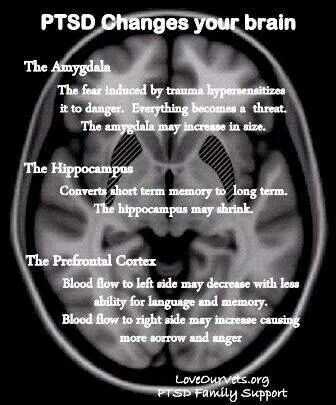
PTSD is a real physical injury.

ptsd_info_1

ptsd_info_2

Making your inner judge work for you.

heal_meme
Credit: Me (click to enlarge image)

I’ve recently met my Inner Critic, who from now on I’m going to call my Judge, because it’s funnier and seeing the Critic as cartoon-like helps me be able to make him seem  (I think of the Critic as male for some reason) less intimidating and scary.

I mentioned that the Judge, while keeping me trapped on a very thin tightrope, making me afraid of a lot of things, really is trying to protect me. Unfortunately the Judge’s overbearing manner can be abrasive and downright abusive, attempting to keep me trapped in old shaming thinking patterns (which apparently it thinks are best because it’s a big clueless dummy).

You need your Inner Judge, because it keeps you moral and doing the right thing. It also gangs up on you when you’ve let others step on your boundaries or abuse you (“how could you be so stupid to let that person take advantage of you AGAIN?”) The problem is, the voice isn’t very nice and feeds into your already low self-esteem. It makes you feel like a bad person–or a pathetic loser. As a result, you can be afraid to take any action.

For me, although I’ve used all the Four F’s, my primary defense has been and still is Dissociation.  Pete Walker talks about the Four F’s of C-PTSD–Fight (narcissism), Flight (obsessive-compulsiveness and workaholism to escape), Freeze (dissociation; withdrawal from humanity, self-isolation), and Fawn (being codependent).

The trick is to make your Inner Judge work FOR you instead of against you. My therapist had me try to think of “him” as being afraid rather than mean and judgmental. By having compassion for your Judge, you can actually change the way the Judge talks to us.

Changing the Judge’s script.

My Judge used to (and often still does) tell me things like:

1. You are worthless. You never accomplished anything of any value.
2. Who would listen to you? You think you’re some kind of expert? What sort of credentials do you have?
3. You’re over the hill and it’s too late for you. You will die poor, miserable and alone.
4. All your friends and everyone in your age group are making more money than you, own their own homes, can go on vacations, have real careers, etc. What’s wrong with you?
5. All your friends are still married or re-married, but you don’t have anyone and will never find anyone else. You’re too old to find anyone now.
6. You’re so weak and such a pushover.
7. You are too crazy to have a good life. You have too many mental issues.
8. You made bad choices, that’s why your life is like it is.
9. You’re embarrassing to be around and are socially awkward so it’s best if you keep your mouth shut.
10. Your accomplishments aren’t real, they don’t really count, so bragging about them makes you look like a narcissist.

And finally…
11. What is wrong with you?

These are lies, the same lies my abusers used against me as long as I can remember. These lies became internalized and now that I’m NC with my abusers, my Inner Judge still does their dirty flying monkey work. But unlike my abusers, my Judge can be trained to change the unhelpful, judgmental statements to things that can be more helpful, like:

1. You are worthwhile. You have accomplished as much as you have been able to, and that’s enough for right now.
2. Many people enjoy your blog and tell you how much it’s helped them. You have friends who love talking to you and like your insight about things. Just because you don’t have a piece of paper deeming you as an “expert” doesn’t mean you don’t know what you’re talking about.  You have the expertise of life experience, which is more valuable than any degree.
3. You’re never over the hill. Age is just a number. We evolve with age and get wiser. Getting old isn’t bad, but society likes to tell you it is.  even if you remain “alone,” you can still have friends, happiness, and a full life.
4. You might feel envious, but many people are doing worse than you. You have many blessings, and you also shouldn’t compare yourself to others. You should only compare your accomplishments to previous accomplishments, not those of others. We are all different and have different reasons for being here.
5. Being alone doesn’t have to be lonely. What’s so bad about being single? You could still find someone anyway. In the meantime, cultivate your skills, talents, self esteem and friendships. Those count for just as much if not more than “being part of a twosome.”
6. You’re strong and are getting good at setting boundaries that work but are also permeable enough to let others in sometimes.
7. You are not crazy. You have PTSD, which isn’t a mental illness, but a normal reaction to a series of abnormal events. And you’re getting better every day.
8. Yes, you made some bad choices, but who doesn’t? You also made those bad choices because you didn’t have a choice but to make them (you were programmed to always make the choice that kept you from taking any real risks or chances–which usually meant not making a choice at all–and this is what kept you from growing emotionally). This was NOT YOUR FAULT.
9. You are smart and a lot of people like you. You have a right to express what you feel.
10. You should be proud of your accomplishments. Talking about them sometimes isn’t bragging, it’s showing healthy self esteem.
11. What happened to you to make you believe such outrageous lies?   There was something wrong with the people who told you these lies.

Self-pity and self-compassion: there’s a huge difference!

self-compassion

I read a post yesterday on another blog that I agreed with, except there was one thing that didn’t quite sit right with me. The post said that self-pity is an important part of healing from Complex PTSD.

In his book (which I’m still reading), Complex PTSD: From Surviving to Thriving, Pete Walker says that self-compassion is an important part of healing, and I think this is what the blogger actually meant. But self-compassion isn’t the same thing as self-pity, an activity which I don’t find at all healing and in fact seems to make my problems worse. Of course we have the right to engage in self pity from time to time (and probably can’t help doing so), and no one should deny us the right to do so. But for me, it just doesn’t work. It’s an unpleasant, soul-sucking experience that seems to drive my negative programming even deeper than it already is.

The way I see it, the difference between self pity and self compassion is analogous to the difference between pity and empathy. I think this makes the distinction clearer.

Pity has an element of condescension or even contempt. You pity someone you dislike or look down on. It’s kind of like sympathy but it’s contaminated with judgment and scorn. You feel like you’re “better” than a person you pity. A wealthy banker may “feel sorry” for a homeless person without feeling a shred of empathy. The banker is glad they’re not homeless, and feels as if they’re above that anyway. If someone says “I feel so sorry for you,” or “I pity you,” you’re likely to feel offended and judged, not comforted. I hate being pitied so much I might be tempted to punch you if you do.

Superficially, empathy, compassion, or sympathy may seem like the same thing as pity, but they’re not the same at all. Sympathy means to feel sorry for someone without judgment or condescension, but it’s not quite the same as empathy, because it lacks the sharing of a feeling. It’s a shallower emotion, but it’s still better than pity. Compassion and empathy are interchangeable and both imply feeling “with” another person, or sharing an emotion with them. It’s giving your friend a heartfelt hug after a breakup, or laughing or crying with them when they’re happy or sad. It’s giving a homeless person your own sweater because you hate to see them shivering in the cold. There’s no condescension or judgment. When someone empathizes with you, they say, “I understand” or “that really must have hurt.” Doesn’t that feel a whole lot different than someone telling you, “I feel sorry for you.”

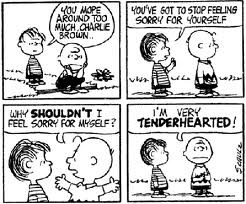
charlie_brown_tenderhearted

Self-pity is part of our toxic programming. It’s driven by shame. Self pity is when you sit around and think about how much your life sucks and how much YOU suck. There’s no self-nurturing or comfort in self pity, no self love, only self-hatred and shame. Self-pity enforces the terrible things we’ve already come to believe about ourselves. If we’ve been told time and again how stupid, bad, clumsy, ugly, or what a loser we are by our narcissists, eventually those voices become internalized and we develop a toxic inner voice called an Inner Critic. When you’re stuck in self pity, that’s your Inner Critic demeaning you and repeating to you the same lies about yourself your narcissists already drummed into you. You learn to abuse yourself, and self-pity is just self-abuse. When you say, “I suck” or “I’m a loser” or “nothing ever goes right for me,” you’re reinforcing the toxic programming and acting as a flying monkey against yourself.

Unfortunately, for those of us who suffered from narcissistic abuse, it’s common to wallow in self pity. It’s an all too familiar state of mind, but it isn’t the real you. The things we tell ourselves when we’re stuck in self pity are lies. When I get stuck in self pity, I feel just horrible. I just want to die. I usually wind up feeling resentful and angry at the world, but also ashamed of myself for being such a helpless victim and pathetic loser. I’m consumed with shame and guilt, which leads to depression. I also can’t release the negative emotion when I’m in self pity mode. I get stuck there and it drags me down and saps from me any energy or joy. I’ve had hangovers that felt more pleasant than a bout of toxic self-pity.

self-pity

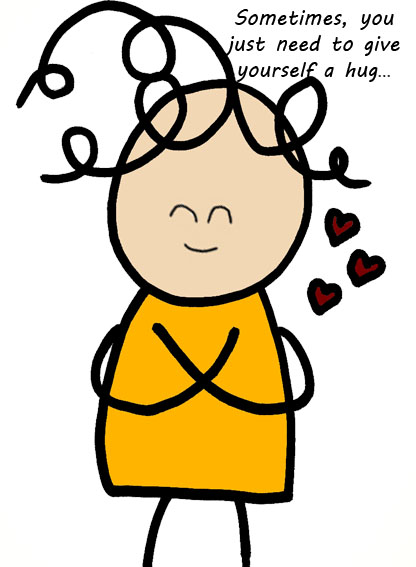
You can replace self pity with something much better that also feels a heck of a lot nicer: self-compassion. Self-compassion means acknowledging that you are a human being worthy of love, happiness and the good things in life, while empathizing with your inner child’s hurt over not having gotten those things. You give your inner child permission to feel sad or to grieve and agree with them how unfair it is that she/he got cheated or was abused. This may seem like self pity, but it’s not, because the element of judgment and shame isn’t there. You’re not beating yourself up over how terrible you think you are; you’re telling yourself you’re good and deserve better and allowing yourself to grieve. Instead of covering up your inner child with a paper bag, you’re offering her a hug.

It helps me to actually visualize my inner child. I have her talk to me and tell me what she needs and wants. I don’t judge her or try to shut her up; I just listen. If she feels sad, I tell her those feelings are valid and let her feel sad. If she feels mad, I let her express the anger (but at the same time reassure her she won’t be able to hurt anyone or anything because I won’t let her). I find that by non-judgmentally listening to what she wants and needs or how she feels, I’m eventually able to release any negative emotions and I don’t get stuck. By giving myself permission to feel without self-judgment or self-shaming, sometimes I wind up being able to cry, and as weird as it sounds, that always comes as such a relief. When I’m stuck in self pity, these healing tears never come, because the shame that’s been programmed into me won’t allow me to release them. My programming tells me the massive lie that crying is shameful and weak, when in actuality it’s sometimes the most healing thing you can do. Your Inner Critic is a narcissist who doesn’t want you to heal and that’s where all that awful self pity comes from.

Triggered.

Depression (1)

Some days are better than others. Overall, they are getting better and better, but there are days where I feel like I took three steps back and get trapped in my old toxic emotional thinking patterns. At those times I feel like I’m trapped inside a dark, moldy prison with no one but my own demons to talk to and will never be able to escape. I know that’s not true, and tomorrow will probably be better, but right now, at this moment, I’m in immense emotional pain.  I feel like if I died and went to hell, it wouldn’t much worse than this. I can’t just turn the pain off with a switch, the way the narcissists in my life seemed to expect me to be able to do.

I got triggered. At least I know what the trigger is. Today is my daughter’s birthday, and we were planning to drive up into the mountains and have lunch together. She was supposed to be here around 10 AM. But by eleven AM I still hadn’t heard from her. I began to panic and imagine some kind of catastrophe befell her, the way I always do because the world has always seemed incredibly dangerous to me and no one can be trusted.     You never know when you’re going to get bad news or when the other shoe will drop.  It’s a horrible way to live and I definitely don’t recommend it.   But it’s in my programming.   People think I’m nuts but I can’t help being this way.   It’s hard to change the programming.

Around noon, I finally got hold of her and she hadn’t gotten out of bed yet. She was hung over from a night of partying and she was also depressed. All I could think about was myself and what SHE was doing to ME. I told her I’d been looking forward to this and I’d taken the day off work to spend with her. She told me I was putting her on a guilt trip and she was right–I was. I apologized and told her to try to have a nice day and we’d get together another time. But I still felt triggered  and ornery.  I’d written a nice, positive post this morning about the fun day I was anticipating having with her, and what a great daughter she was, but I couldn’t bear to keep it up, so I removed it.

I spent the rest of the day alternately feeling sorry for myself and being angry. I did nothing but sit on the couch, switching channels mindlessly but not really watching anything, and poking around online but not really paying much attention to what I was looking at. I tried to read a little, but couldn’t focus and would keep reading the same sentence over and over, not comprehending the words. I yelled at my cat for no good reason. I snapped at my housemate. I thought about how much my life and everything in it sucks and how I’m not getting any younger and will probably be dead in the next 25 or 30 years with nothing to show for it.   I thought about how most people my age and even much younger are doing much better than me emotionally, financially, and every other way. They have healthy, real relationships because they were given the emotional tools to have those things.  My programming cut me off from having access to those things.   Of course I was constantly reminded of my inferiority by my unsupportive narcissistic family (I was rejected and labeled “the black sheep” for my failure to attain the “success” in life my very programming denied me) until I cut off almost all contact with them.  I was cruelly told to “sink or swim” but never given any swimming lessons and in fact spent most of my childhood with my head forcefully held under the water. That’s the sort of mindfuck you get when you’re the child of narcissists. You can’t win. You can only lose–and then you’re callously blamed for it. Sometimes you’re even disowned for it. I’ve been treading water–barely–for years, in constant fear of drowning.

The rain stopped and the sun is shining but I have no motivation to even go sit outside on the porch. All I want to do is stew in self pity and self hatred. Why? What good does it do? I hate it. Angry and bitter? You bet. But I refuse to drown in those feelings because I still hold onto hope that I can be a real person someday. I won’t give up on me, even though the people who were supposed to love me unconditionally did.

Finally I got a call from my daughter apologizing to me. She was crying. I felt so terrible. She told me how depressed she was and it sounded a lot like my own depression. She was talking about all the bad choices she’s made. She feels badly because some friends she went to school with are starting families or are getting advanced degrees or have careers and she has none of those things. But she’s just 23.  She blames herself. I could relate. I tried to be empathetic and not think about the way I feel very much in the same boat–only I’m a lot older and don’t have my whole life ahead of me or the options she still does. I assured her that she may be a late bloomer but that she is blooming and to be patient with herself. I may never be a perfect mom, but I will never give up on her or abandon her the way my family did to me, because it’s not something you ever get over. It ruins you. It murders your soul. I won’t let her soul be murdered.

Sorry this post wasn’t more upbeat. But I’m just really depressed today and needed to write about it. It doesn’t help to keep this crap inside.  

How to reparent yourself.

This short post went viral on my other blog, although I really have no idea why because not a whole lot of thought went into it and I wrote it on the fly, but it seemed to resonate, so I’m reblogging it here too. (Chair Girl is the name I give to my inner child in therapy).

The “Four F’s” of C-PTSD

child-abuse1

I just began reading “Complex PTSD: From Surviving to Thriving” by Pete Walker. I can already tell I won’t be able to put it down (I will write a book review when I’m finished, which shouldn’t take long). I’m also going to bring this book to my next therapy session because I want my therapist to see it.

Walker, who is a therapist and also a survivor of narcissistic abuse and sufferer of C-PTSD, is an engaging writer and definitely knows his subject matter. In one of the first chapters, he discusses the “Four F’s”–which are four different “styles” of coping that people with C-PTSD develop to cope with their abusive caregivers and avoid the abandonment depression. Whatever style one adopts may be based on several factors–natural temperament, the role in the family the child was given (scapegoat, golden child, “lost” or ignored child), birth order, and other factors.

complex_ptsd2
Available on Amazon

The Four F’s are:

1. Fight (the narcissistic defense): often “golden children,” such children learn to project shame onto others; may go on to develop NPD
2. Flight (the obsessive-compulsive/anxiety defense): these children will grow up to become highly anxious, obsessive-compulsive, and avoidant.
3. Freeze (the dissociative defense): these children “protect” themselves by dissociating from others, themselves, and their environment.
4. Fawn (the codependent defense): the child learns to avoid harm by people-pleasing or siding with their abusers.

Walker speculates that if C-PTSD were recognized in the psychiatric literature, the DSM could probably be reduced to the size of a pamphlet, for many people diagnosed with other disorders actually have C-PTSD, which encompasses symptoms of many other disorders and have common roots.

What you may have been misdiagnosed with (or diagnosed yourself with) if you have C-PTSD (these are the most common):

Personality Disorders:
Borderline Personality Disorder
Narcissistic Personality Disorder

Dissociative disorders

Anxiety Disorders:
Generalized Anxiety Disorder
Panic Disorder
Social Anxiety
Obsessive-Compulsive Disorder

Mood Disorders:
Depression
Bipolar Disorder

Developmental Disorders:
Autism Spectrum Disorders
ADHD
ADD

Codependency

Addictive Disorders

While any or all of these diagnoses can be co-morbid with C-PTSD, they miss the mark or don’t tell the whole story. Personality disorders such as BPD can develop from severe, unrelieved C-PTSD and they do share many similarities, but personality disorder labels are stigmatizing and not very helpful for someone who has suffered prolonged childhood trauma and abuse. Labels like “panic disorder” or “depression” aren’t helpful because they only address one or two symptoms of C-PTSD and therefore can’t even begin to address the roots of the depression or anxiety. You can treat anxiety or depression with drugs or short term therapy, but you can’t cure the person of the C-PTSD that’s causing their chronic anxiety or depression. The same goes for labels such as alcoholism or codependency. These are merely symptoms. People with C-PTSD are also sometimes erroneously diagnosed with developmental disorders such as ADHD or autism, which not only don’t address the trauma that led to the ADHD- or Aspergers-like behaviors, but also have completely different causes.

Empathy begins at home.

happy_childhood

I know that for a very long time I’ve had issues empathizing with others on a one to one basis (with a few rare exceptions like my children). It’s not that I like seeing others in pain or want to hurt them (I don’t, at all), more that I have had so much trouble connecting to my emotions, especially tender or vulnerable feelings, that this avoidance extends to everyone else. I’ve always felt empathy when it’s “safe” though–therefore I can cry for a character in a movie or novel, or even a TV commercial. I can get quite upset reading a news story about someone who’s been abused, especially if it’s an animal or a child.

But when it comes to real life people, I just can’t allow myself to get that close. I hold everyone at arm’s length. It’s too dangerous to let them in, because they might stir up emotions I haven’t wanted to feel. Of course this means emotional (as opposed to cognitive) empathy goes out the window too. You can’t feel an emotion for someone else if you can’t even access it for yourself.

It’s a common belief that all people who lack empathy are narcissists or psychopaths (or have some kind of schizoid disorder or psychosis, or autism). But a lack of empathy is also a common symptom in people with complex PTSD. Shutting off emotions–including empathy–is a defense mechanism that protects you from further harm. The problem is, this protection also “protects” you from feeling much joy or being able to really love anyone else.

Recently I’ve been feeling a kind of tender regard for my child-self/true self. Right now she’s not integrated and feels far away sometimes, but I can feel her sadness and pain. I can also feel that she’s a good person, a gentle sensitive spirit with so much love to give. I feel a tender protectiveness now where before I felt only shame and wanted to hide her away, just as she had been hidden away by the narcissists who “raised” her. So how was I any different from them, by keeping her hidden, projecting badness and shame onto her, refusing to see her strengths? Sometimes I just want to hold her like my own child. It’s not self-pity; it’s closer to empathy and even love.

Is this where empathy begins? Does it begin with loving yourself–your true self? If you hate your real self, you cannot learn to expand empathy onto others, since you can’t even empathize with yourself. If all you feel is shame, that is going to be projected onto others. That would apply to narcissists and the personality-disordered as well as people suffering from C-PTSD.   The problem for the disordered is it may be too late for some of them.  They are so thoroughly shielded by a false self they cannot even access their real selves or only with a great deal of difficulty that could take years.  There are much stronger defenses to break through.  They may be so shut off they can’t even see the lie they are living and think it’s everyone else–not them–with the problem.

The root of attachment and trauma disorders is is rejection of the self internalized from the people who were supposed to love you and mirror you; to heal, you must be able to develop empathy for your true self. That’s what my therapist has been helping me do.

Personal bias and diagnostic labels.

Thought I’d throw this one here too.   Leave comments on the original post.


Narcissistic Victim Syndrome (NVS): What the heck is that?

nvs

This is a very informative article about a type of complex PTSD suffered by victims of narcissistic abuse called Narcissistic Victim Syndrom, or NVS. Neither NVS or C-PTSD are currently recognized by the DSM, but are under consideration for future editions. Although this article is written for therapists, I think it belongs here and can be well understood by people who live with or whose lives have been seriously affected by narcissists. The author stresses that to be able to effectively work with patients with NVS, it’s necessary to be well-knowledged about NPD and narcissism(which abusers are most likely to have).

Narcissistic Victim Syndrome: What the heck is that?