When Narcissists Claim to be Victims of Narcissists – Who is the Narcissist?

One more great article from a fantastic blogger about narcissists who claim to be victims of narcissists…and then write about them. How to protect yourself in the blogosphere and identify who’s really a narcissist…and who is not.

If you blog about narcissists you will, sooner or later, probably be accused of being a narcissist. Don’t take it too personally. Just learn how to be wary and protect yourself.

Blogging about narcissism can be very crazymaking indeed.

anupturnedsoul's avatarAn Upturned Soul

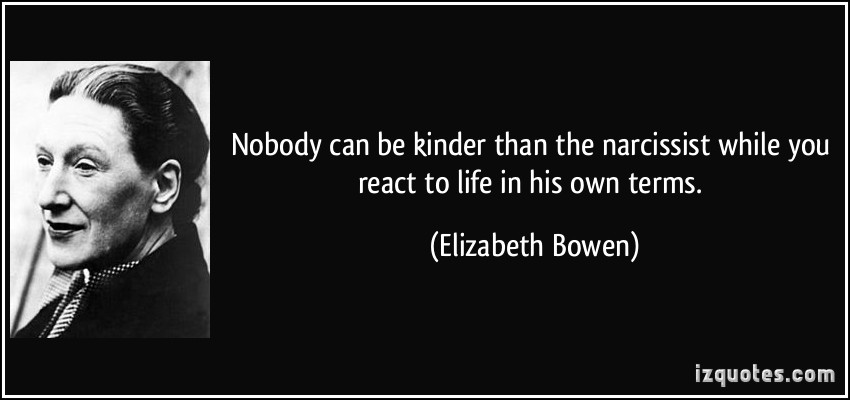
NPD - ELizabeth Bowen

If you’re searching online for information about Narcissists, Narcissism, Narcissistic Personality Disorder (NPD), Narcissistic parents, being a Child of Narcissists, an ACoN – Adult Child of Narcissists, being in a relationship with a Narcissist, being a Victim of a Narcissist, How to Play the Narcissist’s Game and maybe win, How to Piss a Narcissist Off (which is one of the most popular search terms in my stats), or any other variation on the theme, you will be inundated with results.

The subject of Narcissism is trending, a Hot Topic.

The internet is bursting with information about it, from professionals, experts in the field, and from people like me who are sharing their experiences and working their way through them publicly.

Why share your private story publicly?

If your particular Narcissist has managed to isolate you and surround you with people who are on their side, then the chances are that…

View original post 4,423 more words

New books for psychopathic business leaders!

business_books

Found in the same copy of MAD I wrote about a couple weeks ago … obviously this is supposed to be a joke but 3 of the titles recognize the psychopathy the business world reeks with!
Sorry about the crappy quality of the photo — my phone camera sucks.

The 3 titles are: “Blame Shifting for Success,” “Awaken the Cold and Heartless Capitalist Within,” and “The 7 Habits of Highly Dishonest People.”

No, these books are not actually for sale but they could be, because they’re not too far off from actual books about how to become a filthy rich narcissistic master of the universe.

All I ever wanted.

buy_books

Click image to enlarge.

Pathological narcissism test–how I scored.

You can take the test here.
http://www.yourpersonality.net/npi/npi4.pl
All three parts took me about 20 minutes.

Here are my results:


You completed three questionnaires that are designed to measure narcissistic tendencies: the Narcissistic Personality Inventory (NPI), the Narcissistic Admiration and Rivalry Questionnaire (NARQ), and the Narcissistic Personality Inventory(NPI). By completing all three of these measures, it should be possible for you to get a better understanding of how narissistic you are and, importantly, whether different measures agree in their assessment of your personality. We summarize your results below.

The Narcissistic Personality Inventory (NPI)

The NPI measures several distinct facets of Narcissism. Your overall score was 7 on a scale ranging from 0 to 40. The NPI assesses various facets of narcissism. We summarize three of the major facets below, along with your scores for each of them.

Your score on leadership is 1
You scored at the 6 th percentile on this subscale of the NPI. This means that 6 % of the people who have filled out this questionnaire to date have scores lower than yours. Leadership refers to a person’s leadership skills and power. People who score higher on authority like to be in charge. On the extreme ends of this trait, they like to gain power for power’s sake alone.

Your score on vanity is 3.
You scored at the 52 th percentile on the vanity subscale of the NPI. This means that 52 % of the people who have filled out this questionnaire to date have scores lower than yours. This trait refers to a person’s vanity–excessive pride in or admiration of one’s own appearance or achievements.

Your score on exhibitionism/entitlement is 0
You scored at the 11 th percentile on this subscale of the NPI. This means that 11 % of the people who have filled out this questionnaire to date have scores lower than yours. Exhibitionism refers to a person’s need to be the center of attention, and willingness to ensure they are the center of attention. At the extreme high end of this trait a person may try to become the center of attention at the expense of other’s needs. Entitlement refers to the extent to which people feel that the world owes them favorable treatment or the extent to which people feel that they have a right to something (e.g., praise, recognition, attention).

Pathological Narcissism Inventory (PNI)

One of the narcissism questionnaires you took was the Pathological Narcissism Inventory (NPI). The PNI comes from the clinical tradition of conceptualizing narcissism. It assess two pathological components of narcissism: grandiosity and vulnerability.

Your score on grandiosity is 29.
You scored at the 35.4 th percentile on this subscale of the PNI. This means that 35.4 % of the people who have filled out this questionnaire to date have scores lower than yours.

Grandiosity comprises three traits: exploitativeness, grandiose fantasy, and self-sacrificing self-enhancement. Exploitativeness refers to a person’s tendency to manipulate others. On the extreme high end of this trait people find it easy to talk their way out of things and have no scruples about influencing others into doing what they want them to do.

Grandiose fantasy refers to a person’s need to fantasize about being admired and accomplishing special things. On the extreme high end of this trait people constantly fantasize about being admired, respected, and famous. They also fantasize about having an impact on the world around them and performing heroic deeds. Self-sacrificing self-enhancement refers to a person’s tendency to help others in order to enhance their self-image. On the extreme high end of this trait people help others and make personal sacrifices for the benefit of others under the pretense of sincere altruism while their real goal is to maintain and enhance their inflated self-image. Helping others makes them feel important and better than the person receiving help.

Your score on vulnerability is 54.
You scored at the 93.2 th percentile on this subscale of the PNI. This means that 93.2 % of the people who have filled out this questionnaire to date have scores lower than yours.

Vulnerability comprises four traits: entitlement rage, contingent self-esteem, hiding the self, and devaluing. Entitlement rage refers to a person’s tendency to feel angry when they do not get what they think they deserve. On the extreme high end of this trait people feel very annoyed when they do not get the attention, admiration, and respect that they expect from others. They also get angry when they are criticized or do not get what they want from others. Contingent self-esteem refers to fluctuations in a person’s self-esteem that depend on the attention and recognition the person receives from others. On the extreme high end of this trait people only feel good about themselves when they receive attention, admiration, and acknowledgment from others. When they feel unnoticed or disliked, they feel worthless and bad about themselves.

Hiding the self refers to a person’s need to hide their faults and needs from others. On the extreme high end of this trait people feel anxious and ashamed when others notice their needs. They try to do everything on their own because they see it as a weakness to ask for help and rely on others. Devaluing refers to a person’s tendency to avoid people out of fear of being disappointed. On the extreme high end of this trait people feel ashamed for needing recognition from others. They avoid people when they are afraid that their expectations will not be met and they will not receive acknowledgment.

Narcissistic Admiration and Rivalry Questionnaire (NARQ)

One of the narcissism questionnaires you took was the Narcissistic Admiration and Rivalry Questionnaire (NARQ). The NARQ assesses narcissism as a normal personality trait. The two main components assessed by the NARQ are admiration and rivalry.

Your score on Admiration is 15 out of 45.

Admiration refers to a person’s need to be admired by others and to be the center of attention. Admiration also refers to whether a person views himself or herself as great, special, and better than others. People on the extreme high end of this trait tend to seek high levels of praise, attention, and admiration from others. They show self-assured and charming behaviors and feel that they have a right to favorable treatment. People high on admiration engage in fantasies of being very popular, beautiful, and powerful.

Your score on Rivalry is 21 out of 45.

Rivalry refers to a person’s need to defend his or her overly positive self-views against real or imagined threats such as criticism, failure, or a lack of attention. On the extreme high end of this trait people show a general disregard for the needs and feelings of others. Their derogatory attitudes towards other people are reflected by hostile and aggressive behaviors. They show annoyed and spiteful reactions when other people are successful and the center of attention.

Thank God, I’m not as narcissistic as I feared.
Excessive vulnerability appears to be my problem area, which does not surprise me.

You are just an object to a narcissist.

objectification

I saw this post in the NPD forum at Psychforums. The discussion was about narcissists who seem to care more about animals than people. “StupidPig,” a poster with NPD wrote an interesting post, which I think is a great explanation of what “love” means to a narcissist. In a nutshell: it’s not love. It’s not even really attachment. Everything is an object to them. A narcissist can be as “attached” to an object or an animal as a person, sometimes more so. It all depends whatever is giving the narcissist more pleasure/supply at a given time and whatever requires less maintenance or emotional input from them. The “love object” can change from one day to the next. People and animals are just objects to a narcissist.

I did not edit StupidPig’s post or correct his spelling errors.

http://www.psychforums.com/narcissistic-personality/topic47260-10.html

I am a narcissist with NPD, and I used to like to “own” animals as a kid. However, I never liked to “care” for them.

Someone with NPD cares only for his image, or what the books call the “Glorified Self Image”. Anything else other than his Glorified Self Image is considered an object to him (be it his mother, his children, his spouce, his boss, his car, his own body, or his pet snake or whatever) , and the value of such object will be defined only on basis of how much narcissistic supply it would give him. I.e. how much it enhances his Glorified Self Image.
So, if owning a dog (or a car or a pretty girlfriend) would make me look better, then I would enjoy it, but I would never do any effort to maintain the car, walk the dog, or be nice to the girlfriend, because, as someone with NPD, I have an exagerrated sense of entitlement. this means that I strongly belive that I “deserve” to have the objects that make me look good, and I do not need to do any effort to “keep” those objects.

A pet is no different from a spouce or a car or a friend or a watch or a parent to a Narc. It is just an object that gains value when it makes him look better or feel superior and loses value immidiatly if it doesn’t give him such supply. Based on this, if your car does a 18/20 job in making you look better and feel superior, while your dog does a 10/20 at that job, and your spouce or son does a 5/20, then you would love your care more than your dog and your dog more than your family. But, if on the next day your son wins the world championship in swiming and tells the world on TV that you, his father, is the reason behind this victory, you would shift into loving your son more than your dog and your car, and if three days latter your son makes a fight with you because he wants the car, and the car gets dented in an accident, you will love your dog more than your car and your son, and so on.

In all cases, the narc will never do much to maintain those “objects” and will never really hold any of them dear to his heart because they are all just objects to him.

Only in the light of this should one talk a comparitive view at the different objects in a narc ‘s life and their different merrits and drawbacks. using myself as an example, the advantages and dissadvantages go as follows:

– Pet-objects: They are submissive ( do not need much effort to do as told) and not judgemental (and so do not pose a threat to the Narc’s ego), but they do have several drawbacks, the most important of which is that they need feeding, cleaning, medical care, etc. Narcs hate objects that require lots of maintenance.
Another drawback concerning pet-objects is that they sometimes require “feelings” from you. Not as much as human-objects do of course, but it is still a nagging requirement.

– Human-objects: They can offer much more supply than a pet-object ( e.g. a woman-object who adores you gives more types and quantities of narcissistic supply than a dog) but the drawbacks are that human-objetcs require much more maintenance than other objects and are apt to judge you (and hence are a threat to the ego, or the glorified self image) and they need scary amounts of feelings in order to function properly and, worst of all, they might have “opinions” about your actions and would try to aplly measures that restrict your freedom. They are great objects but they come with a great price..in most cases, this makes them not worth the Narc’s effort(in his twisted opinion of course).

-Inanimate objects (like watches, cars, computers, etc) : They do what they are expected to do, they are never judgemental, and they do not require any emotional input to function properly and they hardly limit your freedom in anyway.

Give me robots at work, at home and in bed and I’ll be a very happy narcissist! ( oh, but please make them cheap, efficient, self maintaining and guranteed for life.)

But, once again, you are never really attached to any of those “things”. You can, as a narc, always kick your dog away for a better looking and more submissive dog, and never regret it. You will never feel any remorse for having sex a billion times outside your marriage, and you will never remember how your old battered car which served you for 10 years looked like after the first week of driving your new BMW around.
A narc may have a preference for one of those posessions over the other for one day (cat over son, girlfriend over dog), but don’t let that fool you, because it is only ephemeral and can very easily change on the next day.

Healing a narcissist is like performing a skeleton transplant.

skeleton-transplant
Credit: notrightinthehead.net

While it’s theoretically possible to heal NPD (some psychologists like Masterson and Kohut specialize in healing narcissistic and borderline disorders and have had results), in the real world, it’s exceedingly difficult and has rarely worked. As a self-diagnosed narcissistic young man recently said to me, for a full-blown narcissist to be cured (rather than simply treated for symptoms) would be no less daunting and excruciating than undergoing a skeleton transplant. It’s a good analogy.

Full blown NPD is almost always so deeply ingrained in the personality–since early childhood in most cases–that to remove it would practically remove the person’s whole personality. Its removal could even kill them (they would be driven to suicide as the False Self gives way to the true one).

But not quite. There is a tiny, atrophied but still-living seed deep inside every narcissist that never got to grow into a plant: the True Self.

Back in November, I wrote a post called “Could Reparenting Actually Cure a Narcissist.” That was around the time I became deeply interested in whether or not such a therapy–one that addressed the root causes of NPD rather than treating symptoms–could actually work, and since then I’ve have read a lot more about it and know a lot more than I did.

At that time, I came up with a series of 4 steps (based on the work of various professionals who specialize in NPD) that might be able to cure NPD in some cases:

Stage 1: The Narcissistic Crisis. A narcissist may enter therapy when their entire world falls apart and they have lost their primary (or all of their) sources of narcissistic supply. Like an addict without a fix, he will be in pain and may submit to therapy at that point–anything to diminish the pain of loss. The therapist must not offer the patient any narcissistic supply during this time! They must simply listen and make the narcissist feel safe enough to open up and talk.

Stage 2: Cold therapy/cold empathy. The therapist must continue to not give the narcissist any supply while not enraging them either. It’s a delicate balance and the narcissist is likely to project their anger and frustrations onto the therapist who is refusing them supply. Working from the rage and frustration, the therapist can guide the narcissist to think about the reasons why they feel so much rage, and start to address the trauma and hurt behind the rage. This may take a very long time and the narcissist is likely to leave therapy. Another reason the therapist must not give the narcissist any supply is because once the narcissist gets supply, like a drug addict, they may feel good enough to leave therapy.

Stage 3: Reparenting. The therapist takes the place of the mother who abused/rejected the narcissist as a child. Physical contact may be necessary and a waiver can be signed to allow limited nonsexual touching. At this point the narcissist will be in great pain and will internalize the unconditional support/maternal “love” the therapist will be giving, mostly through listening and not judging one way or the other. The therapist must remain empathetic and at the same time detached enough to not allow the narcissist to try to manipulate them (which they will be trying to do).

Stage 4: Retraining and Internalizing the Conscience. When the painful emotions from the past are addressed and released, the therapist can start the recovering narcissist in an intensive brain-retraining program in pro-social behaviors and developing a conscience, just as a young child would. This would probably require institutionalization in a very restrictive setting, such as a hospital or high security rehab center. The narcissist would need to “earn back” privileges by having none to begin with. They would be forced to ask permission to do anything at all, and rewarded and punished for bad or good behaviors. At the same time they would attend classes on empathy and given opportunities to practice and eventually internalize this new brain connection.

I have no idea if such a program would actually work, but in the best case scenario, I think it could. Most narcissists won’t stick it out though, so maybe it could be instituted on narcissistic prisoners, who cannot leave prison, or those in mental hospitals (depressed narcissists are often hospitalized).

depression

Today I read an article by Melanie Tonia Evans, called “What Would It Take for a Narcissist to Heal?” Her idea for curing a narcissist is remarkably similar to what I’ve proposed (and others have proposed):

The Narcissist’s “Healing Cell”
I remember years ago (unfortunately I can’t remember the source, so if anyone knows please tell me!) I came across an article regarding a person’s theory about how a narcissist could heal.

Knowing what I know now I agree…

It goes like this…

The solution:

Solitary confinement with no possibility of contact with the outside world, or the gaining of narcissistic supply.

Then, a committed effort to meet and release the original emotional traumas.

Then, stimulation and re-learning of empathy, compassion, connection to life and others, and integrity. Effectively re-parenting where these brain pathways left off, in order to catch them up to present time.

Truly – what narcissist is going to go through that? What facility is there to have that happen?

Additionally there would have to be every method possible to stop the narcissist committing suicide, because if narcissistic supply was removed, the narcissist would not want to live.

Please note I am not stating this is the case for people with mere ego issues or even narcissistic tendencies.

I believe everyone – co-dependents, and even ‘normal’ people all have varying degrees of survival mechanisms which are creating them to be not aligned in the true harmony of Who They Are.

All of these fears emenate from inner wounds that we closed down inside of us and tried to protect.

I have worked with thousands of people with confronting and releasing inner wounds, as well as confronting and releasing my own inner wounds, and I know the courage and commitment it takes to face them, to let them go and be free of them.

And I know that the people who decide to do this, need to commit to dropping all addiction (avoidance techniques) to be willing to be with and meet their pain in order to finally deal with it, and be liberated from it.

That’s what personal evolution and growth is all about.

Quick fixes, opting out, and self-avoidance just doesn’t cut it!

I have seen people who have had enough of living a life through their inner wounds, absolutely make the decision enough is enough and do the work.

Interestingly, I have been receiving many more than normal emails from people claiming to be narcissists who have had enough of the pain, and want to heal.

I refer all of these people onto the Narcissistic Abuse Recovery Program. Their healing is identical to the healing for co-dependents. It is ALL about healing the traumas of abuse, and releasing fear, pain and survival programs.

These people may be in narcissistic injury and will discredit the Program later, or maybe the pain has become greater than the False Self – and maybe they are not fully NPD.

It is individuals suffering with NPD (Narcissistic Personality Disorder) who I believe are incapable of doing this.

My definition of NPD is when a person has crossed the line into malicious, pathological, and conscienceless behaviour.

– See more at: http://blog.melanietoniaevans.com/what-would-it-take-for-a-narcissist-to-heal/#sthash.IN7qE2ct.dpuf

Evans goes on to explain why therapies that only address the narcissist’s behaviors (like CBT) don’t really work because they never even get close to addressing and releasing the original trauma that caused the NPD.

The most effective therapy for someone with NPD would be pretty much the same trauma therapy that works on people with other trauma-based disorders such as C-PTSD and PTSD–because NPD *is* trauma-based. But she also admits that a narcissist sticking out such a program for the duration (and it can take years) is highly unlikely. They are most likely to flee therapy during the painful process of retrieving memories and releasing painful emotions, because narcissism is all about masking painful emotions. She explains it this way:

It’s sad, and it’s tragic because narcissists are the product of abuse, sometimes bad genetics, and often cruel violence, abandonment or pathological engulfment.

They did not ‘choose’ logically to kill off their True Self and live a pathological life – being more and more taken over by a painful, empty, angry , demanding and never appeased False Self.

However, we have to realise the truth.

There is no helping someone who won’t (or can’t) help themselves.

Being attached to a narcissist is not like being attached to a helpless person such as a quadraplegic. I totally understand the devotion people have when they sacrifice their lives to lovingly assist others.

The narcissist, however, as this helpless to ‘get better’ person is viscious, calculating and he or she will abuse you all the way to your demise. THAT is why you need to stop trying to fix this person.

Whilst the False Self is on guard there is no breaking through to a narcissist, and no getting them to work on these deep inner wounds – which are EXACTLY what they have been avoiding, deflecting and projecting on to other people their entire life.

To meet the inner wounds is equal to annihilation for a narcissist – it just can’t be done.

Sam Vaknin describes it as the narcissist intuitively knowing that he or she does not have the inner resources to deal with the onslaught of these inner wounds. His belief is that a narcissist would risk a complete psychotic and catatonic breakdown if he or she did face these wounds.

Knowing what I know about energy healing – I do know it is possible in theory for a narcissist to energetically claim and clear wounds and re-connect back to the Source of wellbeing that all of us are connected to at some level…even narcissists.

It would be excruciating and gruelling, and incredibly painful – but (I believe) it could be done.

However, here is the sticking point.

The narcissist is addicted to narcissistic supply worse than a heroin addict is addicted to heroin. The narcissist literally feels like he or she would disappear into oblivion if not getting an energy supply (attention) from the outside. The narcissist has ‘killed off’ his or her connection to being an energy Source from ‘self’.

What this means is: the narcissist when feeling any emotional low (frequent) will frenetically need to get a ‘hit’ to try to offset the pain.

Deep inner healing and personal transformation for anyone is all about being with the pain and resisting these urges to self-avoid – and dealing directly with the pain instead.

The narcissist’s False Self is its own entity which has taken over the narcissist.

The False Self has all the reasons, all the excuses, and all the justifications to make what the narcissist does as ‘okay’.

It’s like a devil on the narcissist’s shoulder talking him or her into the most outrageous reactions and acts possible. Many narcissists (Sam Vaknin agrees) report that whilst doing these acts – it is like an out of body experience – it is like the False Self has completely taken over – and the narcissist is watching from the side lines unable to stop it happening.

That takes ‘knee jerk reaction’ to a whole new level.

So, is the False Self going to consistently go to a healing space over and over again, go within and leave alone the outside world and narcissistic supply in order to face and release deep inner traumatic wounds?

The answer is FIRMLY “No”…

What I have observed is that it is only narcissists in deep narcissistic injury ( life has hit SO hard), and are literally on their knees, who will dedicate time to inner healing. The reason is because when life kicks someone that hard – the ego is temporarily too injured to operate.

Life can be a HUGE humbler in the face of shocking catastrophe.

However, the narcissist’s brain has been established and hard wired onto obtaining narcissistic supply for most of their life.

Therefore as soon as a therapist grants the narcissist enough attention (narcissistic supply) for the False Self to reinstate itself again, those brain pathways start firing again, and the narcissist’s humility is incredibly short-lived.

He or she is back to the grandiose, entitled conscienceless version of hunting narcissistic supply – and on the story goes…

So the prospect of someone with NPD being healed (at least for those at mid-spectrum and above) does look pretty bleak, even though in theory (and in very rare cases) they could be.

Dr. James Masterson has apparently had some success though. I’m currently reading his book “The Search for the Real Self” (which I’ll be reviewing at a later point). In the book are two case studies of two men named Walter and Frank, both who suffered from NPD. Both were cured of their disorder using psychoanalytic techniques. Particularly moving was Frank’s story, because his narcissism was more severe and it took over five years of incredibly painful and intensive therapy for him to be healed of NPD and begin to experience actual emotions of empathy and love. I think the fact that this disorder was ever healed at all to be very hopeful.

But never, ever try to fix a narcissist yourself. You can’t.
I want to reduce the hours I spend at my job.

money-happiness-scale

In order to pay my bills and keep a roof over my head, I currently work for a housecleaning company. I actually don’t mind the work but the job can be VERY physically stressful (though it does keep me in shape and saves me the expense of a gym membership). I also don’t like the way things in the home office are run (I will not go into details here) or the blatant favoritism I have to deal with constantly (which seems to exist in most service jobs).

The office politics really stresses me out and as with most of the other service jobs I’ve held, I’ve reached a point of burnout where I really dread even going to work anymore. I do not really want to look for yet another crappy service job, and writing jobs in this area are practically nonexistent, unless you have a journalism degree which is required to write for one of the local newspapers. Obviously, I’d rather write for a living. I actually used to, when I lived in the northeast about 20 years ago.

If I could, I would write all day, every day. I want more time than the weekends and evenings to do this (because I’m simply too exhausted sometimes to write as much as I’d like). Sometimes I wind up staying up until 2 or 3 in the morning to catch up on reading and posting, but of course then I’m in no condition to be at my job at 8 in the morning. At my age, trying to get by on 3-4 hours of sleep is very unhealthy and then I go to work feeling like absolute crap.

So until something better comes along, I’m considering going from fulltime to part time–working only 4 days a week instead of 5. The job doesn’t offer health insurance anyway, so I really wouldn’t be losing anything except a day’s pay.

My conundrum is that even working 5 days a week, I barely earn enough to pay my bills. I don’t even have cable TV anymore because I can’t afford it (not that I need it). I never go on vacations, not even weekend getaways. I can’t even afford the movies. I drive a 13 year old car with expired tags because I can’t afford to have the repairs done that would get it to pass inspection. My disposable income is almost nonexistent–it actually qualifies me as “poverty level” according to the national tables. So obviously I really can’t afford to lose a day of work.

On the other hand, why should my life consist of spending most of it doing something I don’t really want to be doing? Our narcissistic Powers That Be would like to keep most of us working like dogs, earning slave wages, and possibly dying an early death due to work-related stress with no health insurance or safety nets at all should we become ill, but dammit, I am sick to death of being one of the sheep that feeds their coffers but gets nothing in return but a bare-survival income that does nothing for me but keeps me from being on the streets.

I need an extra day to relax and write as much as I want, and even start writing a book. It’s hard to squeeze everything I’d like to do into weekends and evenings. But the money situation is worrisome too. So I’d like to get your opinions on what YOU would do if you were in my shoes.

Is “survival money” more important than doing something you love, even if that thing you love pays nothing? Or is it better to take the risk to chase happiness and have faith that somehow, even with less time spent working at a humdrum job, the money you need will still be there?

Please do not suggest I approach my family for help. That is not an option for me.

23 signs you’re secretly a narcissist masquerading as a “sensitive introvert”

covert_narcissism

Ruji posted a link to this article from Scientific American and I thought it was so interesting it deserves a blog post of its own. (It’s also quite funny.)

Ever known anyone like this? Of course you have. He’s the nerdy bookworm you know who always talks (proudly) about what an introvert, INFP, or HSP he is, but always changes the subject when you have a problem you want to talk about or is suddenly “too busy” when you need help moving.

She’s your long-suffering, martyred mother who constantly whines about how much she does for you and how unappreciated she is.

She’s your quiet coworker who cries at the drop of a hat but complains loudly when others are given credit, rewards or praise and she isn’t.

He’s the sensitive songwriting hipster who writes confessional ballads about heartbreak and rejection but treats his girlfriend like a piece of furniture or sometimes a punching bag.

All narcissists are highly sensitive about themselves and cannot tolerate criticism, rejection, or being ignored. They are all very easily hurt and cannot laugh at themselves. But all narcissists–whether covert or grandiose/aggressive (the more traditional type recognized by the DSM)–lack empathy, which means they are highly insensitive to the needs of anyone else. The difference between an grandiose/aggressive (traditional) narcissist and a covert one is a matter of, well, grandiosity and aggressive behavior. An aggressive or grandiose narcissist believes they are special, unique, better than everyone else and demand to be treated as such (and will rage and attack if they are not), while a covert narcissist believes they are beneath contempt and expect everyone to give their problems #1 priority (and are more likely to sulk and whine than overtly attack). But make no mistake–both types of narcissists are emotional vampires because both think they are the most important human beings on the planet and manipulate and abuse others to get what they want, even though one advertises their emotional vulnerability and low self-esteem and the other masks it behind a facade of stoic invulnerability. Covert narcissism has been referred to elsewhere as “vulnerable narcissism.”

Reading this, a question formed in my mind. The items on the test for covert narcissism seem suspiciously similar to many of the characteristics of BPD (except for the introversion, but borderlines can be introverted too). In reading about covert narcissism and BPD in general, there doesn’t seem to be a lot of difference. Covert narcissism is not recognized as a disorder by the DSM but BPD is. Are covert narcissism and BPD the same thing? I seem to have a lot of these traits. Guess I’ll have to take the test at the end of this article.

23 Signs You’re Secretly a Narcissist Masquerading as a Sensitive Introvert.
By Scott Barry Kaufman

If I see one more listicle about introversion, I’m going to cry.

It started out with the fairly reasonable “31 Unmistakable Signs That You’re An Introvert.” Sure, many of the items on the list offered an exaggerated version of introversion, but there were some real gems that had a large grain of truth. Like this one:

covert_narcissist

But then this happened:

22 Signs Your Dog’s An Introvert

“He often wears headphones with no music playing, in the hopes no one will try and talk to him.”

You’d think that’d be enough for a lifetime of listicles. But no… they kept coming, mixing together many different traits under the general umbrella “introversion.” For instance, some lists include shyness-related behaviors, but it’s well documented that shyness is not the same thing as introversion. Shyness is more related to being anxious and neurotic. There are plenty of introverts who prefer alone time but really aren’t anxious or shy when interacting with other people.

Another common misconception perpetuated by these listicles is that introversion and sensory processing sensitivity are the same thing. From “23 Signs You’re Secretly An Introvert”:

“While extroverts tend to get bored easily when they don’t have enough to do, introverts have the opposite problem — they get easily distracted and overwhelmed in environments with an excess of stimulation.”

Actually, sensory processing sensitivity is not the same thing as introversion. There are plenty of socially introverted folks who can deal with loud sounds and bright lights, even though they may get emotionally drained from too many superficial social interactions. Vice versa, there are plenty of socially extroverted individuals who get overstimulated by sensory input. A number of studies support that idea that sensory processing sensitivity is much more strongly linked to anxiety (neuroticism) and openness to experience than introversion.

But when I saw this listicle, I just about flipped my lid:

7 Signs Kanye West Is Secretly An Introvert

Really? Let’s clarify something here: Narcissism is definitely not the same thing as introversion.

Have you ever met someone who constantly tells you how “sensitive” and “introverted” they are, but all you actually see is selfishness and egocentricity? I’m sure you have, because these people exist in spades.

When most people think of narcissism, they think of the public face of narcissism: extroversion, aggression, self-assuredness, grandiosity, vanity, and the need to be admired by others (see “How to Spot a Narcissist”). But as far back as 1938, Harvard psychologist Henry Murray noticed another breed of narcissist among his undergraduates: the covert narcissist. While the “overt” narcissists tended to be aggressive, self-aggrandizing, exploitative, and have extreme delusions of grandeur and a need for attention, “covert” narcissists were more prone to feelings of neglect or belittlement, hypersensitivity, anxiety, and delusions of persecution.

In the 90s, psychologist Paul Wink analyzed a variety of narcissism scales and confirmed that there are indeed two distinct faces of narcissism, which they labeled “Grandiosity-Exhibitonism” and “Vulnerability-Sensitivity”. He found that both shades of narcissism shared a common core of conceit, arrogance, and the tendency to give in to one’s own needs and disregard others. But that’s where the similarities ended.

While Grandiosity-Exhibitionism was associated with extraversion, aggressiveness, self-assuredness, and the need to be admired by others, Vulnerability-Sensitivity was associated with introversion, hypersensitivity, defensiveness, anxiety, and vulnerability. Further research by Jonathan Cheek and Jennifer Odessa Grimes at Wellesley College found a moderate correlation between covert narcissism and the Highly Sensitive Person Scale developed by Elaine Aron.

In other words, while introversion, sensitivity, and narcissism are all partially separate traits, hypersensitive covert narcissists are more likely to report that they are introverted and sensitive.

Are You a Covert Narcissist?

By this point, you’re probably wondering if you’re secretly a hypersensitive covert narcissist masquerading as a sensitive introvert. Without further ado, here are 23 items that will allow you to gain greater insight into your personality. In a recent study conducted on a group of 420 undergraduates, Jonathan Cheek and colleagues found that higher scorers on this “Maladaptive Covert Narcissism Scale” tended to also score higher on tests of entitlement, shame, and neuroticism, and tended to display lower levels of self esteem, extraversion, agreeableness, and conscientiousness. In contrast, maladaptive overt narcissism wasn’t related to shame, self esteem, or neuroticism, even though overt narcissists reported feeling just as entitled as covert narcissists. It seems if you have to be a narcissist, it’s better to be an overt narcissist than a covert narcissist!

So here’s the test. Be honest with yourself!

Take the test and read the rest of the article here:
http://blogs.scientificamerican.com/beautiful-minds/23-signs-youe28099re-secretly-a-narcissist-masquerading-as-a-sensitive-introvert/

Does your narcissist do this?

no_empathy

There is something I noticed narcissists do, that is one of the most infuriating things about them. They seek to invalidate your experience or side with others who have hurt you, even if there’s no real reason for them to do this.

Here are some examples from real life:

You: “I don’t really like that person.”
Narcissist: “Well, *I* never had a problem with them.”

You: “I really like that person.”
Narcissist: “Well, *I* don’t!”

You: “I wish we got paid every week instead of every two weeks.”
Narcissist: “Well, it doesn’t bother *me*!”

You: “I’m so heartbroken since he left.”
Narcissist: “Well, if you had been more attentive he might have stayed!”

You: “I wish I had more friends.”
Narcissist: “Well, you’re not that easy to be around, you know.”

A great example of this is the way my mother used to act when I told her about a problem I was having at work. No matter what the situation, it was always my fault. One time I made the mistake of telling her I thought there was a lot of favoritism at my job and I was being passed over for promotions (a problem that’s familiar to me due to my avoidant/Aspie personality). Instead of getting sympathy or support, she shot back with, “Well, you must be doing something wrong. You’re not the most pleasant person to deal with, you know.” This sort of thing happened all the time. Everything bad that happened was ALWAYS somehow my fault. That’s how narcissists invalidate your experience and diminish you at the same time.

Another version of the same thing is if you object to one of their insults, they will accuse you of being too sensitive or having no sense of humor.

“I really take offense to what you just said.”
Narcissist: “Well, it was only a JOKE! Lighten up.” (usually what they said was not meant to be a joke, so this is a lie).

Narcissists will never offer support, encouragement, or comfort. They seek to demean you by never taking your side, even when there’s no reason not to. They like to be contrary just to be contrary and “keep you in your place.”

Online narcissism: writers with NPD

envious_blogger

This is a very interesting and well written article about how to identify if a blog is written by a narcissist. I’m sure I’ve been guilty of a few of these things myself at times (I think blogging is by nature a bit of a narcissistic activity), but watch out for someone who does these things on a regular basis, or has most or all of the traits listed here:

http://hubpages.com/hub/Online-Narcissism-Writers-with-NPD

I also highly recommend reading this article from The Narcissistic Continuum (which I reblogged here), which is probably the best article about online narcissism I ever read–the writer misses NOTHING!

One more thing I’d like to add. I think the best indicator to tell if a blogger is a narcissist is to look at the way they respond to comments. Aggression and combativeness (which could include sarcasm and snarkiness) is a huge red flag, the way I see it. If a blogger can’t accept disagreement or differing opinions without resorting to aggression or personal attacks, you might not want to bother commenting if you disagree with them, unless you want a new one ripped for yourself. Even if you agree with what they wrote, telling them so is just feeding their need for narcissistic supply.