
The 16 kinds of bloggers: which one are you?

different_bloggers

There are as many types of bloggers as there are blogs. Here I’m going to describe the 15 different types of bloggers I’ve encountered in the blogosphere. Which one are you?

1. The Self-Therapist.
I began my blogging experience as a member of this category. Having just left a long, abusive relationship, I felt the need to document my journey to recovery after abuse by writing about it. My intuition told me that making my therapeutic journal public for all eyes would ultimately be more beneficial for me than just putting it on WordPad or something. My intuition proved correct and I’ve been able to help others too, just by going public. Now I seem to have moved more in the direction of The General Purpose Blogger (#13). This type of blog has become increasingly common in recent years, probably because of the sagging economy that makes it difficult for many people to be able to access or afford good psychotherapy.

2. The Journalist.
Somewhat related to #1, The Journalist writes about their daily experiences, observations, thoughts, opinions, activities, etc. for the whole world to see. The intention isn’t necessarily self-therapeutic, just a way to express to the world their subjective state or feelings at the time. If well written, these blogs can be brilliant and entertaining slices of life many people can relate to, sometimes rivaling New Yorker essays. But if the writer isn’t careful (or is a terrible writer), such posts could come off as narcissistic or just mind-numbingly boring.

3. The Show-Off.
This may be the most common sort of blog, and they are a dime a dozen. Basically an extension of a Facebook or social media page, Show Offs post blog entries documenting family picnics, children’s school events, Breanne and Jacob’s soccer trophies, the progression of the blogger’s pregnancy, home projects, the Family Trip to Disney World, “what I cooked for dinner for the kids last night using only leftovers,” and other bland minutiae of family life. These would be the infamous “Mommy blogs” that have become so vilified of late. Show Off blogs aren’t just limited to moms though–here you would also find teenagers and young adults posting pictures of their friends making silly faces, documenting their social activities, posting videos of drunken parties, and of course, lots and lots of selfies. Show Off blogs could also include pet lovers posting pictures of Fido sporting his new rubber boots or Fifi in her brand new tutu. In all cases, these sort of blogs are essentially extensions of their social media page. Sometimes these sort of blogs even include a Music Player (always the blogger’s current favorite song) that cannot be turned off when viewing the blog.

dog_dress

4. The Vindicator.
Not that common, but there are a few blogs that exist solely to “get back” at a person or group of persons they feel offended them personally. Blog entries are basically endless rants against the offending person or group. Occasionally, the person or group attacked will attack back, and blog wars can arise. These kind of blogs tend to be short lived, until the blogger’s rage burns out, or the offending party (now the offended) threatens civil action.

5. The Pundit.
Many blogs are basically political soapboxes for people to spew their political beliefs. Nothing more needs to be said. There are also bloggers on larger news sites such as Huffington Post, who have been given their own license to do the same thing.

6. The Preacher.
Related to The Politician (above), The Preacher’s mission is to convert everyone to their belief system, whatever it may be. These blowhards may quote from the Bible or other religious text excessively to back their views. If you don’t do exactly as they say, you are going to burn in Hell. Disagreement in comments is usually not tolerated, and comments are sometimes not even allowed.

preaching-fire

7. The Expert.
Usually a professional in their field, such a blogger may be a paid guest blogger for a large website. Such experts could be doctors, psychologists, nurses, teachers, finance and business executives, or experts in any other field.

8. The Practical Muse.
These are the “how-to” bloggers, who focus on their hobbies or interests like cooking, gardening, home decor, beauty and fashion, child-rearing, car maintenance, blogging, etc. Sometimes the focus is more specific: bonsai gardening, dessert cookery, antique car maintenance, fashion for wannabe hip hop stars, raising a child with autism, blogging for fame and fortune, etc.

9. The Creative Writer.
These blogs can be either great or terrible. These are the blogs where you’ll find the angsty adolescent poetry, word-salad like prose, bad (or sometimes great) fiction, fan fiction, etc. This category sometimes bleeds over into #1 (The Self Therapist) or #2 (The Journalist).

10. The Hater.
Blogs like these exist to celebrate hatred toward a person (usually a celebrity or other public figure) or group of people. These blogs can be entertaining (if you agree with the prevailing sentiment) or infuriating (if you do not). Unless you are in a agreement, it’s probably best not to comment on these blogs, because you will be mobbed and acquire a new lower orifice in the process. Hater blogs tend to last only as long as the blogger’s passionate ire lasts, so they tend to burn themselves out (or are sometimes forced to be taken down by offended parties).

bieber_hate

11. The Motivational Blogger.
All sweetness and light and positive thinking, 24/7, 365 days a year. Such bloggers focus on inspirational memes, verses, quotes, and sometimes original essays, meant to make you feel inspired or motivated. Unfortunately blogs like these can sometimes have the unintended effect of making you feel like a horrible person or a failure because you’re not that upbeat, happy and successful all the time. Or they can simply be annoying.

12. The Artist.
A showcase for an artist’s creations, showing their paintings, sculpture, photography, jewelry, etc. Sometimes these can also be “Merchant” blogs, if the artwork is for sale.

13. The General Purpose Blogger.
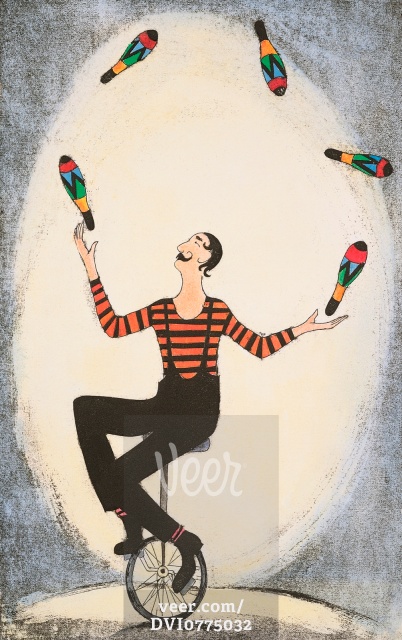
Opinionated Man’s A Good Blog Is Hard to Find (formerly HarsH ReaLiTy) is such a blog. A General Purpose blogger writes about everything. Nothing is off limits. General Purpose blogs tend to become popular due to the fact they attract a large audience who have varying interests. The only problem with blogs of this type is the blogger can be seeming to spread themselves too thin, and the blog seems to lack a focus or sense of cohesiveness and can overwhelm readers with too much information.

This blog seems to be veering in the General Purpose direction too, because I’ve been running out of new things to say about narcissism (and frankly I’m getting a little burned out on the subject too). But it’s always been sort of a general purpose blog anyway, because from the very beginning only about 80% of my articles have been about narcissism or mental health. I’ve always written about other things too. It’s just that lately, “other things” is a larger chunk of the pie.
juggler

14. The Popularity Seeker.
These bloggers just want to get as many views and hits as they can. They want to present an image–a sort of online “false self,” if you will. They are trying to be cool and only write about things they think are cool or “cutting edge,” even if those things don’t really interest them. You can always tell a blog that’s trying too hard to be popular, because it will usually bore you to tears. You can just tell the blogger doesn’t really give a shit about what they’re posting, they just want as much traffic as they can get and want to present an image of something they probably aren’t in real life. Bloggers like these are usually narcissists or people with low self esteem using blogging to try to feel better about themselves.

15. The Merchant/Entrepreneur.
A blogger whose posts are essentially cleverly concealed advertisements for items or services they’re selling. Artist blogs (#12) often (but not always) bleed over into this category.

16. The Fan.
Like #10, fan blogs focus on a celebrity or other public figure, only the blogger is a fan instead of a hater. Haters of the blogger’s object of adoration need not comment.

Does excess praise and spoiling create narcissists?

mini_me

Many experts, including Sam Vaknin, think spoiling a child or pouring on excess praise (placing them on a pedestal) is actually a form of child abuse, because it does not mirror the child as who they really are, but as who the parents wish them to be or believe them to be. Children not mirrored appropriately, whether excessively criticized or excessively praised, grow up unable to form a viable true self and are vulnerable to developing disorders of the self, especially NPD.

The following article explains in further detail why excessively praising a child can actually hurt their self esteem, rather than help it develop normally. It also describes the two types of praise–one that builds self esteem because it takes a child’s effort into account (“you worked hard to win that contest” or “you showed a lot of dedication in getting those A’s”) and one that fosters narcissism because it implies inherent superiority over others (“you’re the prettiest girl in school” or “you’re the smartest kid ever”).

Do Parents Nurture Narcissists By Pouring On The Praise?
By Poncie Rush, for NPR.org

When a kid does something amazing, you want to tell her so. You might tell her that she’s very smart. You might tell her that she’s a very special kid. Or you might say that she must have worked really hard.

On the surface, they all sound like the same compliments. But according to Brad Bushman, a communications and psychology professor at Ohio State University, the first two increase the child’s chances of becoming a narcissist. Only the last one raises the child’s self-esteem and keeps her ego in check.

Bushman and a group of collaborators surveyed parents to see how they show warmth and value their child’s accomplishments. They then compared those findings to the children’s levels of self-esteem and narcissism. The results were published Monday in the Proceedings of the National Academy of Sciences.

Of course, self-esteem and narcissism are two very different things. The difference has to do with how you value yourself compared to other people. “Self-esteem basically means you’re a person of worth equal with other people,” Bushman tells Shots. “Narcissism means you think you’re better than other people.”

And not in a good way.

“Narcissism is a somewhat toxic personality trait,” Jean Twenge, author of The Narcissism Epidemic and psychology professor at San Diego State University, tells Shots. Narcissists tend to overestimate their abilities, take too many risks and mess up their relationships, she says. Some people see narcissists hurting the people and society around them, but they hurt themselves, too. “In the long term it tends to lead to failure,” Twenge says.

While narcissists tend to have high self-esteem [my note–this is not true], not all people with high self-esteem are narcissists. Bushman needed to separate the two. So he asked children ages 7 to 12 years old how they felt about statements like “Some kids like the kind of person they are,” or “Kids like me deserve something extra.” The first statement measures self-esteem; the second, narcissism.

Bushman made sure to focus on children between 7 and 12 years old, so that by the time the study finished all of them would be older than 8. “You can’t measure narcissism in children before age 8, because every child is a narcissist,” he says. If you ask younger kids in a classroom if they are good at math or good at baseball, Bushman says all the kids will raise their hands.

Then he surveyed the children’s parents, asking them to respond to statements to determine whether they overvalued their children. For example, “I would not be surprised to learn that my child has extraordinary talents and abilities,” or “Without my child, his/her class would be much less fun.” And he asked how they expressed warmth toward their child by measuring how strongly they agreed with statements like “I let my child know I love him/her.”

child_on_pedestal

When he analyzed the results from the surveys, Bushman found that the more narcissistic children had parents who consistently overvalued their accomplishments. He ran additional tests to make sure that the parents weren’t narcissists, too — after all, it’s possible that the children could be mirroring narcissistic behavior. But statistically, the children of narcissists aren’t more likely to be narcissists themselves.

The research team continued to survey the same group of 565 children and their parents for a year and a half. They watched the children develop, and they could link each child’s tendency toward self-esteem or narcissism back to what the parents had told them six months earlier.

“We’re not just measuring their narcissism at time one; we’re using these measures to predict the behavior a year and a half later,” says Bushman. “Parental warmth doesn’t predict it. Parental narcissism alone doesn’t predict it. But parental overvaluation alone does predict it.”

Bushman is particularly worried about narcissism because both he and other researchers have linked it to aggressive and violent behavior. He thinks it’s partly because narcissists are less likely to feel empathy toward others.

“Empathy involves putting yourselves in other people’s shoes, but narcissists have a very difficult time putting themselves in other people’s shoes,” Bushman says. Plus, he says that narcissists respond poorly when they don’t get special treatment. “Whenever people have this sense of superiority, then they lash out at others in an aggressive way.”

Of course, someone who appears more narcissistic at age 10 isn’t necessarily going to grow up to be a narcissistic adult, let alone aggressive. And the results of this study hinge on a handful of short surveys — no extensive personality testing here.

“There are definitely going to be things that influence the personality after that stage,” says Twenge. “Those [narcissistic] tendencies may start to show up around then, but will continue to be influenced by parenting and environment throughout adolescence.”

But this study has Bushman thinking about the way he praises his own children. “It’s a lot better to say ‘You worked really hard’ than ‘You must be really smart,’ ” he says, “because if you tell the kid that they’re smart and then if they fail they think ‘Oh I’m stupid.’ ” If the praise relates to effort, a child who fails will work harder next time.

Bushman is also trying to cultivate self-esteem in his children, because people with high self-esteem tend to have lower levels of anxiety and depression over time. Based on Bushman’s research, parents can raise their children’s self-esteem just by expressing more warmth.

Both researchers agree that voicing the connection you feel to your children really helps. “If you want to look for a substitute for ‘You’re special,’ just say ‘I love you,’ ” says Twenge. “It’s what you mean, and it’s a much better message.”

Have a child age 8 to 12? Find your own “Parental Overvaluation” score here.

Original article is here.

Catfight at work.

catfight

I was remembering the way I used to overreact to a lot of things before I learned DBT skills to control my Borderline traits (and before I got older and a tad more mature as well). Although I didn’t usually become violent (and most of the time stuffed my anger), I did occasionally explode when it all got to be too much.

When I was 20, I was working part time at a publishing company. The building that housed it was ancient and also a terrible firetrap–creaky old dried out wooden floors, yellowing cardboard boxes containing ancient bookkeeping files stacked in every corner, and a storage room containing stacks of books and other paper material. Stupidly, employees were allowed to smoke in the storage area. The employees were always sneaking off in there to smoke and I remember one guy who used to hide his whiskey in there and drink it on his breaks. Back in the late 1970s and early 1980s, this sort of thing was tolerated.

I remember there was a girl my age named Rochelle who seemed to live in the storage area.. I don’t think she ever did any work. From the first day she came, we never liked each other. Every time she saw me, she made some rude or snarky remark. These comments didn’t go over too well with me, but usually I bit my tongue and said nothing, just tried to get past her quickly or better yet, avoid her altogether.

But one day she got me at the wrong time and I really went off on her. I was sitting on a milk crate full of books in the storage area smoking alone, and she and a friend came in. I looked up in time to see her staring daggers at me. I asked her what her problem was.

“You’re sitting in my spot.”
“You don’t own this place,” I countered. I saw her friend move forward, so I backpedaled a little. “Well, I’m not trying to be rude, but I was here first. I’m leaving in a minute.”
“Get off my seat.”
I stood up. I felt my fists curl into knots and my face turning red. “I was here first.”
The friend mocked me. “You don’t OWN this place.”
I glared at Rochelle’s friend.
“Don’t look at my friend that way,” Rochelle said.
“What way was I looking at her?”

catfight2

I saw Rochelle turn to her friend and whisper something in her ear, and they both giggled meanly. This triggered me and all my memories of past bullying came rushing back. I lost what little composure I’d managed to maintain. Normally I wasn’t an instigator at all, but my anger overrode my normal tendency to flee rather than fight.

I lunged and grabbed Rochelle’s hair and tried to wrestle her to the creaky floor. Her friend fled the room, leaving the two of us to go at each other. Rochelle was smaller than me but much stronger and within seconds, had me pinned to the floor and was pulling my ear hard with one hand and punching me with the other. I tried to push her off me but couldn’t do it. She was yelling obscenities in my face while I did the same.

Finally I managed to push her off me long enough for me to roll over on top of her and start pummeling her. It was a hair pulling, snarling, obscenity-screaming catfight. A group of employees (mostly men) had come in and were actually cheering us on. It could have been a scene from Bad Girls Club! What is it about men and catfights anyway?

Finally two of the men pulled pulled us apart. I was sure we would both be fired, but neither of us were. Instead, I was transferred to another department. We never spoke to each other again. We’d pass each other in the hallways or in the bathroom and not say a word.

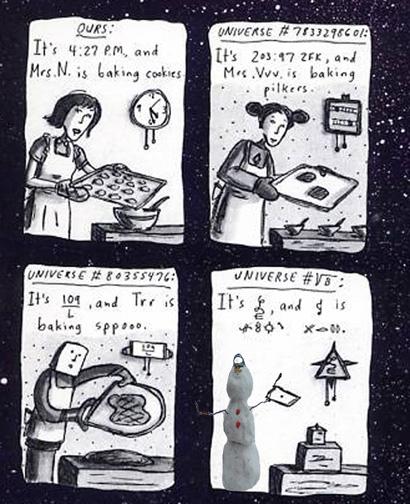
Roz Chast’s weird universe.

Everyone who reads this blog probably already knows I go a little nuts over Roz Chast cartoons. This is possibly my favorite cartoon of hers ever. It’s from her book Parallel Universes.

I just love how weird she is.

roz_chast_universe
Click to enlarge.
(I think the snowman was photoshopped–the original cartoon had a sort of stick-like creature–but it’s actually kind of funny this way).

Psychopathy may not be what you think.

gearhead

I’ve been doing some reading about psychopathy and have found out some surprising things. I always was a little confused as to how psychopathy differed from sociopathy and have used those terms interchangeably on this blog due to my confusion. I’ve also used the term interchangeably with Antisocial Personality Disorder (ASPD) and sometimes even malignant narcisissm. It turns out it’s probably something completely different from the other three disorders and may not even be a disorder at all!

Before you start laughing, hear me out.

It all started with this colorful, humorous description someone wrote on a forum I’ve been active on, describing how a Psychopath differs from a Narcissist:

When I picture a Psychopath, I think of someone who at bedtime bounces around from one thing to the next, essentially a high-energy, happy person. When I picture a Narc at bedtime, I imagine someone wearing long pajamas and a nightcap (yes, a nightcap), walking around a 19th Century house, holding a candle, checking for ghosts.

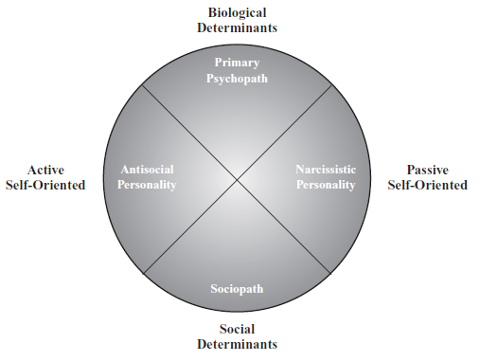
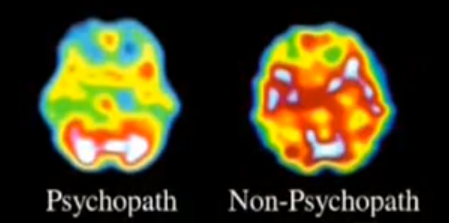
At first I thought this was a weird (but funny) analogy. But it really isn’t. According to psychologist Theodore Millon, Primary Psychopathy is something you are born with and is not due to abuse, unlike NPD or ASPD. Studies have shown that the limbic system (emotional center) of primary psychopaths is simply less active than in normal people. So they don’t experience empathy or have a conscience regardless of how they were raised, but they also don’t have very deep emotions in general.

Millon

Because they lack deep emotions, primary psychopaths tend to be fearless risk takers. They also aren’t moody because they don’t experience anxiety or depression the way others do–if they experience those states at all. But psychopathy has become associated with sociopathy and/or ASPD or malignant narcissism because a born psychopath may be more prone to developing personality disorders than the normal population, if they are abused. Because they don’t have the capacity to develop a conscience or empathy, if they do develop a personality disorder, it’s likely to be Antisocial Personality Disorder, where the right of others are callously violated. That’s why so many psychopaths are also antisocial and dangerous.

But there is nothing wrong with the cognitive functioning of a psychopath. They are able to learn the difference between right and wrong, and if they do not develop a personality disorder, theoretically they can choose to do what’s right. Only the limbic system is impaired, so any decisions a true psychopath makes are cognitively based. Emotion simply doesn’t play into it at all. They do “whatever works.” They lack a conscience because conscience is emotion- or shame-based, and a psychopath isn’t capable of much emotion in general.

So a primary psychopath can theoretically be a good person who is just extremely unemotional and only uses logic and reason to make decisions. Unlike narcissists, who actually have deep emotions but have turned all their emotions inward toward themselves and require “supply” to bolster their fragile egos, a non-disordered psychopath has no need for supply. They simply don’t care what anyone thinks. What you think is simply not something that even occurs to them. In contrast, a narcissist cares very much what you think and falls apart like wet toilet paper if supply in the form of approval or adoration is not forthcoming.

Primary psychopathy seems analogous to the Myers-Briggs ESTJ (Extroverted/Sensing/Thinking/Judging) personality type. In other words, a psychopath is an outgoing, sensation seeking, hedonistic thinker who happily jumps around from activity to activity like someone jacked up on Red Bull, yet they don’t have ADHD either because the J(udging) aspect means their high level of activity always has a goal or purpose. Such a person would be easily bored (which could also lead to antisocial behavior), never worry about things or experience (or even understand) guilt, and unafraid to try and experience new things. Their lack of emotionality would suit them well for the business world. In fact, people who have become very successful in business tend to score high in psychopathic traits.

two-brains

While many high level executives do abuse the rights of others and callously close entire departments and treat their employees like so many pieces in a chess game (whatever works, right?), because psychopaths can tell the difference between right and wrong, some will try to do the right thing just the same. The difference is, they are using cognition rather than emotion to back any prosocial decisions.

Looked at this way, primary psychopathy may not be a disorder at all but a personality variation. Of course, the term “psychopathy” has negative connotations because most of us associate it with antisocial criminals, shady con artists, and serial killers. And in fact many of them are, but not all.

Sociopathy differs from primary psychopathy because (according to Millon, above), it’s antisocial behavior that may develop in a person with ASPD or NPD and is always due to abuse somewhere in the person’s past. A primary psychopath can become a sociopath if they become disordered, and that’s where you would find the serial killers and criminals (and these people usually have ASPD). But a sociopath isn’t always (or even usually) a psychopath. Sociopaths who aren’t psychopathic are usually very malignant narcissists (high spectrum NPD + ASPD) or sometimes even Borderlines, and they differ from psychopaths because there is no logic or rational thinking behind their antisocial or destructive behaviors, only unhealthy, toxic emotion. They seem to have no empathy because all their empathy–and most of their other emotions except anger–are turned inward toward themselves. The false self is what they present to others instead of their real emotions. Narcissists have plenty of empathy but it’s all for themselves–that’s why they are prone to wallowing in self pity. A psychopath would never wallow in self pity. They simply don’t care what you think.

Brain test.

brain

My dad sent this in an email and I thought it was cool.

The phaonmneal pweor of the hmuan mnid, aoccdrnig to a rscheearch at Cmabrigde Uinervtisy, it dseno’t mtaetr in what oerdr the ltteres in a word are, the olny iproamtnt tihng is that the frsit and last ltteer be in the rghit pclae. The rset can be a taotl mses and you can still raed it whotuit a pboerlm. This is bcuseae the huamn mnid deos not raed ervey lteter by istlef, but the word as a wlohe. Azanmig huh? Yaeh and I awlyas tghuhot slpeling was ipmorantt! If you can raed this forwrad it

No post today (unless this one counts)

This is my only post for today. I’m sorry. I need to spend tonight reading and I’m feeling a bit under the weather (it could be the change in weather–it reached the 40s last night–brrrr!)

Asking for Help – Please Share and Help Me Find My Sister

Playtime with Ozzy the Weasel!

I thought it was time to post something ridiculously and disgustingly adorable.

Ozzy is a “Least Weasel” (Mustela nivalis). It’s the smallest member of the Mustelidae (as well as the smallest of the Carnivora), native to Eurasia, North America and North Africa, though it has been introduced elsewhere. Despite its small size, the least weasel is a fierce hunter, capable of killing a rabbit 5-10 times its own weight

“Fragile Heart”

A friend sent me this video. Have the tissues ready. 😥

Lyrics:

There’s no place for a sensitive soul
In a space where your ego freely roams
And you’re a little bit narcissistic
And I’m a little too understanding, sadly
So you held me like your rose
Only to watch me whither slowly

But there’s no hope for the weaker minds
This, I know

You can’t take me down
For my fragile heart
I’ll start over now
With my fragile heart