Hurts so good.

hurts_so_good

Remember when you were a kid and had a loose tooth, how good it felt to wiggle it with your tongue, even though it bled and hurt like the dickens?  Yet you HAD to keep doing it, because it felt GOOD.

Or remember that scab you just had to pick even though you knew it would bleed and hurt?

Happy feelings can be like that for some of us.  Have you ever been so moved by something, or so touched, or so filled with joy it actually hurt and made you want to cry?

Having been so shut off from my emotions for so many years,  I wasn’t used to feeling anything other than dreary, numb despair, an unnamed dread that something terrible was about to befall me, occasionally relieved by a sudden, irrational rage.

Lately I’ve been experiencing brief moments of sublime, positive emotions.   Flickers of joy (not glee, but real joy), feeling moved or incredibly touched, especially when I’m in therapy.   My therapist helps bring out these feelings in me, and I’m enjoying exploring these unfamiliar but wonderful emotions.  But sometimes they are just so intense and that intensity hurts.   Sometimes even the beauty of them…hurts.

Why would something so human and life-affirming make me feel almost sad?  Is it because I don’t trust these feelings, or don’t trust being vulnerable to feeling them?  Or is it because I know how fleeting such feelings are, and will only be replaced with the unpleasant feelings I’ve grown used to?   Or do they hurt because my soul is unfolding, and in so doing, is breaking down the walls that bound it for so long?  Are these just growing pains?   Will I ever be able to experience these sublime emotions without sadness and pain?

I’m looking for guest bloggers! (Round Two)

writers_wanted

My Sunday guest blogs have turned out to be a success! I want to take this opportunity to thank the writers and bloggers who were kind enough to share their personal stories and struggles with mental illness, mental illness stigma, or narcissistic abuse on this blog. These personal stories turned out to be among some of my most popular posts, and hopefully these bloggers also saw a boost in their hits due to posting for this blog.

Unfortunately, it seems that I’ve reached the end of my list, and I’ve had a few drop-outs too. So I’m once again looking for people who are interested in writing a guest post for this blog.

YOU DO NOT NEED TO HAVE A BLOG TO WRITE A GUEST POST, and this invitation is extended to my lurkers as well as those who regularly comment.

The types of articles I’m looking for:

— Personal accounts of living with a mental illness
— How mental illness stigma has affected you
— Inspirational stories about how you have coped with or even benefited from your experience.
— New therapies you have learned about or are using

This time, I’m especially interested in personal accounts of living with mental disorders caused by early trauma or abuse, especially the following:

— Cluster B personality disorders (as long as self awareness and a willingness to change is present)
— Cluster A or C personality disorders
— Dissociative disorders
— Complex PTSD

I’m also interested in blogs by people with Aspergers or autism spectrum disorders, and anxiety disorders such as OCD, Panic Disorder, or Social Anxiety; and Seasonal Affective Disorder (SAD). Since there were no posts about substance abuse/alcoholism from my last batch of guest bloggers, I’d be interested in those as well.

The rules are few. I don’t have a minimum or maximum word count, and you are free to submit your own graphic or photo if you wish. If not, I will find one for your post. I only ask that the writing be clear and the post is honest. Profanity is okay but should be kept to a minimum. The only other rule I have is that if you have a blog and write a guest post, that you reblog your post on your own blog (NOT re-publish it, just reblog it from here).
If you have already written a guest post for this blog, please give others who haven’t a chance.

Again, you do not need to have a blog yourself to write a post for this one. However, if you don’t blog, you will need to provide your email or link to your social media account so I can contact you. If you’re interested please leave a comment (with a link to your blog, if applicable), so I can compile a list from these. When your article is posted, I’ll share it to my social media so it gets as much visibility as possible. I’ll reply to you in the comments, so keep checking back after you have posted. If you want to go ahead and send posts to me now, my email is under “Contact Me” in the header.

***PLEASE SHARE THIS POST***

Meet and Greet Weekend @ Dream Big: 4/8/16

Danny’s having another weekend blog blast! Stop by and drop your link over there.
Comments are disabled for this post.

The “Four F’s” of C-PTSD

child-abuse1

I just began reading “Complex PTSD: From Surviving to Thriving” by Pete Walker. I can already tell I won’t be able to put it down (I will write a book review when I’m finished, which shouldn’t take long). I’m also going to bring this book to my next therapy session because I want my therapist to see it.

Walker, who is a therapist and also a survivor of narcissistic abuse and sufferer of C-PTSD, is an engaging writer and definitely knows his subject matter. In one of the first chapters, he discusses the “Four F’s”–which are four different “styles” of coping that people with C-PTSD develop to cope with their abusive caregivers and avoid the abandonment depression. Whatever style one adopts may be based on several factors–natural temperament, the role in the family the child was given (scapegoat, golden child, “lost” or ignored child), birth order, and other factors.

complex_ptsd2
Available on Amazon

The Four F’s are:

1. Fight (the narcissistic defense): often “golden children,” such children learn to project shame onto others; may go on to develop NPD
2. Flight (the obsessive-compulsive/anxiety defense): these children will grow up to become highly anxious, obsessive-compulsive, and avoidant.
3. Freeze (the dissociative defense): these children “protect” themselves by dissociating from others, themselves, and their environment.
4. Fawn (the codependent defense): the child learns to avoid harm by people-pleasing or siding with their abusers.

Walker speculates that if C-PTSD were recognized in the psychiatric literature, the DSM could probably be reduced to the size of a pamphlet, for many people diagnosed with other disorders actually have C-PTSD, which encompasses symptoms of many other disorders and have common roots.

What you may have been misdiagnosed with (or diagnosed yourself with) if you have C-PTSD (these are the most common):

Personality Disorders:
Borderline Personality Disorder
Narcissistic Personality Disorder

Dissociative disorders

Anxiety Disorders:
Generalized Anxiety Disorder
Panic Disorder
Social Anxiety
Obsessive-Compulsive Disorder

Mood Disorders:
Depression
Bipolar Disorder

Developmental Disorders:
Autism Spectrum Disorders
ADHD
ADD

Codependency

Addictive Disorders

While any or all of these diagnoses can be co-morbid with C-PTSD, they miss the mark or don’t tell the whole story. Personality disorders such as BPD can develop from severe, unrelieved C-PTSD and they do share many similarities, but personality disorder labels are stigmatizing and not very helpful for someone who has suffered prolonged childhood trauma and abuse. Labels like “panic disorder” or “depression” aren’t helpful because they only address one or two symptoms of C-PTSD and therefore can’t even begin to address the roots of the depression or anxiety. You can treat anxiety or depression with drugs or short term therapy, but you can’t cure the person of the C-PTSD that’s causing their chronic anxiety or depression. The same goes for labels such as alcoholism or codependency. These are merely symptoms. People with C-PTSD are also sometimes erroneously diagnosed with developmental disorders such as ADHD or autism, which not only don’t address the trauma that led to the ADHD- or Aspergers-like behaviors, but also have completely different causes.

Divorcing The Donald: Cutting Ties with The Narcissist.

Allison Patton, family lawyer, wrote an eye opening article for The Huffington Post that goes beyond simply describing Donald Trump as an NPD poster boy, which many have already done.

In family law, individuals with NPD are known a HCPs-high-conflict persons. Here, Ms. Patton describes the way Trump’s blatant narcissism has not only alienated him from the Republican Party, but how he could potentially serve as a public example of a serious disorder that family lawyers, judges, and the courts are surprisingly ignorant about–and often unwittingly reward the narcissistic spouse and punish the real victim, due to the narcissist’s glibness and ability to lie convincingly.

Unfortunately, Trump has succeeded in pulling the wool over the eyes of millions of Americans who continue to support him–even though it’s no secret he has been publicly diagnosed with Narcissistic Personality Disorder. Many of these Americans tell themselves, “well aren’t all politicians narcissists anyway?”
Well, most probably have some narcissistic traits, but most are not full-blown NPD like Donald Trump either.

Divorcing The Donald: Cutting Ties With The Narcissist
By Allison Patton, for The Huffington Post
http://www.huffingtonpost.com/alison-patton/divorcing-the-donald_b_9633460.html

Republican presidential candidate Donald Trump speaks during a campaign rally, Wednesday, April 6, 2016, in Bethpage, N.Y. (AP Photo/Julie Jacobson)

Republican presidential candidate Donald Trump speaks during a campaign rally, Wednesday, April 6, 2016, in Bethpage, N.Y. (AP Photo/Julie Jacobson)

Narcissistic Personality Disorder
A “Cluster B” personality disorder in which a person is excessively preoccupied with personal adequacy, power, prestige and vanity, mentally unable to see the damage they are causing to themselves and often others.

While the Republican Party is desperately trying to cut ties with Donald Trump, the world watches in disbelief. All, that is, but a particular group of women and men with one thing in common: each of them has divorced a narcissist, and some still share child custody with one.

They know the story and could write the script. The successful, gregarious person who swept them off their feet. The promises that followed. Gradually the realization that it was all a façade. There could never be a “we” because narcissists care only about themselves. Then the real nightmare began, the battle to remove this toxic person from their lives. . . . and for those with children, the misery of trying to co-parent with an ex who acts and thinks like The Donald.

As a divorce lawyer, these cases are the most difficult and disturbing. In my family law circle, we refer to someone with a narcissistic personality disorder as “an NPD” (or the more general term “HCP” — which stands for “high conflict person”). The legal battle is always the same: the unaffected spouse tries to explain to the attorneys, judge and appointed psychological expert (if there is one) the narcissist’s behavioral pattern: control, emotional abuse, manipulation, duplicity and the damaging impact on the children. The NPD denies it all and mounts a legal response that consists of blame laying, factual distortions, outright lies and a character assassination of the other spouse.

The experts and the judge are sometimes able to weed through the chaos and confusion, identify the personality disorder at play and make decisions that protect the children and unaffected spouse. Often, however, the legal system gets it wrong. Just as we’ve seen with Donald Trump, the NPD can be very convincing and manipulative. And the court system – like the general public – either gets conned by the NPD or isn’t equipped to manage the level of conflict created by a Donald. Often the court assumes both parties are equally to blame for creating and maintaining a high conflict case, so the innocent parent who is fighting to protect the kids is treated as skeptically as the narcissistic parent.

For decades, there has been little understanding of how to spot and handle personality disorders in family law. As recently as 2011, when I blogged on Huffington Post about high conflict people in divorce court, I received emails from out-of-state divorce professionals indicating the information was new to them and they hadn’t heard the term “high conflict people” used in their family court.

Thanks to Donald Trump and his campaign, the entire world now gets daily lessons on NPD behavior. As disturbed as I am by what the Donald has pulled off, the divorce lawyer in me sees the opportunity here. The Donald is our new high conflict poster child. Those of us who want change in the family law system couldn’t hope for a better example. The common traits and behaviors of this personality disorder are being revealed, in their full horrific glory.

Read the rest of this article here.

Bonus article: Donald Trump’s Amazing Answer to “Do You Cry?”  (Washington Post)
https://www.washingtonpost.com/news/the-fix/wp/2016/01/19/donald-trumps-amazing-answer-on-do-you-cry/
Hilarious.
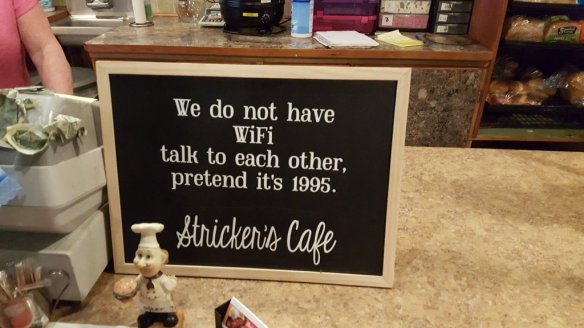
Pretend it’s 1995.

Image

1995

#TBT Throwback Thursday – Kelly Clarkson, Since You Been Gone #idolfinale

It’s the end of an era. 15 years was a good run. I actually watched the last hour of the finale tonight (for nostalgia’s sake) I hear Obama even opened the show (I missed that) but at least I got to see the part where all 3 of the original judges came on. The show hadn’t been good in several years, but tonight it went out with style. Farewell, American Idol.

Comments have been disabled; please comment under the original post.

Tony Burgess's avatarThe Tony Burgess Blog

In honor of the end of American Idol, I present the original Idol Kelly Clarkson’s video for “Since U Been Gone”.

View original post

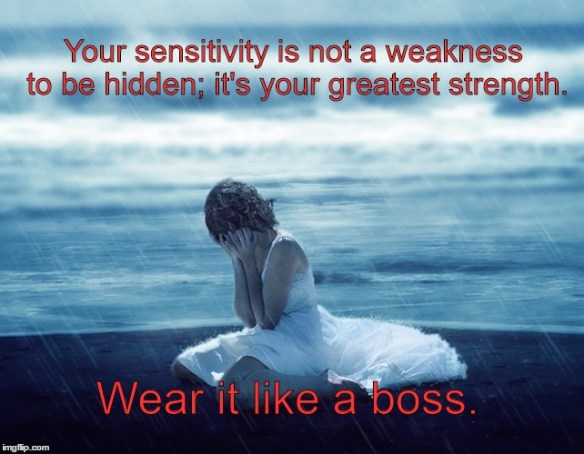
Your greatest strength.

Image

sensitivity_meme

My inheritance from Trump.

trump_money

You read that right. I got money from Donald Trump.  In a dream.

In no universe would I ever vote for Donald Trump, but in my dream, I was looking through a drawer of old papers and came across an envelope filled with cash. I counted the cash; it was over $7,000. There was a letter in the envelope too, dated from 2003. Apparently I never saw it before, even when I had searched this same drawer for cash back when I had no money at all and couldn’t even buy dinner.

The letter informed me that Trump had died and this was my inheritance. So apparently in the dream we were related.

Even if Trump sent me $7,000 I would still not vote for him. I also wouldn’t have the integrity to refuse the money.    But I think I should buy a scratch off ticket today. 🙂 Later, I’ll think about what this dream could possibly mean.

Blogging 101: blogging phrases to know.

More bloggy wisdom from Opinionated Man!

https://aopinionatedman.com/blogging-101-blogging-phrases-to-know

BLOGGING 101: BLOGGING PHRASES TO KNOW

your_blog_sucks

“I really enjoyed your article! I wrote a “somewhat” similar post which you can find at http://ThisPostHasNothingAtAllToDoWithYours.com. Thanks again for blogging almost as good as me.”

Basically this is link dropping. The person hasn’t really read your post, perhaps the first sentence only. They just want to try and steal a little of your limelight while your post is currently at the top of other people’s Readers.

“Yet _____”

Any commenter that begins their comment with the word “yet” is about to say some complete horse shit. It might smell good, but it will still be horse shit. Yet they will still say it because they must.

“God said ____”

The Jesus freaks will flay you with these sentences and they follow the scent of blood. Much like any other predator. Be wary of the sentence that begins with “God said ____” because it will normally be followed by a direct quote from the bible… that you could have read by just reading the bible…

“Your SEO is off in a few areas.”

Read the rest of OM’s article here.

Comments have been disabled; please leave comments under the original post.