My son didn’t escape unscathed.

leavinghome
This is not a photo of my son, but it looks a little like him.

My 23 year old son was scapegoated and bullied by his father when he was a child and teen (which I’ve written about before). As the most sensitive and nervous child in the family who was able to see through his father’s malignant narcissism, his father began to target him for abuse when it became clear to him my son had a good built-in bullshit detector.

When he was 17 he moved out of our home to stay with a female police officer who worked at his school. She was very supportive but after awhile he decided to move back in with us briefly. When he turned 18, he moved to another state and has not been back, although he does talk to me on a regular basis. Due to lack of funds, I’ve only seen him 3 times since he moved out in 2010. He is doing well though–working two jobs, one as a management trainee for a chain of convenience stores in the Tampa, Florida area, the other as a Carraba’s server where he sometimes pulls in as much as $700 in a single weekend.

He has many interests and talents, including dancing, animation, and filmmaking (which is what he really would love to do). He came out as gay when he was 17. After that happened, he transformed from being a nerdy, nervous teenager with few friends to a very popular young man with a geeky, eccentric sort of cool and many friends. He doesn’t do drugs or smoke. He drinks, but doesn’t appear to have an alcohol problem.

ianrowan3
Photo of my kids in Texas in 2001.

I thought he somehow emerged unscathed from the family dysfunction. He shows no signs of having any personality disorder, although he has reported having panic attacks and he tends to be obsessive in his thinking. He’s also prone to depressions.

Tonight we talked to each other on the phone for awhile and he described his obsessive thinking. He worries about locking the door, for example, and has to keep going back to check to make sure he locked it. He hates having anything dripped on him, and that can set off a rage attack. They are like panic attacks, but instead of panic, he feels rage. He doesn’t act on the rage, but he feels it. Then he feels guilty for feeling that way. He doesn’t like people approaching him from behind and is jumpy and wants to attack when that happens. He worries incessantly about the impression he makes on others and suffers from occasional paranoia, and thinks others are out to hurt him, even when there is no rational reason for him to think this.

kelphead
Sporting kelp “hair extensions.”

It sounds to me like he suffers from a severe anxiety disorder, and probably has OCD. He can afford health insurance now, so I told him to please see a therapist who can find out if what he has is OCD or something else, and possibly give him some medication and therapy. He’s willing to do this. I still think he’s the most mentally healthy person in the immediate family, and the only one who is doing well financially and doesn’t appear to have a personality disorder, but he’s far from unscathed from the abuse inflicted on him, and his hypervigilance and anxiety is no doubt due to that (though there could be a biological component too).

The reason we became adult victims: what can be done?

victim_badge

The other day, I posted an article about the insidious way narcissistic parents can turn scapegoated children into lifelong victims. I was thinking more about this matter today (because I was feeling victimized at work) and I think I understand what happened to us to make us such easy targets for victimization and why we are usually shown so little respect by others.

First, there is nothing wrong with you. You are not mentally deficient, defective, worthless, or unlikeable. You deserve respect as much as anyone else does. You are no less valuable than anyone else. Later in this article I’ll explain what it is about us that makes us get treated like this so often and why.

There are ways to tell if you’re an adult victim. The abuse we get is more insidious than the treatment we got from our parents or childhood peers. As adults, we are not likely to be straight-up bullied the way children and teenagers are because most adults have learned it’s not okay to bully others. Instead, the abuse manifests as a lack of respect and being treated as if we don’t exist or don’t matter.

How to tell if you’re a victimized adult.

depressed_woman

1. You find it difficult to make friends.

2. You are always overlooked for promotions or raises in the workplace, no matter how well you do your job. You may also be overlooked for special privileges when they are given out. If you ask why, no one ever seems to know how to answer you.

3. People leave you out of social events like parties or casual get-togethers.

4. If you were a scapegoated child (and most likely you were if you are victimized as an adult), even your FOO (family of origin) probably leaves you out of family events such as weddings, births, and reunions. You were probably disowned or written out of the will. You are the “black sheep” of your narcissistic family.

5. People talk over you or act like you are not there.

6. If you speak, people act like they didn’t hear you or ignore what you just said.

7. You are treated like a piece of furniture. People tend to physically push you aside, invade your personal space, or act like you are in the way. In a small group of people, they may shift their positions so you become shunted to the side or back so you don’t have a place in the circle. It isn’t really hostile; it’s as if they literally don’t see you.

8. People tend to treat you in a condescending manner, as if you are mentally defective.

9. People like to “mess” with you or make jokes at your expense.

10. In a work environment, even your co-workers may be more critical of you than they would be with others–even if your work is fine. You may notice people try to boss you around who have no real right to.

11. People may treat you as if you annoy them.

It is not your imagination that you are treated this way. You are not just being paranoid or over-sensitive (though people will tell you this). You really are being treated like this, and it’s because as children, we were trained that we were nothing and that we did not matter. We internalize these messages and carry an attitude of being undeserving of fair treatment into adulthood. People treat us the way we regard ourselves. If we think we are nothing, we will be treated like we are nothing, even by non-narcissists.

How being an adult victim can further damage us.

sad_and_lonely

Being scapegoated by narcissistic parents is child abuse, and is thoroughly evil. It can destroy a person for a lifetime. The victimization we continue to get as adults is also very damaging, and exacerbates our already dismal self esteem. Here are the ways being a victimized adult can make you feel.

1. You feel like you have no place in the world.

2. You feel unloved by everyone.

3. You believe you have no value.

4. You feel isolated and apart from the normal world.

5. You fear you may actually be stupid, incompetent or annoying.

6. You are prone to deep depressions and extreme anxiety, especially when having to deal with other people.

7. You feel envious of others for being treated with more respect than you are.

8. You feel envious of others for having loving families who care about them.

9. You feel envious of others for having friends and an active social life.

10. You feel like you are constantly having to apologize.

11. You feel like life is unfair and the world is a hostile and unfriendly place.

12. In many situations you feel like you’re on the outside looking in.

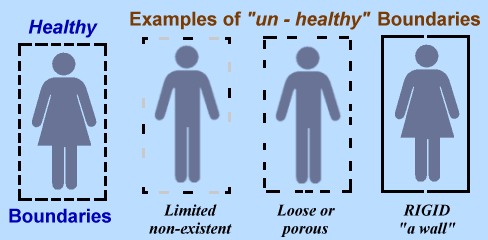
It comes down to boundaries. As adult victims, we don’t have any, or have very weak boundaries. We never established boundaries when we were young because we were (1) never trained to do so; and (2) because our early boundaries were constantly being violated.

People can sense when a person has very weak or non-existent boundaries. That’s why we continue to attract narcissists as friends, lovers and spouses. Narcissists know easy prey when they see it.

Why personal boundaries are so important.

do_not_cross

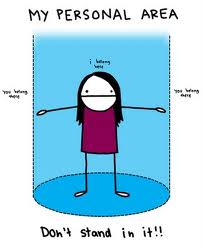
Even among non-narcissistic people people, we are seen as prey because we appear to lack boundaries. Even near-strangers are constantly stepping over the line and treating us with disrespect, even if their behavior isn’t outright abusive. It’s as if most people have an invisible line drawn around them that must not be crossed. People “see” this line–or sense it–and will respect it. But if you never established boundaries or they were destroyed by your narcissistic family, there is no invisible line drawn around you, and people will constantly step over it, because they believe it’s okay for them to do so.

The solution seems easy enough–just establish some boundaries and tell people when they are violating them. But this is much easier said than done. Most of us have such low self esteem we are terrified of letting others know it is not okay to treat you this way. We are terrified of being criticized or told we are just being “too sensitive” or paranoid. We see other people standing up to those who violate their boundaries without repercussions, but we fear that if WE do it, we will be attacked or criticized, because we were trained to believe this.

unhealthy_boundaries

The sad news is that it isn’t incorrect to believe you will be attacked or criticized or told you are overreacting if you try to stand up for yourself. That’s because people don’t like change. If people have become used to you as a mousy, fearful person with no personal boundaries, they are not going to like it much should you suddenly point out that you have some. But it doesn’t mean you are worthless and it also doesn’t mean you must forever continue to submit to this kind of treatment.

In any group, there is usually one scapegoated (or disrespected) person, and that person is the one who is seen as having the weakest boundaries (and is probably also the most sensitive, which is why we were chosen by our families to be scapegoats in the first place). Unfortunately the human condition dictates that even for normal (non-narcissistic) people, there is going to be a pecking order. This system can be observed in most animals and even some birds, like chickens. People–and animals–feel more comfortable when there is one person around they can pile on. If you suddenly announce they may not pile on you anymore, they are not going to be happy about it and will probably take out their frustration on you. It isn’t fair, but it seems to be in our human nature.

Can anything be done?

boundaries_quote

Yes, but it may be necessary for you to start over in a new place or a new job if this is happening to you. You will need to make it clear from the very beginning that you are to be treated with respect. This means the very first time you observe one of the above behaviors directed toward you, you must nip that in the bud and let the person know it is not okay to treat you like this. Doing this will be one of the hardest things you will ever have to do, because we are so afraid to speak up for ourselves. But if we have not been established yet as a victim or at the bottom of the pecking order, letting others know (nicely, of course) that we will not tolerate this sort of behavior should help. Once your boundaries are made clear to others, you will be treated more like a human being and less like a worthless piece of furniture.

If you cannot start over (and many of us can’t, because our lifetime problems with boundaries and self esteem have made it impossible for us to be able to earn the kind of living that would enable us to move elsewhere or leave a job), then you will need to go ahead and try to speak up for yourself anyway, and risk the fallout. If you find this impossible to do, then you will need to find a support system or a group that does not know you the way you are. You can join a church group, attend group therapy, or take a class. Or you can find supportive people online. For those of us who are introverted, like myself, this may be the most effective way to have a voice and be treated the way you want to be treated: like a human being worthy of respect.
my_personal_area

Keep telling yourself every day that you are not worthless or defective, because you are not. There is nothing wrong with you! Your only problem is that the family that raised you did not respect or love you the way they should have–not because you aren’t deserving of love or respect because every child is–but because as narcissists, they could not. You served a role for them as the family scapegoat.

A good therapist–or keeping a journal or a blog–can be a good way to help you deal with your past, the family that destroyed your sense of self esteem and boundaries, and help you overcome your fears and begin to act more like a person who is to be treated like everyone else.

You are worth it.

Why family scapegoats become lifelong victims.

If you were scapegoated by your family, two things can happen. You can become a narcissist yourself (narcissism being an elaborate defense mechanism to avoid further hurt and abuse) or you will internalize the early message that you’re worthless, defective and have no rights. I’m going to talk about the second scenario because that’s what this video is about and it’s what happened to me.

As a scapegoat, you are trained to live in fear. You become afraid to defend yourself, express your opinions, or demand fair treatment. This attitude of worthlessness, fear and shame is carried into adult life. Other people can immediately sense you are a pushover and a magnet for abuse, rejection, and bullying, and you become a target for abuse by others well into adult life.

You can become a lifelong victim unless you find a way to break the pattern. It’s difficult to unlearn, because it was established so early in life by the narcissistic parent.

Golden children, who more closely resemble the narcissistic parent or provide them with narcissistic supply (adulation), are more likely than scapegoats to become narcissists themselves. They will often become the aging narcissistic parent’s flying monkeys against the scapegoated adult child, continuing the family pattern of abuse.

Scapegoated children are the family shock absorbers. They are the children who have been assigned to absorb and internalize the narcissistic parents’ rage and to mirror back what has been projected onto them.

scapegoat_child

This is exactly what happened to me. Although because I was an only child I sometimes served the Golden Child role, for the most part I was the scapegoat. My Aspergers and high sensitivity made me even more perfect for that role.

Today I’m the black sheep and the “loser” of my family. I’m never included in family functions because of my poverty and the fact I’m “different” than the rest of them. Although they disapprove of me, I really became exactly what they needed me to be. My becoming a “loser” ensured they would always be winners.

I’ve been disinherited because they believe I’m undeserving, a shameful blemish on the family’s “good name,” further guaranteeing I will always remain poor and therefore powerless–unless I hit the lottery (which I don’t play) or write a book, which I plan to do. The irony of all that is the book may very well be one that exposes the people who raised me for what they really are.

I’ve always been a risk-averse, avoidant underachiever. My dealings with others have suffered because of my fear of the judgment of other people. I was often bullied as a child and teenager.

I married a narcissistic man and continued to live with him and allow his abuse even years after we were divorced.

Although as an adult I’m no longer bullied (and am Very Low Contact with my ex), people still try to push me around, treat me like a mental defective, leave me out of conversations, overlook me for promotions or raises at work, or just talk over or look through me as if I’m not there at all. When I say something, people act like they don’t hear me. It’s very hard for me to make friends or fight back when I need to because I was trained from an early age to be so very afraid of everyone. I’m the proverbial shrinking Violet and wallflower–the kind of woman my mother used to mock for being so “insipid.” I seem to have the opposite of charisma.

For many years I walked around as if ashamed to be alive. I carried shame with me like a heavy burden that affected the way I spoke, the way I related, the way I thought (all the negative self-talk and self-hate), even the way I moved and carried myself. I embarrassed myself.

Since I started writing, I’ve learned that I wasn’t put on earth as an example to others of how not to be (I actually used to believe this), but that God gave me these challenges and this life to teach me valuable things about myself–but that waking up to who God meant for me to be was going to be hard, painful work. I don’t live in self-pity: my narcissists have been my teachers.

One day I dream that people offline will know who I really am. That I have a personality. That I’m funny and intelligent. That I have opinions of my own, and that I am actually good at things. But more than anything else, that I have a finely tuned bullshit detector–a gift unintentionally bequeathed to me by my narcissists, and it’s a gift more priceless than any amount of money I may have inherited.

The following video will explain why what narcissistic parents do to their own offspring is nothing less than soul murder. Unfortunately, the original video I had posted here (which I preferred) was the best one to illustrate the way being scapegoated as a child tends to continue well into adult life, with the grown adult child now unconsciously projecting a “kick me” sort of vibe in relationships, friendships, on the job, and everywhere else, and then they wonder why they continue to feel victimized everywhere they go.     It’s hard to break the pattern, but it can be done.    Here’s a different video with the same general message as the first, although the first one (which was removed) was much better, in my opinion.

Why being a Golden Child isn’t so golden.

golden_cage

I was raised as an only child–the second marriage for both my parents–in a narcissistic family. Only children are in an especially vulnerable position in narcissistic families, because they must serve as all things to one or both parents.

In families with several children, one child (usually the most sensitive) is normally chosen to be the scapegoat–to serve as the family trash can for all the narcissistic rage of the parents. Another child, usually the one most closely resembling the narcissistic parent or the one who best serves the parent’s need for narcissistic supply, may become the Golden Child–in other words, the parent’s favorite. The Scapegoat is always wrong, bad, stupid, crazy, a “problem,” etc. The Golden Child can do no wrong. Misdeeds are overlooked or projected onto the scapegoat. Golden Children may become the narcissistic parent’s flying monkeys and are even sometimes given the “honor” of helping with the abuse against the scapegoat.

I’m reminded of a book I read some years ago called “A Child Called It,” written by Dave Pelzer, who not only recovered from the horrific abuse inflicted on him from ages 4-12 by his psychopathic mother (who had been loving up until that point) and brothers (who served as her “helpers”) once he was removed from the family and placed in a foster home, he actually seemed to become stronger because of it. Today he is an author, motivational speaker, and activist against child abuse. Dave was the scapegoat of his family, and I think his mother turned against him when she realized he was the most sensitive child and probably the most intelligent one too.

But what happens when there is only one child in the family? Well, I think that child becomes both a scapegoat and a Golden Child. If I had grown up with siblings (I have older half-siblings but I wasn’t raised with them), I’m almost certain I would have been the family scapegoat. But my parents (I am including both here, even though I don’t believe my father is a true narcissist, because they worked as a “team”–he was codependent and under my mother’s thrall) needed a Golden Child too who would serve their need to show a child off as a prized possession, a status symbol of sorts: the physical proof of how superior they believed their genes to be compared to everyone else.

Being both scapegoat and Golden Child is even more crazymaking than being just a scapegoat, because you never know where you stand. You constantly feel off balance and anxious, never knowing if something you said or did will be rewarded, ignored, or punished. Life feels chaotic and unformed. You feel like you’re playing a game you never wanted to play, a game where you were never taught the rules, and most of the time you don’t even know WHAT game you’re playing, but you’re expected to play like an expert anyway.

confused_kid

There was no consistency in the way I was disciplined or the things I was disciplined for. I was punished often (for infractions that were usually fairly minor or even nonexistent–I was a “good kid” who was terrified of angering my parents until my teens), but that wasn’t the worst thing. The worst thing was that the next time, I might actually be rewarded for the same infraction!

I was often punished for things I couldn’t help. Acting “spooky” was one of them. As a fearful, sensitive Aspie child, there were times I would retreat inside myself when I was feeling very anxious or when there was too much ‘input’ from the world, and this enraged my MN mother, who would berate or punish me for this behavior. I had no idea what I had done or how to stop being “spooky.” It just happened. I think it enraged her because it was during those times I went “inside” that she could no longer reach me with her abuse.

Even though most of the time I was treated as if my feelings didn’t matter, I was often told how pretty, smart and talented I was. It’s my belief I was no more of any of these things than any other kid my age, but I was told I was “special.” To my young mind, “special” meant “different”–and most children, myself included, dread being different from their peers.

When I was bullied at school, the reason my parents gave me was that the other kids were just jealous because of my “superior” looks, intelligence, or talent. I was also told our genes were better than other people’s, and our family was of a higher socioeconomic status than my friends’ families. I know now this was complete bullshit, but it’s the lie I was being fed while I was growing up. I think these “compliments” were intended to isolate me from my peers even further, so I’d just be “theirs.” I never felt empowered by the “praise” I got, because of the way it made me feel somehow defective and different from other kids. In addition, I felt like I could never live up to the pedestal my parents put me on at those times. I was right–and as an adult, I am looked down on by my family as actually defective.

left_out_kid

The most crazymaking thing of all was the times I’d be complimented and diminished at the same time. One of the most common ways I’d be demeaned was being told how “sensitive” I was. This was never meant to be a compliment; it was meant as a way to let me know how weak I was. Sometimes I was told I couldn’t or shouldn’t do things because of a combination of my “good” and “bad” qualities. For example, when I was about 10, I wanted to join the swim team. I remember exactly what my mother’s reaction was to this. She always liked to tell me what I was thinking, which is another way narcissists make us doubt our own reality and question our instincts. She said:
“You wouldn’t like being on the swim team because you’re too sensitive and you don’t like competition, and you’re too smart to be on a team with those people anyway.”
Huh?
Left-handed compliment much? She always sandwiched her praise this way–between insults like a shit sandwich. This was just another way I was constantly thrown off balance and this led to my becoming an extremely anxious child and later, an extremely anxious adult.

In general, my family treated me like I was a huge burden and didn’t really want me around, so the praise I got as a sometimes Golden Child made no sense and to my sensitive child’s mind, never felt sincere. Even at a very young age, I knew I was being lied to. I knew I wasn’t loved the same way other children were loved, even though my parents constantly mouthed the words like some sort of tic.