Why IQ tests of the past lacked smarts.

retro_classroom

The following is a guest post by Mary Pranzatelli about the matter of how the standard IQ tests those of us of a certain age had to endure as children only tested for one aspect of intelligence, when there are actually 6. This was damaging because kids who scored low on the standard (Iowa) IQ test in those days were often assumed to be “slow” (and sometimes put in special ed classes) when they may have actually been very bright–in aspects those tests didn’t measure. This is what happens when an IQ test for children is developed through the limited and damaging lens of cerebral narcissism.

Fortunately things are improving today. Psychologists are recognizing there are at least 6 different types of intelligence.

Mr. Smarty Pants and the Dumb IQ Test
Guest Post by Mary Pranzatelli

Does anyone remember those placement tests we took way back in the day? Those lengthy evaluations timed to measure our intellectual level in the 60s and 70s. They called them the Iowa tests. They were used to evaluate, place and devalue students in categories to tell them who they were and what they could be.

Did you ever wonder who created these nerve racking, sweat inducing tests that gave you nausea in the pit in your stomach? His name was Everett Franklin Lindquist. He was a Professor from Iowa, who created these standardized tests known as the ACT He started administering them in 1959.

I don’t know about you, but when I was a little girl I wanted to play on the swing outside and when I was a teenager I wanted to hang out with my friends, be creative and write poetry and stuff. I found these standardized tests completely boring, disturbing and even insulting. I’d start reading the first few questions and I my mind would become completely overwhelmed. I thought, “Oh..No…No…No! Its none of your business!” How dare them hand me a paper, pencil and a multiple choice test that will evaluate me and place my entire life into a category. Some placement analogy that was based on a multiple choice test made up by this Smarty Pants; A Professor from Iowa. A cerebral Narcissist that thought he was more superior then everyone else because he had a high IQ.

I’m sure I’m not the only student who became frustrated with all those little machine ready printed dots that intimidated us as they stared us in the face. A hundred or more multiple choice questions that would determine one’s future in attempt to brainwash us to believe we were either stupid or smart based on Professor Lindquist’s analogy of who we are. I use to think the man who made up the Iowa test was really a brilliant man. I thought he was a real genuine Smarty pants. I was brainwashed. I believed smarty pants was smarter then me. And this asshole had us all by the seat of our pants because he was in control of our academic direction, future and career path. This cerebral Narcissist screwed up a whole lot of people.

A portrait of ACT CoFounder E.F. Lindquist.

A portrait of ACT CoFounder E.F. Lindquist.

They ran those answers through the Iowa test machine and let us know what our IQ scores were. The measurements that actually brainwashed most of us and our thinking. He squashed our abilities to explore ourselves and enjoy our dreams our wants and what we loved to do. Mr. Smarty Pants never had the insight to know us better then we knew ourselves. No standardized machine driven test has the ability to determine who we are.

So who are we? Aren’t we all humans. And humans are love, and feelings. We have 7 major components. We think, feel (emotions, love, pain and empathy). We taste, smell, touch, see and we have instincts. So what would a Modern Hierarchy of intelligence look like? A realistic Hierarchy.

*The Modern Hierarchy of thinking

1. Remembering

2. Understanding,

3. Applying

4. Analyzing

5. Evaluating

6. Creating

IQ only measures number 1, which is the lowest order of thinking.

Unfortunately, Smarty Pants and the rest of all the know it all’s have difficulty moving on. Many of these, I am so smart assholes, never move on because they believe that they are superior and they are stuck on number 1. In many ways it is societies fault for telling them that they are so smart.

Creating, which is number 6 is the highest form of thinking. That includes music and art. So don’t let anybody tell you that you are not smart when your heart and mind is advanced in all the categories.

A final note to the late Mr. Smarty Pants who developed the Iowa test….

I’m sorry your thinking was so overwhelming, and that you lacked the ability to feel for all the children you hurt. I’m also sorry for all the children who ended up suffering from hardships and low self esteem due to your silly standardized test.

Professor Everett Franklin Lindquist, May Your Soul Rest in Peace…

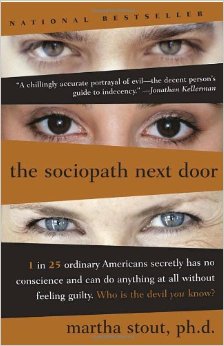
Book Review: “The Sociopath Next Door” by Martha Stout

sociopath_next_door

Dr. Martha Stout’s excellent “The Sociopath Next Door: The Ruthless versus The Rest of Us” is an easy to read, well researched and often entertaining study of the psychology of evil. In some ways similar to M. Scott Peck’s “People of the Lie,” but without the religious overtones, Stout chillingly describes the “ice people”–the sociopaths that walk among us.

As many as 4%–one in 25 Americans–is without a conscience or the capacity to feel empathy for others. Stout doesn’t make a distinction between sociopathy and psychopathy, and in this book she is referring to those people who meet the diagnostic criteria for Antisocial Personality Disorder (ASPD), not Narcissistic Personality Disorder. In fact, narcissism as a disorder is rarely mentioned, although she does acknowledge that all sociopaths are narcissistic.

Stout includes many case studies of how sociopathy can manifest in individuals. Contrary to popular notion, not all people with ASPD (sociopathy) are in prison or even criminals. Antisocial behavior is found as often in boardrooms as in prisons, and sometimes more so. For sociopaths who grew up in well heeled families and were able to get a good education, their antisocial traits are likely to manifest in “socially acceptable” ways. For example, a CEO who needlessly downsizes to increase his own bloated income, ruthlessly firing hundreds of employees without caring about the hardship those fired employees now face, is as conscienceless and unempathic as a cold blooded murderer.

A sociopath can be the gossipy woman next door who tells malicious lies about all the other neighbors, it can be the company president who embezzles and defrauds, or it can be the vicious serial killer who preys after college students.

Stout talks a lot about conscience, that quality that separates the antisocial from everyone else. It’s the lack of this trait that makes people evil. She offers a number of reasons why someone may lack a conscience–they may have suffered horrible abuse or neglect as young children (she discusses the sad plight of Romanian children who were adopted by American parents and many of these kids were found to have an underdeveloped conscience), they may not have been taught prosocial values, or they may be deficient in the parts of the brain where the conscience develops in normal children.

I definitely recommend “The Sociopath Next Door” to anyone who has been a victim of or had to deal with a sociopath, whether at home, work, school, or in a relationship. I’m going to extend the term “sociopath” here to include narcissists and psychopaths because they too lack empathy and a conscience. Really, this book should be read by everyone, because all of us have had to deal with ruthless “ice people” who just don’t care about anyone but themselves.

#23 – The Borderline-Narcissistic Continuum: A Different Way of Understanding “Diagnosis”

This is more the sort of thing I want to blog more about. Here’s a somewhat scholarly but interesting and thought provoking article about BPD (borderline personality disorder) being on a continuum that ranges from psychosis (being totally out of touch from reality) to normal (neurotic) behavior (the idea being that everyone is neurotic to some degree, which is what makes us human).

Borderline Personality Disorder was originally given that name because mental health experts studying this disorder in the early years believed that borderlines straddled the line between psychotic and neurotic in their thinking and behaving patterns. For a borderline undergoing healing, NPD (actually functional narcissism, which includes developing self esteem) is the first step toward mental health.

According to the experts mentioned in this article and many mental health professionals, BPD is a less functional and more ego-dystonic form of NPD.

bpdtransformation's avatarBPD Transformation

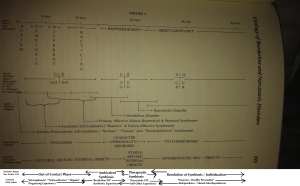
For the purpose of understanding psychiatric problems in a more nuanced and optimistic way, here is a diagram from Donald Rinsley’s book Treatment of the Severely Disturbed Adolescent:

CAM00157Update

Please click on the picture to see it larger. Each row corresponds vertically to the rows above and below in describing degrees of emotional development, and each row describes emotional growth over time from left to right. The majority of the text in brown is Rinsley’s own diagram; the bottom additions in white are mine.

Donald Rinsley was among the most respected authorities on borderline and narcissistic conditions in the second half of the 20th century. He was a psychodynamic therapist who ran a psychiatric hospital for severely troubled adolescents in Topeka, Kansas in the 1960s, 70s, and 80s. He later worked extensively with personality-disordered and psychotic adults in an outpatient psychotherapy practice.

I believe that much can be learned from studying Rinsley’s…

View original post 1,954 more words

Another narcissist* who wants help.

narcissus3_mythman

Occasionally I receive emails from people with NPD who have come across this blog and want to be cured. I posted about one of them in this post; yesterday I received another from a man who is considering reparenting therapy for his NPD.* He also plans to administer this therapy to himself due to the fact there are so few therapists willing or able to reparent a narcissist and because the few who do are extremely expensive. I’m not sure it’s possible to cure yourself of NPD, but if it is, I would love to find out more!

I have written about various healing methods in this article, but reparenting seems to be the most promising deep insight therapy that could work on someone with NPD, but only if the patient is both self-aware AND willing, as this man appears to be in his email. (I do not believe most malignant narcissists and psychopaths/sociopaths have any hope of being cured).

It always warms my heart to see a letter like his; I may just be one of those people Sam Vaknin calls a malignant optimist, but because I think NPD is really an elaborate defense mechanism adopted at a young age to protect a too-sensitive true self and may actually be a form of severe dissociation, I don’t think people like this man are beyond hope.

Here is the letter he sent. I love his analogy of curing NPD being akin to having a full skeleton transplant. 🙂

I’ve been reading your blogs on narcissistic personality. I first identified I have a problem with narcissism about six months ago and reading about it has been depressing, and very bleak. I’ve always known I’m self-centred and as a teen used to wonder why my empathy could more or less just switch on and off, often without my conscious control. But it is only since reading about NPD that I’ve realised what my issues actually are: I am convinced I have narcissistic personality disorder – I meet SO many of the criteria and as a method of getting by (or even ahead) in life I have trusted and enjoyed this system of habits and rules.

Narcissistic rage, while resulting in feelings of shame once an outburst had subsided, made me feel I was at least strong and able to defend myself from harm. It made me feel protected from being crushed or wounded, though in recent months I’ve realised it is simply an expression of me feeling crushed and wounded. One particular outburst directed at my lover left me reeling when I realised that if I stepped outside of my body and watched the argument happening, I’d have looked on myself with pity not fear. I’ve seen myself explode in senseless and bitter rage before and so it isn’t frightening to me anymore, it’s pathetic. There’s a line in the Annie Lennox song ‘Miracle of Love’ which I’ve been reflecting on a lot lately:
‘cool is the night that covers up your fears,
tender is the one that wipes away your tears,
there must be a bitter breeze to make you sting so viciously,
they say the greatest coward can hurt the most ferociously…’

trapped2

I realised then, and especially when I was listening to this song lately that I am a coward, and that underneath my mask there is a scared little child who felt it must have done something wrong to deserve the feelings of being unloved I experienced in my infancy.

I have found your writing so interesting because if there was one idea I prescribed to growing up it was that we are here on earth to love, and as a huge fan of all things Celine Dion (for whom every ballad is a song of true, deep, sincere and selfless love) even the very music of my life was about loving deeply and experiencing life through love to the fullest. Something strange has been going on in the last year, I think my narcissism has reached a dangerous peak (I’m a performer so being the centre of peoples’ attention and lauded by an audience has, I think exacerbated my own self-involvement). I’ve realised through my reading that if I continue using the mechanisms of narcissism to cover up my fear and feelings of smallness, I will never be able to fully receive or give the love I grew up believing in so much. I actually think if it weren’t for all that Celine crazy love song schtick and the benefit of feeling loved unconditionally by my sister that narcissism would have swallowed me completely by now. I desperately want to avoid getting worse and so much of the online data about NPD is written from a victim point of view. The outlook is so bleak, and the process of realising that I am living this way has been almost traumatic.

Particularly difficult is the frequent assertion that because I am a narcissist, I simply cannot feel empathy for others. I will agree my empathy is not allowed to flourish or be of use much of the time because of the walls I put up around myself, but I KNOW I do feel it. Just as deep beneath my masks as my fear of being hurt, or rejected is my little boy self hiding under the bed terrified. And I believe when he sees someone upset, wounded, attacked, he wants so badly to whisper to the person ‘you can hide under here with me.’ I have had moments with friends or loved ones where I know they are sad, have wanted to reach out and hold them and comfort them but these walls I have spring up like invisible fences stopping me from reaching out. It’s as if the little boy wants to go to the friend and hug them and soothe them, but he’s just too scared to come out from under the bed. I believe that deep feeling is empathy. But my fear, learned from a young age has defeated it. It makes me sick. I don’t want fear to win. It’s a bizarre loop because victim-mentality repels me, which I know is a narcissistic trait. And yet it is partly through the fear of being a ‘victim’ and allowing myself to wallow in the bad things that happened to me as a kid which drives me to reject the negative events in early childhood and be a FULL human being, not just a narcissist who passes as one. I want to experience that Celine Dion love, of which I am sure I have felt more than just glimmers and been blessed with from others.

attitudinal_healing

I believe love exists as a two-way street. I believe to receive someone’s love IS an act of love. To give love properly, we must be able to also receive and accept it. As RuPaul says ‘if you can’t love yourself, how in the hell are you gunna love anyone else.’ Well I want to learn to forgive the child inside for being so scared and angry. I want to teach him (myself) convincingly that it was not his fault he was adopted. That it was not his fault that he couldn’t protect his sister from her own demons spawned from the same young events. Or that somehow even if it possibly could have been his fault, it’s okay now. He was just a child.

I want to re-parent myself and unlearn the narcissistic coping mechanisms of devising a false self and put in place a new system. I feel like this is psychologically similar to having a full skeleton transplant, so I know it isn’t going to be easy. I am proposing to change myself in a big, lasting way. I’m choosing to become a proper adult, not ruled by the little boy anymore. It’s time for me to look after him, and I can only do that my knowing him. Knowing what it is I fear, what my true needs are, not just the needs of narcissistic supply. I must make this much clear: I reject my own narcissism. I do not want it. This system of self-aggrandisement, making myself emotionally unreachable, and of behaving so poorly to the people around me isn’t good enough. I want a better life.

narcissism_childhood

Your blog has given me hope that this might be possible. Your compassion has been vital for me today. I’ve been typing this as much to organise my thoughts as to fill you in on what’s going on. I know you will receive a lot of mail, and I know you’ll be all too used to big long emails from narcissists talking about themselves 😛 But I say all this to say that your writing has been understood by me as a shared promise of hope. It’s really a wonderful thing you’ve done and I’m so glad I found your blog. I wish others would get to read it, rather than so much of the demonising bile dominating google on the subject of NPD. I believe it’s bad to try to turn people into cartoon villains. Every behaviour has a cause.

My main goal going forward is keeping mindful at all times of this little boy. I need to become his best friend and always listen to what he’s saying. I need to tell him ‘no we don’t lash out when we feel attacked,’ and help him grow up. He is, after all, me. I’ve had mild moments of self awareness where I have tried to learn more about treatment and even let my walls down from time to time to be honest and show my naked little self to those close to me. It’s hard for them to understand this stuff and unfortunately after a few weeks pass I find the walls have been slowly slowly rising again. Then it takes a big argument or event to knock ’em down and unfortunately one such event has cost me a really important relationship. The loss of the relationship, alongwith increasingly realising my charisma isn’t enough to get me by in life could be defined as my ‘narcissistic crisis.’

As you said: ‘Harnessing these moments of emotional nakedness is like trying to hold onto a dream while awake.’ My next step is to find a method, or try to invent one to keep me mindful. I think reading works like your own frequently, perhaps daily and reminding myself of exactly what my demons are might help. To hold my inner enemies close in this way may help me defeat them. You’ve helped enormously. Thank you.

* I have no idea whether he actually has NPD or has ever been diagnosed with it. He could have some other disorder. True narcissists rarely acknowledge their disorder or desire to be helped, but I’m sure there are exceptions.

Suicide: A Mental Health Perspective

Just Plain Ol’ Vic asked me to reblog this powerful post about suicide and the judgment of others about that act of desperation. I agree with him about the importance of this serious mental health issue.Every day lives are lost due to suicide and their shocked loved ones must cope with feelings of grief, shock and bewilderment. I think comments like the quoted one about suicide being a selfish act are immensely insensitive and obtuse.

Why are some things so annoying?

This is a fascinating article in Psychology Today about what makes certain things universally annoying.

In a nutshell, the things that annoy us most are things that are both repetitive (clicking a pen over and over, for example) and unpredictable (we don’t know when it will stop).

What are the things that annoy you most? For me, the top two would have to be tailgaters and fleas.
Oh, and narcs.

Things that Annoy Us
Post published by Christopher Peterson Ph.D. on Jul 03, 2011 in The Good Life

annoyed_cat

What annoyances are more painful than those of which we cannot complain? – Marquis De Custine

I just finished reading an interesting book titled Annoying by science writers Joe Palca and Flora Lichtman (2011). The book is a free-ranging and intelligent discussion of what is known about the things that annoy us: what, who, when, why, and how.

The authors make the point that there is no single scientific field devoted to the topic of being annoyed. But plenty of scholars and researchers have weighed in on the subject, which means that such a field – were it to exist – would be multidisciplinary. Palca and Lichtman describe lots of pertinent studies by psychologists, neuroscientists, sociologists, anthropologists, audiologists, musicologists, entomologists (because the things that bug us include bugs, especially when they buzz), and others, and they convey lots of interesting facts from research. But my favorite part of the book was by far the many great examples they use of annoyances, from terrible smells to off-key melodies to repetitive spouses and coworkers.

“Annoyance” refers to whatever bugs us (stimulus) and also to the emotional state we experience when being bugged (response). The book starts with a discussion of just what kind of emotional state annoyance might be. It is akin to anger, but not identical. It is akin to disgust, but not identical. And it is akin to frustration, but not identical. The conclusion, according to the authors, is that annoyance is its own emotional thing and deserves examination in its own right. I agree.

Palca and Lichtman observe how difficult it is to find a universal formula for what is annoying, but they take a stab. Annoyances are unpleasant but not terribly so, at least not when experienced one at a time. Rather, it is when they are repetitive and at the same unpredictable (that is, when we do not know when they will cease) that they get under our skin.

annoying_book

A one-time explosion on the street surprises and frightens us, but it is not annoying. Our neighbor’s music, played over and over, night after night, is highly annoying. Boom boom boom.

A coworker who constantly badgers us, belittles us, and bullies us is a bad person, but he is not an annoyance. He is an asshole. In contrast, a coworker who tells us the same joke hundreds of times is not a bad person, but he is an annoyance, and his laughter after each telling becomes like a fingernail on a blackboard, not life-threatening but certainly life-diminishing.

A cancer is a tragedy, and those who deal with cancer by being courageous earn our admiration. A blister is an annoyance, and those dealing courageously with blisters earn little or no regard from anyone. Indeed, if you complain about a blister, you risk becoming an annoyance yourself.

Context matters. Our own wind chimes strike us as beautiful, whereas those of our neighbors are annoying. Along these lines, the authors cite other people’s acronyms as annoying, at least when they are unfamiliar to us, whereas our own acronyms are efficient, entertaining, and even elegant*.

Culture matters, too. Apparently there are cultures – like Yap or Japan – where one simply does not express annoyance. I suspect, though, that annoyance as a private experience nevertheless occurs.

Epidemiologists have long known that major life events – like divorce or job loss – can lead to poor physical and psychological health (Holmes & Rahe, 1967). A more recent realization is that mundane hassles – like having to take care of a neighbor’s pet – also put people at risk for poor health (Kanner, Coyne, Schaefer, & Lazarus, 1981). Indeed, because hassles are usually more common than major life events, the damage they do in the aggregate may be greater. Annoyances are a version of hassles, I think, and they too may be deleterious. Maybe hassles take a toll precisely because they are annoying.

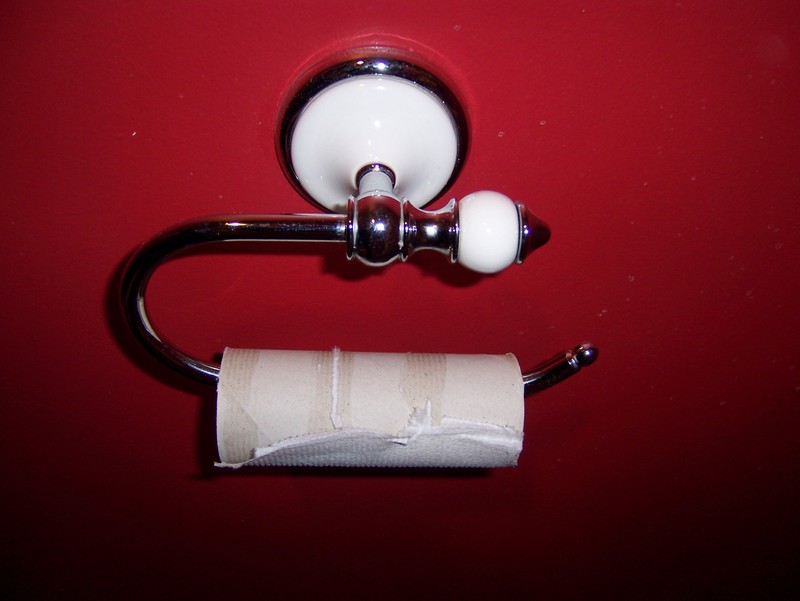
empty_toiletpaper

Things that are annoying grab our unwilling attention, and that may be the reason annoyances are so … how to say it … annoying. They prevent us from paying attention to other things. Palca and Lichtman give the all-too-familiar example of an overheard cell-phone conversation to which we are subjected on a train or bus. We don’t want to eavesdrop, but we cannot help ourselves. And the fact that we only hear one side of it (what is called a halfalogue) makes it especially distracting and thus highly annoying, as it goes on and on and on. Maybe the human tendency to make sense of the world is coopted by hearing half a conversation more than it is by hearing both sides. Is this why political talk shows where “hosts” and “guests” talk over one another can be so annoying?

Why do we have the capacity to be annoyed? Maybe there is no real purpose for this capacity. It’s like an appendix or wisdom teeth. But to extrapolate from Darwin’s proposal that negative emotions like fear and anger are warning signals that lead to appropriate actions to avoid or undo pending danger, perhaps annoyances galvanize an appropriate reaction to whatever distracts us from what paying attention to what really matters, not a bad skill for people to have in their repertoire. Along these lines, Palca and Lichtman speculate that annoyance alerts us to a violation of our expectations about the way things are supposed to be. They use the example of off-key notes for people with perfect pitch.

Is there a positive emotion that corresponds to annoyance? It would be a mildly pleasant experience that results from a repetitive yet unpredictable stimulus. Psychologists have termed these uplifts (Kanner et al., 1981). The unprompted smiles or giggles of our children would qualify. Given that the origin or the word annoyance is from an Old French verb meaning to cause problems, perhaps anything that provides a solution to a minor problem would also qualify, like parking spaces that appear when we most need them.

Is being annoyed an individual difference? Relevant research has just begun, but the answer appears to be yes. There are some people who are annoyed by lots of things and others who are annoyed by very few. Indeed, some research even links the propensity to be annoyed to particular genes, those associated as well with some forms of bipolar disorder. In any event, I bet that the frequently annoyed are less satisfied with life than those who are unflappable. Palca and Lichtman speculate those who are frequently annoyed may themselves be frequently annoying.

annoying-things-009

Said more positively, experiencing few annoyances contributes to the good life, for the self and others, and perhaps folks with few annoyances simply have higher thresholds. It is hard to imagine that the Dalai Lama gets annoyed very often, and maybe meditation that trains attention is a useful practice for changing one’s annoyance threshold.

If annoyance plays some useful role, though, we would not want to banish it completely. Otherwise, we would simply pay attention to anything and everything without any attempt to sort through them, which may be fine for a kitten or a puppy but not for a person.

Most of us are annoyed by some things some of the time and by other things all of the time. Whatever pushes our buttons may be as much a personal signature as the things we love or the things that we do well. Maybe personal ads should list our annoyances as well as our interests. If a shared annoyance can forge a common bond, perhaps annoyances have a silver lining. Perhaps.

Familiarity does not breed contempt, but it can breed annoyance. Maybe a sign of true love is not being annoyed by what another person does, no matter how unpleasant, repetitive, and unpredictable it might be. Rather than defining love as never having to say you’re sorry, maybe we should define love as never having to say you are annoyed.

Along these lines, several chapters of the book grapple with interpersonal annoyance, raising the intriguing point that the initially endearing traits and habits of a romantic partner may end up being highly annoying and even the source of breakups. So, we may fall in love with someone who is funny, or someone who is stolid, or someone who is attentive, only to fall out of love as time passes and the person is experienced as clownish, or unexpressive, or clinging. Nothing has changed except ourselves and the experiences that have accrued – which is to say everything has changed.

annoying-things-men-do

One of the standard bits of positive psychology advice for couples experiencing rough times is for each to remember what was initially attractive about the other. But in some cases, a displeased partner may not need any reminding at all. To quote football coach Dennis Green’s famous rant, “They’re who we thought they were!” Better advice would be to reframe what has become annoying or to find something else that is attractive. For lasting love, this may be an ongoing process. No one ever said that love is easy.

* It has been suggested that the US Army invented acronyms. I doubt that is true, but members of the military seem to revel in them. I have done some work with the Army over the past few years, and while I have the utmost respect and admiration for those who wear the uniform of the country, my good feelings come to a screeching halt when Soldiers start tossing out acronyms, as some are wont to do. My all-time least favorite is POV, an Army acronym for personally owned vehicle. That means car, for goodness sakes. When I meet with members of the military, I sometimes request that the meeting be a DAZ-meaning de-acronymed zone. Just say the words, sir or ma’am, at least if you want me to pay attention to the content of what you say and not be incredibly annoyed by how you say it.

12 weird things you might see a narcissist do.

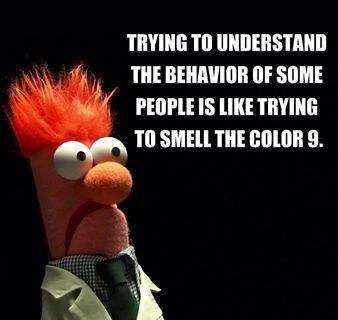
the_color_9

There are some strange things I’ve noticed narcissists do that aren’t usually mentioned as symptoms of their disorder, but seem to be common enough perhaps they should be included as additional criteria for NPD.

If you know someone who does only one or two of these things, it doesn’t necessarily mean they’re a narc, but if they do several of them regularly and also seem to fit the more well-known criteria for NPD, these things could be red flags to watch out for.

1. They don’t blink when they look at you.

googly_eyes

Some narcs have a penetrating, predatory gaze. If a person of the opposite sex looks at you this way, you may take it as sexual interest (and it could be), but watch carefully: if they do not blink this could mean they are sizing you up as prey. Whether they blink or not, if their stare makes you squirm, get away. Listen to your instincts.

2. They interrupt you or talk over you constantly.

blah-blah1

If someone only seems to care about what they are going to say next, and don’t even seem to have heard what you said, suspect a narcissist.

3. Whatever you tell them is really all about them.

narc_cards

If you say something to them about yourself, rather than acknowledge you, instead they always relate it to back something that happened to them. The Roz Chast cartoon above illustrates that well. You do not exist.

4. Their eyes look flat or dead.

jodi_arias

This is a “dead” giveaway and those eyes usually belong to someone high on the spectrum–a malignant narcissist or a psychopath. Get away from this person. The above photo of psychopathic murderer Jodi Arias shows how flat and dead their eyes can look.

5. They sometimes act psychotic.

crazy_person

All malignant narcissists are bat shit crazy, and their delusions can rival those of someone with schizophrenia. In fact, narcissists denied supply over long periods of time or who have suffered a severe loss can in fact become psychotic. Schizophrenic-like neologisms and nonsensical conversation that sounds like word salad isn’t that uncommon in a malignant narcissist living in mortal fear of losing their “mask of sanity.”

6. They have dramatic, unsettling mood swings.

young woman holding smiling face

Narcissist mood swings (mask switching) can be so sudden and inexplicable you may think you’re dealing with someone with Dissociative Identity Disorder (DID). For example, a narcissist mother can seem to be happily playing with her child and suddenly, for no discernable reason, start screaming at or hitting the child.

7. They are bad sports.

bad_sport

They will act like babies if they lose a game. I remember once seeing a grown man in his 40’s get so angry that he lost Monopoly that he picked up the game board and tossed it across the room, while everyone looked on in horror. If they can’t win, they will ruin the game for everyone else.

8. They have dark interests or like things that make most people uncomfortable.

satanist

Narcissists, especially high on the spectrum, walk on the dark side and this shows in their obsession with things like the occult, mass murderers, the Holocaust, or weapons. They may listen to dark music such as death metal or watch slasher movies. Many people are interested in these things, but a malignant narcissist or psychopath, even if they put on a mask of being an upstanding moral citizen, usually have a secret hobby or interest in something dark or evil. They may not talk about it in public, but they have one.

9. They can’t let nature take its course.

facelift

If a woman has had an excess of cosmetic surgery including too many facelifts, she is probably a somatic narcissist living in mortal fear of aging.

10. They have an affected way of speaking.

fake_speaking

Dahhhh-ling, this can manifest as a fake foreign accent, or just a speaking voice that sounds fake and affected, as if they are acting on a stage. It comes off to others as more annoying than glamorous though.

11. They use exaggerated mannerisms, facial expressions, or speaking voice.

silent_movie

Like actors in silent movies, who used exaggerated expressions and mannerisms to make up for fact they couldn’t speak in those films, some narcissists (probably because they can’t feel emotions the way normal people can) overact to the point of being rather hilarious. This is also common in people with Histrionic Personality Disorder (HPD), another Cluster B disorder that’s been speculated by some experts on personality disorders to be a somatic form of narcissism and is far more common in women.

12. They have conversations with themselves.

talking_to_yourself

I’ve heard many a narcissist talk to themselves–and actually answer themselves back. Does this mean they are insane? Do they hear voices in their heads? Or are they practicing what they might say to someone in a hypothetical conversation ahead of time (remember, everything they do is fake, so they might have to pre-plan how they will respond to others in advance). Who knows? I just know it’s weird as fck. My ex used to do this all the time–in front of a mirror too.

Also see 5 More Weird Things You Might See Narcissists Do.

NPD vs. BPD: they are not the same thing!

BPD-Awareness

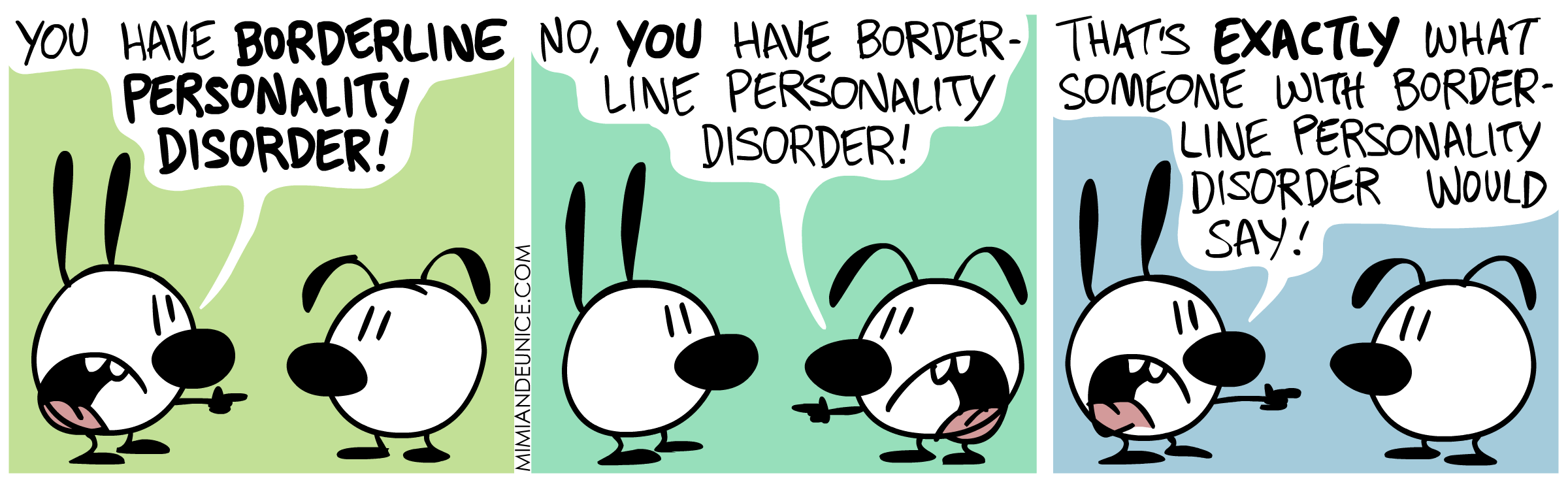
Articles like this one make me want to rage. The author, Doug Bartholomew, a licensed social worker, believes that people with Borderline Personality Disorder (BPD) are pretty much the same as people with Narcissistic Personality Disorder (NPD). He even goes so far as to say BPD’s, along with NPDs, fit the criteria for M. Scott Peck’s “People of the Lie.”

Wait just one second. Peck’s People of the Lie don’t even include all narcissists–his definition describes those with Antisocial Personality Disorder and malignant narcissism (there’s a huge difference even between MN’s and garden variety narcissists–a malignant narcissist has ill will toward others and decided antisocial traits while a “benign” narcissist isn’t necessarily ill-intentioned but is just self centered and doesn’t care about your feelings). Peck never said all manipulative people (people with one of the four Cluster B personality disorders) were by nature evil, but evil people is what his book is about.

At the same time I understand where Bartholomew is coming from. On the surface, people with BPD can be manipulative and even resort to some of the same unpleasant tactics and mind-games (gaslighting, etc.) that narcissists like to play. They can appear to lack empathy, because they get so caught up in their own drama that they can literally forget that others exist. They can be demanding, high maintenance and prone to irrational rages (just like narcs) but are far more likely than narcs to turn their rage inward and become self-destructive or even suicidal.

Narcissism Clinic.
Not much to do with this article, but I couldn’t resist.

Borderlines also usually regret their acting-out and selfish or manipulative behaviors when the crisis has passed or their bad behavior is called out to them. They may be self-centered and impulsive but are not lacking remorse or the ability to feel shame and guilt. The problem with Borderlines is they tend to act as they feel at the moment without thinking things through. They can get so caught up in their own fear of abandonment that they almost literally forget that you have feelings too. However, after the fact Borderlines usually will feel remorseful and ashamed of their behavior, and on top of that, realize that their offputting behavior may cause others to do what they fear the most–abandon them.

Bartholomew also states that all Cluster B disorders are characterized by a lack of empathy:

The overwhelmingly most commonly mentioned behavior or trait associated with all the Cluster B Personality Disorders is a lack of empathy or compassion. They seem unmoved by the effect their behavior has on their loved ones other than what is necessary to keep their loved ones engaged and around. It is as if they were tone deaf or color blind to the feelings and experiences of others.

While it’s true that people with NPD and ASPD are characterized by a lack of empathy, I disagree that this is true of people with BPD. I think this is a gross overgeneralization.

Borderlines can feel empathy, but due to their impulsiveness and fear of abandonment, they can act in selfish, defensive, and manipulative ways that may hurt others (but they hurt themselves even more so). However, unlike malignant narcissists and people with ASPD, Borderlines do not set out to hurt others and they do care how others feel. Unfortunately their good judgment is clouded by their disorder which makes it difficult or impossible for them to regulate their emotions. That’s why they act so impulsively and often fail to think things through before they act out. It’s also why their relationships tend to be stormy and short-lived.

BPD_cartoon

A person with BPD does not wear a mask or have a “false self” like someone with NPD–but their fear of abandonment can cause them to knowingly or unknowingly push others away. Their ambivalence in relationships can be very confusing to others–they can seem to adore you one moment, and then hate you the next. They can seem needy and rejecting by turns. When others grow tired of this crazymaking and confusing “I hate you, don’t leave me” behavior and finally leave them, the Borderline genuinely doesn’t understand what they have done to drive the other person away, and so they become even more fearful of being abandoned. Their behavior is maladaptive because it tends to cause the very thing they are trying so desperately to avoid.

63380797
We are just burning toasters.

A much better description of the similarities and differences between Borderlines and Narcissists can be found in “Borderline vs. Narcissistic Personality Disorder: How Are They Different?” from the Clearview Women’s Center’s website.

While the two disorders, both being part of the Cluster B group of personality disorders, do have overlapping symptoms and are often confused with each other and/or misdiagnosed as the other disorder (with males being far more likely to be diagnosed with NPD and females with BPD), this author, unlike Bartholomew, understands that both the motives and mechanics of the disorders are quite distinct from each other:

[…]both BPD and NPD deal with conflict in a way that is unhealthy to themselves and those around them. It’s the expression of the anger that results from the conflict that is different.

In her article “Blame-Storms and Rage Attacks,” Randi Kreger, co-author of Walking on Eggshells, points out the difference in how those with BPD and NPD express anger. While those with Borderline Personality Disorder may fly into a rage and push people away, they will often calm down, feel shame for their reaction, and promise never to do it again.

“Unless they’re in treatment, the underlying issues don’t go away. Some conventional [borderlines] do not get angry at all, but hold it in or express it inwardly through self-harm,” says Kreger.

“The anger of narcissists, on the other hand, can be more demeaning,” she continues. “Their criticism evolves from their conviction that others don’t meet their lofty standards — or worse, aren’t letting them get their own way.”

“The Sensitive Gene: Why Some People Are Born To Feel Emotions Harder”

The Sensitive Gene: Why Some People Are Born to Feel Emotions Harder
By Alexia LaFata for Elite Daily: http://elitedaily.com

teary_eye

Scientists have long debated what exactly makes us who we are. Are our qualities more influenced by our social environment, or are we naturally inclined to be a certain way? Or — to complicate things even further — does our environment affect the way these natural tendencies display themselves?

Well, when it comes to the reasons why we do the things we do, the most complicated answer is usually the correct one.

In recent decades, the government has spent billions of dollars on gene research with the goal of trying to explain how the genes we were born with express themselves in our everyday lives.

Psychologists are optimistic — though cautiously — these advancements in gene research will help us understand ourselves better.

We haven’t even scratched the surface of the full potential of genetic research, but what we have seen so far looks promising.

One human quality that genetics has attempted to help explain is sensitivity. People who are highly sensitive tend to respond more emotionally to their environments.

They are more inclined to cry during sad movies, jump to use social media to share something that moved them and feel heightened levels of sympathy for poor people and their friends who just got dumped.

Most notably, they are also more inclined to have a negative attention bias, which means they focus more on the negative things in their environment than the positive things.

This bias causes sensitive people great anxiety, especially if the environment they’re responding to is new.

Where do these traits come from? Why are some people more likely than others to respond more powerfully to their environment? In other words, why are some people so damn sensitive?

If this sounds like you, fear not: It turns out the answers to those questions do, indeed, have something to do with the way you were born.

Researchers from the University of California, Monmouth University and the Albert Einstein College of Medicine found that being sensitive is an innate trait that’s identifiable by physiological reactions, patterns of brain behavior and genes.

In their study, 18 participants viewed photos of either frowning or smiling faces. The researchers then scanned the participants’ brain activity while they looked at the photos to assess how emotional their responses were.

They found that people, who were considered to have sensory processing sensitivity (SPS) had greater blood flow to areas of the brain involved with emotion, awareness and empathy — indicating physical evidence of the presence of the sensitivity trait. This occurred regardless of whether they were looking at the sad or happy photo.

Another 2012 study examined biological proof of sensitivity even further. In the study, researchers Rachael Grazioplene, Colin DeYoung, Fred Rogosch and Dante Cicchetti studied the cholinergic system, a system in our bodies that determines how we respond to new environments and how sensitive we are to stimuli.

The cholinergic system becomes activated when we experience “expected uncertainty,” which happens when we’re placed in situations where we predict we will learn something new.

For example, when you were a freshman in college, you probably knew you’d be confronted with new experiences.

You experienced those feelings of “expected uncertainty” — of not knowing who your friends would be, what you wanted to major in, what clubs you wanted to join, how you would handle living away from home and so on.

Some of your peers might have perceived those new experiences as anxiety-inducing, meaning they would have proceeded with caution. Others might have seen them as intriguing, causing them to have been more inclined to explore.

sensitive_jason

The way both of these groups of people responded to those new environments was influenced by genetic variants in their cholinergic systems.

In her study, Grazioplene and her colleagues studied variations in the CHRNA4 gene, a key cholinergic receptor and determinant of whether you see the aforementioned kinds of “expected uncertainty” as threatening or exciting.

It wouldn’t be enough to say this genetic variant was the sole determinant, though, so the study also examined how, in conjunction with the variation in the CHRNA4 gene, an individual’s upbringing and social environment affected how he or she perceived uncertainty.

To study the functions of this variation, the researchers set up a week-long camp for 614 children, ages 8 through 13, all of whom came from the same socioeconomic background, but had different upbringings: Half of the children had an upbringing in which they had been maltreated with neglect or emotional, sexual or physical abuse, and the other half had an upbringing in which they had not been maltreated.

The children with the genetic variation who grew up in an abusive environment were more likely to perceive the new camp environment as threatening, and the children with the same genetic variation who had grown up in a normal environment were more likely to perceive the new environment as intriguing. Even more interestingly, these results were true regardless of age, sex or race.

Now, what does this mean? It means that, yes, there is certainly a genetic variant that makes you more inclined to be anxious or curious in new environments, but your upbringing and social environment play a role in determining which one of those two it will be.

And while this specific genetic variant is rare — only one percent of the population actually have it — it gives valuable insight into the way psychologists and scientists study behavioral patterns in relation to both genetics and environment.

So, if you’ve sobbed during “The Notebook,” impulsively shared a video on Facebook of a kitten rolling around in a patch of grass that made you tear up or found yourself crying with your best friend when her boyfriend dumped her, take comfort in the fact that you were probably born this way — feels and all.

Alexia LaFata is a Writer covering culture and lifestyle for Elite Daily. She’s a proud New Jersey native and soon-to-be Boston College graduate, and her work is featured on Thought Catalog and VentureBeat. Stalk her at alexialafata.com.
alexia_lafata

6 Signs of Narcissism You May Not Know About (Psychology Today)

Interesting article about the lesser-known indicators of narcissism from Psychology Today. Contrary to popular opinion, narcissists do not love themselves, only their image.
I agree with Dr. Seltzer that these six traits should be added to the official diagnostic criteria for NPD.

6 Signs of Narcissism You May Not Know About: How can you recognize the fragility behind the narcissist’s grandiosity?
Post published by Leon F Seltzer Ph.D.

narc_lovers

The recently published 5th edition of the Diagnostic and Statistical Manual of Mental Disorders (DSM) lists precisely the same nine criteria for narcissistic personality disorder (NPD) as did the previous version, published 19 years earlier. So these longstanding diagnostic yardsticks are by now quite familiar—not only to professionals but to interested laypeople as well. Because only the extreme, or “classic,” narcissist fits all of these criteria, DSM specifies that an individual need meet only five of them (barely more than half) to warrant this unflattering label.

As a starting point, I’ll reiterate these selected criteria—before, that is, adding six important ones of my own, which either complement or extend these “official” yardsticks. My particular measures for identifying pathological narcissists are based not only on my exposure to the voluminous writings on this character disorder, but also on 30+ years of clinical experience. This experience includes doing personal, couples, and family counseling with such troublesome individuals. But it also involves working independently with those involved with narcissists—whether their distressed children, spouses, parents, friends, or business associates—who repeatedly express enormous frustration in trying to cope with them.

To begin, however, here are DSM’s requirements (link is external) (slightly condensed, and with minor bracketed amendments) for “earning” the unenviable diagnosis of Narcissistic Personality Disorder:

1. Has a grandiose sense of self-importance.
2. Is preoccupied with fantasies of unlimited success, power, brilliance, beauty, or ideal love.
3. Believes that he or she is “special” and unique and can only be understood by, or should associate with, other special or high-status people (or institutions).
4. Requires excessive admiration [regularly fishes for compliments, and is highly susceptible to flattery].
5. Has a sense of entitlement.
6. Is interpersonally exploitative.
7. Lacks empathy: is unwilling [or, I would add, unable] to recognize or identify with the feelings and needs of others.
8. Is often envious of others or believes that others are envious of him or her.
9. Shows arrogant, haughty [rude and abusive] behaviors or attitudes.

So what’s left out here? Actually, as regards identifying descriptors, quite a bit. And I’ve no doubt that other therapists could add further to the six additional characteristics I’ll provide here—features that, although regrettably minimized or omitted from DSM, I‘ve routinely seen displayed by the many dysfunctional narcissists I’ve worked with. So, to enumerate them, such individuals:

1. Are highly reactive to criticism.

grinch

Or anything they assume or interpret as negatively evaluating their personality or performance. This is why if they’re asked a question that might oblige them to admit some vulnerability, deficiency, or culpability, they’re apt to falsify the evidence (i.e., lie—yet without really acknowledging such prevarication to themselves), hastily change the subject, or respond as though they’d been asked something entirely different. Earlier for Psychology Today I wrote a post highlighting this supercharged sensitivity called “The Narcissist’s Dilemma: They Can Dish It Out, But . . . ”. And this aspect of their disturbance underscores that their ego—oversized, or rather artificially “inflated”—can hardly be viewed as strong or resilient. On the contrary, it’s very easily punctured. (And note here another related piece of mine, “Our Egos: Do They Need Strengthening—or Shrinking?”). What these characteristics suggest is that, at bottom and despite all their egotistic grandiosity, they…

2. Have low self-esteem.

narcissists_hate_themselves

This facet of their psyche is complicated, because superficially their self-regard would appear to be higher and more assured than just about anyone else’s. Additionally, given their customary “drivenness,” it’s not uncommon for them to rise to positions of power and influence, as well as amass a fortune (and see here my post “Narcissism: Why It’s So Rampant in Politics”). But if we examine what’s beneath the surface of such elevated social, political, or economic stature—or their accomplishments generally—what typically can be inferred is a degree of insecurity vastly beyond anything they might be willing to avow.

That is, in various ways they’re constantly driven to prove themselves, both to others and to their not-so-confident “inner child” self. This is the self-doubting, recessive part of their being that, though well hidden from sight, is nonetheless afflicted with feelings and fears of inferiority. Inasmuch as their elaborate defense system effectively wards off their having to face what their bravado masks, they’re highly skilled at exhibiting, or “posturing,” exceptionally high self-esteem. But their deeper insecurities are yet discernible in their so often fishing for compliments and their penchant for bragging and boasting about their (frequently exaggerated) achievements. That is, they’re experts at complimenting themselves! And when—despite all their self-aggrandizement— others are critical of them, they…

3. Can be inordinately self-righteous and defensive.

right_wrong

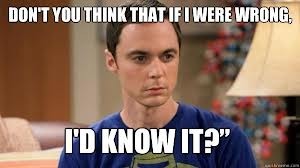
Needing so much to protect their overblown but fragile ego, their ever-vigilant defense system can be extraordinarily easy to set off. I’ve already mentioned how reactive they typically are to criticism, but in fact anything said or done that they perceive as questioning their competence can activate their robust self-protective mechanisms. Which is why so many non-narcissists I’ve worked with have shared how difficult it is to get through to them in situations of conflict. For in challenging circumstances it’s almost as though their very survival depends on being right or justified, whereas flat out (or humbly) admitting a mistake—or, for that matter, uttering the words “I’m sorry” for some transgression—seem difficult to impossible for them.

Further, their “my way or the highway” attitude in decision-making—their stubborn.competitive insistence that their point of view prevail—betrays (even as it endeavors to conceal) their underlying doubts about not being good, strong, or smart enough. And the more their pretentious, privileged, exaggeratedly puffed-up self-image feels endangered by another’s position, the more likely they are to…

4. React to contrary viewpoints with anger or rage.

rage2

In fact, this characteristic is so common in narcissists that it’s always surprised me that DSM doesn’t specifically refer to it among its nine criteria. Repeatedly, writers have noted that angry outbursts are almost intrinsic to both narcissistic and borderline personality disorders. And although (unlike the borderline) it’s not particular fears of abandonment that bring out their so-called “narcissistic rage,” both personality disorders generally react with heated emotion when others bring their deepest insecurities too close to the surface.

The reason that feelings of anger and rage are so typically expressed by them is that in the moment they externalize the far more painful anxiety- or shame-related emotions hiding just beneath them. When they’re on the verge of feeling—or re-feeling—some hurt or humiliation from their past, their consequent rage conveniently “transfers” these unwanted feelings to another (and see here my PT post “Anger—How We Transfer Feelings of Guilt, Hurt, and Fear”).

The accompanying message that gets communicated through such antagonistic emotions is “I’m not bad (wrong, stupid, mean, etc.), you are!” Or, it could even be: “I’m not narcissistic, or borderline! You are!” (Or, in slightly milder version, “If I’m narcissistic, or borderline, then so are you!”) And if the mentally healthier individual has no clue as to what provoked their outburst in the first place, such a sudden explosion is likely to make them feel not only baffled but hurt, and maybe even frightened. But what cannot be overemphasized here is that narcissists…

5. Project onto others qualities, traits, and behaviors they can’t—or won’t—accept in themselves.

635223192958830312Projection2

Because they’re compelled from deep within to conceal deficits or weaknesses in their self-image, they habitually redirect any unfavorable appraisal of themselves outwards, unconsciously trusting that doing so will forever keep at bay their deepest suspicions about themselves. Getting anywhere close to being obliged to confront the darkness at their innermost core can be very scary, for in reality their emotional resources are woefully underdeveloped.

Broadly recognized as narcissists by their fundamental lack of self-insight, very few of them (depending, of course, on how far out they are on the narcissistic continuum) can achieve such interior knowledge. For in a variety of ways their rigid, unyielding defenses can be seen as more or less defining their whole personality. And that’s why one of the most reliable ways for them to feel good about themselves—and “safe” in the world they’re essentially so alienated from—is to invalidate, devalue, or denigrate others. So they’ll focus on others’ flaws (whether or not they really exist) rather than acknowledge, and come to terms with, their own. And in many curious ways this habit causes them to…

6. Have poor interpersonal boundaries.

space_invasion
Space invasion!

It’s been said about narcissists that they can’t tell where they end and the other person begins. Unconsciously viewing others as “extensions” of themselves, they regard them as existing primarily to serve their own needs—just as they routinely put their needs before everyone else’s (frequently, even their own children). Since others are regarded (if they’re regarded at all!) as what in the literature is often called “narcissistic supplies”—that is, existing chiefly to cater to their personal desires—they generally don’t think about others independently of how they might “use” them to their own advantage. Whatever narcissists seek to give themselves, they generally expect to get from others, too (which is yet another dimension of their famous—or infamous—sense of entitlement).

Even beyond this, their porous boundaries and unevenly developed interpersonal skills may prompt them to inappropriately dominate conversations and share with others intimate details about their life (though some narcissists, it should be noted, can display an extraordinary, however Machiavellian, social savvy). Such private information would probably focus on disclosing facts others would be apt to withhold. But having (at least consciously) much less of a sense of shame, they’re likely to share things they’ve said or done that most of us would be too embarrassed or humiliated to admit. Still, with an at times gross insensitivity to how others might react to their words, they’re likely to blurt out things, or even boast about them, that others can’t help but view as tasteless, demeaning, insulting, or otherwise offensive.

They might, for instance, share—and with considerable pride!—how they “chewed” someone out, and expect the other person to be impressed by their courage or cleverness, when in fact the listener may be appalled by their lack of kindness, tact, or restraint. Additionally, they may ask others questions that are far too personal or intimate—again unwittingly irritating or upsetting them. And such a situation can be particularly difficult for the other person if the narcissist is in a position of authority over them so that not responding could, practically, put them in some jeopardy.

To conclude, I can only hope that these additional characterizations of the pathological narcissist (vs. those with less pronounced narcissistic qualities) may be helpful in enabling you to identify them before their “malignancy” does a number on you. And if you’ve already been duped by their machinations or manipulations, perhaps this piece will be a “heads up” for you to prevent them from wreaking any further havoc in your life.

NOTE 1: I’d be remiss if I didn’t point out that the narcissism addressed here centers on its most maladaptive, or “toxic,” forms. Unlike DSM (the standard diagnostic reference tool for mental health professionals), the Psychodynamic Diagnostic Manual (link is external)(PDM, 2006)—respected, but much less well known than this official volume—explicitly notes that the disorder exists “along a continuum of severity, from the border with neurotic personality disorders to the more severely disturbed levels.” And additionally, that “toward the neurotic end [these] narcissistic individuals may be socially appropriate, personally successful, charming and, although somewhat deficient in the capacity for intimacy, reasonably well adapted to their family circumstances, work, and interests.”