When your boundaries are being violated.

boundaries

One of the most pernicious things our narcissists do is violate our boundaries. This can take a number of forms, ranging from physical violations (such as rummaging through your things or physically attacking you) to more subtle mental or emotional violations.

So I’ve devised a checklist of some of the ways narcissists violate our boundaries. They do this to give us less power or make us feel diminished. Don’t allow it. If you see any of these behaviors from your narcissist, if you can’t cut contact with them, be very firm and tell them you will not tolerate it. Do not back down or make excuses. You have every right to protect your boundaries. Your reasons why are really none of their business.

Physical boundary violations:

1. Physical abuse — hitting, pushing, punching, getting “in your face,” cornering you.

2. Forcing you to have sex when you do not want to.

3. Rummaging or going through your personal possessions.

4. Stealing from you. A lock box (these can be cheaply purchased form stores like Walmart) is a good idea. Get one with a combination, not a key.

5. Touching you or sitting/standing too close during conversation, when this is not desired by you.

6. Some somatic narcissists can violate your boundaries by dressing immodestly in front of you. If you object to your narcissist sitting around in his threadbare boxers (or nothing at all), tell him it makes you uncomfortable and that you won’t tolerate it.

7. Making a lot of noise, talking loud, playing loud music, slamming things around to get your attention (my ex was infamous for all these things, especially the loud music).

8. Excessive use of language you disapprove of.

9. Staring at you in a predatory way.

10. Making unreasonable demands (spending money on them, doing favors, running errands for them that go beyond what’s reasonable).

internal_boundaries
Click to make larger.

Emotional/Mental boundary violations:

1. Telling you how you feel or accusing you of feeling or thinking something you do not. Taking your inventory.

2. Gaslighting and triangulating against you.

3. Telling you you have no right to feel the way you do, that it’s wrong, stupid, etc.

4. Insults and namecalling.

5. Grilling you about your activities when you are not with them.

6. Spying on you; stalking you online.

7. Not allowing or making it difficult for you to see your friends, family members, etc.

8. Telling you how you should dress, look, etc.

9. Dismissing or putting down your accomplishments or interests

10. Telling you what you feel is crazy, that you are being over-sensitive, etc. (really a form of gaslighting).

11. Interrupting you or not allowing you to speak.

12. Doing other things while you are trying to talk to them, or continually changing the subject.

13. Lying to you.

14. Trying to make you do something illegal or that goes against your morals.

If your narc does any of these things, be firm and tell them you will NOT tolerate these behaviors. Do not be nice about it. Narcissists can only be handled with tough love, if you can’t disconnect. Do not back down no matter how much they object.

They will react with rage, of course–at first. Without narcissistic supply from you, they will eventually stop being mad and either sulk or leave.

Obviously, leaving or going No Contact is the best thing you can do for yourself, but in some situations this isn’t always possible, especially if there are children involved.

How my ex became a malignant narcissist.

Martin-Luther-King-Good-vs-Evil

I’ve talked about several of my own family members and how narcissism has infected other family members with NPD and/or made them victims, but I haven’t focused too much on how my ex husband Michael, as malignant as they come, got that way.

So I am doing that now.

Michael, like most narcissists, wasn’t born that way. He was the only child of a machinist who was rarely home and when he was, stayed in the background, believing raising a child was “woman’s work.” The household was blue collar but back in the early ’60s, blue collar didn’t mean poor. A working class man could adequately support his family, buy a home, have two cars, and his wife didn’t have to work to help make ends meet.

From all accounts, Michael’s father loved him in his rough-around-the-edges macho way, but he spent hours every day in bars or at the pool hall after work to avoid his nagging, manipulating, self-centered, never-satisfied wife, Helen, who was a dangerous malignant narcissist and probably psychopathic.

Michael was a sweet, obedient child and a good student. He always tried to please his mother, making her things at school, picking flowers to bring home to her, and always, always trying to hug her. He was very physically affectionate, desperately trying to elicit love from a woman who didn’t have any to give. He told me his childish hugs were met with an unyielding stiffness and sometimes she would even push him away.

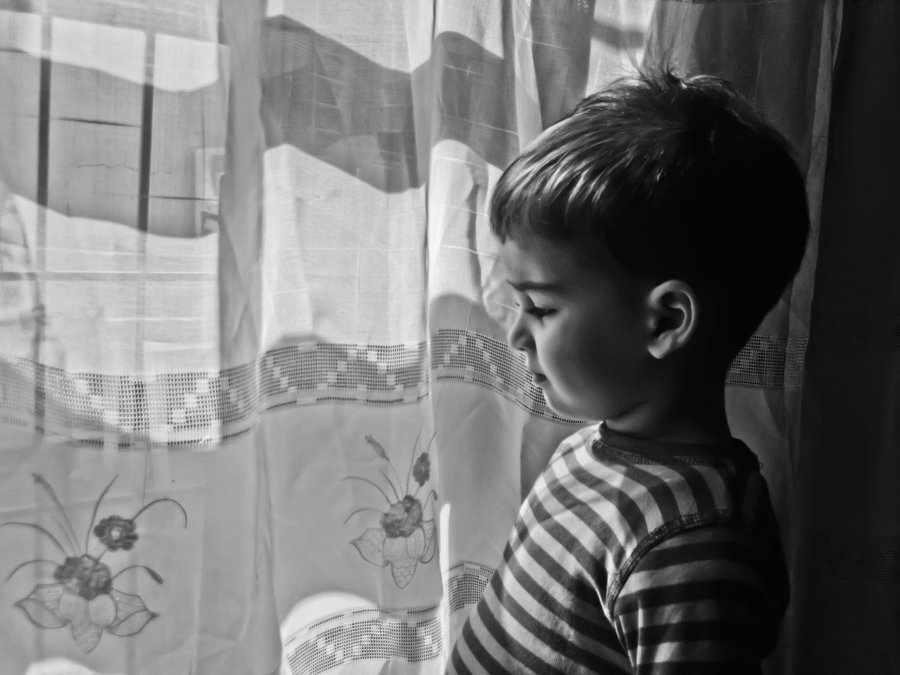
sad_little_boy

I remember during our engagement, during a dinner following a wedding rehearsal, Helen was almost bragging at the dinner table about how she never would have gotten pregnant at all if “Neil hadn’t got me drunk.” The woman swears she never had sex during their marriage and the only time she did was because her husband got her drunk. (She did have sex once in 1965, got pregnant and miscarried, or so she says). She liked to show off Michael’s baby pictures as if he was some kind of doll, but I don’t think she ever had any real love for him. He was her toy and her possession. She dressed him up like Little Lord Fontleroy and made him wear a Safari Suit to his 8th grade graduation.

Michael’s early photos show a child with a sad expression, although he was always smiling. But there was sadness and fear there. I was reminded of a picture of my mother taken when she was two–and she was wearing a similar sad and dejected expression, looking close to tears. She had been sitting on an oversized chair, her little feet in brown high top shoes, and clutching a teddy bear. Narcissists are sad little children before they turn to narcissism as a defense mechanism. They are never born this way. It is something that is done to them (although they have some part in having made the choice to become narcissists).

When Michael was five years old, his father brought him home a small white puppy, who was named Buster. Michael loved that dog, and spent all his time playing with him when he wasn’t at school. Buster would sit on the floor next to Michael while he played with his toys or drew in his coloring books with crayons.

One summer day, Michael and Buster were sitting in the middle of the hardwood floor in the living room, in a patch of sun that came in through the picture window. Michael got up to go do something else, maybe go to the bathroom, and left his crayons on the floor in the patch of sunlight. Some purple and red crayons melted in the sun and the dog Buster somehow got some red wax on his white fur. There was also a pair of child’s plastic scissors nearby.

boy_and_dog

While Michael was gone, Helen came into the room and saw the waxy mess and the red crayon on the dog. She marched off to find Michael and dragged him into the room.
“See what you did, you stupid child. That dog is bleeding.” She pointed to the plastic scissors.
“See, you cut him. Well, that does it. Buster must be put to sleep.”
Michael started to cry. “But he’s not tired.”
Helen flew into a rage. “I don’t mean it that way. We are taking him to the pound where he will be destroyed. You are not capable of caring for a dog. Look what you did to him.”
Michael tried to appeal to his father, but his father, tired from work, and an enabler to Helen, just said, “I’m sorry, son, but we have to do what your mother says.”
Michael never forgot this and was never able to forgive his mother for this. He thinks this was the point at which he started to hate her and stopped trying to appeal to her love. He stopped making her things and bringing her gifts.

Helen never allowed Michael to stay home from school, not matter how sick he was. Once he had scarlet fever and was sent to school anyway. The school nurses, concerned, called Helen and asked her why she would send a child sick enough to be in the hospital to class.
Instead of apologizing and getting Michael the medical care he needed, she attacked him, blaming him for “getting her into trouble with the school.”
Any time anything went wrong, it was always Michael’s fault.

When Michael was about 11 or 12, there was a huge custody dispute over an older daughter from his father’s first marriage. The father went to court to try to win custody and lost. During this time, Michael was sent to live with neighbors, to “keep him out of the way.” He felt rejected by his own parents in favor of his father’s daughter from an earlier marriage.

Helen was a pious churchgoer, involved in every activity, but was not well liked by the other women. She was known as a troublemaker and had no real friends. But she loved to tell everyone how “everyone loves me” and “they all listen to me.” In actuality she was doing nothing but spreading gossip and lies about the other women in her church groups. The old Saturday Night Live character “The Church Lady” could have been Michael’s mother. She even looked like that character.

church_lady
Dana Carvey as “The Church Lady.”

She also got involved in Michael’s school, and got the same reputation there as a troublemaker. This reflected badly on Michael, who was embarrassed by his mother’s antics and his friends’ dislike of her. She was always interfering in things that were none of her business and stirring up drama, playing divide and conquer games between other women and breaking up their friendships through her malicious lies and triangulation.

Michael hated his mother by now and tried to avoid her, but did not become a narcissist until he was almost 13.

It happened in January 1973. His father had not been in good health for some time, and suffered from atheriosclerosis, hardening of the arteries. He was only 57 when he suffered a massive stroke and died suddenly at home.

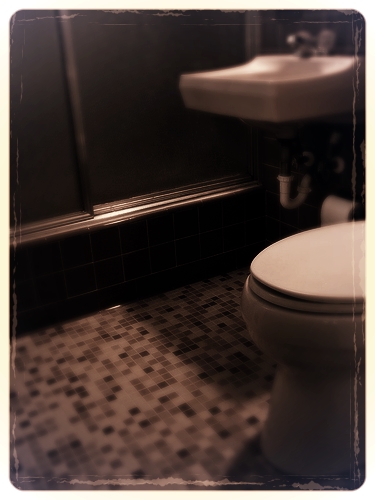
Michael went into the bathroom to get ready for school and found his father’s dead body lying on the cold ceramic tiles of the bathroom floor. He screamed and tried to revive him, but the man was already cold and wouldn’t wake up. He had been dead for several hours already.

Crying hysterically, he found his mother in her bedroom, fast asleep. He started shaking her and yelling at her to wake up.
She finally did, and was annoyed to find Michael crying at her bedside and pointing to the hallway toward the bathroom.
“Mom, I think Dad’s dead.” he sobbed.
“Don’t be ridiculous.” She marched off to follow him into the bathroom.
She stood at the doorway and looked at her dead husband on the floor, grimaced, and then turned on her heel and said to her son, “Well, I have no idea what to do about this. You take care of it.” Not one shred of empathy, grief or compassion was shown. This was her own husband, and she acted as if he was a bag of trash that needed to be taken outside.

bathroom

Michael changed after that. He went through the motions of doing what is done when a family member dies, calling all the relatives himself, arranging the funeral, and all that goes with that, but inside he wasn’t the same.

After his father was buried (and his mother put on a huge show at the funeral of crying louder and more hysterically than anyone else present), Michael began to drink and get into trouble. His grades remained acceptable, but he began to show a lot of narcissistic behaviors and started to use people for his own advantage. He went into the city on the weekends and sold his body to older men for money. He thinks he killed a guy once by pushing him into a glass table, but if he did kill him he was never caught.

The malignant behavior soon became ingrained and for Michael, there was no turning back. He’d given up on life and turned to narcissism to protect himself against further injury from those who were supposed to love him. As the years progressed he became a skilled manipulator and con artist, expert at gaslighting, lying, projection of his own defects onto others, and triangulating. This was exacerbated by intermittent drug abuse and alcoholism. The rest of his progression into full-blown malignant narcissism is described in my posts about our marriage under “My Story,” which appear in the header.

Michael had turned into his enemy: his mother. At the same time, he projected his hatred of his mother onto all women he became close to. In the process, this once-brilliant man eventually burned all his bridges, both romantically and professionally. Today he is a burned out shell of a human being, now living at the Salvation Army subsisting on handouts and disability payments. He’s a “needy” narcissist, mooching and freeloading off others, and taking, taking, taking in a pathetic effort to procure the maternal love he never received as a child. He still blames “society” and other people for “making him homeless and unemployable.”

Even his children want little to do with him. He has lost everything. But he made his own choices so I can’t feel too badly for him.

Ezra Pound: Poet with NPD

ezra_pound
Ezra Pound, ca. 1913. Photo by Alvin Langdon Coburn

Ezra Pound, expatriate poet, is listed in Wikipedia as a person having Narcissistic Personality Disorder. Following is his Wikipedia biography, and the diagnosis seems to fit. It seems very strange to me that so many people with NPD become expatriates. In running to other countries, are they symbolically trying to run away from themselves?
But you will find yourself wherever you are. So running never works.

A lot of them also write poetry. It’s as if their true self must have an outlet, and poetry is the “safest” way to release their true feelings and self-hatred. Poetry allows a measure of obliqueness and the opportunity to hide behind symbolism and obscurity. But if the poet is talented at all, and the reader at all sensitive, the true message of shame, hurt and self loathing will come through.

I resolved that at thirty I would know more about poetry than any man living … that I would know what was accounted poetry everywhere, what part of poetry was ‘indestructible’, what part could not be lost by translation and – scarcely less important – what effects were obtainable in one language only and were utterly incapable of being translated.

In this search I learned more or less of nine foreign languages, I read Oriental stuff in translations, I fought every University regulation and every professor who tried to make me learn anything except this, or who bothered me with “requirements for degrees”
–From How I Began, written in 1913

He definitely sounds like a narcissist.

Here is the Wikipedia article about Pound. His life does seem to follow the trajectory of a high functioning person with NPD, including a rendezvous with the criminal life.

The article is too long to repost here, but you can click on the above link. It’s definitely worth reading if you’re interested in poetry or NPD, or famous people with NPD.

Cerebral vs. somatic narcissists

cerebral_narc somatic_narc
Either of these narcs are poison–run away as fast as you can. The chihuahua is probably okay.

I’m in a blah, uncreative mood tonight and can’t think of anything to write about (I had an irritating day and just want to read), so tonight I’m just going to post this interesting article by Sam Vaknin here where he describes the differences between the two types of narcissists: cerebral and somatic. Either type can be malignant or non-malignant. I haven’t really covered the two types of narcissists in much depth before, so this should take care of that oversight.

My mother is a somatic narcissist, histrionic type. They are prone to over the top dramatic behavior, shallow sexual relationships, and tantrums. If my daughter is a narcissist, then she would also be a somatic histrionic type (which can be confused with Borderline PD, which she may actually be). Female narcissists are probably more likely to be somatic (vain, preening, overly concerned with appearance and/or health) but both types can be found in either gender. Most gay male narcissists I’ve met are of the somatic type, but that doesn’t mean most gay narcissists are necessarily somatic. I’ve know one or two cerebral ones too.

Here is that article.

Dr. Jackal and Mr. Hide: Cerebral vs. Somatic Narcissist

Narcissists are either cerebral or somatic. In other words, they either generate their Narcissistic Supply by applying their bodies or by applying their minds.

The somatic narcissist flaunts his sexual conquests, parades his possessions, exhibits his muscles, brags about his physical aesthetics, youthfulness, sexual prowess or exploits, and is often a health freak and a hypochondriac. The somatic narcissist regards his body as an object to be sculpted and honed (via extreme diets, multiple cosmetic surgeries, bodybuilding, or weightlifting). When coupled with psychopathic tendencies, the somatic appropriates other people’s bodies and treats these as “raw materials” to be dismembered, tampered with, altered, invaded, or otherwise abused.

Somatic narcissists are often portrayed as sex addicts or histrionic. But really they derive their narcissistic supply not so much from the sex act as from the process of securing it: the conspiracies and assignations, the chase and conquest, the subjugation and habituation of their targets, and even from dumping and discarding their prey, once having extracted the attention and admiration they had sought. These extracurricular activities endow them with a sense of omnipotence and all-pervasive control. Their sway over their paramours and would-be lovers proves to them (and to others) their uniqueness, desirability and irresistibility.

The cerebral narcissist is a know-it-all, haughty and intelligent “computer”. He uses his awesome intellect, or knowledge (real or pretended) to secure adoration, adulation and admiration. To him, his body and its maintenance are a burden and a distraction.

Both types are auto-erotic (psychosexually in love with themselves, with their bodies and with their brain). Both types prefer masturbation to adult, mature, interactive, multi-dimensional and emotion-laden sex.

The cerebral narcissist is often celibate (even when he has a girlfriend or a spouse). He prefers pornography and sexual auto-stimulation to the real thing. The cerebral narcissist is sometimes a latent (hidden, not yet outed) homosexual. [Interesting.]

The somatic narcissist uses other people’s bodies to masturbate. Sex with him – pyrotechnics and acrobatics aside – is likely to be an impersonal and emotionally alienating and draining experience. The partner is often treated as an object, an extension of the somatic narcissist, a toy, a warm and pulsating vibrator.

It is a mistake to assume type-constancy. In other words, all narcissists are BOTH cerebral and somatic. In each narcissist, one of the types is dominant. So, the narcissist is either OVERWHELMINGLY cerebral – or DOMINANTLY somatic. But the other type, the recessive (manifested less frequently) type, is there. It is lurking, waiting to erupt.

The narcissist swings between his dominant type and his recessive type. The latter is expressed mainly as a result of a major narcissistic injury or life crisis.

I can give you hundreds of examples from my correspondence but, instead, let’s talk about me (of course…:o))

I am a cerebral narcissist. I brandish my brainpower, exhibit my intellectual achievements, bask in the attention given to my mind and its products. I hate my body and neglect it. It is a nuisance, a burden, a derided appendix, an inconvenience, a punishment. Needless to add that I rarely have sex (often years apart). I masturbate regularly, very mechanically, as one would change water in an aquarium. I stay away from women because I perceive them to be ruthless predators who are out to consume me and mine.

I have had quite a few major life crises. I got divorced, lost millions a few times, did time in one of the worst prisons in the world, fled countries as a political refugee, was threatened, harassed and stalked by powerful people and groups. I have been devalued, betrayed, denigrated and insulted.

Invariably, following every life crisis, the somatic narcissist in me took over. I became a lascivious lecher. When this happened, I had a few relationships – replete with abundant and addictive sex – going simultaneously. I participated in and initiated group sex and mass orgies. I exercised, lost weight and honed my body into an irresistible proposition.

This outburst of unrestrained, primordial lust waned in a few months and I settled back into my cerebral ways. No sex, no women, no body.

These total reversals of character stun my mates. My girlfriends and spouse found it impossible to digest this eerie transformation from the gregarious, darkly handsome, well-built and sexually insatiable person that swept them off their feet – to the bodiless, bookwormish hermit with not an inkling of interest in either sex or other carnal pleasures.

I miss my somatic half. I wish I could find a balance, but I know it is a doomed quest. This sexual beast of mine will forever be trapped in the intellectual cage that is I, Sam Vaknin, the Brain.

Sin of self-love possesseth all mine eye
And all my soul and all my every part;
And for this sin there is no remedy,
It is so grounded inward in my heart.
Methinks no face so gracious is as mine,
No shape so true, no truth of such account;
And for myself mine own worth do define,
As I all other in all worths surmount.
But when my glass shows me myself indeed,
Beated and chopp’d with tann’d antiquity,
Mine own self-love quite contrary I read;
Self so self-loving were iniquity.
‘Tis thee, myself, that for myself I praise,
Painting my age with beauty of thy days.

(Sonnet 62, William Shakespeare)

Plac’d on this isthmus of a middle state,
A Being darkly wise, and rudely great:
With too much knowledge for the Sceptic side,
With too much weakness for the Stoic’s pride,
He hangs between; in doubt to act, or rest;
In doubt to deem himself a God, or Beast;
In doubt his mind or body to prefer;
Born but to die, and reas’ning but to err;
Alike in ignorance, his reason such,
Whether he thinks too little, or too much;
Chaos of Thought and Passion, all confus’d;
Still by himself, abus’d or disabus’d;
Created half to rise and half to fall;
Great Lord of all things, yet a prey to all,
Sole judge of truth, in endless error hurl’d;
The glory, jest and riddle of the world.

(Essay on Man, Alexander Pope)

Do narcissists have a spiritual purpose we can’t understand?

darknessintolight

This fascinating topic was raised in the comments section under The Man You Love to Hate…or Hate to Love.

The implications raised here are bound to be controversial to some, but I think Joan and CheriSunday may be onto something. In fact, I’ve sometimes wondered myself if narcissists exist for a good reason that only God can understand, but I always thought it sounded too crazy to write about and it was hard to formulate those feelings into words. I’m glad other people have had the same thoughts. It makes me feel less crazy. And it actually makes a type of sense.

CheriSunday says:
January 26, 2015 at 2:46 pm

As you wrote quote “Maybe when one chooses to become a narcissist…..you are drawn into darkness, and once you’ve entered you can’t ever escape.”
My response: I live in a darkness, however I know light shines through my being.
Why feel sorry, we like to suffer, for some , sufferance becomes their friend, that’s how we make peace with the darkness.
CheriSunday

Joan S says:
January 26, 2015 at 8:45 pm

That is very wow. I actually think that aware narcissists like Mr. Vaknin might be a gift. We can’t interpret that gift yet, but will remain till we can.

I like your point though that some like to suffer that it brings comfort. I just can’t believe that darkness can overcome the light though, that is impossible. Maybe if you felt that light long enough it will bring about the deliverance. They just have to want that deliverance. Have to want it. And that is where narcissists are stopped. JMHO of course. I like insightful things.

luckyotter says:
January 26, 2015 at 11:59 pm

Joan,
we don’t know what God’s reasons are or what his plan is. I have thought myself, that narcs may have been put here for a reason that only God knows. Maybe they are here to teach us valuable lessons about human nature and spirituality in general.

In thinking so much about narcissism, because it’s a mental disorder that most likely has a spiritual component, I have been brought much closer to God in the process and have found some semblance of joy and peace for the first time in my life. I have never been happier than I am now. So looking at it this way, narcissists may help us in our own spiritual journey.

I don’t think narcs are demons, I think they’re here for a reason and that reason is a teaching one, even if the lessons we learn from them are painful. Even Satan himself, was created by God and was initially God’s most beloved angel, and his purpose was to test our faith. His original name, Lucifer, means “light bringer.” He became too narcissistic for Heaven because he began to think he was greater than God so he couldn’t stay. (I don’t know whether or not this is a literal story or there is or ever was an entity called “Satan,” but it’s worth bringing it up in the context of this topic).

This doesn’t mean we have to (or should) associate with a known narc. But the ones we haven’t been able to escape from or those who raised us, at the end of the day (when we can finally see the forest for the trees), can make us stronger; their darkness can put our own light into sharp relief.

And in atypical narcissists like Sam, who have contributed so much good to the world (even if his motives were self serving), it could be that he (and those like him, if there are any others) are a special kind of gift, and that his darkness may be a necessary thing, both for himself and for us. We don’t know the reasons, but he may know, and although he suffers, he may have accepted this suffering as part of whatever his own mission on this earth is. He may not need deliverance, or maybe the deliverance will come at a later time or upon his death. We just don’t know. Only God does.

“What doesn’t kill you makes you stronger.” — Kelly Clarkson

luckyotter says:
January 26, 2015 at 11:43 pm

CheriSunday, first of all, welcome to this blog! 🙂 I love to see new “faces” around here.

If you know light shines through your being, you are not hopeless. Maybe there are some people who need to suffer. We don’t know the reasons. In a way I can relate. I flirted with darkness for many years, out of choice. Fortunately I’m coming to a place of more light but there are still dark days. I accept them for what they are, and realize those dark days may have some enlightening lessons in them. “Without darkness, there can be no light.”

I am curious, though, since you say you choose suffering and you have never posted here before, are you an NPD sufferer or have another disorder, like BPD or depression? Forgive my presumptuousness, but because of the nature of this topic and this blog, I don’t think it’s stepping on your boundaries to ask. I hope you don’t mind.

I also think most narcissists have an inner light that does shine through sometimes, except maybe MNs and psychopaths/sociopaths. There is a lot of light in Sam and that’s why I think he is still able to help people and victims looks up to him even though he is exactly the sort of person we’re trying to get away from. I hope that makes sense.

Attitudinal healing: a cure for NPD?

candle

TL;DR WARNING: THIS IS A VERY LONG POST. READ IT ANYWAY.
I came across a forum last night called Heal NPD, whose founder, a man named Tony Brown, was actually cured of NPD through a psychospiritual therapy called Attitudinal Healing, which is based on letting go of fear, the primary emotion that keeps narcissists from being able to access their true self. There is a spiritual component to the therapy too, which I agree would be necessary. I don’t believe the gentle spirituality involved in this therapy would go against any religous teaching, Christian or otherwise. The important thing is to get well.

Tragically, Brown died a few years ago of heart complications due to prolonged diabetes and his forum hasn’t been active since about 2008. His wife tried to take over the site for awhile. I’m not sure what happened there.

I Googled Attitudinal Healing to find out more about how it works (Brown’s site is a little hard to navigate and some information seems to be missing or is no longer there).

I had doubts about Tony Brown’s credibility when I first read about him last night, but someone here who knows him and was active on his site assured me it’s absolutely true he was diagnosed with NPD and was actually cured of his disorder. Other members on the site were also working the therapy and it was working for them too. This is very good news for people with NPD and their victims. Of course, they need to want to be helped first. It may not work on malignant narcissists and psychopaths.

I just wonder why AH hasn’t caught on and mental health professionals are so adamant that NPD cannot be treated or cured and their victims are without hope, if this therapy has had so much success.

I don’t think it’s too well known outside of California (there are some things we people on the east coast and flyover states we’d like to see stay over there, like earthquakes and The Kardashans, but AH therapy isn’t one of them so can we get that and give you back Katy Perry or something? Please?).

AH has had success on other disorders too, including PTSD and C-PTSD (which is common in the victims of narcissists).

Attitudinal Healing is a spiritual/emotional therapy developed by Jerry Jampolsky, MD and Diane Cirincione, Ph.D. in California in 1975.
The following is from their website. AH has had some success in curing (not just changing the behaviors) of people with NPD who wish to be helped.

My own comments I have put in [brackets].

What is Attitudinal Healing?
Attitudinal Healing is based on the belief that it is not people or external situations that cause us to be upset. Rather, what causes us conflict and distress are our thoughts, feelings, and attitudes about people and events.

Attitudinal Healing is letting go of fear and our negative, hurtful thoughts from the past.

Attitudinal Healing allows us to correct our misperceptions and to remove the inner obstacles to peace. This begins at life, and at death; to have peace of mind as our only goal; and to make forgiveness our primary function. It is discovering the effect that holding on to our grievances, blaming others, and condemning ourselves has, so that we can choose to no longer find value in them.

Attitudinal Healing asserts that when we let go of fear, only love remains and that love is the answer to all of the problems we face in life. It is the recognition that our true reality never changes and that Love is all there is.

My cherished friend Judy Skutch Whitson suggested the term when we first began the Center in 1975.

Attitudinal Healing
Defines health as inner peace.
Defines healing as letting go of fear.
Regards our primary identity as spiritual and affirms that each individual possesses a quality of being or an inner nature that is essentially loving and that this loving nature is shared by all human beings.
States that love is the most important healing force in the world.
Does not tell other people what to do but offers them choices.
Emphasizes equality in every aspect of our lives and affirms that we are all student and teacher to each other.
Recognizes that peace is our only goal.
Emphasizes listening with empathy and without judgment or advice.
Sets the goal of living a life focused on unconditional love.

Attitudinal Healing views the purpose of all communication as joining and regards happiness as a choice. It recognizes that we are all worthy of love and that happiness is our own responsibility as well as our natural state of being.

Attitudinal Healing acknowledges that our only function is forgiveness. Rather than making decisions based on the fearful past, it states that we can learn to make decisions by listening to the inner voice of love.

The Benefits of Attitudinal Healing
The twelve principles of Attitudinal Healing are spiritual principles that lead us to love and away from fear. I think of the application of these principles as “practical spirituality” that can be used in every aspect of our lives. There is not one area where they do not apply. As we learn to change our attitudes and change our minds, we change our lives.

Some of the possible benefits of Attitudinal Healing include:
Experiencing ourselves as love.
Finding inner peace.
Finding happiness.
Letting go of fear.
Letting go of judgments.
Letting go of guilt.
Letting go of being a victim.
Letting go of our fear of death.
Letting go of unforgiving thoughts.
Letting go of pain.
Letting go of being right and making others wrong.
Letting go of blame.
Letting go of our fear of the past and future.
Letting go of being a fault finder.
Letting go of withholding love from anyone, including ourselves.
Letting go of our need to assign guilt or innocence.
Letting go of complaining and listing our hurts.
Letting go of our fear of intimacy.
Becoming a love finder.
Counting our blessings.
Focusing on love rather than on appearances.
Walking through life more lightly.
Laughing more.
Living in a consciousness of giving rather than getting.
Recognizing that there is something greater than ourselves.

The essence of Attitudinal Healing is learning to release all thoughts from our minds except love thoughts. It is correcting the misperception that we are separate from each other and that others are attacking us. It is relinquishing the need to analyze, interpret, and evaluate our relationships. Attitudinal Healing is simply seeing others as extending love or as being fearful and asking for love. It is letting go of fear and guilt and choosing to see everyone, including ourselves, as innocent. Attitudinal Healing occurs when we make the decision to teach only love

The Twelve Principles of Attitudinal Healing

The essence of being is love.
Health is inner peace.
Giving and receiving are the same.
We can let go of the past and the future.
Now is the only time there is.
We learn to love ourselves and others by forgiving rather than judging.
We can become love-finders rather than faultfinders.
We can be peaceful inside regardless of what is happening outside.
We are students and teachers to each other.
We can focus on the whole of our lives rather than on the fragments.
Because love is eternal, death need not be viewed as fearful.
We can always see ourselves and others as extending love or giving a call for help.

CLF - Olmstead Parks

A DEFINITION OF ATTITUDINAL HEALING
by Patricia Robinson
Co-Founder of International Center for Attitudinal Healing

Attitudinal Healing is not just adjusting or adapting our attitudes; rather, it is consciously choosing to let go of our fearful attitudes. It is a spiritual pathway that seeks to adopt a non-judgmental attitude toward oneself, others, and the world. The goal is not to change behavior, but to retrain and reprogram the most powerful instrument of change we possess, our own mind.

It is possible to have a single goal of peace of mind and a single function of practicing forgiveness. In doing this, we can learn to heal any of our relationships, experience peace of mind, and to let go of our fears. When we create positive energy within us, Attitudinal Healing can become a creative force in our lives.

The Twelve Principles of Attitudinal Healing are as follows:

1. THE ESSENCE OF OUR BEING IS LOVE, AND LOVE IS ETERNAL
Love can never be adequately explained or described. Love can only be experienced. Attitudinal Healing is really concerned with experiencing love rather than defining it.

Love, itself, is an energy force. It remains constant and is eternal. It is what scientists call the “life-force,” that which cannot yet be measured but is known to exist. It is a pure energy that flows through us. If it is not blocked by pain, anxiety, anger, all manifestations of fear, we can recognize the essence of love and learn to feel peaceful inside.

It is important to constantly work at clearing our minds and realize that the energy of love is all there is, and that which we call negative emotions keeps us from this sensation. We can learn to experience a life that is about loving ourselves and extending that love to others.

This is different than the way much of society views love. To the world, love is something that we want to GET from someone else coupled with the fear that we won’t have enough. When we live in this fear we are unable to give love freely. That is the work of the ego. Love, which cannot be evaluated or measured is to be shared.

The essence of love plays a large part in physical healing, as well. In one of our groups at our Center, a woman in her mid-fifties was complaining that she had been plagued by a constant back pain for about nine years. She insisted that she had never been without this pain for a moment. We asked her if she would be willing to partake in a small experiment. She agreed. We then asked the group of about fifteen people if they would be willing to send this woman love with their thoughts for about thirty seconds. All participants agreed. We then asked the woman if she would be willing to do the same, to send love back to the group at the same time. She did agree and we began.

It was a wonderful half a minute as we all focused on a single goal; that of sending love to another. When the thirty seconds were up, the tendency was to evaluate what had transpired. We, the facilitators, cautioned about that, and the meeting continued on with a lot deeper sharing than had gone on before. At the end of the meeting, the woman with the back pain excitedly said, “I just can’t stand it. I have to tell you that for the last hour I have not had any pain in my back.”

This example happened a long time ago, but it has remained implanted forever in my mind as a lesson in trust. What occurred in this meeting was not something tangible that could be seen or measured. The only thing that was happening for me at the time was my intent to feel love for this woman. My goal was not to take her pain away, make myself feel better, or whatever. It was only to be in the present, send love, and not be concerned with the outcome. It was a powerful lesson for me to realize that thoughts can be transmitted clearly and felt by another at a very deep level.

2. HEALTH IS INNER PEACE, HEALING IS LETTING GO OF FEAR
In order for us to feel inner peace, we first have to make it our single goal. We can then start to release all the obstacles that stand in our way.

We experience many emotions in our body. They are all related to fear, but to us they have many forms. Anger, jealousy, guilt, depression, or whatever, arise in us all the time. It is important for us to know that we have a choice about how we want to deal with these feelings. We can become helpless and be a victim, or we can actually change these feelings. The mind is the most powerful tool we have and we can use it to change these hurtful feelings.

For us to do this, we must become both aware and willing to change. We must get in touch with our inner voice, the one that is connected to our higher self instead of our self that is governed by the ego. It is the voice inside that tells us your truth without judgment. The next step is to go to the experience of the emotion.

For instance, when we feel what we would describe as anger comes up, it is very important to get in touch with it. This means that we experience it, acknowledge it, and are gentle with it. We in no way deny our anger because it is a very normal feeling and does not need to have a “bad” label put on it. Doing so only creates another emotion to deal with, that of guilt. It is only when we truly get in touch with our own anger that we can begin to change it. This can actually be done in an instant. It does not have to be processed at great length. Sometimes it is not really necessary to know the “why” and “how”. These words can often lead to more turmoil in our lives. When inner peace becomes our only goal, we can recognize that holding on to anger does not bring us peace of mind.

An amazing woman came to the Center about ten years ago. She was in a devastated state as her nine-year-old daughter had been diagnosed with severe leukemia. She was in Dr. Jerry Jampolsky’s office, when she heard him say that she could actually, at this moment, choose peace instead of experiencing the pain she was in. She managed, somehow, to really hear his meaning and was able to instantly shift her perception. This woman became one of our most active volunteers at the Center for many years and was able to help dozens of parents who were going through what she went through. This does not mean that she said, “You can choose peace” to each person when they were completely devastated. It means that she was there for them wherever they were. And because of her own experience, she was able to rely on her own inner strength so that she could be of help in any way she was needed.

Seeing the instant shift in the woman I just described was a remarkable experience for me. It was a lesson that told me that “nothing is impossible.”

3. GIVING AND RECEIVING ARE THE SAME
There are many people in this world who are labeled givers. Givers usually have a hard time learning how to receive. There are also receivers, who are great at receiving but don’t really know how to give. Givers are usually rescuers who manipulate the other person. If the person doesn’t respond to their expectations they are disappointed. The receiver, on the other hand, makes many demands on another and never seems to get his or her needs met. Both look to the external world to fulfill their needs, and both tend to have emptiness inside.

The Attitudinal Healing definition of giving and receiving comes from another place. It is egoless. There are no conditions, no expectations, and no boundaries put on the extension of people sharing love. When we have no goal or desire to change another person, or no need to get anything from them, a different dynamic takes place. We are actually only there for that person in an egoless way, and we can start to feel a sense of inner peace.

As we begin to feel a sense of joining with another person, we seem to forget about ourselves. We become less concerned about our own feelings as we extend and expand. It is at this point that one feels the gift of giving and receiving becoming one. The supply is endless, and we become more and more full.

This kind of interaction takes place in our groups at the Center each week. The Center provides a safe place for people to extend themselves towards others. They are able to forget their self-consciousness and through this become empowered with love to be able to reach out toward another without expecting something in return. At this point the person who is being helped almost automatically can let go of fears or anxieties and become one with those in the room. When people are truly operating in this mode, fears are released and healing begins to take place.

4. WE CAN LET GO OF THE PAST AND OF THE FUTURE
The past is there for our learning. All of our experiences are valuable ones and add to our growth if we choose to view it that way. Things that we have done that we label as “wrong” are merely experiences for us to learn from and build upon. It does not serve us, however, to dwell on the past. Things like “if only I had done this or that” or “I wish it were different” only serve to hinder us.
The fact is that we are in the present and we need to deal with what is going on NOW. This, again, is done by retraining our minds to stay aware and alert. It is so easy to slip into either the past or the future, but we are not truly alive unless we are living in the present moment.

The future can be exciting or scary depending on what is going on in our lives. We can dwell on the anxieties of the future all we want, but it surely does not give us any peace. There is an important distinction here. All this doesn’t mean that we shouldn’t make plans for our future. Of course that is important. The distinction is that while we are making plans for the future, our consciousness remains in the present. We can’t foresee the future, so it isn’t productive to dwell on what may or may not happen. We can only set our intentions for the future, like making reservations, and then take steps to make them happen when they actually manifest and become the present.

The important aspect of this Principle is that we can elect to change past thoughts that are not beneficial, or that are hurtful. To do this, it is important to become aware of them, and then make a conscious decision to let them go. If they come back again, we just repeat the process. Every time something comes up that we don’t want to hang onto, we can make a fresh decision to erase the tape. One of the concepts that is particularly valuable in Attitudinal healing is “My mind can change all thoughts that hurt.” This is a powerful tool if we want to change our perceptions and create a new reality.

5. NOW IS THE ONLY TIME THERE IS AND EACH INSTANT IS FOR GIVING
This Principle is designed to help us stay in the present moment. It is very easy to lapse into the past or build up anxiety about the future. When we do this, we are often not peaceful. When we recognize this, we can focus our attention back to the present where it is possible to experience peace. If we stay in the present, we are best able to deal with anything that comes our way. If we are someplace else, it is not possible to make decisions. In essence, NOW is the only time there is. It is in the NOW that the love energy comes through us. It is in the NOW that we are not judgmental and we can see clearly what is going on.

We cannot control the external world. We will never be peaceful if we try to do so. We can, however, learn to control our thoughts. As we change our thoughts from those of getting to those of giving, we will start to notice evident changes in the outside world.

My most profound experience of an example of what can happen was when I was in Moscow recently with a group called “Children as Teachers of Peace” with Dr. Jampolsky who is Founder of the Project. We were at a press conference with the head of the Youth Organization of the USSR, the Young Pioneers. He gave a forty-five minute speech about how it was the fault of the United States that relations were not better between the two countries, etc.

We all listened to his speech and when he asked for questions from the children, they responded in a way he did not expect. They, one at a time, told this man how good the Russian people had been to us, how, if the people of the United States knew of the kindnesses of the Russians that we had met that there would be no wars, and they gave a donation from each of the children towards the Chernobyl disaster. As each young person spoke from his or her heart the man began to transform. His face began to soften and have more color. His eyes became moist. He came from being very guarded to being very responsive. I went up to him and spoke to him after the meeting. He thanked us so much for coming and it was clear to me that he was a different person than when he walked into the room. I, too, was a different person. I was so moved, that I felt in my heart that it actually could be possible to have peaceful relationships in spite of all obstacles that seem to be in the way.

outofthedarkness

6. WE CAN LEARN TO LOVE OURSELVES AND OTHERS BY FORGIVING RATHER THAN JUDGING
Whenever we make a judgment on another person, we make a judgment on ourselves. Forgiveness, in the Attitudinal Healing sense, does not mean condoning or agreeing with another’s behavior or setting ourselves apart and choosing to forgive someone because we feel they did something wrong. It merely means that forgiveness is a vehicle to clarify our misperceptions.
Simply stated, FORGIVENESS IS LETTING GO; choosing not to hang on to a belief that will cause us inner turmoil. In the sense of self, it is up to us to forgive ourselves first by taking responsibility for loving ourselves enough to no longer suffer and to become self fulfilled.

Using an “attack” as an example, there is a concept in the Course in Miracles that helps us to look at another person, not as attacking us, but as either asking for help or needing love. In relationships, this is often a most difficult principle to grasp, because our ego mind says that we are being attacked. The fact, however, is that there are no true realities, only perceptions.

A perception is something that, with focus and willingness, our minds are able to change. If we learn to see ourselves as the essence of love, we will have no need to defend ourselves and we can look at the other person in a different light. If we can start to realize that it is only in the places that we feel unconfident or lacking in some way that we can “have our buttons pushed.” When we feel OK about ourselves, there is less of a problem with how another person is behaving. Again, it is only our own perceptions that make us feel that we are being attacked. We have the choice to fill up with the powerful love energy so that we are able to not even have to defend ourselves.

7. WE CAN BECOME LOVE FINDERS RATHER THAN FAULT-FINDERS
It is very easy to find fault with others. We sometimes feel that if the other person would only change, then we would be much happier. This is another illusion. No one has to change for us to be happy. It is up to us to create our own happiness. When we look for faults in others, it is because we don’t necessarily want to see what might be the same fault, or what we fear could become a fault, in ourselves. Criticizing others is often just an outward manifestation of what is going on inside of our selves.

To practice Attitudinal Healing our job is to start to forgive, stop judging, and to love ourselves and others. When we begin to do these three things on a conscious level, we will automatically begin to see people and things differently. Gray days will not necessarily be “bad” days; they will simply become gray days as opposed to sunny days. We will start to see the light in each person, because there is a light in all of us. Some of us try very hard to cover it up, but since it is the very essence of us, at some level it will shine through. The more we can let our own light shine through, the more we can begin to see the light in others.

8. WE CAN CHOOSE AND DIRECT OURSELVES TO BE PEACEFUL INSIDE REGARDLESS OF WHAT IS HAPPENING OUTSIDE
If we wish to choose inner peace as our single goal, then we can realize that we need not be triggered by our external world which is a different belief system than we are used to. We all know how the world defends righteous anger and how it supports us to hang onto it. We can do what the world supports, or we can take responsibility for our own feelings, go inside, and choose to get rid of our anger, guilt, judgment, or whatever.

We are not robots. A robot is run by the outside world. Its buttons are pushed and it is programmed to do whatever someone wants it to do. We do not have to perform like a robot. We are free to do, to feel, and to act in a way that can give us the most peace. In essence, we can realize that no one is really able to “make” us feel happy, sad, lonely, or angry. We often feel this is the case when we say, “if only my spouse would act this way or that way, I would be happier.”

The truth is that we can all use these situations as a practice to work on ourselves. We can, at this time, go inside and see how we can change our perceptions of what is going on to make us more peaceful. To try to change the way the other person behaves is manipulation and control, and in the long run, simply won’t work. We can never change another person; we can only change ourselves. This takes awareness and willingness to keep monitoring our feelings so that we can recognize, acknowledge, and actively choose to alter them. It takes presence and courage to keep reflecting so that we can begin to change.

9. WE ARE STUDENTS AND TEACHERS TO EACH OTHER
As we begin to look at everyone we come in contact with as our teachers, we begin to look at life in another way. We become more observant and become better listeners. We begin to see that there is no order of learning, and that probably children are our best teachers.

Children are open and honest. They have not yet put up the barriers that we adults do. Our barriers are our protective covering that we can learn to release by being with children. The concept of student/teacher means that we don’t necessarily know what is best for another person. Nor do we have to. Only each of us knows what is best for ourselves. The learning comes with the shared exploration of knowledge with each other where we can build relationships to learn and grow.

It takes away from the hierarchical, vertical type of learning and puts it in a horizontal plain where interchanging student and teacher can make active contributions for the ultimate benefit of the whole. In this type of relationship we tend to feel the freedom to explore ourselves more fully. We have permission to go deeper and not be judged as wrong or foolish. It is this continual effort to give and receive from one another that lets us learn from each other how to experience love. From this we deepen and from this we grow.

10. WE CAN FOCUS ON THE WHOLE OF LIFE RATHER THAN THE FRAGMENTS
In order to feel inner peace we need to begin to focus an at-oneness with ourselves and those around us. This means that we can begin to dispel the feelings of separateness which consistently cause us only pain. It is another of those barriers we put up to protect ourselves from being hurt. When we get caught in the right/wrong, good/bad trap, we are only seeing a fragment of the whole. When we play this game, there is no way that we can be peaceful. It is always a no win situation regardless of what the momentary outcome may be.

We can learn to have a new attitude toward ourselves, others around us, and the world we see. We can recognize that there is a greater whole other than the tunnel vision through which we sometimes look. Through an active power within us, we can learn to sense a greater picture. This power allows us to expand and become aware of this greater whole so that we don’t need to get caught up in the conflict that others are experiencing. The conflict they are going through is their path, not ours. Our job is to stay focused so that we can begin to see each situation differently and not become a part of a meaningless pattern. To do this we raise our consciousness to a higher level of awareness by retraining our minds as each situation arises.

We can say to ourselves, “I do not choose to get caught up in what is happening right now, but instead, I choose to see the whole of life.” By doing this, our focus broadens and changes and we start to see things differently. There is a tremendous excitement in the experience of the changes that take place inside us just by changing our thought patterns.

11. SINCE LOVE IS ETERNAL, DEATH NEED NOT BE VIEWED AS FEARFUL
To conceptualize this Principle, we go back to Principle number one, “The essence of our being is love and love is eternal.” If we believe that life is eternal, the fear of death can be removed. When we reaffirm our belief system that the love that is our essence goes on and that we simply enter a new form, we can erase the fear of death. To the extent that we can erase the fear of death, we can truly begin to live fully in the present.

12. WE CAN ALWAYS PERCEIVE OTHERS AS EITHER EXTENDING LOVE OR AS FEARFUL, GIVING A CALL FOR HELP
This Principle is an extraordinary tool to be able to use in dealing with relationships. If we can keep this in mind as we interact with others, we will be able to mold our interactions in a more desirable way. When we are in a relationship with another person and it is clear that they are extending their love to us, there is usually never any problem. We can receive the feeling of love and support and respond with our love and support. We feel no conflict and things seem to readily get resolved.

If, on the other hand, we feel for whatever reason that we are being attacked, we tend to put up our defenses and either retreat or attack back. The flight or fight response goes into action. It is a conditioned response that we have learned to use to protect ourselves from being hurt. If we can begin to see this person that appears to be attacking us as a person who is coming from fear, we can begin to see a whole new dimension of the dynamics of the situation.
To develop the use of this Principle, as with all the others, we begin by retraining our minds to focus differently. It again means going inside to take responsibility for our own thoughts and not put the blame on another person for our own reactions in a moment of stress.

We are responsible for our own peace of mind and not that of another person. It may mean that as we listen to the words as they are being spoken to us, we focus on this Principle as what may appear as an attack is actually an expression of fear and a call for help.. When we do this, another dynamic begins to happen. As we become defenseless in the moment there is a shift in the energy and “the attacker” will feel it. He or she will not continue on with the same sense of urgency with which they began, because our shift in perception will create a space that will enable a new dynamic to occur. This new dynamic will change the pattern and the quality of our relationships.

In order to make these Principles work for us, we first choose to take complete responsibility for our thought patterns. We learn to become alert and cognizant at all times. Living in the NOW is essential to Attitudinal Healing for in the past and in the future our fears crop up.

Fear is the antithesis of love and it is impossible to live in both frameworks at the same time. If we want to live in love, we can do it by letting go of our fears of both the past and of the future. The reality is that in the moment we can handle it, no matter what we happen to be facing. Living in the moment we are able to deal with whatever may come along, be it emotional, physical or spiritual pain.

To begin to retrain our minds, it is helpful to keep a list of the Twelve Principles of Attitudinal Healing handy for quick reference. When we get into difficult situations it is important to be able to recognize that we can immediately change the focus of anything that may occur. We can choose any one of the Principles to help us at any time we wish. We can read them all or we can just choose one that relates to what is going on. No matter how we work with the Principles, we will find that we are able to change our attitudes very quickly and consequently change the dynamics of what is happening externally. The external circumstances may or may not actually change, but by our changing our perception, we will learn to both see and experience the world differently.

Attitudinal Healing takes willingness, awareness, openness and practice. That is all that is needed. It is important to not get discouraged with what may seem like failures. These are only learning experiences that will lead us on our path. Everything that happens to us happens for our learning, and from that point we can choose again so that our learning never stops.

(Written July 7, 1987)
Copyright Jerry Jampolsky & Diane Cirincione 2006. All Rights Reserved

I couldn’t find a Wikipedia entry for Brown, but I did find this on Facebook:

Recovery for those with NPD/narcissism
This was written by a man [Tony Brown] diagnosed with NPD, who recovered with therapy, and went on to found a site for those with narcissistic traits or NPD. I believe that recovery is possible for many, but that it takes a real commitment to work and change. I’ve read lots of his writings and I believe he essentially recovered, though a pull towards certain ways of thinking remained with him. He married and it was a good marriage. He died unexpectedly from a heart attack, as I recall, but he left a family and friends who cared greatly for him, a good legacy. Here are his thoughts on some aspects of recovery…

Some of the Factors that Affect NPDers Chance at Recovery
By Tony Brown

Healing is possible without exception for all persons who have Narcissistic Personality Disorder (NPD). [I would gather this means malignant narcissists and maybe even certain psychopaths can be treated successfully!]

Having this condition is not an excuse not to take responsibility for yourself or justify destructive acts simply because that is what NPDers do. In this article we will look at some of the factors that may influence how successful those with this condition may be in achieving healing.

The first variable is whether you are in a crisis. It is common for persons to seek therapy either during or in the aftermath of an emotional crisis, i.e., divorce or end of a relationship, being terminated from work, substance abuse, or death of someone close to you. It is common for a person going through such a crisis to see how they have limited access to their feelings and have acted in destructive ways throughout their life. [This would be the Narcissistic Crisis described by Vaknin as necessary for a window of healing to open]

Coming to this place of awareness is an important step as it often leads persons to seek some form of treatment. Working through the crisis is essential though it is just the beginning of the healing journey. Very often a person will believe that they never had these feelings, or lack of feelings, or never acted destructively prior to this crisis. They may believe that resolving this crisis is the entire work of healing when in reality it is just the beginning for those of us who truly have NPD. If you stop looking and working on yourself once the immediate crisis is over there is a very good chance another crisis will come, and another one after that until you allow yourself to look at the whole picture of your life.

In reality it is almost impossible to do the actual work of healing until you have been able to achieve a peaceful or productive resolution to your crisis. A person in crisis often believes that their pain is so overwhelming that whatever their crisis may be it defines everything about their true identity. They are unable to step back and look at the good points in their life or see how their pain is not all consuming. If you truly have NPD it is essential to keep working on yourself after the crisis has passed so you can free yourself from this seemingly endless cycle of one crisis after the other.

Another important factor in your being able to recover is whether you have a support network of family and friends. It is emotionally draining to face yourself at the level required to recover from NPD. Having persons around you who can offer support away from therapy can be helpful in relieving some of the stress that is almost guaranteed to come along with therapy. Your therapist will expect you to not become overly dependent upon him and begin developing a life where he is playing less of a role in daily living. These persons don’t have to be well versed on NPD. You might be able to begin developing such a network among family, friends, perhaps coworkers, ministers of members of real world support groups. The most important thing is they are compassionate listeners who are not judging you as flawed or evil. Once such a network is established you need to allow yourself to trust these people and to call upon them both when life is feeling painful and when things are going well and you just want to establish more of a connection with other people. [Having a support system during the False Self final breakdown and emotional catharsis phase which will be too painful to go through alone]

The matter of paying your therapy bill can in some cases be a factor in the overall success of your recovery. Accepting responsibility for your own bill is an essential step in becoming a functional adult. Sometimes a well intending friend of romantic partner may offer to pay all or some of your bill thinking this will help you get passed your emotional dysfunctions. If this is for a short period with a clear understanding you are going to pay them back and than assume full responsibility for all further costs this is probably not a problem. However, if you are making no effort to find a job or do whatever is needed to get yourself in a position of responsibility this has a very high risk of stalling rather than enhancing your healing.

This is a point that is as important for your friends and family to understand and accept as it may be for you. They may believe that whatever it takes to get you into therapy is worth it to them, including paying for your sessions. Once again if this is a short term solution it may not be harmful. However, the sooner you are paying for your own therapy the sooner you will have a personal investment in the process. Such an investment will, hopefully, inspire you to work harder and get the most of the therapy you can afford. You are entitled to heal but you are not entitled to a free ride where others are paying your way. Addressing feelings of entitlement is one of the areas many NPDers face and this is just one of the areas where it plays out in your practical daily living. If you are serious about your therapy and appear to be making progress you may find your therapist is willing to make payment arrangements. If you fail to honor such arrangements or if they become aware someone else is paying your therapy bill they may decide to terminate the partnership.

Arguably the biggest variable in your recovery is how much do you want to heal? Are you only in therapy to appease a spouse, family, or maybe a coworker or boss? If so the chances of your therapy bringing any true healing ranges between slim and none. You may be able to develop some new skills, but in all likelihood true recovery will remain elusive. Therapy will require you to experience extreme pain, view areas of your life that will make you very uncomfortable, and will drain you at physical and emotional levels. Being able to sustain yourself and do this work will require a deep commitment unlike any you’ve likely ever made at any other juncture in your existence. It most definitely can be accomplished but you have to want it almost more than you have ever wanted anything before. You will have to push yourself to keep going even when you want to stop. How well you are able to experience and resolve conflicts, depression and other events throughout your therapy will depend to a large extent on this single question: How much do you really want it?

I’m adding this description too, from an ad from The Oasis Institute.. it’s a more general overview.

What Is Attitudinal Healing?

Attitudinal Healing is a philosophy based on the belief that it is not people or conditions outside ourselves that cause us to be upset. We are not victims of the world we see. Rather, our perceptions, beliefs and attitudes are the source of our conflict, pain and unhappiness. We are not only responsible for our own thoughts; we are responsible for the feelings we experience. By exploring these feelings, we can eventually heal them.

Attitudinal Healing defines health as inner peace, and healing as letting go of fear. It emphasizes listening with empathy and without judgment or advice. It views the purpose of communication as joining and regards happiness as a choice. Everyone is recognized as a teacher; therefore, we are students and teachers to each other.

This philosophy, and a process for applying it in a support group format, was originally developed at The Center for Attitudinal Healing, now known as CorStone. Jerry Jampolsky, a San Francisco area psychiatrist, was motivated to create a safe place for children with life-threatening illnesses to come to talk after overhearing an eight-year old boy ask a physician in a pediatric oncology ward, “What is it like to die?” and observing that the doctor changed the subject. Dr. Jampolsky and three friends formed this center in 1975. Since then, a network of independent organizations modeling the work of Dr. Jampolsky and his colleagues has been created in several cities in the United States and in more than thirty other countries.

The goal of an attitudinal healing group is inner peace. The Center’s Person-To-Person groups are for adults who wish to enhance the quality of life experiences by learning how to apply the principles of attitudinal healing in both their personal and professional lives.

All groups are facilitated by volunteers trained in the model of peer group support developed by The Center for Attitudinal Healing.

Group members read the Guidelines for Attitudinal Healing Groups and the 12 Principles of Attitudinal Healing at the beginning of each meeting. The Guidelines establish a group protocol, and the Principles are used by group members as tools for learning how to change painful perceptions and beliefs.

Group discussion involves not only issues of personal growth but also other issues relevant to the concerns of the group members.

Groups meet weekly, and there is no fee. Group size is limited.
Nooooo! Not another one!

noooo

Sam Vaknin is not alone. Tony Brown is another a self admitted narcissist who has a self-help forum, “Heal NPD: Ask a Narcissist” http://bb.bbboy.net/healnpd

I took a look around the forum out of curiosity. All I can say from what I’ve seen on the site is Mr. Brown seems a little controversial. Apparently he’s claiming NPD can be cured and his site is meant as an antidote to Vaknin’s pessimism and negativity (Vaknin does not seem very well liked on the site). Has Brown been cured? Something doesn’t seem right. I have no idea who Brown is or where he came from. It’s interesting though.

I read some of the entries from members, who are both NPD sufferers (called NPDers) and non-NPD survivors like us. It’s interesting and eye opening reading some of what those on “the other side” have to say about their disorder. I was intrigued by one NPD poster who said that whenever anyone told her they loved her, she felt like she had died.

God, I love the Internet.

Narcissists and sentimentality

family_portrait
Not my family, just a nice random portrait I found.

Narcissists can put up a good front of being sentimental if they need to. For example, if a narcissistic man is trying to win a new conquest for a source of Narcissistic Supply, he will shower his woman with candy, gifts and flowers (sometimes purchased at her expense, as mine did to me) but as soon as he’s conquered her attentions, any shows of sentimentality come to a screeching halt.

It’s my observation, at least in the narcs I have lived with, that they are angered, annoyed, or bored by nostalgia or genuine sentimentality.

My MN mother was notoriously unsentimental. Besides the matter of ditching her first two daughters to their father when they were two and seven years old (which turned out to be the best thing that could have happened to them), our home was always sterile–not just of dirt (she was a huge clean freak, which many narcissists are) but also of any evidence of sentimentality. For example, family photos were consigned to bedrooms because to display them in public areas was, in her mind, tacky and declasse. Better yet to keep them in albums and safely tucked away in the attic or on the bottom of a never-used bookshelf.

Not long ago, I emailed my mother about obtaining some of the family photos (I have very few) and never heard back from her. I emailed her again about it, and she said she didn’t know where they were, but she might have thrown them away.

THROWN THEM AWAY? Who DOES that?

When my parents divorced, my mother decided our Christmas tree would be decorated with white lights with red bows and silver and red ornaments ONLY. Anything else was too tacky for her. All my childish creations that my father had hung so proudly from our tree went into the trash. Our tree looked as sterile as our apartment, like a tree in the lobby of a bank.

nostalgiasucks

Narcissists have no feelings of nostalgia for past times or good times shared. That’s because they can’t feel love or the warm and fuzzy feelings that other people do. Or it’s too painful for them and they don’t want to feel that pain.

My MN ex husband was like this too. He couldn’t stand it when people got nostalgic and said nostalgia was “creepy.” (Slight correction: he was creepy). That even extended to listening to old music from our teens and early 20s. He told me once he thought nostalgia was stupid. We had a huge fight about that.

He hated “period” movies or TV shows, especially those that focused on decades during his own lifetime (the 60s, 70s and 80s). He made fun of me for liking “The Wonder Years” and ’80s music. He accused me of living in the past.

He never even liked to look at photos of our two children when they were younger. Although he started out as a wonderful dad (he turned out to be anything but), he told me he hates babies and that’s why he didn’t want to look at their baby photos. These are his own CHILDREN! He got annoyed when I wanted to put some of their old baby and school photos around the house in frames. I have no idea why he had such a strong reaction to my doing this. It was weird.

He doesn’t even like to TALK about the kids when they were young. If you try, he just tunes out or acts irritated.

Once when I asked him why he reacted so strangely to sentimentality and nostalgia, he actually gave me an answer that made sense. He told me it was because his life was always so miserable he didn’t want to remember anything. The past reminded him of his own mother (she was malignant too and very abusive)–even his past with me and our children. The good times we had in the beginning of our relationship were dismissed in his mind as bad times and somehow associated with his mother. He just became enraged if you reminded him that there were good times. In his mind, life was just excruciating in general and nothing was worthy of remembering fondly. ALL memories were tainted by the malignancy of his abusive, cold mother, in his mind.

I think he envies those who are able to feel nostalgia and look upon the past fondly, so he feels the need to denigrate and make fun of them for doing so.

Even I can find joys in my past, as dysfunctional, painful and stunted as it was.

I find it extremely sad that he could never do that.

Fivehundredpoundpeep posted a similar article today so I am linking to it here. She has a wonderful blog.

Test driving narcissism (how I almost became a narcissist)

In answering a comment on yesterday’s post, I suddenly remembered something I had forgotten.
I remembered how I almost became a narcissist. I think I was finally ready to remember. It’s part of my journey to wellness.

I immediately began digging through boxes of old photos, because I was burning inside to write this post, to confess everything, and photos say a lot.

Narcissism runs in families, and although exacerbated by abuse or neglect, it can develop later in a susceptible person, and it happens because of a conscious choice the person makes. They may not actually be saying, “Okay, I’m going to be a narcissist now,” but they have been teetering on the brink of darkness and the would-be narcissist decides it’s easier to plunge right into narcissism than to keep being hurt as their true self.

family_dinner
3 generations of women: my maternal grandmother Anna Marie, my mother in the center, and me at age 5. (ca 1964) Our family dinners were always this stiff and formal.

Narcissists start life as Highly Sensitive People.
For a number of reasons, I’ve come to believe most narcissists started out as HSPs (highly sensitive people). I will not go into my reasoning here, but I strongly believe these are people who once felt things too much, and if they were abused, it would have been too much to bear. To survive, they constructed a false self in an effort to protect the too-sensitive self (true self) from further hurt. The problem is, for narcissists, the false front works way too well, so well that once it solidifies, it’s there forever.

Tormenting my therapist.
I remembered the therapist I had during my early 20’s. I was terribly infatuated with him, obsessed beyond all logic. This is called transference in psychotherapy and my therapist kept trying to get me to “work through it” but my crush kept intensifying. It was killing me. One day I told him I couldn’t take it anymore and walked out the door in mid session. I never saw him again.

I realize now how narcissistic I acted during my sessions with him. I was attractive and knew it so I flirted openly, tried to get him to hug me (he actually did this until he realized it was a manipulative game on my part and there was a definite sexual aspect).

One day I stormed into his office having a hissy fit because I’d found a magazine in the waiting room with his and a woman’s name on the label. I stomped in, started waving the magazine in the air demanding he tell me why he never told me he had a girlfriend. His answer was quite reasonable (and it was of course none of my business), but I sulked the whole rest of the session and refused to say anything. I’d show him!

After I quit therapy, I hoped I had hurt him. I think I was angry at him for “making” me like him too much and leaving him was my method of punishing him. Of course, my leaving therapy didn’t hurt him. I was just his annoying, demanding, manipulative little bitch of a patient and he probably couldn’t stand me. I wanted to think I was hurting him, but I was really only hurting myself.

It shames me to remember all this, but I really manipulated that therapist, and annoyed him all the time ON PURPOSE. I was sadistic…I was crushing so hard, maybe my strong feelings for him were causing me to want to hurt and anger him. I remember getting a thrill if I could see a look of hurt on his face. It made me feel more powerful–that I could do the hurting instead of always being the one to get hurt.

lauren_bennett2
1977: Still a nice, sensitive, codependent girl at age 18…things were about to get ugly.

I was becoming partly dissociated from the me that is now and the me that was before. But it was all a defense against being hurt, and I knew it. I just couldn’t admit it.

I never saw my therapist’s diagnosis of me (I was there for anxiety and panic attacks) but it makes me wonder if “NPD” might have been one of the diagnoses. I’m pretty sure it was still called NPD in the early 1980s.

lauren_bennett1
I think I can see the beginning of the “narcissist stare” in this photo of me from 1984. I look colder and harder than in the 1977 photo. I see this same look sometimes on my daughter, who is close to the same age I was here. I think this look can also be seen in some Borderlines.

The Danger Zone.
Sometime in my late teens and early 20s I began to act “like I didn’t care.” It was feigned but at the time my high sensitivity was shameful to me. I didn’t want it. It was my albatross, my curse. I was tired of being teased about it. So I made a choice to just act like a different person. Act like a person who didn’t give a shit about anything. I began to drink heavily and smoked a lot of weed to numb the pain of being me. I began to be over-critical of others and gossipy, something I had never been, and spread lies about people I didn’t like to anyone who would listen.

My envy of others (something I still struggle with) was off the charts. I couldn’t stand people who had more than me, were prettier or thinner than me, were smarter than me, or had a better relationship or job than me. I would spread lies and rumors about these more fortunate people. Mostly, it backfired, for my Aspieness made it almost impossible for me to maintain my masks or hold up a lie. A good narcissist has to be good at reading social cues. I wasn’t, but I sure did try.

I found it hard to feel happy for anyone. If a friend got a promotion or fell in love, I felt bitter and jealous instead of glad for them. I’d rant that they didn’t deserve it. And I actually believed this, to a point.

I imagined myself not “needing” anyone. I dated a few guys and unceremoniously dumped them, and yet I was so lonely. I longed to be in a happy relationship, but couldn’t allow myself to be vulnerable enough. I treated men like objects.

I didn’t listen to people. I interrupted them, only thinking of what I would say next. I only wanted to talk about me. Other people were becoming objects too.

I lied to people about my accomplishments (which in actuality were few), my background, my social status. But no one really believed me. I wasn’t good at this game. In fact, I sucked at it.

I think I came very close to becoming an N. Over time, this hard outer shell I’d constructed out of the ashes of my own pain ossified and grew more stable. I was forgetting what it felt like to be vulnerable and human.

There was something else too. During the time I was test driving narcissism, I suffered from severe panic attacks (which is what led me into the therapy described above). I felt like I was out of my body a lot, and that made me panic. Some of these attacks were so bad people thought I was having epileptic seizures, because when I was “out of my body,” I had trouble controlling my movements and would stumble around as if drunk, or my eyes would sort of glaze over as if I wasn’t quite “there.” To rule out epilepsy, I had an EEG done. It came out normal. The only thing I can think of is that somehow the dissociated state I was in was causing me to feel detached from my own body, because I wasn’t “myself.”

Coming back from N hell
One day when I was about 26 (and the same year I got married to my MN ex), a friend of mine from high school told me she didn’t think she could be friends with me anymore, because I was too mean and she didn’t trust me. Other people were calling me out for spreading rumors and lying and my whole flimsy construct came tumbling down. I couldn’t escape from the web of lies I’d created, and now that web threatened to engulf me. It was terrifying but was the wake up call I needed.

I finally realized I was hurting people. Even then, I hated knowing I’d hurt someone else more than I hated being hurt by others. I was overcome with guilt and shame, and realized I couldn’t keep up the mean-girl front anymore. I didn’t become a narcissist, but I came close, so close.

This wake up call catapulted me back into my normal self and the horrific panic attacks soon subsided. (I still have panic attacks from time to time, but they are specific to certain situations and nowhere near as numerous as they were from 1979 – 1984 or so.)

Choosing codependency.
I’d been balancing at the precipice, and ultimately chose codependency (sometimes now referred to as “inverted narcissism”). Looking back, that was actually a very wise choice for if I hadn’t, if my guilt had not been strong enough to stop me in my tracks, I would have been a much different person today, and would not be doing what I’m doing right now. Sharing my journey with other survivors of narcissistic abuse. It’s a contagious thing, and any of us from narcissistic families could have gone in that direction. But we didn’t. That’s why we, not the narcs, are the lucky ones.

I think my Aspergers actually saved me. Aspies cannot read social cues and therefore can’t lie well and are bad at maintaining a workable mask. To be a narcissist would require me to use skills I did not possess. So I chose codependency because I had not been trained by my MN family to think for myself or trust my own judgment. I was trained to be Narcissistic Supply. That was a role I was much more successful at and comfortable with than my Narcissist Test Drive period.

But I think there was an advantage to my visit to the dark side too, and maybe a reason. I feel like like I understand narcissists’ motives and thinking patterns and self-hatred more than the usual non-narc ACON. Because I almost became one myself and felt a little bit of what they feel. All the money in the world wouldn’t be enough to get me to turn into darkness again. It was like a trip to hell. But I do know, they are in excruciating pain. All the time.

lauren_bennett3
Refinishing a table as young wife (around 1989-1990). I didn’t know how malignant my husband was yet but he was showing signs.

Never feel guilty for feeling guilty.
If I had been able to ignore or deny my guilt or the pain of others that I’d caused myself, I think I would have crossed the line into becoming a fullblown narcissist (though maybe not a malignant one).

Most narcissists make a choice at some point, usually early in life because of abuse but sometimes later, like I almost did. But I think there is also an escape hatch: a window of time where a budding narcissist can still “get out” and redeem themselves before the door between the Ns and everyone else slams shut.

Unfortunately I still have a few narcissistic traits and think I still sometimes act a bit like one. *red face* But my ability to feel shame and guilt is very well developed, in fact too well developed (and always has been), so that overrides my N traits. Perhaps that makes me a Borderline (I was actually diagnosed with BPD comorbid with other disorders in 1996). But if I am a Borderline, I try to control those behaviors. I try to be aware of them. I think I’m doing pretty well.

Growing into me.
Now I’m changing, moving farther away from the N and B traits of my early-mid adulthood than I have ever been. I don’t envy people much anymore and am beginning to understand what it feels like to feel joy or sadness for someone else. To feel humbled by the simple but beautiful things that surround us. I’ve embraced my sensitivity and am finding rather than being a curse that brings torment and hurt, it’s a beautiful thing that allows the growth of empathy and true understanding. Instead of shame over it, now I’m proud.

The ironic thing about this is that, it’s because I like myself MORE now, that my N traits are disappearing. I used to think I was worse than a piece of dog poop stuck on the bottom of a shoe and had to go around proving I was more, much more than that. It’s not like that anymore, and I’m ever so grateful I saved myself at the 11th hour.

F*ck. Why do I have to post yet another Sam V. article?

**Sigh.**

Because I’m an obsessive Aspie nutcase.

No, actually…because it’s about Narcissism and Aspergers and why these two disorders sometimes get confused, even by professionals, even though they’re not really anything alike. It’s because Aspies cannot SHOW emotion or empathy appropriately, not because they don’t FEEL it.

I’m compelled to post anything I see that talks about both these disorders since these are the two I have the most interest in, for obvious reasons.

http://www.narcissistic-abuse.com/journal72.html

Misdiagnosing Narcissism: Asperger’s Disorder

marc_thorpe

Asperger’s Disorder is often misdiagnosed as Narcissistic Personality Disorder (NPD), though evident as early as age 3 (while pathological narcissism cannot be safely diagnosed prior to early adolescence).

In both cases, the patient is self-centered and engrossed in a narrow range of interests and activities. Social and occupational interactions are severely hampered and conversational skills (the give and take of verbal intercourse) are primitive. The Asperger’s patient body language – eye to eye gaze, body posture, facial expressions – is constricted and artificial, akin to the narcissist’s. Nonverbal cues are virtually absent and their interpretation in others lacking.

Yet, the gulf between Asperger’s and pathological narcissism is vast.

The narcissist switches between social agility and social impairment voluntarily. His social dysfunctioning is the outcome of conscious haughtiness and the reluctance to invest scarce mental energy in cultivating relationships with inferior and unworthy others. When confronted with potential Sources of Narcissistic Supply, however, the narcissist easily regains his social skills, his charm, and his gregariousness.

Many narcissists reach the highest rungs of their community, church, firm, or voluntary organization. Most of the time, they function flawlessly – though the inevitable blowups and the grating extortion of Narcissistic Supply usually put an end to the narcissist’s career and social liaisons.

The Asperger’s patient often wants to be accepted socially, to have friends, to marry, to be sexually active, and to sire offspring. He just doesn’t have a clue how to go about it. His affect is limited. His initiative – for instance, to share his experiences with nearest and dearest or to engage in foreplay – is thwarted. His ability to divulge his emotions stilted. He is incapable or reciprocating and is largely unaware of the wishes, needs, and feelings of his interlocutors or counterparties.

Inevitably, Asperger’s patients are perceived by others to be cold, eccentric, insensitive, indifferent, repulsive, exploitative or emotionally-absent. To avoid the pain of rejection, they confine themselves to solitary activities – but, unlike the schizoid, not by choice. They limit their world to a single topic, hobby, or person and dive in with the greatest, all-consuming intensity, excluding all other matters and everyone else.. It is a form of hurt-control and pain regulation. [This describes me so much it’s creepy]

Thus, while the narcissist avoids pain by excluding, devaluing, and discarding others – the Asperger’s patient achieves the same result by withdrawing and by passionately incorporating in his universe only one or two people and one or two subjects of interest. Both narcissists and Asperger’s patients are prone to react with depression to perceived slights and injuries – but Asperger’s patients are far more at risk of self-harm and suicide.

The use of language is another differentiating factor.

The narcissist is a skilled communicator. He uses language as an instrument to obtain Narcissistic Supply or as a weapon to obliterate his “enemies” and discarded sources with. Cerebral narcissists derive Narcissistic Supply from the consummate use they make of their innate verbosity.

Not so the Asperger’s patient. He is equally verbose at times (and taciturn on other occasions) but his topics are few and, thus, tediously repetitive. He is unlikely to obey conversational rules and etiquette (for instance, to let others speak in turn). Nor is the Asperger’s patient able to decipher nonverbal cues and gestures or to monitor his own misbehavior on such occasions. Narcissists are similarly inconsiderate – but only towards those who cannot possibly serve as Sources of Narcissistic Supply.

As usual, he’s right on the money about this. His description of the Aspergers patient is me in a nutshell. I highlighted the relevant parts. Most of these Aspie behaviors are also seen in Narcissists, but for very different, almost opposite reasons.

Dammit, Sam.
*sigh*